5 Best Dash Cams for Chevy Colorado in 2026: STARVIS 2 Sensors, LTE Access & Triple-Channel Coverage
If you own a Chevy Colorado, you probably don’t need another gadget cluttering the windshield—you need something that can actually help when things go wrong. That’s why choosing a dash cam for a Colorado is different than choosing one for a typical commuter car. The higher seating position, larger windshield, frequent highway driving, towing duties, job-site parking, and weekend road trips place different demands on a camera system.
The good news is that dash cams have improved dramatically over the last few years. Many of the old recommendations you’ll still find online were designed around basic video quality and limited parking protection. Today’s best models offer features that weren’t common even a few years ago, including STARVIS 2 imaging sensors, LTE remote access, triple-channel recording, smarter parking surveillance, and significantly better license plate capture after dark.
For this guide, we focused on dash cams that make the most sense for Chevy Colorado owners in real-world use. Instead of chasing spec-sheet hype, we looked at the features that matter when your truck is parked overnight, towing on the highway, sitting at a job site, or covering long miles every week. The cameras below stand out because they deliver meaningful upgrades in visibility, security, and everyday peace of mind—not just bigger numbers on a product page.
Best Chevy Colorado Dash Cams: Top 2026 Picks for 4K Recording, Parking Protection, and Everyday Security
#1. VIOFO A229 Pro
Best Dash Cam for Chevy Colorado Drivers Wanting Premium Front and Rear Recording, STARVIS 2 Clarity, and Dependable Nighttime Performance
#2. 70mai 4K Dash Cam Front and Rear
Best Chevy Colorado Dash Camera for LTE Remote Access, Smart Parking Surveillance, and Everyday Connected Security
#3. WOLFBOX G930 Mirror Dash Cam
Best Rear View Mirror Camera for Chevy Colorado Owners Looking for Backup Assistance and Expanded Rear Visibility
#4. Vantrue N4S 3-Channel Dash Cam
Best Dash Cam for Chevy Colorado Work Trucks Requiring Front, Rear, and Interior Coverage in One System
#5. Cobra Smart Dual View SC 250R
Best Chevrolet Colorado Dash Cam for Smart Alerts, Emergency Features, and Seamless Smartphone Connectivity
Expert Tip for Chevy Colorado Owners
One mistake we see repeatedly is people shopping for a dash cam the same way they shop for a phone camera—focusing almost entirely on resolution numbers. In actual ownership, sensor quality, parking protection, and reliability matter far more than a 4K badge on the box.
A Chevy Colorado often spends time on highways, job sites, parking lots, trailheads, and driveways where incidents happen when you’re nowhere near the truck. That’s why every camera on this list offers something beyond basic recording, whether it’s STARVIS 2 imaging, remote vehicle access, enhanced parking surveillance, mirror-based visibility, or multi-angle coverage. The goal isn’t simply to record your drive. The goal is to have useful footage when you actually need it.
How We Chose These Dash Cams for Chevy Colorado Owners
There are hundreds of dash cams available today, and many look nearly identical on a spec sheet. Rather than filling this guide with products that check marketing boxes, we focused on features that genuinely improve ownership for Chevy Colorado drivers.
We Prioritized Image Sensors Over Resolution Claims
A surprising number of cameras advertise impressive resolutions but struggle when conditions become difficult. Highway glare, rain, poorly lit roads, and nighttime traffic expose weaknesses very quickly.
That’s why cameras featuring Sony STARVIS 2 technology immediately stood out during our research. Models like the VIOFO A229 Pro, 70mai, and Vantrue N4S aren’t on this list simply because they record in high resolution. They earned their spots because sensor performance plays a major role in preserving detail when lighting conditions become challenging.
We Looked for Features That Make Sense for Truck Ownership
A Chevy Colorado is often used differently than a compact commuter vehicle. Owners tow trailers, haul equipment, visit construction sites, park outdoors, travel long distances, and spend time on roads where incidents can happen unexpectedly.
Because of that, we gave extra weight to features such as:
- Advanced parking surveillance
- Rear coverage systems
- Remote vehicle monitoring
- GPS tracking
- Multi-channel recording
- Reverse assistance technology
These features provide value long after the excitement of unboxing a new camera wears off.
We Avoided One-Size-Fits-All Recommendations
Not every Colorado owner has the same priorities.
Some want the absolute best video quality available today. Others care more about monitoring a parked truck from their phone. Some need interior coverage for work purposes, while others want a mirror-based system that improves rear visibility.
Instead of recommending five versions of the same product, we selected cameras that solve different real-world needs. That is why each recommendation fills a specific role rather than competing for the exact same buyer.
We Favored Modern Hardware Over Aging Recommendations
Many “best dash cam” lists still rely heavily on products that were excellent several years ago but haven’t kept pace with newer technology.
For this guide, we intentionally focused on models offering meaningful advancements such as STARVIS 2 sensors, LTE connectivity, WiFi 6 support, cloud-based access, enhanced parking monitoring, voice controls, and improved multi-camera systems. These are the features shaping today’s premium dash cam market and are far more relevant to buyers investing in a system they plan to use for years.
Our Bottom Line
A dash cam becomes valuable the moment something unexpected happens. At that point, brand names, marketing slogans, and flashy packaging no longer matter. What matters is whether the camera captured the details you need.
Every model in this guide earned its place because it brings a specific advantage to Chevy Colorado ownership. Some deliver exceptional image quality. Others offer stronger security while parked. A few provide capabilities rarely found in traditional dash cams.
The result is a shortlist built around real-world usefulness, modern technology, and long-term value, rather than whichever products happen to have the loudest marketing campaigns.
#1. VIOFO A229 Pro
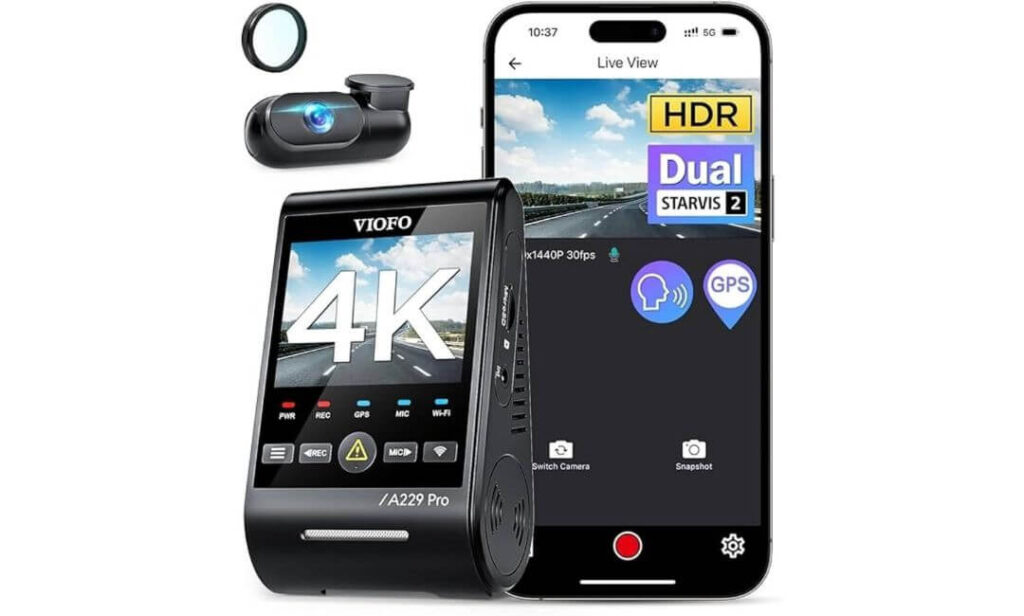
Quick Specs:
- Front Recording: True 4K Ultra HD
- Rear Recording: 2K HDR Camera
- Imaging Hardware: Dual Sony STARVIS 2 Sensors (IMX678 + IMX675)
- Parking Protection: Buffered Event Recording with Multiple Parking Modes
- Connectivity: 5GHz WiFi + Mobile App Control
- GPS: Quad-Satellite GPS Tracking
- Voice Commands: Hands-Free Voice Control
- Heat Resistance: Supercapacitor Design Instead of a Battery
- Coverage Style: Front and Rear Truck Protection
- Best For: Drivers who want premium footage quality without stepping into commercial-grade systems
Some dash cams impress on paper. Others impress the first time you review footage after sunset. This one belongs in the second category.
What immediately separates it from most competitors is the combination of dual STARVIS 2 sensors and HDR processing on both cameras. That’s important because a lot of systems deliver excellent front footage while treating the rear camera like an afterthought. Here, both cameras receive premium hardware, which creates a noticeably more balanced setup for everyday driving.
For Chevy Colorado owners who spend time on highways, rural roads, construction routes, or poorly lit parking lots, that matters more than most marketing claims. The camera’s ability to preserve details across bright headlights, dark pavement, reflective road signs, and changing lighting conditions gives it a genuine advantage when footage actually needs to be reviewed.
Another reason it ranked first is balance. There are cameras with more features and cameras with more gimmicks, but very few combine 4K front recording, 2K rear recording, GPS logging, voice controls, parking surveillance, fast 5GHz connectivity, and premium imaging hardware into one package as effectively as this system does.
(If your priority is owning one dash cam that performs well in nearly every driving situation rather than chasing flashy extras, this is the model that consistently makes the strongest overall case.)
Highlights That Made Our Shortlist
- Dual STARVIS 2 sensors front and rear instead of a premium front camera only
- 4K + 2K recording captures significantly more useful detail
- HDR processing improves visibility during difficult lighting conditions
- Buffered parking mode records moments before and after an event
- Supercapacitor design handles heat better than battery-powered alternatives
One Thing Worth Knowing
- A memory card and hardwire kit are purchased separately if you want maximum parking-mode functionality.
Chevy Colorado Compatibility Notes
The windshield layout and cabin size of the Chevy Colorado work particularly well with a front-and-rear setup like this. The included rear camera cable length is sufficient for clean routing through the cabin, allowing a professional-looking installation without unusual modifications.
Colorado owners who regularly commute, tow, travel long distances, or leave their truck parked outdoors will likely appreciate the added confidence that comes from having premium front and rear coverage rather than relying on a single-camera setup.
The Insider Pro-Tip
Most buyers focus on resolution first. Experienced dash cam users usually focus on sensors.
A camera can advertise impressive resolution numbers, but when headlights, rain, shadows, and highway speeds enter the equation, sensor performance becomes the difference between “I think that’s the plate number” and actually reading it. That’s one of the biggest reasons this model ranked above the rest.
If you’re planning to keep your Chevy Colorado for years and only want to install one dash cam system, prioritize imaging hardware, parking protection, and reliability over feature lists. In real ownership, those are the things you’ll remember long after the unboxing experience is over.
#2. 70mai 4K Dash Cam Front and Rear
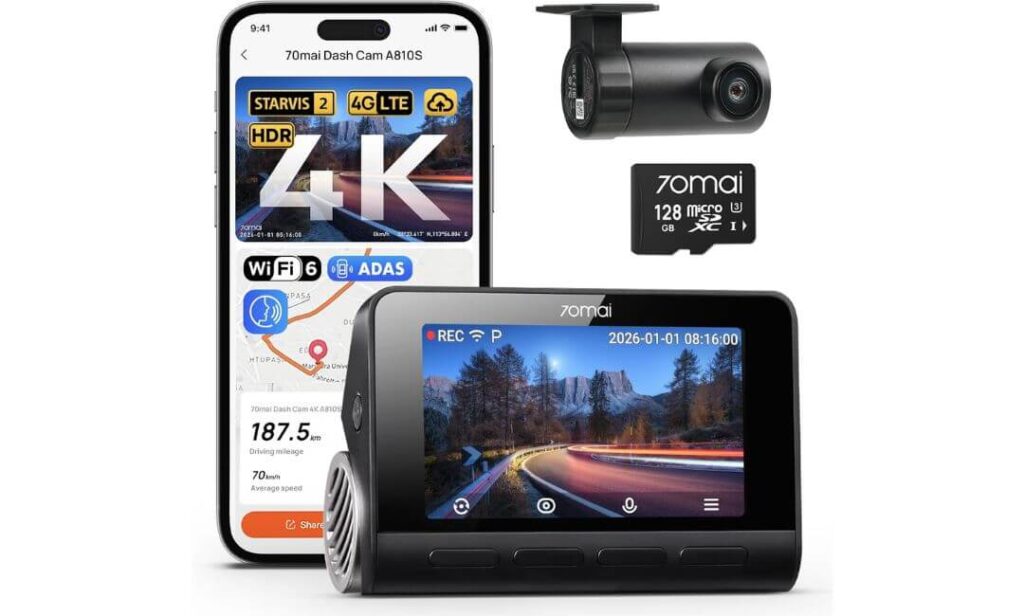
Quick Specs:
- Front Recording: True 4K Ultra HD with Sony STARVIS 2
- Rear Recording: 1080P Rear Coverage
- Connectivity: Wi-Fi 6 + Smartphone App
- Remote Monitoring: Optional 4G LTE Access
- Parking Protection: AI Motion Detection 2.0 + 24/7 Surveillance
- GPS System: 5-Satellite Positioning Support
- Driver Assistance: ADAS Safety Alerts
- Voice Features: Hands-Free Voice Commands
- Memory Included: 128GB Card in the Box
- Best For: Colorado owners who want to keep an eye on their truck even when they’re nowhere near it
Most dash cams stop working for you the moment you walk away from the vehicle. This one takes a different approach.
What immediately stands out is the focus on connected vehicle security. While many cameras concentrate almost exclusively on recording footage, this system was clearly designed for owners who spend long hours away from their truck. The optional 4G capability allows remote viewing, location tracking, motion alerts, and incident notifications directly through the mobile app.
For Chevy Colorado owners who regularly park at work sites, apartment complexes, airports, hotels, shopping centers, or outdoor lots, that extra layer of visibility can be more valuable than another bump in video resolution. Knowing something happened is useful. Knowing about it immediately is even better.
The hardware underneath those smart features is equally impressive. A Sony STARVIS 2 IMX678 sensor up front, paired with HDR processing, Wi-Fi 6 connectivity, AI-powered parking surveillance, and advanced positioning support, creates a package that feels surprisingly future-ready compared to many traditional dash cams still relying on older technology.
(If the VIOFO is the video-quality specialist, this is the dash cam that feels most connected to your vehicle after you’ve parked and walked away.)
Reasons It Made Our Recommendation List
- Optional 4G LTE access enables remote monitoring from virtually anywhere
- AI Motion Detection 2.0 adds a smarter layer of parked-vehicle protection
- Wi-Fi 6 delivers noticeably faster transfers than older wireless systems
- Five-positioning-system GPS improves route and location accuracy
- 128GB memory card included, allowing immediate use after installation
One Detail Future Owners Should Know
- To unlock live remote viewing, instant alerts, and cloud-connected features, the optional 4G hardwire accessory is required.
Why It Works So Well in a Chevy Colorado
A Colorado often ends up in situations where a standard commuter vehicle doesn’t. Job sites, outdoor parking areas, long road trips, trailheads, equipment yards, and weekend adventures create more opportunities for unexpected incidents when the truck is unattended.
That’s where this system feels particularly well matched to Chevrolet’s midsize pickup. Beyond recording what happens while driving, it offers additional tools designed to help monitor what happens when the engine is off and the vehicle is sitting alone.
Owners who frequently leave expensive tools, camping equipment, recovery gear, or work supplies inside their truck may appreciate that extra peace of mind.
The Insider Pro-Tip
The smartest feature here isn’t 4K recording.
It’s the ability to turn a parked truck into something you can check on without physically walking out to the driveway or parking lot. Most people don’t realize how useful that becomes until the first time a motion alert appears while they’re inside an office, restaurant, hotel room, or airport terminal.
If your Chevy Colorado spends as much time parked as it does driving, connected monitoring often delivers more day-to-day value than another resolution upgrade. That’s exactly why this camera earned the second spot on our list.
#3. WOLFBOX G930 Mirror Dash Cam
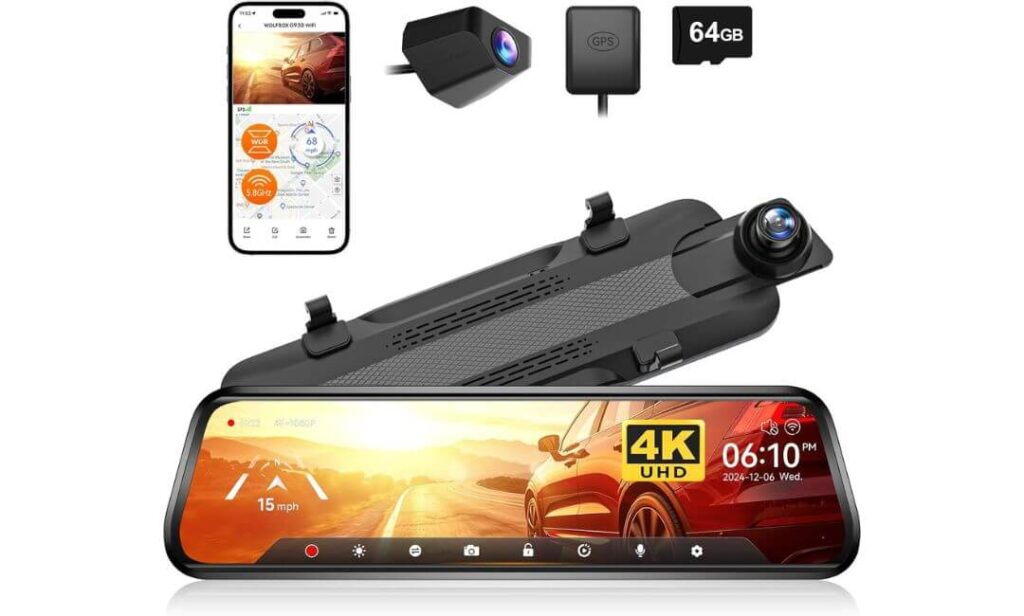
Quick Specs:
- Front Recording: 4K Ultra HD
- Rear Recording: 1080P Streaming Rear Camera
- Display: 10-Inch Full Touch Mirror Screen
- Connectivity: Upgraded 5.8GHz WiFi
- Navigation Data: Built-In GPS Tracking
- Parking Protection: G-Sensor Impact Detection
- Rear Visibility: Live Streaming Rear View
- Backup Assistance: Reverse Assist Support
- Memory Included: 64GB Card Included
- Best For: Colorado owners who want better rear visibility and dash cam protection in one upgrade
Here’s something many Colorado owners discover after a few months of ownership: cargo, gear, toolboxes, tonneau covers, passengers, and even weather conditions can limit what you see through a traditional mirror.
That’s where this setup feels completely different from a conventional dash cam.
Instead of simply recording footage, it transforms the rearview mirror itself into a live digital display. The rear camera continuously feeds video to the large touchscreen mirror, giving you a much wider and clearer view behind the truck than a standard reflective mirror can provide. Once drivers get used to it, many find it surprisingly difficult to return to a traditional setup.
The recording hardware backs up that experience nicely. A 4K front camera, 1080P rear camera, GPS tracking, 5.8GHz WiFi, and WDR-enhanced imaging create a package that focuses as much on visibility as it does on evidence collection. That unique combination is what earned it a place in this guide.
(For Colorado owners who value visibility just as much as video recording, this offers a genuinely different ownership experience than a traditional windshield-mounted dash cam.)
Features That Stood Out During Our Evaluation
- Digital rearview mirror provides a wider rear perspective
- Large 10-inch touchscreen is easy to view while driving
- 4K front recording captures strong daytime detail
- 5.8GHz WiFi allows faster video access through the mobile app
- 64GB memory card included right out of the box
One Detail Worth Keeping in Mind
- Drivers accustomed to a traditional glass mirror may need a short adjustment period before the digital mirror view feels completely natural.
Why It Fits the Chevy Colorado So Well
The Colorado’s truck-focused design makes rear visibility more important than many drivers realize. Add cargo, camping equipment, recovery gear, bicycles, work supplies, or a bed cover, and the standard mirror can become significantly less useful.
This setup helps solve that issue by providing a live camera feed from behind the truck. Rather than looking around cargo or relying entirely on side mirrors, drivers receive a clearer and more consistent view of what’s happening behind them.
That advantage becomes especially noticeable when reversing, changing lanes, navigating busy parking lots, or traveling with gear loaded into the bed.
The Insider Pro-Tip
Most buyers initially focus on the recording features. Long-term owners usually end up talking about the mirror.
The reason is simple: you use the mirror every single time you drive. While accident footage may never be needed, improved rear visibility becomes part of your daily driving experience from day one. That’s an advantage you notice on every commute, every road trip, and every parking maneuver.
If your Chevy Colorado frequently carries cargo that affects rearward visibility, this isn’t just a dash cam upgrade. It’s a visibility upgrade that happens to include a dash cam.
#4. Vantrue N4S 3-Channel Dash Cam
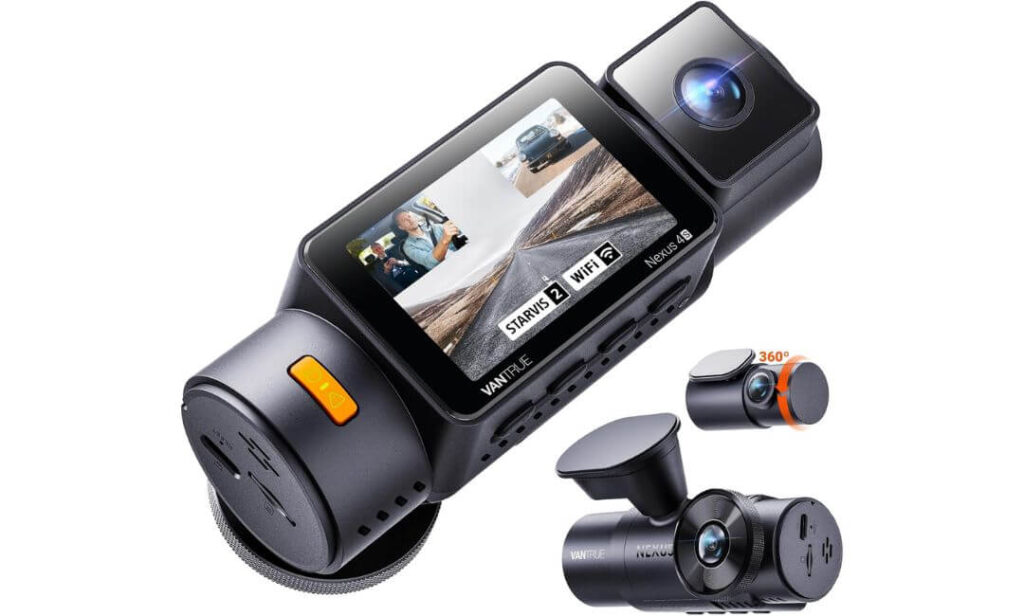
Quick Specs:
- Recording Setup: 2.7K Front + 1440P Rear + 1440P Interior
- Sensor Technology: Triple Sony STARVIS 2 Sensors
- Coverage Area: Three Cameras with Near 360° Visibility
- Night Performance: HDR + PlatePix License Plate Enhancement
- Parking Security: 4 Dedicated Parking Modes
- Connectivity: 5GHz WiFi App Access
- Navigation Data: Quad-Mode GPS + BeiDou Tracking
- Storage Capacity: Supports Up To 1TB MicroSD
- Durability: Supercapacitor Design for Extreme Temperatures
- Best For: Colorado owners wanting the most complete camera coverage possible
There’s a reason most dash cams stop at two cameras. Adding a third camera adds complexity, more wiring, more processing, and more cost.
This one does it anyway.
What makes this system interesting isn’t simply that it records the front, rear, and interior simultaneously. It’s that the entire setup feels designed around situations where a standard two-channel camera leaves blind spots behind. Whether you’re carrying expensive gear, transporting equipment, traveling with pets, or simply want more visibility around the vehicle, the additional camera becomes surprisingly useful over time.
The imaging hardware is equally impressive. With triple STARVIS 2 sensors, HDR processing across all channels, and PlatePix technology designed to improve license plate readability, this system is built around capturing usable footage rather than just filling storage with video. Night driving, parking garages, tunnels, and poorly lit roads are exactly the situations where those upgrades become noticeable.
What also caught our attention is the flexible rear camera design. Unlike many fixed rear units, this camera can be adjusted to monitor rear traffic or repositioned to watch cargo, equipment, luggage, or even pets inside the vehicle. That’s a feature many Colorado owners may end up appreciating more than they initially expect.
(For drivers who prefer complete awareness over minimal coverage, this is easily one of the most versatile systems currently available.)
What Earned It a Spot on Our Shortlist
- Three-camera recording covers areas most dash cams simply cannot
- Triple STARVIS 2 sensors improve low-light performance across all channels
- PlatePix technology helps sharpen important vehicle details
- Supports massive storage capacities up to 1TB
- Flexible rear camera placement creates unique monitoring options
One Detail Worth Considering
- The extra camera and wiring require slightly more installation time than a traditional front-and-rear setup.
Why It Makes Sense in a Chevy Colorado
A Colorado often serves multiple roles throughout its life. One day it’s commuting to work. The next it’s carrying tools, camping equipment, sports gear, recovery equipment, or family cargo.
That’s where a three-channel setup begins making sense.
The additional interior-facing camera can help monitor the cabin area, while the adjustable rear camera offers flexibility that many standard systems simply don’t provide. Owners who regularly carry valuable equipment inside the truck may find the expanded coverage particularly reassuring.
For buyers who believe “more visibility is better visibility,” this is one of the strongest matches in the entire lineup.
The Insider Pro-Tip
Most people buy a dash cam expecting to review footage after an accident.
The owners who get the most value from systems like this usually discover something different: the footage they end up using most often isn’t accident footage at all. It’s checking cargo, verifying events while parked, reviewing activity around the vehicle, or understanding what happened when nobody was watching.
That’s why comprehensive coverage matters.
If your Chevy Colorado frequently carries expensive gear, work equipment, luggage, or anything you’d rather keep an eye on, the third camera can provide value long before you’re ever involved in an incident.
#5. Cobra Smart Dual View SC 250R
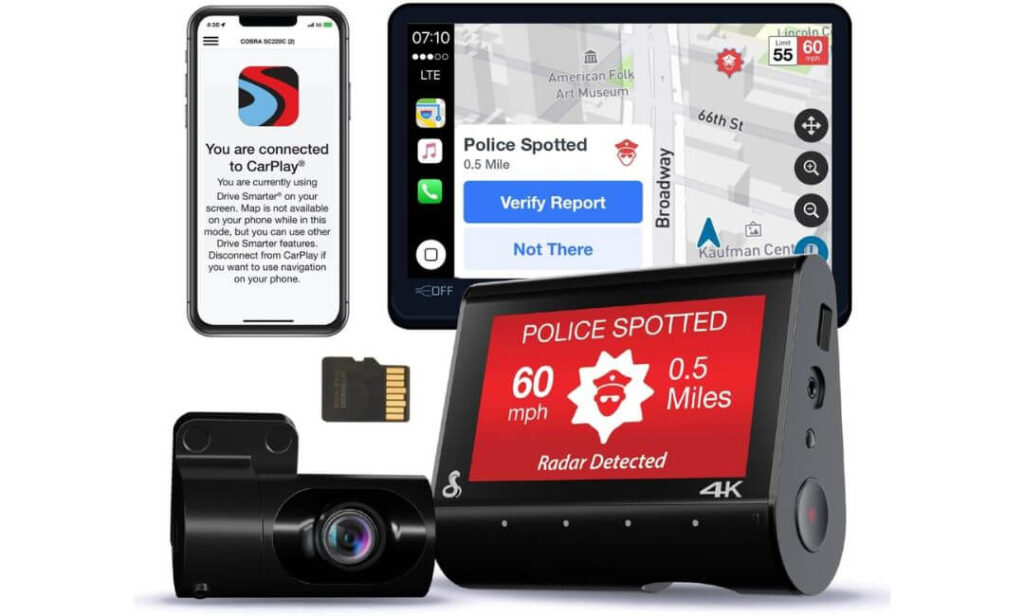
Quick Specs:
- Front Recording: True 4K Ultra HD
- Rear Camera: Included Dual-View Setup
- Smart Features: 360 Driver Alerts
- Remote Access: Parking Live View Support
- Emergency Assistance: Automatic MayDay Notifications
- Incident Support: Built-In Incident Reporting Tools
- Smartphone Integration: Apple CarPlay & Android Auto Compatible
- Connectivity: WiFi + Bluetooth
- Storage Included: 32GB Memory Card
- Best For: Colorado owners who value connected safety features as much as video quality
Most dash cams focus on recording what happened.
This one spends a surprising amount of effort helping you avoid problems before they happen.
The feature that immediately separates it from many competitors is the 360 Alerts ecosystem. Instead of acting solely as a camera, the system pulls information from a connected driver network to provide alerts for speed cameras, red-light cameras, reported enforcement areas, and other roadway events. For drivers covering long highway distances in a Chevy Colorado, that extra awareness can be genuinely useful.
The safety-focused approach continues throughout the system. Features like Emergency MayDay, Incident Reports, Parking Live View, and app-connected monitoring create a package that feels closer to a connected driving assistant than a traditional dash cam. While most cameras simply store footage after an event occurs, this system places a stronger emphasis on helping drivers stay informed before, during, and after an incident.
Of course, the foundation remains solid. The camera records in true 4K resolution, includes rear coverage out of the box, and supports an optional third camera configuration for drivers who want expanded visibility throughout the vehicle.
(For drivers who care about smart driving tools, connected safety features, and app-based assistance as much as raw video quality, this is one of the more distinctive options currently available.)
What Helped It Earn a Place on Our List
- 360 Alerts provide useful real-time roadway notifications
- Emergency MayDay adds an extra layer of post-accident support
- Parking Live View allows remote vehicle monitoring
- CarPlay and Android Auto integration improve daily usability
- 32GB memory card included for immediate setup
One Detail Worth Knowing
- Several of the most advanced connected features deliver their best experience when paired with the app ecosystem and optional hardwire setup.
Why It Works Well for a Chevy Colorado
Chevy Colorado owners often spend significant time on highways, backroads, work routes, and unfamiliar travel corridors. In those situations, information can be just as valuable as footage.
That’s where this system feels different.
Rather than concentrating exclusively on recording, it provides additional awareness through alerts, notifications, and connected safety services. Drivers who enjoy having technology actively assist during trips may find more value here than with a traditional “set it and forget it” dash cam.
For road-trip enthusiasts, commuters, and drivers who frequently cover unfamiliar routes, those smart features can become part of the daily driving experience.
The Insider Pro-Tip
When buyers compare dash cams, they often focus entirely on image quality.
That matters, but once you reach a certain level of video performance, the experience surrounding the camera starts becoming equally important. How quickly can you access footage? Can you monitor the vehicle remotely? Will the system help you during an emergency? Can it provide useful information while you’re driving?
Those are the questions this camera attempts to answer.
If your Chevy Colorado serves as a daily companion for long drives, work travel, or regular highway miles, having a dash cam that does more than record can sometimes be more valuable than chasing another specification on a product box.
Best Dash Cam Options for Chevy Colorado Owners: Detailed Feature and Coverage Comparison
Buying Guide: How to Choose the Right Dash Cam for Your Chevy Colorado
A Chevy Colorado isn’t used like most vehicles. Some spend their days commuting through city traffic, others haul tools to job sites, tow trailers on weekends, explore remote trails, or cover thousands of highway miles every month. That’s exactly why the “best” dash cam isn’t always the one with the longest feature list.
The right choice comes down to how you actually use your truck. After evaluating the cameras in this guide, several features consistently separated the strongest options from the average ones.
Start With Coverage, Not Resolution
Most buyers immediately focus on 4K recording, but coverage should be your first decision.
A front-only camera can capture what happens ahead of the truck, but it won’t help much if an incident occurs behind you, during parking, or around the cabin area. That’s why many Colorado owners are better served by a front-and-rear setup.
For most drivers, a dual-channel system provides the best balance between protection, installation simplicity, and value. However, if you regularly carry equipment, expensive gear, work tools, or frequently travel with passengers, a triple-channel system like the Vantrue N4S can provide an extra layer of visibility that standard setups simply cannot match.
The key is matching coverage to how the truck is actually used rather than assuming every driver needs the same configuration.
Why Modern Sensors Matter More Than Resolution Numbers
Two dash cams can both advertise 4K recording and still produce dramatically different footage.
The reason is sensor quality.
Advanced imaging systems such as Sony STARVIS 2 sensors are designed to improve low-light performance, preserve details in difficult lighting conditions, and capture more usable footage when visibility becomes challenging. Headlights, rain, shadows, tunnels, parking garages, and rural roads are often where premium sensors justify their higher cost.
For Colorado owners who frequently drive before sunrise, after sunset, or on poorly lit roads, sensor technology is often a more important upgrade than resolution alone.
Decide Whether You Want a Camera or a Connected Security System
Modern dash cams have evolved far beyond basic recording devices.
Some models now offer remote monitoring, cloud-connected features, vehicle tracking, motion alerts, and smartphone notifications. Systems with LTE capability allow owners to check on their truck even when they’re miles away.
For drivers who regularly park in public lots, apartment complexes, airport parking, hotel parking, work sites, or outdoor storage areas, remote-access functionality can add meaningful peace of mind.
If your Colorado frequently sits unattended for long periods, connected features may end up being more valuable than another jump in image quality.
Parking Protection Deserves More Attention Than Most Buyers Give It
Many accidents happen when the vehicle isn’t moving.
Shopping carts, careless drivers, parking lot impacts, vandalism, and hit-and-run incidents often occur while a truck is parked. That’s why parking surveillance has become one of the most important features in modern dash cams.
The strongest systems use motion detection, impact sensors, buffered recording, and intelligent parking modes that begin saving footage before and after an event occurs.
When evaluating parking features, look beyond the phrase “parking mode” and focus on how the camera actually handles event recording, impact detection, and storage management.
GPS Tracking Is More Useful Than Most Drivers Expect
GPS functionality is often misunderstood.
It isn’t simply about showing where you’ve been. A quality GPS system can record speed data, travel routes, timestamps, and location information that may become valuable during insurance claims or incident reviews.
Several cameras in this guide also use advanced multi-satellite positioning systems to improve tracking accuracy and signal reliability.
For drivers who frequently travel long distances, tow equipment, or spend time in unfamiliar areas, GPS logging can provide useful context alongside video footage.
WiFi Matters Every Time You Need Footage Quickly
Many owners don’t think about wireless connectivity until they need a video immediately.
Modern WiFi-enabled dash cams allow footage to be reviewed, downloaded, and shared directly from a smartphone without removing memory cards or connecting to a computer. Faster systems, particularly those using 5GHz WiFi or WiFi 6 technology, can dramatically reduce transfer times for large video files.
If convenience matters to you, wireless performance is worth paying attention to during the buying process.
Installation Considerations Specific to the Chevy Colorado
One advantage of the Chevy Colorado platform is that it generally accommodates dash cam installations very well.
The windshield provides sufficient space for modern camera systems without creating excessive visual obstruction, while the cabin layout offers practical routing paths for front and rear camera wiring. Most owners can achieve a clean installation by routing cables along the headliner, down weather stripping, and behind trim panels.
For parking-mode functionality, many owners choose a hardwire kit connected to the fuse panel. This provides continuous power while maintaining a cleaner appearance than visible power cables running to a 12-volt outlet.
Drivers who prefer a simpler installation can still use the included power adapters supplied with most systems in this guide.
Keeping the Cabin Looking Factory Clean
A well-installed dash cam should feel like part of the truck, not an aftermarket accessory hanging from the windshield.
The cleanest installations typically hide cables behind trim panels, route rear camera wiring through factory pathways, and position the front camera behind or near the rearview mirror. This approach minimizes visual distractions while preserving visibility through the windshield.
Mirror-style systems offer another interesting option because they replace or overlay the factory mirror rather than adding a separate device to the glass.
When installed correctly, even advanced multi-camera systems can maintain a surprisingly factory-like appearance inside the Colorado.
Fitment, Visibility, and Daily Usability
Before purchasing any dash cam, consider how it will interact with the way your Colorado is configured.
Sun visors, windshield tint strips, toll transponders, radar detectors, mirror accessories, and aftermarket equipment can all affect ideal mounting locations. Camera size, mounting style, and vibration resistance become especially important in trucks that frequently travel on rough pavement, gravel roads, or uneven terrain.
Fortunately, all of the models selected for this guide are well suited to pickup-truck use and offer mounting solutions capable of handling the vibration, movement, and real-world conditions that Colorado owners commonly encounter.
Final Buying Advice
If your priority is balanced all-around performance, focus on video quality, sensor technology, and parking protection.
If your truck spends long hours parked away from home, connected features and remote monitoring deserve greater attention.
If maximum visibility is your goal, consider mirror-based or multi-camera systems.
And if you simply want one upgrade that can provide valuable evidence when it matters most, choose a model that prioritizes reliability, image quality, and consistent performance over marketing claims. Those are the features that tend to matter long after the purchase has been made.
Installation Guide: Setting Up a Dash Cam in Your Chevy Colorado the Right Way
One thing that surprises many first-time buyers is how much installation quality affects the overall experience. Even an excellent dash cam can become frustrating if cables are visible, GPS reception is blocked, or the rear camera is positioned incorrectly.
The good news is that the Chevy Colorado is one of the easier trucks to work with. The windshield shape, cabin layout, headliner design, and trim panels provide multiple clean routing paths, making it possible to achieve a professional-looking installation without major modifications.
Choosing the Best Mounting Location
Before attaching anything to the windshield, spend a few minutes sitting in the driver’s seat and evaluating visibility.
For most Colorado owners, the ideal location is directly behind the rearview mirror or slightly to the passenger side of it. This position keeps the camera hidden from the driver’s primary line of sight while still providing a clear, unobstructed view of the road ahead.
Avoid placing the camera too low on the windshield. While it may seem convenient during installation, lower mounting positions often capture more dashboard reflection and reduce overall visibility during sunrise and sunset driving.
If you’re installing a mirror-style system such as the WOLFBOX G930, take extra time to ensure the mirror screen sits naturally within your normal viewing position. A properly aligned mirror camera should feel invisible after a few days of driving.
Planning Cable Routing Before Installation
One of the biggest differences between a clean installation and a messy one comes down to cable planning.
Before securing the camera permanently, trace the entire cable route mentally from start to finish.
For front cameras, the cleanest path usually follows:
- Headliner edge
- A-pillar trim
- Dashboard edge
- Fuse panel or power source
For rear cameras, most Colorado owners route cables:
- Along the headliner
- Down the rear cabin trim
- Toward the rear glass area
- Into the rear camera mounting location
Taking an extra ten minutes during this stage often eliminates hours of frustration later.
Choosing Between a Hardwire Kit and a Power Outlet
Most dash cams offer two common power options.
The simplest approach is using the included 12-volt power adapter. Installation is faster, requires no electrical work, and works perfectly for drivers who only need recording while the truck is running.
However, if parking protection is important, a hardwire kit becomes the better solution.
Hardwire installations connect directly to the vehicle’s fuse panel and allow advanced features such as:
- Parking surveillance
- Motion detection
- Impact recording while parked
- Buffered event capture
- Remote monitoring functions
Many of the cameras featured in this guide unlock their most valuable security features through hardwire installation.
For owners investing in premium models such as the VIOFO A229 Pro, 70mai A810S, or Vantrue N4S, hardwiring often delivers the greatest long-term benefit.
Understanding Fuse Panel Connections
The Colorado’s fuse panel provides multiple opportunities for a clean hardwire installation.
Most hardwire kits require:
- Constant power source
- Ignition-switched power source
- Ground connection
This allows the camera to determine when the vehicle is running and when it is parked.
If you’re unfamiliar with automotive electrical systems, using a fuse tap kit and following the dash cam manufacturer’s wiring guide can simplify the process considerably. Many owners also choose professional installation, especially when integrating advanced parking-monitoring features.
Installing the Rear Camera Correctly
Rear camera placement deserves more attention than it usually receives.
A poorly aligned rear camera can create distorted footage, reduce visibility, and make distance judgment more difficult.
For the best results, position the rear camera so it remains centered with the vehicle. When reviewing the image, the license plate area should appear naturally aligned rather than tilted toward one side.
This becomes particularly important when using systems that support reverse-assist features or streaming rearview displays.
After mounting, review daytime and nighttime footage before finalizing the installation. Small adjustments can often produce noticeably better results.
Activating Parking Mode the Right Way
Many owners install a hardwire kit but never properly configure parking mode.
After installation, access the camera’s settings menu and verify:
- Parking mode is enabled
- Voltage protection settings are configured correctly
- Motion detection sensitivity is adjusted appropriately
- Impact sensitivity is set for truck use
Pickup trucks naturally experience more vibration than many passenger vehicles. A setting that works perfectly in a sedan may create excessive event recordings in a truck.
Taking time to fine-tune sensitivity can significantly improve daily performance.
Connecting WiFi, GPS, and Mobile Apps
After powering up the camera, complete the setup process before hitting the road.
Most modern systems allow smartphone pairing through dedicated applications. During initial setup:
- Connect the camera to the app
- Update firmware if available
- Configure recording settings
- Verify GPS functionality
- Set video resolution preferences
- Format the memory card
Allow the camera several minutes outdoors to establish a GPS lock during its first startup. Initial satellite acquisition can occasionally take longer than normal.
Completing these steps immediately helps prevent issues later.
Chevy Colorado Installation Tips That Make a Difference
The Colorado’s upright windshield and larger cabin can create reflections under certain lighting conditions.
To improve image quality:
- Position the camera higher on the windshield
- Use included CPL filters when available
- Keep lenses clean
- Avoid mounting directly behind tinted windshield strips
- Verify windshield accessories are not blocking the camera view
For rear camera installations, keep cables away from moving trim pieces, door seals, and cargo areas where equipment could snag or damage wiring over time.
A little extra cable protection during installation often prevents future headaches.
Fixing Weak GPS Signals
If GPS data isn’t appearing correctly, the cause is usually simple.
Common reasons include:
- Parking inside a garage
- Metallic windshield tint interference
- GPS antenna placement issues
- Insufficient time for first satellite lock
Moving the truck outdoors and allowing several minutes for initialization often resolves the issue immediately.
External GPS modules should also be positioned away from metal obstructions whenever possible.
Solving WiFi Connection Problems
Many connectivity issues occur during the first setup process rather than everyday use.
If the smartphone app struggles to connect:
- Verify the correct WiFi band is selected
- Disable mobile data temporarily during pairing
- Update the dash cam firmware
- Restart both the phone and camera
- Move closer to the vehicle during setup
Modern systems using 5GHz WiFi or WiFi 6 generally provide faster transfers, but shorter operating ranges compared to traditional wireless connections.
What to Do If the Camera Doesn’t Power On
If the screen remains blank after installation, start with the basics.
Check:
- Power cable connections
- Fuse taps
- Ground connections
- Memory card installation
- Power outlet functionality
Many startup issues trace back to a loose connection rather than a faulty camera.
Testing the camera using the included power adapter before completing a hardwire installation can help isolate problems quickly.
Final Installation Advice
The best dash cam installation is the one you forget about after a week.
No dangling wires, no blocked visibility, no constant adjustments, and no recurring connection problems. When installed correctly, the camera should feel like a natural part of the Chevy Colorado rather than an accessory added afterward.
Take your time during installation, verify every feature works before securing trim panels, and prioritize clean cable routing from the beginning. The extra effort usually pays off every time you start the truck and never have to think about the camera again.
Real-World Chevy Colorado Dash Cam Scenarios: Where These Cameras Actually Earn Their Keep
It’s easy to focus on specifications while shopping for a dash cam. Resolution numbers, sensor names, storage capacities, and app features all look impressive on a product page. What matters more is how those features translate into everyday ownership.
The reality is that most dash cams spend far more time quietly recording than handling major accidents. Their true value often shows up in smaller moments, unexpected situations, and everyday driving scenarios that most buyers rarely think about before installation.
Daily Commuting and Highway Driving
For many Chevy Colorado owners, daily driving is exactly where a quality dash cam proves its worth.
Morning traffic, aggressive lane changes, distracted drivers, sudden braking situations, construction zones, and highway merges create countless opportunities for misunderstandings if an incident occurs. Having a camera continuously documenting events can provide valuable context when memories differ or fault becomes disputed.
This is also where premium imaging hardware begins to separate itself from entry-level systems.
Driving directly into a sunrise, navigating through heavy rain, entering tunnels, or dealing with oncoming headlights at night creates difficult lighting conditions that challenge many cameras. Systems equipped with advanced sensors such as STARVIS 2 technology generally handle these transitions more effectively, preserving details that cheaper cameras may struggle to capture.
For drivers who spend several hours per week behind the wheel, consistent video quality often becomes more important than headline specifications.
Long-Distance Travel and Weekend Road Trips
The Chevy Colorado has become a popular choice among drivers who regularly travel beyond city limits.
Whether you’re towing equipment, visiting national parks, heading toward a campsite, crossing state lines, or simply covering long highway distances, extended road trips introduce situations where additional visibility can be extremely useful.
GPS-enabled dash cams add another layer of value during these journeys by recording location data, timestamps, and travel information alongside video footage. If something happens hundreds of miles from home, that information can help reconstruct events more accurately.
Many owners also enjoy saving memorable road footage, scenic routes, and unique driving experiences that would otherwise disappear once the trip ends.
Off-Road Adventures and Trail Exploration
Few midsize trucks spend more time off pavement than the Chevy Colorado.
Rock crawling, trail driving, forest roads, hunting routes, overlanding adventures, and remote backcountry travel all place different demands on a camera system compared to ordinary street driving.
Rough terrain introduces vibration, sudden vehicle movement, changing lighting conditions, dust, mud, and obstacles that may not be visible from every angle. In these environments, multi-camera systems can provide valuable perspectives that help document both vehicle movement and trail conditions.
Rear cameras become particularly useful when navigating narrow trails, reversing around obstacles, or maneuvering through tight sections where visibility is limited.
For Colorado owners who frequently explore remote locations, footage can also help review trail conditions, identify obstacles, and document routes for future trips.
Hauling Equipment, Tools, and Valuable Cargo
One often-overlooked advantage of advanced dash cam systems is cargo awareness.
Many Colorado owners use their trucks for work, recreation, or hauling valuable equipment. Toolboxes, generators, construction supplies, recovery gear, hunting equipment, camping accessories, bicycles, and outdoor equipment can represent a significant investment.
In these situations, systems offering interior coverage or adjustable camera configurations provide an added layer of visibility. Being able to review what happened around the vehicle while parked or monitor activity near stored equipment can provide reassurance that extends beyond traditional accident recording.
This is one area where triple-channel systems stand out from conventional front-and-rear setups.
Parking Lot Incidents and Unattended Vehicle Protection
If you ask experienced dash cam owners when their camera was most valuable, many will mention a situation that happened while the vehicle was parked.
Parking lots create an endless variety of unpredictable situations.
Shopping carts, careless drivers, door impacts, reversing mistakes, vandalism, hit-and-run incidents, and property damage often occur when nobody is sitting behind the wheel. Unfortunately, these events can be difficult to investigate after the fact without supporting evidence.
That’s why parking surveillance has become one of the most important features in modern dash cams.
Advanced systems use motion detection, impact sensors, buffered recording, and intelligent monitoring modes to capture activity before and after an event occurs. Rather than relying on luck, owners gain a record of what actually happened while the truck was unattended.
Overnight Parking and Remote Monitoring
Not every Colorado spends its nights inside a garage.
Many trucks remain parked outdoors, at apartment complexes, job sites, hotels, airports, campgrounds, storage facilities, or long-term parking areas. In these situations, connected dash cams can provide a different level of confidence.
Systems offering LTE connectivity, remote access, and smartphone alerts allow owners to check on their vehicle from virtually anywhere. Rather than discovering an issue hours later, notifications can provide awareness in near real time.
For owners who frequently travel or leave their truck parked for extended periods, this capability often becomes one of the most appreciated features after installation.
Work Trucks and Business Use
The Chevy Colorado is also a common choice among contractors, inspectors, service technicians, real estate professionals, and small business operators.
For work vehicles, dash cams often serve purposes beyond accident documentation.
Video footage can help verify service visits, review incidents, protect against false claims, document deliveries, and provide additional accountability during daily operations. GPS tracking further enhances this by recording route information and vehicle activity throughout the day.
Businesses operating multiple vehicles may also benefit from systems that support remote monitoring, cloud connectivity, and centralized access to recorded footage.
In these environments, a dash cam becomes less of an accessory and more of a business tool.
Managing a Small Fleet of Colorado Trucks
Companies running multiple Colorado trucks face challenges that individual owners rarely encounter.
Tracking vehicle activity, monitoring parking incidents, reviewing driver-reported events, and protecting equipment spread across several locations requires greater visibility than a traditional dash cam can provide on its own.
Connected systems with LTE functionality can simplify management by allowing remote access to footage, location tracking, and vehicle status information without requiring someone to physically retrieve memory cards from every truck.
For businesses that depend on uptime and accountability, these features can save both time and administrative effort.
Which Type of Colorado Owner Benefits Most?
After evaluating every model in this guide, one thing became clear: there is no universal solution because there is no universal Colorado owner.
Some drivers need exceptional image quality for daily commuting. Others prioritize remote monitoring because their truck spends long hours parked away from home. Some want the widest possible camera coverage, while others simply want reliable footage if something unexpected happens.
The best dash cam is the one that matches how your truck is actually used.
That’s why the cameras in this guide were selected for different strengths rather than identical capabilities. Each fills a specific role, and understanding your own driving habits will usually lead you to the right choice faster than comparing specifications alone.
Maintenance and Best Practices for Long-Term Dash Cam Reliability
Buying a quality dash cam is only part of the equation. The cameras in this guide are designed to operate for years, often recording thousands of hours of footage in changing temperatures, rough road conditions, heavy traffic, and challenging weather. However, even the best hardware benefits from occasional maintenance.
One of the biggest misconceptions among new owners is that a dash cam can be installed and forgotten forever. In reality, a few minutes of routine attention every month can significantly improve recording reliability, footage quality, storage health, and overall system performance.
The goal isn’t constant maintenance. The goal is ensuring that the camera works exactly as expected on the day you actually need the footage.
Keep Firmware Updated as New Features and Improvements Arrive
Most modern dash cams function more like connected technology devices than traditional vehicle accessories.
Manufacturers regularly release firmware updates that can improve stability, enhance image processing, optimize parking mode performance, fix software bugs, improve GPS accuracy, strengthen WiFi connectivity, and refine advanced technologies such as STARVIS 2 image processing or LTE communication systems.
Many owners never check for updates after installation, which means they may miss important improvements that become available months later.
A good habit is reviewing available firmware updates every few months through the manufacturer’s mobile application or support portal. Cameras that support over-the-air updates make this process particularly simple, often requiring only a few minutes to complete.
If an update specifically addresses image quality, parking surveillance, connectivity, or storage reliability, installing it is usually worthwhile.
Treat the Memory Card as a Wear Item
One of the most overlooked parts of any dash cam system is the microSD card.
Unlike ordinary file storage devices, dash cam memory cards operate under continuous recording conditions. Every drive, every parking session, and every event recording creates additional write cycles that slowly wear the card over time.
This is why many premium dash cam manufacturers recommend high-endurance cards specifically designed for constant video recording.
To maximize reliability:
- Use a high-endurance microSD card whenever possible
- Avoid low-cost generic storage cards
- Replace heavily used cards periodically
- Check storage health if the camera begins reporting errors
- Review footage occasionally to verify proper recording
Many recording failures blamed on the camera itself actually originate from a deteriorating memory card.
Establish a Simple Formatting Routine
Even quality memory cards benefit from regular formatting.
As thousands of video files are written, overwritten, locked, and deleted, storage structures can become fragmented over time. Periodic formatting helps maintain stable performance and reduces the likelihood of recording issues.
For most Colorado owners, formatting the card directly through the camera menu every four to six weeks provides a reasonable balance between convenience and reliability.
Before formatting:
- Save any important footage
- Confirm cloud backups if applicable
- Export valuable clips to another device
A clean card often performs more consistently than one that has been recording continuously for months without maintenance.
Check Recording Performance Instead of Assuming Everything Is Working
One of the easiest mistakes owners make is assuming the camera is still recording correctly simply because the screen powers on.
In reality, occasional verification is important.
Every few weeks:
- Review recent footage
- Confirm timestamps are correct
- Check GPS information
- Verify audio settings
- Ensure parking mode remains active
- Confirm rear cameras are recording properly
This quick inspection usually takes less than five minutes and can reveal issues before they become serious.
The worst time to discover a recording problem is after an incident has already occurred.
Keep Camera Lenses Clean, Especially on Trucks
Chevy Colorado owners often encounter conditions that place additional stress on camera lenses.
Dust, pollen, mud, rain, road salt, construction debris, and off-road travel can gradually reduce image quality without being immediately noticeable during everyday driving.
Even a thin layer of contamination can soften details, increase glare, and reduce nighttime clarity.
For best results:
- Use a clean microfiber cloth
- Remove dust before wiping
- Avoid harsh household cleaners
- Clean both front and rear lenses regularly
- Inspect lenses after off-road trips or severe weather
A few seconds of maintenance can preserve image quality that advanced sensors work hard to capture.
Pay Extra Attention After Off-Road Travel
Colorado owners who regularly explore trails, forest roads, gravel routes, or construction areas should perform occasional post-trip inspections.
Rough terrain introduces vibration that can gradually affect mounting positions, camera alignment, and cable routing.
After demanding trips:
- Verify camera positioning
- Check rear camera alignment
- Inspect cable attachment points
- Confirm GPS operation
- Review sample footage
These inspections help ensure the system remains properly configured despite exposure to harsher conditions.
Managing Cloud Storage and Connected Features
Connected dash cams offering LTE access, cloud services, remote monitoring, or live-view functionality require a slightly different maintenance approach.
Cloud-connected systems often store:
- Event recordings
- Parking incidents
- Alert footage
- Location information
- User-generated clips
Because storage limits vary between platforms, periodically reviewing account settings can help prevent unexpected storage shortages or automatic file removal.
Owners using cloud services should understand:
- Storage limits
- Retention periods
- Download procedures
- Account recovery options
- Subscription requirements if applicable
Knowing how footage is managed before an incident occurs can prevent unnecessary frustration later.
Understand Your Privacy and Data Settings
As dash cams become more connected, privacy settings deserve greater attention.
Many modern systems allow owners to control:
- GPS tracking information
- Cloud synchronization
- Location sharing
- Remote-access permissions
- Video retention policies
- User account security
Taking a few minutes to review these settings after installation is worthwhile.
If multiple family members, employees, or drivers use the vehicle, clearly understanding who can access footage and account information becomes even more important.
A well-configured system should provide security without sacrificing control over your own data.
Protect the Camera During Extreme Conditions
Most premium dash cams are designed to handle significant temperature swings, particularly models using supercapacitor technology instead of traditional batteries.
Even so, a few simple habits can help extend hardware life:
- Use windshield sunshades when practical
- Avoid directing harsh cleaning chemicals at camera components
- Inspect mounts during seasonal temperature changes
- Keep ventilation around the camera unobstructed
These steps become particularly relevant for trucks that spend long periods parked outdoors.
Create a Footage Backup Strategy
Many owners don’t think about backups until after something important happens.
A better approach is deciding in advance how critical footage will be stored.
For important recordings:
- Save copies immediately
- Store files on multiple devices
- Export videos before formatting cards
- Retain original files whenever possible
- Organize incident footage by date
This habit can be invaluable if footage is ever needed weeks or months later.
The Best Maintenance Habit Most Owners Never Follow
The most valuable maintenance practice isn’t technical at all.
Once a month, spend five minutes reviewing recent recordings.
Check image quality, verify the date and time, confirm GPS data, inspect the memory card status, and make sure all cameras are functioning correctly.
That single habit catches more problems than any other maintenance step and provides confidence that the system will perform when it matters most.
A dash cam is one of those devices you hope you’ll never need. The small amount of time invested in maintaining it helps ensure that if the day ever comes, the footage will be there waiting for you.
FAQs About Chevy Colorado Dash Cam
Is a premium dash cam actually worth it for a Chevy Colorado, or is a basic 4K model enough?
That depends on how your Chevy Colorado is used, not simply how much you want to spend.
A lot of buyers focus on resolution because it’s easy to compare. The reality is that most real-world differences come from sensor quality, parking protection, GPS accuracy, night performance, and how well the camera handles difficult lighting situations. Two cameras can both record in 4K and deliver completely different results when headlights, rain, shadows, or high-speed traffic enter the picture.
For a Colorado that regularly sees highway driving, outdoor parking, towing duties, work sites, or long-distance travel, features such as STARVIS 2 sensors, buffered parking mode, and reliable rear coverage usually provide more value than resolution numbers alone. That’s often why owners who upgrade from entry-level models rarely talk about pixels afterward—they talk about footage quality when conditions become challenging.
Which type of dash cam makes the most sense for a Chevy Colorado: dual-channel, triple-channel, or mirror-based?
There isn’t a universal answer because there isn’t a universal Colorado owner.
Dual-channel systems remain the safest recommendation for most drivers because they provide front and rear protection without adding unnecessary complexity. That’s why models such as the VIOFO A229 Pro and 70mai A810S appeal to a broad range of truck owners.
However, certain situations can justify other configurations:
- Choose a mirror-based system if rear visibility is a priority.
- Choose a triple-channel system if you carry tools, equipment, pets, or valuable cargo regularly.
- Choose an LTE-enabled system if your truck spends long hours parked away from home.
The best setup is usually determined by what happens when you’re not driving, not when you are.
Can a dash cam help protect my Chevy Colorado while it’s parked overnight?
Modern parking surveillance systems are significantly more advanced than many buyers realize.
Today’s premium models can monitor motion, detect impacts, save buffered footage before an incident occurs, record suspicious activity, and in some cases send notifications directly to your phone. For owners who park in apartment complexes, public lots, hotel parking, airport parking, or work locations, these features can be just as valuable as the camera’s driving footage.
One important thing many people overlook is that parking performance often depends on proper installation. Features such as event detection, remote monitoring, and continuous surveillance generally perform best when paired with a dedicated hardwire kit rather than relying solely on a standard power outlet.
How much storage do Colorado owners realistically need for front and rear recording?
More than most people expect.
Modern dash cams record significantly larger files than older systems, especially when using 4K front cameras, HDR processing, GPS tracking, and multiple camera channels. A memory card that seems large on paper can fill surprisingly quickly during long road trips or extended parking sessions.
As a general rule:
- 64GB works for light daily use.
- 128GB provides a comfortable balance for most drivers.
- 256GB or larger becomes attractive for heavy travelers.
- 512GB to 1TB makes sense for three-channel systems and extensive parking surveillance.
The goal isn’t storing every recording forever. It’s ensuring important footage isn’t overwritten before you have an opportunity to review it.
Five years from now, which dash cam features are most likely to age well?
This is one of the smartest questions buyers can ask.
Technology evolves quickly, but certain features tend to remain valuable long after the initial purchase. Looking at current trends, the features most likely to continue delivering value include:
- Advanced imaging sensors such as STARVIS 2
- Reliable parking surveillance
- GPS route and speed logging
- LTE remote access
- Multi-camera coverage
- Fast wireless connectivity
- Supercapacitor-based power systems
Features that solve real ownership problems generally age better than features designed primarily for marketing.
That’s one reason the strongest products in this guide focus on visibility, evidence collection, parking protection, and connected security. Those needs aren’t likely to disappear anytime soon, regardless of how quickly dash cam technology continues to evolve.
Final Thoughts
After spending time comparing the latest options, one thing became clear: there is no single dash cam that’s perfect for every Chevy Colorado owner.
Some drivers need the strongest possible image quality for daily highway miles. Others care more about monitoring a parked truck from their phone. Some want the wider visibility of a digital mirror system, while others prefer the added security of recording everything happening in and around the vehicle.
That’s exactly why the cameras in this guide were selected. Each one solves a different problem that real Colorado owners face every day.
If overall performance is your priority, the VIOFO A229 Pro remains the most balanced choice in the lineup. If remote monitoring and connected security matter most, the 70mai A810S offers capabilities that few traditional dash cams can match. Drivers looking for a better rearward view will appreciate what the WOLFBOX G930 brings to the table, while the Vantrue N4S stands out for owners who want the widest possible coverage. The Cobra SC 250R, meanwhile, takes a different approach by focusing on connected safety tools and driver-focused features.
The most important takeaway is this: don’t choose a dash cam based solely on specifications. Choose the one that fits how your Chevy Colorado is actually used.
A camera that matches your daily driving habits, parking environment, travel routines, and long-term ownership goals will almost always provide more value than the model with the longest feature list.
Because at the end of the day, the best dash cam isn’t the one that looks impressive on a product page. It’s the one quietly doing its job when something unexpected happens—and giving you the footage, details, and confidence you need when it matters most.
Also Check: