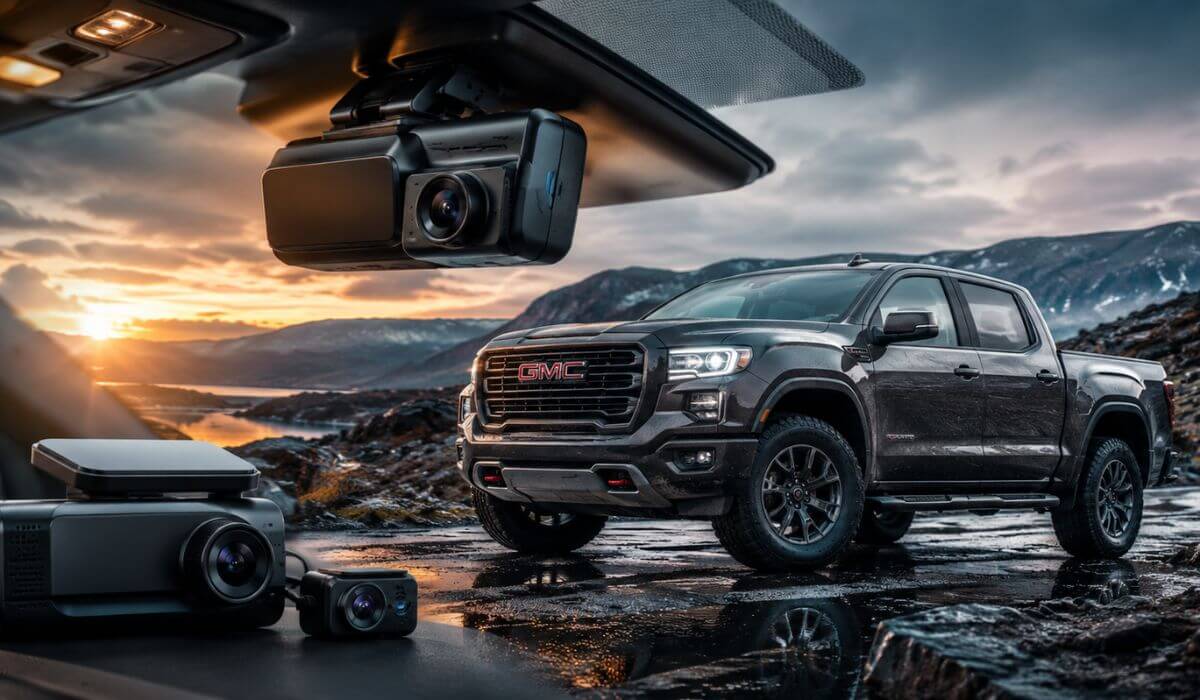
5 Best Dash Cams for GMC Canyon in 2026: OEM Fit 4K STARVIS 2 WiFi 6 Picks
If you own a GMC Canyon, choosing a dash cam isn’t as simple as buying the highest-resolution model on Amazon. The Canyon’s upright windshield, ADAS sensors behind the rearview mirror, and trim-specific mirror housings—especially on 2023, 2024, 2025, and 2026 models—can affect both installation and camera placement. Some owners want a factory-style camera that disappears into the mirror area, while others need a premium three-channel system for towing, off-road trips, or daily commuting. Those are very different use cases, and they deserve different recommendations.
After comparing the latest OEM-style and universal dash cams, we narrowed this list to models that deliver where it matters most: clean installation, dependable 4K recording, STARVIS 2 low-light performance, stable Wi-Fi connectivity, buffered parking mode, and long-term reliability. We also considered real-world ownership factors like power options, hardwire compatibility, storage capacity, app quality, and overall value—not just spec sheets. The result is a shortlist built specifically for GMC Canyon owners, whether you drive an older truck or the latest redesign.
Best GMC Canyon Dash Cam: Top 2026 Picks for 4K OEM and Front Rear Recording
#1. VIOFO A329S 4K 3 Channel Dash Cam
Best GMC Canyon dash cam with triple STARVIS 2 recording, Wi-Fi 6, and premium protection for owners who want flagship video quality without compromising on reliability.
#2. Vantrue N4 Pro S 4K 3 Channel Dash Cam
Best front and rear dash cam for GMC Canyon with an additional cabin camera, HDR imaging, and buffered parking mode—ideal for rideshare, family use, and everyday driving.
#3. Fitcamx Front 4K + Rear 1080P Dash Cam
Best OEM dash cam for GMC Canyon featuring a factory-look design, plug-and-play installation, and discreet recording that blends perfectly with the original interior.
#4. Mangoal Front 4K & Rear 1080P Dash Cam
Best GMC Canyon OEM-style dash cam for drivers who want an integrated appearance, simple installation, built-in Wi-Fi, and dependable daily recording without exposed wiring.
#5. ROVE R2-4K Dual PRO Dash Cam
Best 4K dash cam for GMC Canyon offering dual STARVIS 2 sensors, GPS, Wi-Fi 6, and outstanding value for owners looking for premium image quality at a competitive price.
Expert Tip
If you’re buying a dash cam for a GMC Canyon, don’t let 4K resolution be the deciding factor. A camera with a good sensor will usually outperform a higher-resolution camera with a weaker one, especially after sunset. That’s why you’ll see several models here using Sony STARVIS 2 sensors instead of chasing bigger numbers on the box.
The second thing most buyers overlook is fitment. If you prefer a clean factory interior, an OEM-style dash cam like Fitcamx or Mangoal makes far more sense than a universal model. On the other hand, if your Canyon regularly hauls trailers, spends weekends off-road, or carries expensive gear, a premium three-channel system such as the VIOFO A329S or Vantrue N4 Pro S gives you coverage that a factory-style camera simply can’t match. Buying for the way you actually use your truck will always matter more than buying the most expensive model.
How We Chose These Dash Cams for GMC Canyon
There are hundreds of dash cams that technically work in a GMC Canyon, but most of them never made it onto this list. We weren’t looking for the longest feature list—we were looking for the models we would genuinely recommend to someone who asked us, “Which one should I install on my own truck?”
Our first filter was real compatibility. GMC Canyon owners range from those driving older generations to those with the redesigned 2023–2026 trucks. We prioritized cameras that either offer a factory-style installation designed specifically for the latest Canyon or universal systems that are known to mount cleanly without interfering with the truck’s forward camera housing, mirror assembly, or driving visibility.
Next came video performance where it actually matters. Daytime footage is easy for almost every modern dash cam. The real difference appears on dark highways, rainy roads, underground parking garages, and poorly lit streets. That’s why we placed significant value on Sony STARVIS 2 sensors, HDR processing, and the ability to capture readable licence plates instead of blurry highlights.
We also looked beyond image quality. A dash cam becomes frustrating very quickly if the mobile app disconnects, file transfers take forever, or recordings are difficult to review after an incident. Models offering stable Wi-Fi, GPS logging, generous storage support, and mature software ranked higher because they provide a better ownership experience over time—not just better marketing.
For GMC Canyon owners who prefer a factory appearance, we specifically included OEM-style dash cams that blend into the mirror housing instead of hanging from the windshield with visible cables. For buyers who value maximum coverage, we selected premium three-channel systems that record the front, rear, and cabin without sacrificing overall video quality.
Finally, we considered long-term value instead of launch hype. Several products on this list are relatively new, so we didn’t rely on review counts alone. We evaluated the hardware platform, imaging technology, installation design, firmware maturity, manufacturer reputation, and whether each model solves a genuine need for GMC Canyon owners. If a camera looked impressive on paper but didn’t offer a clear advantage in everyday driving, it didn’t make this list.
The result is a shortlist built around fitment, image quality, reliability, and real ownership experience—the same factors most experienced truck owners care about once the novelty of the specifications wears off.
#1. VIOFO A329S 4K 3 Channel Dash Cam
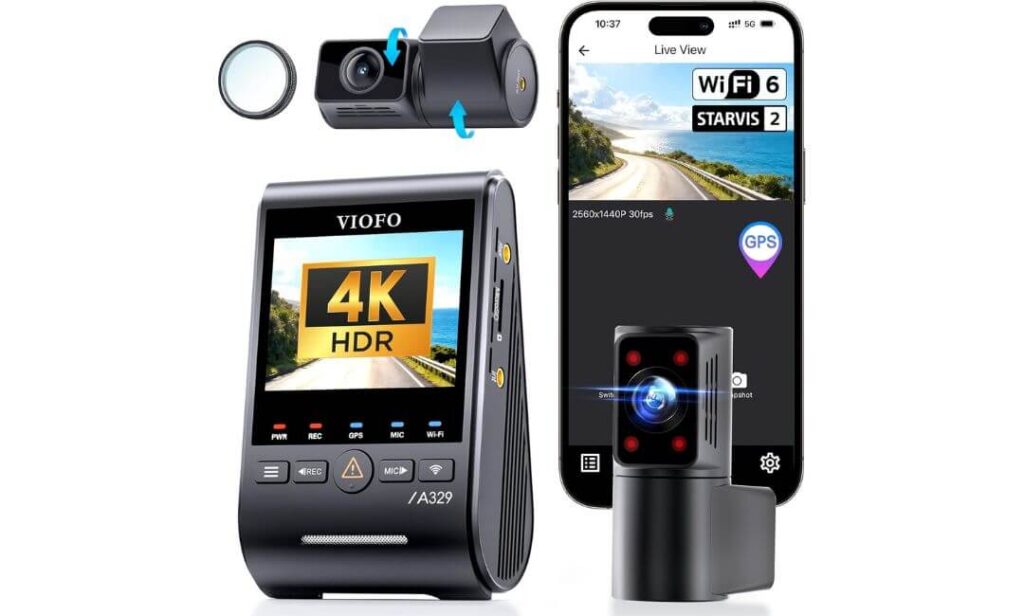
Quick Specs:
- 4K Front + 2K Cabin + 2K Rear recording
- Triple Sony STARVIS 2 sensors (IMX678 + IMX675)
- 210° cabin camera for maximum interior coverage
- Wi-Fi 6 with downloads up to 30MB/s
- Built-in GPS with multi-satellite support
- HDR on all three cameras for better plate readability
- Supports up to 4TB SSD or 512GB microSD
- Voice control and power-saving parking mode
- Slim coaxial cables for a cleaner hidden installation
The moment you hold this dash cam, it becomes obvious that it was designed for drivers who expect more than basic recording. Instead of focusing on flashy marketing claims, it delivers where it actually counts—consistent video quality, dependable hardware, and features you’ll still appreciate years later. For GMC Canyon owners who spend time commuting, towing, travelling, or exploring trails, that’s exactly the kind of reliability worth paying for.
One feature that immediately stands out is the triple STARVIS 2 camera setup. The front camera records in true 4K, while the rear and cabin cameras capture detailed 2K footage without sacrificing clarity. Thanks to the Sony IMX678 front sensor and IMX675 rear and cabin sensors, number plates remain noticeably easier to read during low-light drives, rainy evenings, and fast-moving traffic than they do on many standard 4K dash cams. The 210-degree fisheye cabin camera also eliminates the blind spots commonly found in narrower interior cameras.
Daily ownership is where this model quietly separates itself from the competition. Wi-Fi 6 transfers footage in seconds instead of minutes, built-in GPS records accurate driving data, and support for an external 4TB SSD means you can keep weeks of recordings without constantly overwriting files. Even the installation feels well thought out, with slim coaxial cables that route neatly behind trim panels and create a cleaner finish inside the cabin.
(If you want one dash cam that simply does everything well without asking you to compromise, this is the benchmark we kept coming back to.)
Why It Earned Our Top Recommendation
- Triple STARVIS 2 imaging delivers outstanding clarity in daylight and after dark.
- 4K front recording paired with 2K rear and cabin cameras provides genuinely useful evidence from every important angle.
- Wi-Fi 6 makes downloading and reviewing footage noticeably faster than older wireless systems.
- Large storage support up to 4TB SSD is ideal for frequent drivers, road trips, and long recording sessions.
- Clean cable design makes professional-looking installation much easier inside the GMC Canyon.
One Thing Worth Knowing
- To unlock the full parking mode and maximum recording storage, you’ll need a hardwire kit and, if preferred, an optional SSD setup, which are sold separately.
GMC Canyon Installation & Compatibility
This model works exceptionally well across GMC Canyon generations because it uses a universal windshield mount rather than relying on a vehicle-specific housing. Whether your truck is used for daily commuting, towing, or weekend adventures, it offers enough flexibility to position the cameras exactly where you need them.
For the cleanest installation, route the rear camera cable through the headliner and weather seals, then connect the power cable to a hardwire kit if you want parking surveillance. The slim coaxial cables supplied by VIOFO are noticeably easier to hide than traditional thick dash cam cables, helping preserve the factory appearance of the cabin.
The Insider Pro-Tip
Many buyers focus on the 4K badge, but the real reason this model consistently outperforms cheaper alternatives is its imaging hardware. The combination of Sony STARVIS 2 sensors, quality HDR processing, and a stronger image pipeline makes a much bigger difference than resolution alone—especially once the sun goes down.
If your GMC Canyon regularly carries tools, camping gear, expensive equipment, or spends time parked outside, this is one of the few dash cams that gives you meaningful coverage from the front, rear, and cabin without forcing compromises in image quality. It’s the type of upgrade you rarely think about—until the day you genuinely need the footage.
#2. Vantrue N4 Pro S 4K 3 Channel Dash Cam
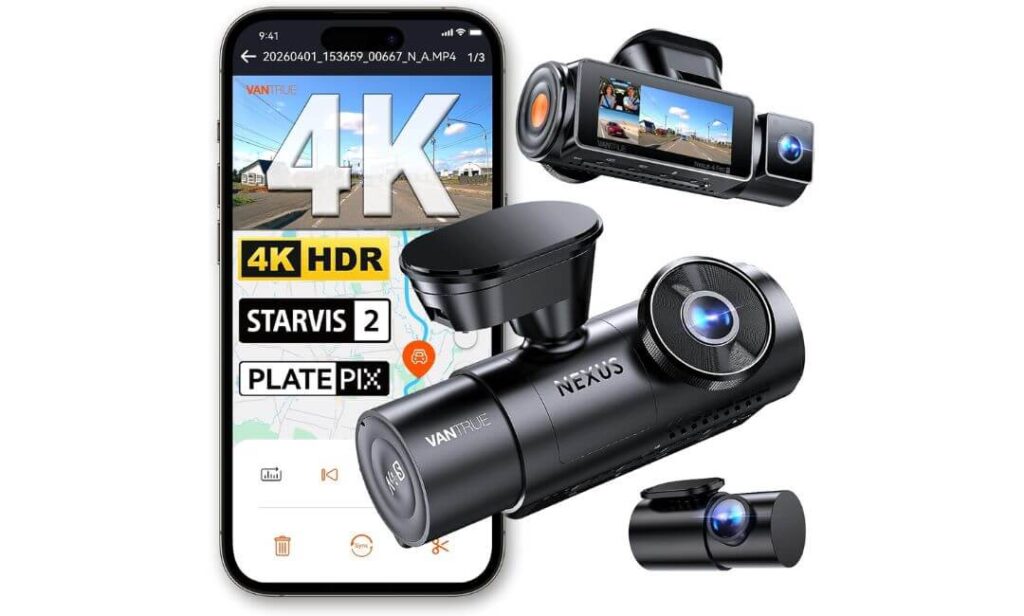
Quick Specs:
- 4K Front + 2.5K Rear + 1080P Interior recording
- Triple Sony STARVIS 2 sensors with HDR on all channels
- Night Vision 4.0 with enhanced licence plate recognition
- 5GHz Wi-Fi, built-in GPS, and voice control
- 360° adjustable rear camera for flexible mounting
- Buffered parking mode with pre-impact recording
- Supports up to 1TB microSD
- Supercapacitor for reliable performance in extreme temperatures
- OTA firmware updates for long-term improvements
What impressed us most wasn’t the resolution—it was how balanced this camera feels in everyday driving. Everything from the hardware to the software has clearly been designed for people who spend serious time behind the wheel. If your GMC Canyon is used for commuting during the week and hauling gear or heading off-road at the weekend, this setup covers those situations exceptionally well without feeling overly complicated.
The camera records in 4K at the front, 2.5K at the rear, and 1080P inside the cabin, powered by three STARVIS 2 sensors working together with triple HDR. In practical terms, that means better detail where many dash cams struggle—dark country roads, underground car parks, tunnels, heavy rain, or bright oncoming headlights. We also appreciate the 360-degree rotating rear camera, which gives you more flexibility during installation than most fixed rear units, especially if your Canyon has accessories like a canopy or tonneau cover.
Beyond video quality, this is a dash cam that feels built for long-term ownership. The supercapacitor handles heat far better than traditional batteries, 5GHz Wi-Fi keeps transfers quick, and the 1TB storage support means you can record for extended periods before worrying about overwriting older footage. Voice commands, GPS tracking, and regular firmware updates simply make the experience more polished over time.
(If you want premium three-channel protection but also value software stability and everyday reliability, this model earns its place near the top.)
What Stood Out During Our Evaluation
- Triple STARVIS 2 sensors produce excellent clarity in difficult lighting conditions.
- 2.5K rotating rear camera offers more installation flexibility than most competitors.
- Buffered parking mode records what happens before an impact instead of only after it.
- Supercapacitor design is better suited to trucks that spend time in hot or cold weather.
- OTA firmware updates help improve the camera long after purchase.
One Small Trade-Off
- A microSD card and hardwire kit are not included, so you’ll need to budget for them if you plan to use continuous parking surveillance.
GMC Canyon Compatibility & Installation Notes
This universal system fits the GMC Canyon very well and works across different model years. On newer trucks equipped with factory driver-assistance cameras behind the rear-view mirror, positioning the front unit slightly beside the mirror assembly helps maintain a clean view while avoiding interference with the vehicle’s original safety systems.
The included 20-foot rear cable is especially useful on the Canyon, making it easier to route the rear camera neatly through the headliner and toward the back of the cab. If you frequently carry tools, outdoor equipment, or travel with passengers, the three-camera layout provides valuable coverage without cluttering the cabin.
The Insider Pro-Tip
One feature that often gets overlooked is the rotating 2.5K rear camera. Unlike fixed rear cameras, it gives you much more freedom to fine-tune the viewing angle after installation, which can make a noticeable difference depending on how your GMC Canyon is used.
If you regularly drive at night, park outside, or spend long hours on the road, the combination of STARVIS 2 imaging, triple HDR, and a supercapacitor power design offers advantages you’ll appreciate long after the excitement of buying a new dash cam has faded. It’s built to keep recording consistently, even when conditions become less than ideal.
#3. Fitcamx Front 4K + Rear 1080P Dash Cam
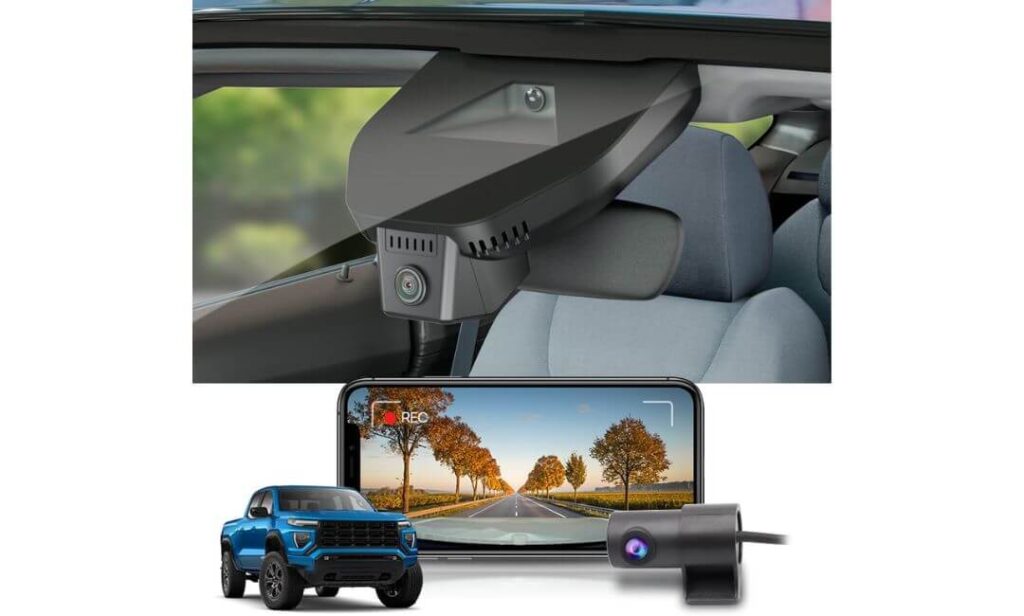
Quick Specs:
- Purpose-built for GMC Canyon 2023–2026
- Factory-style hidden installation behind the mirror housing
- 4K Front + 1080P Rear recording
- Plug-and-play design for compatible auto-dimming mirrors
- Built-in Wi-Fi with FITCAMX mobile app
- f/1.6 lens with WDR for improved low-light footage
- 128GB memory card included
- OEM-style mirror replacement housing
- Operates in temperatures from -20°C to 85°C
The biggest reason people buy this camera has nothing to do with resolution. They buy it because, once installed, it genuinely looks like it came from the factory. If you’ve spent good money on a GMC Canyon, the last thing you probably want is another gadget hanging from the windshield with exposed wires running across the headliner. That’s exactly the problem this model solves.
Unlike universal dash cams, this one replaces the trim around the rear-view mirror, creating a clean OEM-style installation that’s difficult to notice unless someone knows where to look. It records in 4K at the front and 1080P at the rear, while the f/1.6 aperture and WDR processing help maintain better visibility after dark or when driving through changing light conditions. Built-in Wi-Fi lets you review footage directly from your phone without removing the memory card, and because the camera starts recording automatically with the ignition, there’s very little day-to-day interaction required.
Where this camera truly stands apart is how naturally it fits the truck itself. There are no suction cups, no oversized display hanging below the mirror, and virtually no visible wiring once installed correctly. For many GMC Canyon owners, preserving the original interior design is every bit as important as recording quality—and that’s an area where very few aftermarket dash cams come close.
(If your priority is keeping the interior looking completely factory while still gaining dependable front and rear protection, this is one of the smartest upgrades available.)
Why It Deserves a Place on This List
- Designed specifically for GMC Canyon rather than adapted from a universal camera.
- Factory-look installation keeps the windshield clean and uncluttered.
- 4K front recording captures sharp everyday driving footage with dependable clarity.
- Wi-Fi app connectivity makes reviewing and downloading videos quick and straightforward.
- 128GB memory card included, so it’s ready to use straight out of the box.
One Thing to Check Before Ordering
- This version is designed for GMC Canyon models equipped with an auto-dimming rear-view mirror. If your truck doesn’t have that feature, you’ll need an alternative power connection.
GMC Canyon Fitment & Installation Notes
This is one of the few dash cams that feels like it belongs in the GMC Canyon from day one. It’s compatible with AT4, AT4X, Denali, and Elevation trims from the latest generation, provided the vehicle is fitted with the factory auto-dimming mirror.
Installation is significantly cleaner than most universal systems because the camera integrates into the mirror housing instead of attaching below it. That means no visible power cable across the windshield, no blocked driving view, and a finish that closely matches the original interior. Before ordering, it’s worth taking a few seconds to confirm your mirror specification, as that’s the key detail that determines compatibility.
The Insider Pro-Tip
OEM-style dash cams aren’t for everyone—but for the right owner, they’re incredibly difficult to replace once you’ve experienced them. Every time you get into your GMC Canyon, the cabin still feels factory-built rather than filled with aftermarket accessories, yet you’re quietly recording every journey in the background.
If your goal is a clean interior, hassle-free ownership, and discreet protection rather than adding another screen to the windshield, this camera delivers something that many universal dash cams simply can’t: it disappears into the truck while still doing its job every time you drive.
#4. Mangoal Front 4K & Rear 1080P Dash Cam
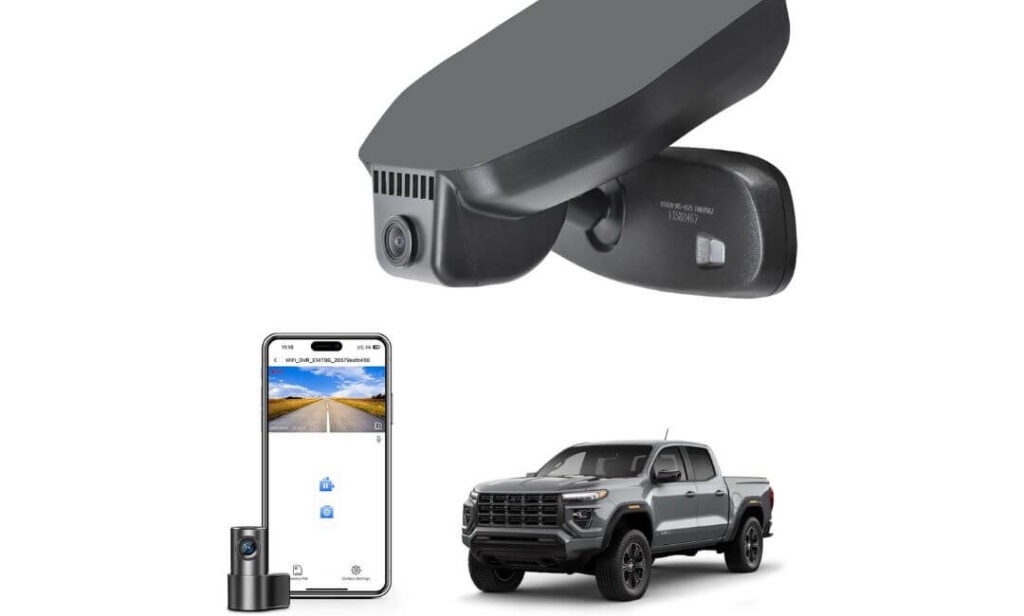
Quick Specs:
- Custom-built for GMC Canyon 2023–2026 (Model B)
- Factory-style integrated mirror design
- 4K Front + 1080P Rear recording
- Sony STARVIS IMX335 image sensor
- Built-in Wi-Fi with free mobile app
- 150° front + 140° rear viewing angles
- Supercapacitor for improved durability
- 128GB microSD card included
- Includes both mirror power adapter and OBD power adapter
Rather than trying to impress with oversized screens or unnecessary extras, this camera focuses on something most GMC Canyon owners appreciate after living with their truck for a while—a factory-quality appearance that never feels like an aftermarket accessory. Once installed correctly, it blends into the mirror area so naturally that most passengers won’t even realise there’s a dash cam recording every journey.
Video quality is equally reassuring. The combination of 4K front recording, 1080P rear coverage, and the Sony STARVIS IMX335 sensor delivers clean footage with noticeably improved low-light performance compared with many entry-level OEM-style alternatives. Road signs, vehicle registration plates, and lane markings remain easier to distinguish during evening drives, while the 150-degree front and 140-degree rear viewing angles provide broad coverage without creating the excessive fisheye distortion seen on some wider lenses. Built-in Wi-Fi and the companion mobile app also make reviewing or downloading clips refreshingly straightforward.
Another reason this model earned a place on our list is the attention given to installation. Mangoal includes both an auto-dimming mirror power adapter and an OBD power adapter, giving GMC Canyon owners more flexibility depending on their truck’s configuration. Combined with the included 128GB memory card, the system feels ready to install rather than leaving you searching for extra accessories before you can even start recording.
(For owners who want an OEM-style dash cam that feels complete straight out of the box, this package is one of the strongest values currently available.)
Why We Confidently Recommend It
- Purpose-built for GMC Canyon instead of using a one-size-fits-all housing.
- Sony STARVIS sensor improves clarity when lighting conditions become challenging.
- Factory-look installation preserves the clean appearance of the cabin.
- Complete installation kit includes useful accessories many competitors sell separately.
- Built-in Wi-Fi makes viewing and saving important footage quick and convenient.
One Small Consideration
- To use the mirror power connection, your GMC Canyon should be equipped with the factory auto-dimming rear-view mirror. Otherwise, you’ll need to power it through the included OBD option or a fuse-box connection.
GMC Canyon Fitment & Installation Notes
This version has been developed specifically for the latest GMC Canyon platform and fits Elevation, AT4, Denali, and WD trims using the correct Model B housing. Because it integrates behind the mirror cover, the finished installation looks significantly cleaner than a conventional windshield-mounted dash cam.
Before ordering, it’s worth confirming your truck’s mirror connector. If the factory 10-pin auto-dimming mirror is present, installation is largely plug-and-play. If not, Mangoal thoughtfully includes an OBD power adapter, allowing you to install the camera without modifying the original wiring.
The Insider Pro-Tip
The biggest advantage of an OEM-style dash cam isn’t something you’ll notice in the first five minutes—it’s something you’ll appreciate every single day afterwards. With no hanging display, no suction mount, and virtually no exposed wiring, the interior continues to feel exactly the way GMC intended.
If you’re the type of owner who values a factory appearance as much as dependable recording quality, this setup strikes an excellent balance. It quietly captures 4K front and 1080P rear footage in the background while keeping the cabin looking clean, uncluttered, and unmistakably original.
#5. ROVE R2-4K Dual PRO Dash Cam
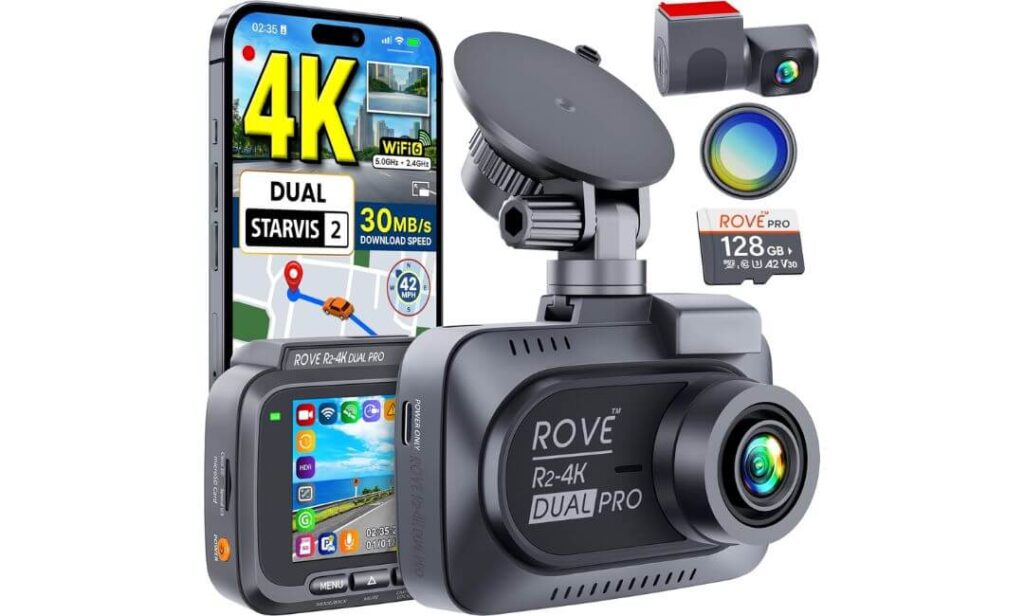
Quick Specs:
- 4K Front + 2K Rear recording
- Sony STARVIS 2 IMX678 + IMX675 sensors
- HDR with F1.7 front and F1.55 rear lenses
- Dual-band Wi-Fi 6 with downloads up to 30MB/s
- Quad-mode GPS (GPS, Galileo, GLONASS & BeiDou)
- 150° front + 140° rear viewing angles
- 128GB microSD card + CPL filter included
- Supports up to 1TB microSD storage
- Supercapacitor with intelligent parking surveillance
Instead of trying to reinvent the dash cam, ROVE focused on refining the things drivers actually notice after months of ownership. Better image quality, faster wireless transfers, dependable GPS tracking, and a complete package that doesn’t immediately send you shopping for accessories. For many GMC Canyon owners, that’s exactly what makes this camera such an easy recommendation.
The hardware is particularly impressive for its price. Recording in 4K at the front and 2K at the rear, it combines the Sony IMX678 and IMX675 STARVIS 2 sensors with HDR and bright F1.7/F1.55 lenses to produce footage that remains surprisingly clean when driving at night, through heavy rain, or during sudden lighting changes. Registration plates, road signs, and lane markings stay easier to identify, while the Wi-Fi 6 connection makes downloading large 4K files far quicker than older dash cam systems. ROVE also includes a 128GB memory card and a CPL filter, which noticeably reduces windshield reflections on bright days.
Where this camera continues to impress is everyday usability. The quad-mode GPS records detailed trip information without needing an external module, the supercapacitor is designed to handle demanding temperatures, and support for 1TB storage gives frequent drivers plenty of recording capacity. Combined with free firmware updates, it feels like a product that’s been designed to stay reliable rather than simply look impressive on the day you unbox it.
(If you want flagship imaging performance without paying flagship prices, this is one of the strongest value-for-money dash cams currently available.)
Why It Made Our Shortlist
- Dual STARVIS 2 sensors provide excellent front and rear image quality.
- 4K + 2K recording strikes an ideal balance between detail and storage efficiency.
- Wi-Fi 6 dramatically speeds up wireless transfers through the ROVE app.
- 128GB card and CPL filter included, reducing additional purchase costs.
- Quad-mode GPS adds accurate route, speed, and location data to every recording.
One Small Limitation
- Parking surveillance requires the optional hardwire kit, which is purchased separately if you want continuous vehicle monitoring.
GMC Canyon Installation & Everyday Use
As a universal windshield-mounted system, this camera works very well across different GMC Canyon model years. The compact front unit can be positioned neatly near the upper section of the windshield while keeping clear of the factory mirror housing and driver-assistance cameras on newer models.
ROVE also includes both a suction mount and an adhesive mount, allowing you to choose the installation method that best suits your preference. The supplied 6-metre rear cable is long enough to route cleanly through the headliner and interior trim, helping maintain a tidy factory appearance once everything is installed.
The Insider Pro-Tip
One detail many buyers overlook is everything that’s already included in the box. The 128GB high-endurance memory card, CPL filter, quality mounting options, and GPS functionality save both time and additional expense compared with many competing dash cams that sell these items separately.
If you’re looking for a premium dual-channel dash cam that delivers excellent image quality, reliable hardware, and one of the smoothest day-to-day user experiences without stretching into flagship pricing, this is the model we’d confidently recommend to most GMC Canyon owners.
Best GMC Canyon Dash Cam Comparison: Side-by-Side Feature Breakdown
| Dash Cam | Best For | Recording Setup | Low-Light Hardware | Installation Style | Storage | Standout Advantage |
|---|---|---|---|---|---|---|
| VIOFO A329S | Editor’s Choice | 4K Front 2K Cabin 2K Rear |
Triple Sony STARVIS 2 HDR |
Universal Premium Hidden Install | Up to 4TB SSD 512GB microSD |
Excellent all-round performer Best image quality, Wi-Fi 6, voice control and premium long-term reliability. |
| Vantrue N4 Pro S | Best 3-Channel Value | 4K Front 2.5K Rear 1080P Cabin |
Triple Sony STARVIS 2 Triple HDR |
Universal Windshield Mount | Up to 1TB microSD | Most versatile setup Rotating rear camera, buffered parking mode and excellent night-time licence plate clarity. |
| Fitcamx OEM Dash Cam | Best OEM Fit | 4K Front 1080P Rear |
WDR + f/1.6 Lens | Factory Mirror Integration | 128GB Included | Cleanest factory appearance No hanging camera, no exposed wiring and seamless integration with compatible GMC Canyon trims. |
| Mangoal OEM Dash Cam | OEM Value Pick | 4K Front 1080P Rear |
Sony STARVIS IMX335 | Factory Mirror Integration | 128GB Included | Complete installation package Includes mirror adapter, OBD power option and OEM-style housing out of the box. |
| ROVE R2-4K Dual PRO | Best Premium Value | 4K Front 2K Rear |
Dual Sony STARVIS 2 HDR |
Universal Windshield Mount | 128GB Included Up to 1TB |
Outstanding everyday value Wi-Fi 6, Quad GPS, CPL filter and premium accessories included. |
Why Choosing the Right Dash Cam for Your GMC Canyon Matters More Than You Think
A dash cam should fit the way you use your GMC Canyon, not the other way around. Some owners spend most of their time commuting, while others regularly tow trailers, visit construction sites, travel long distances, or head off-road at weekends. Those different driving habits place very different demands on a dash camera.
That’s why we didn’t simply recommend the highest-rated products on Amazon. We looked at how each model fits the Canyon itself, how clean the installation can be, how well it records in poor lighting, and whether it offers features that genuinely improve ownership over the long term. Small details—such as cable routing, mirror compatibility, parking surveillance, storage capacity, and image sensors—often have a much bigger impact than buyers realise before installation.
A good dash cam should become part of the truck rather than something that constantly reminds you it’s there. The right choice records quietly in the background, captures reliable evidence when needed, and doesn’t compromise the clean interior that makes the GMC Canyon such a well-designed pickup.
OEM Dash Cam for GMC Canyon vs Aftermarket Systems
One of the first decisions every GMC Canyon owner should make is whether they prefer an OEM-style dash cam or a traditional aftermarket model.
OEM-style cameras, such as the Fitcamx and Mangoal, replace or integrate into the factory mirror housing. Once installed, they look almost identical to the original equipment. There are no hanging displays, no suction cups attached to the windshield, and virtually no visible wiring. If maintaining the factory appearance is your highest priority, these are excellent choices.
Universal aftermarket dash cams offer different advantages. Premium models such as the VIOFO A329S, Vantrue N4 Pro S, and ROVE R2-4K Dual PRO generally provide higher-end imaging hardware, more advanced parking surveillance, faster Wi-Fi, GPS tracking, larger storage support, and additional recording channels. They require slightly more installation effort but usually deliver greater flexibility and stronger overall performance.
Neither option is automatically better. The right decision depends on whether your priority is factory integration or maximum recording capability.
GMC Canyon Installation Realities You Should Know
Many buyers assume every dash cam installs the same way, but the GMC Canyon has a few details worth checking before ordering.
On newer Canyon models, the area behind the rear-view mirror often houses factory safety equipment, depending on trim level and specification. Installing a dash cam too close to this area can obstruct visibility or complicate the installation process. Positioning the front camera correctly keeps the windshield tidy while avoiding interference with existing vehicle systems.
If you’re considering an OEM-style camera, confirm whether your truck has an auto-dimming rear-view mirror before purchasing. Several integrated dash cams rely on that mirror connection for plug-and-play power. If your vehicle doesn’t include it, you’ll normally need to use an OBD adapter or a hardwire kit instead.
For rear cameras, routing the cable through the headliner and weather seals creates a much cleaner finish than leaving wiring exposed. Spending a little extra time during installation usually results in an appearance that feels much closer to factory quality.
Why Parking Mode Is Worth Paying Attention To
Many incidents happen while the vehicle isn’t moving.
Car park damage, hit-and-run accidents, attempted theft, vandalism, and unexpected impacts often occur when the engine is switched off. A dash cam with buffered parking mode records footage from a few seconds before an event is detected, providing valuable context that standard motion recording can miss.
If you regularly leave your GMC Canyon at airports, railway stations, shopping centres, work sites, or overnight parking, investing in a camera with reliable parking surveillance can be just as important as image quality while driving.
Keep in mind that most advanced parking features require a dedicated hardwire kit for continuous power.
Why GPS Logging Matters More Than Most Drivers Expect
GPS does much more than record your location.
A quality GPS module also stores your driving speed, travel direction, route history, and accurate timestamps alongside each recording. If footage is ever needed after an accident, this additional information can help explain exactly where an incident occurred and how the vehicle was moving at that moment.
Many premium dash cams also allow GPS information to be reviewed through desktop software or a mobile app, making footage easier to organise and understand later.
Why Front and Rear Recording Makes More Sense for a Pickup
The GMC Canyon is often used very differently from a typical passenger car.
Whether you’re towing, carrying expensive tools, transporting outdoor equipment, or simply driving in busy traffic, incidents don’t always happen directly in front of the vehicle. Rear-end collisions, reversing accidents, and damage while parked are common situations where a second camera becomes extremely valuable.
For owners who frequently travel with passengers, work equipment, or high-value cargo, a three-channel dash cam can provide an additional layer of protection by recording activity inside the cabin as well.
Understanding the Key Features Before You Buy
4K Dash Cam for GMC Canyon
A 4K front camera captures more detail than standard Full HD recording, making road signs, number plates, and traffic conditions easier to identify. However, image quality also depends heavily on the camera sensor and HDR processing—not resolution alone.
STARVIS 2 Sensors
Sony STARVIS 2 sensors are designed to improve image quality in low-light conditions. They reduce motion blur, increase dynamic range, and help capture clearer footage during night driving, rain, tunnels, and bright headlight glare.
Wi-Fi 6
Wi-Fi 6 allows much faster wireless transfers between the dash cam and your smartphone. Large 4K files that previously took several minutes to download can often be transferred in a matter of seconds, making it much easier to review or share important footage.
GPS Logging
Built-in GPS automatically records route information, speed, location, and timestamps alongside each video. This creates more complete evidence without requiring any manual input from the driver.
Parking Mode
Parking mode allows the camera to continue protecting your GMC Canyon after you’ve switched off the engine. Depending on the model, it can record impacts, motion around the vehicle, or buffered footage that begins before an incident actually occurs, giving you a much clearer picture of what happened while the truck was unattended.
Buying Guide: How to Choose the Right Dash Cam for Your GMC Canyon Without Regretting It Later
Buying a dash cam for a GMC Canyon isn’t simply about choosing the highest resolution or the newest model. A pickup truck places different demands on a camera than a small family car. Longer journeys, rougher roads, heavier suspension movement, towing, job-site parking, and outdoor adventures all influence which features are genuinely worth paying for.
Before adding any dash cam to your basket, it’s worth looking beyond the marketing claims. The models that provide the best ownership experience usually balance image quality, installation, reliability, hardware, and long-term usability rather than excelling in only one area.
Prioritise Image Quality Before Chasing Bigger Numbers
Many buyers immediately search for a 4K dash cam for GMC Canyon, but resolution is only one part of the equation.
A high-quality image sensor often has a greater impact than additional pixels. Cameras equipped with Sony STARVIS 2 sensors, such as several models in our recommendations, produce noticeably cleaner footage during night driving, rain, fog, underground parking, and changing light conditions. They reduce image noise, improve dynamic range, and help preserve important details like licence plates and road signs when lighting becomes difficult.
HDR processing is equally important. Driving directly into sunlight or meeting bright LED headlights can easily overwhelm an average camera. Good HDR technology balances those bright and dark areas so valuable evidence isn’t lost.
If your budget allows only one premium feature, invest in a better image sensor, not simply a higher recording resolution.
Choose the Right Camera Coverage for the Way You Use Your Truck
Not every GMC Canyon owner needs the same recording setup.
A front-only camera may be enough for drivers who mainly commute short distances and park in secure locations.
A front and rear dash cam is a much better choice for most owners because it records rear-end collisions, reversing incidents, and unexpected impacts that a single camera can never capture.
For people who regularly transport passengers, valuable equipment, or work tools, a three-channel system adds interior recording without sacrificing road coverage. It also provides additional evidence during insurance disputes or unexpected incidents inside the cabin.
Rather than asking how many cameras you can afford, ask yourself which areas of your GMC Canyon you actually want protected.
Look Beyond Wi-Fi and Check the Entire Connectivity Package
Wireless connectivity has improved dramatically over the last few years, but not every system performs equally well.
Modern cameras with Wi-Fi 6 transfer large 4K recordings significantly faster than older Wi-Fi standards, making it much easier to review footage after an incident. Stable mobile applications are equally valuable because they allow you to preview recordings, change settings, download videos, and update firmware without removing the memory card.
Built-in GPS logging is another feature worth prioritising. It automatically records speed, route, direction, and timestamps alongside your footage, creating much stronger evidence if recordings are ever needed.
When comparing two similar dash cams, the one with better software and a more reliable mobile app usually provides the better ownership experience over time.
Don’t Ignore Storage Capacity and Long-Term Recording Reliability
Storage isn’t just about buying the biggest memory card available.
A reliable dash cam should support continuous loop recording without freezing, corrupting files, or randomly stopping after months of daily use. High-endurance memory cards and stable firmware often matter more than maximum storage numbers alone.
If you drive frequently, travel long distances, or want extended parking surveillance, choosing a model that supports larger storage capacities gives you much more flexibility before older recordings begin to overwrite themselves.
Reliable parking mode is equally important. Buffered recording, impact detection, and intelligent event protection ensure important clips are safely stored instead of accidentally being overwritten during normal loop recording.
Think About Power and Installation Before Ordering
Installation is one area where many buyers realise mistakes only after the dash cam arrives.
If maintaining a factory appearance matters to you, an OEM dash cam for GMC Canyon provides the cleanest result by integrating around the rear-view mirror rather than attaching below it. These systems are ideal for owners who dislike visible cables and aftermarket accessories.
Universal dash cams offer greater flexibility and more advanced features but require careful cable routing through the headliner and interior trim to achieve a similarly tidy finish.
Before purchasing any OEM-style camera, confirm whether your truck has an auto-dimming rear-view mirror, as several integrated systems rely on that connection for straightforward installation.
If you intend to use parking mode every day, remember that most premium dash cams also require a dedicated hardwire kit for continuous power.
Build Quality Matters More in a Pickup Than Many People Expect
The GMC Canyon is designed to handle far more demanding conditions than an average passenger car.
Uneven roads, gravel tracks, towing, vibration, direct sunlight, and large temperature swings all place additional stress on electronic equipment mounted to the windshield.
Look for dash cams that use supercapacitors instead of traditional lithium batteries. They tolerate heat and cold far better while reducing the risk of long-term battery degradation.
High-quality mounting systems are equally important. A secure mount helps minimise vibration, keeping footage sharper on rough roads while reducing unnecessary strain on the camera itself.
Confirm Compatibility Before You Buy
Even an excellent dash cam can become frustrating if it isn’t compatible with your specific GMC Canyon.
Before placing an order, check whether the camera is designed specifically for your model year or intended as a universal installation. If choosing an OEM-style system, verify the mirror type, trim level, and power connector requirements before purchase.
For universal cameras, make sure there’s sufficient space around the rear-view mirror and factory driver-assistance equipment. The dash cam should never obstruct the driver’s view, interfere with airbags, block rain sensors, or affect the operation of any forward-facing safety cameras.
Taking a few extra minutes to confirm compatibility before buying is often the difference between a simple afternoon installation and an unnecessary return.
Our Final Buying Advice
The best dash cam for a GMC Canyon isn’t necessarily the one with the longest specification sheet—it’s the one that matches how you actually use your truck. If you value a clean factory interior, an OEM-style dash cam is difficult to beat. If your priority is maximum evidence, premium night performance, and long-term flexibility, investing in a STARVIS 2-equipped front and rear or three-channel system is money well spent.
Choose a camera you’ll still be happy using several years from now, not one that only looks impressive on the product page. That’s exactly the approach we followed when selecting every recommendation in this guide.
GMC Canyon Dash Cam Installation Guide: How to Get a Clean Factory-Quality Finish
A quality dash cam can easily last for years, but only if it’s installed correctly from the beginning. Even the best camera will struggle if it’s mounted in the wrong position, wired carelessly, or connected to an unsuitable power source. Taking an extra hour during installation usually makes the difference between a setup that feels factory-installed and one that constantly causes small frustrations.
The good news is that the GMC Canyon offers plenty of space for a professional-looking installation when you plan the wiring carefully. Whether you’ve chosen an OEM-style dash cam or a premium universal system, the same installation principles apply.
Start with Safety Before Removing Any Interior Trim
Before installing any electrical accessory, park your GMC Canyon on a level surface, switch off the ignition, and remove the key from the vehicle.
If you’re planning a hardwire installation, disconnecting the negative battery terminal is always the safest approach before working around the fuse box. It reduces the chance of accidental short circuits while protecting both the vehicle’s electrical system and the dash cam itself.
Use proper plastic trim removal tools instead of metal screwdrivers whenever possible. They reduce the risk of scratching dashboard panels, damaging trim clips, or marking interior plastics.
Choose the Right Mounting Position First
The mounting location affects both recording quality and everyday driving comfort.
For most universal dash cams, the ideal position is high on the windshield, close to the rear-view mirror, where the camera remains largely outside the driver’s normal line of sight. This location also provides the most balanced recording angle while keeping the cabin looking tidy.
If your GMC Canyon is equipped with factory driver-assistance cameras or rain sensors behind the mirror housing, avoid placing the dash cam directly over those components. Leave sufficient clearance so the original systems continue operating normally.
For OEM-style dash cams, always use the manufacturer’s supplied mounting housing designed specifically for the Canyon. These systems are engineered to integrate around the mirror assembly and usually provide the cleanest overall appearance.
Once mounted, adjust the camera so roughly 60% of the image shows the road ahead and 40% shows the bonnet and surrounding foreground. This typically provides the most useful perspective for recording traffic incidents.
Plan the Cable Routing Before Hiding Any Wiring
Neat cable management separates a professional installation from an average one.
Run the power cable along the headliner, continue behind the A-pillar trim, and then route it toward the fuse box or selected power source. Rear camera cables should follow the headliner toward the back of the cabin before dropping neatly through interior trim panels where required.
One of the most important installation rules is to avoid routing cables across curtain airbag deployment paths. Airbags require clear space to deploy correctly, and trapped wiring can interfere with their operation during a collision.
Using fabric tape, factory cable channels, and supplied cable clips helps prevent rattles while keeping the installation looking original.
Choose the Right Power Method for Your Driving Needs
The power connection you choose determines which dash cam features will be available.
A 12V cigarette lighter connection is the quickest option and is perfectly suitable if you only need recording while driving. Installation is simple, requires no vehicle modifications, and can usually be completed within minutes.
If you want parking mode, impact recording while parked, or buffered surveillance after switching off the engine, a hardwire kit is the better choice. It provides a permanent power connection while using built-in voltage protection to help prevent unnecessary battery discharge.
Some OEM-style GMC Canyon dash cams also support direct mirror power connections where compatible, creating one of the cleanest installation methods available with almost no visible wiring.
Choose the power solution based on how you actually use your truck rather than simply selecting the easiest option.
Position the GPS Module Carefully
If your dash cam includes a separate GPS antenna, placement is more important than many people realise.
Install the GPS module close to the upper section of the windshield where it has the clearest possible view of the sky. Avoid placing it beneath thick metal trim panels or directly beside electronic modules that could reduce signal quality.
Some premium dash cams integrate the GPS receiver directly into the main camera housing, eliminating the need for a separate antenna altogether. In those cases, simply ensuring the camera has an unobstructed view through the windshield is usually sufficient.
Once connected, allow a few minutes during the first drive for the system to establish a full satellite lock.
Test Everything Before Finishing the Installation
Never reinstall every trim panel before confirming the system works correctly.
Start the engine and check that the dash cam powers on automatically. Record a short drive covering different speeds, intersections, and lighting conditions, then review the footage to confirm both front and rear cameras are recording correctly.
If your camera includes GPS, verify that speed, route information, and timestamps are being recorded accurately within the companion software or mobile app.
Finally, test parking mode if you’ve installed a hardwire kit. Lock the vehicle, wait for the camera to enter parking mode, then gently trigger motion or impact detection according to the manufacturer’s instructions. Confirm that event recordings are saved correctly before considering the installation complete.
A Few Small Details That Make a Big Difference
Before your first long journey, clean both camera lenses and the inside of the windshield using a lint-free microfiber cloth. Even a thin layer of dust or fingerprint marks can reduce image clarity, particularly at night.
It’s also worth checking the camera angle again after a few days of driving. Windshield mounts sometimes settle slightly after installation, and a minor adjustment early on can improve the recorded view for years to come.
A well-installed dash cam shouldn’t attract attention every time you enter your GMC Canyon. It should quietly power on, record every drive reliably, and become one of those upgrades you eventually forget is there—until the day you’re genuinely grateful you installed it.
OEM Dash Cam for GMC Canyon vs Aftermarket Options: Which One Makes More Sense?
One of the biggest decisions you’ll make isn’t choosing between two brands—it’s deciding whether an OEM-style dash cam or a traditional aftermarket dash cam better suits your GMC Canyon.
Neither approach is universally better. They simply solve different problems. Some owners care most about keeping the cabin looking exactly as it left the factory, while others are willing to accept a visible windshield-mounted camera in exchange for stronger hardware, better night performance, and more advanced recording features.
Understanding those differences before buying usually leads to a purchase you’ll still be happy with years later.
Factory Appearance vs Maximum Recording Performance
If preserving the original look of your GMC Canyon is your highest priority, an OEM-style dash cam is difficult to beat.
Models such as the Fitcamx and Mangoal integrate directly into the rear-view mirror housing, making them look like factory equipment rather than an aftermarket accessory. Once installed, there are no suction mounts hanging from the windshield, very little visible wiring, and nothing distracting your view while driving. The cabin continues to feel clean, organised, and unmistakably original.
Aftermarket systems follow a different philosophy. Premium models like the VIOFO A329S, Vantrue N4 Pro S, and ROVE R2-4K Dual PRO prioritise recording performance above everything else. They typically offer higher-end imaging sensors, larger storage support, faster wireless connectivity, better HDR processing, more flexible camera configurations, and advanced parking surveillance. They may be slightly more noticeable inside the cabin, but they usually deliver stronger overall capability.
If appearance matters most, OEM wins. If recording quality and flexibility are your priorities, aftermarket systems generally have the advantage.
Integration with the GMC Canyon Interior
One reason OEM-style cameras continue to grow in popularity is how naturally they fit the vehicle.
Because they’re designed around the Canyon’s mirror assembly, they don’t interrupt the dashboard design or create unnecessary clutter. Many owners appreciate the fact that passengers often don’t even notice a dash cam has been installed.
Universal aftermarket cameras require a little more planning during installation, but when the wiring is routed correctly through the headliner and interior trim, they can still achieve an impressively clean finish. The difference is simply that the camera itself remains visible beneath or beside the mirror.
Both approaches can look professional—the OEM option simply disappears more effectively.
Software, Firmware and Long-Term Support
Hardware is only part of the ownership experience.
Premium aftermarket manufacturers often invest heavily in their software ecosystem. Regular firmware updates, improved mobile applications, bug fixes, expanded camera features, and ongoing compatibility improvements can extend the useful life of a dash cam well beyond its original release.
Brands like VIOFO, Vantrue, and ROVE have built strong reputations for refining their products through software updates, improving stability and adding new functionality over time.
OEM-style systems generally focus more on simplicity than continuous feature development. Their applications are usually designed around reviewing footage, downloading recordings, and adjusting basic settings rather than frequently introducing advanced capabilities.
If software maturity and long-term firmware support are important to you, premium aftermarket brands often provide a more active ecosystem.
Price vs Long-Term Value
The cheapest dash cam is rarely the least expensive to own.
An OEM-style camera may initially appear more expensive than a standard universal dash cam, but part of that price reflects the custom housing, vehicle-specific design, and cleaner installation.
Premium aftermarket systems often cost more because of higher-end sensors, larger storage support, advanced GPS functionality, multiple recording channels, and stronger parking surveillance.
Instead of comparing purchase prices alone, consider the complete ownership experience.
Ask yourself:
- Will this camera still meet my needs several years from now?
- Does it include the features I’ll actually use every day?
- Will I eventually upgrade because I chose a cheaper model now?
Buying once usually costs less than replacing a disappointing dash cam later.
Compatibility with Existing GMC Canyon Features
Modern GMC Canyon models include increasingly sophisticated technology, making compatibility more important than many buyers realise.
A correctly installed dash cam should never interfere with the truck’s forward-facing safety cameras, rain sensors, driver-assistance systems, or normal visibility through the windshield.
OEM-style cameras naturally work around these areas because they’re engineered specifically for compatible mirror assemblies.
Universal dash cams also work extremely well, provided they’re positioned thoughtfully during installation. Mounting the camera close to the mirror while leaving adequate clearance around factory sensors usually produces excellent results without affecting existing vehicle systems.
Neither style should interfere with Apple CarPlay, Android Auto, Bluetooth connectivity, or the Canyon’s infotainment system because they operate independently of the vehicle’s multimedia hardware.
Which Option Would We Choose?
If our goal was preserving the original appearance of a GMC Canyon while adding discreet front and rear recording, we’d confidently choose an OEM-style dash cam such as the Fitcamx or Mangoal. They integrate beautifully into the cabin and require very little day-to-day attention after installation.
If maximum evidence, premium night performance, larger storage support, faster wireless transfers, and advanced parking surveillance were more important than hiding the camera itself, we’d choose a premium aftermarket system such as the VIOFO A329S, Vantrue N4 Pro S, or ROVE R2-4K Dual PRO.
Neither choice is objectively right or wrong. The best dash cam for your GMC Canyon is simply the one that matches the way you drive, the way you park, and the way you expect your truck to protect you when something unexpected happens.
FAQs About GMC Canyon Dash Cam
Is an OEM dash cam a better choice for the GMC Canyon than a premium universal dash cam?
It depends on what you expect after six months of ownership, not just on the day you install it. If your priority is keeping the cabin looking completely factory-original, an OEM-style dash cam is hard to beat. It blends into the mirror housing, hides the wiring, and feels like it was installed by GMC rather than added later.
However, if your GMC Canyon regularly tows, covers long motorway miles, or spends nights parked outside, a premium universal system usually offers more advanced hardware. Features such as STARVIS 2 sensors, larger storage support, Wi-Fi 6, three-channel recording, and more capable parking surveillance can provide better long-term value. In our experience, buyers who prioritise recording performance rarely regret choosing a high-end universal dash cam, while buyers focused on factory appearance tend to be happiest with an OEM-style solution.
Will installing a dash cam affect the GMC Canyon’s factory cameras or driver-assistance systems?
Not if it’s installed correctly.
The important part isn’t the dash cam itself—it’s where it’s mounted. Newer GMC Canyon models often have forward-facing cameras and sensors positioned behind the rear-view mirror. Blocking those components or mounting a camera directly in front of them can create unnecessary problems.
Before finalising the installation, always check three things:
- Leave clear space around factory cameras and sensors.
- Avoid routing wiring across curtain airbag deployment areas.
- Confirm the driver’s view remains completely unobstructed.
A carefully installed dash cam should work alongside the truck’s existing safety technology rather than competing with it.
Is a three-channel dash cam actually worth buying for a GMC Canyon?
For many owners, yes—but not for the reason most advertisements suggest.
The interior camera isn’t only useful for recording passengers. Many GMC Canyon owners use their truck for work, carry valuable tools, transport equipment, or travel with expensive outdoor gear. A cabin-facing camera creates an additional record whenever doors are opened, items are loaded, or unexpected situations occur inside the vehicle.
If your truck mainly serves as a daily commuter and rarely carries valuable cargo, a quality front and rear dash cam is usually more than enough. But if the Canyon doubles as a work vehicle or adventure truck, a third camera often becomes surprisingly useful over time.
Why do experienced buyers pay more attention to the image sensor than the advertised 4K resolution?
Because resolution only tells you how many pixels are recorded—it doesn’t tell you how good those pixels actually are.
A camera using a premium Sony STARVIS 2 sensor with strong HDR processing will often produce clearer evidence than a cheaper 4K camera with an average sensor. This difference becomes obvious in situations where accidents are more likely to happen, such as heavy rain, dark roads, sunrise glare, tunnels, or poorly lit car parks.
If you’re comparing two similar dash cams, look beyond the resolution and pay close attention to:
- Sensor generation
- HDR performance
- Lens aperture
- Night-time licence plate clarity
- Firmware reputation
Those factors usually have a much greater impact on everyday footage than simply adding more pixels.
What’s the biggest mistake GMC Canyon owners make when buying a dash cam?
Most people focus on specifications and completely overlook how they’ll actually use the camera.
Someone who parks in a secure garage every night probably doesn’t need the same parking surveillance system as someone who leaves their GMC Canyon outside a worksite every day. Likewise, an owner who values a clean factory interior may be happier with an OEM-style dash cam than a feature-packed universal model that leaves visible hardware on the windshield.
The best purchase is rarely the most expensive one. It’s the dash cam that matches your driving routine, parking habits, installation preferences, and long-term expectations. Once those priorities are clear, choosing the right model becomes much easier—and far less likely to lead to buyer’s remorse months later.
Final Thoughts
Choosing the best dash cam for your GMC Canyon isn’t about buying the model with the longest feature list—it’s about finding the one that fits the way you actually drive, park, and use your truck every day.
If you want the highest level of image quality, premium hardware, and future-proof technology, the VIOFO A329S remains our strongest overall recommendation. For buyers who prefer a cleaner factory appearance, both Fitcamx and Mangoal deliver an OEM-style installation that blends naturally into the Canyon’s interior. Meanwhile, the Vantrue N4 Pro S and ROVE R2-4K Dual PRO offer excellent alternatives for owners who value advanced recording performance without sacrificing everyday reliability.
One final piece of advice is worth remembering. A dash cam is one of the few upgrades you hope you never need—but when an accident, hit-and-run, insurance dispute, or unexpected incident happens, the quality of the footage often matters far more than the money you saved choosing a cheaper camera. Investing in dependable hardware, proper installation, and the features that genuinely suit your driving habits will almost always prove to be the better decision in the long run.
Our recommendations weren’t chosen because they have the most reviews or the loudest marketing. They earned their place by offering the best balance of video quality, reliability, installation, long-term ownership, and real-world value for GMC Canyon owners. If you choose any of the five dash cams featured in this guide, you’ll be buying from a shortlist built around practical ownership—not just impressive specifications.
Also Check: