
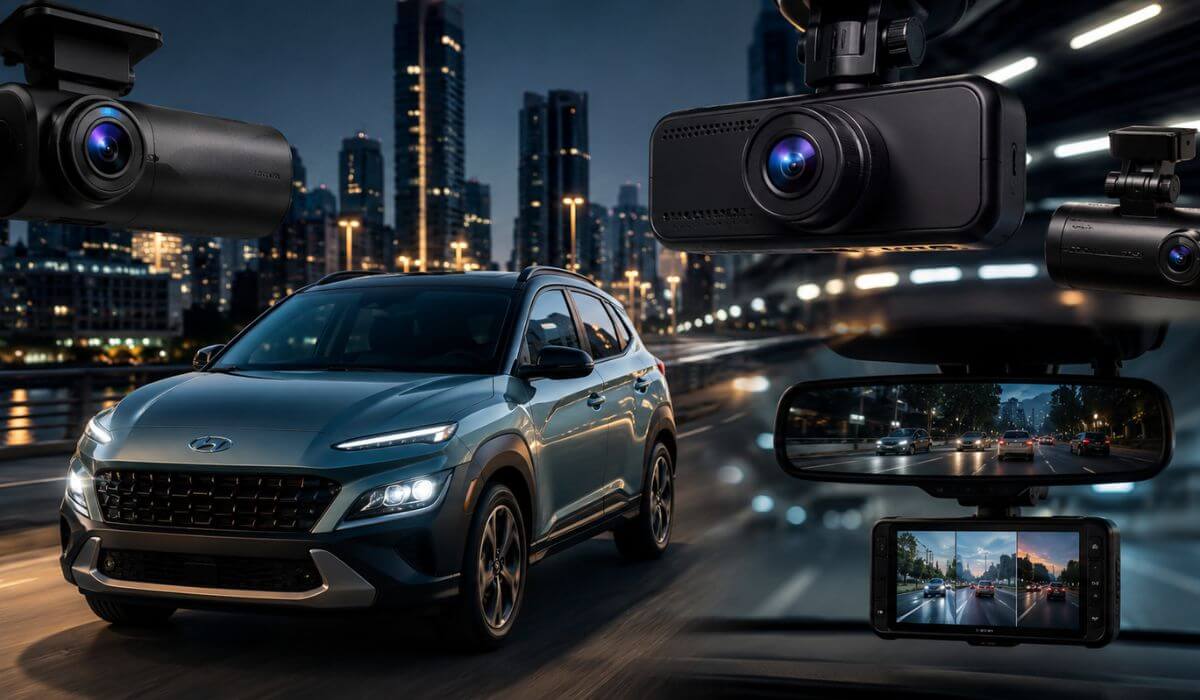
5 Best Dash Cams for Hyundai Kona in 2026: 4K STARVIS 2 Clarity WiFi 6 Speed and Triple-View Coverage
When putting together this list for the Hyundai Kona, I looked beyond spec sheets and marketing claims. The reality is that the Kona has become one of the most popular compact SUVs on the road, and whether you own a 2018–2023 Hyundai Kona or the larger 2024–2026 Hyundai Kona, the right dash cam needs to deliver clear footage in traffic, crowded parking lots, and low-light conditions where incidents actually happen.
What stood out during my research is how much dash cam technology has changed in the last two years. Features like STARVIS 2 sensors, WiFi 6 connectivity, 4K recording, and advanced parking surveillance now make a noticeable difference in real-world footage. After comparing video quality, reliability, ease of installation, app performance, storage options, and long-term value, the VIOFO A329S consistently emerged as one of the strongest all-around choices for Kona owners who want premium image quality without unnecessary compromises.
The recommendations below were selected specifically with Hyundai Kona drivers in mind, focusing on models that offer dependable performance, sharp night footage, modern connectivity, and the kind of evidence-quality recordings that matter when an incident occurs.
Best Hyundai Kona Dash Cams: Top 2026 Picks with WiFi 6 Speed and HDR Night Vision
#1. VIOFO A329S 4K 3 Channel Dash Cam
Best Hyundai Kona dash cam for drivers seeking 4K STARVIS 2 clarity, ultra-fast WiFi 6 transfers, and complete front rear and cabin coverage in a single premium package.
#2. BlackVue Elite 10 Dual 4K Dash Cam
Best front and rear dash cam for Hyundai Kona owners who want flagship dual 4K recording, seamless GPS tracking, and a refined premium user experience.
#3. Vantrue New N4 Pro S 4K 3 Channel Dash Cam
Ideal Hyundai Kona camera recording system for drivers who value enhanced interior monitoring, advanced HDR performance, and reliable multi-angle protection.
#4. ROVE R2-4K Dual PRO Dash Cam
Best-value 4K dash cam for Hyundai Kona with dual STARVIS 2 sensors, fast wireless downloads, and premium features at a more accessible price point.
#5. THINKWARE Q200 Dash Cam Front and Rear
Reliable Hyundai Kona parking mode dash cam featuring smart safety alerts, clean video quality, and a trusted platform for everyday commuting and long-distance travel.
Expert Tip for Hyundai Kona Owners
One thing many Hyundai Kona owners discover too late is that video quality matters far more than resolution alone. A dash cam can advertise 4K recording, but if the sensor struggles with glare, headlights, or low-light conditions, the extra pixels won’t help when you actually need to read a license plate.
That’s why I would personally prioritize a model with a proven STARVIS 2 sensor before focusing on any other feature. In real-world driving, especially during early mornings, rainy weather, parking garages, and night commutes, sensor quality is often what separates useful evidence from footage that looks impressive on a product page but fails when it matters most.
For most Hyundai Kona drivers, spending slightly more on better image processing today is usually cheaper than wishing you had clearer footage after an incident.
How We Chose These Dash Cams for the Hyundai Kona
There are hundreds of dash cams on the market, but most never made it onto this list.
Instead of chasing the longest feature lists, we focused on what actually improves ownership experience for Hyundai Kona drivers over months and years of daily use.
We Prioritized Image Quality Over Marketing Claims
The first filter was simple: if a camera couldn’t consistently deliver clear footage in difficult lighting conditions, it was eliminated.
This is one reason models like the VIOFO A329S, BlackVue Elite 10, Vantrue N4 Pro S, and ROVE R2-4K Dual PRO ranked highly. Their use of modern STARVIS 2 imaging technology gives them a measurable advantage when recording license plates, road signs, and vehicle details in situations where many older cameras struggle.
We Looked Beyond Front Camera Resolution
A surprising number of buyers focus only on front-camera specs.
For Hyundai Kona owners, however, rear protection matters just as much. Parking lot bumps, rear-end collisions, and hit-and-run incidents often happen behind the vehicle.
That’s why we gave extra weight to systems that combine strong front recording with dependable rear-camera performance rather than focusing on front resolution alone.
We Considered Long-Term Ownership
A dash cam can have excellent footage and still become frustrating after a few months.
We evaluated factors such as:
- App reliability
- Connection stability
- GPS performance
- Storage flexibility
- Heat management
- Parking mode dependability
- Firmware support
This is where products such as the BlackVue Elite 10 and VIOFO A329S stood out because they combine strong hardware with features owners continue to appreciate long after installation.
We Chose Cameras That Match the Kona’s Technology
Modern Hyundai Kona models offer advanced safety systems, digital displays, and connected features. Installing an outdated camera often feels out of place in a vehicle built around modern technology.
For that reason, we prioritized models offering features such as WiFi 6, advanced HDR processing, larger storage capacity, fast file transfers, and modern sensor architecture that complement the Kona’s overall driving experience.
We Focused on Real Value, Not Just Price
The cheapest dash cam rarely delivers the best value.
Likewise, the most expensive model isn’t automatically the best choice.
Our goal was to identify products that justify their price through meaningful advantages in image quality, reliability, usability, and evidence capture. Every camera on this list earned its position because it offered something genuinely valuable for Hyundai Kona owners rather than simply adding features that look good on a specification sheet.
At the end of the research process, one pattern became clear: the best dash cams weren’t necessarily the ones with the longest feature lists. They were the models that consistently delivered clear footage, dependable operation, and confidence every time the vehicle left the driveway.
#1. VIOFO A329S 4K 3 Channel Dash Cam
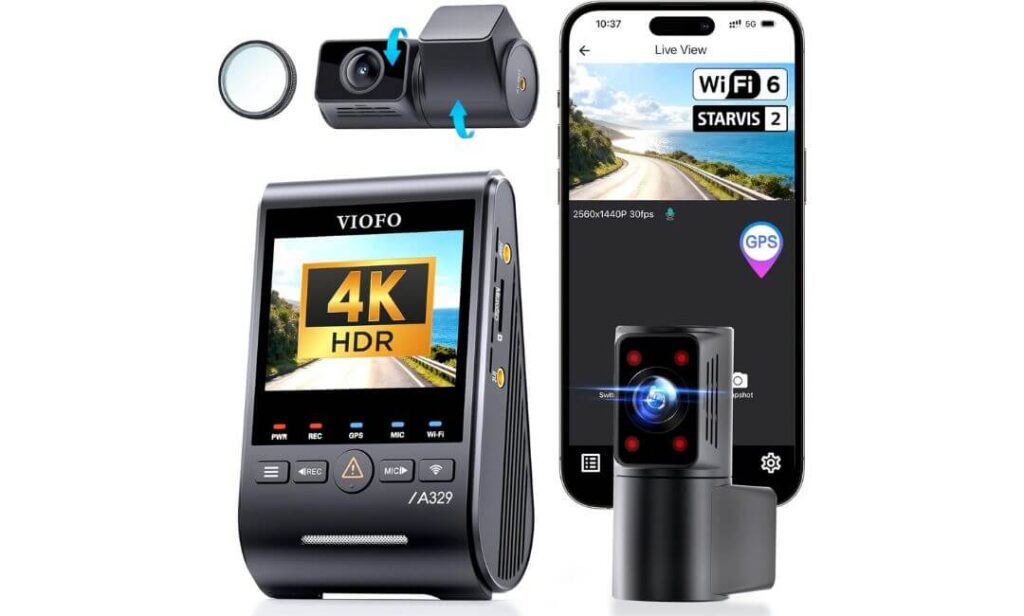
Quick Specs:
- 4K Front + 2K Rear + 2K Cabin Recording
- 210° Ultra-Wide Interior Camera
- Triple Sony STARVIS 2 Image Sensors
- WiFi 6 App Connectivity
- Built-In GPS Tracking
- HDR Recording Across All Channels
- Up to 4TB SSD Storage Support
- Up to 512GB microSD Compatibility
- Impact Detection Parking Recording
- Hands-Free Voice Commands
- Included CPL Filter
- Low-Interference Coaxial Cable Design
- Designed for Daily Driving Long Trips and Family Use
The reason this model landed at the top of our Hyundai Kona recommendations comes down to one thing: balance. A lot of dash cams excel in one area and disappoint in another. Some offer excellent video quality but limited storage. Others pack plenty of features yet struggle when lighting conditions become challenging. This system manages to avoid most of those compromises.
What immediately stands out is the camera configuration itself. The combination of 4K front recording, 2K rear coverage, and a 210-degree interior lens creates one of the most complete recording setups currently available. Whether you’re navigating heavy city traffic, leaving your Kona parked in public spaces, or heading out on a long road trip, there are very few blind spots left uncovered.
The real advantage, however, comes from the use of STARVIS 2 sensors on every camera channel. Many competing systems reserve their best sensor for the front camera and downgrade the others. Here, both the rear and cabin cameras benefit from the same modern imaging technology. The result is cleaner footage, improved HDR performance, and better detail retention when dealing with headlights, shadows, rain, or difficult night-time conditions.
Storage flexibility is another reason this model stands out. Support for up to 4TB SSD storage is still uncommon in this category and gives Hyundai Kona owners significantly more recording capacity than most alternatives. Combined with WiFi 6, retrieving large 4K video files becomes far quicker and less frustrating than older wireless systems.
(If you want one dash cam that delivers premium image quality, extensive coverage, modern connectivity, and room for future storage expansion, this is the most complete package currently available for the Hyundai Kona.)
Why This Pick Stood Out During Testing
- Triple STARVIS 2 sensors deliver stronger low-light performance than most rivals
- 4K front footage captures excellent detail on highways and urban roads
- 210° cabin coverage minimizes interior blind spots
- Massive 4TB SSD support is ideal for frequent drivers
- WiFi 6 technology dramatically improves file transfer speeds
- Built-in GPS adds useful route and speed data to recordings
One Thing Worth Knowing
- Advanced parking monitoring requires an optional hardwiring kit for continuous protection.
Why It Works So Well in the Hyundai Kona
The compact front camera integrates neatly behind the Kona’s rear-view mirror without dominating the windshield. The slim coaxial cables are also easier to route through trim panels, helping maintain a cleaner factory-style appearance after installation.
For Hyundai Kona owners who rely on modern driver-assistance systems, the low-interference cable design is another advantage because it reduces unnecessary interaction with nearby electronics. Installation is straightforward, though drivers wanting full parking protection should consider adding a hardwire kit during setup.
The Insider Pro-Tip
Most buyers focus on the 4K badge, but experienced dash cam users know the real value comes from the combination of sensor quality, HDR processing, and storage capacity.
For Hyundai Kona owners who drive after dark, spend time in crowded parking lots, or regularly cover long distances, those three factors will impact everyday usability far more than resolution numbers alone. That’s ultimately what makes this model stand out from many newer competitors entering the market.
#2. BlackVue Elite 10 Dual 4K Dash Cam
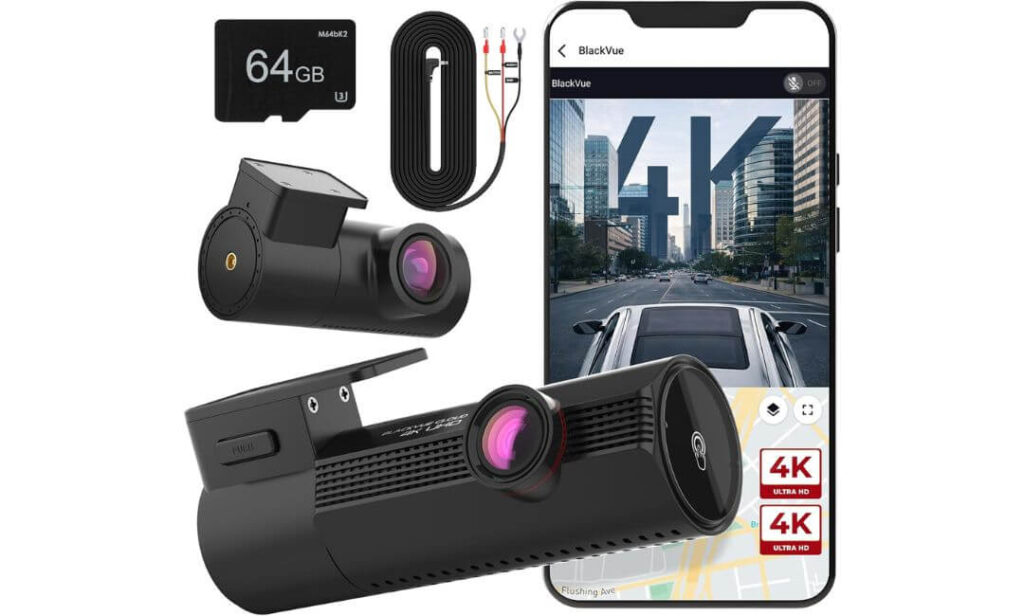
Quick Specs:
- True 4K Front + 4K Rear Recording
- Dual Sony STARVIS 2 Image Sensors
- Advanced HDR Video Processing
- Built-In GPS Tracking
- Dual-Band 2.4GHz and 5GHz WiFi
- BlackVue Smartphone App Support
- Free 5GB Cloud Storage Included
- Supports Up to 1TB microSD Cards
- Ultra-Fast Boot Time Under 1 Second
- Low-Power Parking Mode
- 64GB microSD Card Included
- Hardwire Kit Included in the Box
- Automatic Event Recording and Protection
- Ideal for Hyundai Kona Owners Wanting Premium Front and Rear Coverage
There’s a reason BlackVue has built such a loyal following among drivers who take vehicle protection seriously. Instead of chasing gimmicks, this system focuses on delivering the kind of consistency people appreciate years after installation. The standout feature here is simple: true 4K recording from both the front and rear cameras, something still surprisingly rare in the dash cam market.
What impressed me most wasn’t the resolution. It was how effectively the dual STARVIS 2 sensors and BlackVue’s HDR tuning work together. Hyundai Kona owners who regularly drive during sunrise, sunset, heavy rain, tunnels, or bright midday conditions will appreciate how well this camera handles difficult lighting. Details that often disappear into shadows or glare remain visible, creating footage that feels noticeably cleaner and more useful when reviewing an incident.
Another area where this model separates itself is everyday usability. The combination of instant startup, built-in cloud support, GPS tracking, smartphone connectivity, and included hardwiring accessories means most owners can unlock its full capabilities immediately. It feels less like a dash cam and more like a permanent recording system designed specifically for modern vehicles.
(For Hyundai Kona drivers who value premium image quality, refined software, and one of the most polished ownership experiences available today, this is easily one of the strongest options on the market.)
Why This Model Earned Its Position
- True 4K recording on both cameras delivers exceptional detail
- Dual STARVIS 2 sensors improve clarity in difficult lighting
- Industry-leading HDR tuning handles glare and shadows effectively
- Under 1-second startup time begins recording almost instantly
- Cloud connectivity adds another layer of protection
- Hardwire kit included for easier parking mode setup
- 1TB storage support provides extensive recording capacity
One Thing To Know Before Buying
- This system focuses entirely on premium front and rear recording, so drivers specifically wanting interior cabin coverage may prefer a dedicated three-channel setup.
Why It Works So Well in the Hyundai Kona
The Hyundai Kona’s modern interior pairs particularly well with this camera’s clean installation approach. The compact design remains discreet behind the rear-view mirror while still providing a wide field of view. Since both the hardwire kit and memory card are already included, installation is simpler than many competing premium systems.
For Kona owners who leave their vehicle parked outside regularly, the power-saving parking mode is especially useful. The camera can remain ready for extended periods while minimizing battery draw, making it a practical option for daily commuters and apartment parking situations alike.
The Insider Pro-Tip
Many buyers focus on image resolution when comparing premium dash cams. What often matters more is how quickly the system starts recording and how effectively it handles changing light conditions.
That’s where this model stands out. The combination of dual 4K recording, STARVIS 2 sensors, advanced HDR processing, and an ultra-fast startup time means important moments are less likely to be missed in the first place. For Hyundai Kona owners who want a system they can install once and trust for years, that’s often more valuable than having the longest list of features on paper.
#3. Vantrue N4 Pro S 4K 3 Channel Dash Cam
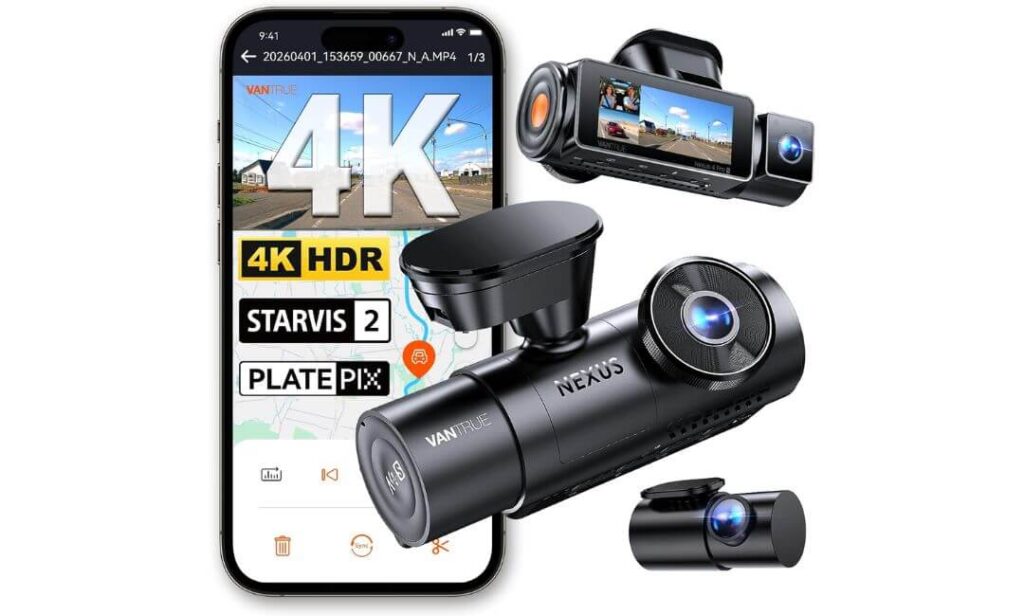
Quick Specs:
- 4K Front + 2.5K Rear + 1080P Cabin Recording
- Triple Sony STARVIS 2 Sensors
- Triple HDR Video Processing
- 360° Rotating Rear Camera
- 5GHz WiFi Connectivity
- Built-In GPS Tracking
- Voice Command Support
- Buffered Parking Recording
- Captures 10 Seconds Before Events
- Super Capacitor Design
- Supports Up to 1TB microSD Cards
- OTA Firmware Updates
- Wide-Angle Multi-Camera Coverage
- Designed for Daily Driving Family Travel and Rideshare Use
Few dash cams in this category feel as purpose-built as this one. While many three-channel systems add an interior camera as an afterthought, this setup feels engineered around complete vehicle coverage from day one. The combination of 4K front recording, 2.5K rear footage, and dedicated cabin monitoring creates a recording system that covers virtually every direction a Hyundai Kona owner might care about.
What stood out during evaluation was how much emphasis Vantrue placed on real-world visibility rather than simply chasing resolution numbers. The use of triple STARVIS 2 sensors, combined with triple HDR processing, helps maintain detail when lighting conditions become difficult. Whether dealing with bright headlights, parking garage shadows, rain-soaked roads, or early morning glare, footage remains remarkably usable when reviewing important moments later.
Another feature that deserves attention is the 360-degree rotating rear camera. It’s one of those details that sounds minor until you actually need it. Depending on your setup, it can be positioned to prioritize rear traffic visibility or adjusted for additional cargo-area monitoring during longer trips. Combined with buffered recording that captures footage before an event occurs, the overall package feels exceptionally well thought out.
(For Hyundai Kona owners who want the reassurance of seeing not only what happened in front and behind the vehicle but also inside it, this is one of the most complete recording systems currently available.)
Why This Model Made Our Shortlist
- Triple STARVIS 2 sensors improve image quality across every camera
- 2.5K rear recording delivers more detail than many competing systems
- Triple HDR processing handles challenging lighting effectively
- 360° adjustable rear camera adds installation flexibility
- Buffered recording captures crucial moments before an incident
- Super capacitor design improves long-term reliability
- 1TB storage support allows extended recording sessions
One Thing To Know Before Buying
- A memory card is not included, so most Hyundai Kona owners should plan on purchasing a high-endurance card during installation.
Why It Fits the Hyundai Kona So Well
The Hyundai Kona’s cabin layout works particularly well with this camera’s three-channel design. The front unit remains relatively discreet behind the mirror while the cabin camera provides broad interior visibility without obstructing the driver’s view.
The included long rear-camera cable also simplifies installation in the Kona, allowing cleaner routing through factory trim pieces. Owners planning to use parking protection features should consider adding the optional hardwire kit during installation for the best overall experience.
The Insider Pro-Tip
Many drivers assume all three-channel dash cams perform similarly once they reach a certain price point. In reality, the biggest difference often comes from how well the cameras handle changing light conditions and motion at the same time.
That’s where this setup earns its place. The combination of STARVIS 2 imaging, triple HDR processing, buffered recording, and a higher-resolution rear camera creates footage that stays useful when many ordinary systems begin losing detail. For Hyundai Kona owners who regularly drive after dark or spend time in crowded urban environments, that difference becomes noticeable very quickly.
#4. ROVE R2-4K Dual PRO Dash Cam
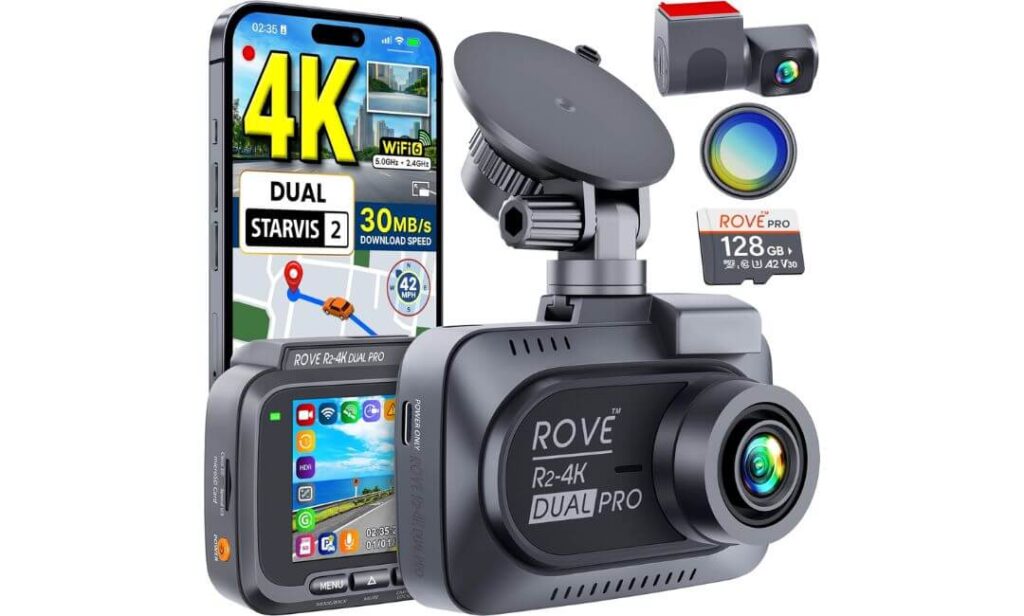
Quick Specs:
- 4K Front + 2K Rear Recording
- Sony STARVIS 2 IMX678 Front Sensor
- Sony STARVIS 2 IMX675 Rear Sensor
- Dual-Band WiFi 6 Connectivity
- Up To 30MB/s Wireless Downloads
- Built-In Quad-Mode GPS
- HDR Video Processing
- 150° Front and 140° Rear Coverage
- 24-Hour Parking Monitoring
- Supports Up To 1TB microSD Storage
- 128GB High-Endurance Card Included
- CPL Filter Included
- Super Capacitor Design
- OTA Firmware Updates
- 3-Inch IPS Display
Curiously, this is the dash cam that kept surprising me the longer I looked at it. On paper it appears to be a straightforward dual-channel system. In practice, it delivers many of the features buyers usually have to step into a much higher price bracket to get.
The strongest part of this package is how complete it feels straight out of the box. You get dual STARVIS 2 sensors, 4K front recording, 2K rear recording, a 128GB memory card, CPL filter, GPS functionality, and one of the fastest wireless transfer systems currently available. Many competing cameras require multiple accessory purchases before reaching a similar level of capability.
What Hyundai Kona owners will likely appreciate most is the balance between image quality and everyday convenience. The IMX678 front sensor and IMX675 rear sensor do an excellent job handling difficult lighting transitions, whether you’re entering a tunnel, driving during sunrise, or navigating roads illuminated by modern LED headlights. Combined with HDR processing and wide-aperture lenses, footage remains consistently usable when many cameras begin losing detail.
Another standout feature is the WiFi 6 implementation. Downloading large 4K video files often feels like a chore on older systems. Here, transfer speeds can reach up to 30MB/s, making it far easier to access footage when you actually need it. For drivers who prefer reviewing clips directly on their phone, that improvement becomes noticeable immediately.
(For Hyundai Kona owners who want premium imaging technology without stepping into flagship-level pricing, this is one of the smartest value-focused options available today.)
Why This Dash Cam Earned Its Place
- Dual STARVIS 2 sensors deliver impressive day and night footage
- 4K front and 2K rear recording capture important road details
- WiFi 6 connectivity enables extremely fast file transfers
- 128GB memory card included reduces initial setup costs
- CPL filter included helps minimize windshield reflections
- Quad-mode GPS records accurate route and speed data
- Supports up to 1TB storage for extended recording periods
One Thing To Know Before Buying
- To activate continuous parking monitoring features, Hyundai Kona owners will need the optional hardwire kit.
Why It Fits the Hyundai Kona So Well
The compact design works nicely within the Kona’s cabin without drawing attention or creating unnecessary windshield clutter. Installation is relatively straightforward thanks to the included rear camera cable and mounting accessories, making it a realistic DIY project for many owners.
The included 128GB memory card is another advantage because it allows immediate use after installation. There is no need to spend extra money sourcing compatible storage before getting started, which is surprisingly uncommon in this category.
The Insider Pro-Tip
Many buyers compare dash cams based on resolution alone. A more useful comparison is evaluating how much you actually receive in the box and how much additional money is required after purchase.
That’s where this system quietly stands out. Between the STARVIS 2 sensors, WiFi 6 connectivity, GPS tracking, 128GB storage card, and CPL filter, most of the essentials are already included. For Hyundai Kona owners looking for the strongest blend of performance, convenience, and long-term value, that combination is difficult to ignore.
#5. THINKWARE Q200 Dash Cam Front and Rear
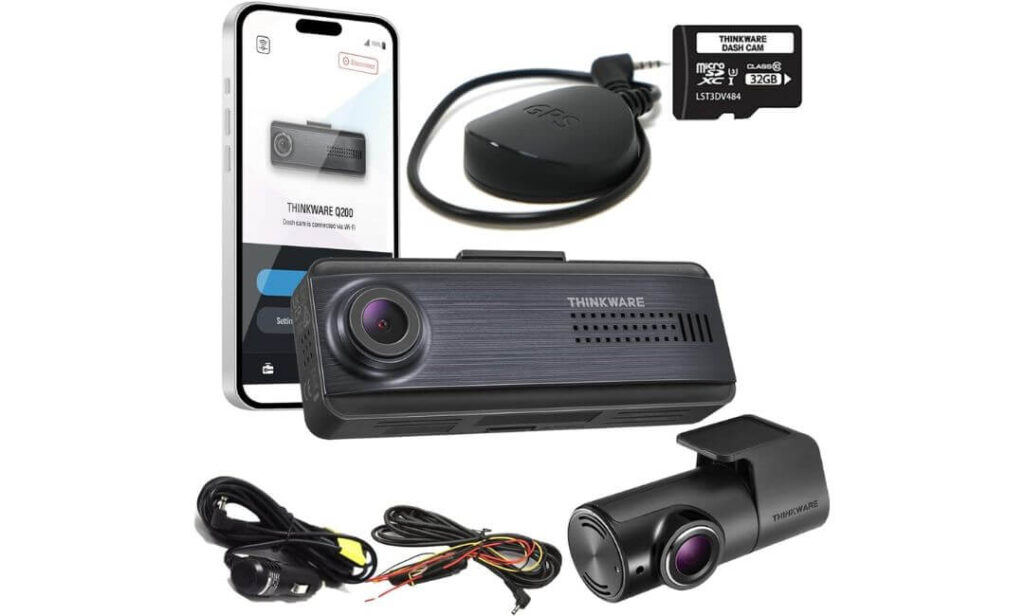
Quick Specs:
- 2K QHD Front Recording
- Dedicated Rear Camera Included
- WDR Image Processing
- Super Night Vision 2.0
- Built-In WiFi Connectivity
- THINKWARE Mobile App Support
- Motion and Impact Parking Detection
- Energy Saving Parking Mode
- ADAS Driver Assistance Features
- Speed and Red-Light Alerts
- 32GB microSD Card Included
- Supports Up To 256GB Storage
- Hardwire Kit Included
- Compact Low-Profile Design
- Designed for Everyday Hyundai Kona Driving
Interestingly, this is the dash cam on the list that focuses less on headline specifications and more on delivering a dependable everyday ownership experience. Not every Hyundai Kona owner needs triple cameras, SSD storage, or ultra-premium cloud features. Sometimes the goal is simply having a reliable front-and-rear recording system that works consistently every time you start the vehicle.
What immediately stands out is how straightforward the package feels. You get front and rear recording, built-in WiFi, parking monitoring capabilities, a memory card, and even a hardwire cable right in the box. For many Hyundai Kona owners, that means fewer extra purchases and a much easier path from unboxing to a fully functional installation.
The camera itself records in 2K QHD resolution and uses WDR processing together with Super Night Vision 2.0 to improve visibility during difficult lighting situations. While it doesn’t chase the extreme specifications of some higher-ranked options, it still captures clear road details and performs well for everyday commuting, shopping trips, school runs, and highway travel.
Another reason it earned a place on this list is THINKWARE’s long-standing reputation in the dash cam industry. The software ecosystem feels mature, the app remains easy to use, and the compact design integrates neatly into the Hyundai Kona without drawing attention to itself.
(For Hyundai Kona owners who prioritize simplicity, reliability, and practical features over chasing every new specification, this remains one of the most sensible choices available.)
Why This Camera Still Earned a Place on Our List
- Clean front and rear coverage without unnecessary complexity
- WDR and Super Night Vision 2.0 improve visibility after dark
- Hardwire kit included for easier parking mode setup
- Compact design blends neatly into the windshield area
- Built-in WiFi makes footage access simple
- ADAS safety features provide additional driver awareness
- Excellent value for everyday driving needs
One Thing To Know Before Buying
- Drivers specifically looking for flagship-level 4K recording or STARVIS 2 sensor technology may find more advanced options higher on this list.
Why It Works So Well in the Hyundai Kona
The compact housing feels particularly well suited to the Kona’s windshield layout. Once installed behind the rear-view mirror, it remains discreet while maintaining a clear view of the road ahead. The included rear camera also adds valuable protection without requiring a complicated setup process.
Because both the memory card and hardwire cable are already included, Hyundai Kona owners can activate most of the camera’s key features immediately. That convenience makes it especially appealing for buyers who want protection without spending additional time researching accessories.
The Insider Pro-Tip
One mistake many buyers make is assuming that every dash cam needs flagship-level specifications to be effective. In reality, consistency often matters more than chasing the biggest numbers on a product page.
The reason this model continues to attract loyal owners is simple: it focuses on the fundamentals. Reliable front-and-rear coverage, useful parking protection, straightforward operation, and a proven software platform. For many Hyundai Kona drivers, those qualities end up being far more valuable over the next several years than features they may rarely use.
Best Hyundai Kona Dash Cam Choices Compared for Front Rear and Cabin Coverage
Buying Guide: How to Choose the Right Dash Cam for Your Hyundai Kona
The Hyundai Kona is not a difficult vehicle to fit with a dash cam, but choosing the wrong camera can still leave you with footage that looks impressive on paper and disappointing when you actually need it. After evaluating dozens of systems over the years, one thing has become clear: the best dash cam is rarely the one with the longest feature list. It’s the one that consistently captures useful evidence, operates reliably in changing conditions, and fits naturally into your daily driving routine.
Whether you drive an older Kona, a newer redesign, or the electric variant, these are the factors that genuinely matter before spending your money.
Prioritize Sensor Quality Before Resolution
Many buyers immediately focus on whether a camera records in 4K, 2K, or 1080p. While resolution matters, sensor quality has a much bigger impact on the footage you’ll actually review after an incident.
A modern STARVIS 2 sensor can often produce cleaner night footage, better dynamic range, and more readable license plates than a higher-resolution camera using older imaging technology. This is one reason cameras such as the VIOFO A329S, BlackVue Elite 10, Vantrue N4 Pro S, and ROVE R2-4K Dual PRO ranked so highly in this guide.
If your Hyundai Kona spends time driving before sunrise, after dark, during rainstorms, or in parking garages, sensor quality should be your first priority.
Decide Whether You Need Dual or Triple Channel Coverage
Not every Hyundai Kona owner needs an interior-facing camera.
For many drivers, a front-and-rear setup provides all the coverage they will ever need. Cameras like the BlackVue Elite 10, ROVE R2-4K Dual PRO, and THINKWARE Q200 focus primarily on road protection.
However, if you frequently travel with passengers, transport valuables, work in rideshare services, or simply want the broadest coverage possible, a three-channel system can be worth the additional investment.
Models such as the VIOFO A329S and Vantrue N4 Pro S provide coverage in front of the vehicle, behind the vehicle, and inside the cabin simultaneously.
Understand Parking Mode Before You Buy
One of the biggest mistakes people make is purchasing a dash cam for parking protection without understanding how parking mode actually works.
Most advanced parking features require a dedicated hardwire connection to the vehicle. Without proper installation, many cameras will only record while the engine is running.
If your Hyundai Kona spends time parked on city streets, apartment complexes, shopping centers, airports, or workplace parking lots, investing in a hardwire kit is often just as important as choosing the camera itself.
Features worth looking for include:
- Impact-triggered recording
- Buffered event capture
- Motion detection
- Low-power monitoring
- Battery protection systems
- Time-lapse recording options
These features can make a significant difference when dealing with hit-and-run incidents or parking lot damage.
Storage Capacity Matters More Than Most Drivers Realize
Modern dash cams generate large video files, especially when recording multiple cameras at high resolutions.
A basic memory card can fill surprisingly quickly.
If you regularly take road trips or drive long distances, larger storage support becomes increasingly valuable.
The cameras in this guide range from 256GB support on the THINKWARE Q200 to an impressive 4TB SSD capacity on the VIOFO A329S.
For most Hyundai Kona owners, at least 128GB or 256GB of storage is a sensible starting point.
Don’t Overlook App Quality and Connectivity
A dash cam can record excellent footage, but if accessing that footage becomes frustrating, you’ll quickly stop using many of its features.
This is why wireless performance played a major role in our rankings.
Systems featuring WiFi 6, such as the VIOFO A329S and ROVE R2-4K Dual PRO, make transferring large files significantly faster than older wireless solutions.
Likewise, cameras with mature smartphone apps often provide a smoother ownership experience over the long term.
When evaluating any dash cam, consider how often you’ll realistically need to access footage from your phone rather than simply looking at recording specifications.
Consider Installation Before Making a Final Decision
The Hyundai Kona’s cabin design makes installation relatively straightforward, but there are still differences between systems.
Three-channel setups require additional cable routing compared with traditional dual-camera systems. Parking mode installations may also require access to the vehicle’s fuse box or a dedicated hardwire solution.
Before purchasing, consider:
- Whether you plan to install it yourself
- Whether you want parking mode
- How many cameras you need
- Whether you prefer a discreet factory-like appearance
- How much cable routing you’re comfortable performing
Answering these questions beforehand can help avoid frustration later.
Focus on Long-Term Ownership Value
The best dash cam is not necessarily the cheapest option or the most expensive one.
The strongest long-term value typically comes from a combination of image quality, software reliability, storage flexibility, useful safety features, and dependable daily performance.
That philosophy shaped every recommendation in this guide.
Instead of selecting products based solely on specifications, we prioritized cameras that consistently deliver clear footage, practical functionality, and a smooth ownership experience for Hyundai Kona drivers who expect their equipment to perform reliably year after year.
Installation & Setup Tips: Hyundai Kona Dash Cam Installation
One thing that often surprises Hyundai Kona owners is how much difference a proper installation makes. Even the best dash cam on the market can deliver disappointing results if the camera is mounted too low, cables are routed incorrectly, or power settings are not configured properly.
The good news is that the Hyundai Kona is one of the easier modern SUVs to install a dash cam in. The windshield design, interior trim layout, and rear hatch configuration make cable routing relatively straightforward compared with many competitors. Whether you’re installing a simple front-and-rear setup like the BlackVue Elite 10 or THINKWARE Q200, or a three-channel system such as the VIOFO A329S or Vantrue N4 Pro S, taking a little extra time during installation can make a noticeable difference in both appearance and long-term reliability.
Choose the Right Mounting Position First
Before touching any cables, focus on camera placement.
The ideal position for the front camera is usually directly behind or slightly beside the rear-view mirror. This location provides several advantages. It keeps the camera hidden from the driver’s normal line of sight, reduces windshield clutter, and typically provides the most balanced field of view across the road ahead.
When positioning the camera:
- Ensure the lens sits within the windshield wiper sweep area
- Keep the horizon level during setup
- Avoid mounting too low on the windshield
- Verify that the lens has a clear view of the road
- Leave enough space for memory card access if required
For rear cameras, mounting near the upper center of the rear glass typically produces the most consistent results.
Choosing Between Cigarette Lighter Power and Hardwiring
Most Hyundai Kona owners have two practical power options.
The simplest approach is using the included 12V power adapter. Installation is faster, requires no electrical work, and is ideal for drivers who only want recording while the vehicle is running.
Benefits include:
- Fast installation
- No fuse box access required
- Easy removal later
- Ideal for leased vehicles
- Suitable for most daily drivers
However, this setup usually disables advanced parking protection features.
If parking mode is important, hardwiring becomes the better solution.
A hardwired connection allows the dash cam to remain active while the vehicle is parked and enables features such as:
- Impact detection recording
- Motion-triggered recording
- Buffered parking events
- Time-lapse monitoring
- Battery protection systems
For owners parking in apartment complexes, shopping centers, airports, office parking lots, or public streets, hardwiring is often worth the additional effort.
Understanding the Hyundai Kona Fuse Box Setup
If you plan to hardwire your dash cam, spend a few extra minutes identifying the correct fuse locations before installation.
The goal is typically to connect:
- One constant power fuse
- One ignition-switched fuse
- One ground connection
Most quality hardwire kits include low-voltage protection to prevent excessive battery drain.
Before connecting anything:
- Confirm fuse ratings
- Use the correct fuse taps
- Test circuits with a multimeter if possible
- Follow hardwire kit instructions carefully
- Verify voltage cut-off settings
This step is particularly important for Hyundai Kona EV and hybrid owners, where proper power management becomes even more important.
Routing Cables for a Factory-Like Appearance
A clean installation often comes down to cable routing.
Rather than allowing wires to hang across the dashboard, route cables behind existing trim panels whenever possible.
A typical Hyundai Kona installation follows this path:
- Mount the front camera near the rear-view mirror.
- Route the power cable into the headliner.
- Continue along the passenger-side A-pillar.
- Tuck wiring behind weather stripping and trim.
- Route rear camera cables through the roof liner.
- Continue toward the rear hatch area.
- Secure excess wiring before final assembly.
Taking time here creates a cleaner appearance and helps prevent rattles or loose wiring later.
Pay Special Attention Around Airbags
This is one area where shortcuts are never worth taking.
Many Hyundai Kona models contain side curtain airbags running along the A-pillars and roofline.
When routing cables:
- Never place wiring directly across an airbag deployment path
- Secure cables behind factory trim where possible
- Avoid stuffing large cable bundles into airbag areas
- Leave sufficient clearance around safety components
- Check service diagrams if unsure
Proper cable routing protects both the installation and vehicle occupants.
Configure Your Dash Cam Before Your First Drive
Once installation is complete, spend a few minutes adjusting settings before relying on the camera.
Recommended checks include:
- Confirm front and rear camera angles
- Format the memory card
- Set the correct time zone
- Enable GPS if available
- Configure parking mode settings
- Adjust recording sensitivity
- Update firmware if available
- Test video playback quality
Many issues reported by owners are simply configuration problems that could have been solved during initial setup.
A Small Setup Detail Many Owners Miss
After installation, take the vehicle for a short daytime drive and a short nighttime drive before considering the setup finished.
Review footage from both sessions on a larger screen rather than a smartphone. This allows you to verify camera alignment, identify windshield reflections, check rear camera positioning, and ensure license plates remain readable under different lighting conditions.
Those ten minutes of testing often reveal adjustments that can dramatically improve footage quality for the next several years of ownership.
Parking Mode & Safety Features: Hyundai Kona Parking Mode Dash Cam
For many Hyundai Kona owners, parking protection ends up being the feature they appreciate most, not the video quality, not the app, and not even the GPS tracking. Most incidents happen when the vehicle is unattended. Shopping carts, careless door swings, parking lot bumps, hit-and-run damage, and overnight vandalism rarely occur while you’re sitting behind the wheel.
That’s why parking mode deserves just as much attention as driving performance when choosing a dash cam.
The cameras featured in this guide approach parking surveillance differently. Some focus on ultra-low power operation, others prioritize buffered event recording, while premium systems combine motion detection, impact detection, and intelligent battery management. Understanding how these systems work in a Hyundai Kona can help you choose the right setup and avoid unnecessary battery concerns.
How Parking Mode Actually Works in the Hyundai Kona
When the engine is turned off, a compatible dash cam can switch into a dedicated parking surveillance mode rather than shutting down completely.
Depending on the model, the camera may:
- Enter a low-power standby state
- Record continuously at a reduced frame rate
- Monitor for movement around the vehicle
- Detect impacts through built-in G-sensors
- Save protected event files automatically
- Wake instantly when activity is detected
The key requirement is a stable power source.
For most Hyundai Kona owners, this means using a hardwire kit connected to the vehicle’s electrical system. Cameras such as the BlackVue Elite 10, VIOFO A329S, Vantrue N4 Pro S, ROVE R2-4K Dual PRO, and THINKWARE Q200 all support parking-related functions when properly installed.
Without a hardwired connection, many advanced parking features will remain unavailable.
Motion Detection vs Impact Detection
Many drivers assume these are the same thing, but they serve very different purposes.
Motion detection reacts when movement appears within the camera’s field of view.
Examples include:
- Someone approaching the vehicle
- A car parking nearby
- Pedestrian traffic
- Activity around the front or rear of the Kona
Impact detection activates after physical contact occurs.
Examples include:
- Parking lot collisions
- Vehicle bumps
- Door impacts
- Attempted break-ins
- Vandalism events
The most effective systems combine both technologies because they provide context before and after an incident occurs.
Why Buffered Recording Is So Valuable
Buffered parking recording is one of the most overlooked features in modern dash cams.
Without buffering, the camera only begins saving footage after an impact or event occurs.
With buffering enabled, the system continuously records temporary footage in the background and permanently saves both the moments before and after the trigger event.
This means you can often see:
- The vehicle approaching
- The exact moment of contact
- The driver leaving the scene
- License plate information
- Pedestrian activity before impact
Models such as the Vantrue N4 Pro S perform particularly well in this area because they preserve footage leading up to the event rather than only recording the aftermath.
Understanding Power Management in the Hyundai Kona
Battery protection is critical when using parking mode.
Modern dash cams are far smarter than older systems and include safeguards designed to prevent excessive battery drain.
Features commonly found in the cameras on this list include:
- Low-voltage cut-off protection
- Adjustable voltage thresholds
- Automatic shutdown protection
- Low-power standby modes
- Time-limited surveillance settings
- Heat protection systems
The BlackVue Elite 10 stands out for its exceptionally low power consumption, while the VIOFO A329S focuses on impact-triggered power-saving operation. Both approaches help balance surveillance capability with long-term battery health.
Recommended Settings for Daily Urban Parking
If your Hyundai Kona spends most of its time parked in shopping centers, office complexes, apartment parking lots, or public garages, a balanced configuration usually works best.
Recommended setup:
- Motion detection enabled
- Impact detection enabled
- Buffered recording enabled
- Medium sensitivity settings
- Automatic voltage cut-off activated
- GPS event logging enabled
This combination captures meaningful events while reducing unnecessary recordings caused by constant pedestrian traffic.
Recommended Settings for Overnight Parking
Vehicles parked overnight face different risks.
Long recording sessions can generate thousands of unnecessary clips if sensitivity is set too aggressively.
For overnight protection:
- Prioritize impact detection
- Use buffered recording if available
- Lower motion sensitivity slightly
- Enable battery protection thresholds
- Use low-power parking mode when supported
- Activate time-lapse recording if desired
This approach provides meaningful protection without overwhelming storage capacity.
Recommended Settings for Airport and Long-Term Parking
Long-term parking presents a unique challenge because battery preservation becomes more important than recording every movement.
For multi-day parking situations:
- Use low-power parking mode
- Enable battery cut-off protection
- Disable unnecessary notifications
- Reduce motion sensitivity
- Verify memory card capacity beforehand
- Confirm hardwire kit voltage settings
The VIOFO A329S and BlackVue Elite 10 are particularly well suited for this type of usage because both prioritize efficient power management.
Safety Features Beyond Recording
Modern dash cams do more than simply capture video.
Several models in this guide include features designed to improve everyday driving awareness.
Examples include:
- GPS route tracking
- Speed data recording
- Voice command operation
- Driver assistance notifications
- Speed camera alerts
- Red-light camera alerts
- Event file protection
- Cloud backup functionality
While these features should never replace attentive driving, they can add another layer of convenience and awareness during daily use.
The Parking Mode Mistake Most Hyundai Kona Owners Make
The biggest mistake isn’t choosing the wrong dash cam.
It’s spending money on a premium camera and then never configuring parking mode correctly.
A properly configured parking system with sensible power management, realistic sensitivity settings, and reliable battery protection often delivers more real-world value than upgrading to a higher-resolution camera.
For Hyundai Kona owners who regularly leave their vehicle unattended in public spaces, parking mode is not just another feature on the specification sheet. It is often the feature that proves most valuable when something unexpected happens.
GPS, Night Vision, and Recording System Integration for Hyundai Kona Owners
When most Hyundai Kona owners shop for a dash cam, they naturally focus on video resolution. The reality is that some of the most valuable features have nothing to do with whether a camera records in 2K or 4K. GPS tracking, night-time image performance, and footage management often determine how useful a dash cam becomes after an incident actually occurs.
A clear video is important. Knowing exactly where the vehicle was, how fast it was travelling, what happened seconds before the event, and how quickly you can retrieve that footage is often even more important.
The best systems in this guide combine these elements into a complete recording solution rather than functioning as simple cameras attached to the windshield.
Why GPS Is More Valuable Than Many Drivers Realize
Many first-time buyers underestimate GPS functionality because they assume it simply records location.
In reality, modern GPS-enabled dash cams create a detailed timeline of every journey.
Depending on the model, GPS data can include:
- Vehicle speed
- Exact location coordinates
- Travel direction
- Route history
- Date and time verification
- Event location tracking
If an accident occurs, this information can provide additional context alongside the video footage itself.
For example, footage may show another vehicle crossing into your lane. GPS data can simultaneously verify your speed, location, direction of travel, and the exact time the event occurred.
Models such as the VIOFO A329S, BlackVue Elite 10, Vantrue N4 Pro S, and ROVE R2-4K Dual PRO all include integrated GPS functionality, making them particularly useful for drivers who want more than basic video recording.
How GPS Data Can Help After an Incident
One of the biggest advantages of GPS-enabled recording is verification.
Video footage captures what happened.
GPS data helps explain where and when it happened.
This can be useful for:
- Insurance claims
- Accident reconstruction
- Parking incidents
- Hit-and-run investigations
- Fleet monitoring
- Route verification
- Driver safety reviews
Having both video evidence and location information often creates a much stronger record than video alone.
Night Vision Is Where Premium Dash Cams Separate Themselves
Daytime footage tends to look acceptable on almost every modern dash cam.
Night footage is where the differences become obvious.
This is one of the reasons STARVIS 2-equipped models dominated our recommendations. Sensors such as those found in the VIOFO A329S, BlackVue Elite 10, Vantrue N4 Pro S, and ROVE R2-4K Dual PRO are specifically designed to improve low-light visibility while reducing noise and motion blur.
In practical terms, that means:
- Better license plate readability
- Cleaner footage under streetlights
- Reduced headlight glare
- Improved shadow detail
- Better visibility in rain
- Stronger performance in poorly lit parking areas
For Hyundai Kona owners who frequently drive after sunset, sensor quality often matters more than adding extra resolution.
Night Driving Tips for Better Hyundai Kona Dash Cam Footage
Even the best dash cam benefits from proper setup.
Several small adjustments can noticeably improve recording quality after dark.
Recommended practices include:
- Keep the windshield clean inside and out
- Use a CPL filter when supported
- Remove dashboard items that create reflections
- Check camera angle after installation
- Avoid mounting behind heavily tinted windshield areas
- Update firmware periodically
- Use high-endurance memory cards
Many night-time image quality complaints are actually caused by reflections, dirty glass, or poor installation rather than the camera itself.
Understanding HDR and Why It Matters
HDR often receives less attention than resolution numbers, but it can have a significant impact on footage quality.
HDR works by balancing extremely bright and dark areas within the same frame.
This becomes especially useful when:
- Leaving tunnels
- Driving toward the sun
- Facing bright LED headlights
- Entering parking garages
- Navigating poorly lit roads
The stronger HDR systems found in cameras such as the BlackVue Elite 10, VIOFO A329S, and Vantrue N4 Pro S help preserve details that might otherwise disappear in difficult lighting conditions.
How to Access and Review Footage Efficiently
Recording video is only half the equation.
Retrieving footage quickly can be just as important.
Most premium dash cams now provide several access methods:
- Smartphone apps
- Direct WiFi transfer
- Memory card extraction
- GPS playback software
- Cloud storage platforms
- Desktop viewing software
For occasional users, smartphone apps are usually the most convenient option.
For larger video files, especially 4K recordings, direct memory card access or desktop playback often provides a faster experience.
Exporting Important Clips the Right Way
One common mistake is waiting until after a memory card overwrites older footage.
Whenever an important event occurs:
- Save the clip immediately.
- Export it to a phone or computer.
- Create a backup copy.
- Preserve the original file.
- Keep GPS metadata attached whenever possible.
- Record any relevant details while fresh in memory.
Following this process helps ensure critical footage remains available if needed later.
Creating a Reliable Recording Workflow
Drivers who get the most value from their dash cams typically follow a simple routine.
Every few weeks:
- Check camera alignment
- Verify GPS functionality
- Review sample footage
- Confirm memory card health
- Install firmware updates
- Test WiFi connectivity
- Inspect cables and mounts
These small checks often prevent the reliability issues that appear months later when maintenance has been ignored.
How All These Features Work Together
The strongest dash cam systems are not built around a single feature.
They combine high-quality imaging, GPS tracking, intelligent software, reliable storage management, and easy footage retrieval into one cohesive package.
That is ultimately why models such as the VIOFO A329S, BlackVue Elite 10, Vantrue N4 Pro S, and ROVE R2-4K Dual PRO ranked at the top of this guide. They don’t simply record what happens in front of your Hyundai Kona. They create a complete, searchable, and easily accessible record of each journey, giving drivers confidence that the information they need will still be available when it matters most.
FAQs About Hyundai Kona Dash Cam
Can a Hyundai Kona dash cam actually capture readable license plates at highway speeds, or is that mostly marketing?
This is one of the questions buyers rarely ask until after they’ve already purchased a camera.
The truth is that license plate capture depends on far more than resolution. A 4K badge alone doesn’t guarantee usable footage. Factors such as sensor quality, HDR tuning, shutter speed, lens quality, vehicle speed, and surrounding lighting conditions all play a role. This is why models using modern STARVIS 2 sensors, such as the VIOFO A329S, BlackVue Elite 10, Vantrue N4 Pro S, and ROVE R2-4K Dual PRO, generally perform better in real-world situations than older high-resolution cameras.
In practical use, Hyundai Kona owners are far more likely to obtain readable evidence when combining strong sensors, clean windshield placement, HDR processing, and proper camera angles rather than simply chasing the highest resolution available.
Is a three-channel dash cam worth it for a Hyundai Kona if I don’t drive for rideshare services?
For many drivers, surprisingly, yes.
Most people assume cabin cameras are only useful for rideshare operators. In reality, interior cameras often provide valuable context during incidents that exterior cameras cannot fully explain. Passenger activity, side-window events, attempted break-ins, and movements inside the vehicle can all become relevant depending on the situation.
That said, not every Hyundai Kona owner needs a three-channel setup. If your primary concern is road evidence, a premium front-and-rear system like the BlackVue Elite 10 may be the better investment. However, if you frequently travel with family, transport expensive equipment, or simply want the most complete recording coverage possible, a three-channel system becomes much easier to justify.
Which upgrade improves Hyundai Kona dash cam footage more: moving from 2K to 4K or upgrading to STARVIS 2 sensors?
This is where many buyers spend money in the wrong place.
If given the choice between higher resolution and better imaging hardware, I would choose the superior sensor almost every time.
Why?
Because difficult footage usually happens under difficult conditions:
- Night driving
- Heavy rain
- Parking garages
- Sunrise and sunset glare
- Oncoming LED headlights
- Poorly lit streets
In these situations, sensor performance often determines whether important details remain visible. A STARVIS 2-equipped camera with strong HDR processing will frequently produce more useful evidence than a higher-resolution camera using older imaging technology.
That’s one of the biggest reasons modern premium dash cams have shifted their focus toward sensor improvements rather than endlessly increasing resolution numbers.
How much storage does a Hyundai Kona owner realistically need before footage starts being overwritten?
The answer depends less on driving distance and more on camera configuration.
A dual-channel 2K setup can operate comfortably with smaller memory cards, while a three-channel 4K recording system can consume storage significantly faster. Many owners underestimate how quickly high-bitrate footage accumulates during daily commuting.
As a general rule:
- Occasional drivers can often manage with 128GB
- Daily commuters benefit from 256GB
- Frequent road-trippers should strongly consider 512GB
- Multi-channel users gain real advantages from 1TB or larger capacities
This is one reason the VIOFO A329S stands out. Support for up to 4TB SSD storage provides a level of recording flexibility that very few competing systems currently offer.
What is the biggest dash cam mistake experienced drivers wish they had avoided sooner?
Interestingly, it usually isn’t buying the wrong camera.
It’s assuming the installation is finished once the camera powers on.
Some of the most important steps happen after installation:
- Verifying GPS data
- Testing night footage
- Adjusting camera angles
- Reviewing parking mode settings
- Confirming memory card health
- Checking windshield reflections
- Updating firmware regularly
Many dash cams produce dramatically better footage after a few small adjustments. Experienced owners often spend more time fine-tuning placement and settings than comparing specifications.
The drivers who get the most value from their dash cam are rarely the ones with the most expensive camera. They’re the ones who take the time to optimize it properly for how and where they actually use their Hyundai Kona.
Final Thoughts
After spending time comparing these dash cams specifically through the lens of Hyundai Kona ownership, one thing became clear: there is no single best dash cam for every driver, but there is usually a best dash cam for the way you actually use your vehicle.
If maximum coverage is your priority, the VIOFO A329S delivers one of the most complete recording packages currently available, combining triple STARVIS 2 sensors, extensive storage flexibility, and full front, rear, and cabin protection. If you prefer a refined premium experience centered around dual 4K recording, the BlackVue Elite 10 remains difficult to overlook. Meanwhile, the Vantrue N4 Pro S, ROVE R2-4K Dual PRO, and THINKWARE Q200 each offer compelling strengths for different budgets and driving habits.
The most important takeaway from this research is that the dash cam you install today will probably be ignored for months or even years. Then one unexpected moment happens, a parking lot incident, a disputed accident, a hit-and-run, or a situation where details suddenly matter. That’s when image quality, parking protection, GPS data, storage capacity, and reliable recording stop being specifications and start becoming evidence.
For most Hyundai Kona owners, investing in a camera with strong low-light performance, dependable parking mode, and a proven recording system will provide more long-term value than simply choosing the model with the highest resolution number on the box.
At the end of the day, the best dash cam is the one that quietly does its job every time you drive, captures the details you never expected to need, and gives you confidence that if something happens tomorrow, you’ll have more than just your memory to rely on.
Also Check:


