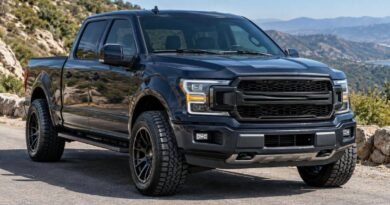

5 Best Running Boards for Ford Explorer in 2026: Power Deploy Assist Strong Grip & OEM Fit
If you own a 2020–2026 Ford Explorer, adding a quality set of running boards isn’t just about appearance. The Explorer sits higher than many midsize SUVs, and that extra step becomes noticeable every day—whether you’re helping kids climb in, loading roof cargo, or simply getting behind the wheel. After comparing the latest options available for the sixth-generation Explorer, one thing became clear: not every running board is built the same. Material quality, step width, mounting strength, corrosion resistance, and long-term durability vary far more than most listings suggest.
For this guide, I focused on running boards that are actually designed for the 2020, 2021, 2022, 2023, 2024, 2025, and 2026 Ford Explorer without questionable fitment claims. I compared electric PowerSteps, stainless steel and aluminum designs, heavy-duty steel options, weight capacity, installation hardware, and real-world practicality for daily driving. The goal wasn’t to find the cheapest accessory—it was to recommend Ford Explorer running boards that offer secure footing, factory-style fitment, and lasting value so you won’t regret the purchase after a few months.
Best Running Boards for Ford Explorer: Top 2026 Picks for Secure Step and OEM Fit
#1. AITONOBLE PowerStep Running Boards
Best Ford Explorer running boards for 2020–2026 models if you want premium power running boards with automatic deployment, integrated LED lighting, factory-style operation, and the cleanest look when the doors are closed.
#2. APS Running Boards
Best stainless steel running boards for Ford Explorer offering excellent corrosion resistance, wide anti-slip stepping surface, dependable mounting strength, and outstanding long-term value for daily drivers.
#3. TAC Black Cobra Running Boards
Best Ford Explorer side steps for owners who want lightweight aluminum construction, rugged styling, secure grip, and dependable durability without adding unnecessary weight.
#4. Longsun Running Boards
Best heavy-duty Ford Explorer nerf bars featuring a reinforced two-step design, up to 550-lb capacity, and easier cabin access for families, seniors, and frequent passengers.
#5. Snailfly Running Boards
Best running boards for Ford Explorer buyers looking for an OEM-style appearance, complete installation hardware with mud flaps, solid everyday usability, and budget-friendly value without sacrificing fitment.
Expert Tip
If you’re planning to keep your Ford Explorer for several years, don’t choose a running board based on looks alone. The biggest difference shows up after months of daily use, not on installation day. A wider stepping surface, solid mounting brackets, and a corrosion-resistant finish matter far more than aggressive styling. If you regularly carry children, older passengers, or load gear onto the roof, those small details become noticeable every single day. Spending a little more on better construction is usually cheaper than replacing a budget set that starts flexing, rattling, or showing rust after one or two winters.
How We Chose These Ford Explorer Running Boards
There are dozens of running boards marketed for the 2020–2026 Ford Explorer, but many are simply rebranded versions with different logos. Instead of relying on marketing claims, we compared the things that actually affect ownership after installation.
The first filter was vehicle-specific fitment. Every recommendation in this guide is designed for the sixth-generation Ford Explorer rather than using a universal platform. Correct mounting points reduce installation headaches, improve structural strength, and help prevent unwanted movement over time.
Next, we looked at construction quality. Stainless steel, aircraft-grade aluminum, and reinforced carbon steel each serve different buyers, so we included examples of all three instead of pushing one material for everyone. We also paid close attention to protective finishes because paint quality and corrosion resistance often determine how these products look after years of road salt, rain, and daily driving.
We also compared the usable stepping surface, not just the advertised width. A running board can look wide in photos but still provide limited foot placement because of raised edges or decorative styling. Models with secure footing and practical step areas received higher priority, especially for families, older passengers, and drivers who frequently access roof-mounted cargo.
Not every owner has the same budget, so we intentionally included different categories. The AITONOBLE PowerStep represents the premium electric option with automatic deployment and LED lighting. The APS and TAC models stand out for long-term durability and dependable everyday use. Longsun earned its place because of its reinforced construction and high load capacity, while Snailfly offers an OEM-style solution for buyers who want factory-inspired styling without moving into premium pricing.
Finally, we avoided ranking products simply because of flashy specifications or oversized weight claims. Our recommendations are based on overall value, real-world practicality, installation quality, material strength, finish durability, safety, and how well each running board matches different Ford Explorer owners. That approach creates a list where every recommendation has a clear purpose, rather than five products competing for the exact same buyer.
#1. AITONOBLE PowerStep Running Boards
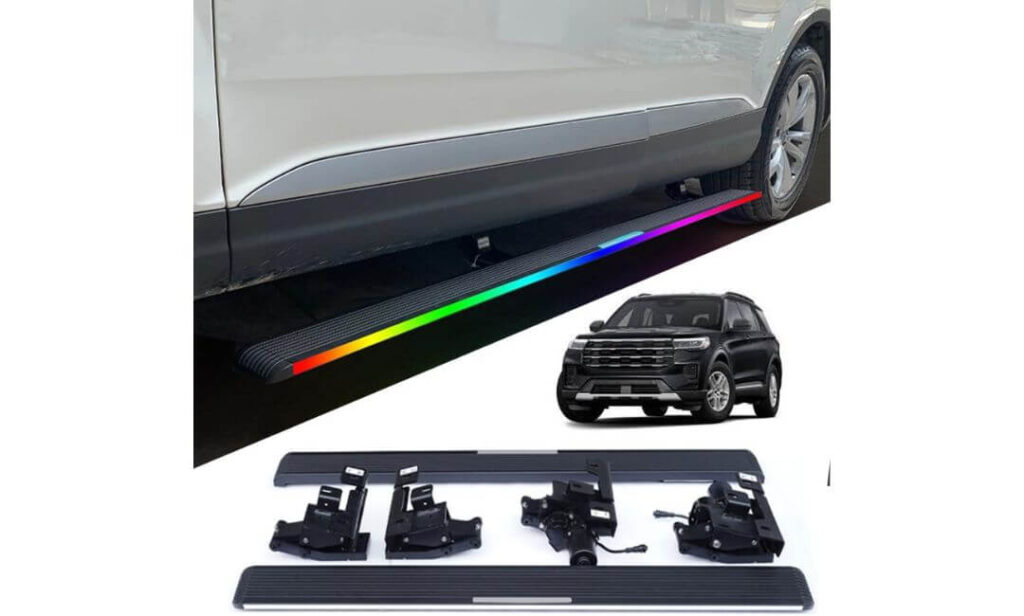
Quick Specs:
- Perfect Fit: Ford Explorer 2020–2026 (6th-generation, vehicle-specific design)
- Style: Automatic power-deploying running boards
- Material: Lightweight aluminum alloy with weather-resistant finish
- Lighting: App-controlled RGB LED illumination
- Operation: Extends when a door opens and retracts automatically when closed
- Best For: Families, seniors, frequent passengers, and owners who prefer a factory-clean appearance
- Installation: Bolt-on mounting with Explorer-specific brackets (professional installation recommended for power and lighting connections)
This is the kind of upgrade you appreciate every single day rather than only on the day you install it. The automatic deployment makes climbing into the Ford Explorer noticeably easier, while the retractable design keeps the SUV looking clean when the doors are closed. That balance between convenience and appearance is exactly why electric running boards continue to gain popularity on premium SUVs.
Another detail that stood out during our research is the aluminum alloy construction. It keeps overall weight lower than comparable steel options while still providing the rigidity expected from a premium side step. The integrated RGB LED lighting, controlled through a smartphone app, isn’t just for style—it also improves visibility around the step area during nighttime entry, something many fixed running boards simply cannot offer.
Unlike universal electric steps that often require custom adjustments, this system is built specifically for the sixth-generation Explorer. That means the brackets, deployment angle, and overall fit feel much closer to an OEM accessory than an aftermarket compromise. (If your Explorer is used daily by children, elderly passengers, or anyone who prefers an easier step-in height, this is one of the few upgrades you’ll notice every single trip.)
Why This One Earned Our Top Recommendation
- Automatic deployment creates a premium factory-style experience every time a door opens.
- Vehicle-specific mounting helps achieve cleaner alignment and more dependable operation.
- Aluminum alloy construction offers an excellent balance of strength, durability, and corrosion resistance.
- RGB LED lighting improves nighttime visibility while adding a modern touch that can be customised.
- Retracts completely to preserve ground clearance and maintain the Explorer’s original profile.
One Thing Worth Knowing
- Because it includes electric motors and lighting, installation is more involved than traditional fixed running boards, so professional fitting is the smarter choice for most owners.
Ford Explorer Fitment and Installation Notes
Designed specifically for the 2020, 2021, 2022, 2023, 2024, 2025, and 2026 Ford Explorer, these PowerSteps are intended for the sixth-generation SUV platform and use vehicle-specific mounting hardware rather than universal brackets.
Since the system connects to your vehicle’s electrical components for automatic deployment and LED lighting, plan a little extra installation time. Most owners can handle the mechanical mounting, but the electrical wiring is where professional installation can save time and ensure everything operates exactly as intended.
The Insider Pro-Tip
If you’re already planning to add roof crossbars, a roof box, or frequently load bikes and luggage onto your Explorer, this upgrade delivers far more value than it first appears. The automatic step becomes something you rely on every week instead of an accessory you occasionally notice.
One more suggestion that experienced owners rarely mention: after installation, open and close every door several times before tightening everything permanently. This simple check confirms the deployment is smooth, the step clears the rocker panels correctly, and the running boards sit evenly on both sides—small details that make the finished installation feel genuinely factory-installed rather than aftermarket.
#2. APS Running Boards (Side Steps Step Bars)
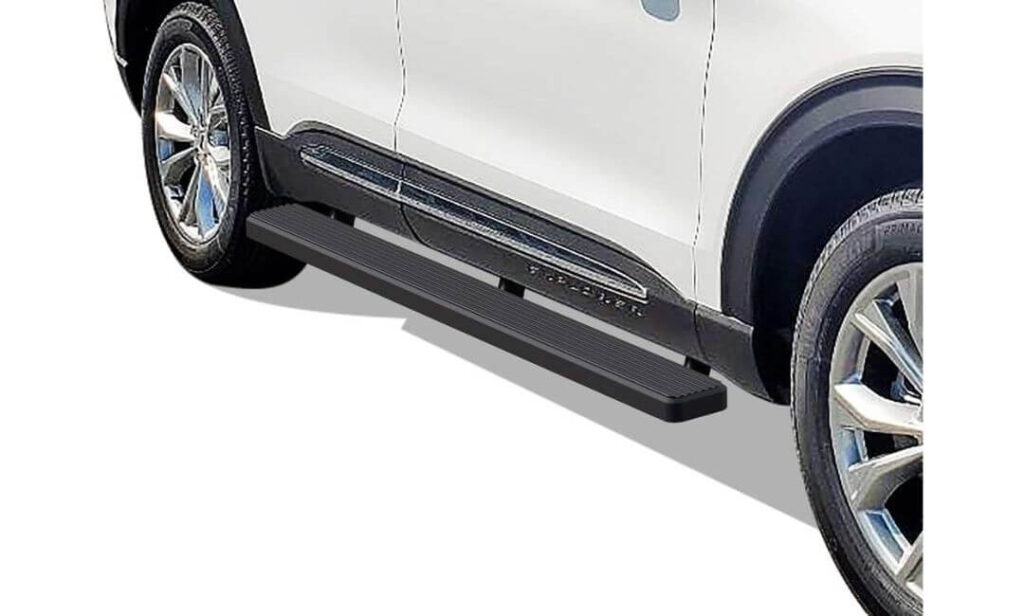
Quick Specs:
- Perfect Fit: Ford Explorer 2020–2026 (4-door, vehicle-specific fit)
- Material: Premium 6061 aircraft-grade aluminum with reinforced internal structure
- Finish: Triple-layer black powder coating for improved corrosion protection
- Step Width: 5-inch full-length anti-slip stepping surface
- Weight Capacity: Supports up to 500 lbs
- Installation: No-drill installation using Explorer-specific mounting brackets
- Best For: Owners who want factory-style looks with dependable long-term durability
The first thing you’ll notice isn’t the finish—it’s the stepping surface. A true 5-inch full-length step pad gives your foot plenty of room whether you’re getting in after work, helping kids into the second row, or reaching roof-mounted cargo. Many running boards look similar online, but the usable step area is often much smaller than expected. This one delivers exactly what the photos promise.
Another reason this model earned a high spot is its combination of 6061 aircraft-grade aluminum and a triple-layer powder-coated finish. That pairing helps resist road salt, rain, mud, and everyday abuse without adding unnecessary weight. The integrated end caps also create a cleaner appearance, making the boards look more like a factory-installed accessory instead of an aftermarket add-on.
What impressed us most is that APS didn’t chase flashy features—it focused on getting the fundamentals right. The 500-pound load rating, no-drill installation, vehicle-specific brackets, and full-length anti-slip surface all contribute to a product that feels dependable from the first step to years of daily use. (Sometimes the smartest upgrade isn’t the one with the most features—it’s the one you never have to think about after it’s installed.)
Built for Everyday Ownership, Not Just First Impressions
- Full-length 5-inch anti-slip step pad provides confident footing in daily use.
- Triple-layer powder-coated finish offers better long-term protection against corrosion and fading.
- 6061 aircraft-grade aluminum keeps the boards strong while avoiding unnecessary weight.
- 500-pound capacity gives added confidence for every passenger.
- No-drill installation makes fitment cleaner while preserving the Explorer’s factory mounting points.
One Thing Worth Knowing
- These are fixed running boards, so they remain visible at all times and don’t retract like electric PowerStep systems.
Ford Explorer Compatibility and Installation
Designed specifically for the 2020, 2021, 2022, 2023, 2024, 2025, and 2026 Ford Explorer, these running boards mount directly to the factory attachment points using the supplied brackets, eliminating the need for drilling into the vehicle.
Before installation, it’s worth checking that all factory mounting holes are free from road debris or underbody coating. Clean mounting points allow the brackets to sit perfectly flush, helping eliminate unnecessary stress and ensuring the boards remain solid over years of use.
The Insider Pro-Tip
If your Explorer spends more time on city roads than off-road trails, a wide fixed running board like this often proves more practical than a retractable system. There’s no motor to maintain, no deployment mechanism to worry about, and the step is always ready when you open the door.
One detail experienced installers appreciate is the full-length step design. It gives rear-seat passengers the same secure footing as those in the front, something shorter running boards often overlook. That’s the kind of difference you only notice after living with the vehicle—not while scrolling through product photos.
#3. TAC Black Cobra Running Boards
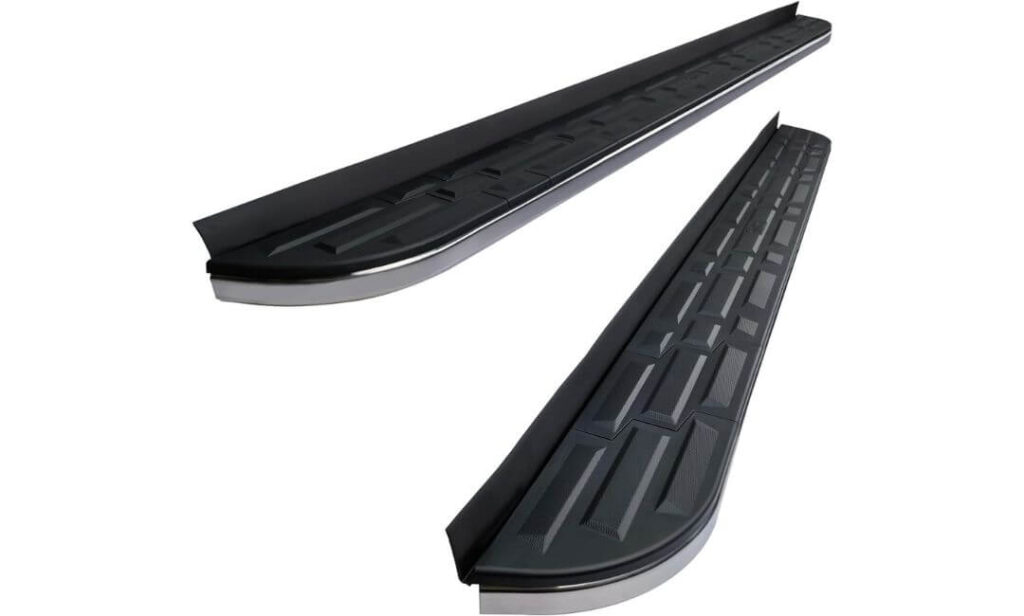
Quick Specs:
- Perfect Fit: Ford Explorer 2020–2026 (all trim levels)
- Construction: Aluminum running boards with stainless steel accents
- Finish: Matte black exterior with corrosion-resistant hardware
- Design: Fixed Cobra-style step rails with wide stepping area
- Installation: No drilling required; vehicle-specific brackets included
- Warranty: 5-year manufacturer warranty
- Best For: Drivers looking for a lighter alternative to steel without sacrificing strength
Rather than trying to stand out with oversized styling, these running boards focus on something buyers appreciate after months of ownership—solid everyday usability. The aluminum construction keeps weight down while still providing a stable platform, making door entry feel natural without adding unnecessary bulk to the sides of the Ford Explorer.
Another advantage is the combination of black aluminum with stainless steel detailing. It gives the SUV a cleaner, more factory-inspired appearance instead of the oversized off-road look found on many aftermarket step bars. The result is subtle enough for daily commuting while still complementing trims like the ST, Platinum, and Timberline.
The overall package feels well thought out. Vehicle-specific mounting brackets eliminate drilling, the step remains firm under load, and the lighter aluminum construction helps reduce the extra weight carried by the vehicle compared with traditional steel running boards. (If your goal is to improve accessibility without changing the Explorer’s clean design, this setup strikes one of the best balances in this guide.)
Why It Deserves a Place in This Guide
- Lightweight aluminum construction delivers strength without excessive weight.
- Stainless steel accents add durability while maintaining a premium appearance.
- Vehicle-specific mounting system provides a cleaner fit and dependable support.
- No-drill installation preserves the factory mounting locations.
- 5-year manufacturer warranty adds confidence for long-term ownership.
One Thing Worth Knowing
- The included installation guide can be brief, so many owners find the process easier by following TAC’s official installation resources before getting started.
Ford Explorer Compatibility and Installation
These running boards are engineered specifically for the 2020, 2021, 2022, 2023, 2024, 2025, and 2026 Ford Explorer, using dedicated mounting brackets that match the factory attachment points across all trim levels.
Before tightening every bolt, loosely install both sides first and check the spacing beneath each door. Taking a few extra minutes to align the boards evenly creates a cleaner factory-style finish and prevents small fitment differences from becoming noticeable later.
The Insider Pro-Tip
One thing many buyers overlook is that lighter running boards are often easier to live with long-term. Aluminum resists corrosion naturally, is easier to handle during installation, and places less constant weight on the mounting hardware than heavier steel alternatives.
If you want your Explorer to look upgraded without drawing unnecessary attention, this style does exactly that. It blends into the body lines, provides secure footing every day, and looks like an accessory that could have come from the factory rather than being added later.
#4. Longsun Running Boards
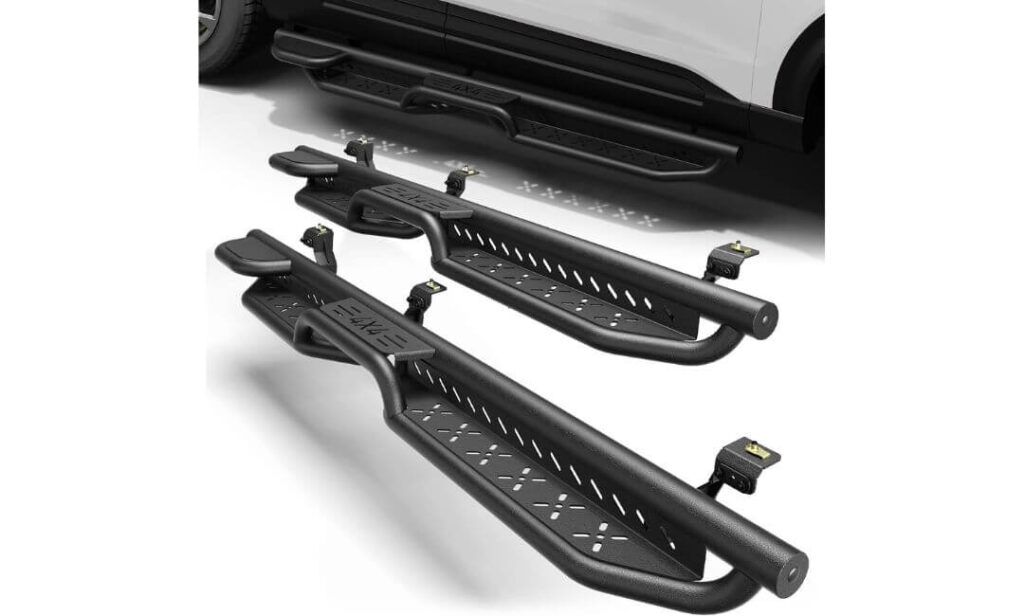
Quick Specs:
- Perfect Fit: Ford Explorer 2021–2026 (4-door, vehicle-specific fit)
- Construction: Reinforced heavy-duty carbon steel
- Weight Capacity: Up to 550 lbs per side
- Step Design: Dual raised anti-slip stepping pads
- Protection: Double-layer E-coating with textured black powder coating
- Installation: Bolt-on installation using factory OEM mounting holes
- Best For: Families, seniors, taller passengers, and Explorers that see daily use in every season
What immediately separates this model from most fixed running boards is its two-raised step design. Instead of relying on one continuous flat surface, the textured stepping zones naturally guide your foot into position. It’s a small design detail, but one you’ll appreciate on rainy mornings, muddy trails, or when passengers are getting in with full hands.
Strength is another reason this option earned its place in our lineup. The reinforced carbon steel construction combined with a 550-pound weight capacity per side makes it one of the strongest fixed running boards in this guide. Add the double-layer E-coating beneath the textured powder-coated finish, and you have protection against road salt, stone chips, moisture, and the kind of everyday abuse that often shortens the life of lower-quality step bars.
Perhaps the biggest advantage is confidence. From the first step, these boards feel planted rather than hollow or flexible. The bolt-on installation uses the Explorer’s factory mounting points, while the raised stepping pads give every passenger a more secure place to stand. (If your Explorer regularly carries family, outdoor gear, or passengers who value a confident first step, this design makes practical sense long after the excitement of a new accessory fades.)
Where This Running Board Stands Out
- 550-pound capacity provides exceptional strength for everyday use.
- Dual raised anti-slip step pads improve grip in wet, muddy, and snowy conditions.
- Heavy-duty carbon steel delivers outstanding structural rigidity.
- Double-layer anti-rust protection helps preserve both appearance and durability.
- OEM-hole bolt-on installation keeps fitment straightforward without drilling.
One Thing Worth Knowing
- The rugged raised-step design prioritises function over a completely smooth factory appearance, so it has a slightly more utility-focused look than premium aluminum options.
Ford Explorer Compatibility and Installation
These running boards are engineered specifically for the 2021, 2022, 2023, 2024, 2025, and 2026 Ford Explorer, aligning directly with the factory mounting locations for secure installation without modifications.
Before final tightening, check that both raised stepping pads sit level from front to rear. Even a slight adjustment during installation can improve overall appearance and ensure each step feels equally solid under load.
The Insider Pro-Tip
If your Explorer is used for school runs during the week and road trips on weekends, step design matters just as much as material. Raised traction zones provide noticeably better footing than smooth platforms once shoes become wet, dusty, or muddy.
One more detail worth remembering: a higher weight rating isn’t only about carrying heavier passengers. It usually reflects a stronger internal structure and reduced flex over years of repeated use, which is exactly why this model stands out among fixed heavy-duty running boards.
#5. Snailfly Running Boards
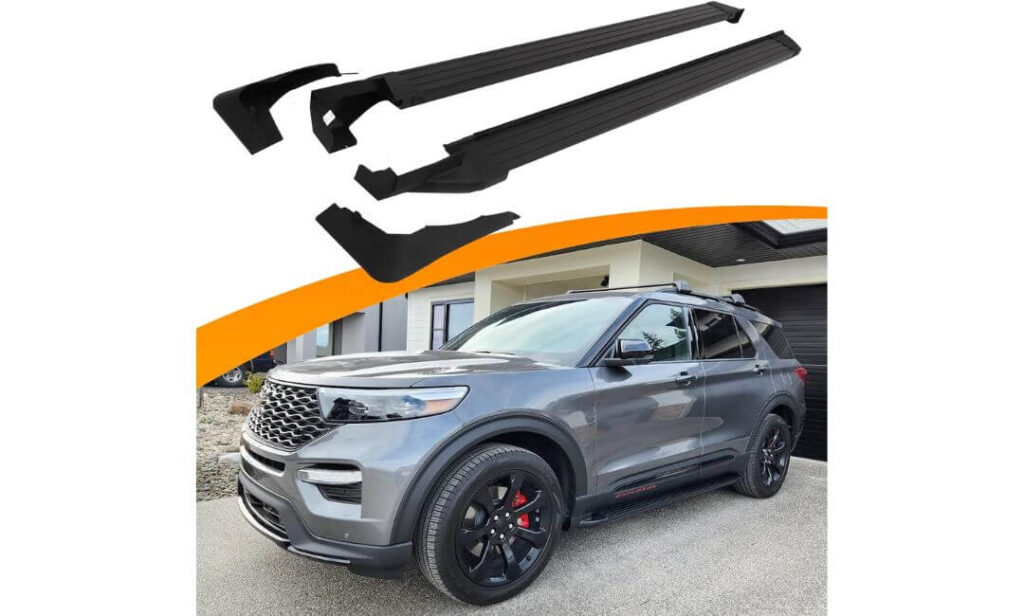
Quick Specs:
- Perfect Fit: Ford Explorer 2020–2026 (Base, XLT, Limited, ST, Platinum, ST-Line, Timberline, Hybrid)
- Construction: Rust-resistant aluminum
- Weight Capacity: Supports up to 500 lbs
- Traction: Full-length anti-slip stepping surface
- Bonus: Includes mud flaps, mounting brackets, and installation hardware
- Installation: No-drill, factory mounting points
- Best For: Owners looking for dependable value with practical everyday features
Sometimes the smartest purchase isn’t the most expensive one—it’s the product that solves several problems at once. Besides providing easier access to the cabin, this setup also includes mud flaps, helping reduce road spray, dirt, and small stones from reaching the lower doors and rocker panels. It’s a practical addition that many running board kits simply don’t include.
The rust-resistant aluminum construction keeps weight manageable while offering dependable durability for daily driving. Combined with a 500-pound load capacity and a full-length anti-slip stepping surface, it delivers the kind of stability most Explorer owners actually need, whether they’re helping children into the back seat, assisting older family members, or loading gear before a weekend trip.
What makes this kit easy to recommend is its overall value. It uses the Explorer’s existing mounting points, arrives with the required brackets and hardware, and fits a wide range of trims without unnecessary modifications. (If you’re looking for a well-rounded package instead of paying extra for premium electronics, this kit checks the boxes that matter most in everyday ownership.)
Why It Finishes Our Shortlist Strong
- Rust-resistant aluminum construction balances durability with lower overall weight.
- 500-pound capacity provides dependable support for daily family use.
- Anti-slip stepping surface delivers secure footing in changing weather conditions.
- Mud flaps included add extra protection for the lower bodywork.
- Vehicle-specific no-drill installation keeps the mounting process straightforward.
One Thing Worth Knowing
- The printed installation instructions can be a little brief, so reviewing an installation video beforehand can make the process smoother and save time.
Ford Explorer Compatibility and Installation
These running boards are designed for the 2020, 2021, 2022, 2023, 2024, 2025, and 2026 Ford Explorer, including Base, XLT, Limited, Hybrid, ST, Platinum, ST-Line, and Timberline models. The supplied brackets line up with the factory mounting locations, eliminating the need for drilling.
Before fitting the included mud flaps, loosely install the running boards first and confirm the final position. Doing this allows both accessories to align naturally, giving the finished installation a cleaner, factory-style appearance.
The Insider Pro-Tip
When comparing value-focused running boards, don’t judge them only by the material or weight rating. Complete installation hardware, proper vehicle-specific brackets, and included accessories often save both money and installation time compared with buying those parts separately later.
One final observation from our research: buyers who choose a well-fitting aluminum running board with a wide anti-slip surface are usually happier long-term than those who focus only on aggressive styling. Daily comfort, secure footing, and dependable fitment are the details you’ll appreciate every time you open the door—not just on the day the package arrives.
Best Ford Explorer Running Boards Compared Side by Side
| Comparison | AITONOBLE PowerStep | APS Running Boards | TAC Black Cobra | Longsun Running Boards | Snailfly Running Boards |
|---|---|---|---|---|---|
| Best For | Premium Pick | Best Everyday Choice | Best Lightweight | Best Heavy Duty | Best Value |
| Explorer Fitment | 2020–2026 | 2020–2026 | 2020–2026 | 2021–2026 | 2020–2026 |
| Material | Aircraft-grade Aluminum | 6061 Aircraft Aluminum | Aluminum with Stainless Accents | Heavy-Duty Carbon Steel | Rust-Resistant Aluminum |
| Step Style | Automatic Deploy & Retract | Fixed Full-Length Board | Fixed Cobra Style | Dual Raised Step Pads | Fixed OEM-Style Board |
| Grip & Footing | Wide Powered Step | 5-inch Anti-Slip Pad | Wide Stable Platform | Raised Textured Grip Zones | Full-Length Anti-Slip Pad |
| Weight Capacity | Heavy-Duty Daily Use | 500 lbs | Excellent Everyday Support | 550 lbs | 500 lbs |
| Rust Protection | Weather-Resistant Aluminum | Triple-Layer Powder Coating | Corrosion-Resistant Finish | Double E-Coating + Powder Coat | Rust-Free Aluminum Build |
| Lighting | RGB LED Included | — | — | — | — |
| Retractable Design | Automatic | No | No | No | No |
| No-Drill Installation | Vehicle-Specific Mounting | Yes | Yes | Yes | Yes |
| Included Extras | RGB App Control | Integrated End Caps | 5-Year Warranty | Dual Raised Step Design | Mud Flaps Included |
| Ideal Owner | Luxury Explorer Owners | Daily Drivers | Drivers Wanting Style & Strength | Families & Frequent Travelers | Budget-Conscious Buyers |
| Overall Value | ★★★★★ | ★★★★★ | ★★★★☆ | ★★★★☆ | ★★★★☆ |
| Our Verdict | Editor’s Choice | Best Overall Value | Best Balanced Pick | Best for Strength | Best Budget Choice |
Buying Guide: How to Choose the Best Running Boards for Your Ford Explorer
Buying running boards for a Ford Explorer looks simple until you start comparing products. You’ll quickly notice that many listings use the same photos, similar descriptions, and identical claims, even though the actual construction and long-term durability can be very different. The right choice isn’t always the most expensive model—it’s the one that matches how you use your Explorer every day. Whether you’re helping children climb into the second row, making roof access easier, or simply looking for a cleaner factory appearance, focusing on the right details will save you from buying a product you’ll want to replace a year later.
Fit and Compatibility: Always Start with Vehicle-Specific Fitment
Before comparing materials or designs, confirm that the running boards are engineered specifically for your Ford Explorer’s model year. The sixth-generation Explorer (2020–2026) uses dedicated factory mounting points, and a vehicle-specific kit ensures the brackets align correctly without forcing adjustments.
Be cautious of listings that advertise compatibility across multiple SUVs using universal hardware. Even if installation is possible, universal brackets often lead to uneven gaps, reduced stability, and unnecessary stress on the mounting points. A properly engineered fit not only looks better but also improves safety and long-term durability.
Choosing Between Fixed Running Boards and Power-Deploy Steps
One of the biggest decisions is whether you prefer fixed running boards or power-deploying side steps.
Fixed running boards are always available, require very little maintenance, and usually cost less. They are ideal for families, daily commuting, and owners who want dependable access without worrying about electric components.
Power-deploying running boards create a cleaner appearance because they automatically extend when a door opens and retract when it closes. They also improve ground clearance when tucked away. However, they require electrical connections and professional installation is often the better option to ensure reliable operation.
If appearance is your priority, power steps are difficult to beat. If reliability and simplicity matter more, a quality fixed running board remains the smarter long-term investment.
Material and Finish Matter More Than Most Buyers Expect
Not every running board uses the same construction, even if the listings appear similar.
Aluminum is lightweight, naturally resistant to corrosion, and an excellent choice for year-round daily driving. It offers a great balance between durability and weight.
Carbon steel provides exceptional structural strength and higher load capacity but relies heavily on protective coatings to resist corrosion over time.
The finish is equally important. Look for powder-coated, E-coated, or multi-layer corrosion-resistant finishes, especially if your Explorer regularly encounters rain, mud, road salt, or gravel. A high-quality protective coating often determines how the running boards will look after several winters—not just after installation.
Step Surface and Grip Should Never Be Overlooked
Many buyers focus only on style, but the stepping surface is what you’ll actually use every day.
A wider anti-slip platform provides more secure footing, particularly when entering the vehicle with wet shoes, carrying groceries, or helping children and older passengers. Raised traction zones and textured step pads generally perform better than smooth decorative surfaces because they continue to provide grip in rain, snow, and dusty conditions.
If roof access is part of your routine, a wider step also makes loading bikes, cargo boxes, or kayaks much more comfortable.
Weight Capacity and Structural Strength
Weight ratings aren’t only about supporting heavier passengers. They also indicate the overall strength of the running board’s frame, brackets, and mounting system.
Most quality Ford Explorer running boards support around 500 pounds, while heavy-duty models may reach 550 pounds or more. A stronger load rating often means less flex, greater confidence under daily use, and better long-term durability, especially if the boards are used frequently by multiple passengers.
Installation: DIY or Professional?
Most fixed running boards for the Explorer are designed as bolt-on upgrades, using the factory mounting points with no drilling required. If you’re comfortable with basic hand tools and can safely lift the vehicle if necessary, installation is usually manageable at home.
Power-deploying systems are different. Because they require electrical wiring for motors, sensors, and lighting, professional installation is often the better investment. Proper wiring helps ensure smooth operation while reducing the chance of future electrical issues.
Regardless of the product you choose, loosely install all brackets first, verify alignment on both sides, and tighten everything only after confirming the boards sit level beneath the doors.
Appearance: Factory Style or Rugged Utility?
Running boards influence the overall look of your Explorer just as much as they improve accessibility.
Factory-style boards follow the body lines closely, creating a clean OEM-inspired appearance that blends naturally with the SUV. These are ideal for owners who want the upgrade to look original.
Cobra-style running boards and heavy-duty nerf bars create a more rugged, functional appearance. They often provide stronger visual contrast and can be better suited to Explorers used for outdoor travel, camping, or towing.
The best choice depends on whether you want your upgrade to blend in—or stand out.
Maintenance and Long-Term Ownership
Even premium running boards benefit from occasional maintenance.
Wash them regularly to remove road salt, mud, and debris, especially during winter. Clean the anti-slip pads so they continue providing reliable traction, and inspect the mounting hardware every few months to ensure all bolts remain properly tightened.
If you’ve chosen power-deploying running boards, periodically wipe the moving arms and hinges to prevent dirt buildup that could affect smooth operation. These small maintenance habits take only a few minutes but can significantly extend the life of your investment.
Final Buying Advice
The best running boards aren’t simply the ones with the longest feature list—they’re the ones that make your Ford Explorer easier to live with every single day. Prioritize vehicle-specific fitment, high-quality materials, secure footing, strong corrosion protection, and a design that matches your driving habits. When those fundamentals are right, you’ll appreciate the upgrade every time you open the door, long after the excitement of the purchase has faded.
Installation Snapshot: Ford Explorer Running Boards Installation Guide
Installing Ford Explorer running boards is one of the most rewarding upgrades you can do because the results are immediately noticeable every time you enter or exit the vehicle. The good news is that most 2020–2026 Ford Explorer running boards are designed around the factory mounting points, so drilling is rarely required. The key to a professional-looking installation isn’t speed—it’s preparation, proper alignment, and tightening everything in the correct order.
While fixed running boards are generally DIY-friendly, electric PowerStep systems require additional wiring for motors, sensors, and lighting. If you’re comfortable with mechanical work but have limited experience with vehicle electronics, there’s nothing wrong with handling the mechanical installation yourself and leaving the wiring to a professional.
Quick-Start Checklist Before You Begin
Taking ten minutes to prepare usually saves much more time during installation.
- Confirm the running boards are designed specifically for your Ford Explorer model year.
- Compare the left and right mounting brackets before installing anything.
- Lay out every bolt, washer, spacer, and bracket in order.
- Inspect the factory mounting holes underneath the vehicle for dirt, undercoating, or rust buildup.
- Read the installation manual completely before picking up any tools.
- If installing electric running boards, disconnect the negative battery terminal before beginning any wiring work.
- Park the Explorer on a flat, stable surface and engage the parking brake.
Ford Explorer Running Boards Installation: Step-by-Step Overview
Start by identifying all factory mounting points along the rocker panels. Most quality running boards use these existing locations, eliminating the need for drilling or permanent modifications.
Install the mounting brackets first, but leave every bolt slightly loose. This allows small adjustments while positioning the running boards later. Tightening brackets too early is one of the most common reasons boards end up sitting unevenly beneath the doors.
Next, place the running board onto the brackets and loosely secure all mounting hardware. Before tightening anything permanently, close every door and inspect the gaps along the entire length of the vehicle. The boards should sit parallel with the rocker panels and maintain consistent spacing from front to rear.
Once you’re satisfied with the alignment, tighten all hardware gradually, alternating from front to rear instead of fully tightening one side first. This helps distribute pressure evenly across every mounting point.
For power-deploying running boards, complete the electrical connections only after the mechanical installation has been verified. Test every door individually to ensure the boards deploy and retract smoothly before reinstalling any trim panels.
Common Installation Mistakes to Avoid
The biggest mistake is assuming every bracket looks identical. Many kits include front, centre, and rear brackets that appear similar but are designed for specific locations. Installing them in the wrong position often creates alignment problems later.
Another common issue is tightening bolts immediately after mounting the first bracket. Always leave room for adjustment until both running boards are fully installed and visually aligned.
Avoid skipping the final inspection. Open and close every door several times, apply body weight across different sections of each running board, and confirm nothing shifts, flexes excessively, or contacts the bodywork during operation.
Typical Installation Time
Installation time depends on the style of running board and your level of experience.
- Fixed running boards: approximately 1.5 to 3 hours for most DIY installers.
- Heavy-duty steel systems: around 2 to 3 hours because of the additional weight.
- Power-deploying running boards: typically 3 to 6 hours, including electrical wiring, sensor setup, and functional testing.
Working slowly almost always produces a cleaner result than trying to finish as quickly as possible.
Essential Tools You’ll Want Nearby
Having the right tools within reach makes installation considerably easier.
- Socket wrench set
- Ratchet with extensions
- Torque wrench
- Combination wrench set
- Trim removal tool (helpful for some power-step installations)
- Work gloves
- Safety glasses
- Creeper or protective floor mat
- Flashlight or rechargeable work light
- Microfiber cloth for cleaning mounting surfaces
If you’re installing an electric system, you’ll also want basic wiring tools, cable ties, and electrical tape for clean cable management.
Safety Tips That Experienced Installers Follow
Never rely solely on a hydraulic jack if additional vehicle clearance is required. Always use properly rated jack stands positioned on stable ground.
Before fully tightening the hardware, stand on several sections of each running board to confirm the brackets remain secure and evenly supported.
After driving for approximately 100–200 miles, inspect every mounting bolt and retorque them if necessary. Hardware can settle slightly after the first few heat cycles and road vibrations, and this simple inspection helps ensure your Ford Explorer running boards installation remains secure for years to come.
Power Deploy vs Manual Running Boards: Which Is Better for Your Ford Explorer?
One of the biggest decisions when shopping for the best running boards for Ford Explorer isn’t the brand—it’s the mechanism. Should you invest in power running boards for Ford Explorer, or stick with traditional fixed running boards? The answer depends less on your budget and more on how your Explorer is used every day.
Both designs solve the same problem by making entry and exit easier, but they do it in very different ways. Understanding those differences before buying will help you choose a running board you’ll still appreciate years from now.
Power Deploy Running Boards: Premium Convenience Every Time You Open the Door
Power-deploy running boards remain hidden beneath the rocker panels while driving. As soon as a door is opened, electric motors automatically extend the step into position, then retract it once the door closes.
This design offers two major advantages. First, it preserves the Explorer’s clean body lines because the running boards are almost invisible when not in use. Second, retracting the step improves ground clearance, which can be useful on uneven trails or when driving through deep snow.
Modern systems also include features such as LED step lighting, intelligent door sensors, and smooth automatic deployment, making entry easier during nighttime or poor weather conditions.
Power running boards are an excellent choice if you:
- Prefer a factory-luxury appearance.
- Frequently carry children or elderly passengers.
- Want maximum ground clearance when driving.
- Appreciate premium convenience features.
- Plan to keep your Explorer for many years.
The trade-off is higher cost, more complex installation, and additional electrical components that require proper wiring.
Manual Running Boards: Reliable, Practical, and Always Ready
Traditional fixed running boards don’t move, require no motors, and remain available whenever you need them.
For many owners, this simplicity is actually the biggest advantage. There’s no deployment mechanism to maintain, no electrical wiring to troubleshoot, and no waiting for the step to extend. Whether you’re stepping in quickly during heavy rain or loading cargo several times a day, the platform is always ready.
Today’s premium fixed running boards have also improved significantly. Wider anti-slip surfaces, stronger brackets, corrosion-resistant finishes, and vehicle-specific mounting systems make them far more refined than older aftermarket designs.
Manual running boards are ideal if you:
- Want maximum long-term reliability.
- Prefer lower maintenance.
- Frequently use the running boards throughout the day.
- Want easier DIY installation.
- Need excellent value without sacrificing quality.
Which Option Works Best for Different Ford Explorer Owners?
If your Explorer is primarily a family vehicle, either option works well, but the deciding factor is convenience. Parents helping children into the second or third row often appreciate the automatic deployment of power steps, while families looking for dependable everyday use usually find fixed running boards more practical and easier to maintain.
For owners who regularly transport older passengers, both styles improve accessibility. Power steps provide a lower, more natural stepping position, whereas wide manual running boards offer constant access without waiting for the mechanism to deploy.
If your Explorer is used for camping, towing, or outdoor adventures, the choice depends on priorities. Power-deploy systems offer improved clearance once retracted, while heavy-duty manual running boards generally tolerate dirt, mud, gravel, and repeated impacts with fewer moving parts to maintain.
Ford Explorer Trim Compatibility
Most power running boards for Ford Explorer are designed for the 2020–2026 sixth-generation platform, including trims such as XLT, Limited, ST, Platinum, ST-Line, and Timberline. However, electrical systems can vary slightly between manufacturers, so always verify trim compatibility before purchasing.
Manual running boards are typically more straightforward because they rely on factory mounting points rather than electrical connections. As long as the product is designed specifically for your model year and trim, installation is usually much simpler.
If you’re considering a power-deploy system with LED lighting or smart deployment, check whether the manufacturer includes all required wiring harnesses, controllers, and installation hardware. A complete kit saves both installation time and additional expense.
Long-Term Ownership Considerations
When thinking beyond the first few weeks of ownership, both designs have clear strengths.
Power-deploy running boards provide a premium experience every time you open the door. They enhance appearance, preserve ground clearance, and make the Explorer feel more refined. With proper installation and routine cleaning around the moving components, they can provide years of reliable operation.
Manual running boards focus on durability through simplicity. Fewer moving parts mean fewer potential maintenance concerns, making them especially appealing for owners who value dependable performance over additional technology.
Our Recommendation
For most buyers searching for the best running boards for Ford Explorer, a high-quality fixed running board offers the strongest balance of durability, simplicity, and long-term value.
However, if your budget allows and you want your Explorer to feel as premium as possible every time you unlock the doors, power running boards for Ford Explorer deliver an ownership experience that traditional side steps simply can’t replicate. The best choice isn’t about which mechanism is objectively better—it’s about choosing the one that matches how you actually use your Explorer every day.
FAQs About Ford Explorer Running Boards
Can running boards affect the ground clearance of a Ford Explorer enough to matter in daily driving?
For most Ford Explorer owners, fixed running boards don’t significantly reduce real-world usability because they sit close to the rocker panels. Where the difference becomes noticeable is on steep driveway transitions, uneven trails, or deep ruts, where a wider fixed board can become the first point of contact before the SUV itself.
If your Explorer regularly travels off-road or on rough forest roads, power-deploy running boards make more sense because they retract completely while driving. If the SUV spends 95% of its time on paved roads, a well-designed fixed running board offers better value with fewer components to maintain.
The decision comes down to where your Explorer spends most of its life—not where you hope to drive it once or twice a year.
Which Ford Explorer running board material actually lasts longer: aluminum, carbon steel, or stainless steel?
The answer depends more on construction quality and protective finish than the material name printed on the box.
For most owners:
- Aluminum offers the best balance of corrosion resistance, lower weight, and long-term daily use.
- Carbon steel usually provides the highest structural strength but depends heavily on quality coatings for rust protection.
- Stainless steel performs exceptionally well against corrosion but often adds more weight.
A poorly coated steel running board can show wear earlier than a well-built aluminum model. That’s why looking at the finish, bracket quality, and overall engineering usually tells you more than simply comparing materials.
Are premium power running boards worth the extra money for a Ford Explorer?
If you only think about installation cost, probably not.
If you think about how many times you’ll use them over the next five or six years, the answer changes completely.
Every school run, grocery trip, airport pickup, or weekend adventure becomes easier because the step appears exactly when you need it and disappears when you don’t. The cleaner appearance, improved ground clearance, and easier entry all become part of daily ownership rather than features you notice only on the first day.
That’s why many owners who choose quality power steps rarely go back to fixed running boards on their next SUV.
What is the biggest mistake buyers make when choosing the best running boards for a Ford Explorer?
Most people compare price before purpose.
A cheaper running board isn’t automatically better value if it doesn’t match how you use your vehicle. Someone carrying children every day has different needs than an owner loading roof-mounted bikes every weekend. Likewise, a driver living in snowy climates should prioritise corrosion resistance and secure traction over aggressive styling.
The best purchase usually comes from asking one simple question first:
“How will I actually use these running boards every week?”
Once you answer that honestly, the right product often becomes obvious.
How can I tell if a running board is genuinely well-built before I buy it?
Ignore the marketing photos for a moment and look at the details that rarely appear in advertisements.
A well-engineered running board typically includes:
- Vehicle-specific mounting brackets instead of universal hardware.
- A wide anti-slip stepping surface that remains usable across most of the board.
- High-quality corrosion protection rather than a basic painted finish.
- Even welds, reinforced support points, and realistic load ratings.
- Clear installation hardware designed specifically for your Explorer.
One final piece of advice: don’t judge a running board by how impressive it looks in product images. Judge it by how confidently it will support your family after thousands of entries and exits. That’s the difference between buying an accessory and investing in something you’ll genuinely appreciate every single day.
Final Verdict
After comparing today’s strongest options, one thing became obvious: the best running boards for Ford Explorer aren’t necessarily the ones with the longest feature list—they’re the ones that fit your driving routine, your passengers, and your expectations over the next several years.
If you want the most premium ownership experience, the AITONOBLE PowerStep stands out with automatic deployment, integrated LED lighting, and a clean factory-style appearance that’s hard to match. If long-term value matters more than added technology, the APS Running Boards deliver an excellent combination of durability, corrosion resistance, secure footing, and everyday practicality. Buyers looking for lighter construction will appreciate the TAC Black Cobra, while the Longsun is built for owners who prioritise strength and confident traction. The Snailfly rounds out the list as a dependable value choice with practical extras that make daily ownership easier.
Before placing your order, take a minute to think about who uses your Explorer most often. A family SUV, a daily commuter, and a weekend adventure vehicle don’t all need the same type of running board. Choosing based on your real-world driving habits—not marketing claims—will almost always lead to a purchase you’ll be happy with years from now.
Our recommendations weren’t selected because they had the biggest advertising budgets or the flashiest product pages. They earned their place by offering vehicle-specific fitment, dependable construction, practical features, and genuine day-to-day usability. If that’s what you’re looking for, you can choose any product from this list with confidence, knowing each one was included for a clear reason rather than simply filling space in a roundup.
Also Check: