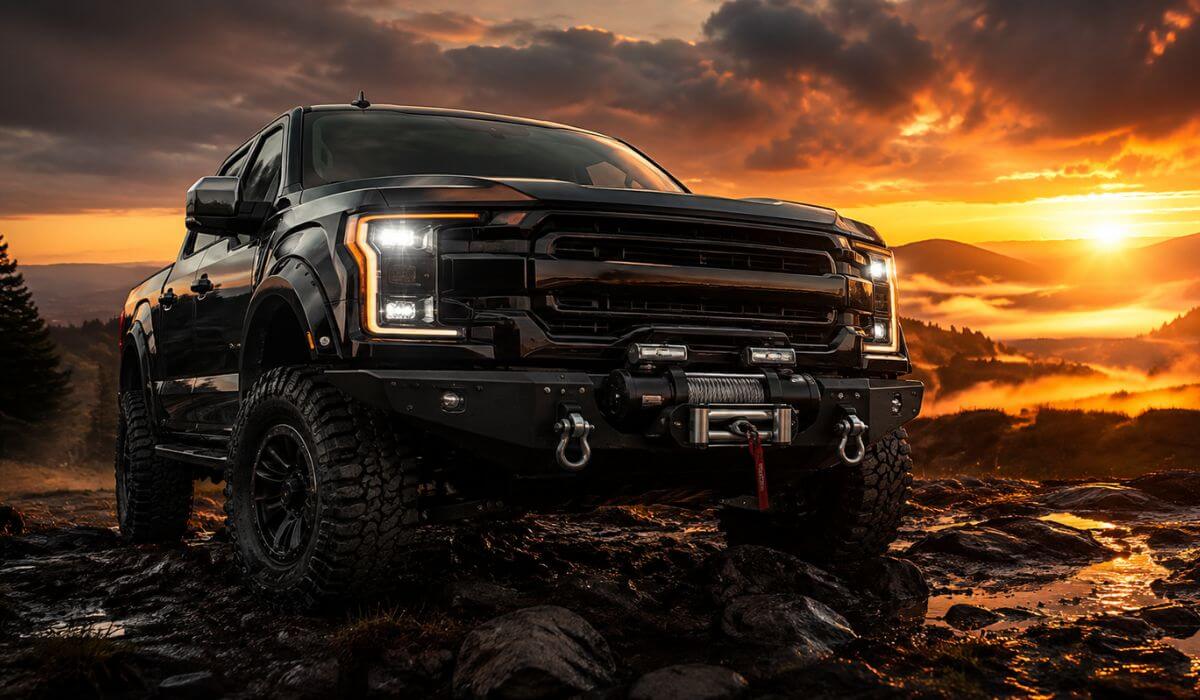
5 Best Winches for Ford F150 in 2026: Elite Recovery Power Synthetic Rope Wireless Control
Choosing a winch for a Ford F-150 is not just about buying the biggest pulling number. Most F-150 owners are running a truck that weighs between 4,100 and over 5,700 lbs, and once you add a steel bumper, recovery gear, camping equipment or a trailer, the load increases quickly. That’s why a 12,000 lb winch is the sweet spot for nearly every F-150—from older 2009–2014 trucks to 2015–2020, 2021–2023, and the latest 2024–2026 models. If your truck is heavily built for overlanding or work duty, stepping up to a 13,500 lb winch provides extra recovery confidence without being excessive.
Instead of chasing marketing claims, we focused on what actually matters when a recovery gets serious: consistent pulling power, synthetic rope safety, sealed IP68 weather protection, dependable braking systems, wireless operation, and brands with a reputation for surviving real-world use. Several of these models are relatively new to the market, so we looked beyond early ratings and evaluated their specifications, build quality, manufacturer track record, recovery features, and overall value before recommending them for the F-150.
Best Ford F-150 Winch: Top 2026 Picks for 12000 lb and 13500 lb Recovery
#1. Warn Zeon 12-S Platinum 12V Electric Winch
Best Ford F150 winch for premium off-road recovery, advanced wireless control and maximum long-term reliability
#2. Rough Country PRO Series 12,000 lb Electric Winch
Best 12,000 lb winch for Ford F150 delivering excellent value, dependable recovery performance and trail-ready durability
#3. Smittybilt XRC Gen 3 12,000 lb Competition Winch
Best off-road winch for Ford F150 with proven performance, synthetic rope and rugged all-terrain capability
#4. OPENROAD Panther Series 3S 13,500 lb Recovery Winch
Best heavy-duty recovery winch for Ford F150 with higher pulling capacity, IP68 protection and dual wireless remotes
#5. XYCLE 13,500 lb Heavy Duty Electric Winch
Best budget Ford F150 recovery winch offering strong pulling power, waterproof construction and modern recovery features
Expert Tip
If you’re buying a winch for your Ford F-150, don’t let a higher pulling rating be the only reason you choose it. A well-built 12,000 lb winch from a trusted manufacturer will usually outperform a cheaper 13,500 lb model when you’re stuck in deep mud, climbing loose rock or making repeated recoveries. Build quality, motor efficiency, braking performance, rope quality and weather sealing matter far more than the number printed on the box. A recovery is the worst time to discover where a manufacturer cut corners.
How We Chose the Best Winches for Ford F150
Every winch in this guide was selected with one goal: recommend the models we’d trust on our own F-150 if getting home depended on it. We didn’t rank products by price, marketing claims or review count alone—especially because some of these models are still relatively new and haven’t built years of customer feedback. Instead, we focused on the details that experienced truck owners actually look at before spending their money.
First, we looked at pulling capacity. A stock F-150 can often be recovered with less, but once you add a steel bumper, larger tyres, recovery gear, tools or overlanding equipment, vehicle weight increases quickly. That’s why our recommendations centre on 12,000 lb and 13,500 lb winches, giving enough recovery margin for most real-world situations without recommending unnecessary oversized units.
Next came motor and gearing. A winch with a strong motor but poor gearing can overheat during long pulls or struggle under continuous load. We preferred models designed to deliver steady pulling performance, smoother operation and better control rather than simply advertising the highest line speed.
We also paid close attention to synthetic rope quality, automatic load-holding brake systems, IP68 weather protection, all-metal construction, reliable wireless remote systems and hardware that can handle repeated recoveries instead of occasional weekend use. These are the features that continue to matter years after the purchase.
Brand reputation carried significant weight as well. Companies like Warn, Smittybilt and Rough Country have earned trust over years of real off-road use, while newer brands only made this list if their engineering, specifications and overall value were strong enough to justify a recommendation—not simply because they offered more features on paper.
Finally, we looked at overall value for Ford F-150 owners. The goal wasn’t to fill this list with only premium products or only budget options. We selected winches that make sense for different budgets while still meeting the reliability, safety and performance standards we’d expect before mounting one on a truck that may need to recover itself miles away from pavement. If a product didn’t offer a convincing balance of quality, durability and real recovery capability, it didn’t make this guide.
#1. Warn Zeon 12-S Platinum 12V Electrical Utility Winch
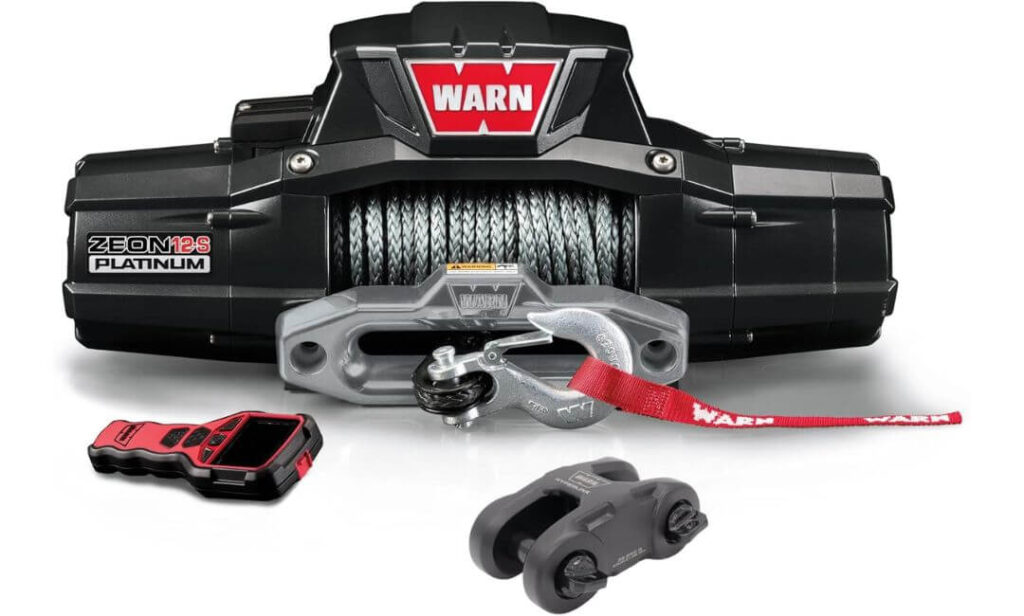
Quick Specs:
- Ideal Pull Rating: 12,000 lbs for stock, lifted and fully equipped Ford F-150 builds
- Best Fit: 2009–2026 Ford F-150 (requires a vehicle-specific winch mount and compatible bumper)
- Motor: High-output series-wound motor for consistent recovery power
- Rope: 80 ft × 3/8-inch Spydura synthetic rope
- Gear System: 162:1 planetary gear train for controlled heavy pulls
- Brake: Mechanical cone brake that helps reduce synthetic rope wear
- Construction: Satin-black cast aluminium housing with stainless steel hardware
- Weather Protection: Advanced sealing against mud, rain, dust and water intrusion
- Control: Convertible control pack with premium wireless remote
- Weight: Around 85 lbs before mounting hardware
- Warranty: Lifetime mechanical and 7-year electrical warranty
The moment you look beyond the headline specifications, it becomes clear why this model continues to sit at the top of serious recovery setups. The 12,000 lb pulling capacity is exactly where most Ford F-150 owners should be, offering enough recovery power for everything from daily work trucks to heavily equipped overland builds. Pair that with a series-wound motor, a 162:1 planetary gear system and the exceptionally smooth Spydura synthetic rope, and you get controlled pulling instead of sudden, jerky loads that place unnecessary stress on recovery points.
What impressed us even more is how much attention has been given to long-term durability rather than flashy marketing. The cast-aluminium housing, stainless steel fasteners, advanced muck-resistant sealing and the proven mechanical cone brake all work together to keep performance consistent after repeated exposure to mud, water, road salt and harsh weather. These are the kinds of details you appreciate after years of ownership—not just during the first weekend on the trail.
Installation flexibility is another reason it stands above most competitors. The convertible control pack lets you keep the installation clean on different F-150 bumper setups, while the wireless remote and included EPIC Hyperlink shackle make recoveries faster and more convenient when you’re working alone or helping another vehicle.
(If your F-150 is expected to recover itself in remote areas where failure isn’t an option, this is the one we’d trust before turning the key.)
What Stood Out During Our Evaluation
- 12,000 lb capacity is perfectly matched for most Ford F-150 recovery situations.
- Premium Spydura synthetic rope is lighter, safer and easier to handle than traditional steel cable.
- Series-wound motor delivers reliable pulling power during demanding recoveries.
- Excellent sealing and corrosion-resistant construction are built for year-round off-road use.
- Wireless remote and convertible control pack provide one of the cleanest installation experiences in this category.
A Small Consideration Before Buying
- It requires a Ford F-150-specific winch mount or compatible aftermarket bumper, which adds to the overall installation cost.
Ford F-150 Installation & Fitment Notes
This winch is an excellent choice for 2009–2026 Ford F-150 models, but it is not a direct bolt-on to the factory bumper. You’ll need a quality F-150 winch mounting plate or an aftermarket bumper designed to accept a full-size 12,000 lb winch. Taking the time to choose the correct mount makes a noticeable difference in recovery angles, airflow and overall installation quality.
Because the unit weighs around 85 lbs, it’s also worth checking the condition of your front suspension if you’re adding other accessories such as a steel bumper, skid plates or auxiliary lighting. A properly balanced setup will perform better both on and off the road.
The Insider Pro-Tip
Many buyers compare winches by looking only at pull rating, but experienced F-150 owners usually pay closer attention to the motor, brake design and sealing system. Those three areas have a much bigger impact on reliability after years of real recoveries than an extra thousand pounds printed on the specification sheet.
If you’re already investing in a premium recovery setup, pair this winch with a quality recovery strap, soft shackles, a battery in good condition and properly sized power cables. A great winch can only perform as well as the rest of the recovery system supporting it.
#2. Rough Country PRO Series 12,000 lb Electric Winch
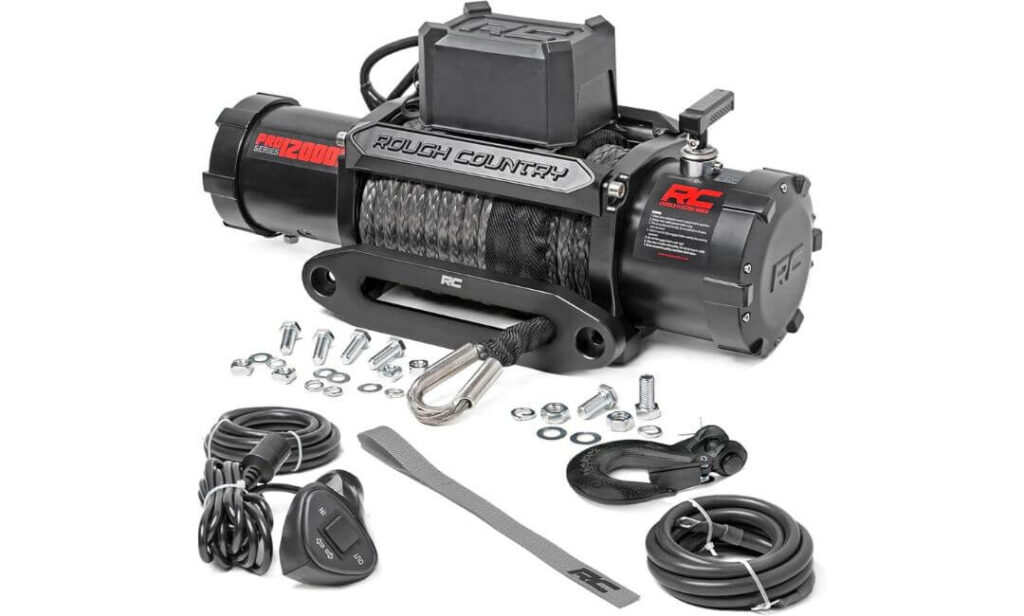
Quick Specs:
- Ideal Pull Rating: 12,000 lbs for daily-driven, work and off-road Ford F-150s
- Best Fit: 2009–2026 Ford F-150 (requires a compatible winch bumper or mounting plate)
- Motor: High-output 6 HP series-wound motor
- Rope: 85 ft × 3/8-inch abrasion-resistant synthetic rope
- Gear System: Heavy-duty 265:1 three-stage planetary gearbox
- Brake: Automatic load-holding brake for safer recoveries
- Weather Protection: IP67 waterproof and dust-resistant housing
- Control: 12 ft wired handheld remote for precise operation
- Weight: Approximately 64 lbs
- Included: Hawse fairlead, clevis hook, battery cables and complete mounting hardware
- Warranty: 3-Year manufacturer warranty
There’s a reason this model earned the second spot instead of simply being another “budget alternative.” It delivers the features most Ford F-150 owners actually need without sacrificing the fundamentals that matter once the recovery begins. The combination of a 6 HP series-wound motor, 12,000 lb pulling capacity and a 265:1 planetary gear system produces steady, controlled pulling force that feels confident whether you’re recovering your own truck or helping someone else off the trail.
Another area where it genuinely stands out is the overall recovery package. The 85-foot synthetic rope offers extra working length while remaining lighter and safer than traditional steel cable. Add the automatic load-holding brake, IP67 weather sealing, and durable internal components, and you have a winch that’s built to spend more time working than sitting in the garage waiting for the next trip.
What also impressed us is that Rough Country didn’t leave buyers hunting for essential accessories. The hawse fairlead, battery cables, clevis hook and mounting hardware are already included, making installation more straightforward once you’ve chosen the correct Ford F-150 winch mount or bumper.
(It isn’t trying to be the most expensive winch on the market—it focuses on delivering dependable recovery performance where most F-150 owners actually use their trucks.)
Why It Made Our Recommended List
- Powerful 6 HP series-wound motor maintains consistent pulling performance under heavy loads.
- 265:1 planetary gearing provides excellent torque and controlled line movement.
- Longer 85 ft synthetic rope offers greater flexibility during difficult recoveries.
- IP67-rated housing is well prepared for mud, rain, dust and challenging trail conditions.
- Complete installation kit reduces the need to purchase additional recovery hardware.
One Thing Worth Knowing
- It comes with a wired remote only, so buyers wanting wireless operation will need to purchase a compatible remote separately.
Ford F-150 Installation & Compatibility
This winch uses the industry-standard 4.5-inch × 10-inch mounting pattern, making it compatible with most aftermarket Ford F-150 winch bumpers and hidden winch mounts. It isn’t designed to bolt directly to the factory bumper, so selecting a quality mounting system is still an essential part of the installation.
Its relatively manageable 64-pound weight also makes installation easier than many premium full-size winches. Before wiring everything up, make sure your truck has a healthy 12V battery with sufficient cold-cranking capacity, and take extra care when routing the supplied battery cables away from moving or high-heat engine components.
The Insider Pro-Tip
One specification many buyers overlook is the gear ratio. A stronger 265:1 planetary gearbox doesn’t just improve torque—it also helps the motor work more efficiently during slow, demanding recoveries where cheaper winches often generate unnecessary heat.
If your F-150 spends most of its time on trails, job sites or towing equipment, this model offers one of the best balances of power, durability, included accessories and long-term value. It’s the kind of winch you buy once, install correctly and simply expect to work every time you reach for the remote.
#3. Smittybilt XRC Gen 3 12,000 lb Competition Winch
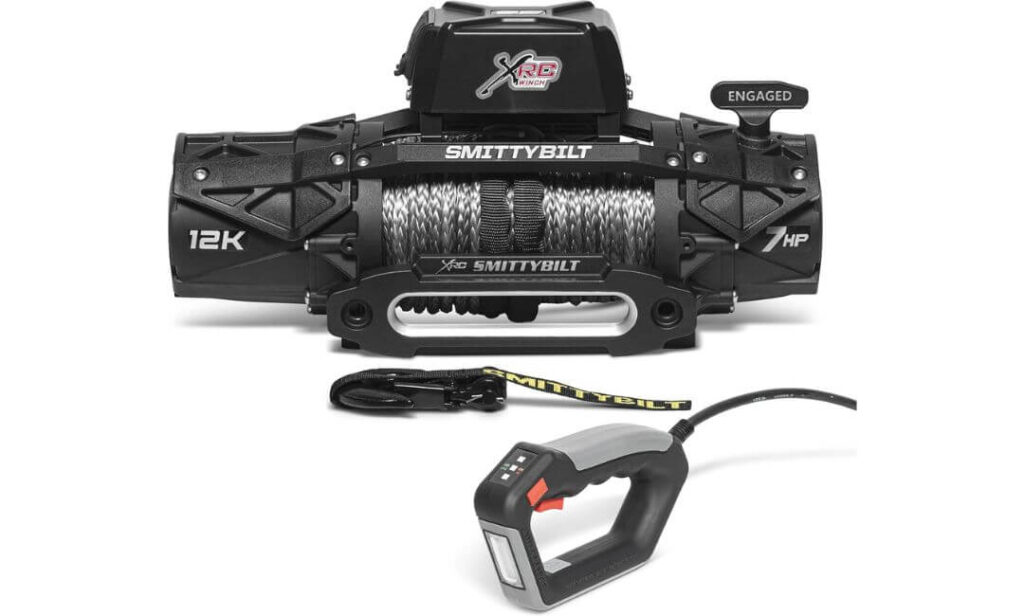
Quick Specs:
- Ideal Pull Rating: 12,000 lbs for full-size Ford F-150 recovery and overland builds
- Best Fit: 2009–2026 Ford F-150 (requires a compatible winch bumper or mounting bracket)
- Motor: High-output 7.0 HP series-wound motor
- Rope: 95 ft × 3/8-inch synthetic rope
- Gear System: Heavy-duty forged steel internal gearing
- Weather Protection: Fully sealed IP67 construction
- Control: Wireless remote with integrated flashlight and magnetic mounting
- Smart Feature: Built-in Load Indicator Warning System
- Fairlead: CNC-machined aluminium hawse fairlead
- Weight: Approximately 71 lbs
- Warranty: Lifetime mechanical and 5-year electrical warranty
What immediately separates this model from many competitors isn’t simply the 7.0 HP motor—it’s how efficiently everything works together under load. The upgraded motor delivers impressive pulling strength, but the redesigned internal components also reduce amp draw, allowing the winch to maintain strong recovery performance without putting unnecessary strain on your truck’s electrical system. That’s the kind of improvement experienced Ford F-150 owners notice after multiple recoveries, not just during the first pull.
Another feature we genuinely appreciated is the balance between speed and control. Thanks to its redesigned drivetrain, this generation delivers a noticeably faster line speed than the previous model while still maintaining smooth operation under heavy loads. The 95-foot synthetic rope, forged steel gearing and IP67 sealing further reinforce that this isn’t simply a cosmetic update—it’s a meaningful mechanical improvement built for repeated real-world use.
The attention to practical details also deserves credit. The wireless remote with an integrated flashlight, the highly visible clutch lever and the Load Indicator Warning System all make recovery work easier when conditions are less than ideal. These aren’t gimmicks; they’re features you’ll appreciate when you’re standing in mud after sunset trying to recover a fully loaded truck.
(Some winches rely on larger specification numbers. This one earns confidence by making the recovery process itself simpler, smarter and more predictable.)
Why It Earned a Place in Our Recommendations
- Powerful 7.0 HP motor provides excellent pulling strength while remaining electrically efficient.
- Faster line speed helps complete recoveries sooner without sacrificing control.
- 95 ft synthetic rope offers additional working distance during difficult recoveries.
- Intelligent Load Indicator Warning System adds an extra layer of confidence under heavy loads.
- Wireless remote with built-in flashlight is genuinely useful during night-time trail recoveries.
One Thing to Keep in Mind
- Before ordering, double-check the overall dimensions against your Ford F-150 bumper or hidden winch mount, as clearance varies between aftermarket manufacturers.
Ford F-150 Installation & Mounting Notes
This model is an excellent fit for 2009–2026 Ford F-150 trucks when paired with a properly designed aftermarket winch mount or recovery bumper. It follows the standard full-size winch footprint used by most reputable bumper manufacturers, making installation straightforward once the correct mounting system has been selected.
Although the winch weighs only about 71 lbs, always torque the mounting hardware to the manufacturer’s specification and use a healthy 12V battery with at least 650 CCA. A quality electrical connection is just as important as choosing the right winch, especially if your truck regularly handles demanding off-road recoveries.
The Insider Pro-Tip
The feature that deserves more attention than the horsepower rating is the reduced amp draw. A winch that demands less current while maintaining strong pulling performance places less stress on your charging system, which becomes increasingly important during longer recoveries or repeated winching sessions.
If you regularly explore remote trails, travel after dark or overland with extra gear onboard, the combination of the wireless remote, integrated work light, faster line speed and intelligent load monitoring makes this one of the most thoughtfully engineered recovery systems in its price range—not because it adds more gadgets, but because each feature solves a real problem you’ll eventually face on the trail.
#4. OPENROAD Panther Series 3S 13,500 lb Recovery Winch
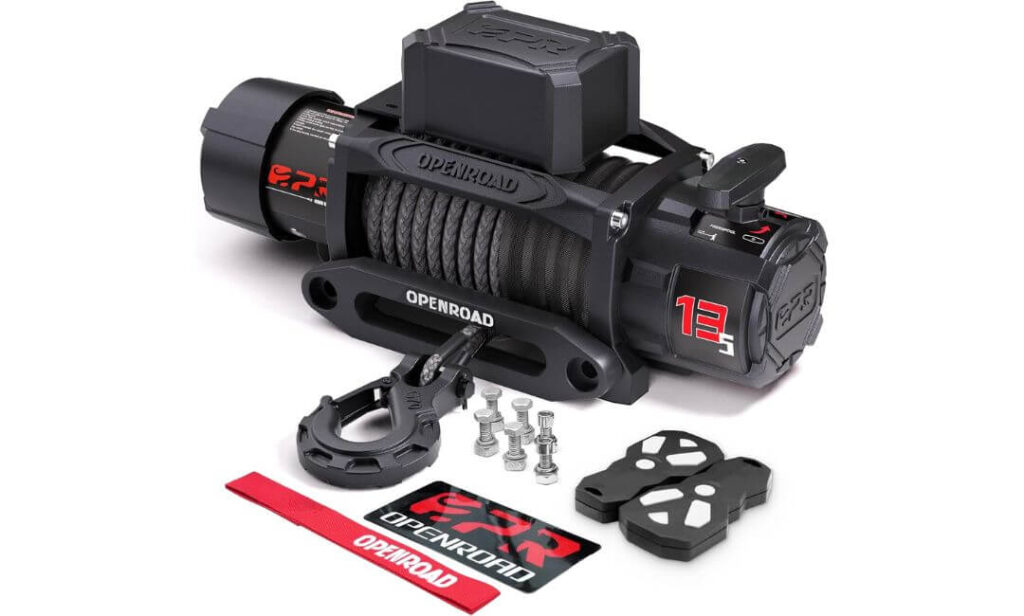
Quick Specs:
- Ideal Pull Rating: 13,500 lbs for heavily equipped Ford F-150 work trucks and overland builds
- Best Fit: 2009–2026 Ford F-150 (requires a compatible aftermarket winch bumper or mounting bracket)
- Motor: High-efficiency 6.6 HP series-wound motor
- Rope: 85 ft × 3/8-inch synthetic rope with a 13,500 lb breaking strength
- Gear System: 218:1 planetary gear reduction
- Brake: Automatic load-holding brake
- Weather Protection: Fully sealed IP68 waterproof construction
- Control: Two wireless remotes plus one wired controller
- Construction: Dacromet-coated corrosion-resistant hardware
- Weight: Approximately 50 lbs
- Included: Fairlead, hook, strap, power cables, mounting bolts and installation kit
- Warranty: One-year limited warranty with lifetime technical support
Not every Ford F-150 owner needs a premium four-figure winch to build a dependable recovery setup. What makes this model stand out is how much practical capability it delivers before the price begins climbing. With a 13,500 lb pulling capacity, a 6.6 HP series-wound motor and a well-balanced 218:1 planetary gear system, it has more than enough muscle for recovering loaded full-size trucks, towing equipment or handling demanding weekend trail work.
The feature list also feels thoughtfully assembled instead of overloaded with marketing terms. The 85-foot synthetic rope, IP68 waterproof sealing, automatic load-holding brake and corrosion-resistant Dacromet hardware are exactly the upgrades you want on equipment that’s likely to spend years exposed to rain, mud and changing weather. The inclusion of two wireless remotes alongside a traditional wired controller is another practical touch, especially if multiple people are helping during a recovery.
Installation is refreshingly uncomplicated as well. Most of the assembly is already completed at the factory, and once paired with the correct Ford F-150 winch mount, the remaining work is largely limited to securing the hardware and completing the electrical connections. It feels designed for owners who want to get back on the road—or the trail—instead of spending an entire weekend assembling components.
(It may not carry the longest history in the industry, but on paper and in day-to-day usability, it delivers far more capability than its price tag suggests.)
Why We Added It to This Guide
- Strong 13,500 lb capacity offers additional recovery margin for heavily loaded F-150 builds.
- Two wireless remotes provide extra convenience and flexibility during recoveries.
- Lightweight design makes installation easier than many competing heavy-duty winches.
- IP68 waterproof construction is well suited for mud, rain and frequent off-road use.
- Complete accessory package means very little needs to be purchased separately.
One Practical Consideration
- While overall performance is impressive for the price, it doesn’t yet have the same long-term reputation or proven track record as established premium recovery brands.
Ford F-150 Installation & Compatibility
This winch uses the standard 10-inch × 4.5-inch mounting pattern, making it compatible with many aftermarket Ford F-150 winch bumpers and hidden recovery mounts. Before ordering, it’s worth confirming that your chosen mount is designed specifically for your truck’s generation, as bumper layouts vary between 2009–2014, 2015–2020 and 2021–2026 models.
Its relatively light 50-pound weight also makes installation easier than many comparable heavy-duty units. Pairing it with a healthy 12V battery rated at 650 CCA or higher will help ensure consistent performance when the motor is working under heavy load.
The Insider Pro-Tip
One feature that’s easy to overlook is the inclusion of two wireless remotes. It sounds simple, but keeping one inside the cab and another in your recovery kit means you’re far less likely to find yourself searching for the controller when conditions suddenly turn difficult.
If you’re building a capable recovery system without stretching into premium-brand pricing, this model strikes a very sensible balance between pulling power, waterproof protection, installation simplicity and everyday usability. For many Ford F-150 owners, that’s exactly where the real value begins.
#5. XYCLE 13,500 lb Heavy Duty Recovery Winch
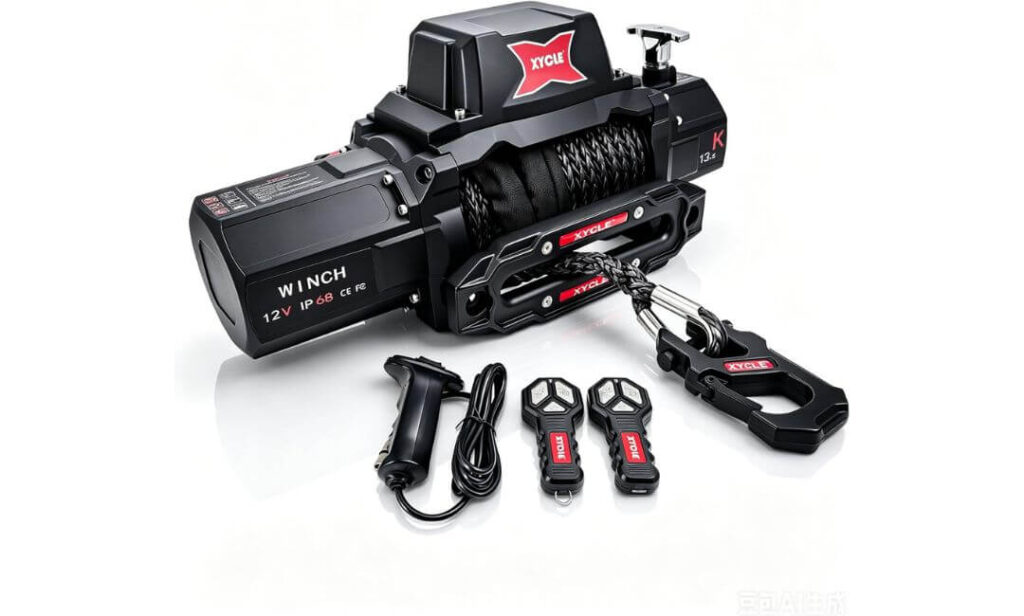
Quick Specs:
- Ideal Pull Rating: 13,500 lbs for heavily equipped Ford F-150 recovery and towing
- Best Fit: 2009–2026 Ford F-150 (requires a compatible aftermarket winch mount or bumper)
- Motor: Heavy-duty 12V electric motor
- Rope: 70 ft × 1/2-inch UHMWPE synthetic rope
- Housing: Full aluminium-alloy construction for improved heat dissipation
- Brake & Clutch: Upgraded clutch system with automatic load control
- Weather Protection: Fully sealed IP68 waterproof design
- Control: Two wireless remotes plus wired handheld controller
- Mounting Pattern: Standard 10 × 4.49-inch footprint
- Weight: Approximately 60 lbs
- Warranty: 2-Year manufacturer warranty
Rather than chasing premium-brand pricing, this model focuses on delivering the features most Ford F-150 owners actually expect from a modern recovery winch. The 13,500 lb pulling capacity provides plenty of recovery confidence for trucks carrying steel bumpers, camping gear, recovery equipment or oversized tyres, while the all-metal aluminium housing helps manage heat more effectively during demanding pulls.
One feature that immediately caught our attention is the use of a 1/2-inch UHMWPE synthetic rope. It feels lighter and easier to handle than traditional steel cable while offering excellent flexibility during recovery work. Combined with the upgraded clutch mechanism, IP68 waterproof sealing and both wireless and wired control options, the overall package feels surprisingly complete for buyers who want capability without stretching into premium pricing.
Installation is also refreshingly straightforward once paired with the correct Ford F-150 recovery mount. The standard mounting footprint works with many aftermarket bumpers, and the supplied fairlead, tow hook and installation hardware mean very little else is required before getting the system ready for its first recovery.
(For owners building a dependable recovery setup on a sensible budget, it covers the essentials without making unnecessary compromises.)
Why It Earned Our Recommendation
- Strong 13,500 lb pulling capacity comfortably suits most full-size Ford F-150 recovery situations.
- Durable aluminium-alloy housing improves cooling during repeated heavy pulls.
- UHMWPE synthetic rope is lightweight, flexible and easier to manage than steel cable.
- Includes dual wireless remotes alongside a wired controller for added convenience.
- Complete recovery package reduces the number of additional parts needed during installation.
One Small Thing to Remember
- The brand is still building its long-term reputation, so it doesn’t yet have the decades of field history that some premium manufacturers offer.
Ford F-150 Installation & Compatibility
This winch fits 2009–2026 Ford F-150 models when installed with a compatible aftermarket winch bumper or hidden mounting bracket. The winch itself follows the standard 10 × 4.49-inch mounting pattern, but the mounting plate is not included, so selecting a quality bracket designed for your specific F-150 generation is essential before installation.
The electrical installation is equally important. Pair it with a healthy 12V battery, route the power cables carefully away from heat sources, and always leave at least 10 wraps of rope on the drum before performing a loaded recovery. That small installation detail significantly improves rope retention and overall safety during heavy pulls.
The Insider Pro-Tip
If you’re comparing heavy-duty winches in this price range, don’t focus only on the advertised pulling number. Features like an all-metal housing, effective heat dissipation, quality synthetic rope and dependable waterproof sealing usually have a much bigger impact on long-term reliability than an extra few hundred pounds of rated capacity.
For many Ford F-150 owners, this winch represents a practical entry into serious recovery equipment. Install it correctly, pair it with a quality recovery mount and maintain proper rope tension, and you’ll have a setup that’s ready when the trail becomes far more challenging than the forecast suggested.
Best Ford F-150 Winch Comparison: Top Recovery Picks Side by Side
| Winch | Pull Rating | Motor & Recovery Performance | Synthetic Rope | Weather Protection | Remote Options | Best For | Our Verdict |
|---|---|---|---|---|---|---|---|
|
Warn Zeon 12-S Platinum
Editor’s Choice
|
12,000 lbs Perfect balance for nearly every Ford F-150 build. |
Series-wound motor with 162:1 planetary gearing, excellent control, dependable braking and premium recovery feel. |
80 ft Spydura Premium lightweight synthetic rope. |
Advanced sealing with corrosion-resistant aluminium housing. | Wireless remote with convertible control pack. | Serious off-roaders, overlanding and long-term ownership. | Outstanding engineering, premium durability and confidence when recovery really matters. |
|
Rough Country PRO Series
Best Value
|
12,000 lbs Ideal for daily and weekend recovery. |
Powerful 6 HP series-wound motor with high-torque 265:1 gearing. | 85 ft abrasion-resistant synthetic rope. | IP67 waterproof housing for year-round use. | 12 ft wired handheld controller. | Drivers wanting trusted performance without premium pricing. | Excellent balance of capability, reliability and overall value. |
|
Smittybilt XRC Gen 3
Smart Upgrade
|
12,000 lbs Excellent for demanding trail recovery. |
Industry-leading 7 HP motor, faster line speed and reduced amp draw. | 95 ft synthetic rope with aluminium hawse fairlead. | IP67 sealed construction. | Wireless remote with integrated flashlight. | Night recovery, frequent trail use and feature-focused buyers. | Innovative features backed by impressive real-world recovery performance. |
|
OPENROAD Panther Series 3S
Heavy-Duty Pick
|
13,500 lbs Extra pulling margin for loaded trucks. |
Reliable 6.6 HP motor with smooth 218:1 gearing. | 85 ft synthetic rope. | Fully sealed IP68 construction with corrosion-resistant hardware. | Two wireless remotes plus wired controller. | Work trucks, trailers and overlanding on a sensible budget. | Impressive feature package that delivers more than expected for the price. |
|
XYCLE 13,500 lb Winch
Budget Friendly
|
13,500 lbs Strong pulling power for heavy recovery. |
Heavy-duty electric motor with upgraded clutch and aluminium housing. | 70 ft UHMWPE synthetic rope. | IP68 waterproof all-metal construction. | Dual wireless remotes plus wired control. | Budget-conscious F-150 owners wanting modern recovery features. | Great specifications and strong value while keeping overall cost under control. |
Buying Guide: How to Choose the Best Winch for Your Ford F-150
Buying a winch for a Ford F-150 is about much more than selecting the highest pulling capacity or the biggest brand name. Your truck’s weight, bumper setup, electrical system, driving style and recovery needs all play a role in choosing the right equipment. A winch that performs flawlessly on one F-150 may not be the best option for another with different modifications or intended use.
The goal is to build a recovery system you can depend on when conditions become unpredictable—not simply to install another off-road accessory. The sections below explain the factors that deserve your attention before making a purchase.
Choose the Right Pulling Capacity Instead of the Biggest Number
One of the most common mistakes first-time buyers make is assuming that a higher pulling capacity automatically means a better winch. In reality, your recovery setup should match your truck rather than exceed it by an unnecessary margin.
For most Ford F-150 models, a 12,000 lb winch remains the sweet spot. It provides enough pulling power for stock trucks, lifted builds, work vehicles and most overlanding setups while maintaining manageable size, weight and electrical demand.
A 13,500 lb winch becomes worthwhile if your truck regularly carries additional equipment such as:
- Steel front bumper
- Recovery gear
- Bed rack or rooftop tent
- Larger off-road tyres
- Camping equipment
- Toolboxes
- Heavy trailers
- Permanent overland accessories
Rather than chasing maximum numbers, look for a winch that offers consistent pulling performance under load, efficient cooling and dependable braking.
Synthetic Rope or Steel Cable — Which Makes More Sense?
Nearly every premium recovery setup today uses synthetic rope, and there are good reasons why.
Synthetic rope is considerably lighter than steel cable, making it easier to pull, spool and handle during recoveries. It stores less energy under load, reducing the risk of dangerous recoil if a failure occurs. It’s also easier on your hands and won’t develop sharp broken strands over time.
Steel cable still has a place in certain industrial environments because it tolerates abrasion exceptionally well, but it requires more maintenance, can rust over time and is significantly heavier.
For most Ford F-150 owners who use their truck for off-roading, overlanding or weekend recovery work, synthetic rope remains the better long-term choice.
Motor Quality Matters More Than Horsepower Alone
Motor specifications often receive plenty of marketing attention, but they’re only one part of overall performance.
A well-designed series-wound motor combined with efficient gearing will usually outperform a higher-horsepower unit with poor cooling or weaker internal components.
When comparing winches, pay attention to:
- Series-wound motor design
- Gear reduction ratio
- Brake system
- Heat management
- Current draw under load
- Overall build quality
These factors determine how the winch performs after several demanding pulls—not just during the first recovery.
Don’t Ignore the Gear Ratio
The planetary gear system controls how efficiently your winch converts motor power into pulling force.
Lower gear ratios generally provide faster line speed, while higher ratios increase pulling torque and improve control during difficult recoveries.
For a Ford F-150, gear ratios between 160:1 and 265:1 offer an excellent balance between recovery speed and usable pulling power.
Weather Sealing Is More Important Than Most Buyers Realise
Even if your truck rarely crosses rivers, your winch spends its life exposed to rain, road spray, dust, mud and changing temperatures.
A properly sealed IP67 or IP68 housing helps protect:
- Motor
- Solenoids
- Electrical connections
- Bearings
- Internal gears
Better sealing usually translates into fewer maintenance issues and greater long-term reliability.
Wired vs Wireless Remote Control
Both control systems have their strengths.
A wired remote offers dependable operation without worrying about batteries or wireless interference. Many experienced recovery enthusiasts still appreciate its simplicity.
A wireless remote provides greater freedom to move around the recovery area, observe cable angles and communicate with others while remaining outside the vehicle.
Several premium winches now include both systems, giving you the flexibility to choose whichever suits the situation.
Pay Close Attention to Winch Mount Compatibility
A quality winch cannot compensate for a poor mounting system.
Most Ford F-150 models require:
- Vehicle-specific hidden winch mount
- Recovery bumper with integrated winch tray
- Standard 10 × 4.5-inch mounting pattern compatibility
- Correct fairlead opening
- Adequate front-end clearance
- Proper airflow around the radiator
Always verify compatibility with your specific model year before purchasing.
Ford F-150 Winch Installation Essentials
A successful installation involves more than tightening four mounting bolts.
Before installing your winch, make sure you have:
- Correct Ford F-150 mounting bracket
- Grade-rated mounting hardware
- Proper torque specifications
- Battery cables routed away from exhaust components
- Secure electrical connections
- Correct fairlead alignment
- Adequate cable clearance during full steering lock
- Battery capable of supporting heavy electrical loads
Taking extra time during installation often prevents recovery problems months or even years later.
Understanding Solenoids, Wiring and Electrical Demand
Your winch depends entirely on your truck’s electrical system.
Loose cable connections, undersized wiring or a weak battery can dramatically reduce performance, regardless of the winch’s specifications.
Whenever possible:
- Keep battery terminals clean
- Inspect power cables regularly
- Tighten all electrical connections
- Protect cables from abrasion
- Replace damaged insulation immediately
Many experienced installers also recommend checking all mounting and electrical hardware again after the first few recovery sessions.
What Should Be Included in a Good Ford F-150 Winch Kit?
A complete recovery package saves both money and installation time.
Ideally, your winch kit should include:
- Synthetic recovery rope
- Hawse fairlead
- Heavy-duty hook or recovery shackle
- Wired or wireless remote
- Battery cables
- Mounting hardware
- Control box
- Installation manual
Some premium models also include recovery straps, upgraded shackles or additional wireless remotes, reducing the need for future upgrades.
Features That Are Worth Paying Extra For
Some upgrades genuinely improve long-term ownership and recovery safety.
These include:
- Series-wound motors
- Synthetic rope
- Automatic load-holding brake
- IP68 waterproof sealing
- Wireless remote control
- Aluminium hawse fairlead
- Corrosion-resistant hardware
- Efficient planetary gearing
- Convertible control packs
- Strong manufacturer warranty
While they may increase the initial purchase price, these features often become the reason a winch continues performing reliably years after installation.
Our Final Recommendation Before You Buy
If your Ford F-150 serves as both a daily driver and an off-road truck, don’t buy based solely on specifications printed on the product page. Look for a winch that balances pulling power, motor quality, weather protection, mounting compatibility, electrical efficiency and long-term reliability.
A recovery usually happens when conditions are already working against you. Choosing equipment that has been engineered for dependable performance—not simply impressive numbers—is far more valuable than saving a small amount upfront. The right winch is the one you never have to question when your truck is the one that needs to come home.
Ford F-150 Winch Installation Essentials
Installing a winch on a Ford F-150 is more than simply bolting it onto the front bumper. The mounting system, electrical connections, rope alignment and recovery hardware all work together as one complete system. Even the best winch can perform poorly—or become unsafe—if it’s installed incorrectly. Spending extra time during installation will almost always pay off when the first real recovery situation arrives.
Whether you’re fitting a hidden winch mount behind the factory bumper or installing a dedicated aftermarket recovery bumper, following the right installation process helps protect both your investment and your truck.
Start with the Right Mounting System
Before opening the winch box, verify that your mounting solution is designed specifically for your Ford F-150 model year.
Different generations use different frame designs, bumper structures and clearance requirements. A mounting plate that fits a 2014 F-150 may not work correctly on a 2023 model, even though the winch itself uses the same mounting footprint.
When selecting a mounting system, confirm:
- Compatibility with your exact F-150 model year
- Standard 10 × 4.5-inch winch mounting pattern
- Adequate clearance for the control box
- Fairlead opening positioned correctly
- Sufficient airflow to the radiator and intercooler
- Recovery points remain fully accessible after installation
A quality mounting bracket is just as important as the winch itself.
Tools You’ll Want Before Starting
Having everything ready before installation makes the job significantly easier.
Recommended tools include:
- Complete metric and SAE socket set
- Torque wrench
- Combination spanners
- Allen key set
- Trim removal tools (if factory bumper panels need removal)
- Screwdrivers
- Wire cutters and crimping tools
- Heat-shrink tubing
- Electrical tape
- Heavy-duty zip ties
- Battery terminal cleaner
- Dielectric grease
- Protective gloves
- Safety glasses
If your bumper requires trimming or modification, measure carefully before making permanent cuts.
Step 1 — Prepare the Truck
Park the truck on a level surface and engage the parking brake before beginning any work.
Disconnect the negative battery terminal first to prevent accidental short circuits while routing the power cables.
If you’re installing a hidden winch mount, remove any factory bumper trim panels, skid plates or splash shields that interfere with access to the frame rails.
Before tightening a single bolt, perform a complete test fit to ensure everything aligns correctly.
Step 2 — Install the Winch onto the Mount
Whenever possible, attach the winch to the mounting plate before installing the bracket onto the truck.
This approach usually provides easier access to the mounting hardware and allows you to verify proper rope direction before everything is tightened into place.
During installation:
- Use only the supplied or manufacturer-approved mounting bolts.
- Apply the recommended torque specifications.
- Tighten hardware gradually using a cross-pattern.
- Confirm the winch drum rotates freely.
- Ensure the clutch lever remains easy to access.
Never substitute lower-grade hardware simply because it appears to fit.
Step 3 — Install the Fairlead Correctly
The fairlead should sit perfectly centred with the winch drum.
A misaligned fairlead causes uneven rope wear, poor spooling and unnecessary stress on the synthetic rope during angled recoveries.
Before moving on, check that:
- The rope exits the drum in a straight line.
- Nothing contacts the bumper opening.
- The rope does not rub against sharp edges.
- The fairlead bolts are tightened evenly.
Small alignment corrections now can significantly extend rope life later.
Step 4 — Route the Power Cables Properly
Electrical routing deserves just as much attention as mechanical installation.
Route both positive and negative cables away from:
- Exhaust manifolds
- Turbochargers
- Steering components
- Suspension travel
- Sharp frame edges
- Moving belts and pulleys
Use protective loom wherever cables may contact metal surfaces and secure everything with quality cable ties to prevent movement over time.
A clean wiring job is usually a reliable wiring job.
Step 5 — Mount the Control Box
Many premium winches allow the control pack to be mounted in multiple positions.
Choose a location that provides:
- Easy access for maintenance
- Protection from excessive engine heat
- Minimal exposure to standing water
- Short, tidy cable routing
- Clearance for hood operation
Avoid stretching cables simply to achieve a cleaner appearance.
Step 6 — Connect the Battery
Once every cable has been checked twice, reconnect the battery.
Inspect each terminal carefully.
The connections should be:
- Clean
- Tight
- Corrosion-free
- Properly insulated
- Secure against vibration
Loose battery connections are one of the most common causes of poor winch performance.
Step 7 — Perform a Complete Function Test
Never assume a successful installation simply because the motor turns.
Before relying on the winch in the field, verify:
- Clutch engages and disengages correctly.
- Rope spools evenly.
- Drum rotates in both directions.
- Wired remote functions correctly.
- Wireless remote pairs successfully.
- Brake holds the load.
- No unusual noises or excessive vibration are present.
Testing everything in the driveway is considerably easier than diagnosing problems miles from the nearest road.
Common Installation Mistakes to Avoid
Many installation problems have nothing to do with the winch itself.
The most common issues include:
- Choosing the wrong mounting bracket for the truck.
- Forgetting to torque mounting bolts.
- Poor cable routing near heat sources.
- Crossing electrical connections.
- Misaligned fairlead installation.
- Underestimating battery condition.
- Allowing synthetic rope to rub against bumper edges.
- Skipping the first test spool after installation.
Avoiding these mistakes usually takes only a few extra minutes but can prevent expensive repairs later.
Understanding Ford F-150 Winch Kit Components
A complete winch kit normally includes most of the essential recovery hardware, but it’s always worth confirming everything is present before beginning installation.
Typical components include:
- Winch assembly
- Synthetic rope or steel cable
- Hawse fairlead
- Hook or recovery shackle
- Wired and/or wireless remote
- Control box
- Power cables
- Mounting hardware
- Installation manual
Some kits may also include recovery straps or additional wireless remotes, while others require these accessories to be purchased separately.
Wiring Diagram and Electrical Reference
Although every manufacturer uses slightly different wiring layouts, the overall electrical path remains very similar.
The typical connection sequence is:
Battery → Control Box (Solenoid) → Winch Motor → Remote Controller
Always follow the wiring diagram supplied with your specific winch model rather than assuming colour codes are identical between brands.
If you’re installing additional accessories such as auxiliary lights, air compressors or dual batteries, plan the cable routing before permanently securing the winch wiring.
Final Installation Check Before Your First Recovery
Before heading off-road, spend five minutes performing one final inspection.
Confirm that every mounting bolt remains tight, electrical connections are secure, the rope is evenly tensioned across the drum and the remote operates exactly as expected. Recheck the mounting hardware again after the first few recoveries, as new installations can settle slightly during initial use.
A properly installed winch rarely attracts attention because it simply works when needed. That’s exactly what every Ford F-150 owner should expect from a recovery system built the right way.
Wireless Control and Synthetic Rope Advantages for the Ford F-150
Modern recovery equipment has changed significantly over the past decade. Today’s premium Ford F-150 winches are no longer judged only by pulling capacity—they’re also evaluated by how safely, efficiently and consistently they perform when recovery conditions become difficult. Two upgrades have transformed that experience more than anything else: wireless remote control and synthetic rope.
Nearly every winch we recommended in this guide includes one or both of these features because they improve real-world recovery rather than simply adding marketing appeal. When used correctly, they make recovery work safer, quicker and far less physically demanding.
Why a Wireless Winch Makes More Sense for Most Ford F-150 Owners
A wired controller still has its place, but wireless operation provides flexibility that’s difficult to appreciate until you’ve used it during an actual recovery.
Instead of standing beside the front bumper, a wireless remote allows you to position yourself where you have the clearest view of:
- The recovery vehicle
- Rope angle
- Anchor point
- Front tyres
- Obstacles around the truck
- Overall recovery progress
Being able to move freely also improves communication when another driver or spotter is involved.
Wireless control becomes especially valuable during:
- Mud recoveries
- Rock crawling
- Snow recovery
- Solo overlanding
- Trailer loading
- Tight forest trails
- Night-time recoveries
Many premium winches now include both wired and wireless remotes, giving you the reliability of a physical connection alongside the convenience of remote operation.
Synthetic Rope vs Steel Cable — Which One Is Better?
For most Ford F-150 owners, synthetic rope has become the preferred option—and for good reason.
Steel cable earned its reputation through decades of dependable service, but synthetic materials have improved dramatically in both strength and durability.
Here’s how they compare.
| Feature | Synthetic Rope | Steel Cable |
|---|---|---|
| Weight | Much lighter | Significantly heavier |
| Handling | Easy to coil and spool | Can develop sharp broken strands |
| Safety | Stores less energy if failure occurs | Higher recoil energy under load |
| Corrosion | Will not rust | Can corrode over time |
| Flexibility | Excellent | Moderate |
| Vehicle Weight | Reduces front-end weight | Adds more weight to bumper |
| Maintenance | Simple with proper care | Requires regular lubrication |
For daily driving, overlanding and recreational off-roading, synthetic rope is the better overall choice for the vast majority of Ford F-150 owners.
Strength Isn’t Just About Pull Rating
Many buyers assume steel cable is automatically stronger simply because it’s made from metal.
That’s no longer true.
Modern UHMWPE and premium synthetic ropes such as Spydura deliver exceptional tensile strength while remaining considerably lighter and easier to manage.
Their flexibility also allows the rope to spool more evenly across the drum, reducing the likelihood of tight binding during heavy recoveries.
More importantly, synthetic rope places less stress on the person handling it, making recoveries quicker and safer.
Why Synthetic Rope Is Considered the Safer Option
Every recovery stores energy inside the winch line.
If a cable fails under heavy load, that stored energy has to go somewhere.
Because synthetic rope is much lighter than steel cable, it generally carries far less recoil energy, reducing the severity of a line failure.
While every recovery should still use proper dampers, recovery blankets and safe operating procedures, synthetic rope provides an additional layer of confidence that many experienced off-road drivers appreciate.
What About Fraying and Abrasion?
Synthetic rope is extremely strong, but like any recovery equipment, it isn’t indestructible.
Repeated contact with:
- Sharp rocks
- Steel bumper edges
- Fairlead damage
- Tree bark
- Broken recovery points
- Excessive heat
can shorten its lifespan.
Fortunately, most damage develops gradually rather than suddenly, making regular inspections an important part of ownership.
If the outer fibres begin showing significant wear, it’s time to repair or replace the rope before the next demanding recovery.
How to Maximise the Life of a Synthetic Rope Winch
A quality synthetic rope can last for many years when it’s looked after properly.
Simple maintenance habits make the biggest difference.
After every demanding recovery:
- Remove mud and sand with clean water.
- Allow the rope to dry before long-term storage.
- Re-spool the rope under light tension.
- Inspect for cuts, flattened sections and abrasion.
- Check the hook and thimble for damage.
- Clean the fairlead if dirt has accumulated.
Avoid storing the rope tightly packed while it’s still wet, especially after water crossings.
Don’t Forget the Winch Itself
The rope often receives all the attention, but the winch also benefits from routine inspection.
Every few months, especially after heavy off-road use, check:
- Mounting bolts
- Battery terminals
- Electrical cables
- Fairlead alignment
- Remote operation
- Clutch engagement
- Drum condition
- Control box connections
Catching a loose connection early is far easier than diagnosing an electrical problem during a recovery.
When Should You Replace a Synthetic Rope?
There isn’t a universal replacement schedule because usage varies greatly.
Instead of replacing it after a fixed number of years, inspect it regularly and replace the rope if you notice:
- Deep cuts
- Melted fibres
- Excessive fraying
- Permanent flattening
- Broken protective coating
- Chemical contamination
- Severe abrasion near the hook
A synthetic rope should always inspire confidence before a recovery begins. If you have any doubts about its condition, replacing it is far less expensive than dealing with a failure under load.
Our Advice for Ford F-150 Owners
If you’re purchasing your first recovery winch today, choosing a model with synthetic rope and wireless control is one of the smartest long-term decisions you can make. These features don’t just improve convenience—they reduce weight, increase recovery safety, simplify operation and make every recovery feel more controlled.
Combined with a properly installed 12,000 lb or 13,500 lb winch, a quality mounting system and regular maintenance, they’ll give your Ford F-150 a recovery setup that’s ready for everything from weekend trails to serious backcountry travel.
Maintenance, Safety, and Best Practices for Your Ford F-150 Winch
A recovery winch is one of those upgrades that often sits unused for weeks or even months, then suddenly becomes the most important piece of equipment on your truck. That is exactly why maintenance matters. Unlike tyres or brakes, a winch rarely gives much warning before a neglected component causes problems. A few minutes of inspection throughout the year can make the difference between a smooth recovery and being stranded when conditions are already working against you.
The good news is that modern winches require very little routine maintenance. The key is knowing what to inspect, when to inspect it, and how to recognise early signs of wear before they become expensive failures.
Build a Simple Inspection Routine
Every recovery places stress on the motor, rope, drum, electrical system and mounting hardware. Even if everything appears normal afterwards, developing a quick inspection routine helps catch small issues before they become serious.
After every recovery—or at least every few months if the winch isn’t used regularly—check the following:
- Synthetic rope for cuts, flattened sections or excessive abrasion.
- Fairlead for grooves, sharp edges or damage.
- Winch drum for uneven rope spooling.
- Mounting bolts for proper torque.
- Electrical cables for rubbing or damaged insulation.
- Battery terminals for corrosion.
- Remote control operation.
- Clutch engagement and free-spool function.
- Control box connections for moisture or loose terminals.
- Hook, shackle and recovery hardware for visible deformation.
Most inspections take less than ten minutes but dramatically improve long-term reliability.
Keep the Synthetic Rope in Good Condition
Synthetic rope performs exceptionally well when it’s clean and properly maintained.
After driving through mud, sand or water:
- Rinse the rope using clean fresh water.
- Allow it to dry completely before storing the truck for long periods.
- Re-spool the rope evenly under light tension.
- Inspect the protective sleeve near the hook.
- Remove embedded grit before winding it back onto the drum.
Avoid dragging the rope across sharp rocks, concrete edges or exposed steel whenever possible.
A clean rope not only lasts longer—it also spools more evenly during the next recovery.
Check Electrical Connections More Often Than You Think
Many winch problems are electrical rather than mechanical.
Heat, vibration and moisture can slowly loosen cable connections without being obvious during normal driving.
Inspect regularly for:
- Loose battery terminals.
- Corroded cable ends.
- Cracked insulation.
- Frayed wiring.
- Damaged remote connectors.
- Signs of overheating around the control box.
Applying a small amount of dielectric grease to exposed electrical terminals can also help reduce corrosion over time.
Use the Winch Correctly During Every Recovery
Good recovery technique protects both the equipment and everyone nearby.
Before applying power:
- Confirm the recovery point is properly rated.
- Fully engage the clutch.
- Inspect the rope path for obstructions.
- Keep the rope as straight as possible.
- Remove unnecessary slack before loading the line.
- Communicate clearly with everyone assisting.
Avoid sudden throttle inputs while winching. Let the winch perform the work rather than attempting to shock-load the recovery system.
Controlled, steady pulls place far less stress on the winch, rope and vehicle.
Where Should You Stand During Recovery?
One of the most overlooked safety practices is body position.
Never stand directly in line with a tensioned winch rope.
Instead:
- Stand well to either side of the recovery line.
- Keep bystanders away from the recovery zone.
- Maintain clear communication with the driver.
- Never step over a tensioned rope.
- Use gloves whenever handling synthetic rope.
Even though modern synthetic ropes store less energy than steel cables, every recovery should still be treated with the same level of respect.
Always Use Rated Recovery Equipment
A premium winch cannot compensate for weak recovery accessories.
Every component should be appropriately rated, including:
- Recovery shackles.
- Soft shackles.
- Tree saver straps.
- Snatch blocks.
- Recovery straps.
- Winch hooks.
- Mounting hardware.
The strength of the entire recovery system is always limited by its weakest component.
Protect Your Battery During Long Pulls
Every electric winch depends entirely on your truck’s charging system.
Extended recoveries place significant demand on the battery and alternator, particularly when the engine is idling.
For longer winching sessions:
- Keep the engine running whenever possible.
- Maintain healthy battery voltage.
- Avoid repeated full-load pulls without short cooling breaks.
- Monitor engine temperature during extended recoveries.
- Allow the winch motor to cool if the housing becomes excessively hot.
A well-maintained charging system improves both recovery performance and overall equipment life.
Don’t Ignore Heat Build-Up
Every electric winch generates heat under heavy load.
Continuous pulling without allowing cooling time can shorten motor life, reduce efficiency and place unnecessary stress on internal components.
If you’re performing several recoveries in succession:
- Pause between heavy pulls.
- Feel the motor housing carefully for excessive heat.
- Allow airflow around the control box.
- Avoid wrapping the motor in mud or debris.
Patience during recovery is usually faster than replacing overheated equipment later.
Store Your Recovery Equipment Properly
When the recovery is complete, resist the temptation to leave everything exactly as it is.
Instead:
- Re-spool the rope under light tension.
- Clean the hook.
- Remove mud from the fairlead.
- Inspect the recovery strap.
- Store remotes somewhere dry.
- Replace damaged shackles immediately.
Small habits like these significantly extend the life of your entire recovery system.
Know When Maintenance Isn’t Enough
Even the highest-quality winch will eventually show signs of age.
Replace worn components if you notice:
- Persistent motor hesitation.
- Water inside the control box.
- Excessive rope damage.
- Damaged fairlead surfaces.
- Bent mounting hardware.
- Electrical overheating.
- Unusual gearbox noises.
- Reduced pulling performance despite a healthy battery.
Ignoring these warning signs rarely saves money in the long run.
Final Advice Before Every Recovery
The safest recovery is almost always the one that’s carefully planned rather than rushed. Before pulling the first foot of rope, take a moment to inspect the recovery points, check the cable path, confirm everyone is standing in a safe position and make sure your Ford F-150 is supplying stable electrical power to the winch.
A quality recovery winch is designed to handle enormous loads, but it performs at its best when it’s paired with regular maintenance, correct operating technique and sensible preparation. Those habits—not just the specifications printed on the box—are what keep your equipment reliable for years of dependable service.
Ford F-150 Recovery Scenarios: Real-World Use Cases
The real value of a recovery winch isn’t measured in the garage or on a specification sheet—it’s measured on the day your Ford F-150 loses traction miles from the nearest paved road. Whether you’re exploring remote trails, towing a trailer through soft ground or simply trying to get home after unexpected weather, the right winch can turn a potentially stressful situation into a controlled recovery.
The models in this guide were selected because they offer the pulling power, durability and features that make sense in the situations F-150 owners are most likely to face. Here’s where a properly installed 12,000 lb or 13,500 lb winch proves its worth.
Recovering From Deep Mud Without Damaging Your Truck
Mud is one of the most common reasons full-size pickups become stranded. Even aggressive all-terrain tyres can lose traction once the truck begins riding on the chassis rather than the tyres themselves.
A properly rated 12,000 lb Ford F-150 winch allows you to recover the truck slowly and under control instead of relying on repeated throttle inputs that can dig the tyres deeper into the mud.
Before beginning the pull:
- Choose a strong recovery point or healthy tree using a tree saver strap.
- Keep the winch line as straight as possible.
- Remove unnecessary wheel spin before applying winch power.
- Maintain light throttle only when additional traction is needed.
- Stop periodically to check rope alignment on the drum.
A smooth recovery usually causes far less stress than aggressive attempts to drive out under power alone.
Pulling Through Soft Sand Without Losing Momentum
Soft sand behaves differently from mud because resistance increases quickly as the tyres sink.
Instead of attempting one aggressive pull, experienced recovery operators often combine gentle vehicle movement with steady winch tension.
This approach helps:
- Reduce tyre digging.
- Minimise drivetrain shock.
- Keep the recovery line under consistent tension.
- Prevent unnecessary overheating of the winch motor.
Lowering tyre pressure appropriately before recovery can also improve flotation and reduce the overall pulling force required.
Navigating Rocky Terrain Safely
Rock trails often create situations where traction disappears even though the truck isn’t deeply stuck.
In these conditions, a recovery winch becomes a precision tool rather than simply a rescue device.
A slow, controlled pull can help the truck:
- Climb ledges.
- Maintain stability.
- Reduce sudden wheel spin.
- Protect suspension components.
- Minimise tyre damage.
Premium winches with series-wound motors, smooth planetary gearing and responsive remote controls excel in this type of recovery because precise control matters more than outright speed.
Recovering a Fully Loaded Overland Build
Many Ford F-150 overlanding trucks carry significantly more weight than stock vehicles.
Common additions include:
- Steel bumpers.
- Roof-top tents.
- Drawer systems.
- Water storage.
- Recovery gear.
- Camping equipment.
- Auxiliary fuel.
- Larger tyres.
All of this additional weight increases recovery resistance, making a 12,000 lb or 13,500 lb winch a far more practical choice than smaller recovery units.
The extra pulling margin also reduces strain on the motor during difficult recoveries.
Assisting Another Vehicle on the Trail
One of the biggest advantages of carrying a quality recovery winch is that it allows your Ford F-150 to help others when conditions deteriorate.
Whether recovering another pickup, SUV or off-road vehicle, remember:
- Confirm the recovery points are properly rated.
- Communicate clearly before tensioning the rope.
- Use a recovery damper where appropriate.
- Avoid sudden shock loads.
- Maintain steady winch speed throughout the recovery.
Patience nearly always produces a safer and cleaner recovery than rushing the process.
Trailer Recovery at Campsites and Boat Ramps
A recovery winch isn’t limited to off-road adventures.
Many F-150 owners also use their winch when:
- Recovering trailers from soft campsites.
- Loading disabled equipment.
- Assisting stuck utility trailers.
- Recovering boats on slippery launch ramps.
- Moving heavy loads in controlled conditions.
In these situations, smooth control is often more valuable than maximum pulling speed.
Making the Most of Your Ford F-150 Winch Kit
A winch performs best when it’s supported by quality recovery equipment.
Your recovery kit should ideally include:
- Tree saver strap.
- Soft shackles.
- Rated bow shackles.
- Recovery gloves.
- Snatch block.
- Recovery damper.
- Snatch strap.
- Tyre deflator.
- Air compressor.
- Recovery boards.
- Small shovel.
Having these tools available often makes recoveries faster while reducing stress on the winch itself.
Think Beyond Getting Unstuck
Experienced off-road drivers rarely view a winch as equipment that’s only used after becoming stuck.
Instead, they use it proactively to:
- Maintain vehicle control on steep climbs.
- Prevent dangerous sideways movement.
- Protect the drivetrain during technical obstacles.
- Assist controlled descents when conditions demand it.
- Reduce unnecessary wheel spin on fragile terrain.
Using a winch before a situation becomes critical is often easier on both the truck and the recovery equipment.
Plan Every Recovery Before Touching the Remote
The most successful recoveries usually begin with careful observation rather than immediate action.
Before pressing the remote, take a moment to evaluate:
- The direction of the pull.
- The condition of the anchor point.
- Rope angle.
- Ground stability.
- Vehicle weight.
- Possible escape path after recovery.
- Safety of everyone nearby.
Those few extra minutes often prevent equipment damage and make the recovery considerably smoother.
Real Confidence Comes From Preparation
Owning a capable Ford F-150 recovery winch isn’t about expecting to get stuck—it’s about knowing you’re prepared when conditions don’t go as planned. A dependable 12,000 lb or 13,500 lb winch, paired with the right recovery gear and sound technique, gives you options that simply aren’t available with tow straps or momentum alone.
Whether you’re crossing muddy forest tracks, travelling through deep sand, exploring rocky mountain trails or venturing into remote backcountry, the confidence that comes from carrying the right recovery equipment is often just as valuable as the recovery itself.
FAQs About Ford F150 Winch
Is a 13,500 lb winch actually a better choice than a 12,000 lb winch for a Ford F-150?
Not necessarily. For most Ford F-150 owners, a quality 12,000 lb winch is already more than capable of handling normal recovery situations, including mud, snow, rocky trails and moderate overlanding builds. Where a 13,500 lb model starts making sense is when the truck carries significant extra weight, such as a steel bumper, winch-ready skid plates, rooftop tent, recovery gear, oversized tyres, bed rack or towing equipment.
The bigger question isn’t “Which has the higher number?”—it’s “Which winch will perform consistently after several hard pulls?” Motor efficiency, gear reduction, waterproof sealing and braking system usually have a greater impact on real-world reliability than an additional 1,500 lb of rated capacity.
Will installing a winch affect the handling or front suspension of my Ford F-150?
It can, depending on the total weight added to the front of the truck.
A full-size recovery winch typically weighs 50–85 lbs, but once you combine it with a steel recovery bumper, mounting plate, skid plates and recovery accessories, the front axle can gain well over 150 lbs. On newer F-150 models this often isn’t a major issue, but heavily accessorised trucks may begin to show slight front-end sag over time.
Before installation, it’s worth considering:
- Total accessory weight.
- Front suspension condition.
- Intended off-road use.
- Future modifications.
- Payload requirements.
Planning the entire build instead of adding accessories one at a time usually produces a better-balanced truck.
How can I tell if my Ford F-150 battery is strong enough to support a recovery winch?
A battery may start your truck every morning yet still struggle to power a heavy recovery.
Winching places an extremely high electrical load on the charging system, particularly during slow, extended pulls. If your battery is several years old, shows signs of voltage drop or already struggles during cold starts, it deserves attention before relying on a recovery winch in remote locations.
Rather than focusing only on battery age, check:
- Cold Cranking Amps (CCA)
- Resting battery voltage
- Charging voltage with the engine running
- Battery terminal condition
- Cable connections
- Alternator output under load
A healthy electrical system is often the difference between one smooth recovery and a stalled winch halfway through the pull.
Why do experienced off-road drivers keep the synthetic rope under light tension after every recovery?
One habit that separates experienced owners from first-time users is how they store the rope after recovery.
Simply pressing the remote and allowing the rope to wind back loosely may seem harmless, but uneven layers can trap the rope beneath itself during the next heavy pull. That increases wear, creates pressure points and can even make the rope difficult to free under load.
A better approach is to:
- Clean the rope first if it’s muddy.
- Keep light tension while re-spooling.
- Guide each layer evenly across the drum.
- Inspect the fairlead during winding.
- Leave the rope neatly packed for the next recovery.
It takes only a few extra minutes, yet it significantly improves rope life and recovery performance.
If two winches have similar specifications, what usually separates the better long-term investment?
This is where many buyers make the wrong decision.
On paper, several winches may advertise identical pulling capacities, waterproof ratings and synthetic ropes. The real difference usually appears after months or years of ownership, when recoveries become more demanding and environmental conditions are less forgiving.
The models that consistently hold up well tend to share several characteristics:
- Better internal sealing against water and dust.
- Higher-quality planetary gearing.
- More efficient series-wound motors.
- Smoother braking systems.
- Stronger electrical connections.
- Better manufacturer support and replacement parts availability.
Those details rarely stand out in a product listing, but they’re exactly what determine whether your winch is still dependable years later. A recovery winch is one of the few accessories you hope you never need—so when you finally do, reliability should always outweigh impressive marketing numbers.
Final Thoughts
Choosing the best winch for your Ford F-150 isn’t about buying the most expensive model or the one with the highest advertised pulling capacity. It’s about investing in equipment you can trust when traction disappears, daylight fades and there’s no one else around to help. In those moments, build quality, dependable electrical performance, a well-designed braking system and a properly installed recovery setup matter far more than flashy specifications.
Every winch featured in this guide earned its place because it delivers something valuable for a different type of F-150 owner. If long-term reliability and premium engineering are your priorities, Warn Zeon 12-S Platinum remains the benchmark. If you’re looking for the strongest balance between price and proven performance, Rough Country PRO Series and Smittybilt XRC Gen 3 are difficult to overlook. And if maximum pulling capacity with modern features is your goal without stretching the budget, both OPENROAD Panther Series 3S and XYCLE 13,500 lb offer compelling value.
Before making your final decision, think beyond today’s purchase. Consider your truck’s current weight, future modifications, the terrain you regularly drive and how you actually plan to use the winch. A recovery system that matches your Ford F-150, is installed correctly and maintained consistently will serve you far better than simply choosing the biggest number on the specification sheet.
The best recovery is the one that feels controlled, predictable and safe from the moment you press the remote. Choose wisely, install it properly, inspect it regularly and your Ford F-150 will be ready for the kind of situations where dependable equipment truly earns its value.
Also Check:


