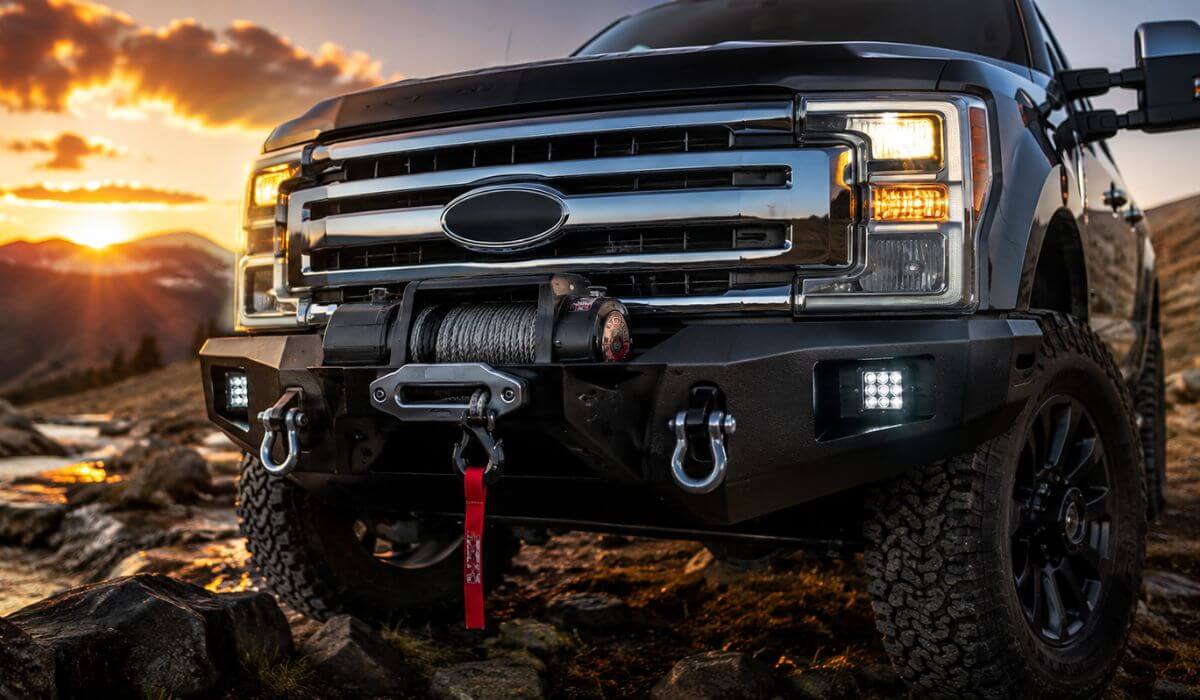
5 Best Winches for Ford F250 in 2026: Super Duty Recovery Picks That Never Back Down
When you start looking for the best winch for a Ford F250, you’ll notice that most recommendations focus only on pulling capacity. In reality, that’s only part of the equation. The F-250 has been offered in multiple configurations over the years—including Regular Cab, SuperCab, Crew Cab, gasoline and Power Stroke diesel models—and curb weight can vary significantly depending on trim, engine, bed length, and aftermarket upgrades. Choosing a winch without considering those factors often leads to slower recovery performance or buying far more capacity than you actually need.
For most stock and lightly equipped Ford F-250 Super Duty trucks, a 12,000–14,000 lb winch provides an excellent balance of recovery power, line speed, and everyday usability. If your truck carries a steel bumper, overlanding gear, snowplow equipment, or regularly tows heavy loads, stepping up to an 18,500–20,000 lb winch makes much more sense. A quality 12V electrical system, a healthy high-CCA battery, proper battery cables, and a suitable winch-ready bumper are just as important as the winch itself if you want dependable performance under load.
For this guide, we didn’t chase the highest weight rating or the biggest spec sheet. We selected winches that offer proven recovery performance, dependable waterproof protection, synthetic rope, strong load control, and compatibility with both newer and older Ford F-250 Super Duty models. The goal is simple: recommend products that make sense for how F-250 owners actually use their trucks—whether that’s towing, work sites, ranch duty, overlanding, or serious off-road recovery.
Best Ford F250 Winches: Top Recovery Picks with Synthetic Rope and Waterproof Design
#1. Warn Zeon XD 14-S 14,000 lb Electric Winch
Best Overall Winch for Ford F250 Super Duty with Premium Recovery Performance Professional-Grade Reliability and Synthetic Rope
#2. Warn Zeon 12-S 12,000 lb Electric Winch
Best Premium Electric Winch for Ford F250 Crew Cab Delivering Fast Line Speed Dependable Recovery and Everyday Heavy-Duty Performance
#3. RUGCEL 20,000 lb 12V Synthetic Rope Winch
Best High-Capacity Winch for Ford F250 Diesel Built for Maximum Pulling Power Heavy Loads and Extreme Recovery Situations
#4. XYCLE 18,500 lb Waterproof Electric Winch
Best Waterproof Recovery Winch for Ford F250 Off-Road Trucks with Rugged All-Metal Construction and Long-Distance Trail Confidence
#5. SINOKING 13,500 lb Electric Synthetic Rope Winch
Best Value Electric Winch for Ford F250 Combining Reliable Recovery Power Synthetic Rope and Budget-Friendly Performance
Expert Tip
If there’s one mistake we see F-250 owners make, it’s buying a winch based only on the highest advertised pulling capacity. Bigger isn’t automatically better. A quality 12,000–14,000 lb winch from a proven manufacturer will often recover a Super Duty more confidently than a cheaper 18,000–20,000 lb unit with inconsistent braking, slower load control, or questionable sealing. If your truck carries a steel bumper, camper, large tires, or regularly works in mud and snow, moving up in capacity makes sense. Otherwise, prioritize build quality, waterproof protection, braking system, motor efficiency, and rope durability before chasing the biggest number on the box. Those are the features you’ll appreciate years from now—not just on the first recovery.
How We Chose the Best Winches for Ford F250
A Ford F-250 isn’t a lightweight trail truck, so we approached this guide differently than a generic “best winch” roundup. Every recommendation was selected with the real weight, workload, and recovery demands of Super Duty owners in mind.
We started with usable pulling capacity, not marketing claims. A stock gasoline F-250, a Power Stroke diesel, and a truck fitted with aftermarket bumpers, recovery gear, or towing equipment don’t place the same demands on a winch. That’s why our list covers dependable 12,000 lb, 14,000 lb, and high-capacity 18,500–20,000 lb options instead of forcing every owner toward one size.
Next, we looked at long-term reliability. Newer winches can have limited ownership history, so we didn’t rely on review counts alone. We focused on the fundamentals that determine whether a winch is likely to perform consistently over time: motor design, gear train strength, load-holding brake performance, waterproof sealing, synthetic rope quality, electrical components, remote system reliability, and overall construction. These are the details that matter long after the product is installed.
We also prioritized features that genuinely improve ownership rather than simply adding to a specification sheet. Every model we selected offers advantages such as synthetic rope for safer handling, weather-resistant construction, wireless control, and recovery performance suitable for a heavy-duty truck. Instead of recommending five nearly identical products, we intentionally included options that serve different needs—from premium professional-grade recovery systems to high-capacity value picks for heavily equipped F-250 builds.
Finally, we considered overall value, not just purchase price. A winch should be something you can depend on when you’re stuck miles from pavement or pulling a heavily loaded truck out of deep mud. That means balancing performance, durability, safety, ease of use, replacement part availability, and brand confidence. If a product didn’t offer a clear advantage for a Ford F-250 owner, it didn’t make this list.
The result is a recommendation list built around real-world capability, not inflated specifications—so whether your F-250 is used for towing, work, overlanding, or weekend trails, you can choose a winch that fits the truck instead of paying for features you’ll never use.
#1. Warn Zeon XD 14-S 14,000 lb Electric Winch
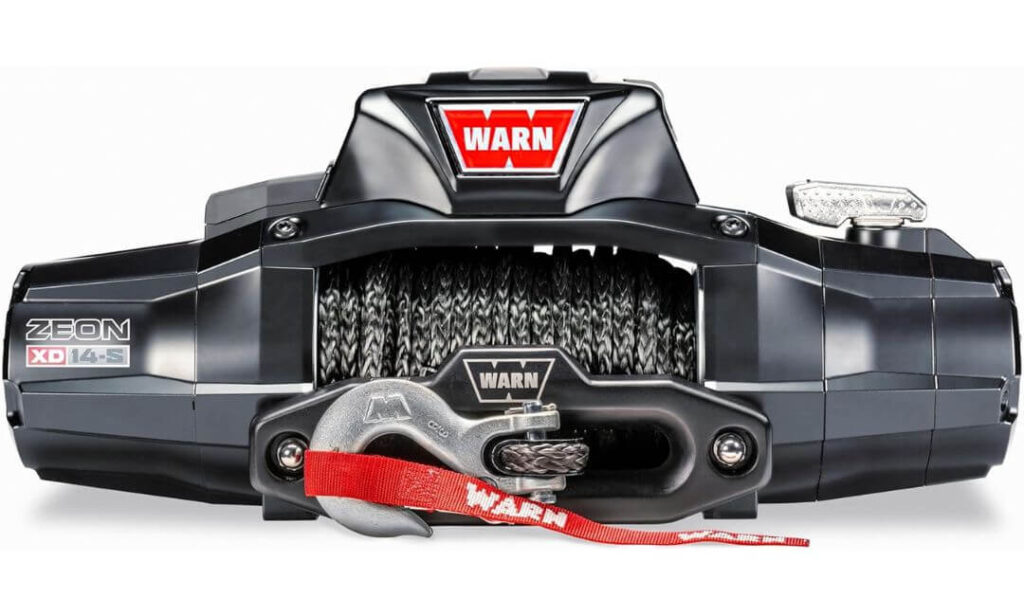
Quick Specs:
- 14,000 lb recovery capacity ideal for heavy-duty Ford F-250 Super Duty trucks
- 3/8-inch × 80 ft Spydura Pro synthetic rope with heat-resistant inner wraps
- 40 ft/min no-load line speed for quicker recovery setup
- IP68 & IP69K sealed construction for water, mud, snow, and pressure washing
- Three-stage planetary gearbox (213:1) for smooth, controlled pulling under heavy loads
- Forged aluminum hawse fairlead with exceptional corrosion resistance
- Corded remote + WARN HUB wireless control for flexible operation
- Full metal armor, OEM-grade corrosion-resistant hardware, and lifetime mechanical warranty
The first thing you notice isn’t the 14,000 lb rating—it’s how refined everything feels once recovery begins. Rope spools evenly, the motor stays composed under sustained load, and the line speed remains impressively quick instead of feeling sluggish like many heavy-capacity winches. For a Ford F-250 Super Duty, that balance matters because you’re often recovering a truck that already weighs well over three tons before adding tools, trailers, or overlanding gear.
Another reason this model stands out is that it doesn’t rely on flashy specifications to justify its price. The Spydura Pro synthetic rope, fully sealed IP68/IP69K construction, forged aluminum fairlead, and protected electrical system all work together to improve reliability where most recoveries actually happen—mud, rain, snow, and dusty trails. The three-stage planetary gearbox also delivers smooth pulling without the harsh mechanical feel common in many high-capacity alternatives.
If you’re investing once and expecting years of dependable service, this is exactly the type of equipment worth considering. The premium construction, fast 40 ft/min line speed, OEM-grade corrosion protection, and dual wired/wireless controls make it equally comfortable on a daily work truck, weekend overland build, or serious off-road recovery rig. (It’s the kind of winch you buy because you want confidence every time you press the remote—not because the specification sheet looks impressive.)
Why It Earned Our Top Recommendation
- 14,000 lb capacity hits the sweet spot for most Ford F-250 Super Duty recovery situations.
- Fast line speed reduces waiting time when deploying or rewinding the rope.
- Spydura Pro synthetic rope is lighter, safer to handle, and built to resist abrasion and heat.
- IP68/IP69K sealing provides genuine protection against mud, deep water, snow, and frequent washing.
- Premium WARN engineering, outstanding build quality, and one of the strongest warranties available.
One Thing to Know Before Installing
- Plan your installation with a Ford F-250-compatible winch bumper or mounting system so you can take full advantage of its recovery performance and maintain proper fitment.
Ford F-250 Compatibility Notes
This model pairs exceptionally well with Ford F-250 Super Duty trucks because its 14,000 lb pulling capacity closely matches the recovery demands of heavier pickups without feeling oversized for everyday use. Whether your truck is equipped with the gasoline engine or the Power Stroke diesel, it offers an excellent balance between recovery strength, rope speed, and overall control.
For the best installation experience, use a quality F-250 winch-ready bumper or mounting plate, verify front suspension capacity if you’ve added significant accessories, and ensure the truck has a healthy high-output battery with clean heavy-gauge power connections. These simple steps help the winch deliver consistent performance whenever you need it.
The Insider Pro-Tip
One detail many buyers overlook is line speed under real load. On paper, many winches advertise impressive pulling numbers, but once thousands of pounds are on the cable, recovery speed often drops dramatically. This model remains noticeably composed, making vehicle recoveries feel more controlled and predictable.
If your F-250 regularly tows, works on job sites, travels off-road, or carries additional front-end weight, choosing a premium recovery system like this usually pays for itself long before you ever think about replacing it. In recovery situations, consistent performance is far more valuable than simply owning the highest-rated winch.
#2. Warn Zeon 12-S 12,000 lb Electric Winch
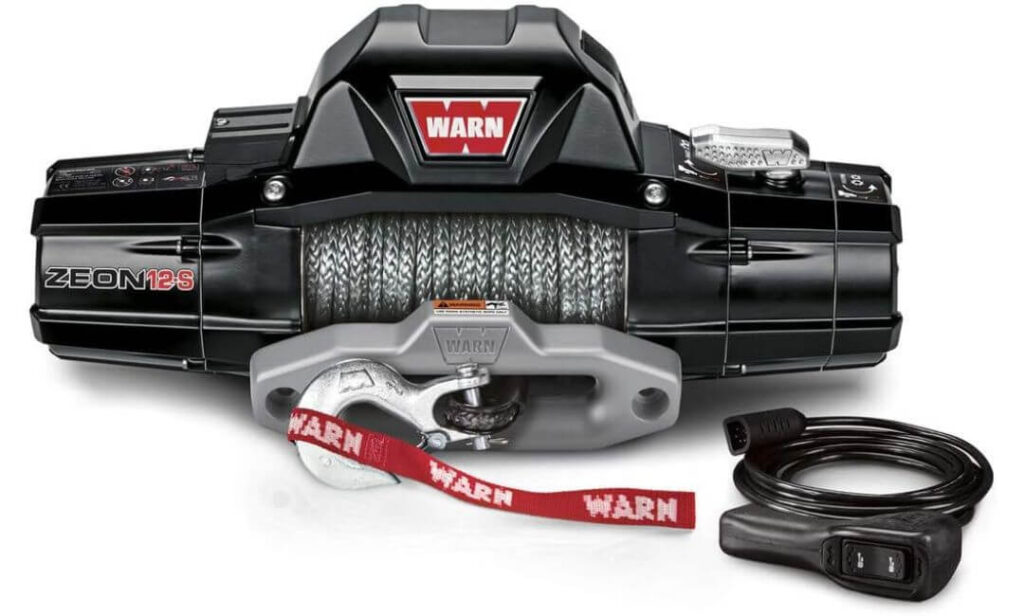
Quick Specs:
- 12,000 lb pulling capacity designed for full-size Ford F-250 Super Duty recovery
- 80 ft × 3/8-inch Spydura synthetic rope for lighter, safer handling
- Series-wound motor with 216:1 planetary gear system for smooth, efficient pulling
- Large-diameter drum helps reduce rope wear over time
- Mechanical cone brake for secure load holding with less heat transfer to the rope
- IP68 sealed housing with corrosion-resistant cast aluminum construction
- Convertible control pack for cleaner installation options
- Limited lifetime mechanical and 7-year electrical warranty
One reason this winch has remained a favorite among experienced truck owners is that it focuses on the details that actually matter once recovery begins. The 12,000 lb capacity is more than enough for most Ford F-250 Super Duty setups, while the series-wound motor and refined 216:1 planetary geartrain deliver smooth, predictable pulling without unnecessary noise or excessive current draw. It feels engineered for repeated use rather than occasional emergencies.
What also stands out is how well the entire system works together. The 80-foot Spydura synthetic rope feeds smoothly across the large-diameter drum, helping reduce long-term rope wear, while the mechanical cone brake keeps heat away from the rope during demanding recoveries. Add the sealed IP68 housing, stainless hardware, and satin-black cast-aluminum construction, and you have a recovery system that’s built to handle muddy trails, wet job sites, and changing weather without demanding constant maintenance.
For many F-250 owners, this is the winch that simply makes sense. It delivers premium WARN reliability without stepping into oversized capacities that many trucks will never fully use. The flexible control pack also gives installers more freedom when working around aftermarket bumpers or tighter engine bay layouts. (Instead of paying for extra pulling capacity you may never need, you’re investing in engineering that’s designed to perform consistently every time the recovery starts.)
Why This Model Stands Out
- 12,000 lb capacity is an excellent match for most Ford F-250 Super Duty recovery situations.
- Spydura synthetic rope is lightweight, safer to handle, and easier to manage than traditional steel cable.
- Large winch drum and mechanical cone brake work together to extend rope life.
- Convertible control pack offers cleaner installation with greater mounting flexibility.
- Premium IP68 sealing, cast-aluminum housing, and stainless hardware are built for years of dependable service.
One Thing Worth Planning For
- Pair it with a quality Ford F-250 winch-ready bumper or mounting system so the installation remains secure and recovery angles stay optimal.
Ford F-250 Installation & Compatibility
This model uses the standard winch mounting footprint, making it compatible with many Ford F-250 Super Duty winch bumpers and hidden mounting systems. Its 12,000 lb rating offers an excellent balance of recovery strength and everyday practicality, especially for stock trucks or builds carrying moderate accessories.
For the most dependable performance, install it with a healthy 12V battery, quality heavy-gauge wiring, and a properly engineered mounting plate designed specifically for the F-250. A clean electrical installation not only improves winch performance but also reduces unnecessary voltage loss during heavy pulls.
The Insider Pro-Tip
Many buyers compare only pulling capacity, but experienced recovery users often pay closer attention to braking design, rope management, and sealing quality. Those are the features that determine how confidently a winch performs after years of exposure to dirt, water, vibration, and repeated recoveries.
If your F-250 is used for towing, work, hunting trips, or weekend trail adventures, a premium 12,000 lb recovery system like this is often the smarter long-term choice than chasing larger numbers that add weight without providing meaningful everyday benefits.
#3. RUGCEL 20,000 lb 12V Synthetic Rope Winch
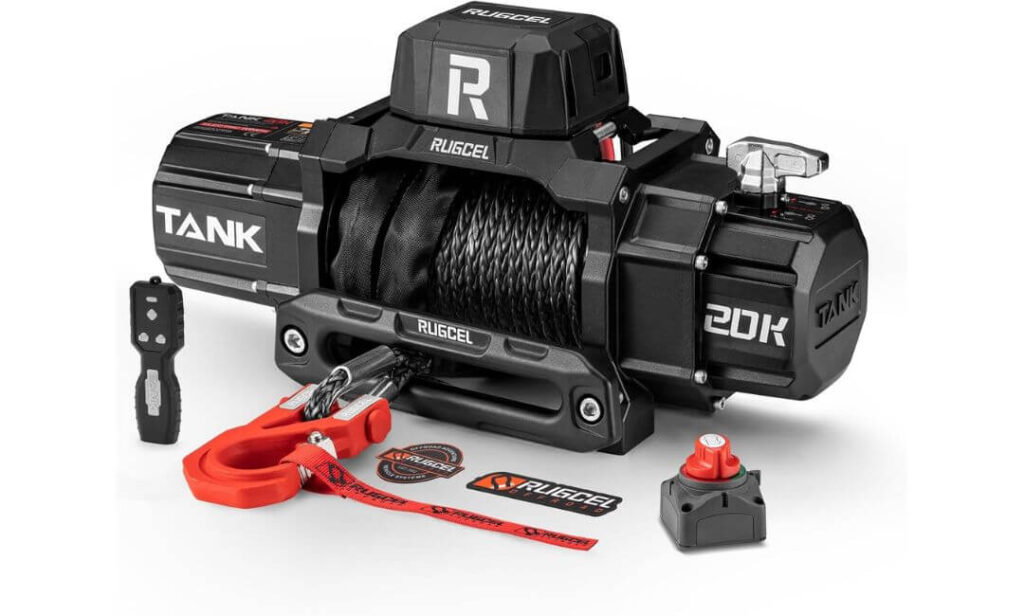
Quick Specs:
- 20,000 lb rated pulling capacity for heavily equipped Ford F-250 Super Duty trucks
- 7.8 HP 12V series-wound motor built for demanding recoveries
- 4-stage planetary gear system (440:1) for maximum pulling leverage
- 69 ft synthetic recovery rope with lightweight, easy handling
- 2-in-1 wired and wireless remote with up to 100 ft operating range
- Automatic screw cone brake for secure load holding
- Free-spooling clutch for faster rope deployment
- All-steel housing with weather-resistant finish and universal mounting pattern
Few winches in this price range deliver this much raw pulling power without making unnecessary compromises. The 20,000 lb capacity immediately stands out, but what makes it practical for a Ford F-250 Super Duty is the combination of a 7.8 HP series-wound motor and a 440:1 four-stage planetary gear system. Together, they provide the mechanical advantage needed when recovering trucks carrying heavy bumpers, campers, recovery gear, or oversized tires where a standard 12K winch may start reaching its limits.
The design also deserves more credit than it usually receives. Instead of focusing only on capacity, the manufacturer paired the winch with an all-steel housing, an automatic screw cone brake, a free-spooling clutch, and a convenient 2-in-1 wired and wireless remote that keeps you in control from a safe distance. The synthetic recovery rope is easier to manage than traditional steel cable and makes repeated recoveries far less tiring, especially when you’re working alone.
This is the model that makes sense for owners who intentionally build their truck beyond factory weight. It isn’t trying to replace a premium WARN—it takes a different approach by delivering serious recovery capability at a much more approachable price. If your F-250 regularly works in deep mud, loose sand, forestry trails, or demanding job sites, the additional pulling reserve can be genuinely useful rather than simply impressive on paper. (The extra capacity isn’t there for bragging rights—it becomes valuable the moment your truck is carrying several hundred additional pounds of equipment.)
Why We Included It in This Guide
- 20,000 lb pulling capacity offers outstanding recovery confidence for heavily loaded F-250 builds.
- 7.8 HP motor delivers the torque needed for demanding recovery situations.
- 440:1 four-stage planetary gearing provides excellent pulling control under heavy loads.
- 2-in-1 remote system gives the flexibility of both wired and wireless operation.
- Strong value for money compared with many premium high-capacity recovery systems.
One Thing Worth Preparing Before Installation
- Because of its larger size and higher pulling capacity, it’s best paired with a heavy-duty Ford F-250 winch bumper or reinforced mounting system designed to support this class of winch.
Ford F-250 Installation & Compatibility
This winch uses the common 10-inch × 4.5-inch mounting footprint, making it compatible with many aftermarket Ford F-250 Super Duty winch bumpers and hidden mounting systems. Its high-capacity design is especially well suited for trucks equipped with diesel engines, steel bumpers, recovery accessories, snowplows, or expedition gear.
To get the most from its performance, install it with a strong 12V electrical system, heavy-gauge power cables, and a quality mounting solution capable of handling the additional recovery forces. Proper installation allows the motor, gearing, and braking system to work exactly as intended during demanding pulls.
The Insider Pro-Tip
Many buyers assume a higher-rated winch automatically means slower, less practical performance. In reality, extra pulling capacity becomes valuable when your truck’s real-world weight keeps increasing with accessories, trailers, fuel, and equipment. Recovery calculations should always consider the truck as it sits today—not how it left the factory.
If your F-250 spends more time working than posing, having additional recovery headroom can reduce strain on the motor and drivetrain during difficult recoveries. That often results in smoother operation, better control, and greater confidence when conditions are at their worst.
#4. XYCLE 18,500 lb Waterproof Electric Winch
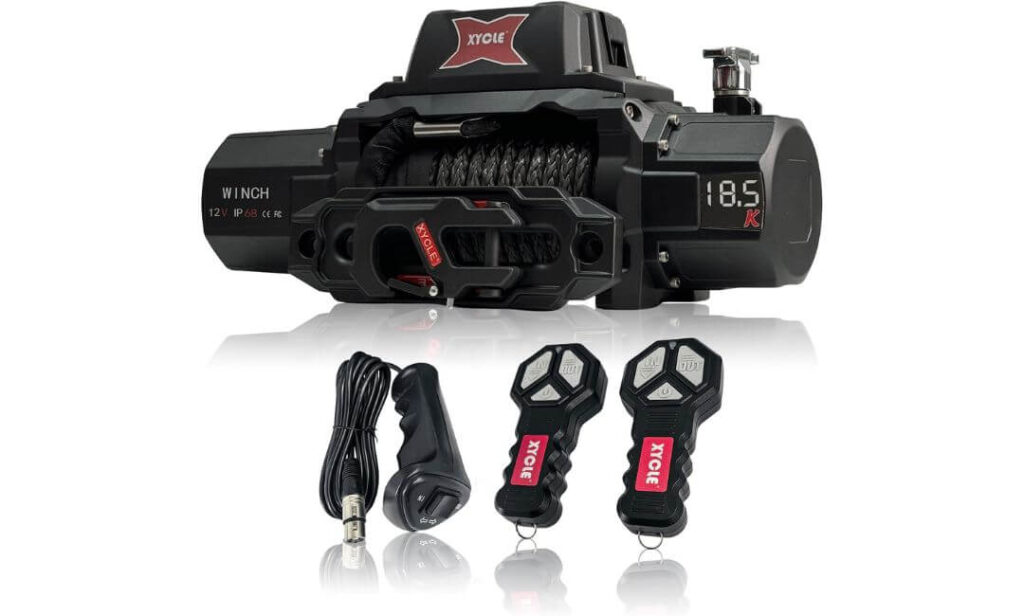
Quick Specs:
- 18,500 lb pulling capacity for demanding Ford F-250 Super Duty recovery
- 70 ft UHMWPE synthetic rope (9/17-inch) for added durability and safer handling
- 7 HP-class motor with pure copper windings for dependable power delivery
- 280:1 three-stage planetary gear system for controlled, high-torque pulling
- IP68-rated aviation-grade aluminum housing with excellent heat dissipation
- Two wireless remotes + wired controller for flexible operation
- Pull-style free-spool clutch for quick rope deployment
- Universal 10-inch × 4.49-inch mounting pattern
There’s a noticeable difference between a winch that’s simply powerful and one that’s engineered to stay consistent when recovery conditions become unpredictable. This model leans toward the second category. Its 18,500 lb pulling capacity gives heavier Ford F-250 Super Duty builds plenty of recovery reserve, while the aviation-grade aluminum housing helps dissipate heat more effectively than conventional steel housings during repeated use. That extra cooling capability becomes valuable when recovery jobs last longer than expected.
Another feature that deserves attention is the overall mechanical design. The 280:1 planetary gear system, pure copper motor windings, and thicker UHMWPE synthetic rope work together to deliver smooth, controlled pulling without making the winch feel unnecessarily complicated. Even the pull-style clutch solves a small frustration many truck owners have experienced—engaging and disengaging the drum feels far more positive than traditional rotating clutch designs, especially when wearing gloves or working in muddy conditions.
For F-250 owners who want premium-level specifications without moving into the highest-priced recovery systems, this is one of the strongest value-focused choices available. The inclusion of two wireless remotes, a wired controller, lightweight aluminum construction, and weather-resistant sealing gives it the versatility expected from a serious recovery setup rather than an entry-level winch. (Every major component feels designed around real recovery situations instead of adding specifications that rarely matter once the truck is actually stuck.)
Why It Made Our Recommendation List
- 18,500 lb capacity provides excellent recovery confidence for modified and heavily equipped F-250 trucks.
- UHMWPE synthetic rope is thicker, easier to handle, and built for long-term durability.
- Aviation-grade aluminum housing improves heat dissipation while resisting corrosion.
- Pure copper motor and 280:1 gearing deliver smooth, controlled pulling under demanding loads.
- Two wireless remotes offer extra convenience during solo recoveries or difficult recovery angles.
One Thing Worth Planning Before Installation
- Use a Ford F-250-specific heavy-duty winch mount or bumper to ensure proper support and maintain the best recovery angles for a winch of this capacity.
Ford F-250 Installation & Compatibility
The standard 10-inch × 4.49-inch mounting footprint allows this model to fit many aftermarket Ford F-250 Super Duty winch bumpers and hidden mounting systems. Its combination of high pulling capacity and efficient cooling makes it particularly appealing for trucks that spend long days towing, exploring remote trails, or carrying additional front-end equipment.
For the best long-term performance, pair the installation with a strong 12V electrical system, quality heavy-gauge wiring, and a properly engineered mounting solution. Giving the winch a solid foundation allows the motor, gearing, and braking system to perform with greater consistency under heavy load.
The Insider Pro-Tip
One specification that’s often overlooked is heat management. During extended recoveries, excessive heat can affect both motor efficiency and electrical components. A housing that dissipates heat effectively often delivers more consistent performance than one relying solely on higher advertised pulling numbers.
If your F-250 regularly tackles difficult terrain, recovers trailers, or carries substantial additional weight, choosing a winch that combines high capacity, efficient cooling, dependable gearing, and quality rope management usually proves far more valuable than focusing on capacity alone.
#5. SINOKING 13,500 lb Electric Synthetic Rope Winch
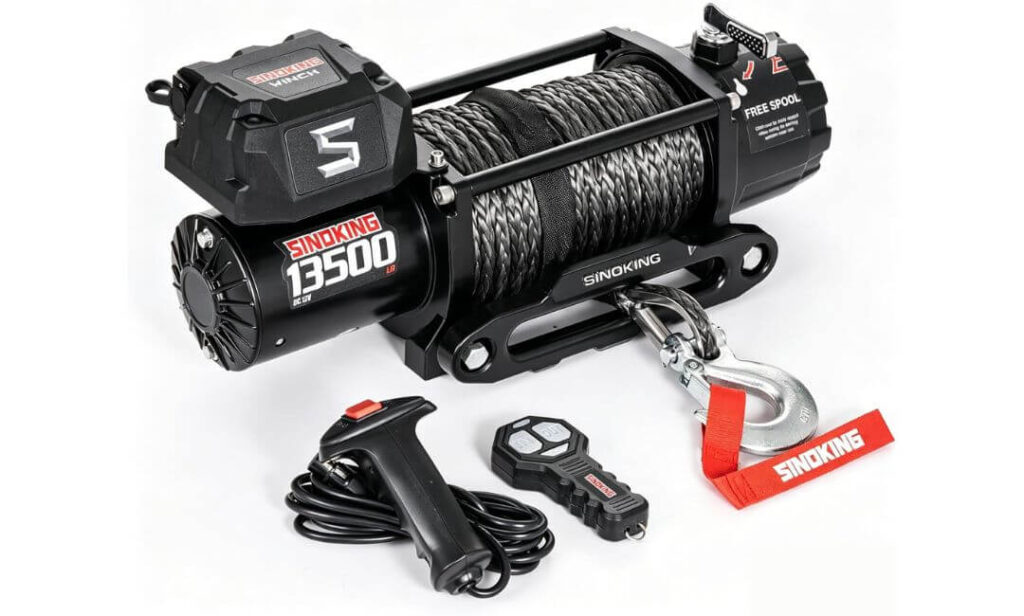
Quick Specs:
- 13,500 lb pulling capacity suited for everyday Ford F-250 Super Duty recovery
- 7/16-inch × 80 ft synthetic rope with durable aluminum hawse fairlead
- 12V high-output motor with upgraded gearing for improved line speed
- 100 ft wireless remote plus wired controller included
- Reliable automatic braking system for controlled recovery
- Corrosion-resistant powder-coated housing for long-term durability
- Built with a universal mounting pattern for aftermarket winch-ready bumpers
- Designed for trucks, trailers, work vehicles, and off-road recovery
Sometimes the smartest purchase isn’t the most expensive one—it’s the product that delivers dependable performance without asking you to pay for features you’ll rarely use. That’s exactly where this 13,500 lb recovery system fits. For many Ford F-250 Super Duty owners, it provides more than enough pulling power for trail recoveries, towing situations, work sites, and weekend adventures while keeping the overall investment reasonable.
The overall setup feels well thought out for practical truck ownership. The 80-foot synthetic rope feeds smoothly through the aluminum fairlead, the upgraded gear system provides confident pulling with respectable line speed, and the included 100-foot wireless remote gives you the flexibility to control the recovery from a safer position. Add the weather-resistant powder-coated housing and dependable braking system, and you have a recovery package that’s easy to live with year after year.
This isn’t trying to compete with ultra-premium professional recovery systems, and that’s actually part of its appeal. Instead, it focuses on delivering the features most F-250 owners genuinely need—solid pulling power, reliable controls, durable construction, and straightforward operation. (For owners who want dependable recovery performance without stretching the budget, this is one of the most sensible choices in the lineup.)
Why It Earned a Spot in Our Picks
- 13,500 lb pulling capacity comfortably handles most Ford F-250 recovery situations.
- 7/16-inch synthetic rope offers safer handling and lighter weight than traditional steel cable.
- Wireless and wired controls provide flexibility in different recovery environments.
- Powder-coated housing helps resist corrosion, dirt, and changing weather conditions.
- Delivers an excellent balance of performance, reliability, and overall value.
One Thing Worth Planning Before Installation
- Pair it with a quality Ford F-250 winch-ready bumper or mounting plate so the winch can perform at its full recovery potential while maintaining proper load distribution.
Ford F-250 Installation & Compatibility
This winch integrates well with many aftermarket Ford F-250 Super Duty mounting systems that use the standard winch footprint. Its 13,500 lb capacity makes it a practical option for stock trucks, lightly modified builds, tow rigs, and daily work vehicles where dependable recovery matters more than maximum pulling numbers.
For the most consistent performance, install it using a healthy 12V battery, heavy-duty power cables, and a properly engineered mounting solution designed specifically for the F-250 platform. A clean installation allows the motor, gearing, and braking system to perform with greater efficiency whenever recovery is required.
The Insider Pro-Tip
Recovery equipment should always be matched to how your truck is actually used, not simply the biggest specification available. For many F-250 owners, a dependable 13,500 lb winch with quality synthetic rope, reliable controls, and solid weather protection will see more real-world use than a much larger system that adds unnecessary weight and cost.
If your truck spends its time towing trailers, exploring backroads, working on farms, or handling occasional off-road trips, this setup offers a practical balance of recovery strength, ease of use, and long-term ownership value that many owners will appreciate.
Best Ford F250 Winch Comparison Chart: Compare Pulling Power Features and Value
| Winch | Best For | Pull Capacity | Synthetic Rope | Weather Protection | Control Options | Standout Advantage | Ideal Ford F-250 Owner |
|---|---|---|---|---|---|---|---|
|
Warn Zeon XD 14-S
Editor’s Choice
|
Premium all-around recovery | 14,000 lb | 80 ft Spydura Pro | IP68 + IP69K | Wireless + Wired | Industry-leading sealing, fast line speed, OEM-grade build quality | Owners wanting maximum long-term reliability with serious recovery performance |
|
Warn Zeon 12-S
Premium Value
|
Daily heavy-duty recovery | 12,000 lb | 80 ft Spydura | IP68 | Wired (wireless upgrade available) | Refined engineering, smooth braking, premium rope management | Stock or lightly upgraded Super Duty trucks used for towing and everyday work |
|
RUGCEL 20,000 lb
Maximum Pull
|
Extreme recovery situations | 20,000 lb | 69 ft Synthetic | Waterproof | Wireless + Wired | Huge pulling reserve with outstanding value for money | Heavy diesel builds carrying steel bumpers, campers, oversized tires or work equipment |
|
XYCLE 18,500 lb
Best Technology
|
Overlanding & off-road builds | 18,500 lb | 70 ft UHMWPE | IP68 | Dual Wireless + Wired | Aviation-grade aluminum housing with excellent cooling efficiency | Owners wanting premium specifications without premium pricing |
|
SINOKING 13,500 lb
Best Budget
|
Reliable everyday recovery | 13,500 lb | 80 ft Synthetic | Water Resistant | Wireless + Wired | Strong feature set with excellent overall value | Drivers seeking dependable recovery capability without overspending |
Buying Guide: How to Choose the Best Winch for Your Ford F250
Buying a winch for a Ford F-250 is different from buying one for a Jeep or midsize pickup. The truck is heavier, often carries additional equipment, and is commonly used for towing, work, overlanding, farming, snow removal, or off-road recovery. That means the right choice isn’t simply the highest pulling capacity—it’s finding a winch that matches your truck’s actual weight, how it’s used, and how often you’ll rely on it.
Below are the factors we believe matter most before investing in any recovery system.
Choose the Right Pulling Capacity for Your Ford F250
The biggest mistake buyers make is assuming more capacity is always better. In reality, the ideal winch depends on how your truck is equipped.
- 12,000 lb winches are an excellent choice for stock or lightly modified F-250 Super Duty trucks used for daily driving, towing, hunting trips, and occasional off-road travel.
- 13,500–14,000 lb models offer additional recovery confidence if you’ve added larger tires, steel bumpers, recovery gear, or regularly tow heavy trailers.
- 18,500–20,000 lb winches are better suited for diesel trucks carrying campers, snowplows, service bodies, expedition equipment, or other significant front-end weight.
Choosing a winch with reasonable recovery headroom helps reduce strain on the motor during difficult pulls instead of forcing the equipment to operate continuously near its maximum rating.
Electric vs. Hydraulic Winch
Most Ford F-250 owners should choose a 12V electric winch.
Electric winches are easier to install, require less maintenance, work even when the truck isn’t moving, and offer excellent recovery performance for almost every real-world situation. They also provide greater flexibility for recreational users and work trucks alike.
Hydraulic winches are typically reserved for commercial recovery vehicles where continuous operation is more important than installation simplicity. They require additional plumbing and are rarely necessary for the average F-250 owner.
Synthetic Rope or Steel Cable
Modern premium recovery systems increasingly use synthetic rope, and for good reason.
Synthetic rope is significantly lighter, easier to handle, stores less kinetic energy if damaged, floats in water, and is much easier to spool after recovery. It also places less weight on the front suspension compared with traditional steel cable.
Steel cable still has advantages in extremely abrasive environments where sharp rocks or constant dragging may shorten synthetic rope life. However, for most Ford F-250 owners, a quality synthetic rope provides the better overall ownership experience.
Make Sure Your Winch Actually Fits Your F250
Even the best winch won’t perform properly if it’s mounted incorrectly.
Most premium winches use a standard mounting footprint, but your truck still requires a Ford F-250-specific winch bumper or hidden mounting system engineered to handle recovery loads safely.
Before purchasing, confirm:
- Mounting bolt pattern compatibility.
- Weight rating of the bumper or mounting plate.
- Fairlead compatibility.
- Front suspension capacity if additional accessories have already been installed.
- Adequate clearance for the control box and wiring.
A properly engineered mounting system is just as important as the winch itself.
Weather Protection Matters More Than Most Buyers Realize
Recovery rarely happens in perfect weather.
Mud, standing water, road salt, snow, sand, and pressure washing gradually expose weaknesses in poorly sealed winches.
Look for features such as:
- IP68 or higher waterproof sealing
- Corrosion-resistant hardware
- Aluminum or protected steel housings
- Weather-sealed electrical connections
- Durable powder-coated finishes
- Reliable braking systems that continue performing in wet conditions
A well-sealed winch typically requires less maintenance and provides more dependable long-term performance.
Don’t Ignore Your Truck’s Electrical System
A powerful winch depends on a healthy electrical system.
Before installation, inspect your:
- Battery condition
- Charging system
- Alternator output
- Main power cables
- Ground connections
- Battery terminals
Many recovery problems blamed on the winch are actually caused by poor electrical connections or batteries that cannot maintain voltage under heavy load.
Line Speed and Gear Design Affect Real Recovery Performance
Most buyers focus only on pulling capacity.
Experienced owners often pay equal attention to line speed, gear ratio, and motor efficiency because these directly influence how smoothly the recovery progresses.
A quality planetary gear system combined with a strong series-wound motor typically provides:
- Better pulling consistency
- Lower mechanical stress
- Improved rope control
- More predictable operation under load
- Reduced operator fatigue during longer recoveries
Fast deployment is convenient, but controlled pulling is even more important when recovering a heavy-duty truck.
Wired or Wireless Remote?
Both control methods have clear advantages.
A wired controller offers dependable operation and remains a trusted choice for many professional users.
A wireless remote allows you to stand farther away, observe recovery angles more clearly, communicate with others, and stay out of potential danger zones.
Many premium winches now include both options, giving you flexibility depending on the recovery situation.
Choosing the Right Winch for Your Ford F250 Configuration
Not every F-250 weighs the same.
A Regular Cab work truck often places different demands on a winch than a fully equipped Crew Cab Super Duty with diesel power, larger tires, recovery equipment, and heavy aftermarket accessories.
If your truck regularly carries additional front-end weight or operates in remote locations, selecting the next capacity range often provides better long-term confidence without unnecessarily oversizing the recovery system.
The goal is to match the winch to your actual truck, not simply the factory specification sheet.
Common Installation Mistakes to Avoid
A surprising number of installation issues have nothing to do with the winch itself.
Avoid these common mistakes:
- Using an underrated mounting plate.
- Skipping torque checks after installation.
- Routing electrical cables near excessive heat.
- Leaving insufficient battery capacity.
- Incorrectly spooling synthetic rope for the first time.
- Forgetting to inspect fairlead alignment.
- Using undersized power cables.
- Ignoring front suspension load after adding heavy accessories.
Taking extra time during installation usually improves long-term reliability far more than upgrading to a larger winch.
Recovery Accessories Worth Adding
A winch performs best as part of a complete recovery kit.
Consider pairing it with:
- Recovery tree saver strap
- Soft shackles
- Rated bow shackles
- Snatch block
- Winch damper
- Heavy-duty recovery gloves
- Battery disconnect switch
- Recovery traction boards
- Kinetic recovery rope
- Protective synthetic rope sleeve
These accessories improve both safety and recovery efficiency without adding unnecessary complexity.
Our Final Recommendation
For most Ford F-250 Super Duty owners, the ideal recovery system combines reliable pulling capacity, quality sealing, efficient motor performance, durable synthetic rope, dependable braking, and a properly engineered mounting system. Those fundamentals will influence your ownership experience far more than simply choosing the highest number printed on the winch housing.
A quality winch should be viewed as long-term recovery equipment rather than an emergency accessory. Choosing the right one today means you’ll spend less time worrying about whether it can handle the next recovery—and more time focusing on getting the truck moving again.
Installation and Setup Guide for a Ford F250 Winch
Installing a winch on a Ford F-250 Super Duty isn’t particularly difficult, but it does require careful planning. A heavy-duty pickup places far greater stress on recovery equipment than smaller off-road vehicles, so every component—from the mounting system to the electrical connections—needs to work together. Taking the time to install everything correctly will improve recovery performance, reduce unnecessary wear, and give you far more confidence when the winch is needed most.
Start with the Correct Winch Mount
Before opening the winch box, confirm that your truck has a Ford F-250-specific winch-ready bumper or hidden mounting system.
Although most modern winches share a universal mounting footprint, the bumper or mounting plate must be engineered to support the recovery loads produced by a heavy-duty truck. A properly designed mount distributes force through the frame, maintains fairlead alignment, and keeps the winch securely positioned under load.
Before installation, verify:
- Winch mounting pattern compatibility.
- Weight capacity of the bumper or mounting system.
- Fairlead compatibility with synthetic rope.
- Clearance around the grille, intercooler, and cooling system.
- Access to the clutch lever and control box after installation.
Choosing the right mounting solution is just as important as choosing the winch itself.
Prepare the Truck Before Installation
A little preparation saves a great deal of time later.
Park the truck on level ground, disconnect the battery, inspect the mounting area, and organize all supplied hardware before beginning. If the truck already has aftermarket lighting, recovery equipment, or auxiliary electrical accessories, check that they won’t interfere with the winch or control box once installed.
It’s also a good opportunity to inspect the front suspension and frame area for any existing damage or corrosion before additional weight is added.
Mount the Winch Correctly
Position the winch on the mounting plate exactly as specified by the manufacturer.
Install the mounting bolts loosely at first so the winch can be aligned correctly. Once the fairlead position and rope path are confirmed, tighten all hardware evenly using the manufacturer’s recommended torque values.
Avoid forcing the winch into position or modifying mounting holes. Proper alignment allows the rope to spool evenly across the drum and reduces unnecessary side loading during recovery.
Install the Fairlead and Recovery Rope
The fairlead should sit perfectly centered with the winch drum.
For synthetic rope, always use the supplied aluminum hawse fairlead, ensuring there are no sharp edges that could damage the rope fibers over time.
Before the first recovery, spool the rope onto the drum under moderate tension. This creates tight, even layers that improve pulling performance and reduce the chances of the rope burying itself under heavy load.
Connect the Electrical System
The electrical installation deserves just as much attention as the mechanical installation.
Route the positive and negative power cables away from exhaust components, steering parts, suspension movement, and sharp metal edges. Protect the cables using quality abrasion sleeves wherever necessary and secure them with proper clamps to prevent vibration damage over time.
Before reconnecting the battery, confirm:
- Battery terminals are clean and tight.
- Ground connections are secure.
- Control box connectors are fully seated.
- Cable routing allows full steering movement without interference.
- No wiring is pinched beneath the bumper or mounting system.
Clean electrical connections help the winch deliver maximum motor performance while reducing voltage loss during heavy pulls.
Battery and Charging System Considerations
Even the best winch can only perform as well as the truck’s electrical system.
For most Ford F-250 Super Duty trucks, a healthy 12V battery, strong charging system, and properly functioning alternator are essential. If your truck already powers auxiliary lighting, air compressors, refrigerators, or other electrical accessories, make sure the charging system is capable of supporting those additional demands alongside the winch.
A weak battery often causes slower line speed, reduced pulling power, and unnecessary strain on both the motor and electrical components.
Perform Safety Checks Before the First Test
Never assume everything is ready immediately after installation.
Take a few minutes to inspect:
- Mounting hardware is fully tightened.
- Fairlead bolts are secure.
- Rope is wound evenly across the drum.
- Remote controls operate correctly.
- Free-spool clutch engages and disengages smoothly.
- Electrical cables remain clear during full steering movement.
- Battery voltage remains stable during operation.
These checks take only a few minutes but can prevent much larger problems during an actual recovery.
Test the Winch Properly
The first test should never involve recovering a stuck vehicle.
Instead, perform several light-load pulls to verify smooth drum rotation, consistent rope spooling, reliable braking, and proper remote operation. This allows the rope to seat correctly while giving you an opportunity to identify any installation issues before relying on the winch in demanding conditions.
Once everything operates smoothly, inspect every mounting bolt one final time before considering the installation complete.
Common Installation Mistakes to Avoid
Most installation problems are completely avoidable.
Some of the most common include:
- Choosing a bumper that isn’t rated for winch recovery.
- Using undersized electrical cables.
- Allowing wiring to contact hot exhaust components.
- Incorrectly spooling synthetic rope before first use.
- Installing the fairlead out of alignment.
- Failing to tighten mounting hardware to specification.
- Ignoring battery health before installation.
- Forgetting to recheck bolt torque after the first few recovery sessions.
Avoiding these mistakes helps improve both safety and long-term reliability.
Tools You’ll Typically Need
Most Ford F-250 winch installations can be completed using common workshop tools.
Typical equipment includes:
- Socket and ratchet set
- Combination wrenches
- Torque wrench
- Allen keys (where applicable)
- Trim removal tools
- Wire cutters and crimpers
- Heat-shrink tubing
- Electrical tape
- Cable ties
- Safety gloves
- Battery terminal cleaning brush
Having everything prepared before starting makes the installation smoother and reduces the chance of overlooking important steps.
Estimated Installation Time
Installation time depends on your bumper design and previous experience.
- Hidden winch systems: approximately 4–7 hours
- Winch-ready aftermarket bumpers: approximately 2–4 hours
- Professional installation: often completed within 2–3 hours, depending on wiring complexity and accessory integration.
Rushing rarely saves time. A careful installation usually results in cleaner wiring, better rope alignment, and more dependable recovery performance.
Final Setup Tips for Long-Term Reliability
Once the installation is complete, spend a little time getting familiar with the system before heading off-road.
Practice engaging the clutch, operating both the wired and wireless controls, checking rope tension, and inspecting electrical connections after the first few uses. Periodically clean the synthetic rope, inspect the fairlead for damage, and verify that all mounting hardware remains secure.
A winch that is installed carefully, tested properly, and inspected regularly will usually provide years of dependable service whenever your Ford F-250 needs it most.
Winch Maintenance, Troubleshooting, and Long-Term Care for a Ford F250
A quality winch can last for many years, but only if it’s treated like recovery equipment rather than something that’s forgotten after installation. Unlike accessories that simply bolt onto your truck, a winch is exposed to mud, water, road salt, vibration, dust, and heavy electrical loads. Spending a few minutes on routine maintenance throughout the year will usually have a much bigger impact on long-term reliability than upgrading to a more expensive model later.
The good news is that most maintenance doesn’t require special tools or advanced mechanical knowledge. Consistency matters far more than complexity.
Routine Maintenance Checklist Every Ford F250 Owner Should Follow
The easiest way to prevent recovery problems is to inspect the winch before they become expensive repairs.
After every few recovery sessions—or at least every couple of months if the truck is used regularly—check the following:
- Inspect the synthetic rope for cuts, flattened fibers, fraying, glazing, or abrasion.
- Confirm the rope is wound evenly across the drum under light tension.
- Check the hawse fairlead for grooves, sharp edges, or damage that could wear the rope.
- Tighten all visible mounting hardware to ensure nothing has loosened from vibration.
- Inspect electrical cables for cracked insulation, corrosion, or rubbing against metal components.
- Clean battery terminals and verify all power connections remain tight.
- Test both wired and wireless remote controls before heading off-road.
- Engage and disengage the free-spool clutch to confirm smooth operation.
- Inspect the winch housing for chipped paint, corrosion, or impact damage.
- Remove built-up mud, sand, or debris around the drum and control box.
These simple checks often identify small issues long before they affect recovery performance.
How to Keep Synthetic Rope in Excellent Condition
Synthetic rope is one of the biggest advantages of modern recovery systems, but it also deserves the most attention.
After recovering a vehicle through mud, sand, or saltwater, rinse the rope thoroughly with clean fresh water and allow it to dry naturally before storing it under tension. Dirt trapped between the rope fibers gradually increases internal wear, even when the damage isn’t immediately visible.
Avoid dragging the rope across sharp rocks, exposed steel edges, or rough concrete whenever possible. Using a quality protective sleeve around high-wear sections will significantly extend rope life during repeated recoveries.
If you notice melted fibers, severe fraying, or deep abrasion, replace the damaged rope before relying on the winch again.
Common Winch Problems and Their Solutions
Most winch problems aren’t caused by failed motors or broken gears. They usually begin with something much simpler.
Slow Line Speed
A noticeable drop in pulling speed often points to:
- Low battery voltage.
- Weak alternator output.
- Dirty battery terminals.
- Loose electrical connections.
- Excessive load beyond normal recovery conditions.
Before assuming the winch is faulty, always inspect the truck’s electrical system first.
Winch Pulls Unevenly Across the Drum
If the rope starts stacking heavily on one side:
- Re-spool the rope under steady tension.
- Verify fairlead alignment.
- Check that the winch mounting plate hasn’t shifted.
- Inspect the drum for damaged wraps from previous recoveries.
Proper rope management dramatically improves both performance and rope lifespan.
Wireless Remote Doesn’t Respond
If the wireless remote suddenly stops operating:
- Replace the remote battery.
- Verify the receiver has power.
- Check electrical connectors at the control box.
- Test the wired controller to isolate the problem.
Keeping fresh batteries in the remote is a simple habit that prevents unnecessary frustration during recovery.
Motor Runs but the Drum Doesn’t Pull
This usually indicates:
- Free-spool clutch not fully engaged.
- Internal clutch adjustment issue.
- Excessive rope slack.
- Mechanical wear inside the gearbox after years of heavy use.
Always confirm clutch engagement before investigating more complicated causes.
Protecting Your Winch from Water, Dirt, and Harsh Weather
Even premium IP68-rated winches benefit from regular cleaning.
After driving through mud, snow, road salt, or deep water:
- Rinse the exterior with low-pressure fresh water.
- Remove packed mud around the drum and control box.
- Allow the winch to dry naturally before long-term storage.
- Inspect electrical connectors for trapped moisture.
- Lightly clean exposed hardware to reduce corrosion buildup.
Avoid directing high-pressure water directly into electrical connectors or control box seals for extended periods, even on well-sealed models.
Off-Season Storage Tips
If your Ford F-250 isn’t used regularly during certain months, don’t leave the winch untouched until the next adventure.
Every few weeks:
- Power the winch in and out briefly.
- Test both remote controls.
- Inspect battery voltage.
- Check mounting hardware.
- Confirm the rope remains evenly wound.
Operating the winch occasionally helps keep internal components lubricated and ensures everything works properly when recovery is finally needed.
Small Habits That Greatly Extend Winch Life
Experienced recovery users often follow a few simple habits that make a noticeable difference over time.
They avoid shock-loading the rope whenever possible, maintain steady pulling angles, stop occasionally during extended recoveries to reduce unnecessary heat buildup, and inspect the equipment immediately after every difficult recovery rather than waiting until the next trip.
These habits place far less stress on the motor, gearbox, braking system, and synthetic rope.
When It’s Time to Replace Worn Components
No recovery equipment lasts forever.
Replace components if you notice:
- Deep rope damage or severe abrasion.
- Fairlead grooves that can damage synthetic rope.
- Persistent water intrusion.
- Excessive corrosion around electrical terminals.
- Damaged remote cables.
- Gear noise that becomes progressively louder.
- Brake performance that no longer holds load consistently.
Replacing worn parts early is almost always less expensive than repairing damage caused by component failure during recovery.
Long-Term Reliability Comes Down to Consistency
The best-performing winches aren’t always the newest—they’re usually the ones that have been maintained properly from day one.
Cleaning the rope, checking electrical connections, protecting the mounting hardware, and inspecting the braking system only takes a small amount of time, yet those habits have a direct impact on reliability when your Ford F-250 is buried in mud, climbing a rocky trail, or recovering a heavy trailer.
A well-maintained winch becomes something you can trust without hesitation, and when recovery depends on it, that confidence is every bit as valuable as the winch’s rated pulling capacity.
Real-World Recovery Scenarios: How Different Winch Capacities Perform on a Ford F250
Winch specifications only tell part of the story. The real test begins when a Ford F-250 Super Duty is buried in deep mud, pulling a loaded trailer up a slippery incline, or trying to recover itself miles away from the nearest paved road. Recovery conditions change quickly, and factors such as terrain, vehicle weight, tire resistance, recovery angle, and driver technique often have a bigger impact than the number printed on the winch housing.
The examples below reflect the types of situations where F-250 owners typically rely on their recovery equipment and help explain why choosing the right capacity matters.
Scenario One: Recovering a Stock Ford F250 with a 12,000 lb Winch
Imagine a stock or lightly equipped Ford F-250 Super Duty that slides into a muddy construction entrance after heavy rain. The truck isn’t heavily modified, but the tires have sunk deep enough that driving out under its own power is no longer possible.
In this situation, a quality 12,000 lb winch performs exactly as intended.
With a properly anchored recovery point, good battery voltage, and steady throttle management, the truck can usually be recovered smoothly without placing excessive strain on the winch. The recovery may not happen instantly, but the controlled pulling force, combined with proper line tension and careful vehicle positioning, allows the truck to climb back onto firm ground safely.
This type of recovery represents exactly why premium 12K winches remain so popular among F-250 owners. They’re well matched to trucks that spend most of their time on the road while still providing enough recovery capability for unexpected situations.
Scenario Two: Recovering a Fully Equipped Diesel F250
Now consider a very different truck.
A Power Stroke F-250 fitted with a steel bumper, winch mount, larger tires, recovery gear, rooftop equipment, auxiliary fuel, and camping supplies becomes significantly heavier than a factory truck before any recovery even begins.
If that vehicle sinks into deep sand or thick clay, resistance increases dramatically.
This is where a 14,000 lb or high-capacity 18,500–20,000 lb winch begins to show its advantage. The additional pulling reserve reduces stress on the motor, allows smoother operation, and provides greater recovery confidence without forcing the winch to operate continuously near its maximum rated capacity.
Rather than struggling through the recovery, the winch has enough mechanical reserve to maintain controlled, predictable pulling throughout the entire process.
Scenario Three: Recovering While Towing
One of the most demanding situations occurs when the truck is attached to a trailer.
Whether towing construction equipment, a camper, livestock trailer, or utility trailer, recovery forces increase considerably because the winch is effectively overcoming resistance from two separate loads.
In these situations, maintaining straight recovery angles becomes especially important.
Higher-capacity recovery systems provide valuable safety margins when trailer weight, loose terrain, and vehicle weight combine into one difficult pull. Using recovery blocks, reducing rolling resistance where possible, and avoiding sudden shock loads all contribute to a safer recovery.
Scenario Four: Winter Recovery on Snow and Ice
Snow presents a very different challenge than mud.
Instead of suction, the biggest obstacles become reduced tire traction and unpredictable sliding.
A properly mounted winch allows the truck to move gradually toward a secure anchor point while maintaining better control than repeated throttle attempts. Slow, consistent line speed usually produces better results than aggressive pulling, especially when recovering on icy surfaces where sudden movement can create additional hazards.
Off-Road Recovery vs. On-Road Recovery
Although the same winch performs both jobs, the recovery strategy changes significantly.
Off-Road Recovery
Off-road recoveries often involve:
- Deep mud.
- Sand dunes.
- Loose gravel.
- Rocky terrain.
- Water crossings.
- Steep inclines.
- Tree anchors.
- Uneven recovery angles.
These situations place greater demand on pulling capacity, rope management, braking systems, and waterproof sealing. Longer recovery times also increase the importance of motor efficiency and heat management.
On-Road Recovery
Roadside recoveries typically involve:
- Snow-covered shoulders.
- Wet grass.
- Construction zones.
- Drainage ditches.
- Boat ramps.
- Soft gravel.
- Slippery pavement.
While resistance is usually lower than severe off-road conditions, controlled operation remains just as important. Smooth pulling reduces unnecessary stress on both the vehicle and recovery equipment.
Recovery Technique Often Matters More Than Winch Size
Many difficult recoveries are solved through technique rather than additional horsepower.
Experienced operators focus on:
- Straight recovery angles whenever possible.
- Proper anchor selection.
- Even rope spooling.
- Gradual throttle application.
- Maintaining steady line tension.
- Allowing the winch to work without sudden shock loads.
These habits improve recovery efficiency regardless of whether the truck is using a 12,000 lb, 14,000 lb, or 20,000 lb system.
Matching Winch Capacity to Real Truck Weight
One of the biggest mistakes is choosing a winch based solely on the factory curb weight.
Very few Ford F-250 trucks remain factory stock for long.
Steel bumpers, diesel engines, bed racks, toolboxes, recovery gear, larger wheels, campers, snowplows, and trailers all increase the demands placed on recovery equipment.
That’s why many experienced owners prefer selecting a winch with additional recovery headroom rather than operating continuously at the upper end of its rated capacity.
The Real Difference Between Premium and Budget Winches
Capacity alone doesn’t separate premium recovery systems from budget alternatives.
During actual recoveries, experienced owners usually notice differences in:
- Motor consistency under load.
- Braking smoothness.
- Waterproof sealing.
- Rope management.
- Gear refinement.
- Electrical reliability.
- Heat control.
- Overall build quality.
Those details become much more noticeable after years of ownership than they do during the first recovery.
What These Real-World Scenarios Teach
The right winch isn’t simply the one with the biggest specification sheet—it’s the one that matches how your Ford F-250 Super Duty is actually used.
A daily-driven truck with occasional recovery needs may perform perfectly with a premium 12,000 lb system. A heavily modified diesel used for expedition travel, commercial work, or difficult off-road recovery often benefits from stepping up to 14,000 lb, 18,500 lb, or even 20,000 lb capacity.
Understanding the situations your truck is most likely to encounter will almost always lead to a better purchasing decision than comparing pulling numbers alone.
FAQs About Ford F-250 Winch
Is a 12,000 lb winch really enough for a Ford F-250 Super Duty, or should I move up to a 14,000 lb or 20,000 lb model?
This depends far more on how your Ford F-250 is equipped than on the truck’s name alone. A stock gasoline F-250 used for towing, job sites, hunting trips, or occasional trail driving is usually well served by a quality 12,000 lb winch because you’re recovering the truck—not pulling its maximum tow rating.
The calculation changes once additional weight starts adding up. If your truck has a steel bumper, diesel engine, oversized tires, camper, recovery gear, snowplow, or service body, stepping into the 14,000 lb to 20,000 lb range provides extra recovery headroom and reduces strain on the motor during difficult pulls.
A good rule is to choose capacity based on your truck’s real operating weight, not the factory brochure.
Can I install a winch on my Ford F-250 without replacing the factory bumper?
Yes, but only if a vehicle-specific hidden winch mounting system is available for your particular F-250 model and trim. Many aftermarket mounting solutions are designed to position the winch behind the factory bumper while maintaining an almost factory appearance.
Before purchasing, confirm three things:
- Your bumper or hidden mount is rated for winch recovery.
- It supports your chosen winch’s mounting footprint and weight.
- There is enough clearance for the control box, fairlead, and synthetic rope.
Trying to adapt a universal bracket where it wasn’t designed to fit usually creates alignment and recovery-angle problems later.
Will a larger winch drain my Ford F-250’s battery faster during recovery?
A larger winch doesn’t constantly consume more power simply because it has a higher capacity. Electrical demand increases when the winch is working hard under heavy load. During light recoveries, the difference between a premium 12,000 lb and 14,000 lb model is often much smaller than many buyers expect.
What matters most is the overall health of your electrical system.
A reliable recovery setup should include:
- A healthy 12V battery.
- A properly functioning alternator.
- Heavy-gauge power cables.
- Clean battery terminals and secure ground connections.
A weak electrical system will reduce the performance of almost any winch, regardless of its rated pulling capacity.
Why do experienced recovery users often recommend synthetic rope instead of steel cable for a Ford F-250?
For most modern F-250 owners, synthetic rope offers practical advantages that become noticeable every time the winch is used.
Compared with steel cable, it is:
- Easier to handle with gloves.
- Significantly lighter.
- Simpler to spool neatly.
- Less likely to develop sharp broken strands.
- Easier to inspect for wear.
- Better suited to frequent recreational and overlanding use.
Steel cable still performs well in extremely abrasive environments, but for the majority of work trucks, tow rigs, and off-road F-250 builds, a quality synthetic rope usually provides a more user-friendly ownership experience without sacrificing recovery capability.
Which matters more during a difficult recovery: pulling capacity, line speed, or overall build quality?
If experienced recovery professionals had to choose only one, many would prioritize overall build quality.
A winch with dependable sealing, consistent braking, efficient gearing, quality electrical components, and predictable rope management often performs better over years of ownership than one that simply advertises a bigger pulling number.
The ideal recovery system balances several factors together:
- Pulling capacity that matches the truck.
- Reliable braking performance.
- Smooth gear operation.
- Weather-resistant construction.
- Quality synthetic rope.
- Dependable wired or wireless controls.
Those are the characteristics that continue to matter long after the excitement of buying a new winch has faded, and they’re often what separate equipment you trust from equipment you hope you never have to test twice.
Final Thoughts
Choosing the best winch for your Ford F-250 isn’t about buying the highest-rated model or the most expensive name on the market. It’s about matching the winch to how your truck is actually used. A daily-driven Super Duty, a dedicated tow rig, and a fully equipped overland build all place very different demands on recovery equipment, which is why one size rarely fits every owner.
After comparing build quality, recovery performance, waterproof protection, rope design, braking systems, installation flexibility, and long-term value, our recommendations focus on products that deliver genuine confidence when recovery becomes more than just a possibility. Premium options like the Warn Zeon XD 14-S and Warn Zeon 12-S stand out for owners who want proven engineering and long-term dependability, while the RUGCEL, XYCLE, and SINOKING models offer excellent alternatives for buyers who need more pulling capacity or stronger overall value without compromising the essentials.
Whichever model you choose, don’t overlook the details that make the biggest difference over years of ownership. A properly engineered Ford F-250 winch mount, healthy electrical system, correctly spooled synthetic rope, and regular maintenance will influence real-world recovery performance far more than an extra few thousand pounds printed on the specification label.
A quality winch is one of those upgrades you hope you’ll rarely need—but when your F-250 is buried in deep mud, pulling a loaded trailer off a slippery slope, or recovering miles away from the nearest road, you’ll appreciate every decision you made before that moment. Choose carefully once, install it correctly, maintain it consistently, and your recovery equipment will be ready whenever your truck asks for it.
Also Check:


