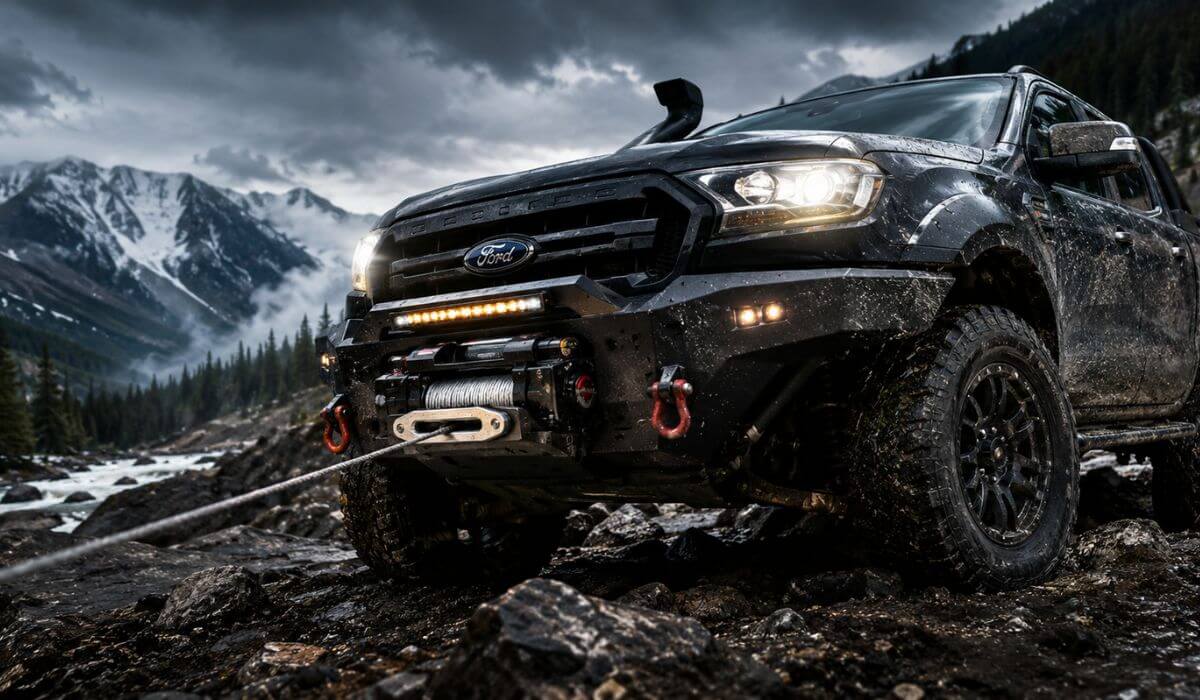
5 Best Winch for Ford Ranger in 2026: Premium Recovery Power with Synthetic Rope
When you’re shopping for the best winch for a Ford Ranger, the biggest mistake isn’t choosing the wrong brand—it’s choosing the wrong capacity and recovery setup. Most modern Ford Ranger models (2019–2026) are best matched with a 10,000–12,000 lb electric winch, especially if your truck carries steel bumpers, recovery gear, larger all-terrain tires, or overlanding accessories. That range provides a comfortable safety margin without adding unnecessary weight or sacrificing recovery performance.
For this guide, we didn’t simply rank the newest or most expensive winches. We compared pulling capacity, motor performance, rope type, weather resistance, remote systems, installation practicality, and long-term durability. Since several of these models are relatively new to the market, we also evaluated their specifications, manufacturer reputation, and overall value to identify the options that make the most sense for Ford Ranger owners who actually use their trucks on trails, job sites, or weekend adventures.
Best Ford Ranger Winch: Top 2026 Picks with 10000 lb and 12000 lb Recovery Power
#1. SuperATV 12,000 lb Black Ops Winch
Best Ford Ranger winch with 12,000 lb recovery capacity, synthetic rope, and wireless control for heavily equipped off-road builds.
#2. Warn Zeon 10-S Electric Winch
Premium recovery winch for Ford Ranger featuring industry-leading durability, Spydura synthetic rope, and dependable performance in demanding recovery situations.
#3. Nilight 12,000 lb Electric Winch
Best Ford Ranger off-road winch for value, combining strong pulling power, smart wireless operation, synthetic rope, and modern recovery features.
#4. Superwinch SX10 10,000 lb DC Winch
Reliable electric winch for Ford Ranger designed for consistent trail recovery with trusted engineering and heavy-duty construction.
#5. XYCLE 10,000 lb Electric Winch
Budget-friendly Ford Ranger recovery winch with IP68 waterproof protection, synthetic rope, dual wireless remotes, and dependable pulling power for occasional off-road recoveries.
Expert Tip
If your Ford Ranger is used for more than occasional light trails, don’t shop for a winch based on the highest pull rating alone. A well-built 10,000–12,000 lb winch with a quality motor, dependable braking system, and synthetic rope will usually serve you better than a cheaper model advertising bigger numbers on the box. Recovery is about consistent pulling power, heat management, and reliability under load—not just peak capacity. A winch is one of those upgrades you hope you never need, but when you do, it’s often the only thing standing between driving home and waiting hours for help.
How We Chose These Ford Ranger Winches
Every winch in this guide was selected with one question in mind: Would we trust it on a Ford Ranger miles away from pavement? That approach eliminated plenty of products with impressive specifications but little confidence where it matters most.
We started with pulling capacity. A modern Ford Ranger equipped with recovery gear, larger tires, steel bumpers, or overlanding accessories benefits most from a 10,000–12,000 lb electric winch. That range provides a healthy recovery margin without pushing the winch to its limits during difficult pulls.
Next, we looked at the motor, gear train, and braking system. A winch may claim a high load rating, but its ability to maintain pulling power through long recoveries depends on motor efficiency, gear durability, and controlled braking. These mechanical components matter far more than marketing claims.
We also gave preference to synthetic rope wherever possible. It is lighter than steel cable, easier to handle, safer during recovery, and well suited to the kind of trail and overlanding use many Ford Ranger owners enjoy. Rope quality, fairlead design, and overall recovery hardware were all considered during our evaluation.
Weather protection was another priority. Off-road recovery rarely happens in perfect conditions, so we looked for sealed housings, dependable waterproof ratings, corrosion resistance, and components designed to withstand mud, rain, dust, and repeated outdoor use.
Control systems also influenced our rankings. Modern wireless remotes, dependable wired backups, and responsive operation make recovery smoother and safer, especially when positioning the vehicle or working alone on uneven terrain.
Because several of these winches are newer products, we did not rank them solely on the number of online reviews. Instead, we evaluated manufacturer reputation, engineering, build quality, published specifications, included hardware, warranty support, and overall value. That gives a more balanced picture than relying only on early ratings that may not yet reflect long-term ownership.
Finally, we considered overall value for Ford Ranger owners. A premium winch deserves its place only if its performance and durability justify the price, while a budget model earns a recommendation only if it delivers dependable recovery capability without compromising the features that matter most. Every recommendation in this guide met that standard before making the final list.
#1. SuperATV 12,000 lb Black Ops Winch
Quick Specs:
- 12,000 lb pulling capacity — ideal for stock, lifted, and overland-equipped Ford Ranger builds
- 6.0 HP permanent magnet 12V motor with dual-speed 230:1 / 150:1 gearing for controlled or faster recoveries
- 46 ft synthetic recovery rope that’s lighter, easier to handle, and safer than steel cable
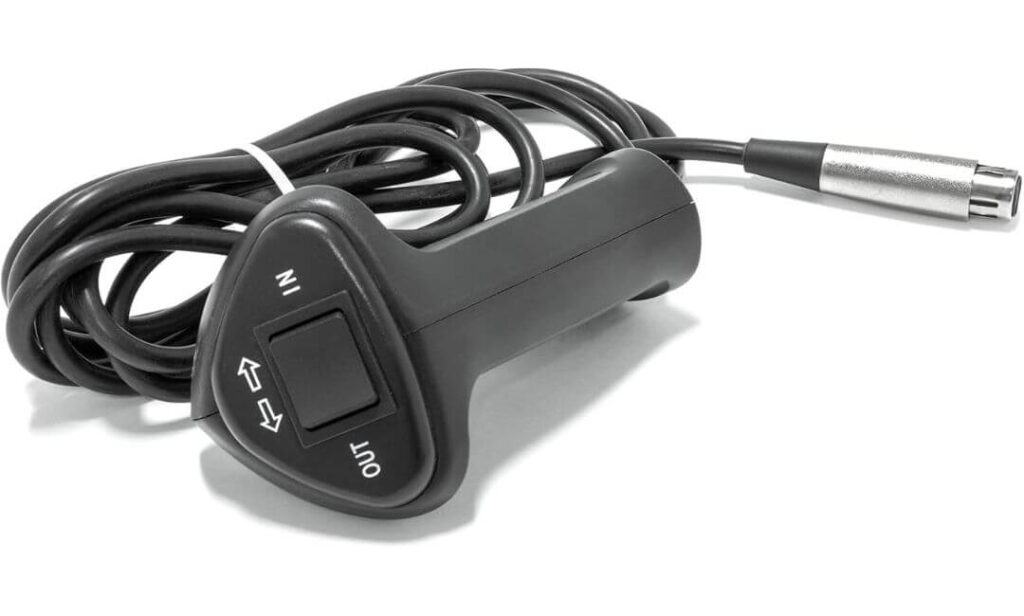
- Wireless remote (50 ft) plus wired dash rocker switch for flexible operation
- 2-inch receiver mount plate included, eliminating the need to purchase a separate portable mount
- Sealed waterproof solenoid, aluminum hawse fairlead, extended 14 ft wiring harness, and complete recovery hardware included
Right from the first look, this feels like a recovery kit instead of just another winch. The biggest advantage isn’t only the 12,000 lb pulling capacity—it’s the fact that the package already includes the 2-inch receiver mounting plate, extended wiring, synthetic rope, wireless control, fairlead, hook, pull strap, and the hardware most Ranger owners end up buying separately. That makes installation cleaner and the overall value much stronger.
The 6.0 HP permanent magnet motor paired with its dual-speed gear ratios gives this setup a practical advantage. Lighter recoveries don’t have to take forever, while difficult pulls still benefit from the additional torque available when conditions become challenging. Add the 46-foot synthetic rope, aluminum hawse fairlead, and waterproof electrical components, and it becomes a setup that feels ready for muddy trails, rocky climbs, or remote camping trips instead of occasional driveway use.
One feature we genuinely appreciate is how portable the entire system can be. The included 2-inch receiver mount allows many compatible Ranger builds to move the winch between vehicles when needed instead of permanently dedicating it to one truck. That flexibility is something many buyers overlook until they actually need it.
(If your Ford Ranger already has a compatible 2-inch receiver winch mount or aftermarket bumper, this package saves both installation time and additional accessory costs.)
Why This One Stands Out in Real Ownership
- Complete recovery package with very few extra parts left to purchase
- 12,000 lb capacity offers plenty of recovery headroom for modified Ranger builds
- Dual-speed motor gives better control during different recovery situations
- Synthetic rope is easier to handle, lighter, and more convenient than traditional steel cable
- Wireless and wired controls let you operate the winch the way each recovery situation demands
A Small Thing to Keep in Mind
- Before installation, simply verify that your Ford Ranger uses a compatible 2-inch receiver winch mount or aftermarket bumper, since factory bumper configurations can vary.
Ford Ranger Installation Notes
This setup works particularly well for 2019-2026 Ford Ranger owners running an aftermarket bumper with a 2-inch receiver or a receiver-compatible recovery setup. The included mounting plate removes one of the biggest installation headaches because you don’t have to source a separate portable mount.
If you’re building your Ranger for overlanding, hunting trips, trail riding, or weekend recovery work, the included extended wiring harness also gives installers more flexibility when routing power cables cleanly through the engine bay.
The Insider Pro-Tip
Many buyers focus only on maximum pulling capacity, but experienced off-road owners usually notice something else first—the accessories included in the box. A winch that arrives with the correct mount, synthetic rope, fairlead, recovery hook, wiring, and controls often costs less overall than buying a cheaper winch and adding those parts one by one.
For most Ford Ranger owners, recovery reliability comes from the entire system working together, not just the number printed on the motor housing. That’s exactly why this package sits at the top of our recommendations.
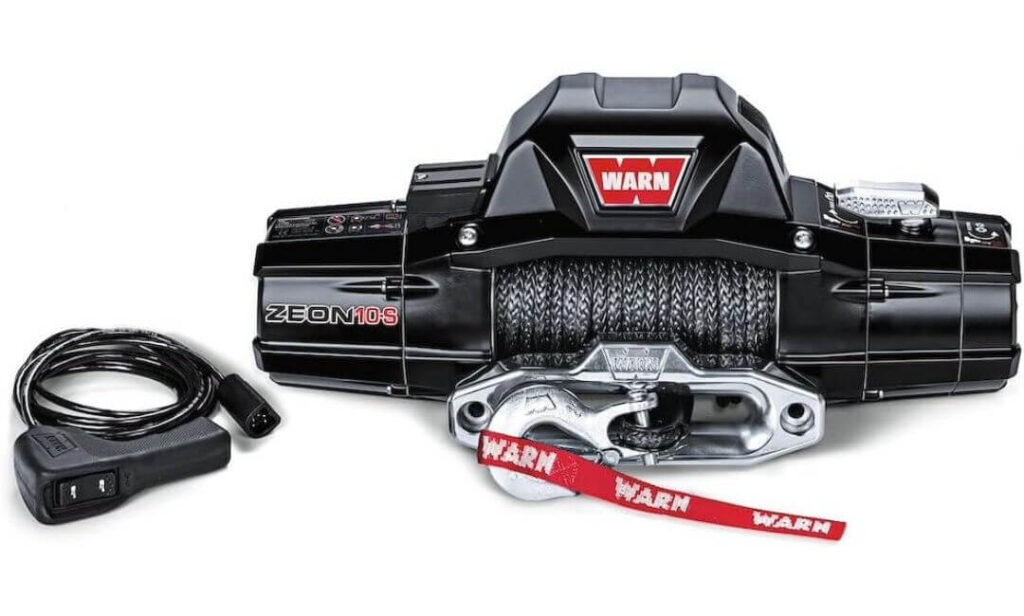
#2. Warn Zeon 10-S Electric Winch
Quick Specs:
- 10,000 lb single-line pulling capacity that’s ideal for most stock, lifted, and overland-ready Ford Ranger builds
- Series-wound 12V motor paired with a 216:1 planetary gear system for smooth, dependable recovery under load
- 100 ft × 3/8-inch Spydura synthetic rope for longer recovery reach without the weight of steel cable
- Convertible control pack that can stay mounted on the winch or be relocated for a cleaner engine bay layout
- Mechanical cone brake designed to reduce rope wear while holding loads securely
- Powder-coated cast-aluminum housing, stainless hardware, polished aluminum hawse fairlead, and premium weather sealing built for year-round off-road use
There’s a reason the ZEON series has earned such a strong reputation among experienced off-road drivers. It isn’t about flashy features—it’s about delivering the same dependable performance every time the recovery switch is pressed. The 10,000 lb pulling capacity is a sweet spot for the Ford Ranger, providing more than enough strength for difficult recoveries without feeling oversized for everyday trail use.
One of the standout details is the 100-foot Spydura synthetic rope. That extra reach gives you more recovery options when the nearest solid anchor isn’t close by. Combined with the large-diameter drum, polished aluminum hawse fairlead, and mechanical cone brake, the rope feeds smoothly and experiences less unnecessary wear over time. It’s the kind of engineering you notice after years of ownership—not just on day one.
The convertible control pack is another thoughtful touch. Some Ranger owners prefer everything mounted directly on the winch, while others want a cleaner front-end appearance by relocating the controls. This design gives you that flexibility without adding unnecessary complexity. Add the corrosion-resistant cast-aluminum housing and premium sealing, and it’s clear this winch was built with real off-road use in mind rather than showroom appeal.
(For Ranger owners planning long-distance overlanding or frequent trail recovery, the combination of 100 ft synthetic rope, premium sealing, and proven drivetrain makes this one of the most confidence-inspiring options available.)
What Makes It Worth the Premium Price
- Series-wound motor delivers consistent pulling power during demanding recoveries
- 100 ft Spydura synthetic rope provides excellent reach while remaining lightweight and easy to handle
- Convertible control pack allows a cleaner, more customized installation
- Mechanical cone brake helps protect the rope and maintains secure load control
- Premium aluminum construction with corrosion-resistant hardware is built for years of outdoor use
One Installation Detail to Plan For
- Because of its premium-duty construction, it’s worth confirming your Ford Ranger bumper or winch mount is designed for the ZEON 10-S before installation.
Ford Ranger Compatibility Notes
This winch is an excellent match for 2019-2026 Ford Ranger models equipped with a quality aftermarket winch bumper or compatible mounting system. The 10,000 lb capacity provides an ideal balance of recovery performance for trucks running larger tires, steel bumpers, rooftop tents, or additional expedition gear.
The flexible control pack also gives installers more freedom when designing a clean engine bay or front bumper layout, making it a favorite for custom Ranger builds where appearance matters as much as performance.
The Insider Pro-Tip
Many premium winches advertise similar pulling numbers, but experienced owners usually judge them by something else—how predictable they feel when the recovery gets difficult. Smooth power delivery, consistent braking, excellent sealing, and a quality synthetic rope often make a far bigger difference than chasing a higher load rating.
That’s where this model quietly separates itself. It isn’t designed to impress on a specification sheet alone; it’s designed to keep working when the trail is wet, the truck is buried, and you need complete confidence that every pull will be controlled from start to finish.
#3. Nilight 12,000 lb Electric Winch
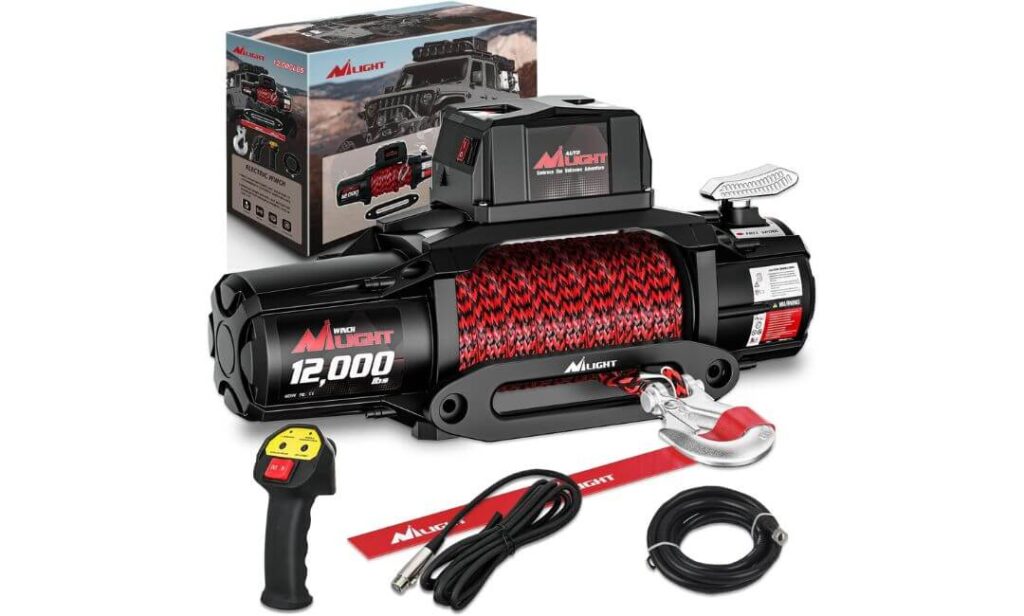
Quick Specs:
- 12,000 lb pulling capacity that’s well suited for Ford Rangers carrying larger tires, recovery gear, or overlanding equipment
- 6.5 HP permanent magnet 12V motor with a 265:1 three-stage planetary gear system for smooth, controlled pulling
- 79 ft × 3/8-inch synthetic rope that’s lighter, easier to handle, and resistant to rust
- 3-in-1 smart remote system with wireless control (up to 98 ft), wired backup control, and built-in LED lighting
- IP68 waterproof construction with sealed electrical components for dependable performance in mud, rain, and water crossings
- Automatic drum brake, aluminum hawse fairlead, and complete recovery hardware included
Instead of chasing a premium price tag, this setup focuses on delivering the features most Ford Ranger owners actually use on the trail. The 12,000 lb pulling capacity, paired with a 6.5 HP permanent magnet motor and 265:1 planetary gearing, provides smooth, controlled recovery whether you’re climbing out of deep mud, pulling through sand, or assisting another vehicle.
The feature that immediately stands out is the 3-in-1 smart remote system. Having both a wireless remote with nearly 100 feet of operating range and a traditional wired controller gives you flexibility depending on the recovery situation. The integrated LED lighting is another practical addition—it becomes surprisingly useful when recoveries happen after sunset or in poor weather where visibility disappears quickly.
Another reason this winch earned a place on our list is its overall value. The IP68-rated sealed housing, automatic drum brake, aluminum hawse fairlead, and 79-foot synthetic rope bring together features that many buyers normally associate with significantly more expensive recovery systems. It doesn’t try to copy premium brands—it simply gives Ford Ranger owners a well-equipped recovery package at a much more approachable price.
(If your Ranger already has a compatible winch mounting plate or aftermarket bumper, this package delivers an impressive feature set without stretching the budget.)
Why It Deserves a Spot on This List
- Excellent value considering the motor, waterproof rating, and included recovery hardware
- 6.5 HP motor delivers dependable pulling performance while maintaining smooth operation
- 3-in-1 remote system offers excellent flexibility during different recovery situations
- IP68 sealing helps protect critical electrical components from harsh trail conditions
- Synthetic rope and aluminum hawse fairlead make handling easier while reducing long-term rope wear
One Simple Installation Check
- Since a mounting plate isn’t included, just confirm your Ford Ranger already has a compatible winch plate or receiver-style mounting solution before installation.
Ford Ranger Installation Notes
This winch fits particularly well on 2019-2026 Ford Ranger models equipped with an aftermarket winch bumper or compatible mounting plate using the correct bolt pattern. Once paired with the proper mount, installation is straightforward and gives you a recovery system capable of handling demanding trail conditions.
Its combination of waterproof construction, long synthetic rope, and flexible remote controls also makes it a practical choice for Ranger owners who regularly explore muddy trails, forest roads, remote campsites, or coastal environments where corrosion resistance matters.
The Insider Pro-Tip
A surprising number of recovery situations don’t require a more expensive winch—they require a better-equipped one. Features like a quality synthetic rope, dependable waterproof sealing, responsive controls, and a reliable braking system often make a bigger difference in real-world use than paying extra simply for a well-known badge.
That’s exactly why this model stands out. It delivers the features most Ford Ranger owners actually benefit from, while leaving enough room in the budget for the recovery accessories every serious off-road setup should have.
#4. Superwinch SX10 10,000 lb DC Winch
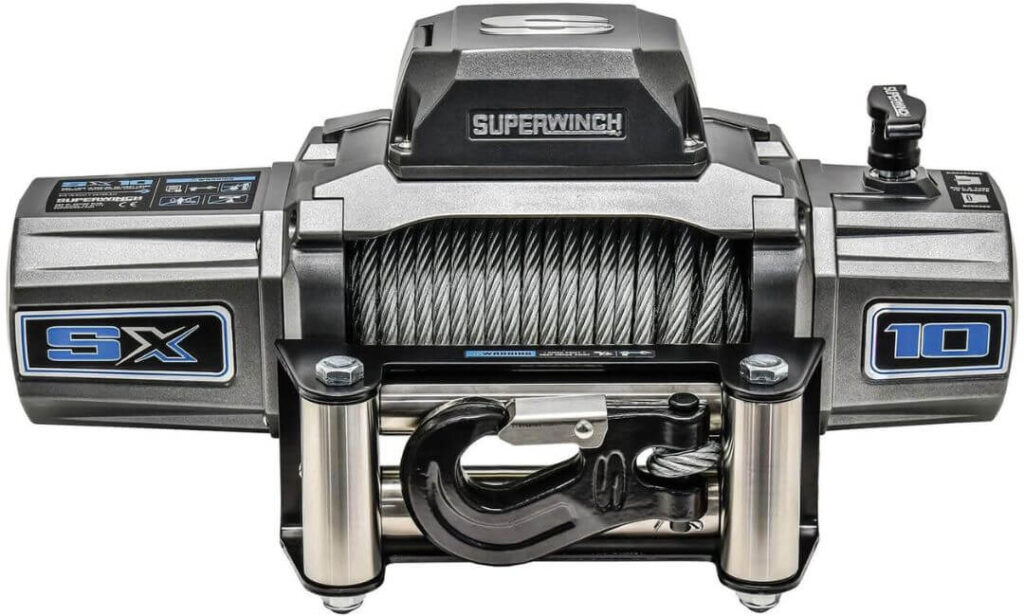
Quick Specs:
- 10,000 lb single-line pulling capacity that’s ideal for most Ford Ranger recovery situations
- 5.5 HP sealed series-wound 12V motor with a 218:1 planetary gear system for dependable pulling under sustained loads
- 3/8-inch steel wire rope with a heavy-duty hook for proven long-term durability
- IP68-rated sealed drum, gearbox, and contactor engineered to handle mud, rain, dust, and water crossings
- Integrated drum lighting plus a 12-foot lighted wired remote with built-in rechargeable flashlight
- Relocatable die-cast aluminum control box, stainless 4-way roller fairlead, and automatic mechanical load-holding brake
What immediately separates this winch from many competitors is its focus on long-term dependability rather than adding features that rarely get used. The 5.5 HP sealed series-wound motor, 218:1 planetary gearing, and 10,000 lb pulling capacity create a recovery setup that feels predictable when the load starts increasing. For most Ford Ranger owners, that’s exactly what inspires confidence on difficult trails.
The biggest surprise is how much attention has been given to recovery in poor conditions. The IP68-sealed drum, gearbox, and contactor help keep water and debris where they belong—outside the winch. Add the integrated drum light and the lighted wired controller with its rechargeable flashlight, and nighttime recoveries become noticeably easier without needing to carry additional lighting equipment.
Another detail worth appreciating is the rugged hardware throughout the system. The steel drum, stainless roller fairlead, automatic mechanical brake, and ergonomic no-bind clutch handle are all built with repeated recoveries in mind. Instead of focusing on appearance alone, this setup is clearly engineered for owners who expect to use their recovery equipment for years rather than just a few weekends each season.
(If dependable mechanical strength matters more to you than wireless gadgets, this is one of the most confidence-inspiring recovery systems available for a properly equipped Ford Ranger.)
Why It Earned a Place in Our Recommendations
- Series-wound motor delivers smooth and dependable pulling under heavy recovery loads
- Exceptional IP68 sealing protects the winch during mud, rain, and water crossings
- Integrated recovery lighting adds real value during night-time trail recoveries
- Steel drum and stainless roller fairlead are built for long service life
- Automatic mechanical brake and no-bind clutch make operation controlled and predictable
One Thing to Plan Before Installation
- Since this package doesn’t include a mounting plate, you’ll need a compatible Ford Ranger winch bumper or receiver-style mounting system before installation.
Ford Ranger Installation Notes
This winch is well suited for 2019-2026 Ford Ranger models equipped with an aftermarket winch bumper or correctly matched mounting plate. Once installed, the compact control box can also be relocated if your bumper design leaves limited space around the winch.
Its sealed construction, heavy-duty hardware, and built-in lighting make it especially appealing for Ranger owners who frequently drive remote forest roads, mountain trails, or work in challenging weather where dependable recovery equipment becomes essential.
The Insider Pro-Tip
Recovery equipment usually earns its reputation after years of use—not during the first weekend on the trail. Features like sealed internal components, a strong braking system, quality gearing, and dependable controls are often what determine whether a winch is still performing reliably long after the warranty has expired.
That’s exactly where this model stands out. It doesn’t try to impress with unnecessary extras; it focuses on the mechanical details that experienced Ford Ranger owners tend to appreciate more with every recovery.
#5. XYCLE 10,000 lb Electric Winch
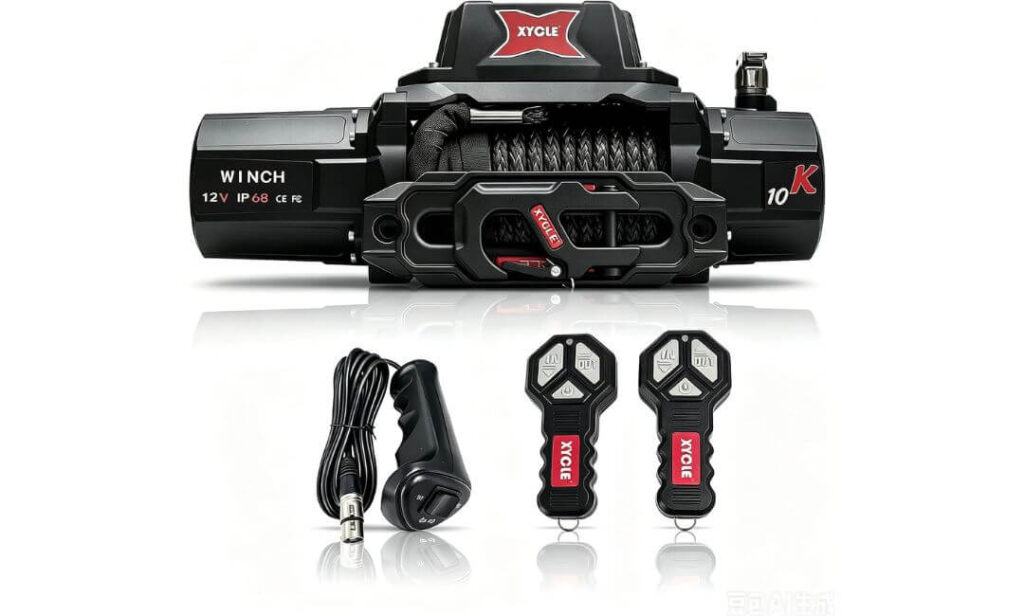
Quick Specs:
- 10,000 lb pulling capacity that’s well matched to most stock and modified Ford Ranger recovery setups
- 6.5 HP permanent magnet 12V motor with a 218:1 three-stage planetary gear system for smooth, dependable pulling power
- 70 ft × 1/2-inch UHMWPE synthetic rope, thicker than the standard 3/8-inch rope found on many competitors
- Dual-control system with two wireless remotes (up to 100 ft) plus a wired controller for flexible recovery
- IP68 waterproof protection with an aviation-grade aluminum alloy housing and aluminum control box for improved cooling
- Unique pull-type clutch, aluminum fairlead, tow hook, and complete recovery hardware included
Not every capable recovery winch needs a premium badge on the front. What makes this model interesting is how much attention has been given to the mechanical details that actually matter once you’re off the pavement. The 10,000 lb pulling capacity, 6.5 HP motor, and 218:1 planetary gearing provide steady, controlled recovery performance that’s well suited to the weight and capability of a properly equipped Ford Ranger.
One feature that genuinely stands out is the 70-foot, 1/2-inch UHMWPE synthetic rope. It’s noticeably thicker than the standard rope supplied with many winches, giving you extra confidence during demanding recoveries while remaining lightweight, corrosion-resistant, and easier to handle than steel cable. Pair that with the aviation-grade aluminum housing, aluminum control box, and IP68 waterproof sealing, and you get a setup that’s built to stay cool and keep working in difficult trail conditions.
The recovery controls are equally practical. Instead of relying on a single wireless remote, the package includes two wireless remotes with up to 100 feet of operating range, plus a traditional wired controller when you want a direct connection. The pull-type clutch is another thoughtful upgrade, offering smoother engagement than many conventional clutch designs during repeated recoveries.
(For Ford Ranger owners looking for premium-style features without stepping into premium pricing, this package delivers an impressive balance of capability and everyday usability.)
Why We Included It in This Guide
- Thicker 1/2-inch UHMWPE synthetic rope offers added durability and confidence during recovery
- Dual wireless remotes plus wired control provide excellent flexibility on the trail
- Aviation-grade aluminum construction improves heat management while reducing unnecessary weight
- IP68 waterproof protection keeps critical components protected in demanding environments
- Pull-type clutch design makes engagement smoother and more consistent during operation
One Simple Installation Requirement
- This winch does not include a mounting plate, so you’ll need a compatible Ford Ranger winch bumper or receiver-style mounting solution before installation.
Ford Ranger Installation Notes
This winch works well with 2019-2026 Ford Ranger models equipped with a compatible aftermarket winch bumper or correctly matched mounting plate. Once installed, the combination of waterproof construction, thick synthetic rope, and flexible control options makes it a capable recovery companion for trail riding, overlanding, hunting trips, and weekend off-road adventures.
Before your first recovery, it’s also worth taking a few extra minutes to spool the synthetic rope correctly under tension. A properly loaded drum helps the winch perform more smoothly and protects the rope during future pulls.
The Insider Pro-Tip
Recovery performance isn’t determined by one specification alone. Experienced Ford Ranger owners usually pay closer attention to the entire recovery system—motor efficiency, gearing, rope quality, cooling, braking, and controls all contribute to how confidently a winch performs when conditions become difficult.
That’s exactly why this model earned its place here. It combines several practical upgrades that many buyers don’t notice at first glance but quickly appreciate once the winch is called into real service on the trail.
Best Ford Ranger Winch Comparison: Specs Features and Recovery Performance
| Winch | Pull Capacity | Motor & Drive | Rope | Remote System | Water Protection | Best For | Our Verdict |
|---|---|---|---|---|---|---|---|
|
SuperATV Black Ops 12,000 lb
Editor’s Choice
|
12,000 lb | 6.0 HP Permanent Magnet Dual-Speed Gear System |
46 ft Synthetic Rope | Wireless + Wired Dash Switch | ✔ Waterproof Sealed System | Heavy off-road builds, overlanding, complete recovery setup | Complete package with receiver mount, premium recovery hardware and excellent overall value. |
|
Warn Zeon 10-S
Premium Pick
|
10,000 lb | Series-Wound Motor 216:1 Planetary Gear |
100 ft Spydura Synthetic Rope | Wired Remote Convertible Control Pack |
✔ Advanced Sealing | Frequent off-road use and long-term reliability | Outstanding engineering, refined performance and one of the most trusted recovery systems available. |
|
Nilight 12,000 lb
Best Value
|
12,000 lb | 6.5 HP Permanent Magnet 265:1 Planetary Gear |
79 ft Synthetic Rope | Wireless + Wired + LED Remote | ✔ IP68 Rated | Feature-packed recovery without premium pricing | Excellent mix of performance, waterproofing and modern convenience for the money. |
|
Superwinch SX10
Built for Durability
|
10,000 lb | 5.5 HP Series-Wound 218:1 Planetary Gear |
Steel Wire Rope | Lighted Wired Remote | ✔ IP68 Rated | Reliable recovery in demanding weather and rugged trails | Mechanical strength, dependable sealing and impressive long-term durability. |
|
XYCLE 10,000 lb
Smart Budget Pick
|
10,000 lb | 6.5 HP Permanent Magnet 218:1 Planetary Gear |
70 ft 1/2″ UHMWPE Synthetic Rope | Dual Wireless + Wired | ✔ IP68 Rated | Budget-conscious Ranger owners wanting premium-style features | Impressive specifications, thick synthetic rope and strong overall value for everyday recovery. |
Buying Guide: How to Choose the Best Ford Ranger Winch
A winch is one of those upgrades that rarely gets attention until the day you actually need it. When that moment comes, pulling power, mounting strength, motor quality, and overall reliability matter far more than flashy specifications or the biggest number on the product page. A Ford Ranger is lighter than a full-size pickup, so choosing the right winch isn’t about buying the largest model available—it’s about selecting a recovery system that matches your truck, your driving style, and the terrain you regularly explore.
The recommendations in this guide were selected with real-world Ford Ranger ownership in mind, whether your truck is used for weekend trails, overlanding, towing, hunting trips, camping, or everyday off-road adventures.
What Makes a Winch Ideal for a Ford Ranger?
A good Ford Ranger winch should deliver enough recovery power without adding unnecessary weight to the front of the truck. Most Ranger owners will benefit from a 10,000-12,000 lb electric winch, which provides a healthy recovery margin for stock trucks as well as models fitted with steel bumpers, larger all-terrain tires, roof racks, skid plates, recovery gear, or camping equipment.
The mounting system is equally important. Even the best winch cannot perform properly if it’s attached to a weak or incompatible mounting plate. Always choose a recovery setup designed specifically for the Ranger’s bumper or a properly engineered receiver-style mounting solution.
Weather protection also deserves attention. Mud, dust, rain, river crossings, and road salt gradually damage electrical components if the winch isn’t properly sealed. That’s why IP-rated protection, sealed contactors, corrosion-resistant hardware, and quality wiring should always be part of the buying decision.
Synthetic Rope vs Steel Cable
Both options have their place, but they serve different types of Ford Ranger owners.
Synthetic rope has become the preferred choice for most modern recovery setups because it’s lighter, easier to handle, doesn’t rust, and stores less kinetic energy if it ever fails under load. It also places less weight on the front suspension, which is especially helpful on mid-size trucks like the Ranger.
Steel cable remains an excellent option for drivers who frequently recover vehicles through sharp rocks, abrasive terrain, or heavy commercial work where resistance to cuts and abrasion is the top priority. It generally requires more maintenance, adds extra weight, and should always be handled with protective gloves.
For recreational off-roading, overlanding, and trail driving, synthetic rope is usually the better all-around choice because it combines safety, easier handling, and excellent recovery performance.
Pull Rating: How Much Capacity Does a Ford Ranger Really Need?
One of the biggest misconceptions is that more pulling capacity automatically means a better winch.
A stock or lightly modified Ford Ranger is well served by a 10,000 lb winch, offering more than enough recovery strength for mud, sand, snow, rocky trails, and general off-road use.
A 12,000 lb winch becomes the smarter option if your Ranger carries significant additional weight, such as steel bumpers, rock sliders, larger tires, recovery equipment, rooftop tents, bed racks, camping gear, or expedition accessories. That extra capacity reduces strain on the motor during difficult recoveries and provides a larger safety margin without dramatically affecting usability.
Motor Type and Long-Term Reliability
The motor is the heart of every electric winch.
Series-wound motors are widely respected for demanding recovery work because they deliver excellent torque, maintain pulling power under sustained loads, and perform consistently during repeated recoveries.
Permanent magnet motors are lighter, more energy efficient, and commonly found on many modern recovery winches. High-quality permanent magnet designs can deliver excellent performance for recreational off-road use while placing less demand on the charging system.
Neither design is automatically better. Overall engineering, cooling efficiency, sealing, and build quality matter just as much as the motor itself.
Understanding the Gear Train
Nearly every quality Ford Ranger recovery winch uses a planetary gear system, and for good reason.
Planetary gears provide a strong balance between pulling power, compact size, and smooth operation. They also distribute load efficiently across multiple gears, making them well suited for modern electric recovery winches.
Spur gear systems are simpler in design but are generally larger, noisier, and far less common on today’s premium off-road winches.
For most Ranger owners, a quality planetary gear train is the best choice.
Rope Length and Diameter
Longer rope provides greater flexibility when natural recovery points are farther away.
Most quality winches include 70 to 100 feet of rope, giving plenty of reach for typical off-road recovery situations.
Diameter also matters. A 1/2-inch synthetic rope offers additional durability and strength, while 3/8-inch synthetic rope remains the most common choice because it balances weight, flexibility, and recovery performance extremely well.
Always inspect the rope regularly and respool it neatly under tension after each recovery to maximize service life.
Remote Control Options
Modern recovery systems have become much easier to operate.
Many current Ford Ranger winches include wireless remotes, allowing you to stand at a safer viewing position while monitoring the recovery.
A wired controller remains equally valuable because it doesn’t rely on batteries or wireless communication. Some premium winches include both systems, giving you flexibility regardless of the situation.
The best setup isn’t wireless or wired—it’s having access to both.
Why Weatherproofing Matters More Than Most Buyers Expect
Recovery rarely happens on sunny afternoons.
Water crossings, deep mud, blowing dust, heavy rain, freezing temperatures, and long-term outdoor exposure all place significant stress on a winch. That’s why sealed motors, waterproof contactors, corrosion-resistant housings, stainless hardware, and quality electrical connections deserve just as much attention as pulling capacity.
An IP68-rated winch provides one of the highest levels of environmental protection available and is an excellent choice for Ford Ranger owners who regularly venture off pavement.
Ford Ranger Winch Bumper Compatibility
Before ordering any winch, verify that your bumper or mounting system is designed for the model you’re buying.
Some winches include a receiver-style mounting plate, while others require a dedicated Ford Ranger winch bumper or an aftermarket bolt-on mounting plate purchased separately.
Also confirm the bolt pattern, fairlead spacing, control box clearance, and overall dimensions before installation. Spending a few minutes checking compatibility can prevent unnecessary modifications later.
Ford Ranger Winch Kit vs DIY Installation
A complete Ford Ranger winch kit usually includes the winch, fairlead, hook, wiring, remote, mounting hardware, and sometimes even a receiver plate. These packages simplify installation and reduce the number of additional parts you’ll need.
DIY installations can work extremely well when using quality components, but they require careful planning. Cable routing, battery connections, torque specifications, mounting strength, and electrical protection all deserve close attention to ensure safe operation.
If you’re not completely comfortable with high-current electrical wiring or bumper modifications, professional installation is a worthwhile investment.
When Should You Choose a 12,000 lb Winch?
Choose a 12,000 lb winch if your Ford Ranger regularly carries extra weight or tackles demanding terrain. Trucks equipped with steel bumpers, winch-ready armor, larger off-road tires, rooftop tents, bed racks, recovery gear, or expedition equipment place additional strain on recovery systems, making the larger capacity worthwhile.
A 10,000 lb winch remains the better choice for most daily-driven Rangers because it already provides excellent recovery capability while keeping overall weight slightly lower.
Ultimately, the best Ford Ranger winch isn’t the one with the highest specification sheet—it’s the one that matches your truck, installs correctly, and gives you complete confidence every time recovery becomes necessary.
Ford Ranger Winch Installation Guide: Everything You Should Check Before the First Recovery
Installing a Ford Ranger winch is more than simply tightening a few bolts and connecting two battery cables. A properly installed recovery system performs more efficiently, lasts longer, and gives you confidence when you’re relying on it in difficult conditions. Whether you’re fitting a premium winch or a value-focused model, careful installation is just as important as choosing the right equipment.
The recommendations in this guide cover different mounting styles, so always begin by confirming that your Ford Ranger winch bumper, mounting plate, and bolt pattern match the specifications supplied by the winch manufacturer.
Mount the Winch Securely to a Compatible Ford Ranger Winch Bumper
The mounting system is the foundation of every recovery setup. A quality winch cannot perform safely if the mounting plate flexes or the bumper isn’t engineered for recovery loads.
Before installation, confirm that:
- The bolt pattern matches the winch manufacturer specifications.
- The bumper or mounting plate is rated for recovery use, not simply cosmetic accessories.
- The fairlead aligns perfectly with the winch drum so the rope feeds straight during operation.
- There is adequate clearance for the motor, gearbox, clutch handle, control box, and wiring.
- All mounting hardware is tightened according to the manufacturer’s torque specifications.
After installation, rotate the drum by hand to ensure the rope moves smoothly through the fairlead without rubbing against the bumper or mounting brackets.
Connect the Power System Correctly
A recovery winch draws significant electrical current, especially during heavy pulls. Proper wiring protects both the winch and your Ford Ranger’s electrical system.
For the best results:
- Connect the winch directly to the vehicle battery using the supplied heavy-gauge cables.
- Keep cable routing as short and clean as possible.
- Avoid sharp bends, moving suspension components, steering parts, and exhaust heat.
- Secure wiring with insulated clamps or protective loom to prevent vibration damage.
- Tighten all battery terminals securely and inspect every electrical connection before powering the winch.
Poor electrical connections often create more performance issues than the winch itself.
Choose the Correct Circuit Protection and Wiring Components
Many complete Ford Ranger winch kits include heavy-duty cables designed for the winch’s maximum current draw. If additional wiring is required, always use cable that matches or exceeds the manufacturer’s recommendations.
Proper installation should also include:
- Correctly rated circuit protection where recommended.
- Waterproof electrical connections whenever possible.
- Corrosion-resistant battery terminals.
- Protective sleeves wherever cables pass through metal panels.
- Adequate spacing from engine heat and rotating components.
A clean electrical installation is easier to inspect, troubleshoot, and maintain throughout the life of the winch.
Position the Control Box and Remote System Carefully
Modern winches offer several control configurations, including wired controllers, wireless remotes, or both.
When positioning the control box:
- Leave enough clearance for maintenance and future servicing.
- Ensure cooling airflow isn’t restricted.
- Keep electrical connectors protected from direct water exposure whenever possible.
- Route control wiring separately from high-heat engine components.
- Confirm the wireless remote operates reliably from different recovery positions around the vehicle.
Taking extra time here improves both convenience and long-term reliability.
Spool the Rope Correctly Before Your First Recovery
One step that’s frequently overlooked is properly loading the rope onto the drum before serious use.
Whether your winch uses synthetic rope or steel cable, apply steady tension while winding the rope evenly across the drum. Tight, even layers reduce the chance of rope binding, uneven pulling, or premature wear during future recoveries.
After the first few recovery sessions, inspect the rope again and respool it neatly if necessary.
Common Installation Mistakes That Are Easy to Avoid
Many installation problems have nothing to do with the quality of the winch—they usually come from small setup mistakes.
The most common issues include:
- Using a bumper that isn’t designed for winch recovery.
- Installing a mounting plate with an incorrect bolt pattern.
- Routing battery cables too close to hot exhaust components.
- Allowing wiring to rub against sharp metal edges.
- Forgetting to torque mounting hardware after the first few recovery sessions.
- Spooling synthetic rope loosely onto the drum.
- Skipping regular inspections after heavy off-road use.
Avoiding these simple mistakes can dramatically improve both safety and long-term reliability.
Safety Checks Before the First Recovery
Before relying on your Ford Ranger winch in the field, spend a few minutes completing a final inspection.
- Verify every mounting bolt is fully tightened.
- Confirm battery terminals are secure and free from corrosion.
- Test both wired and wireless controllers.
- Inspect the rope for proper spooling and correct fairlead alignment.
- Ensure the clutch engages and disengages smoothly.
- Check that the hook, latch, and recovery hardware move freely.
- Confirm all electrical cables are protected and properly secured.
- Perform a light test pull before heading off-road.
A successful recovery starts long before the winch is placed under load. Careful installation, quality components, and routine inspections are what separate a dependable recovery system from one that creates problems when you need it most.
Ford Ranger Winch Bumper Guide: Choosing the Right Mounting Setup for Reliable Recovery
A winch is only as dependable as the bumper or mounting system supporting it. Even a premium recovery winch can underperform if it’s installed on a bumper that wasn’t engineered to handle recovery loads. That’s why experienced Ford Ranger owners don’t choose the winch first—they make sure the Ford Ranger winch bumper is capable of supporting the weight, pulling forces, and recovery angles the truck may encounter off-road.
Whether you’re installing a 10,000 lb or 12,000 lb winch, the mounting system should provide structural strength, proper fairlead alignment, adequate airflow, and enough clearance for future maintenance without requiring unnecessary modifications.
Understanding Different Ford Ranger Winch Bumper Designs
Not every bumper is built with recovery in mind. Some are designed mainly for appearance, while others are engineered specifically to support heavy-duty winches and repeated recovery loads.
The most common options include:
- Integrated winch bumpers, where the mounting plate is built directly into the bumper structure for maximum rigidity.
- Modular steel bumpers, allowing accessories such as recovery points, skid plates, light bars, and brush guards to be added over time.
- Receiver-mounted systems, which use a removable winch cradle that can be installed only when needed.
- Bolt-on mounting plates, designed to fit behind compatible aftermarket bumpers while maintaining a factory-style appearance.
Each setup has advantages, but the best choice depends on how often your Ranger leaves the pavement and how permanently you want the winch installed.
Will a 12,000 lb Winch Fit Every Ford Ranger Bumper?
Not necessarily.
Although many modern 12,000 lb winches share common mounting patterns, their overall dimensions, motor housings, control boxes, and fairlead locations can vary considerably.
Before purchasing a bumper, always confirm:
- The bumper is rated for the winch capacity you plan to install.
- The mounting bolt pattern matches the winch manufacturer specifications.
- The bumper provides enough depth for the motor and gearbox.
- The fairlead opening aligns correctly with the winch drum.
- There is adequate space for wiring, clutch access, and controller installation.
A slightly larger winch can easily become difficult to install if bumper clearance wasn’t considered beforehand.
Choosing a Ford Ranger Winch Bumper for Maximum Recovery Performance
A quality recovery bumper does far more than simply hold the winch in place.
Look for designs that offer:
- High-strength steel construction with reinforced recovery mounting points.
- Proper frame mounting rather than relying only on thin outer bumper brackets.
- Excellent approach angles for improved off-road capability.
- Sufficient airflow to the radiator and intercooler.
- Easy access to the clutch handle, rope, and control box.
- Corrosion-resistant finishes that withstand years of mud, rain, road salt, and trail debris.
A bumper built specifically for recovery work distributes pulling forces much more effectively than one designed primarily for styling.
Complete Ford Ranger Winch Kit or Separate Components?
Many Ford Ranger owners choose between purchasing a complete Ford Ranger winch kit or assembling individual components.
A complete kit often includes:
- Winch
- Fairlead
- Hook
- Recovery hardware
- Wiring
- Remote control
- Mounting hardware
- Sometimes a receiver plate or mounting bracket
These packages simplify installation and reduce compatibility concerns.
Building your own recovery system offers greater flexibility. You can select the exact bumper, winch, lighting, recovery points, and accessories that match your driving style. While this approach takes more planning, it also allows every component to be tailored to your Ranger.
Neither approach is inherently better—the right choice depends on your experience, budget, and long-term plans for the truck.
Recovery Angles Matter More Than Most Drivers Realize
One detail that’s often overlooked is how the bumper affects the rope’s path during recovery.
A properly designed bumper keeps the fairlead centered with the winch drum, allowing the rope to feed smoothly without rubbing against sharp edges or unnecessary obstacles.
Poor alignment can increase rope wear, reduce pulling efficiency, and place additional stress on both the winch and the mounting hardware.
This becomes even more important when using synthetic rope, where smooth rope movement helps maximize service life.
Balancing Appearance, Protection, and Everyday Practicality
Modern Ford Ranger winch bumpers don’t have to sacrifice appearance to improve capability.
Many premium designs maintain factory body lines while adding:
- Improved front-end protection.
- Reinforced recovery points.
- Better underbody coverage.
- Mounting locations for auxiliary lighting.
- Increased durability for off-road use.
- Cleaner integration of the fairlead and control box.
The best bumpers look purposeful without appearing oversized or compromising everyday drivability.
Don’t Forget Grille Clearance and Front-End Components
Another area worth checking before installation is the space around the grille and surrounding front-end components.
Depending on the bumper design and winch dimensions, you may need to verify clearance for:
- Active grille shutters, where equipped.
- Front parking sensors.
- Adaptive cruise control hardware.
- Camera systems.
- Front license plate brackets.
- Recovery shackles and fairlead positioning.
Some aftermarket bumpers also use grille spacers or relocation brackets to improve airflow or create additional clearance around larger winch housings.
Confirming these details before installation helps avoid unnecessary modifications later and ensures the recovery system integrates cleanly with the rest of your Ford Ranger.
Synthetic Rope Maintenance and Safety: Getting the Best Recovery Performance from Your Ford Ranger Winch
Choosing the best recovery winch for Ford Ranger is only half of the equation. The other half is making sure the synthetic rope stays in excellent condition throughout its service life. Even the strongest winch cannot perform safely if the rope has been neglected, improperly stored, or repeatedly used without inspection.
Modern synthetic ropes are engineered to deliver exceptional strength while remaining lighter, safer, and easier to handle than traditional steel cable. With a little routine maintenance, a quality synthetic rope can provide years of dependable recovery performance across mud, sand, snow, rocky trails, and remote overlanding routes.
Why Synthetic Rope Is the Preferred Choice for Ford Ranger Recovery
Most premium recovery winches now use synthetic rope, and there are several practical reasons why experienced Ford Ranger owners continue to choose it.
The most noticeable advantage is weight. Synthetic rope is significantly lighter than steel cable, reducing unnecessary weight on the front of the vehicle while making it much easier to pull, spool, and reposition during recovery.
It also doesn’t develop sharp metal strands that can cut gloves or hands after repeated use. If a synthetic rope is damaged under extreme load, it generally stores less kinetic energy than steel cable, making recovery operations safer when proper techniques are followed.
Another advantage is corrosion resistance. Unlike steel cable, synthetic rope won’t rust after repeated exposure to water crossings, mud, snow, or coastal environments, making it particularly well suited to off-road adventures where weather conditions change quickly.
Inspect the Rope Before Every Recovery
A quick inspection takes only a few minutes and can prevent much bigger problems later.
Before using your Ford Ranger winch, carefully check for:
- Frayed outer fibers.
- Cuts caused by sharp rocks or metal edges.
- Flattened or heavily compressed sections.
- Discoloration from excessive heat.
- Embedded sand, gravel, or debris between the rope fibers.
- Loose eye splices or damaged protective sleeves.
- Knots or twisted sections that may affect pulling strength.
If any area shows significant wear, repair or replace the rope before attempting another recovery.
Small signs of damage are much easier to address before they become major failures under load.
Keep the Rope Clean After Off-Road Trips
Mud and fine sand may seem harmless, but both can work their way deep into the rope fibers over time.
After driving through muddy trails, beaches, or dusty environments:
- Rinse the rope with clean fresh water.
- Remove dirt trapped between the fibers using a soft brush if necessary.
- Allow the rope to dry naturally before storing the vehicle.
- Avoid rolling wet rope tightly onto the drum for extended periods.
Keeping the rope clean reduces internal abrasion and helps preserve its original strength.
Proper Spooling Makes a Bigger Difference Than Most People Expect
One of the most common causes of rope damage isn’t the recovery itself—it’s poor spooling afterward.
After each recovery:
- Apply steady tension while rewinding the rope.
- Lay each wrap neatly beside the previous layer.
- Avoid loose loops crossing over one another.
- Keep the rope centered across the drum whenever possible.
Evenly wound rope distributes pulling loads more effectively and reduces the chance of the rope burying itself deep into lower layers during heavy recoveries.
Protect Synthetic Rope from Excessive Heat
Although synthetic rope performs exceptionally well during recovery, excessive heat remains one of its biggest enemies.
Heat can build up from:
- Long, continuous recovery pulls.
- High friction around obstacles.
- Poorly aligned fairleads.
- Improper braking systems.
- Repeated heavy recoveries without allowing the winch to cool.
Whenever possible, allow both the winch motor and rope to cool between demanding recovery sessions. Slower, controlled recoveries are generally easier on both the equipment and the vehicle.
Safe Recovery Practices Every Ford Ranger Owner Should Follow
Good recovery habits protect both the equipment and everyone nearby.
Before every pull:
- Confirm the recovery point is properly rated.
- Keep the rope as straight as possible through the fairlead.
- Remove unnecessary slack before applying power.
- Position bystanders well outside the recovery zone.
- Use rated shackles, tree savers, and recovery straps where appropriate.
- Maintain steady, controlled winch operation instead of sudden shock loads.
- Stop immediately if the rope begins bunching unevenly on the drum.
Recovery is safest when patience replaces speed.
Choosing the Right Anchor Point
The strength of the anchor is just as important as the strength of the winch.
Whenever possible, use:
- Rated recovery points.
- Heavy-duty recovery anchors.
- Proper tree saver straps around large, healthy trees.
- Recovery equipment specifically designed for winching applications.
Avoid wrapping the rope directly around trees, rocks, or sharp metal edges, as doing so can permanently damage the synthetic fibers.
Store Your Winch Rope Correctly Between Adventures
If your Ford Ranger spends long periods parked outdoors, occasional maintenance goes a long way toward extending rope life.
It’s good practice to:
- Inspect the rope after every off-road trip.
- Keep the fairlead clean.
- Remove excessive mud before storage.
- Check the hook, thimble, and protective sleeve for wear.
- Respool the rope neatly whenever it begins to loosen.
- Replace damaged sections before the next recovery.
A well-maintained synthetic rope doesn’t just last longer—it also performs more predictably when your Ford Ranger needs reliable recovery in the most demanding conditions.
Real-World Recovery Scenarios: Getting the Most from Your Ford Ranger Off-Road Winch
Reading specifications is helpful, but real confidence comes from understanding when, why, and how a winch is actually used. The best Ford Ranger off-road winch isn’t necessarily the one with the highest pull rating—it’s the one that performs consistently when traction disappears, weather changes, and there’s no recovery vehicle nearby.
The situations below are exactly where a properly installed winch becomes one of the most valuable upgrades you can add to a Ford Ranger.
Recovering from Deep Mud Without Damaging the Truck
Mud creates far more resistance than many drivers expect. As the tires dig deeper, recovery becomes progressively harder because you’re pulling against suction as well as vehicle weight.
A quality 10,000 lb or 12,000 lb winch allows you to recover the truck slowly and under control instead of relying on repeated throttle inputs that can bury the vehicle even deeper.
Whenever possible:
- Reduce wheel spin before winching.
- Keep the steering wheels pointed toward the recovery direction.
- Use a suitable recovery point instead of trying to change direction halfway through the pull.
- Maintain steady winch speed rather than rapid starts and stops.
Controlled recovery almost always places less stress on the vehicle than aggressive acceleration.
Climbing Steep Hills with Added Confidence
Loose gravel, wet grass, snow-covered inclines, and steep rock climbs can quickly overcome available traction.
In these situations, a winch should be viewed as a controlled recovery tool, not a substitute for driving technique.
Using the winch to assist the vehicle while maintaining light throttle helps reduce wheel spin, minimizes trail damage, and allows the Ranger to climb obstacles with much greater control.
Patience usually produces better results than trying to force the truck uphill.
Recovering Safely in Rocky Terrain
Rock gardens create a different challenge altogether.
Instead of maximum pulling force, recoveries often require careful vehicle positioning while avoiding damage to tires, suspension components, and underbody protection.
A smooth-operating winch with responsive controls allows you to:
- Reposition the truck gradually.
- Prevent sudden suspension impacts.
- Keep tires aligned with the intended route.
- Reduce unnecessary stress on driveline components.
This is one reason quality braking systems and smooth gear reduction become more important than raw pulling speed.
Sand, Snow, and Remote Expedition Travel
Traction loss doesn’t always happen in extreme terrain.
Soft beaches, desert tracks, snowy forest roads, and isolated overlanding routes often leave drivers without another recovery vehicle nearby.
A dependable Ford Ranger winch provides self-recovery capability when external assistance isn’t available.
Combined with proper recovery straps, shackles, gloves, and tree protectors, it becomes one of the most valuable safety tools you can carry on extended trips.
How Our Recommended Winches Compare in Real Use
Each recommendation in this guide serves a slightly different type of Ford Ranger owner.
- SuperATV Black Ops 12,000 lb is the best choice for heavily equipped Rangers where maximum recovery capability and a complete accessory package are priorities.
- Warn ZEON 10-S stands out for long-term reliability, refined engineering, premium construction, and outstanding consistency during demanding recoveries.
- Nilight 12,000 lb offers one of the strongest feature-to-price combinations, making it an excellent option for drivers who want modern controls and strong performance without moving into premium pricing.
- Superwinch SX10 focuses on mechanical durability, dependable sealing, and rugged construction, making it particularly appealing for owners who regularly explore difficult terrain in challenging weather.
- XYCLE 10,000 lb combines practical recovery performance with several premium-style features, including a thicker synthetic rope and dual wireless controls, making it an attractive value-focused option.
None of these winches are designed for exactly the same buyer, which is why each one earned a place in this guide.
Small Habits That Greatly Improve Winch Performance
Even premium recovery equipment benefits from good operating habits.
To keep your Ford Ranger winch performing at its best:
- Respool the rope neatly after every recovery.
- Keep the rope under light tension while winding.
- Inspect hooks, shackles, and fairlead surfaces regularly.
- Clean mud and grit from the rope before long-term storage.
- Allow the motor to cool after demanding recoveries.
- Avoid shock-loading the rope by applying power gradually.
- Test both wired and wireless controls periodically.
These simple routines often extend the life of both the rope and the winch far more than most owners expect.
The Difference Between a Good Winch and the Right Winch
A good recovery winch has impressive specifications.
The right recovery winch matches your Ford Ranger, installs correctly, works reliably in poor weather, and performs confidently every time it’s needed.
That’s exactly how the recommendations in this guide were selected. Rather than focusing on a single specification or marketing claim, we looked at the complete recovery system—motor performance, gearing, rope quality, weather protection, controls, mounting compatibility, and overall value for real Ford Ranger owners.
When all of those pieces work together, recovery becomes safer, smoother, and far more predictable wherever the trail leads.
FAQs About Ford Ranger Winch
Is a 12,000 lb winch too much for a Ford Ranger?
Not necessarily. A 12,000 lb winch gives your Ford Ranger a larger recovery safety margin, especially if you’ve added steel bumpers, skid plates, bed racks, rooftop tents, recovery gear, or larger all-terrain tires. The winch doesn’t constantly pull at its maximum rating—it only delivers the force required for the recovery.
For a lightly equipped daily-driven Ranger, a quality 10,000 lb winch is usually sufficient. However, if your truck regularly carries extra weight or tackles deep mud, rocky climbs, and remote trails, the additional capacity reduces strain on the motor during difficult recoveries.
Instead of focusing only on capacity, compare:
- Overall build quality.
- Motor design.
- Waterproof sealing.
- Gear reduction.
- Rope quality.
- Mounting compatibility.
Those factors often have a greater impact on long-term reliability than the number printed on the specification sheet.
Can I install a Ford Ranger winch on the factory bumper?
In most cases, no. The factory bumper is generally designed for impact protection and appearance, not the extreme recovery forces generated by a winch.
A proper installation usually requires one of the following:
- A dedicated Ford Ranger winch bumper.
- A heavy-duty aftermarket mounting plate.
- A receiver-style winch mount designed specifically for recovery use.
Before ordering any winch, always confirm the bumper’s weight rating, mounting pattern, fairlead location, and available clearance for the motor and control box. Spending a little extra time verifying compatibility is far easier than discovering the parts don’t fit once everything arrives.
Does synthetic rope last as long as steel cable on a Ford Ranger?
It can, provided it’s maintained correctly.
Modern UHMWPE synthetic rope is extremely strong, lightweight, and far easier to handle than steel cable. What usually shortens its lifespan isn’t pulling heavy loads—it’s allowing dirt, sand, sharp rocks, UV exposure, or poor spooling habits to damage the fibers over time.
To maximize rope life:
- Rinse off mud and sand after recovery.
- Allow the rope to dry before long-term storage.
- Respool it neatly under tension.
- Inspect the protective sleeve and eye splice regularly.
- Avoid dragging the rope across sharp rock edges.
Many experienced Ford Ranger owners now choose synthetic rope because it’s easier to work with and generally safer during controlled recovery situations.
Should I choose a premium winch or a feature-packed budget model?
That depends on how your Ford Ranger is actually used.
If your truck regularly travels into remote areas where self-recovery is essential, investing in a premium winch often brings benefits that aren’t immediately obvious on a specification sheet. Better sealing, tighter manufacturing tolerances, smoother braking systems, and proven long-term reliability become increasingly valuable after years of demanding recoveries.
On the other hand, many modern value-focused winches now offer features that used to be available only on premium models, including:
- IP68 waterproof protection.
- Wireless and wired controls.
- Synthetic rope.
- Planetary gearing.
- Aluminum fairleads.
- Complete recovery hardware.
The smartest purchase isn’t always the most expensive one—it’s the model that matches how often you’ll actually rely on it.
What’s the biggest mistake Ford Ranger owners make after installing a new winch?
Most problems don’t come from the winch itself—they come from skipping the preparation that happens after installation.
One of the most common mistakes is heading straight to the trail without performing a proper test pull or correctly loading the rope onto the drum under tension. Loose wraps can bury themselves during the first heavy recovery, making future pulls less smooth and placing unnecessary stress on the rope.
It’s also worth building a simple habit before every trip:
- Check the mounting bolts.
- Inspect the rope for damage.
- Test both wired and wireless controls.
- Confirm battery connections are secure.
- Verify the clutch engages smoothly.
Those five minutes of preparation often determine whether your recovery is calm and controlled or unexpectedly complicated when conditions become challenging.
Final Thoughts
Choosing the best winch for your Ford Ranger isn’t about buying the highest-rated model or the most expensive name on the market. It’s about finding a recovery system that matches how your truck is actually used, fits your mounting setup correctly, and gives you complete confidence when conditions become unpredictable.
Throughout this guide, we focused on the factors that genuinely matter to Ford Ranger owners—pulling performance, motor quality, waterproof protection, recovery controls, rope construction, mounting compatibility, and long-term reliability. Those are the details that determine how a winch performs years from now, not just how it looks on a product page.
If you’re building a Ranger for serious overlanding or demanding off-road recovery, the SuperATV Black Ops 12,000 lb Winch stands out because of its complete package, strong recovery capability, and included mounting solution. For buyers who prioritize premium engineering and proven long-term durability, the Warn ZEON 10-S remains one of the most confidence-inspiring recovery systems available. Meanwhile, the remaining options each offer a strong balance of value, capability, and practical features for different budgets and driving styles.
Whichever model you choose, remember that a winch is only one part of a complete recovery setup. Pair it with a properly rated mounting system, quality recovery gear, routine inspections, and good recovery technique. When everything works together, your Ford Ranger becomes far better prepared for the unexpected—whether that’s a muddy trail, a rocky climb, deep snow, or a remote adventure where self-recovery is the safest option.
Also Check:


