5 Best Grille Guards for Toyota Tundra in 2026: 1-Piece, 3-Piece & Modular Designs
The 2022–2026 Toyota Tundra is not a truck where an older-generation grille guard should be treated as a safe substitute. The third-generation Tundra introduced a redesigned front end, so bumper shape, grille clearance, mounting points, and factory front-end equipment all matter when choosing a guard. A product can look nearly identical in a photo and still have the wrong fitment for the truck.
For this guide, the focus stays on 2022–2026 Tundra-specific grille guards and bull bars, with attention to the differences that actually matter when buying: 1-piece versus 3-piece construction, front-end coverage, tubular size, finish, modular design, and stated vehicle fitment. The newer products also have a shorter track record of independent owner feedback, so the recommendations avoid inflated claims and stick to what the designs and fitment information can realistically support.
Best Toyota Tundra Grille Guards: Top 2026 Picks for Heavy-Duty Steel & Modular Designs
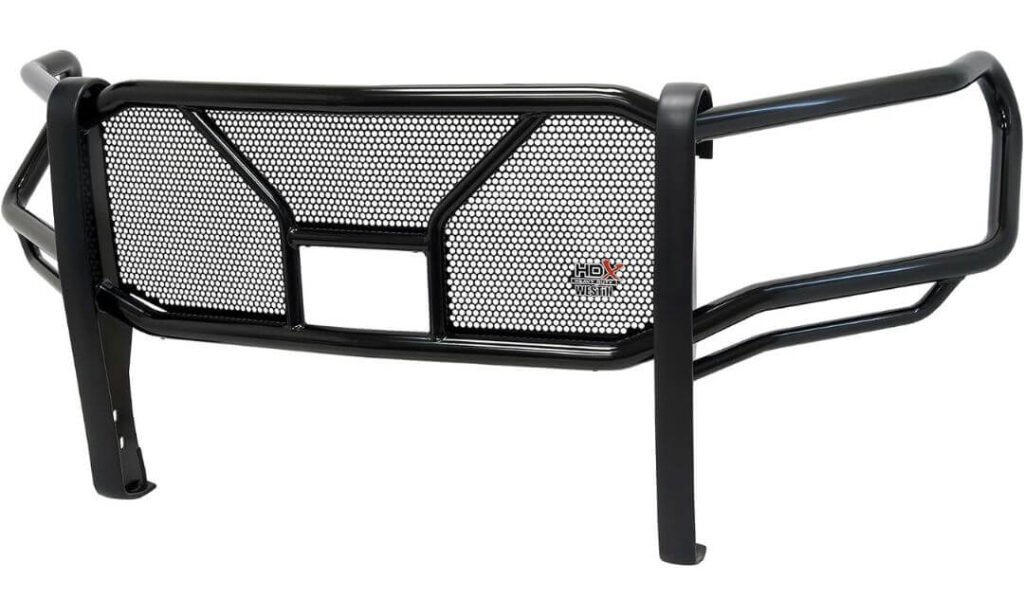
#1. Westin 57-4095 HDX 1-Piece Grille Guard
Heavy-Duty 2022–2026 Toyota Tundra Grille Guard with Full Front-End Coverage, Rugged HDX Construction, and a Solid 1-Piece Design
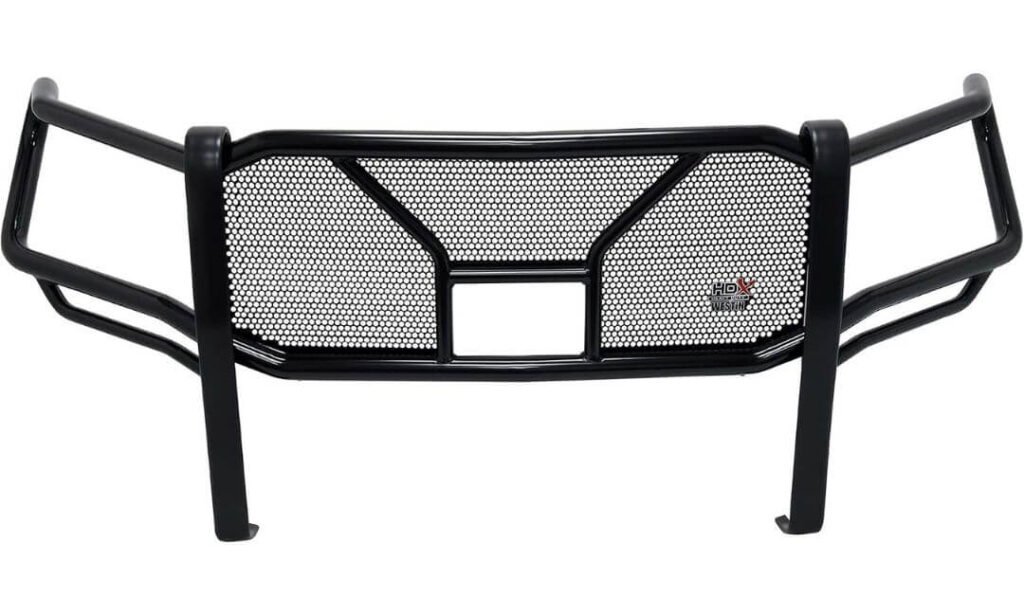
#2. Westin 57-24095 HDX 3-Piece Grille Guard
2022–2026 Toyota Tundra Front Grille Guard with 3-Piece HDX Construction, Broad Front-End Coverage, and a Rugged Factory-Ready Appearance
#3. TAC Modular Style Fine Textured Black Mesh Grille Guard
2022–2026 Toyota Tundra Brush Guard with Modular Construction, Fine-Textured Black Mesh, and Aggressive Front-End Coverage
#4. TAC 3-Inch Bull Bar
2022–2026 Toyota Tundra Bull Bar with 3-Inch Tubular Construction, Textured Black Finish, and Added Lower Front-End Protection
#5. Black Horse Armour AB-TO22 Bull Bar
2022–2026 Toyota Tundra Front-End Protection with Matte-Black Bull Bar Styling, Tubular Construction, and a Clean Low-Profile Setup
Expert Tip
Before choosing a grille guard for a 2022–2026 Tundra, check the exact model-year fitment first, then look at the actual construction. A bigger-looking guard is not automatically a better guard. The important difference is whether the design gives useful coverage without creating unnecessary interference around the truck’s front-end components. For that reason, the Westin HDX guards lead this list, while the TAC and Black Horse Armour options are included for buyers who specifically prefer a bull-bar or modular setup. Since these are relatively newer listings with less long-term owner feedback, the safest approach is to judge them by documented fitment, design, construction, coverage, and intended use rather than inflated review claims.
How We Chose These Toyota Tundra Grille Guards
This list was not built by simply picking five products with the words “grille guard” in their titles. The 2022–2026 Tundra deserves a more careful comparison because third-generation fitment is different from older Tundra generations, and the front end has to be considered as a complete system rather than just a mounting surface.
1. Fitment came first.
Every product here is presented specifically for the 2022–2026 Toyota Tundra. That matters because a guard designed around an older Tundra generation should not be treated as interchangeable simply because the truck looks broadly similar.
2. Construction separates the recommendations.
The two Westin HDX models are placed above the bull bars because their 1-piece and 3-piece grille-guard designs provide a different level of front-end coverage. The TAC modular guard follows because it offers a broader, more distinctive guard layout, while the two tubular bull bars are better suited to buyers who want a simpler setup.
3. Coverage was considered alongside design.
A traditional grille guard and a 3-inch bull bar do not perform the same role. The Westin options are aimed at buyers wanting more substantial grille and front-end coverage. The TAC 3-inch and Black Horse Armour designs make more sense when a buyer prefers lower-profile tubular protection and a less substantial front-end appearance.
4. Finish and everyday usability still matter.
The HDX construction, textured black finishes, mesh design, modular layout, and tubular diameter were considered because these details affect both the appearance and the type of setup each Tundra owner is actually buying. A grille guard should look appropriate on the truck, but appearance alone was never enough to move a product higher.
5. New-product uncertainty was kept in the ranking.
This is important. Several of these products do not yet have the kind of extensive, long-term independent owner history that would justify making sweeping claims about years of real-world durability. Rather than filling that gap with marketing language, the recommendations stay grounded in the available product design and stated fitment. That makes the list more useful for someone spending real money on a front-end accessory.
6. The ranking reflects different buyer priorities.
The first two choices are for someone primarily shopping for a dedicated grille guard. The middle option is for someone who wants a more aggressive modular appearance, while the final two are for Tundra owners who prefer a bull bar rather than a full grille-guard setup. That distinction is deliberate, because the “right” product depends on how much front-end coverage is actually wanted.
In short, the goal was not to make every product sound equally impressive. They are not equivalent products, and treating them that way would make the buying guide less trustworthy. The order reflects what each design realistically offers a 2022–2026 Tundra owner, with the heavier-duty grille-guard formats ahead of the more limited bull-bar designs.
#1. Westin 57-4095 HDX 1-Piece Grille Guard
Quick Specs:
- Fitment: 2022–2026 Toyota Tundra
- Construction: Fully welded 1-piece steel design
- Main tubing: 2-inch heavy-duty tube with wraparound wings
- Front coverage: Full punch-plate grille with integrated headlight guards
- Finish: Black powder coat
- Weight: 113 lb
- Installation: Bolt-on; mounting kit and hardware included
- Size: 88.98 × 35.24 × 30.51 inches
- Warranty: 1-year limited manufacturer warranty
A grille guard this substantial changes the buying decision pretty quickly: this is not just a tubular accessory added for appearance. The 1-piece welded steel construction, 2-inch tubing, wraparound wings, and punch-plate grille give the front of the Tundra a much more complete guard setup. The integrated headlight protection is another thoughtful detail because it keeps the guard visually cohesive instead of adding separate pieces around the lights.
The wraparound wings are particularly important for anyone who wants coverage extending beyond the center grille. The extra-wide rubber push-pad strips on the uprights also give the contact points a little more consideration than a bare metal-to-metal setup. Finished in black powder coat, the overall look stays purposeful rather than overly decorative.
There is also a practical reason this sits at the top of the list: the package includes the mounting kit and hardware, and the stated fitment is specifically for the current Tundra generation. At 113 pounds, though, this is a serious piece of equipment. Having another person help during installation is the sensible approach, especially when getting the guard aligned cleanly matters as much as getting the bolts started.
(A substantial steel guard for owners who want coverage first and a factory-like, properly integrated appearance second.)
What We Like
- Full-width approach: The wraparound wings give it considerably more presence than a small center bull bar.
- Integrated headlight guards: Built into the welded structure, so there are fewer separate pieces to deal with.
- Punch-plate grille: Adds a protective center section while keeping the design distinctly HDX.
- Rubber push pads: A small but useful touch on the uprights where contact can otherwise become an annoyance.
- Complete installation package: Mounting hardware and kit are included rather than leaving the buyer to piece together the setup.
What We Don’t
- The 113-pound weight means installation is much easier with a second set of hands, particularly during final positioning and alignment.
Tundra Fitment That Matters
The important part here is the stated 2022–2026 Toyota Tundra fitment. This is designed around the current-generation truck rather than being presented as a universal guard that happens to fit multiple generations. That distinction is worth paying attention to when shopping for a front-end accessory.
Before ordering, it is still smart to check the exact trim and factory equipment against the seller’s latest fitment information. Tundras equipped with forward-facing cameras, parking sensors, or other driver-assistance equipment can have different clearance requirements, so compatibility should be confirmed rather than assumed from the model year alone.
The Insider Pro-Tip
With a guard weighing 113 pounds, the installation is one job where rushing usually creates more trouble than it saves. Get the mounting points started loosely, support the guard properly, and spend time getting the wing and grille alignment even on both sides before final tightening. That small bit of patience is what makes a heavy-duty guard look professionally fitted instead of simply bolted onto the truck.
One more thing worth knowing: the 1-piece welded design is the reason this guard feels so substantial, but it also means there is no modular separation when handling the unit. Have the space, tools, and an extra pair of hands ready before starting. Once it is positioned correctly, the result is a much more complete front-end setup than a basic bull bar can provide.
#2. Westin 57-24095 HDX 3-Piece Grille Guard
Quick Specs:
- Fitment: 2022–2026 Toyota Tundra
- Construction: 3-piece steel design with bolt-on headlight guards
- Main tubing: 2-inch steel wraparound wings
- Support tubing: 1¼-inch tube support wings on applicable setups
- Front coverage: Full punch-plate grille
- Mounting: Vehicle-specific frame-mount system
- Finish: Black powder coat
- Weight: 102 lb
- Installation: Bolt-on; mounting kit and hardware included
- Optional lighting: Light clamps available separately
- Warranty: 3-year limited manufacturer warranty
The biggest difference here is easy to miss if the product is judged from a single photo: the 3-piece construction gives this HDX guard a more modular installation approach without turning it into a lightweight accessory. The center section, wraparound wings, and bolt-on headlight guards come together as a substantial steel setup, while the 2-inch tubing and full punch-plate grille give it the kind of coverage expected from a dedicated grille guard.
That modular design can be genuinely useful when it comes time to handle the guard. A 102-pound assembly is still heavy, but working with separate sections is more manageable than wrestling one enormous welded piece into position. The included mounting kit and hardware also keep the installation focused on the vehicle-specific setup rather than making the buyer hunt for basic mounting pieces.
The details are what make this one worth considering alongside the 1-piece HDX above. The 1¼-inch support tubing, rubber push-pad strips, black powder-coat finish, and optional light clamps give owners some room to tailor the setup. The optional clamps are sold separately, so lighting should be treated as an add-on rather than something included in the box.
(A strong choice for a Tundra owner who wants HDX-level coverage but prefers the practicality of a three-section design.)
What We Like
- 3-piece construction: Easier to handle during installation than a single large welded assembly.
- Full punch-plate center: Gives the grille area substantial coverage without relying solely on tubing.
- 2-inch wraparound wings: Extends protection beyond the center section and gives the guard its characteristic HDX stance.
- Frame-mounted design: The vehicle-specific mounting approach is more reassuring than a generic universal bracket arrangement.
- 3-year limited warranty: A useful advantage for buyers who plan to keep the truck and accessory for the long haul.
What We Don’t
- Optional light clamps cost extra, so anyone planning to mount auxiliary lights needs to budget for that separately.
Tundra-Specific Fitment
The stated fitment covers the 2022–2026 Toyota Tundra, making this another current-generation-specific option rather than an older Tundra guard being carried over by name. That is particularly important with grille guards because the mounting and front-end geometry need to match the truck underneath the styling.
The sensible final check is your exact trim and factory equipment. If the truck has front parking sensors, a forward-facing camera, or adaptive-cruise hardware, clearance and sensor compatibility deserve a quick verification before ordering. A vehicle-specific listing is a good starting point, but factory equipment can still vary between configurations.
Built for the Buyer Who Wants Options
The appeal here is not simply that it has three pieces. It is that the modular layout, 2-inch wraparound wings, punch plate, and bolt-on headlight guards give the owner a substantial guard while making the physical installation less awkward than handling one giant welded unit. At 102 pounds, help is still worthwhile, but the separate-section approach makes the job feel much more realistic.
For anyone comparing this directly with the 1-piece HDX, the decision is fairly straightforward: the two share the same heavy-duty character, but this version makes more sense when modular handling and replaceable/bolt-on sections matter. That is a meaningful difference, not just a different product number.
#3. TAC Predator Bull Bar — Fine Textured Black Mesh
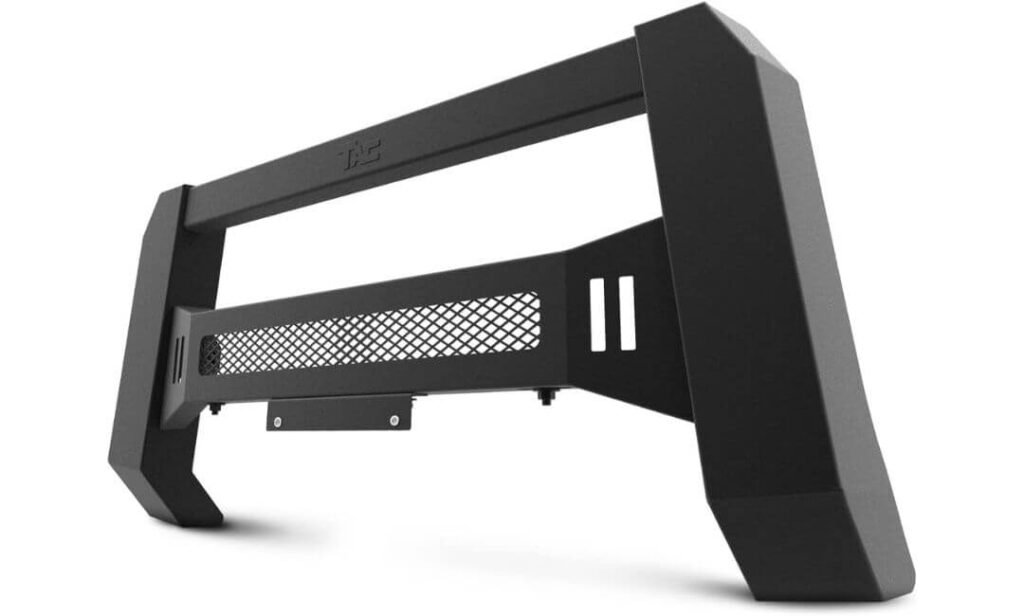
Quick Specs:
- Fitment: 2022–2026 Toyota Tundra
- Construction: Heavy-duty all-steel, 5-piece modular design
- Installation: Bolt-on; cutting may be required
- Front section: Fine-textured black mesh design
- Finish: Dual-stage fine-textured black coating
- Lighting: Provision for an optional 20-inch LED light
- License plate: Bracket included
- Weight: 53.8 lb
- Position: Front
Some Tundra owners want more than a simple round-tube bar but do not necessarily want a 100-plus-pound full grille guard. This TAC takes that middle ground with a 53.8-pound, five-piece steel construction and a mesh-front design that gives the truck a considerably more substantial appearance without the sheer bulk of the Westin HDX options.
The modular five-piece layout is one of its more useful characteristics. It arrives as separate sections rather than one large assembly, while the included mounting hardware and instructions make it approachable for a DIY installation. There is an important qualifier, though: cutting may be required, so this should not be approached as a guaranteed no-modification install.
Visually, the fine-textured mesh is what separates it from the tubular choices lower on this list. The design also leaves room for an optional 20-inch LED light, while the included license-plate bracket keeps the front setup practical. The dual-stage textured finish adds another layer of protection against everyday exposure while keeping the appearance deliberately rugged.
(A lighter modular alternative for Tundra owners who want mesh styling and steel construction without stepping up to a full-size HDX guard.)
What We Like
- 53.8-pound build: Substantially easier to handle than the two heavier Westin guards.
- Five-piece construction: Makes the physical assembly more manageable and gives the setup its modular character.
- Mesh-front design: Creates a different visual profile from conventional tubular bull bars.
- 20-inch LED provision: Useful if auxiliary lighting is part of the intended setup.
- Dual-stage textured finish: Adds a practical layer of protection while keeping the finish understated.
What We Don’t
- Cutting may be required, so installation should not be treated as a guaranteed bolt-on-without-modification job.
Tundra Compatibility Check
The stated application is for the 2022–2026 Toyota Tundra, but there is one detail that deserves more attention than the year range: TAC specifically warns that the bar may interfere with front bumper-mounted sensors. That means sensor-equipped trucks should not be treated the same as a basic configuration without those systems.
Before placing the order, check the exact Tundra trim and front-end equipment. If the truck relies on front parking sensors or other bumper-mounted sensing hardware, confirm compatibility with TAC first. A product fitting the physical bumper does not automatically mean every factory sensor function will remain unaffected.
A Practical Middle Ground
At 53.8 pounds, this sits in an interesting spot between a small tubular bull bar and a much heavier full grille guard. The steel construction and mesh section give it more visual substance than a basic 3-inch tube, while the modular architecture keeps handling more manageable during assembly.
The important takeaway is to buy this for what it actually is: a modular steel mesh bull-bar-style setup, not a replacement for the broader coverage of the Westin HDX guards. For the right Tundra configuration, that distinction makes it a genuinely interesting alternative; for a truck with sensitive front bumper-mounted equipment, fitment verification should come before the purchase.
The Insider Pro-Tip
The smartest move with this one is to confirm the sensor situation before ordering, not after installation. TAC itself flags possible interference, so there is no reason to gamble on an expensive accessory and discover a compatibility problem once the truck is apart.
If the truck clears that check, the 5-piece construction becomes a genuine advantage during installation. Lay out the sections first, identify the mounting hardware, and have the cutting requirement settled before beginning. That turns what could be an unnecessarily frustrating install into a much more controlled job.
#4. TAC 3-Inch Bull Bar
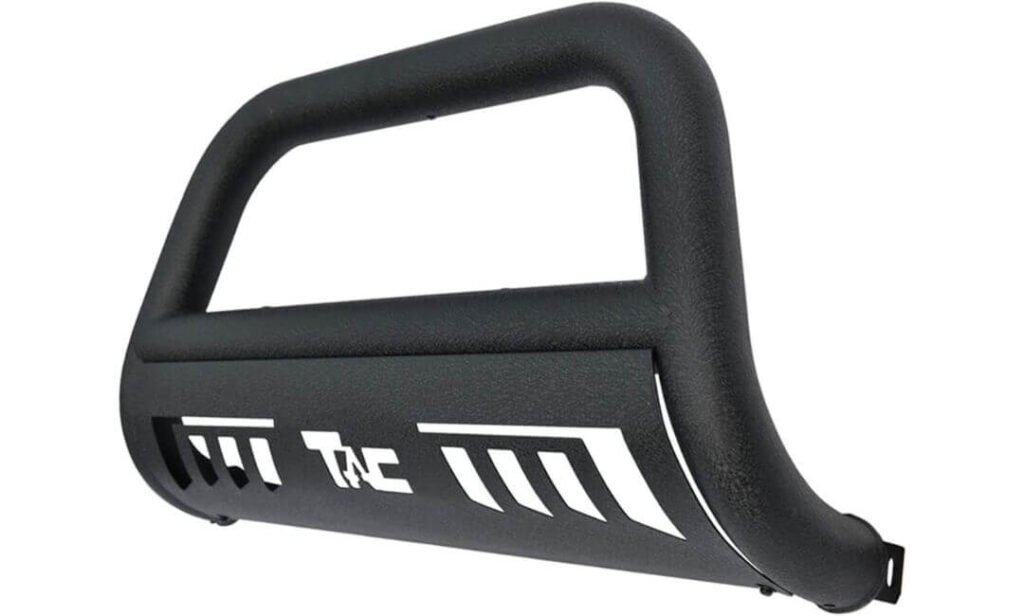
Quick Specs:
- Fitment: 2022–2026 Toyota Tundra
- Material: Alloy steel
- Main tubing: 3-inch heavy-duty tube
- Finish: E-coated with heavy-texture black powder coating
- Installation: Direct bolt-on
- Mounting: Vehicle-specific fit with hardware included
- Position: Front
- Color: Texture black
Not every Tundra owner wants a large grille guard covering most of the front end. This 3-inch tubular design takes the opposite approach: keep the profile relatively straightforward, add a solid steel bar across the lower front, and let the truck’s original styling remain visible. For someone shopping specifically for a bull bar rather than maximum grille coverage, that can be the more sensible setup.
The construction is more substantial than the product’s simple appearance might suggest. The bar and brackets use heavy-duty mild steel, while the combination of E-coating and heavy-texture black powder coating is designed to help with rust and surface wear. That layered finish is a worthwhile detail for an accessory that lives directly in the weather and road environment.
Installation is another strong point. It is designed as a direct bolt-on, with the mounting hardware and instructions supplied. Professional installation is recommended, but the important distinction is that the basic mounting approach does not depend on fabricating a custom bracket system. The result is a clean, purposeful addition for an owner who wants protection without moving into the much larger footprint of a full grille guard.
(A straightforward choice when a Tundra needs tubular front protection without the size and visual weight of a full grille guard.)
What We Like
- 3-inch tubing: Gives the bar a substantial presence without turning the front end into a full guard assembly.
- Alloy-steel construction: A solid material choice for a front-mounted accessory.
- Two-stage finish: E-coating underneath the heavy-texture powder coat adds sensible corrosion protection.
- Direct bolt-on design: Keeps installation considerably more straightforward than a fabricated setup.
- Vehicle-specific fit: Built around the listed Tundra application rather than being sold as a universal bar.
What We Don’t
- Sensor compatibility needs checking, because TAC specifically warns that the bar may interfere with front-mounted sensors on some Tundra configurations.
Tundra Fitment Before Installation
The listed application is 2022–2026 Toyota Tundra, with a vehicle-specific fit and direct bolt-on mounting. That makes it a much cleaner proposition than trying to adapt a generic bull bar to the truck.
The one check that should happen before purchase is the truck’s front sensor configuration. TAC explicitly states that interference may occur, so owners with front parking sensors or other bumper-mounted equipment should confirm their exact setup with the manufacturer before ordering. This is one of those cases where a five-minute fitment check is far more valuable than discovering a clearance issue after installation.
What the Design Gets Right
The appeal here is restraint. The 3-inch tube, textured black finish, and compact bull-bar format give the Tundra a tougher front-end presence without competing with every other detail on the truck. It is also considerably easier to conceptualize as a daily-driver accessory than a 100-pound-plus grille guard.
That makes it a better match for buyers whose priority is tubular front protection and appearance, rather than full grille and headlight coverage. The supplied hardware and direct bolt-on design reinforce that purpose: this is meant to be a relatively uncomplicated upgrade, not a complete redesign of the Tundra’s front end.
The Insider Pro-Tip
Do not confuse a 3-inch bull bar with a full grille guard simply because both appear under similar search terms. This setup makes sense when the goal is a cleaner, lower-profile protective bar. If the priority is extensive grille and headlight coverage, the larger Westin designs earlier in this list are the more logical direction.
And before spending anything, verify the front-mounted sensor arrangement on the specific truck. TAC already calls out possible interference, so treating that warning seriously is the easiest way to make sure the accessory works with the Tundra rather than against its factory equipment.
#5. Black Horse Armour AB-TO22 Bull Bar
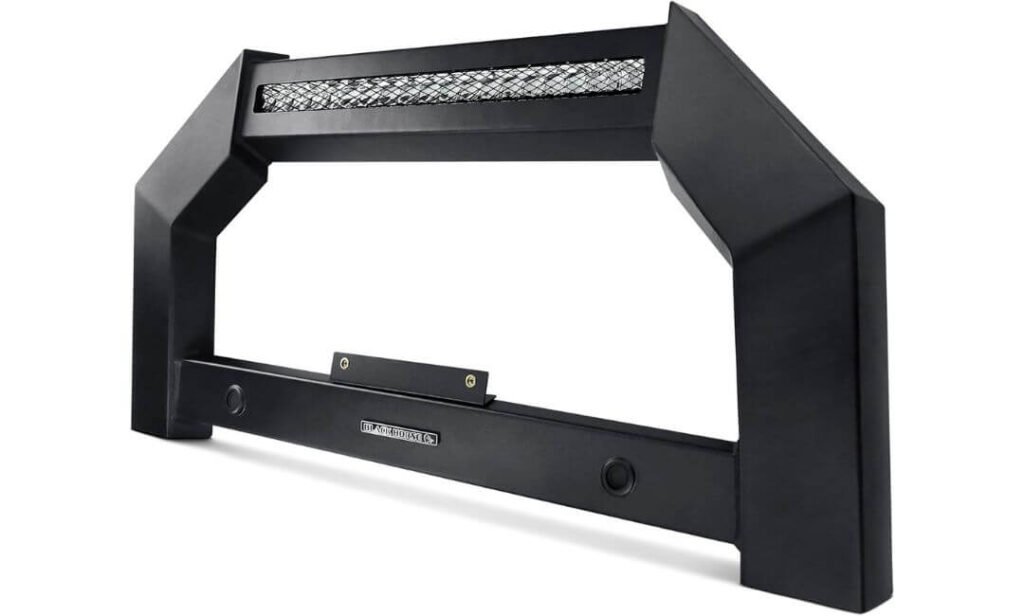
Quick Specs:
- Fitment: 2022–2026 Toyota Tundra
- Material: Cold-rolled mild steel
- Construction: One-piece front bar
- Lighting: Integrated 20-inch LED light bar
- Finish: Matte-black hi-impact powder coat
- Mounting: Bolt-on frame mount; Grade 5 mounting hardware included
- Sensor provision: Pre-drilled and capped holes for sensor relocation
- Weight: 41 lb
- Dimensions: 44 × 24 × 12 inches
- Warranty: 3-year manufacturer warranty
- Skid plate: Not included
The most noticeable thing about this setup is that the 20-inch LED light bar is built directly into the one-piece front bar. That gives the Tundra a very different look from the separate tubular guards earlier in the list, while also avoiding the need to purchase a separate light and mounting clamps just to achieve the same basic setup.
The cold-rolled mild steel construction keeps the bar purposeful without making it unnecessarily heavy. At around 41 pounds, it is substantially easier to handle than the two Westin HDX guards, and the matte-black hi-impact powder coat gives the piece a clean, rugged finish suited to both daily driving and occasional off-road use.
There is also some thought given to the modern Tundra’s factory equipment. The bar includes pre-drilled and capped sensor holes, intended to allow bumper sensors to be relocated where necessary. That does not mean every sensor-equipped Tundra will automatically be compatible, but it is a more considered approach than simply putting a solid accessory directly across the front sensor area.
(A compact all-in-one option for owners who want a steel bull bar and integrated auxiliary lighting in one package.)
What We Like
- Integrated 20-inch LED: The lighting is built into the front bar rather than requiring a separate mounting solution.
- 41-pound weight: Much easier to handle during installation than a full-size grille guard.
- Sensor-relocation provision: Pre-drilled holes give owners a practical way to work around certain bumper sensor layouts.
- One-piece construction: Keeps the finished installation visually clean and uncluttered.
- 3-year warranty: Adds useful manufacturer support for a relatively newer accessory.
What We Don’t
- No skid plate is included, so buyers looking for dedicated underbody protection will need a separate solution.
Tundra Fitment Worth Checking
The listed application covers the 2022–2026 Toyota Tundra, with a vehicle-specific bolt-on mounting arrangement. The manufacturer information also indicates that sensor relocation can be accommodated through the pre-drilled holes, which is a useful consideration for a truck equipped with bumper-mounted sensors.
Still, sensor compatibility should be confirmed for the exact truck before purchase. The presence of relocation holes is helpful, but radar or other driver-assistance equipment can have specific positioning requirements. Fitment should therefore be checked against the actual Tundra configuration rather than relying on the model-year range alone.
A Different Kind of Front-End Upgrade
This one is less about maximum coverage and more about getting several useful features into a relatively compact package. The steel front bar, integrated LED, matte finish, and sensor-relocation provisions make it attractive to someone who wants a rugged appearance without moving up to the size and weight of a traditional grille guard.
The absence of a skid plate is worth understanding rather than treating it as a deal-breaker. This product is primarily a front-bar and lighting solution; it should not be purchased with the expectation that it replaces dedicated underbody protection.
The Insider Pro-Tip
The integrated light is the reason to look closely at this one, but the sensor layout should come before the lighting decision. Confirm where the truck’s factory equipment sits and whether relocation is acceptable for that configuration before ordering. That simple check can save considerably more hassle than trying to solve compatibility after the bar is already on the vehicle.
At 41 pounds, this is also one of the easier products here to physically manage. If the goal is a cleaner bull-bar setup with built-in lighting, rather than a full grille guard surrounding the front end, its compact design makes considerably more sense than choosing a much heavier guard simply because it looks more imposing.
Best Toyota Tundra Grille Guards (2022–2026): Compare Construction, Coverage & Fitment
Toyota Tundra Grille Guard Buying Guide: What Actually Matters Before You Order
A grille guard is one of those Tundra upgrades where the product photo can tell only half the story. The other half is fitment, coverage, mounting, factory equipment, and how much weight you are comfortable adding to the front of the truck. The five options above are not interchangeable, so the right choice depends on what the truck is expected to do.
Start With Exact Tundra Fitment
For this guide, the relevant application is the 2022–2026 Toyota Tundra, which uses the third-generation body and a redesigned front end compared with earlier Tundras. Do not assume a grille guard listed for a 2014–2021 Tundra will transfer simply because the basic truck shape looks familiar.
Check the exact model year, cab configuration, trim, bumper setup, and factory-installed equipment before ordering. A vehicle-specific mounting system is preferable to a generic universal bar because the brackets are designed around the truck’s actual mounting locations.
Steel, Finish, and Construction
Most of the guards in this lineup use steel construction, but the way that steel is used matters more than the word itself. A fully welded 1-piece guard, a 3-piece HDX design, and a modular bull bar can all be made from steel while behaving very differently once installed.
For the finish, a good powder-coated surface is useful for everyday exposure, but it should not be treated as magic protection against every scratch or corrosion issue. E-coating beneath powder coat, as used on one of the TAC options, adds another protective layer. If the truck sees regular rain, mud, road salt, or off-road debris, finish quality deserves more attention than it usually gets in product listings.
Match Protection to the Job
This is probably the biggest distinction in the entire comparison.
A full grille guard such as the Westin HDX options extends protection around the grille and, depending on the design, toward the headlights and outer front corners. A bull bar is more compact and concentrates its structure around the lower or central front area.
That does not make a bull bar a bad choice. It simply means the buyer should not expect a 3-inch tubular bar to provide the same coverage as a full-width grille guard. For a daily-driven Tundra that mainly needs a tougher front-end appearance and some additional protection, the smaller format may be exactly what makes sense. For more extensive coverage, the larger guards deserve the attention.
1-Piece, 3-Piece, or Modular?
The construction format changes more than appearance.
A 1-piece welded design gives the finished guard a very solid, integrated feel. The trade-off is handling: a large welded assembly can be awkward to position during installation, especially when it weighs more than 100 pounds.
A 3-piece guard divides the work into more manageable sections while still providing substantial coverage. That is one reason the Westin 3-piece design is a meaningful alternative to its 1-piece counterpart.
A modular bull-bar design takes the idea further, with multiple sections that are assembled during installation. This can make handling easier, but always check whether the manufacturer states that cutting or modification may be required.
Do Not Ignore Sensors and Factory Equipment
Modern Tundras can have front parking sensors, cameras, radar-based driver-assistance equipment, and other factory components around the front end. A grille guard can physically fit the bumper and still create a compatibility issue with one of those systems.
That is why the TAC products in this comparison deserve a specific fitment check. Their listings explicitly warn about possible front-mounted sensor interference. The Black Horse Armour design goes a step further with provisions intended for sensor relocation, but that still does not mean every Tundra configuration should be assumed compatible.
The safest approach is simple: identify the equipment on the actual truck, compare it with the guard’s installation instructions and fitment notes, and confirm with the manufacturer when the listing leaves any doubt.
Think About Cooling, Visibility, and Clearance
A guard should protect the front of the truck without unnecessarily compromising the things that already need airflow or visibility. Designs with punch plates or mesh sections can change the amount of open space at the front, while a tubular bull bar generally leaves more of the original grille area exposed.
Clearance matters even more if the Tundra regularly leaves pavement. Consider the truck’s approach angle, the position of the lower bar, parking visibility, and any accessories already mounted to the front. A guard that works beautifully for highway driving may not be the best choice for a truck regularly climbing uneven trails.
Installation Is More Than “Bolt-On”
“Bolt-on” does not necessarily mean “ten-minute driveway job.”
A large grille guard needs to be supported, aligned, and tightened correctly, and having another person available can make the installation substantially easier. The heavier Westin guards in this guide are good examples: their weight alone makes a second set of hands sensible.
Depending on the specific product and Tundra configuration, installation may also involve removing or repositioning portions of the factory front-end assembly. One of the TAC designs specifically notes that cutting may be required, so the manufacturer’s instructions should be read before beginning rather than after the bumper is already apart.
Weight and Daily-Driving Practicality
Weight is easy to overlook when shopping online. The difference between a 41-pound bull bar and a 113-pound full grille guard is noticeable when handling the product, and it can also matter to someone who is trying to keep the front of a daily driver relatively light.
For an off-road-oriented Tundra, additional front-end weight may be an acceptable trade for greater coverage. For a truck that spends most of its life commuting, towing, or carrying passengers, a lighter bull-bar design may make more practical sense if extensive grille protection is not actually needed.
Consider Winch and Lighting Plans Early
Not every grille guard is a winch bumper, and a grille guard should not be purchased assuming that a winch can simply be added later. Mounting structure, available space, and manufacturer-specific compatibility all matter.
Lighting is similar. The TAC modular design provides provision for an optional 20-inch LED light, while the Black Horse Armour option integrates a 20-inch LED light bar directly into the front assembly. If auxiliary lighting is part of the plan, choosing a design that already accommodates it can produce a cleaner installation than improvising brackets afterward.
Budget by Construction, Not Just Price
There is no single “correct” amount to spend on a Tundra grille guard. The better question is what level of construction and coverage the budget is buying.
At the more substantial end, full steel grille guards with wraparound wings, punch plates, and headlight protection generally make sense for buyers prioritizing coverage and heavy-duty construction. More compact bull bars can be attractive when the goal is a lower-profile setup, simpler styling, or integrated lighting.
The five products here deliberately cover different approaches rather than pretending that the most expensive-looking design is automatically right. Spend for the protection and features actually needed, not simply for the biggest piece of metal available.
Toyota Tundra Grille Guard Installation Guide: A Careful Fitment-First Approach
Installing a grille guard is not difficult because there are complicated parts everywhere; it is difficult because weight, alignment, mounting points, and factory equipment all have to work together. A clean installation should leave the guard sitting evenly, with proper clearance around the bumper, grille, sensors, lights, and other front-end components.
The exact hardware and mounting sequence vary by design, so the manufacturer’s instructions should always take priority over a generic guide. The process below is a practical framework for approaching the installation without rushing the parts that actually determine the final fit.
Before Starting: Prepare the Truck and Work Area
Park on a level, solid surface, engage the parking brake, and give yourself enough room to work around both sides of the front bumper. If the vehicle is dirty around the mounting area, clean it first so the brackets and contact surfaces can be inspected properly.
Have the basic equipment ready:
- Complete socket and wrench set appropriate for the supplied hardware
- Torque wrench
- Screwdrivers and trim-removal tools where required
- Protective gloves and eye protection
- Floor jack or suitable support equipment if the instructions require lifting or supporting components
- A second person to help support and position a heavy guard
Before touching the bumper, compare the supplied hardware with the installation instructions. Do not assume every bolt belongs where it appears to fit. Vehicle-specific mounting kits can use different bolt lengths, spacers, brackets, and washers in different locations.
Disconnecting the battery is not automatically required for every installation. If the job involves disconnecting electrical connectors, working around powered lighting, or disturbing components connected to the vehicle’s electrical system, follow the manufacturer’s instructions for whether the battery should be disconnected.
Inspect Factory Equipment Before Removing Anything
Take a few minutes to identify what is already mounted around the front of the truck. Look for parking sensors, cameras, radar equipment, wiring, fog lights, active aerodynamic components, and factory brackets.
This is especially important with modern Tundras because a guard can physically occupy the correct bumper area while still creating clearance or sensing problems. Photographing the original routing of wires and the position of brackets before disassembly is also a simple trick that can save time during reassembly.
1-Piece Installation Flow
A large 1-piece guard should be treated as a two-person installation, particularly when the assembly is around the 100-pound range.
The general sequence is:
- Remove only the factory components identified in the installation instructions.
- Locate and expose the specified mounting points.
- Position the mounting brackets without fully tightening them.
- With assistance, bring the guard into position and attach it to the brackets.
- Start all fasteners by hand before tightening anything completely.
- Step back and check the guard from directly in front of the truck.
- Adjust the position until the wings, grille area, headlights, and bumper clearances look even.
- Tighten the mounting hardware progressively rather than locking down one side first.
- Finish with the manufacturer’s specified torque values.
The key is leaving adjustment available until the guard is properly aligned. Fully tightening one bracket while the opposite side is still loose can make an otherwise straightforward installation unnecessarily frustrating.
3-Piece Installation Flow
A 3-piece design changes the handling part of the job because the individual sections are easier to manage.
Start by identifying the center section, side sections, headlight guards, support pieces, and mounting brackets. Assemble the sections according to the supplied instructions, but avoid fully tightening the connections until the complete structure is sitting correctly on the truck.
Once mounted, check:
- Equal spacing on both sides
- Even relationship between the guard and grille
- Headlight clearance
- Bumper clearance
- Proper alignment of the wraparound sections
- Clearance around factory sensors and wiring
The advantage of the multi-piece arrangement is not simply easier shipping. It also gives more manageable assembly and positioning during installation, which can be particularly helpful when working without professional shop equipment.
Modular Assembly and Alignment Tips
For a modular setup, lay every section and bracket out on the floor before putting anything on the truck. This makes it much easier to understand the assembly order and prevents a common mistake: installing one section tightly and then discovering another bracket needs to be repositioned.
Keep the hardware organized by location. If several bolts look similar but have different lengths, separate them rather than relying on memory.
When the complete assembly is loosely fitted, look at it from three positions: straight ahead, from the driver’s side, and from the passenger side. A guard can appear centered from one angle while sitting slightly higher or farther forward on the other side.
If the instructions state that cutting or modification may be required, do not begin cutting simply because a section appears inconvenient. Confirm the exact measurement and purpose first, particularly around factory wiring, sensors, and bumper structure.
Common Installation Problems
The most common issue is usually not a defective part; it is alignment during assembly.
If one side appears higher than the other, loosen the relevant mounting connections and let the structure settle before attempting to force it into position. If a bolt refuses to line up, check bracket orientation, spacer placement, and whether another fastener has already been tightened too much.
If the bumper or grille appears unusually close to the guard, stop and investigate rather than assuming the gap will correct itself when everything is tightened. Check whether the correct bracket and spacer combination has been used.
Another important point is wiring. If a sensor or lighting harness has been moved during installation, make sure it is secured away from moving, hot, or sharply edged components before the final tightening.
Torque, Re-Checks, and Final Clearance
Do not guess torque values. Use the manufacturer’s specified torque specifications for the supplied hardware and vehicle mounting points. If the instructions provide different torque values for different fastener sizes or locations, follow those values exactly.
After the final tightening, inspect the installation again rather than immediately considering the job finished. Check every visible fastener, bracket, spacer, and support connection.
Then turn the steering wheel fully in both directions and inspect the front area for any unexpected clearance issue. Check the headlights, grille, bumper, sensors, camera view, license plate position, and any auxiliary lighting.
If electrical equipment was disconnected, verify that it operates normally. If the vehicle displays a warning after installation, do not simply clear the warning and continue driving. Find out whether the guard has affected a sensor, connector, or wiring position.
Sensor and Lighting Clearance Deserves a Final Check
This is one of the easiest steps to skip and one of the least sensible to skip.
Stand in front of the truck and inspect the relationship between the guard and every visible factory sensor or camera. If the design includes provisions for sensor relocation, confirm that the equipment is actually positioned according to the manufacturer’s requirements.
For auxiliary lights, verify that the light beam is not being obstructed by the guard itself and that the wiring is properly secured. An integrated or optional light mount should still be checked after final tightening because small changes in alignment can alter clearance and beam position.
Safety Before Taking It Off-Road
A grille guard should never become an excuse to drive beyond the truck’s capabilities. Before heading onto a trail, re-check the mounting hardware and look underneath for anything that may have shifted during installation.
After the first few drives, especially after rough roads or off-road use, inspect the mounting points again. Look for loose hardware, unusual movement, contact marks, damaged wiring, or changes in alignment.
The most useful rule is simple: if something looks different after installation, investigate it before the next trip. A properly fitted guard should remain secure and clear of the truck’s important systems; it should not require constant correction to stay in position.
Front-End Protection Nuances: What a Grille Guard Actually Changes on a Tundra
A grille guard is not simply a piece of steel sitting in front of the grille. Its position, coverage, tubing, mounting points, and any mesh or punch plate can change how the front of the truck handles minor impacts, debris, airflow, and accessory placement. On a modern Tundra, the better question is not “How tough does it look?” but what does the guard protect, and what does it leave exposed?
Where a Grille Guard Adds Real Protection
The biggest advantage is creating another structural layer ahead of vulnerable front-end components. A properly mounted guard can take the first contact from brush, branches, light debris, and minor front-end encounters, helping keep the grille, bumper surfaces, and lighting areas from taking the direct hit.
Coverage varies considerably between the designs in this guide. A full grille guard with wraparound wings, headlight protection, and a punch plate covers substantially more area than a compact tubular bull bar. That difference matters if the Tundra regularly travels on rough trails or through areas where vegetation and loose debris are realistic concerns.
It is equally important not to overstate what any grille guard can do. These accessories are not a substitute for the truck’s crash structure, and a heavy-looking guard should never be treated as permission to deliberately absorb a major impact.
Radiator Protection Is About More Than Covering the Grille
The radiator sits behind the front grille, so a guard can provide an additional physical barrier between it and stones, branches, and other road debris. A punch plate or mesh section can make that barrier more substantial, but coverage should still leave appropriate openings for the cooling system to breathe.
That is where design becomes important. A solid-looking front section may appear more protective, but restricting airflow unnecessarily is not a worthwhile trade. The Tundra’s cooling system depends on air reaching the radiator and other heat exchangers, so the guard should be positioned as intended by the manufacturer rather than modified to close every open space.
What About the Intercooler?
This point needs some clarification because not every Tundra has an intercooler in the same way a turbocharged aftermarket setup might. The 2022–2026 Tundra lineup includes turbocharged and twin-turbo hybrid powertrains, with heat-exchange components and airflow requirements that vary by configuration.
For that reason, a grille guard should not be judged solely by whether it “covers the intercooler.” The more useful consideration is whether the guard’s mesh, punch plate, tubing, and mounting position preserve the airflow paths required by the particular truck.
If the Tundra has aftermarket cooling equipment, additional heat exchangers, or other front-mounted hardware, clearance should be checked independently. Factory fitment does not automatically guarantee compatibility with every aftermarket cooling modification.
Airflow: More Metal Does Not Automatically Mean More Protection
A common misconception is that the most enclosed front guard must provide the best protection. In practice, airflow and protection have to coexist.
Tubular designs naturally leave more open space around the grille, while mesh and punch-plate sections introduce more material into the airflow path. That does not automatically make either approach better or worse. What matters is how much of the original airflow area the design occupies and whether the manufacturer engineered the guard around the truck’s front-end layout.
This is one reason the products in this comparison are not treated as identical simply because they all protect the front. Their construction and coverage are genuinely different.
Keeping the Guard Compatible With Other Protection
A grille guard should be considered alongside anything already mounted to the front of the truck. That includes OEM bumper components, aftermarket skid plates, recovery equipment, lighting, winch-related hardware, and license-plate mounts.
Do not assume that two individually compatible accessories will automatically work together. Brackets can compete for the same mounting area, a skid plate can occupy space needed by a guard bracket, and an aftermarket bumper can completely change the mounting geometry.
Before combining accessories, compare their mounting instructions and physical clearance requirements. If both products rely on the same frame area, manufacturer confirmation is far better than discovering the conflict during installation.
Getting Tundra Grille Guard Alignment Right
Alignment is not just cosmetic. A guard that sits too close to the bumper, grille, headlights, sensors, or other factory equipment can create an unnecessary contact point.
A properly positioned Tundra grille guard should have consistent clearance across the front and remain centered relative to the truck. Wraparound sections should sit evenly from side to side, and any punch plate or mesh should follow the intended position rather than being forced against the grille.
This becomes particularly important after adding other front-end accessories. If something requires the guard to be pushed, bent, drilled, or repositioned to make everything fit, stop and verify compatibility first. A clean-looking installation is useful, but correct mounting geometry is the real priority.
The Practical Takeaway
The best grille guard is not necessarily the one with the most steel. For a Tundra that spends considerable time off-road, broader coverage and properly mounted wraparound protection can make more sense. For a daily-driven truck, a lighter tubular design may provide the desired front-end protection and styling without adding unnecessary bulk.
The important part is matching the guard to the truck’s actual equipment and intended use. Protection, airflow, sensor clearance, mounting compatibility, and accessory clearance all have to work together. That is the difference between buying a guard because it looks tough and choosing one that actually makes sense for the Tundra underneath it.
Toyota Tundra Grille Guard Maintenance and Longevity: Keeping the Finish and Mounts in Shape
A good grille guard does not become maintenance-free just because it is made from steel and powder coated. It sits directly in the path of water, road grime, mud, stones, salt, and trail debris, so how it is treated after installation has a real effect on how it looks and how long the finish stays intact.
Cleaning Without Damaging the Finish
Regular cleaning is the simplest thing that can make a noticeable difference. After driving through mud, standing water, or dusty trails, rinse the guard thoroughly with clean water before using a soft automotive wash mitt and mild car shampoo.
Pay particular attention to the underside of the tubing, mounting brackets, joints, mesh or punch plate, and areas where mud can remain trapped. Those spots are easy to ignore because they are not immediately visible, but retained moisture and dirt are exactly what you do not want sitting against a steel accessory.
Avoid attacking the powder coat with aggressive chemicals, abrasive pads, or unnecessary polishing compounds. If road salt is common where the truck is driven, more frequent rinsing is worthwhile because salt residue can work its way into scratches and exposed areas.
Rust Prevention Starts With the Finish
Powder coating provides a protective barrier, but it is not indestructible. A stone strike, trail branch, tool during installation, or repeated rubbing against another component can expose the metal underneath.
When washing the truck, look closely for chips, scratches, bubbling, or small areas where the coating has lifted. A tiny damaged spot is much easier to deal with when it is first noticed than after corrosion has spread underneath the surrounding coating.
The same principle applies to the mounting hardware. Inspect exposed fasteners and brackets for unusual corrosion, especially after winter driving, beach use, muddy trails, or repeated water exposure.
When Re-Coating Makes Sense
There is no universal calendar that says a grille guard needs to be recoated every two or three years. Condition should determine the timing, not the date on the calendar.
If the coating remains intact, cleaning and inspection may be all that is needed. If larger areas have become heavily scratched or corrosion has started appearing, remove the affected material properly and repair the finish rather than simply spraying over active rust.
For a professional refinish, the guard may need to be removed so the coating can be prepared correctly. A quick cosmetic spray over an unprepared surface can look fine initially but is unlikely to provide the same long-term result as proper surface preparation.
Different Finishes Need Slightly Different Attention
The products in this guide use variations of black powder-coated or textured finishes, while one design uses an e-coating layer beneath its textured powder coat. These finishes are designed for durability, but they still benefit from sensible care.
Textured finishes can hold onto dust and mud more readily than a very smooth surface, particularly around mesh and recessed areas. That makes thorough rinsing more important than aggressive scrubbing.
Do not assume that a textured finish can hide everything. Corrosion usually starts where the finish has been compromised, not where the surface simply looks dirty.
Inspect After Every Serious Off-Road Trip
For normal pavement driving, a periodic inspection is usually sufficient. After a demanding trail run, however, it is worth taking a few minutes to look over the guard before the next trip.
Check:
- Mounting bolts and brackets for movement or unusual marks
- Welded or joined sections for visible damage
- Tubing and mesh areas for fresh dents or coating chips
- Clearance around the bumper and grille to make sure nothing has shifted
- Sensor and camera areas for mud buildup or physical obstruction
- Lighting hardware and wiring if auxiliary lights are installed
- Underside surfaces where mud and moisture tend to remain hidden
A fresh scrape is not automatically a serious problem. The useful question is whether the impact has changed the guard’s position, damaged a mounting point, or exposed bare metal.
Give the Mounting Hardware Extra Attention
Heavy front-end accessories can experience considerable vibration over rough roads. That does not mean the hardware should constantly loosen, but it does make periodic inspection sensible.
After installation, follow the manufacturer’s recommended re-check procedure and torque specifications. If the guard has been through significant off-road use, inspect the mounting points again rather than assuming the original installation remains exactly as it was.
Never substitute a guessed torque value. Use the specification supplied for the particular mounting hardware and application.
A Simple Maintenance Routine That Actually Works
For a daily-driven Tundra, a practical routine is straightforward:
After muddy or salty driving: rinse the guard thoroughly, including the underside and brackets.
During normal vehicle washing: inspect the finish for chips, scratches, and trapped debris.
After serious off-road use: check mounting points, alignment, welds, clearance, wiring, and factory sensor areas.
When damage appears: clean and address exposed metal early instead of waiting for visible corrosion to spread.
Before a long trip: give the entire front assembly a quick inspection, particularly if the truck has recently seen rough terrain.
The goal is not to spend an afternoon detailing a grille guard every weekend. It is simply to catch small problems while they are still small. A few minutes of inspection after hard use can protect a considerably more expensive front-end accessory from becoming a much bigger maintenance job later.
FAQs About Toyota Tundra Grille Guards
Will a 2022–2026 Toyota Tundra grille guard interfere with factory parking sensors or driver-assistance equipment?
It can, depending on the specific guard and the equipment installed on the truck. This is one area where “vehicle-specific fit” should not be interpreted as “every factory sensor will work exactly as before.” Some designs in this guide explicitly warn about possible interference with front-mounted sensors.
Before ordering, check the actual Tundra configuration for:
- Front parking sensors
- Forward-facing cameras
- Radar or driver-assistance hardware
- Active front-end components
A guard can clear the physical bumper and still sit in an area that a sensor needs to see through. That is why confirming the exact setup with the manufacturer is more sensible than relying solely on an Amazon compatibility badge.
Does a grille guard affect the Toyota Tundra’s radiator cooling or airflow?
A properly designed guard should not be assumed to cause a cooling problem simply because it places additional material ahead of the grille. What matters is how much airflow area the particular design occupies and where its mesh, punch plate, or tubing sits relative to the factory grille and cooling openings.
The difference between the products here is worth noticing. A tubular bull bar leaves much of the grille open, while a design with a punch plate or mesh section introduces considerably more material across the front. Neither automatically makes the truck overheat, but heavily modified front ends deserve closer attention.
If the Tundra already has aftermarket cooling equipment, auxiliary heat exchangers, or other front-mounted modifications, the calculation changes. In that situation, verify clearance and airflow for the complete setup rather than judging the grille guard by itself.
Is a 3-inch bull bar actually enough protection for a Toyota Tundra used off-road?
That depends on what “protection” means for the way the truck is being used. A 3-inch bull bar can provide a substantial tubular barrier around the lower or central front area, but it does not offer the same coverage as a full grille guard with wraparound wings, headlight guards, and a punch plate.
For a Tundra that mainly sees pavement, gravel roads, and occasional trails, the smaller profile may be exactly what the owner wants. It keeps more of the original front-end styling visible and avoids the size and weight of a full guard.
For frequent trail use where branches and debris can reach the outer grille and headlight areas, broader coverage makes more sense. The important thing is not calling one design “stronger” in the abstract; it is matching the coverage to where the truck is most likely to take contact.
Can a Toyota Tundra grille guard be used with an aftermarket bumper, skid plate, winch, or auxiliary lights?
Sometimes, but compatibility has to be checked as a complete front-end combination. Two accessories can each be advertised as fitting the same Tundra while still competing for mounting space, frame attachment points, clearance, or wiring paths.
This becomes particularly important with:
- Aftermarket bumpers
- Skid plates
- Winch equipment
- Auxiliary LED lighting
- Sensor relocation kits
- Other frame-mounted accessories
The integrated or optional lighting provisions on some guards are easier to work with than improvising a mounting solution later. A winch, however, is a different matter: a grille guard should not automatically be considered a winch-compatible mounting system unless the manufacturer specifically supports that combination.
The safest approach is to compare mounting diagrams and hardware requirements for both accessories before buying either one. That is considerably cheaper than discovering that two “compatible” products occupy the same frame location.
Is a heavier grille guard always the better choice for a Toyota Tundra?
No, and this is one of the easiest buying assumptions to get wrong. The heavier designs in this comparison offer more substantial structures and broader coverage, but extra weight is still extra weight on the front of the truck.
A 113-pound full grille guard has a very different installation and ownership profile from a 41-pound bull bar. The heavier option may be worthwhile for someone who genuinely wants extensive front-end coverage, while a lighter setup can be more appropriate for a daily-driven Tundra where the owner mainly wants a tubular barrier and tougher appearance.
There is also the practical side: heavier guards generally deserve more attention during installation, alignment, and mounting inspection. So the right question is not “Which one weighs the most?” It is “How much structure and coverage does the truck actually need?” That is a much better way to spend the money.
Final Thoughts on Choosing the Right Toyota Tundra Grille Guard
A grille guard is easy to shop for when the decision is based only on appearance. The harder, and much smarter, part is deciding how much front-end coverage the Tundra actually needs. That is why the five choices in this guide are intentionally different: the heavy-duty Westin designs focus on broader coverage, the modular TAC option brings a different balance of coverage and weight, and the smaller bull bars make more sense for buyers who want a cleaner front profile without going all-in on a full guard.
For the strongest overall protection approach, the 1-piece HDX design remains the standout because its welded construction, wraparound wings, punch plate, and integrated headlight guards give it a genuinely substantial presence. The 3-piece version is a compelling alternative when modular handling matters. The TAC choices make more sense when the priority shifts toward a lighter, more distinctive setup, while the Black Horse Armour option adds an interesting all-in-one combination with integrated lighting.
The most important lesson, however, is not which product ranks first. It is fitment discipline. A 2022–2026 Tundra should be matched with the correct generation-specific mounting system, and factory sensors, cameras, lighting, cooling airflow, and other front-end equipment should be considered before the order is placed. Several products here specifically call for that extra verification, and that is information worth taking seriously rather than burying it beneath marketing claims.
There is also no reason to buy more guard than the truck’s actual use demands. A daily-driven Tundra may benefit more from a lighter tubular setup, while a truck that regularly sees rough trails can justify the added size, coverage, and weight of a full grille guard. The best purchase is the one whose construction and coverage match the truck’s real life, not simply the one that looks most aggressive in a product photo.
If the exact fitment checks out and the coverage matches the intended use, these options give a solid range of ways to toughen the Tundra’s front end without pretending that every grille guard does the same job. That distinction is what makes the buying decision much easier—and far less likely to turn into an expensive accessory that was never right for the truck in the first place.
Also Check: