5 Best Power Running Boards for Toyota Tundra in 2026: Dual-Motor Steps, Auto Deploy & LED Lighting
Choosing a power running board for the Toyota Tundra is mainly about getting the right combination of fitment, step coverage, and reliable deployment. The options in this guide are selected for the 2022–2026 Tundra, with the listed models designed around the CrewMax cab. That matters because the fourth-generation Tundra has a different body and mounting layout from the 2007–2021 models, so older-generation running boards should not be assumed to fit.
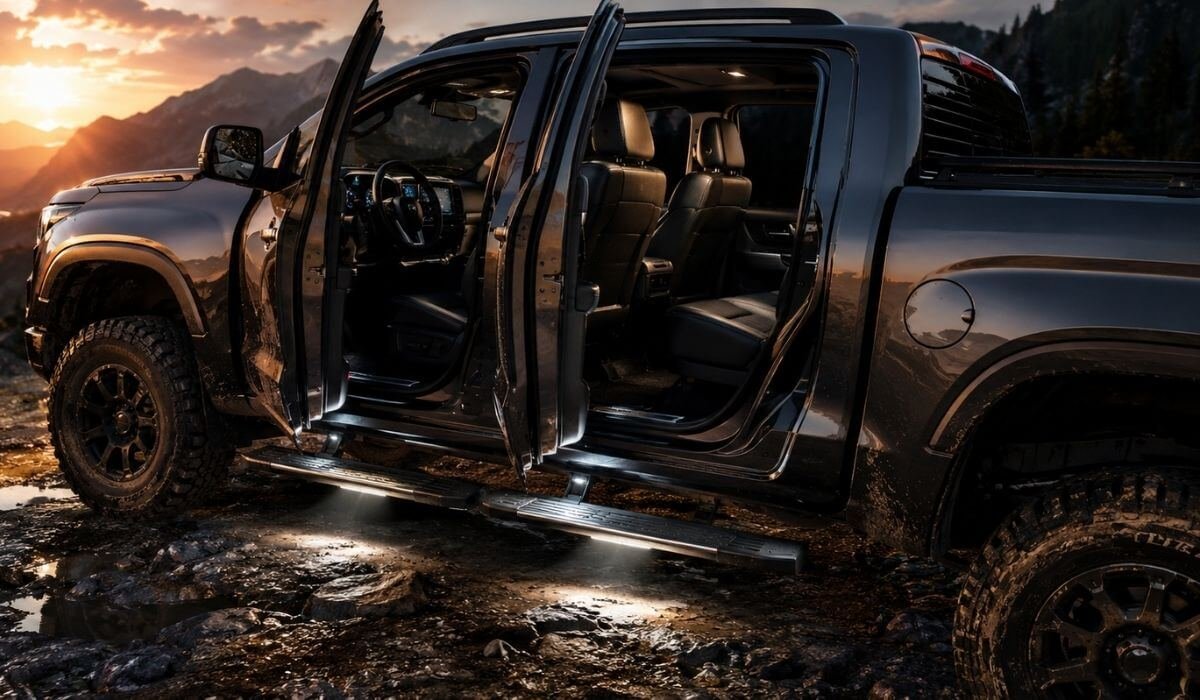
The five picks cover the features Tundra owners actually look for: electric automatic deployment, retractable steps, dual-motor operation, LED step lighting, and low-profile storage when the doors are closed. Some are built around a straightforward powered drop-step design, while others add features such as dual motors and integrated LEDs. Since several of these boards are relatively new and do not yet have years of real-world ownership data, I have kept the recommendations grounded in their stated fitment, design, construction, and available features rather than making claims about long-term durability that the evidence cannot support.
Best Power Running Boards for Toyota Tundra: Top 2026 Picks for Retractable Side Access
#1. Rough Country Power Running Boards for Toyota Tundra
Best Dual-Motor Electric Running Boards for 2022–2026 Toyota Tundra CrewMax with Automatic Retraction and LED Step Lights
#2. WOLFBOX Power Running Boards
Best Automatic Retractable Running Boards for 2022–2026 Toyota Tundra CrewMax Owners Wanting a Clean, Low-Profile Electric Step
#3. APS W-Series Power Side Steps
Best Electric Side Steps for 2022–2026 Toyota Tundra CrewMax with a Factory-Style Look and Convenient Automatic Deployment
#4. ManiGoon Power Electric Deployable Side Steps
Best Deployable Power Running Boards for 2022–2026 Toyota Tundra Owners Looking for Automatic Access and a More Affordable Upgrade
#5. Tuxtreme Power Running Boards
Best Retractable Electric Drop Steps for 2022–2026 Toyota Tundra CrewMax with Automatic Deployment and Easy Daily Cab Access
Expert Tip
Do not choose a powered running board simply because it has the most features on the box. On a Tundra, fitment comes first, then the step design and motor system. A board that deploys smoothly but sits too low, interferes with the rocker area, or does not match your exact cab configuration can quickly become an expensive mistake. For the 2022–2026 CrewMax, I would pay particular attention to the stated fitment, mounting design, deployment mechanism, and whether the lighting and electrical components are actually useful for your driving conditions. If two boards look similar on paper, I would take the one with the clearer fitment information and better-defined hardware rather than paying extra for features you may never use.
How We Chose These Power Running Boards
This list was not built by simply picking five running boards with the word “power” in their titles. Each product was looked at from the perspective of someone who actually has to install it, use it every day, and live with it underneath a full-size truck.
First, we checked the generation and cab fitment. All five selections are marketed for the 2022–2026 Toyota Tundra, with CrewMax fitment being especially important for the products listed here. The fourth-generation Tundra is substantially different from the 2007–2021 Tundra, so we did not mix older-generation applications into this list just to make the selection look larger.
Next came the deployment system. A powered board is only useful if the step moves where you expect it to when the door opens and retracts when it is no longer needed. That is why automatic deployment and retractable operation carry more weight here than cosmetic styling alone. The Rough Country model received the strongest overall position because its listed dual-motor setup gives it a more substantial mechanical specification than a basic single-drive design.
We also separated meaningful features from marketing language. Integrated LED step lighting can genuinely improve visibility when getting into the truck at night, while a retractable design keeps the step tucked closer to the body when the doors are closed. Those details matter more to everyday usability than simply calling a board “heavy duty” without explaining what the hardware actually does.
Price was considered, but it was not allowed to decide the ranking by itself. A cheaper powered step can be attractive, especially when upgrading a new truck, but saving money is not much of a win if the product has unclear fitment or lacks the features you actually need. That is why WOLFBOX, APS, ManiGoon, and Tuxtreme are included for different buyer priorities rather than being treated as interchangeable products.
Finally, there is one point worth being completely honest about: these are newer product applications, so long-term ownership history is naturally more limited than it is for established truck accessories. We have not turned that lack of history into fake durability claims or pretended that a small number of reviews proves years of reliability. The ranking instead reflects the published vehicle fitment, deployment design, motor configuration, lighting, intended use, and overall feature set. That gives you a more useful starting point: you know exactly why each board made the list, and you can still verify the final cab configuration and hardware details before ordering.
#1. Rough Country Power Running Boards for Toyota Tundra
Quick Specs:
- Vehicle fit: 2022–2026 Toyota Tundra CrewMax; supplied specs specifically list 2022–2025, while the product title states through 2026
- Cab compatibility: CrewMax
- Step width: 6 inches
- Drive system: Dual-motor electric deployment
- Step material: Aluminum
- Frame/material: Alloy steel and aluminum
- Surface: Textured anti-slip step area
- Load rating: 660 lbs per running board
- Finish: Powder-coated black
- Lighting: Integrated LED step lights
- Safety: SAFE-STOP obstruction detection
- Control: Magnetic door triggers with interior bypass switch
- Installation: No-drill mounting using existing mounting points
- Board dimensions: 40 × 10 × 10 inches
- Set weight: 33 lbs
- Warranty: 5 years
- Included: 2 running board
s, 4 LED lights, magnetic door triggers, brackets/actuators, and installation hardware
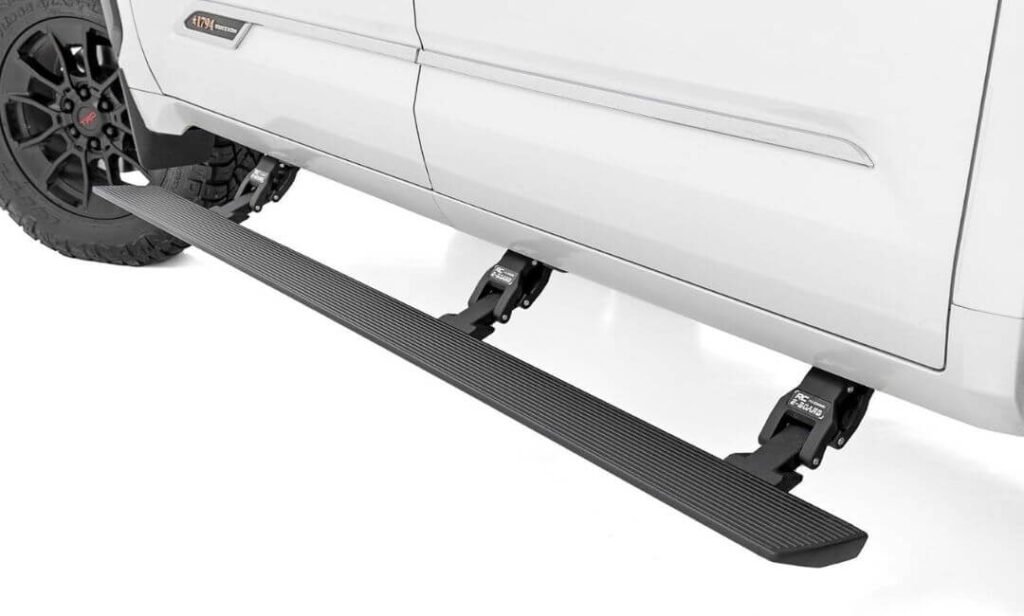
A power step should make getting into a Tundra easier without making the truck look like it has another permanent accessory hanging off the side. That is where this setup gets the basics right. The 6-inch aluminum step gives you a useful landing area, while the textured surface is a practical detail you will appreciate much more on a wet or dirty day than another piece of cosmetic trim.
The hardware is also more substantial than a basic single-drive arrangement. Dual motors handle deployment and retraction, and the board automatically moves out when the door is opened before tucking underneath the rocker area again. The integrated LEDs are another genuinely useful touch, particularly when passengers are climbing into a dark truck rather than simply serving as decoration.
There is some good engineering in the smaller details too. The SAFE-STOP system is designed to stop the board if it encounters an obstruction, while the interior bypass switch gives you a manual way to override the automatic operation. The 660-lb capacity per board is also reassuring for normal passenger use, and the powder-coated finish gives the exposed components an extra layer of protection against everyday weather.
(A particularly sensible combination for a full-size Tundra: useful step width, dual-motor movement, under-body storage, and lighting without turning the rocker area into visual clutter.)
What We Like
- 660-lb capacity per board gives the step plenty of stated load capacity for normal passenger use.
- The dual-motor design is a meaningful upgrade over simpler powered-step mechanisms.
- SAFE-STOP protection is the kind of feature that matters more in daily use than flashy specifications.
- The 6-inch aluminum surface balances usable footing with a relatively clean profile.
- A 5-year warranty adds confidence when buying a powered accessory with moving parts.
What We Would Change
The installation is no-drill, but it is not necessarily a quick driveway job. The supplied installation information indicates roughly 4–5 hours, with wiring and routing the door-trigger connections being the part likely to consume the most time. That is not a deal-breaker, but it is worth knowing before you start.
Tundra Fitment You Should Check Before Ordering
This setup is intended for the Toyota Tundra CrewMax, rather than being a universal running board that happens to be advertised across several trucks. The supplied information covers 2022–2025 CrewMax in the vehicle-service specification and states compatibility with both hybrid and non-hybrid Tundra models, including i-FORCE and i-FORCE MAX applications. The product title itself extends the application through 2026, so the final year-specific listing should be checked before placing the order.
That distinction matters because the fourth-generation Tundra has a different body and mounting arrangement from earlier generations. If you have a 2007–2021 Tundra, do not assume these boards transfer over simply because the truck carries the same name. For this particular listing, the safe starting point is the 2022+ CrewMax application and the exact configuration shown by the seller.
The Insider Pro-Tip
If I were fitting these to my own Tundra, I would pay more attention to the wiring and door-trigger installation than the mechanical mounting. The no-drill mounting takes away one headache, but a powered board still depends on correctly routed electrical connections and properly positioned triggers. Take your time there; a clean installation is far more valuable than rushing the job just because the brackets themselves bolt into existing locations.
And one last practical point: because this is a relatively modern powered-step application, I would not buy it based on a promise that it has already proven itself for a decade. It hasn’t. What you can evaluate today is much more concrete: CrewMax fitment, dual motors, 6-inch aluminum steps, 660-lb capacity, LED illumination, obstruction protection, no-drill mounting, and a 5-year warranty. Those are the reasons this one earns the top spot—not an inflated durability claim that nobody can honestly guarantee yet.
#2. WOLFBOX Power Running Boards Toyota Tundra Crew Max 2022–2026
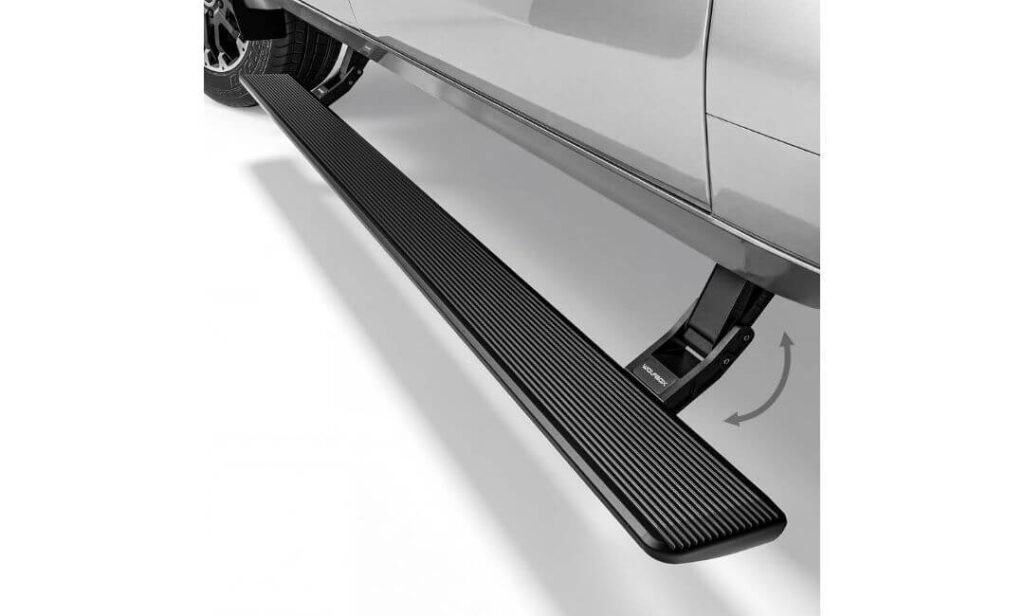
Quick Specs:
- Fitment: 2022–2026 Toyota Tundra CrewMax
- Powertrain coverage: Hybrid / HEV included
- Step surface: Approximately 6 inches wide
- Construction: 6063-T5 aluminum
- Load rating: 660 lbs per board
- Motor: High-torque IP67 sealed motors
- Deployment: Automatic extend/retract
- Movement time: Approximately 1.5 seconds
- Lighting: 4 integrated LED step lights
- Installation: No drilling
- Operating range: -40°F to 176°F
- Overall dimensions: 85.99 × 14 × 6.7 inches
- Set weight: 73 lbs
- Warranty: Limited 5 years
- Finish: Aluminum with slip-resistant stepping surface
The first thing I would notice here is the full-length feel. At nearly 86 inches overall, this is not a small drop step designed only to give you one convenient place to put your foot. It is built around the Tundra’s long CrewMax profile, giving front and rear passengers a much more natural entry point while keeping the board tucked away when the doors are closed.
The 6063-T5 aluminum construction is another practical choice. You are getting a material that does not rely on bare steel for its everyday corrosion resistance, and the slip-resistant surface makes more sense for a truck that will see rain, mud, snow, and dirty footwear. Add the 660-lb load rating, and the basic purpose becomes clear: this is meant to be a proper access step, not just an accessory added for appearance.
Then there is the part you actually notice every time you use it. The automatic electric deployment is claimed to take around 1.5 seconds, with sealed IP67 motors designed to handle water and mud exposure. Four integrated LEDs illuminate the step area after dark, while the no-drill mounting keeps the installation closer to an OEM-style upgrade than a permanent modification.
(For a CrewMax owner who wants a long, usable step rather than a decorative running board, the combination of aluminum construction, sealed motors, automatic movement, and full-length coverage is the real attraction.)
What We Like
- 6063-T5 aluminum makes sense for an exposed accessory where corrosion resistance matters.
- IP67 motors are a useful specification for a component that spends its life underneath the truck.
- The approximately 1.5-second deployment keeps the step from feeling unnecessarily slow during normal door operation.
- Four LED lights give the entry area genuine nighttime visibility instead of relying on the truck’s interior lighting.
- The 660-lb rating provides a substantial stated capacity for passengers using the board.
What We Would Change
The 73-lb set weight is noticeably higher than some lighter powered-step designs. That is not automatically a weakness—it reflects a larger, more substantial assembly—but it is something to keep in mind if you are planning the installation yourself.
Tundra CrewMax Fitment
This application is specifically listed for the 2022, 2023, 2024, 2025, and 2026 Toyota Tundra CrewMax, including Hybrid/HEV models. That makes the fitment unusually straightforward for this particular listing: you are not trying to adapt a generic truck step to the fourth-generation Tundra.
The no-drill installation is also worth noting. You still need to allow enough time for proper electrical routing and alignment, but there is no need to drill through the truck simply to mount the boards. Before ordering, I would still match your exact CrewMax configuration and model year against the current seller fitment information.
The Insider Pro-Tip
The IP67 motor rating is one of the specifications I would actually pay attention to here. These motors sit underneath a truck, so water and road contamination are not hypothetical concerns. It does not mean the entire assembly is maintenance-free or indestructible, but it is a far more useful detail than a vague “all-weather” claim.
One other thing is easy to overlook: the board’s 86-inch overall length and 73-lb set weight tell you that this is a substantial full-length system. If your priority is maximum usable step coverage for a CrewMax rather than the lightest possible installation, that trade-off makes sense. Combined with the 660-lb rating, aluminum construction, automatic deployment, LEDs, and five-year limited warranty, it is a convincing second-place option without needing to pretend it is perfect.
#3. APS W-Series Power Side Steps for Tundra CrewMax Cab
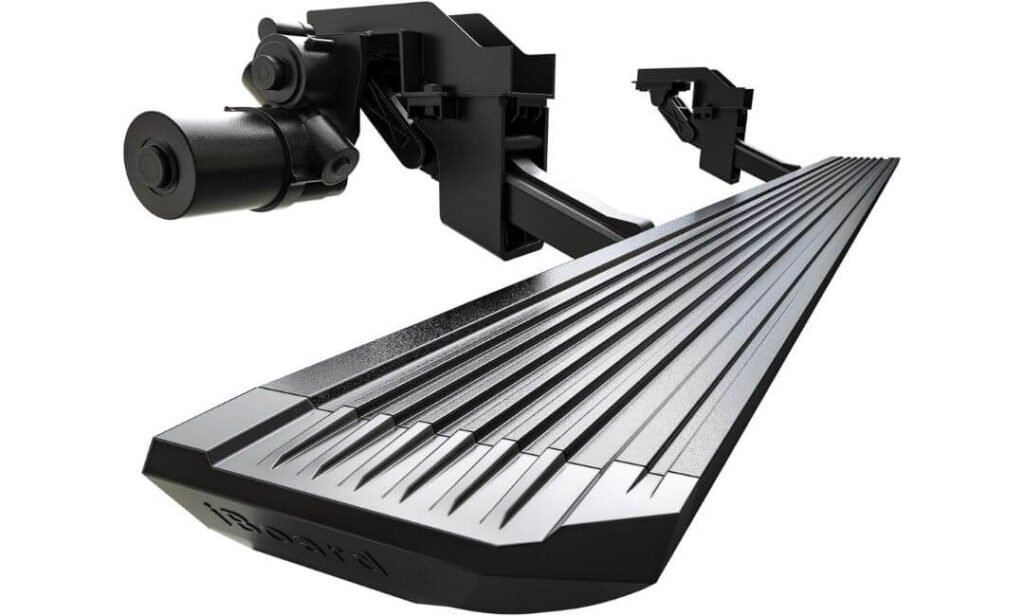
Quick Specs:
- Fitment: 2022–2026 Toyota Tundra CrewMax
- Powertrain coverage: Hybrid & HEV included
- Board width: 5 inches of usable stepping surface
- Construction: Extruded aluminum
- Surface: Fine-textured black finish with anti-slip tread
- Load rating: 600 lbs per side
- Operation: Automatic electric deployment and retraction
- Safety: Obstacle detection
- Lighting: Integrated LED step illumination
- Mounting: Clamp-on brackets; no drilling required
- Dimensions: 85 × 6.5 × 7 inches
- Set weight: 75 lbs
- Warranty: 3-year limited warranty
A running board earns its place on a Tundra when it makes entry easier without permanently changing the truck’s profile. The W-Series takes that approach with an automatic retractable design: open the door and the board deploys; close it and the step moves back underneath. For a CrewMax that regularly carries passengers in both rows, that simple movement is arguably more useful than an oversized fixed board that stays exposed all the time.
The construction is also sensible for an underbody component. The extruded aluminum body keeps the assembly relatively resistant to corrosion, while the fine-textured black finish and anti-slip tread give the step a more purposeful surface. Its 600-lb capacity per side is a solid specification as well, particularly when the board is being used for normal passenger access or as a convenient point while loading something into the cab.
What makes this one more interesting is the combination of obstacle detection and integrated LEDs. The board is designed to stop its movement if something interferes with deployment, while the lights come on when the step is out. Those are the sort of details that can make a powered board feel properly integrated into the truck rather than like an aftermarket mechanism bolted underneath it.
(The appeal here is simple: a substantial aluminum step, automatic movement, obstacle protection, and useful illumination without requiring holes to be drilled into the Tundra.)
What We Like
- Extruded aluminum construction is a sensible choice for something exposed beneath the truck.
- Obstacle detection adds a useful layer of protection during automatic deployment.
- The 600-lb-per-side rating gives the board a strong stated load capacity.
- Integrated LEDs make the step easier to see after dark.
- Clamp-on, no-drill mounting keeps the installation cleaner and avoids unnecessary body modification.
What We Would Change
The 3-year limited warranty is shorter than the five-year coverage offered by some alternatives in this list. That does not make the W-Series a poor choice, but it is a factor I would consider when comparing powered boards with similar features.
Tundra CrewMax Fitment
APS lists this application for the 2022–2026 Toyota Tundra CrewMax, including Hybrid and HEV models. That makes the fitment particularly relevant for fourth-generation Tundra owners who want a powered step without trying to adapt a board designed around an older truck.
The installation uses clamp-on mounting brackets with no drilling required, but the electrical side still deserves proper attention. Match the exact CrewMax configuration before ordering, and do not assume that a Double Cab or earlier-generation Tundra uses the same mounting arrangement simply because the truck name is identical.
The Insider Pro-Tip
The W-Series makes the most sense if you value clean integration over maximum step width. Its approximately 5-inch stepping surface is narrower than some full-size alternatives, but that also keeps the design relatively focused. If passengers mainly need a dependable foothold getting into a tall CrewMax, that is enough; if you want the broadest possible platform, another option may suit you better.
I would also put real weight on the no-drill installation. Once a powered board is underneath the truck, there is already enough work involved with brackets, wiring, alignment, and testing. Avoiding unnecessary drilling is a genuine advantage—not because it makes the job effortless, but because there is simply less permanent modification to get the finished result.
#4. ManiGoon Power Electric Deployable Side Step
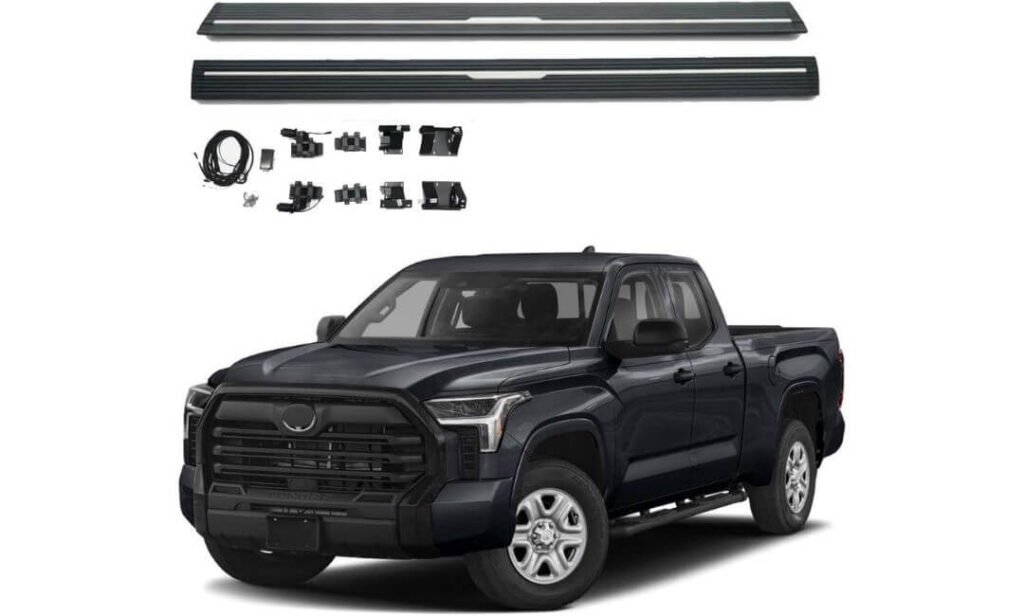
Quick Specs:
- Fitment: 2022–2026 Toyota Tundra
- Step width: 6 inches
- Board length: Cab-length design
- Load rating: 600 lbs
- Construction: Aluminum with plastic components
- Pivot hardware: Heavy-duty stainless steel pins
- Operation: Automatic power deployment and retraction
- Control: Plug-and-play module
- Mounting: Vehicle-specific, no-drill installation
- Position when closed: Tucks tightly beneath the rocker panel
- Finish: Chrome
- Warranty: 120 days
- Set: Left and right running boards with mounting hardware and installation guide
Some powered boards try to win you over with a huge specification sheet. This one takes a more straightforward route: a 6-inch cab-length platform, automatic movement, and a tight tuck beneath the rocker panel. For a Tundra owner who mainly wants easier access without leaving a fixed step hanging outside the truck, that combination covers the reason most people buy an electric running board in the first place.
The 600-lb load rating gives the platform a respectable stated capacity, while the aluminum construction keeps the main step material lighter than a comparable steel assembly. More importantly, the use of stainless steel pivot pins is a detail I would rather see than another vague durability claim. Those moving points are part of what the mechanism depends on every time the doors open and close.
Installation is another area where the design is trying to keep things manageable. The included vehicle-specific guide, plug-and-play module, mounting hardware, and no-drill setup mean you are not starting with a universal board and figuring everything out yourself. The finished step also retracts close to the rocker panel, which helps preserve the Tundra’s cleaner side profile when the boards are not being used.
(If your priority is a wide, cab-length foothold with automatic deployment rather than a long list of extras, this is a refreshingly focused setup.)
What We Like
- The 6-inch cab-length platform gives passengers a useful amount of stepping area.
- Stainless steel pivot pins are a meaningful mechanical detail for a repeatedly moving step.
- The plug-and-play module makes the electrical side less intimidating for a properly prepared installation.
- The board tucks tightly beneath the rocker panel, keeping the side profile cleaner when retracted.
- A vehicle-specific installation guide is much more useful than generic instructions on a universal accessory.
What We Would Change
The 120-day warranty is the main point I would weigh carefully. The core design is appealing, but powered running boards contain moving and electrical components, so a comparatively short warranty gives you less long-term coverage than several alternatives in this lineup.
Tundra Fitment
The supplied application covers the 2022–2026 Toyota Tundra, with the product described as a vehicle-specific fit rather than a universal running board. That is important because the fourth-generation Tundra has its own mounting requirements, and an older Tundra application should not automatically be considered interchangeable.
The installation is designed around existing attachment points with no drilling, but I would still treat the wiring and final alignment as part of the job rather than assuming “no drill” means five minutes and done. The included module and hardware are there to make the process cleaner, while careful testing of deployment and retraction is what gives you confidence before putting passengers on the boards.
The Insider Pro-Tip
The real reason to consider this one is its simplicity. There is no need to pretend that every buyer needs four different lighting systems or a complicated feature package. If what you want is a substantial 6-inch step that comes out with the door, carries a stated 600 lbs, and disappears close to the rocker panel afterward, the design makes sense.
I would, however, make one decision before buying: installation quality matters more than saving a few minutes. The plug-and-play module helps, but powered steps still need correctly routed wiring, secure brackets, and proper alignment. Get those details right and the result should feel like part of the Tundra rather than an accessory added as an afterthought.
#5. Tuxtreme Power Running Boards for Toyota Tundra CrewMax
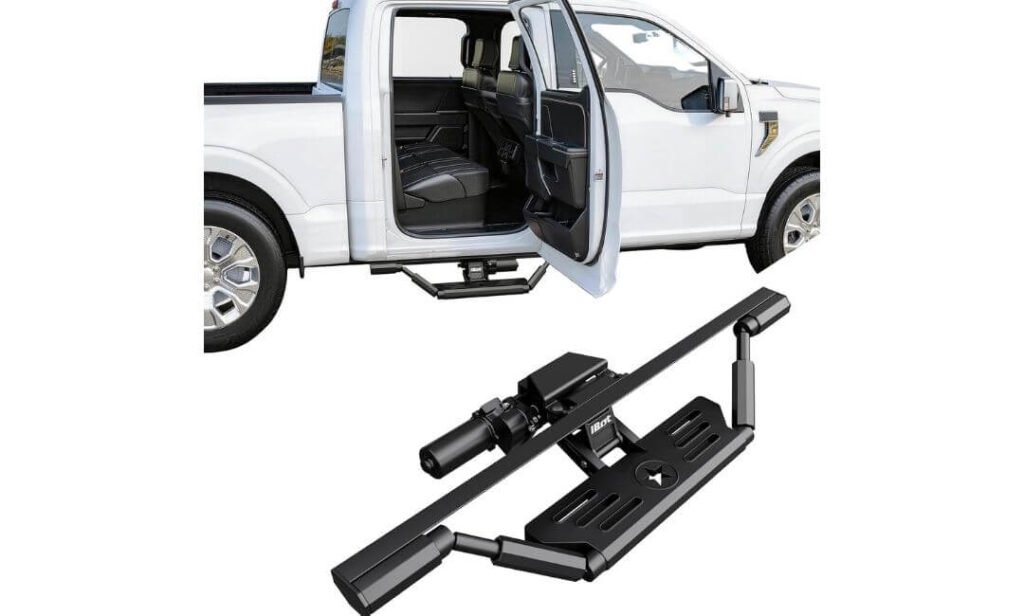
Quick Specs:
- Fitment: 2022–2026 Toyota Tundra CrewMax
- Application: Individual passenger-side rear door step on this listing
- Step design: Independent electric drop step
- Construction: Stainless steel
- Protection: Multi-layer anti-corrosion coating
- Surface: Slotted stepping pad with raised traction ridges
- Operation: Automatic extend/retract with door movement
- Safety: Smart auto-stop function
- Finish: Matte black powder coating
- Dimensions: 36 × 13 × 5 inches
- Weight: 26.8 lbs per unit
- Installation: Vehicle-specific mounting hardware
- Warranty: 3 years
Here is where the Tuxtreme gets genuinely interesting: you do not necessarily have to power every door. The independent design lets you configure the steps around the doors you actually want to use, and this particular listing is for the passenger-side rear door. That is a very different proposition from buying a conventional pair of full-length running boards and accepting the same setup everywhere.
The construction also takes a different path. The step uses stainless steel with a multi-layer anti-corrosion coating, while the 36 × 13-inch platform has a slotted surface and raised traction ridges. That combination is practical for a truck because mud and snow have somewhere to escape instead of simply sitting across a completely flat stepping surface.
Movement is automatic, but the safety side has not been ignored. The step extends when the door opens and retracts when it closes, while the controller’s auto-stop function is designed to halt movement when an obstruction is detected. At only 26.8 lbs per unit, this individual assembly is also considerably lighter than the complete multi-board systems higher on the list.
(The standout idea here is not “more features”; it is the ability to build the powered-step setup around the doors you actually need.)
What We Like
- Independent door-by-door design gives you more flexibility than a conventional full-length system.
- Stainless steel construction paired with multi-layer corrosion protection makes sense for an exposed underbody accessory.
- The slotted traction pad helps shed water, mud, and snow rather than trapping it underfoot.
- Automatic auto-stop protection is a useful feature on a moving electric step.
- At 26.8 lbs per unit, the individual assembly is relatively manageable compared with complete powered-board systems.
What We Would Change
This is the one product here where you need to read the listing especially carefully: the supplied listing is for the passenger-side rear door, not automatically a complete set of four powered steps. That modular approach can be an advantage, but only if it matches the configuration you actually want.
Tundra CrewMax Compatibility
The supplied fitment covers the 2022–2026 Toyota Tundra CrewMax, with the listing specifically identifying the Amazon “Double Cab” terminology as CrewMax for this application. The important distinction is that Tuxtreme’s system uses individual powered steps, so the exact door position matters when ordering.
For a buyer who wants only one particular entry point powered, that can be a smart way to avoid paying for steps where they are unnecessary. If you want a complete four-door setup, verify which additional units or configurations are required before checkout rather than assuming this single listing includes the entire truck.
The Insider Pro-Tip
I would treat this as a configuration-first purchase, not a normal “best running board” purchase. The interesting part is the modularity. If your rear passenger door is the one that actually needs a powered step, buying an individual unit can make more sense than replacing the entire side of the truck.
And look closely at the 36 × 13-inch dimensions before ordering. The footprint is generous in width and depth for an individual step, but its job is different from the long continuous boards above it. If you want one powered access point in a specific location, that difference is exactly why this product made the list; if you want a traditional full-length step running beneath multiple doors, choose accordingly.
Best Power Running Boards for Toyota Tundra (2022–2026): CrewMax Models Side by Side
Buying Guide: How to Choose the Best Power Running Boards for Toyota Tundra
A powered running board is one of those Tundra upgrades where the right specification matters more than the longest feature list. The boards sit underneath the truck, move every time a door opens, carry passenger weight, and spend their life exposed to water, road salt, mud, and debris. For the 2022–2026 Tundra, especially the CrewMax, I would work through the points below before comparing prices.
Start With the Drive System, Not the Appearance
The motor and deployment mechanism determine how the board behaves in everyday use. A dual-motor system, such as the one used by the Rough Country option in this guide, gives the board a motor at each end and is worth considering when you want consistent movement across a longer step.
A single electric mechanism is not automatically inferior. What matters is how the system is engineered, how smoothly it extends and retracts, and what protection is built into the controller. Look for:
- Automatic deployment when the door opens
- Automatic retraction when the door closes
- Smooth movement without excessive delay
- Obstacle detection or auto-stop protection
- Properly protected motors and electrical connections
- A manual override where provided
- A mounting system designed specifically for the Tundra
For a full-size truck, I would rather have a well-designed motor system with clear specifications than choose a board simply because the product page uses words like “heavy duty.”
Choose the Step Size Around How Your Tundra Is Actually Used
Step dimensions are easy to overlook because most listings emphasize motor power first. In reality, the stepping surface is what your passengers use every single time they enter the truck.
The products in this guide range from approximately 5–6 inches of usable stepping area, while the Tuxtreme takes a different approach with an individual 36 × 13-inch drop-step platform. A wider surface generally gives your foot more room, but a narrower board can still be perfectly adequate if it is positioned correctly.
For a CrewMax carrying passengers in both rows, I would pay attention to:
- Usable step width, not just the overall board width
- How far the board extends from the rocker panel
- Whether front and rear passengers receive convenient access
- Anti-slip texture or raised traction
- Drainage for rain, mud, and snow
- Whether the retracted board stays close to the body
There is no prize for choosing the largest board. The better question is whether the foot placement feels natural when stepping into the Tundra.
Automatic Deployment Is More Important Than a Fancy Feature List
The biggest advantage of an electric running board is that you do not have to think about it. The board should come out when you need it and disappear when you do not.
That is why I would treat automatic deploy/retract operation as a core requirement rather than an optional convenience. Manual folding boards can work perfectly well, but they do not provide the same hands-free experience.
The Rough Country, WOLFBOX, APS, ManiGoon, and Tuxtreme designs all approach powered access differently, so do not assume the word “automatic” means they operate identically. Pay attention to deployment speed, motor arrangement, controller behavior, and whether the system uses door-trigger activation.
LED Lighting Should Serve a Purpose
Integrated LEDs are useful when they actually illuminate the step area, especially when the truck is parked somewhere dark. They should not be treated as a major buying reason by themselves.
WOLFBOX specifies four integrated LED lights, while Rough Country also incorporates LED illumination into its powered-step system. APS includes integrated lighting as well. These are meaningful additions because you are dealing with a step that sits below the doors, where shadows can make foot placement harder at night.
I would look for:
- Lighting that activates with the deployed board
- Coverage across the usable step area
- Automatic shutoff when the board retracts, where specified
- Wiring that is properly integrated into the installation
- A design that does not compromise the step surface
If you rarely use the truck after dark, LEDs should probably not be the reason you spend significantly more.
Weather Protection Matters Under a Tundra
A running board lives in a difficult location. It sees water, mud, road grime, ice, salt, and repeated temperature changes without the protection that exterior body panels receive.
That makes material and motor protection more important than a glossy finish. Aluminum is attractive for its corrosion resistance and lower weight, while stainless steel offers another sensible route for exposed components.
The WOLFBOX setup is particularly clear about its 6063-T5 aluminum construction and IP67-rated motors. The APS and ManiGoon options also use aluminum-based step construction, while Tuxtreme uses stainless steel with multi-layer anti-corrosion protection.
Look beyond the word “weatherproof” and check what is actually specified:
- Step material
- Surface coating
- Motor sealing
- Corrosion protection
- Drainage around the stepping surface
- Electrical connector protection
No coating makes a powered board immune to everything underneath a truck. Regular cleaning still matters, particularly if you drive where road salt or heavy mud is common.
Check Load Capacity and Understand What It Means
Load capacity is useful, but it should not be interpreted as a recommendation to treat the running board like a cargo shelf.
The boards in this comparison are rated around 600–660 lbs, depending on the model. Rough Country and WOLFBOX list 660 lbs, while APS and ManiGoon specify 600 lbs. Those figures are substantial for normal passenger entry.
What matters just as much is how that capacity relates to the board’s construction and mounting system. A strong aluminum platform is only as useful as the brackets and hardware supporting it.
For everyday use, consider:
- Stated load rating
- Board material
- Bracket construction
- Number and position of mounting points
- Whether the rating is per board or per unit
- Whether the manufacturer clearly explains the rating
A clearly stated capacity is far more useful than an unexplained “heavy-duty” label.
Make Sure the Fitment Matches Your Exact Tundra
This is the part I would never skip. The 2022–2026 Tundra is the fourth-generation model, and its mounting requirements should not be confused with earlier Tundra generations.
The products selected here are aimed at the 2022–2026 Tundra, with several specifically identifying the CrewMax configuration and some explicitly including Hybrid/HEV models.
Before ordering, verify:
- Model year
- CrewMax or other cab configuration
- Hybrid or non-hybrid powertrain, if applicable
- Driver/passenger side requirements
- Front/rear door position for modular systems
- Current seller fitment notes
- Included brackets and hardware
The Tuxtreme deserves particular attention because its concept is modular and door-specific. The supplied listing is for an individual passenger-side rear-door step, so it should not be mistaken for a complete pair of conventional full-length running boards.
Also, do not rely on the phrase “Double Cab” without checking the actual application. Some marketplace listings use terminology inconsistently, while the manufacturer’s intended vehicle configuration is what matters for installation.
Think About Installation Before You Buy
“No drilling” sounds simple, but it does not mean the installation is effortless.
A typical powered running-board installation involves removing or loosening relevant underbody components, positioning brackets, securing the boards, routing wiring, connecting door-trigger or control components, and testing the deployment cycle before finalizing everything.
A sensible installation sequence is:
- Confirm the vehicle and cab fitment before unpacking the hardware.
- Lay out both boards, brackets, wiring, and mounting hardware.
- Identify the factory mounting points specified by the manufacturer.
- Install the brackets loosely first so final alignment can be adjusted.
- Mount the running boards and check their position along the rocker area.
- Route the wiring away from exhaust components, sharp edges, and moving parts.
- Connect the controller and door-trigger system according to the supplied instructions.
- Test every door, checking full deployment and complete retraction.
- Confirm obstacle-stop behavior where the system provides it.
- Tighten the hardware only after the boards are correctly aligned.
The mechanical portion may be manageable for an experienced DIY installer, but electrical routing is where I would slow down. If you are not comfortable working underneath the truck and routing vehicle wiring, paying a professional can be money well spent.
Look for Real Safety Features
Powered boards are moving components, so safety features deserve more attention than decorative extras.
Obstacle detection and auto-stop are particularly valuable. Rough Country’s SAFE-STOP system and the APS and Tuxtreme obstacle/auto-stop functions are examples of the type of protection worth looking for.
A good system should also have:
- Controlled deployment and retraction
- Obstruction detection where specified
- Secure mounting
- Properly protected wiring
- Stable anti-slip footing
- A reliable door-trigger system
Do not confuse a safety feature with a guarantee that the mechanism can never cause an injury. Keep hands, feet, tools, and loose objects clear while testing the boards.
Warranty Length Tells You Something, But Not Everything
A warranty should be part of the decision, particularly because powered running boards combine mechanical movement and electrical components.
The products here range from ManiGoon’s 120-day warranty to three-year coverage from APS and Tuxtreme, while Rough Country and WOLFBOX list five-year coverage. That difference is significant when two products otherwise appear similar.
I would check exactly what the warranty covers, whether installation affects eligibility, and who handles technical support. A longer warranty does not automatically prove a product will last longer, but it does give you a better safety net if a motor, controller, or other covered component develops a problem.
Compare the Total Value, Not Just the Purchase Price
The cheapest powered board is not necessarily the cheapest upgrade once you consider installation, warranty support, replacement components, and the features you actually need.
For this group, the sensible comparison is:
- Rough Country: stronger feature package, dual motors, SAFE-STOP, LEDs, and five-year warranty.
- WOLFBOX: full-length design, aluminum construction, IP67 motors, LEDs, and five-year coverage.
- APS W-Series: aluminum construction, obstacle detection, LEDs, and no-drill mounting.
- ManiGoon: straightforward 6-inch powered platform, stainless pivot pins, and plug-and-play installation.
- Tuxtreme: individual door-specific configuration, stainless construction, traction-focused platform, and three-year coverage.
That makes the buying decision much easier. You are not really choosing between five identical running boards; you are choosing which type of powered access makes the most sense for your Tundra. If you want the most complete specification package, one choice stands out. If you want modularity, a different design becomes more attractive. That is a much better way to shop than simply sorting the listings from cheapest to most expensive.
Toyota Tundra Power Running Board Installation Guide: A Clean, Reliable Setup
A powered running board is only as good as its installation. The brackets need to sit correctly, the boards need to move without rubbing the rocker area, and the wiring has to stay away from heat, sharp edges, and moving components. The systems in this guide are designed around no-drill or vehicle-specific mounting, but that does not mean the job should be rushed. The exact hardware and wiring procedure can vary by kit, so the supplied installation instructions should always take priority over a generic procedure.
Prepare the Truck and Your Work Area
Park the Tundra on a level, solid surface, put the transmission in Park, engage the parking brake, and give yourself enough room to work along both sides of the truck. If you are lifting the truck, use properly rated equipment and support it securely; never rely on a jack alone while working underneath it.
For a typical installation, have:
- Socket and ratchet set appropriate for the supplied hardware
- Metric wrenches and sockets
- Torque wrench
- Trim or panel-removal tools
- Screwdrivers
- Wire-routing clips or ties
- Electrical tape or suitable automotive wire protection
- Work light
- Gloves and eye protection
- The manufacturer’s installation guide and wiring diagram
Before touching the truck, lay out every bracket, actuator, harness, controller, trigger, and fastener. This small step can save a surprising amount of time once you are underneath the vehicle.
Remove Existing Running Boards If Necessary
If your Tundra already has factory or aftermarket running boards, remove them carefully rather than forcing the hardware loose. Keep the original fasteners separated from the new kit so nothing gets mixed up.
Once the old boards are off, inspect the mounting area. Remove accumulated dirt, mud, and debris around the factory mounting points, then check for anything that could interfere with the new brackets.
This is also a good time to look at the rocker-panel area and underside of the cab. If you see damaged hardware, corrosion, or an obstruction around a mounting point, deal with it before installing the new system rather than trying to compensate for it with bracket alignment.
Mount the Brackets Before Final Tightening
Start with the manufacturer’s specified mounting locations and attach the brackets loosely at first. Do not fully tighten everything immediately.
The reason is simple: the running board needs to be aligned after all of the brackets are sitting in their natural positions. Install the board onto the brackets, then check its position from several angles.
Look for:
- Even spacing along the rocker panel
- Adequate clearance when the board is retracted
- A level stepping surface when deployed
- No contact with the body
- No interference with doors
- Similar positioning from front to rear
- Adequate clearance from exhaust components and other underbody parts
Once everything looks right, tighten the mounting hardware to the manufacturer’s specified torque.
For a no-drill design, resist the temptation to enlarge holes, shift brackets, or modify the truck just to make something line up. If the hardware does not appear to fit the supplied mounting points correctly, stop and recheck the vehicle application and bracket position first.
Route the Wiring Like It Will Stay There for Years
This is the part of the installation I would take most seriously.
The wiring should have a clean route with enough slack for normal movement, but not so much that it can hang underneath the truck. Keep electrical wiring away from exhaust heat, sharp metal edges, suspension movement, driveshaft components, and other moving parts.
For door-trigger or sensor wiring, follow the kit’s specified routing rather than improvising a shortcut. Secure the harness at regular intervals and protect any area where the wiring could rub against metal.
If the kit uses a controller, mount it in the location specified by the manufacturer and keep its connections protected from unnecessary moisture exposure. Do not simply wrap loose connections together and call the job finished. A powered running board can cycle hundreds or thousands of times over its life, so wire security matters just as much as initial electrical connection.
Connect the Controller and Door Triggers
Connect the main harness, controller, power supply, and door-trigger or sensor connections exactly according to the supplied wiring diagram.
Before finalizing the installation:
- Confirm every connector is fully seated.
- Check that the harness cannot contact hot or moving components.
- Verify the power connection is correctly installed.
- Confirm the controller is securely mounted.
- Check the door-trigger connections individually.
- Keep excess wiring secured rather than tightly bending or pulling it.
- Recheck every connection before restoring the vehicle to normal use.
Some systems use magnetic door triggers, while others use different vehicle-specific control arrangements. Do not assume that one kit’s wiring method applies to another simply because both boards deploy automatically.
Calibrate and Test Before Driving
Never consider the installation finished just because the boards move once.
Test each relevant door separately. Open the door and watch the board deploy completely. Close the door and confirm that it retracts fully without touching the rocker panel or nearby components.
Then check the following:
- Deployment is smooth and consistent.
- Retraction is complete.
- Both ends of the board remain properly aligned.
- The board does not scrape the body.
- LED lighting operates as intended, where equipped.
- Door-trigger operation is consistent.
- Obstacle-stop functionality works according to the manufacturer’s testing procedure.
- No wiring moves excessively during deployment.
- No unusual clicking, grinding, hesitation, or motor strain is present.
After the first few cycles, inspect the mounting hardware and wiring again. A final visual check after testing is cheap insurance.
Troubleshooting Common Installation Problems
If the board does not move, start with the basics: check the main power connection, controller connection, relevant fuse or power protection, and door-trigger connections. Do not immediately assume the motor has failed.
If it deploys but does not retract, check whether the door-trigger signal is being received correctly and whether anything is physically obstructing the mechanism.
If one end moves differently from the other, stop cycling it repeatedly. Check bracket alignment, mechanical clearance, connector seating, and whether the board is sitting correctly on its mounts.
If the board scrapes or sits unevenly, loosen the mounting hardware, realign the brackets according to the installation instructions, and retighten to the specified torque. Do not force the board into position by over-tightening one side.
If the LEDs work but the board does not, or the board operates while the lights do not, inspect the relevant connectors and controller wiring separately. Different circuits can behave differently even when they share the same main harness.
And if the system repeatedly stops during deployment, do not defeat the safety feature just to make it work. An obstruction sensor or auto-stop system is there for a reason. Find the underlying alignment, wiring, or obstruction issue first.
When Professional Installation Is the Better Choice
A capable DIY installer can handle a vehicle-specific, no-drill kit, but powered running boards are not just a bolt-on accessory. You are dealing with moving mechanical components and vehicle electrical connections at the same time.
Professional installation is worth considering if you are uncomfortable working underneath the truck, unsure about automotive wiring, lack proper lifting/support equipment, or cannot confidently verify the final alignment.
The goal is not simply to make the boards move. The goal is to have them deploy cleanly, retract completely, stay secure, and continue doing the same thing after months of rain, dirt, and everyday use. That is what a properly finished installation should look like.
Real-World Use Cases: Where Power Running Boards Actually Earn Their Keep
Powered steps make the most sense when you look beyond the parking-lot photos. A Tundra sits high enough that the step height matters, and the usefulness changes depending on whether the truck spends most of its life commuting, hauling people through bad weather, or working around a trailer. The right setup is the one that fits how you actually use the truck, not simply the one with the longest feature list.
Everyday City Driving and Regular CrewMax Access
For daily urban driving, the biggest benefit is convenience. You open the door, the board drops into position, and you have a stable stepping surface instead of climbing directly from the ground to the cab.
That becomes particularly noticeable with a CrewMax carrying passengers in both rows. Children, shorter passengers, and anyone who simply prefers an easier step-in can benefit from the lower entry point. When the door closes, the board retracts, leaving the side of the truck cleaner than a permanent running board.
For this type of use, I would prioritize:
- Smooth automatic deployment rather than maximum motor complexity
- A genuinely usable stepping surface
- Anti-slip traction
- Reliable door-trigger operation
- Integrated lighting if the truck is frequently used after dark
- A retracting design that stays close to the rocker panel
Off-road use changes the priorities. A powered board can provide excellent access when parked at camp or on a trail, but the fact that it retracts does not make the entire mechanism invulnerable. Ground clearance still matters, particularly around steep transitions, rocks, deep ruts, and uneven approaches.
Snow, Mud, and Heavy Rain
This is where the difference between a good-looking accessory and a thoughtfully engineered one becomes obvious.
Mud can collect around hinges and moving components, snow can pack into the step area, and road salt can attack exposed hardware during winter. A board that works beautifully on a dry afternoon needs to be treated differently when it spends weeks in wet or freezing conditions.
The useful features to look for are:
- Corrosion-resistant construction
- Properly protected motors and electrical connections
- A step surface that remains grippy when wet
- Drainage for water, mud, and melting snow
- Automatic movement that does not require you to manually unfold the board
- A design that can be cleaned without trapping large amounts of debris
The WOLFBOX option’s stated IP67 motor rating is particularly relevant here, while the aluminum construction used by several selections offers sensible corrosion resistance. The Tuxtreme takes a different route with stainless steel and a slotted traction surface, which is useful when mud or snow becomes part of normal driving.
Still, no specification should be interpreted as permission to ignore maintenance. After driving through heavy mud or winter road salt, rinse the underside when practical and check that debris has not collected around the moving mechanism. If a board starts moving differently after a harsh-weather drive, investigate it rather than repeatedly cycling the motor.
Towing, Trailers, and Heavy Loads
A powered running board does not increase the Tundra’s towing or payload rating. That distinction is important.
The 600–660-lb board capacities in this guide describe the stated load the running-board assemblies can support; they do not mean you can add that amount to the truck’s payload capacity. Your Tundra’s actual payload and towing limits remain governed by the vehicle’s configuration, equipment, hitch rating, trailer setup, and manufacturer’s specifications.
For towing, the powered step is mainly an accessibility upgrade. It makes getting into the cab easier when you are repeatedly climbing in and out to connect a trailer, check equipment, adjust mirrors, or load items.
Before towing, I would make sure the retracted boards have adequate clearance from:
- Trailer components
- Hitch hardware
- Safety-chain connections
- Exhaust components
- Suspension movement
- Uneven ground around the trailer
If you regularly tow on rough access roads, remember that a retractable board is still a mechanical assembly underneath the cab. Keeping it retracted while travelling through areas where the step could encounter an obstacle is one of the main advantages of the design, but it does not eliminate the need to consider ground clearance.
When Each Type Makes the Most Sense
For mostly city driving, a smooth automatic system with a comfortable step and good lighting is usually the sweet spot.
For frequent rain, mud, or winter driving, put more emphasis on material choice, motor protection, drainage, traction, and how easily the underside can be cleaned.
For frequent towing, focus on retracted clearance, reliable deployment, and easy cab access rather than treating the running board’s weight rating as an extension of the truck’s payload rating.
And for occasional trail use, remember the basic rule: retractable does not mean indestructible. The best powered step is still one that remains properly aligned, protected from unnecessary impacts, and maintained when the truck is used in genuinely harsh conditions.
Maintenance and Care: How to Keep Power Running Boards Working Properly
A powered running board is a moving part mounted in one of the dirtiest areas of the truck. It gets road spray, dust, mud, salt, and moisture while the motor and hinges continue cycling every time someone opens a door. Good maintenance is not complicated, but small problems are much cheaper to deal with before they become motor or controller problems.
Cleaning, Weather Protection, and Corrosion Prevention
The most useful maintenance habit is simply keeping the mechanism reasonably clean. You do not need to dismantle the boards after every muddy drive, but heavy dirt should not be allowed to build up around the hinges, brackets, pivot points, or underside of the step.
A sensible cleaning routine is:
- Rinse away mud, road salt, and loose debris from the board and underside.
- Pay particular attention to the moving areas around hinges and brackets.
- Clean the stepping surface so its anti-slip texture remains effective.
- After winter driving, rinse salt and salty road residue from exposed components when practical.
- Allow the assembly to drain and dry rather than trapping moisture against the hardware.
- Inspect the powder-coated or finished surfaces for chips, scratches, or exposed metal.
- Avoid directing extremely high-pressure water directly at electrical connectors, sensors, or motor seals.
Material choice helps, but it does not remove the need for cleaning. Aluminum construction, stainless-steel components, powder coating, and corrosion-resistant finishes all give you useful protection, but none of them make an underbody accessory immune to salt and grime.
If you notice a small coating chip, deal with it before corrosion gets a chance to spread. The same goes for mounting hardware: surface rust on a fastener is one thing; corrosion around a bracket or mounting point deserves much more attention.
Battery and Motor Care Without Overcomplicating It
The running boards themselves do not have a separate battery that you routinely charge. They rely on the vehicle’s electrical system, so the useful maintenance question is whether the truck’s battery and the running-board electrical connections are healthy.
If deployment becomes noticeably slower, inconsistent, or weaker than normal, do not immediately blame the motor. Check the vehicle’s battery condition and the running-board power connections first. Low vehicle voltage can create symptoms that look like a mechanical problem.
For the electrical system:
- Keep wiring securely fastened and away from exhaust heat and moving components.
- Look for damaged insulation, loose connectors, or wiring that has begun rubbing.
- Make sure connectors remain properly seated after cleaning or underbody work.
- Do not bypass a fuse or safety system simply to keep the boards operating.
- If a motor begins making unusual sounds, stop repeatedly cycling it and inspect the mechanism.
- Keep mud and packed debris away from the moving joints.
Some of the boards in this guide specify additional motor protection. For example, the WOLFBOX system lists IP67-rated motors, while other designs use different construction and protection strategies. Treat those ratings as a useful specification, not as a promise that the mechanism never needs cleaning.
A powered board should normally move in a consistent, controlled way. Sluggish movement, repeated stopping, grinding, one-sided deployment, or a board that no longer retracts completely is worth investigating before continued use.
When a Component Needs Attention
Not every unusual movement means the whole running board needs replacing. Start with the simplest explanation.
If the board is noisy, inspect for dirt, loose hardware, or something physically contacting the mechanism.
If it is uneven, check bracket alignment and mounting hardware.
If it stops halfway, look for an obstruction and check the electrical connections before assuming the motor has failed.
If the LED lighting stops working while the board itself operates normally, the lighting circuit may need separate inspection.
If the board repeatedly triggers its obstacle protection, do not disable the safety feature just to make it complete a cycle. Find out why the system thinks an obstruction is present.
When Replacement Makes More Sense Than Repair
A small hardware issue is usually very different from a failing motor, damaged controller, or badly worn deployment mechanism. Before buying a replacement assembly, identify which component is actually responsible for the problem.
Replacement or professional inspection becomes more reasonable when you have:
- Repeated motor failure
- Persistent grinding or mechanical binding
- Damaged brackets or mounting points
- Cracked or severely deformed step components
- Electrical wiring with damaged insulation
- Water-damaged connectors or controllers
- A board that repeatedly stops despite correct alignment
- Deployment that remains inconsistent after cleaning and inspection
Do not replace a complete running-board system simply because one component has failed if the manufacturer offers the individual part and the rest of the assembly remains sound.
When an Upgrade Is Actually Worth It
An upgrade makes more sense when your needs have changed rather than simply because a newer model exists.
For example, if your current setup works but lacks LED illumination, upgrading may be worthwhile if you regularly use the Tundra at night. If the existing boards are becoming unreliable after years of use, a newer system with better motor protection, stronger warranty coverage, or a more suitable mounting design may make more financial sense than repeatedly repairing an aging mechanism.
For the newer 2022–2026 Tundra, I would also avoid mixing random components from different powered-step systems. Motors, controllers, triggers, brackets, and wiring are not automatically interchangeable just because the boards look similar. Use replacement parts intended for the exact system whenever possible.
The practical rule is simple: clean it before it becomes dirty enough to bind, inspect it before a small fault becomes an electrical problem, and replace the part that has actually failed instead of guessing at the entire system. That approach costs less, keeps the truck safer, and gives a powered running board a much better chance of remaining useful for the long haul.
FAQs About Toyota Tundra Power Running Boards
Will power running boards designed for the 2022–2026 Toyota Tundra fit an older Tundra generation?
Not automatically. The 2022–2026 Toyota Tundra is the fourth-generation truck, and its body, mounting locations, and underbody layout are different from earlier generations. A board advertised for the newer Tundra should not be treated as a universal fit simply because the truck name is the same.
If you own a 2007–2021 Tundra, look for a running board specifically listed for your generation and cab configuration. The safest approach is to match the exact model year, cab style, and the manufacturer’s vehicle-specific fitment before ordering rather than relying on photographs or a marketplace title.
Do Toyota Tundra power running boards work differently on Hybrid and non-hybrid models?
Some do, some do not, which is why the fitment wording matters. The products covered in this guide are specifically listed for 2022–2026 Tundra CrewMax applications, with several explicitly including Hybrid/HEV models. That is useful, but it should not be interpreted as every powered step fitting every Tundra powertrain automatically.
Before buying, verify:
- Exact model year
- CrewMax configuration
- Hybrid or non-hybrid powertrain
- Included brackets and wiring
- Current manufacturer or seller fitment notes
A hybrid-compatible listing is preferable when you have an i-FORCE MAX truck because you are buying against a stated application rather than hoping the mounting and wiring happen to work.
Are dual-motor running boards actually better for a Toyota Tundra, or is that mostly marketing?
A dual-motor setup can be a meaningful advantage, but “dual motor” by itself does not prove that one board will last longer than another. What it tells you is that the deployment system uses two drive points rather than relying on a single motor arrangement.
For a long CrewMax step, that can make sense because the board needs controlled movement across a relatively long platform. In this guide, the Rough Country system combines dual motors with automatic deployment, SAFE-STOP protection, and a 660-lb stated capacity, which gives the specification some context.
What I would not do is assume that a single-motor design is automatically unreliable. Motor quality, controller design, mechanical alignment, sealing, brackets, and installation all matter. The complete system is more important than the motor count printed on the box.
What happens if a powered running board gets packed with mud, snow, or road salt?
Usually, the first sensible response is cleaning and inspection, not replacing the board. Dirt and salt can accumulate around the hinges, brackets, step surface, and other moving areas, particularly during winter or off-road driving.
A good routine is to:
- Rinse heavy mud and salt from the underside when practical.
- Check the moving mechanism for packed debris.
- Inspect wiring and connectors for damage or rubbing.
- Confirm the board still deploys and retracts smoothly.
- Investigate unusual noise or hesitation before continuing to cycle it repeatedly.
Some systems provide useful protection, such as IP67-rated motors on the WOLFBOX setup or corrosion-resistant materials used by several other selections. That helps, but no powered running board should be considered completely maintenance-free.
Is a door-specific power step a better choice than a full-length running board?
It depends on how you use the truck, and this is one area where there is no reason to buy more hardware than you actually need. A conventional full-length system makes sense when front and rear passengers regularly need a step, especially on a CrewMax. It gives you consistent access along the cab and usually provides a more uniform finished appearance.
A modular system such as the Tuxtreme approach is different. Its supplied listing is for an individual passenger-side rear-door step, so you can target a particular entry point rather than automatically installing a complete set.
That can be genuinely useful if:
- Only one door needs easier access.
- You want to build the setup gradually.
- You prefer an individual drop-step arrangement.
- You do not want a full-length board beneath every door.
The trade-off is equally important: if you want a conventional powered step serving multiple doors, an individual-unit listing is not a substitute for a complete system. Check exactly how many boards the listing includes before buying.
Final Take: Choosing the Right Power Running Board for Your Tundra
There is no need to make this decision harder than it is. The best powered running board is the one that matches your Tundra’s exact fitment, your passengers, and the way you actually use the truck. A CrewMax that spends most of its time in town has different needs from one that sees snow, mud, towing, and rough access roads.
From this comparison, the Rough Country setup is the strongest all-around package because it brings together dual-motor operation, a 6-inch aluminum step, 660-lb stated capacity, integrated LEDs, SAFE-STOP protection, no-drill mounting, and five-year warranty coverage. That is a meaningful collection of features, not just a long specification sheet.
The WOLFBOX makes a particularly strong case if full-length coverage, aluminum construction, IP67 motors, and LED lighting are higher on your list. APS is a sensible middle ground for buyers who want automatic deployment, obstacle detection, aluminum construction, and a cleaner integrated appearance. ManiGoon keeps the formula more straightforward with a wide cab-length step and stainless pivot hardware, while Tuxtreme is the interesting choice when you specifically want a modular, door-by-door setup rather than a conventional full-length system.
One thing I would keep in mind before clicking “buy”: these are relatively new 2022–2026 Tundra applications, so nobody can honestly promise a decade of real-world reliability from today’s product listings. What you can judge is the hardware and coverage available now—fitment, construction, motor design, safety features, step size, weather protection, installation method, and warranty. That is the basis on which this list was built.
If you have already narrowed it down to two, compare those two against your actual use rather than chasing the highest specification. The right board should make getting into your Tundra noticeably easier while disappearing into the truck’s profile when you close the door. That is the upgrade worth paying for.
Also Check: