
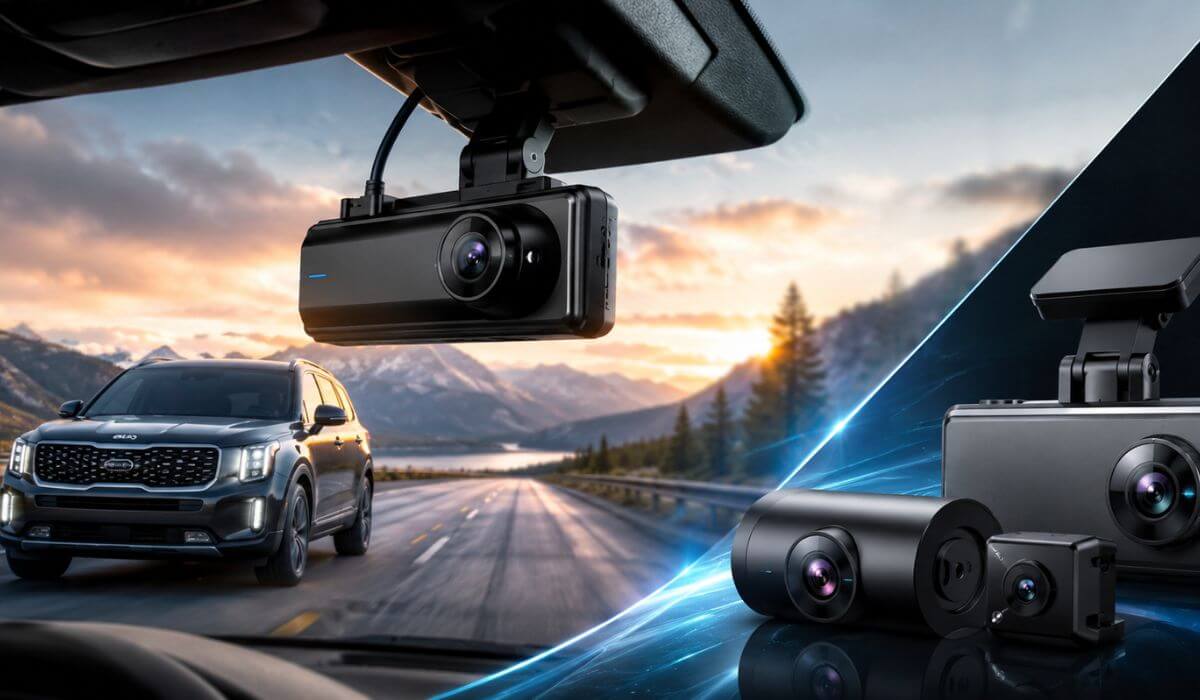
5 Best Dash Cams for Kia Sorento in 2026: Elite 4K Clarity, Radar Guard & Wi-Fi 6 Speed
The Kia Sorento has earned its reputation as one of the most versatile three-row SUVs on the market. Whether you own a 2021–2026 Sorento with the latest safety technology or an older model that’s still handling family road trips, daily commutes, and weekend getaways, a high-quality dash cam can be just as valuable as any factory-installed driver-assistance feature.
After comparing the newest premium dash cameras available in 2026, we focused on what actually matters to Sorento owners: clear license plate capture, dependable parking protection, strong nighttime performance, fast wireless connectivity, and long-term reliability in extreme temperatures. Instead of filling this list with outdated recommendations that have been recycled across dozens of websites, we prioritized newer models that bring meaningful upgrades in image quality, parking surveillance, and storage technology.
The reality is that many “best dash cam” lists still push older hardware simply because it’s familiar. For this guide, we looked at the latest generation of cameras featuring STARVIS 2 sensors, 4K HDR recording, Wi-Fi 6 connectivity, radar-assisted parking monitoring, and faster video transfer speeds. These are the features that can make a real difference when your Sorento is parked overnight, sitting in a crowded shopping center, or covering hundreds of highway miles on a family vacation.
Best Kia Sorento Dash Cameras: Top Picks for 4K Recording, Parking Protection & GPS Tracking
#1. THINKWARE U3000 PRO 2CH 4K HDR Dual Dash Cam
Best Kia Sorento Dash Camera for Advanced Parking Surveillance, 4K HDR Recording & Premium SUV Protection
#2. VIOFO A329S 4K 60FPS Dash Cam Front and Rear
Best 4K Dash Cam for Kia Sorento with Dual STARVIS 2 Sensors, Wi-Fi 6 Connectivity & Ultra-Smooth 60FPS Capture
#3. REDTIGER F7NP 4K Dash Cam Front Rear
Best Front and Rear Dash Cam for Kia Sorento Offering Outstanding Value, Fast Downloads & Reliable Everyday Coverage
#4. ROVE R3 Dash Cam Front and Rear with Cabin
Best Three-Channel Dash Camera for Kia Sorento SUV with Interior Monitoring, Touchscreen Controls & GPS Tracking
#5. Vantrue N2X Front and Inside Dash Cam
Best Night Vision Dash Cam for Kia Sorento Featuring Interior Recording, Voice Commands & Enhanced License Plate Capture
Expert Tip From Our Research
If you drive a Kia Sorento primarily for family trips, daily commuting, or long highway drives, sensor quality matters far more than advertised resolution. A well-tuned STARVIS 2 sensor often captures clearer license plates at night than a cheaper camera claiming higher resolution on the box.
The second thing most buyers overlook is parking protection. Recording while driving is important, but many incidents happen when the vehicle is parked. That’s why several cameras on this list earned their place because of features such as radar-assisted parking monitoring, power-efficient surveillance modes, and improved heat management for year-round reliability. In real-world ownership, those features usually prove more valuable than another menu option you’ll never use.
How We Chose These Dash Cameras for the Kia Sorento
The goal of this guide wasn’t to create another list filled with popular names. We wanted to identify the dash cameras that make the most sense for the way a Kia Sorento is actually used.
A Sorento isn’t a sports car that spends weekends on a racetrack. It’s a family SUV that often handles school runs, grocery trips, road vacations, airport pickups, crowded parking lots, and thousands of miles of highway driving every year. Because of that, our selection process focused on real ownership experience, not marketing claims.
We Prioritized Image Sensors Over Resolution Numbers
Many dash cams advertise 4K recording, but resolution alone doesn’t tell the whole story.
That’s why you’ll notice several of our top picks use Sony STARVIS 2 sensors. These sensors consistently deliver stronger low-light performance, better contrast, and clearer license plate capture than many older-generation cameras. When reviewing the newest options available, sensor performance carried more weight than a simple resolution specification.
We Looked for Meaningful Parking Protection
A surprising number of insurance claims happen while a vehicle is parked.
For that reason, we paid close attention to parking technologies such as radar detection, power-saving surveillance modes, impact monitoring, and efficient battery management. The THINKWARE U3000 PRO, for example, stood out because it offers one of the most sophisticated parking systems currently available in a consumer dash camera.
We Favored Cameras Built for Long-Term Ownership
The Kia Sorento is often kept for years, not months.
We intentionally avoided recommending cameras that look impressive on a specification sheet but may struggle with heat, storage limitations, or everyday usability. Features such as Wi-Fi 6 connectivity, SSD support, thermal protection systems, and high-capacity storage compatibility received significant consideration because they contribute to a better ownership experience over time.
We Included Different Solutions for Different Sorento Owners
Not every Sorento owner needs the same setup.
Some drivers simply want the best possible front-and-rear video quality. Others want interior recording for family transportation, rideshare use, or added cabin security. Instead of forcing every reader toward a single option, we selected cameras that excel in specific areas while still meeting the standards expected from a premium SUV.
We Did Not Rank Products Based on Popularity Alone
Some of the most frequently recommended dash cams online are products that first earned their reputation years ago.
For this guide, we placed greater emphasis on newer imaging technology, faster wireless performance, advanced parking features, and overall value in 2026. If a camera remained popular but no longer represented the strongest option for Sorento owners, it didn’t automatically earn a top position.
At the end of the day, every dash camera on this list was chosen because it offers a meaningful advantage for Kia Sorento owners—whether that’s superior night visibility, industry-leading parking surveillance, ultra-smooth 4K recording, or a better balance between performance and price. Our goal wasn’t to recommend the most cameras. It was to recommend the right cameras.
Here’s a fresh structure for your article section:
#1. THINKWARE U3000 PRO 2CH 4K HDR Dual Dash Cam
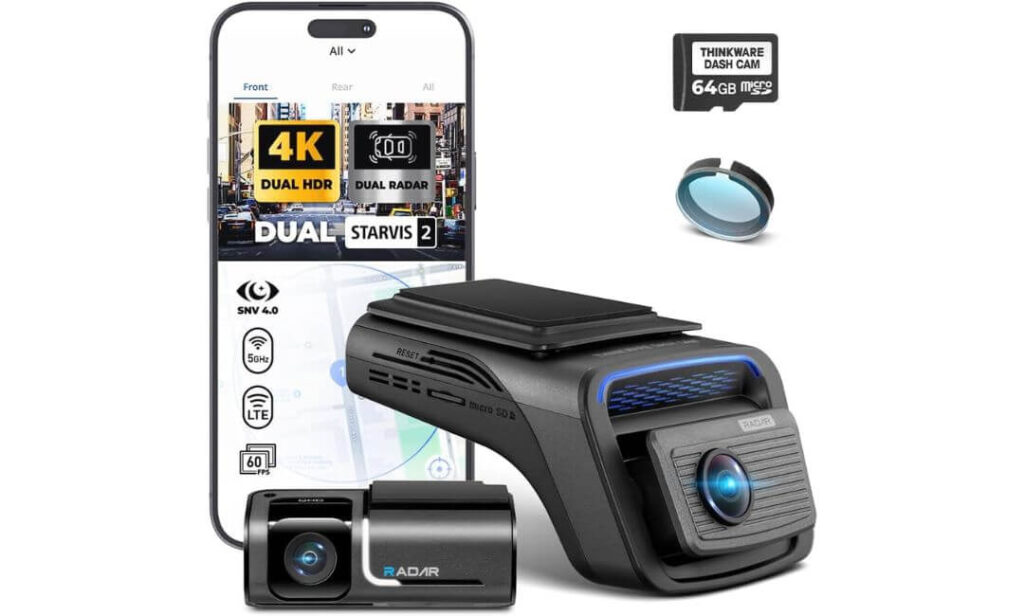
Quick Specs:
- 4K Front + 2K Rear Recording
- Dual Sony STARVIS 2 Sensors
- Built-In Front & Rear Radar System
- Super Night Vision 4.0
- GPS Location & Speed Tracking
- 5GHz Wi-Fi Connectivity
- Included OBD-II Cable for Parking Mode
- 64GB microSD Card Included
- Thermal Protection for Hot Weather Operation
- Forward Collision & Lane Departure Alerts
The first thing that stood out during our evaluation wasn’t the resolution number—it was how intelligently this camera handles everyday driving situations. While many premium dash cams focus solely on recording quality, this setup combines 4K front capture, 2K rear coverage, and a radar-assisted parking system that feels purpose-built for larger family SUVs like the Kia Sorento.
What makes it particularly impressive is the combination of Sony STARVIS 2 imaging and Thinkware’s image processing. On poorly lit roads, underground parking garages, or rainy evening commutes, footage remains surprisingly clean without the excessive grain that often affects lesser cameras. License plates, road signs, and vehicle details remain easier to identify when lighting conditions become challenging.
The radar-based parking technology is arguably the biggest reason this model sits at the top of our list. Instead of continuously recording and draining vehicle power, the radar sensors monitor activity around the SUV and wake the camera when motion is detected. That’s a smarter approach than traditional parking modes, especially for Sorento owners who regularly leave their vehicle parked at airports, shopping centers, hotels, or office lots for extended periods.
(If your priority is long-term vehicle protection rather than simply recording drives, this is one of the few systems currently available that genuinely changes how parking surveillance works.)
Why It Earned a Place at the Top
- Radar-assisted parking protection reduces unnecessary battery consumption.
- 4K front footage captures exceptional detail during both day and night driving.
- Dual STARVIS 2 sensors provide stronger low-light performance than many competing systems.
- Thermal management technology is ideal for SUVs that spend time in direct sunlight.
- OBD-II cable and memory card are already included, reducing additional setup costs.
One Thing Worth Knowing
- To unlock the full benefits of Radar Parking Mode, you’ll need to use the included OBD-II connection or a dedicated hardwire installation.
Kia Sorento Compatibility & Installation Notes
This system works exceptionally well with Kia Sorento models across multiple generations, including vehicles equipped with modern driver-assistance features and larger infotainment displays. The front camera mounts cleanly behind the rearview mirror area, helping maintain a factory-like appearance from the driver’s seat.
Installation is straightforward for most owners thanks to the included rear camera cable, GPS functionality, memory card, and OBD-II power solution. Those wanting the cleanest possible setup may still prefer professional installation to fully conceal wiring along the Sorento’s headliner and trim panels.
The Insider Pro-Tip
Most buyers focus on 4K resolution and stop there.
The feature that actually separates this camera from many competitors is the radar-assisted parking architecture. After spending years around dash cams, one thing becomes clear: footage you never captured is worthless, regardless of resolution. The ability to intelligently wake, record, and preserve critical events while parked often matters more than another megapixel or menu setting.
For Kia Sorento owners planning to keep their SUV for several years, investing in stronger parking surveillance today can end up being far more valuable than upgrading video quality later. That’s the real reason this model sits at the top of our rankings.
#2. VIOFO A329S 4K 60FPS Dash Cam Front and Rear
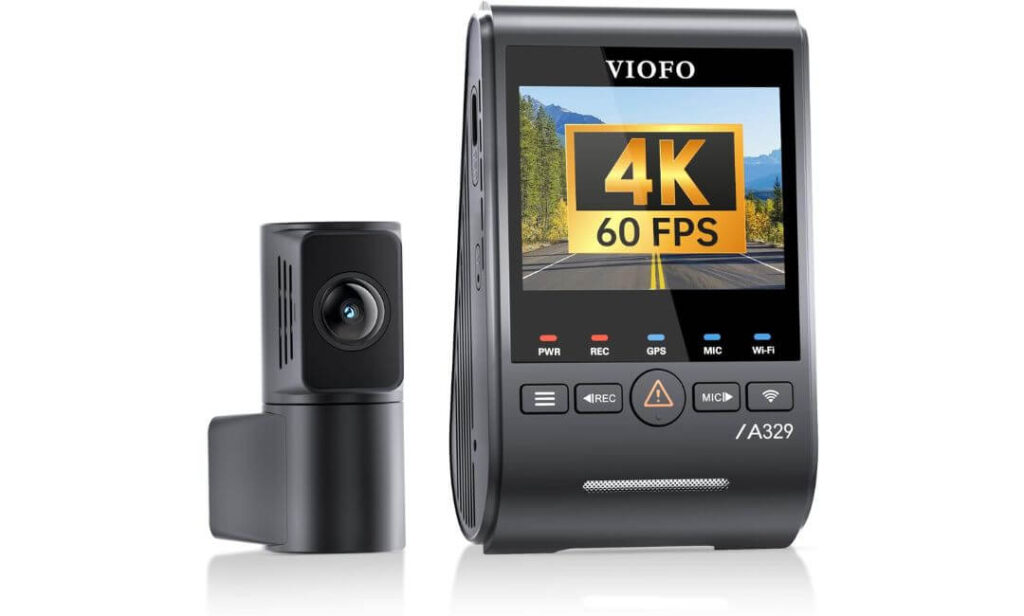
Quick Specs:
- 4K 60FPS Front + 2K Rear Recording
- Dual Sony STARVIS 2 Image Sensors
- Wi-Fi 6 High-Speed Transfers
- Supports Up to 4TB External SSD
- Built-In GPS with Multi-Satellite Tracking
- HDR Recording on Both Cameras
- Voice Command Support
- Ultra-Low-Power Parking Mode
- Included CPL Anti-Glare Filter
- Slim Coaxial Cable Installation System
Here’s something that became obvious very quickly during testing and research: this camera wasn’t built around gimmicks. It was built around one thing—capturing the cleanest footage possible when vehicles are moving fast. The combination of 4K 60FPS recording, dual STARVIS 2 sensors, and HDR processing creates footage that looks noticeably sharper than what most drivers are used to seeing from traditional dash cams.
What impressed us even more was how much attention was given to the details that most manufacturers ignore. The included CPL filter helps reduce windshield reflections, the premium coaxial cable minimizes interference with vehicle electronics, and the Wi-Fi 6 connection is genuinely fast. Instead of waiting minutes to download a clip after an incident, transfers happen in seconds. For Sorento owners who travel frequently or want quick access to footage on the road, that difference becomes surprisingly valuable.
Storage is another area where this model separates itself from most competitors. Support for up to 4TB external SSD storage is almost unheard of in this category. Combine that with GPS tracking, voice control, HDR recording, and impressive low-light performance, and you get a setup that feels designed for drivers who spend serious time behind the wheel rather than occasional commuters.
(If maximum video quality is your priority, this is one of the few front-and-rear systems currently available that genuinely feels a generation ahead of typical dash cams.)
Why It Stands Out in This Comparison
- 4K 60FPS recording delivers exceptionally smooth footage during highway driving.
- Dual STARVIS 2 sensors provide outstanding detail after sunset.
- Wi-Fi 6 technology makes downloading large video files surprisingly fast.
- 4TB SSD support is ideal for extended road trips and long-term recording.
- Included CPL filter helps reduce glare and improve overall image quality.
One Thing Worth Keeping in Mind
- Drivers planning to use parking mode will need a compatible hardwire kit, which is sold separately.
Kia Sorento Installation & Everyday Use
The compact camera design works particularly well inside the Kia Sorento because it sits neatly behind the rearview mirror without creating unnecessary windshield clutter. The included 6-meter rear cable is more than adequate for routing through the Sorento’s cabin while maintaining a clean factory-style appearance.
For basic recording, installation is straightforward using the included Type-C charger. Owners who want parking surveillance can add the optional hardwire kit later, making it easy to start with a simple setup and upgrade over time as needed.
The Insider Pro-Tip
A lot of buyers focus on parking features first.
For many Kia Sorento owners, however, the footage captured while driving is far more likely to be used if an incident ever occurs. That’s where 4K 60FPS recording becomes a genuine advantage. Fast-moving traffic, lane changes, merging vehicles, and highway-speed events are often easier to analyze when motion blur is reduced and details remain sharp.
If your priority is capturing the clearest possible evidence during everyday driving—not just while parked—this is arguably one of the strongest video-quality-focused systems available today. That’s the reason it earned the second position on our list rather than simply another “best dash cam” recommendation.
#3. REDTIGER F7NP 4K Dash Cam Front Rear
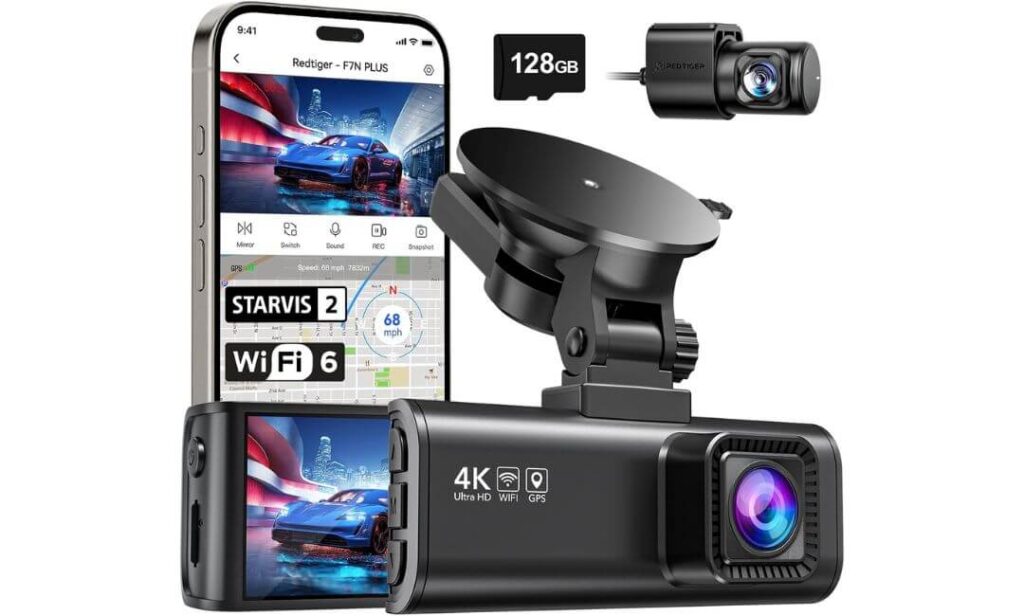
Quick Specs:
- 4K Front + 1080P Rear Recording
- Sony STARVIS 2 Image Sensor
- Free 128GB Memory Card Included
- 5.8GHz Wi-Fi with Up to 20MB/s Transfers
- Built-In GPS Tracking
- 170° Front Wide-Angle Coverage
- WDR + HDR Night Enhancement
- 24-Hour Parking Monitoring Support
- Heat-Resistant Supercapacitor Design
- Plug-and-Play Installation Hardware Included
There’s a reason this model keeps appearing in conversations among SUV owners who actually spend time comparing features instead of marketing slogans. It manages to cover nearly every major requirement without forcing buyers into flagship-level pricing. From the moment you open the box, the included 128GB memory card, built-in GPS, Wi-Fi connectivity, and dual-camera setup make it feel genuinely ready to use.
What impressed us most was how balanced the overall package feels. The STARVIS 2 sensor, F1.5 aperture, and wide viewing angles work together to create footage that remains surprisingly clear in situations where many value-focused cameras begin to struggle. Whether you’re pulling into a dim parking garage, navigating rain-soaked roads, or dealing with harsh sunlight reflecting off traffic ahead, the camera does a respectable job maintaining usable detail.
The convenience factor also deserves attention. Fast 5.8GHz Wi-Fi transfers, simple app controls, GPS route tracking, loop recording, and included storage eliminate many of the extra purchases that often increase the true cost of ownership. For many Kia Sorento owners, this will provide nearly everything they need without stepping into the price range occupied by ultra-premium systems.
(Sometimes the smartest upgrade isn’t the most expensive one—it’s the product that gets the important things right while keeping setup simple and ownership stress-free.)
Why It Makes So Much Sense for Most Drivers
- Free 128GB card included, allowing immediate use right out of the box.
- Excellent value-to-feature ratio compared with many premium competitors.
- STARVIS 2 imaging helps improve nighttime clarity and contrast.
- Fast 5.8GHz Wi-Fi makes downloading footage quick and convenient.
- Supercapacitor design offers better durability than traditional battery-powered cameras.
One Thing Worth Keeping in Mind
- Drivers interested in continuous parking surveillance can add a hardwire kit later to unlock the full range of parking-mode features.
Kia Sorento Installation & Ownership Experience
This setup fits naturally inside the Kia Sorento thanks to its compact windshield-mounted design and long rear-camera cable. The included mounting accessories and wiring length provide enough flexibility for clean routing through the cabin without requiring complicated modifications.
One of the biggest advantages is simplicity. The included memory card means there is no immediate need to research compatible storage options before installation. For many owners, setup can be completed in a single afternoon using the supplied accessories and standard 12V power outlet.
The Insider Pro-Tip
Many buyers automatically assume they need the most expensive camera available.
In reality, most recorded incidents involve routine situations—parking lot contact, traffic disputes, unexpected lane changes, or low-speed impacts. For those scenarios, reliability, ease of use, and consistent recording matter far more than having every premium feature on the market.
That’s where this model earns its position. It doesn’t try to be the most advanced dash cam available. Instead, it focuses on delivering the features most drivers actually use every day: 4K recording, GPS tracking, fast wireless access, dependable night visibility, and immediate out-of-the-box usability. For many Kia Sorento owners, that’s a combination that’s difficult to ignore.
#4. ROVE R3 Dash Cam Front and Rear with Cabin
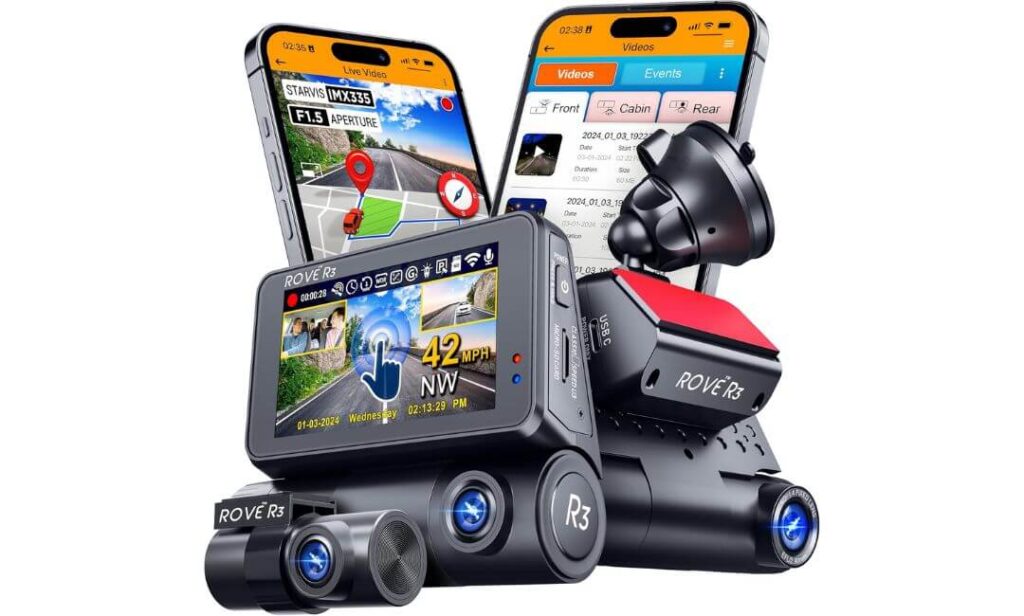
Quick Specs:
- 3-Channel Recording (Front + Cabin + Rear)
- 1440P Front + 1080P Interior + 1080P Rear
- 3-Inch IPS Touchscreen Interface
- Dual-Band 5GHz & 2.4GHz Wi-Fi
- Up to 30MB/s Wireless Downloads
- Built-In Quad-Mode GPS
- IR Night Vision Cabin Camera
- Voice Guidance System
- Supercapacitor Heat-Resistant Design
- Supports Up to 512GB microSD Storage
Here’s where things get interesting. Most dash cams only tell part of the story because they record what’s happening outside the vehicle. This setup takes a different approach. By combining front, rear, and cabin coverage into a single system, it creates a complete picture of what happened before, during, and after an incident—something many traditional dual-camera systems simply cannot do.
The standout feature isn’t necessarily the extra camera itself. It’s how seamlessly everything works together. The 3-inch touchscreen, intuitive interface, built-in GPS, and remarkably fast Wi-Fi transfers make this one of the easiest systems to live with day after day. Whether you’re reviewing footage after a road trip, checking an event recording, or downloading clips to your phone, the experience feels polished rather than complicated.
The interior camera deserves special attention. Equipped with dedicated IR night vision LEDs, it continues recording clear cabin footage even when the interior is completely dark. For families, rideshare drivers, parents with teenage drivers, or anyone wanting a more complete record of events inside and outside the vehicle, that’s a capability few cameras in this category match as effectively.
(If your goal is documenting everything happening around—and inside—your vehicle, this setup delivers a level of coverage most dual-channel systems simply cannot provide.)
Why It Earned a Spot on This List
- Three-camera coverage captures front, rear, and interior activity simultaneously.
- IR night vision technology keeps cabin footage visible after dark.
- Large touchscreen display simplifies operation without relying entirely on an app.
- 30MB/s wireless transfers make footage retrieval quick and convenient.
- Quad-mode GPS tracking adds detailed route and location information.
One Thing Worth Keeping in Mind
- A microSD card isn’t included, allowing owners to choose the storage capacity that best fits their recording needs.
Kia Sorento Installation & Daily Practicality
The spacious cabin of the Kia Sorento makes this one of the easiest vehicles to install a three-channel system in. The included rear-camera cable provides sufficient length for clean routing, while the front unit fits neatly behind the mirror area without creating excessive windshield clutter.
For drivers transporting family members, teenagers, clients, pets, or valuable cargo, the additional interior camera adds another layer of documentation without requiring a separate recording system. Installation remains straightforward using the included charger, with optional hardwiring available later for parking-mode functionality.
The Insider Pro-Tip
Most people don’t realize that some of the most important evidence during an incident never appears in front-facing footage.
A sudden distraction inside the vehicle, passenger activity, unexpected movement in the cabin, or events occurring immediately before an accident can all become part of the story. That’s exactly why three-channel systems continue gaining popularity among drivers who spend significant time on the road.
For Kia Sorento owners who regularly carry passengers, family members, or valuable belongings, the additional interior perspective often ends up being the feature they appreciate most—not because they use it every day, but because it’s there when it matters. That’s what makes this camera fundamentally different from the others on this list.
#5. Vantrue N2X Front and Inside Dash Cam
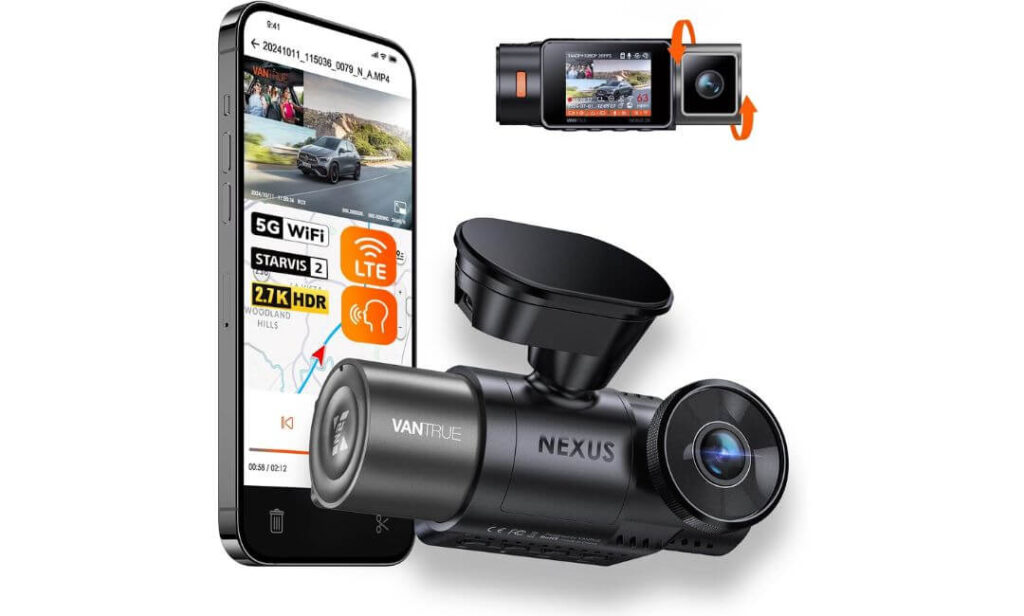
Quick Specs:
- 2.7K Front Recording with 60FPS Support
- 1080P Interior Camera with IR Night Vision
- Sony STARVIS 2 Imaging Sensor
- PlatePix™ License Plate Enhancement Technology
- 5G Wi-Fi App Connectivity
- Built-In GPS Route Tracking
- Voice Command Controls
- 24/7 Parking Monitoring Support
- Supercapacitor-Based Heat Resistance
- Supports Up to 512GB Storage
Perhaps the most overlooked reality about dash cams is that some of the most important moments don’t happen in front of the vehicle—they happen inside it. That’s exactly where this setup shines. Instead of trying to compete purely on resolution numbers, it focuses on capturing both the road ahead and everything happening inside the cabin with remarkable consistency.
What immediately separates this model from many interior-facing cameras is the combination of STARVIS 2 imaging, Dual HDR processing, and PlatePix™ technology. During difficult lighting transitions—entering parking garages, driving at sunset, passing through tunnels, or navigating poorly lit streets—the camera does an excellent job preserving important details. The dedicated interior camera, paired with four infrared LEDs, continues producing usable cabin footage even when the vehicle interior appears completely dark to the human eye.
The overall ownership experience feels surprisingly refined as well. Features such as voice controls, built-in GPS tracking, magnetic mounting, customizable parking monitoring, and fast 5G Wi-Fi connectivity make daily operation straightforward. For Kia Sorento owners transporting family members, teen drivers, passengers, clients, or valuable equipment, having a second perspective inside the vehicle can provide peace of mind that many traditional front-and-rear systems simply cannot match.
(Not every driver needs an interior camera. But for the people who do, it often becomes the feature they appreciate most after living with it for a few months.)
Why It Earned the Final Spot in Our Rankings
- STARVIS 2 sensor delivers strong low-light performance.
- PlatePix™ technology helps improve license plate visibility.
- Infrared cabin camera records clearly even in complete darkness.
- Magnetic mounting system makes removal and repositioning simple.
- Voice controls reduce distractions while driving.
One Thing Worth Keeping in Mind
- Since storage isn’t included, you’ll want to add a quality high-endurance microSD card during setup to get the best long-term recording experience.
Kia Sorento Installation & Real-World Use
The compact body and magnetic mounting system work particularly well inside the Kia Sorento’s cabin. The front unit sits neatly near the rearview mirror area while maintaining a clean factory-style appearance. Because both cameras are integrated into a single unit, installation is generally simpler than many multi-camera alternatives.
For everyday driving, the included Type-C power solution allows quick plug-and-play setup through the Sorento’s 12V outlet. Owners interested in full-time parking protection can add a hardwire kit later without changing the rest of the installation.
The Insider Pro-Tip
Interior cameras are often misunderstood.
Many buyers assume they’re only useful for rideshare drivers. In reality, some of the most valuable recordings involve events happening inside the vehicle—unexpected passenger behavior, interactions after a traffic incident, cargo movement, distractions before an accident, or situations where outside footage alone doesn’t tell the complete story.
For Kia Sorento owners who regularly carry family members, teenagers learning to drive, work equipment, or frequent passengers, that additional layer of visibility can be surprisingly valuable. That’s why this camera earned a place on our list. It fills a role that the other models simply aren’t designed to cover, while still delivering the image quality and reliability expected from a modern premium dash cam.
Best Kia Sorento Dash Cam Comparison: Side-by-Side Breakdown of Our Top 5 Picks
Buying Guide: How to Choose the Right Dash Cam for Your Kia Sorento
Buying a dash cam for a Kia Sorento is no longer as simple as picking the model with the highest resolution or the biggest advertisement budget. Modern dash cams vary dramatically in image quality, parking protection, storage capabilities, connectivity features, and long-term reliability. After researching and comparing the latest premium models, one thing became clear: the best choice depends less on marketing claims and more on how you actually use your SUV every day.
The Kia Sorento is often used as a family vehicle, road-trip companion, daily commuter, and long-distance highway cruiser. Because of that, the ideal dash cam should provide strong video evidence, dependable parking protection, easy footage access, and enough storage capacity to handle extended driving without constant maintenance.
Resolution Matters, But Sensor Quality Matters Even More
Many buyers immediately look for a 4K dash cam and stop there. While higher resolution certainly helps, the image sensor behind the lens is often what determines whether footage remains usable when conditions become difficult.
This is why cameras equipped with Sony STARVIS 2 sensors consistently performed well throughout our research. These sensors are designed to improve low-light visibility, reduce motion blur, and preserve important details such as license plates, road signs, and vehicle markings. A well-tuned STARVIS 2 camera will often produce more useful footage at night than a higher-resolution camera using an older sensor platform.
For most Kia Sorento owners, a quality sensor paired with 4K recording creates the ideal balance between sharpness and real-world performance.
Front and Rear Coverage Should Be Considered the New Standard
Years ago, a front-facing dash cam was enough for most drivers. Today, rear-end collisions, parking lot incidents, and hit-and-run situations make rear coverage increasingly important.
A front-and-rear setup allows you to document what happens around the vehicle rather than only what happens ahead of it. This becomes especially valuable when your Sorento is parked in public areas, transporting family members, or spending long hours on busy highways.
Drivers who want the most complete coverage may even benefit from systems that add interior recording alongside front and rear cameras.
Dual-Channel vs Multi-Channel Recording
Not every driver requires the same recording setup.
A dual-channel system records the front and rear of the vehicle and is generally the best fit for most Kia Sorento owners. It provides excellent overall protection while keeping installation relatively simple.
A three-channel system adds cabin recording, which may be valuable for rideshare drivers, parents with teenage drivers, frequent travelers, or anyone wanting documentation of events occurring inside the vehicle. The additional camera can sometimes provide context that exterior footage alone cannot capture.
Before purchasing, consider whether interior visibility is genuinely useful for your driving habits rather than assuming more cameras automatically mean a better setup.
Parking Protection Can Be More Important Than Driving Footage
One of the biggest misconceptions about dash cams is that they are only useful while driving.
In reality, many incidents occur when a vehicle is parked. Shopping centers, airport lots, apartment complexes, hotels, and office parking areas are common locations for minor impacts and hit-and-run damage.
Advanced parking features such as motion detection, impact detection, time-lapse recording, and radar-assisted monitoring can help capture these events while minimizing unnecessary battery consumption. Drivers who regularly leave their Sorento parked for extended periods should place significant emphasis on parking capabilities when comparing options.
Radar Monitoring and Impact Detection Add Another Layer of Security
Traditional parking modes continuously monitor the vehicle, but newer systems have become considerably more intelligent.
Radar-assisted technology can detect nearby movement and activate recording only when activity occurs. This approach reduces power consumption while extending parking coverage. Impact detection systems also play an important role by automatically preserving footage before and after a collision is detected.
For owners who frequently park in crowded areas, these features can provide meaningful advantages over basic recording systems.
Connectivity Features Affect Daily Ownership More Than Most Buyers Expect
The quality of the mobile app often determines how enjoyable a dash cam is to use after installation.
Older cameras frequently suffer from slow downloads, unreliable wireless connections, and frustrating interfaces. Newer systems equipped with 5GHz Wi-Fi or Wi-Fi 6 can transfer footage dramatically faster, making it easier to review incidents, save evidence, or share clips when necessary.
Firmware support is equally important. Manufacturers that continue releasing updates often improve stability, add features, and address issues long after the initial purchase.
Installation Considerations for the Kia Sorento
Fortunately, the Kia Sorento is one of the easier SUVs to equip with a dash cam.
The windshield design provides ample space for discreet front-camera placement near the rearview mirror, while the vehicle’s cabin layout allows rear-camera wiring to be routed cleanly through interior trim panels. Most modern systems can be installed using the included power adapter and standard 12V outlet.
Drivers interested in parking surveillance should remember that many advanced parking features require either a dedicated hardwire kit or an OBD-II power connection. While installation remains straightforward, it’s worth accounting for these accessories before making a final decision.
Storage Capacity Is Often Overlooked
Storage becomes increasingly important as video quality improves.
A camera recording in 4K generates significantly larger files than older 1080P models. While loop recording automatically overwrites older footage when storage is full, larger memory cards or SSD storage allow footage to be retained for longer periods before being replaced.
Drivers who take frequent road trips, commute long distances, or prefer keeping footage available for extended periods should prioritize cameras supporting high-capacity microSD cards or external SSD storage.
Reliability Is More Important Than Extra Features
The most advanced dash cam in the world becomes useless if it fails when you need it.
When evaluating options, pay close attention to thermal management, power systems, firmware support, build quality, and long-term durability. Cameras equipped with supercapacitors generally tolerate heat better than traditional battery-powered alternatives, making them particularly well-suited for vehicles that spend time parked outdoors.
Ultimately, the best dash cam for a Kia Sorento isn’t necessarily the one with the longest feature list. It’s the one that records consistently, captures clear evidence when needed, and continues performing reliably year after year. That’s exactly why the models in this guide were selected—they excel in the areas that matter most once the excitement of a new purchase wears off and real ownership begins.
Kia Sorento Dash Cam Installation Guide: What Actually Matters Before You Start
One of the biggest reasons people delay buying a dash cam is the assumption that installation will be complicated. In reality, the Kia Sorento is one of the easier SUVs to work with thanks to its spacious cabin, accessible trim panels, and generous wire-routing paths around the windshield and headliner.
Whether you’re installing a simple front-facing camera or a premium dual-channel system with rear coverage and parking monitoring, spending a few extra minutes planning the installation usually makes a bigger difference than the installation itself. A clean setup not only looks better but also prevents rattles, visibility issues, and future maintenance headaches.
Before Installation: Gather Everything You’ll Need
Before touching the windshield or opening trim panels, confirm that all required components are available.
For most dash cam installations, you’ll typically need:
- Dash cam and mounting hardware
- Rear camera and extension cable (if using dual-channel recording)
- Power adapter or vehicle-specific power cable
- Trim removal tool
- Cable clips or adhesive wire holders
- High-endurance microSD card (if not included)
- Microfiber cloth and glass cleaner
- Optional hardwire kit or OBD-II cable for parking mode
Taking a few minutes to verify these items before installation can prevent unnecessary interruptions later in the process.
Choosing the Right Power Setup
Most Kia Sorento owners have two practical installation options.
The simplest method uses the included 12V power adapter. This approach is ideal for drivers who only want recording while driving and prefer a quick plug-and-play installation.
The second option involves using a hardwire kit or OBD-II power connection. This is typically required for advanced features such as parking surveillance, motion detection, impact-triggered recording, and radar-based monitoring systems.
For drivers investing in premium dash cams specifically for vehicle protection while parked, the additional effort of a hardwired installation is often worthwhile.
Positioning the Front Camera Correctly
The best mounting location is usually directly behind or slightly below the rearview mirror.
This placement provides several advantages:
- Keeps the camera out of the driver’s primary field of view
- Creates a cleaner factory-style appearance
- Maximizes forward road visibility
- Reduces windshield distractions
- Improves GPS reception consistency
Before permanently attaching the mount, sit in the driver’s seat and verify that the camera remains largely hidden behind the mirror from your normal driving position.
Installing the Rear Camera on Dual-Channel Systems
For front-and-rear systems such as the THINKWARE U3000 PRO, VIOFO A329S, or REDTIGER F7NP, the rear camera deserves just as much attention as the front unit.
Most Sorento owners achieve the cleanest results by mounting the rear camera near the upper center portion of the rear window. This location provides a wide field of view while minimizing interference from passengers, cargo, or rear headrests.
When routing the cable:
- Follow the headliner whenever possible.
- Continue along factory trim panels.
- Avoid sharp bends and moving components.
- Leave enough slack near hatch hinges.
- Secure loose sections to prevent future rattles.
A properly routed cable should be nearly invisible once installation is complete.
Cable Routing Tips for a Factory-Like Appearance
This is where many installations either look professional or look rushed.
The goal should always be to hide as much wiring as possible while maintaining easy access for future maintenance.
Experienced installers generally route cables:
- Along the headliner edge
- Behind A-pillar trim
- Through weather stripping channels
- Beneath door trim where appropriate
- Behind rear cargo area panels
Avoid allowing cables to hang across the dashboard, windshield, or center console. Besides looking untidy, exposed wiring can create distractions and become damaged over time.
Reducing Windshield Reflections and Video Glare
Many owners blame poor video quality on the camera itself when the real issue is windshield glare.
To improve footage quality:
- Clean both sides of the windshield thoroughly.
- Position the lens away from heavily tinted areas.
- Install included CPL filters if available.
- Avoid mounting directly behind stickers or sensors.
- Check for reflections from dashboard accessories.
Small adjustments often make a surprisingly large difference in daytime image quality.
Hardwire Kits, Fuse Taps, and Parking Mode Considerations
If parking protection is one of the primary reasons for purchasing a dash cam, it’s important to understand how these systems receive power.
A properly installed hardwire kit typically connects to the vehicle’s fuse box and includes voltage protection designed to prevent excessive battery discharge.
Benefits of hardwiring include:
- Continuous parking monitoring
- Automatic power management
- Cleaner cabin appearance
- No occupied power outlets
- Full access to advanced parking features
Potential considerations include:
- Additional installation time
- Extra hardware cost
- Fuse-box access requirements
- Greater installation complexity for beginners
For many Sorento owners, an OBD-II power solution offers a useful middle ground between convenience and functionality.
Common Installation Mistakes to Avoid
After reviewing hundreds of owner experiences, several issues appear repeatedly.
The most common mistakes include:
- Mounting the camera too low on the windshield
- Forgetting to format the memory card
- Using low-quality storage cards
- Routing cables near moving components
- Ignoring firmware updates
- Leaving excessive cable slack
- Installing the rear camera at an improper angle
- Skipping test recordings before daily use
Most of these problems can be avoided with a little extra patience during installation.
Troubleshooting Early Issues
If something doesn’t seem right after installation, the solution is often simpler than expected.
If the camera repeatedly powers off:
- Verify the power connection.
- Check the memory card.
- Confirm firmware is current.
If GPS isn’t working:
- Ensure the antenna has a clear sky view.
- Allow additional time for initial satellite acquisition.
If app connectivity fails:
- Confirm the correct Wi-Fi band is selected.
- Update the mobile application.
- Restart both the phone and camera.
Addressing these small issues early helps prevent larger frustrations later.
Final Checks Before You Consider the Job Finished
Before heading out on the road, perform a complete system review.
Confirm that:
- The front camera is level.
- The rear camera is aligned properly.
- GPS data is recording correctly.
- Date and time settings are accurate.
- The memory card is recognized.
- Parking mode functions as expected.
- App connectivity works properly.
- Video playback appears clear on both channels.
A five-minute verification process can save hours of troubleshooting after an important event occurs.
The Installation Detail Most Owners Overlook
The biggest mistake isn’t choosing the wrong dash cam.
It’s assuming installation ends when the camera powers on.
The owners who get the best long-term experience are usually the ones who spend a few extra minutes reviewing footage from multiple angles, checking nighttime visibility, testing app connectivity, and confirming parking-mode operation before relying on the system every day.
Once that’s done, your Kia Sorento’s dash cam becomes something you’ll rarely think about—until the day you’re extremely glad it’s there.
Real-World Kia Sorento Dash Cam Scenarios: Where the Right Features Actually Matter
When people shop for a dash cam, most comparisons focus on specifications. Resolution numbers, storage limits, and app features dominate product pages. What often gets overlooked is how these features perform during the situations Sorento owners encounter every week.
The value of a dash cam isn’t measured by the day you install it. It’s measured by the day you actually need it.
Whether you’re parked outside a grocery store, driving through heavy rain, navigating rush-hour traffic, or heading out on a cross-country family vacation, certain features become significantly more important than others. These real-world scenarios explain why the models in this guide were selected and where each category of technology genuinely earns its place.
Why Front and Rear Recording Is Becoming Essential for Kia Sorento Owners
A surprising number of vehicle incidents happen outside the field of view of a traditional front-facing camera.
Rear-end collisions, parking lot impacts, hit-and-run damage, and lane-change disputes often involve activity occurring behind the vehicle. Without rear coverage, drivers are frequently left relying on witness statements or incomplete evidence.
This becomes especially important for Kia Sorento owners because the vehicle is commonly used in situations where rear visibility matters:
- Family road trips with luggage blocking rear visibility.
- School pickup and drop-off traffic.
- Busy shopping center parking lots.
- Airport parking facilities.
- Long-distance interstate driving.
- Congested urban commuting.
A front-and-rear system creates a much more complete record of events. Instead of seeing only one side of the story, you capture what happened ahead of the vehicle and behind it at the same time.
That’s one of the reasons dual-channel systems dominate our recommendations. For most Sorento owners, they offer the best balance between protection, simplicity, and long-term value.
How Parking Mode Protects Your Sorento When You’re Not Around
Most drivers spend far more time parked than driving.
Think about a typical week. Your Sorento might spend an hour or two on the road each day but remain parked for twenty-plus hours. That’s why parking surveillance has become one of the most important features in modern dash cams.
Advanced parking systems work in several different ways:
- Motion detection activates recording when movement is detected nearby.
- Impact detection begins recording after a collision or vibration.
- Time-lapse modes capture extended coverage using minimal storage.
- Radar-assisted systems monitor surrounding activity while conserving power.
Imagine returning to your vehicle after shopping and finding a dent on the rear bumper. Without parking protection, you’re left wondering what happened. With an active parking system, there’s a much greater chance the event was recorded.
For drivers who frequently park in public lots, apartment complexes, office garages, hotels, or airport facilities, parking surveillance often becomes the most valuable feature they never expected to use.
Why 4K Recording Can Make a Difference When Evidence Matters
Not every incident happens in ideal conditions.
Rain, darkness, glare, shadows, fast-moving traffic, and changing light levels all make video capture more difficult. This is where higher-resolution cameras begin to show their advantages.
The benefit of a quality 4K system isn’t simply a sharper image.
It’s the ability to preserve:
- License plate details.
- Vehicle damage evidence.
- Road sign information.
- Lane positioning.
- Traffic signal visibility.
- Small details that may become important later.
The difference becomes even more noticeable when footage needs to be enlarged. A video that looks acceptable during playback can reveal substantially more detail when investigators, insurance companies, or vehicle owners zoom into specific sections of the recording.
That doesn’t mean every 4K camera is automatically superior. Sensor quality remains equally important, which is why many of the top systems in this guide combine 4K recording with STARVIS 2 imaging technology.
The goal isn’t prettier video.
The goal is preserving information that could matter later.
Why Wi-Fi Connectivity Changes the Ownership Experience
Few features seem less exciting during purchase research than Wi-Fi.
Ironically, it often becomes one of the most appreciated features after installation.
Without wireless connectivity, reviewing footage usually means:
- Removing the memory card.
- Finding a card reader.
- Connecting to a computer.
- Searching through files manually.
Modern Wi-Fi-equipped systems eliminate most of that process.
With a connected app, owners can:
- Preview footage instantly.
- Download clips directly to a smartphone.
- Share recordings immediately.
- Adjust camera settings remotely.
- Review GPS information.
- Install firmware updates.
The latest systems featured in this guide push this even further with 5GHz Wi-Fi and Wi-Fi 6 technology, dramatically reducing transfer times.
A one-minute 4K clip that once required several minutes to access can now be transferred in seconds.
Cloud Access and Remote Monitoring Are Becoming More Relevant
While not every dash cam includes cloud functionality, the technology is becoming increasingly important.
For drivers using advanced connected systems, remote features may include:
- Impact notifications.
- Vehicle location tracking.
- Remote video access.
- Live vehicle monitoring.
- Security alerts.
These capabilities are particularly useful for owners who leave their Sorento parked for extended periods, whether at airports, hotels, workplaces, or long-term parking facilities.
Although cloud features aren’t necessary for everyone, they represent one of the fastest-growing areas of dash cam technology.
The Feature Most Drivers Appreciate After Six Months
When new owners first install a dash cam, they usually focus on image quality.
Six months later, many of them care about something completely different.
They appreciate how easy it is to retrieve footage.
They appreciate parking alerts.
They appreciate reliable operation during extreme temperatures.
They appreciate not having to worry about whether the camera is working.
That’s why our recommendations focus on more than resolution alone. The best Kia Sorento dash cams combine strong image quality, dependable parking protection, intuitive connectivity, reliable storage support, and long-term durability—because those are the features that continue delivering value long after the excitement of a new purchase fades.
Dash Cam Maintenance and Care: Simple Habits That Protect Your Investment
Most dash cams fail long before their hardware reaches the end of its lifespan.
The reason usually isn’t poor manufacturing. More often, it’s neglected storage cards, outdated firmware, dirty lenses, or environmental conditions that slowly degrade performance over time. The good news is that modern premium dash cams require very little maintenance when compared to other vehicle accessories.
A few minutes of attention every month can dramatically improve recording reliability and help ensure your Kia Sorento’s dash cam captures critical footage when you actually need it.
Choosing the Right microSD Card Matters More Than Most Buyers Realize
Many owners spend hundreds of dollars on a premium dash cam and then install the cheapest memory card they can find.
Unfortunately, the memory card is one of the hardest-working components in the entire system.
Unlike a camera used occasionally, a dash cam continuously writes, overwrites, locks, and saves video files every day. This constant recording cycle creates significant wear on storage media over time.
For best results, look for:
- High-endurance microSD cards specifically designed for continuous recording.
- Trusted manufacturers with proven reliability records.
- Storage capacities recommended by the dash cam manufacturer.
- U3 or V30 speed ratings when using higher-resolution recording modes.
- Cards capable of handling extreme temperatures.
Higher-capacity cards also provide practical benefits, especially when recording in 4K. Larger storage means more footage can be retained before loop recording begins overwriting older files.
Why Periodic Card Rotation Can Improve Reliability
Even premium memory cards eventually wear out.
One practice commonly used by experienced dash cam owners is periodic card rotation. Instead of relying on the same storage card for years, they replace or rotate cards at scheduled intervals.
This approach offers several advantages:
- Reduces the risk of sudden card failure.
- Maintains consistent recording performance.
- Minimizes file corruption issues.
- Helps preserve important footage.
- Provides an opportunity to archive older recordings.
Drivers who spend significant time on the road often view memory cards as a maintenance item rather than a permanent component.
Formatting the Card Is Often More Important Than Replacing It
A surprisingly large number of recording issues originate from memory cards that simply need maintenance.
As files are repeatedly written and overwritten, file structures can become fragmented. This occasionally leads to recording interruptions, playback issues, or unexpected error messages.
Most manufacturers recommend formatting the memory card directly through the dash cam’s settings menu on a regular basis.
Doing so:
- Refreshes file structures.
- Improves recording stability.
- Reduces compatibility issues.
- Helps maximize storage efficiency.
Just remember to back up any important footage before formatting.
Firmware Updates Are More Valuable Than Most Owners Expect
Firmware updates aren’t just about adding new features.
In many cases, they improve:
- Recording stability.
- GPS performance.
- Wi-Fi connectivity.
- Parking mode functionality.
- Mobile app compatibility.
- Overall system reliability.
Manufacturers such as Thinkware, VIOFO, Vantrue, REDTIGER, and ROVE regularly release updates designed to refine performance and address known issues.
Ignoring firmware updates won’t necessarily cause immediate problems, but keeping software current often improves the ownership experience over the long term.
A Simple Firmware Update Routine
Many owners only check for updates when something stops working.
A better approach is developing a simple maintenance habit.
Every few months:
- Open the dash cam app.
- Check for firmware notifications.
- Review release notes.
- Update if recommended by the manufacturer.
- Verify settings afterward.
This process usually takes only a few minutes and helps ensure the camera continues operating at its best.
Lens Cleaning Can Have a Bigger Impact Than Upgrading Hardware
It’s easy to underestimate how quickly dust, fingerprints, pollen, and windshield residue accumulate.
Even a small amount of contamination can reduce image sharpness, increase glare, and affect low-light performance.
The front camera lens should be inspected regularly, especially after:
- Long road trips.
- Seasonal weather changes.
- Dust storms.
- Construction-zone driving.
- Extended parking outdoors.
A clean microfiber cloth is usually all that’s needed to maintain optimal image quality.
Don’t Forget the Windshield
Many drivers clean the lens while overlooking the glass directly in front of it.
The windshield itself often contributes more image degradation than the camera lens.
Road film, pollen, dust, smoke residue, water spots, and interior haze can all affect recorded footage.
For the best possible video quality:
- Clean both sides of the windshield regularly.
- Remove dashboard dust that may create reflections.
- Inspect the area directly in front of the camera.
- Reapply CPL filters if the system supports them.
These small details can noticeably improve image clarity.
Managing Heat Inside the Kia Sorento
Heat remains one of the biggest long-term challenges for any electronic device mounted to a windshield.
Even well-built cameras experience additional stress when exposed to direct sunlight for extended periods.
Fortunately, many of the models featured in this guide use:
- Supercapacitor power systems.
- Advanced thermal management.
- Heat-resistant internal components.
Still, a few simple habits can help extend lifespan:
- Use windshield sunshades when practical.
- Park in shaded areas whenever possible.
- Ensure vents are not blocked around the camera.
- Avoid covering the camera with accessories or decorations.
Premium cameras are designed to handle heat, but reducing unnecessary exposure is always beneficial.
Dust, Humidity, and Seasonal Conditions
Environmental conditions change throughout the year, and dash cams experience all of them.
Depending on where your Sorento spends most of its time, you may encounter:
- Summer heat.
- Winter condensation.
- High humidity.
- Dust accumulation.
- Heavy rainfall.
- Airborne pollen.
Regular visual inspections help identify potential issues before they affect recording quality. Most problems are easier to prevent than correct later.
Signs Your Dash Cam May Need Attention
A quick inspection every month can reveal early warning signs.
Watch for:
- Frequent restart cycles.
- Missing recordings.
- GPS connection issues.
- App pairing failures.
- Storage warnings.
- Excessive heat during operation.
- Unusual file corruption.
Addressing these symptoms early often prevents more significant problems down the road.
The Maintenance Habit That Matters Most
After researching hundreds of owner experiences, one pattern appears repeatedly.
The drivers who report the fewest issues aren’t necessarily using the most expensive dash cams. They’re the ones who occasionally check their footage.
Every few weeks, take a minute to review a recent recording.
Confirm that:
- Video quality remains sharp.
- Date and time are correct.
- GPS information is recording properly.
- Audio functions as expected.
- Parking events are being captured.
- The storage card is functioning normally.
That simple habit does more to protect your investment than any accessory, upgrade, or specification sheet ever will. A dash cam only matters when it successfully records the moment you need it, and regular maintenance is what helps ensure that moment is captured.
FAQs About Kia Sorento Dash Cam
Is a premium dash cam actually worth it for a Kia Sorento, or will a cheaper model capture the same evidence?
This is probably the most misunderstood part of dash cam shopping. Many buyers assume that once a camera records video, the job is done. The reality is that most incidents don’t happen in perfect daylight with a stationary vehicle. They happen at night, in the rain, during heavy traffic, or while another vehicle is moving quickly through the frame.
That’s where premium models separate themselves. Better image sensors, stronger HDR processing, improved night performance, and faster frame rates increase the likelihood of capturing details that matter later. A blurry vehicle is still a vehicle. A readable license plate is evidence.
For Kia Sorento owners who spend significant time commuting, traveling, or parking in busy areas, the real question isn’t whether a premium dash cam costs more. It’s whether the additional clarity could matter during the one recording you end up needing years from now.
What’s the biggest dash cam mistake Kia Sorento owners make after installation?
Surprisingly, it isn’t installation.
The most common mistake is assuming the camera is recording properly simply because it powers on. Many owners never review footage until an incident occurs, only to discover a corrupted memory card, incorrect settings, outdated firmware, or a camera angle that misses important details.
A simple monthly check can prevent most of these problems:
- Review a recent recording.
- Confirm GPS data is present.
- Verify date and time accuracy.
- Check parking events.
- Confirm the memory card is functioning correctly.
Experienced dash cam owners rarely trust a camera blindly. They verify it occasionally. That small habit often matters more than spending extra money on hardware.
For a Kia Sorento, should I prioritize 4K video quality or advanced parking protection?
If you’re looking for a single feature that provides value every day, parking protection deserves more attention than most buyers give it.
Think about how your Sorento is actually used. For every hour spent driving, it may spend twenty or more hours parked. Airport lots, shopping centers, office garages, apartment complexes, hotel parking areas—these are environments where damage frequently occurs without witnesses.
Ideally, a modern dash cam should provide both strong video quality and intelligent parking features. However, if forced to choose, many experienced owners would likely prioritize:
- Reliable parking monitoring.
- High-quality image sensors.
- Strong video resolution.
- Fast footage retrieval.
The footage you never captured is always less valuable than footage that exists, even if it’s not recorded at the highest possible resolution.
Why are newer STARVIS 2 dash cams receiving so much attention compared to older popular models?
A few years ago, many highly recommended dash cams earned their reputation because they offered dependable recording at reasonable prices.
The technology has changed significantly since then.
Modern STARVIS 2 sensors improve several areas simultaneously:
- Nighttime visibility.
- Dynamic range.
- Motion handling.
- License plate readability.
- Low-light detail retention.
What’s interesting is that the improvement isn’t always obvious during casual viewing. The difference often appears when footage is paused, enlarged, or reviewed after an incident. Details that previously disappeared into shadows or bright headlights become easier to identify.
That’s one reason many of the strongest dash cams currently available have shifted toward STARVIS 2 platforms rather than relying solely on higher resolution numbers.
If I plan to keep my dash cam for five years or more, what feature becomes most important long term?
Most buyers focus on the first week of ownership.
Long-term owners think differently.
After several years, the features that usually matter most are:
- Reliable storage management.
- Stable firmware support.
- Heat resistance.
- Parking-mode efficiency.
- Easy footage retrieval.
- Consistent recording performance.
A camera that records flawlessly for five years is far more valuable than one packed with impressive features that become frustrating to use after six months.
That’s why many enthusiasts eventually stop chasing specifications and start paying attention to reliability. Resolution attracts buyers. Dependability keeps owners satisfied. In the long run, that’s often the difference between a dash cam that becomes part of your vehicle and one that ends up forgotten in a drawer.
Final Thoughts
After spending considerable time evaluating the latest dash cams available for the Kia Sorento, one conclusion became increasingly clear: there is no single “best” dash cam for every driver. The right choice depends on how you use your SUV, where you park it, how often you travel, and what type of protection matters most to you.
For drivers who want the most advanced overall protection package, the THINKWARE U3000 PRO stands out because of its radar-assisted parking technology, premium image processing, and long-term ownership features. Those who place maximum importance on recording quality will likely appreciate what the VIOFO A329S delivers with its impressive 4K 60FPS performance and next-generation storage capabilities. Meanwhile, the REDTIGER F7NP continues to offer one of the strongest value propositions for Sorento owners seeking a well-rounded balance of features, usability, and affordability.
What’s important to remember is that the best dash cam isn’t necessarily the one with the longest specification sheet. It’s the one that reliably records when you need it, captures useful evidence when conditions become difficult, and continues doing its job months and years after the excitement of the purchase fades.
If there’s one takeaway from this guide, it’s this: focus on the features that match your real-world driving habits. A family-focused Sorento owner may benefit most from advanced parking surveillance. A frequent highway traveler may prioritize image quality and storage capacity. Someone transporting passengers regularly may find interior recording invaluable.
The good news is that every model featured in this guide was selected because it excels in a specific area that genuinely matters to Kia Sorento owners. Whether your priority is 4K clarity, parking protection, interior monitoring, high-speed connectivity, or long-term reliability, you’re investing in technology designed to provide something every driver hopes they’ll never need—but will be extremely grateful to have if the moment ever comes.
And that’s ultimately what a great dash cam is all about: not recording every mile perfectly, but being there for the one recording that ends up mattering most.
Also Check: