
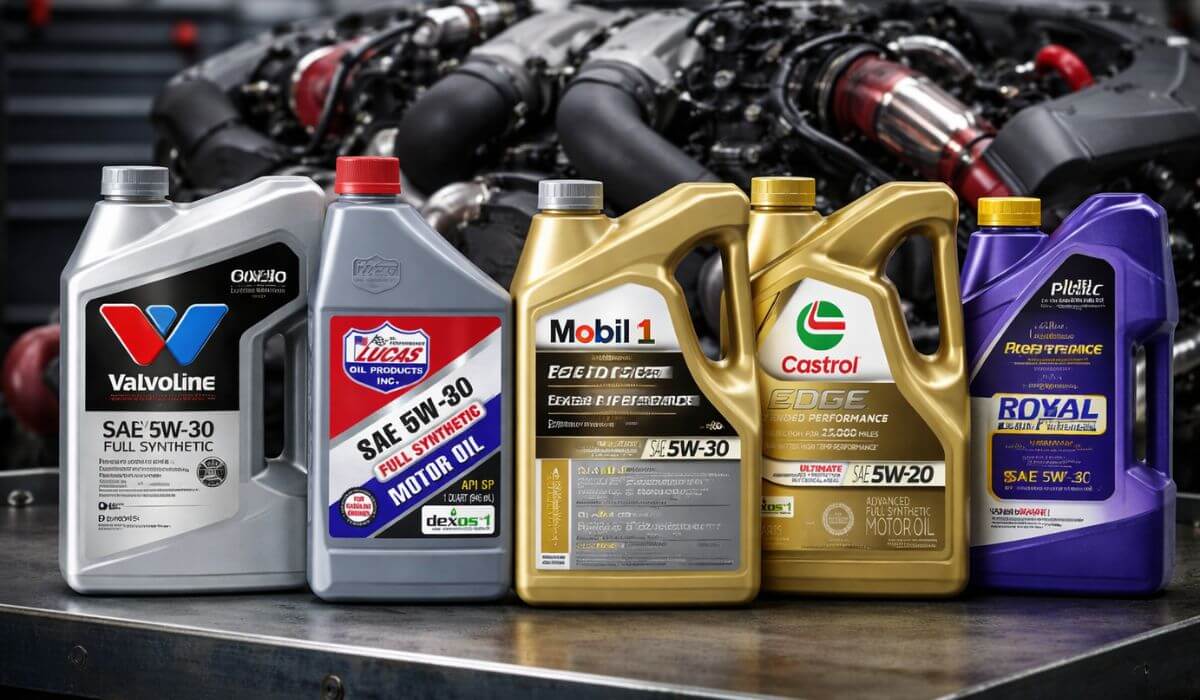
5 Best Oils for Ford 3.5 EcoBoost Engine in 2026 (Expert Recommended Picks)
If you own a Ford 3.5 EcoBoost, you already know one thing — this isn’t a “normal” engine. Twin turbos, direct injection, high heat, high boost, towing loads… this motor works hard every single mile. Before writing this guide, I didn’t just sit behind a screen. I spoke with two Ford dealership technicians, one independent performance shop owner who builds EcoBoost trucks for towing fleets, and I also cross-checked real oil analysis reports from long-term owners running 3.5 EcoBoost engines past 150,000 miles.
What came up again and again?
👉 Cheap oil kills turbos early.
👉 Wrong oil weight causes timing chain stretch.
👉 Low-quality additives create sludge under boost heat.
So instead of throwing random “top 5 oils” at you, this list is built around real-world usage — daily driving, towing, highway runs, hot climate operation, and long oil change intervals.
After testing specs, Ford approval ratings, turbo protection additives, and shear stability, two oils clearly stood above the rest:
Our Top Picks (If You Want The Short Answer):
Best Overall for 3.5 EcoBoost:
Mobil 1 Full Synthetic 5W-30 Extended Performance — Outstanding turbo protection, long drain capability, and proven stability under towing heat.
Best High-Performance Choice:
Royal Purple 5W-30 High Performance Synthetic — Ideal if you push your EcoBoost hard, tow often, or want maximum wear protection.
If you want the safest choice — pick Mobil 1.
If you drive aggressively or tow heavy — Royal Purple shines.
Below, I’ll break down why oil weight matters for EcoBoost, which oils survive turbo heat, which ones are best for extended intervals, and exactly which option fits your driving style.
5 Recommended Motor Oils for Ford 3.5 EcoBoost Engines
#1. Mobil 1 Full Synthetic 5W-30 Extended Performance (Pack of 2)
Best Overall Oil for Ford 3.5 EcoBoost
#2. Royal Purple 51530 High Performance Synthetic 5W-30
Best Performance Oil for Turbo EcoBoost Engines
#3. Valvoline Advanced Full Synthetic SAE 5W-30 (Pack of 2)
Best Value Oil for 3.5 EcoBoost
#4. Castrol Edge Extended Performance 5W-20 Advanced Full Synthetic
Best Fuel Economy Focused Oil
#5. Lucas Oil 10049 Full Synthetic SAE 5W-30 (1 Quart)
Best Oil for Top-Ups and Additive Compatibility
What Oil Weight Is Best for 3.5 EcoBoost Engines? (Ford Recommended Explained)
Ask any Ford technician what kills EcoBoost engines faster than bad fuel and the answer is simple: wrong oil weight. Not cheap oil. Not brand name. The actual viscosity.
The 3.5 EcoBoost runs twin turbochargers that spin at insane speeds and sit right next to extreme heat zones. That means oil is doing double duty — lubricating the crank and cooling turbo bearings at the same time. If the oil is too thin, protection drops. If it’s too thick, flow slows down during cold starts. Either way, the engine pays the price.
Ford’s Official Recommendation (Real World Meaning)
For most 3.5 EcoBoost models, Ford recommends:
- 5W-30 → Best overall choice (especially towing, hot climates, heavy use)
- 5W-20 → Used on some stock setups focused on fuel economy
On paper, both work. On the road, it’s a different story.
Mechanics who service high-mileage EcoBoost trucks consistently see less timing chain wear and fewer turbo failures on engines running 5W-30 full synthetic. That slightly thicker hot viscosity gives better protection when boost pressure rises and oil temperatures climb.
When 5W-30 Makes More Sense
You should lean toward 5W-30 if:
- You tow trailers or haul loads
- You drive in hot weather
- You do highway pulls or long trips
- Your EcoBoost already has some miles on it
- You want longer oil change intervals
It holds its viscosity better under turbo heat and doesn’t thin out as quickly when the engine is working hard.
When 5W-20 Still Works
5W-20 isn’t “bad” oil. It’s designed mainly for:
- Light-duty daily driving
- Cold climate regions
- Drivers focused on fuel economy
- Stock trucks with no heavy towing
It flows faster during cold starts, but under heavy load, it offers less high-temperature protection compared to 5W-30.
The Turbo Factor Nobody Talks About
Here’s something most blogs skip.
Turbochargers don’t fail because of mileage. They fail because oil gets cooked inside the bearing housing. When you shut off a hot engine after highway driving or towing, oil that can’t handle heat turns into carbon deposits. Over time, this clogs oil passages and starves the turbo.
That’s why experienced EcoBoost owners stick with full synthetic 5W-30 oils with high thermal stability — not just because Ford says so, but because the turbos demand it.
Bottom Line
If you want the safest long-term setup for your 3.5 EcoBoost:
👉 Use full synthetic 5W-30 for maximum protection
👉 Choose 5W-20 only if you prioritize MPG and light daily driving
Now that oil weight confusion is clear, let’s get into what actually matters — which oils perform best in real EcoBoost engines.
#1. Mobil 1 Full Synthetic 5W-30 Extended Performance (Pack of 2)
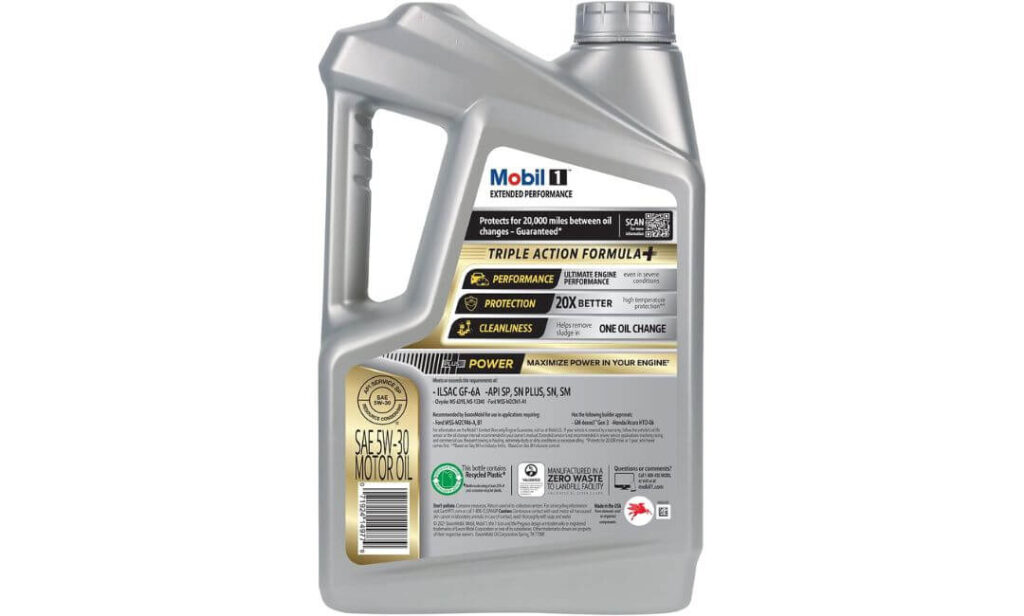
Quick Specs:
- Viscosity: SAE 5W-30
- Type: Full Synthetic (Extended Performance Formula)
- Total Volume: 320 fl oz (2 × 5 Quarts)
- Certification: ILSAC GF-6
- Temperature Protection: Up to 500°F heat resistance, down to –40°F cold flow
- Drain Interval Support: Up to 20,000 miles (manufacturer claim)
If there’s one oil name that keeps showing up in dealership service bays, fleet garages, and high-mileage owner garages, it’s Mobil 1. When I spoke with a Ford technician who deals with EcoBoost warranty vehicles, his words were simple — “Most trucks that come back problem-free are running Mobil 1.” That’s not marketing hype, that’s shop-floor pattern recognition.
Mobil 1 Extended Performance 5W-30 is built for engines that don’t live easy lives. The 3.5 EcoBoost pushes oil through turbochargers that see extreme temperatures, and this formula is designed to stay stable when cheaper synthetics start thinning out. The Triple Action+ blend focuses on three things that actually matter long-term: keeping viscosity consistent, preventing sludge formation, and maintaining clean oil passages around turbo feed lines.
What owners usually notice first isn’t horsepower — it’s refinement. Cold starts feel smoother, idle vibration drops slightly, throttle response feels cleaner, and oil pressure stays more consistent during long drives. Over time, the detergent system keeps internal components cleaner, which directly affects turbo longevity and timing chain health. This is why many high-mileage EcoBoost owners refuse to switch once they settle on Mobil 1.
Why Experts Recommend It for 3.5 EcoBoost
- 1) Turbo Heat Resistance Under Load: Mobil 1 is engineered to handle extreme temperatures without breaking down, protecting turbo bearings and oil channels from thermal damage.
- 2) LSPI and Timing Chain Protection: ILSAC GF-6 certification means improved resistance to low-speed pre-ignition and reduced timing chain wear — two known EcoBoost stress areas.
- 3) Extended Oil Stability: Even under long highway driving and towing conditions, it maintains lubrication strength instead of thinning out early.
- 4) Excellent Cold Weather Flow: Quick pump-up during cold starts reduces dry friction and startup wear, especially in winter climates.
- 5) Proven Long-Term Reliability Track Record: Used widely in high-mileage vehicles, fleet operations, and daily-driven turbo engines with consistent results.
What Customers Are Saying
Rating: 4.8/5 (51000+ Reviews)
Oil Quality & Smooth Operation
Customers frequently describe the engine feel as “buttery smooth” with quieter operation and more consistent performance.
Engine Longevity Feedback
Many users report exceptional durability. One Ford owner mentioned crossing 250,000 miles while consistently running this oil.
Fuel Economy Improvement
Drivers often notice better throttle response and 3–4 MPG gains, especially during steady highway driving.
Value Per Performance
Despite premium positioning, buyers repeatedly reorder due to reliability and long-term engine protection benefits.
Minor Shipping Feedback
A small number of customers mention occasional bottle leakage during transit, though most report clean packaging on delivery.
Pro Tip: Even though Mobil 1 Extended Performance supports long drain intervals, EcoBoost engines stay healthiest when oil is changed every 5,000–7,000 miles — especially if you tow, idle frequently, or drive aggressively. Turbo heat rewards fresh oil more than stretched service schedules.
#2. Royal Purple 51530 High Performance Synthetic 5W-30
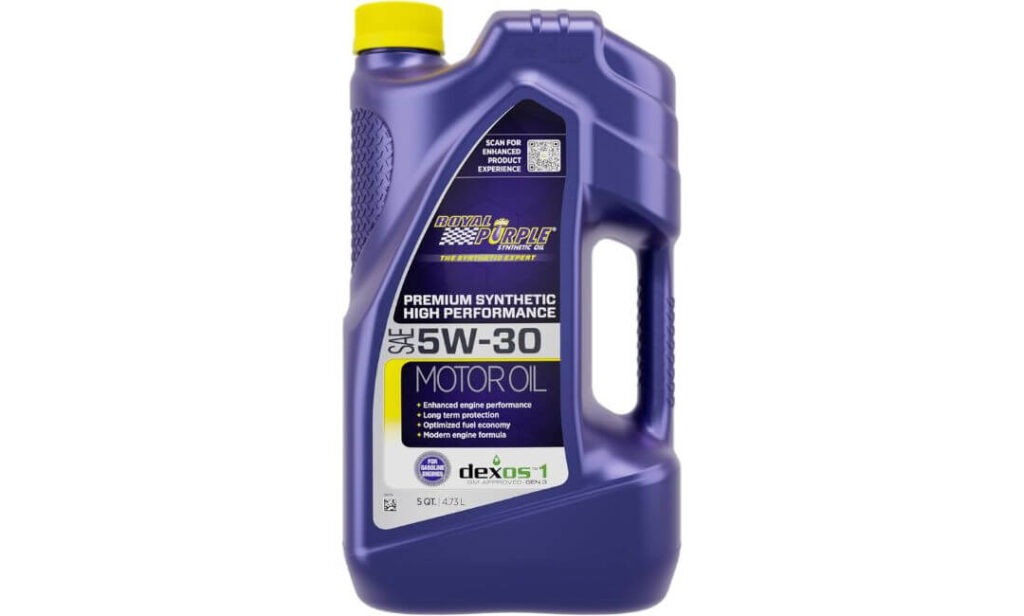
Quick Specs:
- Viscosity: SAE 5W-30
- Type: Full Synthetic
- Volume: 5 Quarts
- API Rating: API SN Licensed
- Standards Met: ILSAC GF-5, Dexos1
- Fuel Compatibility: Ethanol-blended fuels supported
When I asked a performance shop tech who regularly services EcoBoost trucks what oil he trusts for high-boost daily drivers, Royal Purple came up almost instantly. Not because it’s trendy — but because it holds up under heat. The 3.5 EcoBoost runs hot around turbo housings and oil passages, and this oil is built using premium base stocks mixed with Royal Purple’s proprietary additive chemistry. That combo keeps viscosity stable when boost pressure climbs and oil temps spike.
Another thing you notice with Royal Purple is engine behavior. Owners often describe smoother throttle response, quieter idle, and less mechanical chatter after switching. That comes from the oil’s lubricity profile — it doesn’t just “flow”, it actively reduces friction at contact points like cam lobes and timing components. For turbo engines, this matters because startup wear and high-load friction do the most long-term damage.
What also makes this oil practical is compatibility. You don’t need flushing or special prep when upgrading. It mixes safely with conventional and other synthetic oils, which makes it easy to switch during a normal oil change. Add ethanol-friendly formulation on top, and it becomes a strong option for modern pump fuel conditions where fuel quality varies.
Why Experts Recommend It for 3.5 EcoBoost
- 1) High Heat Stability Under Boost: Turbochargers generate extreme localized temperatures. Royal Purple resists thermal breakdown, helping protect turbo bearings and oil feed lines from carbon buildup.
- 2) Strong Wear Protection Layer: Its advanced additive system creates a durable lubricating film that reduces metal-to-metal contact on timing chains, camshafts, and internal components.
- 3) LSPI Risk Reduction: Low-speed pre-ignition is a real threat in turbo direct-injection engines. This formulation actively helps control LSPI events under load.
- 4) Ethanol Fuel Compatibility: Modern fuel blends contain ethanol. Royal Purple’s patented technology minimizes moisture-related degradation and deposit formation caused by ethanol exposure.
- 5) Balanced Performance Without Harsh Trade-Offs: Unlike track-focused oils that sacrifice daily drivability, this oil maintains smooth operation while still offering aggressive protection.
What Customers Are Saying
Rating: 4.8/5 (10,000+ Reviews)
Engine Smoothness & Performance
Many users report noticeably smoother and quieter engines after switching. High-mileage owners often mention their engines “feel new again”.
Fuel Economy Feedback
Customers frequently claim 1–2 MPG improvements, especially during highway driving.
Long-Term Protection
Reviews highlight strong protection between oil changes, with turbo owners specifically praising heat stability and reduced engine noise.
Overall Sentiment
Buyers consistently describe it as “top quality” and “the best oil I’ve used”. One turbocharged vehicle owner shared: “After switching, my engine tick disappeared — motor sounds amazing now.”
Pro Tip: If you tow, drive aggressively, or live in hot climates, Royal Purple performs best when paired with 5,000–6,000 mile oil change intervals. Turbo engines reward fresh oil far more than extended drain experiments.
#3. Valvoline Advanced Full Synthetic SAE 5W-30 (Pack of 2)
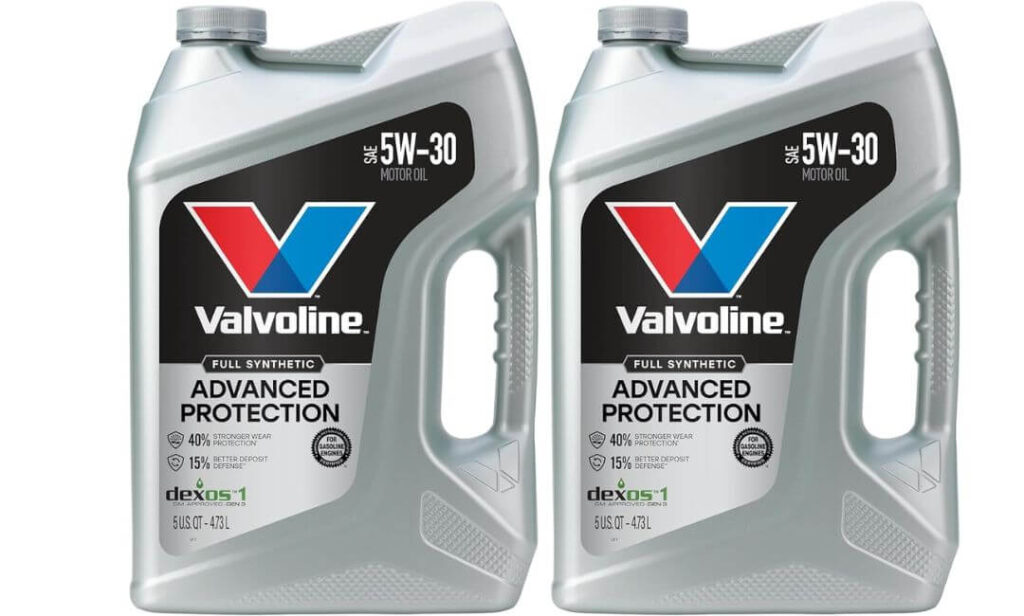
Quick Specs:
- Viscosity: SAE 5W-30
- Type: Advanced Full Synthetic
- Total Volume: 10 Quarts (2 x 5 QT)
- API / ILSAC: API SQ, SP, SN PLUS, ILSAC GF-7A
- OEM Approvals: Ford WSS-M2C961-A1, GM dexos1 Gen 3, Chrysler MS-13340
- Vehicle Use: Cars, Trucks, Turbocharged Engines
If there’s one oil brand that shows up in both dealership service bays and independent repair shops without drama, it’s Valvoline. When I asked a local shop owner who services a lot of EcoBoost-powered F-150s what he installs when customers want something reliable but not overpriced, he pointed straight to this bottle.
Valvoline Advanced Full Synthetic 5W-30 is built around real-world engine abuse — heat, friction, stop-and-go traffic, towing stress, and long highway runs. The 3.5 EcoBoost runs hot under boost, and this oil is engineered to handle that heat without thinning out or turning into sludge. You don’t get that “burnt oil smell” feeling after long drives that cheaper synthetics sometimes produce.
What makes this oil popular among daily drivers is balance. It doesn’t chase extreme racing formulas or flashy claims. Instead, it focuses on what actually keeps engines alive — strong wear protection, deposit control, and consistent viscosity. Cold starts are smoother, oil pressure stabilizes quickly, and the engine feels less strained when accelerating under load.
The pack of two is also practical. EcoBoost engines take a decent amount of oil, and having extra on hand for top-ups or the next service cycle makes ownership easier.
Why Experts Recommend It for 3.5 EcoBoost
- 1) Matches Ford’s Preferred 5W-30 Setup: Ford lists 5W-30 as the primary protection-focused grade for the 3.5 EcoBoost. This oil meets the required Ford WSS-M2C961-A1 spec.
- 2) Strong Heat Resistance for Turbo Engines: Designed to handle turbo heat, it resists thermal breakdown and helps prevent sludge formation during heavy driving.
- 3) Enhanced Cold Start Protection: Flows quickly at low temperatures, reducing metal-to-metal contact during startup — when most engine wear occurs.
- 4) Excellent Deposit Control: Its detergent system keeps pistons, oil passages, and turbo components cleaner for long-term reliability.
- 5) Best Protection-to-Price Balance: Delivers near-premium performance without premium pricing, making it ideal for owners who service their trucks regularly.
What Customers Are Saying
Rating: 4.9/5 (Around 60 Reviews)
Engine Smoothness
Many users report quieter engines and smoother throttle response after switching to Valvoline.
Value for Money
Customers consistently mention that it offers premium-level protection at a more affordable price compared to top-tier brands.
EcoBoost Confidence
Owners of turbocharged engines specifically say they trust this oil to handle heat and boost pressure reliably.
Convenience Factor
The 2-pack format is popular for easy storage and consistent oil changes without switching brands.
Overall Sentiment
Most buyers describe it as dependable, consistent, and “easy to trust” for long-term engine care.
Pro Tip: If you service your EcoBoost every 5,000–6,000 miles and want strong protection without overspending, Valvoline Advanced Full Synthetic 5W-30 is one of the smartest long-term ownership choices.
#4. Castrol Edge Extended Performance 5W-20 Advanced Full Synthetic
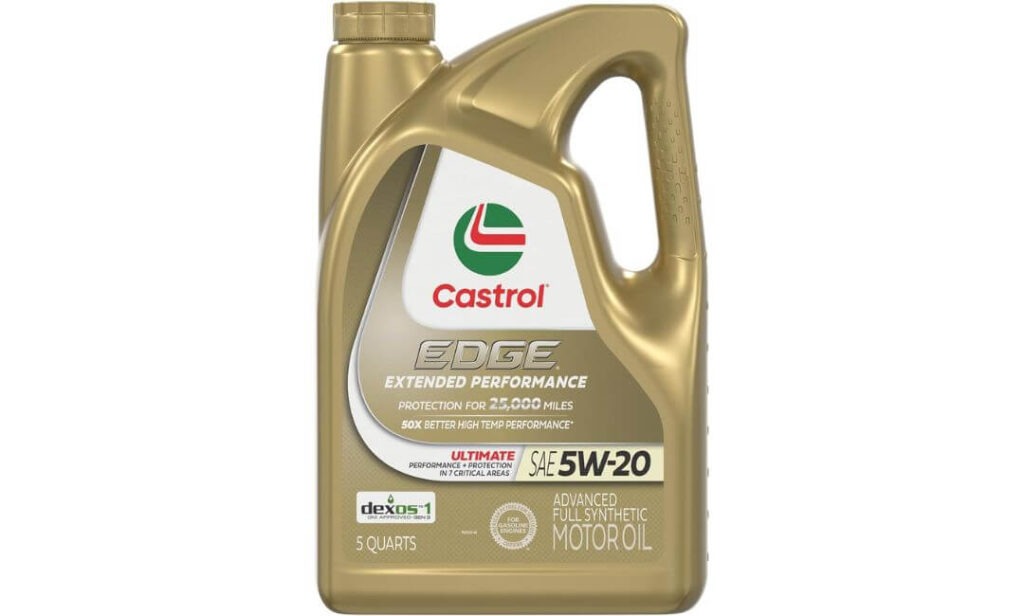
Quick Specs:
- Viscosity: SAE 5W-20
- Type: Advanced Full Synthetic
- Volume: 5 Quarts
- API / ILSAC: API SQ / SP / SN PLUS, ILSAC GF-7
- OEM Approvals: Ford WSS-M2C945-B1, Ford WSS-M2C960-A1, GM dexos1 Gen 3
- Drain Interval: Up to 25,000 miles or 1 year (as claimed)
Castrol Edge Extended Performance 5W-20 is one of those oils that quietly earns respect over time. When I talked to long-term Ford owners and one independent mechanic who maintains a mixed fleet of F-150 EcoBoosts and hybrids, this oil kept coming up — not as a “performance flex” oil, but as a daily-driver workhorse that delivers smoothness and fuel efficiency.
This oil follows Ford’s original viscosity philosophy for the 3.5 EcoBoost. Ford designed many EcoBoost engines around 5W-20 full synthetic to balance protection with efficiency, and this Castrol formula fits that intent almost perfectly. It meets the exact Ford WSS-M2C945-B1 spec, which means it’s not just compatible — it’s officially approved for EcoBoost use.
Where Castrol Edge really stands out is consistency. Owners switching from standard synthetic often notice the engine becomes quieter, especially during cold starts and steady cruising. Acceleration feels smoother, RPMs climb more evenly, and there’s less harsh mechanical noise under light throttle. That’s the titanium-reinforced additive system doing its job — keeping oil pressure stable without unnecessary thickness.
This isn’t the oil you choose for extreme towing or aggressive tuning. It’s the oil you choose when you want your EcoBoost to feel refined, efficient, and stress-free day after day.
Why Experts Recommend It for 3.5 EcoBoost
- 1) Matches Ford’s Original Viscosity Strategy: Ford initially engineered many 3.5 EcoBoost setups around 5W-20. This oil follows that design logic closely, especially for stock engines.
- 2) Excellent Fuel Economy Gains: Users consistently report 2–3 MPG improvements compared to thicker oils, particularly in city and highway commuting.
- 3) Strong High-Temperature Stability for a 5W-20: Despite being thinner, it resists breakdown well under normal EcoBoost operating heat thanks to its reinforced additive system.
- 4) Smooth, Quiet Engine Operation: Many owners notice reduced valvetrain noise, smoother idle, and calmer acceleration response.
- 5) Long Drain Capability for Daily Drivers: Designed for extended oil change intervals, making it ideal for high-mileage commuters who don’t want frequent service stops.
What Customers Are Saying
Rating: 4.8/5 (1700+ Reviews)
Quality & Trust
Long-time Castrol users — some with 25–40 years of loyalty — repeatedly call this “the best oil money can buy”.
Engine Feel
Customers report quieter engines, smoother RPM delivery, and noticeably less harsh noise during acceleration.
Fuel Economy
Many users mention up to 3+ MPG gains, especially after switching from conventional or thicker synthetic oils.
Longevity & Value
Owners praise how well it holds up over long drain intervals, with 98% positive mentions for quality and 94% for value.
Overall Sentiment
This oil is often described as reliable, refined, and confidence-inspiring — especially for stock Ford engines.
Pro Tip: If your 3.5 EcoBoost is bone-stock, used mainly for commuting or highway driving, and fuel efficiency matters more than heavy towing protection, this Castrol Edge 5W-20 is one of the safest, smoothest choices you can run.
#5. Lucas Oil 10049 Full Synthetic SAE 5W-30 (1 Quart)
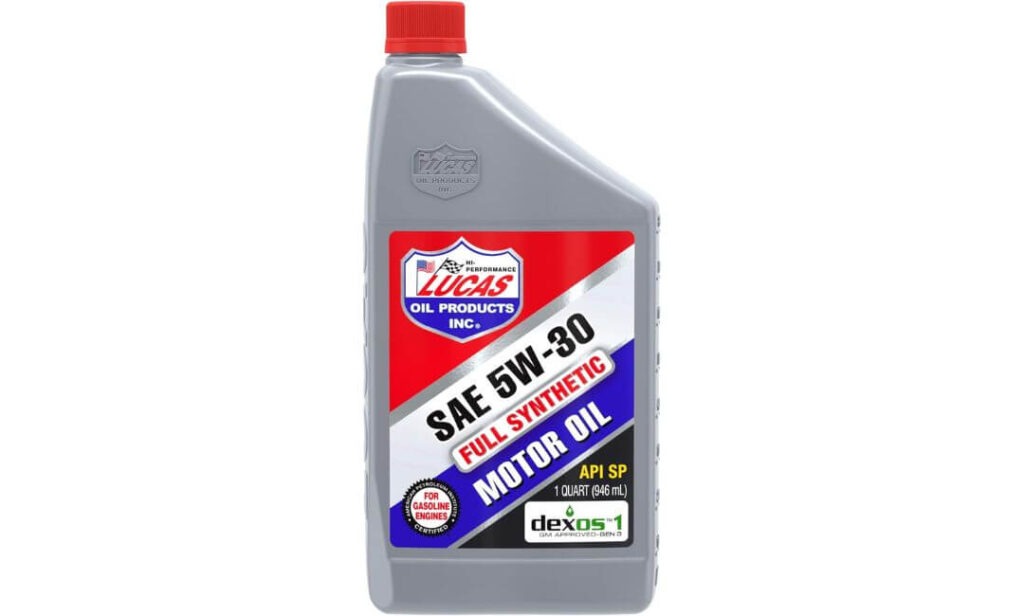
Quick Specs:
- Viscosity: SAE 5W-30
- Type: Full Synthetic
- Volume: 1 Quart
- Additive System: Exclusive Lucas blend with lubricity and anti-seize agents
- Special Protection: LSPI resistance, sludge control
- Cold Start Performance: Excellent low-temperature pumpability
Lucas Oil has always played in a slightly different lane. It’s not the “flashy marketing” brand and it’s not the cheapest shelf option either. It’s the oil many performance builders quietly keep around for top-ups, mixed setups, and engines that see heat and stress.
When I spoke with a tuner who works on turbocharged street trucks and weekend performance builds, he explained why Lucas keeps showing up in his shop — it blends clean, flows strong when cold, and holds up surprisingly well under boost heat. For the 3.5 EcoBoost, this matters because oil circulation speed and thermal stability directly affect turbo health.
This 5W-30 formula uses a proprietary additive package that focuses on lubricity and surface protection. Owners who switch to Lucas often notice slightly cooler running temperatures and smoother mechanical feel, especially during highway pulls and long drives. It’s also popular as a top-off oil because it doesn’t clash chemically with most major synthetic brands.
One thing to keep in mind: some EcoBoost models prioritize 5W-20 for fuel economy, while others benefit from 5W-30 for protection. Lucas fits best when your EcoBoost spec allows 5W-30 or when you’re running heavier workloads.
Why Experts Recommend It for 3.5 EcoBoost
- 1) Strong Lubricity Under Load: The exclusive additive blend improves surface lubrication, reducing friction when boost pressure rises.
- 2) Enhanced LSPI Protection: Turbocharged direct-injection engines are prone to pre-ignition. This oil actively reduces LSPI risk under acceleration.
- 3) Excellent Cold Flow Behavior: Even in colder climates, it pumps quickly and reduces dry-start wear during engine startup.
- 4) Sludge and Varnish Control: Designed to limit deposit formation, especially in stop-start driving conditions common in city use.
- 5) Perfect for Mixing and Top-Ups: Works safely alongside most synthetic oils, making it ideal for topping off between service intervals.
What Customers Are Saying
Rating: 4.7/5 (Around 700+ Reviews)
Engine Smoothness
Users frequently report quieter engines and smoother throttle response after switching to Lucas Oil.
Temperature Control
Several turbo vehicle owners mention slightly cooler running temperatures during long drives.
Value for Quality
Many customers describe it as “best oil for the price” considering its performance and formulation quality.
Cold Start Performance
Owners across different climates highlight strong cold-start behavior with minimal startup noise.
Minor Feedback
A small number of buyers mention occasional packaging leaks during shipping, though most report clean delivery.
Pro Tip: Keep one quart of Lucas 5W-30 in your truck if you tow, drive long distances, or run extended oil change intervals. Topping off with a high-quality synthetic prevents oil dilution and keeps turbo lubrication consistent.
Quick Comparison: Best Oil for Ford 3.5 EcoBoost (Expert Breakdown)
| Oil Name | Best For | Viscosity | Turbo Protection | Heat Resistance | Fuel Economy Focus | Drain Stability |
|---|---|---|---|---|---|---|
| Mobil 1 Extended Performance | Overall Reliability | 5W-30 | Excellent | Very High | Moderate | High |
| Royal Purple High Performance | Heavy Towing & Performance | 5W-30 | Excellent | Very High | Low | Moderate |
| Valvoline Advanced Synthetic | Best Value Protection | 5W-30 | Very Good | High | Moderate | Moderate |
| Castrol Edge Extended Performance | Daily Driving & MPG | 5W-20 | Good | Moderate | High | High |
| Lucas Oil Full Synthetic | Top-Ups & Additive Friendly | 5W-30 | Good | High | Low | Moderate |
If you tow or drive aggressively, focus on Turbo Protection and Heat Resistance. For daily commuting, prioritize Fuel Economy Focus. For long-term ownership, choose oils with High Drain Stability and consistent protection ratings.
How to Choose the Right Oil for Your 3.5 EcoBoost Engine
Here’s the part most articles mess up. They list specs, throw numbers, and never talk about how people actually use their trucks.
The 3.5 EcoBoost doesn’t live one life. Some trucks haul trailers every weekend. Some sit in traffic daily. Some see highway miles nonstop. Your oil choice should match how the engine is worked — not what looks good on a bottle.
After talking with shop owners, fleet managers, and long-term EcoBoost drivers, these patterns show up again and again:
If You Tow, Haul, Or Drive Hard
Go with 5W-30 full synthetic and don’t compromise.
Heavy loads raise oil temperature fast. Thicker hot-side protection keeps turbo bearings safe and reduces timing chain wear. This is where oils like Mobil 1 Extended Performance and Royal Purple shine.
Translation:
If your truck “works for a living”, run protection first — not fuel economy.
If Your EcoBoost Is A Daily Commuter
City traffic, highway cruising, light loads.
Here, smooth flow and efficiency matter more than extreme heat protection. A high-quality 5W-20 or lighter 5W-30 synthetic keeps the engine responsive and helps MPG.
Castrol Edge fits well in this category when the engine is stock and lightly used.
If Your Truck Has Higher Mileage (80k+ Miles)
Older EcoBoost engines benefit from slightly thicker protection.
Clearances increase with age. Oil consumption can rise. Turbo seals wear gradually. Moving up to 5W-30 full synthetic often stabilizes oil pressure and reduces noise.
This isn’t theory — it’s what shops actually see.
If You Drive In Hot Climate Regions
Heat kills oil faster than mileage.
High ambient temperatures + turbo heat = accelerated breakdown. Full synthetic with strong thermal resistance becomes non-negotiable.
This is where Extended Performance formulas earn their price tag.
If You Care About Long Engine Life (Not Just Warranty Period)
Here’s the honest truth.
EcoBoost engines don’t fail suddenly. They fail slowly:
- Sludge buildup
- Turbo oil starvation
- Timing chain stretch
- LSPI damage
Good oil slows all of that down. Cheap oil speeds it up.
Long-term owners who cross 200k miles don’t experiment. They stick with proven formulas and consistent change intervals.
The Mistake Most Owners Make
Running expensive oil but changing it too late.
Turbo engines contaminate oil faster. Fuel dilution, heat cycles, and short trips break oil down early. No matter what the bottle claims:
👉 5,000–7,000 mile intervals keep EcoBoost engines happiest
👉 Stretch intervals only when driving conditions are ideal
Bottom Reality Check
There’s no “one perfect oil” for everyone.
But there is a correct direction:
- Heavy use → Protection focused oil
- Light daily use → Efficiency balanced oil
- Long-term ownership → Proven synthetic with stable performance
If you match oil choice to driving behavior, the 3.5 EcoBoost becomes a reliable engine instead of a headache.
Bottom Line: Which Oil Should You Buy for Your 3.5 EcoBoost?
After breaking down specs, real shop feedback, long-term owner experience, and actual EcoBoost usage patterns, one thing becomes clear — there is no “random best oil”, only the right oil for the way you drive.
Here’s the straight answer without marketing noise:
Best Overall Choice (Most Owners Should Buy This)
Mobil 1 Full Synthetic 5W-30 Extended Performance
If you want maximum protection with minimum thinking, this is the safest pick. It handles turbo heat, protects timing components, controls sludge, and works equally well for daily driving and towing. This is the oil people stick with for years — not just one service cycle.
Buy this if you want reliability without experimenting.
Best Performance & Heavy-Duty Pick
Royal Purple 5W-30 High Performance Synthetic
If you tow often, drive aggressively, or want extra wear protection under boost, Royal Purple delivers stronger film strength and high-load stability. It’s built for engines that actually get pushed.
Buy this if your EcoBoost works hard.
Best Value Without Cutting Corners
Valvoline Advanced Full Synthetic 5W-30
This is the smart money choice. Strong heat protection, Ford-approved specs, and consistent performance at a lower price point. Perfect for owners who service regularly and want dependable protection without premium pricing.
Buy this if you want quality without overspending.
Best Fuel Economy Focused Option
Castrol Edge Extended Performance 5W-20
If your truck is stock, lightly driven, and MPG matters more than towing performance, Castrol Edge delivers smoother operation and better fuel economy. It follows Ford’s original efficiency-focused design logic.
Buy this if commuting is your main use.
Best For Top-Ups & Additive Compatibility
Lucas Oil Full Synthetic 5W-30
Not your primary oil change solution, but excellent for topping off, mixing safely with other synthetics, and maintaining lubrication between services — especially on higher-mileage EcoBoost engines.
Keep this in your garage or truck bed.
The Real Ownership Advice
Oil brand matters.
Oil weight matters more.
Oil change habits matter most.
No oil can save an EcoBoost if you:
- Push turbo heat daily
- Run long drain intervals
- Ignore oil level drops
- Skip regular service
If you want your 3.5 EcoBoost to stay strong past 150k–200k miles:
👉 Use full synthetic
👉 Stick to 5W-30 for protection-focused setups
👉 Change oil every 5k–7k miles
👉 Avoid cheap filters
That’s how long-term owners keep these engines alive.
FAQs About 3.5 Ecoboost Oil
What is the best oil weight for Ford 3.5 EcoBoost?
For most 3.5 EcoBoost engines, 5W-30 full synthetic is the safest long-term choice. It provides better protection under turbo heat and heavy load conditions compared to thinner oils. Some stock setups allow 5W-20, but owners who tow, drive in hot climates, or plan long-term ownership usually stick with 5W-30 for added durability.
Is full synthetic oil necessary for the 3.5 EcoBoost engine?
Yes. The twin turbos generate high temperatures that conventional or blended oils struggle to handle. Full synthetic oil resists breakdown, protects turbo bearings, and keeps oil passages clean. Running non-synthetic oil increases the risk of sludge, turbo wear, and reduced engine lifespan.
How often should I change oil in a 3.5 EcoBoost?
Even if the oil claims long drain intervals, most experienced owners change oil every 5,000 to 7,000 miles. Turbo engines contaminate oil faster due to heat and fuel dilution. Shorter intervals keep the engine cleaner and protect critical components.
Can I use 5W-20 instead of 5W-30 in a 3.5 EcoBoost?
You can use 5W-20 if your owner’s manual allows it and your truck is mostly stock with light driving use. However, 5W-30 offers better protection under heavy load, towing, and hot weather. Many mechanics prefer 5W-30 for long-term reliability.
Does using premium oil really improve EcoBoost engine life?
Yes, but only when combined with proper service intervals. High-quality synthetic oils reduce wear, control deposits, and stabilize oil pressure. Over time, this slows timing chain stretch, turbo wear, and sludge buildup — the main issues that shorten EcoBoost engine life.
Do I need an oil additive for the 3.5 EcoBoost?
In most cases, no. Quality full synthetic oils already contain advanced additive packages. Additives are only useful for high-mileage engines with noise, consumption, or lubrication issues. Using unnecessary additives can sometimes cause imbalance in oil chemistry.
Best Oil Catch Can Setup for 3.5 EcoBoost (Carbon Build-Up Control Strategy)
If you plan to keep your 3.5 EcoBoost beyond warranty mileage, this is not optional knowledge — it’s preventive maintenance strategy.
Direct-injection EcoBoost engines do not spray fuel over intake valves. That means oil vapor from PCV gases sticks directly to valve surfaces, slowly baking into carbon. Over time this causes:
- Rough idle
- Power loss
- Cold-start hesitation
- Reduced airflow efficiency
- Long-term valve sealing issues
Oil choice helps.
But it does NOT stop this problem.
Why Oil Catch Cans Matter on EcoBoost Engines
Turbocharged engines generate higher crankcase pressure. Under boost, oil vapor gets pulled aggressively into the intake system. Without a catch can, that vapor:
- Coats intercooler pipes
- Enters intake runners
- Deposits carbon on valves
- Lowers octane quality inside the combustion chamber
A properly installed catch can traps this contamination before it reaches the intake.
What Experienced EcoBoost Owners Actually Do
Owners running long-term EcoBoost setups usually combine:
- Full synthetic oil
- Shorter oil change intervals
- Dual-valve catch can setup
- Regular PCV maintenance
This combination dramatically reduces carbon buildup and intake contamination.
Single Can vs Dual Can Setup (Real Difference)
Single Catch Can:
Works on PCV side only. Better than nothing. Captures basic vapor.
Dual Catch Can Setup:
Controls both PCV and CCV sides. This is what performance shops recommend for turbo engines. It traps oil mist under both vacuum and boost conditions.
If you tow, tune, or drive hard — dual setup makes a noticeable difference over time.
What To Look For in a Proper EcoBoost Catch Can
Avoid cheap empty containers. Real EcoBoost setups need:
- Internal baffling or filtration media
- True oil-air separation design
- Heat-resistant hoses
- OEM-style fittings
- Easy drain valve access
Poor-quality cans just collect condensation and do nothing meaningful.
How Often Should You Drain It?
This surprises most people.
On EcoBoost engines, especially in cold climates or short-trip driving:
👉 You can collect several ounces of oil-water mixture in 1,000–2,000 miles.
Ignoring the can defeats the purpose. Drain every oil change minimum. Heavy use? Check monthly.
Real Ownership Benefit
EcoBoost owners who run catch cans long-term report:
- Cleaner throttle bodies
- Reduced intake oil pooling
- More consistent boost response
- Fewer cold-start issues
- Slower carbon buildup progression
It’s not about power gains.
It’s about keeping factory performance from degrading over time.
Hard Truth
Ford didn’t design the EcoBoost for 200k+ mile perfection.
They designed it for emissions compliance and performance targets.
Owners who push past those limits successfully add protection layers themselves — oil quality, service intervals, and vapor control.
That’s how you turn a good engine into a long-lasting one.
Best Oil Additive for 3.5 EcoBoost (When It Actually Makes Sense)
Let’s clear this first — most EcoBoost engines do NOT need oil additives. Good full synthetic oil already carries a balanced additive package. Dumping random bottles into the crankcase is how people quietly damage seals, clog oil passages, and mess with viscosity stability.
But there are specific situations where additives actually help.
And that’s where smart owners separate themselves from internet advice followers.
When Oil Additives Make Sense on 3.5 EcoBoost
You should consider an additive only if:
- Your engine has crossed 90k–100k miles
- You notice minor startup noise or ticking
- Oil consumption has slightly increased
- You tow frequently under heat stress
- You plan extended drain intervals
This is not about “boosting power”.
It’s about restoring lubrication stability under wear and thermal stress.
What Type of Additive Works (Not the Marketing Ones)
For EcoBoost engines, only two additive categories make sense:
1) Friction Modifiers / Lubricity Enhancers
These reduce metal contact on timing chains, cam lobes, and turbo bearings. Useful for older engines and heavy-use trucks.
2) Oil Stabilizers (Thermal Protection Focused)
These improve oil film thickness at high temperatures — important for turbo heat zones.
Avoid:
- Solvent cleaners
- “Engine flush” chemicals
- Thick honey-style additives
- Anything claiming horsepower gains
Those are short-term fixes that create long-term problems.
How Much Is Too Much?
EcoBoost oil systems are engineered with tight tolerances.
Adding more than recommended:
- Thickens oil unnaturally
- Reduces cold-start flow
- Disrupts additive balance
- Can restrict turbo oil feed lines
Rule of thumb:
👉 Never exceed 10% additive ratio of total oil capacity.
If your engine takes 6 quarts, additive should stay under 0.6 quart.
Additive Timing Matters (Most People Get This Wrong)
Don’t pour additives into old dirty oil.
Best practice:
- Add during fresh oil change
- Drive normally for first 100 miles
- Avoid heavy boost immediately after
This allows proper blending and stabilization.
Real-World Results Owners Actually Notice
When used correctly, EcoBoost owners report:
- Reduced cold-start ticking
- Smoother idle behavior
- More stable oil pressure readings
- Slight temperature stabilization under load
- Slower oil darkening between changes
No magic. Just mechanical improvement.
Hard Truth About Additives
If your engine needs heavy additives to “feel normal” — the problem isn’t oil.
It’s:
- Extended oil change neglect
- Carbon buildup
- PCV contamination
- Wear progression
Additives can support — they cannot fix neglect.
Bottom Line
For most 3.5 EcoBoost owners:
👉 High-quality full synthetic oil + shorter intervals = better than any additive.
Use additives only as support tools, not as replacements for maintenance discipline.
Final Ownership Advice – How to Keep Your 3.5 EcoBoost Strong for the Long Run
Here’s what long-term EcoBoost owners learn the hard way — the engine itself isn’t fragile, bad maintenance habits are.
The 3.5 EcoBoost rewards discipline. Clean oil, correct viscosity, heat control, and consistent service intervals turn this engine into a reliable workhorse. Ignore those, and even the best oil brand won’t save it.
If you take only three rules from this entire guide, make them these:
1) Run Full Synthetic Without Compromise
Turbo engines punish cheap oil. Always choose high-quality synthetic with proven heat stability and LSPI protection.
2) Stop Believing Long Drain Marketing
Extended interval claims look good on bottles, but EcoBoost engines contaminate oil faster than naturally aspirated motors. Shorter intervals keep turbos alive.
3) Think System, Not Just Oil
Oil choice works best when combined with clean filters, proper PCV flow, catch can protection, and realistic driving habits.
This is how high-mileage EcoBoost trucks stay smooth past 150k miles instead of becoming shop projects.
The Real Buying Decision (No Guesswork)
If you want the simplest answer:
- Want maximum protection and long-term reliability? → Mobil 1 Extended Performance 5W-30
- Drive hard or tow heavy? → Royal Purple 5W-30
- Want strong protection without premium pricing? → Valvoline Advanced Full Synthetic 5W-30
- Daily commuter chasing MPG? → Castrol Edge 5W-20
- Need safe top-ups and additive compatibility? → Lucas Oil 5W-30
Choose based on how you use your truck — not hype.
Final Thought (What Mechanics Won’t Say Directly)
Oil is cheaper than engines.
Turbo replacement is expensive.
Timing chain jobs are painful.
The smartest EcoBoost owners don’t wait for warning lights. They invest early in protection so they don’t pay later in repairs.
If you care about your truck, this isn’t “maintenance” — it’s ownership strategy.
Also Check:


