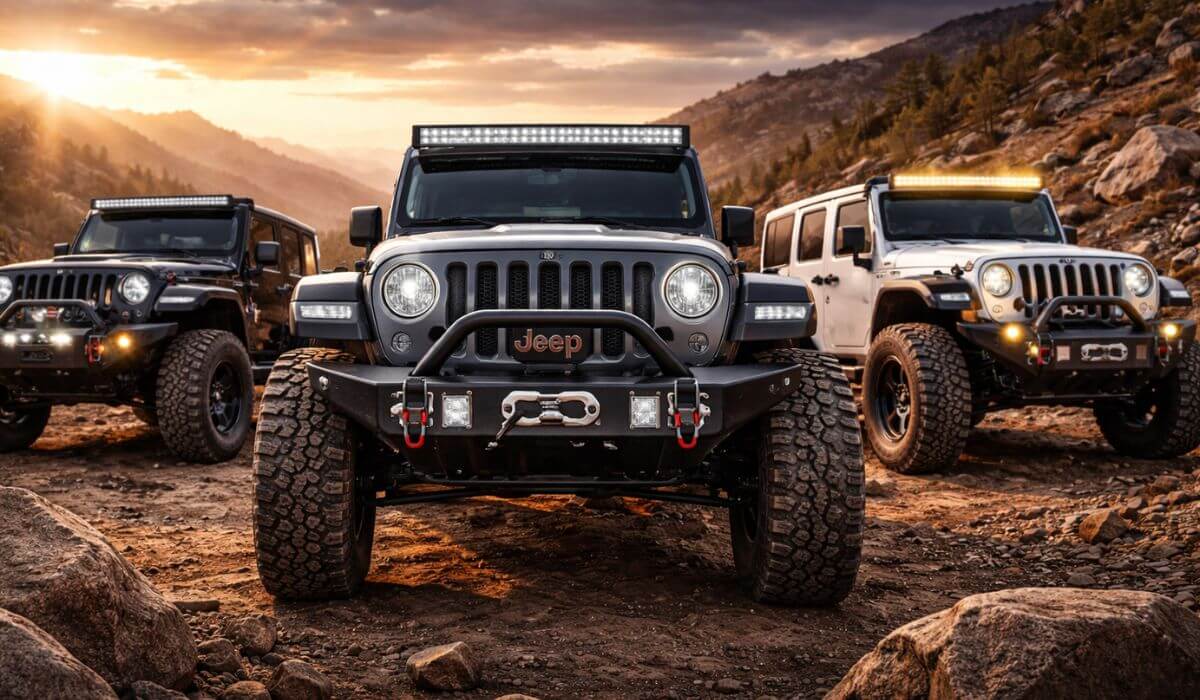
7 Best Jeep Wrangler Front Bumpers in 2026 (JL & JK Tested for Real Off-Road Use)
If you’ve spent any real time around a Jeep Wrangler—not just scrolling builds, but actually driving one off-road—you already know the stock front bumper is the first thing that starts holding you back. Approach angle suffers, recovery points feel like an afterthought, and the moment you think about adding a winch… you’re already shopping.
This isn’t one of those fluffy “top 7” lists pulled from spec sheets. These bumpers are the kind Wrangler owners actually end up buying after digging through forums, breaking cheap setups, and figuring out what really works on trails and daily drives. Steel thickness, winch compatibility, real mounting points, and how they sit on JL/JK frames—that’s what matters here.
So before you scroll through seven options, here are the two setups that consistently come up in real-world builds right now 👇
🔥 Top Recommendations (Start Here First)
👉 Hooke Road Sturdy Front Bumper — Best Overall Winch-Ready Steel Bumper (JK/JL/JT 2007–2026)
Heavy-gauge steel construction, integrated winch plate, and properly welded D-ring mounts—this isn’t just for looks. It’s built for recovery situations where cheap bumpers fail. The included LED lighting actually helps on dark trails, not just for show. Fitment across JK, JL, and Gladiator JT makes it a safe bet if you want one bumper that just works without overthinking.
Real talk: this is the kind of bumper you install once and stop worrying about.
👉 YZONA JL Front Bumper With Skid Plate — Best Feature-Packed JL/JLU Bumper with Skid Plate (2018–2026)
Designed specifically for JL/JLU, this one comes loaded: winch plate, skid plate, fog light housing, LED lights, and license plate mount—everything integrated cleanly. The skid plate isn’t cosmetic; it actually protects underbody components when you dip into rough terrain.
If you drive a newer Wrangler and want a complete, ready-to-run setup without piecing parts together, this is the easy choice.
Most people stop at these two—and honestly, for 80% of Wrangler owners, that’s enough. But if you want to compare styles (stubby vs full-width), budgets, and different build types, the full list below breaks it down properly.
Best Jeep Wrangler Front Bumpers: Top 2026 Picks for JK, JL & JLU Upgrades
#1. Hooke Road Sturdy Front Bumper
Best Overall Jeep Wrangler Front Bumper (Winch-Ready Steel | JK/JL/JT Fitment)
#2. YZONA JL Front Bumper with Skid Plate
Best JL/JLU Front Bumper with Skid Plate & LED Setup (2018–2026)
#3. Peforway Heavy Duty Front Bumper
Best Value Steel Off-Road Bumper for Jeep Wrangler JK/JL (Winch Plate + LED)
#4. Tyger Auto FURY Stubby Front Bumper
Best Stubby Front Bumper for Jeep Wrangler (High Clearance | Winch Ready)
#5. longsun Stubby Front Bumper with Bull Bar
Best Stubby Bumper with Bull Bar & Lights for Wrangler JK/JL (Aggressive Look)
#6. CLAMBER Heavy Duty Off-Road Front Bumper
Best Full-Width Heavy Duty Jeep Wrangler Bumper (JK/JL/JLU + Gladiator Fit)
#7. ECOTRIC 10th Anniversary Style Front Bumper
Best OEM-Style Front Bumper Upgrade for Jeep Wrangler JL (Sensor + Fog Ready)
If you’re serious about upgrading your Wrangler, don’t overcomplicate it—pick based on how you actually drive. Trail-heavy builds need clearance and recovery strength. Daily drivers need balance and clean fitment. Either way, a proper front bumper isn’t just cosmetic—it changes how your Jeep performs the moment you leave pavement.
A quick expert tip before you pick anything
Most people get this wrong: they choose a bumper based on looks or price, then regret it the first time they actually use their Wrangler the way it’s meant to be used.
If you’re even thinking about a winch in the future, don’t “upgrade later.” Get a proper winch-ready steel bumper now. Retrofitting later costs more, takes more time, and usually ends up weaker because you’re forcing parts to work together that weren’t designed as one system.
Also, be honest about how you drive. If your Wrangler spends weekends on trails, go stubby or high-clearance—you’ll feel the difference the moment you approach a steep rock or ditch. If it’s mostly daily driving with occasional off-road, a full-width bumper with integrated features will make more sense long term.
This one decision decides whether your Jeep feels built or just modified.
How we chose these Jeep Wrangler front bumpers
We didn’t pick these because they “look good” or because a spec sheet says “heavy duty.” Every bumper on this list had to make sense in the real world—on a Wrangler that actually gets driven, loaded, and pushed.
First, we filtered for true compatibility across JL, JLU, and JK platforms. A lot of bumpers claim wide fitment, but poor alignment, sensor issues, or awkward gaps show up after installation. The ones here are known to sit right on the frame without forcing adjustments.
Then we looked at structural integrity where it actually matters—not just thick steel, but how it’s used. Recovery points, winch plates, and mounting brackets had to be properly integrated, not just bolted on as an afterthought. That’s why options like Hooke Road, Peforway, and CLAMBER made the cut—they’re built as a single system, not a collection of parts.
We also paid attention to real usability, not feature overload. For example, the YZONA bumper isn’t here just because it has a skid plate—it’s here because that skid plate actually protects components you’ll hit off-road. Same with lighting and fog mounts: if they don’t add function, they don’t matter.
Another big factor was design purpose. Not every Wrangler owner needs the same thing. That’s why this list isn’t filled with just one style:
- Stubby designs like Tyger and longsun are here for clearance and aggressive trail use
- Full-width options like CLAMBER are here for protection and stability
- Hybrid and OEM-style builds like ECOTRIC are included for clean installs without losing factory functionality
Finally, we looked at what people actually end up keeping on their Jeeps. Not what they buy first—but what they don’t replace six months later. Because that’s the real test. A good bumper isn’t something you keep upgrading. It’s something you install once and trust every time you head out.
That’s the standard these picks had to meet.
#1. Hooke Road Sturdy Front Bumper
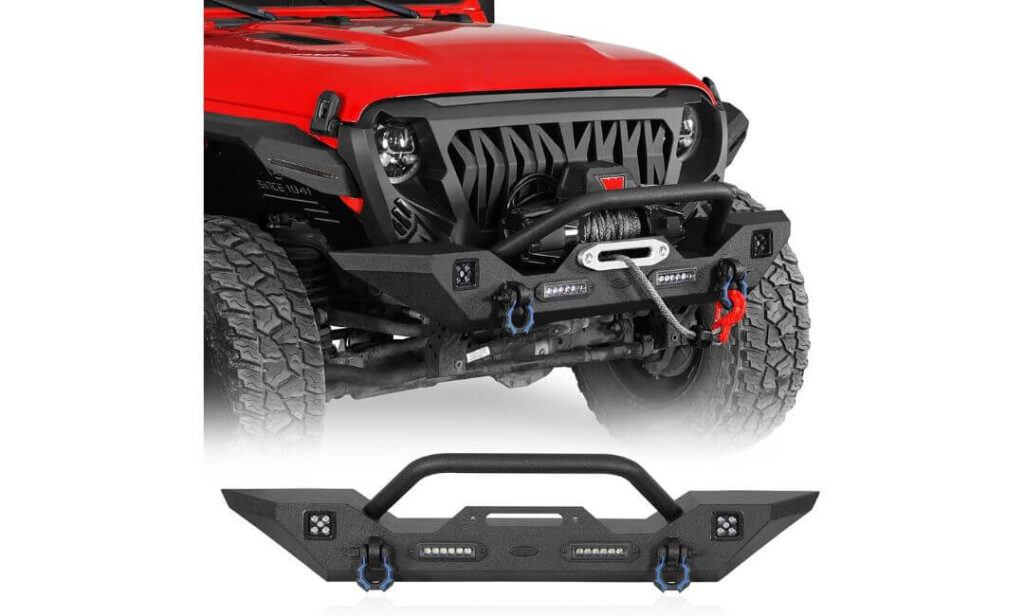
Quick Specs:
- Steel Build: 11-gauge (1/8”) carbon steel plate + reinforced tubing
- Winch Capacity: Supports up to 12,000 lbs (built-in plate)
- Recovery Points: 3/4″ D-rings rated 9,500 lbs
- Lighting Setup: 2×25W + 2×18W LED lights (pre-mounted)
- Finish: Textured black powder coat + E-coating (anti-rust)
- Weight: ~57 lbs (solid but manageable)
- Install: Direct bolt-on, factory mount reuse
The moment you pull the stock bumper off your Wrangler and line this up, you can tell—it’s not built for looks first, it’s built for use. The 11-gauge steel feels properly thick without going overboard, and the way the winch plate is integrated (not bolted on separately) gives it that “factory-engineered” confidence. This is the kind of setup you trust when you’re actually stuck, not just posing on a trail.
Out on rough terrain, the details start to matter more. The 9,500 lb rated D-rings aren’t decorative—they sit exactly where you need them for recovery angles, and the bumper doesn’t flex under load like cheaper builds. Add to that the four LED lights (2×25W + 2×18W), and night trails stop being guesswork. It’s not blinding overkill—just clean, usable visibility where your stock setup fails.
What really makes this one stand out is how everything works together. No weird gaps, no awkward fitment, no “adjust and hope.” It bolts straight onto factory points, sits tight against the frame, and actually looks like it belongs there. (And once it’s on, your Wrangler instantly feels more capable, not just modified.)
(If you’re planning a winch setup or real off-road use, this is the kind of bumper you install once—and stop thinking about upgrades.)
What Stands Out in Real Use
- Integrated winch system that doesn’t feel like an add-on
- Proper recovery strength (D-rings + mounting don’t flex under stress)
- Balanced weight (~57 lbs) — strong without killing daily drivability
- Functional LED lighting, not just cosmetic extras
- Clean bolt-on fitment using factory mounting points
What Could Be Better
- LED wiring isn’t plug-and-play—you’ll need to set up connections manually (once done, no issue)
Jeep Wrangler Fitment & Real Compatibility
This setup works across JK (2007–2018) and JL (2018–2026), which is rare to get right. The mounting lines up cleanly with factory points, and it doesn’t throw off alignment or spacing like universal bumpers often do.
If you’re running a Rubicon or aftermarket skid setup, just take a minute to test-fit before tightening everything down. Once aligned, it sits solid and doesn’t need revisiting.
Installation Notes (Real World)
Installation is straightforward, but don’t underestimate the weight—it’s manageable, just easier with two hands. Expect about an hour with basic tools, no cutting or drilling involved.
Wiring the LEDs takes a bit more effort. There’s no direct plug into factory harness, so you’ll either wire it to a switch panel or run a simple relay setup. Take your time here—it’s worth doing clean.
Once mounted and wired properly, nothing rattles, nothing shifts, and more importantly—you don’t have to touch it again.
#2. YZONA JL Front Bumper with Skid Plate
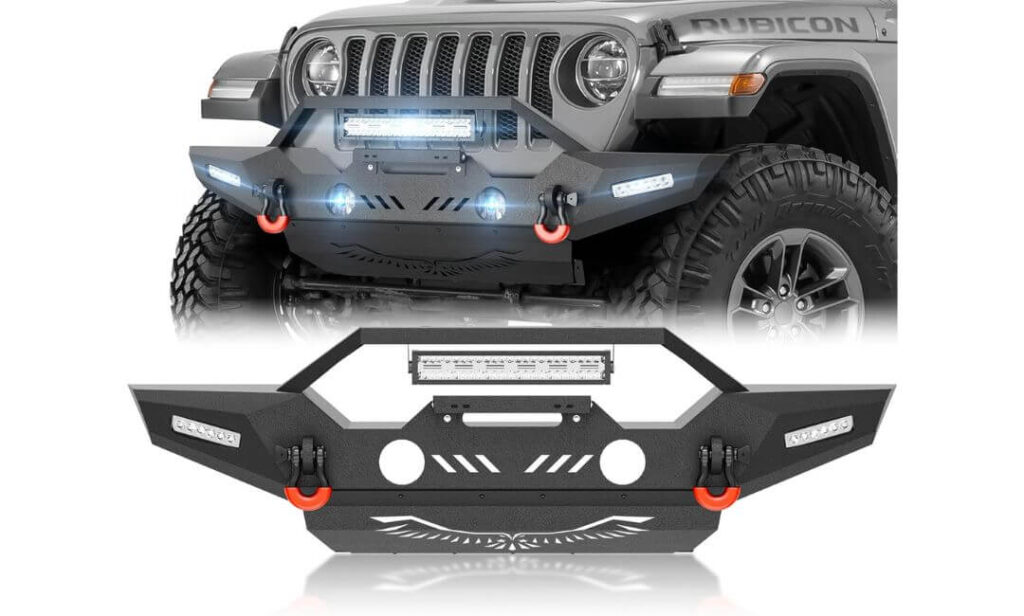
Quick Specs:
- Steel Build: High-strength alloy steel with dual-stage powder coating
- Winch Support: Up to 12,000 lbs (standard 10×4.5 pattern)
- Recovery Points: 4.75-ton D-rings (9,500 lbs rated)
- Lighting: Massive 312W LED light bar + 2×18W floods
- Protection: Full integrated skid plate (engine + underbody)
- Weight: ~68 lbs (heavier, but purpose-built)
- Extras: Flip-up license plate mount + fog light housing
This is the kind of bumper you pick when you’re done piecing things together. Everything you’d normally add later—skid plate, light bar, recovery points, winch support—is already built in here, and it actually feels like a complete system, not a collection of accessories forced into one frame.
The first thing you notice is the undercarriage protection. That skid plate isn’t just there for looks—it sits exactly where rocks and debris hit first, protecting your engine and transmission when trails get messy. Pair that with a 12,000 lb winch plate and properly rated D-rings (9,500 lbs each), and suddenly your Wrangler isn’t just capable—it’s ready for situations where you’d normally hesitate.
Then comes visibility. The 312W LED light bar throws a wide, clean beam that actually helps you read terrain at night, not just light up dust. Add the 18W flood lights + OEM fog light slots, and you get layered lighting that works in real conditions. It’s aggressive, yes—but more importantly, it’s usable. (If you’re running a JL/JLU and want everything handled in one upgrade, this saves you months of trial-and-error.)
What Stands Out in Real Use
- True all-in-one design (skid plate + winch + lighting already integrated)
- Undercarriage protection that actually prevents damage
- High-output LED setup (312W + floods) for real trail visibility
- Clean JL-specific fitment—no awkward gaps or adjustments
- Flip-up plate mount that doesn’t block your winch access
What Could Be Better
- LED extension harness isn’t included—you’ll need to set up wiring separately (once done, everything works seamlessly)
Jeep Wrangler Fitment & Real Compatibility
This one is built specifically for JL and JLU (2018–2026)—and you can feel that precision in how it mounts and sits. No universal compromises here. It lines up properly with factory points and doesn’t mess with spacing, sensors, or overall front-end balance.
Important thing—this is not for JK models. But if you’re on a JL/JLU (including 4xe), this kind of dedicated fitment is exactly what you want. It installs clean and looks like it belongs there from day one.
Installation Notes (Real World)
Install is straightforward bolt-on, no cutting involved—but at 68 lbs, don’t try to wrestle it alone. Two people make it easy and safe. Expect around 1–2 hours depending on how clean you want your wiring.
Lighting setup needs a bit of attention. Since there’s no included extension harness, you’ll either run a relay or connect it to a switch panel. Do it properly once, and you won’t touch it again.
Once installed, it feels planted, solid, and complete—like your Wrangler finally has the front end it should’ve come with.
#3. Peforway Heavy Duty Front Bumper
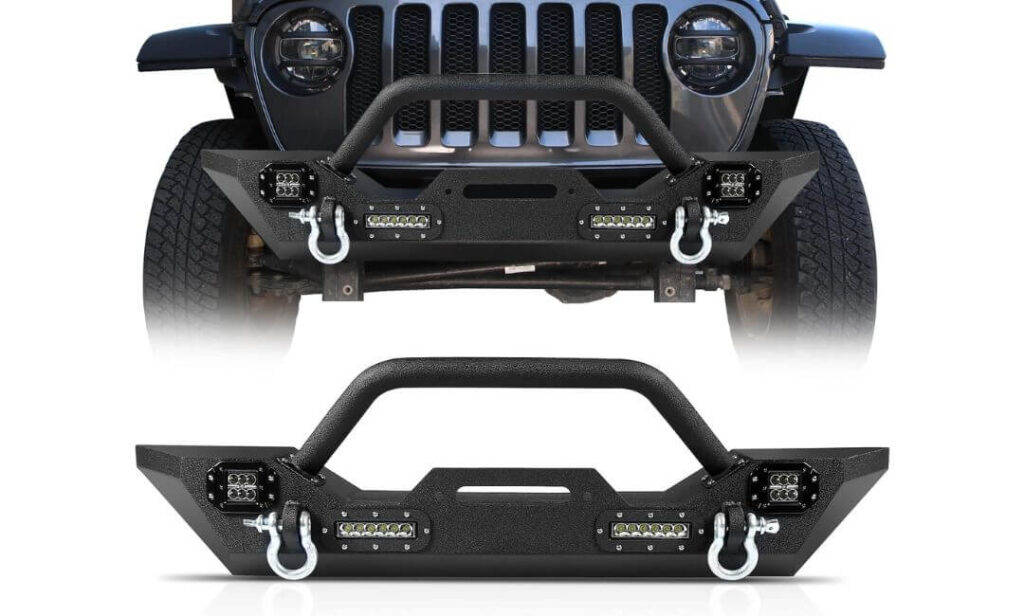
Quick Specs:
- Steel Build: K235 carbon steel + reinforced 2″ tubing
- Winch Support: Up to 12,000 lbs (integrated plate)
- Recovery Points: 4.75-ton D-rings (9,500 lbs rated)
- Lighting: 4×18W LED work lights (wide-angle coverage)
- Finish: Triple-layer (steel base + E-coat + powder coat)
- Weight: ~58 lbs (balanced strength vs usability)
- Extras: Detachable bull bar included
Right in the middle of all the overpriced and underbuilt options, this one hits that sweet spot where you actually feel like you got more than you paid for. Not flashy, not overcomplicated—just a properly built steel bumper that does exactly what a Wrangler owner needs when things get real.
The structure is where it earns respect. Built from K235 carbon steel with reinforced tubing, it doesn’t just look strong—it feels planted once mounted. The 12,000 lb winch plate sits integrated (not hanging awkwardly), and the 4.75-ton D-ring mounts are welded in a way that actually inspires confidence during recovery pulls. This is the kind of setup that fixes the biggest weakness of stock bumpers—they simply aren’t built for real use.
Lighting is simple but effective. Instead of going overboard, you get four 18W LEDs placed for wide-angle visibility, which matters more than raw brightness when you’re navigating tight trails at night. Add the detachable bull bar, and you get that aggressive front-end stance without sacrificing functionality. (If you want a bumper that balances cost, strength, and real usability—this is where most Wrangler owners quietly land.)
What Stands Out in Real Use
- Strong steel structure without unnecessary weight
- Proper recovery setup (winch + D-rings feel reliable under load)
- Wide-angle LED lighting that actually helps on trails
- Detachable bull bar adds flexibility in build style
- True bolt-on fitment—no cutting, no guesswork
What Could Be Better
- Powder coat is a bit thinner than premium options—worth keeping an eye on for long-term wear
Jeep Wrangler Fitment & Real Compatibility
Designed to fit JK (2007–2018) and JL (2018–2026) Wranglers, this one lines up cleanly with factory mounting points. No weird spacing issues or forced alignment—just a straight bolt-on that sits right where it should.
Because it supports both generations, it’s a solid choice if you want flexibility or are upgrading from an older setup. Once mounted, it feels stable and doesn’t need constant re-adjustment.
Installation Notes (Real World)
Install is straightforward, but take your time on alignment. Start with a loose fit, line everything up, then tighten evenly—it makes a big difference in how clean it sits.
At around 58 lbs, it’s manageable but easier with a second person, especially when positioning underneath. LED wiring isn’t plug-and-play, so plan a clean setup (relay or switch panel works best).
Once installed properly, it holds tight, looks right, and more importantly—you’ll actually trust it when you need it.
#4. Tyger Auto FURY Stubby Front Bumper
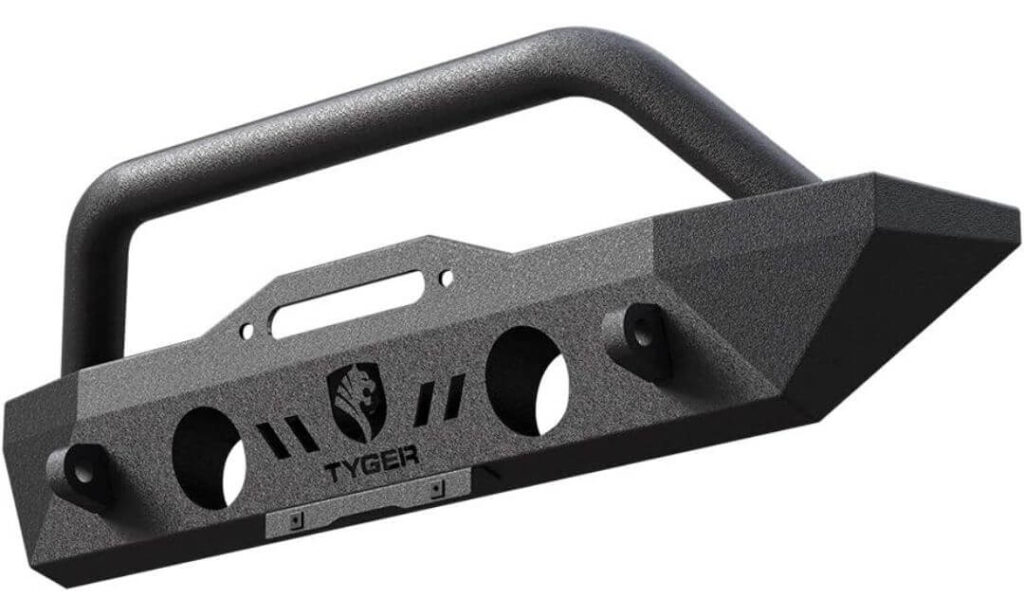
Quick Specs:
- Steel Build: 5mm carbon steel (thicker than most in this range)
- Winch Support: Integrated plate (up to 12,000 lbs)
- Recovery Points: Welded D-ring mounts (solid frame integration)
- Design: Stubby width (maximum tire clearance & approach angle)
- Finish: Textured black powder coat (rust-resistant)
- Weight: ~59 lbs (compact but dense)
- Extras: License plate bracket + factory fog light compatibility
The moment you switch from a full-width bumper to a stubby like this, everything about your Wrangler changes—the way it approaches obstacles, the way it clears rocks, even how confident you feel pushing it harder. This isn’t about looks. This is about clearance, angles, and real off-road control.
Built from 5mm carbon steel, it’s noticeably thicker than most stubby options out there. You feel that strength when you mount it—the structure is tight, the welds are clean, and the winch plate sits exactly where it should, not hanging awkwardly or flexing under load. Add in the welded D-ring mounts, and you’ve got a setup that’s actually ready for recovery, not just pretending to be.
Where it really shines is space. That stubby design opens up your front end, giving your tires more room to climb and your Jeep more freedom to move. It also keeps weight tighter to the center, which helps with balance on uneven terrain. And unlike some stripped-down bumpers, you still get factory fog light support + license plate mount, so you’re not sacrificing daily usability. (If you’re serious about off-road angles and want your Wrangler to feel more capable instantly—this is the kind of upgrade that actually delivers.)
What Stands Out in Real Use
- Stubby design = better approach angle (you’ll notice it immediately)
- Thick 5mm steel build—feels stronger than most in this category
- Compact but winch-ready (no compromise on recovery capability)
- Keeps factory fog lights, so no loss of basic functionality
- Balanced weight distribution improves handling on rough terrain
What Could Be Better
- Factory skid plate and splash guard need to be removed (not compatible with this setup)
Jeep Wrangler Fitment & Real Compatibility
Designed for JK (2007–2018) and JL (2018–2026) Wranglers, and it fits clean when installed properly. The stubby width aligns well with both generations, giving that aggressive, tucked-in look without leaving awkward gaps.
One important thing—this setup is generally not listed for Rubicon trims, so double-check before buying. On standard JK/JL builds, though, it sits exactly where it should and feels purpose-built.
Installation Notes (Real World)
Installation is bolt-on, but don’t rush it. At ~59 lbs, positioning it solo is doable—but frustrating. A second set of hands makes a big difference.
If you’re reusing factory fog lights, install them before mounting the bumper—it saves time and headaches. Also, check your hardware during install; having a couple of extra bolts on hand isn’t a bad idea.
Take your time lining up the lower bolts, tighten evenly, and once it’s on—you’ll feel the difference the first time your Wrangler hits a real obstacle.
#5. longsun Stubby Front Bumper with Bull Bar
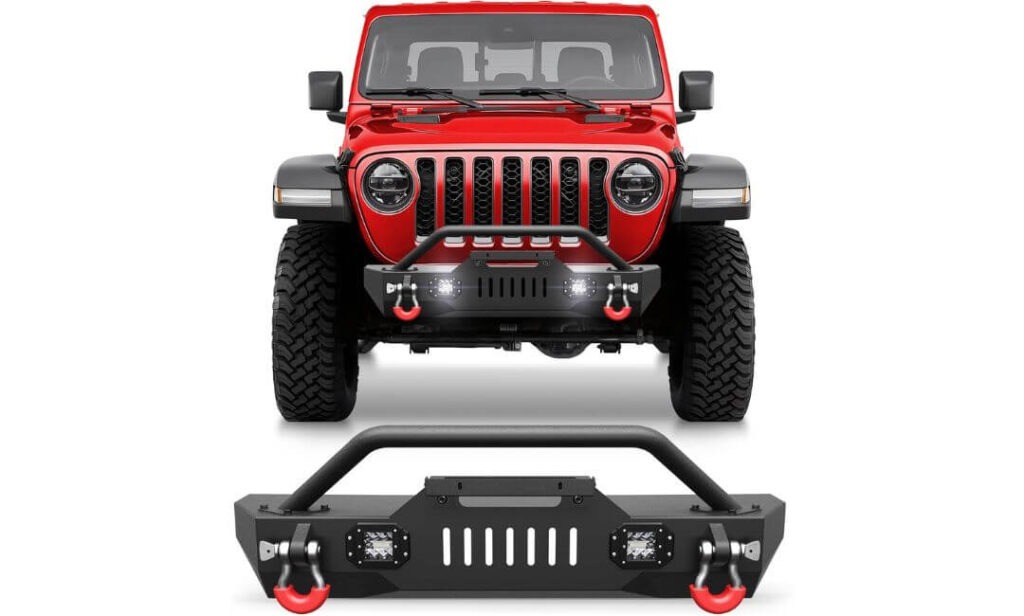
Quick Specs:
- Steel Build: Reinforced carbon steel with added stiffeners
- Winch Support: Up to 12,000 lbs (integrated plate)
- Recovery Points: Dual D-rings included (solid tow setup)
- Lighting: 2×18W square LED lights (built-in)
- Design: Stubby + integrated bull bar (extra front protection)
- Finish: E-coat + textured powder coat (5+ year resistance)
- Weight: ~55 lbs (lighter, easier to handle)
Some bumpers try to do everything and end up feeling messy—this one keeps it simple, but in a way that actually works. You get a stubby design for clearance, a bull bar for added protection, and a winch-ready structure, all in one clean setup that doesn’t feel overbuilt or underdone.
The structure is smarter than it looks. With reinforced bends and internal stiffeners, it holds shape under pressure instead of flexing like cheaper stubby builds. The 12,000 lb winch plate is already integrated, so you’re not figuring things out later, and the included D-rings give you proper recovery points right out of the box. It’s the kind of setup that feels ready the moment it’s installed.
What makes it stand out is balance. The stubby width gives you better tire clearance, while the bull bar adds that extra front-end protection without turning it into a bulky full-width bumper. Add the 2×18W LED lights, and you’ve got enough visibility for night runs without cluttering the front. (If you want a bumper that feels clean, capable, and doesn’t overcomplicate your build—this one just fits right in.)
What Stands Out in Real Use
- Stubby + bull bar combo—rare balance of clearance and protection
- Reinforced structure (stiffeners actually improve durability)
- Winch-ready out of the box (no extra setup needed)
- Lightweight feel (~55 lbs) compared to similar steel builds
- Clean LED setup that’s useful without being excessive
What Could Be Better
- LED lights are basic—good for visibility, but not as powerful as larger light bar setups
Jeep Wrangler Fitment & Real Compatibility
Fits JK (2007–2018) and JL (2019–2026) Wranglers, and the alignment is straightforward when installed properly. It sits tight against the frame without leaving awkward spacing, and the stubby width matches both generations well.
Because it’s a simpler design, you don’t run into many compatibility headaches—but still, it’s worth doing a quick test fit before tightening everything down just to keep things clean.
Installation Notes (Real World)
Install is about as simple as it gets—true bolt-on, no drilling or cutting. At ~55 lbs, it’s easier to handle than most steel bumpers, though a second person still helps during positioning.
Everything you need is included, so it’s mostly about taking your time with alignment. LED wiring is straightforward, and once everything is tightened properly, it sits solid with no rattles or movement.
#6. CLAMBER Heavy Duty Front Bumper
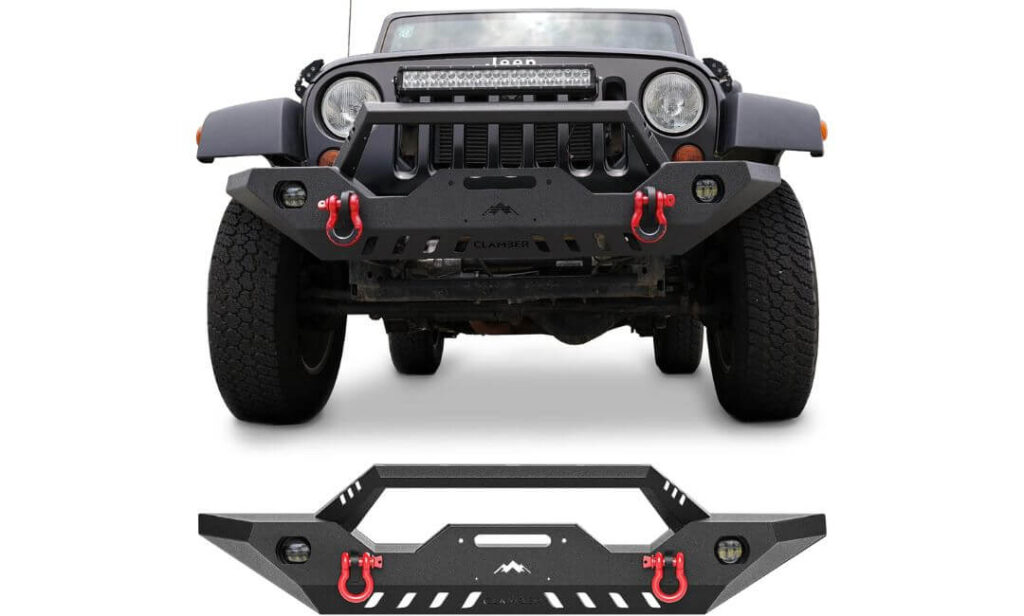
Quick Specs:
- Steel Build: 4mm carbon steel (thick, impact-focused design)
- Winch Support: Up to 10,000 lbs (standard 10×4.5 mount)
- Recovery Points: Welded D-ring mounts (10,000 lbs rated)
- Design: Full-width (maximum front-end protection)
- Finish: E-coat + textured powder coat (weather & rust resistant)
- Weight: ~65.6 lbs (heavier, planted feel)
- Extras: Factory fog light brackets + license plate mount
There’s a point where stubby bumpers stop making sense—and that’s when you want your Wrangler to take hits without thinking twice. This is built for that mindset. No shortcuts, no lightweight compromises—just solid, full-width steel protection that actually shields the front end the way it should.
The 4mm carbon steel construction gives it that dense, planted feel the moment it’s mounted. It doesn’t flex, it doesn’t rattle, and more importantly, it doesn’t look like it’ll fold the first time you misjudge a rock line. The 10,000 lb winch plate is cleanly integrated, and the welded D-ring mounts are positioned where recovery actually works—not just where it looks good.
What makes it different from other heavy bumpers is how usable it stays. You still get factory fog light compatibility, so you’re not losing everyday visibility, and the overall design keeps things straightforward—no unnecessary bulk, just protection where it counts. (If your Wrangler sees rough terrain or you simply don’t want to worry about front-end damage anymore—this is the kind of bumper that lets you drive with confidence, not hesitation.)
What Stands Out in Real Use
- Full-width protection—covers more than stubby setups ever can
- Thick 4mm steel build—feels solid and impact-ready
- Clean winch integration without awkward mounting
- Factory fog light support keeps daily usability intact
- Stable, planted feel once installed (no movement, no flex)
What Could Be Better
- Fitment can take patience—some setups may need slight alignment adjustments during install
Jeep Wrangler Fitment & Real Compatibility
Fits JK (2007–2018) and JL (2018–2026) Wranglers, and once aligned properly, it sits tight and secure against the frame. Because it’s a full-width design, it visually fills the front end much more than stubby options—something many owners actually prefer for protection.
One thing to keep in mind—if you’re running a factory skid plate (especially on certain trims), double-check compatibility before final install. Once sorted, it integrates cleanly and doesn’t need revisiting.
Installation Notes (Real World)
This isn’t a lightweight install. At ~65 lbs, it’s a two-person job if you want it done right. Bolt-on design is straightforward, but alignment takes a bit of patience—start loose, adjust, then tighten evenly.
Getting underneath the Jeep helps a lot, so having proper space or a jack setup makes things easier. Fog light transfer is simple, and once everything is dialed in, it locks into place solidly.
Take your time with this one—because once it’s on, you’ll feel the difference every time your Wrangler faces something rough.
#7. ECOTRIC 10th Anniversary Style Front Bumper
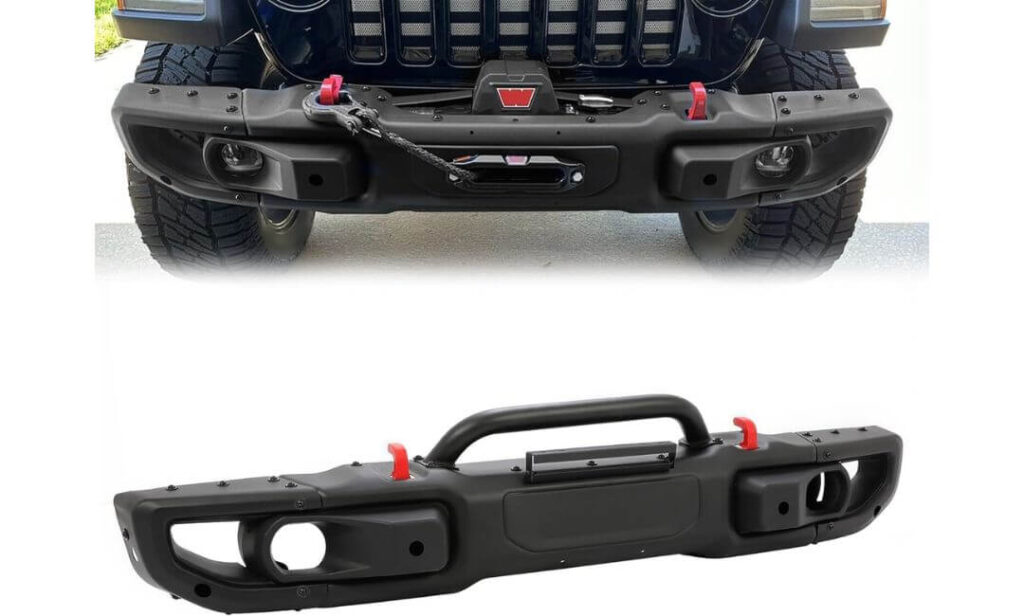
Quick Specs:
- Build: High-strength alloy steel + reinforced plastic sections
- Design: 10th Anniversary–inspired (OEM-style upgrade)
- Compatibility: JL (2018–2025) 2 & 4-door
- Protection: Impact-dispersing structure (front-end shielding)
- Finish: Black powder coat (rust-resistant)
- Features: Sensor holes + fog light openings (factory support)
- Weight: Heavy-duty build (~100 lbs class)
Not everyone wants a bulky steel bumper sticking out like a build in progress. Some people want their Wrangler to look right—clean, factory-inspired, but stronger underneath. That’s exactly where this setup fits in.
The first thing you notice is how natural it looks. The 10th Anniversary style design blends into the Wrangler’s front end like it came that way from the factory—but underneath, it’s reinforced with high-strength steel, built to actually take impact and distribute force instead of just absorbing damage like stock plastic bumpers. It’s subtle, but it changes how protected your front end really is.
Where it really earns points is compatibility. You get sensor holes + fog light openings, so nothing feels like a downgrade—everything transfers over cleanly. No warning lights, no weird adjustments. It keeps your Wrangler’s daily functionality intact while upgrading the strength where it matters. (If you want your Jeep to stay clean and factory-looking—but quietly tougher than stock—this is the kind of upgrade that makes sense long term.)
What Stands Out in Real Use
- OEM-style design—doesn’t look aftermarket or overbuilt
- Integrated sensor + fog compatibility (no feature loss)
- Stronger than stock without adding visual bulk
- Balanced for daily driving + light off-road use
- Clean finish that matches factory aesthetics
What Could Be Better
- Requires pre-assembly before install, which adds extra time compared to bolt-on bumpers
Jeep Wrangler Fitment & Real Compatibility
Designed specifically for JL (2018–2025) Wranglers, both 2-door and 4-door models. It fits cleanly with factory mounting points and keeps everything aligned the way it should be.
Important note—this is not for JK models, so make sure you’re on a JL platform. Once installed, it blends seamlessly with the body lines and doesn’t feel like an add-on.
Installation Notes (Real World)
This one takes a bit more effort than others because it arrives in parts. You’ll need to assemble it first (screws + brackets) before mounting it onto the Jeep.
Once assembled, installation is straightforward using factory points—but due to the weight, having a second person helps a lot. Take your time aligning everything before tightening, and it’ll sit perfectly clean.
Done right, it doesn’t just look better—it feels like your Wrangler finally got the front end it always should’ve had.
Best Jeep Wrangler Front Bumpers for JK, JL & JLU – Quick Comparison
| Front Bumper | Build & Strength | Winch & Recovery | Design Style | Best For |
|---|---|---|---|---|
|
Best Overall Hooke Road Sturdy
|
11-gauge steel, strong but balanced (doesn’t feel overkill) | 12,000 lb winch + solid D-rings | Mid-width aggressive build | All-round use (daily + serious off-road) |
|
Most Complete Setup YZONA JL Bumper
|
Heavy steel + skid plate protection | 12,000 lb winch + 9,500 lb D-rings | Full system (with skid + light bar) | JL owners who want everything in one go |
|
Best Value Peforway Steel
|
K235 steel, reliable without extra weight | 12,000 lb winch + reinforced mounts | Hybrid (bull bar + clean front) | Budget-friendly but capable build |
|
Best Clearance Tyger FURY Stubby
|
5mm steel (thicker than most stubby bumpers) | Winch-ready + welded mounts | Stubby (max tire clearance) | Rock crawling & tight trail driving |
|
Balanced Stubby longsun Stubby
|
Reinforced steel with stiffeners | 12,000 lb winch + D-rings included | Stubby + bull bar combo | Clean build with added front protection |
|
Max Protection CLAMBER Full Width
|
4mm heavy steel (impact-focused) | 10,000 lb winch + welded mounts | Full-width (maximum coverage) | Heavy off-road + front-end safety |
|
OEM Style ECOTRIC 10th Style
|
Steel + plastic (balanced durability) | Basic protection (not winch-focused) | Factory-style clean look | Daily driving + subtle upgrade |
What Actually Makes a Jeep Wrangler Front Bumper Worth Buying
Most people think a bumper is just steel and bolts. It’s not. On a Wrangler, the front bumper changes how the vehicle approaches obstacles, handles weight, recovers from bad situations, and even how it feels daily. If you don’t look at the right things, you’ll end up replacing it within months.
Here’s what actually separates a good bumper from something that just looks good in photos.
Protection Isn’t About Thickness — It’s About How It’s Built
Everyone talks about “heavy-duty steel,” but thickness alone doesn’t mean much if the design is wrong. What matters is how the bumper sits relative to your frame and tires.
A proper bumper improves your approach angle—meaning your Wrangler can climb without scraping the front. That’s why stubby options (like Tyger or longsun) feel so different on trails compared to full-width setups. On the other hand, full-width bumpers (like CLAMBER) give you real front-end coverage, which matters when you’re not just crawling but actually hitting uneven terrain or debris.
Then there’s the winch. If the bumper doesn’t integrate the winch plate properly into the structure, it becomes a weak point under load. The good ones in this list don’t “add” winch support—they’re built around it.
Durability Comes Down to Coating + Welding, Not Just Steel Type
Steel is steel—but how it’s finished decides how long it survives. A bumper that looks great on day one can start rusting within months if the coating is weak.
That’s why E-coating + powder coating combinations matter. Options like Peforway and CLAMBER use layered protection, which actually holds up against mud, water, and road salt. At the same time, weld quality matters more than most people realize—poor welds are where cracks start, especially during recovery pulls.
Real durability is when the bumper still feels solid after months of use—not just when it comes out of the box.
Functionality Is What You’ll Notice First in Real Use
This is where most stock bumpers fail—and where aftermarket ones justify their cost.
A proper bumper should give you:
- Recovery points that are actually usable under load
- Winch compatibility without awkward mounting
- Lighting options that improve visibility, not just looks
For example, YZONA doesn’t just add lights—it gives you a 312W light bar + flood setup that actually helps on night trails. Hooke Road balances it better with usable LEDs without overdoing it. These small differences are what you feel when you’re actually driving, not just looking at your Jeep.
Fitment Is Where Most Cheap Bumpers Fall Apart
This is something you only understand after installing one.
A good bumper should:
- Line up with factory mounting points without forcing bolts
- Sit tight against the frame (no gaps or uneven spacing)
- Work with fog lights, sensors, and existing hardware
JL and JK fitment differences are real. JL-specific designs (like YZONA, ECOTRIC) feel more precise, while multi-fit bumpers need smarter alignment. If a bumper doesn’t sit right, it doesn’t just look bad—it can create stress points over time.
Weight Changes How Your Wrangler Feels (More Than You Think)
Heavier isn’t always better.
A 65–70 lb bumper (like CLAMBER or YZONA) gives you more protection, but it also adds weight to the front axle. That affects:
- Steering feel
- Suspension load
- Fuel efficiency (slightly, but noticeable over time)
Lighter setups (like longsun ~55 lbs) feel easier in daily driving, while still offering capability. The key is balance—choose weight based on how you actually use your Jeep, not just what sounds stronger.
Design Should Match Your Driving — Not Just Your Taste
This is where people get it wrong the most.
- Stubby bumpers → better for tight trails, rocks, and clearance
- Full-width bumpers → better for protection and stability
- OEM-style bumpers → better for clean daily builds
Aggressive doesn’t always mean better. A bumper should match how you drive your Wrangler, not just how you want it to look parked.
The One Thing Most Buyers Ignore (But Shouldn’t)
A good bumper is something you stop thinking about after installing.
No rattles, no re-tightening bolts, no worrying about recovery points failing, no rust showing up too early. That’s the real test. Not how it looks on day one—but how it performs after months of actual use.
That’s exactly why the bumpers in this list were chosen the way they were. Not because they check boxes—but because they hold up when it actually matters.
Buying Guide: How to Evaluate a Jeep Wrangler Front Bumper (Before You Regret the Purchase)
Most people don’t buy the wrong bumper because they picked a bad brand—they buy it because they didn’t evaluate it the right way. On a Wrangler, a bumper isn’t just an accessory. It directly affects fitment, recovery strength, driving feel, and long-term reliability.
If you look at the right factors before buying, you won’t just pick a good bumper—you’ll pick the right one for how you actually use your Jeep.
Compatibility Comes First — JL vs JK Is Not a Small Detail
This is where most mistakes happen.
A bumper that fits both JK (2007–2018) and JL (2018–present) can work well—but only if it’s designed properly. JL-specific bumpers (like YZONA or ECOTRIC) usually offer cleaner alignment, better sensor integration, and tighter fitment.
Multi-fit bumpers (like Hooke Road or Peforway) give flexibility, but you need to make sure:
- Bolt holes align naturally (no forcing)
- Frame sits flush (no gaps or tilt)
- Fog lights and sensors don’t get compromised
If compatibility is even slightly off, everything else—strength, looks, durability—starts to feel wrong.
Construction Isn’t Just Steel vs Aluminum — It’s How That Material Is Used
Everyone says “steel is stronger,” but that’s only half the story.
What actually matters:
- Steel thickness (4mm vs 5mm vs 11-gauge)
- Reinforcement points (tubing, stiffeners, internal bracing)
- Coating quality (E-coat + powder coat vs single layer)
A well-built steel bumper like Hooke Road or CLAMBER feels solid because the structure is designed to handle load, not just look thick.
Aluminum is lighter, but in real Wrangler builds—especially off-road—properly coated steel still wins for durability and recovery confidence.
Winch Compatibility — This Is Where Cheap Bumpers Fail
A bumper saying “winch-ready” doesn’t mean it’s ready.
You need to check:
- Rated capacity (10,000–12,000 lbs standard)
- Mounting pattern (10” × 4.5” is common)
- Integration (built into structure vs added plate)
If the winch plate isn’t part of the bumper’s core design, it becomes a weak point under load. That’s why bumpers like Hooke Road, YZONA, and Peforway feel more reliable—they’re built around the winch, not modified later.
Lighting Setup — Looks Don’t Matter, Usability Does
Lighting is one of the most overhyped features.
What actually matters:
- Placement (wide-angle vs straight beam)
- Mounting options (light bar, pods, fog lights)
- Wiring access (how easy it is to connect cleanly)
A clean setup like YZONA’s 312W light bar + flood combo gives real trail visibility. Meanwhile, simpler setups (like longsun or Peforway) still work well if they’re positioned correctly.
The goal isn’t brightness—it’s usable visibility without clutter.
Recovery Strength & Protection — The Real Test of Any Bumper
This is where your bumper proves itself.
Look for:
- D-ring mounts welded into the frame (not bolted)
- Rated load (9,500 lbs+ minimum for real recovery)
- Front-end protection coverage (stubby vs full-width)
- Skid plate integration (for undercarriage safety)
For example:
- Stubby bumpers (Tyger, longsun) = better clearance
- Full-width (CLAMBER) = more protection
- Integrated systems (YZONA) = protection + underbody safety
If recovery points fail, nothing else matters. This is non-negotiable.
Installation — Where “Easy Bolt-On” Gets Tested
Almost every bumper claims bolt-on. Not all of them feel like it.
Real-world install depends on:
- Weight (55 lbs vs 65+ lbs makes a difference)
- Alignment accuracy (bolt holes lining up naturally)
- Extra work (LED wiring, fog light transfer, assembly)
Some bumpers (Hooke Road, longsun) install cleanly with minimal effort. Others (CLAMBER, ECOTRIC) may require alignment patience or pre-assembly.
A good bumper installs once—and doesn’t need adjustments later.
Price vs Value — What You Keep vs What You Replace
Cheap bumpers aren’t always bad—but they often cost more later.
A good value bumper:
- Doesn’t rust quickly
- Doesn’t need repainting or reinforcement
- Doesn’t get replaced after one season
Peforway is a good example of value—it balances cost and strength. Hooke Road leans more toward long-term reliability.
The real question isn’t “how much it costs now”—it’s whether you’ll still trust it a year from now.
Warranty & Support — The Quiet Indicator of Confidence
Most people ignore this—but it tells you a lot.
A brand offering:
- 2–5 year warranty
- Clear support channels
is usually more confident in its product.
Tyger’s 5-year backing, for example, says more about trust than any marketing line. At the same time, always inspect the bumper on arrival—shipping damage and coating quality matter more than warranty claims later.
The Final Reality Check Before You Buy
If you’ve done everything right, your choice should feel obvious.
The right bumper:
- Fits without forcing
- Supports your driving style
- Feels solid the moment it’s mounted
- Doesn’t make you second-guess your decision later
That’s the difference between buying a bumper… and actually upgrading your Wrangler.
Final Verdict: Which Jeep Wrangler Front Bumper Actually Makes Sense for You?
At this point, you don’t need more options—you need clarity. Because the truth is, there’s no single “best” bumper for every Wrangler. The right choice depends entirely on how you drive, what you expect from your Jeep, and what you’re willing to compromise on.
Here’s how to make that decision without overthinking it.
If You Want Something You Can Trust Without Thinking Twice
Go with a full steel, winch-ready setup.
This is for people who don’t want limits—whether it’s recovery situations, rough terrain, or unexpected hits. Bumpers like Hooke Road or CLAMBER fall into this category. They’re heavier, yes—but they give you that feeling where you stop worrying about the front end entirely.
This isn’t about looks. It’s about confidence under pressure.
If your Wrangler sees real off-road use, this is where you should be.
If You Care About Balance — Not Just Strength
Then you’re better off with a mid-weight, well-built steel bumper that doesn’t overload the front.
Something like Peforway or longsun gives you winch compatibility, recovery strength, and usable lighting, without pushing your suspension or daily drivability too far. These are the setups that feel right both on-road and off-road.
This is where most Wrangler owners should land—because it’s not about extremes, it’s about consistency in everyday use.
If Your Driving Is More Technical (Tight Trails, Rocks, Angles)
You’ll immediately feel the difference with a stubby bumper.
Tyger FURY is a perfect example of this kind of setup. Less width means better approach angles, more tire clearance, and less interference when climbing obstacles. It’s not about protection—it’s about movement and control.
If you’ve ever scraped your bumper on a climb, you already know why this matters.
If You Want a Complete Setup Without Building It Piece by Piece
Then go for something fully integrated.
YZONA stands out here because it gives you skid plate protection, lighting, winch support, and recovery points in one system. No mixing parts, no second-guessing compatibility—it’s already done.
This is for people who want to upgrade once and be finished with it.
If You Want to Keep That Clean Factory Look
Then an OEM-style bumper makes more sense than going aggressive.
ECOTRIC works here because it keeps the Wrangler looking natural while still improving strength and protection. You don’t lose sensors, you don’t lose fog lights—you just get a cleaner, stronger version of what you already had.
Not every build needs to look extreme to be effective.
JL vs JK — Don’t Overlook This (It Matters More Than You Think)
If you’re running a JL (2018–present), go for bumpers designed specifically for it when possible. You’ll get better alignment, cleaner sensor integration, and fewer installation issues.
If you’re on a JK (2007–2018), you have more flexibility—but still make sure the bumper actually sits right without forcing alignment.
Fitment isn’t just about “does it fit”—it’s about how well it fits after installation.
Weight, Daily Driving & Long-Term Feel
This is something most buyers ignore until it’s too late.
Heavier bumpers give you protection—but they also:
- Add load to the front suspension
- Slightly affect steering feel
- Change how the Jeep behaves daily
If your Wrangler is a daily driver, balance matters more than maximum strength. If it’s a weekend off-road build, then weight becomes less of a concern.
The Final Truth (What Actually Matters After Installation)
A good bumper isn’t something you keep adjusting, fixing, or worrying about.
It’s something you install—and then forget about, because:
- It fits right
- It holds up
- It works when you need it
That’s the real difference between buying a bumper and making a proper upgrade to your Wrangler.
If you’ve followed this guide properly, one option from this list should already feel like the obvious choice. And that’s exactly how it should be.
Installation Notes & Real-World Tips: What Actually Matters When You Bolt It On
Installing a front bumper on a Wrangler sounds simple—until you’re halfway through and realize small details make the difference between a clean build and a frustrating one. This isn’t just about bolting metal to a frame. It’s about alignment, wiring, protection, and doing it once without having to redo anything later.
Here’s what actually matters when you’re installing it the right way.
Tools You’ll Actually Use (Not Just What Manuals Say)
Most installs don’t fail because of skill—they fail because people aren’t prepared.
You’ll need:
- A full socket set (metric + deep sockets)
- Breaker bar or impact wrench (factory bolts can be tight)
- Torque wrench (to avoid over-tightening or uneven pressure)
- Allen keys / hex tools (for accessories and lights)
- Flat workspace or jack stands (for access underneath)
If you’re doing wiring:
- Basic wire connectors, crimp tool, electrical tape
- Optional but better: relay kit or switch panel
Having the right tools doesn’t just save time—it prevents stripped bolts, uneven mounting, and unnecessary frustration.
Fitment Issues — Where Most Installs Go Wrong
This is the part no one talks about enough.
Even with “bolt-on” bumpers, you might face:
- Slight bolt hole misalignment
- Uneven gaps between bumper and frame
- Tight clearances near skid plates or brackets
The fix isn’t force—it’s patience.
Start by doing a dry fit:
- Mount the bumper loosely
- Insert all bolts without tightening
- Adjust positioning until everything lines up naturally
Then tighten gradually in a cross pattern (like wheel lug nuts). This keeps pressure even and prevents the bumper from sitting crooked.
If something doesn’t line up, don’t force it. Reposition, recheck, and then tighten. That one step decides how clean your final install looks.
Wiring & Lighting — Do It Clean Once, Not Twice
Lighting is where rushed installs show.
Most bumpers don’t come with plug-and-play wiring, so you’ll need to:
- Run positive and negative wires properly
- Use a relay or switch system (recommended for control)
- Secure wiring away from heat and moving parts
A messy wiring job leads to:
- Lights failing later
- Loose connections
- Hard-to-fix electrical issues
Take extra time here. Route wires cleanly, secure them with clips, and test everything before final tightening.
Good lighting isn’t just about brightness—it’s about reliability when you actually need it.
Protecting the Finish — Small Care, Big Difference
Most people damage their bumper during installation—not on the trail.
To avoid that:
- Place the bumper on a soft surface (cardboard or cloth) before mounting
- Avoid dragging it across concrete
- Use rubber washers or spacers where needed to prevent metal contact
Even high-quality powder coating can scratch if you rush. And once that coating is compromised, rust starts slowly over time.
After installation, it’s worth applying a protective spray or touch-up coat, especially if you plan to off-road regularly.
Weight & Handling — Don’t Underestimate This Step
These bumpers aren’t light. Positioning them alone is possible—but not practical.
A second person helps with:
- Holding alignment while inserting bolts
- Preventing accidental drops or scratches
- Faster, cleaner installation overall
Trying to rush a heavy install alone usually leads to misalignment or surface damage.
Final Check Before You Call It Done
Before you step back and admire the build, take 5 extra minutes:
- Recheck all bolts for even tightness
- Test lights and wiring again
- Shake the bumper slightly—there should be no movement or rattling
- Look at alignment from both sides (symmetry matters more than you think)
A properly installed bumper should feel like part of the Jeep—not something attached to it.
The Reality Most People Learn Too Late
Installation isn’t just a step—it’s where the quality of your bumper actually shows.
A good bumper:
- Aligns without forcing
- Mounts solid without adjustments later
- Holds up without loosening over time
Do it right once, and you won’t think about it again.
Rush it, and you’ll keep fixing small issues for months.
That’s the difference between a clean build—and a constant headache.
FAQs About Jeep Wrangler Front Bumpers
Will a heavy steel front bumper mess up how my Jeep Wrangler drives daily?
It can—but only if you ignore balance.
A lot of people install a heavy bumper and then wonder why the front feels slightly “heavier” or why the suspension dips more over time. The truth is, a 65–70 lb steel bumper does add noticeable weight to the front axle, especially on a daily-driven Wrangler.
But here’s what most people miss: it’s not just the weight—it’s where that weight sits. A well-designed bumper sits tight to the frame, keeping weight centered. Poor designs stick out, making the Jeep feel nose-heavy.
If your Wrangler is mostly daily-driven, go for something balanced—not the heaviest option available. If it’s a weekend off-road machine, then that extra weight becomes an advantage, not a problem.
Do I actually need a winch-ready bumper on my Jeep Wrangler, or is that overkill?
Most people think winch-ready = overkill… until they need it once.
You don’t buy a winch-ready bumper because you’re always using a winch. You buy it because the day you need recovery, nothing else works the same way. Tow straps and basic hooks are fine—until you’re stuck at an angle, on uneven ground, or without another vehicle.
The smarter move isn’t installing a winch immediately—it’s choosing a bumper that already supports one properly. That way, you’re not replacing your bumper later just to add capability you should’ve had from the start.
Think of it like this:
You’re not buying for today—you’re buying for the one situation where it actually matters.
For Jeep Wrangler JL vs JK, does bumper fitment really change that much?
Yes—and you feel it more than you expect.
On paper, many bumpers say “fits JK & JL.” In reality, JL-specific bumpers sit cleaner, align better, and integrate features like sensors and fog lights more naturally.
JK has more flexibility, but JL demands precision. If you force a multi-fit bumper onto a JL, you might not notice it immediately—but over time, small gaps, uneven pressure, or misalignment can show up.
If you’re on a JL, choosing something designed for it isn’t just about fit—it’s about long-term stability and clean installation.
Why do some stubby bumpers feel better off-road even though they look smaller?
Because they remove what you don’t need.
A stubby bumper isn’t “less”—it’s more focused. By cutting down the width, you’re freeing up space for your tires and improving your approach angle, which directly affects how your Jeep climbs obstacles.
That’s why on tight trails or rock crawling, a stubby setup feels more natural. The Jeep moves more freely, without the bumper getting in the way.
Full-width bumpers protect more. Stubby bumpers move better.
Once you drive both, the difference isn’t subtle—it’s immediate.
What’s the biggest mistake people make after installing a new front bumper?
They stop paying attention after installation.
Most issues don’t come from the bumper—they come from what happens after:
- Bolts settling slightly after first few drives
- Wiring loosening due to vibration
- Small coating scratches turning into rust over time
A proper install doesn’t end when you tighten the last bolt. The smart move is to:
- Recheck bolts after a few days of driving
- Inspect wiring connections
- Touch up any exposed metal early
It’s a small effort—but it’s what separates a bumper that lasts years from one that starts showing problems within months.
Final Thoughts: The Upgrade You Feel Every Time You Drive
At the end of all this, it really comes down to one simple truth—a front bumper isn’t just a part you add, it’s something that changes how your Jeep behaves.
You’ll notice it the first time you pull out of your driveway. The stance feels different. The front looks planted. And the moment you hit a rough patch or a trail, there’s a quiet confidence that wasn’t there before. Not because it looks tougher—but because it actually is.
The mistake most people make is chasing specs or trends. Thickest steel, biggest lights, most aggressive design. But the bumpers that actually last on Wranglers—the ones people keep—are the ones that fit right, work without issues, and match how the Jeep is actually used.
That’s what this list was built around.
Some options here are heavier, some cleaner, some more aggressive—but none of them are here just to fill space. Each one solves a real problem that Wrangler owners run into, whether it’s poor approach angle, weak recovery points, or stock protection that simply isn’t enough.
And once you pick the right one, something interesting happens—you stop thinking about it.
No second-guessing.
No upgrades planned again.
No “maybe I should’ve gone with…”
Just a Jeep that feels complete.
Take your time, pick based on how you actually drive—not how it looks on someone else’s build—and you’ll end up with something that doesn’t just upgrade your Wrangler…
…it finally makes it feel like yours.
Also Check:


