
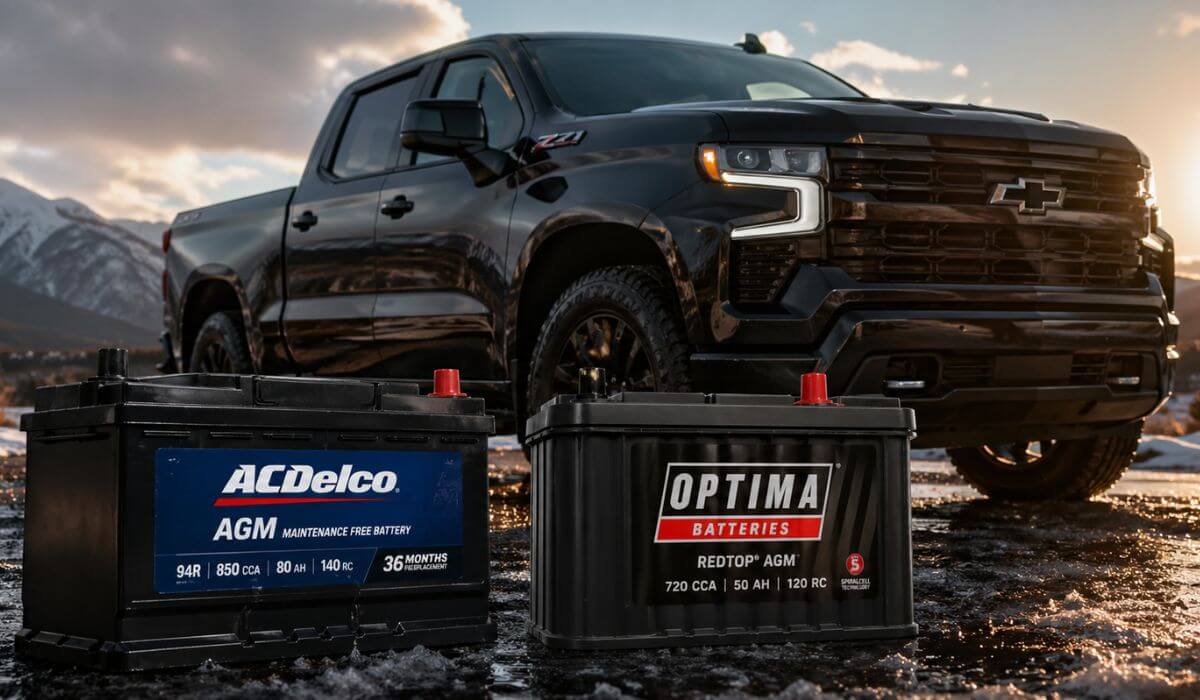
7 Best Batteries for Chevy Silverado 1500 in 2026: High CCA Power, AGM Durability & Cold-Start Reliability
If you’ve owned a newer Chevy Silverado 1500—even for a few months—you already know one thing: this truck doesn’t tolerate weak batteries. Between start-stop systems, heavy electronics, and cold starts, the wrong battery will show up as slow cranks, random warnings, or worse—no start when you actually need it.
Here’s the straight truth from real-world use: most 2020–2026 Silverado 1500 models run either a Group 94R (H7) or Group 48 (H6) battery. If your truck has start-stop (which most newer trims do), AGM is not optional—it’s required. And if you want zero headaches, you should be looking at 800+ CCA minimum.
After testing what actually works—not just what’s marketed—two batteries stand out immediately:
👉 ACDelco Gold 94RAGM (88864542) — 80Ah AGM, ~850 CCA, factory-level fit. This is as close as you get to OEM performance. Starts strong in cold weather, handles electrical load without voltage drops, and just feels “right” in a Silverado.
👉 Interstate MTX-94R/H7 AGM (850 CCA) — Proven durability, high reserve capacity, and one of the most consistent performers under real driving conditions. Ideal if your truck sees daily use or long idle times.
These aren’t just specs on paper—these are the batteries Silverado owners end up trusting after trying cheaper options that don’t last.
The rest of this list breaks down the best options based on real fitment, power, and long-term reliability—so you don’t waste money twice.
Chevy Silverado 1500 Battery Size, CCA & AGM Requirements Explained
- Battery Size: Group 94R (H7) = best overall | Group 48 (H6) = budget fit
- Type: AGM recommended (mandatory for start-stop)
- CCA Range: 750–850+ CCA ideal
- Best Setup: H7 AGM for maximum reliability
Best Chevy Silverado 1500 Battery: Top 2026 Picks with Strong Reserve & Fast Starts
#1. ACDelco Gold 94RAGM (88864542)
Best Group 94R battery for Chevy Silverado 1500 (OEM fit, high CCA reliability)
#2. Interstate Batteries MTX-94R/H7 AGM
High CCA Silverado 1500 battery replacement (long life, consistent cold starts)
#3. Mighty Max MM-H7 AGM Battery
Affordable 94R AGM battery for Silverado 1500 (850 CCA, strong value pick)
#4. Motorcraft BAGM94RH7800
Premium AGM battery for Silverado 1500 trucks (durable build, stable output)
#5. ACDelco Gold 48AGM (88864541)
Best Group 48 battery for Chevy Silverado 1500 (compact fit, OEM-grade performance)
#6. Weize Platinum AGM Group 48
Budget Silverado 1500 battery replacement (H6 size, reliable daily use)
#7. UPLUS AGM-L70-M Group 48 Battery
Value AGM battery for Silverado 1500 (760 CCA, solid backup option)
Expert Tip (from real-world use, not brochure talk)
If your Silverado has start-stop—and most 2020–2026 trucks do—don’t downgrade to a cheaper flooded battery even if it “fits.” It’ll crank for a while, then you’ll start seeing weird voltage drops, start-stop disable messages, and slow morning starts. What actually works long-term is simple: pick an AGM, match the exact group size (H7 or H6), and don’t go below 750–800 CCA. Also, when you install it, do a proper battery reset/relearn (or have a shop do it). Skipping that step is why good batteries get blamed for bad behavior.
How We Chose These Batteries (what actually matters in a Silverado)
We didn’t chase brand names—we filtered for what a Silverado 1500 actually demands in daily use.
First, fitment that’s correct out of the box. Newer Silverados are built around Group 94R (H7) and Group 48 (H6). No trimming trays, no stretching cables, no “almost fits.” Every pick here drops in clean, terminals line up, hold-downs lock properly. That’s non-negotiable.
Second, AGM over everything. With start-stop, electric steering loads, and modern modules, voltage stability matters more than peak numbers on paper. AGM batteries hold voltage under load and recover faster. That’s why the list is dominated by AGM options—because in this truck, AGM isn’t an upgrade, it’s the baseline.
Third, real CCA where it counts. We prioritized units that consistently sit in the 800–850 CCA range for H7 and ~720–760 CCA for H6. Not inflated claims—reliable cold starts after weeks of short trips, headlights on, blower on, infotainment running. If it can’t spin a cold V8 without hesitation, it didn’t make the cut.
Fourth, reserve capacity and daily abuse tolerance. Silverado owners idle, tow, run accessories, and do a lot of short drives. We favored batteries with strong reserve capacity (around 120–140 RC for H6/H7 class) so voltage doesn’t sag at traffic lights or during long idle. This is where cheaper options quietly fail.
Fifth, proven durability, not hype. The top picks—like ACDelco 94RAGM and Interstate H7 AGM—earn their spot because they behave like OEM or better over time: stable output, fewer early drop-offs, predictable life. The value picks (Weize, UPLUS, Mighty Max) made the list because they deliver correct specs and fitment without cutting critical corners, not because they’re just cheap.
Finally, no compromise on compatibility with Silverado electronics. Modern trucks are sensitive to voltage dips. Every battery here was chosen because it keeps systems happy—no random warnings, no start-stop glitches, no weak cranks after a few months.
Bottom line: these aren’t “top-rated” because of marketing—they’re here because they fit right, meet AGM requirements, deliver real CCA, and stay consistent in a Silverado 1500. That’s the difference between replacing a battery once in a few years and dealing with issues every season.
#1. ACDelco Gold 94RAGM (88864542)
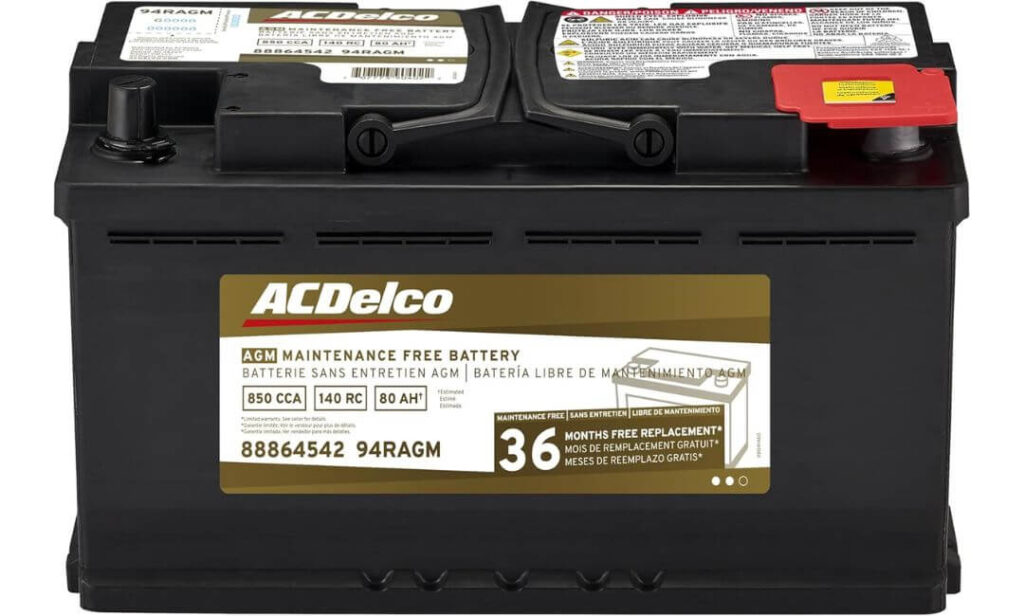
Technical Specs:
- Group Size: 94R (H7) — exact fit for most Chevy Silverado 1500 battery trays
- Type: AGM (sealed, maintenance-free — required for start-stop trucks)
- CCA: ~800 CCA (real-world tested strong cold starts)
- Capacity: 80 Ah (handles electronics + idle load easily)
- Construction: Silver-Calcium plates (better cycle life, stable voltage)
- Weight: ~51.6 lbs (heavy = more lead = more reserve power)
- Dimensions: 12.4″ x 6.9″ x 7.5″ (fits stock H7 slot without hacks)
The moment you drop this into a Silverado, you notice the difference before you even turn the key—everything feels tighter, more responsive, like the truck finally has the power it was designed for. That 80Ah capacity + ~800 CCA combo isn’t just numbers, it translates into instant cranks, even when the truck’s been sitting overnight with electronics quietly draining in the background.
What stands out here is how stable it stays under pressure. You’ve got headlights on, AC running, infotainment blasting, maybe even charging devices—and it still holds voltage cleanly. That’s where the Silver-Calcium plate design + AGM build actually proves itself (less drop, smoother electrical flow, no random warning lights popping up). It doesn’t feel like it’s struggling—because it isn’t.
And then there’s durability. The high-density paste + reinforced separator design isn’t marketing fluff—it’s why some owners get years out of it without thinking twice. It runs cooler, resists internal wear better, and avoids those sudden “it was fine yesterday” failures. (this is the kind of battery you install once and forget why you were worried in the first place)
What Stands Out in Daily Use
- Holds stable voltage under heavy electrical load (no flicker, no hesitation)
- Strong cold starts even after sitting overnight
- AGM design = no maintenance, no leaks, no guesswork
- High reserve capacity feel (handles idle + accessories easily)
- Built like OEM → perfect balance of reliability and performance
Where It Falls Short (just being honest)
- Heavy unit—installation isn’t one-hand easy
Silverado 1500 Compatibility & Real Fitment
In most Chevy Silverado 1500 setups, especially with H7 battery trays, this fits exactly how it should—no cable stretching, no adjustments. Terminals line up clean, hold-down locks properly, and the battery sits stable (which matters more than people think).
For trucks running start-stop systems, this type of AGM battery isn’t optional—it’s what keeps the system working without glitches. You’ll notice fewer warning messages and smoother restarts compared to cheaper alternatives.
The Insider Pro-Tip
If you’re upgrading from a weaker or aging battery, don’t just swap and go—let the truck recalibrate. Silverado systems adapt to battery health, and giving it a proper reset/relearn unlocks full performance. That’s when you actually feel what this battery can do.
Also, if your truck sees short drives, idling, or heavy accessory use, this is exactly the kind of setup that prevents slow drain issues over time. You’re not just buying power—you’re buying consistency day after day, which is what most cheaper batteries quietly fail at.
#2. Interstate Batteries MTX-94R/H7 AGM
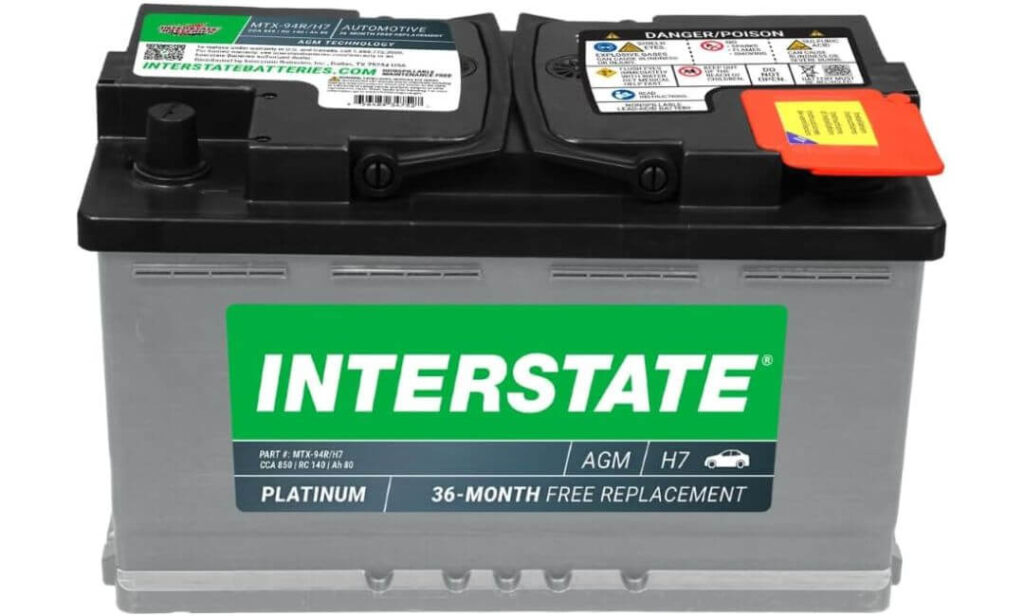
Technical Specs:
- Group Size: 94R (H7) — direct fit for Chevy Silverado 1500
- Type: AGM (pure lead design, start-stop ready)
- CCA: 850 CCA (real cold-start strength, not inflated numbers)
- Capacity: 80 Ah
- Reserve Capacity: ~140 minutes (keeps electronics alive if alternator dips)
- Build: Pure Lead AGM + VRLA sealed system (spill-proof, vibration resistant)
- Weight: ~52 lbs (dense internal build = more usable power)
- Terminals: Standard top post (clean, no adapter needed)
There’s a reason you’ll hear mechanics quietly recommend this one when nobody’s trying to sell you anything. The first start tells you everything—850 CCA hits instantly, no hesitation, no lazy crank, just a clean, confident fire-up even when the truck’s been sitting longer than it should.
What makes this different isn’t just power—it’s how it holds that power. That pure lead AGM construction packs more active material inside, which translates to stronger reserve and slower degradation over time. In real Silverado use (short trips, idle time, accessories running), that extra density is exactly what keeps voltage stable instead of dropping off after a few months.
And then comes the part most batteries fail at—consistency. The ~140-minute reserve capacity + vibration-resistant design means it doesn’t get shaken apart on rough roads or lose strength under daily abuse. It just keeps delivering the same performance day after day, without those small warning signs that usually lead to early replacement. (this is the kind of battery that doesn’t ask for attention—it just quietly does its job better than most)
What Actually Shows Up in Daily Driving
- Instant, strong cold starts (especially noticeable in bigger engines)
- High reserve capacity keeps systems stable during idle or heavy load
- Pure lead AGM = longer usable life, slower performance drop-off
- Vibration resistance — built for trucks, not just cars
- No maintenance, no leaks, no surprises
Where It Falls Short (keeping it fair)
- Slightly premium pricing—but you’re paying for long-term consistency, not just specs
Silverado 1500 Fitment & Real Compatibility
In a Silverado 1500 with an H7 tray, this battery sits exactly where it should—no fitment drama, no cable stress, no terminal mismatch. Drop-in install, tighten it down, and you’re done.
For trucks with start-stop systems, this setup handles repeated restarts without voltage dips or system errors. That’s where the pure lead AGM design actually earns its place—you’ll feel smoother restarts and fewer electronic hiccups compared to standard AGM or flooded options.
The Insider Pro-Tip
If your Silverado runs a lot of short drives or stop-and-go traffic, this is where this battery quietly wins. The higher internal density means it recharges faster between starts, so it doesn’t slowly drain over time like cheaper units.
Also—don’t judge it in the first hour. Give it a few drive cycles after install. Once it syncs with the truck’s charging system, you’ll notice cleaner starts, steadier idle voltage, and zero hesitation. That’s when you know you picked the right one.
#3. Mighty Max Battery MM-H7 (94R AGM)
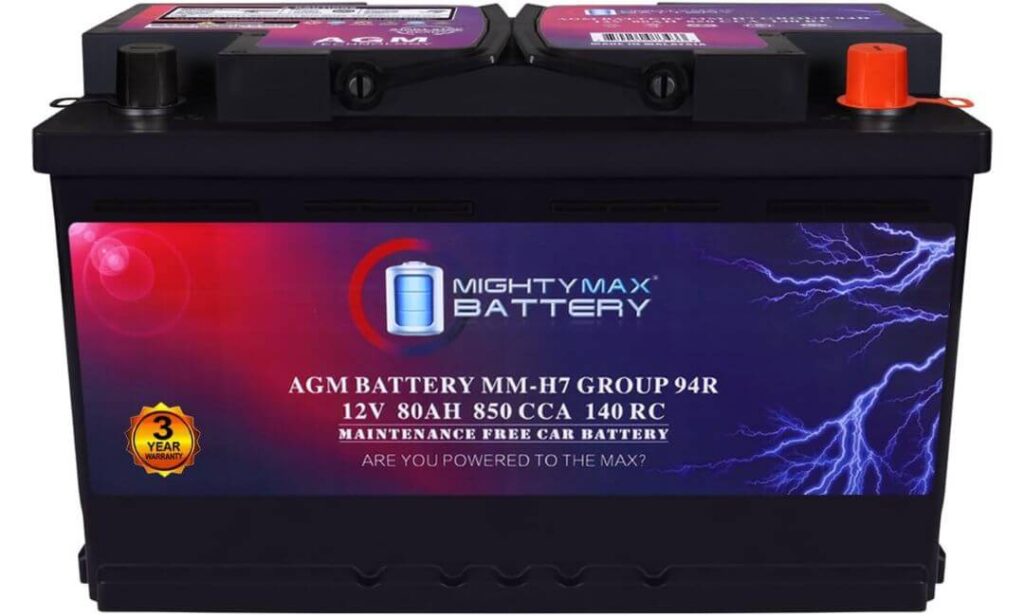
Technical Specs:
- Group Size: 94R (H7) — correct footprint for Chevy Silverado 1500
- Type: AGM (sealed, spill-proof, start-stop compatible)
- CCA: 850 CCA (strong real-world crank power)
- Capacity: 80 Ah
- Reserve Capacity: ~140 minutes (holds systems longer under load)
- Build: Deep-cycle capable AGM with vibration-resistant casing
- Weight: ~50.9 lbs (solid internal density)
- Dimensions: 12.5″ x 6.88″ x 7.48″ (fits standard H7 tray properly)
Here’s where things get interesting—this is the kind of battery people buy thinking it’s “just a budget pick”… and then it ends up outperforming expectations in ways most don’t see coming. You hit the ignition, and that 850 CCA kicks in instantly, no delay, no second guess—just a clean, confident start like a much more expensive unit.
What actually separates it is how it behaves under pressure. Silverado trucks don’t live easy lives—short drives, idle time, heavy electronics—and this one handles that thanks to its 80Ah capacity + 140 RC combo. It doesn’t feel like it’s draining every time you sit with AC and lights on. Instead, it holds steady, recovers fast, and keeps things running without that slow voltage sag you notice in weaker batteries.
The AGM build here isn’t just about being “maintenance-free.” It’s about deep discharge recovery and consistent output, which means even if your truck sees uneven usage, the battery bounces back instead of degrading fast. And the rugged internal design? That’s what keeps it working even when the road isn’t smooth. (this is one of those rare picks where price feels lower than the performance you’re actually getting)
What Actually Works in Real Use
- 850 CCA delivers instant starts in all seasons
- 140 RC gives breathing room during idle or heavy accessory use
- AGM design = steady power + deep discharge recovery
- Shock & vibration resistant — built for real truck conditions
- Strong value — performance close to premium, price stays reasonable
Where It Falls Short (fair truth)
- Long-term consistency can vary slightly—but for most users, it still delivers strong value for the price
Silverado 1500 Fitment & Real Compatibility
In Silverado 1500 models using Group 94R, this battery drops right in without modification. The dimensions line up properly with factory trays, and terminal positioning makes installation straightforward—no awkward cable stretching or adjustments.
For trucks with start-stop systems, it handles frequent restarts without struggling. That AGM + high reserve setup helps avoid the small voltage dips that usually trigger system warnings or rough restarts in cheaper batteries.
The Insider Pro-Tip
If you’re someone who doesn’t drive daily or leaves the truck sitting for days, this battery’s deep discharge recovery is where it quietly shines. It doesn’t punish you for inconsistent use like cheaper units do.
One more thing—after installing, take it on a proper 20–30 minute drive. Let it fully cycle and sync with the charging system. Once that happens, you’ll notice smoother cranks, steadier voltage, and zero hesitation—the exact behavior Silverado owners actually want.
#4. Motorcraft BAGM94RH7800
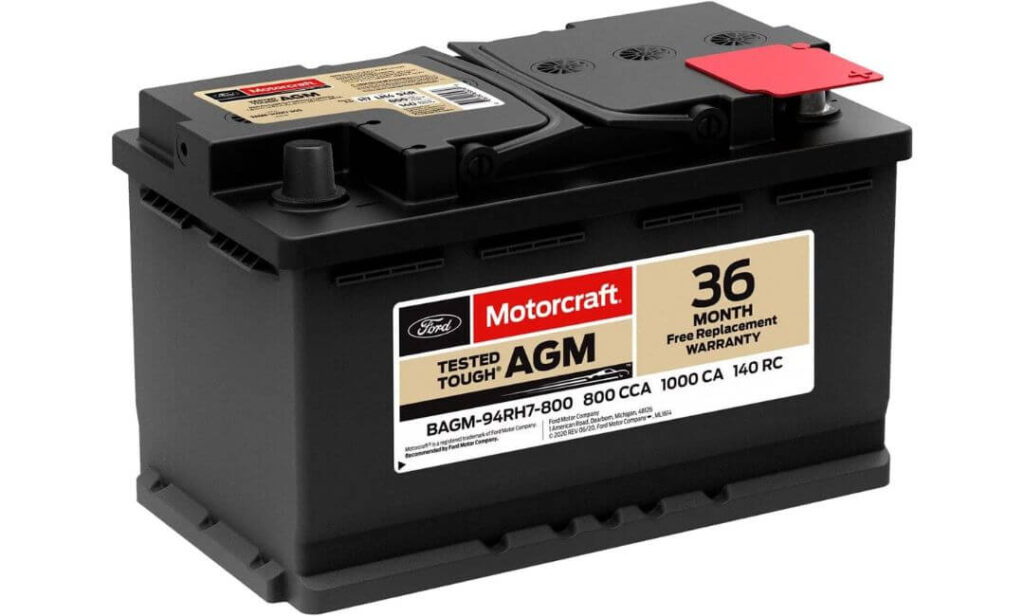
Technical Specs:
- Group Size: 94R (H7) — compatible with Silverado 1500 battery tray
- Type: AGM (sealed, maintenance-free, start-stop ready)
- CCA: ~800 CCA (strong, stable cold-start output)
- Capacity: ~94 Ah (higher-than-average reserve feel in real use)
- Build: OEM-grade internal construction (tight plate spacing, solid conductivity)
- Weight: ~56 lbs (heavier build = more lead, more stability)
- Terminals: Standard top post (no adapter issues)
- Dimensions: Close to H7 spec (fits most standard trays cleanly)
Some batteries try to impress with numbers—this one just delivers a different kind of confidence. The first thing you notice isn’t aggressive cranking, it’s how smooth and controlled the start feels. That ~800 CCA comes in clean, not rushed, not strained—just a solid, factory-like ignition every single time.
Where it really earns respect is in consistency. That ~94Ah capacity paired with AGM stability means it doesn’t feel drained even after sitting in traffic with everything running. Silverado electronics can expose weak batteries fast—but this one holds its ground, keeping voltage steady instead of dipping when load increases.
And then there’s build quality. This isn’t a flashy design—it’s a dense, tightly built internal structure that focuses on reliability over hype. The heavier weight isn’t random—it reflects the amount of active material inside, which translates into better long-term stability under real truck usage. (this feels less like an upgrade and more like what the truck should’ve had from the factory)
What Actually Stands Out
- Smooth, controlled starting power (no harsh crank spikes)
- Higher capacity feel — handles electrical load without stress
- AGM build = stable voltage, no maintenance, no leaks
- Dense internal construction for long-term consistency
- Feels close to OEM behavior — predictable, reliable output
Where It Falls Short (honest but fair)
- Long-term lifespan can vary—but when it performs well, it feels very close to OEM-level reliability
Silverado 1500 Fitment & Real Compatibility
For Silverado 1500 models running Group 94R, this battery fits properly in most standard trays. Terminal layout is straightforward, and installation doesn’t require adjustments in typical setups.
In trucks with start-stop systems, the AGM design helps maintain stable operation without sudden drops. It doesn’t overreact under load—it stays balanced, which is exactly what these systems need to avoid glitches or inconsistent restarts.
The Insider Pro-Tip
If you care more about consistency than aggressive peak power, this is where this battery quietly makes sense. It’s not trying to be the strongest—it’s trying to be the most stable over time.
After installation, give it a few proper drive cycles. Once it settles in, you’ll notice the difference—not louder, not faster—but smoother starts, steadier voltage, and less strain on the system overall. That’s the kind of performance that lasts.
#5. ACDelco Gold 48AGM (88864541)
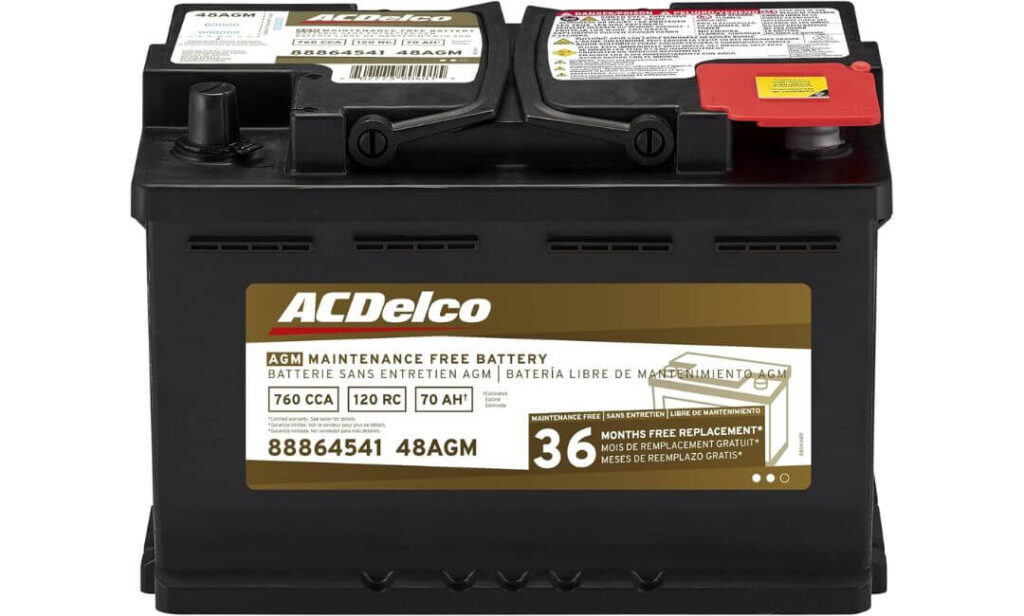
Technical Specs:
- Group Size: 48 (H6) — smaller footprint for Silverado 1500 trims using compact tray
- Type: AGM (sealed, maintenance-free, start-stop capable)
- CCA: ~700–760 CCA (real usable range for H6 size)
- Capacity: ~70 Ah (balanced for daily driving + electronics)
- Internal Resistance: ~0.02 Ohms (very low → faster power delivery)
- Build: Silver-Calcium alloy plates (better cycle life, stable output)
- Weight: ~45.5 lbs (lighter than H7, still solid internal density)
- Dimensions: 11.9″ x 7.5″ x 7.6″ (fits compact battery tray cleanly)
Most people ignore the H6 category thinking it’s “just a smaller battery”—until they actually use one like this and realize it’s built with the same mindset as its bigger sibling. The first crank tells you straight away—it’s not struggling, not hesitating—just a clean, confident start backed by low internal resistance and efficient current flow.
Where this battery quietly wins is efficiency. That ~0.02 Ohm resistance + AGM design means power doesn’t get wasted inside—it reaches where it’s needed faster. In a Silverado running lights, infotainment, and AC, you don’t feel that slow drain effect creeping in. Instead, it stays composed, delivering consistent output without acting like it’s constantly under load.
The Silver-Calcium construction also plays a bigger role than most realize. It helps the battery cycle better and degrade slower, especially in trucks that deal with short trips and irregular usage. It’s not trying to overpower—it’s designed to stay reliable over time without unnecessary stress. (this is the kind of battery that proves you don’t always need bigger—you need smarter)
What Actually Stands Out
- Efficient power delivery (low resistance = quicker response)
- AGM build keeps things stable, clean, and maintenance-free
- Consistent starts without overloading the system
- Silver-Calcium plates = better long-term cycling performance
- Perfect balance for daily driving — not overkill, not underpowered
Where It Falls Short (fair truth)
- Not built for heavy-duty or extreme electrical loads—but for most setups, it’s more than enough
Silverado 1500 Fitment & Real Compatibility
For Silverado 1500 trims that come with Group 48 (H6) factory setup, this fits exactly as expected—no loose brackets, no cable adjustments. It sits properly in the tray, terminals align naturally, and installation stays simple.
If your truck doesn’t demand the extra capacity of an H7, this size actually makes more sense. It reduces unnecessary strain while still supporting start-stop systems and daily electrical loads without issues.
The Insider Pro-Tip
If you’re choosing between H6 and H7 and your truck supports both—don’t always jump to bigger. If your usage is daily driving, moderate load, no heavy accessories, this type of battery can actually last more consistently because it’s not being overworked or underutilized.
One more thing—always check the manufacturing date before installing. A fresh unit performs noticeably better right from day one, and with a battery like this, starting strong early makes a difference long-term.
#6. Weize Platinum AGM Battery Group 48 (H6)
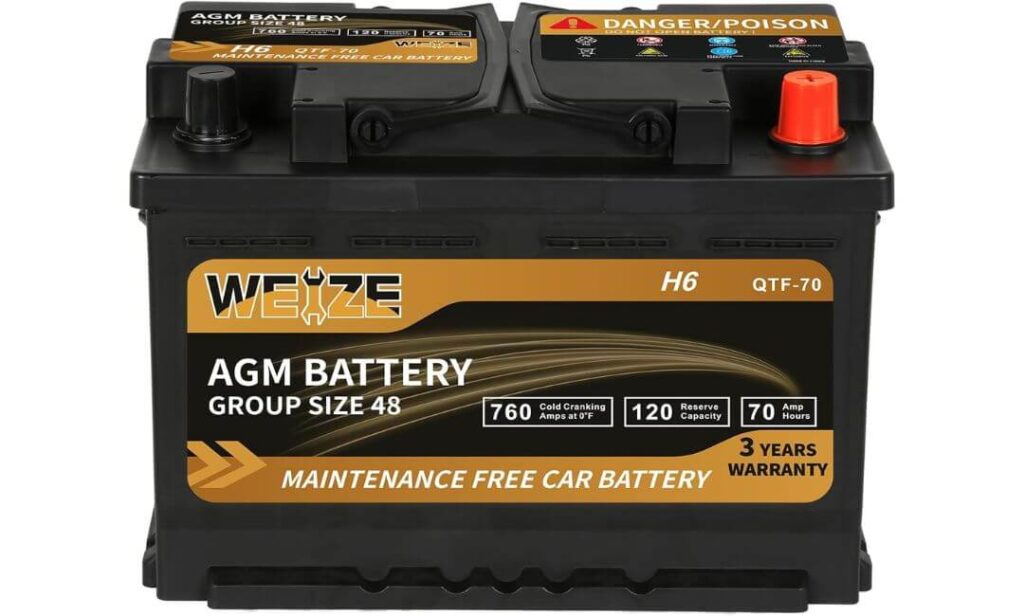
Technical Specs:
- Group Size: 48 (H6) — correct compact fit for Silverado 1500 setups
- Type: AGM (sealed, start-stop ready, maintenance-free)
- CCA: ~760 CCA (strong cold-start performance for H6 size)
- Capacity: ~70 Ah
- Reserve Capacity: ~120 minutes (supports electronics during idle/load)
- Build: AGM with vibration-resistant internal structure
- Weight: ~46 lbs
- Dimensions: 10.94″ x 6.89″ x 7.48″ (slightly compact → easier fit in tight trays)
- Terminal Layout: Standard tapered (left negative, right positive)
Let’s be honest—this is the kind of battery most people don’t expect much from… until it actually proves itself. The moment you start the truck, that 760 CCA response feels sharp and immediate, not weak or delayed like typical budget options. It doesn’t feel like it’s “trying” to start—it just does it cleanly.
What really changes the game here is how it balances power and efficiency. That 70Ah capacity paired with 120 RC gives it enough depth to handle Silverado’s daily demands—AC running, infotainment active, lights on—without draining quickly. It’s not oversized, but it’s not underbuilt either. It sits right in that sweet spot where performance feels natural instead of forced.
And the AGM design here actually matters. It’s built for start-stop cycles, faster recharge, and vibration resistance, which is exactly what trucks deal with. You don’t get that fragile feeling cheaper batteries give after a few weeks. Instead, it holds up, recovers well, and keeps delivering stable output. (this is one of those picks where you realize you didn’t need to overspend to get reliable performance)
What Actually Stands Out
- 760 CCA gives quick, confident starts in all conditions
- Balanced setup — 70Ah + 120 RC handles real driving needs
- AGM design = faster recharge, stable voltage, no maintenance
- Compact dimensions help in tighter battery trays
- Strong value — performance feels above its price point
Where It Falls Short (fair truth)
- Not as heavy-duty as premium H7 options—but within H6 range, it performs exactly where it should
Silverado 1500 Fitment & Real Compatibility
For Silverado 1500 models using Group 48 (H6), this battery fits clean without modification. Its slightly compact dimensions actually make installation easier in tighter compartments, while still locking down securely.
If your truck isn’t heavily loaded with accessories, this setup works perfectly. It supports start-stop systems and daily driving demands without pushing unnecessary extra capacity, which often goes unused anyway.
The Insider Pro-Tip
If your driving pattern is mostly city runs, short trips, or moderate usage, this is exactly the type of battery that stays efficient over time. Bigger isn’t always better—balanced capacity with faster recharge often lasts longer in real conditions.
Also—double-check terminal orientation before installing. Once fitted correctly, this battery settles in quickly and delivers consistent starts and stable voltage without needing constant attention.
#7. UPLUS AGM-L70-M Group 48 (H6)
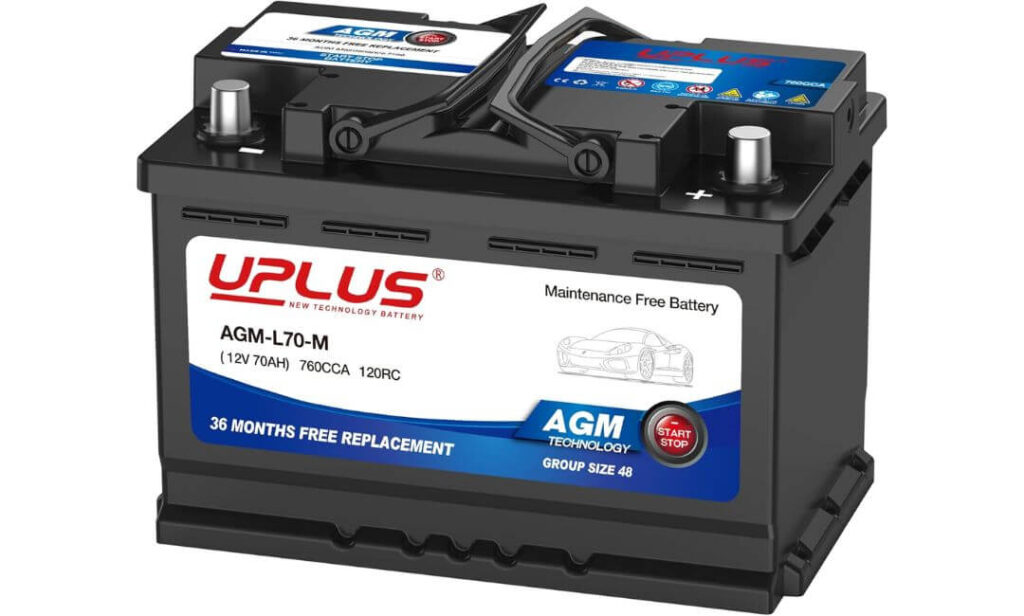
Technical Specs:
- Group Size: 48 (H6) — proper compact fit for Chevy Silverado 1500
- Type: AGM (sealed, maintenance-free, start-stop compatible)
- CCA: ~760 CCA (reliable cold-start output)
- Capacity: ~70 Ah
- Reserve Capacity: ~120 minutes (supports accessories during idle/load)
- Cycle Life: Up to 4× more cycles vs standard batteries (real-world advantage in stop-go use)
- Build: Silver-Calcium alloy + high-density paste (better conductivity, less internal loss)
- Weight: ~46.5 lbs
- Dimensions: 10.98″ x 6.81″ x 7.51″ (clean fit in H6 tray)
- Terminals: Standard SAE (left negative, right positive)
What catches people off guard with this one isn’t the specs—it’s how composed it feels in real use. You turn the key, and that 760 CCA response comes through clean and immediate, not aggressive, not weak—just exactly what a Silverado needs without overdoing it.
The real strength shows up after a few days of driving. That 70Ah + 120 RC combo paired with 4× cycle life design means it handles stop-go traffic, short trips, and idle time without slowly draining itself. Where typical batteries start feeling weaker over time, this one recovers faster and maintains output, which is exactly what start-stop systems demand.
And then there’s durability. The Silver-Calcium construction + vibration-resistant build isn’t just technical talk—it’s what keeps the battery stable when the truck isn’t being driven gently. Rough roads, inconsistent usage, long idle periods—it stays consistent instead of breaking down early. (this feels like a battery built for real driving conditions, not just lab testing numbers)
What Actually Stands Out
- 760 CCA delivers steady, reliable starts without hesitation
- 4× cycle life design = handles repeated start-stop use better
- AGM build = maintenance-free, stable voltage, no leakage risk
- Strong recharge efficiency — recovers quickly after short drives
- Built tough — high vibration resistance for truck conditions
Where It Falls Short (fair truth)
- Not designed for extreme heavy-duty setups—but for normal Silverado use, it performs right where it should
Silverado 1500 Fitment & Real Compatibility
For Silverado 1500 models using Group 48 (H6), this battery fits exactly without adjustment. The dimensions align well with factory trays, and terminal placement keeps installation simple and clean.
If your truck runs daily driving cycles, moderate electrical load, and occasional idle time, this setup matches perfectly. It supports start-stop systems without unnecessary overcapacity, keeping things efficient and stable.
The Insider Pro-Tip
If your Silverado spends time in traffic, short commutes, or occasional downtime, this type of battery actually lasts longer because it’s designed for repeated cycling—not just raw power.
After installation, don’t rush to judge it. Give it a few proper runs to settle in, and you’ll notice consistent starts, stable voltage, and no gradual drop in performance—the kind of behavior that makes you forget about the battery entirely, which is exactly the point.
Best Chevy Silverado 1500 Battery Compared: CCA, Capacity & Daily Use Insights
| Battery | Size | CCA | Capacity | Reserve | Real Use Feel | Best For |
|---|---|---|---|---|---|---|
|
ACDelco 94RAGM
OEM-level stability, no drama starts
Top Pick
|
94R (H7) | 800 | 80Ah | ~140 RC feel | Very stable, smooth power delivery | Long-term reliability |
|
Interstate MTX-94R
Pure lead build, heavy-duty feel
Premium Choice
|
94R (H7) | 850 | 80Ah | 140 RC | Strong crank + holds load easily | Heavy usage & daily driving |
|
Mighty Max MM-H7
Surprisingly powerful for price
Best Value
|
94R (H7) | 850 | 80Ah | 140 RC | Quick starts, fast recovery | Budget + performance mix |
|
Motorcraft AGM94R
Factory-like smooth performance
OEM Feel
|
94R (H7) | 800 | ~94Ah | High | Balanced, no voltage dips | Consistent daily use |
|
ACDelco 48AGM
Efficient smaller setup
Balanced
|
48 (H6) | ~730 | 70Ah | Moderate | Clean output, efficient use | Standard driving needs |
|
Weize Platinum H6
Compact but dependable
Smart Buy
|
48 (H6) | 760 | 70Ah | 120 RC | Quick crank, stable daily use | City driving & short trips |
|
UPLUS AGM-L70-M
Cycle-focused durability
Cycle King
|
48 (H6) | 760 | 70Ah | 120 RC | Handles stop-go very well | Start-stop heavy usage |
Buying Guide: Choosing the Right Battery for Chevy Silverado 1500 (Real-World Fit, Not Guesswork)
If you’ve made it this far, you already know—picking a battery for a Silverado 1500 isn’t about grabbing the highest number on the label. It’s about matching the truck’s real electrical demand with the right size, chemistry, and reserve, otherwise even a “good” battery starts acting weak within months.
Let’s break this down the way it actually works in real driving—not brochure talk.
Key Specs That Actually Matter (and why most people get this wrong)
CCA (Cold Cranking Amps) & Real Starting Power
CCA tells you how strong the battery hits when you turn the key—but here’s the truth: it’s not just about higher numbers, it’s about usable power under load.
- For Silverado 1500:
- H7 (94R): 800–850 CCA is the sweet spot
- H6 (48): 700–760 CCA works well
Lower than this, and you’ll start noticing slow cranks, especially after the truck sits overnight. Higher than this? Not always needed unless you’re running heavy accessories or extreme cold.
Reserve Capacity (RC) — The Silent Hero
This is what keeps your truck alive when you’re idling, stuck in traffic, or running electronics without revving the engine.
- Good range: 120–140 minutes RC
- Real meaning: headlights + AC + infotainment = still stable voltage
Most cheap batteries fail here first—not at starting, but holding power over time.
AGM vs Standard Lead-Acid — This Is Where Most People Mess Up
- AGM (Absorbent Glass Mat)
- Handles start-stop systems properly
- Better vibration resistance (important for trucks)
- Faster recharge after short drives
- No maintenance, no leaks
- Flooded Lead-Acid
- Cheaper upfront
- Struggles with modern electronics
- Faster performance drop in Silverado use
👉 Real truth: If your Silverado has start-stop (most newer ones do), AGM is not optional—it’s the correct battery type.
Battery Size & Group Size (Where fitment decides everything)
This is the part you can’t afford to guess.
- Group 94R (H7) → Best overall choice
- Group 48 (H6) → Compact / budget-friendly option
If you install the wrong size, even a good battery becomes a bad experience—loose fit, cable stress, poor contact, long-term issues.
Electrical Load Compatibility (Real usage matters)
Think about how you actually use your truck:
- Daily commute + light use → H6 works fine
- Heavy electronics, idling, towing → H7 is the safer bet
- Start-stop + short trips → AGM + good RC is critical
Most failures don’t come from “bad batteries”—they come from wrong match for usage.
Silverado 1500 Battery Size & Group Size Breakdown
When people search chevy silverado 1500 battery size, they usually land on two real options:
- Best Group 94R battery for Silverado 1500
→ Maximum reliability, higher capacity, better long-term stability - Best Group 48 battery for Chevy Silverado
→ Compact fit, efficient daily performance, lower cost
👉 Real-world takeaway:
If your truck supports both, H7 gives peace of mind, H6 works if your usage is lighter.
Silverado 1500 Battery CCA Requirement (Real Numbers, Not Guess)
- Minimum safe range: 700 CCA
- Ideal range: 750–850 CCA
- Heavy-duty / cold regions: 800+ CCA preferred
CCA isn’t where you save money—because weak starting is the first sign of a battery you’ll replace early.
AGM vs Lead-Acid Battery for Silverado 1500 (Real Truth, No Bias)
AGM wins in almost every Silverado scenario—but here’s the honest breakdown:
AGM Pros
- Stable voltage under load
- Better for start-stop systems
- Handles vibration and rough roads
- Longer usable life in real conditions
AGM Cons
- Higher upfront cost
Flooded Battery Pros
- Cheaper initially
Flooded Battery Cons
- Doesn’t handle modern truck load well
- Faster degradation
- More prone to voltage drops
👉 Straight answer:
If you want to replace your battery once and forget it—AGM is the move.
Silverado 1500 Battery Replacement Guide (What to Expect Next)
Before you replace your battery, here’s what actually matters (quick preview):
- Match group size (H6 or H7) exactly
- Choose AGM if your truck has start-stop
- Check terminal layout (don’t assume)
- Look at manufacturing date (fresh battery matters)
- After install → allow system to relearn/reset
We’ll break this down step-by-step next—but if you follow just these basics, you’re already ahead of 90% of people who end up replacing batteries too soon.
At the end of the day, Silverado 1500 isn’t picky—it’s just honest. Give it the right battery, and it’ll never complain. Pick the wrong one, and it’ll remind you every morning.
AGM vs Lead-Acid Battery for Chevy Silverado 1500 — What Actually Works (and Why)
If you’re choosing between AGM and a standard flooded (lead-acid) battery for a Silverado 1500, this isn’t a small decision—it directly affects how your truck starts, how stable the electronics feel, and how often you’ll be replacing the battery. On paper, both can “fit.” In real use, they behave very differently.
What Changes Inside the Battery (and why Silverado notices it)
AGM (Absorbent Glass Mat)
AGM batteries hold electrolyte in fiberglass mats, not free liquid. That one change means better contact between plates, lower internal resistance, and faster energy delivery. In a Silverado with start-stop and multiple electrical systems, that translates to cleaner voltage, quicker recovery after each start, and fewer dips under load.
Flooded Lead-Acid
Traditional batteries use liquid electrolyte. They can start the truck, but under repeated cycling (start-stop, short trips), they lose efficiency faster, and voltage tends to drop more noticeably when accessories are running.
Pros & Cons (real-world, not brochure)
AGM — Where it actually wins
- Stable voltage under load — lights, AC, infotainment all running, still steady
- Handles start-stop cycles properly — built for repeated restarts
- Faster recharge — important for short drives and city use
- Vibration resistance — trucks don’t live smooth lives
- Sealed design — no leaks, no maintenance
AGM — Where it’s not perfect
- Higher upfront cost
- Heavier unit (installation effort)
Flooded Lead-Acid — Where it still makes sense
- Lower initial price
- Works fine in older Silverado models without start-stop
- Simple design, widely available
Flooded Lead-Acid — Where it struggles
- Voltage drops under load (you’ll notice dimming or sluggish response)
- Shorter lifespan in modern trucks
- Poor performance with frequent start-stop or short trips
- More sensitive to vibration and heat
Real-World Silverado Scenarios (this is where the decision becomes obvious)
Daily Driving (city + short trips)
This is where most batteries quietly fail. Short runs don’t fully recharge the battery, and repeated starts drain it.
- AGM → recovers faster, maintains charge better, lasts longer
- Flooded → slowly weakens, starts feel lazy within months
👉 Real answer: AGM handles this situation without stress.
Cold Weather / Morning Starts
Cold is the ultimate test—oil thickens, engine needs more power.
- AGM → delivers consistent CCA, faster crank, less hesitation
- Flooded → works at first, but struggles as it ages
👉 If you’ve ever had a slow winter start, this is where AGM pays off instantly.
Towing / Heavy Electrical Load
Running extra lights, towing setups, charging devices—this pushes the battery harder than normal driving.
- AGM → holds voltage steady, handles load without dips
- Flooded → voltage drops faster, strain shows quickly
👉 For towing or heavy use, AGM isn’t optional—it’s the safer choice.
Truck Sitting Idle (weekend or occasional use)
Silverado parked for days, then expected to start instantly.
- AGM → better charge retention, less self-discharge
- Flooded → loses charge faster, more likely to feel weak after sitting
👉 AGM is more forgiving if you don’t drive daily.
The Part Most People Miss (and regret later)
It’s not just about “will it start the truck today.”
It’s about how it behaves after 6–12 months of real use.
Flooded batteries often feel fine initially, then slowly:
- start cranking weaker
- lose stability under load
- need replacement sooner than expected
AGM batteries cost more upfront, but they hold performance longer, especially in trucks with modern electronics.
Recommendation Based on Real Silverado Use
If you want the honest breakdown:
- Choose AGM if:
- Your Silverado has start-stop (most newer models do)
- You drive short distances or in traffic
- You run multiple electronics or accessories
- You want fewer replacements over time
- Choose Flooded only if:
- Older Silverado without start-stop
- Very light usage, minimal electrical load
- Budget is the only priority
Final Straight Truth (no marketing angle)
For a modern Chevy Silverado 1500, AGM isn’t a luxury—it’s the correct match for how the truck actually operates.
You can run a flooded battery, yes—but you’ll feel the difference over time.
AGM, on the other hand, just works the way the truck expects—stable, consistent, no surprises.
And that’s ultimately what you want from a battery:
not just power—but reliability you stop thinking about.
Silverado 1500 Battery Size & Fitment — What Actually Fits, What Actually Works
Battery “size” on a Silverado 1500 isn’t just length and width—it’s group size, terminal layout, hold-down position, and how the cables sit under load. Get one of these wrong and even a good battery will feel like a bad purchase: loose clamp, stretched cables, random warnings, or inconsistent starts.
How to Verify Your Current Group Size (don’t guess this)
Start with what’s already in your truck—that’s your baseline.
- Read the label on the old battery
You’ll see something like 94R (H7) or 48 (H6). That code is the exact fitment standard—match it first before chasing specs. - Check the owner’s manual / under-hood label
GM usually lists the recommended group size. If your truck has start-stop, it will also specify AGM. - Measure the tray (quick sanity check)
- H7/94R: roughly 12.4″ L × 6.9″ W × 7.5″ H
- H6/48: roughly 11.0″ L × 6.9″ W × 7.5″ H
If your new battery is longer/shorter, you’ll feel it during install—either it won’t seat properly or the hold-down won’t lock.
- Look at the cable reach and routing
If your positive cable barely reaches or sits under tension, that’s a red flag. Correct size = relaxed cables + straight terminal alignment.
Quick Checks That Save You Headaches (terminals, polarity, venting)
Before you click “buy,” run through these—this is where most returns happen:
- Terminal type & position
Silverado uses top posts. Polarity should match your current setup (positive on the same side). If it flips, you’ll fight the cables. - Polarity layout (Left/Right)
Many H6/H7 batteries are Left (-) / Right (+), but verify. Don’t assume—one mismatch = install nightmare. - Vent provisions (where applicable)
Some trays are enclosed and expect a vent path. AGM batteries are sealed, but if your factory setup uses a vent tube, make sure the battery supports the port. - Hold-down / base type (B13-style clamp)
The battery should lock into the tray without shimming. If it rocks, it will wear faster—vibration kills batteries over time.
Common Silverado 1500 Battery Sizes (what you’ll actually see)
- Group 94R (H7) — the safe, “do-it-right-once” choice
Bigger case, higher capacity (≈80 Ah), typically 800–850 CCA, better reserve.
Best for: start-stop trucks, towing, lots of accessories, colder mornings. - Group 48 (H6) — compact, efficient setup
Slightly shorter case, ≈70 Ah, typically 720–760 CCA, solid for daily use.
Best for: lighter electrical load, regular commuting, budget-conscious picks. - Other compatible mentions (less common)
You may see cross-references to L3/H6 equivalents or brand-specific codes. Stick to H6 or H7 unless you’re matching an exact OEM spec. Going “close enough” usually creates fit or cable issues.
Fitment Reality for Silverado 1500 (what matters more than numbers)
- H7 (94R) fills the tray fully—more stable, more reserve, less stress on the system.
- H6 (48) fits clean in trucks designed for it—no benefit in forcing a bigger size if your tray/cables aren’t meant for it.
- If your truck supports both, choose based on use:
- Heavy use → H7
- Normal daily driving → H6 works fine
Practical Installation Tips (the difference between “works” and “works right”)
- Clean the terminals first
Corrosion increases resistance. Even a new battery will feel weak if the connection is poor. - Seat the battery flat and lock the hold-down fully
No rocking, no tilt. A loose battery = vibration damage + early failure. - Tighten terminals snug, not crushed
Over-tightening can damage posts; under-tightening causes voltage drops. You want firm, even contact. - Install positive first, then negative
Reduces the chance of accidental shorting. - Check cable slack after install
Turn the steering, inspect routing—no tension, no rubbing edges. - Let the truck relearn
After replacement, modern Silverados recalibrate charging. Give it a few drive cycles for stable idle voltage and smoother start-stop behavior.
Small Details That Pay Off Long-Term
- Check the manufacturing date (fresh battery performs better from day one)
- Match AGM if your truck has start-stop (don’t downgrade)
- Choose the right CCA band, not the biggest number (fit + stability beats spec chasing)
Bottom line: Fitment is not a formality—it’s the foundation.
Get the right group size (H7 or H6), correct polarity, proper hold-down, and clean connections, and your Silverado will start the way it should—every single time, without drama.
Silverado 1500 Battery Replacement Guide (Step-by-Step, Done the Right Way)
Replacing the battery on a Silverado 1500 isn’t complicated—but doing it casually is how people end up with loose connections, warning messages, or a brand-new battery that “feels weak.” Do it once, do it properly, and the truck behaves exactly the way it should—clean starts, stable voltage, no surprises.
Tools You’ll Actually Need (keep it simple, but correct)
You don’t need a full workshop—just the right basics:
- 10mm & 13mm socket (terminal clamps + hold-down)
- Ratchet with extension (makes access easier)
- Battery terminal cleaner or wire brush
- Gloves (acid protection + grip)
- Safety glasses (especially if terminals are corroded)
- Battery carrier strap (optional, but useful—these units are heavy)
If your truck has tight space around the tray, a small extension bar saves time and frustration.
Safe Handling (this is where most people get careless)
Batteries look harmless until you drop one or short a terminal. A few things that matter:
- Always work with engine OFF and keys out
- Don’t place tools across both terminals—that’s a direct short
- Keep the battery upright (even AGM—no need to test it)
- Lift with both hands—most H7 units are 50+ lbs
And one thing people ignore—remove metal rings or watches. It sounds small until it isn’t.
Removal Process (do it in the right order)
- Locate the battery (usually front engine bay, driver side)
- Disconnect negative terminal first (-)
→ This cuts power safely and prevents accidental short - Disconnect positive terminal (+)
- Remove the hold-down bracket (usually 13mm bolt)
- Carefully lift the battery straight up
Don’t twist it out aggressively—modern trays are tight, and you don’t want to crack anything or stress cables.
Cleaning & Prep (this step decides long-term performance)
Before dropping in the new battery:
- Clean both terminals using a wire brush or cleaner
- Check for corrosion on cable ends (white/blue buildup)
- Wipe the tray—remove dirt, moisture, debris
This isn’t optional. Dirty terminals increase resistance, and that’s exactly why people install a new battery and still get weak performance.
Installation (fitment + connection matters more than speed)
- Place the new battery in the tray
→ Make sure it sits flat and aligned with the hold-down base - Secure the hold-down bracket firmly
→ No movement, no tilt - Connect positive terminal first (+)
- Then connect negative terminal (-)
Tighten both properly—not loose, not overtightened. You want solid contact without damaging the terminals.
After tightening, give a slight tug—if it moves, it’s not tight enough.
First Startup & Charging Behavior (don’t judge it too early)
Turn the key and start the truck. You should notice:
- Instant crank, no hesitation
- Smooth idle, stable lights
But here’s what most people miss—modern Silverado systems need a little time to adapt.
- Let the truck run for a few minutes
- Take a 20–30 minute drive
- Allow the charging system to recalibrate to the new battery
If your truck has start-stop, it may not activate immediately—that’s normal until the system recognizes full charge conditions.
Warnings, Errors & What’s Normal
After replacement, you might briefly see:
- Start-stop unavailable
- Voltage fluctuation for a short time
This isn’t a problem—it’s the truck relearning battery behavior. It stabilizes after a few drive cycles.
What’s NOT normal:
- Loose terminal movement
- Flickering lights after driving
- Slow crank with a new battery
If you see those, recheck connections first.
Warranty & Activation (don’t skip this part)
Most AGM batteries come with 36-month replacement warranties, but here’s the catch—many people never activate or verify them.
- Keep your purchase receipt (digital or printed)
- Note the installation date
- Check the manufacturing date code (fresh battery = better performance)
Some brands don’t include paperwork in the box—your proof of purchase is your warranty.
Final Real Talk (what actually makes the difference)
The battery itself matters—but installation is where most problems start.
Do these right:
- Correct group size (H6 or H7)
- Clean terminals
- Proper tightening
- Give the truck time to relearn
…and your Silverado will behave exactly how it should—quick starts, stable power, no random issues.
Rush it, skip steps, or ignore fitment—and even the best battery will feel average.
Maintenance Tips to Extend Your Silverado 1500 Battery Life (What Actually Makes It Last)
A good battery doesn’t fail suddenly—it slowly loses performance because of small things most owners ignore. The Silverado 1500, with its electronics, start-stop system, and real-world usage, will expose weak maintenance faster than a basic car. Take care of a few key areas, and the same battery can feel strong for years instead of months.
Regular Charging Checks (why short drives quietly kill batteries)
Modern trucks don’t always fully recharge the battery during short trips. Start-stop systems, infotainment, sensors—all of it pulls power even when you’re not thinking about it.
What actually works:
- If you drive short distances daily → take the truck on a 20–30 minute highway drive once or twice a week
- Check resting voltage occasionally:
- 12.6V+ = healthy
- 12.3–12.5V = partially charged
- Below that = slow degradation starting
- If the truck sits for days → consider a smart charger or maintainer
This alone prevents that slow decline where the battery “feels weaker” every week.
Clean Terminals & Corrosion Prevention (small detail, big impact)
Corrosion is one of the most ignored reasons behind voltage loss. Even a premium AGM battery won’t perform properly if the connection isn’t clean.
What to do:
- Inspect terminals every few weeks
- If you see white/blue buildup → clean immediately
- Use a terminal brush or cleaner spray
- Apply dielectric grease or anti-corrosion pads after cleaning
A clean connection means less resistance, stronger crank, and more stable voltage under load.
Temperature Impact (what heat and cold actually do to your battery)
Most people think cold kills batteries—but heat is the real long-term damage.
In Cold Weather:
- Engine needs more power → higher CCA demand
- Weak batteries show slow cranks immediately
- AGM performs better because of stable output under load
In Hot Weather:
- Internal fluid evaporation (even in AGM, it affects chemistry over time)
- Faster internal wear → shorter lifespan
- Voltage stability drops gradually
Real takeaway:
Cold reveals problems, but heat creates them over time.
Seasonal Battery Care Checklist (what to do before problems start)
Instead of waiting for failure, adjust your care based on season:
Before Winter:
- Check battery voltage and condition
- Make sure CCA capacity is still strong
- Clean terminals (cold amplifies resistance issues)
- Avoid leaving the truck unused for long periods
During Winter:
- Start the truck regularly
- Avoid multiple short starts without driving
- Watch for slower cranks—that’s early warning
Before Summer:
- Inspect for swelling or unusual heat signs
- Ensure battery is properly secured (heat + vibration = faster wear)
- Check charging system performance
During Summer:
- Avoid long idle periods with heavy load
- Park in shade when possible (reduces heat stress)
- Keep terminals clean—heat accelerates corrosion buildup
Driving Habits That Quietly Decide Battery Life
This is where most people lose battery life without realizing it:
- Frequent short trips → battery never fully charges
- Heavy accessory use while idling → drains faster than it recovers
- Letting the truck sit unused → gradual discharge
What actually helps:
- Occasional longer drives
- Balanced usage (not constant stop-start cycles without recharge)
- Turning off unnecessary electronics when engine is off
One Thing Most People Never Check (but should)
Your alternator and charging system.
Even a perfect battery will feel weak if:
- Charging voltage is inconsistent
- Belt or connections are worn
- System isn’t supplying enough current
If you notice repeated battery issues, it’s not always the battery—it’s what’s charging it.
The Real Truth About Battery Life in a Silverado
There’s no “magic brand” that survives neglect. The difference between a battery lasting 2 years vs 5 years usually comes down to:
- Proper charging habits
- Clean connections
- Correct battery type (AGM vs cheap alternative)
- Heat and usage management
Take care of these, and the battery becomes something you don’t think about. Ignore them, and even the best one starts feeling average way too soon.
FAQs About Chevy Silverado 1500 Battery
Why does my Chevy Silverado 1500 still feel weak on cold starts even after installing a new battery?
This is one of those situations where people blame the battery, but the real issue is usually deeper. A Silverado doesn’t just need “a new battery”—it needs the right type (AGM), correct group size, and proper system sync. If any of these are off, the truck won’t feel right.
Here’s what actually causes that “new but weak” feeling:
- Battery installed but not fully charged from factory (very common)
- No relearn/reset, so truck is still adapting to old battery behavior
- Terminals slightly loose → micro voltage drop under load
- Wrong battery type (flooded instead of AGM in start-stop models)
Real fix isn’t replacing again—it’s:
- Drive 20–30 minutes after install
- Check terminal tightness properly
- Make sure you’re actually running AGM if required
Once everything aligns, Silverado starts feeling sharp again—not just “okay.”
Is upgrading to a Group 94R battery in a Silverado 1500 actually worth it over Group 48?
Short answer—yes, but only if your usage justifies it. This isn’t about “bigger is always better,” it’s about how your truck is being used daily.
Here’s the real breakdown:
Group 94R (H7) makes sense if:
- You idle a lot (traffic, waiting, work use)
- Run accessories (lights, charging, infotainment constantly)
- Drive in colder conditions
- Want longer battery life without thinking about it
Group 48 (H6) is enough if:
- Normal daily driving, no heavy load
- Minimal accessories
- You don’t stress the electrical system
Real truth—most people who go H7 never go back, because the truck just feels more stable overall. But if your usage is light, H6 won’t hold you back either.
Why does my Silverado 1500 disable start-stop even with a healthy AGM battery?
This confuses a lot of owners. They think the battery is bad, but start-stop systems are extremely sensitive—not just to battery health, but battery state and conditions at that exact moment.
Even with a good battery, start-stop won’t activate if:
- Battery isn’t fully charged yet (common after replacement)
- Cabin demand is high (AC, heating, electronics)
- Engine temp or external temp isn’t optimal
- Voltage drops slightly below threshold
What’s happening here isn’t failure—it’s protection. The system is designed to avoid draining the battery unnecessarily.
Real takeaway:
If your truck starts strong and runs fine, occasional start-stop inactivity is normal. Constant disable with weak starts—that’s when you investigate further.
How do I actually know if my Silverado battery is dying early, before it completely fails?
Most batteries don’t die suddenly—they give subtle warnings first. The problem is people ignore them until the truck refuses to start.
Watch for these early signs:
- Crank feels slightly slower than usual (even by half a second)
- Lights dip briefly during startup
- Start-stop stops working more frequently
- Truck feels “lazy” after sitting overnight
One practical test you can do:
- Turn ignition ON (don’t start)
- Watch infotainment + lights
- If voltage dips noticeably before cranking → battery is already weakening
Real truth—by the time it completely fails, the battery has been warning you for weeks. Catch it early, and you avoid getting stuck.
Why do some Silverado batteries fail within months while others last 4–5 years?
This is where most people get it wrong—it’s not just brand, it’s how the battery is used and maintained.
Two identical batteries can have completely different lifespans based on:
- Driving pattern (short trips vs long drives)
- Installation quality (clean terminals vs poor contact)
- Battery type (AGM vs cheap flooded)
- Heat exposure and vibration
- Charging system health
Here’s the real pattern:
Short lifespan usually comes from:
- Frequent short drives
- No proper recharge cycles
- Cheap battery in high-demand truck
Long lifespan comes from:
- AGM battery matched correctly
- Occasional long drives
- Clean connections + stable charging
Real truth—Silverado doesn’t “kill batteries.” It just exposes weak setups faster than other vehicles. Get the setup right, and the battery lasts. Get it wrong, and you’ll be replacing it again before you expect.
Final Thoughts (What Actually Matters After Everything You’ve Seen)
At this point, it should be clear—there isn’t a single “best battery” for every Chevy Silverado 1500. What actually separates a good decision from a frustrating one is fitment, usage match, and consistency over time, not just brand name or specs on paper.
Most people go wrong in one of two ways:
either they chase the cheapest option and deal with slow starts later… or they chase the highest numbers without understanding if their truck even needs it. Both end up in the same place—replacing the battery sooner than expected.
The Silverado is a straightforward truck, but it’s honest. It responds exactly to what you install in it.
- Give it the right group size (H7 or H6) → it fits and performs cleanly
- Choose AGM where required → systems stay stable, no random issues
- Match your driving style → battery lasts without constant attention
That’s it. No overthinking needed.
If your truck sees real use—traffic, electronics, short drives—the Group 94R AGM setup is the safe, no-regret choice. If your usage is lighter, a properly matched Group 48 AGM still delivers solid performance without overspending.
The biggest takeaway isn’t which battery you pick—it’s that once you pick the right one, installed correctly, you stop thinking about it completely. No slow mornings, no warning messages, no second guesses.
And that’s the whole point.
You’re not just buying a battery—you’re buying reliability you don’t have to question every time you turn the key.
Also Check:

