
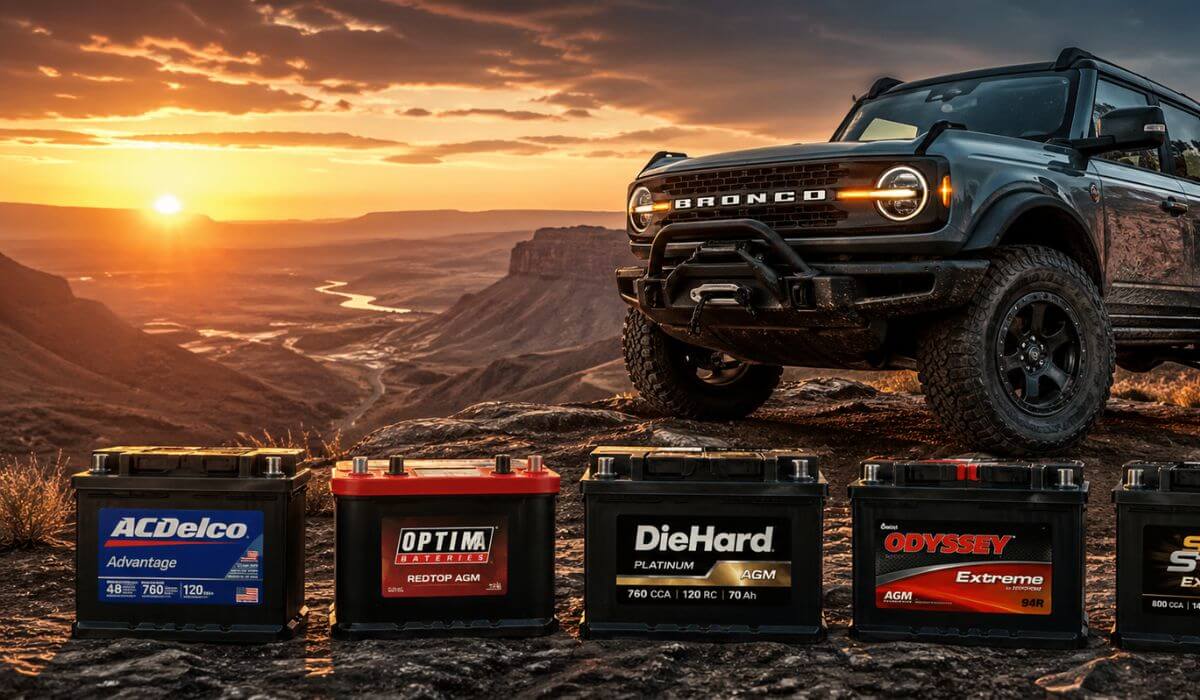
6 Best Batteries for Ford Bronco in 2026: AGM Power, Cold-Start Strength & Off-Road Ready Picks
If you’ve spent any real time with a modern Ford Bronco, you already know this isn’t some lightweight crossover that’ll forgive a weak battery. Cold mornings, start-stop systems, off-road lights, winches—this SUV pulls real electrical load. And that’s exactly why so many owners end up replacing the factory battery sooner than expected.
Here’s the truth most guides skip: there isn’t just one battery size for the newer Bronco.
- Base and mid trims (especially 2.3L setups) commonly run H6 / Group 48 (around 700–760 CCA)
- Higher trims, 2.7L engines, and accessory-heavy builds lean toward H7 / Group 94R (750–850+ CCA, usually AGM)
And in 2026, AGM isn’t optional anymore—it’s the standard. These batteries handle vibration, deep cycling, and repeated cold starts way better than old-school flooded types. Go cheap here, and you’ll feel it the first winter morning or the first time your Bronco sits for a week.
This list isn’t built on hype or recycled specs. These are batteries that actually match how Broncos are used today—daily driving, weekend trails, and everything in between.
Best Ford Bronco Battery: Top 2026 Picks with AGM Power & High CCA Starts
#1. ACDelco Gold 94RAGM Battery (88864542)
Premium AGM Battery For Ford Bronco With High CCA And Long-Term Reliability
#2. Goodyear 94R-H7 AGM Battery
High CCA Group 94R Battery For Ford Bronco With Off-Road And Heavy Load Capability
#3. Motorcraft BAGM94RH7800 Battery
OEM-Grade Ford Bronco Battery Replacement With Exact Fit And Factory-Level Performance
#4. Interstate MTP-94R/H7 Battery
Reliable Group 94R Battery For Ford Bronco With Balanced Daily Performance And Durability
#5. Mighty Max MM-H6 Battery (Group 48)
Best Group 48 Battery For Ford Bronco Base Models With Strong 760 CCA Starting Power
#6. UPLUS AGM-L70-M H6 Battery
Cost-Effective AGM Battery For Ford Bronco With Dependable Start-Stop Support
Expert Tip (From Someone Who’s Seen These Fail in Real Life)
If your Bronco still has its factory battery and you’re even thinking about replacing it, don’t downgrade to save a few bucks. These trucks are wired for AGM from the start, and they expect consistent voltage under load—especially with start-stop and accessories running. I’ve seen perfectly good Broncos throw random warnings, rough starts, even reset electronics… all because someone installed a cheaper flooded battery or dropped from H7 to H6 without checking fitment.
Match what your truck actually needs. If you’ve got the 2.7L or you run lights, compressors, or a winch, go H7 with higher CCA and be done with it. If it’s a lighter 2.3L daily driver, a solid H6 AGM is enough—but still stick with AGM. And once you install it, reset the battery management system (BMS). Skip that step, and even a new battery won’t perform like it should.
How We Chose These Batteries
We didn’t build this list off brand names or spec sheets alone. These are newer batteries with limited reviews, so the usual “highest rated” approach doesn’t work here. Instead, we focused on what actually matters when a Bronco is used the way it’s meant to be used.
First, fitment and compatibility. Every battery here is either Group 94R (H7) or Group 48 (H6)—no guesswork sizes, no risky swaps. That alone filters out half the market. We only included batteries that match the Bronco’s real-world requirements, not “universal” options that technically fit but don’t hold up.
Then, AGM construction. Not optional. Every pick here is AGM because that’s what modern Broncos are built around. AGM handles vibration, repeated starts, and partial charge cycles far better than standard flooded batteries. If a battery couldn’t handle off-road vibration or start-stop cycling, it didn’t make this list.
Next, cold cranking power (CCA) and reserve capacity. We leaned into batteries that deliver 760 CCA minimum for H6 and closer to 800–850 CCA for H7. That’s not overkill—that’s what keeps the Bronco starting clean after sitting, in cold weather, or with accessories pulling power in the background. We also looked at real reserve capacity, because a Bronco doesn’t just start—it powers gear.
We also considered brand reliability in the real world, not just marketing. Brands like ACDelco, Motorcraft, Interstate have been supplying OEM-level batteries for years. Even newer names like Mighty Max and UPLUS made the cut because they meet the same spec thresholds and AGM standards, not because of hype.
Finally, we balanced the list for how people actually use the Bronco. Not everyone is running a winch and roof lights. That’s why this list isn’t all expensive H7 units. There’s a clear split:
- H7 batteries for heavier builds, 2.7L engines, and high electrical demand
- H6 batteries for base trims and daily drivers that still need reliable AGM performance
No filler, no random picks. Every battery here earns its place based on fit, power, durability, and real-world use—not just reviews or brand noise.
If you pick based on your setup—not just price—you won’t have to think about your battery again for years. And that’s the whole point.
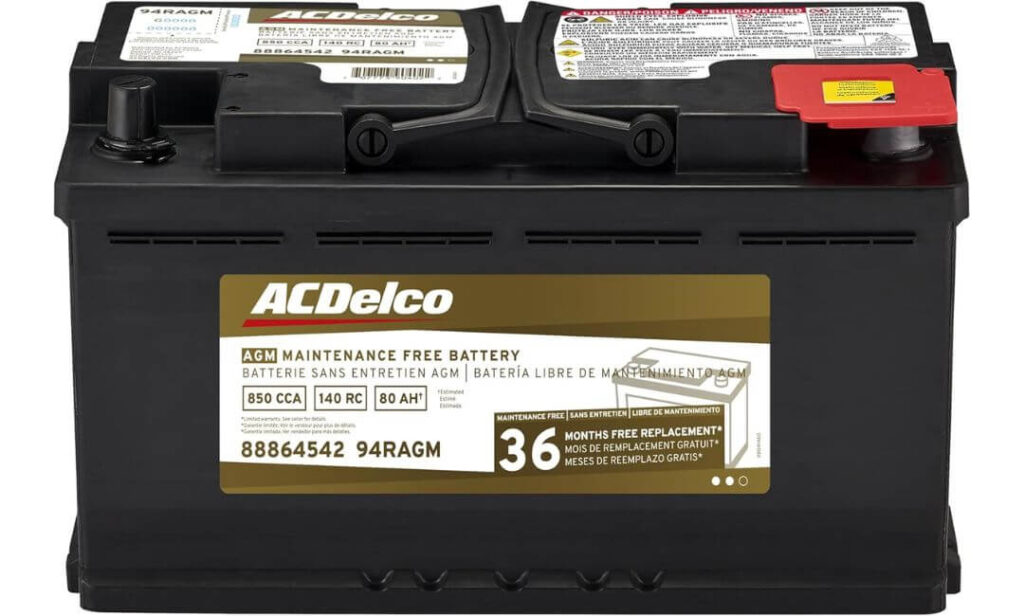
#1. ACDelco Gold 94RAGM Battery (88864542)
Quick Specs:
- Group Size: H7 / 94R (direct-fit for most Bronco setups needing higher capacity)
- Battery Type: AGM (sealed, maintenance-free, built for modern electronics)
- Cold Cranking Power: ~850 CCA (strong cold-start confidence)
- Capacity: ~80Ah with solid reserve for accessories
- Construction: Silver-Calcium alloy + high-density plates
- Weight: ~51.6 lbs (heavy, but that’s where durability comes from)
- Warranty: 36-month free replacement
It starts with one simple reality—when a Bronco demands power, this is the kind of battery that doesn’t hesitate. From the first crank, you feel that 850 CCA bite instantly, not a slow turnover, not a “maybe today” start. It’s the kind of response you expect from a properly matched H7 AGM, especially when the truck has been sitting, or when temperatures drop.
What actually makes this one stand out isn’t just numbers—it’s how it’s built underneath. The Silver-Calcium alloy plates aren’t there for marketing; they’re designed to handle repeated charge cycles without degrading quickly. Add to that the high-density negative paste and reinforced separators, and you get a battery that doesn’t just start strong—it stays consistent over time. No random voltage dips, no weird electrical behavior when your Bronco’s loaded with features.
And then there’s the part most people only realize later—heat and vibration resistance. Off-road or even rough daily roads, this thing stays composed. The sealed AGM design keeps everything stable, while the internal structure reduces wear from constant movement. (This is one of those batteries where you stop thinking about it after installation—and that’s exactly what you want.)
What Stands Out In Real Use
- Strong 850 CCA output that actually feels different on cold starts
- Silver-Calcium build improves long-term cycling, not just short bursts
- Stable voltage delivery for modern Bronco electronics and start-stop systems
- Durable internal construction handles vibration and rough usage better than standard batteries
- 36-month replacement backing adds real ownership confidence
Where It Falls Slightly Short
- Slightly heavier and larger than some stock batteries—fitment should be checked once before install
Bronco Compatibility & Real Fitment Insight
If you’re running a Bronco with the 2.7L engine or added electrical load (lights, compressor, winch), this H7 size is where things start to make sense. It gives you the extra buffer that smaller batteries simply can’t. You’re not pushing it to its limits every morning—that’s the difference.
For 2.3L setups, it still works if your tray supports H7, especially if you want more reserve capacity than stock. Just make sure the dimensions match your battery tray—because while it fits most H7 slots perfectly, it’s not meant to squeeze into tighter H6 spaces.
The Insider Pro-Tip
Here’s something most people overlook: a battery like this performs at its best only when the system recognizes it properly. After installation, always reset the BMS (Battery Management System). Without that, the Bronco may charge it incorrectly, and you’ll never see its full lifespan.
Also, if your driving pattern includes short trips or long idle times, this kind of AGM battery actually benefits from occasional longer drives. It’s built to handle deep cycles—but giving it a proper recharge cycle now and then keeps performance sharp.
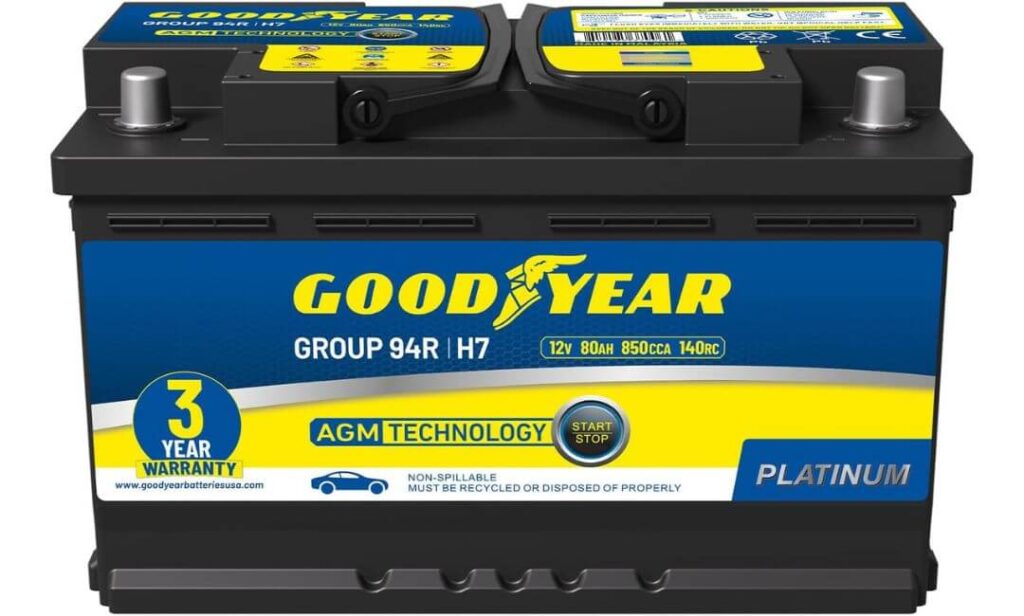
#2. Goodyear 94R-H7 AGM Battery
Quick Specs:
- Group Size: H7 / 94R (full-size fit for higher-demand Bronco setups)
- Battery Type: AGM (sealed, vibration-resistant, maintenance-free)
- Cold Cranking Power: 850 CCA (strong cold-start performance)
- Capacity: 80Ah with 140-minute reserve capacity
- Construction: Heavy-duty calcium-alloy grid design
- Weight: ~52.5 lbs (built solid, not lightweight)
- Warranty: 36-month coverage
You notice the difference with this one the moment the key turns—no hesitation, no lazy crank, just a clean, confident start. That 850 CCA output isn’t just a number on paper; it translates into real-world reliability, especially when your Bronco sits overnight or faces temperature swings. It feels like the battery is always a step ahead of the engine’s demand.
Where it quietly earns respect is in endurance. That 140-minute reserve capacity gives you breathing room—whether it’s accessories running, engine off moments on trails, or just those days when the electrical load stacks up. Most batteries can start the engine; fewer can hold steady when the system is under pressure, and that’s where this one stands out.
The build quality backs it up. AGM construction keeps it sealed and stable, while the calcium-alloy grid handles repeated cycling without wearing down too quickly. Add in its resistance to vibration and shock, and it fits naturally into how a Bronco is actually used—uneven roads, off-road trails, daily abuse. (This is the kind of battery that doesn’t just survive conditions—it adapts to them without drama.)
What Stands Out In Real Use
- 850 CCA delivers instant, confident starts in cold or heat
- 140-minute reserve capacity adds real backup power, not just spec-sheet numbers
- AGM design resists vibration and shock, ideal for rough terrain
- Stable output under load, especially with accessories running
- Flexible mounting options make installation easier in tight engine bays
Where It Falls Slightly Short
- A small number of early-use failures have been reported, though overall performance remains strong for most users
Bronco Compatibility & Real Fitment Insight
This H7 size makes the most sense if your Bronco is running higher electrical demand setups—2.7L engines, added lighting, compressors, or trail gear. It gives enough reserve and starting strength so the system never feels strained, even after sitting or under repeated use.
If you’re on a lighter 2.3L setup, it can still be a smart upgrade over H6 if your tray supports it. The added reserve capacity alone makes a noticeable difference in consistency, especially if your driving isn’t always long-distance.
The Insider Pro-Tip
Most people install a battery like this and expect instant perfection—but the real gain comes when it’s paired with proper usage. If your Bronco runs multiple accessories, avoid stacking everything at idle. Let the engine run slightly above idle occasionally to keep the charge cycle healthy.
Also, don’t judge this battery in the first few days. AGM units like this often settle into their full performance after a few charge cycles. Give it a week of normal driving, and you’ll start noticing how stable and consistent it really is.
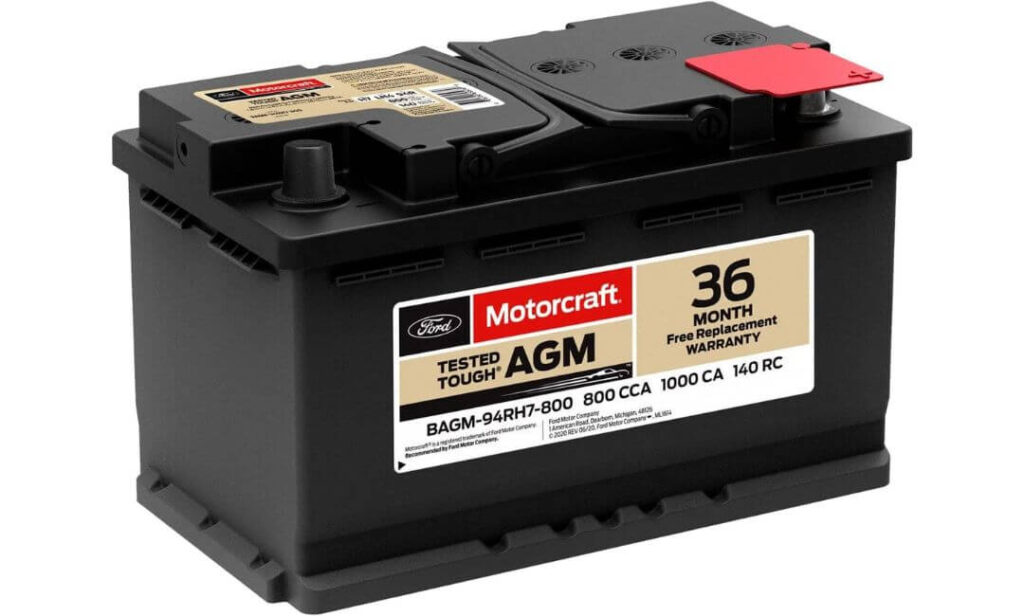
#3. Motorcraft BAGM94RH7800 Battery
Quick Specs:
- Group Size: H7 / 94R (factory-style fit for higher-capacity Bronco setups)
- Battery Type: AGM (sealed, maintenance-free, OEM-grade build)
- Cold Cranking Power: ~800 CCA class (designed for consistent OEM-level starts)
- Construction: Reinforced internal plates with stable charge acceptance
- Weight: ~56 lbs (heavier build, closer to factory-spec durability)
- Design: No external venting required, clean sealed housing
- Warranty: OEM-backed coverage (varies by seller)
There’s a different kind of confidence that comes with a battery built by the same ecosystem that engineered the vehicle. This isn’t about flashy numbers—it’s about how seamlessly everything works together. Turn the key, and the start feels exactly how it should—smooth, controlled, and predictable, like nothing was ever changed.
What stands out here is how balanced the performance feels under real conditions. It doesn’t chase extreme CCA figures, but it delivers steady, repeatable starts without voltage fluctuation, which matters more in a Bronco packed with electronics. The AGM construction keeps everything sealed and stable, while the internal design focuses on consistent power delivery rather than short bursts.
And then there’s fitment—the part most people underestimate until it goes wrong. This battery is built with OEM alignment in mind, so terminals, dimensions, and mounting feel natural during install. No awkward cable stretch, no forced positioning. (It’s the kind of install where nothing feels “adjusted”—everything just lines up the way it should.)
What Stands Out In Real Use
- OEM-style performance that matches Bronco’s electrical system behavior
- Stable voltage output, reducing chances of electronic glitches
- AGM design handles daily cycling without stress or maintenance
- Direct-fit layout simplifies installation and reduces guesswork
- Solid internal build focused on long-term consistency over flashy specs
Where It Falls Slightly Short
- Some users report lifespan variation depending on usage patterns, though overall performance remains consistent during its service life
Bronco Compatibility & Real Fitment Insight
This is the kind of battery that makes the most sense when you want to keep things close to factory behavior. For Broncos running 2.7L engines or higher electrical load, it provides the right balance—enough power without overcomplicating the system.
On 2.3L setups, it still works if your tray supports H7, especially if you prefer OEM-style reliability over experimenting with aftermarket options. Just double-check dimensions once, because while it follows standard H7 sizing, some compartments can be tight.
The Insider Pro-Tip
If your Bronco has been acting slightly off—random warnings, inconsistent start-stop behavior—switching to a battery like this often stabilizes things more than people expect. It’s not just about power; it’s about how cleanly that power is delivered.
Also, don’t rush to judge battery health purely by age. With OEM-style units like this, driving patterns matter more than months or years. Consistent usage, proper charging cycles, and avoiding long idle drains will make a bigger difference than anything printed on the box.
#4. Interstate MTP-94R/H7 Battery
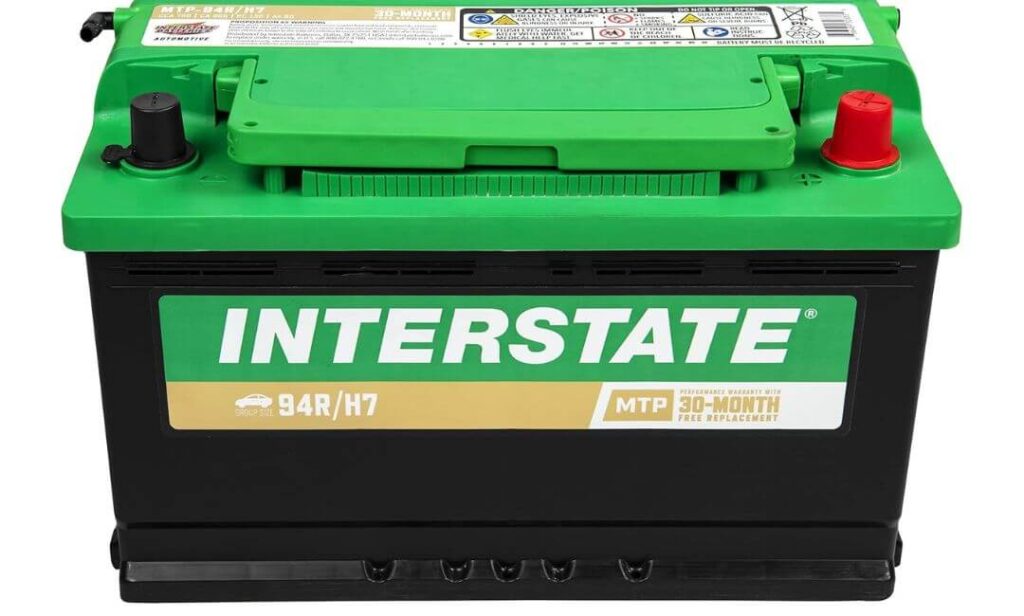
Quick Specs:
- Group Size: H7 / 94R (full-size fit for Bronco setups needing higher capacity)
- Battery Type: Conventional Flooded (non-AGM)
- Cold Cranking Power: 790 CCA (strong, consistent starting)
- Reserve Capacity: ~130–140 minutes (solid backup runtime)
- Construction: 6-cell lead-acid with reinforced internal design
- Weight: ~42.9 lbs (lighter than most AGM units)
- Terminal Type: Top Post
- Warranty: 30-month performance coverage
Not every Bronco owner needs the most expensive AGM on the shelf—and this is where things get interesting. This battery proves that reliability isn’t always tied to premium pricing, especially if your usage is straightforward. Turn the ignition, and it delivers a clean, confident crank with 790 CCA, enough to handle daily starts without feeling strained.
Where it really earns its place is in consistency over time. The 130+ minute reserve capacity gives it breathing room when electrical demand spikes—radio, lights, idle time—it doesn’t collapse under load. It’s built as Interstate’s top-tier flooded option, and you can feel that in how stable it behaves across normal driving conditions. No unnecessary complexity, just dependable output.
And then there’s practicality. Compared to heavier AGM units, this one is noticeably lighter and easier to handle during installation. The internal design focuses on durability in moderate climates, and for a lot of drivers, that’s exactly what matters. (It’s the kind of battery that quietly does its job without asking for attention or overpromising performance.)
What Stands Out In Real Use
- 790 CCA delivers reliable everyday starts without hesitation
- Strong reserve capacity keeps systems running during idle or accessory use
- Lighter construction makes installation and handling easier
- Proven brand reliability with long-standing real-world trust
- Balanced performance for daily driving, not overbuilt or overpriced
Where It Falls Slightly Short
- Being a flooded battery, it doesn’t match AGM-level vibration resistance or deep-cycle performance
Bronco Compatibility & Real Fitment Insight
This battery fits best in Broncos used as daily drivers with moderate electrical demand. If you’re not running heavy accessories or pushing the system hard, it delivers exactly what’s needed—reliable starts and stable operation without overspending.
For Broncos equipped with start-stop systems or frequent off-road use, AGM options still make more sense. But if your driving is mostly city, highway, and occasional light use, this H7 size still fits properly and performs without unnecessary upgrades.
The Insider Pro-Tip
If you go with a flooded battery like this, the smartest move is simple—don’t let it sit discharged for long periods. These batteries perform best when kept in regular use, and short, consistent drives help maintain their health.
Also, if your Bronco originally came with AGM, switching to flooded should be a conscious choice, not a shortcut. It works—but only if your usage matches it. Choose based on how you actually drive, not just the price tag, and this battery will hold up better than expected.
#5. Mighty Max MM-H6 Battery (Group 48)
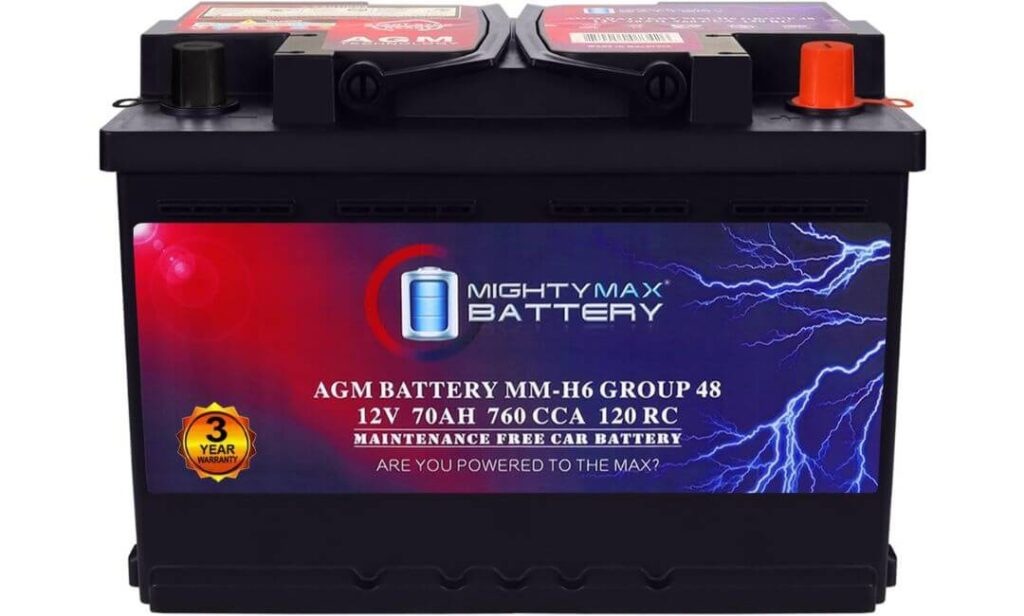
Quick Specs:
- Group Size: H6 / Group 48 (fits Bronco setups designed for mid-capacity batteries)
- Battery Type: AGM (sealed, spill-proof, maintenance-free)
- Cold Cranking Power: 760 CCA (strong and stable starts)
- Capacity: 70Ah with 120-minute reserve capacity
- Construction: Deep-cycle capable AGM with vibration-resistant build
- Dimensions: ~10.94″ × 6.88″ × 7.48″ (compact vs H7)
- Terminal Type: Stud terminal design
- Warranty: 3-year coverage
What makes this one interesting isn’t just the price—it’s how close it gets to premium AGM performance without acting like one. Fire it up, and the 760 CCA delivery feels clean and immediate, not stretched or delayed. For a Group 48 battery, it holds its ground surprisingly well, especially in daily-use Broncos that don’t need oversized capacity.
Dig a little deeper, and the real strength shows up in how it handles usage patterns. The 120-minute reserve capacity gives it enough buffer to deal with stop-and-go driving, accessory use, and short trips without constantly feeling drained. Combine that with its deep discharge recovery, and it doesn’t panic when pushed—it resets and keeps going.
The build is where it quietly overdelivers. AGM construction keeps everything sealed and controlled, while the internal structure is designed to absorb vibration and rough conditions without losing consistency. It’s not trying to be the biggest battery—it’s built to be efficient within its size. (This is the kind of battery that surprises you after a few weeks—you realize it’s doing more than you expected without asking for attention.)
What Stands Out In Real Use
- 760 CCA provides quick, reliable starts for everyday driving
- 120-minute reserve capacity supports short trips and accessory usage
- Deep discharge recovery helps maintain performance over time
- Compact H6 size fits tighter engine bays without compromise
- AGM durability handles vibration and rough roads better than flooded options
Where It Falls Slightly Short
- Not designed for heavy accessory loads or high-demand setups compared to larger H7 batteries
Bronco Compatibility & Real Fitment Insight
This battery fits best in Broncos running 2.3L engines or lighter electrical setups, where an H6 is the intended size. It delivers enough starting power and reserve without overloading the system or taking up extra space.
If your Bronco isn’t loaded with off-road accessories and you mainly use it for daily driving, city runs, or occasional highway trips, this size feels balanced. It does exactly what’s needed—no oversizing, no unnecessary cost.
The Insider Pro-Tip
A battery like this performs best when your usage matches its design. If your drives are mostly short, try to include one longer drive every few days—it helps AGM batteries maintain full charge cycles and extends lifespan.
Also, don’t underestimate proper installation. Make sure terminals are tight and clean—because with compact batteries like this, connection quality directly affects performance more than people realize.
#6. UPLUS AGM-L70-M H6 Battery (Group 48)
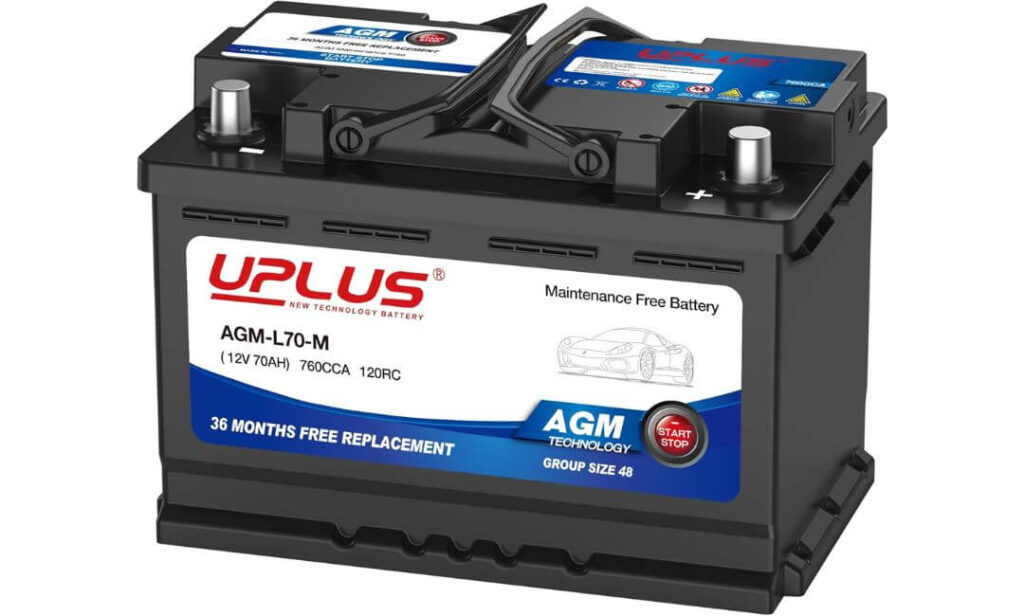
Quick Specs:
- Group Size: H6 / Group 48 (standard fit for mid-size Bronco battery trays)
- Battery Type: AGM (sealed, maintenance-free, start-stop ready)
- Cold Cranking Power: 760 CCA (strong cold-start reliability)
- Capacity: 70Ah with 120-minute reserve capacity
- Construction: Silver-Calcium alloy + high-density plates
- Weight: ~46.7 lbs (solid build, not lightweight)
- Terminal Type: SAE Top Post (Left negative, Right positive)
- Warranty: 3-year manufacturer support
Strangely enough, this is one of those batteries people don’t expect much from—until it’s installed. Hit the ignition, and the response feels sharp and immediate, not hesitant or stretched. That 760 CCA output comes through clean, especially in stop-start driving where consistency matters more than peak numbers.
What really gives it an edge is how it handles modern driving patterns. Frequent short trips, traffic, accessories running in the background—this is exactly where many batteries start to struggle. Here, the 70Ah capacity and 120 RC work together to keep things stable, while the 4x cycle life design (thanks to its alloy structure) means it doesn’t wear down quickly under repeated starts.
The build quality leans heavily toward durability. With 15x vibration resistance and a sealed AGM structure, it’s clearly designed for vehicles that don’t live easy lives. Whether it’s uneven roads or long idle periods, it keeps its internal stability intact. (This is the kind of battery that quietly adapts to your routine—you stop noticing it because it never gives you a reason to.)
What Stands Out In Real Use
- 760 CCA delivers confident, repeatable starts in all conditions
- Optimized for start-stop systems and short trips
- 120-minute reserve capacity supports accessories and idle usage
- High cycle life design handles repeated charging without quick degradation
- Strong vibration resistance makes it reliable beyond smooth roads
Where It Falls Slightly Short
- Long-term durability can vary depending on usage patterns, though performance remains strong when properly maintained
Bronco Compatibility & Real Fitment Insight
This H6 battery fits Broncos that are designed for Group 48 setups, typically 2.3L engines or moderate electrical demand builds. It provides enough power for daily driving without oversizing the system.
If your Bronco runs start-stop frequently or sits unused for days, this battery actually makes more sense than basic options. It’s built to handle those exact conditions without losing charge stability or starting strength.
The Insider Pro-Tip
Batteries like this reward consistent usage. If your Bronco sits for long periods, consider a trickle charger occasionally—not because it’s weak, but because AGM batteries perform best when they’re kept in an optimal charge range.
Also, when upgrading within the same H6 size, focus less on brand hype and more on cycle life and reserve capacity. That’s what you’ll actually feel in daily driving—not just the CCA number printed on the label.
Best Ford Bronco Battery Comparison: H6 vs H7, AGM Power & Real-World Performance
| Battery | Group | Type | CCA | Reserve | Real-World Use | Best For |
|---|---|---|---|---|---|---|
|
Best Overall ACDelco Gold 94RAGM |
H7 / 94R | AGM | 850 | ~140 RC | Strong cold starts, stable voltage, long-term reliability feel | All-round Bronco owners who want zero headaches |
|
High Power Goodyear 94R-H7 AGM |
H7 / 94R | AGM | 850 | 140 RC | Handles heavy load, accessories, off-road stress easily | Modified Broncos, lights, winch, high demand setups |
|
OEM Fit Motorcraft BAGM94RH7800 |
H7 / 94R | AGM | ~800 | — | Smooth factory-like performance, no compatibility drama | Owners who want stock-like reliability and fit |
|
Best Value H7 Interstate MTP-94R/H7 |
H7 / 94R | Flooded | 790 | 130+ RC | Reliable daily performance, lighter and simpler setup | Budget-conscious users with normal driving needs |
|
Best H6 Mighty Max MM-H6 |
H6 / 48 | AGM | 760 | 120 RC | Compact, consistent, handles daily use without strain | 2.3L Bronco owners, standard usage |
|
Budget Pick UPLUS AGM-L70-M |
H6 / 48 | AGM | 760 | 120 RC | Strong start-stop support, good for short trips and idle time | City drivers, stop-go traffic, cost-focused buyers |
Buying Guide: Choosing the Right Ford Bronco Battery Without Guesswork
Let’s clear the confusion first—there isn’t a single “one-size” battery for the Bronco. What actually fits depends on how the vehicle is configured and how it’s used.
In real-world terms, newer Broncos typically run:
- H6 / Group 48 → more common in 2.3L setups, daily driving builds, lighter electrical load
- H7 / Group 94R → used in 2.7L engines, higher trims, or Broncos running accessories
Now here’s the part most people miss—fitment isn’t just about “will it go in.”
You have to check:
- tray size (H7 is longer than H6)
- terminal position (left/right orientation matters)
- cable reach (tight cables = future problems)
If your Bronco came with H6, jumping to H7 only works if there’s physical space + proper hold-down fit. Otherwise, you’re forcing a setup that wasn’t designed for it.
Ford Bronco Battery Size H6 vs H7: What Fits vs What Actually Works
On paper, both can work. In reality, they serve different purposes.
- H6 (Group 48)
- Balanced size, easier fit
- Enough power for stock setups
- Better for daily driving, normal electrical load
- H7 (Group 94R)
- Bigger capacity, more reserve
- Higher CCA for cold starts and heavy demand
- Handles accessories without stress
The mistake people make is upgrading blindly.
H7 isn’t “better” unless your Bronco actually needs it.
If you’re running:
- off-road lights
- winch
- fridge, compressor
- frequent short trips
→ H7 makes sense
If not, a strong H6 AGM will feel just as reliable without overloading the system.
Key Specs That Actually Matter (Not Just Marketing Numbers)
Cold Cranking Amps (CCA)
This is what you feel every morning.
For Broncos:
- H6 → ~700–760 CCA is solid
- H7 → ~750–850+ CCA is ideal
Higher CCA doesn’t mean faster—it means more reliable starts under stress (cold weather, sitting idle, heavy load).
Reserve Capacity (RC)
This is your backup when the engine isn’t helping.
Think: lights on, accessories running, engine off.
- 120 RC = decent
- 140 RC = noticeably better breathing room
More RC = less chance of your battery dropping voltage when it matters.
Amp-Hour (Ah)
This tells you how long the battery can sustain load.
- H6 → ~70Ah
- H7 → ~80Ah
It’s not about peak power—it’s about how long the battery stays stable.
Dimensions and Terminal Layout
This is where most buying mistakes happen.
Always check:
- length, width, height (even small differences matter)
- terminal side (positive/negative orientation)
A battery that “almost fits” will create long-term issues—loose mounting, cable tension, vibration damage.
Battery Type (AGM vs Flooded)
This isn’t optional anymore for most Broncos.
- AGM (Recommended)
- better vibration resistance
- handles start-stop systems
- more stable voltage
- longer cycle life
- Flooded (Only for basic use)
- cheaper
- works for simple setups
- not ideal for heavy load or off-road
Why AGM Is the Smarter Choice for Bronco Owners
The Bronco isn’t built like an old-school SUV—it’s packed with electronics, sensors, and systems that expect clean, stable power.
AGM batteries:
- don’t leak or spill
- handle rough terrain without internal damage
- recover better from partial charge cycles
- maintain voltage consistency (this is what keeps your electronics stable)
And here’s the real-world truth—most electrical issues people blame on the vehicle actually come from weak or incorrect battery choice.
Real Buying Checklist (Before You Click “Buy”)
Check Your Current Battery Label
Don’t guess—look at what’s already installed
- H6 or H7
- AGM or flooded
Match Your Usage, Not Just Specs
Ask yourself:
- daily driving or heavy off-road?
- accessories installed?
- long drives or short trips?
Your answer decides the battery—not the price.
Avoid Common Mistakes
- Don’t downgrade from AGM to flooded without reason
- Don’t oversize if tray doesn’t support it
- Don’t ignore terminal orientation
- Don’t chase highest CCA blindly
Final Reality Check
A Bronco battery isn’t something you want to think about twice.
If you match size + AGM type + correct specs, you’ll forget it’s even there—and that’s exactly how it should be.
Choose wrong, and you’ll feel it every single day—slow starts, random warnings, inconsistent performance.
Choose right once, and you’re done for years.
Size And Fit Deep Dive: Ford Bronco Battery Size H6 vs H7
Start with this—Bronco fitment changed when the new generation arrived. Older assumptions don’t always apply anymore.
- 2021+ New-Gen Bronco (2-door & 4-door)
- Most base and mid trims (2.3L) → factory setup leans toward H6 / Group 48
- Higher trims, 2.7L engines, accessory-heavy builds → often equipped with H7 / Group 94R or at least designed to support it
- Bronco Sport (separate platform)
- Typically runs H6 / Group 48 only
- H7 usually doesn’t fit cleanly due to tighter engine bay
Now here’s the nuance—Ford doesn’t always lock one size per trim. Some Broncos leave enough room for both sizes, but that doesn’t mean both should be used interchangeably without checking.
Factory setup is your safest reference point. If your Bronco came with H6, it was designed around that electrical balance. If it came with H7, it’s expecting higher reserve and load handling.
Physical Differences That Actually Matter (H6 vs H7)
On paper, the difference looks small. In real fitment, it’s not.
- H6 (Group 48)
- Shorter length
- Lighter, easier to handle
- Leaves more space around tray and cables
- H7 (Group 94R)
- Longer body (this is where issues happen)
- Heavier, more stable under load
- Requires proper tray length and hold-down alignment
The key difference isn’t height or width—it’s length and cable reach. That’s what decides whether the upgrade works or turns into a headache.
How To Measure Your Battery Tray And Hold-Downs
Don’t eyeball this—measure once properly and you avoid 90% of fitment issues.
Step 1: Measure the Tray
Take a simple measuring tape and check:
- Length (front to back)
- Width (side to side)
- Height clearance (including hood space)
Compare with typical sizes:
- H6 → ~10.9 inches length
- H7 → ~12.4 inches length
That ~1.5 inch difference is exactly where problems show up.
Step 2: Check Hold-Down Placement
Look at how your current battery is secured:
- Bottom lip clamp or top bracket?
- Does it align perfectly or already feel tight?
If the hold-down doesn’t line up with a larger battery, you’ll end up with:
- loose mounting
- vibration movement
- long-term damage
Step 3: Cable Reach And Terminal Orientation
This gets ignored way too often.
Check:
- positive terminal side (left/right)
- cable length and flexibility
If cables stretch even slightly:
- connection weakens over time
- resistance increases
- starting performance drops
Real Fitment Scenarios (What Actually Happens)
Scenario 1: H6 → H7 Upgrade
Works only if all three conditions are met:
- tray has extra length
- hold-down can secure properly
- cables reach without tension
If even one fails, don’t force it.
Scenario 2: H7 → H6 Downgrade
Physically fits easily, but:
- you lose reserve capacity
- electrical system may feel less stable under load
Works for:
- lighter driving
- no accessories
Not ideal for:
- heavy use or off-road setups
Quick Decision Guide (Based On What You Currently Have)
If Your Bronco Has H6 Installed
Stick with H6 if:
- daily driving
- no major accessories
- 2.3L engine
Upgrade to H7 if:
- you’ve added electrical load
- frequent short trips (battery drains faster)
- cold climate usage
If Your Bronco Has H7 Installed
Stay with H7 if:
- you want consistent performance
- you use accessories
- you don’t want to think about battery limits
Dropping to H6 only makes sense if:
- budget is tight
- usage is very light
- no electrical demand beyond basics
Fitment Mistakes That Cost You Later
- Assuming “same group size across all trims”
- Ignoring terminal position
- Forcing a longer battery into tight trays
- Using incorrect hold-down (battery moves under vibration)
- Choosing based on price instead of fitment
What Most People Realize Too Late
Battery fitment isn’t just about installation—it’s about how the battery behaves over time.
A battery that:
- sits tight
- connects cleanly
- matches electrical demand
→ will feel invisible (which is exactly what you want)
A battery that:
- barely fits
- strains cables
- runs near its limit
→ will slowly create problems you won’t immediately link to the battery
That’s the difference between “it works” and “it works properly.”
How To Evaluate And Compare: Practical Test Criteria That Actually Matter
Most battery comparisons stop at spec sheets, but real evaluation starts where numbers meet usage. A Bronco isn’t just starting an engine—it’s powering systems, handling accessories, sitting idle between drives, and sometimes working harder off-road than on it. So instead of chasing the “highest number,” you need to understand how those numbers behave under real conditions, not just on paper.
CCA Requirements For Cold Starts And Winching Scenarios
Cold Cranking Amps (CCA) is the first thing people look at—but it only makes sense when you connect it to actual use.
For a Bronco:
- 700–760 CCA (H6 range) → enough for normal starts, daily driving, mild weather
- 800–850+ CCA (H7 range) → stronger, more reliable starts when conditions aren’t ideal
Now bring real scenarios into it. A cold morning isn’t just about temperature—it’s about:
- engine oil thickening
- battery sitting overnight or longer
- multiple short trips draining charge
In those conditions, higher CCA doesn’t make the engine “faster”—it makes the start more consistent and less stressful on the system.
For off-road setups with winches or heavy electrical loads, CCA becomes even more relevant. When the battery is already under load and you attempt a restart, lower CCA units can feel strained. Higher capacity batteries recover better and maintain voltage without dropping off sharply.
Reserve Capacity And Ah Relevance For Off-Road Accessories
This is where most buying decisions go wrong—people ignore reserve capacity (RC) and amp-hours (Ah), even though these matter more than CCA in many real situations.
Think about how a Bronco is actually used:
- lights running while parked
- compressor or fridge connected
- engine off during short breaks
That’s where reserve capacity (RC) becomes critical.
- ~120 minutes RC → decent buffer, handles basic accessory use
- ~140 minutes RC → noticeably more stable, better for extended usage
Amp-hour (Ah) ties into this:
- ~70Ah (H6) → enough for standard setups
- ~80Ah (H7) → better for sustained load
The difference shows up when the engine isn’t helping. A battery with higher RC and Ah doesn’t drop voltage quickly—it holds steady longer, which is exactly what keeps your electronics functioning without interruption.
Vibration Resistance, Case Construction, And Real Durability
This is something spec sheets rarely explain properly. A Bronco isn’t sitting on smooth pavement all the time—so internal construction matters more than people think.
AGM batteries have a clear advantage here:
- electrolyte is absorbed, not free-flowing
- internal plates are tightly packed
- less movement inside the battery under vibration
In real use, this means:
- fewer internal shorts over time
- less performance drop from rough terrain
- better long-term consistency
Case design also plays a role:
- reinforced outer casing prevents flex
- sealed construction avoids leakage
- proper venting design keeps temperature stable
If a battery can’t handle vibration, it won’t fail immediately—it will slowly degrade. That’s why durability isn’t about surviving one trip, it’s about staying consistent after months of use.
Warranty Terms And Service Support (What Actually Matters)
Most people glance at warranty duration and move on—but that’s only half the story.
What matters more is:
- replacement type → free replacement vs prorated
- coverage period → full vs partial coverage
- ease of claim → local availability vs complicated process
A 36-month warranty sounds strong, but if:
- replacement process is difficult
- service centers are limited
- proof requirements are strict
…it doesn’t feel like a real safety net.
Brands with established distribution tend to offer:
- easier replacements
- better availability
- less downtime if something goes wrong
That matters more than an extra few months on paper.
Additional Real-World Factors Most Guides Ignore
There are a few things you won’t find clearly listed, but they influence performance directly:
- Charge acceptance
AGM batteries recharge faster and handle partial charging better, especially useful for short trips - Self-discharge rate
Lower in AGM, which helps if the Bronco sits unused for days - Temperature tolerance
Better batteries maintain performance across both cold and heat, not just one condition - Electrical stability
Modern Broncos rely on sensors and modules—stable voltage matters more than peak power
Putting It All Together (How To Compare Properly)
Instead of comparing batteries line by line, think in combinations:
- Daily driver setup
→ balanced CCA + decent RC + AGM preferred - Accessory-heavy Bronco
→ higher CCA + higher RC + H7 size makes sense - Short trip usage / city driving
→ AGM with good cycle life and recharge efficiency - Occasional off-road use
→ vibration resistance + stable construction matters more than peak specs
When you evaluate like this, the choice becomes clearer—not because one battery looks better, but because it fits how the Bronco is actually used.
That’s the difference between choosing based on numbers… and choosing something that performs the same way months later as it did on day one.
Ford Bronco Battery Replacement Cost: What You Should Actually Expect To Pay
Most people search for a simple number, but Bronco battery cost isn’t fixed—it shifts based on group size (H6 vs H7), battery type (AGM vs flooded), and how demanding your setup is. Two owners with the same vehicle can end up paying very different amounts, simply because their usage and expectations are different.
Typical Price Ranges By Size And AGM Grade
Let’s break it down in a way that reflects real buying decisions, not just listings.
- H6 / Group 48 (AGM)
- Entry-level AGM: lower price range, basic reliability
- Mid-range AGM: balanced performance and lifespan
- Premium AGM: higher upfront cost, better cycle life and consistency
- H7 / Group 94R (AGM)
- Mid-range starts higher than H6 by default
- Premium options go noticeably higher due to:
- higher CCA (800–850+)
- larger capacity (~80Ah)
- stronger internal construction
- Flooded (Non-AGM H7)
- Lowest cost option
- Works for basic driving
- Not ideal for start-stop or heavy electrical load
Now the part most people realize later—AGM costs more upfront, but it usually pays back in lifespan and stability, especially in a Bronco that isn’t driven lightly.
Hidden Costs That Add Up Faster Than Expected
The battery price is just one part of the equation. Once you go to install or replace, small things start stacking up.
- Installation charges
- DIY → zero cost, but requires proper tools and care
- Shop install → additional cost depending on location and complexity
- Terminal cleaning or replacement
- Corroded terminals can affect performance
- Sometimes needs replacement, not just cleaning
- Battery tray or hold-down adjustments
- Especially when switching H6 → H7
- Incorrect fit leads to movement and long-term issues
- Core deposit (refundable but upfront)
- Old battery return required to get it back
- Electrical reset / BMS reset
- Some setups need system recalibration after installation
These aren’t always mentioned upfront, but they directly affect the total cost of replacement.
What Drives Cost Up (And What Actually Matters)
There are a few factors that increase price—but not all of them are unnecessary.
- Higher CCA ratings → more reliable starts, especially in demanding conditions
- Larger reserve capacity → better for accessories and idle usage
- AGM construction → longer lifespan, better durability
The mistake is assuming cheaper = smarter. In many cases, lower-cost batteries:
- degrade faster
- struggle under load
- create inconsistent performance
So the real cost isn’t just what you pay—it’s how often you have to replace it.
Tips To Maximize Lifespan And Protect Your Investment
This is where you either get 2 years… or 4–5 years from the same battery.
- Match the battery to your usage
Don’t under-spec just to save money
Don’t over-spec if you don’t need it - Keep terminals clean and tight
Small resistance = big performance drop over time - Avoid deep discharge repeatedly
Especially important for flooded batteries - Drive patterns matter more than people think
Short trips don’t fully recharge the battery
Occasional longer drives help maintain health - Use AGM if your Bronco has start-stop or electronics-heavy setup
It handles partial charging and cycling much better - Check fitment before buying
A poorly fitted battery can fail faster due to vibration
Where Most Money Gets Wasted
Not on buying a good battery—but on buying the wrong one.
- Choosing flooded instead of AGM for a modern setup
- Ignoring group size and forcing fitment
- Buying based only on price, not specs
- Skipping small installation details that affect long-term performance
A Bronco battery isn’t something you want to revisit every year.
Spend once, match it properly, and it quietly does its job in the background—no second thoughts, no unexpected issues.
Pro Tips For Installation And Maintenance: Getting It Right The First Time
Battery swaps on a Bronco aren’t complicated—but they’re also not something you want to rush. A clean install makes the difference between a battery that performs exactly as expected… and one that slowly creates issues you won’t immediately connect back to the install itself.
Safe Installation Steps For Bronco Battery Swaps
Start with preparation, not tools. Make sure the engine is off, keys are out, and all electronics are shut down. Modern Broncos stay “awake” for a short time, so give it a minute before touching anything.
Then follow a proper sequence:
- Disconnect negative terminal first, always
- Then remove the positive terminal
- Loosen hold-down bracket and lift the battery out carefully (these are heavy, don’t tilt aggressively)
Before dropping the new battery in, take a moment:
- Check tray for dirt, moisture, or corrosion
- Make sure the base is flat and stable
- Confirm terminal orientation matches your cables
Installation goes in reverse:
- Place battery securely in tray
- Attach hold-down firmly (no movement, no looseness)
- Connect positive first, then negative
That order matters more than people think—it reduces the chance of accidental shorting.
Terminal Care, Corrosion Prevention, And Post-Installation Checks
A new battery won’t perform properly if the connections aren’t clean. This is one of the most overlooked steps.
Before connecting:
- Clean terminals if there’s any residue
- Check for worn or loose clamps
After installation:
- Ensure terminals are tight (not forced, just secure)
- Look at cable alignment—no tension, no awkward angles
To prevent corrosion over time:
- Apply a light protective layer (anti-corrosion spray or grease)
- Keep the area dry and free from debris
Now comes the part most people skip—the post-installation check.
After starting the Bronco:
- Watch the first ignition—should feel immediate and stable
- Check dashboard for any warning lights
- Let the engine run for a few minutes to stabilize voltage
If your Bronco uses a battery management system, a reset may be required so the vehicle recognizes the new battery correctly. Without this, charging behavior can be inconsistent.
When To Upgrade Cables Or Mounting Hardware For Off-Road Use
This isn’t necessary for everyone—but if your Bronco sees rough terrain, it becomes important.
Stock setups are designed for normal use. Once you add:
- off-road lighting
- winch systems
- compressors or auxiliary electronics
…the demand increases, and so does stress on connections.
Consider upgrades if you notice:
- cables feeling tight after installing a larger battery
- visible movement in the battery under vibration
- added electrical load beyond factory setup
Upgrades that actually make a difference:
- Heavier gauge cables → better current flow, less resistance
- Stronger hold-down brackets → prevents movement on rough terrain
- Proper terminal clamps → ensures consistent connection under load
A battery moving even slightly over time can:
- loosen connections
- create intermittent electrical issues
- shorten battery lifespan
Small Details That Make A Big Difference
There are a few things that don’t look important—but they directly affect performance:
- Don’t overtighten terminals → can damage posts
- Don’t leave any gap in hold-down → vibration kills batteries slowly
- Avoid mixing old cables with new high-capacity batteries if they show wear
- Keep battery fully seated—tilt or uneven placement leads to stress points
Real-World Maintenance Habits That Extend Battery Life
You don’t need complicated routines—just consistent habits:
- Start the Bronco regularly if it sits for long periods
- Avoid repeated short drives without occasional longer runs
- Check terminals every few months, especially in dusty or humid conditions
- Keep the battery area clean—heat and dirt both affect performance
AGM batteries, especially, perform best when they stay within a healthy charge range. They don’t like being left partially discharged for long periods.
What Most Owners Realize Later
A battery doesn’t fail suddenly most of the time—it degrades because of:
- poor installation
- loose connections
- constant vibration
- inconsistent charging
Get the install right once, maintain it lightly, and the battery becomes something you don’t think about again. Ignore the small details, and even a good battery won’t feel like one for long.
FAQs About Ford Bronco Battery
How do I know if my Ford Bronco actually needs an H7 upgrade, or if H6 is already enough?
This is where most people overthink—and overspend. The Bronco doesn’t “need” H7 unless your usage is pushing the limits of what H6 can handle. If your setup is stock, daily-driven, and not loaded with accessories, a solid H6 AGM already delivers clean starts and stable voltage.
Where H7 starts making sense is when your usage quietly shifts beyond normal. Think about your actual pattern:
- frequent short trips where the battery doesn’t fully recharge
- added electrical load (lights, compressor, fridge, winch)
- the vehicle sitting for days, then expected to start instantly
In those cases, H7 isn’t about “more power”—it’s about more margin. The difference you feel isn’t speed, it’s consistency. If your Bronco ever feels slightly slower to crank, or electronics seem sensitive after sitting, that’s usually where H7 starts to justify itself.
Why does my Ford Bronco sometimes show electrical glitches even after installing a new battery?
This catches people off guard because the battery is new, so they assume it can’t be the problem. But modern Broncos don’t just need a battery—they need the system to recognize it properly.
After installation, if the Battery Management System (BMS) isn’t reset or calibrated, the vehicle may:
- undercharge or overcharge the battery
- misread battery health
- trigger small but annoying issues like warning lights or unstable start-stop behavior
There’s also a second layer people miss—connection quality. Even a new battery will behave poorly if:
- terminals aren’t fully tight
- cables are slightly stressed or misaligned
- corrosion wasn’t cleaned before install
So when something feels “off,” it’s rarely the battery itself. It’s usually the integration into the system that wasn’t completed properly.
Can I safely run a flooded battery in a Bronco that originally came with AGM, or is that asking for problems later?
Technically, yes—it will start the vehicle. But long-term, it’s not a like-for-like swap.
AGM batteries are designed to handle:
- repeated start-stop cycles
- partial charging (short drives, city use)
- vibration from rough terrain
Flooded batteries can struggle in those same conditions. What happens over time isn’t immediate failure—it’s gradual:
- voltage becomes less stable
- performance drops under load
- lifespan shortens if cycling is frequent
If your Bronco is used lightly, mostly highway driving, and doesn’t rely heavily on electronics, a flooded battery can work. But if your usage matches what the Bronco was built for—mixed driving, accessories, off-road—AGM isn’t an upgrade, it’s simply the correct match.
What’s the real difference between a battery that lasts 2 years and one that goes 4–5 years in the same Bronco?
It’s rarely just “brand quality.” Most of the difference comes from how the battery is used and supported.
A battery that lasts longer usually benefits from:
- correct group size (not undersized for the load)
- proper installation (tight connections, stable mounting)
- balanced driving pattern (not constant short trips only)
Now compare that to the opposite:
- slightly loose terminals → resistance builds over time
- frequent short drives → battery never fully recharges
- vibration from poor mounting → internal wear increases
Same battery, completely different outcome.
There’s also a subtle factor—reserve capacity. Batteries with higher RC don’t get stressed as quickly, so they degrade slower. That’s why two batteries with similar CCA can age very differently.
How do I judge if a battery is “losing strength” before it actually fails in my Bronco?
Batteries rarely die instantly—they give small signs first. The problem is, most people ignore them because the vehicle still starts.
Watch for changes in behavior, not just failure:
- crank feels slightly slower than before (even by a second)
- electronics dim briefly during startup
- start-stop system becomes inconsistent or stops working
- vehicle struggles more after sitting overnight
One useful way to think about it—if your Bronco used to start effortlessly and now feels like it’s “thinking” for a moment before cranking, that’s early decline.
You don’t need tools to notice it, just consistency in observation. A healthy battery feels invisible. The moment you start noticing it, even slightly, it’s already telling you something has changed.
Closing Thoughts
A Bronco doesn’t hide weak parts for long—and the battery is one of the first things it exposes. You feel it in the way it starts, the way the electronics behave, even in how confident the vehicle feels after sitting overnight. Get it right, and everything just works. Get it slightly wrong, and small inconsistencies start showing up where you least expect them.
What this guide really comes down to isn’t just picking a battery—it’s matching the battery to how your Bronco actually lives day to day. H6 vs H7, AGM vs flooded, 760 CCA vs 850 CCA… these aren’t just specs, they’re decisions that shape how reliable your vehicle feels over time. The difference isn’t dramatic on day one, but it becomes obvious after a few months of real use.
Every option in this list was chosen with that in mind—fitment that makes sense, performance that holds up, and construction that doesn’t fall apart under real conditions. No filler picks, no “just for the list” products. If something’s here, it’s because it earns its place in a Bronco setup.
Take a minute, match your usage honestly—daily driving, short trips, heavy accessories, off-road—and choose based on that. Once you do, the battery becomes something you stop thinking about completely.
And that’s the whole goal.
Also Check:

