6 Best Batteries for Ford Explorer in 2026: Strong Starts, Longer Life & Reliable Daily Power
If your Ford Explorer has started cranking slower in the morning, flashing low-voltage warnings, or struggling after short trips, the battery is usually the first place to look. On newer Explorer models, the electrical load is heavier than many owners expect—remote start, large screens, safety systems, power liftgate, heated features, and stop-start tech all draw power even when the SUV is parked.
That means buying the cheapest replacement often becomes the most expensive mistake. The right battery for a Ford Explorer needs the correct fitment, enough cold-cranking power for reliable starts, and the reserve capacity to handle daily electronics without wearing out early. For most newer models, Group 65 is the common go-to size, while some configurations may use H6 depending on trim and setup.
I narrowed this list to batteries that make sense for real Explorer owners: strong starting power, dependable AGM construction, solid warranty value, and the kind of reliability you notice on cold mornings or busy workdays. No filler picks—just options worth considering before you spend your money.
Best Battery for Ford Explorer: Top 2026 Picks for Reliable Power & Daily Use
#1. Odyssey Battery ODX-AGM65 Extreme Series AGM Battery
Ultimate Ford Explorer Battery Replacement for Maximum Power, Long Service Life & Heavy Daily Use
#2. Interstate Batteries MTX-65 AGM Automotive Battery
Trusted Group 65 Battery for Ford Explorer with Strong Starts, Smooth Reliability & Everyday Confidence
#3. Weize Platinum AGM Battery BCI Group 65
Smart AGM Upgrade for Newer Ford Explorer Models with Long Runtime & Solid Value
#4. Daakmax Platinum AGM Car Group 65 Battery
Budget-Friendly Ford Explorer Battery Upgrade with Dependable Cranking Power & AGM Durability
#5. ACDelco Gold 48AGM (88864541) AGM Battery
Premium H6 Battery for Ford Explorer Alternate Fitment with Clean Power & Long Life
#6. Mighty Max Battery MM-H6 Start and Stop AGM Battery
Efficient AGM Battery for Ford Explorer Stop-Start Systems with Reliable Daily Performance
Expert Tip: If your Ford Explorer still has the factory battery and it’s crossing the 3 to 5 year mark, don’t wait for a complete failure. Most batteries give warning signs first—slower starts, dimmer lights at idle, weak remote start range, or random low-voltage alerts. Replacing it before it strands you in a parking lot usually costs less stress than squeezing out one last month. On newer Explorers, a strong AGM battery is often money better spent because the SUV’s electronics demand more than older vehicles ever did.
How We Chose These Ford Explorer Batteries
We didn’t build this list around hype, brand logos, or marketing claims. We built it around what actually matters when a Ford Explorer owner turns the key—or presses the start button—on a busy morning.
First, we looked at fitment reality. Many newer Ford Explorer models commonly use Group 65, while some configurations can take H6 depending on trim and battery tray setup. That matters because even a powerful battery is useless if it doesn’t fit correctly or connect cleanly. Every pick here was selected with real-world Explorer compatibility in mind.
Next came starting power. A midsize SUV like the Explorer needs dependable cold-cranking amps, especially in winter or after sitting for a few days. We prioritized batteries with the kind of reserve and cranking strength that help avoid lazy starts, dashboard warnings, and that moment where the engine hesitates when you need to leave now.
Then we focused on AGM construction for a reason. Newer Explorers carry more electrical load than many buyers realize—large displays, driver-assist systems, power accessories, remote start, stop-start technology, and modules that continue drawing power after shutdown. AGM batteries handle repeated cycling, vibration, and deeper demand better than many basic flooded options.
We also weighed daily ownership value. Some drivers want premium long-life performance. Others want a reliable battery that simply works every morning without paying top dollar. That’s why this list includes strong premium picks, smart mid-range choices, and budget-friendly options that still meet real standards.
Finally, we filtered for batteries that make sense in the real world: solid warranty support, trusted performance history, stable power delivery, and specifications that match what a Ford Explorer actually needs. If a battery looked good on paper but didn’t make sense for ownership, it didn’t make this list.
The result is simple: these are batteries chosen the same way an experienced owner would choose them—with attention to fit, power, durability, and long-term value, not empty claims.
#1. Odyssey Battery ODX-AGM65 Extreme Series AGM Battery
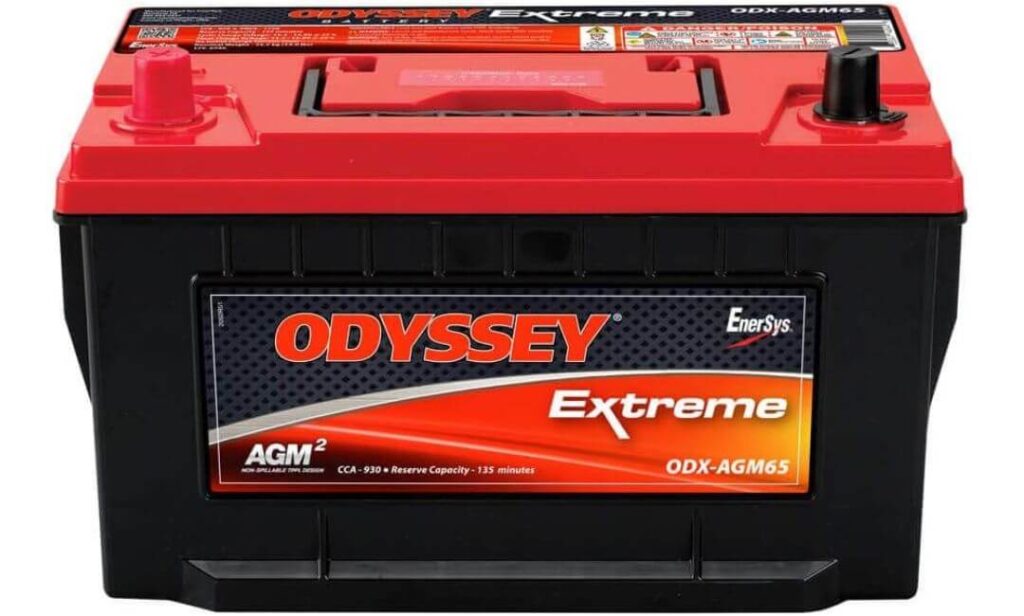
Quick Specs:
- Battery Size: Group 65 (ideal for many newer Ford Explorer configurations)
- Battery Type: Premium AGM, sealed and maintenance-free
- Cold Cranking Power: 930 CCA for confident cold starts
- Reserve Capacity: 135 minutes of backup power when accessories are running
- Voltage: 12V automotive standard
- Terminal Layout: SAE automotive posts, right-side negative terminal
- Weight: 60 lbs heavy-duty internal build
- Best Use Case: Explorers with higher electrical demand, cold climate driving, frequent short trips, upgraded accessories
- Warranty Coverage: 4-year manufacturer-backed protection
Right away, this feels like a battery built for owners who are tired of weak starts and short battery life. Ford Explorer models with remote start, heated seats, larger screens, power liftgate, driver-assist systems, and daily stop-and-go driving can be hard on an average battery. This one answers back with 930 cold cranking amps and a serious 135-minute reserve capacity, which means stronger starts and more breathing room when electronics keep drawing power.
The internal design is where it separates itself. It uses pure virgin lead plates, not cheaper mixed-alloy shortcuts. In real terms, that usually means more plate surface area, stronger output, faster recovery after deep electrical draws, and better long-term durability. If your Explorer sits for days, runs accessories often, or deals with winter mornings, that difference matters more than marketing slogans.
Then there’s the confidence factor. This is a 60-pound heavyweight, and while nobody enjoys lifting it, weight here often signals more robust internals rather than empty promises. It’s the kind of battery serious owners buy once instead of replacing bargain units twice.
(If your Ford Explorer has become more demanding than the battery under the hood, this is the kind of upgrade you feel on day one.)
Why It Stands Out in Real Ownership
- Exceptional 930 CCA for faster, stronger starts
- Long 135-minute reserve capacity for electronics-heavy SUVs
- AGM sealed design with no maintenance headaches
- Built for vibration resistance and daily abuse
- Strong fit for Explorers with accessories or heavier power demand
Where It May Not Suit Everyone
- Premium price tag, and the 60 lb weight can be inconvenient during installation
Ford Explorer Compatibility Notes
For many Ford Explorer setups that use Group 65, this is one of the strongest upgrade paths available. It especially makes sense for owners dealing with repeated short drives, cold weather starts, or added electrical load from modern convenience features.
If your current battery has been slow-cranking, voltage warning messages have appeared, or remote start range has dropped, stepping into a premium AGM like this can solve problems before they become roadside problems.
The Insider Pro-Tip
If your Explorer’s original battery lasted around four years, don’t judge every replacement by that number. Factory batteries often benefit from ideal new-vehicle charging conditions. Once the SUV ages and accessories increase, a stronger AGM battery can actually outlast what came from the factory.
Also, after installation, drive the vehicle long enough to fully recharge the new battery. Many owners blame a battery too early when the real issue was never giving it a proper first charge cycle.
#2. Interstate Batteries MTX-65 AGM Automotive Battery
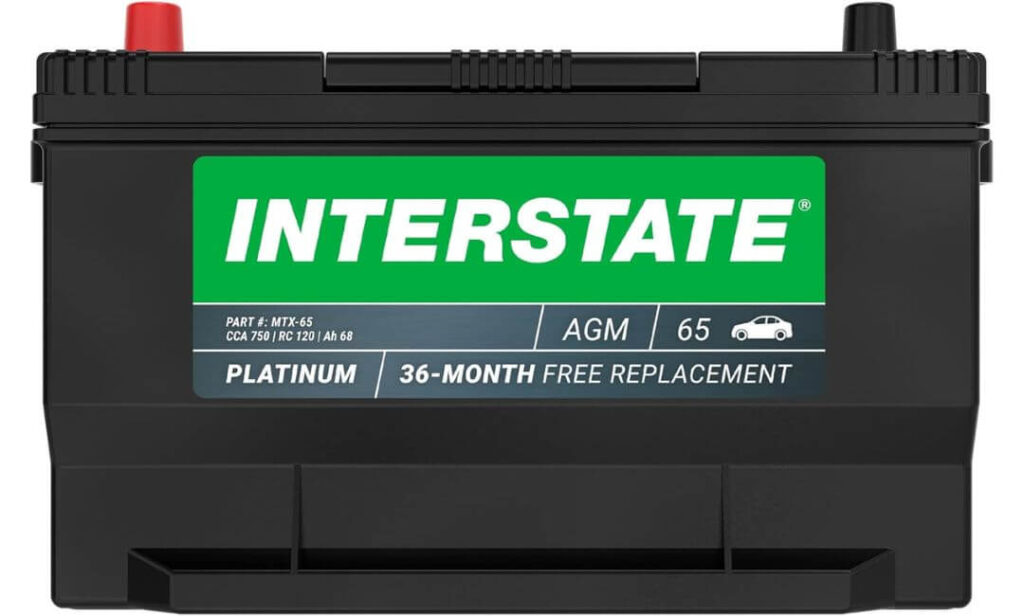
Quick Specs:
- Battery Size: Group 65 (strong match for many Ford Explorer applications)
- Battery Type: AGM sealed, maintenance-free design
- Voltage: 12V standard automotive output
- Capacity: 68Ah for steady daily energy support
- Cold Cranking Power: 750 CCA
- Cranking Amps: 935 CA
- Reserve Capacity: 120 minutes
- Terminal Style: Standard top post terminals
- Weight: 45 lbs
- Warranty: 36-month free replacement coverage
- Best Use Case: Daily-driven Ford Explorers, family SUVs, mixed city/highway use, owners wanting trusted balance over extremes
Sometimes the smartest battery is not the most expensive one—it’s the one that quietly does its job every single morning. That’s where this pick lands. For Ford Explorer owners who want dependable starts, strong reserve power, and a brand with real-world trust behind it, this battery checks the boxes that matter. With 750 CCA, it has enough cold-start muscle for normal winter mornings, while the 120-minute reserve capacity gives your Explorer breathing room when accessories keep drawing power.
The 68Ah capacity helps in day-to-day ownership more than many people realize. If your Explorer handles school runs, office commutes, grocery stops, and constant short trips, the battery rarely gets ideal recharge time. A healthy amp-hour rating helps stabilize that routine instead of wearing down early from constant stop-start life.
Its AGM build is another reason it earns a spot here. That means spill-proof construction, stronger vibration resistance, and less worry compared with old-school flooded batteries. In an SUV that deals with potholes, rough roads, temperature swings, and heavy electronics, those details are not small—they’re the difference between a smooth ownership experience and random battery headaches.
(For many Explorer owners, this is the “buy it, install it, move on with life” kind of battery.)
What Gives It Real Value
- Balanced 750 CCA for dependable starts without overpaying
- 120-minute reserve capacity supports modern SUV electronics
- Trusted AGM construction for vibration resistance and longer service life
- Strong fit for everyday Ford Explorer driving needs
- 36-month free replacement adds ownership confidence
A Fair Thing to Consider
- If you run heavy aftermarket audio gear or extreme cold-weather use, some higher-output premium options may suit you better
Ford Explorer Fitment Reality
For many Ford Explorer models using Group 65, this battery lands in the sweet spot between price, performance, and daily reliability. It suits owners who need confidence every morning but do not need an ultra-premium overbuilt unit.
If your current battery is starting slower, dimming at idle, or losing strength after sitting a few days, this kind of balanced AGM replacement is often the practical fix rather than chasing the cheapest option twice.
The Insider Pro-Tip
A battery can test “okay” and still be near the end of its useful life in a modern Explorer. If starts feel slower than last year or voltage warnings appear randomly, trust the symptoms—not just the store printout.
Also, clean battery terminals during installation. Even a strong new battery can feel average when corrosion blocks clean power flow. Small details create big first impressions.
#3. Weize Platinum AGM Battery BCI Group 65
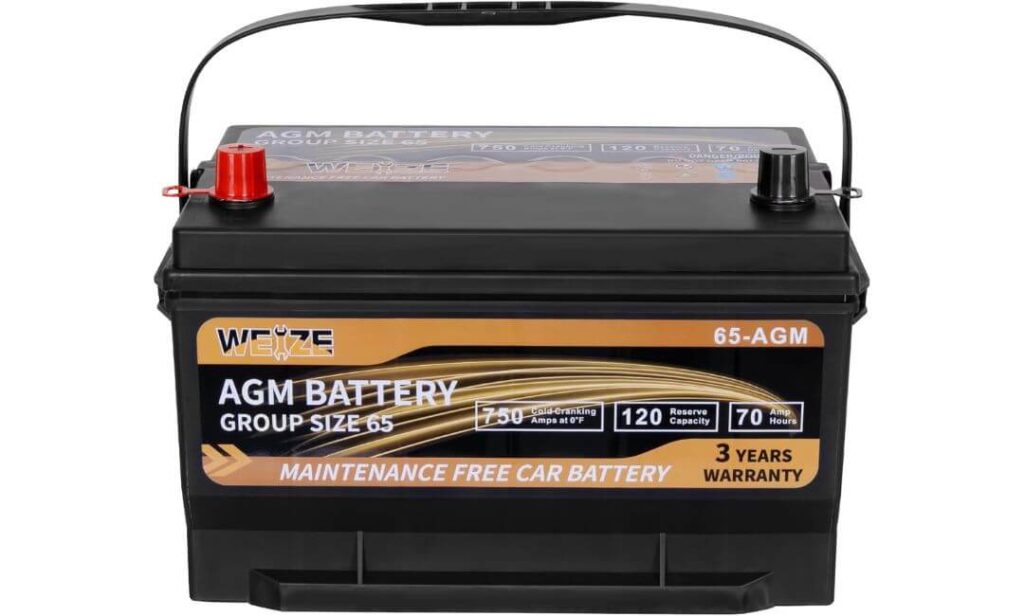
Quick Specs:
- Battery Size: Group 65
- Battery Type: AGM sealed automotive starter battery
- Voltage: 12V
- Capacity: 70Ah
- Cold Cranking Power: 750 CCA
- Reserve Capacity: 120 minutes
- Charging Range: 14.4V to 15.0V
- Operating Temperature: -22°F to 158°F
- Terminal Layout: Left positive (+), right negative (-)
- Weight: 46 lbs
- Warranty: 36 months
- Best Use Case: Newer Ford Explorer owners wanting strong value, AGM protection, and dependable everyday starts
Here’s the battery many smart buyers end up choosing after comparing overpriced premium units and risky cheap options. It gives you the specs most Ford Explorer owners actually need—750 CCA, 70Ah capacity, and 120-minute reserve capacity—without pretending to be something it isn’t. That balance matters more than flashy claims.
For daily Explorer use, the 70Ah capacity is the quiet hero here. It helps support modern SUV demands like screens, sensors, charging ports, remote start, liftgate systems, and constant short-trip driving where batteries rarely get a perfect recharge cycle. Add the 750 CCA, and you get reliable starts in normal cold weather without overspending for numbers many drivers never truly need.
Its AGM construction also adds real ownership value. Lower self-discharge means it holds charge better if your Explorer sits for days. Better heat and cold resistance matters in climates that punish batteries. And because it’s sealed, you avoid the old-school mess and maintenance people are happy to leave in the past.
(This is the kind of battery people buy when they want solid performance now—and no regrets six months later.)
What Makes It a Smart Pick
- Strong 70Ah capacity for electronics-heavy daily driving
- Dependable 750 CCA for confident starts
- 120-minute reserve capacity adds backup power margin
- AGM design resists vibration, heat, and charge loss
- 36-month warranty gives extra peace of mind
Something Worth Knowing
- Many units arrive partially charged, so giving it a full charge before use can help it start strong from day one
Ford Explorer Fitment Notes
For many Ford Explorer models using Group 65, this battery fits the owner who wants real-world value instead of paying premium-brand pricing. It works especially well for commuters, family use, and Explorers packed with modern convenience features.
If your current battery still starts the vehicle but feels slower, weaker, or struggles after sitting, this type of AGM replacement often restores the “normal” feeling owners forgot they lost.
The Insider Pro-Tip
A battery that holds charge well is gold for SUVs that aren’t driven every day. If your Explorer sits during weekends or work travel, low self-discharge AGM designs can save you from surprise no-start mornings.
Before ordering, always match terminal orientation with your old battery. Two strong batteries can have identical size numbers but very different installation experiences.
#4. Daakmax Platinum AGM Car Group 65 Battery
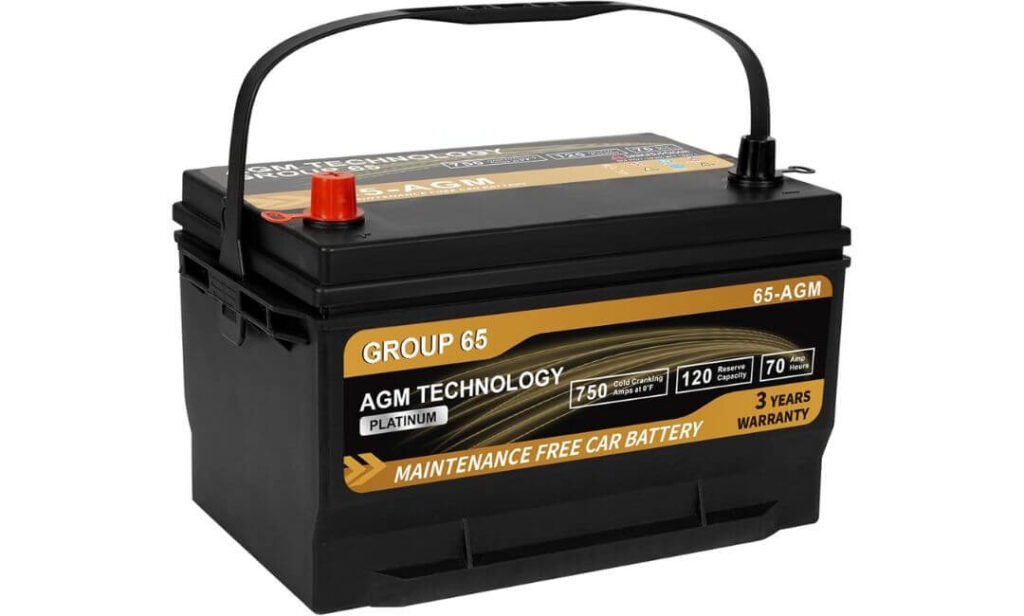
Quick Specs:
- Battery Size: Group 65
- Battery Type: AGM sealed start-stop automotive battery
- Voltage: 12V
- Capacity: 70Ah
- Cold Cranking Power: 750 CCA
- Reserve Capacity: 120 minutes
- Temperature Range: -22°F to 158°F (handles short extreme swings beyond that)
- Terminal Layout: Left positive (+), right negative (-)
- Weight: 46 lbs
- Vibration Resistance: Up to 18X more resistant than standard batteries
- Warranty: 36-month replacement support
- Best Use Case: Ford Explorer owners wanting a budget-conscious AGM upgrade with modern specs
Sometimes the smartest buy is the one nobody talks about enough. This battery brings the numbers many Ford Explorer owners actually need—70Ah, 750 CCA, and 120 RC—without forcing you into premium-brand pricing. For drivers who want solid performance and practical value, that combination is hard to ignore.
The real strength here is balance. 750 CCA gives dependable starting power for cold mornings and daily commuting, while the 120-minute reserve capacity helps support Explorer electronics when the engine is off or when short drives don’t fully recharge the battery. That matters more than many owners realize, especially in SUVs loaded with screens, charging ports, sensors, and convenience features.
Its AGM build adds another layer of value. It’s sealed, maintenance-free, and built with stronger vibration resistance than many standard batteries. If your Explorer sees rough roads, potholes, heat, or constant stop-and-go traffic, that durability can matter just as much as headline specs.
(This is the kind of battery buyers choose when they want modern performance without paying for a logo.)
What Makes It Worth Considering
- Strong 70Ah capacity for modern SUV power needs
- Dependable 750 CCA for daily starts
- 120 RC gives extra reserve support
- AGM design with no water checks or acid mess
- High vibration resistance for tougher road conditions
A Reasonable Thing to Know
- Brand recognition is lower than some legacy names, so some buyers may prefer established labels even when specs are competitive
Ford Explorer Fitment Notes
For many Ford Explorer applications using Group 65, this battery makes sense for owners who want current AGM features at a friendlier price point. It fits especially well for everyday commuting, family hauling, and mixed city/highway driving.
If your old battery still starts the vehicle but struggles after sitting, drains faster with accessories on, or feels weaker in weather changes, this type of AGM replacement can be a noticeable step forward.
The Insider Pro-Tip
When comparing batteries in the same size, don’t stop at CCA alone. Two batteries can both show 750 CCA, but differences in reserve capacity, internal build quality, and vibration resistance often decide which one lasts longer in real SUV use.
For Explorers that see rough roads or frequent short trips, durability specs can be more valuable than chasing the highest number on the sticker.
#5. ACDelco Gold 48AGM (88864541) AGM Battery
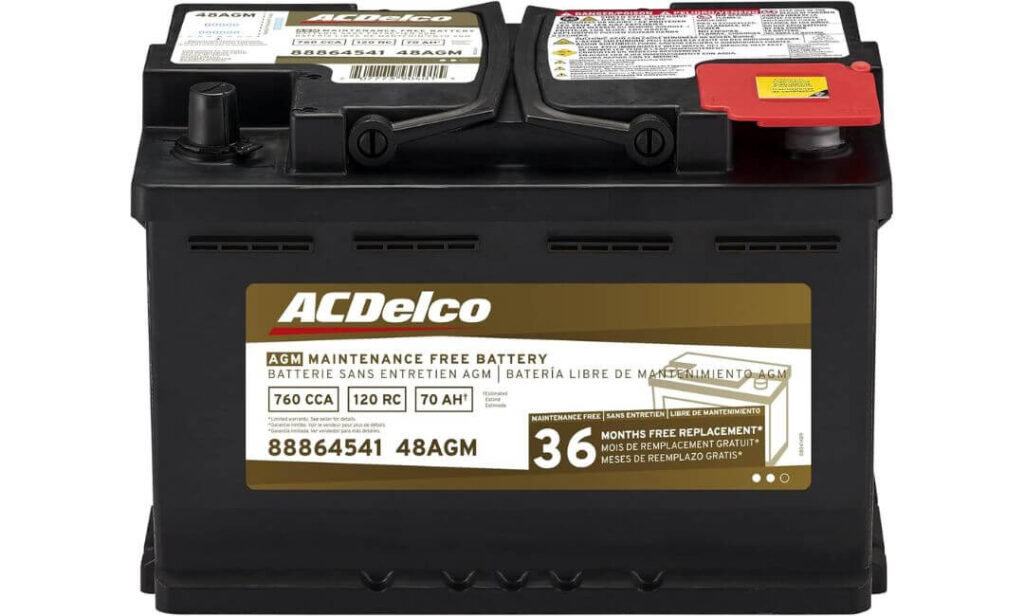
Quick Specs:
- Battery Size: Group 48 (H6 style fitment)
- Battery Type: AGM sealed maintenance-free battery
- Voltage: 12V
- Reserve Capacity: 100 minutes
- Cell Construction: Silver-Calcium enhanced internals
- Internal Resistance: 0.02 Ohms
- Dimensions: 11.9″ L x 7.5″ W x 7.6″ H
- Weight: 45.5 lbs
- Warranty: 36-month replacement coverage
- Best Use Case: Ford Explorer trims needing Group 48 / H6 size, owners wanting known-brand AGM value
Not every Ford Explorer owner needs the biggest battery in the category. Sometimes the better move is buying the correct fitment with proven AGM construction, clean power delivery, and a brand many drivers already trust. That’s exactly where this one fits. If your Explorer calls for Group 48 / H6 sizing, this is the kind of battery that makes sense immediately.
The standout feature is its internal build quality. A Silver-Calcium design, high-density negative paste, and low internal resistance are not just engineering buzzwords—they help improve current flow, reduce stress during starts, and support longer battery life when compared with bargain-bin alternatives. In simple terms, it’s built to work harder with less wasted effort.
Its 100-minute reserve capacity also matters in real ownership. Modern Explorers can draw more power than people think through displays, charging ports, sensors, memory systems, and accessories. Reserve capacity gives you more breathing room when the engine is off or when short trips don’t fully recharge the battery.
(For the right Explorer fitment, this feels like buying smart instead of buying flashy.)
What Makes It a Strong Choice
- Trusted AGM option from a recognized automotive brand
- Silver-Calcium internals for stronger long-term performance
- Low resistance design helps efficient starting power delivery
- 100-minute reserve capacity supports daily electronics use
- Good fit for Explorers using Group 48 / H6 sizing
A Practical Thing to Keep in Mind
- Since this is a smaller size than Group 65, it only makes sense if your Explorer is designed for Group 48 / H6 fitment
Ford Explorer Fitment Notes
This battery is a smart option for Ford Explorer configurations that use Group 48 (H6) rather than Group 65. It’s especially attractive for owners who want AGM benefits without stepping into oversized or unnecessary replacements.
If your Explorer originally came with an H6-style battery tray and terminal layout, matching the correct size often delivers a better ownership experience than forcing a larger battery that was never intended.
The Insider Pro-Tip
Many battery complaints are actually fitment mistakes. Owners chase “more power” and ignore tray size, hold-down alignment, or cable reach. Correct fitment usually beats oversized guesswork every time.
Before buying, compare your old battery label and terminal orientation. The smartest battery on paper still needs to fit perfectly under the hood.
#6. Mighty Max Battery MM-H6 Start and Stop AGM Battery
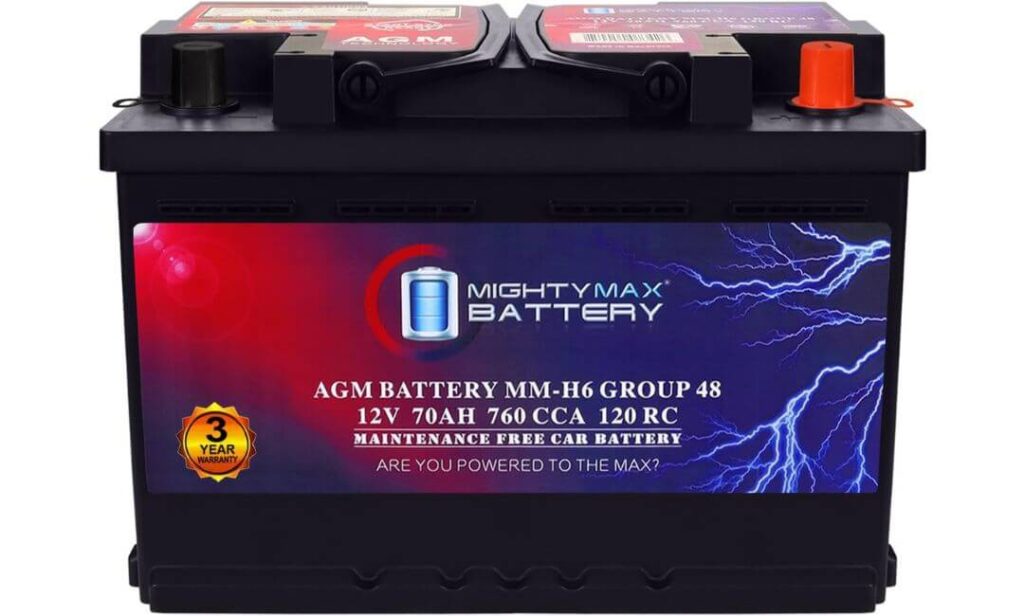
Quick Specs:
- Battery Size: Group 48 (H6)
- Battery Type: AGM sealed rechargeable starter battery
- Voltage: 12V
- Capacity: 70Ah
- Cold Cranking Power: 760 CCA
- Reserve Capacity: 120 minutes
- Terminal Layout: Positive right, negative left
- Terminal Style: Stud terminal
- Operating Range: -22°F to 158°F
- Mounting: Multiple positions (not upside down)
- Warranty: Up to 3 years coverage depending seller/support channel
- Best Use Case: Ford Explorer owners needing H6 fitment with strong specs at value pricing
Here’s the battery many practical buyers notice once they stop paying only for brand names. It delivers the numbers that matter—760 CCA, 70Ah, and 120-minute reserve capacity—while staying in a price lane that often makes more sense than premium alternatives. For the right Ford Explorer fitment, that’s a serious combination.
The starting power is especially attractive. With 760 CCA, it brings enough muscle for cold starts, early mornings, and SUVs that don’t always get long highway drives. Pair that with 120 RC, and your Explorer gets more support for electronics like displays, charging ports, liftgate systems, memory functions, and accessory draw when the engine is off.
Its AGM construction also helps it punch above its price point. It’s sealed, spill-proof, vibration-resistant, and designed to recover better from deeper discharges than many old-style batteries. That matters for Explorers used in city traffic, short commutes, or irregular driving schedules.
(Sometimes the smartest buy is the battery that gives premium-style numbers without the premium-style bill.)
What Makes It Worth a Look
- Strong 760 CCA for confident starts in varied weather
- 70Ah capacity supports modern SUV electrical loads
- 120-minute reserve capacity adds useful backup margin
- AGM sealed build with low-maintenance ownership
- Often strong value compared with higher-priced rivals
A Fair Note Before Buying
- Because terminal style and fitment details can vary by vehicle setup, double-check compatibility before ordering
Ford Explorer Fitment Notes
For Ford Explorer configurations using Group 48 / H6, this can be a smart value-focused replacement. It suits owners who want solid numbers on paper and dependable day-to-day performance without overspending.
If your Explorer uses an H6 tray layout and you want stronger starts plus AGM durability, this battery fits the profile many budget-conscious buyers look for.
The Insider Pro-Tip
When comparing H6 batteries, don’t get distracted by one headline number. A battery with good CCA, reserve capacity, and AGM durability usually performs better over time than one that wins only on a sticker spec.
Also, after installation, take the Explorer on a proper drive. New batteries appreciate a healthy first recharge cycle more than most people realize.
Best Battery for Ford Explorer Comparison Chart: 6 Smart Picks Ranked by Power & Value
Buying Guide: How to Choose the Best Battery for Ford Explorer
Choosing a battery for a Ford Explorer is not just about replacing a dead unit with whatever fits the tray. Modern Explorer models place more demand on the battery than many owners expect. Remote start, safety sensors, touchscreen systems, heated seats, power liftgate, memory settings, charging ports, and stop-start technology all ask for steady voltage every day. That means the right battery can improve reliability, while the wrong one can create weak starts, warning lights, and shorter service life.
A smart purchase comes down to matching the battery to how your Explorer is actually used. A family SUV doing school runs and short trips needs something different than an Explorer used for long highway drives or winter mornings. Here is what truly matters before buying.
Battery Types: AGM vs Flooded for Ford Explorer
For many newer Ford Explorer models, AGM batteries are the smarter choice. AGM stands for Absorbed Glass Mat, a sealed design built to handle heavier electrical demand, vibration, and repeated charging cycles better than many traditional flooded batteries.
If your Explorer has auto stop-start, frequent short trips, or lots of electronics running daily, AGM usually makes more sense. It tends to recover faster after starts, holds charge better when parked, and handles voltage-sensitive systems more smoothly.
Flooded batteries can still work in some applications, especially older or simpler setups, but they are often less ideal for modern SUVs with higher accessory loads. They may cost less upfront, yet can feel like a downgrade in vehicles designed around stronger battery performance.
Real-world answer: if your Explorer came with AGM from the factory, staying with AGM is usually the safer and smarter move.
Key Specs That Actually Matter
Battery shopping often gets reduced to one number, but Ford Explorer owners should look at several specifications together.
Cold Cranking Amps (CCA) measure starting power in cold weather. Higher CCA can help the engine crank faster during winter starts or after the vehicle has been sitting. For many Explorer owners, strong CCA matters more than chasing the cheapest price.
Reserve Capacity (RC) shows how long the battery can support vehicle systems if the charging system is under stress. In a modern Explorer loaded with electronics, reserve capacity becomes valuable. It can also help during short-trip driving where the battery does not fully recharge each time.
Amp Hour Capacity (Ah) matters for steady energy support. It becomes useful for Explorers with frequent accessory use, charging devices, or irregular driving habits.
The best battery is usually the one with balanced numbers, not just the highest single spec on the label.
Size and Fitment: Group 65 vs Other Ford Explorer Battery Sizes
Battery size matters as much as battery quality. Even a powerful battery becomes a bad purchase if hold-down brackets do not line up, terminals reach poorly, or the hood clearance is wrong.
For many Ford Explorer setups, Group 65 is a common and popular fitment. It offers a strong balance of size, power, and availability.
Some Explorer configurations may use Group 48 (H6) or other tray-specific sizes depending on year, trim, engine, and factory equipment. That is why battery size should always be verified before ordering.
The smartest move is simple: check your current battery label, tray dimensions, terminal orientation, and owner documentation. Correct fitment beats guessing every time.
Driving Habits Matter More Than Most Buyers Think
How you use your Explorer should influence what you buy.
If the SUV does frequent short trips, school runs, city traffic, or sits unused for days, choose a stronger AGM battery with healthy reserve capacity. Those patterns are harder on batteries than long highway drives.
If you tow, run accessories, use remote start often, or face winter weather, prioritize stronger CCA and durable internal construction.
If your driving is mostly normal commuting with regular highway mileage, a balanced mid-range AGM battery can be the sweet spot.
Durability, Heat Resistance, and Warranty Value
Many battery failures happen because of heat, vibration, and undercharging—not because the battery was old on paper.
Ford Explorers driven on rough roads, hot climates, or stop-and-go traffic benefit from batteries built with better vibration resistance and sealed AGM construction. These details rarely appear in flashy ads, but they often decide real lifespan.
Warranty also matters, but it should be viewed correctly. A long warranty is useful, yet it does not automatically mean the battery is superior. It simply adds ownership confidence if something goes wrong.
A strong battery with a fair warranty often beats a weak battery hiding behind a longer promise.
Signs You Should Replace the Battery Soon
Do not wait for a total no-start event if your Explorer is already warning you.
Watch for slower cranking, dim lights at idle, remote start range dropping, random low-voltage messages, electronics acting strange, or repeated jump-start needs. Those symptoms often appear before complete failure.
Replacing early is usually easier and less stressful than being stranded later.
Smart Final Buying Advice
If you own a newer Ford Explorer, focus on three things first: correct size, AGM construction, and balanced CCA plus reserve capacity. After that, compare warranty and price.
Most owners regret buying too cheap far more often than buying slightly better. A quality battery is one of those upgrades you only notice when it works perfectly every day.
Ford Explorer Battery Replacement Cost: What to Expect Before You Buy
Battery replacement cost for a Ford Explorer can vary more than most owners expect. Two Explorers parked side by side may need very different batteries depending on year, trim, engine setup, stop-start technology, and electrical demand. That is why one owner pays a reasonable amount for a simple replacement while another sees a much higher quote at the counter.
The real cost is not only the battery itself. Installation method, registration requirements on some modern systems, terminal cleaning, corrosion repair, warranty coverage, and whether you choose AGM or flooded all influence the final bill. Understanding where the money goes helps you avoid overpaying—or underbuying.
Battery Price Breakdown: AGM vs Flooded
For many newer Ford Explorer models, AGM batteries are the more common premium route. They are usually priced higher than flooded batteries because they offer stronger cycling performance, better vibration resistance, sealed construction, and improved support for modern electronics.
Typical ownership pattern looks like this:
- Flooded battery: lower upfront cost, often attractive for older Explorers or budget replacements
- AGM battery: higher upfront cost, often better suited for newer Explorers with stop-start systems, remote start, screens, and heavier accessory loads
In simple terms, flooded batteries can save money today. AGM batteries often save frustration over time.
If your Explorer originally came with AGM, downgrading to flooded can sometimes lead to reduced performance, shorter lifespan, or inconsistent behavior with voltage-sensitive systems.
Typical Ford Explorer Battery Price Range
Pricing changes by region, seller, season, and brand reputation, but most buyers fall into these categories:
Budget Tier
Good for older Explorers or basic use. Usually lower-spec flooded batteries or entry-level replacements.
Mid-Range Tier
Often the smartest zone for many owners. Better warranties, stronger CCA, better reserve capacity, and more trusted quality control.
Premium Tier
Usually AGM batteries with stronger internals, higher reserve capacity, premium branding, or heavier-duty construction. Better fit for newer Explorers or demanding driving patterns.
The key truth: paying slightly more once is often cheaper than buying the cheapest option twice.
Installation Costs vs DIY Savings
Battery installation is sometimes free with purchase, sometimes charged separately, and sometimes bundled into the quote without being clearly explained.
Typical scenarios include:
- Retail store install: often low-cost or complimentary if accessible
- Independent shop install: moderate labor charge, often faster scheduling
- Dealership install: usually highest pricing, but sometimes best for software-related needs or factory-specific procedures
- DIY install: lowest direct cost if tools and access are simple
DIY can save real money, but only if done correctly. A battery installed with loose terminals, reversed polarity risk, damaged hold-down brackets, or unreset electronics can become expensive quickly.
When DIY Makes Sense
DIY replacement is reasonable if:
- Battery is easy to access
- You understand terminal removal order
- No advanced battery registration is required
- Corrosion is minor
- You have memory saver tools or accept resetting settings
When Professional Installation Is Smarter
Paying a professional usually makes sense if:
- Battery location is cramped or difficult
- Heavy AGM battery handling is awkward
- Terminal corrosion is severe
- You want warranty documentation
- Vehicle systems need reset or relearn steps afterward
Labor Costs Are About More Than Ten Minutes of Work
Many owners assume battery labor should be nearly free because the swap looks quick. But labor quotes can include more than removing one battery and dropping in another.
They may cover:
- Battery testing
- Charging system check
- Terminal cleaning
- Corrosion treatment
- Memory retention support
- Installation warranty
- Recycling/disposal handling
- System scan after install
A higher labor quote is not always a scam—but it should be explained clearly.
Warranty Value and Hidden Savings
A battery with stronger warranty coverage can reduce long-term ownership cost, especially if you keep the Explorer several years.
What matters most:
- Free replacement period
- Easy claim process
- National availability if traveling
- Proof of purchase requirements
- Whether installation charges are covered or not
A cheap battery with poor support can become expensive when failure happens at the wrong time.
Extra Costs Owners Forget to Budget For
Battery replacement sometimes reveals related issues. These surprise costs can include:
- Corroded battery terminals or cables
- Weak alternator output
- Damaged battery tray or hold-down hardware
- Electrical drain diagnosis
- Start-stop sensor replacement in rare cases
If the old battery failed unusually early, checking charging health is smarter than blaming only the battery.
How to Spend Smart for Your Explorer
For many Ford Explorer owners, the best value is not the cheapest battery and not the most expensive badge. It is the battery that matches:
- Correct size and fitment
- Proper battery type (often AGM on newer models)
- Enough CCA for climate
- Strong reserve capacity for electronics
- Realistic warranty support
That balance usually lands in the mid-range to upper-mid range category.
Real Final Advice
If your Explorer is a newer daily driver with electronics-heavy use, spending more for a quality AGM battery often makes financial sense. If it is an older secondary vehicle with lighter demand, a solid conventional replacement may be enough.
The wrong battery feels cheap only on purchase day. The right battery feels smart every morning after that.
Practical Tips for Getting the Most Life Out of Your Ford Explorer Battery
A battery rarely dies “out of nowhere.” In most Ford Explorers, the warning signs start weeks or even months earlier—slower starts, lower voltage behavior, weaker remote start performance, or electronics acting slightly off. The problem is that many owners notice the symptoms only after the battery has already lost a large part of its strength.
Modern Explorer models also place more constant demand on the battery than older SUVs ever did. Security systems, memory settings, sensors, power liftgate modules, infotainment systems, and stop-start functions can keep drawing power long after the engine is shut off. Because of that, battery life often depends less on age alone and more on usage habits.
If you want the battery to last longer, these practical habits matter far more than luck.
Build a Simple Testing Routine Instead of Waiting for Failure
Most people test the battery only after the vehicle struggles to start. By then, the battery may already be near the end.
A smarter routine is to check battery health before extreme weather seasons and before long travel periods. Heat and cold both expose weak batteries quickly.
A practical schedule looks like this:
- Every 6 months: basic voltage and health check
- Before winter: test cranking strength if you live in cold climates
- Before summer heat: inspect terminals, charging behavior, and fluid-free AGM condition
- Before road trips: quick load test if the battery is more than 3 years old
Even a simple multimeter reading after the vehicle sits overnight can reveal early weakness.
Keep the Charging System Healthy, Not Just the Battery
Many batteries get replaced when the real issue is weak charging performance. If the alternator is undercharging or voltage is unstable, even a new battery can age early.
Pay attention to signs like:
- Headlights dimming at idle
- Battery warning light flickering
- Voltage warnings on the dash
- Repeated dead battery after installing a newer unit
- Slow starts despite recent replacement
If any of these happen, test the charging system too. Replacing batteries repeatedly without checking charging health wastes money fast.
Short Trips Are Harder on Batteries Than Long Drives
This surprises many owners. A Ford Explorer started multiple times for short errands often stresses the battery more than one long highway trip.
Why? Because starting the engine uses power, but five-minute drives may not fully recharge what was used.
If your Explorer mostly handles school runs, grocery stops, or local traffic:
- Take a longer drive occasionally
- Avoid unnecessary idling with heavy accessories on
- Use a smart maintainer if the vehicle sits often
- Consider AGM batteries for better cycling durability
Daily patterns matter more than many battery labels.
Protect It During Long Parking Periods
If the Explorer sits for a week or more at a time, battery drain becomes more noticeable. Security systems and modules continue drawing small amounts of power.
For seasonal or low-use vehicles:
- Drive it periodically long enough to recharge
- Use a quality battery maintainer when parked long term
- Turn off accessories fully before shutdown
- Avoid leaving chargers or aftermarket devices plugged in
A healthy battery can weaken quickly when repeatedly left partially discharged.
Clean Connections Matter More Than People Think
A strong battery can feel weak if power cannot flow cleanly through the terminals.
Check for:
- White or blue corrosion buildup
- Loose clamps
- Frayed cable ends
- Moisture around terminals
- Hold-down brackets that allow movement
Dirty or loose connections create slow starts, voltage drops, and false battery symptoms. A simple cleaning and secure connection can restore normal behavior.
Heat Is Often the Silent Battery Killer
Cold weather gets blamed because it reveals failures, but heat often causes the damage first.
High temperatures can shorten battery life by accelerating internal wear. If your Explorer lives in hot climates, parked outside daily, expect battery life to be more demanding than in milder areas.
Helpful habits include:
- Park in shade when possible
- Keep engine bay clean and ventilated
- Replace weak batteries early before peak summer stress
- Choose durable AGM designs when heat exposure is constant
Recognize the Early Signs You Need Replacement Soon
Waiting for a total no-start situation is rarely worth it. Batteries usually whisper before they fail.
Watch for:
- Slower engine cranking in the morning
- Remote start range dropping
- Interior lights dimming during startup
- Dashboard low-voltage or electrical warnings
- Need for jump starts even once or twice
- Battery older than 4–5 years with declining behavior
If several of these appear together, replacement timing is approaching.
If You Install a New Battery, Help It Start Strong
Many new batteries are blamed unfairly because they never got proper care after installation.
After replacement:
- Make sure terminals are tight and clean
- Confirm the battery is fully charged
- Drive long enough for healthy recharge
- Reset settings if needed
- Watch for parasitic drain issues if the old battery died early
A new battery installed into an unhealthy system often inherits the same problems.
Smart Ownership Habits That Add Real Life
Owners who get longer battery life usually do simple things consistently:
- They notice slower starts early
- They test before weather changes
- They keep terminals clean
- They avoid repeated deep discharge
- They choose the correct battery type and size
- They fix charging issues quickly
Battery life is rarely magic. It is usually maintenance, fitment, and driving habits working together.
Installation and Safety Checklist for Replacing a Ford Explorer Battery
Replacing a Ford Explorer battery is one of those jobs that looks simple until small mistakes create expensive problems. A battery is heavy, stores significant electrical energy, and sits inside a vehicle filled with sensitive electronics. One careless tool touch, reversed connection, loose terminal, or poor mounting job can turn a routine replacement into damaged components, warning lights, or a no-start situation.
The good news is that battery replacement is manageable when done carefully and in the right order. Think of it less as a race and more as a clean, methodical process. Safety, correct fitment, and secure installation matter just as much as the battery you buy.
Prepare Before You Touch Anything
Before disconnecting the old battery, make sure the Explorer is fully shut down. Lights off, ignition off, key removed or key fob moved away from the vehicle, and all accessories powered down.
Have the basics ready:
- Safety gloves
- Eye protection
- Correct socket or wrench sizes
- Battery terminal brush or cleaning tool
- Shop towel or rag
- Anti-corrosion protectant if available
- Memory saver device if you want to preserve settings
- Help lifting if using a heavy AGM battery
Modern batteries can be surprisingly heavy. Some premium Group 65 units are not a one-hand job.
Disconnecting the Old Battery Safely
Order matters here.
Always loosen and remove the negative terminal first. This reduces the chance of accidental short circuits if a tool touches metal parts of the vehicle while working.
After the negative cable is clear, remove the positive terminal.
Then remove the hold-down bracket or retaining hardware and lift the battery straight up with steady control. Avoid tipping it unnecessarily, even with sealed batteries.
Important habits during removal:
- Do not force stuck terminals aggressively
- Do not pry against delicate plastic parts
- Keep tools from bridging both terminals
- Watch for corrosion flakes near eyes or skin
If terminals are badly corroded, clean and loosen them patiently rather than fighting them.
Inspect the Area Before Installing the New Battery
This step gets skipped too often.
Once the old battery is out, inspect:
- Battery tray cracks or rust
- Loose hold-down hardware
- Corroded cable ends
- Damaged insulation on wires
- Moisture buildup
- Dirt or debris under the tray area
A brand-new battery installed onto a bad tray or damaged cable can still create old problems.
Clean the tray and cable connections before installing the replacement.
Handling, Mounting, and Securing the New Battery
Set the new battery into place carefully, keeping terminal orientation correct. Make sure positive and negative sides match the original layout.
The battery should sit flat and stable in the tray. If it rocks, shifts, or sits unevenly, stop and correct it before connecting anything.
Then reinstall the hold-down bracket firmly. Not over-tightened, not loose.
Why this matters:
- Movement shortens battery life
- Vibration damages internals over time
- Loose batteries can stress terminals and cables
- Hard impacts can crack trays or mounts
A secure battery often lives longer than a loose one.
Reconnecting in the Correct Order
When installing the new battery, reverse the removal sequence.
Connect the positive terminal first, then the negative terminal.
Make sure clamps are snug and fully seated. Loose terminals are one of the most common reasons a new battery seems weak immediately after installation.
After tightening:
- Tug gently to confirm security
- Ensure cables are not strained
- Confirm terminal covers are back in place if equipped
First Start and Post-Install Checks
Once connected, start the Explorer and pay attention.
You want:
- Strong, confident crank
- Stable idle
- No battery warning light
- Normal brightness from lights
- No strange electrical behavior
Some vehicles may need windows, clock, radio presets, or auto-up features reset after power loss. That is normal in many cases.
Let the engine run or take a proper drive so the charging system can replenish the battery after installation.
Safety Mistakes to Avoid
Even experienced owners sometimes rush these basics:
- Reversing positive and negative cables
- Letting metal tools touch both terminals
- Installing the wrong battery size
- Ignoring terminal corrosion
- Leaving hold-down bracket loose
- Overtightening and damaging clamps
- Smoking or creating sparks near batteries
Slow, careful work beats fast, sloppy work every time.
Disposal and Recycling Reminders
Never throw an old automotive battery into household trash. Batteries contain lead and acid materials that require proper recycling.
Best options:
- Return it where you bought the new battery
- Use a local auto parts store battery recycling program
- Take it to an approved recycling center
- Check if a refundable core charge applies
Many sellers charge a core fee that is refunded when the old battery is returned. Keeping the old battery in the garage usually means leaving money behind.
When Professional Installation Is the Better Choice
DIY is not mandatory. If any of these apply, paying a professional can be the smart move:
- Battery is hard to access
- You are unsure about terminal order
- Battery is too heavy to lift safely
- Severe corrosion is present
- Electrical warning lights already exist
- You want charging system testing included
There is no prize for struggling through a job that can be done cleanly in a shop.
A Better Ownership Mindset
The battery install is not finished when the clamps are tight. It is finished when the battery fits correctly, is secure, charges properly, and the Explorer starts cleanly without warning signs.
That extra five minutes of checking often prevents the next five hours of frustration.
FAQs About Ford Explore Battery
Is Group 65 always the right battery size for every Ford Explorer, or can the same model year use something else?
Not always. Many Ford Explorer setups commonly use Group 65, but treating every trim and every year the same is where buyers make expensive mistakes. Within the same model generation, battery tray size, terminal orientation, engine package, stop-start equipment, police/fleet variants, or factory option bundles can change what fits correctly.
The smartest move is to verify three things before ordering:
- Current battery group size
- Terminal position and cable reach
- Tray/hold-down bracket dimensions
A battery can look perfect online and still become a headache if the terminals sit wrong or the hold-down does not line up. Correct fitment beats chasing bigger numbers every time.
Should Ford Explorer owners upgrade to AGM even if the SUV originally had a standard flooded battery?
Sometimes yes, sometimes no—and this is where honest advice matters. If your Ford Explorer is used heavily in city traffic, frequent short trips, remote start use, winter mornings, or constant accessory load, an AGM battery can be a meaningful upgrade because it handles repeated cycling and voltage demand better.
But if the Explorer is an older secondary vehicle used lightly with simple driving habits, a quality flooded battery may still be perfectly reasonable. AGM is not magic; it simply suits certain ownership patterns better.
Choose AGM when your real-world use includes:
- Stop-and-go driving
- Electronics-heavy daily use
- Long parking periods
- Cold weather starts
- Repeated battery wear history
Upgrade based on usage, not marketing.
Why does my Ford Explorer battery keep dying even after replacement?
When a new battery dies early, the battery is often blamed first—and wrongly. Many repeat failures come from problems around the battery, not inside it.
Common causes include:
- Weak alternator output
- Parasitic electrical drain while parked
- Loose or corroded terminals
- Short-trip driving that never fully recharges the battery
- Wrong battery type or undersized replacement
- Accessories left connected constantly
If a fresh battery struggles within months, stop replacing batteries blindly. A charging-system and drain test usually tells the real story faster than another purchase.
How much reserve capacity should I care about in a modern SUV like the Explorer?
More than most people realize. Buyers often focus only on CCA, but reserve capacity (RC) matters in daily ownership because modern SUVs continue using power even after shutdown. Security systems, memory modules, infotainment standby functions, and accessory loads all pull energy.
Higher reserve capacity can help if:
- You make frequent short trips
- The vehicle sits several days
- You use accessories often with engine off
- Climate conditions are harsh
- Charging opportunities are inconsistent
A battery with balanced CCA and healthy RC often feels stronger over time than one chosen only for startup numbers.
What is the smartest time to replace a Ford Explorer battery before it leaves me stranded?
Not when it is dead in a parking lot. The smartest time is when the warning signs begin but the vehicle is still usable. That gives you time to compare options, prices, and fitment instead of panic-buying whatever is available nearby.
Watch for patterns, not just one bad morning:
- Slower cranking than last season
- Remote start range dropping
- Random low-voltage warnings
- Interior lights dipping during startup
- Battery older than 4–5 years in harsh climates
- One jump-start already needed
Batteries usually whisper before they fail. Owners who listen save money, stress, and wasted time.
Closing Thoughts
A Ford Explorer asks more from a battery than many owners realize. It is not just starting the engine anymore—it is supporting screens, safety tech, charging ports, power accessories, memory systems, and the kind of daily use modern SUVs see year-round. That is why the right replacement feels less like a purchase and more like restoring how the vehicle is supposed to operate.
The strongest choice is rarely the cheapest battery on the shelf, and it is not always the most expensive one either. It is the battery that matches your Explorer’s correct size, electrical demand, climate, and driving habits. For many owners, that means choosing a quality AGM unit with dependable cranking power, healthy reserve capacity, and a warranty you can trust when it matters.
If your Explorer has been slow to start, showing voltage warnings, or feeling weaker than it used to, that is usually the vehicle telling you something before it leaves you stranded. Listening early gives you options. Waiting usually gives you urgency.
Every battery on this list was selected with real ownership in mind—cold mornings, busy schedules, family trips, short commutes, long drives, and the expectation that your SUV should simply start when you need it to. Buy the right one once, install it properly, and chances are you will forget about the battery again—which is exactly how a good battery should behave.
Also Check:

