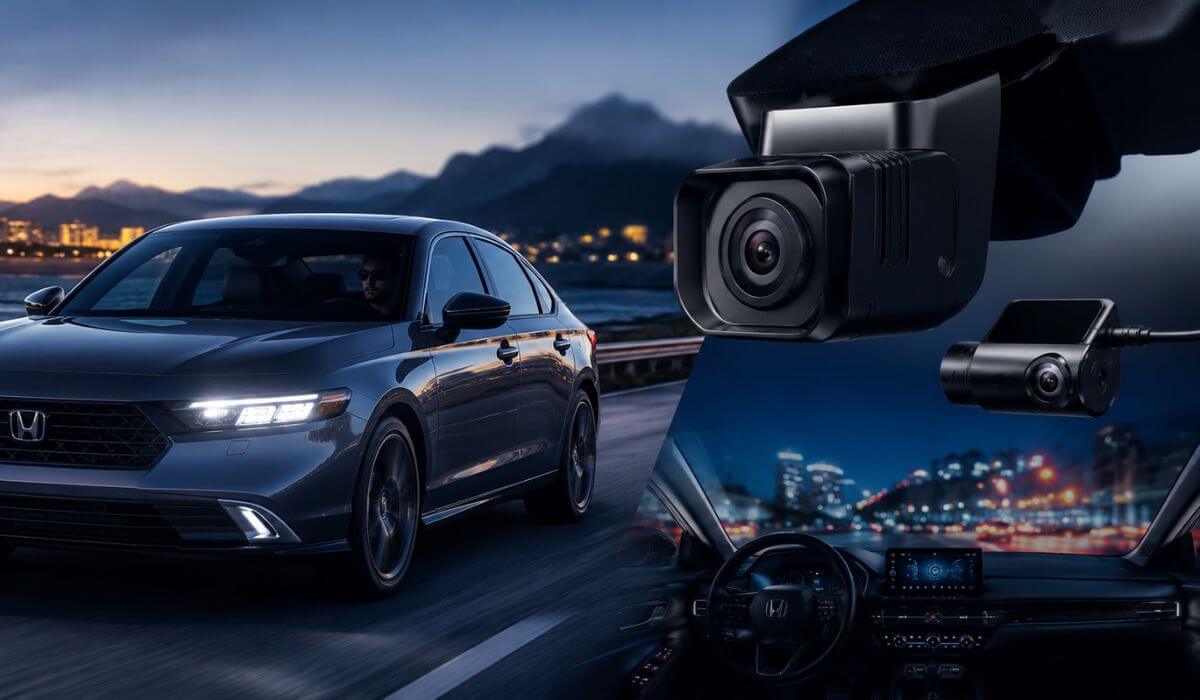
5 Best Dash Cams for Honda Accord in 2026: 4K Clarity, OEM Fit & Parking Protection
If you drive a Honda Accord, you already know it isn’t the kind of sedan people buy for a year and replace. Many Accord owners keep their cars well past 100,000 miles, which is exactly why choosing the right dash cam matters. Whether you own an older Accord, a 10th-generation model, or the latest 2023–2026 Honda Accord and Accord Hybrid, the goal is the same: clear evidence when something happens and reliable protection when you’re not in the driver’s seat.
The problem is that most dash cam lists ignore how an Accord is actually used. Daily commuting, highway miles, crowded parking lots, overnight street parking, and long road trips all place different demands on a camera. A cheap dash cam might record video, but poor night footage, weak parking protection, and bulky installation can become frustrating very quickly.
For this guide, we focused on models that genuinely make sense for Accord owners. Some offer a clean OEM-style installation that looks almost factory-installed, while others prioritize 4K video quality, advanced night recording, and smarter parking surveillance. We also considered compatibility with the latest 11th-generation Accord because many of the newest custom-fit options are designed specifically around the 2023–2026 dashboard and mirror housing.
The result is a shortlist of dash cams that stand out for the things owners actually care about: video clarity, reliability, easy daily use, and real-world protection when it matters most.
Best Honda Accord Dash Cams: Top 2026 Picks for Night Vision, GPS & Daily Driving
#1. VIOFO A329S 4K 60FPS Dash Cam
Best 4K Dash Cam for Honda Accord With Premium Night Vision and Advanced Parking Protection
#2. Fitcamx Front 2160P + Rear 1080P Dash Cam
Best OEM-Style Honda Accord Dash Cam for a Factory-Looking Installation and Daily Driving
#3. Mangoal Front 4K + Rear 1080P Dash Cam
Best Front and Rear Dash Cam for Honda Accord Owners Seeking OEM Integration and GPS
#4. KBSYNT Front 4K & Rear 1080P Dash Cam
Best Honda Accord Dash Camera for Budget-Friendly OEM Fit and Easy Installation
#5. RAZO DC3000A d’Action 360 Dash Cam
Best Dash Cam for Honda Accord Drivers Who Want Full 360-Degree Recording Coverage
Expert Tip Before You Buy
One mistake we see Accord owners make over and over is focusing only on video resolution. A dash cam can advertise 4K recording all day long, but if the sensor struggles at night or the parking mode isn’t dependable, that extra resolution won’t help much when you actually need footage.
For most Honda Accord drivers, the biggest difference comes from three things: nighttime license plate readability, parking protection, and a design you’ll be happy living with every day. That’s why several of the cameras on this list may look similar on paper but perform very differently once they’re mounted on a real Accord and used through months of commuting, parking lots, road trips, and bad weather.
A dash cam is one of the few car accessories you hope you never need. But when you do need it, you’ll care a lot more about what it captured than what it cost.
How We Chose These Honda Accord Dash Cams
Anyone can throw together a list of dash cams with high Amazon ratings. That wasn’t the goal here.
We started by looking at what actually matters inside a Honda Accord. The Accord has a relatively low dashboard, a wide windshield, and a cabin that many owners prefer to keep clean and uncluttered. That immediately eliminated a lot of bulky cameras that technically work but never feel like they belong in the car.
Next, we looked at real-world video performance, especially after dark. Modern Accords are commonly used for commuting, highway driving, and late-night travel. A camera that records sharp daytime footage but struggles with headlights, reflections, or nighttime plate capture didn’t score highly, regardless of its advertised specifications.
We also placed significant weight on parking protection. For many owners, the most valuable footage isn’t recorded while driving—it’s recorded when the vehicle is parked. Door dings, hit-and-runs, parking lot damage, and overnight incidents are exactly why many drivers install a dash cam in the first place. Cameras with stronger parking features naturally moved higher on our list.
Another factor was installation quality and long-term ownership experience. Products like Fitcamx, Mangoal, and KBSYNT earned their place because they are designed specifically around the latest Honda Accord interior. They blend into the factory mirror area far better than generic universal cameras, creating a cleaner appearance that many owners prefer.
At the same time, we didn’t ignore outright performance leaders. That’s why the VIOFO A329S sits at the top. While it isn’t the most factory-looking option, its combination of STARVIS 2 sensors, 4K recording, advanced parking features, and overall image quality places it in a different class when footage quality is the priority.
Finally, we avoided ranking products solely on review volume. Several of the Accord-specific cameras on this list are newer products with fewer long-term reviews than established universal models. Instead of simply following review counts, we compared their hardware, installation design, feature set, compatibility, and the value they bring specifically to Honda Accord owners.
The end result is a list built around one simple question:
If a Honda Accord owner asked us what we’d install in our own car today, which cameras would genuinely make the shortlist?
These are the five that did.
#1. VIOFO A329S 4K 60FPS Dash Cam
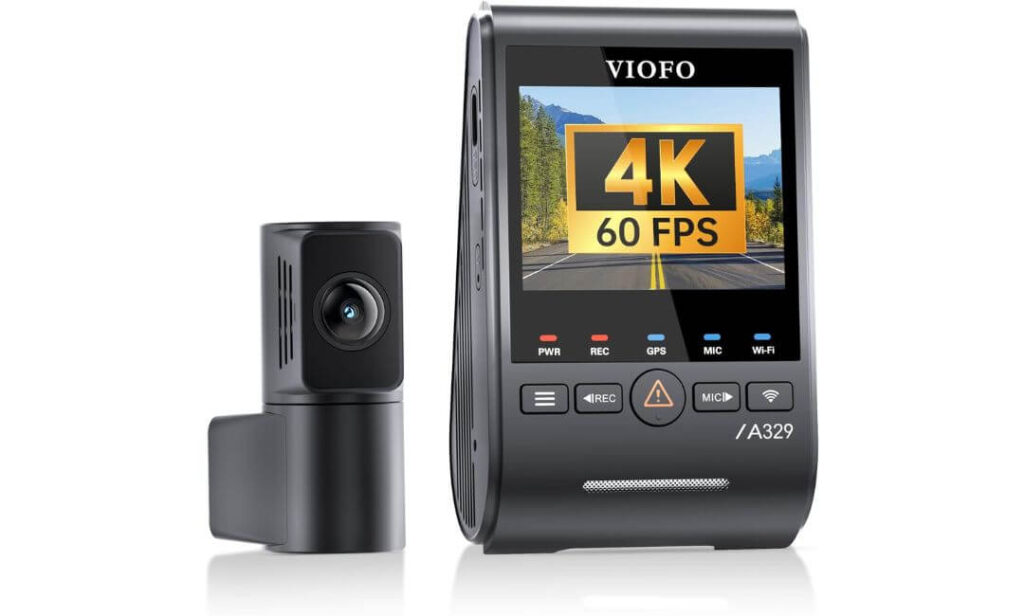
Quick Specs:
- 4K 60FPS front recording + 2K rear recording
- Dual Sony STARVIS 2 sensors (IMX678 front / IMX675 rear)
- HDR recording for better nighttime plate capture
- Wi-Fi 6 connectivity with ultra-fast video transfers
- Built-in GPS for speed and location tracking
- Voice control support
- Power-saving parking mode
- Supports up to 4TB SSD or 512GB microSD
- Included CPL filter to reduce windshield glare
- Front and rear coverage with discreet cable routing
The first thing that stands out isn’t the 4K badge on the box—it’s how much detail this setup manages to keep when conditions become difficult. Bright headlights, dark roads, rainy commutes, fast-moving traffic; these are the moments where weaker cameras start losing important details. Here, the combination of 4K 60FPS recording and dual STARVIS 2 sensors gives this system an advantage that is immediately noticeable once footage is reviewed.
For Honda Accord owners who spend significant time on highways, this matters more than most marketing claims. License plates appear cleaner, road signs remain readable longer, and motion blur is reduced when vehicles move quickly across the frame. The rear camera also avoids feeling like an afterthought thanks to its higher-quality sensor and sharper-than-average image output.
Another reason this system ranks ahead of most competitors is how well it balances performance with long-term ownership. Features like Wi-Fi 6, voice controls, built-in GPS, SSD support up to 4TB, and a genuinely useful parking mode make it feel less like a simple dash cam and more like a complete vehicle monitoring system. That becomes especially valuable for drivers who regularly leave their Accord parked in public lots, apartment complexes, or busy urban areas.
(If your priority is getting the clearest possible evidence rather than simply having a camera on the windshield, this is the model most owners end up appreciating months after installation.)
Standout Reasons It Made Our Shortlist
- Exceptional day and night license plate clarity
- Dual STARVIS 2 sensors outperform many competing systems after dark
- 4K 60FPS footage remains sharp during highway driving
- Wi-Fi 6 dramatically speeds up video transfers to your phone
- Massive storage support for extended road trips and continuous recording
- Included CPL filter helps reduce dashboard reflections
A Small Thing Worth Knowing
- Full parking protection requires a separately purchased hardwire kit.
Honda Accord Ownership Perspective
Unlike many custom-fit cameras, this is a universal system designed around performance first. That makes it compatible with virtually every modern Accord generation while giving owners flexibility in camera placement and viewing angles.
The slim camera design and thin coaxial cable also help create a cleaner installation than many high-end dual-camera systems. Once mounted behind the mirror, it stays surprisingly discreet for a setup capable of recording at this level.
The Insider Pro-Tip
Many buyers focus on resolution numbers and stop there. The reality is that sensor quality usually matters more than the jump from one resolution number to another. That’s exactly why this model performs so well when conditions become difficult.
For most Honda Accord owners, the footage you’ll care about most won’t be recorded on a bright sunny afternoon. It’ll be captured during rain, at night, in traffic, or while the vehicle is parked. Those are the situations where the combination of STARVIS 2 sensors, HDR processing, and advanced parking protection separates this camera from products that look impressive on a specification sheet but don’t deliver the same confidence when it counts.
#2. Fitcamx Front 2160P + Rear 1080P Dash Cam
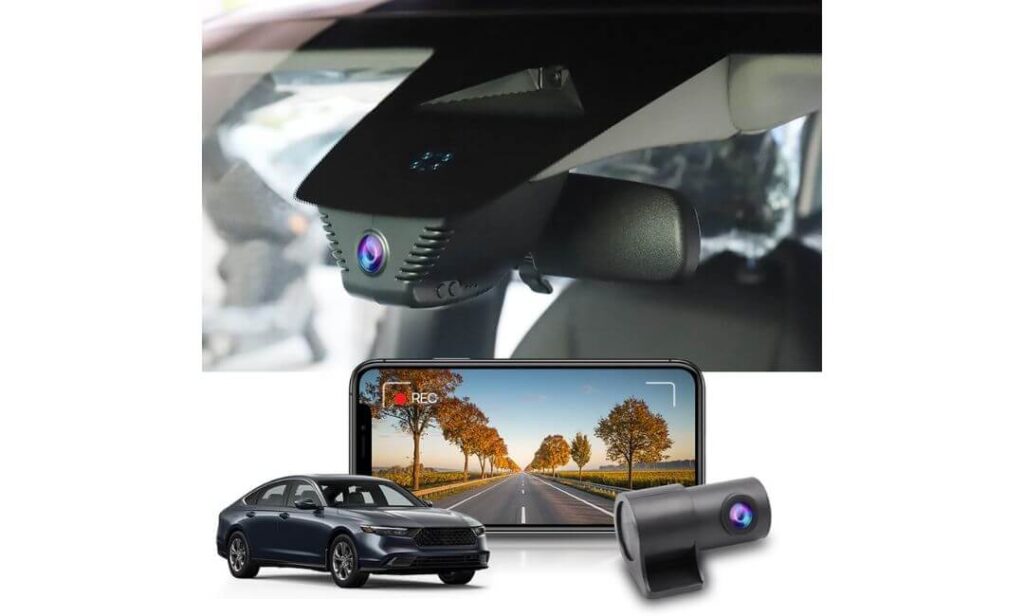
Quick Specs:
- Designed specifically for 11th-generation Honda Accord models
- 2160P front recording + 1080P rear recording
- Clean OEM-style factory appearance
- 170° front and 140° rear viewing angles
- Built-in WiFi and smartphone app connectivity
- G-Sensor accident detection
- Includes 128GB memory card
- Loop recording with automatic overwrite
- No fuse box modifications required during installation
Here’s something many Accord owners discover after installing a traditional dash cam: the camera works fine, but it never really feels like part of the car. There are visible wires, extra hardware hanging below the mirror, and a constant reminder that something aftermarket was added to an otherwise clean interior.
This takes a completely different approach. Instead of looking like an accessory, it blends directly into the factory mirror housing area. From the driver’s seat, most passengers would assume it came installed from the factory. For many Accord owners, that’s a bigger advantage than another jump in resolution numbers.
The video quality is also stronger than many people expect from an OEM-style system. The 2160P front camera, paired with a wide 170-degree field of view, captures a broad section of the road ahead while maintaining solid detail during everyday driving. The rear camera adds valuable coverage in parking lots, heavy traffic, and rear-end collision situations where a single-camera setup can leave important questions unanswered.
What really helps this setup stand out is how simple ownership feels. The included 128GB card, built-in WiFi, smartphone app access, loop recording, and G-Sensor protection mean most owners can install it once and rarely think about it again. That’s often exactly what people want from a dash cam.
(If your goal is finding a dash camera that feels like Honda designed it alongside the car, few options come closer than this one.)
Why It Stood Out During Our Evaluation
- One of the cleanest OEM-style Honda Accord dash cam designs available
- Specifically engineered around the latest Accord interior layout
- No exposed aftermarket appearance once installed
- Front and rear recording provide broader daily protection
- Included 128GB card reduces additional startup costs
- WiFi app access makes footage retrieval quick and straightforward
A Small Thing Worth Knowing
- Drivers who want dedicated parking surveillance may need an additional hardwire solution depending on how they plan to use the camera when the vehicle is parked.
From a Honda Accord Owner’s Perspective
This is the type of product that makes the most sense for owners who care as much about interior appearance as camera performance. The integration is exceptionally clean and avoids the cluttered look that many universal dash cams create.
It is also one of the easiest options on this list for Accord owners who prefer a factory-like installation without routing cables throughout the cabin or modifying the vehicle’s electrical system.
The Insider Pro-Tip
Many buyers spend hours comparing resolution numbers while completely overlooking installation quality. After years of ownership, the camera you’ll appreciate most is often the one that quietly does its job every day without drawing attention to itself.
That’s where this system shines. The combination of OEM integration, reliable front-and-rear coverage, WiFi access, and straightforward installation creates a setup that feels natural inside the Accord. For many owners, that factory-style experience becomes just as valuable as the footage itself once the excitement of buying a new gadget wears off.
#3. Mangoal Front 4K + Rear 1080P Dash Cam
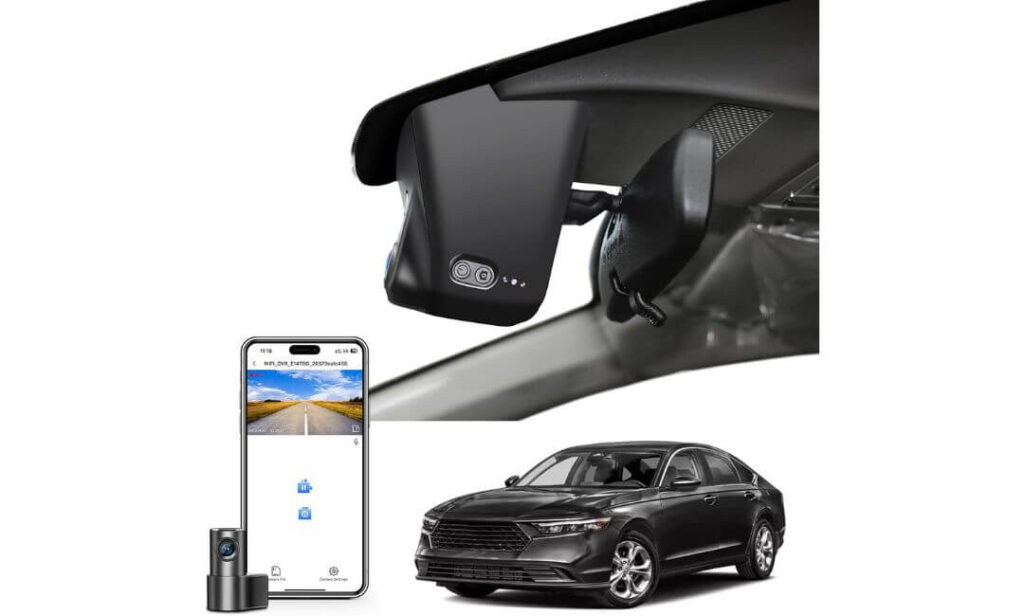
Quick Specs:
- Custom-built for Honda Accord Gen11 and Accord Hybrid
- 4K front recording + 1080P rear camera
- Factory-style OEM integrated appearance
- Sony IMX335 image sensor
- Built-in GPS tracking
- Built-in WiFi and smartphone app
- Includes 128GB microSD card
- Loop recording with collision-triggered video lock
- Designed to mount directly behind the mirror housing
- No visible aftermarket wiring once installed
There’s a certain type of Honda Accord owner this camera seems perfectly built for. Not someone chasing the highest benchmark numbers or the latest tech buzzword—but someone who wants the car to stay looking like a Honda Accord.
That’s where this setup immediately makes sense. The housing is designed specifically around the Accord’s mirror area, creating an installation that feels intentional rather than added later. Once mounted, it blends into the interior so naturally that most passengers never realize a front-and-rear recording system is even there.
The camera itself backs up that clean appearance with solid hardware. A 4K front camera, Sony IMX335 sensor, wide field of view, GPS tracking, and WiFi connectivity create a package that covers the features most owners actually use. Daytime footage remains detailed, colors stay natural, and nighttime recording performs better than many people expect from a camera focused heavily on OEM integration.
What also helps this package stand out is how complete it feels right out of the box. The included 128GB memory card, rear camera, GPS module, installation accessories, and app support eliminate much of the guesswork that often comes with buying a dash cam system. Everything feels designed around simplicity rather than making owners purchase additional accessories later.
(For drivers who value a clean factory appearance almost as much as video quality, this is one of the most balanced packages currently available for the Accord.)
Highlights That Earned Its Place Here
- One of the cleanest OEM-style Honda Accord dash cam designs available
- Purpose-built for the latest Accord and Accord Hybrid models
- Sharp 4K front footage supported by a proven Sony sensor
- GPS tracking included without requiring extra purchases
- 128GB memory card included in the package
- Excellent balance between appearance, convenience, and recording quality
A Small Thing Worth Knowing
- While the video quality is strong, buyers prioritizing absolute top-tier nighttime performance may still find the premium sensor package in the VIOFO slightly more advanced.
Real-World Honda Accord Compatibility
This is one of the most vehicle-specific options on the entire list. Everything from the housing shape to the installation approach is designed around the Accord’s factory interior layout.
That dedicated fitment creates a finished look that many universal cameras simply can’t replicate. If maintaining the clean appearance of the cabin matters to you, that’s a genuine advantage you’ll notice every day.
The Insider Pro-Tip
Many Accord owners spend weeks comparing video samples while overlooking something they’ll see every single time they get behind the wheel—the installation itself.
A dash cam becomes part of your ownership experience. If it constantly catches your eye, leaves visible wiring, or feels out of place inside the cabin, you’ll notice it for years. That’s why products like this continue gaining attention among Accord owners. The combination of OEM integration, 4K recording, GPS, WiFi connectivity, and included accessories creates a setup that feels less like an aftermarket gadget and more like a feature the car should have come with from the factory.
#4. KBSYNT Front 4K & Rear 1080P Dash Cam
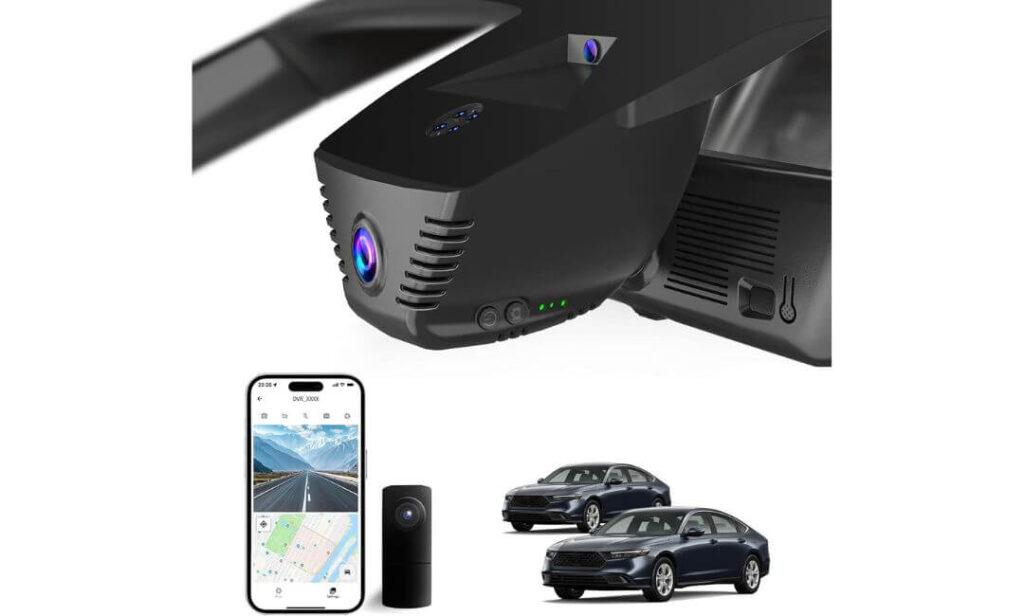
Quick Specs:
- Custom-designed for Honda Accord Gen11 and Accord Hybrid
- 4K front recording + 1080P rear recording
- Integrated OEM-style hidden installation
- HDR-enhanced night recording
- Built-in WiFi app connectivity
- G-Sensor emergency file protection
- Includes 128GB memory card
- Supports storage expansion up to 256GB
- Loop recording for continuous coverage
- Installation tools included in the package
Not every Accord owner wants to spend premium money chasing the absolute highest-end camera system available. Many simply want something that looks factory-installed, records clearly every day, and doesn’t turn installation into a weekend-long project.
That’s exactly where this option finds its audience.
The first thing you’ll notice is how closely it follows the factory design language of the Accord interior. Once installed behind the mirror housing, it stays largely out of sight while still providing full front-and-rear coverage. There are no dangling accessories competing for windshield space and no bulky hardware drawing attention inside the cabin.
Recording quality is stronger than many buyers expect at this level. The 2160P front camera, combined with an f/1.6 aperture lens, captures detailed daytime footage while HDR technology helps maintain visibility after sunset. During everyday driving, road signs remain readable, lane positioning stays clear, and surrounding traffic is recorded with enough detail to be genuinely useful if footage is ever needed.
Another reason this camera earned a place on our list is practicality. The included 128GB card, WiFi connectivity, loop recording, G-Sensor protection, installation hardware, and straightforward smartphone integration create a package that feels ready to use immediately rather than requiring multiple extra purchases before it becomes useful.
(For many Accord owners, the best dash cam isn’t the most expensive one—it’s the one that quietly handles daily driving duties without creating extra work.)
Reasons It Made Our Final Recommendation List
- Purpose-built for the latest Honda Accord interior
- Clean OEM-style Honda Accord dash camera appearance
- Reliable front and rear recording for everyday driving
- HDR support improves visibility during challenging lighting conditions
- Includes memory card and installation accessories
- Strong value for buyers prioritizing simplicity and factory-style integration
A Small Thing Worth Knowing
- Drivers who want dedicated 24-hour parking surveillance can add an optional hardwire solution later if they decide they need extended parked-vehicle monitoring.
Honda Accord Compatibility Notes
This camera was designed specifically around the shape and layout of the latest Accord mirror housing, which helps create a far cleaner finished installation than most universal dash cams.
For owners who dislike visible wires and aftermarket-looking accessories, that factory-inspired integration becomes one of the biggest advantages of this system over generic alternatives.
The Insider Pro-Tip
One thing experienced Accord owners learn quickly is that convenience matters more than most buyers expect. A dash cam with dozens of advanced features sounds impressive until accessing footage becomes frustrating or the installation constantly reminds you it’s there.
This setup succeeds because it focuses on the fundamentals. 4K front recording, rear coverage, HDR support, WiFi access, G-Sensor protection, and a factory-style appearance cover the features most drivers actually use every week. For many owners, that balance ends up being far more valuable than paying extra for specifications they may never fully use.
#5. RAZO DC3000A d’Action 360 Dash Cam
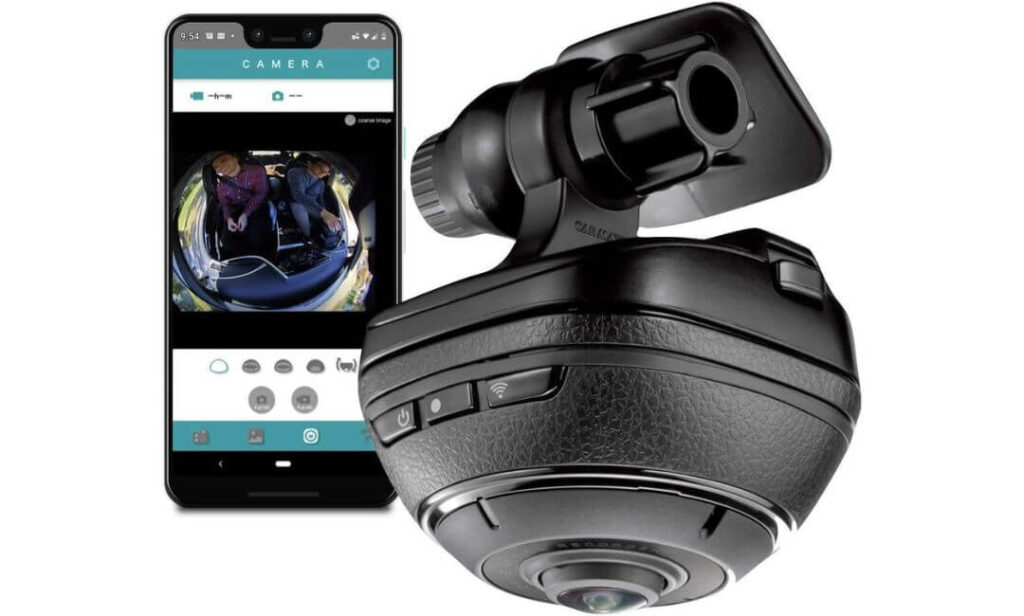
Quick Specs:
- True 360-degree recording from a single camera
- Approximate 4K panoramic video capture
- Designed and engineered in Japan
- Built-in WiFi connectivity
- Built-in GPS tracking
- Sony image sensor
- 3-Axis G-Sensor impact detection
- Integrated stereo microphone
- Covers both inside and outside vehicle views simultaneously
- Includes microSD memory card
Most dash cams focus on recording what’s directly in front of the vehicle and maybe what’s happening behind it. That’s great for many drivers, but it still leaves blind spots.
This camera takes a completely different approach.
Instead of relying on separate front and rear cameras, the system uses a 360-degree lens to capture everything around the vehicle in a single recording environment. Traffic beside the car, activity inside the cabin, side-window incidents, conversations during rideshare trips, and events occurring outside traditional camera angles can all become part of the recorded footage.
For some Honda Accord owners, that’s a genuinely useful capability. Rideshare drivers, frequent urban commuters, and drivers who often transport passengers may find a panoramic recording system more valuable than a conventional front-and-rear setup. The ability to review an entire scene rather than only one direction creates a perspective that traditional dash cams simply cannot provide.
The Japanese-engineered design also adds useful features beyond the camera itself. Built-in GPS, WiFi connectivity, impact detection through the 3-axis G-Sensor, and stereo audio recording help create a more complete record of what occurred during a trip. While the concept is different from most cameras on this list, that’s precisely why it earned a spot here.
(If knowing what happened around the entire vehicle matters more than focusing on a single direction, this camera offers something genuinely unique.)
What Made It Stand Out From Conventional Dash Cams
- True 360-degree vehicle coverage
- Captures both cabin activity and surrounding traffic
- Eliminates many of the blind spots found in traditional systems
- Built-in GPS and WiFi included
- Strong option for rideshare and high-traffic driving environments
- Single-camera design creates a simpler installation process
A Small Thing Worth Knowing
- Drivers focused primarily on maximum license plate readability may still prefer dedicated front-and-rear systems that concentrate all image quality in specific directions rather than across a full panoramic field of view.
Honda Accord Ownership Perspective
The Accord’s spacious cabin and wide glass area actually work well with a panoramic camera concept. Positioned correctly near the windshield, the system can capture a surprisingly complete view of both the interior and the surrounding driving environment.
Because it uses a single-camera architecture, installation is often simpler than routing cables to a separate rear camera, making it appealing for owners who prefer a cleaner setup.
The Insider Pro-Tip
Many buyers immediately compare this camera to traditional front-and-rear systems and miss its real purpose.
This isn’t trying to be another standard dash cam. It’s designed for drivers who care about documenting the entire scene rather than only what happened directly ahead. If you’ve ever wondered what occurred beside your vehicle, inside the cabin, or just outside the normal field of view of a traditional camera, that’s where a 360-degree system starts making sense.
For the right Honda Accord owner, the biggest advantage isn’t higher resolution or another feature on a specification sheet. It’s the ability to replay an event from a much wider perspective and see details that conventional dash cams often miss entirely.
Best Honda Accord Dash Camera Picks Compared: Night Vision, GPS & Front-Rear Coverage
Buying Guide: What Actually Matters When Choosing a Dash Cam for a Honda Accord
A Honda Accord is not a difficult vehicle to install a dash cam in, but it is one of those cars where the wrong choice becomes obvious very quickly. The Accord has a clean dashboard design, a large windshield, and excellent outward visibility. A bulky camera hanging below the mirror can feel out of place, while a poorly positioned system can create unnecessary distractions during daily driving.
That’s why buying a dash cam for an Accord isn’t just about finding the highest resolution number. It’s about choosing a system that matches how you actually use the vehicle. Some owners spend hours on highways every week. Others care more about parking protection in crowded apartment complexes, shopping centers, or office parking lots. The best choice depends on those priorities.
Video Quality Matters, But Sensor Quality Matters Even More
Most buyers immediately focus on resolution. That’s understandable because 4K sounds impressive. However, the difference between a good sensor and a mediocre sensor is often more important than the difference between 2K and 4K.
A quality sensor can improve nighttime visibility, reduce motion blur, handle headlight glare better, and capture cleaner license plate details. That’s one reason cameras using advanced Sony STARVIS technology continue to perform so well in real-world testing.
For drivers who spend significant time commuting before sunrise or after sunset, sensor performance should be near the top of the priority list.
Decide Whether Front Coverage Is Enough
A front-facing camera is better than having no camera at all, but many Honda Accord owners eventually discover the value of rear coverage.
Rear-end collisions, parking lot incidents, and hit-and-run situations frequently happen behind the vehicle. A front-only system cannot capture what occurred in those situations.
That’s why most of the top recommendations in this guide use a front-and-rear configuration. The additional coverage often provides far more value than upgrading from one video resolution to another.
Parking Protection Is Often More Important Than Driving Footage
Many people buy a dash cam thinking about accidents while driving.
In reality, some of the most useful recordings happen when the vehicle is parked.
Shopping cart damage, door dings, vandalism, parking lot collisions, and overnight incidents are common reasons owners end up reviewing footage months after installation. If your Accord regularly sits in public parking areas, apartment complexes, airport lots, or busy streets, parking protection deserves serious consideration.
Keep in mind that many dash cams require a separate hardwire kit to activate advanced parking functions when the vehicle is turned off.
GPS Can Be More Valuable Than Most Buyers Expect
A GPS-equipped dash cam records more than video.
It can also record vehicle speed, travel direction, route information, and location data. If footage ever needs to be reviewed after an accident, that additional information can help provide important context.
Many drivers never think about GPS until they actually need it. Once an incident occurs, however, those extra details can become extremely useful.
Don’t Overlook Installation Quality
This is where many Honda Accord owners make mistakes.
A camera may offer excellent specifications, but if it leaves visible wires hanging across the windshield or looks obviously aftermarket, it can become irritating over time.
That’s one reason OEM-style systems have become increasingly popular for the Accord. Products such as Fitcamx, Mangoal, and KBSYNT are designed specifically around the vehicle’s mirror housing and interior layout, creating a cleaner appearance that feels more integrated into the cabin.
If maintaining a factory-like interior matters to you, installation quality should carry as much weight as recording quality.
Storage Capacity Affects Long-Term Convenience
A dash cam is only useful if it still has footage available when you need it.
Higher-resolution cameras generate larger video files, which means storage capacity becomes increasingly important. While basic systems may be perfectly fine with standard memory cards, premium cameras offering advanced recording modes benefit from larger storage solutions.
Drivers who take frequent road trips or spend long hours on the road should pay close attention to maximum storage support and file management features.
Match the Dash Cam to Your Driving Style
One of the biggest mistakes buyers make is assuming every Honda Accord owner needs the same camera.
That’s rarely true.
If maximum evidence quality is your priority, a premium system with advanced sensors and strong parking protection makes sense.
If maintaining a factory appearance is more important, an OEM-style integrated camera may be the better choice.
If you frequently transport passengers, drive for rideshare services, or want broader scene coverage, a 360-degree recording system could be worth considering.
The right dash cam is not necessarily the most expensive one. It’s the one that fits the way your Accord is actually driven every day.
The Final Piece of Advice Most Buyers Never Hear
Before comparing another specification sheet, ask yourself one question:
What footage am I most likely to need six months from now?
The answer usually points you toward the right camera much faster than comparing dozens of feature lists.
For some drivers, that’s the sharpest possible nighttime license plate capture. For others, it’s a factory-looking installation that blends into the cabin. For many, it’s reliable parking protection while the car sits unattended.
Once you know which of those matters most, choosing the right Honda Accord dash cam becomes surprisingly simple.
Installation and Setup Guide: How to Install a Dash Cam in a Honda Accord the Right Way
One of the reasons the Honda Accord works so well with modern dash cams is its clean windshield design and generous space around the rearview mirror. A good installation can look almost factory-installed, while a rushed installation can leave visible wiring, windshield reflections, and unnecessary distractions every time you drive.
The good news is that most Honda Accord owners can complete a quality installation without major modifications. The key is taking a little extra time during setup rather than rushing to get the camera powered on.
Start by Choosing the Right Mounting Style
Before opening the box, decide what type of installation experience you want.
If maintaining a factory appearance is your highest priority, OEM-style cameras such as Fitcamx, Mangoal, and KBSYNT are designed specifically around the Accord’s mirror housing and interior layout. These systems often create the cleanest finished appearance because most of the hardware stays hidden behind existing trim pieces.
Universal systems like the VIOFO A329S offer greater flexibility and often provide higher-end imaging technology, but they require a bit more attention during placement and cable routing.
This is also the time to decide how the camera will receive power.
Most dash cams support either:
- Standard USB or 12V accessory power
- Dedicated hardwire installation for advanced parking mode features
If parking surveillance is important to you, verify hardwire kit compatibility before installation begins.
Position the Front Camera Correctly
Camera placement affects both video quality and driving visibility.
The ideal location is typically behind or immediately beside the rearview mirror. From the driver’s seat, the camera should remain largely hidden while maintaining a clear forward view through the windshield.
Avoid placing the camera too low on the glass. Not only can this become distracting during daily driving, but it may also reduce the camera’s ability to capture traffic signals, road signs, and vehicles further ahead.
Before permanently mounting the camera, sit in the driver’s seat and confirm that the housing does not interfere with your normal line of sight.
Install the Rear Camera With Long-Term Reliability in Mind
For dual-camera systems, rear camera placement is just as important as front camera positioning.
Most Honda Accord owners achieve the best results by mounting the rear camera near the top center of the rear windshield. This location maximizes visibility while keeping the camera out of the driver’s rearward view.
Take time to ensure the lens remains level. A slightly crooked rear camera can make footage look unusual and may reduce the usefulness of recorded video during an incident review.
If your Accord uses a rear defroster grid, verify that the camera angle is not heavily obstructed by heating elements before finalizing placement.
Route Cables Carefully and Stay Clear of Airbags
This is the step that separates a professional-looking installation from an amateur one.
Whenever possible, run cables along the headliner, weather stripping, and trim panels rather than allowing them to hang openly across the cabin. Most Honda Accord owners can conceal nearly all wiring without drilling holes or modifying interior panels.
Pay special attention near the A-pillars.
Modern Accords contain side curtain airbags in these areas, so cables should never interfere with airbag deployment paths. Instead of crossing directly in front of safety equipment, route wiring behind trim sections where appropriate and follow existing factory wiring paths whenever possible.
Taking a few extra minutes here often makes the difference between a clean installation and one that constantly draws attention.
Connect Power and Configure Parking Protection
Once the physical installation is complete, focus on power management.
A standard power connection is usually sufficient for drivers who only want recording while the vehicle is running.
However, if your goal includes monitoring parking lots, apartment complexes, workplaces, or overnight street parking, a hardwire kit is often worth considering. These systems allow compatible cameras to continue monitoring the vehicle after the engine has been turned off.
After power is connected, enter the camera settings and verify:
- Loop recording is enabled
- Video resolution is set correctly
- Parking mode settings are configured
- Impact sensitivity is adjusted appropriately
- Audio recording preferences match your needs
Many owners skip this step and unknowingly leave important features disabled.
Enable GPS and Verify Time Accuracy
GPS does more than record location.
Many modern dash cams use GPS information to maintain accurate timestamps, speed information, route tracking, and trip records. Incorrect timestamps can create confusion when reviewing footage after an incident.
Once the camera acquires satellite signal, verify that:
- Date settings are correct
- Time zone settings are correct
- GPS data is recording properly
- Video files display accurate timestamps
This small step can make future footage significantly more useful.
Perform a Complete Recording Test Before Driving
Never assume everything is working correctly simply because the camera powers on.
Before relying on the system, perform a short test drive and review actual footage from both cameras.
Check for:
- Clear daytime image quality
- Proper rear camera operation
- Accurate audio recording
- GPS data functionality
- Stable mounting with no excessive vibration
- Successful loop recording operation
A five-minute verification process can prevent months of recording issues from going unnoticed.
Small Installation Details That Make a Big Difference
Many Honda Accord owners focus on the camera itself while overlooking small setup details that dramatically affect video quality.
Keep the lens area clean, especially during winter months and pollen season.
Use included CPL filters when available to reduce dashboard reflections.
Ensure mounting surfaces are thoroughly cleaned before attaching adhesive mounts.
Avoid positioning cameras directly against tinted windshield strips or sensors near the top of the windshield.
Finally, revisit footage after the first week of driving. Small adjustments to camera angle often improve video quality more than many owners expect.
The Installation Advice Most Owners Appreciate Later
The best dash cam installation is usually the one you stop noticing after a few days.
If the camera blocks your view, leaves wires exposed, creates windshield reflections, or constantly reminds you it’s there, something probably needs adjustment.
A properly installed Honda Accord dash cam should feel like part of the vehicle, quietly recording every drive while remaining almost invisible during daily use. That’s ultimately the goal, regardless of whether you choose a premium 4K system, an OEM-style integrated camera, or a full 360-degree recording setup.
Visibility and Usage Tips: Getting the Most Out of Your Honda Accord Dash Cam
Buying a high-quality dash cam is only half the equation. What many Honda Accord owners discover after installation is that camera setup, maintenance habits, and recording settings often have just as much impact on footage quality as the hardware itself.
A premium camera can produce disappointing results if it is positioned poorly, configured incorrectly, or neglected over time. On the other hand, a properly installed and properly maintained system can deliver significantly better evidence when it matters most.
The goal isn’t simply recording video. The goal is recording footage that remains useful when you actually need it.
Getting the Best Possible 4K Footage During Daytime Driving
One of the biggest misconceptions surrounding 4K dash cams is that higher resolution automatically guarantees better video.
In reality, image clarity depends on several factors working together.
Start by keeping both the windshield and camera lens clean. Even a thin layer of dust, road film, fingerprints, or pollen can reduce sharpness more than most people realize. This becomes especially noticeable during sunrise, sunset, and nighttime driving.
Camera angle also matters. The horizon should generally sit near the middle portion of the frame rather than too high or too low. This helps balance sky exposure with roadway detail and prevents the camera from overcompensating for bright sunlight.
For Honda Accord owners who frequently drive in sunny climates, a CPL filter can be particularly valuable. Dashboard reflections are common in sedans with large windshields, and reducing those reflections often improves footage quality more than changing camera settings.
Improving Nighttime Visibility and License Plate Capture
Night driving places significantly more stress on a dash cam than daytime driving.
Headlights, streetlights, reflective signs, rain, and changing traffic conditions can all affect image quality. This is why cameras equipped with advanced sensors such as Sony STARVIS technology often perform noticeably better after dark.
To maximize nighttime footage:
- Keep windshield glass clean on both sides.
- Avoid mounting stickers or accessories near the camera lens.
- Verify HDR settings are enabled if supported.
- Update firmware periodically when available.
- Check footage occasionally rather than assuming performance remains unchanged.
It’s also important to set realistic expectations. Even the best dash cam may not capture every license plate perfectly at highway speeds during heavy rain. The objective is maximizing the chances of obtaining useful evidence, not achieving movie-quality footage under every condition.
Making Parking Mode Work the Way It Should
For many Honda Accord owners, parking mode eventually becomes the feature they value most.
Accidents don’t always happen while driving. Shopping cart impacts, hit-and-run incidents, vandalism, and parking lot damage frequently occur when nobody is inside the vehicle.
To get the most from parking protection:
- Use a proper hardwire kit if your camera supports one.
- Confirm parking mode is actually enabled after installation.
- Adjust impact sensitivity to avoid excessive false recordings.
- Check recorded events periodically to ensure the system is functioning correctly.
- Use high-endurance memory cards when possible for long-term reliability.
Many owners assume parking mode is active simply because the camera supports it. In reality, some systems require additional setup steps before they begin monitoring the vehicle when the engine is off.
Understanding GPS Data Beyond Simple Speed Tracking
GPS functionality is often overlooked until footage needs to be reviewed after an incident.
Most drivers initially think GPS only records vehicle speed. Modern dash cams can provide much more useful information than that.
Depending on the system, GPS data may include:
- Vehicle location
- Direction of travel
- Route history
- Time synchronization
- Trip records
- Speed information at specific moments
When reviewing footage, this information can help reconstruct events more accurately. In situations involving intersections, lane changes, parking incidents, or disputed accident details, location and timing data can provide important context that video alone may not fully capture.
Managing Storage Before It Becomes a Problem
A dash cam is only useful if the footage you need still exists when you need it.
Higher-quality recording modes generate larger files, especially on systems recording in 4K with front-and-rear cameras simultaneously.
To avoid storage-related issues:
- Use recommended memory cards.
- Format cards periodically according to manufacturer guidelines.
- Review important footage and back it up promptly.
- Verify loop recording remains enabled.
- Monitor available storage if your camera supports large-capacity cards or SSDs.
Drivers who take frequent road trips should pay particular attention to storage management because long driving days can fill memory cards faster than expected.
Taking Advantage of App Connectivity and Cloud Features
Modern dash cams have become significantly easier to use thanks to smartphone integration.
WiFi-enabled systems allow owners to review footage, download important clips, update settings, and verify camera operation without removing memory cards from the device.
If your camera supports cloud-based features or remote access, take time to understand how those features work before an emergency occurs. Learning the system after an incident is far less convenient than becoming familiar with it during normal use.
Even basic WiFi connectivity can make a major difference when sharing footage with insurance providers or saving important recordings before they are overwritten.
Small Habits That Improve Long-Term Reliability
The best-performing dash cam owners often follow a few simple habits.
They occasionally review footage.
They verify timestamps remain accurate.
They inspect memory card health.
They update firmware when necessary.
And most importantly, they confirm everything is still recording properly instead of assuming it is.
These quick checks typically take only a few minutes yet can prevent months of unusable footage from going unnoticed.
The Practical Advice Many Owners Learn Too Late
A dash cam delivers its greatest value long before an accident ever happens.
The confidence of knowing that your daily commute, parked vehicle, road trip, or unexpected incident is being documented properly is often what owners appreciate most after installation.
That’s why the best approach is simple: install the camera correctly, configure it carefully, check it occasionally, and let it do its job quietly in the background.
When the day comes that footage is actually needed, you’ll be glad those small details were handled from the beginning.
FAQs About Honda Accord Dash Cam
Which type of dash cam makes the most sense for a Honda Accord owner who plans to keep the car for several years?
This is actually a more important question than choosing between two specific models.
Many Honda Accord owners keep their vehicles far longer than the average new-car buyer. Because of that, the best dash cam is usually the one that continues feeling useful years after installation, not just the one with the most impressive specifications on launch day.
For long-term ownership, these features tend to matter most:
- Reliable front and rear coverage
- Strong nighttime recording
- Parking protection capability
- GPS functionality
- Easy access to footage
- Storage capacity that won’t feel limiting later
That’s one reason cameras like the VIOFO A329S remain attractive despite costing more than basic alternatives. Over several years of ownership, the additional image quality and parking protection often become more valuable than the initial price difference.
Is an OEM-style Honda Accord dash cam actually worth choosing over a premium universal camera?
The answer depends on what annoys you more after six months of ownership.
Some drivers care primarily about image quality. Others care just as much about maintaining the clean factory appearance that makes the Accord such an appealing daily driver.
An OEM-style camera becomes valuable because you interact with it every single day. You see it every time you enter the vehicle. You look past it every time you drive. A clean integration often feels significantly better long-term than many buyers initially expect.
However, if maximum evidence quality is your highest priority, premium universal cameras still tend to have the advantage because manufacturers can focus more heavily on sensor technology, storage support, and advanced parking features.
The real decision isn’t factory appearance versus performance. It’s deciding which one matters more to your personal ownership experience.
Why do some 4K dash cams capture license plates better than others even when both advertise the same resolution?
This is probably the most misunderstood part of the dash cam market.
Two cameras can both record in 4K and still produce dramatically different footage.
What often separates average footage from exceptional footage is everything happening behind the resolution number:
- Sensor quality
- Lens quality
- HDR processing
- Dynamic range
- Bitrate
- Motion handling
- Low-light performance
A high-quality sensor can preserve important details that cheaper sensors lose completely. That’s why experienced buyers often pay more attention to the sensor being used than the resolution printed on the product page.
In real-world driving, especially after dark, sensor quality frequently matters more than the jump from one resolution specification to another.
How often should dash cam footage actually be checked after installation?
Most owners either check footage too often during the first week or never check it again.
The smartest approach sits somewhere in the middle.
After installation:
- Review footage after the first drive.
- Check recordings again after one week.
- Verify operation once per month.
- Inspect footage after major software updates.
- Confirm parking mode recordings occasionally.
These quick reviews help catch problems before they become serious.
Memory card failures, incorrect timestamps, accidental setting changes, and recording interruptions often happen silently. Spending a few minutes verifying system health can prevent discovering months later that important footage was never recorded.
If you could only prioritize one feature when buying a dash cam, what would it be?
Most people expect the answer to be 4K recording.
It isn’t.
If forced to choose only one thing, the priority would be consistent image quality in difficult conditions.
Almost every dash cam looks good on a sunny afternoon. The footage that actually matters usually comes from situations that are much harder:
- Night driving
- Rain
- Heavy traffic
- Parking lots
- Glare from headlights
- Fast-moving vehicles
- Unexpected incidents
A camera that performs well in those situations is usually the camera you’ll appreciate most when something important happens.
The reality is simple: nobody buys a dash cam hoping to review beautiful footage. They buy one hoping the evidence is there when they need it. The cameras that consistently capture useful details under challenging conditions are almost always the ones owners end up happiest with years later.
Final Thoughts
After spending time comparing specifications, installation styles, parking features, sensor technology, and real-world usability, one thing becomes clear: there isn’t a single perfect dash cam for every Honda Accord owner.
Some drivers will appreciate the outright recording performance of the VIOFO A329S. Others will prefer the factory-like appearance offered by Fitcamx, Mangoal, or KBSYNT. And for drivers who want to capture far more than the traditional front-and-rear view, the RAZO DC3000A d’Action 360 offers a perspective most dash cams simply cannot match.
What’s important is choosing a camera that fits the way your Accord is actually used.
If your car spends hours parked in public lots, prioritize parking protection. If you drive long distances at night, prioritize sensor quality and low-light performance. If preserving the clean interior design of the Accord matters to you, an OEM-style installation may end up being the feature you appreciate most every single day.
The good news is that dash cams have improved dramatically over the last few years. Modern systems offer better image quality, smarter parking surveillance, cleaner installations, faster connectivity, and more reliable storage than many drivers realize. The challenge today isn’t finding a good dash cam—it’s finding the one that matches your priorities.
The cameras featured in this guide earned their place because each brings something genuinely useful to Honda Accord ownership, whether that’s class-leading image quality, seamless factory integration, broader coverage, or stronger overall value.
At the end of the day, the best dash cam isn’t the one with the longest feature list.
It’s the one that quietly records every mile, stays out of your way, and delivers the evidence you need on the day you hope never comes. That’s the kind of upgrade most Honda Accord owners never regret installing.
Also Check: