5 Best Dash Cams for Nissan Frontier in 2026: STARVIS 2 Clarity, 4K HDR Video & Radar Parking Tech
If you own a Nissan Frontier, you already know it isn’t used like a typical daily commuter. Some owners spend their weekends on trails, some use their truck for towing and job-site duty, and others rack up highway miles every week. That extra versatility is exactly why choosing a dash cam for a Frontier deserves more thought than simply buying the first 4K camera you see online.
The good news is that both newer Nissan Frontier models and older trucks provide plenty of windshield space for modern dash cams. The challenge is finding one that can consistently capture license plates at night, wide-angle highway footage, parking incidents, and unexpected off-road moments without missing critical details. Features like STARVIS 2 sensors, HDR recording, GPS tracking, radar-assisted parking technology, and multi-channel coverage have become far more important than resolution alone.
For this guide, I focused on the dash cams that make the most sense for real Nissan Frontier owners in 2026. Instead of chasing spec-sheet numbers, these picks were selected for their image quality, reliability, parking surveillance capabilities, ease of use, and overall value. Whether you drive a brand-new Frontier PRO-4X or an older workhorse that’s still going strong, these are the models worth considering.
Best Nissan Frontier Dash Cams: Premium STARVIS 2 Models, Radar Parking Tech & Smart Features
#1. VIOFO A229 Pro 3 Channel
Premium Nissan Frontier Dash Cam With STARVIS 2 Sensors, Triple-Camera Coverage and Class-Leading 4K HDR Video Quality
#2. THINKWARE U3000 PRO 2CH
Advanced Nissan Frontier Dash Camera Featuring Radar Parking Mode, Ultra-Clear Night Recording and Intelligent Vehicle Monitoring
#3. Vantrue N4S 3 Channel
Versatile Nissan Frontier Dash Cam for Front, Rear and Cabin Recording With Enhanced Low-Light Performance and GPS Tracking
#4. REDTIGER F7NP
Value-Focused Nissan Frontier Dash Camera Combining 4K Front Recording, STARVIS 2 Clarity and Fast 5GHz Wi-Fi Connectivity
#5. 70mai A800S
Budget-Friendly Nissan Frontier Dash Cam With 4K Video, GPS Logging, Parking Monitoring and Everyday Driving Reliability
Expert Tip
One thing many Nissan Frontier owners discover too late is that video quality during the day doesn’t tell the whole story. Almost every modern dash cam looks impressive in bright sunlight. The real difference shows up on a dark highway, in a rainy parking lot, or when you’re trying to read a license plate from a moving vehicle at night.
That’s why I would personally choose a camera with a STARVIS 2 sensor and a dependable parking mode before worrying about extra features. Fancy specifications are easy to advertise. Footage that stays sharp when conditions get difficult is what actually matters when you need evidence. A single clear frame can be worth far more than months of owning a camera packed with features you never use.
How We Chose the Best Dash Cams for Nissan Frontier Owners
There are hundreds of dash cams available today, but most of them were eliminated long before this list was finalized. The goal wasn’t to find the cameras with the longest feature list. The goal was to identify the models that make the most sense for real Nissan Frontier owners who depend on their trucks every day.
We Prioritized Image Quality Over Marketing Claims
Many cameras advertise 4K recording, but resolution alone doesn’t guarantee useful footage. Sensor quality matters just as much.
That’s why models such as the VIOFO A229 Pro, THINKWARE U3000 PRO, Vantrue N4S, and REDTIGER F7NP stood out. Their use of newer STARVIS 2 imaging technology gives them a meaningful advantage when recording license plates, road signs, and vehicle details in challenging lighting conditions. We gave significantly more weight to real-world visibility than to headline specifications.
We Looked for Features That Actually Benefit Truck Owners
A Nissan Frontier often spends time in places where ordinary commuter cars don’t.
Some owners tow trailers. Some spend weekends on trails. Others leave their truck parked at job sites for hours at a time.
Because of that, features such as parking surveillance, GPS logging, HDR recording, wide viewing angles, and multi-camera coverage carried more importance than gimmicks or smartphone-style extras. The THINKWARE’s Radar Parking Mode, the VIOFO’s three-channel coverage, and the Vantrue’s interior camera all solve real problems that Frontier owners commonly face.
Reliability Was More Important Than Being New
New products appear every year, but long-term reliability still matters.
A dash cam isn’t something most people want to replace every twelve months. We favored manufacturers with established track records for firmware support, recording stability, heat management, and consistent performance over time. That is one reason why brands like VIOFO, THINKWARE, Vantrue, and 70mai earned positions on this list despite strong competition from newer entrants.
We Considered Different Types of Frontier Owners
Not every Frontier owner needs the same setup.
Some drivers simply want dependable front-and-rear recording. Others want complete front, rear, and cabin coverage. Some are willing to pay for premium parking technology, while others want the strongest value possible without overspending.
Instead of selecting five cameras that all serve the same buyer, we intentionally included options for multiple budgets and use cases while maintaining a consistent standard for image quality and reliability.
Every Camera Had to Offer a Clear Reason to Buy
The final test was simple.
If a camera couldn’t offer a compelling advantage over the others, it didn’t make the list.
The VIOFO A229 Pro earned its position through exceptional image quality and overall balance. The THINKWARE U3000 PRO brought one of the most advanced parking systems currently available. The Vantrue N4S delivered versatile three-channel coverage. The REDTIGER F7NP offered strong value with premium features. And the 70mai A800S remained one of the easiest recommendations for drivers who want dependable 4K recording without stretching their budget.
That approach helped us build a list that isn’t based on hype, brand popularity, or spec-sheet racing. It’s based on the features and performance that are most likely to matter once the camera is installed and recording on a Nissan Frontier every day.
#1. VIOFO A229 Pro 3 Channel
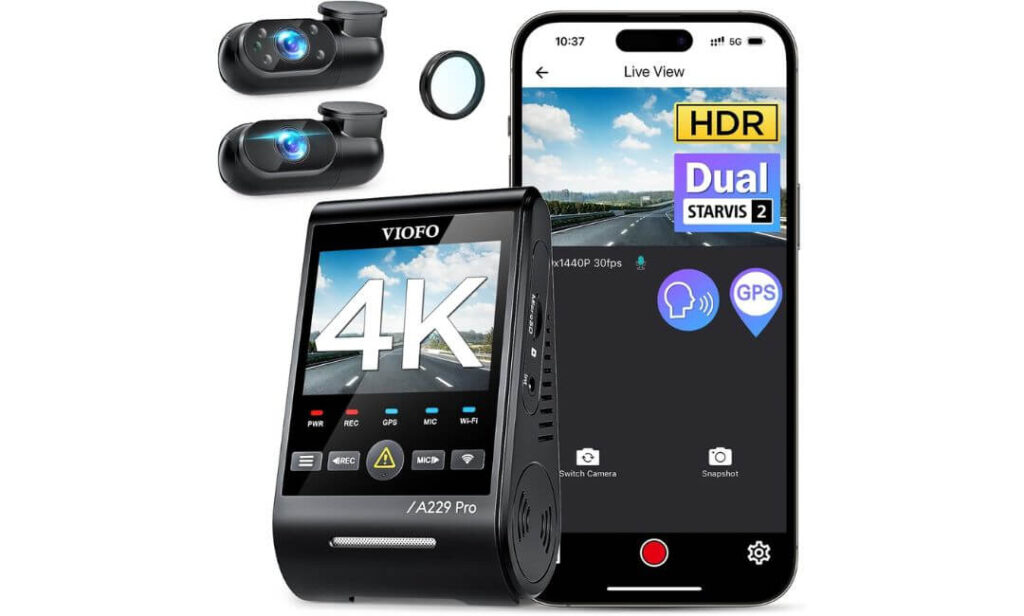
Quick Specs:
- True 4K Front + 2K Rear + 1080P Cabin recording
- Dual flagship STARVIS 2 sensors (IMX678 + IMX675)
- HDR recording across all three cameras
- Built-in infrared cabin camera for nighttime interior footage
- Ultra-fast 5GHz Wi-Fi and GPS tracking
- Voice control with hands-free commands
- Three parking surveillance modes
- CPL filter included to reduce windshield glare
- Supports up to 512GB microSD cards
- Designed for cars, SUVs, trucks, and family vehicles
The first thing that separates this setup from most dash cams isn’t the 4K badge on the box—it’s how much usable detail it captures when conditions become difficult. Bright sunlight, deep shadows, reflective traffic signs, rain-soaked roads; that’s where the combination of STARVIS 2 sensors and HDR processing starts earning its reputation.
What impressed me most is the balance. Many three-channel systems sacrifice image quality somewhere in the setup. Here, the front camera records in sharp 4K, the rear camera delivers detailed 2K footage, and the cabin camera remains genuinely useful instead of feeling like an afterthought. For drivers who regularly carry passengers, equipment, or simply want complete coverage around the vehicle, that’s a meaningful advantage.
The inclusion of features such as voice commands, quad-mode GPS tracking, 5GHz Wi-Fi connectivity, infrared cabin recording, and buffered parking surveillance makes this feel less like a basic recorder and more like a complete monitoring system. Small touches—like the included CPL filter—also help improve image quality in everyday driving situations where dashboard reflections often ruin otherwise great footage.
(If capturing clear details from multiple angles matters more to you than simply having another 4K camera, this is one of the strongest all-around packages currently available.)
Highlights That Earned Its Spot
- Outstanding low-light performance from STARVIS 2 imaging technology
- Triple-camera coverage without sacrificing front-camera quality
- HDR processing on all recording channels
- Reliable voice controls that reduce driver distraction
- Fast wireless transfers through built-in 5GHz Wi-Fi
A Small Trade-Off Worth Knowing
- A memory card is not included, so you’ll need to add one before installation.
Nissan Frontier Compatibility Notes
The windshield layout and cabin design of the Nissan Frontier work particularly well with a three-channel setup like this. The front unit sits cleanly behind the rear-view mirror, while the included rear cable length provides enough flexibility for routing through most Frontier cab configurations.
For owners who use their truck for commuting during the week and outdoor trips on weekends, the combination of front, rear, and cabin coverage adds an extra layer of visibility that many dual-channel systems simply can’t provide.
The Insider Pro-Tip
If you’re comparing multiple premium dash cams, don’t focus only on daytime sample footage. Nearly every modern camera looks impressive at noon.
Instead, zoom into a nighttime clip and look at the license plates several car lengths ahead. That’s where sensor quality reveals itself. The reason this model consistently ranks near the top is because its STARVIS 2 hardware, HDR processing, and image tuning continue delivering usable details after sunset—when cheaper cameras often begin losing critical information.
For Nissan Frontier owners who want one installation and years of dependable recording, this is the camera on this list that feels the most complete from day one.
#2. THINKWARE U3000 PRO 2CH
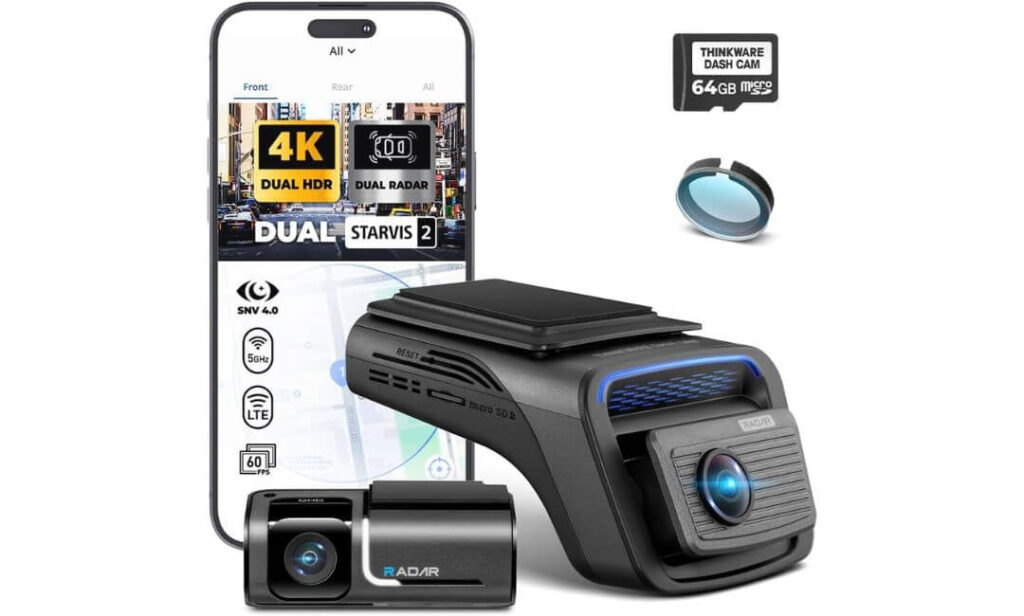
Quick Specs:
- True 4K Front + 2K Rear recording
- Premium Sony STARVIS 2 image sensors
- Industry-leading Radar Parking Mode
- Super Night Vision 4.0 image processing
- Ambarella performance chipset
- Built-in GPS tracking and speed logging
- Dual-band 2.4GHz + 5GHz Wi-Fi
- Motion and impact event recording
- Thermal protection for hot-weather reliability
- Includes 64GB microSD card and OBD cable
Here’s something I’ve noticed after looking at countless premium dash cams: many of them promise great parking protection, but very few approach it the way this system does.
The biggest reason this model earned such a high position on this list is its built-in radar technology. Instead of continuously recording and consuming power, the radar system monitors activity around the vehicle and intelligently wakes the camera when movement is detected nearby. For Nissan Frontier owners who regularly park at trailheads, work sites, airports, apartment complexes, or crowded parking lots, that’s a genuinely useful advantage rather than a marketing bullet point.
Beyond the radar system, the video quality is exactly what you’d expect from a flagship setup. The combination of 4K front recording, 2K rear coverage, Sony STARVIS 2 sensors, WDR processing, smart exposure management, and Super Night Vision 4.0 helps preserve details that often disappear in difficult lighting conditions. Headlights, shadows, reflective signs, and dark parking garages are handled with noticeably more confidence than many conventional dash cams.
What also stands out is how complete the package feels. GPS tracking, safety alerts, dual-band Wi-Fi, event buffering, thermal protection, included storage, and future LTE compatibility all contribute to a system that feels designed for long-term ownership rather than short-term excitement.
(If your biggest concern isn’t recording while driving—but protecting your vehicle while it’s parked—few models currently offer a more sophisticated solution.)
Standout Strengths That Justify the Premium Price
- One of the most advanced radar-assisted parking systems available
- Exceptional low-light footage through STARVIS 2 imaging technology
- Super Night Vision 4.0 enhances detail after dark
- Includes memory card and installation accessories out of the box
- Excellent heat management for demanding environments
A Small Trade-Off Worth Knowing
- Most of the advanced parking features deliver their full potential when connected through the included OBD setup or a dedicated power source.
Nissan Frontier Compatibility Notes
The upright windshield design and generous mirror area inside the Nissan Frontier make installation surprisingly clean. The front camera can sit discreetly behind the mirror while still maintaining an excellent field of view across multiple lanes of traffic.
Where this setup really complements the Frontier is during extended parking situations. Whether the truck spends hours at a work site, trail access point, campground, or airport parking structure, the radar-based monitoring system helps provide coverage without the power demands associated with continuous recording systems.
The Insider Pro-Tip
Many buyers focus entirely on driving footage and overlook what happens during the other twenty-three hours of the day.
The reality is that a significant percentage of vehicle incidents occur while parked—door dings, hit-and-runs, shopping cart impacts, and low-speed collisions. That’s precisely why the radar system here matters. Instead of filling memory cards with hours of empty footage, it concentrates on capturing activity that actually deserves your attention.
For Nissan Frontier owners who plan on keeping their truck for years, this is one of the few dash cams on the market that feels like it was engineered around prevention and awareness rather than simply recording video.
#3. Vantrue N4S 3 Channel
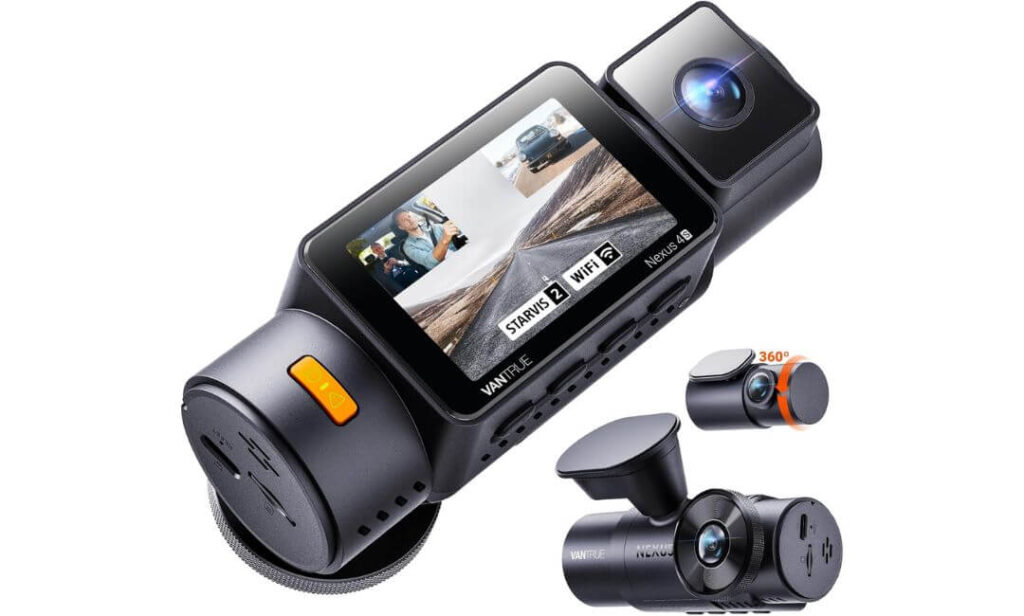
Quick Specs:
- Triple-camera system with 2.7K Front + 1440P Rear + 1440P Interior
- Three Sony STARVIS 2-powered sensors
- Advanced PlatePix™ license plate enhancement
- Triple HDR processing across all cameras
- Wide-angle coverage up to 165°
- 5GHz Wi-Fi with app connectivity
- Quad-GPS positioning support
- Four customizable parking surveillance modes
- Heat-resistant supercapacitor design
- Supports massive 1TB microSD storage
What immediately stood out here wasn’t a single specification—it was the overall approach. Most dash cams focus almost entirely on what’s happening in front of the vehicle. This setup feels different because every camera in the system appears to have been given equal attention.
The combination of 2.7K front recording, 1440P rear coverage, and 1440P cabin footage creates an unusually complete picture of what happens around your Nissan Frontier. Whether you’re navigating crowded city traffic, carrying passengers, transporting gear, or spending weekends on the road, having three high-quality recording angles often provides context that a traditional front-and-rear system simply can’t capture.
Where things become even more impressive is after sunset. Thanks to STARVIS 2 imaging technology, Triple HDR processing, and PlatePix enhancement, the footage remains remarkably usable in situations that typically challenge dash cams. Dark roads, poorly lit parking lots, tunnels, and approaching headlights are handled with confidence, while license plate details remain easier to identify than many competing systems in this category.
Another reason this model earned its place on this list is versatility. The rotating rear camera, magnetic GPS mount, OTA firmware updates, quad-GPS tracking, and support for up to 1TB of storage make it feel like a product designed to adapt as your needs evolve rather than something you’ll outgrow after a year of ownership.
(For drivers who value complete vehicle coverage and long-term flexibility, this is one of the most thoughtfully designed three-channel systems currently available.)
Features That Made It Easy to Recommend
- Triple STARVIS 2-powered imaging for strong low-light performance
- PlatePix technology improves license plate visibility
- Three-camera coverage without major compromises
- Rotating rear camera adds unique monitoring flexibility
- Huge 1TB storage support for extended recording retention
A Small Trade-Off Worth Knowing
- To unlock continuous 24-hour parking surveillance, a dedicated hardwire kit is recommended.
Nissan Frontier Compatibility Notes
The interior layout of the Nissan Frontier works exceptionally well with this camera system. The front unit mounts cleanly behind the mirror area, while the included rear camera cable length provides enough flexibility for neat routing throughout the cabin.
The adjustable rear camera is particularly useful for Frontier owners. Depending on how the truck is being used, it can monitor rear traffic, cargo, equipment, luggage, or even pets during longer trips. That extra flexibility is something few competing systems currently offer.
The Insider Pro-Tip
A surprising number of buyers underestimate how valuable interior footage can become until an incident actually occurs.
Road rage situations, parking lot encounters, unexpected passenger disputes, break-in attempts, and cargo-related claims often involve details that front-facing footage alone can’t explain. That’s one of the reasons three-channel systems continue gaining popularity among experienced drivers.
For Nissan Frontier owners who want complete visibility rather than basic coverage, this setup delivers one of the most balanced combinations of recording quality, storage capacity, nighttime performance, and real-world versatility in the entire category.
#4. REDTIGER F7NP
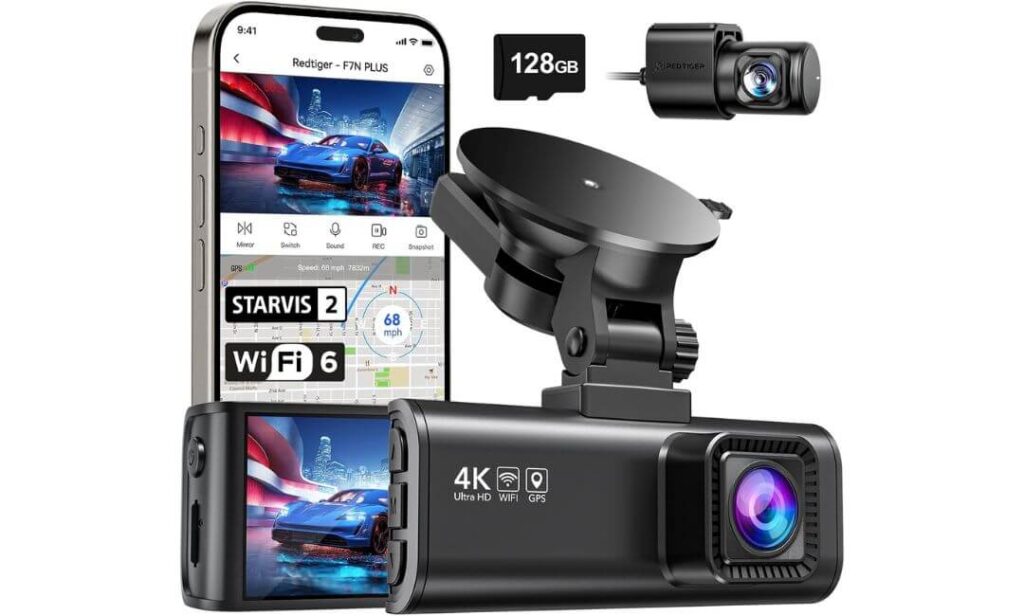
Quick Specs:
- True 4K Front + 1080P Rear recording
- Advanced Sony STARVIS 2 image sensor
- Ultra-wide 170° front viewing angle
- HDR and WDR image processing
- Built-in GPS route and speed tracking
- Fast 5.8GHz Wi-Fi connectivity
- Up to 20MB/s wireless video transfers
- Included 128GB memory card
- Supercapacitor-based heat-resistant design
- Dual parking surveillance modes
Not every Nissan Frontier owner needs a flagship system loaded with cabin cameras, radar technology, and premium extras. Sometimes the smarter purchase is the one that focuses on getting the fundamentals right—and that’s exactly where this setup shines.
The biggest strength here is balance. You get 4K front recording, STARVIS 2 low-light performance, GPS tracking, HDR processing, fast Wi-Fi connectivity, parking monitoring, and a pre-installed 128GB card without stepping into premium pricing territory. That’s a combination many buyers are actively searching for because it eliminates the need to purchase additional accessories before getting started.
Video quality is another area where this model performs above expectations. The combination of the STARVIS 2 sensor, F1.5 aperture lens, HDR technology, WDR tuning, and the ultra-wide 170-degree field of view helps capture a surprisingly detailed picture of what’s happening around the vehicle. Whether you’re driving through downtown traffic, navigating rural highways, or parking in crowded lots, footage remains clear and easy to review.
What I particularly like is that nothing feels unnecessarily complicated. The app is straightforward, downloads happen quickly through the 5.8GHz Wi-Fi connection, GPS data is easy to access, and the included memory card means you can start recording almost immediately after installation.
(For drivers who want strong video quality, practical features, and excellent value without paying flagship-level prices, this is one of the easiest recommendations on the list.)
Reasons It Earned a Place Among Our Top Picks
- STARVIS 2 sensor delivers impressive nighttime clarity
- Included 128GB card adds immediate out-of-box value
- Fast 5.8GHz Wi-Fi makes footage transfers painless
- Wide-angle coverage captures more of the road ahead
- Supercapacitor design handles heat better than battery-powered alternatives
A Small Detail Worth Keeping in Mind
- Rear camera footage records in 1080P, which is perfectly adequate for most drivers but not as detailed as the higher-resolution rear cameras found on some premium models.
Nissan Frontier Compatibility Notes
This setup works particularly well inside the Nissan Frontier because of the truck’s large windshield area and elevated driving position. The front camera gains an excellent vantage point for capturing traffic conditions, while the included rear cable length provides plenty of flexibility for clean installation.
Frontier owners who frequently use their truck for commuting, road trips, light towing, or weekend adventures will likely appreciate how simple the entire system is to live with. Once installed, it quietly does its job without requiring constant adjustments or maintenance.
The Insider Pro-Tip
One of the most overlooked dash cam expenses isn’t the camera itself—it’s everything that comes after the purchase. Memory cards, mounting accessories, upgraded storage, and replacement batteries often push the final cost higher than expected.
That’s one reason this model continues attracting attention. The included 128GB card, GPS functionality, fast wireless connectivity, parking monitoring, and STARVIS 2 imaging already cover most of the features drivers actually use every day.
For Nissan Frontier owners looking for the sweet spot between affordability and capability, this is the model on this list that arguably delivers the most performance per dollar spent.
#5. 70mai A800S
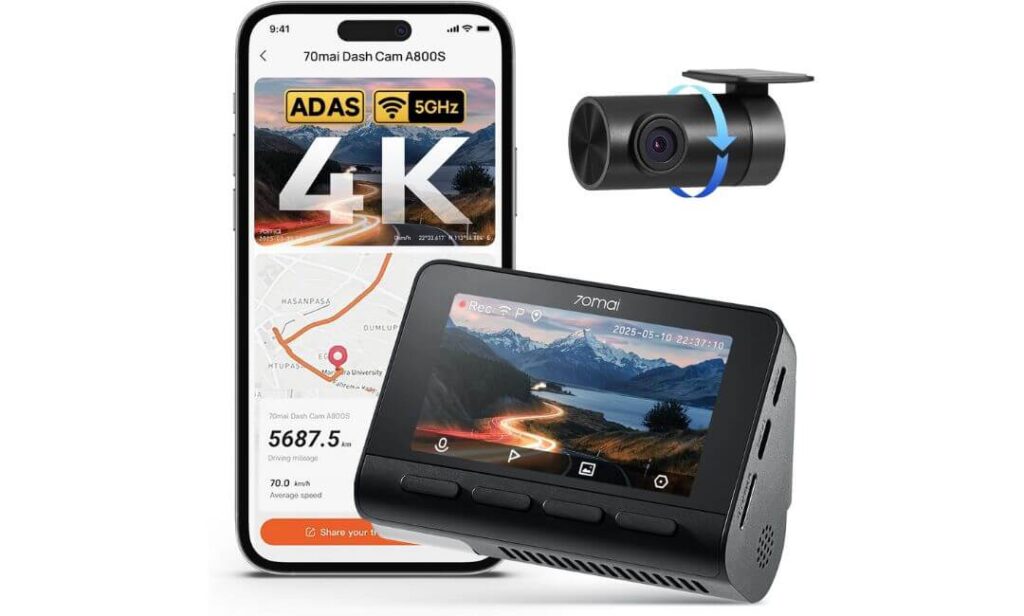
Quick Specs:
- True 4K Front + 1080P Rear recording
- Sony IMX415 STARVIS image sensor
- Built-in GPS route and speed tracking
- Dual-band 5GHz / 2.4GHz Wi-Fi
- Advanced Driver Assistance System (ADAS)
- Super Night Vision processing
- 3-inch IPS display
- Smart parking surveillance support
- OTA firmware updates through the app
- Supports up to 256GB microSD storage
There’s a reason this camera continues showing up in recommendation lists years after its original release. While newer models often chase bigger numbers and longer feature sheets, this one focuses on the things most drivers actually use every day.
At its core, you’re getting 4K front recording, GPS tracking, Wi-Fi connectivity, parking monitoring, ADAS safety alerts, and Sony STARVIS image technology in a package that remains surprisingly affordable. For many Nissan Frontier owners, that’s more than enough capability without stepping into premium-price territory.
The video quality remains one of its strongest assets. Thanks to the Sony IMX415 sensor, F1.8 aperture, seven-layer glass lens system, and Super Night Vision processing, footage maintains impressive clarity across a wide range of driving conditions. Bright afternoon highways, overcast weather, nighttime commutes, and changing light conditions are all handled with a level of consistency that continues to hold up well against many newer competitors.
Another advantage is ease of ownership. Installation is straightforward, the app remains easy to navigate, firmware updates happen wirelessly through OTA support, and the built-in display makes reviewing footage quick when you don’t want to reach for your phone.
(For drivers who simply want dependable 4K recording, useful safety features, and proven everyday performance, this remains one of the strongest value-focused options available.)
Reasons It Continues to Earn Recommendations
- Proven Sony STARVIS imaging technology
- Sharp 4K front-facing footage with reliable detail retention
- ADAS alerts add an extra layer of driver awareness
- OTA updates help keep the system current
- Excellent overall feature set for the price category
A Small Trade-Off Worth Knowing
- Storage support tops out at 256GB, which is lower than some newer premium models offering significantly larger recording capacity.
Nissan Frontier Compatibility Notes
The windshield angle and elevated seating position of the Nissan Frontier pair nicely with this camera’s field of view. The front camera gains a commanding perspective of surrounding traffic, while the rear unit provides valuable coverage during daily driving and parking situations.
For owners who use their Frontier primarily as a daily driver, road-trip vehicle, or weekend adventure truck, this setup delivers the kind of straightforward functionality many buyers actually prefer. It records, stores, and organizes footage without requiring a steep learning curve.
The Insider Pro-Tip
One of the easiest mistakes buyers make is assuming every newer dash cam automatically produces better footage.
In reality, image tuning, sensor quality, and software optimization often matter more than release dates. That’s why some well-established cameras continue earning loyal followings long after newer competitors enter the market.
The reason this model remains relevant is simple: it still delivers the features most Nissan Frontier owners are looking for—4K recording, GPS tracking, Wi-Fi access, nighttime visibility, parking monitoring, and practical daily usability—without forcing buyers into a premium budget category. For many drivers, that’s exactly the balance that makes the most sense.
Best Nissan Frontier Dash Camera Comparison: 4K Recording, Parking Features and Night Performance
Buying Guide: How to Choose the Right Dash Cam for Your Nissan Frontier
A Nissan Frontier is not used the same way as most passenger cars, which is exactly why choosing a dash cam requires a slightly different approach. Some owners spend their weekdays commuting through traffic, others tow equipment, explore trails on weekends, or leave their truck parked at job sites for hours at a time. The best dash cam for a Frontier isn’t necessarily the one with the longest feature list—it’s the one that consistently captures useful footage when conditions become challenging.
The models featured in this guide were selected because they address the situations Frontier owners commonly encounter: nighttime driving, parking lot incidents, highway travel, off-road adventures, and everyday vehicle security. Before choosing one, here are the factors that deserve your attention.
Prioritize Sensor Quality Before Resolution Numbers
One of the biggest mistakes buyers make is focusing entirely on 4K resolution.
While 4K recording is valuable, the image sensor behind the lens often determines whether a license plate remains readable at night or becomes a blurry mess. That’s why cameras equipped with STARVIS 2 technology, such as the VIOFO A229 Pro, THINKWARE U3000 PRO, Vantrue N4S, and REDTIGER F7NP, stand out in real-world driving conditions.
A quality sensor improves low-light performance, handles glare more effectively, preserves detail during rain or fog, and captures clearer footage when headlights create harsh contrast. For most Nissan Frontier owners, sensor quality will have a greater impact on daily recording performance than resolution alone.
Decide How Much Coverage You Actually Need
Not every driver requires the same camera configuration.
For some Frontier owners, a traditional front-and-rear setup provides everything necessary. If your primary concern is documenting accidents, parking incidents, and rear-end collisions, a dual-channel system can be an excellent choice.
However, if you frequently carry passengers, transport valuable equipment, use your truck for work, or simply want complete visibility, a three-channel system becomes much more attractive. Cameras such as the VIOFO A229 Pro and Vantrue N4S record the front, rear, and interior simultaneously, creating a much fuller picture of what occurred before, during, and after an incident.
The right answer depends less on your truck and more on how you use it.
Parking Protection Matters More Than Most Drivers Realize
Many vehicle incidents happen when the engine isn’t even running.
Parking lot damage, hit-and-run accidents, shopping cart impacts, vandalism, and low-speed collisions often occur while a vehicle is unattended. That’s why parking mode has become one of the most important features in modern dash cams.
Basic systems record when an impact is detected. More advanced models offer motion detection, buffered recording, low-bitrate surveillance, time-lapse monitoring, and even radar-assisted technology.
The THINKWARE U3000 PRO is a good example. Its radar-based parking system monitors surrounding activity while minimizing unnecessary power consumption, making it particularly appealing for Frontier owners who leave their truck parked for extended periods.
Don’t Overlook GPS and Wi-Fi Connectivity
A surprising number of buyers focus only on video quality and ignore the features they’ll use most often after installation.
Built-in GPS automatically records speed, route information, and location data alongside your footage. This information can become extremely valuable when reviewing incidents, insurance claims, or travel records.
Wi-Fi connectivity serves a different purpose. Instead of removing memory cards every time you need a clip, modern systems allow footage to be viewed, downloaded, and shared directly through a smartphone app. Fast wireless systems, especially 5GHz Wi-Fi models, make reviewing recordings significantly more convenient.
For many owners, these features become daily conveniences rather than occasional extras.
Reliability Is More Important Than Chasing New Features
A dash cam is one of the few accessories in your vehicle that you hope you never need.
That means reliability should always carry more weight than flashy marketing features. Look for cameras that include loop recording, emergency file locking, parking surveillance, heat-resistant components, firmware support, and proven long-term performance.
Several models on this list use supercapacitor designs rather than traditional batteries. This approach generally improves durability in extreme temperatures, making it especially beneficial for trucks that spend long hours parked outdoors during summer.
A dependable camera that records every day is far more valuable than a feature-packed model that becomes unreliable after a year.
Understanding Nissan Frontier Installation Basics
The good news is that the Nissan Frontier is one of the easier trucks to equip with a dash cam.
Its windshield design provides ample mounting space behind the rear-view mirror, allowing most cameras to remain discreet without obstructing visibility. Cable routing is also relatively straightforward thanks to the truck’s cabin layout.
For front-and-rear systems, the rear camera cable can typically be tucked along the headliner, weather stripping, and trim panels for a clean factory-like appearance. Most owners can complete a basic installation without professional assistance, although hardwiring for parking mode may require additional effort.
Taking time to hide cables properly not only improves appearance but also helps prevent accidental disconnections over the long term.
Special Considerations for Nissan Frontier PRO-4X Owners
Drivers of the PRO-4X trim often use their trucks differently than the average commuter.
Trail driving, camping trips, remote travel, towing, and outdoor recreation frequently place the vehicle in environments where a dash cam becomes even more valuable. Dust, changing lighting conditions, isolated parking areas, and unpredictable terrain all increase the importance of reliable recording.
For these owners, features such as enhanced night vision, wide-angle coverage, GPS tracking, durable heat-resistant hardware, and advanced parking surveillance deserve extra consideration. Multi-channel systems can also provide additional peace of mind when carrying expensive outdoor equipment or gear.
The Final Buying Advice
If your priority is the strongest overall balance of video quality, features, and coverage, a premium STARVIS 2-equipped model remains the safest investment.
If parking surveillance is your primary concern, radar-assisted systems deserve serious consideration. If complete visibility matters most, a three-channel setup offers advantages that dual-camera systems simply cannot match. And if value is the deciding factor, several modern 4K cameras now deliver impressive performance without requiring a premium budget.
The best Nissan Frontier dash cam isn’t the one with the most specifications on paper. It’s the one that matches how you actually use your truck every day and gives you confidence that, if something happens, the footage will be there when you need it.
Nissan Frontier Dash Cam Installation Tips: Getting It Right the First Time
One of the biggest advantages of owning a Nissan Frontier is that dash cam installation is usually more straightforward than many drivers expect. The truck offers generous windshield space, practical trim routing paths, and enough room to hide wiring cleanly without turning the cabin into a project vehicle.
That said, even the best dash cam can become frustrating if it’s installed poorly. Loose cables, blocked camera views, improper power connections, or poorly routed rear-camera wiring can affect both reliability and footage quality. Spending a little extra time during installation often pays off for years afterward.
Choosing the Best Mounting Location
The ideal mounting position is typically just behind or slightly below the rear-view mirror.
This location provides several advantages. It keeps the camera close to the center of the windshield, delivers a balanced view of the road ahead, minimizes windshield obstruction, and keeps the unit largely hidden from the driver’s normal field of vision.
Before permanently attaching the camera, sit in the driver’s seat and verify that the lens captures the full roadway, including adjacent lanes and traffic signals. Many first-time installers place the camera too low, which can reduce visibility and create unnecessary distractions while driving.
For Nissan Frontier owners, the large windshield usually provides enough flexibility to position the camera discreetly while still achieving excellent coverage.
Understanding Your Power Options
Most modern dash cams offer two primary power methods, and each serves a different purpose.
Cigarette Lighter Installation
This is the fastest and simplest option.
The dash cam plugs directly into the Frontier’s 12-volt accessory outlet using the supplied power adapter. Installation is straightforward, requires no vehicle modifications, and works well for drivers who mainly want recording while driving.
Advantages include:
- Quick installation
- No electrical modifications
- Easy removal or transfer to another vehicle
- Ideal for first-time dash cam users
The downside is that advanced parking features may not remain active once the truck is turned off, depending on the camera and vehicle configuration.
Hardwire Kit Installation
A hardwire kit connects directly to the vehicle’s electrical system and unlocks the full capabilities of many premium dash cams.
This setup is particularly beneficial for cameras featuring:
- Parking surveillance
- Motion detection
- Radar parking monitoring
- Time-lapse recording
- Buffered parking protection
If you purchased a premium model such as the VIOFO A229 Pro, THINKWARE U3000 PRO, Vantrue N4S, or REDTIGER F7NP specifically for its parking features, a hardwire installation is often worth considering.
Routing Cables Without Interfering With Airbags
This is one area where extra caution matters.
Modern Nissan Frontier models contain side-curtain airbags that deploy from areas near the roofline and A-pillars. Improperly routed wiring can interfere with airbag deployment during an accident.
A safer approach is to carefully tuck wiring behind trim panels while avoiding airbag deployment paths. Many installers route cables along existing factory harnesses where possible, using provided clips or adhesive mounts to prevent movement.
If you’re unsure whether a particular trim area contains an airbag component, consult the owner’s manual or installation documentation before securing cables permanently.
Taking a few extra minutes here is far more important than achieving a perfectly hidden wire.
Installing a Rear Camera on Dual-Channel Systems
Dual-channel and three-channel systems require additional planning because the rear camera cable must travel through much of the cabin.
Fortunately, the Frontier’s interior layout generally makes this process manageable.
A typical routing path includes:
- Front windshield camera area
- Headliner edge above the doors
- B-pillar and rear cabin trim
- Rear window mounting location
Most quality dash cam kits include cables long enough for pickup truck installations, including the models featured in this guide.
Before securing the final cable sections, verify that the rear camera angle captures the entire rear window area without excessive sky or interior reflections.
Optimizing Visibility and Recording Quality
After installation, spend a few minutes reviewing actual footage rather than assuming everything is aligned correctly.
Pay attention to:
- Horizon level
- Lane visibility
- Traffic signal visibility
- License plate clarity
- Excessive dashboard reflections
- Windshield glare
Small camera adjustments can dramatically improve footage quality.
If your dash cam includes a CPL filter, as found on some premium models, installing it can further reduce reflections and improve image contrast during daytime driving.
Managing Heat and Long-Term Reliability
Dash cams spend much of their life exposed to direct sunlight, especially during summer.
For Frontier owners who regularly park outdoors, heat resistance becomes an important consideration.
Several cameras featured in this guide use supercapacitor technology rather than traditional lithium batteries. This design generally handles high temperatures more effectively and improves long-term durability.
A few practical habits can also help:
- Keep the windshield clean
- Use a windshield sunshade when parked
- Update firmware periodically
- Avoid low-quality charging accessories
- Use recommended memory cards
These small steps often contribute more to long-term reliability than many people realize.
Common Installation Problems and Easy Fixes
Even high-quality dash cams occasionally experience setup issues. Fortunately, most are simple to resolve.
Camera Doesn’t Power On
In many cases, the cause is a loose connection, incompatible charging cable, or insufficient power source.
Verify that all power connections are fully seated and use the manufacturer’s recommended accessories whenever possible.
GPS Isn’t Recording Properly
GPS modules often require a clear view of the sky during initial setup.
After installation, allow the system several minutes to acquire satellite signals before assuming a fault exists.
Rear Camera Not Detected
This issue is commonly caused by an incomplete cable connection.
Carefully inspect both ends of the rear-camera cable and ensure connectors are fully inserted.
Parking Mode Doesn’t Activate
Many advanced parking features require either a hardwire kit or dedicated power source.
If parking functions aren’t operating as expected, verify that the camera has access to the required power configuration.
Final Installation Advice
The difference between a frustrating dash cam experience and a seamless one often comes down to installation quality.
Mount the camera where it captures the road clearly without distracting the driver. Route cables carefully. Avoid airbag deployment zones. Use quality power connections. Take time to review footage before considering the job complete.
Do those things correctly, and your Nissan Frontier dash cam will spend years quietly doing exactly what it was designed to do—capturing the moments you hope you’ll never need, but will be glad to have if you ever do.
Understanding the Features That Actually Matter in a Nissan Frontier Dash Cam
Modern dash cams are loaded with technical terms, marketing buzzwords, and feature lists that often sound impressive but rarely explain how those technologies perform in real-world driving. For Nissan Frontier owners, the goal isn’t simply buying the camera with the longest specification sheet. It’s understanding which features genuinely improve footage quality, vehicle monitoring, and everyday usability.
The cameras featured in this guide all bring something different to the table, but several key technologies appear repeatedly because they have a measurable impact on performance. Here’s what those features actually mean when you’re behind the wheel of a Frontier.
Why STARVIS 2 Technology Has Become Such a Big Deal
If you’ve spent any time researching dash cams recently, you’ve probably noticed STARVIS 2 appearing almost everywhere.
That’s because nighttime recording remains one of the biggest challenges for any camera system. During daylight hours, even average dash cams can produce acceptable footage. Once the sun goes down, however, sensor quality becomes far more important.
STARVIS 2 sensors are designed to capture more usable light while reducing image noise and preserving detail in difficult conditions. For Nissan Frontier owners, this can make a noticeable difference during:
- Rural nighttime driving
- Poorly lit parking lots
- Rainy weather
- Construction zones
- Early morning commutes
- Off-road trails after sunset
The practical benefit isn’t just brighter footage. It’s the ability to retain important details such as license plates, vehicle colors, lane markings, and road signs when lighting conditions become challenging.
That’s one reason premium models like the VIOFO A229 Pro, THINKWARE U3000 PRO, Vantrue N4S, and REDTIGER F7NP rely heavily on STARVIS 2 technology.
How 4K HDR Recording Improves Real-World Evidence
Many people assume 4K simply means a sharper picture.
While that’s true, the more important advantage often comes from the combination of 4K resolution and HDR processing.
High Dynamic Range (HDR) helps cameras manage scenes that contain both extremely bright and extremely dark areas at the same time. Examples include:
- Driving directly into the sun
- Oncoming headlights at night
- Entering or exiting tunnels
- Bright reflections on wet roads
- Vehicles illuminated by LED headlights
Without HDR, footage can easily become overexposed or underexposed.
When paired with 4K recording, HDR helps preserve critical visual information across the frame. This becomes particularly important when reviewing footage after an accident or attempting to identify a vehicle involved in a hit-and-run incident.
The difference often isn’t obvious until you actually need the footage.
How Radar-Based Parking Technology Works
Traditional parking mode systems generally rely on motion sensors, impact detection, or continuous recording.
Radar-assisted systems take a different approach.
Instead of recording continuously, radar technology monitors activity near the vehicle while using significantly less power. When movement enters a predefined zone around the truck, the system wakes the camera and begins recording.
For Nissan Frontier owners, this can be especially useful in situations such as:
- Airport parking lots
- Apartment complexes
- Campsites
- Trailhead parking areas
- Worksite parking
- Shopping centers
A system like the THINKWARE U3000 PRO can monitor nearby activity while reducing unnecessary recordings and minimizing battery consumption.
This approach often provides a more efficient balance between protection and power management.
Choosing Between Single, Dual, and Multi-Channel Systems
One of the most important buying decisions involves determining how much coverage you actually need.
A front-only camera can document what happens ahead of the vehicle, but it leaves several blind spots.
Dual-channel systems add rear coverage, creating a more complete record of events involving:
- Rear-end collisions
- Parking lot incidents
- Tailgating situations
- Highway lane-change disputes
For many Nissan Frontier owners, dual-channel recording represents the ideal balance between coverage and simplicity.
Three-channel systems go even further by adding cabin recording.
This can be particularly beneficial for:
- Rideshare drivers
- Work vehicles
- Family transportation
- Equipment hauling
- Drivers seeking complete vehicle documentation
The VIOFO A229 Pro and Vantrue N4S are strong examples of systems designed around maximum visibility rather than minimum coverage.
Why Wi-Fi Connectivity Matters More Than You Might Expect
Several years ago, reviewing dash cam footage often meant removing a memory card and transferring files manually.
Modern Wi-Fi-enabled systems eliminate much of that hassle.
Through dedicated smartphone apps, users can:
- Review footage instantly
- Download clips directly to a phone
- Share recordings quickly
- Adjust camera settings
- Format memory cards
- Update firmware
The faster 5GHz Wi-Fi systems found in cameras like the VIOFO A229 Pro, THINKWARE U3000 PRO, Vantrue N4S, REDTIGER F7NP, and 70mai A800S make this process noticeably faster, particularly when transferring large 4K video files.
For many drivers, app connectivity becomes one of the most frequently used features after installation.
Understanding Parking Mode Performance
Parking mode is one of the most misunderstood features in the dash cam industry.
Many buyers assume all parking systems operate the same way. In reality, there are significant differences between models.
Some systems activate only after an impact.
Others monitor motion.
More advanced cameras offer:
- Buffered event recording
- Time-lapse recording
- Low-bitrate surveillance
- Radar-assisted monitoring
- Motion-triggered recording
Buffered recording deserves particular attention because it captures footage before an incident occurs, not just after.
For example, if another vehicle backs into your parked Frontier, buffered recording can preserve the moments leading up to the impact rather than only documenting the collision itself.
That additional context often becomes extremely valuable.
Power Consumption and Long-Term Parking Monitoring
A dash cam can only protect your vehicle while parked if it has access to power.
This is why hardwire kits are frequently recommended for drivers who plan to use parking mode regularly.
Power-efficient systems use various techniques to reduce battery drain, including:
- Motion-triggered activation
- Radar monitoring
- Low-bitrate recording
- Sleep-mode transitions
Some premium cameras are considerably more efficient than others when left active for extended periods.
For Frontier owners who regularly leave their truck parked overnight, at airports, or at remote locations, power management should receive just as much attention as video quality.
Why G-Sensors Still Matter
Despite newer technologies grabbing most of the headlines, G-sensors remain one of the most valuable safety features in modern dash cams.
When a significant impact occurs, the G-sensor automatically identifies the event and locks the associated footage.
This prevents important recordings from being overwritten by normal loop recording.
In practical terms, that means footage related to:
- Collisions
- Parking lot impacts
- Sudden braking events
- Hit-and-run incidents
- Vehicle vandalism
can be preserved automatically without driver intervention.
A reliable G-sensor may not be the most exciting feature on a specification sheet, but it often becomes one of the most important when something unexpected happens.
The Bottom Line
The best dash cam features aren’t necessarily the ones that sound impressive in advertisements. They’re the technologies that consistently improve footage quality, simplify ownership, and capture useful evidence when conditions are less than ideal.
For Nissan Frontier owners, features such as STARVIS 2 imaging, 4K HDR recording, GPS tracking, fast Wi-Fi connectivity, advanced parking surveillance, and dependable G-sensor protection provide tangible benefits every time the truck leaves the driveway—or even when it’s sitting parked.
Understanding how these technologies work makes it much easier to choose a camera that fits your driving habits rather than simply chasing the newest specifications.
How a Dash Cam Helps in Real-World Nissan Frontier Driving Scenarios
One of the reasons the Nissan Frontier continues to attract such a loyal owner base is its versatility. Unlike vehicles that serve a single purpose, the Frontier often wears multiple hats throughout the week. It may spend Monday navigating city traffic, haul equipment on Wednesday, tow a trailer on Friday, and explore remote trails by the weekend.
That versatility creates situations where a dash cam becomes far more valuable than many drivers initially expect. The benefits go far beyond recording accidents. Modern dash cams can help document road incidents, protect parked vehicles, verify travel history, monitor cargo, and provide evidence when questions arise about what actually happened.
The real value becomes easier to understand when looking at how these systems perform in everyday Frontier ownership.
Daily Driving Protection When You Need It Most
Most Nissan Frontier owners spend the majority of their time in normal traffic conditions rather than dramatic off-road environments.
Ironically, that’s where dash cams often prove their worth.
Daily commuting exposes drivers to countless unpredictable situations:
- Sudden lane changes
- Rear-end collisions
- Parking lot damage
- Distracted drivers
- Red-light violations
- Insurance disputes
- Hit-and-run incidents
In these situations, video evidence can remove much of the uncertainty that often follows an accident.
A quality camera equipped with 4K recording, GPS tracking, HDR processing, and dependable loop recording can provide a clear visual record of events. Rather than relying solely on memory, witness statements, or conflicting accounts, footage offers an objective timeline that can help clarify what occurred.
Even drivers with years of accident-free experience often discover that a dash cam provides peace of mind long before it ever records an actual incident.
Parking Lot Incidents Are More Common Than Most People Realize
Many Frontier owners focus on driving footage and overlook what happens while the truck is parked.
Yet parking lots remain one of the most common places for vehicle damage.
Examples include:
- Door dings
- Shopping cart impacts
- Backing accidents
- Low-speed collisions
- Vandalism
- Unidentified vehicle contact
Modern parking surveillance systems significantly improve a dash cam’s usefulness in these situations.
Features such as buffered recording, impact detection, motion monitoring, and radar-assisted parking technology help document activity even when the engine is off. Instead of discovering damage hours later with no explanation, owners may have footage that helps identify what happened.
For drivers who regularly leave their Frontier at airports, apartment complexes, trailheads, hotels, or job sites, parking mode often becomes one of the most valuable features on the entire camera.
Off-Road Adventures Create Unique Recording Challenges
The Frontier’s reputation as a capable midsize truck means many owners eventually venture beyond paved roads.
Trail systems, forest roads, desert routes, mountain passes, and remote campsites create conditions that differ significantly from normal commuting.
Off-road environments introduce challenges such as:
- Extreme lighting changes
- Dust and debris
- Sharp elevation transitions
- Narrow trails
- Limited visibility
- Wildlife encounters
- Unexpected obstacles
This is where advanced imaging technology begins to matter.
Dash cams equipped with STARVIS 2 sensors, HDR processing, wide-angle lenses, and high-bitrate recording are better positioned to preserve useful detail when conditions become difficult. The ability to capture terrain changes, trail conditions, or unexpected events can be surprisingly valuable during remote travel.
Many owners also enjoy reviewing and sharing footage from memorable trips, making the dash cam useful even when nothing goes wrong.
Highway Travel Places Different Demands on a Camera
Long-distance driving presents its own set of challenges.
Highway speeds reduce reaction times and increase the importance of image quality. A vehicle moving at interstate speeds can quickly enter and exit the frame, making license plate readability far more important than it might seem during slower city driving.
Features that become particularly valuable during highway travel include:
- 4K front recording
- STARVIS 2 imaging
- HDR processing
- GPS speed logging
- Wide-angle coverage
- Reliable heat resistance
When reviewing footage after a highway incident, details often matter. Lane positions, vehicle behavior, speed changes, road conditions, and surrounding traffic can all become important pieces of information.
A camera that captures those details clearly provides significantly greater value than one that merely records the event.
Protecting Expensive Equipment and Cargo
Many Frontier owners regularly transport tools, outdoor equipment, work supplies, camping gear, motorcycles, bicycles, or towing equipment.
When valuable cargo is involved, additional visibility becomes increasingly useful.
Three-channel systems such as the VIOFO A229 Pro and Vantrue N4S can provide coverage beyond the front and rear of the truck. Interior cameras may help document cargo movement, loading activity, passenger interactions, or events occurring around the cabin.
For drivers carrying expensive gear on a routine basis, that additional perspective can provide an extra layer of documentation that standard dual-camera systems cannot offer.
Fleet, Commercial, and Business Applications
The Nissan Frontier has become a popular vehicle for contractors, inspectors, maintenance teams, delivery services, and small business operators.
In commercial environments, a dash cam often serves multiple purposes simultaneously.
It can help:
- Verify route completion
- Document job-site arrivals
- Record delivery activity
- Monitor vehicle usage
- Support insurance claims
- Investigate incidents
- Reduce disputes
GPS-enabled cameras add another layer of accountability by recording route information, speed data, and travel history alongside video footage.
For businesses operating multiple vehicles, consistent video documentation can help create a clearer record of daily operations and reduce uncertainty when incidents occur.
Why Adventure-Oriented Frontier Owners Benefit the Most
Few vehicles transition between work and recreation as seamlessly as the Frontier.
One day it may be hauling equipment. The next day it may be carrying camping gear into the mountains.
That flexibility is exactly why investing in a quality dash cam often makes more sense for Frontier owners than it does for many other drivers.
The truck’s ability to travel farther, stay parked longer, carry more equipment, and encounter more varied environments naturally creates more opportunities where recorded footage becomes valuable.
The Bottom Line
The best dash cam isn’t simply an accessory attached to the windshield. For many Nissan Frontier owners, it becomes a silent witness that records the moments that matter most.
Whether you’re navigating daily traffic, leaving the truck parked overnight, exploring remote trails, towing across state lines, carrying expensive gear, or operating a work vehicle, a quality dash cam helps create a reliable record of what actually happened.
That’s ultimately why the cameras featured in this guide earned their place. They aren’t just designed to record video—they’re designed to support the way real Nissan Frontier owners use their trucks every day.
Maintaining Your Nissan Frontier Dash Cam for Long-Term Reliability
Buying a quality dash cam is only part of the equation. What many drivers don’t realize is that even the best camera on the market can gradually lose effectiveness if it’s neglected after installation.
Unlike accessories that receive constant attention, dash cams tend to fade into the background. They quietly record every drive, sit through summer heat, winter cold, road vibrations, dust, and thousands of miles without complaint. That’s exactly why occasional maintenance matters.
The good news is that keeping a dash cam performing at its best doesn’t require technical expertise or expensive equipment. A few simple habits can dramatically improve reliability, video quality, and long-term performance.
Why Firmware Updates Matter More Than Most Drivers Think
Many Frontier owners install a dash cam and never touch the software again.
While that approach may work, it often means missing out on improvements released by the manufacturer.
Modern dash cams frequently receive firmware updates that can improve:
- Recording stability
- GPS performance
- Wi-Fi connectivity
- Parking mode behavior
- App compatibility
- Memory card management
- Image processing algorithms
Manufacturers such as VIOFO, THINKWARE, Vantrue, REDTIGER, and 70mai regularly release updates designed to refine performance and address reported issues.
If your camera supports Wi-Fi or OTA updates, checking for new firmware every few months is generally a worthwhile habit. The process typically takes only a few minutes and may improve functionality without requiring any hardware changes.
Understanding SD Card Lifespan
One of the most common causes of dash cam problems has nothing to do with the camera itself.
It’s the memory card.
Unlike standard photo storage, dash cams continuously write, overwrite, delete, and rewrite data every day. That constant activity creates wear that eventually affects storage performance.
Symptoms of an aging card may include:
- Missing recordings
- Corrupted files
- Recording interruptions
- Error messages
- Random restarts
For this reason, high-endurance memory cards are strongly recommended for dash cam use.
Owners who drive frequently, use parking mode regularly, or record in multiple channels may experience faster card wear than occasional drivers.
Replacing a memory card periodically is often far less expensive than discovering missing footage after an incident.
Building a Simple Data Management Routine
One of the easiest mistakes drivers make is assuming important footage will always be available.
Loop recording automatically overwrites older files as storage fills, which means valuable recordings can eventually disappear if they aren’t saved elsewhere.
A practical approach includes:
- Reviewing important clips promptly
- Downloading significant recordings to a phone or computer
- Backing up accident footage immediately
- Formatting memory cards according to manufacturer recommendations
- Periodically checking that recordings are being saved correctly
Even a quick monthly review can help confirm that everything is functioning as expected.
Knowing When It’s Time to Upgrade From 1080P
A surprising number of Frontier owners still use older 1080P dash cams that continue functioning perfectly.
The question isn’t whether these cameras still work. The question is whether they still provide the level of detail modern drivers expect.
For basic incident documentation, 1080P footage can remain perfectly usable.
However, upgrading becomes easier to justify when:
- License plate clarity is important
- Nighttime driving is common
- Highway travel is frequent
- Parking surveillance is a priority
- Insurance documentation matters
- You spend time in remote areas
The difference between older 1080P systems and modern 4K STARVIS 2-equipped cameras often becomes most noticeable after dark.
Improved detail retention, stronger HDR performance, better low-light visibility, and enhanced plate readability are some of the most meaningful upgrades available today.
Why 4K Makes More Sense for Many Frontier Owners
Not every vehicle requires a premium camera.
The Frontier, however, often encounters situations where additional recording detail can be valuable.
Owners commonly use these trucks for:
- Long-distance travel
- Towing
- Outdoor recreation
- Worksite transportation
- Remote-area driving
- Overnight parking
In these environments, the ability to clearly identify vehicles, signs, road conditions, and license plates becomes increasingly important.
That’s one reason nearly every camera featured in this guide prioritizes higher-resolution recording combined with advanced image sensors.
Keeping Lenses Clean and Footage Sharp
This sounds obvious, but it’s frequently overlooked.
A thin layer of dust, fingerprints, road film, or interior residue can noticeably reduce image quality.
Because dash cams sit against the windshield for months at a time, contaminants gradually accumulate on both the lens and surrounding glass.
Every few weeks, it’s worth checking:
- Front camera lens
- Rear camera lens
- Interior camera lens (if equipped)
- Windshield area directly in front of the camera
Cleaning these areas takes only a few moments but can significantly improve footage quality.
Many drivers are surprised by how much sharper recordings appear after a simple cleaning.
Verifying Camera Alignment After Rough Driving
The Nissan Frontier often encounters conditions that many passenger cars never experience.
Off-road trails, construction zones, gravel roads, towing, and rough pavement all introduce vibration that can gradually affect camera positioning.
Every so often, review a short recording and verify:
- The horizon remains level
- Lane markings appear centered
- The hood doesn’t block excessive footage
- Rear camera positioning remains accurate
- Interior cameras still capture the intended area
Small alignment shifts are common and usually easy to correct.
Protecting Your Camera From Heat and Weather
Heat remains one of the biggest long-term challenges for dash cams.
Even premium systems spend countless hours exposed to direct sunlight through the windshield.
Fortunately, several models featured in this guide use supercapacitor technology rather than traditional lithium batteries, improving durability under high temperatures.
Additional habits that help include:
- Using windshield sunshades when parked
- Avoiding low-quality charging accessories
- Ensuring adequate ventilation
- Keeping firmware current
- Choosing high-endurance memory cards
For Frontier owners in particularly hot climates, these small precautions can significantly extend equipment lifespan.
Performing a Quick Monthly Health Check
A simple five-minute inspection once a month can prevent many common dash cam problems.
Check the following:
- Is the camera powering on correctly?
- Is GPS functioning properly?
- Are recordings being saved?
- Is the memory card healthy?
- Are the lenses clean?
- Is the camera still aligned?
- Is parking mode operating normally?
This quick routine often identifies small issues before they become major problems.
The Bottom Line
The best dash cam isn’t necessarily the one with the most features—it’s the one that’s still recording flawlessly years after installation.
Regular firmware updates, healthy memory cards, clean lenses, proper alignment, and occasional performance checks help ensure that your camera remains ready when you actually need it.
For Nissan Frontier owners who rely on their truck for commuting, work, travel, recreation, or everyday transportation, a few minutes of maintenance each month can make the difference between having critical footage available—or discovering it wasn’t recorded when it mattered most.
FAQs About Nissan Frontier Dash Cam
Is a premium STARVIS 2 dash cam really worth it for a Nissan Frontier, or is it mostly marketing?
This is probably the most important question Frontier owners should ask before spending extra money.
During daylight driving, the difference between a budget camera and a premium STARVIS 2-equipped model can seem surprisingly small. Traffic lights, lane markings, and nearby vehicles are usually easy to identify regardless of price. The gap starts widening when conditions become difficult. Nighttime highways, poorly lit parking lots, rain, fog, construction zones, and vehicles approaching with bright LED headlights quickly expose the limitations of lower-end sensors.
For many Nissan Frontier owners, the truck is often used beyond simple city commuting. Long highway trips, towing, camping, worksite parking, and off-road travel create situations where image quality matters more than most buyers initially realize. If your goal is simply recording that something happened, a basic camera may be enough. If your goal is clearly identifying what happened, STARVIS 2 technology becomes much easier to justify.
For a Nissan Frontier, should I prioritize a third cabin camera or invest in a better front-and-rear system?
The answer depends entirely on how the truck is used.
A surprising number of buyers automatically assume more cameras equals a better setup. In reality, many Frontier owners will receive greater value from a high-quality front-and-rear system than from adding an interior camera.
A three-channel system becomes especially useful when:
- Carrying passengers frequently
- Using the truck for rideshare work
- Transporting expensive equipment
- Monitoring tools or cargo
- Wanting maximum documentation during incidents
However, if most of your driving involves commuting, towing, road trips, or outdoor recreation, a premium dual-channel setup with stronger image quality and parking surveillance may provide more practical benefits. Coverage is important, but footage quality remains king when evidence is needed.
Can a dash cam actually help after an off-road incident or trail-related dispute?
Absolutely, and this is something many Frontier owners don’t think about until after it happens.
Off-road incidents often involve situations where there are few witnesses and little supporting evidence. Trail obstacles, unexpected vehicle contact, wildlife encounters, property damage claims, campsite disputes, and recovery situations can become surprisingly difficult to reconstruct later.
A quality dash cam provides something memory cannot: a permanent visual record.
Even when an incident isn’t severe, footage can help answer questions such as:
- What exactly happened?
- How fast was the vehicle moving?
- What were trail conditions like?
- Did another vehicle contribute to the situation?
- Was an obstacle visible beforehand?
For drivers who regularly venture beyond pavement, a dash cam often becomes just as valuable as recovery gear or navigation equipment.
Why do some dash cam owners upgrade their camera but continue having poor results?
This is one of the most overlooked realities in the dash cam world.
The camera itself is only one part of the equation. A surprising number of recording problems are actually caused by installation issues, aging memory cards, dirty lenses, outdated firmware, or poor camera positioning.
Before replacing a dash cam, it’s worth checking:
- Lens cleanliness
- Windshield glare
- Memory card health
- Firmware version
- Camera alignment
- Power stability
I’ve seen situations where a simple memory card replacement improved reliability more than upgrading to an entirely new camera. Hardware matters, but maintenance often determines whether a dash cam performs at its full potential.
If I plan to keep my Nissan Frontier for many years, which dash cam feature becomes more important over time?
Most people assume the answer is video resolution.
In reality, long-term ownership often reveals that parking surveillance becomes the feature drivers appreciate most.
Accidents while driving are relatively rare. Parking lot incidents, however, accumulate over years of ownership. Door dings, shopping cart impacts, hit-and-runs, vandalism, and unexplained vehicle damage happen far more often than many owners expect.
That’s why advanced parking technologies such as buffered recording, motion detection, impact sensing, and radar-assisted monitoring continue gaining popularity. The value isn’t always obvious during the first month of ownership. Five years later, after countless nights in driveways, parking garages, trailheads, airports, and job sites, many drivers realize parking protection was the feature they benefited from most.
The cameras that tend to age best are not necessarily the ones with the highest resolution. They’re the ones that continue recording reliably whether the truck is moving or sitting still.
Final Thoughts
After spending time comparing the latest options, one thing became clear: there is no single “best” dash cam for every Nissan Frontier owner.
The right choice depends on how you actually use your truck.
If your priority is the most complete all-around package, the VIOFO A229 Pro stands out with its combination of STARVIS 2 imaging, triple-channel coverage, strong parking features, and consistently impressive video quality. If parked-vehicle protection matters above everything else, the THINKWARE U3000 PRO introduces radar-based technology that very few competitors can currently match. Drivers wanting maximum flexibility will appreciate what the Vantrue N4S brings to the table, while value-focused buyers will likely find the REDTIGER F7NP and 70mai A800S difficult to ignore.
What matters most isn’t choosing the camera with the longest feature list. It’s choosing the one that fits the way your Frontier is actually driven. A truck that spends its weekends on remote trails has different priorities than one parked daily in crowded city lots. A work truck faces different challenges than a family adventure vehicle.
The good news is that every model featured in this guide meets the standards that matter most today: dependable recording, strong low-light performance, parking surveillance capability, GPS functionality, and the ability to capture useful evidence when it truly counts.
At the end of the day, a dash cam is one of the few upgrades you hope you’ll never need. But if an accident happens, a parking lot incident occurs, or a question arises about what really took place, it’s often the accessory owners are most grateful they installed.
For most Nissan Frontier drivers, the best time to add a dash cam is before you need one—not after.
Also Check: