5 Best Dash Cams for Hyundai Sonata in 2026: LTE Access, STARVIS 2 Clarity & Triple-View Recording
If you spend any time in Hyundai Sonata owner groups, you’ll notice the same pattern: people rarely start shopping for a dash cam until after a close call, a parking lot scrape, or an incident where they wished they had video evidence. The Sonata has become one of the most popular midsize sedans on the road, and whether you drive an older 2018-2019 model or a newer 2024-2026 Sonata with Hyundai’s latest driver-assistance tech, choosing the right dash cam matters more than ever.
The good news is that the Sonata’s windshield angle, cabin layout, and power setup work exceptionally well with modern dual and triple-channel dash cameras. But not every model is worth your money. After comparing the latest STARVIS 2-equipped systems, LTE-connected options, WiFi 6 models, and real-world parking surveillance features, one product stood out immediately: the 70mai 4K Dash Cam Front and Rear. It delivers the combination most Sonata owners actually want—sharp footage, remote access, fast connectivity, and dependable evidence capture without turning your daily drive into a wiring project.
To make this guide useful for both newer and older Sonata owners, we focused on dash cams that offer strong night visibility, reliable parking monitoring, modern connectivity, and installation compatibility across multiple Hyundai Sonata generations.
Best Hyundai Sonata Dash Cams: Top 2026 Picks for STARVIS 2 Clarity and Smart Protection
#1. 70mai 4K Dash Cam Front and Rear
Best Hyundai Sonata Dash Cam with LTE Remote Access, STARVIS 2 Clarity, and Advanced Parking Surveillance for Daily Drivers
#2. VIOFO A329S 4K 3 Channel Dash Cam
Best 4K Dash Cam for Hyundai Sonata Owners Seeking Triple-View Recording, SSD Expansion, and Premium Video Evidence
#3. Pelsee S3 Touch 4K Dash Cam Front and Rear
Best Hyundai Sonata Dash Camera for Full-Color Night Vision, WiFi 6 Connectivity, and Smart Driver Assistance Features
#4. REDTIGER F7NA 4K Dual Dash Cam
Best Value Dual-Channel Dash Cam for Hyundai Sonata with STARVIS 2 Night Vision, GPS Tracking, and Crisp 4K Footage
#5. BOTSLAB G980H 4K 3-Channel Dash Cam
Best Front Rear Inside Dash Cam for Hyundai Sonata Drivers Wanting 360° Cabin Coverage, Touch Controls, and Sentry Monitoring
Expert Tip for Hyundai Sonata Owners
One thing many Sonata owners discover too late is that video quality alone doesn’t make a dash cam worth buying. A camera can record beautiful 4K footage during the day and still miss a license plate at night, fail to capture a parking incident, or become frustrating to use when you actually need the footage.
That’s why, for a Hyundai Sonata, I would choose a dash cam with a modern STARVIS 2 sensor, reliable parking recording, and fast footage access before worrying about extra marketing features. When something happens, the camera that lets you quickly find, download, and share clear evidence is usually the camera you’ll be glad you bought. That’s one of the main reasons models like the 70mai 4K Dash Cam and VIOFO A329S rose to the top of this list.
How We Chose the Best Dash Cams for Hyundai Sonata
Most “best dash cam” lists simply compare specifications on a product page. We took a different approach.
The Hyundai Sonata is a midsize sedan that is commonly used for daily commuting, highway driving, family transportation, business travel, and long-distance road trips. Because of that, we focused on the situations Sonata owners are most likely to face in the real world rather than chasing the highest resolution number on a box.
We Prioritized Evidence Quality Over Marketing Claims
A dash cam’s job is not to create cinematic footage. Its job is to provide useful evidence.
That’s why every recommendation on this list offers features that directly improve real-world recording performance, including STARVIS 2 sensors, HDR processing, enhanced night visibility, and dependable front-and-rear coverage. Cameras that simply advertised 4K recording without delivering strong low-light performance were not considered top choices.
We Looked for Models That Match the Sonata’s Daily Driving Role
Most Sonata owners spend significant time in traffic, parking lots, office parking garages, shopping centers, and highways.
For that reason, we gave extra weight to features such as:
- Reliable parking surveillance
- Motion-triggered event recording
- GPS trip data
- Fast WiFi transfers
- Remote vehicle monitoring
- Wide-angle coverage
These are the features owners tend to appreciate months after purchase rather than on the first day of ownership.
We Favored Newer Hardware Instead of Outdated Designs
Technology has changed dramatically over the last few years.
Products like the 70mai 4K Dash Cam, VIOFO A329S, Pelsee S3, and REDTIGER F7NA include newer imaging hardware, WiFi 6 connectivity, improved night processing, and more advanced parking features than many older dash cams still being recommended online.
Rather than filling this guide with aging models that have been on the market for years, we focused on cameras that represent where dash cam technology is heading.
We Evaluated Long-Term Ownership Experience
A dash cam can have excellent specifications and still become annoying to live with.
We paid close attention to things that matter after months of use:
- App reliability
- Footage download speed
- Storage flexibility
- Ease of reviewing recordings
- Voice control functionality
- Multi-camera synchronization
- Parking mode practicality
For example, the 70mai’s LTE connectivity, the VIOFO’s SSD storage support, and the BOTSLAB’s full cabin coverage solve very different problems for different Sonata owners.
We Only Included Dash Cams We Would Actually Install in a Hyundai Sonata
This may sound obvious, but it eliminated many products.
Every model in this guide offers a meaningful advantage for Sonata drivers, whether that’s better night visibility, remote monitoring, interior recording, faster connectivity, or premium image quality. If a product didn’t provide a clear reason to choose it over another option, it didn’t make the list.
The result is a recommendation list built around what Hyundai Sonata owners genuinely need: clear evidence, dependable recording, strong nighttime performance, and features that remain useful long after the excitement of a new purchase wears off.
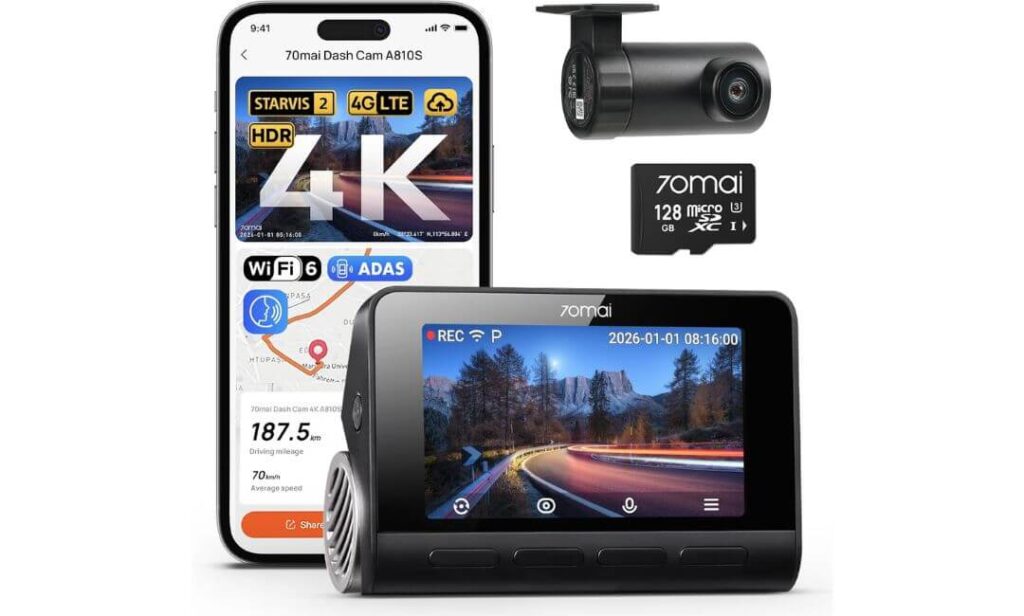
#1. 70mai 4K Dash Cam Front and Rear
Quick Specs:
- True 4K Front + 1080P Rear Recording
- Sony STARVIS 2 IMX678 Front + IMX662 Rear Sensors
- Optional 4G LTE Remote Monitoring
- WiFi 6 for noticeably faster video transfers
- Advanced AI Motion Detection 2.0
- Built-in GPS with 5-Satellite Positioning
- HDR Processing with Full-Color Low-Light Enhancement
- Voice Commands and ADAS Driver Alerts
- Supports up to 512GB Storage
- Hardwire-Compatible Parking Surveillance
There are products that look impressive on a spec sheet, and then there are products that make sense the moment you imagine an actual incident. This is one of those rare setups that feels designed by people who understand what happens after an accident rather than before one.
The biggest reason it sits at the top of this Hyundai Sonata guide is the balance. The front camera records in true 4K using Sony’s STARVIS 2 IMX678 sensor while the rear camera uses a dedicated STARVIS 2 sensor of its own. That matters because many dual-camera systems invest heavily in the front lens and treat the rear camera as an afterthought. Here, both ends of the vehicle are getting serious hardware. Whether you’re navigating heavy commuter traffic, tight parking garages, or long interstate drives, details remain surprisingly clean once lighting conditions begin to deteriorate.
Where it starts separating itself from typical dual-channel systems is connectivity. WiFi 6 dramatically reduces the frustration of transferring large 4K files, while optional LTE access allows remote vehicle visibility, location tracking, and motion alerts when paired with the appropriate hardwire setup. For Sonata owners who frequently leave their vehicle in public parking lots, airport garages, apartment complexes, or workplace parking structures, this creates a level of awareness that standard dash cams simply cannot provide.
(What impressed us most was how well the hardware, software, connectivity, and parking features work together rather than feeling like separate features added for marketing purposes.)
What Stood Out During Evaluation
- Dual STARVIS 2 sensors instead of focusing only on the front camera
- Optional LTE remote monitoring adds genuine real-world value
- AI motion detection is more intelligent than basic motion-trigger recording
- WiFi 6 noticeably improves download and footage review speeds
- Strong balance between image quality, parking protection, and daily usability
One Small Consideration
- Full remote monitoring capabilities require the optional hardwire/LTE setup for maximum functionality
Hyundai Sonata Installation and Compatibility Notes
The windshield angle and mirror housing design of the Hyundai Sonata work particularly well with this setup. The front unit tucks neatly behind the rear-view mirror area without creating a distracting presence from the driver’s seat, while the rear camera cable can be routed cleanly through the headliner and weather stripping.
For owners who want parking surveillance, a hardwire kit is strongly recommended. The Sonata’s fuse layout makes installation relatively straightforward for experienced DIY users, while professional installation typically takes less than an hour. Once connected properly, low-voltage protection helps prevent unnecessary battery drain during extended parking periods.
The Insider Pro-Tip
Many buyers focus entirely on video resolution and ignore how they will actually retrieve footage when something happens. In real-world ownership, convenience matters.
A camera that records great footage but makes downloads slow and frustrating often becomes a headache when you need evidence quickly. The combination of STARVIS 2 imaging, WiFi 6 transfers, GPS tracking, and optional LTE access is what makes this recommendation stand out. Months after installation, those convenience features tend to matter just as much as the image quality itself.
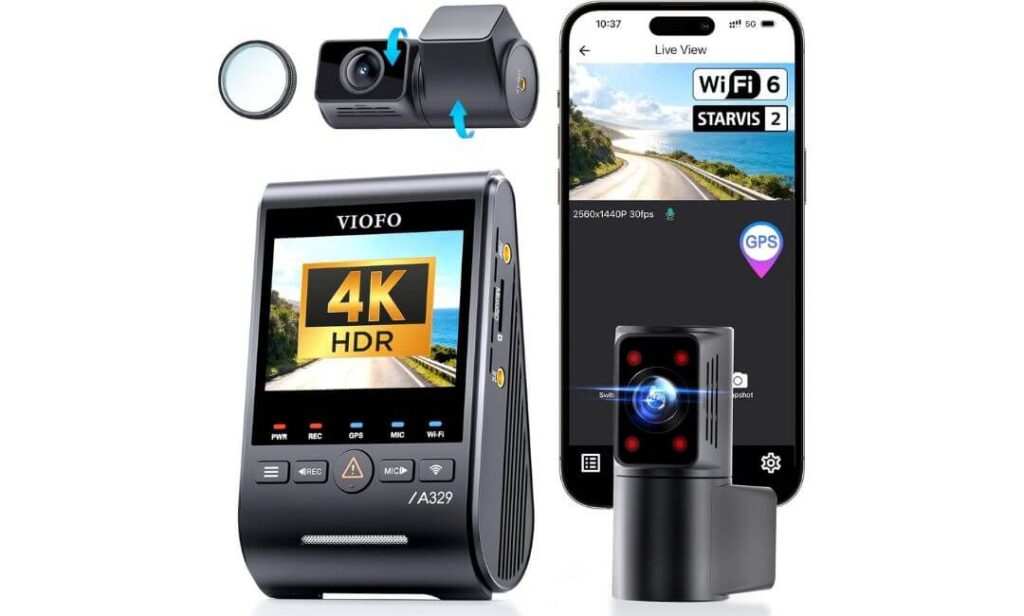
#2. VIOFO A329S 4K 3 Channel Dash Cam
Quick Specs:
- True 4K Front + 2K Interior + 2K Rear Recording
- All-Channel STARVIS 2 Sensors
- Massive 210° Cabin Fisheye Coverage
- Advanced 3-Channel HDR Processing
- Ultra-Fast WiFi 6 Connectivity
- Supports up to 4TB SSD Storage
- Built-In GPS with Multi-Satellite Tracking
- Impact-Activated Low-Power Parking Mode
- Voice Commands for Hands-Free Operation
- Premium Coaxial Cable Architecture for Cleaner Installation
What immediately separates this setup from most dash cams is that it doesn’t think like a front-facing camera. It thinks like a complete vehicle recording system.
Most three-channel dash cams add an interior camera because they can. This one feels like it was engineered around it. The massive 210-degree cabin lens covers nearly everything happening inside the vehicle while the dedicated 2K rear camera keeps watch behind. Combined with a 4K STARVIS 2 front sensor, the result is an unusually complete record of what actually happened before, during, and after an incident.
The bigger story, however, is consistency. All three cameras use STARVIS 2 technology. That means the rear and cabin footage don’t suddenly become weak links after sunset. During night driving, underground parking, rainy commutes, and poorly lit roads, the system maintains a level of detail that many competing three-channel setups struggle to match. The addition of HDR across all channels further improves visibility when headlights, streetlights, and dark surroundings compete for exposure.
Then there is storage. Most drivers will never need it, but serious road-trippers, rideshare drivers, business users, and owners who simply hate overwriting footage will appreciate support for up to 4TB SSD storage. That’s an entirely different category of recording capacity compared to typical dash cams.
(If your priority is capturing every angle around your Sonata rather than simply recording the road ahead, this is one of the most complete solutions currently available.)
What Earned Its Spot on This List
- Three STARVIS 2 sensors working across all recording channels
- Massive 210° interior coverage with minimal blind spots
- Outstanding license plate capture during day and night driving
- WiFi 6 delivers exceptionally fast footage transfers
- Up to 4TB SSD support for long-term recording flexibility
A Practical Ownership Note
- To unlock its full parking-monitoring potential, the optional hardwire kit is worth considering during installation
Hyundai Sonata Compatibility and Installation Experience
The Hyundai Sonata’s cabin dimensions work particularly well with the three-camera layout. The interior lens gains a broad view of both front and rear seating areas without needing unusual mounting positions, while the rear camera cable routes cleanly through factory trim panels.
Installation is slightly more involved than a traditional dual-channel setup because of the additional interior camera connection, but VIOFO’s slim coaxial cables make cable management easier than many triple-camera systems. For owners interested in parking surveillance, pairing the camera with the HK4 or HK6 hardwire kit provides the most seamless long-term experience.
The Insider Pro-Tip
Many buyers focus on recording resolution and completely overlook recording coverage.
In real-world incidents, the question is often not “How sharp is the footage?” but “Did the camera actually capture what happened?” That’s why triple-channel systems continue gaining popularity among experienced drivers. The combination of front, rear, and ultra-wide interior coverage dramatically reduces the chances of missing a critical moment. For Hyundai Sonata owners who regularly drive with passengers, teenagers, clients, or family members, that additional perspective can become invaluable when reviewing an event later.
#3. Pelsee S3 Touch 4K Dash Cam Front and Rear
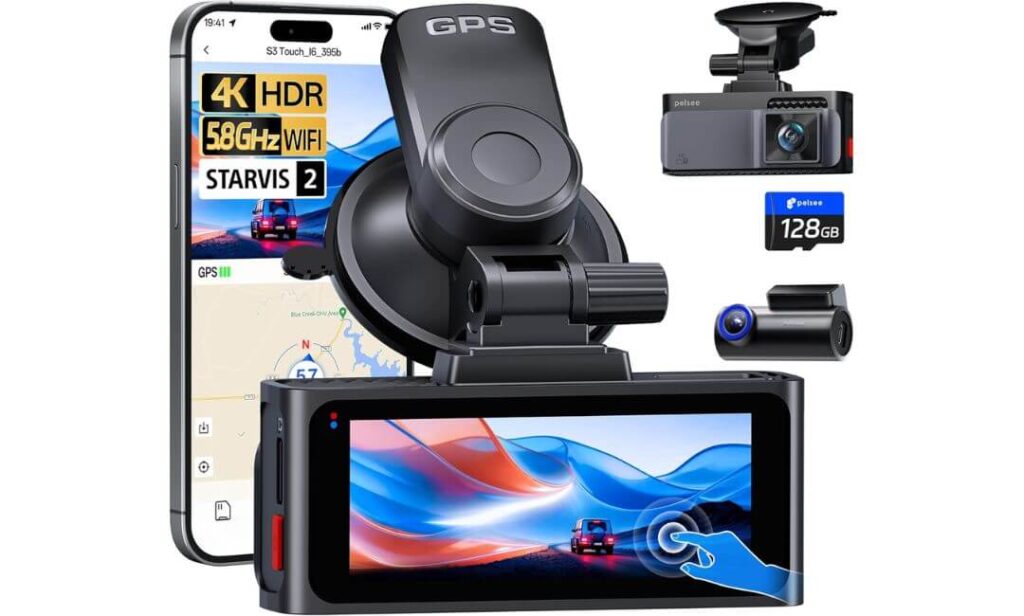
Quick Specs:
- 4K HDR Front + 1080P Rear Recording
- Sony STARVIS 2 Sensor Technology
- Advanced STARLIT Full-Color Night Vision
- Built-In WiFi 6 and GPS
- Large 3.39-Inch IPS Touchscreen
- Intelligent ADAS Driving Assistance
- Voice-Controlled Operation
- 128GB Memory Card Included
- Parking Monitoring with Impact Detection
- Supports Up to 256GB Storage Expansion
Surprisingly, this wasn’t the camera that impressed us most during daylight testing.
It was after sunset when this system started making a serious case for itself. Hyundai Sonata owners who spend time on poorly lit highways, rural backroads, late-night commutes, underground garages, or dim residential streets will immediately understand why it earned a place on this list. The combination of Sony STARVIS 2 hardware and Pelsee’s STARLIT full-color night technology creates footage that remains unusually natural when many dash cams begin losing detail.
The real strength here isn’t simply brightness. It’s the ability to maintain recognizable details during difficult lighting transitions. Entering tunnels, exiting parking garages, facing oncoming headlights, or driving through areas with uneven street lighting can expose weaknesses in many cameras. The HDR processing helps smooth out those transitions while preserving vehicle details, road markings, and surrounding traffic.
What also makes this system easy to live with every day is how approachable everything feels. The large touchscreen, responsive voice controls, built-in GPS, and fast WiFi 6 connectivity remove much of the frustration that owners often experience when reviewing footage. Add the included 128GB memory card and most Sonata owners can start recording immediately without shopping for additional accessories.
(For drivers who spend more time driving after dark than they do chasing technical specifications, this package delivers a surprisingly complete ownership experience.)
What Impressed Us Most
- STARVIS 2 sensor paired with impressive full-color night visibility
- HDR processing handles difficult lighting transitions extremely well
- Included 128GB memory card adds immediate out-of-box value
- Large touchscreen makes settings and playback easier than many competitors
- WiFi 6 delivers fast access to footage through the mobile app
A Small Ownership Detail Worth Knowing
- Drivers planning to use continuous parking surveillance will benefit from adding the optional hardwire kit during installation
Hyundai Sonata Compatibility and Installation Notes
The compact front camera fits naturally behind the Sonata’s rear-view mirror area and doesn’t create unnecessary windshield clutter. The included installation tools also make cable routing cleaner than many first-time owners expect.
For most Sonata trims, installation can be completed using the included power adapter and factory power outlet. Owners interested in parking monitoring features should consider hardwiring the camera, which allows the system to take full advantage of its monitoring capabilities while incorporating battery-protection safeguards.
The Insider Pro-Tip
Many buyers assume every STARVIS 2 camera performs similarly once the sun goes down.
That isn’t always true. Lens tuning, HDR processing, image optimization, and software calibration often make a larger difference than spec sheets suggest. What stood out here was not simply the ability to brighten dark scenes, but the ability to keep them looking believable. When reviewing footage after an incident, realistic detail is often more valuable than artificially bright video. For Hyundai Sonata owners who regularly drive at night, that distinction matters more than most marketing pages will ever mention.
#4. REDTIGER F7NA 4K Dual Dash Cam
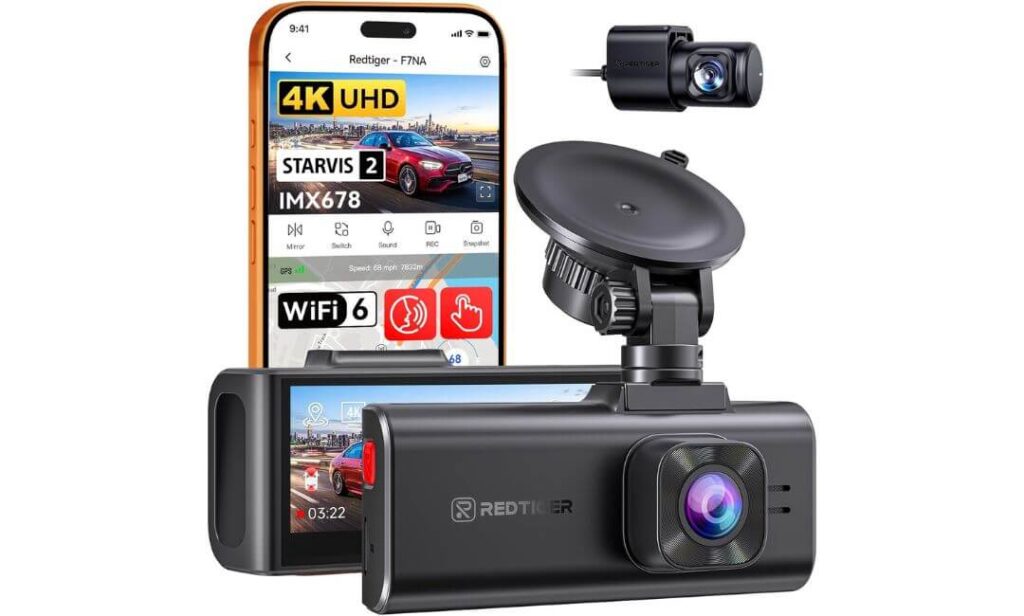
Quick Specs:
- True 4K Front + 1080P Rear Recording
- Sony STARVIS 2 IMX678 8MP Sensor
- Fast 5GHz WiFi Transfers up to 20MB/s
- HDR and WDR Image Processing
- Built-In GPS Tracking
- Voice Commands and Touchscreen Control
- Supercapacitor-Based Design
- Parking Monitoring Support
- Supports Up to 512GB Storage
- OTA Firmware Updates Through App
Sometimes the smartest purchase is not the one with the longest feature list.
It’s the one that focuses on the features people actually use every day. That’s exactly where this setup shines. Instead of chasing LTE subscriptions, multiple cabin cameras, or oversized displays, the focus stays on the essentials that matter most to Hyundai Sonata owners: clear evidence, dependable operation, quick access to footage, and strong low-light performance.
The foundation is Sony’s 8MP STARVIS 2 IMX678 sensor, which remains one of the most respected imaging sensors currently found in consumer dash cams. Combined with HDR and WDR processing, it does an excellent job balancing difficult lighting situations such as bright headlights, reflective road signs, parking garages, tunnels, and nighttime intersections. The result is footage that remains detailed without appearing artificially sharpened or overly processed.
One feature that deserves more attention is the extremely fast 5GHz WiFi system. Many owners don’t realize how important this becomes until they actually need footage. Waiting several minutes for a clip to transfer feels outdated once you’ve experienced download speeds approaching 20MB/s. When paired with the responsive mobile app, reviewing and saving footage becomes refreshingly simple.
(This is the type of dash cam that quietly does its job every day without demanding constant attention from the owner.)
What Made It Stand Out
- Excellent STARVIS 2 IMX678 image quality for the price
- Fast 5GHz WiFi transfers reduce waiting time dramatically
- HDR and WDR improve footage consistency in difficult lighting
- Heat-resistant supercapacitor design inspires long-term confidence
- Straightforward setup without unnecessary complexity
A Small Ownership Detail
- A memory card is not included, so budgeting for a quality high-endurance card is recommended from day one
Hyundai Sonata Installation and Daily Use
This is one of the easiest cameras in this guide to integrate into the Sonata’s cabin. The compact front unit sits neatly behind the mirror area while the included rear cable length provides enough flexibility for clean routing through the vehicle’s trim panels.
Drivers who primarily want front-and-rear protection without additional interior cameras or LTE hardware will likely appreciate the simplicity. Installation remains approachable for first-time dash cam owners, while the optional hardwire kit can be added later if parking surveillance becomes a priority.
The Insider Pro-Tip
Many buyers spend too much time comparing resolution numbers and not enough time evaluating reliability.
In practice, the best dash cam is often the one that records every drive, survives seasonal temperature swings, transfers footage quickly, and doesn’t require constant troubleshooting. The use of a supercapacitor instead of a traditional battery may not look exciting on a product page, but experienced dash cam users know it can make a meaningful difference in long-term durability. That’s one of the reasons this model continues to punch above its price category for Hyundai Sonata owners looking for dependable daily protection.
#5. BOTSLAB G980H 4K 3-Channel Dash Cam
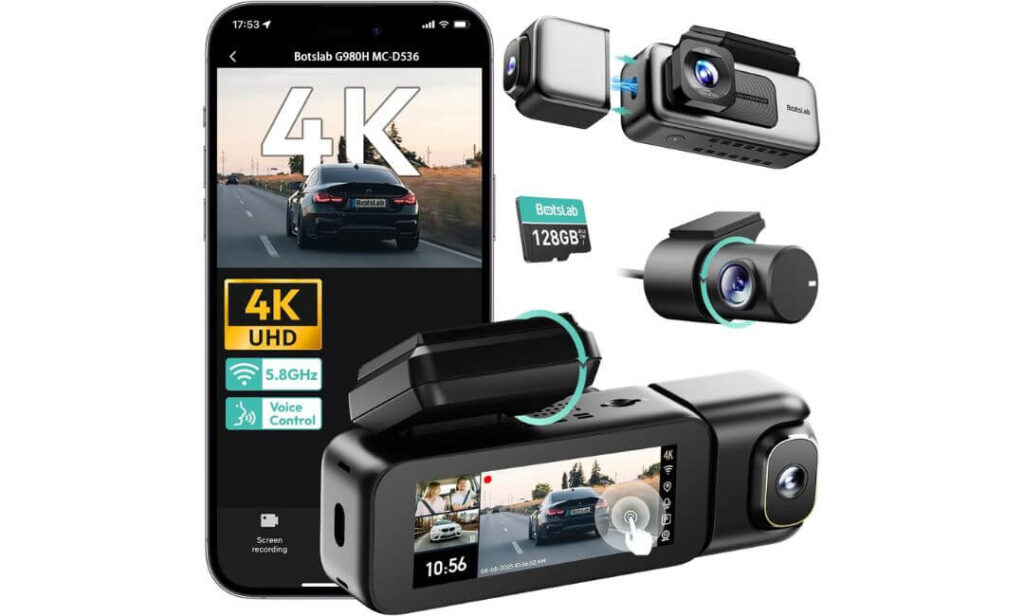
Quick Specs:
- 4K Front + 1080P Rear + 1080P Interior Recording
- Triple-Camera 360° Coverage System
- Unique 8-Second Pre-Impact Recording Buffer
- Built-In GPS Tracking
- Fast Dual-Band 5GHz WiFi Connectivity
- 3.18-Inch Touchscreen Interface
- Voice Commands and App Control
- Infrared Interior Night Vision
- Supercapacitor-Based Reliability
- Includes 128GB Memory Card
Interestingly, this wasn’t selected because of its 4K resolution.
It earned a place on this list because it solves a problem many Hyundai Sonata owners don’t think about until they need footage from inside the vehicle. Whether you’re driving family members, teenagers, clients, rideshare passengers, or simply want a complete record of what happened during an incident, interior coverage can sometimes become just as important as what occurred outside the vehicle.
What immediately separates this setup from most traditional front-and-rear systems is its approach to coverage. The combination of front, rear, and cabin recording creates a much broader picture of events surrounding the vehicle. The 170-degree front lens, dedicated rear camera, and interior camera work together to reduce blind areas and create a more complete visual record than standard dual-camera designs.
One feature that genuinely caught our attention was the 8-second pre-impact recording buffer. Most dash cams start protecting footage when a collision is detected. This system attempts to preserve moments leading up to the event as well. For insurance disputes, parking lot incidents, sudden lane changes, or unexpected traffic situations, those few extra seconds can provide important context that ordinary recordings often miss.
The package also feels unusually complete right out of the box. The included 128GB card, GPS functionality, touchscreen controls, voice commands, parking surveillance options, and infrared interior recording mean most Sonata owners won’t feel the need to purchase additional accessories immediately.
(This is one of the few systems in this guide that prioritizes complete situational awareness over pure image-resolution numbers.)
What Helped It Stand Out
- Triple-camera coverage creates a more complete incident record
- Unique 8-second pre-crash buffer adds valuable context
- Infrared interior camera performs well after dark
- Included 128GB card reduces additional startup costs
- Supercapacitor design supports long-term reliability in varying temperatures
A Small Ownership Observation
- The companion app experience generally works well, although occasional connectivity refreshes may be needed depending on phone and network settings
Hyundai Sonata Installation and Practical Use
The Hyundai Sonata’s cabin layout works particularly well with this three-camera configuration. The front unit mounts cleanly near the rear-view mirror, while the rear and interior cameras gain broad visibility without requiring unusual positioning.
Owners interested in parking protection should consider the optional hardwire kit to unlock collision monitoring, time-lapse recording, and sentry-style surveillance. The included installation accessories make cable routing relatively straightforward, even for drivers installing their first dash cam.
The Insider Pro-Tip
Many people assume the most important footage always comes from the front camera.
Real-world incidents often prove otherwise. Passenger disputes, rear-end impacts, parking lot encounters, vandalism, rideshare claims, and hit-and-run investigations frequently depend on footage from multiple angles. That’s where systems like this create value. The goal isn’t simply to record a drive—it’s to understand the full story of what happened. For Hyundai Sonata owners who want the broadest possible view of an event, that extra perspective can be worth far more than another jump in resolution.
Best Hyundai Sonata Dash Cams Compared: Features That Actually Matter Daily
Why More Hyundai Sonata Owners Are Installing Dash Cams Than Ever Before
The Hyundai Sonata has evolved into one of the most technology-focused midsize sedans on the road. It offers advanced safety systems, modern driver assistance features, and a comfortable cabin designed for daily commuting and long-distance travel. Yet even with all that technology, one thing still cannot be replaced after an incident: reliable video evidence.
Whether you drive through busy urban traffic, spend hours on the highway, park in public lots during work, or leave your vehicle overnight in apartment complexes, a quality dash cam adds a layer of protection that factory safety systems simply cannot provide. The best dash cams do more than record accidents. They help establish facts, protect against false claims, document unexpected events, and provide peace of mind every time you leave the driver’s seat.
Clear Video Evidence Can Save Significant Time and Stress
Most drivers never think about video evidence until the moment they need it.
A minor parking lot collision, an unexpected lane-change dispute, a hit-and-run incident, or damage discovered after returning to your parked vehicle can quickly become a frustrating situation when there is no proof showing what actually happened. In many cases, the difference between a simple insurance claim and a lengthy dispute comes down to whether reliable footage exists.
Modern dash cams such as the 70mai A810S, VIOFO A329S, and REDTIGER F7NA record high-resolution footage capable of capturing road conditions, vehicle movements, traffic signals, and surrounding activity with remarkable detail. Having access to that information immediately after an event often eliminates uncertainty and helps establish an accurate timeline.
Front and Rear Recording Reduces Blind Areas Around the Vehicle
One of the biggest mistakes drivers make is assuming a front-facing camera alone is enough.
While a front camera captures what happens ahead of the vehicle, many real-world incidents occur from the rear or involve activity taking place outside the primary field of view. Rear-end collisions, parking lot impacts, tailgating situations, and hit-and-run incidents frequently involve information that a single-camera system cannot capture.
This is why every recommendation in this guide includes rear recording capability, while models like the VIOFO A329S and BOTSLAB G980H expand coverage even further through dedicated interior recording. The goal is not simply recording the road ahead. The goal is creating a complete picture of what happened around your Sonata.
Parking Protection Has Become Just as Important as Driving Protection
Many vehicle owners focus entirely on what happens while driving and overlook what happens when the vehicle is parked.
In reality, some of the most frustrating incidents occur when nobody is inside the vehicle. Shopping center parking lots, office garages, apartment complexes, airport parking structures, and curbside parking areas can all expose a vehicle to accidental damage, vandalism, or hit-and-run situations.
This is where modern parking-monitoring technology becomes valuable. Features such as impact detection, motion-triggered recording, AI monitoring systems, sentry-style surveillance, and time-lapse recording allow the camera to continue protecting the vehicle even after the engine is turned off. For Hyundai Sonata owners who frequently park in public areas, this capability can be every bit as important as daytime recording quality.
Modern Dash Cams Complement Hyundai’s Existing Safety Technology
The Sonata already offers excellent safety features, but those systems are designed to help prevent incidents.
A dash cam serves a different purpose.
Driver assistance technologies may warn about potential hazards, lane departures, or collision risks. A dash cam creates a permanent visual record of events before, during, and after those situations occur. Together, these systems create a stronger overall safety strategy than either one can provide independently.
This is one reason many Sonata owners specifically seek models that combine features such as STARVIS 2 sensors, GPS tracking, HDR recording, parking surveillance, and advanced connectivity options. The objective is not simply adding another gadget to the windshield. It is creating a dependable source of evidence that remains available whenever questions arise.
The Real Value Often Appears Months After Installation
One interesting thing happens when talking to long-term dash cam owners.
Most will tell you they eventually forget the camera is even there. It quietly records every trip, every commute, every road trip, and every parking session without demanding attention.
Then one day something unexpected happens.
That single incident may justify the entire purchase.
Whether it involves proving fault after an accident, identifying a vehicle involved in a hit-and-run, documenting suspicious activity near your parked Sonata, or simply reviewing what happened during an unusual situation, the footage becomes far more valuable than the cost of the camera itself.
That is ultimately why a quality dash cam remains one of the smartest upgrades a Hyundai Sonata owner can make.
Buying Guide: How to Choose the Best Dash Cam for a Hyundai Sonata
Shopping for a dash cam sounds simple until you start comparing specifications. Suddenly every product claims to have 4K recording, night vision, parking protection, GPS tracking, smartphone connectivity, and dozens of other features. The challenge is figuring out which features genuinely improve ownership experience and which simply look good on a product page.
For Hyundai Sonata owners, the right choice usually comes down to matching the camera to the way the vehicle is actually used. A commuter who parks in public garages may prioritize parking surveillance and LTE connectivity. Someone who regularly drives after dark may care more about STARVIS 2 image sensors and HDR processing. A rideshare driver might value cabin recording above everything else.
The goal is not finding the camera with the longest specification sheet. The goal is finding the camera that will continue delivering useful evidence months and years after installation.
Prioritize Image Quality Before Resolution Numbers
Many buyers immediately search for the highest resolution available.
While 4K recording is beneficial, sensor quality often has a larger impact on real-world footage than resolution alone. A well-tuned STARVIS 2 camera will frequently outperform a higher-resolution camera that struggles with dynamic range, glare, shadows, or motion blur.
This is one reason all of the top recommendations in this guide use advanced imaging technology. Models such as the 70mai A810S, VIOFO A329S, Pelsee S3, and REDTIGER F7NA rely on STARVIS 2 hardware because it performs exceptionally well during nighttime driving, poor weather conditions, tunnels, parking garages, and other difficult environments where evidence quality matters most.
When evaluating image quality, pay attention to:
- Sensor generation
- HDR performance
- WDR processing
- License plate readability
- Low-light clarity
- Motion handling during highway speeds
Understand the Difference Between Single, Dual, and Triple-Channel Systems
Not every Hyundai Sonata owner needs the same camera configuration.
Single-camera systems only record the road ahead. While they remain affordable, they leave significant blind areas around the vehicle.
Dual-channel systems add rear recording and are often the best balance for most Sonata owners. They provide front and rear evidence without adding significant installation complexity.
Triple-channel systems introduce interior recording in addition to front and rear coverage. These setups are particularly useful for:
- Family transportation
- Teen drivers
- Business travel
- Rideshare use
- Passenger dispute protection
- Complete incident documentation
For many drivers, a quality dual-channel dash cam will provide the best balance between simplicity and protection. However, drivers wanting maximum coverage may find substantial value in systems like the VIOFO A329S or BOTSLAB G980H.
Evaluate Parking Mode More Carefully Than Most Buyers Do
One of the biggest mistakes buyers make is focusing entirely on driving footage.
Many incidents occur when the vehicle is parked and unattended.
Shopping centers, office complexes, apartment garages, airport parking lots, hotel parking areas, and street parking all create opportunities for damage that occurs long after the driver has left the vehicle.
Modern parking systems now include:
- Impact detection
- Motion-triggered recording
- AI vehicle recognition
- Time-lapse surveillance
- Sentry-style monitoring
- Remote notifications
Drivers who frequently leave their Sonata parked for extended periods should strongly consider cameras with advanced parking capabilities and low-voltage battery protection.
LTE Connectivity Is Becoming More Valuable
A few years ago, LTE dash cams were considered niche products.
Today, they offer benefits that many drivers quickly learn to appreciate.
Systems with LTE support allow owners to:
- Check vehicle location remotely
- Receive motion alerts
- View live camera feeds
- Monitor parked vehicles
- Review incidents without returning to the car
For drivers who regularly leave their Sonata in public areas or travel frequently, LTE connectivity can provide an additional layer of awareness that traditional dash cams cannot match.
Storage Capacity Matters More Than Most People Expect
One of the fastest ways to become frustrated with a dash cam is running out of storage space.
Higher-resolution recording, multiple cameras, HDR processing, and parking surveillance all increase storage demands. A camera recording in 4K with multiple channels can generate significant amounts of footage every week.
Before purchasing, consider:
- Maximum microSD support
- SSD compatibility
- Recording bitrate
- Loop recording efficiency
- Emergency file protection
- Long-term storage requirements
This is one area where products such as the VIOFO A329S stand out thanks to support for up to 4TB SSD storage, providing dramatically more recording capacity than traditional microSD-only systems.
GPS and Evidence Management Should Not Be Overlooked
GPS does more than show your location.
It creates a detailed record of speed, route history, timestamps, and travel data that can become useful when reviewing footage after an incident.
Many insurance claims, traffic disputes, and accident investigations become easier to understand when video evidence is combined with GPS information.
The best systems integrate GPS seamlessly into recorded footage while allowing owners to review routes and events directly through their mobile apps.
App Quality Is Often More Important Than Buyers Realize
The camera itself is only part of the ownership experience.
Most interactions occur through the companion app.
A reliable application should allow owners to:
- Preview live footage
- Download videos quickly
- Adjust settings easily
- Update firmware
- Review GPS data
- Manage emergency files
This is one reason WiFi 6-equipped cameras continue gaining popularity. Faster wireless transfers dramatically improve the experience of retrieving large 4K video files when time matters.
Hardwiring Creates a Better Long-Term Experience
Many Sonata owners initially use the included power adapter, which works perfectly well for basic recording.
However, drivers interested in maximizing their investment should consider hardwiring.
A proper hardwire installation unlocks features such as:
- Parking surveillance
- Impact detection while parked
- Motion-triggered monitoring
- Low-voltage battery protection
- Cleaner cable management
Fortunately, the Hyundai Sonata’s interior design and fuse layout generally allow for clean installations that preserve the factory appearance of the cabin.
What Night Vision Should Actually Look Like
One of the most misunderstood terms in the dash cam industry is “night vision.”
True nighttime performance is not about making footage appear artificially bright.
The best systems preserve realistic detail while maintaining visibility of:
- License plates
- Lane markings
- Vehicle shapes
- Traffic signs
- Pedestrians
- Road hazards
Advanced sensors such as STARVIS 2 combined with effective HDR processing deliver the most consistent results because they improve both brightness and detail retention simultaneously.
The Most Important Buying Question to Ask Yourself
Before comparing another specification sheet, ask one simple question:
“What type of incident am I most likely trying to capture?”
The answer usually points toward the correct camera.
If parking protection matters most, focus on advanced parking modes. If nighttime driving is common, prioritize STARVIS 2 hardware. If complete vehicle coverage is the goal, look at multi-channel systems. If remote monitoring is important, consider LTE-equipped models.
Once you understand your primary objective, choosing the best dash cam for your Hyundai Sonata becomes much simpler, and far more likely to deliver satisfaction long after the initial purchase.
Hyundai Sonata Dash Cam Installation Guide: Getting the Cleanest and Most Reliable Setup
A high-quality dash cam is only as good as the way it is installed. Even the best camera can become frustrating to use if cables are visible, the lens is positioned incorrectly, or the power setup limits important features such as parking surveillance.
The good news is that the Hyundai Sonata is one of the easier midsize sedans to work with. The windshield design, headliner space, trim layout, and rear-window access make it relatively straightforward to install both dual-channel and triple-channel dash cams while maintaining a factory-like appearance.
Step 1: Choose the Correct Mounting Position
Before attaching anything permanently, sit in the driver’s seat and identify the area directly behind the rear-view mirror.
This location is usually the best mounting position because it provides:
- Maximum road visibility
- Minimal windshield obstruction
- Better protection from direct sunlight
- A cleaner appearance from inside and outside the vehicle
Avoid mounting the camera too low on the windshield. A lower position may slightly improve road visibility in recordings but often becomes distracting during daily driving.
For Hyundai Sonata owners, the ideal location is typically just beneath or slightly behind the mirror housing where the camera remains largely hidden from the driver’s normal field of view.
Step 2: Test the Camera Before Hiding Any Cables
One of the most common installation mistakes is routing every cable before confirming that the camera functions correctly.
Before final installation:
- Connect the camera to power
- Verify front camera recording
- Verify rear camera recording
- Check GPS connectivity
- Test WiFi and app pairing
- Confirm memory card recognition
- Review sample footage
Spending five minutes testing the system can save significant troubleshooting time later.
Step 3: Route the Front Camera Cable Through the Headliner
Most modern dash cams include trim tools specifically designed for cable management.
Carefully tuck the power cable between the windshield and headliner. Continue routing along the passenger-side A-pillar and toward the chosen power source.
Take your time during this stage.
A properly routed cable should be almost completely invisible once installation is finished.
The Sonata’s interior trim generally provides enough space to conceal wiring without forcing cables or damaging clips.
Step 4: Install and Route the Rear Camera
Rear camera placement often determines how professional the finished installation looks.
The rear lens should be mounted high on the rear glass where it can see the road clearly without interference from headrests or cargo.
For cable routing:
- Follow the headliner toward the rear of the cabin
- Route through weather stripping where appropriate
- Use factory trim channels whenever possible
- Leave slight cable slack near moving panels
Most dual-channel systems included in this guide provide sufficient cable length for clean installation throughout the entire Sonata cabin.
Step 5: Verify Camera Angles Before Finalizing
Once both cameras are mounted, review live footage through the camera screen or companion app.
The front camera should capture:
- The full lane ahead
- A small portion of the hood
- Traffic signals
- Adjacent traffic lanes
The rear camera should capture:
- Vehicles directly behind
- Multiple traffic lanes
- Rear traffic activity
- Parking incidents
Small angle adjustments at this stage can significantly improve footage quality later.
Hardwire Kit vs. Cigarette-Lighter Power
Many Hyundai Sonata owners wonder whether hardwiring is truly necessary.
The answer depends on how you plan to use the camera.
Cigarette-Lighter Power
This option is ideal for drivers who primarily want protection while driving.
Benefits include:
- Fast installation
- No fuse-box access required
- Easy removal
- Minimal installation complexity
For many daily drivers, this setup works perfectly well.
Hardwire Installation
Hardwiring becomes worthwhile when parking protection is important.
Benefits include:
- Continuous parking surveillance
- Impact detection while parked
- Motion-triggered recording
- Cleaner cable management
- Automatic low-voltage protection
Products such as the 70mai A810S, VIOFO A329S, Pelsee S3, REDTIGER F7NA, and BOTSLAB G980H all gain significant functionality when paired with a proper hardwire kit.
For drivers who regularly park in public lots, apartment complexes, office garages, or airport parking facilities, hardwiring is often the better long-term solution.
Cable Routing Tips That Preserve a Factory Appearance
One thing separates professional-looking installations from amateur ones: cable management.
The best dash cam installations are often the ones you barely notice.
To maintain a clean Sonata interior:
- Follow factory trim lines whenever possible
- Avoid crossing visible dashboard surfaces
- Keep excess cable hidden behind panels
- Secure loose wiring to prevent rattles
- Use included adhesive clips only when necessary
- Avoid routing cables across airbag deployment zones
When completed correctly, passengers should have difficulty noticing that additional wiring exists at all.
Create a Simple Maintenance Record From Day One
Most owners never think about maintenance until a memory card fails or a firmware update becomes necessary.
A simple habit can prevent future headaches.
After installation:
- Record the installation date
- Write down the memory card capacity
- Note firmware version numbers
- Save hardwire kit details
- Document app login information
Keeping this information inside the owner’s manual or a maintenance folder makes future troubleshooting much easier.
Perform a Quick Monthly System Check
Dash cams are designed to operate quietly in the background, but occasional checks remain important.
Once a month:
- Confirm recording is active
- Review recent footage
- Check camera alignment
- Verify GPS functionality
- Test app connectivity
- Confirm storage capacity
- Look for firmware updates
This simple routine takes only a few minutes and helps ensure the camera remains ready when it is needed most.
The Installation Mistake Most Owners Regret
The most common regret is not planning for future needs.
Many Sonata owners initially install their camera using the included power adapter, then later decide they want parking surveillance, motion detection, or remote monitoring features. That often means repeating part of the installation process.
If you believe you may eventually want advanced parking protection, it is usually smarter to install the hardwire kit during the original installation. The additional effort is minimal, and it allows the dash cam to deliver its full range of capabilities from the very beginning.
Hyundai Sonata Dash Cam Tips and Best Practices for Long-Term Reliability
Buying a quality dash cam is only the first step. What separates a camera that works flawlessly for years from one that becomes unreliable often comes down to maintenance habits rather than hardware quality.
Many owners assume that once a dash cam is installed, it can simply be ignored forever. In reality, dash cams continuously record, overwrite files, manage storage, process GPS data, and handle extreme temperatures throughout the year. A few simple habits can dramatically improve reliability, preserve footage quality, and help ensure your camera is ready when you actually need it.
Keep Firmware Updated Without Waiting for Problems
One of the most overlooked maintenance tasks is firmware management.
Manufacturers frequently release updates that improve stability, enhance image processing, optimize parking mode performance, fix app connectivity issues, and improve overall system reliability. Unfortunately, many owners never install these updates.
A good habit is checking for updates every few months through the companion app.
Most modern systems such as the 70mai A810S, VIOFO A329S, Pelsee S3, REDTIGER F7NA, and BOTSLAB G980H allow firmware updates directly through their mobile applications, making the process much easier than it was a few years ago.
When updating firmware:
- Keep the vehicle powered during installation
- Use a fully charged phone
- Maintain a stable WiFi connection
- Avoid disconnecting power during updates
- Verify settings after the update completes
A few minutes spent updating firmware can prevent many of the issues that owners incorrectly blame on hardware.
Pair the Mobile App Correctly From the Beginning
Many drivers only open the dash cam app after an incident occurs.
That is usually the worst possible time to discover pairing issues.
Immediately after installation:
- Connect the camera to the app
- Verify live-view functionality
- Confirm video downloads work properly
- Check GPS synchronization
- Enable notifications if available
- Learn how emergency clips are stored
Understanding the app before you need evidence makes retrieval dramatically easier during stressful situations.
Format Memory Cards Regularly
Memory cards are among the hardest-working components in any dash cam.
Unlike ordinary storage devices, dash cam cards are constantly recording, deleting, and rewriting data every day. Over time, file fragmentation can affect performance and reliability.
A simple formatting routine helps maintain stability.
For most Hyundai Sonata owners:
- Format the card every 4 to 8 weeks
- Use the camera’s built-in formatting option whenever possible
- Back up important footage before formatting
- Inspect storage health periodically
This small habit often prevents recording errors before they appear.
Choose High-Endurance Storage Whenever Possible
Not all memory cards are created for continuous video recording.
Dash cams place far more stress on storage media than phones, tablets, or cameras.
For long-term reliability:
- Use high-endurance microSD cards
- Purchase storage from reputable brands
- Match storage capacity to recording needs
- Replace aging cards proactively
Owners using high-resolution systems with parking monitoring should pay particular attention to storage quality because those cameras generate significantly more recording activity.
Understand When Parking Mode Is Actually Useful
Parking mode is one of the most valuable dash cam features available today, but many drivers either overuse it or fail to use it when it matters most.
Parking mode becomes especially valuable in:
- Apartment complexes
- Shopping centers
- Airport parking lots
- Public garages
- Street parking environments
- Overnight parking situations
If the vehicle is parked inside a secured private garage every night, continuous parking monitoring may be less critical.
The key is matching the feature to your actual parking habits rather than leaving it active simply because the option exists.
Learn How to Protect Important Footage Immediately
One mistake many owners make is assuming every important recording will automatically remain saved forever.
Most dash cams use loop recording, which means older footage is eventually overwritten.
After any noteworthy event:
- Lock the file immediately
- Download the footage to your phone
- Create a cloud backup
- Save a copy to a computer or external drive
- Document the date and event details
These steps take only a few minutes and can prevent losing valuable evidence later.
Create a Personal Backup Routine
Think of your dash cam as a witness.
Like any witness, its value depends on preserving what it saw.
For owners who travel frequently, drive long distances, or use parking surveillance extensively, a regular backup routine is highly recommended.
Many experienced dash cam users:
- Review footage monthly
- Save unusual incidents
- Archive important trips
- Store critical recordings in multiple locations
Modern WiFi 6 systems make this process significantly faster than older generations of cameras.
Check Camera Alignment Every Few Weeks
It sounds simple, but it matters.
Road vibrations, temperature changes, windshield cleaning, and accidental bumps can slightly alter camera positioning over time.
Every few weeks:
- Review a recent clip
- Verify road visibility
- Confirm rear camera alignment
- Check cabin camera coverage if applicable
- Make small adjustments if necessary
Even minor angle corrections can improve evidence quality dramatically.
Protect the Windshield Area Around the Lens
Many image-quality complaints are not caused by the camera.
They are caused by the glass in front of it.
Dust, fingerprints, interior haze, road grime, and residue can all reduce clarity.
For best results:
- Clean the windshield regularly
- Wipe the lens carefully
- Remove fingerprints immediately
- Inspect after seasonal weather changes
A clean lens and windshield often improve footage more than changing camera settings.
Know What to Do After an Incident
When an accident or unusual event occurs, emotions can make people forget important steps.
A simple routine helps.
After the situation is safe:
- Lock the footage
- Take photos of the scene
- Save recordings to your phone
- Create a second backup
- Preserve GPS information
- Avoid editing original files
Keeping the original recording intact can be important if footage is later needed for insurance or legal purposes.
The Habit That Experienced Dash Cam Owners Follow
The most experienced dash cam owners do not constantly adjust settings or obsess over specifications.
Instead, they focus on consistency.
They update firmware occasionally, format storage periodically, verify recordings from time to time, and back up important footage when necessary.
Those simple habits help ensure that when something unexpected finally happens, the camera performs exactly as intended. And ultimately, that is the entire reason a dash cam is there in the first place.
FAQs About Hyundai Sonata Dash Cam
Will a dash cam affect any of the Hyundai Sonata’s factory safety cameras or driver-assistance features?
In most cases, no. The important factor is placement rather than the dash cam itself.
Modern Hyundai Sonata models use sensors and cameras around the windshield area for features such as lane-keeping assistance, forward-collision warning, adaptive cruise control, and traffic-sign recognition. A properly installed dash cam should sit behind or slightly below the rear-view mirror area without obstructing those systems.
The mistake some owners make is mounting a large camera directly in front of factory sensors. Before finalizing installation, always check visibility from both the driver’s seat and the vehicle’s camera housing area. A clean installation not only looks better, but also ensures all factory safety systems continue operating exactly as intended.
For a Hyundai Sonata, is STARVIS 2 really worth paying extra for over a standard 4K dash cam?
This is one of the most important questions buyers should ask.
Many standard 4K dash cams produce excellent footage on bright sunny days. The difference appears when conditions become difficult. Rain, glare, tunnels, parking garages, poorly lit roads, and nighttime highway driving are where STARVIS 2 technology begins to separate itself.
In real-world ownership, the ability to read a license plate at night is usually more valuable than simply having a higher resolution number on the product box. That is why every camera we ranked near the top of this guide uses STARVIS 2 imaging technology. It improves the situations where evidence is often hardest to capture.
Why do experienced Hyundai Sonata owners often choose parking mode even if they rarely use it?
Because many incidents happen when nobody is inside the vehicle.
A surprising number of insurance claims involve situations such as:
- Parking lot scrapes
- Hit-and-run damage
- Door dings
- Vandalism
- Unidentified vehicle impacts
- Overnight incidents
Drivers often spend hours researching driving footage while overlooking what happens when the vehicle is parked. A quality parking mode effectively extends protection beyond the time you spend behind the wheel. Even if it never records an incident, many owners appreciate knowing the system is watching when they are not.
Is LTE remote monitoring genuinely useful, or is it just another feature most drivers never use?
The answer depends entirely on where and how the vehicle is parked.
For owners who primarily park inside a private garage, LTE may not provide significant day-to-day value. However, for drivers who frequently leave their Sonata at airports, office garages, apartment complexes, hotels, or public parking areas, the experience can be very different.
Being able to receive alerts, check vehicle status, view recorded events, or confirm the vehicle’s location remotely creates a level of awareness that traditional dash cams cannot provide. It is not a feature everyone needs, but drivers who benefit from it tend to become strong advocates once they have lived with it.
What is the most overlooked mistake that causes dash cam problems years after installation?
Most reliability issues are not caused by the camera itself.
The biggest culprit is usually storage maintenance.
Dash cams write and overwrite data continuously, often every day of the year. Over time, memory cards experience wear, file fragmentation, and reduced performance. Owners sometimes blame the camera when the real issue is an aging storage card that has been recording nonstop for months or years.
A simple maintenance routine goes a long way:
- Format the memory card periodically
- Check for firmware updates
- Review recent recordings occasionally
- Replace aging cards proactively
- Verify parking mode is functioning correctly
The owners who follow these habits rarely experience major reliability problems, even after years of daily use.
Final Thoughts
After comparing the latest generation of dash cams available for the Hyundai Sonata, one thing became very clear: the best choice is not necessarily the camera with the longest feature list. The right choice is the one that matches how you actually use your vehicle.
If you want the most complete blend of video quality, remote monitoring, parking protection, and everyday usability, the 70mai 4K Dash Cam Front and Rear remains our top overall recommendation. It delivers the balance most Sonata owners will appreciate long after the excitement of a new purchase fades.
For drivers who want maximum recording coverage, the VIOFO A329S stands in a class of its own thanks to its triple STARVIS 2 setup, 4TB storage capability, and comprehensive front, rear, and interior protection. Meanwhile, the Pelsee S3 continues to impress for nighttime visibility, the REDTIGER F7NA offers outstanding value for daily drivers, and the BOTSLAB G980H provides one of the most complete cabin-monitoring solutions in this category.
The reality is that most dash cams spend years quietly recording in the background without drawing attention to themselves. Then one day, an unexpected event happens, and the footage suddenly becomes far more valuable than the cost of the camera.
That is why we approached this guide differently. Instead of focusing solely on specifications, we looked at the features that continue to matter after months of ownership: dependable recording, strong low-light performance, useful parking protection, reliable app support, fast access to footage, and overall ease of living with the system.
For Hyundai Sonata owners, investing in a quality dash cam is less about buying another accessory and more about adding an extra layer of confidence every time the vehicle leaves the driveway. The best camera is the one that records clearly, works consistently, and is ready before you ever need it. That is exactly what the products in this guide were selected to do.
Also Check:


