
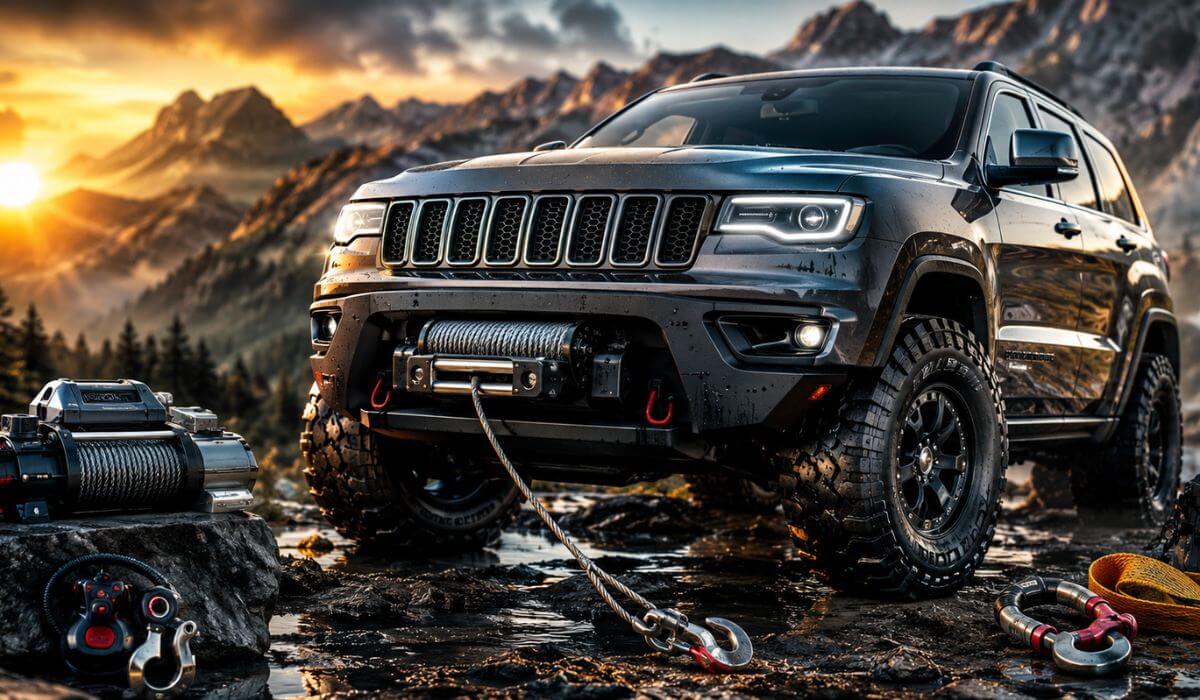
5 Best Winches for Jeep Grand Cherokee in 2026: 12000 lb Pulling Power Synthetic Rope IP68 Protection
If you’ve spent any time taking a Jeep Grand Cherokee beyond paved roads, you already know that a winch isn’t just another off-road accessory—it’s the one tool you hope you never need but will be thankful to have when you do. Whether you’re driving a WK (2005–2010), WK2 (2011–2022), or the latest WL (2022–2026) Grand Cherokee, choosing the right winch isn’t as simple as buying the highest weight rating. Recovery performance depends on your vehicle’s setup, bumper compatibility, battery condition, and how you actually use your Jeep.
For most 2026 Jeep Grand Cherokee models, a 10,000 to 12,000 lb winch is the sweet spot, especially for Overland, Trailhawk, and modified builds carrying larger tires or extra gear. Since the Grand Cherokee doesn’t come with a factory winch mount, you’ll also need a dedicated winch bumper or mounting plate designed for your specific generation. If you plan to use a steel cable winch, make sure your front suspension and battery are in good condition, while synthetic rope is usually the better choice for lighter weight, easier handling, and safer recoveries.
To build this guide, we focused on winches with proven reliability, IP68 weather protection, strong line speed under load, readily available replacement parts, and consistent real-world performance. We intentionally left out several flashy options that look impressive on paper but don’t have the long-term reputation serious Jeep owners expect.
Best Winch for Jeep Grand Cherokee: Top 2026 Picks for Synthetic Rope and Wireless Control
#1. WARN VR EVO 12-S Electric Winch
Best Jeep Grand Cherokee winch for dependable off-road recovery with 12,000 lb pulling power, IP68 waterproof protection, and premium synthetic rope trusted by experienced Jeep owners.
#2. Superwinch Tiger Shark 11.5
Premium off-road winch for Jeep Grand Cherokee offering excellent build quality, smooth load control, and reliable recovery performance for WK2 and 2022–2026 WL models with the correct mounting system.
#3. Smittybilt X2O-10K Waterproof Synthetic Winch
Best-value synthetic rope winch for Jeep Grand Cherokee delivering waterproof construction, proven trail durability, and dependable recovery without stretching the budget.
#4. Rough Country 12,000 lb PRO Series Winch
Heavy-duty 12,000 lb winch for Jeep Grand Cherokee designed for weekend trail rigs, featuring solid pulling strength and dependable performance at an affordable price.
#5. OPENROAD 13,500 lb Panther Series Winch
High-capacity Jeep Grand Cherokee recovery winch with wireless remote control, IP68 protection, and extra pulling power for heavily equipped overland and off-road builds.
Expert Tip
If you’re buying a winch for a Jeep Grand Cherokee, don’t make the mistake of choosing it by pull rating alone. Fitment is usually the bigger challenge than capacity. Many owners discover too late that the winch they ordered won’t work with their factory bumper or recovery setup. Before spending money, confirm that a vehicle-specific winch bumper or dedicated mounting plate is available for your Grand Cherokee generation. A well-mounted 10,000–12,000 lb winch with quality recovery points will outperform a heavier, poorly installed unit every time. Also, if you drive your Jeep daily, a synthetic rope is worth the extra cost because it’s lighter, easier to handle, and safer if a recovery line ever fails under load.
How We Chose the Best Winches for Jeep Grand Cherokee
This list wasn’t built by copying product descriptions or ranking the most expensive winches first. The goal was simple: recommend winches that we would confidently install on a Jeep Grand Cherokee without second-guessing their performance on the trail.
The first thing we looked at was real-world recovery capability, not just the advertised pull rating. A higher number on the box doesn’t automatically mean a better winch. For the Grand Cherokee, 10,000 to 12,000 pounds is the practical range for most owners, while heavier options only made the list if they offered genuine advantages without sacrificing reliability.
Next came brand reputation and long-term reliability. Recovery equipment isn’t something you want to test for the first time when your vehicle is buried in mud or stranded on a rocky climb. That’s why established names like WARN, Superwinch, and Smittybilt rank higher. These brands have earned trust over years of real off-road use, readily available replacement parts, and dependable customer support rather than flashy marketing.
We also paid close attention to the features that actually matter during recovery. IP68 waterproof protection, synthetic rope quality, motor performance under load, line speed, braking system, and remote reliability were all considered because they have a direct impact on how a winch performs when conditions become difficult. Features that sounded impressive but offered little practical benefit didn’t influence our rankings.
Another factor was Jeep Grand Cherokee compatibility. Every recommended model can work well on the right build, but only when paired with a dedicated mounting plate or an aftermarket winch bumper designed for the correct generation. We deliberately avoided recommending products that would create unnecessary installation problems or require unrealistic modifications for most owners.
Finally, we considered overall value instead of price alone. A quality winch should still be dependable after years of exposure to rain, dust, mud, and repeated recoveries. Some lower-priced models earned a place because they consistently deliver solid performance for the money, while others were left out because they simply haven’t built the same level of long-term confidence.
In short, every recommendation in this guide earned its position by balancing reliability, recovery performance, weather resistance, installation practicality, and proven reputation—the same factors experienced Jeep owners look for before trusting a winch miles away from pavement.
#1. WARN VR EVO 12-S Electric 12V Winch
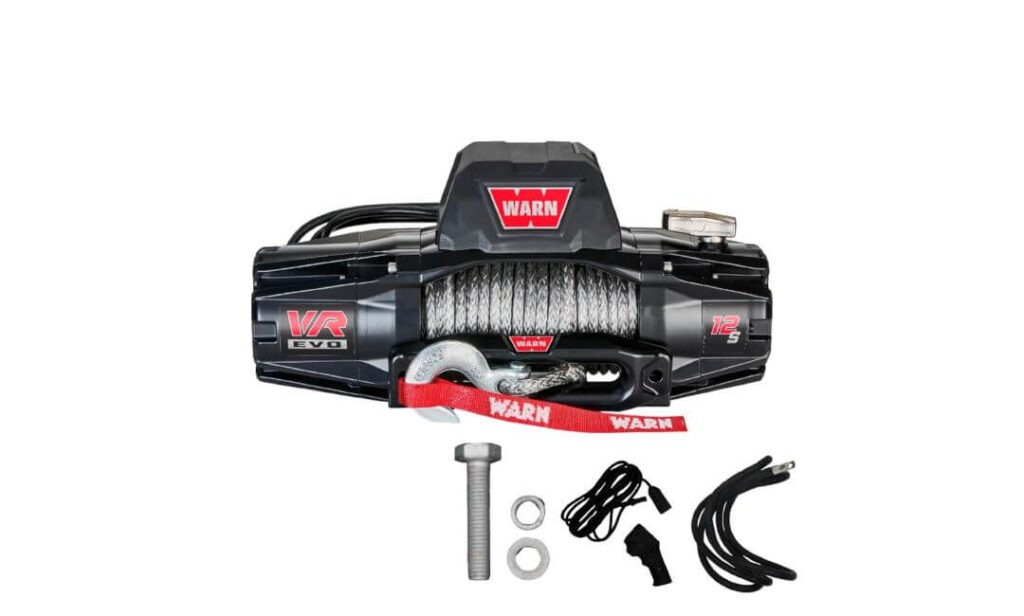
Quick Specs:
- 12,000 lb pulling capacity ideal for stock and moderately modified Grand Cherokee models
- 3/8-inch × 90 ft synthetic rope that’s lighter, safer, and easier to respool than steel cable
- IP68 fully sealed housing for mud, water crossings, snow, and dust
- Series-wound motor with planetary gear train for consistent pulling under heavy load
- Premium Albright contactor for dependable electrical performance
- One-piece cast-aluminum tie plate for improved structural strength
- Standard 10″ × 4.5″ mounting pattern compatible with most aftermarket Jeep winch bumpers
- 5-year mechanical and 3-year electrical warranty
- Requires a dedicated Jeep Grand Cherokee mounting plate or winch bumper (sold separately)
There are plenty of winches that advertise huge pulling numbers, but very few have earned the kind of reputation this one has among experienced off-road drivers. What immediately stands out isn’t just the 12,000-pound capacity—it’s how confidently the motor keeps pulling when the load increases instead of slowing to a crawl. That’s exactly what you want when your Jeep is buried in mud, climbing loose rock, or recovering another SUV on uneven terrain.
The synthetic rope is another reason this model consistently stays near the top of our recommendations. It’s noticeably lighter than steel cable, easier to manage with muddy gloves, and far less intimidating if the line ever snaps under tension. Add the IP68 waterproof construction, premium Albright contactor, and proven planetary gear system, and you end up with a recovery tool that’s built for years of real trail use instead of occasional weekend outings.
Perhaps the biggest advantage is confidence. Replacement parts are easy to source, the warranty is among the best in the segment, and WARN has spent decades building equipment that serious off-road enthusiasts trust when they’re miles away from pavement. (If reliability matters more than chasing the biggest specification sheet, this is one of the safest investments you can bolt onto a Grand Cherokee.)
Why It Earned a Top Spot
- Excellent 12,000 lb capacity for most Jeep Grand Cherokee recovery situations
- Synthetic rope improves safety while reducing front-end weight
- IP68 sealing keeps water, mud, and dust from becoming long-term problems
- Fast, smooth pulling performance thanks to the efficient series-wound motor
- Outstanding long-term reputation with readily available replacement parts and strong warranty support
One Thing to Know Before Buying
- A vehicle-specific mounting plate or aftermarket winch bumper is required since the Grand Cherokee isn’t factory winch-ready.
Jeep Grand Cherokee Installation Notes
This model works well with WK, WK2, and WL Grand Cherokee builds when paired with a dedicated aftermarket winch bumper or mounting plate. It uses the industry-standard 10-inch × 4.5-inch mounting pattern, making bumper compatibility much easier than with proprietary systems.
Before installation, make sure your Jeep has a healthy 12V battery (around 650 CCA or higher) and inspect the front suspension if you’re adding other heavy accessories like skid plates or steel bumpers. Professional installation is recommended if you’re unfamiliar with high-current electrical wiring.
The Insider Pro-Tip
Don’t judge a winch by its advertised pull rating alone. Recovery speed under load and electrical reliability become far more important once the cable is fully tensioned. That’s where this model separates itself from many cheaper alternatives.
If your Grand Cherokee is primarily a daily driver that also sees regular trail use, choose the synthetic rope version over steel cable. The weight savings on the front end, easier handling, and improved safety make it the smarter long-term choice for most owners.
#2. Superwinch Tiger Shark 11.5 12V Electric Winch
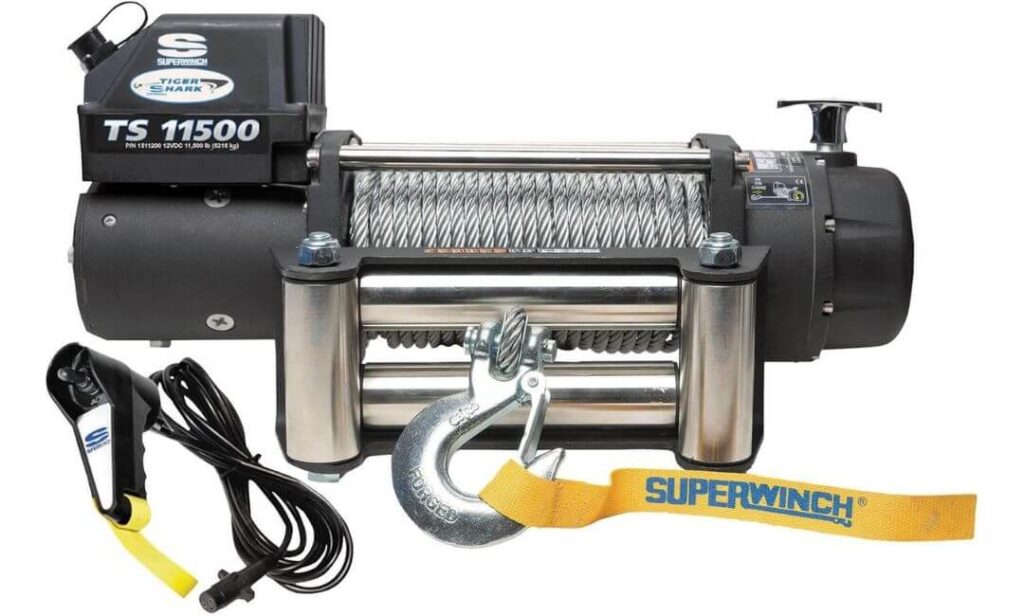
Quick Specs:
- 11,500 lb pulling capacity that’s well matched to most Jeep Grand Cherokee recovery needs
- 6.0 HP series-wound motor delivering strong low-speed torque under heavy loads
- 3-stage planetary gearbox (218:1 ratio) for smooth and controlled pulling
- 3/8-inch × 84 ft steel wire rope with heavy-duty hook and roller fairlead
- Weather-sealed motor and solenoid built to handle rain, dust, and snow
- Automatic load-holding brake for safer recoveries on steep terrain
- Heavy-duty 12 ft handheld remote with proven field reliability
- Standard 10″ × 4.5″ mounting pattern for most aftermarket Jeep winch bumpers
- Limited lifetime mechanical and 7-year electrical warranty
- Requires a dedicated Jeep Grand Cherokee winch bumper or mounting plate
Some winches earn their reputation because they’re new. This one earned it because it has spent years on real trails without giving owners reasons to replace it. The 11,500-pound pulling capacity hits a practical sweet spot for the Jeep Grand Cherokee, offering more than enough recovery power without adding unnecessary bulk to the front of the vehicle.
What really stands out is the combination of the 6.0 HP series-wound motor and the 218:1 planetary gear system. Under heavier loads, power delivery stays controlled instead of feeling strained, which is exactly what you want when recovering on loose rock, deep mud, or steep inclines. The weather-sealed motor and contactor also provide extra confidence when your weekend doesn’t end just because the weather turns bad.
Unlike many newer brands chasing feature lists, this model focuses on the fundamentals that actually matter over time. The stainless steel roller fairlead, dependable braking system, ergonomic free-spool lever, and long warranty all point to one thing—equipment designed to keep working long after the excitement of a new purchase fades. (For Grand Cherokee owners who value proven durability over trendy features, it’s easy to understand why this model continues to have such a loyal following.)
What Makes This One Stand Out
- Strong 11,500 lb recovery capacity that’s ideal for most Grand Cherokee builds
- Weather-sealed electrical components improve long-term durability
- 6.0 HP motor delivers dependable torque under demanding conditions
- Heavy-duty roller fairlead handles repeated cable use with confidence
- Outstanding warranty coverage backed by one of the most respected names in recovery equipment
One Thing Worth Knowing
- It comes with a steel wire rope, so owners wanting a lighter synthetic setup will need to upgrade separately.
Jeep Grand Cherokee Compatibility Notes
This winch fits WK, WK2, and WL Jeep Grand Cherokee models when paired with a vehicle-specific aftermarket winch bumper or dedicated mounting plate. The industry-standard 10-inch × 4.5-inch bolt pattern makes finding compatible mounting hardware much easier.
Because this is a full-size recovery winch, it’s a good idea to pair it with a healthy 12V battery rated around 650 CCA or higher. If you’re installing additional front-end accessories, checking suspension condition beforehand is also worthwhile for the best overall setup.
The Insider Pro-Tip
If your off-road trips regularly involve mud, sand, or water crossings, don’t underestimate the value of weather-sealed electrical components. A powerful motor means very little if moisture finds its way into the contactor after a few seasons.
This model also gives you flexibility for the future. Many owners start with the factory steel cable, then upgrade to synthetic rope later without replacing the entire winch—making it a smart long-term investment rather than a short-term purchase.
#3. Smittybilt X2O-10K Waterproof Synthetic Winch
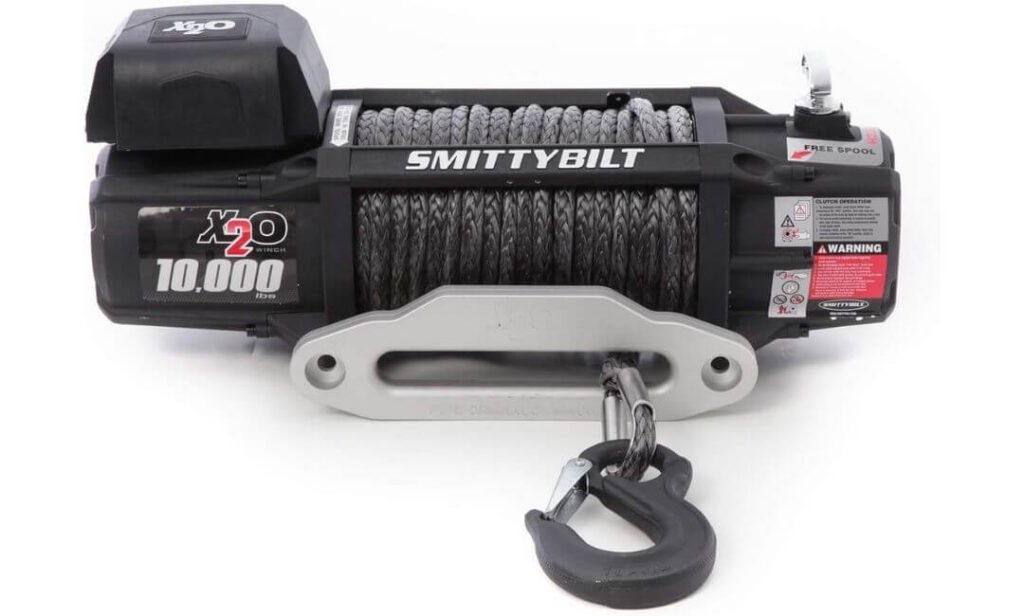
Quick Specs:
- 10,000 lb pulling capacity that’s ideal for most stock and lightly modified Grand Cherokee builds
- 6.6 HP series-wound motor paired with a 218:1 planetary gear system
- 98.5 ft × 3/8-inch synthetic rope for lighter weight and safer recoveries
- Integrated wireless remote plus a 12 ft wired controller
- Fully waterproof sealed construction for mud, snow, and water crossings
- 500 AMP sealed solenoid with flexible mounting options
- Automatic out-of-drum load-holding brake
- Standard 10″ × 4.5″ mounting pattern
- Lifetime mechanical and 5-year electrical warranty
- Requires a dedicated Jeep Grand Cherokee hidden winch mount or aftermarket bumper
One of the biggest surprises with this model is how little it feels like a “budget” winch once it’s installed. The combination of a 6.6 HP series-wound motor, 218:1 planetary gearing, and nearly 100 feet of synthetic rope gives it the kind of recovery performance that most Jeep Grand Cherokee owners will realistically ever need. Unless you’re building an extremely heavy overland rig, the 10,000-pound rating is more than capable for self-recovery and helping other SUVs out of difficult situations.
Another detail that deserves attention is the integrated wireless remote. It’s not simply a convenience feature—it gives you the freedom to position yourself where you can actually watch the recovery line instead of standing beside the vehicle. Combined with the fully sealed waterproof housing, automatic braking system, and movable control box, this winch adapts well to custom bumper installations while remaining dependable in rain, mud, and snow.
What keeps this model relevant year after year is balance. It doesn’t try to compete by adding unnecessary features or inflated specifications. Instead, it delivers consistent pulling power, practical recovery features, and long-term durability at a price that remains attractive for Grand Cherokee owners upgrading their recovery equipment. (If maximum value is your priority without sacrificing real-world performance, this is one of the strongest choices in its class.)
Why This Model Continues to Impress
- 10,000 lb capacity perfectly suits most Jeep Grand Cherokee recovery scenarios
- Synthetic rope makes handling easier while reducing front-end weight
- Wireless and wired remote options provide excellent flexibility on the trail
- Completely sealed waterproof design performs confidently in harsh environments
- Excellent performance-to-price ratio backed by a long-standing off-road reputation
One Thing Worth Considering
- The wireless remote should always be tested before heading off-road, just as you would inspect any other recovery equipment before a trip.
Jeep Grand Cherokee Installation Notes
This winch can be installed on WK, WK2, and WL Jeep Grand Cherokee models using a vehicle-specific hidden winch mount or aftermarket winch bumper. Since mounting solutions differ between generations, confirming compatibility before ordering is essential.
For dependable operation, pair it with a healthy 12V battery rated at 650 CCA or higher and verify that the control box location works with your chosen bumper design. The removable control pack makes custom installations much cleaner than many fixed-position winches.
The Insider Pro-Tip
A lot of buyers focus on pull rating, but experienced Jeep owners usually pay just as much attention to rope length and recovery control. Having 98.5 feet of synthetic rope gives you more flexibility to reach solid anchor points without immediately relying on extension straps.
This is also one of the few winches where the wireless remote, sealed electronics, and removable control box genuinely improve everyday usability instead of simply looking good on a specification sheet. That’s a big reason it continues to earn a place on serious recovery setups years after its original release.
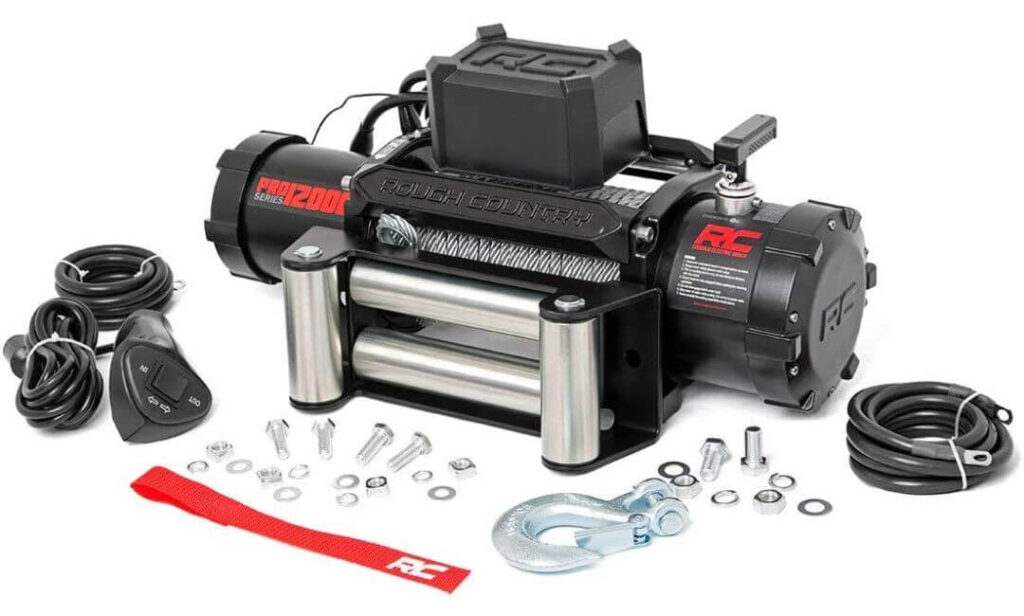
#4. Rough Country 12,000LB PRO Series Electric Winch
Quick Specs:
- 12,000 lb pulling capacity for confident SUV recovery on demanding trails
- 6 HP series-wound motor designed for efficient power with lower heat buildup
- 3-stage planetary gear system (265:1 ratio) delivering strong, controlled torque
- 3/8-inch × 94 ft steel cable with heavy-duty clevis hook
- IP67 waterproof and dustproof housing built for harsh off-road environments
- 4-way roller fairlead included for smoother cable operation
- Standard 10″ × 4.5″ mounting pattern for most aftermarket Jeep winch bumpers
- Compact housing that fits many custom bumper designs more easily
- 3-year manufacturer warranty
- Requires a Jeep Grand Cherokee-specific winch bumper or mounting system
At first glance, this looks like another affordable 12,000-pound winch, but after looking closer, it becomes clear why so many Jeep owners continue recommending it. The combination of a 6 HP series-wound motor and a 265:1 planetary gear system gives it the kind of controlled pulling power that’s well suited for recovering a Grand Cherokee without feeling underpowered when the terrain becomes unpredictable.
Its biggest strength is consistency. The IP67-sealed housing keeps mud, dust, and water from becoming constant maintenance problems, while the 94-foot steel cable offers enough reach for most real-world recovery situations. The included roller fairlead, wired remote, and complete hardware package also mean there are fewer extra parts to buy before heading out on the trail.
This isn’t trying to compete with premium winches costing significantly more—and that’s exactly why it deserves a place here. It focuses on dependable recovery performance, practical engineering, and solid value instead of unnecessary extras. (For Grand Cherokee owners who want a capable recovery setup without stretching the budget, it’s one of the easiest recommendations to justify.)
Why It Deserves a Place on This List
- 12,000 lb capacity handles demanding recovery situations with confidence
- 6 HP series-wound motor maintains strong pulling performance under load
- IP67 weather protection stands up well to mud, rain, and dusty trails
- Complete recovery package arrives ready for installation on a compatible mount
- Excellent value for owners wanting dependable performance without premium pricing
One Thing Worth Keeping in Mind
- It includes a wired remote only, so anyone wanting wireless operation will need an aftermarket remote kit.
Jeep Grand Cherokee Installation Notes
This winch is compatible with WK, WK2, and WL Jeep Grand Cherokee models when installed on a vehicle-specific aftermarket winch bumper or dedicated mounting system. Since the Grand Cherokee isn’t factory winch-ready, choosing the correct bumper is just as important as choosing the winch itself.
A 12V battery with at least 650 CCA is recommended for reliable operation, and it’s worth routing the included heavy-gauge power cables carefully during installation to keep them protected from heat and suspension movement.
The Insider Pro-Tip
If you’re comparing two winches with similar pull ratings, don’t overlook the gear ratio and motor design. Those details have a much bigger impact on how smoothly a winch performs under a heavy load than most buyers realize.
This model is especially appealing if you prefer simple, mechanical reliability over extra electronics. Fewer electronic accessories often mean fewer things to troubleshoot after years of mud, water crossings, and rough trail use—something experienced off-road drivers tend to appreciate more with time.
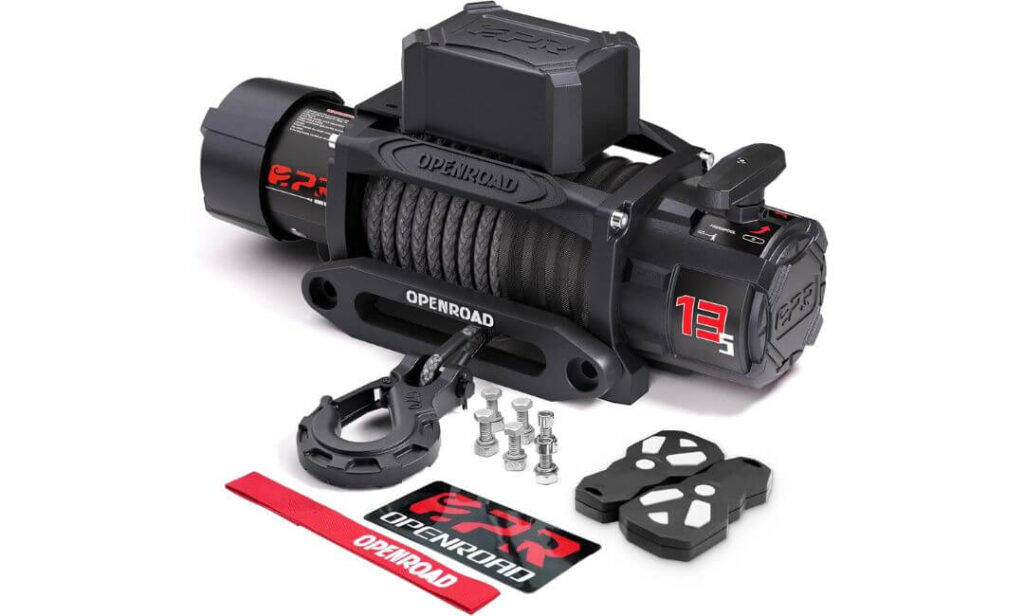
#5. OPENROAD Panther Series 3S 13,500 lb Recovery Winch
Quick Specs:
- 13,500 lb pulling capacity offering an extra safety margin for heavily equipped Grand Cherokee builds
- 3/8-inch × 85 ft synthetic rope that’s lighter, safer, and easier to handle than steel cable
- 6.6 HP 12V motor paired with a 218:1 planetary gear system
- IP68 waterproof and dustproof construction for year-round off-road use
- Two wireless remotes plus one wired controller included
- Corrosion-resistant Dacromet-coated hardware for improved long-term durability
- Standard 10″ × 4.5″ mounting pattern
- Complete installation kit with fairlead, control box, hook, recovery strap, and mounting hardware
- Lifetime technical support with a 1-year warranty
- Requires a Jeep Grand Cherokee-specific winch bumper or mounting plate
The extra pulling capacity is what immediately separates this model from the rest of the lineup. While most Jeep Grand Cherokee owners will be perfectly served by a 10,000- or 12,000-pound winch, those running steel bumpers, larger tires, roof tents, recovery gear, or fully loaded overlanding setups will appreciate the additional margin that 13,500 pounds provides. More importantly, that extra capacity means the winch doesn’t have to work at its absolute limit during demanding recoveries.
The feature list is surprisingly complete for its price. Alongside the 6.6 HP motor, 218:1 planetary gearing, and IP68 weather sealing, you also get an 85-foot synthetic rope, two wireless remotes, a wired controller, corrosion-resistant hardware, and nearly everything required for installation except the vehicle-specific mounting solution. That’s a level of value that’s difficult to ignore if you’re building a capable recovery setup from scratch.
This isn’t presented as a replacement for long-established premium brands—it earns its place because it offers a strong combination of capacity, modern features, and overall value. (For Grand Cherokee owners who want maximum recovery capability without paying premium-brand prices, it’s an option that deserves serious consideration.)
Why We Included It in This Guide
- 13,500 lb pulling capacity offers extra recovery confidence for heavier Jeep builds
- Synthetic rope reduces weight while improving handling and safety
- Two wireless remotes make solo recoveries much more convenient
- IP68-sealed construction performs well in mud, rain, and water crossings
- Complete recovery package minimizes additional accessory costs
One Thing Worth Knowing
- The 1-year warranty is shorter than what some long-established premium manufacturers provide.
Jeep Grand Cherokee Installation Notes
This winch works well on WK2 and WL Jeep Grand Cherokee models when paired with a vehicle-specific aftermarket winch bumper or dedicated mounting plate. Before ordering, verify that your bumper uses the industry-standard 10-inch × 4.5-inch mounting pattern and is designed to safely support winch loads.
Because this model is capable of generating substantial pulling force, it’s also important to use a healthy 12V battery (650 CCA or higher) and ensure the mounting hardware is torqued correctly after the first few recovery sessions.
The Insider Pro-Tip
Bigger isn’t always better—but having reserve pulling capacity often means the winch operates with less strain during difficult recoveries. That’s one reason experienced off-road drivers sometimes choose a slightly higher-rated winch than the minimum calculation suggests.
If your Grand Cherokee regularly carries camping gear, armor, larger tires, or recovery equipment, the additional headroom offered by this model can make recoveries smoother while placing less stress on the motor during extended pulls.
Best Winch for Jeep Grand Cherokee Compared: Features Specs and Value
| Winch | Pull Capacity | Rope Type | Weather Protection | Remote | Best For | Grand Cherokee Setup | Overall Verdict |
|---|---|---|---|---|---|---|---|
|
WARN VR EVO 12-S
BEST OVERALL
|
12,000 lb | Synthetic Rope 90 ft |
IP68 | Wired | Maximum long-term reliability and serious trail recovery | Requires Grand Cherokee-specific winch bumper or mounting plate | Outstanding choice for owners wanting premium quality with proven dependability. |
|
Superwinch Tiger Shark 11.5
PREMIUM PICK
|
11,500 lb | Steel Cable 84 ft |
Weather Sealed | Wired | Frequent off-road use with trusted mechanical durability | Standard 10 × 4.5 mount with dedicated Grand Cherokee bumper | Excellent balance of performance, durability and warranty support. |
|
Smittybilt X2O-10K
BEST VALUE
|
10,000 lb | Synthetic Rope 98.5 ft |
Fully Waterproof | Wireless + Wired | Daily-driven Grand Cherokee with weekend trail adventures | Hidden mount or aftermarket bumper required | Feature-packed recovery winch offering exceptional value for money. |
|
Rough Country PRO 12000
BUDGET CHOICE
|
12,000 lb | Steel Cable 94 ft |
IP67 | Wired | Reliable recovery without premium pricing | Vehicle-specific winch bumper required | Solid performance for buyers wanting dependable recovery on a sensible budget. |
|
OPENROAD Panther Series 3S
HIGH CAPACITY
|
13,500 lb | Synthetic Rope 85 ft |
IP68 | Dual Wireless + Wired | Heavy overlanding builds carrying extra gear | Compatible with aftermarket Grand Cherokee mounting systems | Excellent capacity and modern features at a very competitive price. |
Jeep Grand Cherokee Winch Buyer’s Guide: Everything You Should Know Before Buying
A recovery winch is one of the few upgrades you’ll hopefully never need—but when you do, nothing else on your Jeep matters more. The challenge is that most buyers focus on the advertised pull rating and overlook the details that actually determine whether a winch will perform reliably on the trail. Your Jeep Grand Cherokee’s generation, curb weight, front bumper setup, electrical system, and intended use all play an important role in choosing the right model.
The following points cover the factors that experienced Jeep owners typically evaluate before investing in recovery equipment.
Determine the Right Winch Capacity for Your Grand Cherokee
A common mistake is assuming that a larger winch is always better. In reality, selecting the correct capacity depends on your vehicle’s actual weight once it’s loaded for travel.
As a general rule, choose a winch rated at at least 1.5 times your Jeep Grand Cherokee’s fully loaded weight. A stock daily driver usually falls comfortably within the 10,000-pound range, while Trailhawk models equipped with skid plates, steel bumpers, larger tires, roof racks, camping gear, or overlanding accessories often benefit from an 11,500- to 12,000-pound winch. Heavily modified builds carrying substantial extra weight may justify moving to a 13,500-pound model, not because they’ll regularly pull that much, but because the winch won’t be working near its maximum capacity during difficult recoveries.
Also think about how you’ll actually use your Jeep. Recovering yourself from muddy trails requires different demands than assisting another full-size SUV on rocky terrain. Buying for real-world recovery scenarios is far more important than buying for the biggest number printed on the box.
Synthetic Rope vs Steel Cable for Jeep Grand Cherokee
Both options work well, but they suit different types of owners.
Synthetic rope has become the preferred choice for many Grand Cherokee owners because it’s significantly lighter, easier to handle, safer if damaged under tension, and doesn’t develop sharp broken strands like aging steel cable. It also reduces weight over the front axle, something many daily-driven SUVs benefit from.
Steel cable, however, remains an excellent option for buyers who frequently encounter abrasive rock surfaces or simply prefer maximum durability with minimal maintenance costs. It generally costs less upfront and tolerates rough handling well, although it requires regular inspection for corrosion and broken wires.
If your Grand Cherokee serves as both a daily driver and weekend adventure vehicle, synthetic rope is usually the more practical long-term investment.
Wired or Wireless Remote: Which Is Better?
Modern winches increasingly include wireless operation, but that doesn’t automatically replace the value of a traditional wired controller.
A wired remote offers dependable operation without relying on batteries or wireless signals. Many experienced off-road drivers still prefer it for difficult recoveries where absolute reliability matters most.
A wireless remote, on the other hand, allows you to move away from the vehicle and monitor the recovery line from a safer position. This becomes especially useful during solo recoveries when no spotter is available. The best setups include both options, allowing you to choose whichever suits the situation.
Why Waterproof Protection Matters More Than Most Buyers Realize
Many buyers assume waterproof ratings only matter if they regularly drive through rivers. In reality, mud, heavy rain, road salt, snow, and repeated washing expose winches to moisture throughout the year.
A properly sealed IP68-rated winch offers better protection for the motor, contactor, and internal components, reducing the likelihood of corrosion or electrical issues over time. While IP67 protection is still suitable for most owners, choosing a higher sealing standard provides extra confidence if your Jeep frequently encounters deep mud, standing water, or demanding off-road conditions.
Weather sealing isn’t just about surviving one water crossing—it’s about remaining dependable years later.
Check Mounting Compatibility Before Ordering
This is one area that surprises many first-time buyers.
Unlike some dedicated off-road vehicles, the Jeep Grand Cherokee is not factory-equipped for direct winch installation. Every winch in this guide requires a vehicle-specific mounting plate or aftermarket winch bumper designed for your particular generation.
Before purchasing, confirm:
- Your Grand Cherokee generation (WK, WK2, or WL)
- The mounting system supports your chosen winch’s 10-inch × 4.5-inch bolt pattern
- The bumper is engineered to withstand recovery loads
- Airflow to the radiator and cooling system isn’t significantly restricted
- Recovery points remain fully accessible after installation
Choosing the correct mounting solution is just as important as selecting the winch itself.
Make Sure Your Electrical System Is Ready
A winch places one of the highest electrical loads on any accessory fitted to a vehicle.
For most Jeep Grand Cherokee applications, a healthy 12-volt battery rated around 650 CCA or higher is recommended. Loose battery terminals, aging batteries, or poor ground connections can reduce winch performance long before the motor reaches its true capability.
If your Jeep regularly powers refrigerators, auxiliary lighting, air compressors, or other high-demand accessories, it’s worth inspecting your charging system and battery condition before installing a recovery winch.
Don’t Overlook Warranty and Long-Term Support
Recovery equipment is a long-term investment, not something most owners replace every few years.
Established manufacturers often provide better access to replacement parts, technical support, wiring diagrams, service information, and warranty assistance long after the purchase date. While newer brands may offer attractive specifications, long-term ownership becomes much easier when components such as remotes, solenoids, fairleads, or replacement ropes remain readily available.
A strong warranty is valuable—but responsive customer support and readily available spare parts often prove even more important years down the road.
Final Buying Advice
The best winch for a Jeep Grand Cherokee isn’t necessarily the one with the highest capacity or the longest feature list. It’s the model that matches your vehicle’s weight, your recovery needs, your mounting setup, and your confidence when you’re miles away from pavement.
If you’re unsure between two similarly priced options, prioritize build quality, weather protection, proven reliability, and installation compatibility over marketing claims. Those are the factors you’ll appreciate most when recovery isn’t optional—it becomes necessary.
Jeep Grand Cherokee Winch Installation Basics: What Every Owner Should Know
Installing a recovery winch on a Jeep Grand Cherokee is more involved than simply tightening a few bolts. Unlike vehicles designed with factory winch-ready bumpers, the Grand Cherokee requires the right mounting system, careful electrical routing, and a properly supported front-end setup. This overview isn’t a replacement for your winch manufacturer’s instructions, but it covers the installation principles that matter most before the first bolt is tightened.
Preparing Your Jeep Grand Cherokee for a Winch
Before unpacking the winch, take a few minutes to inspect the vehicle itself. A recovery winch places significant stress on both the mounting structure and electrical system, so this is the right time to confirm everything is ready.
Start by identifying your Grand Cherokee generation (WK, WK2, or WL) because mounting hardware differs between them. Verify that your chosen aftermarket winch bumper or hidden mounting plate is specifically engineered for your model rather than being advertised as a universal solution.
Next, inspect the battery and charging system. A healthy 12-volt battery with at least 650 CCA is recommended for reliable operation, while clean battery terminals and solid ground connections help prevent voltage drop under heavy load. If your Jeep already powers accessories such as auxiliary lights, compressors, or refrigerators, checking alternator output before installation is also worthwhile.
Finally, organize all supplied hardware, mounting brackets, fairlead components, wiring, and controller cables before beginning the installation. Missing a spacer or bolt halfway through the job often leads to unnecessary delays.
Front-Mounted Winch Installation Overview
Every winch featured in this guide uses the industry-standard 10-inch × 4.5-inch mounting pattern, but that doesn’t eliminate the need for a proper Grand Cherokee-specific mounting solution.
Once the bumper or mounting plate has been securely installed according to the manufacturer’s specifications, position the winch so the rope feeds correctly through the fairlead. Confirm the free-spool lever remains fully accessible and that the control box location won’t interfere with the grille, radiator airflow, hood operation, or other front-end components.
Before fully tightening the mounting bolts, verify that the drum rotates freely and that the synthetic rope or steel cable feeds evenly across the drum. Small alignment corrections now can prevent rope stacking issues during future recoveries.
Choosing the Right Bumper and Mounting System
The bumper does far more than hold the winch in place—it becomes part of the recovery system itself.
A quality Jeep Grand Cherokee winch bumper should distribute recovery forces across properly reinforced mounting points rather than concentrating stress on the outer bumper shell. This is especially important during angled recoveries where side loads increase dramatically.
When comparing mounting systems, look for features such as:
- Vehicle-specific engineering rather than universal brackets
- Heavy-duty steel construction with reinforced mounting points
- Compatibility with your selected winch’s bolt pattern
- Proper clearance for radiator airflow and factory sensors
- Recovery point access after installation
- Adequate room for servicing the control box and electrical connections
Choosing a well-designed mounting system often has a greater impact on long-term reliability than upgrading to a more expensive winch.
Wiring, Circuit Protection, and Electrical Tips
Electrical installation deserves the same attention as the mechanical mounting.
Route the positive and negative battery cables away from exhaust components, sharp metal edges, suspension movement, and steering components. Protect exposed sections with abrasion-resistant loom wherever possible, and secure wiring with quality clamps instead of loose zip ties alone.
Many experienced installers also recommend adding a high-current battery isolation switch. It allows the winch to remain electrically disconnected when not in use, reducing the risk of accidental activation while making future maintenance much safer.
Although most winches include appropriately sized power cables, always follow the manufacturer’s recommendations for cable gauge, circuit protection, and electrical connections. Avoid shortening cables unless the installation instructions specifically allow it.
Safety Checks Before Your First Recovery
Installation isn’t complete once the final bolt is tightened.
Go back over every mounting bolt using the specified torque values, confirm the fairlead is centered with the drum, and inspect all electrical connections for tightness. Test both the wired and wireless controllers, ensuring the drum rotates in the correct direction before placing the rope under load.
Next, spool the rope onto the drum under light tension. This helps create neat, evenly layered wraps that reduce the risk of rope damage during future recoveries.
Finally, perform a controlled test pull in a safe location before heading onto the trail. Verifying winch operation, electrical performance, and mounting stability under load is far easier in a controlled environment than during an actual recovery where every component is being pushed to its limits.
A careful installation doesn’t simply improve reliability—it gives you confidence that when your Jeep Grand Cherokee eventually needs recovery assistance, the equipment will perform exactly as intended.
Jeep Grand Cherokee Winch Bumper Guide: Choosing the Right Setup for Safe Recovery
A winch is only as reliable as the bumper supporting it. This is something many first-time buyers discover after they’ve already ordered a recovery winch. Unlike the Jeep Wrangler, the Jeep Grand Cherokee wasn’t designed with a factory winch-ready front bumper, so selecting the correct Jeep Grand Cherokee winch bumper is just as important as choosing the winch itself.
A properly engineered bumper doesn’t simply provide a place to mount the winch. It distributes recovery loads across reinforced mounting points, protects the front of the vehicle during difficult terrain, and ensures the winch can operate safely without placing unnecessary stress on the chassis or bumper structure.
How to Choose a Jeep Grand Cherokee Winch Bumper
Not every aftermarket bumper is designed to handle recovery loads, even if it looks rugged.
When shopping for a Jeep Grand Cherokee winch bumper, start by confirming it’s built specifically for your vehicle generation—WK, WK2, or WL. Each generation uses different frame dimensions, mounting locations, sensor placement, and front-end design, so compatibility should always be your first priority.
The bumper should also support the industry-standard 10-inch × 4.5-inch winch mounting pattern, which is used by every winch recommended in this guide. Beyond compatibility, look for reinforced mounting brackets, heavy-duty steel construction, quality welds, recovery point integration, and sufficient clearance for the fairlead and control box.
A good bumper doesn’t just hold the winch—it becomes part of the recovery system.
Stock Bumper vs Aftermarket Winch Bumper
Many Grand Cherokee owners ask whether the factory bumper can simply be modified to hold a winch.
In most cases, the answer is no.
The factory bumper was designed primarily for styling, airflow, pedestrian safety, and normal driving conditions—not for supporting thousands of pounds of recovery force. Attempting to mount a heavy-duty winch directly behind a standard bumper usually requires significant fabrication and still doesn’t provide the structural strength of a purpose-built recovery bumper.
An aftermarket winch bumper, on the other hand, is engineered specifically for recovery loads. It typically includes reinforced mounting points, improved approach angles, stronger recovery points, and the necessary space for proper winch installation. While it represents a larger initial investment, it provides far greater confidence when the winch is actually needed.
For anyone planning serious off-road travel, an aftermarket solution is generally the safer and more practical choice.
Balancing Appearance, Protection, and Practicality
One of the biggest decisions isn’t mechanical—it’s deciding how you want your Grand Cherokee to look and perform.
Some owners prefer a hidden winch mount, which keeps the factory appearance largely intact while adding recovery capability behind the original bumper. This option works well for daily-driven vehicles where maintaining a clean factory look is important.
Others choose a full steel winch bumper, accepting the additional weight in exchange for greater front-end protection, improved recovery strength, and increased durability on rocky trails. These bumpers also provide better resistance against impacts from brush, loose rocks, and unexpected obstacles that could damage a factory fascia.
It’s important to remember that heavier bumpers can affect suspension height, steering feel, and fuel economy. If you’re installing a steel bumper together with a 12,000-pound winch, upgrading front suspension components may also be worth considering, especially on vehicles carrying additional overlanding equipment.
The Right Bumper Is an Investment in Recovery Safety
It’s easy to spend hours comparing motor specifications, gear ratios, and rope materials while overlooking the part that actually secures the entire recovery system to the vehicle.
A quality Jeep Grand Cherokee winch bumper protects your investment, improves recovery safety, and gives your winch the structural support it was designed to work with. More importantly, it allows the recovery forces generated by a 10,000- to 13,500-pound winch to be transferred safely into the vehicle rather than concentrating stress on components that were never engineered for that purpose.
When building a dependable recovery setup, think of the bumper and winch as a single system—not two separate upgrades. Choosing both together will almost always deliver better long-term performance than upgrading either one individually.
Jeep Grand Cherokee Winch Maintenance and Real-World Recovery Tips
Buying a quality winch is only the first step. Keeping it reliable for years is what separates recovery equipment that performs when needed from equipment that fails at the worst possible moment. Most winches spend months exposed to rain, dust, road salt, vibration, and temperature changes before they’re ever asked to pull a vehicle. That’s why regular maintenance matters just as much as choosing the right model.
Fortunately, winch maintenance doesn’t have to be complicated. A few simple checks throughout the year can significantly improve reliability and help your Jeep Grand Cherokee recovery system stay ready for every trip.
Create a Simple Inspection Routine
Many owners only inspect their winch after using it, but experienced off-road drivers usually check it before every major trail trip and at regular intervals throughout the year.
A quick inspection should include:
- Verify all mounting bolts remain properly tightened.
- Inspect the synthetic rope or steel cable for cuts, fraying, flattened sections, or abrasion.
- Confirm the fairlead is clean and free of sharp edges.
- Check battery terminals and power cables for corrosion or loose connections.
- Test both the wired and wireless controllers before leaving home.
- Listen for unusual noises while briefly operating the winch without load.
- Inspect the hook, safety latch, and recovery strap for visible wear.
These simple checks usually take only a few minutes but can prevent much larger problems during an actual recovery.
Caring for Synthetic Rope the Right Way
Several of the winches recommended in this guide use synthetic recovery rope, and although it’s easier to handle than steel cable, it deserves proper care.
After recovering your Jeep from mud, sand, saltwater, or clay, rinse the rope with clean water and allow it to dry naturally before respooling it onto the drum. Dirt trapped inside the rope fibers can slowly increase wear over time, especially during repeated heavy pulls.
Always respool the rope under light tension so it wraps evenly across the drum. Loose or uneven wraps can bury themselves under heavy loads, making future recoveries more difficult and potentially shortening rope life.
Avoid dragging synthetic rope across sharp rocks whenever possible, and use a tree saver strap or protective sleeve whenever the recovery line contacts rough surfaces.
Keep the Winch Clean Without Overdoing It
Recovery equipment doesn’t need to look brand new, but it should stay clean enough for regular inspection.
After muddy trail rides, gently rinse the exterior housing, fairlead, and hook with low-pressure water to remove dirt and road salt. Avoid directing high-pressure washers at electrical connectors, seals, or the motor housing, as excessive pressure can force water past protective seals.
Lubrication requirements vary between manufacturers, so always follow the service recommendations provided with your specific winch. Over-lubricating gears or moving parts can sometimes attract additional dirt rather than improving performance.
Keeping electrical connections clean and protected with an appropriate dielectric grease is often more beneficial than applying excessive lubricant elsewhere.
Solving Common Winch Problems Before They Become Bigger Issues
Most winch problems begin with small warning signs rather than sudden failure.
If the winch operates more slowly than usual, first inspect the battery condition, cable connections, and ground points before assuming the motor is at fault. Low voltage remains one of the most common causes of weak pulling performance.
A clicking sound without drum movement often points toward electrical supply or contactor issues, while unusual grinding noises may indicate the need for further inspection before continued use.
If the rope begins stacking unevenly on one side of the drum, stop the recovery and respool it correctly under tension. Allowing uneven wraps to continue can damage both the rope and the drum over time.
Addressing these smaller issues early is almost always less expensive than repairing major damage later.
Stay Recovery-Ready Every Time You Leave Pavement
A recovery winch should never be the only recovery equipment carried in your Jeep.
Before every off-road trip, confirm that your recovery kit includes rated shackles, a tree saver strap, recovery gloves, a soft shackle or recovery strap where appropriate, and a dampener or recovery blanket if using steel cable. Having the right accessories often determines whether a recovery is completed safely and efficiently.
Whenever possible, keep the engine running during winching to reduce battery drain, avoid shock-loading the recovery line with sudden acceleration, and never exceed the manufacturer’s recommended duty cycle. Giving the motor short cooling periods during long recoveries helps extend its service life.
Most importantly, treat your recovery equipment with the same respect you give your vehicle’s brakes or steering system. A well-maintained winch rarely attracts attention because it simply works when needed—and that’s exactly what every Jeep Grand Cherokee owner should expect from equipment designed to bring them home safely.
FAQs About Jeep Grand Cherokee Winch
Is a 13,500 lb winch too much for a Jeep Grand Cherokee?
Not necessarily. A 13,500 lb winch isn’t dangerous simply because it’s rated higher than your Jeep’s weight. The important factor is how the recovery is performed, not the maximum pull rating printed on the winch. During difficult recoveries, especially in deep mud, wet sand, or steep climbs, the force required to move the vehicle can be far greater than its curb weight.
If your Jeep Grand Cherokee carries larger tires, steel bumpers, skid plates, recovery gear, roof racks, or overlanding equipment, a higher-capacity winch provides additional reserve power without constantly operating near its limit. The more important decision is choosing a properly engineered winch bumper and recovery points, because those components ultimately determine how safely recovery forces are transferred into the vehicle.
Can I install a hidden winch on a Jeep Grand Cherokee without changing the factory look?
Yes, but availability depends entirely on your Grand Cherokee generation and the aftermarket support available for that model. Hidden winch systems allow many owners to retain a factory-style appearance while adding recovery capability behind the front fascia.
Before purchasing a hidden mount, verify several details instead of relying on appearance alone:
- Airflow to the radiator remains unrestricted.
- The fairlead opening lines up correctly with the drum.
- Recovery points remain accessible.
- Service access to the clutch lever and control box is still practical.
- The mounting system is specifically designed for your generation rather than adapted from another vehicle.
A hidden installation often looks cleaner, but accessibility during maintenance should never be sacrificed simply for aesthetics.
Does synthetic rope wear out faster if my Jeep Grand Cherokee is used in mud and water?
Synthetic rope doesn’t automatically wear out faster—it simply requires different care than steel cable.
Mud, sand, and fine grit can become trapped between the rope fibers, gradually increasing abrasion during future recoveries. The solution isn’t replacing the rope more often; it’s cleaning and respooling it correctly after demanding trips.
A good maintenance routine includes:
- Rinse the rope with clean water after muddy or sandy recoveries.
- Allow it to dry completely before long-term storage.
- Respool it evenly under light tension.
- Inspect for abrasion near the hook and fairlead.
- Replace protective sleeves if they become damaged.
Owners who follow these steps often get many years of dependable service from a quality synthetic recovery rope.
Why do some Jeep Grand Cherokee owners choose premium winches even when less expensive models have similar specifications?
On paper, many winches appear nearly identical. Similar pull ratings, similar motors, and even similar waterproof ratings can make them look interchangeable.
The difference usually becomes noticeable years later, not during the first recovery. Premium manufacturers often invest more in electrical sealing, motor efficiency under sustained load, machining tolerances, replacement part availability, warranty support, and long-term durability. Those advantages rarely stand out on a specification sheet, but they become valuable when your winch has already survived years of vibration, mud, rain, and repeated recoveries.
That’s why experienced off-road drivers often evaluate overall reliability and support history instead of comparing specifications alone.
What’s the most overlooked mistake people make when buying a winch for a Jeep Grand Cherokee?
Surprisingly, it isn’t choosing the wrong pull rating.
The most common mistake is treating the winch, bumper, battery, and recovery points as separate upgrades instead of one complete recovery system. A premium winch mounted on an unsuitable bumper or connected to a weak electrical system won’t perform the way it was designed to.
The most dependable setups are usually built with the entire recovery system in mind:
- A vehicle-specific winch bumper or hidden mount
- A healthy battery and properly routed heavy-gauge wiring
- Rated recovery points
- Quality recovery accessories
- A winch whose capacity matches the vehicle’s real-world weight
When all of those components work together, your Jeep Grand Cherokee becomes far more capable than simply installing the most expensive winch available. That’s the approach experienced off-road owners follow because reliability on the trail is built as a complete system, not purchased as a single product.
Final Thoughts
The best winch for your Jeep Grand Cherokee isn’t simply the one with the biggest pull rating or the longest feature list. It’s the one that fits your vehicle correctly, matches the way you actually explore, and gives you complete confidence when recovery becomes unavoidable. A dependable recovery setup starts long before you reach the trail—it begins with choosing quality equipment, installing it properly, and maintaining it so it’s ready when you need it most.
For most owners, a 10,000 to 12,000 lb winch offers the ideal balance of recovery capability, weight, and everyday practicality. If your Grand Cherokee carries heavy armor, larger tires, or overlanding equipment, stepping up to a 13,500 lb model can provide valuable reserve pulling power. Just remember that even the best winch performs only as well as the mounting system, electrical setup, and recovery gear supporting it.
Every recommendation in this guide was selected because it delivers real value where it matters most—reliability, proven performance, weather resistance, installation compatibility, and long-term ownership confidence. Whether you’re preparing for weekend trail rides, remote overland trips, or simply want the peace of mind that comes from being self-sufficient, investing in the right recovery equipment today is far less expensive than needing it tomorrow and wishing you’d chosen differently.
Also Check:


