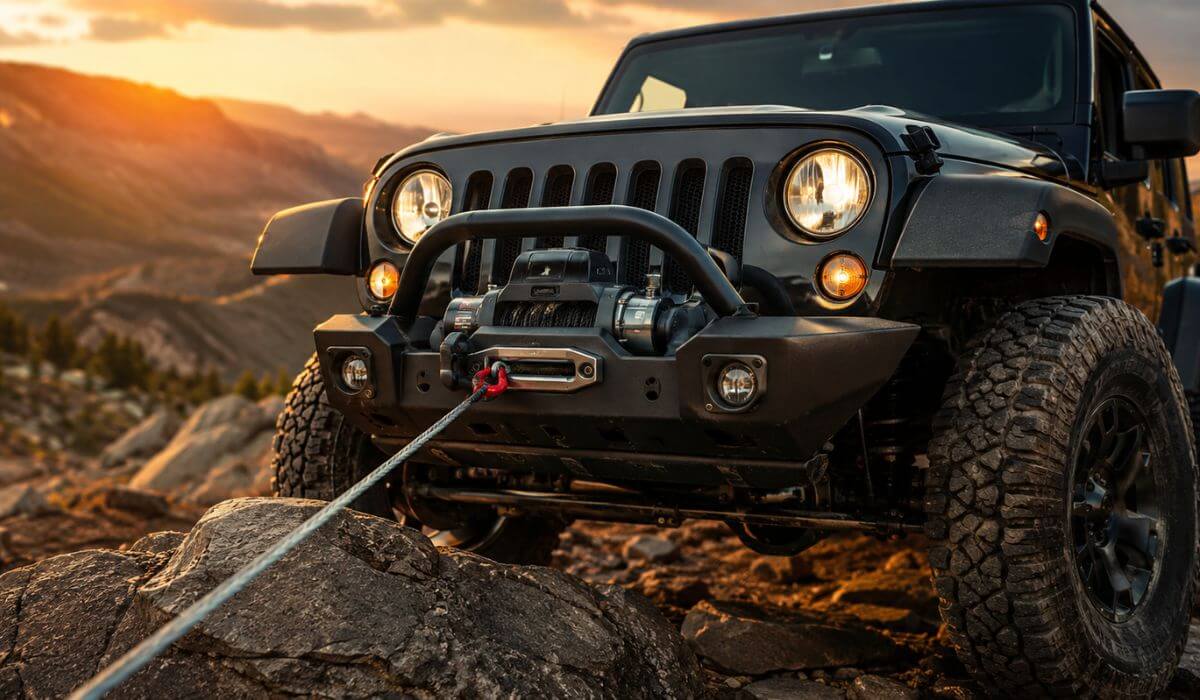
5 Best Winches for Jeep Wrangler in 2026: Trail Tested Picks for Rock Crawling and Overlanding
If you’ve ever watched a Jeep Wrangler struggle on a muddy trail, loose rocks, or a steep climb, you already know one thing—traction disappears long before determination does. That’s exactly when a dependable winch becomes the most valuable recovery tool on your Jeep. But choosing the right one isn’t just about buying the highest pulling capacity. A winch that’s too large adds unnecessary weight to the front end, while one that’s undersized can leave you stuck when you need it most.
For most Jeep Wrangler YJ (1987–1995), TJ (1997–2006), JK (2007–2018), and JL (2018–present) models, a 10,000 to 12,000 lb electric winch with a synthetic rope is the sweet spot. It provides more than enough recovery capacity for stock and moderately modified Wranglers while keeping weight manageable for everyday trail use. If your Jeep carries steel bumpers, larger 35–37 inch tires, overlanding gear, or extra armor, a quality 12,000 lb winch offers additional recovery confidence without being excessive.
Rather than relying on spec sheets alone, we compared these winches based on real-world trail reliability, waterproof protection, line speed under load, remote usability, installation quality, long-term durability, and brand reputation within the Jeep off-road community. The result is a shortlist of recovery winches we’d confidently recommend to Wrangler owners who want equipment they can trust when the trail doesn’t go as planned.
Best Jeep Wrangler Winches (2026): Premium Choices for JK JL JLU and Rubicon Owners
#1. WARN Zeon 12-S Platinum Electric Winch
Best Jeep Wrangler recovery winch for serious rock crawling, overlanding, and premium off-road builds
#2. WARN VR EVO 12-S Electric Winch
Best 12,000 lb winch for Jeep Wrangler offering dependable performance and outstanding long-term value
#3. Smittybilt X2O-10K Waterproof Synthetic Winch
Best waterproof electric winch for Jeep Wrangler with excellent value for weekend trail adventures
#4. Superwinch SX10SR 10,000 lb Winch
Best synthetic rope winch for Jeep Wrangler balancing reliable pulling strength with everyday usability
#5. XYCLE 18,500 lb Recovery Winch
Best heavy-duty off-road winch for Jeep Wrangler owners needing extra pulling capacity for demanding recoveries
Expert Tip
A winch is only as dependable as the setup around it. We’ve seen Wranglers with expensive winches fail during recovery because of poor wiring, weak mounting plates, low-quality recovery points, or an undersized battery—not because the winch itself was bad. Before spending more on extra pulling capacity, invest in a vehicle-specific winch bumper, properly torqued mounting hardware, a healthy AGM battery or high-output electrical system, and a quality recovery kit. A well-installed 12,000 lb winch from a trusted brand will outperform a poorly installed 20,000 lb unit every time. That’s why our recommendations focus on overall recovery confidence, not just the biggest number printed on the box.
How We Chose the Best Winches for Jeep Wrangler
A winch isn’t something most Wrangler owners buy twice. When it finally gets used, it’s usually because the trail has gone wrong, traction has disappeared, or help isn’t close by. That means reliability matters far more than marketing claims. For this guide, we ignored flashy specifications that rarely make a difference on the trail and focused on what actually affects recovery performance.
Our first priority was brand reputation under real off-road use. WARN has earned its place through decades of dependable trail recoveries, while Superwinch and Smittybilt have built strong trust among Wrangler owners who regularly tackle rocky terrain, mud, and overlanding routes. We also included one newer option that offers strong value on paper, but only after comparing its construction, protection rating, and recovery hardware against more established alternatives.
Next, we looked at pulling capacity that actually makes sense for a Jeep Wrangler. A stock or moderately modified Wrangler typically performs best with a 10,000 to 12,000 lb electric winch, while heavier builds carrying steel bumpers, winch-ready armor, rooftop tents, larger tires, or recovery gear benefit from additional reserve capacity. We intentionally avoided recommending oversized commercial winches simply because they advertise a higher number.
We also compared the features that owners notice long after installation. That included IP68 waterproof protection, synthetic rope durability, line speed under load, motor performance during repeated recoveries, remote responsiveness, braking systems, and the overall quality of the fairlead, hook, and control pack. These details have a much greater impact on real-world recovery than spec-sheet headlines.
Finally, we considered installation compatibility with popular Jeep Wrangler YJ, TJ, JK, and JL platforms. A quality winch should fit common aftermarket bumpers without unnecessary modifications and provide dependable performance whether your Jeep is used for weekend trails, overlanding, or serious rock crawling.
The five winches in this guide weren’t selected because they’re the newest or the most expensive. They earned their place because each one offers a combination of proven engineering, dependable recovery performance, durable construction, and long-term owner confidence—the qualities that matter when your Wrangler is the vehicle everyone else is counting on to get moving again.
#1. WARN Zeon 12-S Platinum 12V Electrical Utility Winch
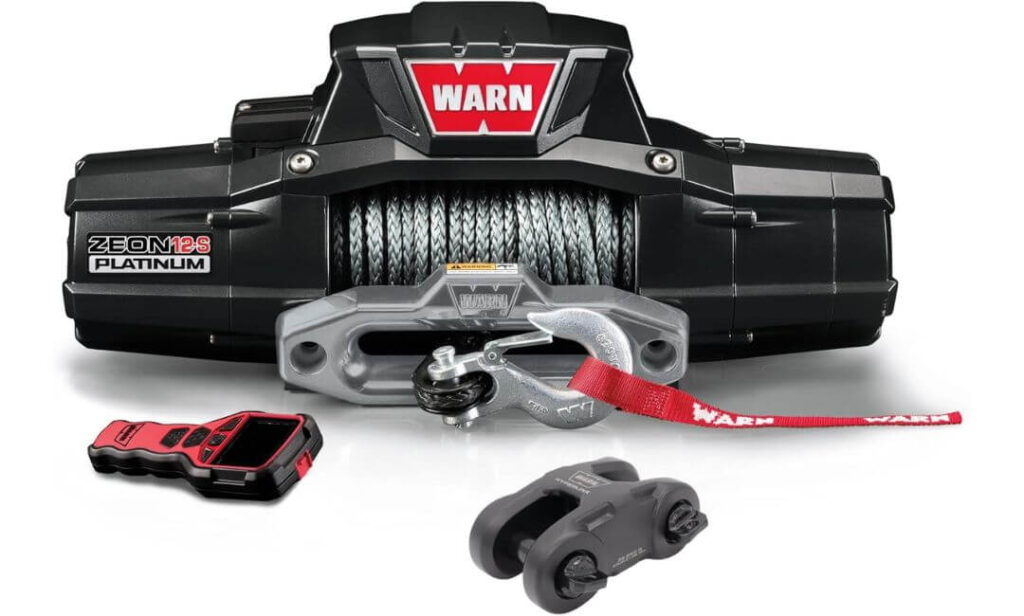
Quick Specs:
- Best for: Jeep Wrangler JK (2007–2018), JL (2018–Present), JLU Unlimited, and Rubicon
- 12,000 lb single-line pulling capacity for heavily equipped Wranglers
- 80 ft x 3/8-inch Spydura synthetic rope for lighter, safer recoveries
- Series-wound 12V motor with 162:1 planetary gearing
- Wireless remote plus backup wired operation
- Convertible control pack for tight aftermarket bumper installations
- Satin-black cast aluminum housing with stainless hardware
- Advanced sealing against mud, water, snow, and trail debris
- Includes EPIC Hyperlink shackle and Hawse fairlead
- Lifetime mechanical and 7-year electrical warranty
The difference between an average recovery and a stress-free one usually comes down to how confidently your equipment performs when it’s under maximum load. This model isn’t built to impress on a specification sheet—it earns its reputation when your Wrangler is buried in mud, climbing loose rock, or pulling another vehicle out of a difficult recovery. The 12,000 lb pulling capacity, series-wound motor, and 162:1 planetary gear system deliver smooth, predictable power without feeling abrupt, while the 80-foot Spydura synthetic rope is lighter and easier to handle than traditional steel cable.
One feature experienced Jeep owners immediately appreciate is the convertible control pack. Depending on your bumper setup, you can mount it directly on the winch or relocate it for a cleaner, lower-profile installation. Add the wireless remote for solo recoveries and the backup wired controller when conditions get rough, and you’ve got flexibility that many cheaper winches simply don’t offer. The cast-aluminum housing, stainless fasteners, and upgraded sealing also help it stand up to repeated exposure to rain, mud crossings, road salt, and dusty trails without demanding constant maintenance.
If you’re building a Wrangler for serious weekend adventures rather than occasional gravel roads, this is one of those upgrades you’ll likely appreciate long before you actually need it. It’s equally comfortable on a daily-driven JL with factory steel bumpers or a fully equipped Rubicon carrying oversized tires and recovery gear.
(If your Wrangler already has steel bumpers, larger tires, camping gear, or full recovery equipment, this is the kind of winch you’ll be thankful you installed before the trail tests your setup.)
Why It Earned Our Top Recommendation
- 12,000 lb capacity gives excellent recovery headroom for stock and modified Jeep Wranglers.
- Spydura synthetic rope is lighter, safer, and easier to manage than steel cable.
- Convertible control pack makes installation easier with many aftermarket Jeep bumpers.
- Wireless and wired controls provide dependable operation in different recovery situations.
- Premium sealing and corrosion-resistant construction are built for years of trail use.
A Small Consideration Before You Buy
- To fit most JK and JL models correctly, you’ll typically need a Jeep-specific winch mounting plate or a compatible winch-ready bumper, which should be included in your installation budget.
Jeep Wrangler Compatibility & Installation Notes
This winch is an excellent fit for Jeep Wrangler JK, JL, JLU Unlimited, and Rubicon models when paired with a compatible winch-ready bumper or mounting plate. It works especially well on Wranglers running 33 to 37-inch tires, steel bumpers, skid plates, roof racks, and other overlanding accessories where additional recovery capability becomes important.
Before installation, make sure your Wrangler has a healthy AGM battery or a strong charging system, properly rated power cables, and enough clearance around the control pack if you’re using the factory bumper. Planning these details first usually makes installation much smoother and helps the winch perform at its full potential.
The Insider Pro-Tip
Many buyers focus entirely on pulling capacity, but experienced Jeep owners usually pay closer attention to installation quality. A correctly mounted winch with properly torqued hardware, quality recovery points, and a reliable electrical system will outperform a poorly installed unit regardless of brand.
If you’re investing at this level, don’t rush the install. Pair it with a rated recovery shackle, tree saver strap, snatch block, battery disconnect, and regular rope inspection. Those small decisions rarely appear in product listings, yet they’re exactly what separates a dependable recovery setup from one that lets you down when your Wrangler is the only vehicle capable of getting everyone home.
#2. WARN VR EVO 12-S Electric Winch
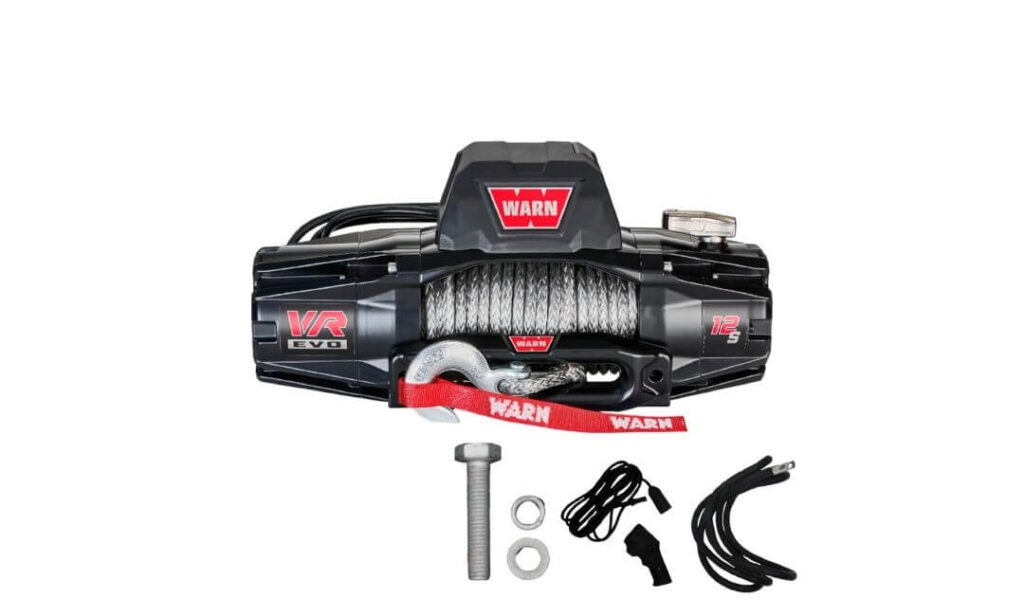
Quick Specs:
- Ideal for: Jeep Wrangler JK, JKU, JL, JLU, and Rubicon
- 12,000 lb single-line pulling capacity for fully equipped Wrangler builds
- 100 ft synthetic rope for safer handling and longer recovery reach
- IP68 waterproof housing for mud, river crossings, and harsh weather
- High-output series-wound motor with efficient planetary gearing
- Wireless and wired remote for flexible recovery control
- Relocatable control pack for low-profile bumper installations
- Designed and tested by WARN engineers
- 5-year mechanical and 7-year electrical warranty
There are plenty of winches that promise impressive numbers, but very few earn their reputation after years of hard trail use. This one has become a favorite among Jeep owners because it focuses on the things that actually matter when recovery becomes unavoidable. The 12,000 lb pulling capacity gives plenty of reserve for Wrangler builds running steel bumpers, oversized tires, rooftop gear, or additional trail equipment, while the 100-foot synthetic rope offers extra reach without adding unnecessary weight to the front of the vehicle.
Another reason this model stands out is its balance between durability and everyday usability. The fully sealed IP68 waterproof construction keeps mud, dust, heavy rain, and water crossings from becoming long-term reliability problems. Combined with the series-wound motor, efficient planetary gear system, and responsive wireless plus wired controls, recoveries feel controlled rather than rushed, even when you’re working alone on uneven terrain.
For many Wrangler owners, this sits in the sweet spot between premium flagship models and entry-level alternatives. It delivers the confidence people expect from a WARN winch without paying for features that many weekend trail drivers may never actually use.
(If your Jeep regularly sees muddy forest trails, rocky climbs, snow-covered roads, or overlanding trips, this is the kind of recovery equipment you’ll appreciate every time conditions become unpredictable.)
Why This Model Made Our Shortlist
- 12,000 lb pulling capacity suits both stock and heavily accessorized Jeep Wranglers.
- 100 ft synthetic rope provides extra recovery distance while remaining lightweight and easy to handle.
- IP68 waterproof sealing offers dependable protection during mud, rain, and water crossings.
- Wireless and wired remote operation gives greater flexibility in difficult recovery situations.
- Relocatable control pack works well with many aftermarket Jeep bumpers and tighter engine bay layouts.
One Thing Worth Planning Ahead
- Most JK and JL factory bumpers will require a vehicle-specific mounting plate or winch-ready bumper, so factor that into your installation before ordering.
Jeep Wrangler Installation & Compatibility
This winch fits Jeep Wrangler JK, JKU, JL, JLU, and Rubicon models when installed with a compatible mounting system. It’s particularly well suited for Wranglers equipped with steel bumpers, 35-inch or larger tires, skid plates, recovery gear, and overlanding accessories, where dependable pulling performance becomes increasingly important.
For the best electrical performance, many experienced Jeep owners connect the winch directly to the battery instead of factory auxiliary switches. A healthy AGM battery, clean cable routing, and properly secured power connections will help the motor deliver consistent performance during demanding recoveries.
The Insider Pro-Tip
Recovery situations rarely happen on perfectly flat ground. That’s why rope length, waterproof protection, and consistent motor performance often matter more than chasing the highest advertised pulling number. The extra 100 feet of synthetic rope gives you more recovery options when the nearest anchor point isn’t exactly where you’d like it to be.
Before your first trail trip, fully unspool the rope, apply light tension, and rewind it evenly across the drum. It’s a simple step that many owners overlook, but it helps the winch perform more smoothly and reduces the chance of uneven rope layers during a real recovery—when you want everything working exactly as expected.
#3. Smittybilt X2O-10K Waterproof Synthetic Winch
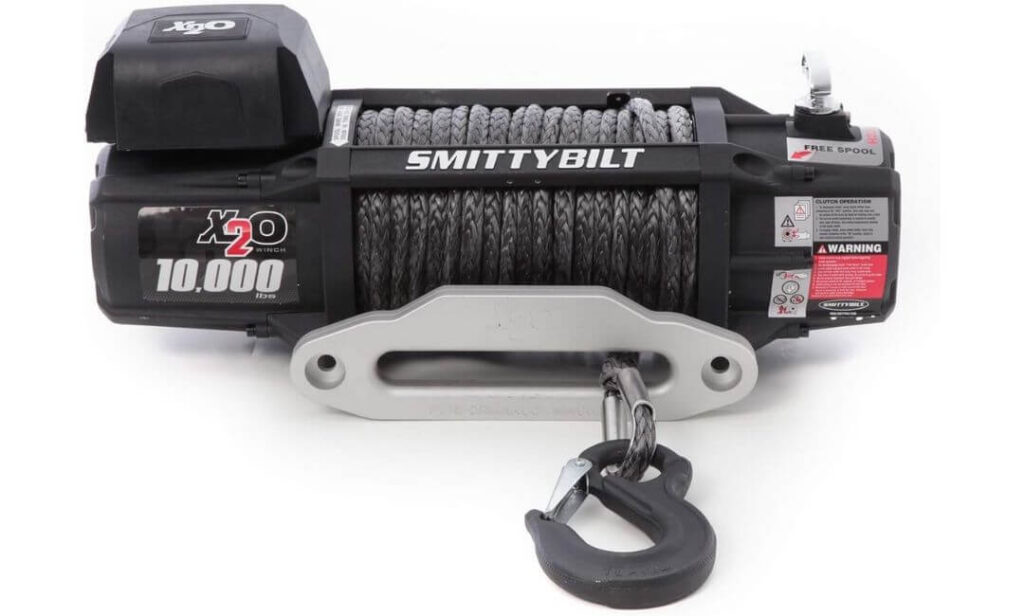
Quick Specs:
- Ideal for: Jeep Wrangler JK, JKU, JL, JLU, and Rubicon
- 10,000 lb single-line pulling capacity for stock and moderately upgraded Wranglers
- 98.5 ft synthetic rope for lighter, safer recoveries
- 6.6 HP series-wound motor with 218:1 three-stage planetary gearing
- Integrated wireless remote plus 12 ft wired controller
- Fully waterproof motor with sealed 500-amp solenoid pack
- Removable control box for cleaner bumper installations
- Automatic out-of-drum braking system
- Lifetime mechanical and 5-year electrical warranty
- Recommended 650 CCA battery for dependable winching performance
The best trail gear isn’t always the most expensive—it’s the equipment that quietly earns your confidence every time you head off pavement. That’s exactly where this 10,000 lb setup fits. It delivers the pulling power most Jeep Wrangler JK and JL owners actually need, without adding unnecessary weight to the front end. Backed by a 6.6 HP series-wound motor, a 218:1 three-stage planetary gearbox, and nearly 100 feet of synthetic rope, it feels purpose-built for real weekend recoveries instead of showroom specifications.
Another reason this model continues to have such a loyal following is its practical design. The fully sealed waterproof motor, 500-amp waterproof solenoid pack, and wireless plus wired remote system give you confidence whether you’re climbing through muddy forest trails, crossing shallow rivers, or recovering on wet rocks after heavy rain. The removable control box is another thoughtful touch, making it much easier to achieve a cleaner installation on aftermarket Jeep bumpers where space is often limited.
This isn’t trying to compete as the most premium winch on the market—and that’s exactly why many Wrangler owners appreciate it. It focuses on dependable performance, simple operation, and long-term durability, making it one of the strongest values for anyone who spends more time driving trails than reading spec sheets.
(For most stock and lightly modified Wranglers, a quality 10,000 lb winch like this provides all the recovery capability you’ll realistically need while keeping front-end weight under better control.)
Why It Continues to Stand Out
- 10,000 lb pulling capacity is well matched to most Jeep Wrangler recovery situations.
- 6.6 HP motor and 218:1 planetary gearing deliver strong pulling power with responsive line speed.
- Integrated wireless and wired controls make solo recoveries more convenient.
- Fully waterproof motor and sealed solenoid are built for mud, rain, and repeated trail use.
- Removable control box provides greater flexibility for aftermarket bumper installations.
One Thing to Keep in Mind
- Factory Jeep bumpers generally require a vehicle-specific mounting plate or winch adapter, so plan for that before installation.
Jeep Wrangler Installation & Compatibility
This model fits Jeep Wrangler JK, JKU, JL, JLU, and Rubicon platforms when paired with a compatible winch-ready bumper or mounting plate. It’s an excellent match for Wranglers running 32 to 35-inch tires, steel bumpers, recovery points, and moderate overlanding accessories where balanced recovery performance is more important than maximum advertised capacity.
For the most reliable operation, Smittybilt recommends using at least a 650 CCA battery. A strong battery, properly sized cables, and secure power connections help the motor maintain consistent pulling performance during longer recovery sessions.
The Insider Pro-Tip
One mistake many first-time buyers make is assuming they need the biggest winch available. In reality, matching the winch to your Jeep’s actual weight and trail setup usually delivers better balance, easier steering feel, and less strain on the suspension. That’s one reason experienced Wrangler owners continue to recommend quality 10,000 lb systems for everyday off-road use.
Before your first recovery, test both the wireless remote and the wired controller at home, then practice engaging and disengaging the clutch a few times. Those few minutes of preparation often make the difference between a calm recovery and unnecessary frustration when you’re miles away from pavement.
#4. Superwinch SX10SR 12V DC Winch
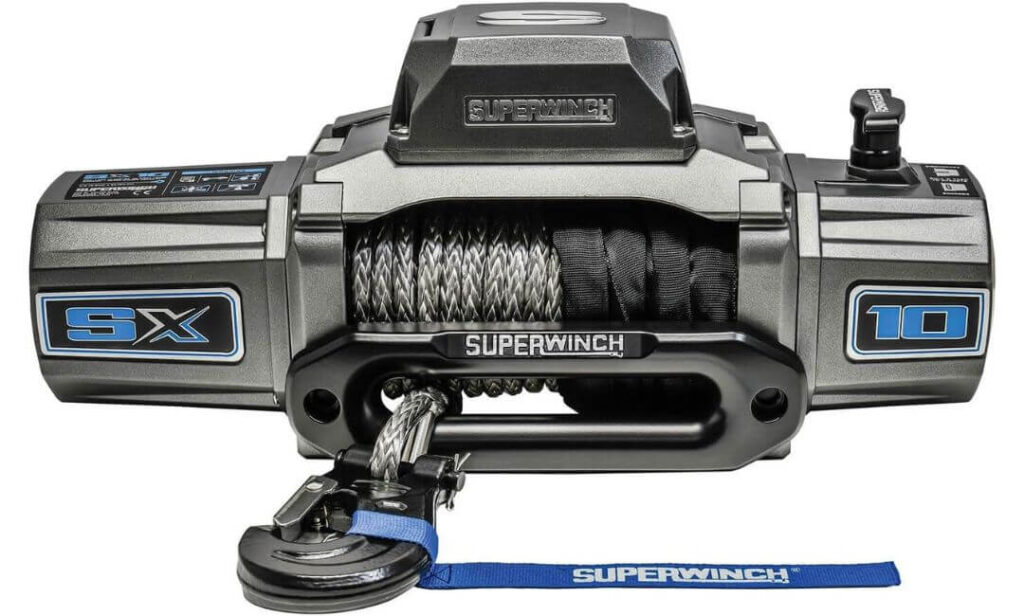
Quick Specs:
- Ideal for: Jeep Wrangler JK, JL, JLU, and Rubicon
- 10,000 lb single-line pulling capacity for everyday trail recoveries
- 80 ft x 3/8-inch synthetic rope with Hawse fairlead
- 5.5 HP sealed motor with 218:1 planetary gear system
- IP68 waterproof drum, gearbox, and contactor
- Wireless handheld remote plus lighted wired controller
- Integrated drum and controller lighting for nighttime recoveries
- Relocatable die-cast aluminum control box
- 100% mechanical automatic load-holding brake
- Tested to operate from -40°F to 125°F
There are products that impress because of their price tag, and then there are products that quietly prove themselves every time they’re asked to work. This winch falls into the second category. Its 10,000 lb pulling capacity is well suited to most Jeep Wrangler JK and JL builds, while the 5.5 HP sealed motor, 218:1 planetary gearing, and 80-foot synthetic rope create a recovery setup that feels balanced instead of oversized. For many Wrangler owners, that’s exactly what makes it such a dependable choice.
What separates it from many competitors is the attention given to real trail conditions. The IP68-sealed drum, gearbox, and contactor help keep mud, water, dust, and debris where they belong—outside the winch. During evening recoveries, the integrated drum light and illuminated wired controller become surprisingly useful, especially when you’re working alone after sunset. Add the wireless remote, relocatable control box, and mechanical load-holding brake, and the overall experience feels thoughtfully engineered rather than feature-packed for marketing purposes.
It’s also one of the few winches that continues to earn praise from Wrangler owners who actually spend weekends on trails instead of parking lots. Everything from the oversized no-bind clutch handle to the rugged steel drum reflects a design focused on reliability rather than unnecessary complexity.
(If your Jeep regularly tackles forest trails, rocky climbs, snow, or muddy backroads, this setup delivers the kind of dependable recovery performance that most Wrangler owners will appreciate for years.)
Why We Believe It Deserves a Place Here
- 10,000 lb capacity is ideal for the majority of Jeep Wrangler recovery situations.
- IP68 waterproof sealing protects the entire winch during mud, rain, and water crossings.
- Integrated drum lighting makes low-light recoveries significantly easier.
- Wireless and illuminated wired remotes provide flexibility in different recovery environments.
- Steel drum and no-bind clutch design improve long-term durability and ease of operation.
One Practical Thing to Know
- Like most aftermarket winches, you’ll need a Jeep-specific mounting plate or winch-ready bumper before installation on factory-equipped Wranglers.
Jeep Wrangler Installation & Compatibility
This model is compatible with Jeep Wrangler JK, JL, JLU, and Rubicon models when installed on a suitable winch mounting plate or aftermarket recovery bumper. It’s an excellent option for Wranglers running 33 to 35-inch tires, steel bumpers, skid plates, and other common trail upgrades where dependable recovery equipment becomes part of the build rather than an afterthought.
Before installation, check that your electrical system is in good condition and route the power cables away from exhaust heat and moving suspension components. Taking a little extra time during installation usually pays off with smoother operation and easier maintenance later.
The Insider Pro-Tip
One feature that’s often overlooked until it’s actually needed is visibility. Recoveries rarely happen under perfect daylight conditions, and trying to guide synthetic rope across a drum after dark can quickly become frustrating. The built-in drum lighting may seem like a small addition on paper, but it’s one of those features you’ll appreciate the first time you’re recovering a Jeep after sunset.
When installing any synthetic-rope winch, leave enough room in front of the fairlead to inspect the rope after every difficult recovery. Catching small abrasions early is one of the easiest ways to extend rope life and keep your recovery system performing exactly as it should on every trip.
#5. XYCLE 18,500 lb Recovery Winch
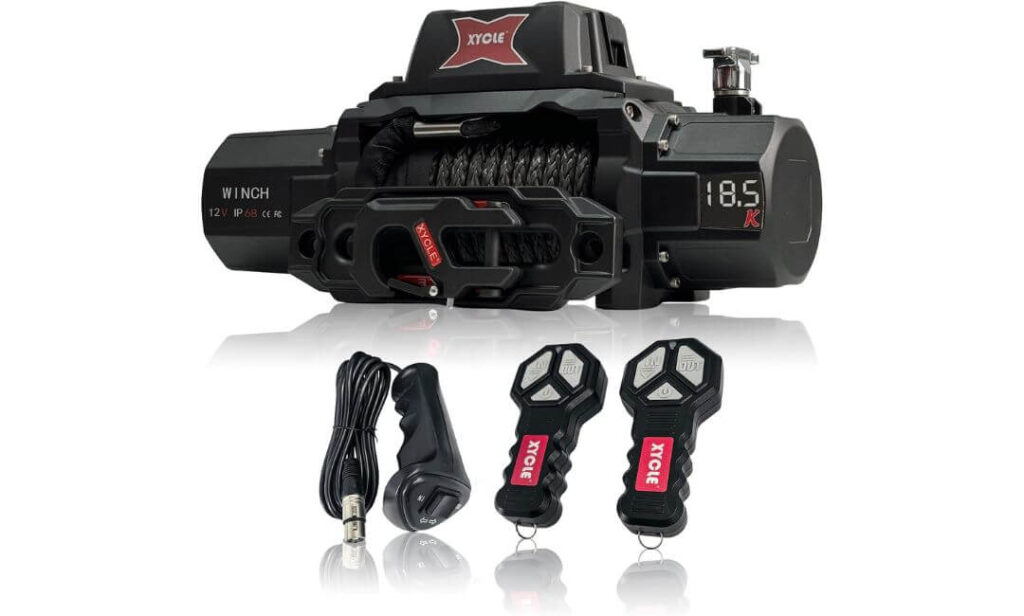
Quick Specs:
- Ideal for: Jeep Wrangler JK, JKU, JL, JLU, Rubicon, and heavily equipped trail builds
- 18,500 lb single-line pulling capacity for demanding recovery situations
- 70 ft UHMWPE synthetic rope with a thicker 9/17-inch diameter
- IP68 waterproof and dustproof all-metal construction
- 280:1 three-stage planetary gear system
- Dual wireless remotes plus wired controller
- Aviation-grade aluminum alloy housing for improved heat dissipation
- Pure copper motor windings for consistent high-load performance
- Standard 10 x 4.49-inch mounting pattern
- 3-year manufacturer warranty
Sometimes the right choice isn’t the one with the biggest brand name—it’s the one that offers the features your Jeep actually needs at a price that makes sense. This 18,500 lb recovery winch is designed for Wrangler owners running heavier trail builds with steel bumpers, oversized tires, camping gear, recovery equipment, or towing accessories where additional pulling reserve can be useful. The combination of a 280:1 planetary gear system, pure copper motor windings, and a 70-foot UHMWPE synthetic rope delivers strong, steady pulling performance without feeling overly complicated to operate.
One feature that deserves more attention is the overall construction. Instead of relying on a traditional steel housing alone, this model uses an aviation-grade aluminum alloy body that helps dissipate heat during extended recoveries while remaining resistant to corrosion. The fully sealed IP68 waterproof design, paired with dual wireless remotes and a backup wired controller, makes it equally comfortable on muddy trails, river crossings, and unpredictable weather where dependable equipment becomes far more important than premium branding.
While it doesn’t carry the decades-long reputation of some established recovery brands, its specifications, modern design, and real-world owner feedback make it an interesting option for buyers who want substantial pulling capability without stepping into significantly higher price ranges.
(For heavily accessorized Wrangler builds that spend more time recovering vehicles than simply exploring trails, the additional pulling reserve can provide valuable peace of mind without sacrificing everyday usability.)
Why We Included It in This Guide
- 18,500 lb pulling capacity provides extra recovery headroom for heavier Jeep builds.
- UHMWPE synthetic rope is thicker than many standard synthetic lines and remains easy to handle.
- IP68 waterproof construction helps protect internal components during harsh off-road conditions.
- Dual wireless remotes allow convenient recovery control from multiple positions.
- Aluminum housing and copper motor windings improve cooling efficiency and long-term durability.
One Thing to Consider Before Ordering
- This model does not include a mounting plate, so you’ll need a Jeep-compatible winch mount or winch-ready bumper before installation. The wireless remotes also require A23 batteries, which are typically purchased separately.
Jeep Wrangler Installation & Compatibility
This winch is compatible with Jeep Wrangler JK, JKU, JL, JLU, and Rubicon models using the standard 10 x 4.49-inch mounting pattern when paired with a suitable winch plate or aftermarket recovery bumper. Because of its larger pulling capacity, it’s best suited to Wranglers carrying steel bumpers, 35 to 37-inch tires, rooftop gear, armor, and other heavy accessories where additional recovery capability can be beneficial.
Before putting it into service, follow the manufacturer’s recommendation to leave at least 10 wraps of synthetic rope on the drum during operation. This simple step helps maintain secure rope engagement and contributes to safer, more consistent recoveries.
The Insider Pro-Tip
Choosing the highest pulling capacity isn’t automatically the smartest decision. The real advantage comes when your winch, suspension, bumper, battery, and recovery equipment are working together as a complete system. A properly installed winch with a healthy electrical setup will almost always perform better than a larger unit mounted without adequate support.
If your Wrangler is primarily a weekend trail vehicle with moderate upgrades, a 10,000 to 12,000 lb winch is usually the better-balanced option. This model becomes most valuable when your Jeep carries significant extra weight or regularly tackles recoveries involving larger vehicles, deep mud, steep climbs, or heavily loaded overlanding setups where additional pulling reserve is genuinely useful.
Best Jeep Wrangler Winch Comparison Chart for Every Trail and Budget
| Winch | Best For | Pull Capacity | Rope | Waterproof | Control | Standout Advantage | Ideal Jeep Build |
|---|---|---|---|---|---|---|---|
|
WARN Zeon 12-S Platinum Editor’s Choice |
Premium rock crawling & overlanding | 12,000 lb | 80 ft Spydura Synthetic | Advanced Sealed Design | Wireless + Wired | Convertible control pack, EPIC Hyperlink shackle, premium finish | JL, JLU & Rubicon with steel bumpers and 35-37″ tires |
|
WARN VR EVO 12-S Best Value |
Reliable everyday trail recovery | 12,000 lb | 100 ft Synthetic | IP68 | Wireless + Wired | Excellent balance of durability, reach and long-term reliability | Daily driven JK, JL and weekend overland builds |
|
Smittybilt X2O-10K Gen2 Trail Favorite |
Balanced performance and value | 10,000 lb | 98.5 ft Synthetic | Fully Waterproof | Wireless + Wired | 6.6 HP motor, removable control box and fast line speed | Stock and lightly modified Wrangler builds |
|
Superwinch SX10SR Reliable Choice |
Frequent trail adventures | 10,000 lb | 80 ft Synthetic | IP68 | Wireless + Lighted Wired | Integrated drum light, steel drum and no-bind clutch | Weekend off-roaders needing dependable recovery gear |
|
XYCLE 18,500 lb Heavy Duty |
Heavily equipped Jeep builds | 18,500 lb | 70 ft UHMWPE Synthetic | IP68 | Dual Wireless + Wired | Aluminum housing, copper motor windings and extra pulling reserve | Heavy overlanding rigs with armor, gear and larger tires |
Buying Guide: How to Choose the Best Winch for Your Jeep Wrangler
Buying a winch for your Jeep Wrangler isn’t simply about picking the highest pulling capacity or the most expensive brand. The right winch should match your Wrangler’s weight, bumper setup, tire size, electrical system, and the type of off-road driving you actually do. A lightweight weekend trail Jeep has very different recovery needs than a fully loaded Rubicon carrying steel armor, camping equipment, and oversized tires.
The good news is that most Wrangler owners don’t need an oversized commercial winch. A properly matched recovery system with the correct mounting hardware, healthy battery, quality recovery accessories, and a dependable winch will always outperform an overpowered setup that isn’t installed correctly. Below are the key factors worth considering before spending your money.
Choosing the Right Pulling Capacity
One of the biggest misconceptions is that bigger always means better. In reality, an oversized winch adds unnecessary weight to the front axle, affects suspension performance, and increases strain on the electrical system without providing meaningful benefits for most Jeep owners.
As a general rule:
- 10,000 lb works well for stock and lightly modified Jeep Wrangler JK and JL models.
- 12,000 lb is the sweet spot for Wranglers with steel bumpers, winch-ready armor, 35-inch tires, rooftop tents, and overlanding gear.
- 15,000 lb and above should only be considered if your Wrangler carries significant additional weight or regularly assists heavier trucks and SUVs during difficult recoveries.
Don’t forget to consider duty cycle as well. A quality motor that maintains consistent pulling performance during longer recoveries is often more valuable than simply choosing a higher advertised capacity.
Synthetic Rope or Steel Cable
Most modern Jeep owners now prefer synthetic rope, and for good reason. It’s lighter, easier to handle, safer if it fails under load, and doesn’t develop sharp wire strands like steel cable. Synthetic rope also reduces overall weight on the front suspension, making it a better match for Wranglers that spend time on technical trails.
Steel cable still has advantages for commercial environments where abrasion resistance is the highest priority, but it requires more maintenance, weighs considerably more, and can become difficult to handle after repeated use.
For recreational off-roading, overlanding, and rock crawling, synthetic rope remains the better all-around choice.
Motor Performance and Electrical Requirements
Every winch in this guide operates on a 12-volt electrical system, making them compatible with Jeep Wrangler JK, JL, JLU, Rubicon, and most aftermarket electrical upgrades. However, the winch is only as reliable as the electrical system supporting it.
Before installation, make sure your Wrangler has:
- A healthy AGM battery or equivalent high-capacity battery.
- Clean battery terminals and properly sized power cables.
- Secure ground connections.
- A charging system capable of supporting repeated recovery loads.
Series-wound motors continue to be the preferred option because they produce excellent torque, reliable pulling power, and consistent performance under demanding conditions.
Line Speed, Braking System, and Control Options
Fast line speed can shorten recovery time, but smooth and controlled pulling is far more important than chasing the fastest specification on paper. A quality planetary gear system paired with a dependable braking mechanism provides better control during difficult recoveries, especially on steep inclines or uneven terrain.
Modern winches now commonly include:
- Wireless remote controls.
- Backup wired controllers.
- Automatic mechanical braking systems.
- Planetary gear reductions for smoother operation.
These features don’t simply add convenience—they improve overall safety by allowing the operator to maintain a better position while monitoring the recovery.
Mounting Compatibility and Installation Planning
Before ordering any winch, confirm that your bumper is actually designed to accept one. Many factory Jeep Wrangler bumpers require a vehicle-specific mounting plate, while most aftermarket steel bumpers include integrated winch mounts.
Also verify:
- Mounting bolt pattern compatibility.
- Fairlead position.
- Control box clearance.
- Airflow around the radiator.
- Battery cable routing.
- Front suspension capacity after installation.
Taking time to verify these details before purchase can save hours of frustration later.
Reliability Matters More Than Extra Features
Recovery equipment is something you hope you’ll never need—but when you do, it has to work immediately. That’s why long-term reliability should always take priority over marketing features.
When comparing models, pay attention to:
- Waterproof sealing quality.
- Corrosion-resistant hardware.
- Gearbox construction.
- Motor reputation.
- Brake design.
- Manufacturer warranty.
- Long-term owner feedback from Jeep communities.
These are the characteristics that continue to matter years after the winch is installed.
Safe Recovery Practices Every Jeep Owner Should Follow
Even the best winch can become dangerous if it’s used incorrectly. Every recovery should begin with proper planning rather than simply pulling the cable tight and applying power.
Always remember to:
- Inspect the synthetic rope before every trip.
- Keep at least 10 wraps of rope on the drum during heavy pulls.
- Use rated recovery points instead of tow balls or suspension components.
- Wear gloves while handling recovery equipment.
- Position a recovery damper or heavy blanket over the rope whenever possible.
- Keep bystanders clear of the recovery path.
- Re-spool the rope under light tension after each recovery to prevent uneven layers.
The safest recovery is usually the one that takes a few extra minutes to set up correctly. A properly installed winch, matched to your Jeep Wrangler and used with good recovery practices, will provide dependable service for years while giving you the confidence to explore trails that would otherwise be out of reach.
Real-World Performance: How These Winches Handle Real Jeep Wrangler Recovery Situations
A winch can look impressive on paper, but spec sheets don’t tell you how it behaves when your Wrangler is leaning sideways on loose rocks, buried to the axles in mud, or trying to climb a washed-out trail after heavy rain. That’s where build quality, motor consistency, braking performance, waterproof sealing, and rope management become far more important than marketing claims.
The winches featured in this guide were selected because they offer characteristics that experienced Jeep owners consistently value during real recovery situations. While every recovery is different depending on terrain, vehicle weight, and recovery technique, these are the types of conditions where each design is expected to perform at its best.
Rock Crawling and Technical Trails
Rock crawling places steady, continuous load on both the winch motor and drivetrain. Unlike mud recoveries that often involve short bursts of power, climbing over large rocks usually requires slow, controlled pulling with consistent line tension.
In these situations, 12,000 lb winches such as the WARN Zeon 12-S Platinum and WARN VR EVO 12-S provide excellent control because their motors maintain smooth pulling without feeling abrupt. The planetary gear systems also help deliver predictable movement, allowing the driver and spotter to make small steering corrections while the Jeep climbs over obstacles.
Synthetic rope offers another advantage here. Since it weighs significantly less than steel cable, handling becomes easier when repeatedly changing recovery angles between rocks or trees.
Deep Mud and Water Crossings
Mud creates a completely different recovery challenge because suction often adds significant resistance beyond the actual weight of the vehicle. This is exactly where IP68 waterproof construction, sealed motors, and protected contactors become valuable.
Models like the Smittybilt X2O Gen2, Superwinch SX10SR, and WARN VR EVO 12-S are particularly well suited to repeated muddy recoveries thanks to their fully sealed components. Features such as waterproof solenoid packs, corrosion-resistant housings, and synthetic rope help reduce maintenance after the recovery is complete.
When recovering from mud, slow and consistent pulling usually produces better results than aggressive throttle inputs. Allowing the winch to do the work places less stress on both the vehicle and the recovery equipment.
Sand, Desert Trails, and Soft Terrain
Sand behaves very differently from rocks or mud. Instead of fighting suction, the challenge comes from maintaining steady forward movement without allowing the tires to dig deeper.
A winch with smooth line speed and responsive controls makes recovery much easier because the Jeep can continue rolling gradually while light throttle is applied. Wireless remotes also allow better communication between the driver and recovery partner since adjustments can be made without standing directly beside the bumper.
Whenever possible, reducing tire pressure before using the winch often shortens recovery time and places less load on the motor.
Steep Climbs and Off-Camber Recoveries
Recovering on steep inclines demands more than raw pulling strength. Reliable braking systems, consistent motor output, and quality synthetic rope all contribute to safer recoveries.
Mechanical load-holding brakes prevent unwanted vehicle movement when tension changes, while properly designed planetary gear systems maintain smooth pulling even during longer climbs. This becomes particularly important when recovering heavily equipped Wranglers carrying steel bumpers, rooftop tents, recovery gear, or larger tires.
In these situations, taking an extra minute to position the recovery line correctly usually improves both safety and efficiency.
What to Expect During a Typical Recovery
Recovery times vary depending on terrain, vehicle weight, anchor position, and driver experience, so no responsible reviewer can promise exact numbers. However, under normal trail conditions, a properly installed 10,000 to 12,000 lb winch should complete most Jeep Wrangler recoveries in just a few controlled pulling cycles rather than requiring repeated aggressive attempts.
Longer recoveries naturally generate additional heat inside the motor and gearbox. Giving the winch short cooling breaks during extended pulls helps maintain consistent performance and reduces unnecessary wear over time.
The goal isn’t simply recovering the vehicle quickly—it’s recovering it safely while minimizing stress on both the winch and the Jeep.
Maintenance After Serious Off-Road Use
A quality winch requires surprisingly little maintenance, but the attention it does need should never be skipped after a demanding trail day.
After recovering in mud, sand, or water:
- Rinse the synthetic rope with clean water to remove grit and abrasive particles.
- Allow the rope to dry completely before storing the vehicle for long periods.
- Inspect the rope for cuts, flattened sections, or excessive abrasion.
- Check the fairlead for damage or sharp edges.
- Verify all mounting bolts remain properly tightened.
- Inspect battery terminals and electrical connections for corrosion.
- Re-spool the rope under light tension so it lays evenly across the drum.
- Test both the wired and wireless remote before your next trip.
Most winch problems don’t begin on the trail—they begin months earlier when routine inspections are skipped. Spending ten minutes checking your recovery equipment after every off-road trip is often the easiest way to ensure it’s ready when your Jeep Wrangler needs it most.
How to Choose the Right Winch for Your Jeep Wrangler Configuration
Not every Jeep Wrangler is built the same, and that’s exactly why the “best” winch for one owner may not be the right choice for another. A two-door Wrangler with factory bumpers has very different recovery requirements than a fully equipped Rubicon carrying steel armor, 37-inch tires, rooftop camping gear, and additional recovery equipment. Before buying any winch, it’s worth taking a few minutes to evaluate how your Jeep is actually configured today—not how you might build it in the future.
The five winches in this guide cover a wide range of Wrangler setups, but choosing the correct one depends on several factors that many first-time buyers overlook.
Match the Winch to Your Wrangler’s Model and Weight
The first step is understanding how much your Jeep actually weighs when it’s ready to hit the trail.
A stock Jeep Wrangler JK or JL used for weekend trails generally performs very well with a 10,000 lb recovery winch. Once you begin adding steel front and rear bumpers, winch-ready armor, rock sliders, skid plates, larger tires, recovery gear, rooftop tents, or camping equipment, the vehicle weight increases significantly. That’s where moving to a 12,000 lb winch becomes the better long-term choice.
Wranglers built primarily for overlanding or frequent recovery work may also benefit from additional pulling reserve, but extremely oversized winches should only be considered when the overall vehicle weight truly justifies them.
Understand Your Front Bumper Before Ordering
One of the most common installation mistakes happens before the winch even arrives.
Many factory plastic bumpers cannot accept a winch without adding a vehicle-specific mounting plate, while factory steel bumpers often require a dedicated adapter designed for your Wrangler model year. Most quality aftermarket off-road bumpers already include integrated winch mounting locations, making installation considerably easier.
Before ordering, confirm:
- Winch mounting bolt pattern.
- Fairlead compatibility.
- Control box clearance.
- Bumper depth.
- Airflow around the radiator.
- Recovery point accessibility after installation.
Verifying these details first helps avoid expensive surprises later.
Make Sure Your Electrical System Is Ready
A recovery winch places one of the highest electrical demands on your Wrangler. Even the best winch cannot perform properly if the electrical system cannot supply consistent power.
Before installation, inspect:
- Battery condition.
- Charging system output.
- Main battery cables.
- Ground connections.
- Terminal cleanliness.
- Battery age.
Wranglers equipped with AGM batteries generally handle repeated recovery loads more effectively than older batteries approaching the end of their service life. If your battery already struggles during cold starts, replacing it before installing a winch is often a smarter investment than upgrading to a larger winch.
Choose Features That Match Your Driving Style
It’s easy to be attracted by long feature lists, but the most valuable features are usually the ones you’ll actually use on the trail.
If your Jeep regularly sees:
- Mud and water crossings, prioritize IP68 waterproof sealing.
- Night recoveries, look for integrated work lights or illuminated remotes.
- Solo trail driving, wireless remote controls provide greater flexibility.
- Technical rock crawling, smooth braking systems and predictable line speed become more important than maximum speed.
- Long overlanding trips, choose proven reliability over unnecessary electronics.
Selecting features based on how you drive almost always leads to greater satisfaction than simply chasing the newest model.
High-Level Jeep Wrangler Winch Installation Overview
Installing a winch isn’t especially difficult, but it does require careful planning. Every Wrangler bumper is slightly different, so always follow both the bumper manufacturer’s instructions and the winch manufacturer’s installation guide.
A typical installation includes:
- Verify bumper compatibility and confirm the correct mounting plate.
- Secure the winch using the recommended hardware and torque specifications.
- Install the Hawse fairlead or roller fairlead supplied with the winch.
- Position the control pack where wiring remains protected and easily accessible.
- Route positive and negative battery cables away from heat sources and moving suspension components.
- Connect the electrical system according to the manufacturer’s instructions.
- Install and tension the synthetic rope correctly across the drum.
- Test wired and wireless controls before heading off-road.
- Perform an initial rope preload by lightly tensioning and re-spooling the line evenly.
Taking your time during installation usually produces better long-term reliability than trying to finish the job as quickly as possible.
Build a Complete Recovery System, Not Just a Better Winch
One of the biggest lessons experienced Jeep owners learn is that a winch is only one part of the recovery system.
For the safest and most effective recoveries, pair your winch with:
- Rated recovery shackles.
- Tree saver strap.
- Recovery damper.
- Snatch block when appropriate.
- Heavy-duty recovery gloves.
- Battery disconnect if recommended for your setup.
- Recovery bag to keep equipment organized.
These accessories often make a greater difference during real recoveries than upgrading to a more expensive winch alone.
The Best Choice Is the One That Fits Your Jeep
The strongest winch isn’t automatically the best winch. The right choice is the one that fits your Jeep Wrangler’s weight, bumper, electrical system, and intended use while giving you dependable performance every time you leave pavement.
Whether you drive a lightly modified daily-driven JL, a trail-focused JK, or a fully equipped Rubicon built for extended overlanding, investing in a properly matched recovery setup will always provide more confidence than simply buying the biggest winch available.
FAQs About Jeep Wrangler Winch
Is a 12,000 lb winch too much for a Jeep Wrangler, or is it the safest long-term choice?
Not for most modern Wranglers. In fact, a 12,000 lb winch has become the sweet spot because many Jeep owners eventually add steel bumpers, larger tires, skid plates, roof racks, camping gear, and recovery accessories. Those upgrades can add several hundred pounds to the vehicle, making a 10,000 lb winch feel much closer to its working limit during difficult recoveries.
That doesn’t mean every Wrangler needs the biggest winch available. If your Jeep is mostly stock and used for light trails, a quality 10,000 lb model is often perfectly adequate. But if you plan to modify your Wrangler over time, buying a dependable 12,000 lb winch now usually prevents upgrading again later. The key is matching the winch to your actual trail weight, not the factory curb weight.
Can I install a winch on my Jeep Wrangler’s factory bumper, or do I always need a mounting plate?
That depends entirely on which bumper your Wrangler has. Many factory plastic bumpers cannot support a winch without a vehicle-specific mounting plate, while factory steel bumpers often require a dedicated adapter designed for your model year. Most aftermarket recovery bumpers already include integrated winch mounting locations.
Before ordering any winch, verify these points first:
- Bumper type and model year.
- Mounting bolt pattern.
- Fairlead compatibility.
- Control box clearance.
- Airflow around the radiator.
- Access to recovery points after installation.
Spending five minutes checking compatibility before buying can save hours of installation headaches and unnecessary return shipping.
Does synthetic rope really last as long as steel cable on a Jeep Wrangler?
When it’s cared for properly, yes. Modern UHMWPE and premium synthetic ropes have become the preferred choice for most Wrangler owners because they’re lighter, safer under load, and much easier to handle during repeated recoveries. They also reduce weight on the front suspension and don’t develop the sharp broken strands that steel cable eventually can.
The biggest factor isn’t the rope—it’s maintenance. Synthetic rope should be rinsed after mud or sand recoveries, allowed to dry before long-term storage, and inspected regularly for abrasion. Owners who follow those simple habits often get years of dependable service without issues.
What usually causes Jeep Wrangler winches to fail during recovery?
In many cases, the winch isn’t actually the problem. The most common failures happen because the entire recovery system wasn’t prepared, not because the winch itself lacked pulling power.
The issues experienced off-road drivers see most often include:
- Weak or aging batteries.
- Loose battery terminals.
- Poor grounding connections.
- Incorrect cable routing.
- Low-quality mounting hardware.
- Unevenly spooled synthetic rope.
- Ignoring regular inspections after muddy recoveries.
A well-installed mid-range winch supported by a healthy electrical system is usually far more dependable than an expensive premium model installed carelessly.
Which winch from this guide offers the best balance of performance, reliability, and long-term value?
If budget isn’t the deciding factor, the WARN Zeon 12-S Platinum remains the most complete package thanks to its premium construction, excellent sealing, flexible control pack, and proven long-term reputation among serious off-road enthusiasts.
For most Jeep Wrangler owners, however, the WARN VR EVO 12-S arguably delivers the strongest overall value. It combines 12,000 lb pulling capacity, IP68 waterproof protection, 100-foot synthetic rope, dependable wireless control, and trusted engineering at a more accessible price point. That balance makes it easier to recommend for daily-driven Wranglers, weekend trail rigs, and overlanding builds alike without feeling like you’re paying extra for features you’ll rarely use.
Final Verdict
A recovery winch is one of those upgrades you’ll probably spend months hoping you never need. But when your Jeep Wrangler is buried in mud, hanging on loose rock, or sitting miles away from the nearest paved road, it’s often the one piece of equipment that determines whether the day ends with a successful recovery or an expensive call for help.
That’s exactly why this guide doesn’t chase flashy specifications or oversized pulling numbers. Every recommendation here was chosen because it offers something that matters in the real world—dependable pulling power, proven durability, effective waterproof protection, quality synthetic rope, reliable controls, and compatibility with the way most Wrangler owners actually build and use their Jeeps. Those are the details that continue to matter years after the box has been opened.
If you’re building a serious trail or overlanding Wrangler and want the highest level of confidence, the WARN Zeon 12-S Platinum is difficult to beat. If your goal is outstanding performance without stepping into flagship pricing, the WARN VR EVO 12-S remains one of the smartest long-term investments available. And if you’re looking for dependable recovery performance while keeping your budget under control, both the Smittybilt X2O Gen2 and Superwinch SX10SR offer excellent real-world value.
The most important decision, however, isn’t simply choosing the highest-rated winch—it’s choosing the one that matches your Wrangler’s weight, bumper, electrical system, and the type of trails you actually drive. Pair it with proper recovery gear, install it correctly, inspect it regularly, and you’ll have a recovery setup you can trust long before the trail ever demands it.
When that unexpected moment finally comes, confidence doesn’t come from the logo on the winch—it comes from knowing you chose the right equipment before you actually needed it.
Also Check:


