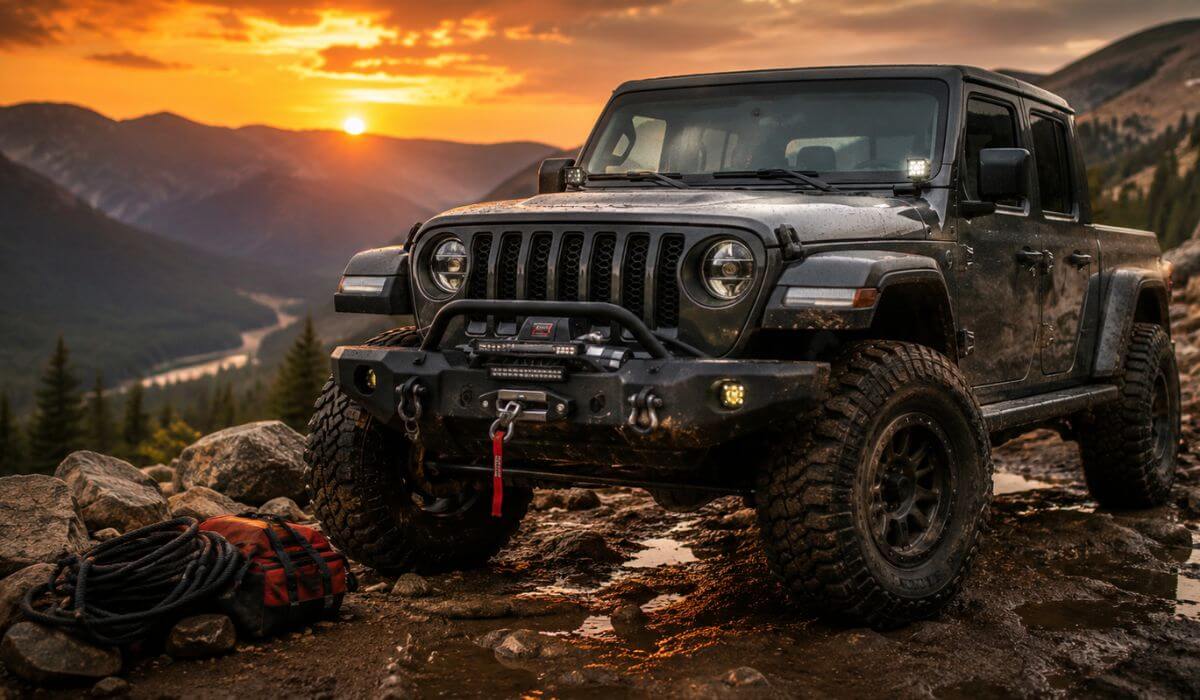
5 Best Winch for Jeep Gladiator in 2026: High Pull Capacity With IP68 Protection
Many Jeep Gladiator owners assume that a bigger winch automatically means better recovery. In reality, the right choice depends on your Gladiator’s curb weight, tire size, bumper setup, and how you actually use the truck. A factory Sport used for weekend trails has different recovery needs than a Rubicon running 37-inch tires with steel armor and overlanding gear. That’s why a well-matched 12,000 lb to 13,500 lb electric winch is the sweet spot for most 2020–2026 Jeep Gladiator JT models—it provides enough pulling power without compromising everyday usability.
For this guide, I focused on winches that matter where it counts: real recovery performance, IP68 waterproof protection, synthetic rope durability, reliable load holding, wireless operation, and long-term dependability. Since many of these models are relatively new, I didn’t rely on marketing claims alone. I compared manufacturer specifications, brand reputation, off-road recovery features, and practical compatibility with modern Jeep Gladiator builds. The result is a shortlist that fits everything from a stock daily-driven Gladiator to a fully equipped overlanding or rock-crawling rig.
Best Winch for Jeep Gladiator (2026): Top Recovery Picks with IP68 Protection
#1. WARN VR EVO 12-S Electric Winch
Best Jeep Gladiator Recovery Winch for Extreme Off-Road Trails, Rock Crawling, and Long-Term Reliability
#2. Rough Country 12,000LB PRO Series Electric Winch
Best 12000 lb Winch for Jeep Gladiator with Synthetic Rope for Heavy-Duty Recovery and Outstanding Value
#3. Smittybilt XRC Gen 2 9500 lb Electric Winch
Most Trusted Jeep Gladiator Winch for Stock Builds, Weekend Trails, and Reliable Self-Recovery Performance
#4. OPENROAD Panther Series 3S 13,500 lb Recovery Winch
Powerful Heavy-Duty Recovery Winch for Jeep Gladiator with Wireless Remote, IP68 Protection, and Maximum Pulling Force
#5. XYCLE 13,500 lb Recovery Winch
Best Budget Synthetic Rope Winch for Jeep Gladiator Delivering High Pull Capacity and All-Weather Trail Performance
Expert Tip
If your Jeep Gladiator spends more time on rocky trails than paved roads, don’t shop for a winch by maximum pull rating alone. A dependable 12,000 lb synthetic rope winch from a proven brand will almost always outperform a higher-rated winch with inconsistent braking, poor sealing, or unreliable electronics. Recovery is one of those situations where failure isn’t just inconvenient—it can leave you stranded miles from help. That’s why features like IP68 waterproof protection, a sealed contactor, controlled line speed, reliable load holding, and consistent motor performance matter far more than a bigger number printed on the box.
How We Chose the Best Winches for Jeep Gladiator
A Jeep Gladiator is heavier than a traditional Wrangler, and many owners add steel bumpers, skid plates, rooftop tents, recovery gear, larger tires, or overlanding equipment that can increase recovery loads significantly. Because of that, we didn’t build this list around price, popularity, or advertised specifications alone. Every recommendation was selected with real-world Gladiator ownership in mind.
Our first priority was recovery confidence. We focused on winches that offer a practical 9,500 lb to 13,500 lb pulling capacity, making them suitable for everything from stock Gladiator Sport models to heavily equipped Rubicon builds. Instead of chasing the highest number available, we looked for models that deliver consistent pulling power under sustained load without sacrificing reliability.
We also placed significant importance on IP68 waterproof protection, because mud, river crossings, heavy rain, and fine trail dust are exactly where many winches fail over time. A properly sealed motor and gearbox can make the difference between a successful recovery and a dead winch when you need it most.
Another factor was synthetic rope quality and recovery safety. Synthetic rope is lighter, easier to handle, and generally safer than steel cable if a line ever snaps under tension. For that reason, most of our top recommendations prioritize high-quality synthetic rope systems designed for repeated off-road use.
Since many of these winches are newer to the market, we didn’t rely solely on customer ratings. We carefully compared manufacturer specifications, drivetrain components, braking systems, waterproof ratings, wireless remote functionality, motor output, overall build quality, and each brand’s reputation in the off-road industry. Products that looked impressive on paper but lacked meaningful recovery features or long-term credibility were intentionally left out.
Finally, we considered Jeep Gladiator compatibility. Every winch on this list is well suited for 2020–2026 Jeep Gladiator models when paired with a properly rated winch-ready bumper and appropriate recovery equipment. Our goal wasn’t to recommend the most expensive option—it was to recommend the winches we’d confidently trust on a remote trail where a dependable recovery system matters far more than marketing claims.
#1. WARN VR EVO 12-S Electric Winch
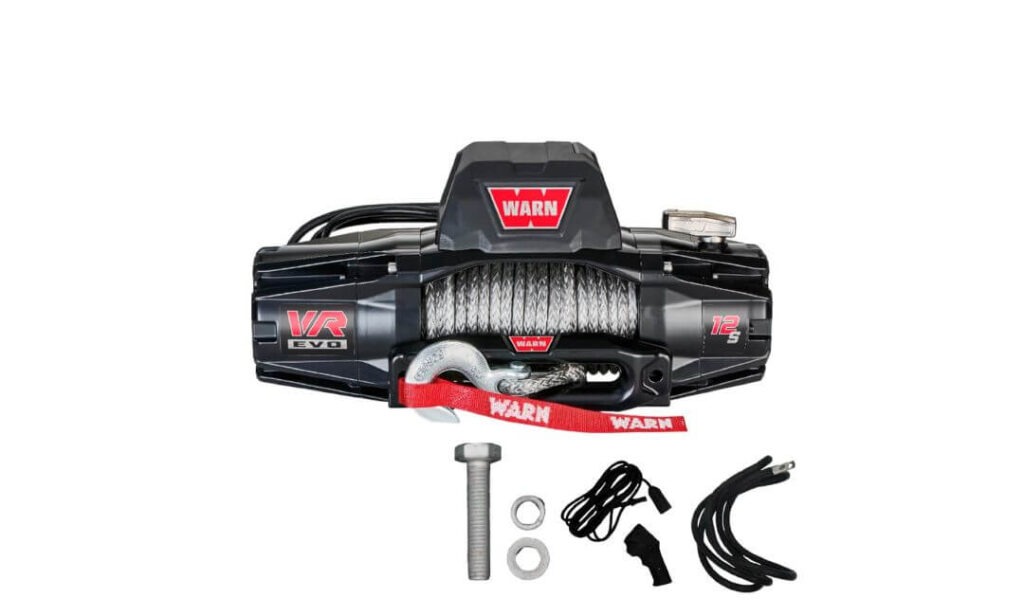
Quick Specs:
- 12,000 lb pulling capacity ideal for stock and heavily modified Jeep Gladiator builds
- 3/8-inch x 90 ft synthetic rope for lighter, safer, and easier recoveries
- IP68 waterproof sealing built for deep mud, water crossings, and dusty trails
- Series-wound motor with planetary gear system for dependable pulling under load
- Premium Albright contactor for consistent electrical performance
- Wireless Bluetooth and wired remote included for flexible recovery control
- 5-year mechanical and 3-year electrical warranty
- Requires a Gladiator-compatible winch mounting plate (standard 10 x 4.5-inch bolt pattern)
The first thing you’ll notice isn’t the badge—it’s how confident this winch feels when the load starts building. A Jeep Gladiator isn’t a lightweight trail toy, especially once you add steel bumpers, recovery gear, larger tires, or overlanding equipment. That’s where the 12,000 lb pulling capacity, series-wound motor, and planetary gear train work together to deliver smooth, predictable recovery instead of sudden jerks or hesitation. When you’re trying to recover on loose rock or thick mud, that consistency matters far more than flashy specifications.
Another reason this model continues to earn respect among experienced off-road owners is its IP68 waterproof construction and 90-foot synthetic rope. The sealed housing is designed for repeated exposure to mud, rain, and water crossings, while the synthetic rope is lighter, safer to handle, and much easier to respool after a long recovery. The addition of both a Bluetooth wireless remote and a traditional wired controller gives you more flexibility depending on terrain and recovery conditions.
Installation is straightforward on the Jeep Gladiator, but there’s one important detail many first-time buyers overlook—you’ll need a Gladiator-specific winch mounting plate because the factory bumper isn’t ready for direct installation. Once paired with the correct mount and a healthy battery, this setup becomes one of the most dependable recovery systems you can bolt onto a Gladiator.
(If your goal is buying one winch and forgetting about upgrades for years, this is one of the safest long-term investments in this category.)
Why It Earned a Place on Our List
- Excellent 12,000 lb capacity that’s well matched to the Jeep Gladiator’s weight.
- IP68 waterproof design inspires confidence during mud, snow, and river crossings.
- Synthetic rope reduces weight and improves recovery safety.
- Premium Albright contactor offers dependable electrical reliability under repeated use.
- Long manufacturer warranty backed by an established off-road brand with a strong reputation.
Before You Buy
- A Gladiator-specific winch mounting plate is required, so factor that into your installation budget.
Jeep Gladiator Compatibility and Installation Notes
This winch is an excellent fit for 2020–2026 Jeep Gladiator Sport, Willys, Mojave, Rubicon, High Altitude, and Mojave X models when installed on a compatible aftermarket or winch-ready bumper. The standard 10 x 4.5-inch mounting pattern makes it compatible with many quality Gladiator mounting systems.
For the best performance, pair it with a healthy battery (around 650 CCA or higher), inspect all mounting hardware during installation, and ensure the synthetic rope is properly tensioned during the first spool. Spending a few extra minutes on the initial setup pays off every time you rely on it in the backcountry.
The Insider Pro-Tip
Many buyers compare winches only by pull rating, but experienced Jeep owners know the real difference shows up after months of trail use. A sealed motor, reliable contactor, quality gearing, and predictable line control are what keep a recovery stress-free when conditions turn ugly.
If your Gladiator regularly sees remote trails, rocky climbs, or deep mud, investing in a proven recovery system like this usually costs far less than a single recovery call. Buy the right mounting plate the first time, wire it correctly, and it’s the kind of equipment you’ll appreciate long before you actually need it.
#2. Rough Country 12,000LB PRO Series Electric Winch
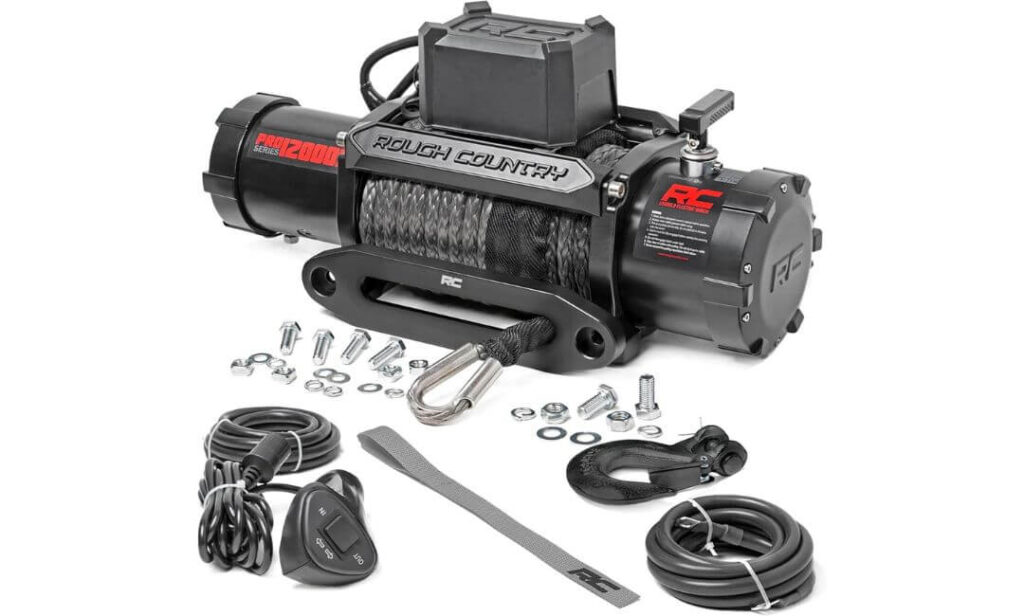
Quick Specs:
- 12,000 lb pulling capacity built for fully equipped Jeep Gladiator recovery
- High-output 6 HP series-wound motor for strong, consistent pulling power
- 3-stage planetary gear system (265:1) for smooth torque delivery
- 3/8-inch x 85 ft abrasion-resistant synthetic rope
- IP67 sealed housing for mud, rain, dust, and trail conditions
- Automatic in-drum braking system for controlled load holding
- 12 ft wired handheld remote with precise operation
- Hawse fairlead, clevis hook, battery cables, and mounting hardware included
The biggest advantage here isn’t simply the 12,000 lb rating—it’s how complete the package feels from day one. Instead of buying extra accessories before your first trail run, you’re getting the essential recovery hardware in the box, including the hawse fairlead, synthetic rope, battery cables, clevis hook, and mounting hardware. For Jeep Gladiator owners building a dependable recovery setup without overspending, that’s a genuine advantage.
Performance is equally impressive. The 6 HP series-wound motor paired with a 265:1 three-stage planetary gear train delivers strong, controlled pulling without feeling strained during demanding recoveries. The 85-foot synthetic rope is lightweight, abrasion resistant, and much easier to manage than traditional steel cable, especially when you’re working alone on uneven terrain. Add the automatic in-drum brake, and the load remains stable whenever the motor stops pulling.
Installation is refreshingly simple because this winch uses the standard 10 x 4.5-inch mounting pattern commonly supported by Jeep Gladiator winch-ready bumpers. With the supplied battery cables and hardware already included, most owners can complete the installation in a single afternoon without hunting for additional parts.
(For Gladiator owners who want dependable recovery performance without paying premium-brand pricing, this is one of the strongest value choices currently available.)
Why This Winch Stands Out on Our Shortlist
- Complete installation package with most recovery hardware already included.
- Powerful 6 HP series-wound motor built for demanding recovery situations.
- 85 ft synthetic rope offers safer handling with excellent abrasion resistance.
- Automatic load-holding brake improves control during difficult recoveries.
- Delivers an excellent balance of performance, durability, and overall value.
A Small Detail Worth Knowing
- The included controller is wired only, so buyers wanting wireless control will need to add an upgrade separately.
Jeep Gladiator Installation and Compatibility
This model works exceptionally well with 2020–2026 Jeep Gladiator Sport, Willys, Mojave, Rubicon, High Altitude, and Mojave X models using the standard 10 x 4.5-inch winch mounting pattern. Since the necessary battery cables and mounting hardware are included, installation is more straightforward than many competing options.
For the best long-term reliability, use a healthy 12V battery with at least 650 CCA, verify all hardware before installation, and properly tension the synthetic rope during its first full spool. These small setup steps help maximize pulling performance and extend the life of the winch.
The Insider Pro-Tip
One mistake many buyers make is focusing only on maximum pulling capacity while overlooking everything else that affects real-world recovery. A quality motor, dependable braking system, smooth gear reduction, and properly protected synthetic rope often make a much bigger difference once you’re actually stuck on the trail.
If your Jeep Gladiator is used for weekend adventures, hunting trips, camping, or regular off-road travel, this setup gives you nearly everything needed in one purchase. That means less time chasing extra components—and more confidence knowing your recovery equipment is ready before the trail gets difficult.
#3. Smittybilt XRC Gen 2 9500 lb Electric Winch
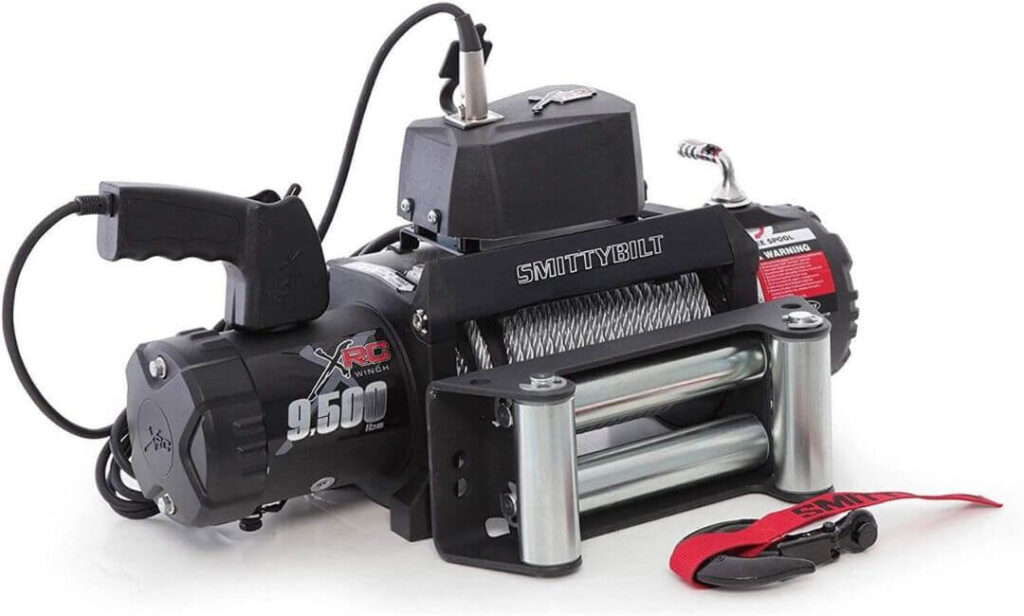
Quick Specs:
- 9,500 lb pulling capacity ideal for stock and lightly modified Jeep Gladiator builds
- 6.6 HP series-wound motor for dependable recovery power under load
- 3-stage planetary gear system (161.28:1) for controlled, reliable pulling
- 93.5 ft x 5/16-inch steel wire rope with 4-way roller fairlead
- IP67 waterproof construction built for mud, rain, and water crossings
- Automatic in-drum braking system for secure load holding
- 500-amp heavy-duty solenoid for dependable electrical performance
- Complete wiring kit and wired remote included for installation
Few winches have earned the kind of reputation this one has over the years. It may not advertise the highest pulling number on this list, but the combination of a 6.6 HP series-wound motor, 3-stage planetary gearing, and a proven 9,500 lb recovery rating has made it a dependable choice for thousands of Jeep owners who care more about reliability than chasing bigger specifications. For a stock or lightly upgraded Jeep Gladiator, that balance simply works.
The 93.5-foot steel cable remains one of the biggest reasons experienced off-road enthusiasts continue choosing this model. Steel rope requires a little more care than synthetic, but it handles abrasion exceptionally well and has proven itself on demanding trails for years. Combined with the automatic in-drum brake, 500-amp sealed solenoid, and IP67 waterproof housing, the overall package feels built for repeated recovery work instead of occasional weekend use.
Another detail worth appreciating is how straightforward everything is. The wiring kit is already included, the controls are simple to operate, and replacement parts are widely available if you ever need them years down the road. Sometimes the smartest recovery equipment isn’t the newest—it’s the one that’s already earned trust where it matters most.
(If proven reliability matters more to you than having the latest design or the biggest pull rating, this remains one of the safest choices in its class.)
Why We Still Recommend It Today
- Long-standing reputation backed by years of real off-road use.
- Reliable 6.6 HP motor delivers consistent recovery performance.
- Heavy-duty steel cable stands up well to rough, abrasive environments.
- 500-amp sealed solenoid improves electrical durability in harsh weather.
- Complete installation wiring included with excellent long-term parts availability.
One Thing to Keep in Mind
- The steel wire rope is heavier and requires more maintenance than synthetic rope, although many experienced off-roaders still prefer it for rugged trail use.
Jeep Gladiator Compatibility and Installation Notes
This winch is a solid match for 2020–2026 Jeep Gladiator Sport, Willys, Mojave, Rubicon, High Altitude, and Mojave X models when paired with a compatible Gladiator winch mounting plate. It uses the common 10 x 4.5-inch mounting pattern, making it compatible with many quality aftermarket mounting systems.
For dependable performance, pair it with a 12V battery rated around 650 CCA or higher, inspect all electrical connections carefully during installation, and keep the steel cable properly tensioned after the first few recovery pulls. These simple steps help maintain smooth spooling and reliable operation over the long term.
The Insider Pro-Tip
Not every Jeep Gladiator needs a 12,000 lb or 13,500 lb winch. If your truck is mostly stock, runs factory-sized or moderately oversized tires, and sees regular trail rides rather than extreme overlanding, a well-built 9,500 lb recovery winch like this is often the more practical choice. You’ll save weight on the front end while still having enough recovery capability for the situations most owners actually encounter.
That’s one reason this model continues to stay relevant despite newer competitors. It doesn’t try to impress with marketing—it earns confidence by doing exactly what recovery equipment should do when the trail stops being forgiving.
#4. OPENROAD Panther Series 3S 13,500 lb Recovery Winch
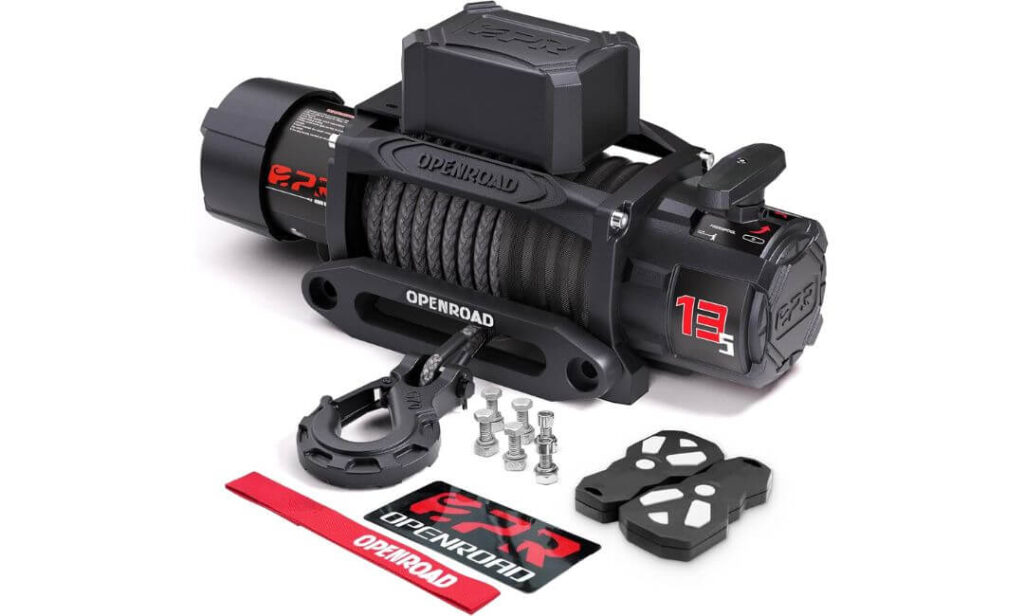
Quick Specs:
- 13,500 lb pulling capacity for heavily equipped Jeep Gladiator recovery
- 6.6 HP series-wound motor engineered for consistent high-load performance
- 3-stage planetary gear system (218:1) for controlled torque delivery
- 3/8-inch x 85 ft synthetic rope with a 13,500 lb breaking strength
- IP68 waterproof and dustproof construction for year-round trail use
- Two wireless remotes plus one wired controller included
- Automatic load-holding brake with heavy-duty hawse fairlead
- Complete installation hardware with standard 10 x 4.5-inch mounting pattern
There’s a noticeable difference between buying a winch that simply looks capable and one that’s genuinely prepared for demanding recovery work. This model backs up its 13,500 lb pulling capacity with a 6.6 HP series-wound motor, 218:1 planetary gearing, and a fully sealed IP68 housing, making it well suited for Jeep Gladiator owners who regularly carry steel bumpers, rooftop tents, recovery gear, or oversized tires. The extra pulling reserve isn’t there for everyday use—it’s there for the moments when conditions become far more challenging than expected.
One feature that genuinely separates this winch from many similarly priced competitors is the recovery control system. Instead of providing only a single remote, OPENROAD includes two wireless remotes alongside a wired controller, giving you practical backup options if one controller is unavailable during a recovery. Combined with the 85-foot synthetic rope, automatic load-holding brake, and corrosion-resistant Dacromet-coated hardware, the overall package feels thoughtfully designed for repeated off-road use rather than occasional emergencies.
Installation is equally straightforward. The standard 10 x 4.5-inch mounting pattern, complete wiring kit, and included hardware reduce unnecessary guesswork, making it an attractive option for Gladiator owners building a capable recovery setup without piecing together additional components.
(If you want higher pulling capacity without stepping into premium-brand pricing, this package delivers one of the strongest overall feature sets in its class.)
Why It Deserves a Spot on Our List
- 13,500 lb pulling capacity offers excellent recovery headroom for heavily modified Gladiators.
- Dual wireless remotes plus wired control provide added flexibility during recovery.
- IP68 waterproof construction is built for harsh weather and water crossings.
- Complete installation kit helps simplify the overall setup process.
- Strong balance of features, capability, and overall value for serious off-road use.
A Small Consideration Before Ordering
- The wireless remotes work well for most owners, but it’s a good idea to test both controllers during installation before your first trail trip.
Jeep Gladiator Compatibility and Installation Notes
This winch fits 2020–2026 Jeep Gladiator Sport, Willys, Mojave, Rubicon, High Altitude, and Mojave X models using the standard 10 x 4.5-inch mounting pattern found on compatible winch-ready bumpers. Since the hardware, control box, wiring, and fairlead are included, installation is more convenient than many comparable recovery systems.
For dependable long-term performance, ensure your Gladiator has a healthy 12V battery, verify all mounting bolts are properly torqued, and cycle both wireless remotes during installation. Spending a few extra minutes checking everything in the garage is far easier than discovering an issue halfway through a recovery.
The Insider Pro-Tip
A higher pull rating only becomes valuable when the rest of the recovery system can support it. That’s why details like sealed electronics, reliable braking, quality synthetic rope, and dependable remote operation deserve just as much attention as the advertised capacity.
If your Jeep Gladiator regularly carries extra weight from overlanding gear or spends weekends tackling technical trails, this model offers something many buyers overlook—recovery confidence with built-in redundancy. Having multiple control options and a generous safety margin often becomes far more valuable than saving a little money on a lower-capacity setup when conditions stop being predictable.
#5. XYCLE 13,500 lb Recovery Winch
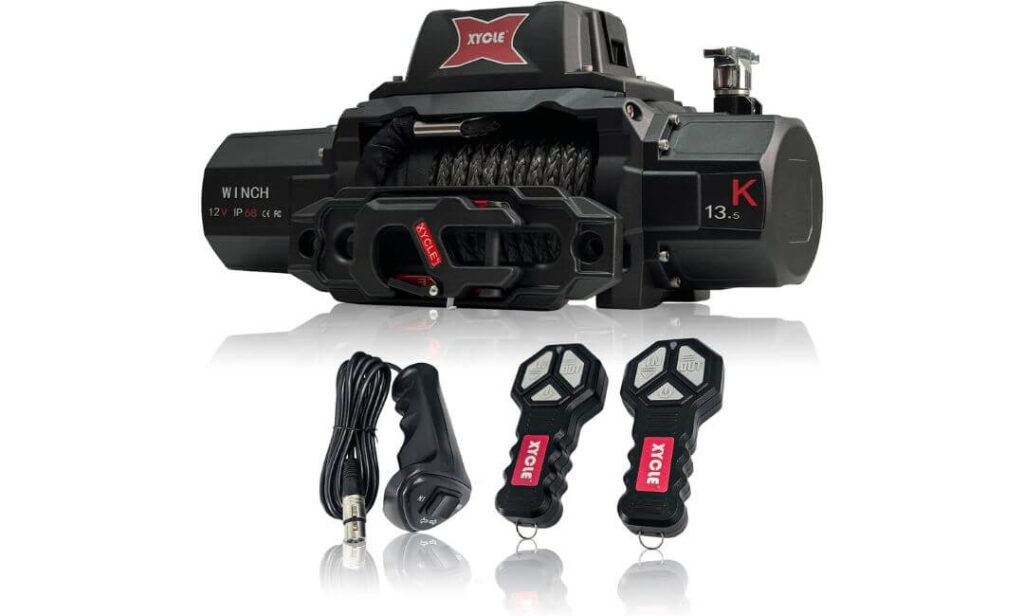
Quick Specs:
- 13,500 lb pulling capacity for demanding Jeep Gladiator recovery situations
- All-aluminum alloy housing for improved cooling and corrosion resistance
- 1/2-inch x 70 ft synthetic rope that’s lightweight and easy to handle
- IP68 waterproof and dustproof construction for year-round trail use
- 218:1 planetary gear ratio for controlled, high-torque recovery
- Dual wireless remotes (100 ft range) plus a wired controller
- Automatic in-drum load-holding brake with upgraded clutch mechanism
- Standard 10 x 4.49-inch mounting pattern for compatible Gladiator winch mounts
Sometimes a newer brand surprises you by getting the fundamentals right—and that’s exactly what stands out here. Instead of focusing only on a big 13,500 lb pull rating, XYCLE pairs it with an all-aluminum housing, 218:1 gear reduction, and a fully sealed IP68 waterproof design that feels purpose-built for difficult recovery conditions. Whether your Jeep Gladiator spends weekends climbing rocky trails or crossing muddy backroads, the hardware is designed to keep working when conditions become unpredictable.
Another highlight is the recovery setup itself. The 1/2-inch synthetic rope is thicker than what many competitors include, giving it a reassuring feel during heavy pulls while remaining much lighter than steel cable. XYCLE also includes two wireless remotes with a 100-foot operating range alongside a wired controller, giving you multiple ways to manage recovery safely depending on where you’re positioned around the vehicle. Combined with the automatic load-holding brake, the entire system feels surprisingly complete for its price range.
Installation remains straightforward thanks to the standard 10 x 4.49-inch mounting pattern, although you’ll need a compatible winch mount since an installation plate isn’t included. One important step many owners overlook is properly pre-spooling the synthetic rope with adequate tension before relying on it during a real recovery. That small detail makes a noticeable difference in long-term performance.
(For buyers looking beyond well-known brand names, this is one of the strongest value-focused recovery packages currently available for the Jeep Gladiator.)
Why We Included It in This Guide
- Strong 13,500 lb recovery capacity suited for heavily equipped Gladiators.
- All-aluminum housing helps improve heat management and long-term durability.
- Thicker 1/2-inch synthetic rope offers excellent handling and recovery confidence.
- Dual wireless remotes provide extra convenience and built-in backup.
- Delivers an impressive combination of features, performance, and affordability.
One Small Thing Worth Planning For
- The wireless remotes require 23A 12V batteries, so it’s worth purchasing those before installation.
Jeep Gladiator Compatibility and Installation Notes
This winch fits 2020–2026 Jeep Gladiator Sport, Willys, Mojave, Rubicon, High Altitude, and Mojave X models using the standard 10 x 4.49-inch mounting pattern on a compatible winch-ready bumper or mounting plate. Because the control system arrives largely pre-assembled, installation is relatively straightforward for most owners.
For the best results, use a healthy 12V battery rated around 650 CCA or higher, securely mount the control box, and pre-tension the synthetic rope with several tight wraps on the drum before your first recovery. These simple preparation steps greatly improve rope spooling and overall recovery performance.
The Insider Pro-Tip
A budget-friendly winch only becomes a smart purchase if it’s installed correctly. Before your first trail trip, test both wireless remotes, confirm every electrical connection is tight, and fully tension the synthetic rope under load. Those few minutes of preparation can make a far bigger difference than spending hundreds more on a different brand.
For Jeep Gladiator owners who want high pulling capacity, modern recovery features, and excellent overall value, this winch proves that newer manufacturers can still deliver a capable recovery system when the engineering and feature set are thoughtfully put together.
Best Winch for Jeep Gladiator Comparison: Top Recovery Picks Side by Side
| Comparison Point |
WARN VR EVO 12-S
Editor’s Choice |
Rough Country PRO 12000
Best Overall Value |
Smittybilt XRC Gen 2
Proven Performer |
OPENROAD Panther 3S
Maximum Features |
XYCLE 13500
Budget Powerhouse |
|---|---|---|---|---|---|
| Pull Capacity | 12,000 lb | 12,000 lb | 9,500 lb | 13,500 lb | 13,500 lb |
| Best For | Premium Jeep Gladiator Builds | Everyday Off-Road Recovery | Stock & Light Builds | Heavy Overlanding Setups | Budget High-Power Builds |
| Motor | Series Wound | 6 HP Series Wound | 6.6 HP Series Wound | 6.6 HP Series Wound | High Torque 12V Motor |
| Gear System | Planetary | 3-Stage Planetary | 3-Stage Planetary | 3-Stage Planetary | 218:1 Planetary |
| Rope Type | Synthetic | Synthetic | Steel Cable | Synthetic | Synthetic |
| Rope Length | 90 ft | 85 ft | 93.5 ft | 85 ft | 70 ft |
| Waterproof Protection | IP68 | IP67 | IP67 | IP68 | IP68 |
| Remote Options | Bluetooth + Wired | Wired | Wired | 2 Wireless + Wired | 2 Wireless + Wired |
| Brake System | Automatic | Automatic In-Drum | Automatic In-Drum | Automatic Load Holding | Automatic Load Holding |
| Housing Material | Fully Sealed | Heavy-Duty Steel | Heavy-Duty Steel | Dacromet Protected | Aluminum Alloy |
| Installation Kit Included | Mount Required | Complete Kit | Complete Wiring | Complete Kit | Mount Sold Separately |
| Ideal Jeep Gladiator Owner | Frequent Trail Explorer | Weekend Adventurer | Traditional Off-Roader | Heavy Recovery User | Value-Focused Buyer |
| Overall Recommendation | ★★★★★ | ★★★★☆ | ★★★★☆ | ★★★★☆ | ★★★★☆ |
Why a Winch Is One of the Smartest Upgrades for a Jeep Gladiator
A Jeep Gladiator is built to go far beyond paved roads, but once you start exploring rocky trails, muddy forest roads, deep sand, snow-covered routes, or remote overlanding destinations, recovery equipment becomes just as important as suspension or tires. Even experienced drivers can find themselves stuck because traction changes quickly, weather becomes unpredictable, or the trail is simply more challenging than expected.
A quality winch gives you something that’s difficult to replace once you’re miles away from civilization—independence. Instead of waiting for another vehicle or an expensive recovery service, you have the ability to recover your own Jeep safely and continue the journey. That’s why many seasoned Gladiator owners consider a winch an essential piece of recovery equipment rather than an optional accessory.
The right winch also protects your vehicle. Controlled recoveries place less stress on recovery points and reduce the temptation to use unsafe recovery methods that can damage suspension components, bumpers, or tow hooks. Whether your Gladiator is used for weekend trail rides or fully loaded overlanding trips, a dependable recovery system quickly proves its value the first time conditions become unpredictable.
Self-Recovery When No One Else Is Around
One of the biggest advantages of installing a winch is the ability to recover your Jeep without depending on another vehicle. Deep mud, loose sand, snow, steep climbs, or washed-out trails often leave very little room for another vehicle to assist safely.
With a properly mounted recovery winch, a suitable recovery point, and the correct recovery technique, you can slowly pull your Gladiator back onto stable ground while maintaining complete control of the recovery. That level of confidence becomes invaluable when you’re exploring remote locations where help may be hours away.
Helping Other Vehicles Without Overloading Your Jeep
Recovery isn’t always about your own vehicle. Jeep Gladiator owners frequently help friends, family members, or fellow off-road enthusiasts who become stuck during trail rides.
Choosing a properly rated winch gives you enough pulling capacity to assist heavier SUVs, trucks, trailers, or modified off-road vehicles without constantly operating at the winch’s maximum limit. Maintaining a healthy safety margin also places less strain on the motor and gearing during demanding recoveries.
Better Safety Than Improvised Recovery Methods
Many trail recoveries go wrong because people rely on momentum, tow straps, or repeated jerking attempts that create unnecessary stress on recovery points.
A quality electric winch provides slow, controlled pulling force, allowing you to recover the vehicle with much greater precision. Combined with recovery dampers, tree saver straps, soft shackles, and proper recovery practices, a winch significantly improves overall trail safety for everyone involved.
Choosing the Right Pull Rating
A common misconception is that the highest-rated winch is automatically the best option.
For most 2020–2026 Jeep Gladiator models, a 12,000 lb to 13,500 lb winch offers an excellent balance between recovery capability and real-world usability, especially if your truck has larger tires, steel bumpers, skid plates, rooftop tents, recovery gear, or additional cargo. Stock Gladiators used primarily for recreational trail driving can also perform well with a quality 9,500 lb winch, provided recoveries remain within reasonable limits.
Rather than focusing only on advertised pulling numbers, look for consistent performance, dependable braking systems, and proven reliability under sustained load.
Synthetic Rope vs Steel Cable
Both recovery systems have legitimate advantages, and the better choice depends on how you use your Jeep.
Synthetic rope is lighter, easier to handle, safer during recovery, and far less likely to develop sharp strands that can injure your hands. It’s an excellent choice for most Jeep Gladiator owners who regularly explore technical trails or overlanding routes.
Steel cable remains extremely durable and performs well in rocky or abrasive environments where rope repeatedly contacts rough surfaces. It does require more maintenance, weighs more, and should always be inspected carefully after heavy recoveries.
Why IP Ratings Matter More Than Most Buyers Realize
Many recovery situations involve exactly the environments that damage electrical equipment—mud, heavy rain, river crossings, snow, fine dust, and constant moisture.
Choosing a winch with IP67 or IP68 waterproof protection helps seal critical components against contamination while improving long-term reliability. Although no winch should remain submerged for extended periods, a properly sealed recovery system is far more likely to perform consistently after repeated exposure to harsh trail conditions.
Motor Design Makes a Bigger Difference Than Marketing Claims
A powerful motor means very little if it overheats quickly or struggles under sustained load.
Most premium Jeep Gladiator winches use series-wound motors because they deliver strong torque, dependable performance, and better durability during demanding recoveries. When combined with a quality planetary gear system and reliable braking mechanism, they provide smoother line control and more predictable recovery performance in difficult situations.
Control Options Worth Paying For
Modern winches now offer far more flexibility than older designs.
A traditional wired controller remains extremely dependable because it doesn’t rely on batteries or wireless signals. Meanwhile, wireless remotes allow you to stand farther from the recovery area for improved visibility and safety. Some premium models even include multiple wireless remotes or Bluetooth operation, providing additional convenience during solo recoveries.
Our Recommendation for Most Jeep Gladiator Owners
After comparing recovery performance, pulling capacity, waterproof protection, motor quality, braking systems, rope design, installation compatibility, and overall long-term value, we found that well-built 12,000 lb to 13,500 lb winches offer the most confidence for the majority of Jeep Gladiator owners.
Instead of buying based on the biggest advertised number, invest in a winch with proven reliability, quality internal components, dependable sealing, and the right mounting setup. When the trail becomes unpredictable, those details matter far more than marketing claims—and they’re exactly what separates a winch you’ll trust for years from one you’ll eventually replace.
Buying Guide: How to Choose the Right Winch for Your Jeep Gladiator
Choosing a winch for a Jeep Gladiator isn’t simply about buying the model with the biggest pulling capacity or the lowest price. Your decision should match how your Gladiator is built, where you drive, how often you recover vehicles, and how much additional weight your truck carries. A recovery winch is something you’ll hopefully use only when necessary, but when that moment arrives, it needs to perform without hesitation.
The good news is that today’s market offers several excellent options. The challenge is knowing which features genuinely improve recovery performance and which specifications are simply there for marketing. Below are the factors we believe deserve the most attention before spending your money.
Choosing the Right Pull Capacity
The first question most buyers ask is whether 12,000 lb is enough for a Jeep Gladiator.
For the majority of 2020–2026 Jeep Gladiator owners, the answer is yes. A quality 12,000 lb winch provides an excellent balance between recovery capability, line speed, weight, and electrical demand. It comfortably handles stock Gladiators while also providing enough reserve capacity for trucks equipped with steel bumpers, winch-ready armor, skid plates, rooftop tents, recovery gear, camping equipment, and larger tires.
A 9,500 lb winch can still be an excellent option if your Gladiator remains close to factory weight and is mainly used for weekend trail rides or light off-road adventures. These winches are often lighter while still offering dependable recovery performance for most situations.
Moving up to a 13,500 lb winch makes sense for Gladiators carrying significant extra weight or regularly tackling deep mud, technical rock crawling, steep climbs, or remote overlanding routes where recovery loads become much more demanding. The additional capacity also provides a larger safety margin during difficult recoveries.
Why IP67 and IP68 Protection Matters
Off-road recovery rarely happens in perfect weather.
Mud, standing water, heavy rain, river crossings, snow, dust, and fine sand constantly challenge every electrical component on your vehicle. A winch with a proper IP67 or IP68 waterproof rating offers much better protection against moisture and debris reaching the motor, gearbox, and electrical connections.
While no winch should remain underwater for extended periods, a properly sealed recovery system generally delivers greater long-term reliability with less maintenance. For Jeep Gladiator owners who regularly leave paved roads behind, waterproof protection should be viewed as a necessity rather than a luxury.
Synthetic Rope or Steel Cable?
Both recovery systems have strengths, but they suit different types of drivers.
Synthetic rope has become the preferred choice for many modern Jeep Gladiator owners because it’s lighter, easier to handle, floats in water, and stores less energy during recovery. If a failure ever occurs under load, synthetic rope generally behaves more safely than steel cable. It’s also much easier to spool after long recovery sessions.
Steel cable remains an excellent option for drivers who frequently encounter rocky terrain, sharp ledges, or abrasive surfaces. It tolerates physical abuse extremely well and has a long history of dependable service, although it weighs more and requires regular inspection to prevent corrosion or damaged strands.
Neither option is universally better. The right choice depends on the environments where your Gladiator spends most of its time.
Motor Quality and Gear Train Matter More Than Advertised Power
Many buyers focus on pulling capacity while overlooking the components that actually determine how well a winch performs.
A series-wound motor is generally preferred because it delivers stronger torque, handles repeated recoveries more effectively, and remains dependable under heavier loads. Pair that with a quality planetary gear system, and you’ll benefit from smoother operation, better load control, and improved long-term durability.
Pay attention to the complete recovery system rather than horsepower numbers alone. Strong internal components usually matter far more than aggressive marketing claims.
Control Options That Improve Real Recovery
Modern recovery situations don’t always allow you to stand directly beside the winch.
A dependable wired controller remains one of the most reliable options because it doesn’t depend on batteries or wireless signals. At the same time, wireless remotes provide greater freedom to move around the vehicle, improve visibility during recovery, and help you maintain a safer distance from the winch cable.
Some premium models even include multiple wireless controllers or Bluetooth operation, providing useful redundancy if one controller becomes unavailable during a trip.
Make Sure the Winch Actually Fits Your Gladiator
Compatibility is one area many first-time buyers overlook.
Most Jeep Gladiator winches use the common 10 x 4.5-inch mounting pattern, but that doesn’t automatically mean they’ll bolt directly onto every front bumper. Some factory bumpers require a dedicated winch mounting plate, while aftermarket steel bumpers may already include integrated mounting points.
Before purchasing, confirm your bumper is winch-ready, verify the mounting pattern, ensure there’s enough clearance for the control box, and check that your electrical system is capable of supporting the winch. A healthy 12V battery with approximately 650 CCA or higher is recommended for consistent recovery performance.
Think Beyond the First Recovery
A recovery winch isn’t an accessory you’ll judge after one weekend—it becomes part of your Jeep for years.
Choose a model with quality sealing, dependable braking, strong internal gearing, reliable electrical components, good parts availability, and a manufacturer with a proven reputation. Spending a little more on long-term reliability usually costs far less than dealing with equipment failure when you’re miles away from the nearest paved road.
The best winch isn’t necessarily the one with the biggest specifications. It’s the one you can trust every single time your Jeep Gladiator needs it most.
Jeep Gladiator Winch Installation: Step-by-Step Overview
Installing a winch on a Jeep Gladiator is more than simply tightening a few bolts and connecting two battery cables. A properly installed recovery system performs more reliably, lasts longer, and—most importantly—operates safely when you’re depending on it in difficult conditions. Even premium winches can underperform if the mounting hardware, electrical connections, or rope setup isn’t completed correctly.
The good news is that most quality winches designed for the 2020–2026 Jeep Gladiator follow the standard 10 x 4.5-inch mounting pattern, making installation relatively straightforward when paired with a compatible winch-ready bumper or mounting plate. Taking your time during installation is one of the best investments you can make in the long-term reliability of your recovery system.
Step 1: Verify Bumper Compatibility Before Opening the Box
Before installing anything, confirm that your Jeep Gladiator has a winch-ready bumper or a compatible mounting plate designed specifically for the Gladiator. While many aftermarket steel bumpers already include integrated winch mounts, some factory bumpers require an additional mounting bracket before a winch can be installed safely.
Also verify that the mounting surface is flat, the bolt holes match the 10 x 4.5-inch mounting pattern, and there’s enough clearance for the motor, control box, fairlead, and electrical cables. It’s much easier to identify clearance issues before installation than after everything has been assembled.
Step 2: Inspect Your Electrical System First
A recovery winch places significant demand on your Jeep’s electrical system.
Before connecting any cables, inspect the battery terminals, charging system, and ground connections for corrosion or loose hardware. Most 12,000 lb and 13,500 lb winches perform best with a healthy 12V battery rated around 650 CCA or higher, while dual-battery setups are worth considering for Gladiators used extensively for overlanding or remote travel.
Always route power cables away from exhaust components, steering parts, and sharp metal edges. Protect exposed wiring with abrasion-resistant loom wherever possible to reduce the chance of long-term damage.
Step 3: Mount the Winch Correctly
Position the winch onto the mounting plate and install all supplied hardware before fully tightening any bolts. This allows minor adjustments that help align the fairlead and rope path correctly.
Once everything sits square, tighten the mounting bolts using the torque specifications provided by both the bumper manufacturer and the winch manufacturer. Over-tightening can damage mounting hardware, while under-tightening may allow movement during heavy recovery loads.
After installation, confirm the winch sits level with the fairlead and that the rope feeds straight onto the drum without rubbing against the bumper or mounting brackets.
Step 4: Connect the Electrical Components Carefully
Connect the positive and negative battery cables exactly as outlined by the manufacturer. Double-check every terminal before applying power, making sure each connection is clean, secure, and fully insulated.
Many premium winches include sealed contactors or integrated control boxes, while others use separate control modules. Mount these components where they’re protected from excessive engine heat while still remaining accessible for future servicing.
If your installation uses an inline fuse, battery isolator, or high-current protection device, ensure it’s rated according to the winch manufacturer’s recommendations rather than guessing based on cable size alone.
Step 5: Install the Fairlead and Prepare the Recovery Line
Whether your winch uses synthetic rope or steel cable, the recovery line should travel through the fairlead in a perfectly straight path without rubbing against surrounding components.
Before your first recovery, slowly spool the rope or cable onto the drum under moderate tension. Proper pre-tensioning prevents loose wraps that can pinch or bury themselves beneath heavier recovery loads later.
Synthetic rope should always maintain several tight wraps around the drum to prevent slipping under full load, while steel cable should be wound evenly across the drum without overlapping excessively.
Step 6: Pair the Remote and Test Every Function
Before heading off-road, test every control option included with your winch.
If your model includes wireless remotes, install fresh batteries, pair them according to the manufacturer’s instructions, and verify reliable operation from different positions around the vehicle. If a wired controller is included, test it as well so you know both control methods function correctly before your first recovery.
Confirm the clutch engages and disengages smoothly, the drum rotates in both directions, and the rope spools evenly across the drum during operation.
Step 7: Perform a Controlled Test Pull
Never assume a newly installed winch is trail-ready without testing it.
Using a secure recovery point, perform a light recovery pull while observing cable alignment, mounting hardware, electrical connections, and motor operation. Listen for unusual noises, verify smooth line speed, and inspect every bolt once the test is complete.
A controlled test pull allows you to identify small installation issues in a safe environment instead of discovering them during a real recovery.
Ongoing Maintenance Keeps Your Winch Ready
A winch should be inspected regularly, not only after it’s used.
After trail rides involving mud, sand, water, or snow, rinse away debris, inspect the recovery line for damage, check electrical terminals for corrosion, and verify mounting bolts remain properly tightened. Wireless remotes should also be tested periodically so they’re ready whenever recovery becomes necessary.
A few minutes of maintenance after each off-road trip can extend the life of your recovery equipment and ensure your Jeep Gladiator is prepared for the next adventure without unpleasant surprises.
Jeep Gladiator Off-Road Winch Setup Basics
Buying a quality winch is only part of building a dependable recovery system. The real difference comes from how well the entire setup works together when conditions become difficult. A properly equipped Jeep Gladiator isn’t just carrying a winch—it carries the right recovery accessories, uses the correct techniques, and stays maintained so everything works the first time it’s needed.
Many recovery situations that seem complicated are actually solved by choosing the right method instead of immediately pulling the winch line. Knowing when to use the winch, when another recovery tool makes more sense, and how to maintain your equipment will improve safety while extending the life of your recovery gear.
Know When a Winch Is the Right Recovery Tool
One of the biggest mistakes new off-road drivers make is reaching for the winch every time the vehicle loses traction.
If your Jeep Gladiator is lightly stuck in sand, shallow mud, or loose gravel, reducing tire pressure, clearing debris around the tires, or using quality traction boards may solve the problem much faster with less strain on your recovery equipment.
A winch becomes the better choice when the vehicle has lost momentum completely, is resting on its chassis, is climbing a steep obstacle, or cannot safely move under its own power. In those situations, a slow and controlled recovery places far less stress on the vehicle than repeated attempts using throttle alone.
Use Winch-Assisted Driving Instead of Full Recovery Whenever Possible
Recovery doesn’t always mean dragging the Jeep out of trouble.
Experienced Jeep Gladiator owners often use winch-assisted driving, allowing the vehicle to move under its own power while the winch provides controlled assistance. This technique reduces stress on the recovery system, minimizes wheel spin, and often results in a smoother, safer recovery on steep climbs, loose rock, or slippery terrain.
Whenever traction is available, combining light throttle with controlled winch tension is generally more effective than relying entirely on the winch motor.
Keep the Recovery Line in Excellent Condition
Whether your winch uses synthetic rope or steel cable, the recovery line deserves regular attention.
After every trip involving mud, sand, salt, or water crossings, clean the line before storing it. Dirt trapped inside synthetic fibers can increase wear over time, while moisture left on steel cable may eventually lead to corrosion.
During re-spooling, keep steady tension on the line so each wrap sits tightly and evenly across the drum. Loose wraps may become buried beneath heavier loads during future recoveries, making the winch harder to operate when you need it most.
Before every off-road trip, inspect the rope or cable for cuts, flattened sections, broken strands, abrasion, or damaged end fittings. Replacing a worn recovery line is always less expensive than dealing with a failure during recovery.
Recovery Accessories That Belong in Every Jeep Gladiator
Even the best winch becomes far more useful when paired with the right recovery equipment.
A quality tree saver strap protects anchor points while reducing damage to trees during recovery. Recovery gloves improve grip and help protect your hands when handling synthetic rope or steel cable. A winch damper adds another layer of safety by helping reduce line movement should an unexpected failure occur under heavy load.
You’ll also benefit from carrying soft shackles or rated bow shackles, a recovery strap, a snatch block when additional mechanical advantage is needed, and a dedicated storage bag that keeps recovery gear clean, organized, and immediately accessible instead of scattered throughout the truck.
Organize Your Recovery Equipment Before You Need It
Recovery gear should never be packed randomly behind camping equipment or toolboxes.
Store frequently used items such as gloves, shackles, remotes, straps, and dampers in a dedicated recovery bag or storage compartment where they can be reached quickly. Labeling or separating equipment also helps prevent confusion during stressful recovery situations, especially when multiple vehicles are involved.
The easier your recovery equipment is to access, the faster and safer your recovery will usually be.
Develop Good Recovery Habits
The most capable recovery setup still depends on the person using it.
Before every trip, verify that the winch powers on correctly, test both wired and wireless controllers if equipped, inspect electrical connections, and ensure the recovery line is tightly spooled across the drum. These quick inspections take only a few minutes but often prevent the small problems that become major frustrations on remote trails.
Good recovery equipment is an investment. Good recovery habits are what make that investment dependable every time your Jeep Gladiator leaves the pavement.
Jeep Gladiator Winch Kit Guide: Choosing the Right Installation Package
Buying the right winch is only half of the equation. The installation kit you choose plays an equally important role in how well the recovery system performs on your Jeep Gladiator. A high-quality winch can quickly become frustrating if you’re missing essential hardware, dealing with incompatible mounting brackets, or discovering halfway through installation that additional parts are required.
Many first-time buyers assume every winch includes everything needed for installation. In reality, some packages are nearly complete, while others require a separate mounting plate, additional wiring components, or bumper-specific hardware. Understanding what belongs in a proper Jeep Gladiator winch kit can save both time and unexpected expenses.
What a Complete Jeep Gladiator Winch Kit Should Include
A well-equipped recovery kit is designed to eliminate unnecessary guesswork during installation.
Most quality kits include the electric winch, synthetic rope or steel cable, hawse fairlead or roller fairlead, control box, wired controller, battery cables, heavy-duty recovery hook, mounting hardware, and a detailed installation manual. Premium packages may also include one or more wireless remotes, protective hook straps, and upgraded corrosion-resistant hardware.
Keep in mind that not every manufacturer includes a Jeep Gladiator-specific mounting plate. Before ordering, always verify whether your bumper already supports direct winch installation or whether a dedicated mounting bracket will be required.
Why Complete Installation Kits Save Time and Money
One reason complete winch kits have become increasingly popular is simple—they reduce installation delays.
Instead of placing multiple orders for missing hardware, battery cables, fairleads, or recovery hooks, everything arrives together and is engineered to work as a complete system. This not only speeds up installation but also reduces the chances of mixing incompatible components from different manufacturers.
A complete package also simplifies future maintenance because every major component was designed to operate together from the beginning rather than being assembled piece by piece.
Matching the Kit to Your Jeep Gladiator Build
Not every Gladiator is built for the same purpose, so the ideal winch kit depends on how your truck is used.
A stock or lightly modified Gladiator used for weekend trail driving generally benefits from a 9,500 lb or 12,000 lb recovery system paired with a quality mounting plate, synthetic rope, and reliable wired or wireless controller.
Heavily modified Gladiators carrying steel bumpers, rock sliders, rooftop tents, recovery gear, larger tires, bed racks, or camping equipment often benefit from a 12,000 lb to 13,500 lb setup, providing additional recovery capacity without constantly operating near the winch’s maximum limit.
Selecting a recovery system that matches the vehicle’s actual weight is usually far more important than simply choosing the largest available winch.
Features Worth Prioritizing in Modern Winch Kits
Today’s best recovery kits offer much more than basic pulling power.
Look for IP68 waterproof sealing, series-wound motors, automatic load-holding brakes, planetary gear systems, synthetic recovery rope, and multiple control options, including wired and wireless remotes. These features improve durability, simplify operation, and provide greater confidence when recovery conditions become more demanding.
Kits that include complete wiring, fairleads, battery cables, and recovery hardware also reduce installation complexity while ensuring every component works together as intended.
Choosing Between Basic and Premium Recovery Packages
Budget-friendly winch kits can be excellent choices when they prioritize dependable engineering over unnecessary accessories.
Premium packages typically offer better sealing, stronger internal components, longer warranties, faster line speeds, and improved remote-control systems. While they cost more initially, they often require less maintenance and provide greater confidence during repeated recoveries.
If your Jeep Gladiator regularly explores remote trails where recovery assistance may not be available, investing in a higher-quality kit is usually money well spent.
Our Recommendation for Most Jeep Gladiator Owners
After evaluating the winches featured in this guide, one trend became clear. The strongest overall recovery setups combine 12,000 lb to 13,500 lb pulling capacity, IP68 waterproof protection, synthetic rope, series-wound motor technology, and a complete installation package whenever possible.
Whether you choose a premium brand like WARN or a value-focused option such as Rough Country, OPENROAD, or XYCLE, the goal remains the same—build a recovery system where every component is compatible, properly installed, and ready to perform when your Jeep Gladiator needs it most. A complete, thoughtfully selected winch kit provides far more confidence on the trail than chasing specifications alone.
Synthetic Rope Winch for Jeep Gladiator: Pros, Cons, and Long-Term Care
Over the last several years, synthetic winch rope has become the preferred choice for many Jeep Gladiator owners, and for good reason. Modern synthetic ropes are lighter, easier to handle, and significantly more user-friendly than traditional steel cable, making them especially popular among overlanders, weekend trail drivers, and serious off-road enthusiasts alike.
That said, synthetic rope isn’t maintenance-free. It offers excellent performance when treated properly, but like any recovery equipment, it requires regular inspection and care to deliver dependable performance over the long term. Understanding both its strengths and limitations will help you get the most from your recovery setup while avoiding unnecessary wear.
Why More Jeep Gladiator Owners Are Choosing Synthetic Rope
The first thing most owners notice is the weight difference.
Synthetic rope is considerably lighter than steel cable, reducing the overall weight hanging on the front of the Jeep. That not only makes handling easier during recovery but also reduces strain while pulling the rope across rocks, through mud, or around recovery points.
Another major advantage is ease of spooling. Synthetic rope lays neatly on the drum, is far easier to pull by hand, and doesn’t develop sharp broken strands that can occur with aging steel cable. Even after repeated recoveries, handling the rope remains much more comfortable when wearing proper recovery gloves.
Perhaps the biggest benefit is improved safety during recovery. Because synthetic rope stores far less kinetic energy under load than steel cable, it generally behaves more predictably if something unexpectedly fails during recovery. While every recovery should still follow proper safety procedures, this characteristic has made synthetic rope the preferred option for many experienced off-road drivers.
The Limitations You Should Understand
Synthetic rope is extremely capable, but it isn’t indestructible.
Repeated contact with sharp rocks, exposed metal edges, or rough concrete can gradually wear the protective outer fibers. That’s why using proper fairlead alignment, tree saver straps, and abrasion guards is so important during difficult recoveries.
Heat is another consideration. Synthetic rope should never be exposed directly to excessive heat generated by exhaust components or prolonged friction. During long recoveries, allowing the winch to cool periodically also helps protect both the rope and the winch itself.
Unlike steel cable, synthetic rope can also absorb water and fine dirt if it’s not cleaned after use. While this doesn’t automatically damage the rope, trapped grit can slowly increase fiber wear if left unaddressed over time.
How to Keep Synthetic Rope Performing Like New
Good maintenance starts immediately after every recovery.
If the rope has been dragged through mud, sand, clay, or saltwater, rinse it thoroughly with clean fresh water before allowing it to dry naturally. Avoid harsh chemicals, pressure washers aimed directly at the rope, or strong detergents that may affect the protective fibers.
Once completely dry, inspect the entire length for cuts, abrasion, flattened sections, pulled fibers, discoloration, or damaged protective sleeves. Small problems are much easier to address before they become serious enough to require replacing the rope.
When re-spooling, maintain steady tension so every wrap sits tightly against the previous layer. Loose wraps may bury themselves beneath heavier loads during future recoveries, reducing both performance and rope life.
Proper Storage Makes a Bigger Difference Than Most Owners Realize
Many recovery ropes wear out because of poor storage rather than heavy use.
After off-road trips, avoid storing a wet rope tightly packed for extended periods. Moisture trapped inside the fibers can encourage premature wear while also allowing dirt to remain embedded within the rope.
If your Jeep Gladiator sits outside regularly, periodically inspect the rope for prolonged UV exposure and keep the protective hook strap secured when the winch isn’t being used. Simple habits like keeping the rope clean, dry, and neatly tensioned often extend its service life by years.
Should You Choose Synthetic Rope for Your Jeep Gladiator?
For most 2020–2026 Jeep Gladiator owners, the answer is yes.
If your truck is used for trail riding, overlanding, camping, hunting, rock crawling, or general off-road exploration, synthetic rope offers an excellent combination of lighter weight, easier handling, improved safety, and dependable recovery performance. The small amount of extra maintenance it requires is easily outweighed by the everyday advantages it brings to the recovery experience.
As long as you clean it after demanding trips, inspect it regularly, and keep it properly tensioned on the drum, a quality synthetic rope can remain a dependable part of your Jeep Gladiator’s recovery system for many years.
FAQs About Jeep Gladiator Winch
Is a 13,500 lb winch too much for a Jeep Gladiator, or is it worth buying over a 12,000 lb model?
For most Jeep Gladiator owners, a quality 12,000 lb winch is the sweet spot because it offers plenty of recovery power while keeping weight, electrical demand, and line speed well balanced. However, if your Gladiator carries steel bumpers, a bed rack, rooftop tent, skid plates, larger tires, recovery gear, and camping equipment, the actual recovery weight increases much faster than many people expect.
A 13,500 lb winch isn’t excessive in those situations—it simply provides a larger safety margin. The important thing isn’t buying the highest number available; it’s buying a winch that can recover your fully loaded Gladiator without constantly operating near its maximum capacity. That’s exactly why this guide includes both 12,000 lb and 13,500 lb options depending on how the truck is actually used.
Can I install a winch on my Jeep Gladiator without replacing the factory bumper?
Yes, but the answer depends on which factory bumper your Jeep Gladiator has.
Many Gladiators still require a vehicle-specific winch mounting plate, while numerous aftermarket steel bumpers already include integrated winch mounting points. Before ordering any winch, confirm three things:
- Your bumper is actually winch-ready.
- The mounting pattern matches the winch (typically 10 x 4.5 inches).
- There’s enough clearance for the motor and control box.
Spending five minutes verifying bumper compatibility before buying usually prevents the most common installation mistakes and unexpected extra costs.
What usually causes Jeep Gladiator winches to fail long before the motor wears out?
Surprisingly, it’s rarely the motor.
Most long-term problems come from poor installation and neglected maintenance rather than defective components. Common examples include loose battery connections, incorrectly routed power cables, synthetic rope that was never tensioned correctly, water trapped inside electrical connectors, or mounting bolts that gradually loosen after repeated trail use.
A quick inspection after every off-road trip makes a significant difference. Pay attention to:
- Battery terminals and ground connections.
- Rope or cable condition.
- Fairlead alignment.
- Mounting hardware torque.
- Remote operation.
- Electrical connectors after water crossings.
Those small checks often prevent the kinds of failures that people mistakenly blame on the winch itself.
Should I replace the steel cable with synthetic rope immediately, or wait until it wears out?
If you already own a reliable steel-cable winch and it’s in excellent condition, there’s no urgent reason to replace it immediately. Steel cable remains extremely durable and performs well in rocky environments where abrasion is common.
However, many Jeep Gladiator owners eventually upgrade because synthetic rope offers several practical advantages:
- It’s noticeably lighter.
- It’s easier to spool after recovery.
- It’s easier on your hands.
- It stores less kinetic energy under heavy load.
- It reduces weight over the front axle.
The upgrade makes the most sense when your original cable begins showing wear or when you regularly travel alone and want a recovery system that’s easier to manage in difficult terrain.
If I only buy one recovery upgrade for my Jeep Gladiator this year, should it be a winch?
If your Jeep Gladiator spends most of its life on paved roads, probably not. Good all-terrain tires or proper recovery points may deliver more value first.
But if you regularly explore remote trails, deep mud, rocky terrain, forest roads, hunting areas, or overlanding routes, a quality recovery winch quickly becomes one of the few upgrades you genuinely hope you’ll never need—but you’ll be incredibly thankful to have when conditions suddenly change.
The best recovery stories usually aren’t about pulling through impossible obstacles. They’re about quietly solving a problem, getting back on the trail safely, and continuing the adventure without waiting hours for outside help. That’s the kind of confidence a properly chosen Jeep Gladiator winch provides long after the purchase is forgotten.
Final Thoughts
Choosing the best winch for a Jeep Gladiator isn’t about buying the most expensive model or the one with the highest advertised pulling capacity. It’s about investing in recovery equipment you can genuinely trust when the trail stops being predictable. A reliable motor, properly sealed electronics, quality gearing, dependable braking, and the right mounting setup will always matter more than marketing claims printed on the box.
For most Jeep Gladiator owners, a 12,000 lb winch offers the best balance of power, reliability, and everyday usability. If your truck carries additional weight from steel bumpers, larger tires, overlanding gear, or recovery equipment, moving up to a 13,500 lb model provides valuable extra recovery capacity without compromising confidence on demanding trails. Whichever option you choose, pairing it with the correct mounting hardware and maintaining it properly will have a far greater impact on long-term performance than simply chasing bigger numbers.
Every winch featured in this guide earned its place because it delivers where it matters most—real recovery capability, dependable waterproof protection, proven build quality, and compatibility with the Jeep Gladiator platform. Instead of filling this list with unnecessary options, we focused on products we’d feel comfortable recommending to someone preparing for remote trails where reliability is far more important than brand hype.
A dependable recovery winch isn’t something you’ll appreciate every day—but the day you truly need it, you’ll be glad you chose the right one rather than the cheapest one.
Also Check:


