5 Best Dash Cams for Mercedes GLC in 2026: 4K HDR, OEM Fit & LTE Smart Security
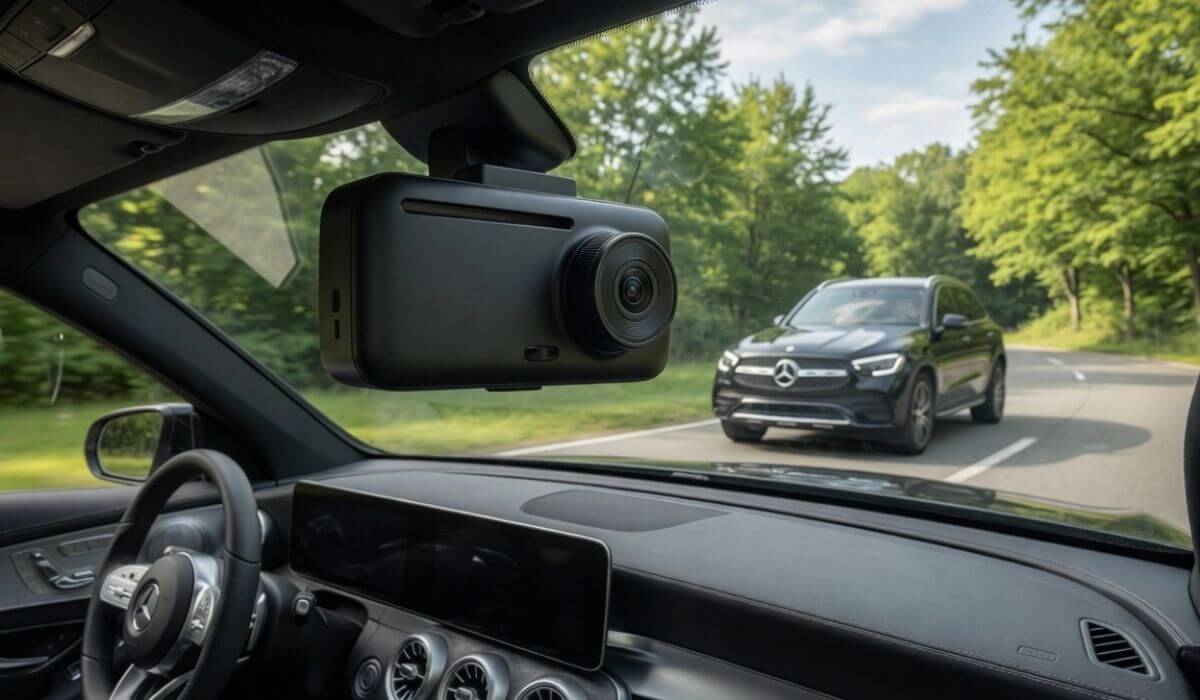
If you drive a Mercedes GLC, choosing a dash cam isn’t as simple as picking the highest resolution on Amazon. The GLC’s windshield angle, rain sensor housing, driver-assistance cameras, and premium interior mean that not every dash cam fits cleanly or performs the way it should. A bulky mount or poorly routed cable can interfere with visibility and spoil the factory look.
Whether you own a GLC 300, GLC 300 4MATIC, AMG GLC 43, GLC Coupe, or the latest 2023–2026 generation, the right dash cam should match the vehicle just as well as any other premium accessory. For this guide, we prioritised models that deliver reliable 4K recording, strong low-light performance, discreet installation, stable Wi-Fi connectivity, and dependable parking surveillance without compromising the GLC’s cabin design.
We didn’t rank these cameras by brand name or marketing claims. Instead, we focused on the features that matter once you actually start driving—how well licence plates remain readable after dark, how dependable the app is, whether the camera blends into the mirror housing, and how consistently it records during long trips and daily commutes. If you’re investing in a premium SUV, these are the dash cams that make the most sense.
Best Mercedes GLC Dash Cams: Top 2026 Picks with STARVIS 2 & HDR
#1. BlackVue DR970X LTE Plus II
Best Mercedes GLC Dash Cam with 4K HDR, 4G LTE Remote Access, STARVIS 2, Cloud Connectivity & Professional-Grade Security
#2. VIOFO A229 Pro 4K HDR Dash Cam
Best 4K Dash Cam for Mercedes GLC with Dual STARVIS 2, Outstanding Night Vision, HDR Recording & GPS Performance
#3. ONESTOPGUARD Mercedes Benz OEM Dash Cam
Best Mercedes GLC OEM Dash Cam for Factory-Style Installation, Hidden Wiring, Seamless Interior Integration & Plug-and-Play Setup
#4. ROVE R2-4K Dual PRO Dash Cam
Best Front and Rear Dash Cam for Mercedes GLC with Dual STARVIS 2, Wi-Fi 6, Fast File Transfers & Excellent Value
#5. Fitcamx 4K Dash Cam for Mercedes GLC Coupe
Best OEM Look Dash Cam for Mercedes GLC Coupe with Hidden Factory Finish, 4K Recording, Wireless App Control & Clean Installation
Expert Tip
If you’re buying a dash cam for a Mercedes GLC, don’t let a long feature list make the decision for you. The biggest difference between a camera you’ll keep for years and one you’ll replace after a few months is how it performs on an ordinary drive. A dash cam should start recording every time without delay, stay stable in summer heat, capture readable licence plates after dark, and fit the cabin without looking like an aftermarket gadget. That’s why you’ll notice this guide includes both premium universal models and true OEM-style options. Some owners care most about the best possible video quality, while others simply want a camera that disappears into the factory interior. Both approaches are valid—the right choice depends on how you use your GLC, not which product has the longest specification sheet.
How We Chose the Best Dash Cams for Mercedes GLC
A premium SUV deserves more than a generic dash cam recommendation. We narrowed this list by looking at how each model fits the Mercedes GLC in real-world ownership rather than relying on manufacturer marketing or inflated feature lists.
First, we prioritised video quality where it actually matters. Many dash cams advertise 4K, but resolution alone doesn’t guarantee clear evidence. We favoured models using Sony STARVIS 2 sensors, strong HDR processing, and proven image tuning because these are the features that consistently improve licence plate readability during night driving, tunnels, heavy rain, and high-contrast city streets.
Next came installation quality. The GLC has a refined cabin, integrated driver-assistance hardware, and a clean windshield design. Cameras that blend naturally into the mirror housing or offer discreet cable routing earned higher consideration because they preserve the factory appearance instead of cluttering the interior. That’s why dedicated OEM-style options sit alongside premium universal systems in this guide.
We also evaluated long-term reliability, not just first impressions. Every camera here supports essential features like loop recording, G-sensor incident protection, dependable Wi-Fi connectivity, and parking recording, but we paid closer attention to the details owners notice after months of use—stable app performance, firmware support, GPS accuracy, recording consistency, and day-to-day usability.
Finally, we intentionally included products for different ownership priorities instead of forcing a single “best” answer. Some Mercedes GLC owners want 4G LTE cloud monitoring, others care most about OEM integration, while many simply want the strongest 4K front and rear recording for the money. Each recommendation earned its place because it stands out in one of those areas without making unnecessary compromises elsewhere.
The result isn’t a list of the newest dash cams or the most advertised ones. It’s a carefully balanced shortlist of models that make sense for Mercedes GLC owners who expect premium fit, dependable performance, and recording quality they can rely on when it matters most.
#1. BlackVue DR970X LTE Plus II
Quick Specs:
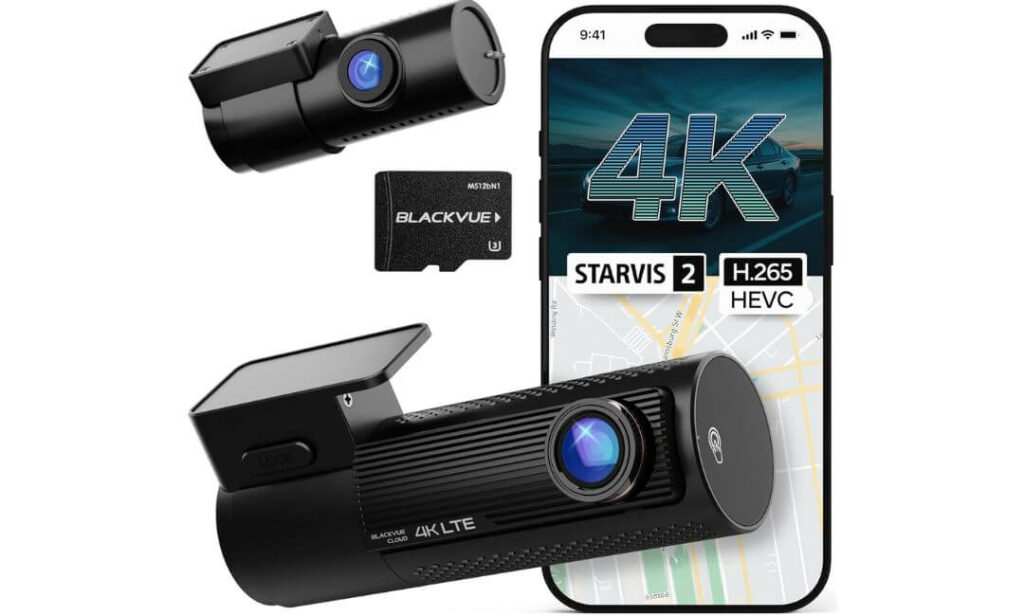
- 4K UHD front + Full HD rear recording with HDR
- Sony STARVIS 2 front sensor for stronger night-time detail
- Built-in 4G LTE with BlackVue Cloud support (SIM required)
- Live View, Remote Playback, GPS tracking & Push Alerts
- H.265/H.264 recording for efficient storage usage
- Intelligent impact recording with pre-event buffering
- Hardwire-ready Smart Parking Mode with battery protection
- 5GHz Wi-Fi, GPS and companion mobile app
- Includes 64GB microSD card and hardwire cable
The moment you pick it up, it’s obvious this isn’t trying to compete with budget dash cams. It’s built for drivers who want to know what’s happening around their Mercedes GLC even when they’re nowhere near the vehicle. The built-in LTE connection changes how you use a dash cam altogether. Instead of waiting until you get back to your SUV, you can check Live View, receive impact notifications and review recordings remotely through BlackVue Cloud. For owners who leave their GLC at airports, office parking garages or hotel lots, that’s a genuinely useful feature rather than a marketing headline.
Video quality is exactly where a premium camera should deliver. The combination of 4K UHD, HDR and the Sony STARVIS 2 sensor produces cleaner footage when sunlight, tunnels or headlights usually overwhelm ordinary cameras. Fine details stay easier to recognise without the heavy noise that cheaper sensors often introduce after sunset. Add GPS, efficient H.265 compression, reliable Wi-Fi and intelligent event recording, and it becomes a system you rarely need to think about because it simply keeps recording every drive.
One thing worth understanding before buying is installation. Unlike OEM-integrated cameras, this system mounts directly to the windshield and uses front and rear adhesive mounts. Because modern Mercedes GLC models place several driver-assistance cameras and sensors around the rear-view mirror housing, positioning matters far more than it does on older vehicles. Taking a few extra minutes to plan cable routing and camera placement makes a noticeable difference to both appearance and long-term usability.
(If remote monitoring matters as much as video quality, very few dual-channel systems currently combine LTE, Cloud features and premium image processing this well.)
Real Reasons It Earned Our Top Recommendation
- Built-in LTE offers genuine remote monitoring without needing an external communication module.
- Sony STARVIS 2 with HDR produces dependable footage in difficult lighting instead of relying on artificial sharpening.
- Cloud connectivity makes checking your vehicle possible even when you’re hundreds of miles away.
- Reliable parking recording with battery protection suits vehicles that spend long hours parked.
- Mature firmware, stable mobile app and regular software support add confidence for long-term ownership.
One Thing Worth Knowing Before You Buy
- Professional installation is strongly recommended to achieve the cleanest cable routing and avoid interference with the GLC’s factory camera and ADAS sensor area.
Installation Notes for Mercedes GLC Owners
This camera is fully compatible with the Mercedes GLC, but it isn’t an OEM replacement unit. The front camera should be positioned carefully behind the rear-view mirror without blocking the vehicle’s forward-facing sensors or driver-assistance hardware. Choosing the correct mounting location is more important than the installation itself.
For the cleanest result, most owners will want to hardwire the system so Smart Parking Mode, Cloud connectivity and battery protection work exactly as intended. A proper hardwire installation also eliminates visible power cables and keeps the interior looking closer to factory specification.
The Insider Pro-Tip
If you’re choosing this model, buy it because you genuinely want LTE connectivity, not simply because it’s the most expensive camera on the list. That single feature changes the ownership experience more than another jump in video resolution ever will.
Also remember that even the best dash cam performs only as well as its installation. A perfectly positioned camera with clean wiring and an unobstructed view will consistently produce better evidence than a premium model mounted in the wrong place. On a Mercedes GLC, careful placement is every bit as important as the camera you choose.
#2. VIOFO A229 Pro 4K HDR Dash Cam
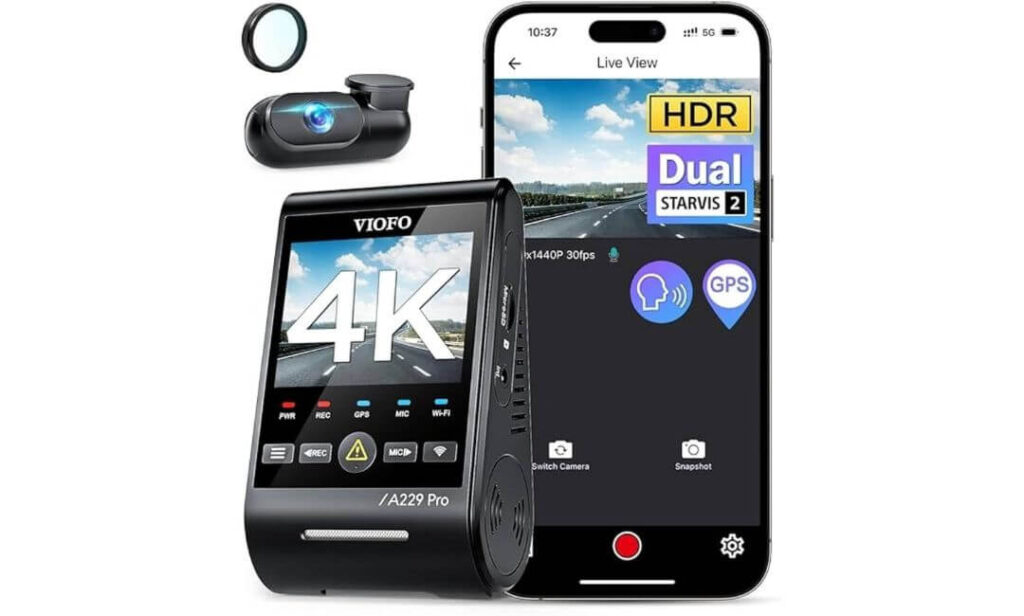
Quick Specs:
- 4K front + 2K rear recording with dual HDR
- Dual Sony STARVIS 2 sensors (IMX678 + IMX675)
- Night Vision 2.0 for clearer low-light footage
- Quad-mode GPS (GPS, GLONASS, Galileo & BeiDou)
- 5GHz Wi-Fi with VIOFO mobile app
- Voice control with built-in voice notifications
- Three parking recording modes (hardwire kit required)
- Supercapacitor designed for high cabin temperatures
- Includes CPL filter to reduce windshield reflections
The first thing you’ll notice isn’t the resolution—it’s the consistency. Some dash cams produce impressive clips under perfect lighting, then struggle the moment the sun sets or headlights fill the road. This one behaves differently. The combination of dual Sony STARVIS 2 sensors, HDR and Night Vision 2.0 keeps footage balanced in situations where many cameras either overexpose bright areas or lose detail in darker sections. Whether you’re driving through city traffic, tree-lined roads or underground parking entrances, the recording remains remarkably composed.
For a Mercedes GLC, that’s exactly what you want. The SUV is built for long-distance comfort, highway cruising and everyday commuting, so a dash cam should quietly do its job without demanding attention. Along with 4K front and 2K rear recording, you get voice control, 5GHz Wi-Fi for noticeably quicker transfers, and one of the most accurate quad-mode GPS systems currently available in this segment. These aren’t features you’ll constantly think about, but you’ll appreciate them every time you review footage or download a video in seconds instead of minutes.
Installation is refreshingly straightforward because the camera uses a universal windshield mount rather than a vehicle-specific housing. That gives you flexibility while still allowing a clean installation in the Mercedes GLC. Add the included CPL filter, route the rear cable carefully through the headliner, and hardwire it if you plan to use parking recording. The result feels like a premium upgrade instead of an obvious aftermarket accessory.
(If your priority is capturing the clearest possible evidence instead of paying for cloud connectivity, this is one of the strongest all-round choices available today.)
Why It Stands Out in Our Testing Criteria
- Dual STARVIS 2 sensors deliver outstanding image quality both day and night.
- 4K + 2K HDR recording makes licence plates easier to identify in challenging lighting.
- Quad-mode GPS provides highly accurate speed and location data.
- Voice control lets you save footage without taking your hands off the steering wheel.
- Supercapacitor power design is better suited to the heat inside a parked Mercedes than battery-powered alternatives.
One Small Thing to Keep in Mind
- To unlock all parking recording features, you’ll need the optional hardwire kit, as it isn’t included in the standard package.
Installation Guidance for Mercedes GLC Owners
The universal adhesive mount fits the Mercedes GLC without modification, but camera placement deserves attention. Position it neatly behind the rear-view mirror where it maintains a clear forward view without obstructing the vehicle’s factory safety cameras or sensors.
For the cleanest finish, route the rear cable inside the headliner and pillar trim rather than leaving it exposed. If you intend to use parking surveillance regularly, a professional hardwire installation is well worth considering for a factory-like appearance and uninterrupted power delivery.
The Insider Pro-Tip
Many buyers focus only on 4K resolution, but the real advantage here is the pairing of dual STARVIS 2 sensors with well-tuned HDR. That’s the reason this camera consistently produces footage that remains useful when lighting conditions become difficult—not simply because the numbers on the box look impressive.
If your driving includes frequent night journeys, highways or unpredictable weather, investing in stronger image processing will usually make a bigger difference than chasing extra features you’ll rarely use. That’s exactly where this model earns its reputation.
#3. ONESTOPGUARD Mercedes Benz OEM Dash Cam
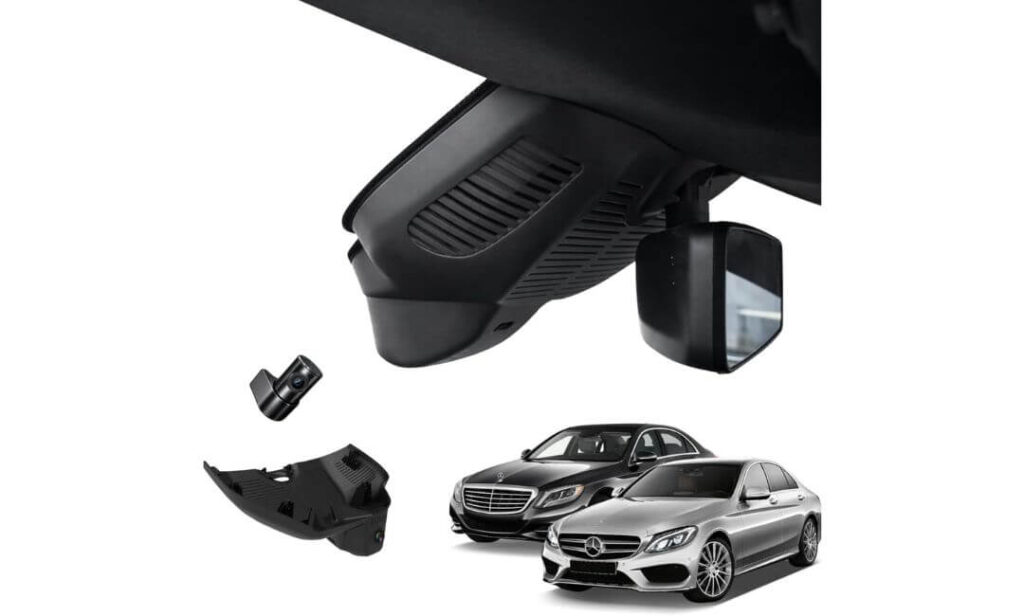
Quick Specs:
- Designed specifically for Mercedes GLC with factory-style integration
- 4K front + 1080p rear dual-channel recording
- OEM rear-view mirror housing installation
- No visible wires or windshield-mounted camera
- Wi-Fi with dedicated mobile app
- Built-in supercapacitor for improved heat resistance
- Loop recording, G-Sensor and parking monitoring
- 64GB memory card included in the box
- Plug-and-play installation using factory connectors
Nothing transforms the ownership experience faster than a dash cam that looks like it was installed at the factory. That’s exactly where this model separates itself from universal alternatives. Instead of attaching another device to the windshield, it integrates neatly into the Mercedes GLC’s overhead console, preserving the clean interior design that attracts many buyers to the vehicle in the first place. Once installed, most passengers won’t even realise a dash cam is there.
Its strength isn’t chasing the longest feature list—it’s delivering the features GLC owners genuinely value. 4K front recording, a dedicated 1080p rear camera, built-in Wi-Fi, loop recording, parking monitoring and a supercapacitor all work together inside a housing specifically engineered for this vehicle. Because the camera sits in the factory mirror area rather than hanging below it, visibility remains unobstructed while the cabin keeps its original premium appearance.
Installation is where this system really earns its place in the guide. It connects through the original Mercedes wiring without cutting cables, permanent modifications or software coding. The supplied memory card, trim tool and dedicated harness mean nearly everything needed is already in the box. For owners who value an OEM finish as much as recording quality, very few options feel this well integrated.
(If your goal is to add protection without making your Mercedes GLC look modified, this is one of the most convincing factory-style solutions currently available.)
Why It Deserves a Place on This List
- Purpose-built for the Mercedes GLC, not adapted from a universal design.
- Factory-style mirror housing keeps the windshield completely uncluttered.
- Plug-and-play wiring avoids cutting factory cables or coding vehicle electronics.
- Supercapacitor design offers greater durability during hot summer conditions.
- Ships with a 64GB memory card and installation accessories, reducing additional setup costs.
One Small Consideration Before Buying
- This model focuses on OEM integration rather than advanced cloud features like remote LTE monitoring.
Factory-Style Installation Notes for Mercedes GLC
Because this camera is engineered around the Mercedes GLC’s original mirror assembly, installation is noticeably cleaner than a traditional windshield-mounted dash cam. Once fitted correctly, there are no dangling power leads or bulky brackets interrupting the driver’s forward view.
Although it’s marketed as plug-and-play, taking a little extra care while removing the factory trim pieces helps maintain the perfect OEM finish. If you’re unfamiliar with interior trim removal, professional installation is a worthwhile option to achieve the same result as a factory accessory.
The Insider Pro-Tip
Many owners spend hours comparing video resolutions but overlook something they’ll notice every single day—the appearance of the cabin. A dash cam that’s virtually invisible after installation often becomes far more satisfying to live with than one offering a few extra features but permanently occupying part of the windshield.
If preserving the original Mercedes design matters just as much as recording quality, this OEM-style setup delivers a balance that’s difficult for universal dash cams to match.
#4. ROVE R2-4K Dual PRO Dash Cam
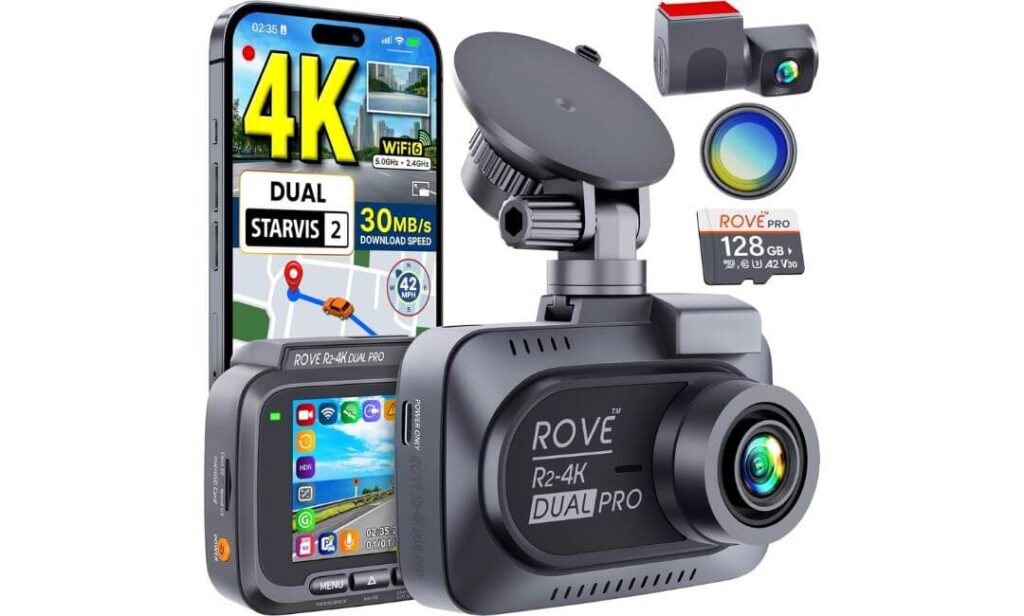
Quick Specs:
- 4K front + 2K rear recording with HDR
- Dual Sony STARVIS 2 sensors (IMX678 + IMX675)
- Wi-Fi 6 with download speeds up to 30MB/s
- Quad-mode GPS with live speed and route logging
- 3-inch IPS display for instant playback
- 128GB high-endurance microSD card included
- CPL filter included to reduce windshield glare
- Supercapacitor built for high cabin temperatures
- Supports up to 1TB microSD storage
- Three intelligent parking recording modes (hardwire kit required)
Sometimes the smartest purchase isn’t the most expensive one—it’s the one that arrives with almost everything you were planning to buy separately. That’s exactly what stands out here. Instead of adding a memory card, CPL filter and accessories to your cart later, they’re already included. Pair that with dual Sony STARVIS 2 sensors, 4K + 2K HDR recording and one of the fastest Wi-Fi 6 systems in this category, and the overall package starts making a lot of sense for everyday Mercedes GLC ownership.
Daily usability is where this camera quietly impresses. Downloading large 4K videos over Wi-Fi 6 is noticeably quicker than older wireless systems, while the built-in Quad-mode GPS records detailed route and speed information with excellent accuracy. The large 3-inch IPS display also makes reviewing clips directly inside the vehicle far easier than on smaller-screen competitors. These may sound like small conveniences, but they’re exactly the sort of details owners appreciate after months of regular use.
Installation is straightforward thanks to the compact windshield mount, although careful positioning is important in the Mercedes GLC to avoid the factory driver-assistance camera area near the rear-view mirror. Once installed correctly, the included CPL filter helps minimise dashboard reflections while the supercapacitor is better equipped to handle the heat that naturally builds inside a parked luxury SUV.
(For buyers who want premium recording quality, faster wireless performance and a generous accessory bundle without moving into flagship pricing, this package offers exceptional overall value.)
Why It Earned a Spot in This Guide
- Wi-Fi 6 dramatically reduces transfer times for large 4K recordings.
- Dual STARVIS 2 sensors maintain cleaner footage during day and night driving.
- The included 128GB memory card and CPL filter eliminate two common extra purchases.
- Quad-mode GPS provides accurate trip history, speed and location records.
- Support for up to 1TB storage makes it ideal for drivers covering long distances regularly.
One Thing Worth Considering
- Although installation is simple, it’s still a universal windshield-mounted system, so thoughtful placement is important around the GLC’s factory ADAS cameras and sensors.
Installation Advice for Mercedes GLC Owners
This camera fits the Mercedes GLC without compatibility issues, but achieving a clean installation comes down to placement rather than complexity. Mounting it neatly behind the rear-view mirror helps maintain an unobstructed forward view while keeping it away from the vehicle’s integrated safety camera system.
If you intend to use the intelligent parking features every day, adding the optional hardwire kit is worthwhile. It allows the camera to monitor the vehicle while parked without relying on loose power cables running through the cabin.
The Insider Pro-Tip
Specifications only tell part of the story. What makes this camera especially satisfying to live with is how well the complete package has been thought through. By the time you’ve added a quality memory card, CPL filter and reliable storage to many competing models, the real cost is often much closer than it first appears.
For many Mercedes GLC owners, this strikes one of the strongest balances in the entire guide—excellent recording quality, genuinely fast wireless transfers and thoughtful accessories that improve the ownership experience from the very first drive.
#5. Fitcamx 4K Dash Cam for Mercedes GLC Coupe
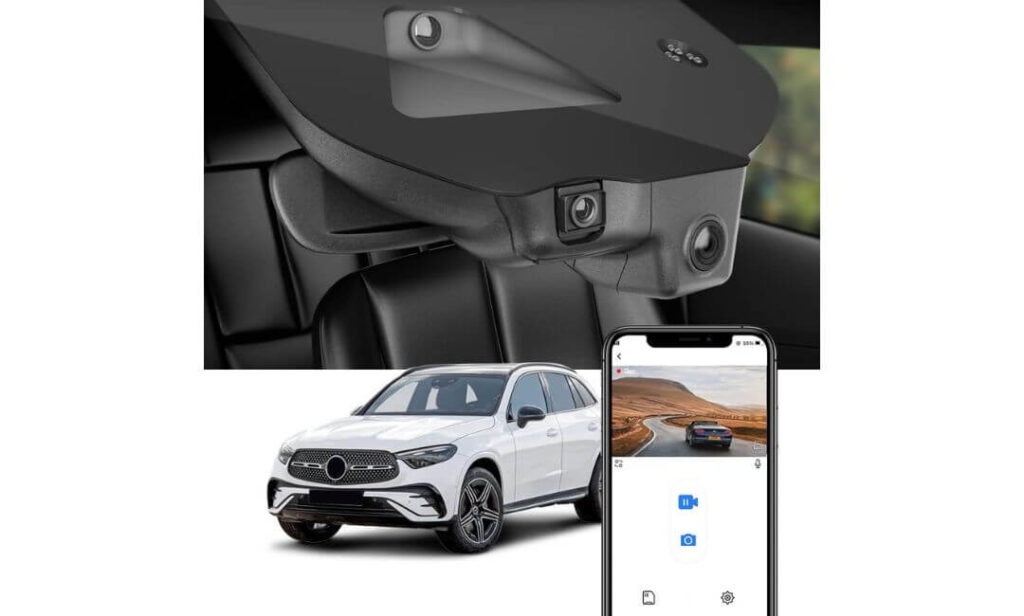
Quick Specs:
- Purpose-built for selected Mercedes GLC Coupe models
- 2160P (4K) front recording
- Factory OEM-style mirror housing integration
- No visible wires or windshield-mounted camera
- f/1.6 lens with WDR for improved night recording
- Wi-Fi with FITCAMX mobile app
- Loop recording and G-Sensor event protection
- 64GB memory card included
- Built to operate from -20°C to 85°C
What makes this camera appealing isn’t chasing flagship specifications—it’s how naturally it becomes part of the vehicle. Once installed inside the factory mirror housing, it simply disappears into the interior. There are no suction cups, no dangling power leads and no extra device competing for space on the windshield. For many Mercedes GLC Coupe owners, that clean OEM appearance is exactly what they’re hoping to achieve.
The recording hardware focuses on doing the essentials well. A 2160P (4K) front camera paired with an f/1.6 lens and WDR image processing delivers dependable footage across changing lighting conditions, while the integrated Wi-Fi makes reviewing and downloading recordings straightforward through the FITCAMX app. Features such as loop recording, G-Sensor protection and the included 64GB memory card mean the system is ready to record immediately without requiring additional purchases.
Compatibility is the most important detail with this model. It is designed for specific Mercedes GLC Coupe configurations equipped with two factory cameras inside the rear-view mirror housing. Taking a minute to confirm your mirror cover before ordering is worthwhile because that’s what allows the dash cam to achieve its seamless factory-style installation.
(If preserving the original cabin design matters more to you than adding cloud services or a rear camera, this is one of the cleanest OEM-style upgrades available for compatible GLC Coupe models.)
Why We Included It in This Guide
- OEM-style integration looks almost identical to a factory-installed accessory.
- No windshield obstruction keeps the driver’s forward view completely uncluttered.
- 4K recording combined with WDR handles everyday driving conditions confidently.
- The included 64GB memory card allows immediate installation without extra accessories.
- Durable construction is designed to tolerate both hot summers and cold winter mornings.
One Important Detail Before Ordering
- Before purchasing, verify that your Mercedes GLC Coupe has two factory front cameras behind the rear-view mirror cover, as compatibility depends on the correct mirror housing configuration.
Factory Fitment Notes for Mercedes GLC Coupe
This isn’t a universal dash cam—it has been engineered around specific Mercedes GLC Coupe mirror assemblies. That dedicated design is the reason installation looks significantly cleaner than traditional windshield-mounted alternatives and avoids adding visible hardware to the cabin.
Although installation is relatively straightforward using the supplied trim tool, checking the mirror cover configuration first is essential. A quick visual inspection before ordering helps ensure you receive the correct version for your vehicle and avoids unnecessary installation delays.
The Insider Pro-Tip
Factory integration is something you’ll appreciate every single time you get behind the wheel. Months after installation, most owners stop noticing the camera entirely—and that’s exactly the point. A premium interior should still feel premium after adding a dash cam.
If your priority is maintaining the original Mercedes design while quietly recording every journey in 4K, this OEM-style solution delivers an ownership experience that’s difficult for conventional windshield-mounted cameras to replicate.
Best Mercedes GLC Dash Cams Compared: Features, OEM Fit & Expert Picks
| Comparison | BlackVue DR970X LTE Plus II Premium Pick |
VIOFO A229 Pro Editor’s Choice |
ONESTOPGUARD OEM Factory Style |
ROVE R2-4K Dual PRO Best Value |
Fitcamx OEM Cleanest Install |
|---|---|---|---|---|---|
| Best For | Remote monitoring & premium security | Maximum image quality | Factory-look installation | Feature-rich everyday driving | Hidden OEM appearance |
| Recording Resolution | 4K Front + 1080P Rear | 4K Front + 2K Rear | 4K Front + 1080P Rear | 4K Front + 2K Rear | 2160P Front |
| Image Sensor | STARVIS 2 Front | Dual STARVIS 2 | Premium CMOS | Dual STARVIS 2 | CMOS + WDR |
| Night Performance | Excellent | Outstanding | Very Good | Excellent | Very Good |
| HDR Support | Front HDR | Front & Rear HDR | 4K HDR | HDR | WDR |
| OEM Appearance | External Mount | External Mount | True OEM Integration | External Mount | OEM Mirror Housing |
| Visible Wiring | Minimal | Minimal | None | Minimal | None |
| Cloud Features | Built-in LTE Cloud | — | — | — | — |
| Wi-Fi | 5GHz Wi-Fi | 5GHz Wi-Fi | Wi-Fi App | Wi-Fi 6 | Wi-Fi App |
| GPS | Built-in | Quad-Mode GPS | — | Quad-Mode GPS | — |
| Voice Control | — | Yes | — | Voice Guidance | — |
| Parking Recording | Smart Parking Mode | 3 Recording Modes | Parking Monitor | 3 Parking Modes | Parking Monitor |
| Heat Resistance | Supercapacitor | Supercapacitor | Supercapacitor | Supercapacitor | -20°C to 85°C |
| Storage Included | 64GB | Not Included | 64GB | 128GB + CPL | 64GB |
| Installation | Professional Recommended | DIY Friendly | Plug & Play OEM | DIY Friendly | OEM Plug & Play |
| Mercedes GLC Match | Best for connected driving | Best video evidence | Best factory integration | Best overall value | Best for OEM cabin lovers |
Buying Guide: How to Choose the Right Dash Cam for Your Mercedes GLC
Buying a dash cam for a Mercedes GLC isn’t about finding the model with the longest feature list—it’s about choosing one that complements a premium SUV without compromising reliability, visibility or everyday usability. Modern GLC models feature advanced driver-assistance systems, sophisticated cabin electronics and a clean interior design, so the wrong camera can feel like an afterthought even if it records in 4K.
The recommendations in this guide were selected because each one excels in a different area, whether that’s factory-style integration, premium video quality, remote LTE monitoring or overall value. Before making your final decision, here’s what actually deserves your attention.
Prioritise Image Quality Over Resolution Numbers
Almost every premium dash cam now advertises 4K recording, but resolution alone doesn’t determine how useful your footage will be. The quality of the image sensor, HDR processing and lens design have a much greater impact once the sun goes down or lighting conditions become challenging.
If night driving is part of your routine, choose a model equipped with Sony STARVIS 2 sensors and effective HDR processing. Better dynamic range helps preserve licence plates, traffic signs and surrounding vehicles instead of producing footage that’s either too bright or too dark. A true 4K HDR dash cam consistently captures more usable evidence than a standard 4K camera with an average sensor.
Decide Whether You Need Front-Only or Front-and-Rear Recording
A front camera is enough for some drivers, but many Mercedes GLC owners prefer complete coverage. A front and rear dash cam for Mercedes GLC records not only what’s happening ahead, but also rear-end impacts, parking incidents and hit-and-run damage that a front camera simply can’t capture.
If your vehicle spends time in shopping centres, airport parking or city streets, dual-channel recording provides significantly more protection. It also creates a clearer timeline if an insurance claim ever depends on multiple camera angles.
Understand the Difference Between OEM and Universal Dash Cams
One of the biggest decisions is choosing between an OEM dash cam for Mercedes GLC and a traditional universal windshield-mounted system.
An OEM-style camera replaces or integrates into the mirror housing, keeping the windshield free from visible brackets and cables. It preserves the factory appearance and is often the preferred choice for owners who value a clean, premium cabin.
Universal dash cams offer greater flexibility, higher-end sensors, LTE connectivity and advanced imaging technology, but they remain visible on the windshield. Neither option is universally better—the right choice depends on whether your priority is maximum performance or seamless factory integration.
Look Beyond Wi-Fi and Focus on Everyday Convenience
Most premium models now include Wi-Fi, allowing footage to be viewed and downloaded through a smartphone app. Faster systems, particularly those supporting 5GHz Wi-Fi or Wi-Fi 6, make transferring large 4K files considerably quicker.
If you regularly leave your Mercedes GLC unattended for long periods, built-in LTE connectivity becomes even more valuable. Remote notifications, Live View, GPS tracking and cloud backups provide an additional layer of security that standard Wi-Fi systems cannot deliver once you’re away from the vehicle.
Parking Surveillance Should Match How You Use Your Vehicle
Parking mode isn’t a feature you’ll think about every day—until you actually need it.
Look for systems offering motion detection, buffered event recording, collision detection or time-lapse recording. Buffered parking modes are particularly useful because they save footage from several seconds before an impact rather than starting the recording after the event has already occurred.
If you plan to use parking surveillance regularly, remember that most premium systems require a dedicated hardwire kit. Proper voltage protection is equally important because it prevents unnecessary battery drain while the vehicle is parked.
Installation Matters More Than Many Buyers Expect
Even an outstanding dash cam can become frustrating if it’s installed poorly.
For the Mercedes GLC, camera placement should avoid the factory driver-assistance camera cluster near the rear-view mirror. Blocking or interfering with these systems can affect visibility and create unnecessary complications during installation.
If you choose a universal dash cam, spend time planning cable routing through the headliner and A-pillars for a cleaner finish. If you choose an OEM-style system, confirm your mirror housing configuration before ordering so the camera matches your vehicle correctly.
Storage, GPS and Heat Resistance Should Never Be Overlooked
High-resolution recording creates large video files, so dependable storage is essential. High-endurance microSD cards are specifically designed for continuous recording and generally last longer than standard memory cards.
Built-in GPS is equally valuable because it records speed, location and driving routes alongside your video footage, providing additional context during insurance claims.
Finally, pay attention to the camera’s power design. Models using supercapacitors generally tolerate the high temperatures inside a parked Mercedes GLC better than battery-powered alternatives, making them a stronger long-term investment for drivers in warmer climates.
Our Final Recommendation
There isn’t one perfect dash cam for every Mercedes GLC owner because every driver values something different.
If remote access and connected security are your priorities, an LTE-enabled model makes the most sense. If image quality comes first, choose a camera built around STARVIS 2 sensors with effective HDR. If preserving the original Mercedes interior is non-negotiable, an OEM-style solution will deliver the cleanest ownership experience.
The best choice isn’t the one with the most features on paper—it’s the one that fits the way you actually drive, park and use your Mercedes GLC every day.
Installation Guide: Mercedes GLC Dash Cam Installation for a Factory-Quality Finish
Installing a dash cam in a Mercedes GLC is more than simply attaching a camera to the windshield. The GLC’s premium cabin, integrated ADAS hardware and carefully designed trim deserve an installation that’s just as refined as the vehicle itself. A well-installed dash cam should feel like a natural part of the interior, with no dangling cables, no obstructed visibility and no compromise to the vehicle’s safety systems.
Whether you’ve chosen an OEM-style dash cam or a universal dual-channel system, following the correct installation approach will improve video quality, reduce future maintenance and help ensure reliable recording every time you drive.
Choose the Right Mounting Location Before Anything Else
The most important decision happens before the camera is even attached.
Position the front camera high on the windshield, directly behind or slightly beside the rear-view mirror, where it remains hidden from the driver’s line of sight while maintaining a clear view of the road ahead. More importantly, avoid covering or interfering with the Mercedes GLC’s forward-facing cameras, rain sensor housing and other driver-assistance components located around the mirror assembly.
A camera mounted only a few centimetres too low can become distracting during everyday driving, while one placed too close to factory sensors may create unnecessary installation issues.
Decide How You Want the Camera Powered
The way you power your dash cam determines both its appearance and its functionality.
A standard 12V power connection is perfectly suitable if you only need recording while driving. Installation is straightforward and doesn’t require access to the vehicle’s fuse box.
If you want continuous parking recording, motion detection or impact monitoring while the vehicle is parked, a dedicated hardwire kit is the better solution. Most premium hardwire kits include built-in voltage protection, automatically shutting the camera down before the vehicle’s battery reaches an unsafe level.
Regardless of the method you choose, avoid stretching or sharply bending power cables, especially around moving trim panels.
Route Every Cable Before Securing the Cameras
Professional-looking installations are usually the result of careful cable routing rather than complicated wiring.
Run the front camera power cable through the headliner, down the A-pillar and towards the chosen power source instead of allowing it to hang across the dashboard. If you’re installing a rear camera, continue routing the video cable along the headliner, through the door weather stripping and into the rear hatch using the factory cable pathways wherever possible.
Taking extra time during this stage prevents loose wiring, reduces vibration and helps preserve the clean interior appearance that Mercedes owners expect.
Align Both Cameras Before Final Installation
A surprising number of recordings are compromised simply because the cameras weren’t aligned correctly.
Before removing the protective film from the adhesive mount permanently, connect the camera, open the companion app or live preview screen and confirm the framing.
The front camera should capture the road evenly with a small portion of the vehicle’s bonnet visible at the bottom of the frame. The rear camera should be centred and level, avoiding unnecessary angles toward the roof lining or rear seats.
A properly aligned camera produces better evidence without requiring constant adjustment later.
Keep the Interior Looking Like Mercedes Intended
One reason many owners choose OEM-style dash cams is to preserve the original cabin design.
If you’ve selected an OEM-integrated model, ensure every trim panel clips back into place without forcing anything. If you’re using a universal dash cam, take the time to conceal excess wiring inside the headliner and pillar trim rather than relying on exposed adhesive clips wherever possible.
A clean installation not only looks better but also reduces the chance of cables becoming loose over time.
Reduce Windshield Reflections Before They Affect Your Footage
Even premium cameras can suffer from dashboard reflections under bright sunlight.
If your dash cam includes a CPL (Circular Polarising Lens) filter, install it before your first drive. It helps minimise reflections from the dashboard and improves contrast during daytime recording.
Keeping the inside of the windshield clean is equally important. Dust, fingerprints and residue around the mounting area can soften image quality and reduce adhesive strength over time.
Common Installation Mistakes That Are Easy to Avoid
Several installation mistakes appear repeatedly, even with experienced owners.
Avoid mounting the camera directly in front of factory ADAS hardware, as this may interfere with visibility or make future servicing more difficult.
Don’t leave power cables under tension. As cabin temperatures rise and fall throughout the year, tightly stretched cables can gradually pull against trim pieces and connectors.
Avoid routing wiring across airbag deployment areas inside the A-pillars. Whenever possible, follow existing factory wiring paths to keep both the installation and vehicle safety systems uncompromised.
Finally, don’t overlook firmware updates. Installing the latest software before regular use often improves recording stability, GPS performance and app connectivity.
A Few Minutes of Care Can Save Years of Frustration
The difference between an average installation and an excellent one usually isn’t expensive tools—it’s patience.
Careful camera placement, tidy cable management, reliable power delivery and proper alignment all contribute to better recordings and a more satisfying ownership experience. Once installed correctly, a quality dash cam should blend naturally into your Mercedes GLC, start recording automatically every time you drive and quietly do its job without ever demanding your attention.
Real-World Driving Scenarios: Getting the Most from a Mercedes GLC Dash Cam
A premium dash cam proves its value long before you’re involved in an accident. Most owners spend years recording ordinary commutes, motorway journeys, shopping trips and family travel without ever needing to retrieve a single clip. Then, in one unexpected moment, a few seconds of clear footage can become the most valuable feature your vehicle has.
That’s why the recommendations in this guide weren’t chosen solely for impressive specifications. Each one offers a practical advantage in situations that Mercedes GLC owners genuinely encounter, from congested city traffic to overnight parking and long-distance motorway driving.
Why 4K HDR Recording Makes a Noticeable Difference
Recording in 4K HDR isn’t simply about producing sharper videos. The real benefit appears when lighting becomes unpredictable.
Driving directly into the morning sun, leaving a dark underground car park or meeting bright LED headlights at night can quickly overwhelm an ordinary camera. HDR works by balancing bright and dark areas within the same frame, making road markings, surrounding vehicles and licence plates easier to distinguish when standard footage might lose important detail.
Higher-quality image sensors such as Sony STARVIS 2 improve this even further by reducing image noise and preserving colour accuracy after sunset. Combined with proper exposure control, they produce footage that’s not only clearer to watch but also more useful if evidence is ever required.
Why Front and Rear Coverage Is Worth Considering
Many first-time buyers assume the front camera does all the important work, but real-world incidents often prove otherwise.
A front and rear dash cam for Mercedes GLC records events from both directions, creating a much clearer picture of what actually happened. Rear-end collisions, parking impacts, lane-change disputes and low-speed incidents in heavy traffic frequently involve vehicles approaching from behind, making rear footage just as valuable as the recording from the front camera.
Dual-channel recording also helps remove uncertainty when reviewing an incident. Instead of relying on a single camera angle, you have a complete timeline from both ends of the vehicle.
Understanding Parking Recording Without Draining the Battery
Parking mode is one of the most useful features available on a modern dash cam, but it’s important to understand how it works before enabling it permanently.
Most premium systems monitor the vehicle while it’s parked using motion detection, buffered event recording, collision detection or time-lapse recording. Rather than recording continuously at full quality, these intelligent modes reduce unnecessary storage usage while remaining ready to capture unexpected activity.
If you intend to leave your Mercedes GLC parked for extended periods, pairing the camera with a quality hardwire kit featuring low-voltage protection is highly recommended. This allows the dash cam to monitor the vehicle while automatically protecting the battery from excessive discharge.
Wi-Fi Connectivity Makes Everyday Ownership Much Easier
Removing a memory card every time you want to review footage quickly becomes inconvenient.
A Wi-Fi dash cam for Mercedes GLC allows recordings to be viewed, downloaded and shared directly from your smartphone through the manufacturer’s app. Faster wireless systems using 5GHz Wi-Fi or Wi-Fi 6 significantly reduce transfer times, especially when working with large 4K files.
The companion app also becomes the easiest place to adjust recording quality, parking mode behaviour, sensitivity levels and firmware updates. Keeping the camera’s software current can improve stability, enhance image processing and add new functionality over time.
Cloud Connectivity Offers an Extra Layer of Security
Some premium models take connectivity a step further with built-in LTE support.
Instead of communicating only when you’re sitting inside the vehicle, LTE-enabled dash cams allow remote access through secure cloud services. Depending on the model, this may include Live View, push notifications after an impact, GPS location tracking and remote playback while you’re away from your Mercedes GLC.
For drivers who regularly leave their vehicle at airports, office buildings or public parking facilities, these connected features provide reassurance that standard Wi-Fi systems simply cannot match.
Small Features Often Make the Biggest Difference
It’s easy to focus on resolution numbers and overlook the features that improve day-to-day ownership.
Voice control allows important clips to be saved without removing your hands from the steering wheel. GPS adds valuable speed and location information to recorded footage. CPL filters minimise windshield reflections during bright daylight, while supercapacitors offer greater durability in the high temperatures commonly reached inside parked vehicles.
Individually these improvements may seem minor, but together they create a dash cam that’s easier to live with every day and more dependable when you eventually need it.
Choosing Features That Match the Way You Drive
The best dash cam isn’t necessarily the one with the longest specification sheet.
If your Mercedes GLC spends most of its time on motorways, prioritise image quality, HDR performance and reliable GPS. If the vehicle is regularly parked in busy public areas, intelligent parking recording and cloud connectivity deserve greater attention. If maintaining the premium cabin appearance matters most, an OEM-style installation will likely provide the most satisfying ownership experience.
Matching the camera’s strengths to your own driving habits is ultimately what turns a good purchase into one you’ll continue appreciating for years.
Maintenance, Firmware, and Long-Term Care for Your Mercedes GLC Dash Cam
Buying a quality dash cam is only the first step. Keeping it reliable over the next several years depends far more on routine maintenance than most owners realise. Even premium models equipped with STARVIS 2 sensors, advanced HDR processing and high-end GPS modules benefit from occasional checks to ensure they continue recording exactly as expected.
The good news is that dash cam maintenance doesn’t require specialist tools or technical knowledge. A few simple habits can significantly improve recording reliability, storage performance and overall lifespan.
Keep the Camera Lens Clean and the Windshield Clear
No image sensor can compensate for a dirty lens.
Dust, fingerprints, road film and dashboard residue gradually reduce image sharpness, particularly during sunrise, sunset and night driving. Cleaning both the camera lens and the inside of the windshield every few weeks helps preserve the full benefit of 4K recording, HDR processing and STARVIS 2 low-light performance.
If your dash cam includes a CPL filter, remove it occasionally and clean both sides with a microfiber cloth to maintain maximum contrast and minimise windshield reflections.
Don’t Ignore Firmware Updates
Firmware updates are more important than many drivers assume.
Manufacturers regularly release software improvements that refine image processing, improve Wi-Fi stability, enhance GPS accuracy, resolve recording bugs and optimise compatibility with newer smartphones. Installing these updates helps keep your dash cam performing as intended rather than relying on outdated software for years.
Before updating, copy any important recordings to another device. Once the firmware installation is complete, confirm that the camera has retained the correct recording resolution, date, time and parking mode settings before returning it to daily use.
How Often Should You Check for Updates?
There is no need to update your dash cam every week.
A sensible routine is checking for firmware updates every three to six months, or before long road trips where dependable recording becomes especially important. If the manufacturer specifically releases an update addressing recording stability, GPS reliability or security improvements, it’s worth installing sooner rather than waiting for a regular maintenance schedule.
Always download firmware directly from the manufacturer’s official support page or companion mobile app to ensure compatibility and avoid corrupted installation files.
Take Care of the Memory Card
The memory card works harder than almost any other component inside the system.
Unlike ordinary storage used for photos or documents, dash cams continuously write, overwrite and save video files throughout every journey. Over time this constant recording places significant wear on the card.
Using a high-endurance microSD card designed specifically for dash cams is strongly recommended, especially when recording in 4K. If your camera didn’t include one, choosing a reputable high-endurance card is a worthwhile investment.
Formatting the card inside the dash cam every few weeks also helps maintain recording stability and reduces the chance of file corruption after thousands of recording cycles.
Review Sample Footage Occasionally
One of the biggest mistakes owners make is assuming everything is working simply because the camera powers on.
Every month or so, review a few recent recordings from both the front and rear cameras. Confirm that the video remains sharp, audio is being recorded if enabled, GPS information appears correctly and both channels are saving files without interruption.
This simple habit allows you to identify potential problems long before an important recording is needed.
Protect the Camera During Extreme Weather
Modern dash cams using supercapacitors generally tolerate heat better than battery-powered models, making them well suited to the temperatures often reached inside a parked Mercedes GLC.
Even so, it’s good practice to use a windshield sunshade whenever practical during prolonged summer parking. Lower cabin temperatures help reduce stress on electronic components, preserve adhesive mounts and contribute to a longer service life.
During winter, allow the windshield to warm naturally before scraping heavy frost directly around the camera housing to avoid unnecessary pressure on the mounting system.
Organise Important Recordings Before They’re Overwritten
Loop recording is designed to replace the oldest footage automatically once storage becomes full.
If a recording may be useful for insurance, warranty or personal reference, save it immediately to another device or cloud storage before normal recording cycles overwrite it.
Creating separate folders for incidents, road trips and maintenance records also makes future retrieval much easier, particularly if the camera has been recording for several months.
Small Maintenance Habits Deliver the Biggest Long-Term Benefits
A premium dash cam should never become something you install once and forget forever.
Regular lens cleaning, occasional firmware updates, proper memory card maintenance and periodic recording checks take very little time, yet they dramatically improve long-term reliability. These simple routines ensure your Mercedes GLC dash cam continues delivering clear footage, dependable evidence and smooth day-to-day performance whenever you need it most.
FAQs About Mercedes GLC Dash Cam
Is an OEM-style dash cam actually a better choice for a Mercedes GLC than a premium universal 4K model?
It depends on what matters most to you after the installation is finished. If your priority is preserving the clean, factory appearance of the Mercedes GLC, an OEM-style dash cam is difficult to beat. It hides inside the mirror housing, keeps the windshield uncluttered and feels like a factory-installed accessory every time you get behind the wheel.
However, if your priority is maximum image quality, cloud connectivity or advanced technologies like STARVIS 2, LTE and HDR processing, premium universal models still hold an advantage. In other words, don’t choose based on appearance alone. Decide whether you’ll value factory integration or advanced recording performance more over the next several years of ownership.
Can a dash cam affect the Mercedes GLC’s driver-assistance systems if it’s installed incorrectly?
Yes, and this is one of the most overlooked parts of buying a dash cam.
Modern Mercedes GLC models rely on cameras and sensors positioned around the rear-view mirror for features such as lane-keeping assistance, emergency braking support and traffic recognition. Mounting a dash cam directly in front of those components—or routing cables carelessly around them—can create unnecessary visibility issues and complicate future servicing.
A good installation follows three simple principles:
- Mount the camera behind or beside the mirror without blocking factory sensors.
- Route wiring inside factory trim instead of across visible cabin areas.
- Confirm the camera’s field of view before permanently securing the mount.
A carefully installed dash cam should feel invisible during everyday driving.
Is dual STARVIS 2 really worth paying extra for, or is standard 4K enough?
This is where specification sheets can be misleading.
A standard 4K camera may produce sharp footage during perfect daylight conditions, but difficult lighting is where premium sensors separate themselves. Dual STARVIS 2 systems generally deliver cleaner night recordings, stronger HDR performance and better control over reflections, headlight glare and rapid lighting changes.
If most of your driving happens during daylight on familiar roads, you may never notice the difference.
If your routine regularly includes:
- Night driving,
- Heavy rain,
- Motorways,
- Underground parking,
- Rural roads with limited lighting,
then better image processing often contributes more useful evidence than resolution alone.
How often should I replace the memory card in a dash cam that’s recording every day?
A memory card isn’t designed to last forever, especially inside a dash cam where it’s constantly writing and overwriting large video files.
Instead of waiting for failures, treat the memory card as a regular maintenance item. High-endurance cards usually provide much longer service life than standard consumer cards, but it’s still wise to monitor performance.
Watch for warning signs such as:
- Random recording gaps.
- Error messages during startup.
- Files that won’t play correctly.
- Unexpected camera restarts.
- Slower-than-normal recording or saving.
Replacing a memory card before it fails completely is usually far less expensive than discovering important footage was never recorded.
If I only want one dash cam that I won’t need to upgrade again for years, what should I prioritise?
Ignore long specification lists and focus on the features you’ll continue appreciating every single day.
For most Mercedes GLC owners, the smartest long-term investment combines dependable image quality, reliable software and durable hardware rather than chasing every newly released feature.
A camera built around STARVIS 2, stable firmware, a supercapacitor, quality GPS implementation and dependable app support will usually remain satisfying long after newer models arrive. Technology changes quickly, but reliable recording, clean installation and consistent day-to-day performance rarely go out of date.
That’s ultimately the difference between buying a dash cam because it looks impressive today and choosing one you’ll still trust years from now.
Final Thoughts
The best dash cam for a Mercedes GLC isn’t necessarily the one with the highest price tag or the longest list of features. It’s the one that quietly becomes part of the vehicle, records every journey without fail and gives you confidence that, if something unexpected happens, you’ll have footage you can actually rely on.
Throughout this guide, we intentionally recommended products for different types of GLC owners rather than forcing a single answer. If remote access and connected security matter most, BlackVue DR970X LTE Plus II is difficult to overlook. If your priority is the strongest overall video quality, VIOFO A229 Pro continues to set the benchmark. Owners who want a true factory appearance will appreciate the seamless OEM integration offered by ONESTOPGUARD and Fitcamx, while ROVE R2-4K Dual PRO delivers one of the most complete value packages available with very few compromises.
Whichever model you choose, don’t underestimate the importance of proper installation, regular firmware updates and using a reliable high-endurance memory card. Those small decisions have just as much impact on long-term performance as the camera itself. A premium dash cam should never feel like another gadget attached to your windshield—it should feel like a natural extension of your Mercedes GLC, ready to capture every drive with the same level of confidence that the vehicle inspires behind the wheel.
If you’re investing in a luxury SUV, it makes sense to protect it with a dash cam that matches its engineering, refinement and everyday reliability. That’s exactly why every recommendation in this guide earned its place.
Also Check