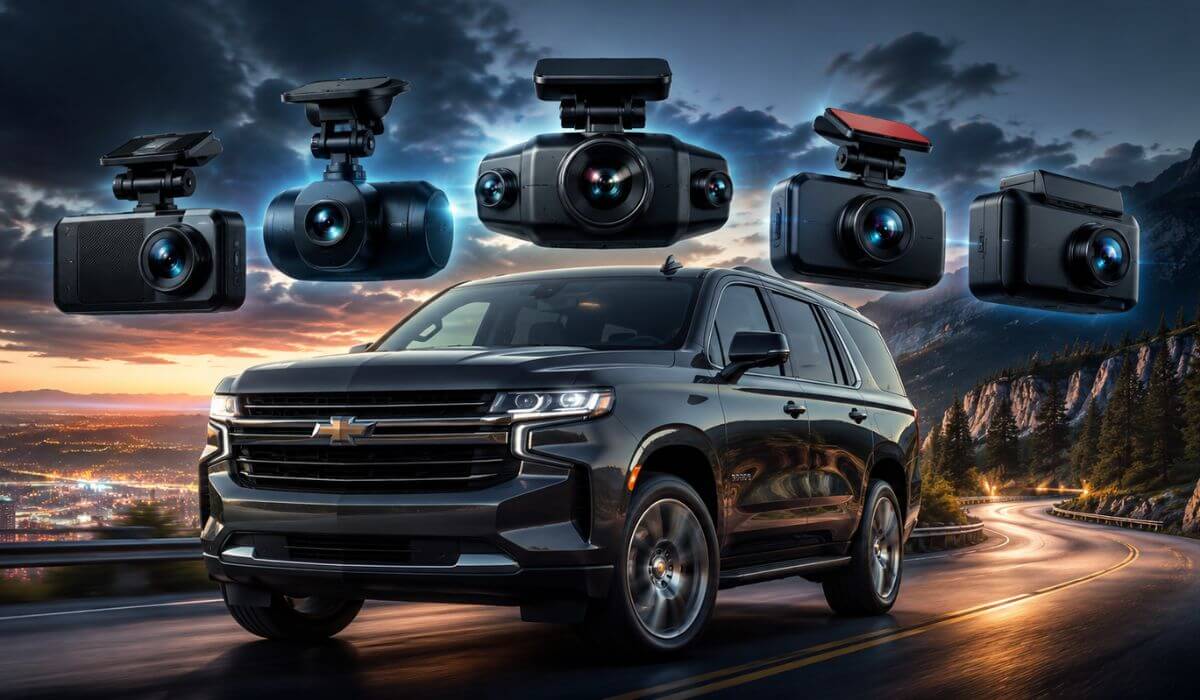
5 Best Dash Cams for Chevy Tahoe in 2026: 360° Coverage to Crystal Clear 4K Video
When you drive a Chevy Tahoe, your dash cam needs to do more than record the road. The Tahoe’s higher seating position, wide windshield, and long body can create blind spots that a basic camera often misses. That’s why we focused on models that deliver reliable video quality, dependable parking surveillance, and clean installation without interfering with visibility or daily driving.
For this guide, we looked at both 2021-2026 Chevrolet Tahoe models, including LS, LT, RST, Z71, Premier, and High Country trims. We also considered the needs of owners who want a factory-style installation as well as those who prefer flagship universal systems with the latest STARVIS 2 sensors, 4K recording, Wi-Fi 6 connectivity, and advanced parking features. We intentionally left out older dash cams that still rely on outdated image sensors or lack the video clarity needed to capture licence plates in challenging lighting.
If you want the best dash cam for Chevy Tahoe, the right choice depends on how you use your SUV. Some owners want an OEM-style camera that blends into the interior, while others need maximum image quality, wider coverage, or interior recording for family trips and rideshare use. The recommendations below were selected because they consistently offer the strongest combination of real-world performance, video evidence quality, ease of installation, and long-term value for Tahoe owners.
Best Chevy Tahoe Dash Cams: Top Picks for 4K, OEM Fit and 360° Coverage
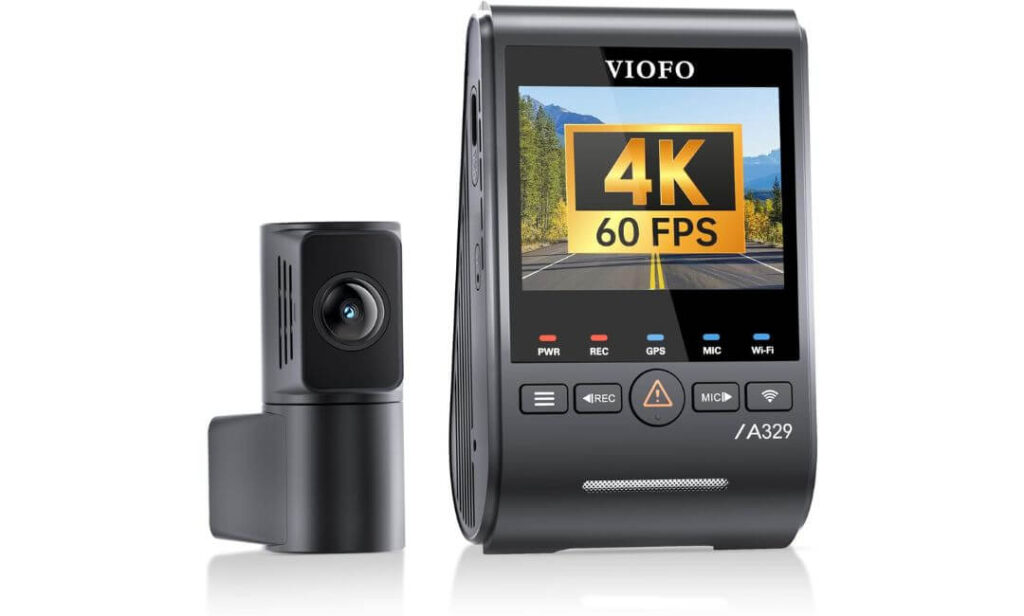
#1. VIOFO A329S 4K 60FPS Dash Cam Front and Rear
Best 4K dash cam for Chevy Tahoe with flagship STARVIS 2 sensors, ultra-smooth 60FPS recording, Wi-Fi 6 connectivity, and premium evidence quality for everyday driving.
#2. Mangoal Front 4K & Rear 1080P Dash Cam
Best OEM dash cam for Chevrolet Tahoe 2023-2026 featuring a factory-style hidden installation, built-in GPS, and clean integration without visible wiring.
#3. Vantrue E360 Plus All Channel Dash Cam
Best 360° dash camera for Chevy Tahoe with panoramic multi-camera coverage, dual STARVIS 2 sensors, IR cabin recording, voice control, and complete SUV protection.
#4. ROVE R2-4K Dual PRO Dash Cam
Best front and rear dash cam for Chevy Tahoe offering dual STARVIS 2 sensors, fast Wi-Fi 6 transfers, excellent value, and dependable day-and-night recording.
#5. Fitcamx 4K Dash Cam for Chevy Tahoe 2021-2026
Best factory-look dash cam for Chevy Tahoe with discreet OEM integration, simple installation, 4K UHD recording, and a clutter-free interior appearance.
Expert Tip: If you’re buying a dash cam for a Chevy Tahoe, don’t chase resolution alone. A true 4K camera with a modern STARVIS 2 sensor will usually give you far more usable footage than an older “4K” model with an outdated sensor. On a full-size SUV like the Tahoe, the higher windshield angle, wider front view, and longer rear overhang make HDR performance, dynamic range, and licence plate readability far more important than simply having more pixels. That’s why every recommendation in this guide was chosen for the quality of evidence it can capture when it actually matters—not just what looks good on a specification sheet.
How We Chose the Best Dash Cameras for Chevy Tahoe
We didn’t build this list around the newest releases or the biggest brand names. We started with a simple question: Which dash cams genuinely make sense for Chevrolet Tahoe owners? The answer is different from what works well in a compact sedan. The Tahoe’s larger cabin, upright driving position, expansive windshield, and family-focused design demand cameras that can consistently capture a wider field of view without sacrificing image clarity.
Our first priority was real-world video performance. We gave preference to cameras using modern Sony STARVIS 2 sensors, higher bitrates, effective HDR processing, and stable 4K recording because these are the features that improve plate readability during night driving, tunnels, rain, and harsh sunlight. Marketing claims were never enough on their own.
We also looked closely at installation quality. Some Tahoe owners want a completely hidden factory appearance, while others prefer flagship universal systems with maximum recording performance. That is why this guide includes both OEM-style dash cams for Chevrolet Tahoe and premium aftermarket options, allowing you to choose based on your priorities instead of forcing a single solution.
Long-term ownership mattered just as much as image quality. Every model we selected offers features that remain useful well beyond the first few weeks of ownership, including dependable parking recording, reliable app connectivity, fast file transfers, GPS where it adds value, and hardware capable of handling continuous recording without becoming outdated quickly.
Finally, we removed products that looked impressive on paper but relied on older image sensors, dated hardware, inconsistent software support, or limited evidence quality. We’d rather recommend fewer cameras that we believe Tahoe owners can confidently rely on than include extra models simply to make the list longer.
If a dash cam couldn’t justify its place through video quality, installation experience, feature set, and overall value for a 2021-2026 Chevy Tahoe, it didn’t make this guide.
#1. VIOFO A329S 4K 60FPS Dash Cam Front and Rear
Quick Specs:
- Video Recording: True 4K 60FPS front + 2K rear recording
- Image Sensors: Dual Sony STARVIS 2 (IMX678 Front + IMX675 Rear)
- Connectivity: Wi-Fi 6, built-in GPS and voice control
- Storage: Supports up to 4TB SSD or 512GB microSD
- Parking Recording: Ultra-low-power impact detection (hardwire kit required)
- Installation: Slim coaxial cable designed for clean hidden routing in large SUVs
- Best For: Owners who want the highest-quality video evidence instead of just another 4K badge
The first thing you notice isn’t the resolution—it’s the amount of usable detail it keeps when conditions become difficult. On a Chevy Tahoe, the elevated driving position, wide windshield and larger road coverage demand a camera that can stay sharp even when vehicles are closing fast or sunlight changes every few seconds. The combination of 4K 60FPS, dual STARVIS 2 sensors and intelligent HDR gives this camera an advantage where cheaper systems usually fall apart: capturing clear number plates without excessive motion blur.
What impressed us even more is that the hardware feels built for long-term ownership rather than short-term specifications. Wi-Fi 6 transfers large 4K files in seconds, built-in GPS records journey data accurately, voice control keeps your hands on the wheel, and support for up to a 4TB SSD means you can drive for weeks before worrying about overwriting footage. Those are practical upgrades you’ll actually appreciate after months of use—not just on the first day.
Installation also suits a full-size SUV remarkably well. The slim coaxial cable hides neatly behind the Tahoe’s trim panels, reducing clutter while avoiding interference with factory electronics. If you add the optional hardwire kit, the impact-triggered parking mode becomes a sensible choice for daily parking without placing unnecessary load on the vehicle’s battery.
(If your priority is capturing the clearest possible evidence instead of simply owning another dash cam with a long feature list, this is the benchmark the rest of the category has to match.)
What Stood Out During Our Evaluation
- True 4K 60FPS recording produces exceptionally smooth footage with excellent roadside detail.
- Dual Sony STARVIS 2 sensors deliver outstanding low-light performance and balanced HDR.
- Wi-Fi 6 dramatically reduces download times compared with older wireless systems.
- Massive 4TB SSD support is ideal for frequent travellers and long-distance driving.
- Slim wiring and compact hardware integrate neatly into the Tahoe’s spacious cabin.
One Thing Worth Knowing
- To unlock the full parking recording features, you’ll need to purchase the optional hardwire kit separately.
Tahoe Installation & Compatibility Notes
The camera is an excellent fit for the Chevy Tahoe thanks to its compact front unit and long rear cable, which comfortably reaches the rear glass without needing extension cables. The clean wiring also works well with the Tahoe’s larger interior panels, making hidden installation much easier than on many smaller SUVs.
During installation, mount the front camera slightly away from the factory driver-assistance camera housing near the rear-view mirror so both systems have an unobstructed view. If you plan to use parking protection every day, adding a quality hardwire kit is strongly recommended.
The Insider Pro-Tip
Many Tahoe owners focus only on recording resolution, but sensor quality and bitrate are what determine whether number plates remain readable when vehicles are moving quickly. That’s exactly where this model separates itself from many ordinary “4K” dash cameras.
If you regularly drive at highway speeds, travel after dark or want footage that can genuinely support an insurance claim, investing in stronger imaging hardware now is usually far more valuable than upgrading to a higher resolution later.
#2. Mangoal Front 4K & Rear 1080P Dash Cam
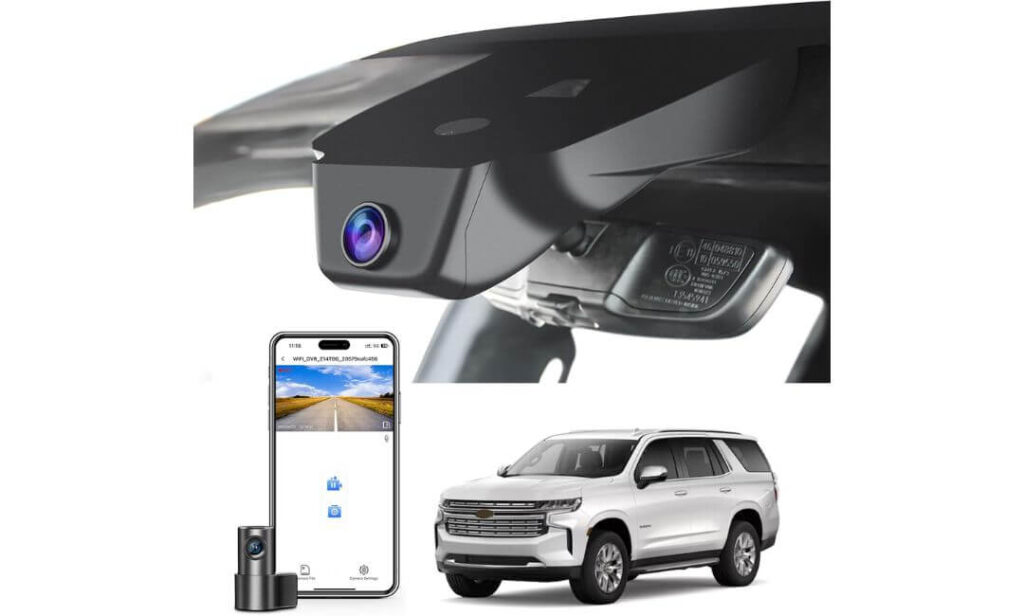
Quick Specs:
- Vehicle Fitment: Custom-designed for 2023+ Chevy Tahoe (LS, LT, RST, Z71, Premier & High Country)
- Video Recording: 4K front + 1080P rear
- Image Sensor: Sony STARVIS IMX335
- Viewing Angles: 150° front + 140° rear
- Connectivity: Built-in Wi-Fi, GPS and mobile app
- Power: Includes OBD power adapter for an easier installation
- Storage: 128GB microSD card included
- Best For: Drivers who want a genuine OEM dash cam for Chevrolet Tahoe without visible wiring
The biggest reason this model stands out has nothing to do with resolution. It is the way it disappears into the Tahoe’s interior. Once installed behind the rear-view mirror, it blends so naturally with the factory sensor housing that most passengers won’t even realise an aftermarket dash camera has been added. For owners who value a clean cabin, that alone makes it different from universal dash cams hanging below the mirror.
Recording quality is exactly what most Tahoe owners need for daily driving. The 4K front camera captures road signs, surrounding traffic and licence plates with reassuring clarity, while the 1080P rear camera provides dependable coverage behind the vehicle. Combined with the Sony STARVIS IMX335 sensor, built-in GPS and Wi-Fi connectivity, it delivers a balanced mix of convenience and reliable video evidence without adding unnecessary complexity.
Another advantage is how installation has been simplified. Instead of routing power across the dashboard, the package includes an OBD adapter, GPS module, rear camera, 128GB memory card, and everything needed for a tidy installation. For many owners, this means spending less time hiding cables and more time using the camera the way it was intended.
(If your goal is to keep the Tahoe looking completely factory while adding dependable front and rear recording, this is one of the cleanest solutions currently available.)
Why It Earned a Place in This Guide
- Purpose-built specifically for the 5th-generation Chevy Tahoe, creating an authentic factory appearance.
- Hidden installation behind the mirror keeps the dashboard uncluttered.
- 4K front recording paired with dependable rear coverage for everyday driving.
- Built-in GPS, Wi-Fi app support and 128GB memory card included straight out of the box.
- OBD power solution reduces installation effort compared with many universal systems.
One Thing Worth Knowing
- Before ordering, confirm your Tahoe’s mirror/sensor cover matches the correct Mangoal model variant, as different factory configurations require different versions.
Tahoe Compatibility & Installation Notes
This dash cam was designed around the 2023+ Chevrolet Tahoe, so the fit is far more precise than a universal windshield-mounted camera. It sits neatly behind the factory mirror assembly and preserves the original look of the interior without obstructing the driver’s forward view.
Before purchasing, take a quick look at your existing sensor cover around the rear-view mirror and compare it with the manufacturer’s fitment images. Spending a minute verifying the correct version can save unnecessary installation issues later.
The Insider Pro-Tip
Factory-style integration is something you’ll appreciate every single day—not because it records better, but because you almost forget it’s there. There are no dangling cables, bulky brackets or obvious accessories changing the appearance of your cabin.
If your priority is keeping your Chevy Tahoe looking exactly as Chevrolet intended while quietly adding reliable 4K recording, this style of dedicated OEM-fit dash camera is often the solution owners end up happiest with over the long term.
#3. Vantrue E360 Plus All Channel Dash Cam
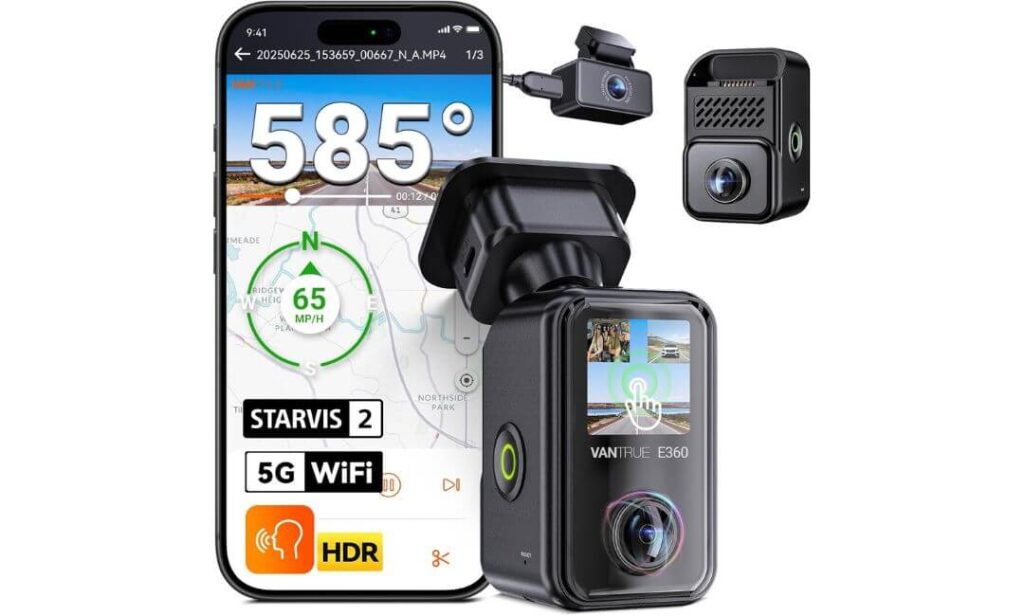
Quick Specs:
- Coverage: Up to 585° all-channel recording
- Camera Layout: Front + Interior + Rear with panoramic stitching
- Video Quality: 5.2K panoramic + 1440P recording
- Image Hardware: Dual Sony STARVIS 2 sensors with HDR
- Night Vision: Dual IR cabin cameras with 8 infrared LEDs
- Smart Features: Built-in GPS, Wi-Fi, voice control and touchscreen
- Storage: Supports up to 1TB microSD
- Best For: Families, rideshare drivers and owners wanting complete Chevy Tahoe dash camera coverage
What separates this model from almost every other dash camera isn’t simply another lens—it’s an entirely different way of recording what happens around your vehicle. Instead of focusing only on the road ahead, this system creates an ultra-wide panoramic view that captures the front, cabin and rear simultaneously, making it especially well suited to a full-size SUV like the Chevy Tahoe, where passengers, cargo space and surrounding traffic all matter.
The dual STARVIS 2 sensors work alongside HDR processing and infrared cabin lighting, allowing the footage to remain surprisingly clean once daylight disappears. During evening journeys, family road trips or airport pickups, the interior remains clearly visible without distracting the driver, while the panoramic recording helps preserve details that standard dual-channel cameras simply never see. The built-in GPS, responsive touchscreen and voice control also make everyday operation feel straightforward rather than overwhelming.
Another reason it earned a place in this guide is versatility. The included 20-foot rear cable comfortably reaches the Tahoe’s rear window, and support for up to 1TB of storage makes it practical for longer journeys where continuous recording is important. Rather than offering another basic front-and-rear setup, this camera is designed for drivers who want the broadest possible visual record whenever they’re behind the wheel.
(If knowing exactly what happened around your vehicle matters more than recording only what’s directly ahead, this is one of the most capable all-channel systems currently available.)
Why We Included It in Our Shortlist
- Records front, interior and rear simultaneously with panoramic stitched coverage.
- Dual STARVIS 2 sensors produce impressive low-light detail and balanced HDR footage.
- IR night vision keeps cabin recordings usable without additional lighting.
- Voice control, touchscreen and built-in GPS make daily operation simple.
- 1TB storage support suits frequent travellers and drivers recording long journeys.
One Thing Worth Knowing
- To enable continuous parking surveillance, the optional hardwire kit is required and sold separately.
Tahoe Compatibility & Installation Notes
This camera works exceptionally well inside the Chevy Tahoe, where the spacious cabin benefits from full interior coverage instead of relying on a conventional front-facing lens alone. The long rear cable also routes cleanly through the Tahoe’s interior trim without requiring extensions.
For the best results, mount the main unit high on the windshield while keeping a clear gap around the factory driver-assistance camera housing. Taking a little extra time with cable routing will preserve the clean factory appearance while maximising the panoramic viewing angles.
The Insider Pro-Tip
Most drivers only realise the value of interior coverage after an incident—not before it. On a large SUV like the Tahoe, having footage of the front, cabin and rear recorded together often provides far more context than a traditional two-channel setup ever can.
If your Tahoe regularly carries family members, pets, clients or valuable equipment, wider coverage isn’t just another premium feature—it can become the difference between partial evidence and seeing the complete story exactly as it happened.
#4. ROVE R2-4K Dual PRO Dash Cam Front and Rear
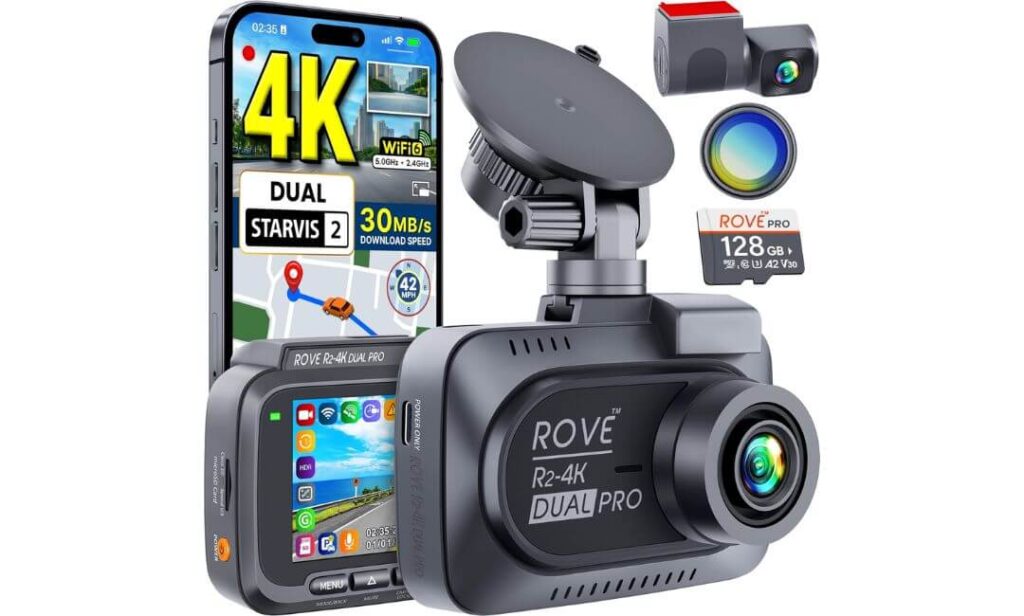
Quick Specs:
- Video Recording: 4K front + 2K rear with HDR
- Image Sensors: Dual Sony STARVIS 2 (IMX678 Front + IMX675 Rear)
- Connectivity: Dual-band Wi-Fi 6, Quad-Mode GPS and OTA updates
- Viewing Angles: 150° front + 140° rear
- Included Extras: 128GB microSD card and CPL filter
- Storage Support: Up to 1TB microSD
- Parking Features: Three intelligent parking modes (hardwire kit required)
- Best For: Drivers wanting a feature-packed Chevy Tahoe dash camera with excellent overall value
Sometimes the best upgrade isn’t the one with the longest specification sheet—it’s the one that gets every important detail right. This camera combines 4K front and 2K rear recording with Sony’s latest STARVIS 2 sensors, producing footage that stays sharp through changing light, heavy traffic and fast-moving highway driving. For a large SUV like the Chevy Tahoe, where wider road coverage and longer stopping distances matter, that extra image consistency becomes genuinely useful.
Daily use is where this model continues to impress. Wi-Fi 6 delivers noticeably faster video transfers, while the built-in Quad-Mode GPS records accurate location and speed data using four satellite systems. The package also includes a 128GB memory card and CPL filter, so you don’t have to purchase essential accessories separately before the camera is ready for everyday use.
Another reason it earned a place in this guide is balance. It doesn’t focus on one headline feature while ignoring everything else. Reliable HDR recording, intelligent parking options, support for 1TB storage, voice guidance and a durable supercapacitor all contribute to a dash camera that feels equally comfortable on daily commutes, weekend road trips or long-distance highway driving.
(For Tahoe owners looking for premium imaging hardware without stepping into flagship pricing, this is one of the strongest all-round packages currently available.)
Why It Deserves Your Attention
- Dual STARVIS 2 sensors deliver dependable image quality in both daylight and low-light driving.
- 4K + 2K recording captures front and rear incidents with impressive clarity.
- Wi-Fi 6 and Quad-Mode GPS make video management fast and straightforward.
- Includes a 128GB memory card and CPL filter, reducing additional setup costs.
- Three intelligent parking recording modes provide flexible protection once hardwired.
One Thing Worth Knowing
- Full-time parking monitoring requires the optional hardwire kit, which is purchased separately.
Tahoe Installation & Everyday Use
The compact front camera fits comfortably on the Chevy Tahoe’s windshield without dominating the driver’s field of view, while the included 6-metre rear cable reaches the rear glass cleanly through the factory trim. Both suction and adhesive mounting options allow you to choose the installation style that best suits your preference.
When positioning the front unit, leave adequate clearance around the Tahoe’s factory safety camera assembly near the rear-view mirror. Doing so keeps the vehicle’s driver-assistance systems working normally while maintaining the best recording angle.
The Insider Pro-Tip
Many dash cams advertise premium sensors, but pairing them with quality accessories makes a noticeable difference over time. Receiving a high-end CPL filter and a properly rated 128GB card in the box means the camera performs closer to its full potential from the first drive instead of relying on future upgrades.
If you want a dash cam that offers premium hardware, practical accessories and dependable everyday performance in one package, this is the model that quietly delivers far more value than its price suggests.
#5. Fitcamx 4K Dash Cam for Chevy Tahoe 2021–2026
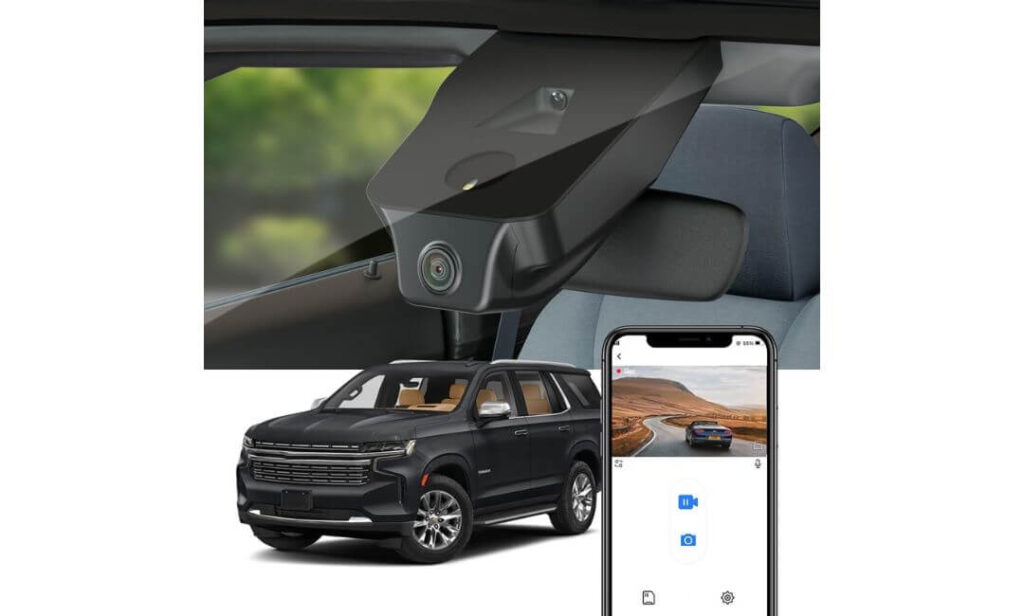
Quick Specs:
- Vehicle Compatibility: Custom-made for Chevy Tahoe 2021–2026 (LS, LT, Z71, RST, Premier & High Country)
- Video Recording: 4K front with 1080P rear recording
- Installation: True plug-and-play OEM design behind the rear-view mirror
- Connectivity: FITCAMX mobile app with built-in Wi-Fi
- Viewing Angle: 150° front
- Power Options: Rear-view mirror power or OBD connection for parking mode
- Included Storage: 64GB memory card
- Best For: Owners wanting a discreet factory-look dash camera for Chevrolet Tahoe
Not every Tahoe owner wants extra screens, visible wiring or bulky cameras hanging beneath the mirror. Sometimes the priority is simple: keep the interior looking exactly the way Chevrolet designed it while quietly adding dependable recording. That’s where this model makes the strongest impression. Once installed, it blends directly into the factory mirror housing, making it one of the cleanest OEM-style solutions available for the Chevy Tahoe.
The camera records in 4K at the front with a 1080P rear camera, delivering clear everyday footage for commuting, family trips and motorway driving. Wide Dynamic Range helps balance bright daylight and darker roads, while the FITCAMX app makes it easy to review or download recordings without removing the memory card. It focuses on providing reliable evidence without overwhelming the driver with unnecessary features.
Installation is where this camera genuinely separates itself from most universal alternatives. Many Tahoe models can draw power directly from the auto-dimming rear-view mirror, eliminating the need to run long power cables across the dashboard. If your vehicle uses OBD power instead, the supplied cable also supports parking monitoring, giving owners flexibility based on their factory configuration.
(If preserving the original appearance of your Tahoe matters just as much as recording the road ahead, few dash cameras achieve that balance as naturally as this one.)
Why It Earned the Final Spot in Our Recommendations
- Purpose-built specifically for the Chevy Tahoe, creating an authentic factory-installed appearance.
- Plug-and-play installation significantly reduces visible wiring and installation time.
- 4K front and 1080P rear recording provide dependable everyday evidence.
- Includes both mirror power and OBD power options for wider vehicle compatibility.
- FITCAMX mobile app makes reviewing and saving footage straightforward.
One Thing Worth Knowing
- Before ordering, confirm whether your Tahoe’s mirror housing has the correct 6- or 8-vent sensor cover, as different factory mirror designs require different Fitcamx versions.
Tahoe Installation & Compatibility Notes
This model was engineered specifically for the 2021–2026 Chevrolet Tahoe, making it one of the easiest dash cameras in this guide to install neatly. The integrated housing replaces the factory mirror cover area, so the finished result looks remarkably close to original equipment rather than an aftermarket accessory.
If your Tahoe is equipped with an auto-dimming rear-view mirror, installation is particularly straightforward using the supplied mirror power connection. Vehicles without that feature can use the included OBD cable, which also enables parking monitoring when configured correctly.
The Insider Pro-Tip
A factory-style dash camera isn’t about attracting attention—it’s about fitting so naturally that you stop noticing it’s there. That’s often the biggest advantage during long-term ownership because nothing hangs below the mirror, no cables distract the cabin, and the interior keeps its original premium feel.
If you value a clean OEM appearance, quick installation and dependable daily recording over advanced enthusiast features, this is the dash camera most Tahoe owners are likely to appreciate every time they get behind the wheel.
Best Chevy Tahoe Dash Cam Comparison: Features, Fitment and Value
| Dash Cam | Best Choice For | Video Quality | Camera Coverage | Standout Hardware | Installation | Overall Verdict |
|---|---|---|---|---|---|---|
|
Editor’s Choice
VIOFO A329S
Premium Performance
|
Drivers wanting the best overall recording quality | 4K 60FPS Front 2K Rear Dual HDR |
Front + Rear | Dual STARVIS 2 WiFi 6 GPS 4TB SSD Support |
Hidden cable routing with slim coaxial cable | Outstanding evidence quality with flagship hardware. |
|
Best OEM Fit
Mangoal OEM Dash Cam
Factory Style
|
Owners wanting an original factory appearance | 4K Front 1080P Rear |
Front + Rear | GPS WiFi STARVIS IMX335 128GB Included |
Custom-built for Tahoe with almost invisible installation | The cleanest OEM-style solution for compatible Tahoe models. |
|
Best 360° Coverage
Vantrue E360 Plus
Maximum Visibility
|
Families, rideshare and complete cabin recording | 5.2K Panoramic 1440P Rear |
Front + Interior + Rear | Dual STARVIS 2 IR Night Vision Voice Control Touchscreen |
Universal fit with long rear cable for large SUVs | Captures angles most dual-camera systems simply cannot. |
|
Best Value
ROVE R2-4K Dual PRO
Feature Packed
|
Buyers wanting premium features without overspending | 4K Front 2K Rear |
Front + Rear | Dual STARVIS 2 WiFi 6 Quad GPS 128GB + CPL Included |
Universal installation with multiple mounting options | One of the strongest value-for-money packages available. |
|
Best OEM Budget Pick
Fitcamx 4K
Simple & Clean
|
Drivers wanting factory styling with easy installation | 4K Front 1080P Rear |
Front + Rear | OEM Housing WiFi App Mirror Power Support |
True plug-and-play design for compatible Tahoe models | Perfect for preserving the original cabin appearance. |
Why a Dash Cam Is a Smart Upgrade for Your Chevy Tahoe
The Chevy Tahoe is built for far more than everyday commuting. It serves as a family SUV, long-distance tourer, towing vehicle, road-trip companion, and even a business vehicle for many owners. That versatility also means it spends more time on busy motorways, crowded car parks, school drop-off zones, and unfamiliar roads where unexpected incidents can happen without warning.
Unlike smaller vehicles, the Tahoe’s larger footprint, taller driving position, longer rear overhang, and wider blind spots create situations where having reliable video evidence becomes genuinely valuable. A quality dash cam doesn’t just record an accident—it helps explain exactly how it happened when memories differ or insurance companies request proof.
Modern dash cameras have also evolved well beyond simple front recording. Features such as 4K resolution, STARVIS 2 image sensors, HDR processing, GPS tracking, intelligent parking recording, and Wi-Fi connectivity provide a level of evidence that older cameras simply cannot match.
Reliable Evidence Can Save Time, Money and Unnecessary Disputes
After an accident, everyone involved often remembers events differently. Independent video evidence removes much of that uncertainty by recording exactly what happened before, during, and after an incident.
A high-quality front and rear dash cam for Chevy Tahoe can help document:
- Lane-change collisions.
- Rear-end impacts.
- Hit-and-run incidents.
- Red-light violations.
- Dangerous overtaking.
- Road rage situations.
- Unexpected wildlife encounters.
- Vehicle vandalism while parked.
- Weather-related incidents with reduced visibility.
Footage that clearly shows vehicle position, speed, road markings and traffic conditions can often simplify insurance discussions far more effectively than photographs taken afterwards.
Front and Rear Recording Makes More Sense for a Large SUV
Because the Tahoe is considerably longer than most passenger vehicles, incidents don’t always occur directly in front of the bonnet. Rear impacts, reversing accidents and low-speed parking collisions are equally common.
That’s why many owners benefit more from a dual-channel dash camera than a front-only system.
The models featured in this guide provide continuous coverage of both directions, allowing you to review events from multiple angles instead of relying on a single camera. For daily driving, this extra perspective often becomes one of the most useful upgrades you can make.
When 360° Coverage Is Worth Considering
Not every driver needs panoramic recording, but some Tahoe owners can benefit significantly from it.
If your vehicle regularly carries passengers, children, pets, expensive equipment, business tools or rideshare customers, a 360° dash camera adds another layer of protection by recording activity inside the cabin as well as around the vehicle.
This wider perspective can also help explain situations that conventional front-and-rear systems cannot fully capture, particularly during side impacts, parking incidents or disputes involving passengers.
Parking Recording Protects Your Tahoe Even When You’re Away
Many vehicle incidents happen when the engine is switched off.
Shopping centres, hotel car parks, airports, office buildings and residential streets all expose parked vehicles to accidental damage or careless drivers who leave without reporting it.
A dash cam equipped with intelligent parking mode, used with the correct hardwire kit where required, can automatically begin recording when motion, vibration or an impact is detected. That extra footage may provide the only evidence available if your Tahoe is damaged while unattended.
Better Image Sensors Often Matter More Than Higher Resolution
It’s easy to focus on “4K” when comparing dash cams, but image quality depends on much more than resolution.
Modern Sony STARVIS 2 sensors improve light sensitivity, reduce motion blur and produce cleaner footage during night driving, heavy rain, tunnels and challenging lighting conditions. Combined with HDR processing, they make licence plates and road signs easier to identify when ordinary cameras begin losing important detail.
That’s one of the main reasons our recommendations prioritise camera hardware rather than simply choosing the highest advertised resolution.
Long-Term Value Goes Beyond Accident Recording
A quality dash cam becomes useful long before an emergency ever happens.
Many owners use recorded footage to review road trips, monitor young drivers, document scenic journeys, verify delivery routes, or simply gain extra peace of mind whenever someone else borrows the vehicle.
For anyone planning to keep their Chevy Tahoe for several years, investing in a reliable dash camera is often one of the simplest upgrades that continues delivering value every time the vehicle leaves the driveway.
Buying Guide: How to Choose the Best Dash Cam for Your Chevy Tahoe
Choosing a dash cam for a Chevy Tahoe isn’t simply about buying the highest resolution or the newest model. A full-size SUV places different demands on a camera than a compact car. The wider windshield, taller seating position, larger cabin and longer rear section all influence which features will actually improve your driving experience. Before making a purchase, it’s worth understanding which specifications genuinely matter and which are mostly marketing.
Decide Whether You Need Front Only, Dual Channel or 360° Coverage
The first decision should always be the type of coverage you expect from your dash camera.
A front-only dash cam is suitable for drivers who mainly want evidence of what happens ahead and prefer a simple installation. It also costs less and usually requires fewer cables.
A front and rear dash cam for Chevy Tahoe offers much broader protection. It records rear-end collisions, reversing incidents, motorway traffic behind your vehicle and evidence that a front camera simply cannot capture. For most Tahoe owners, this is the setup that delivers the best balance between protection and value.
A 360° dash camera is worth considering if your Tahoe regularly carries family members, passengers, business equipment or pets. Recording the front, cabin and rear simultaneously provides additional context during accidents, parking incidents or disputes involving passengers.
Choosing the right coverage first will naturally narrow your options before comparing individual specifications.
Prioritise Image Quality Instead of Resolution Alone
Many buyers immediately look for the word 4K, but resolution tells only part of the story.
A quality 4K dash cam for Chevy Tahoe should also include a modern image sensor, effective HDR processing and a high enough bitrate to preserve detail during real driving conditions. These factors determine whether licence plates remain readable when vehicles are moving quickly or sunlight changes suddenly.
Cameras equipped with Sony STARVIS 2 sensors consistently perform better in low-light environments, rainy weather, tunnels and night driving because they capture more usable detail while reducing motion blur and digital noise.
Rather than choosing the highest advertised resolution, focus on cameras that combine strong hardware with proven image processing.
Choose Storage That Matches How You Drive
Storage capacity affects how long your recordings remain available before older footage is overwritten.
If you mainly use your Tahoe for commuting, a quality memory card with loop recording is usually sufficient.
However, if you regularly travel long distances, tow trailers, take family holidays or spend extended hours on the road, selecting a dash cam with support for larger memory cards—or even external SSD storage—reduces the need to constantly manage recordings.
Reliable loop recording is equally important because it automatically replaces the oldest unlocked footage while protecting important incident files from being erased.
GPS Adds More Value Than Many Drivers Expect
Built-in GPS does much more than display your location.
It records your route, vehicle speed, direction of travel and precise timestamps alongside the recorded video. During insurance claims or accident investigations, this information can provide additional context that ordinary video footage cannot.
For owners who frequently travel between cities or use their Tahoe for work, integrated GPS becomes a genuinely useful feature rather than an optional extra.
A Good Mobile App Makes Daily Ownership Easier
You’ll probably interact with the mobile app more often than the camera itself.
A reliable Wi-Fi dash cam for Chevy Tahoe allows you to preview recordings, download important clips, adjust camera settings and update firmware directly from your smartphone without removing the memory card.
Models supporting newer wireless technologies such as Wi-Fi 6 also transfer large 4K video files significantly faster, making them much more convenient after an incident.
An excellent camera paired with a poor mobile app quickly becomes frustrating to use, so software quality deserves as much attention as recording quality.
Parking Surveillance Is Worth Having If Your Tahoe Spends Time Parked Outdoors
Many vehicle incidents occur while the driver isn’t even inside the vehicle.
If your Tahoe is regularly parked outside your home, at work, in shopping centres or at airports, choosing a dash cam with intelligent parking surveillance adds another layer of protection.
Modern systems can automatically begin recording after detecting motion, vibration or an impact, helping capture valuable evidence during hit-and-run incidents or attempted vandalism.
Most advanced parking features require a compatible hardwire kit, so it’s worth checking installation requirements before purchasing.
Think About Installation Before You Buy
Installation quality has a major impact on how satisfied you’ll be months after fitting the camera.
Some Tahoe owners prefer a dedicated OEM dash cam that integrates into the factory mirror housing with almost no visible wiring. Others prioritise flagship image quality and don’t mind routing cables through the headliner and interior trim.
Whichever style you choose, keep the front camera clear of the Tahoe’s factory driver-assistance sensors and leave enough space around the rear-view mirror housing. Neatly hidden cables not only improve the appearance of the cabin but also reduce distractions while driving.
Buy for the Next Five Years, Not Just Today
A dash cam is one of those upgrades you’ll probably keep longer than your phone or tablet.
Choosing better hardware now—such as STARVIS 2 sensors, dependable GPS, fast Wi-Fi, larger storage support and reliable software—usually costs less in the long run than replacing an entry-level camera after a year or two.
The best dash cam isn’t simply the one with the longest specification sheet. It’s the one that continues delivering dependable video evidence every single time you start your Chevy Tahoe, whether you’re driving across town or across the country.
Installation and Setup Tips for Your Chevy Tahoe Dash Cam
Installing a dash cam in a Chevy Tahoe is usually straightforward, but taking a little extra time during the installation makes a noticeable difference in both appearance and long-term reliability. A neatly installed camera is less distracting, less likely to interfere with factory safety systems, and far more enjoyable to live with every day. Whether you choose a dedicated OEM-style unit or a universal front-and-rear system, the goal should always be the same: a clean installation that looks intentional rather than aftermarket.
Start by Choosing the Right Mounting Position
The front camera should always be mounted high on the windshield, close to the rear-view mirror, where it has the widest possible view without obstructing your line of sight.
On the Chevy Tahoe, pay special attention to the factory driver-assistance cameras and sensors located behind the windshield. Leave enough clearance around this housing so the dash cam doesn’t block features such as forward collision warning, lane keeping assistance or automatic emergency braking.
If you’re installing an OEM-style dash cam, carefully confirm that your mirror housing and sensor cover match the correct version before beginning installation. Spending a few minutes checking compatibility can save unnecessary removal and reinstallation later.
Plan the Cable Route Before Connecting Anything
One of the most common installation mistakes is connecting the camera first and worrying about the wiring afterwards.
Instead, plan the entire cable path before attaching the camera permanently.
For most universal dash cams, the cleanest routing is:
- Across the headliner above the windshield.
- Down the passenger-side A-pillar.
- Behind the dashboard trim.
- Towards the chosen power source.
- Continue through the roof liner to the rear hatch when installing a rear camera.
This approach keeps almost all wiring hidden while preserving the clean appearance of the Tahoe’s interior.
Decide Between Mirror Power, Hardwiring or a 12V Power Outlet
Your preferred power source depends on the dash cam you’ve selected and how you intend to use it.
A dedicated OEM dash cam for Chevy Tahoe often connects directly to the factory rear-view mirror power supply, creating one of the cleanest installations available with virtually no visible wiring.
Universal dash cameras can normally be powered using the supplied 12V power adapter, making installation quick and completely reversible.
If you want continuous parking surveillance, however, installing a compatible hardwire kit is generally the better solution. Hardwiring allows the camera to monitor the vehicle while parked and includes battery protection features designed to prevent excessive battery discharge.
Take Your Time Routing the Rear Camera Cable
The rear camera installation usually takes longer than mounting the front unit.
Fortunately, the Chevy Tahoe’s generous cabin space makes cable routing easier than many smaller vehicles. Feed the cable carefully through the headliner, door weather seals and rear interior trim, avoiding sharp edges or moving components that could damage the wiring over time.
Before securing everything permanently, confirm the rear camera provides a clear view through the rear window without obstruction from headrests, cargo or window tint.
Configure the Camera Before Your First Drive
Once the installation is complete, spend a few minutes setting up the camera properly rather than driving immediately.
A good initial setup should include:
- Formatting the memory card inside the camera.
- Pairing the dash cam with its mobile app.
- Confirming GPS is functioning correctly.
- Setting the correct date, time and time zone.
- Selecting the preferred recording resolution.
- Adjusting parking mode settings if using a hardwire kit.
- Checking that both front and rear cameras are recording normally.
Completing these steps immediately helps avoid missing important footage later because of incorrect settings.
Update the Firmware Before Relying on the Camera
Manufacturers frequently release firmware updates that improve stability, compatibility and recording performance.
Before depending on your new dash cam, check whether a newer firmware version is available through the manufacturer’s app or official support page. Keeping the software updated helps resolve minor issues, improve app connectivity and occasionally introduces useful new features without requiring new hardware.
Test Everything Before Finishing the Installation
Before replacing trim panels or securing every cable permanently, perform a complete recording test.
Drive for several minutes, then review both front and rear footage on the camera and through the mobile app. Confirm that video quality, GPS data, audio recording and file playback all work as expected.
It’s much easier to reposition a camera or adjust a cable before the installation is completely finished than after everything has been tucked neatly behind the interior panels.
Small Installation Details Often Make the Biggest Difference
Many people focus entirely on the dash cam itself, yet the quality of the installation often determines how satisfied they’ll be months later.
A camera mounted level, neatly wired, correctly configured and positioned away from factory safety sensors will generally provide more reliable recordings, fewer distractions and a much more professional finish. Spending an extra thirty minutes during installation is often the difference between a setup that looks temporary and one that feels as though it came fitted with the Chevy Tahoe from the factory.
Maintenance and Troubleshooting Tips for Your Chevy Tahoe Dash Cam
A quality dash cam can easily serve your Chevy Tahoe for years, but only if it’s maintained properly. Most recording issues reported by owners are not caused by faulty hardware—they’re usually the result of outdated firmware, neglected memory cards, unstable power sources or settings that haven’t been reviewed since installation. Spending just a few minutes on routine maintenance can help ensure your camera is recording properly every time you drive, rather than discovering a problem after an incident has already occurred.
Keep the Firmware and Mobile App Updated
Manufacturers regularly release firmware updates that improve recording stability, GPS accuracy, Wi-Fi performance and overall compatibility with newer smartphones.
Every few months, open the manufacturer’s app or visit the official support page to check for available updates. Installing firmware isn’t simply about gaining new features—it often fixes minor bugs, improves system reliability and enhances overall recording performance.
It’s also worth keeping the companion mobile app updated. A newer app version frequently improves connection speed, video downloads and playback stability, especially on modern Android and iPhone devices.
Format the Memory Card on a Regular Schedule
One of the simplest maintenance tasks is also one of the most important.
Continuous loop recording writes thousands of video files every month. Over time, the memory card can become fragmented, increasing the likelihood of recording errors or corrupted files.
Formatting the card directly inside the dash cam every few weeks—or at least once a month for frequent drivers—helps maintain stable recording performance. Before formatting, always save any footage you want to keep because the process permanently removes existing files.
Using a high-endurance memory card that meets the manufacturer’s recommendations is equally important, particularly when recording in 4K or using advanced parking surveillance.
Check Camera Alignment and Lens Condition
Road vibrations, extreme temperatures and everyday use can gradually alter the camera’s position.
Every few weeks, confirm that both the front and rear cameras remain level and still provide the intended field of view. While doing so, gently clean the lenses using a clean microfibre cloth to remove fingerprints, dust, pollen and road film that may reduce image quality.
Even a thin layer of dirt can noticeably affect licence plate readability during night driving.
What to Do If the Screen Stays Black
A black screen doesn’t always indicate hardware failure.
Before assuming the camera is faulty, check:
- The power cable is fully connected.
- The vehicle power source is supplying power correctly.
- The memory card is recognised.
- The latest firmware has been installed.
- A restart or factory reset resolves the issue.
Many modern dash cams also allow the display to switch off automatically while continuing to record normally, so confirm the camera is still saving video before investigating further.
Fixing GPS or Wi-Fi Connection Problems
If GPS occasionally loses signal, remember that underground car parks, tunnels and dense urban areas can temporarily interrupt satellite reception.
Persistent GPS issues may be improved by:
- Updating the firmware.
- Checking that the GPS module is securely connected.
- Moving the camera slightly if metallic window tint or accessories interfere with reception.
For Wi-Fi connectivity, ensure you’re connecting through the manufacturer’s official app, remain close to the camera during pairing and disconnect your phone from other wireless networks if connection problems continue.
Parking Mode Doesn’t Always Mean Something Is Wrong
Parking mode is one of the most misunderstood dash cam features.
If the camera isn’t recording while the Tahoe is parked, first verify that:
- A compatible hardwire kit has been installed if required.
- Parking mode has been enabled in the settings.
- Battery protection voltage has not automatically disabled recording.
- The selected parking mode matches how you expect the camera to behave.
Some cameras record only after detecting motion or an impact, while others use time-lapse or buffered recording. Understanding these differences helps avoid assuming the system has failed when it is simply operating as designed.
Protect Your Tahoe’s Battery During Long-Term Use
Modern parking surveillance is designed to balance vehicle protection with battery health, but installation still matters.
A quality hardwire kit with low-voltage protection automatically disconnects the dash cam before the battery reaches an unsafe level. This helps reduce the risk of returning to a vehicle that won’t start after extended parking.
If your Tahoe remains unused for several days or weeks, consider temporarily disabling continuous parking recording unless it is genuinely needed. This simple habit helps preserve battery life over the long term while still protecting the camera system.
Perform a Quick Recording Check Every Month
One of the best habits any dash cam owner can develop is verifying that the camera is actually recording.
Once a month, drive for a few minutes, then review both front and rear footage using the camera or mobile app. Confirm that video quality, GPS information, timestamps, audio and parking recordings are all functioning correctly.
This quick inspection takes only a few minutes but provides confidence that, if an incident ever happens, your Chevy Tahoe dash cam will already be doing exactly what you expect—capturing reliable evidence when it matters most.
FAQs About Chevy Tahoe Dash Cam
Is an OEM-style dash cam a better choice than a universal dash cam for a Chevy Tahoe?
It depends on what matters most to you. If your priority is keeping the interior looking exactly as Chevrolet designed it, an OEM-style dash cam for a Chevy Tahoe is difficult to beat. These models integrate into the mirror housing, require very little visible wiring and often feel like a factory-installed option rather than an aftermarket accessory.
However, if your priority is capturing the best possible video evidence, flagship universal dash cams usually offer advantages such as newer STARVIS 2 sensors, higher bitrates, faster Wi-Fi, larger storage support and more advanced HDR processing. In other words, OEM models generally win on appearance, while premium universal cameras often lead in overall recording performance.
Will a dash cam interfere with the Chevy Tahoe’s factory safety cameras or driver-assistance systems?
Not if it’s installed correctly.
The Tahoe uses several forward-facing sensors and cameras for features such as lane keeping assistance, automatic emergency braking and forward collision alerts. A properly installed dash cam should never block these components.
For the safest installation:
- Mount the dash cam slightly beside or below the factory sensor housing.
- Keep the camera outside the driver’s primary field of vision.
- Avoid routing cables across sensor areas.
- Test all driver-assistance features after installation.
A few extra minutes spent positioning the camera correctly is usually enough to avoid compatibility problems.
Is a 360° dash cam actually useful in a Chevy Tahoe, or is a dual-channel setup enough?
For many owners, a quality front-and-rear system will provide all the protection they need.
A 360° dash camera becomes worthwhile when your Tahoe regularly carries children, passengers, pets, expensive equipment or is used for rideshare or business purposes. Recording the cabin alongside the front and rear can provide valuable context that standard dual-channel systems simply cannot capture.
If your driving mainly involves commuting and family travel, investing in better image quality is often a smarter decision than adding more camera angles. But if interior activity could become important after an incident, wider coverage can make a meaningful difference.
How much storage should I realistically choose for a 4K Chevy Tahoe dash cam?
Many buyers underestimate how quickly high-quality footage fills a memory card.
If you drive only short distances each week, a quality 128GB card is usually enough. For longer journeys, motorway driving or regular use of parking mode, larger capacities quickly become worthwhile.
As a general guide:
- 128GB — Daily commuting and occasional trips.
- 256GB — Frequent drivers wanting longer recording history.
- 512GB — Ideal for extended road trips and regular parking surveillance.
- External SSD (where supported) — Best for drivers recording long-distance travel without constantly overwriting older footage.
Choosing more storage today often means fewer situations where important footage has already been replaced by newer recordings.
Which specification matters more in real-world driving: higher resolution or newer image sensors?
This is probably the most overlooked question when buying a dash cam.
A camera with a modern Sony STARVIS 2 sensor, strong HDR processing and a healthy recording bitrate will often produce more useful evidence than another camera advertising a higher resolution but relying on older imaging hardware.
The clearest footage usually comes from a balanced combination of:
- Modern image sensors.
- Effective HDR performance.
- Stable recording bitrate.
- Quality optics.
- Reliable firmware.
That’s exactly why the recommendations in this guide weren’t ranked by resolution alone. We prioritised cameras that consistently deliver clear, dependable evidence in the real driving conditions that Chevy Tahoe owners are most likely to encounter, whether that’s bright sunlight, heavy rain, motorway speeds or night-time travel.
Final Thoughts
Finding the best dash cam for your Chevy Tahoe isn’t about chasing the longest feature list or the highest advertised resolution. It’s about choosing a camera that fits the way you actually drive, installs cleanly, records dependable evidence when conditions become difficult, and continues performing reliably years after it’s installed.
For most owners, the VIOFO A329S stands out as the strongest all-round choice thanks to its outstanding image quality, dual STARVIS 2 sensors and future-ready hardware. If preserving the factory appearance matters most, the Mangoal and Fitcamx OEM solutions integrate beautifully with the Tahoe’s interior. Drivers wanting complete vehicle coverage will appreciate the Vantrue E360 Plus, while the ROVE R2-4K Dual PRO delivers one of the best balances of performance, included accessories and overall value.
Every recommendation in this guide was selected with one goal in mind: helping Chevy Tahoe owners invest in a dash cam that provides reliable evidence instead of impressive marketing claims. A quality recording can never prevent an accident, but it can remove uncertainty when the unexpected happens—and that peace of mind is often worth far more than the camera itself.
If you choose a model that matches your driving habits, install it correctly, keep the firmware updated and use a reliable high-endurance memory card, you’ll have a system you can trust every time you start your Tahoe, whether you’re driving across town, towing on the highway or heading out on your next family road trip.
Also Check: