5 Best Dash Cams for Chevy Blazer in 2026: 4K60 Video Dual STARVIS 2 & OEM Fit Picks
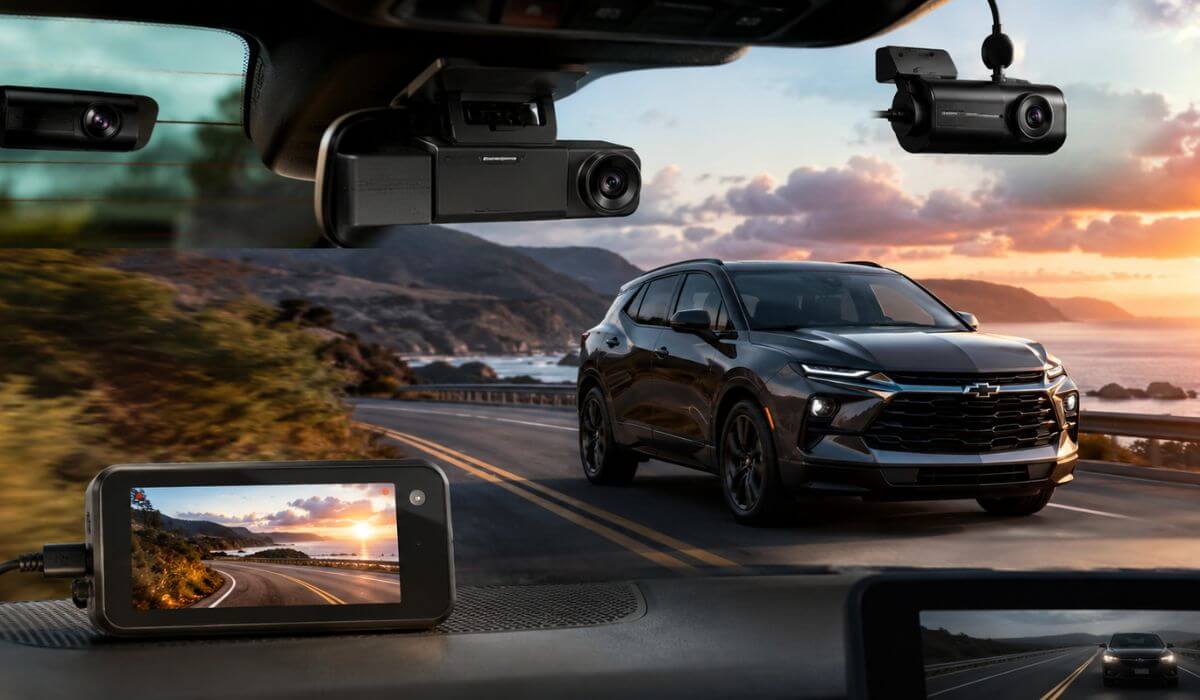
When you’re choosing a dash cam for a Chevy Blazer, the camera itself is only half of the equation. The Blazer’s steep windshield, forward camera housing, and trim-specific mirror cover leave very little room for poor mounting choices. A model that works perfectly in another midsize SUV can interfere with the driver’s view, block factory sensors, or make hardwiring unnecessarily complicated. That’s why compatibility matters just as much as video quality.
For this guide, we looked at both the 2019–2025 Chevrolet Blazer and the 2024–2026 Chevrolet Blazer EV, since they use different windshield layouts and OEM trim designs. We prioritized dash cams with proven image sensors, stable parking features, reliable app support, clean cable management, and OEM-style options where they genuinely make sense—not simply because they fit. If you drive your Blazer every day, commute at night, or leave it parked in busy lots, the recommendations below are the ones we’d feel confident installing in our own vehicle.
Best Chevy Blazer Dash Cams: Top 2026 Picks for 4K Clarity & OEM Fit
#1. VIOFO A329S 4K 60FPS Front and Rear Dash Cam
Best Chevy Blazer dash cam, delivering true 4K60 recording, dual STARVIS 2 sensors, Wi-Fi 6, and premium image quality for drivers who want the clearest evidence in every lighting condition.
#2. Vantrue N5 4-Channel WiFi Dash Cam
Best 4K dash cam for Chevy Blazer owners who want 360° coverage, recording the front, rear, cabin, and side views with STARVIS 2 technology for maximum protection on family trips and daily commutes.
#3. Fitcamx Front 4K + Rear 1080P Dash Cam
Best OEM dash cam for Chevy Blazer EV 2025–2026, offering a factory-style appearance, plug-and-play installation, built-in Wi-Fi, and an almost invisible setup that blends seamlessly with the interior.
#4. ROVE R2-4K Dual PRO Dash Cam
Best Chevrolet Blazer dash camera for drivers seeking premium features at a sensible price, combining dual STARVIS 2 sensors, fast Wi-Fi 6 transfers, excellent night performance, and dependable daily recording.
#5. Mangoal Front 4K and Rear 1080P Dash Cam
Best Chevrolet Blazer OEM-style dash cam for 2019–2026 models, designed for owners who prefer a clean factory-inspired installation without exposed wiring while still capturing sharp front and rear footage.
Expert Tip
If you’re buying a dash cam for a Chevy Blazer, don’t get distracted by the highest resolution on the box. A camera with a better image sensor, stable HDR, and reliable software will usually capture more usable evidence than a higher-resolution model with poor processing. That’s why our top recommendations focus on Sony STARVIS 2 sensors, dependable firmware, fast video transfer, and proven parking performance before anything else. A dash cam only proves its value once—when you actually need the footage. At that moment, clarity and reliability matter far more than marketing claims.
How We Chose These Chevy Blazer Dash Cams
We didn’t build this list around popularity or affiliate rankings. Every recommendation started with one question: Would we confidently install this dash cam in a Chevy Blazer and depend on it after an actual accident? If the answer wasn’t an easy yes, it didn’t make the list.
The first thing we evaluated was real compatibility. The 2019–2025 Chevrolet Blazer and the 2024–2026 Blazer EV don’t share the same windshield layout or mirror housing, so OEM-style cameras had to be recommended only where they genuinely fit. That’s why models like Fitcamx and Mangoal appear in specific positions instead of being treated as universal options.
Next came image quality that holds up in the real world. Instead of chasing resolution alone, we prioritized cameras using Sony STARVIS 2 sensors, advanced HDR processing, and higher bitrates because those are the features that improve license plate readability at night, reduce glare from headlights, and preserve important details during rain or fast-moving traffic. A true 4K recording means very little if the sensor cannot deliver clean footage after sunset.
We also looked closely at long-term ownership, not just first impressions. Fast Wi-Fi 6 transfers, responsive mobile apps, firmware support, storage flexibility, and dependable loop recording all mattered because they’re the features owners interact with every week—not just on the day they install the camera. A premium dash cam should remain easy to use months after purchase.
Finally, we balanced different Chevy Blazer owners’ needs instead of forcing a single winner for everyone. Some drivers want the absolute best video quality, others prefer a clean OEM dash cam for Chevy Blazer, while many simply want the strongest value without sacrificing evidence quality. That’s why every product on this list has a clear purpose, rather than filling space with nearly identical alternatives.
The result is a shortlist of five dash cams we’d genuinely recommend to family, friends, and fellow Chevy Blazer owners—chosen for their compatibility, recording performance, software reliability, and everyday practicality, not because they happen to be the newest models on the market.
#1. VIOFO A329S 4K 60FPS Front and Rear Dash Cam
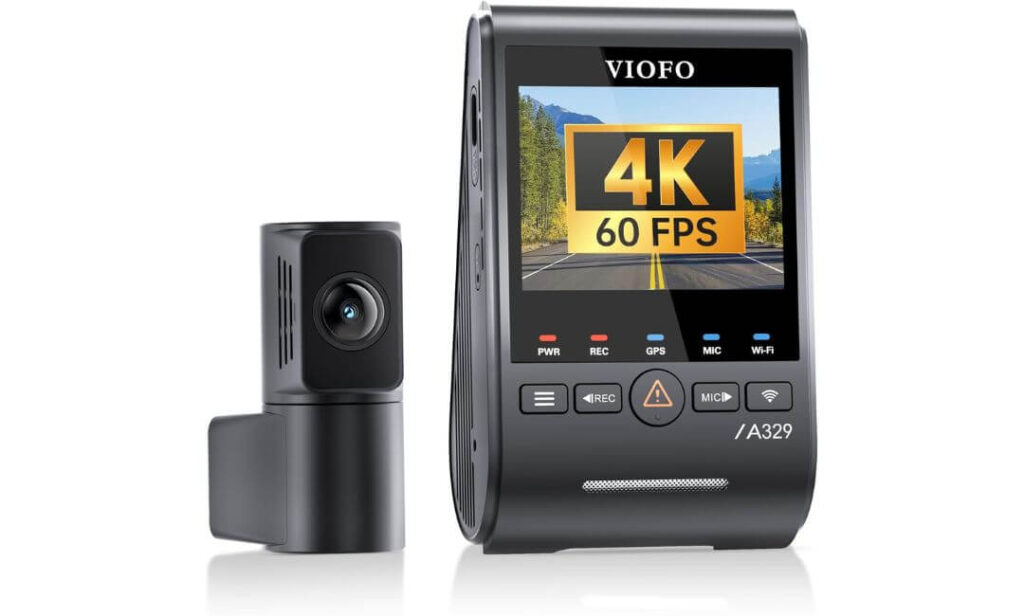
Quick Specs:
- 4K 60FPS front + 2K rear recording for exceptional motion clarity
- Sony STARVIS 2 IMX678 (front) + IMX675 (rear) sensors
- Wi-Fi 6 with downloads up to 30MB/s
- Built-in GPS with GPS, Galileo, GLONASS and BeiDou support
- HDR recording for improved license plate readability
- Supports up to 4TB external SSD or 512GB microSD
- Ultra-low-power parking mode (requires optional hardwire kit)
- Voice control for hands-free operation
- Slim coaxial cable for cleaner hidden installation
- CPL filter included to reduce windshield reflections
The first thing that stands out isn’t the resolution—it’s how balanced everything feels once it’s installed in a Chevy Blazer. The wide windshield gives this camera an excellent forward view, while the slim body sits neatly behind the rear-view mirror without drawing unnecessary attention. During daytime drives, the 4K 60FPS front camera captures road signs, lane markings, and passing vehicles with remarkable sharpness, while the 2K rear camera provides enough detail to document what’s happening behind you without becoming the weak link.
Night driving is where this model starts separating itself from many competitors. The combination of dual Sony STARVIS 2 sensors, HDR processing, and the included CPL filter noticeably reduces glare from LED headlights and reflective road signs. Instead of overly bright footage, you get cleaner contrast and better visibility when reviewing important moments later. If evidence quality matters to you more than flashy marketing, this camera earns its place at the top.
Daily ownership is equally impressive. Wi-Fi 6 makes downloading clips surprisingly quick, voice commands reduce distractions while driving, and support for an external SSD up to 4TB means long trips won’t force you to keep formatting memory cards. The optional hardwire kit also unlocks a genuinely efficient parking mode that minimizes battery usage while remaining ready to record when an impact is detected.
(If your priority is recording quality first and convenience second, this is the dash cam we’d trust most in a Chevy Blazer.)
Why This One Earned Our Recommendation
- Outstanding daytime and nighttime recording with dual STARVIS 2 image sensors.
- True 4K 60FPS delivers smoother footage than standard 30FPS cameras.
- Wi-Fi 6 makes transferring large video files noticeably faster.
- 4TB SSD support is ideal for frequent drivers and long-distance travel.
- Slim cables and compact design help create a cleaner installation inside the cabin.
One Thing Worth Knowing
- Impact-detection parking mode requires VIOFO’s optional hardwire kit, so it’s worth planning for if you want full parking protection.
Installation Notes for the Chevy Blazer
This camera is an excellent fit for the Chevy Blazer because its compact front unit can be mounted high behind the rear-view mirror without obstructing the driver’s field of vision. The included 6-meter rear cable is also long enough for routing through the headliner and factory trim on most Blazer models, resulting in a tidy installation with minimal exposed wiring.
For the best experience, we recommend pairing it with a hardwire kit if you want parking mode. It allows the camera to monitor your vehicle while parked without relying on a power bank, while the built-in voltage protection helps reduce the risk of draining the vehicle’s battery.
The Insider Pro-Tip
Many buyers immediately switch to 4K 60FPS because it’s the headline feature, but there’s a smarter approach. If most of your driving happens after sunset or in heavy city traffic, compare 4K60 and HDR mode during your first week. Depending on your driving conditions, HDR can deliver cleaner license plate detail by controlling bright headlights more effectively, even though 4K60 looks sharper on paper.
Another small detail that makes a noticeable difference is the included CPL filter. Spend a minute adjusting it after installation instead of leaving it in the default position. On the Chevy Blazer’s large windshield, correctly setting the CPL filter can significantly reduce dashboard reflections and improve the clarity of the footage you’ll actually rely on if an incident ever occurs.
#2. Vantrue N5 4-Channel WiFi Dash Cam
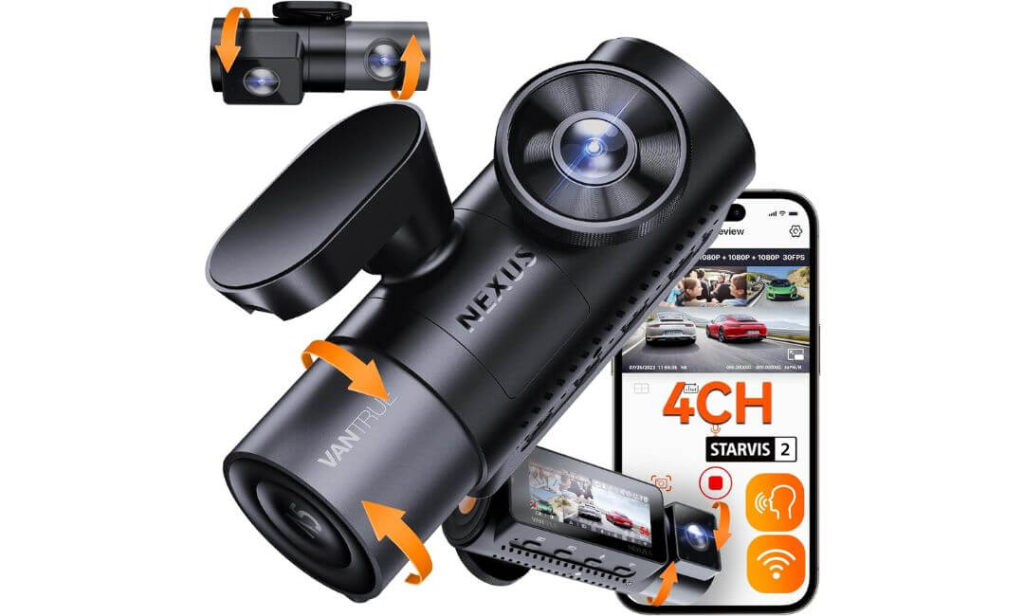
Quick Specs:
- 4-channel recording (Front + Rear + Front Cabin + Rear Cabin)
- 2.7K front + 1080P × 3 cameras
- Sony STARVIS 2 front image sensor
- Infrared cabin cameras for clear nighttime interior footage
- 5GHz Wi-Fi with OTA firmware updates
- Built-in GPS with route and speed logging
- Voice control with multiple supported commands
- Buffered parking mode (optional hardwire kit required)
- Magnetic quick-release mount
- Supports up to 512GB microSD
What makes this model different isn’t the number of cameras—it’s where those cameras are looking. In a Chevy Blazer, the large cabin and generous rear seating area mean incidents don’t always happen directly in front of the windshield. This setup records the road ahead, traffic behind, both cabin areas, and much of the side-window activity at the same time, creating a level of coverage that very few dual-channel systems can match.
The front camera uses a Sony STARVIS 2 sensor, while the interior cameras add infrared night vision, making this one of the strongest choices for families, rideshare drivers, or anyone who frequently travels with passengers, pets, or valuable cargo. During nighttime drives, the interior remains clearly visible without distracting occupants, and the rear cabin camera captures activity that most dash cams never record.
Day-to-day usability is equally well thought out. Voice commands reduce distractions, the magnetic mount makes removing the unit effortless, and OTA firmware updates allow new improvements without connecting the camera to a computer. Add built-in GPS, buffered parking recording, and reliable loop recording, and you end up with a system designed to document almost every angle around your vehicle—not just the obvious ones.
(If protecting what happens inside your Chevy Blazer matters just as much as recording the road outside, this setup is difficult to match.)
Why It Deserves a Spot on This List
- Four-camera recording dramatically reduces blind spots around the vehicle.
- Rear cabin camera monitors passengers, pets, luggage, and side-window activity.
- Infrared interior cameras remain effective even in complete darkness.
- OTA firmware updates help keep the system current over time.
- Magnetic mounting system makes removal and reinstallation quick and convenient.
One Thing Worth Knowing
- Because it records four video streams simultaneously, you’ll want to use a high-endurance microSD card and consider the optional hardwire kit if you plan to rely on buffered parking mode.
Installation Notes for the Chevy Blazer
The windshield-mounted front unit fits well behind the Chevy Blazer’s rear-view mirror, while the rear camera cable can be routed cleanly through the factory headliner and trim panels. The additional interior cameras require only minor angle adjustments during installation to cover the front seats, rear seating area, and cargo space effectively.
Since this system records more cameras than a typical dash cam, taking a few extra minutes to fine-tune each viewing angle is worthwhile. Once aligned correctly, you’ll have consistent visibility across the areas that matter most without obstructing your driving view.
The Insider Pro-Tip
Most buyers focus on the 360° coverage, but the biggest advantage often goes unnoticed. The rear cabin camera doesn’t just watch passengers—it also records activity around the rear side windows and cargo area. If someone reaches through a broken window or attempts to remove belongings from the back of your Chevy Blazer, that extra perspective can become the footage your front and rear cameras simply cannot provide.
One more recommendation: don’t leave every camera at its factory angle. After installation, sit in the driver’s seat and review each live view through the app. A few small adjustments can eliminate blind spots around the cabin and rear cargo area, giving you far more useful evidence than relying on the default positioning.
#3. Fitcamx Front 4K + Rear 1080P Dash Cam
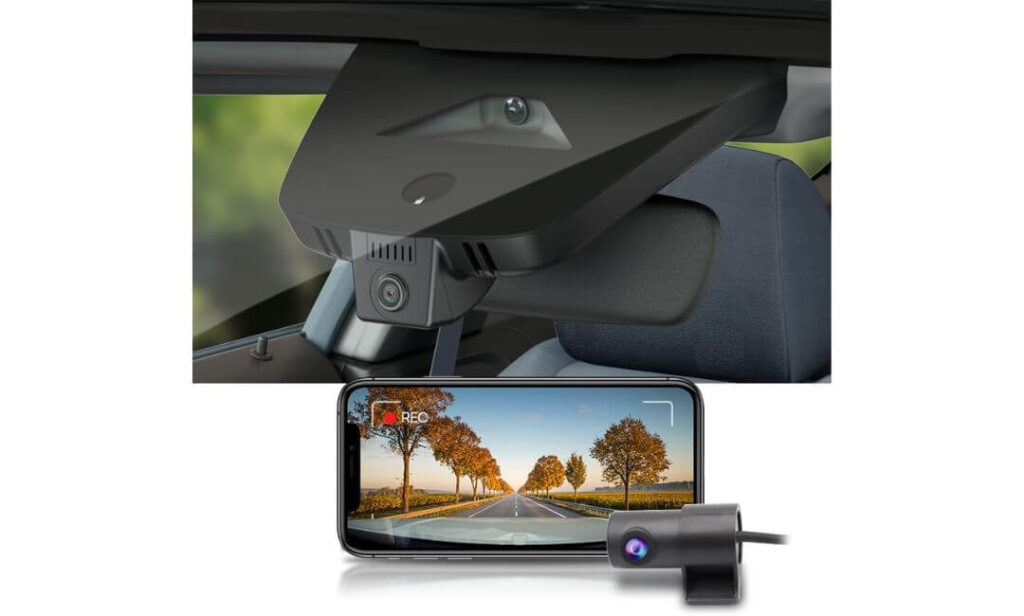
Quick Specs:
- Designed exclusively for Chevy Blazer EV LT, RS & SS
- Fits 2025+ Blazer EV with compatible auto-dimming mirror housing
- 4K (2160P) front + 1080P rear recording
- OEM factory-style housing with hidden wiring
- Built-in Wi-Fi with Fitcamx mobile app
- 128GB microSD included (supports up to 256GB)
- WDR technology for improved low-light recording
- Loop recording with G-Sensor event protection
- Easy plug-and-play installation without modifying the interior
Sometimes the best accessory is the one that doesn’t look like an accessory at all. That’s exactly where this system stands out. Instead of attaching another camera below the mirror with exposed wiring, it replaces the factory mirror cover with an OEM-style housing that blends into the Chevy Blazer EV interior so naturally that most passengers won’t even notice it’s there.
The recording hardware is equally practical. A 4K front camera, 1080P rear camera, WDR processing, and an f/1.6 aperture work together to produce balanced footage during bright afternoons and evening commutes alike. The included 128GB memory card means recording starts immediately after installation, while the built-in Wi-Fi lets you review clips directly from your phone without removing the card every time.
Where this model earns its place is convenience. There are no long power cables hanging across the windshield, no bulky camera body interrupting the dashboard view, and no complicated setup routine. It simply feels like a feature Chevrolet could have installed at the factory—something that’s surprisingly difficult for aftermarket dash cams to achieve.
(If maintaining the original appearance of your Chevy Blazer EV matters as much as recording the drive itself, this is easily one of the cleanest solutions available.)
Why We Included It in This Guide
- Factory-inspired appearance that blends seamlessly with the original interior.
- Vehicle-specific design eliminates the bulky aftermarket look.
- 4K front recording delivers sharp everyday driving footage.
- 128GB memory card included, so it’s ready to use immediately.
- Simple installation with minimal visible wiring or interior changes.
One Thing Worth Knowing
- This model is built specifically for compatible Chevy Blazer EV models and is not designed for the gasoline-powered Blazer or earlier EV mirror assemblies, so always confirm your mirror housing before ordering.
Designed Specifically for the Chevy Blazer EV
Unlike universal dash cams, this system was engineered around the Chevy Blazer EV’s factory mirror assembly, giving it a much cleaner appearance once installed. If your vehicle has the compatible auto-dimming mirror and matching mirror cover, installation is significantly easier because the camera integrates directly into the existing trim rather than hanging below it.
Before purchasing, take a moment to verify your mirror housing and part compatibility. Spending two minutes confirming fitment ensures the installation remains as straightforward as the product is intended to be.
The Insider Pro-Tip
Many people compare this camera with universal premium dash cams based only on recording specifications, but that misses its biggest advantage. The real value isn’t just the 4K front video—it’s the fact that your cabin keeps its original factory appearance. If you dislike visible electronics, dangling power cables, or suction-mounted accessories, that difference becomes noticeable every single day you drive.
One final recommendation: before snapping the new mirror cover into place, clean the windshield around the mirror area and route every connector carefully. Taking a few extra minutes during installation results in an OEM-style finish that genuinely looks like it belonged in the Chevy Blazer EV from day one.
#4. ROVE R2-4K Dual PRO Dash Cam
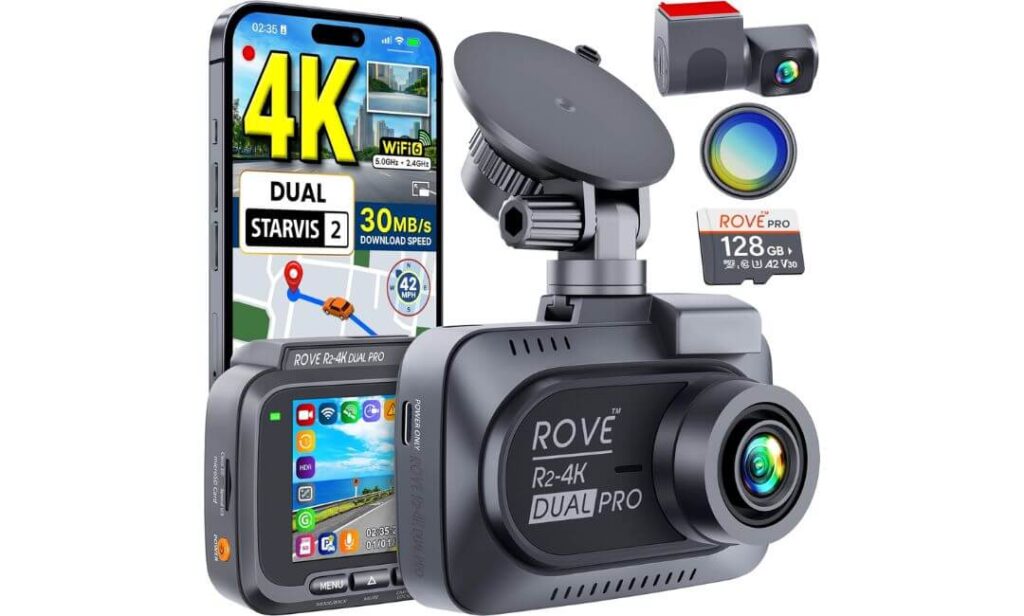
Quick Specs:
- 4K front + 2K rear recording with HDR
- Sony STARVIS 2 IMX678 + IMX675 image sensors
- Dual-band Wi-Fi 6 with downloads up to 30MB/s
- Built-in Quad-Mode GPS (GPS, Galileo, GLONASS & BeiDou)
- 128GB high-endurance microSD included
- CPL filter included to reduce windshield glare
- Supports up to 1TB microSD
- 24-hour parking monitor with three recording modes (hardwire kit required)
- OTA firmware updates
- Supercapacitor design for improved heat resistance
One reason this camera stands out is that very little needs to be added after you open the box. Most premium dash cams require buying extra accessories before they’re truly ready, but this package already includes a 128GB memory card, CPL filter, quality mounting options, and the tools needed for a clean installation inside a Chevy Blazer. It feels complete from the very beginning.
Recording quality is exactly what you’d expect from a dual Sony STARVIS 2 setup. The 4K front camera captures excellent road detail, while the 2K rear camera remains sharp enough to preserve important evidence behind the vehicle. Combined with HDR processing, wide-angle lenses, and bright F1.7/F1.55 apertures, the camera handles tunnels, changing sunlight, rainy highways, and nighttime traffic with impressive consistency instead of producing footage that constantly shifts exposure.
Living with it every day is equally easy. Wi-Fi 6 transfers large clips in seconds, the Quad-Mode GPS logs route and speed information accurately, and free OTA firmware updates help keep the camera current over time. For Blazer owners who drive frequently, the support for 1TB storage also means fewer overwritten files during long-distance travel.
(If you want premium hardware without spending extra on essential accessories later, this is one of the strongest value-focused choices in the lineup.)
Why It Earned a Place in Our Lineup
- Complete installation package with memory card and CPL filter already included.
- Dual STARVIS 2 sensors produce consistently clean footage in challenging lighting.
- Fast Wi-Fi 6 makes reviewing and downloading videos effortless.
- Quad-Mode GPS provides detailed trip, speed, and location records.
- 1TB storage support is excellent for frequent commuters and road-trip drivers.
One Thing Worth Knowing
- To unlock the full 24-hour parking monitoring features, you’ll need ROVE’s optional hardwire kit, which is sold separately.
Installation Notes for the Chevy Blazer
This universal system fits the Chevy Blazer without modification and mounts neatly behind the rear-view mirror using either the supplied adhesive mount or suction mount. The included 12-foot power cable and 6-meter rear camera cable provide enough length to route wiring through the factory trim for a tidy, factory-like finish.
For the cleanest installation, spend a little extra time securing the cables behind the A-pillar trim and headliner instead of leaving them visible along the windshield. It only takes a few additional minutes but makes the finished installation look significantly more professional.
The Insider Pro-Tip
A lot of buyers compare cameras by resolution alone, but that’s only part of the story. What makes this model especially appealing is the combination of STARVIS 2 sensors, HDR, the included CPL filter, and high-quality optics. Together, they often produce footage that’s easier to review after an incident than a camera that simply advertises a higher resolution without the supporting hardware.
One final suggestion: install the CPL filter before finalizing the camera angle. On the Chevy Blazer’s wide windshield, reducing dashboard reflections can noticeably improve contrast and make road signs, lane markings, and vehicle details easier to identify when reviewing footage later.
#5. Mangoal Front 4K and Rear 1080P Dash Cam
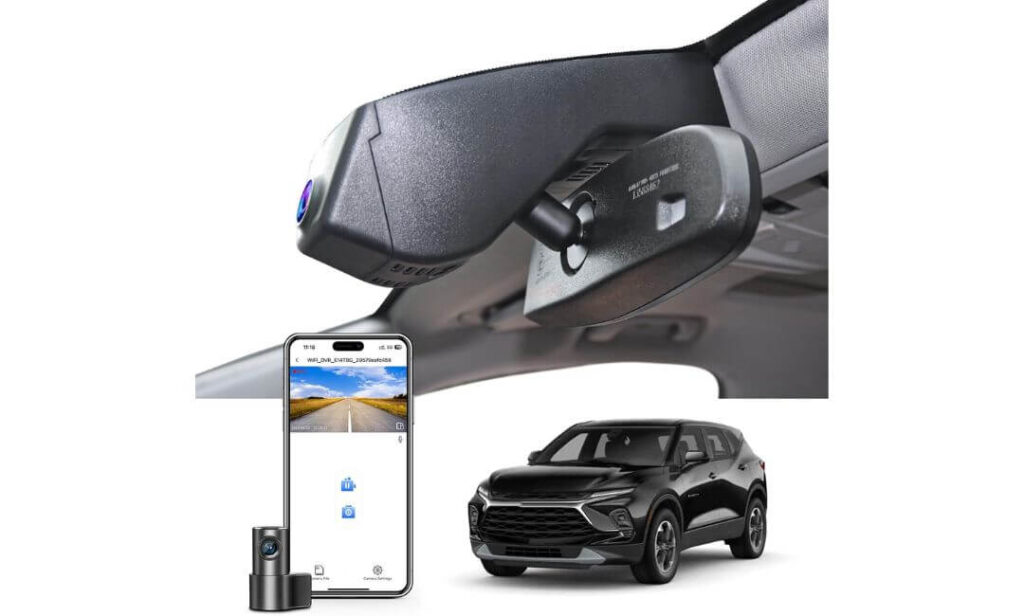
Quick Specs:
- Designed specifically for Chevrolet Blazer (2019–2026)
- 4K front + 1080P rear recording
- Sony STARVIS IMX335 image sensor
- OEM-style mirror housing with hidden wiring
- Built-in Wi-Fi with mobile app control
- Built-in GPS for route and speed logging
- 128GB microSD card included
- OBD power adapter and mirror power adapter included
- Loop recording, G-Sensor and parking monitor support
- Supercapacitor design for improved durability
There’s something reassuring about a dash cam that looks like it belongs in the vehicle instead of being added later. That’s exactly the impression this system gives once installed in the Chevrolet Blazer. Instead of drawing attention with exposed cables or a bulky camera hanging below the mirror, everything integrates neatly into the factory mirror area, giving the cabin a clean, uncluttered appearance.
Recording performance is built around a 4K front camera, 1080P rear camera, and the trusted Sony STARVIS IMX335 sensor, delivering clear footage with solid low-light performance and reduced motion blur during everyday driving. Built-in Wi-Fi makes reviewing clips straightforward, while GPS automatically records route and speed information without requiring additional accessories. Since the package already includes a 128GB memory card, recording begins as soon as installation is complete.
Another reason this model stands out is how complete the installation kit feels. Both an OBD power adapter and an auto-dimming mirror power adapter are included, giving Blazer owners more flexibility depending on their vehicle configuration. That attention to installation details makes the entire ownership experience feel far less complicated than many universal alternatives.
(If your goal is to keep the Chevrolet Blazer looking factory-original while still adding reliable front and rear recording, this is one of the most thoughtfully designed options available.)
Why It Made Our Final Recommendations
- Vehicle-specific OEM design blends naturally into the Chevrolet Blazer interior.
- 4K front recording captures excellent everyday driving detail.
- GPS, Wi-Fi, and 128GB storage are included from the start.
- Multiple power options simplify installation for different trim configurations.
- Supercapacitor design offers improved reliability in hot and cold weather.
One Thing Worth Knowing
- Before ordering, confirm whether your vehicle requires Model A or Model B by checking the sensor cover around the rear-view mirror, as both versions fit the same model years but use different mirror assemblies.
Installation Notes for the Chevrolet Blazer
This camera was developed specifically around the 2019–2026 Chevrolet Blazer, so once the correct mirror cover version is selected, the installation feels much closer to fitting an OEM accessory than installing a universal dash cam. The included mirror power adapter and OBD adapter also provide flexibility depending on how your Blazer is equipped.
The most important step isn’t the installation itself—it’s confirming the mirror housing before placing your order. Taking a quick look at the sensor cover and matching it with the correct model ensures the camera fits exactly as intended and preserves the clean factory appearance.
The Insider Pro-Tip
Many buyers compare this camera with universal dash cams purely by recording specifications, but that’s not where its biggest advantage lies. The real benefit is how naturally it integrates into the Chevrolet Blazer. Once installed correctly, there are no distracting cables crossing the windshield and no aftermarket appearance every time you get behind the wheel. For many owners, that everyday factory look becomes just as valuable as the video quality itself.
One final recommendation: before snapping the mirror housing into place, compare your original sensor cover with the product images one last time. Spending an extra minute verifying Model A compatibility is far easier than replacing the wrong housing later, and it ensures the finished installation looks exactly as Chevrolet could have designed it from the factory.
Best Chevy Blazer Dash Cam Comparison: Features, OEM Fit & Expert Picks
| Dash Cam | Video Quality | Best For | Night Performance | Installation | Standout Features | Storage | Our Verdict |
|---|---|---|---|---|---|---|---|
|
VIOFO A329S
EDITOR’S TOP PICK
|
4K 60FPS + 2K Rear
Dual STARVIS 2 Sensors
|
Drivers wanting the highest recording quality with premium long-term reliability. |
Excellent HDR + Dual STARVIS 2 produce consistently sharp footage after dark. |
Universal fit with neatly hidden coaxial cable. | Wi-Fi 6, Voice Control, GPS, 4TB SSD Support, CPL Included. | Up to 4TB SSD or 512GB microSD. | The strongest all-round option for most Chevy Blazer owners with virtually no major compromises. |
|
Vantrue N5
BEST 360° COVERAGE
|
2.7K Front + Three 1080P Cameras
4-Channel Recording
|
Families, rideshare drivers, pets, cargo and complete cabin monitoring. |
Excellent STARVIS 2 front camera plus infrared interior cameras. |
Requires more time because of four cameras. | 360° Coverage, Rear Cabin Camera, OTA Updates, GPS, Voice Commands. | Supports up to 512GB. | Nothing else in this lineup records as much around the vehicle. |
|
Fitcamx
BEST OEM LOOK
|
4K Front + 1080P Rear
WDR Recording
|
Owners who want factory-style appearance without visible wiring. |
Very Good WDR and bright F1.6 lens improve low-light visibility. |
One of the easiest OEM-style installations. | Factory Integration, Wi-Fi App, Hidden Design, 128GB Included. |
128GB Included Supports up to 256GB. |
The cleanest choice if preserving the original interior matters most. |
|
ROVE R2-4K Dual PRO
BEST VALUE
|
4K Front + 2K Rear
Dual STARVIS 2 HDR
|
Buyers wanting premium hardware without paying flagship prices. |
Excellent Large aperture lenses and HDR perform confidently after sunset. |
Straightforward universal installation. | Wi-Fi 6, GPS, CPL, 128GB Card, OTA Updates, Supercapacitor. |
128GB Included Supports up to 1TB. |
One of the best-equipped packages available straight out of the box. |
|
Mangoal
BEST FACTORY-STYLE ALTERNATIVE
|
4K Front + 1080P Rear
STARVIS IMX335
|
Drivers who prefer OEM appearance on 2019–2026 Chevy Blazer. |
Very Good STARVIS sensor delivers dependable day and night clarity. |
Vehicle-specific installation with OEM mirror housing. | Built-in GPS, Wi-Fi, OBD Adapter Included, Factory-Style Finish. | 128GB Included. | An excellent OEM-inspired alternative for owners prioritising a clean interior. |
Buying Guide: How to Choose the Right Dash Cam for Your Chevy Blazer
A dash cam is one of those upgrades that seems simple until you start comparing specifications. Resolution, sensors, parking modes, Wi-Fi, GPS, storage, OEM designs—every brand promises to be the best. The reality is that the right dash cam for a Chevy Blazer depends on how you drive, where you park, and what kind of evidence you expect if an accident ever happens.
The Blazer’s windshield design, mirror housing, cabin size, and trim differences also influence which cameras work best. Some owners want a factory-looking installation that blends into the interior, while others care only about getting the highest-quality footage possible. Understanding these differences before buying will help you spend your money once instead of replacing the camera a few months later.
Questions Every Chevy Blazer Owner Should Ask Before Buying
Before comparing brands or prices, ask yourself a few practical questions.
- Do you want maximum video quality or a clean OEM appearance?
- Is your Blazer parked outside overnight or inside a secure garage?
- Do you frequently drive after dark?
- Will you benefit from interior recording for passengers, pets, or cargo?
- Do you want simple plug-and-play installation, or are you comfortable hardwiring the camera?
- Will you review footage on your phone regularly, making Wi-Fi speed important?
- Are you planning long road trips where larger storage capacity becomes useful?
Answering these questions first makes choosing a dash cam much easier because you’ll quickly eliminate products that don’t match your driving habits.
What 4K Recording Really Means in a Chevy Blazer
Many buyers assume every 4K dash cam records identical footage. That simply isn’t true.
A good 4K dash cam for a Chevy Blazer depends on much more than pixel count. Image sensors, HDR processing, bitrate, lens quality, and video compression all determine how useful your footage becomes after an incident.
For example, a premium camera recording at 4K 60FPS captures smoother motion than standard 30FPS recording, making fast-moving vehicles and lane changes easier to review. Combined with HDR, better exposure control also helps preserve important details around sunrise, sunset, tunnels, and rainy conditions where inexpensive cameras often struggle.
The goal isn’t simply sharper footage—it’s clearer evidence when it matters.
Front-Only vs Front-and-Rear Dash Cams
A front-only camera protects you against incidents happening ahead of the vehicle, but it tells only part of the story.
Adding a rear camera records rear-end collisions, tailgating, parking incidents, and hit-and-run accidents that a front camera can never capture. For most Chevy Blazer owners, a front-and-rear system offers a far more complete record of every journey.
Four-channel systems go one step further by recording the cabin and rear seating area, making them especially useful for families, rideshare drivers, business vehicles, or anyone carrying expensive equipment inside the vehicle.
Why STARVIS 2 Sensors Matter More Than Extra Resolution
One of the biggest improvements in modern dash cams isn’t higher resolution—it’s better image sensors.
Sony STARVIS 2 sensors improve light sensitivity, reduce image noise, increase dynamic range, and preserve more detail during difficult lighting conditions. That becomes noticeable when driving through tunnels, heavy rain, poorly lit roads, or roads filled with bright LED headlights.
Instead of producing washed-out footage with unreadable license plates, STARVIS 2 cameras maintain stronger contrast and cleaner detail. That’s why many premium dash cams now prioritize sensor quality before simply increasing resolution.
When comparing two cameras with similar specifications, the one using a genuine STARVIS 2 sensor will usually produce more reliable evidence.
OEM Dash Cam or Universal Dash Cam?
Neither option is automatically better—they simply serve different priorities.
An OEM-style dash cam integrates into the mirror housing and often looks like original factory equipment. There are no visible wires, no bulky camera hanging below the windshield, and the interior keeps its clean appearance. If maintaining the original look of your Chevy Blazer matters, OEM-style models are an excellent choice.
Universal dash cams offer greater flexibility. They usually provide faster processors, larger storage support, premium image sensors, better firmware updates, and more advanced recording features because they aren’t designed around one specific vehicle.
If recording quality comes first, universal premium models usually offer the strongest value. If factory appearance is your priority, OEM-specific systems are difficult to beat.
Storage Capacity, Loop Recording, and G-Sensor Explained
Video quality means very little if the camera stops recording because storage is full.
Loop recording automatically deletes the oldest unlocked files, allowing continuous recording without manual intervention. A reliable G-Sensor detects sudden impacts and immediately locks important clips so they cannot be overwritten during normal loop recording.
Storage capacity also affects how long footage remains available before older files are replaced.
General expectations are:
- 128GB – Ideal for everyday commuting.
- 256GB–512GB – Better for frequent drivers and extended trips.
- 1TB–4TB – Excellent for road trips, commercial use, and drivers who rarely transfer footage.
Using a high-endurance memory card designed specifically for dash cams is equally important because ordinary microSD cards wear out much faster under constant recording.
Understanding Parking Mode Before You Buy
Parking mode is often advertised as a single feature, but different cameras monitor parked vehicles in very different ways.
Impact detection begins recording after the vehicle experiences a collision.
Motion detection starts recording when movement is detected near the vehicle.
Buffered parking mode is the most advanced option because the camera continuously records into temporary memory. When an event occurs, it saves footage from before, during, and after the incident instead of recording only after the impact has already happened.
Many premium systems also include low-power parking modes that reduce battery consumption while keeping the camera ready to capture important events.
Keep in mind that most advanced parking features require an optional hardwire kit, allowing the dash cam to receive power safely while the engine is switched off.
Our Final Advice Before You Buy
The best dash cam isn’t necessarily the one with the longest specification sheet—it’s the one that matches the way you actually use your Chevy Blazer.
If image quality is your highest priority, invest in a model with STARVIS 2 sensors, reliable HDR processing, and proven firmware support. If preserving the factory appearance matters more, choose an OEM-style solution designed specifically for the Blazer. And regardless of which camera you select, proper installation, a high-endurance memory card, and correctly configured parking mode will have a greater impact on long-term satisfaction than chasing one extra feature you’ll rarely use.
Installation Guide: How to Install a Dash Cam in Your Chevy Blazer the Right Way
Installing a dash cam in a Chevy Blazer is easier than many owners expect, but the difference between an average installation and a professional-looking one comes down to planning. A well-installed camera should feel like part of the vehicle, with no loose cables, no blocked sensors, and no distraction while driving.
Whether you’re installing a universal front-and-rear system or an OEM-style dash cam, the goal remains the same: secure mounting, reliable power, clean cable routing, and an unobstructed view through both cameras. Spending an extra 20–30 minutes during installation usually prevents most of the issues owners experience later.
Step-by-Step Chevy Blazer Dash Cam Installation
Begin by cleaning the windshield thoroughly with an alcohol wipe. Even a small amount of dust or interior protectant can reduce the strength of the adhesive mount over time.
Before removing the adhesive backing, temporarily power on the camera and check the live preview through the display or mobile app. Position the front camera high behind the rear-view mirror where it records the road clearly without interfering with the driver’s visibility or the vehicle’s forward-facing safety systems.
Once you’re satisfied with the angle, secure the mount and allow the adhesive to bond properly before adjusting the camera again.
Next, route the power cable along the headliner toward the passenger-side A-pillar. Carefully tuck the cable behind the weather stripping and interior trim instead of forcing it between panels. Continue routing beneath the dashboard toward your chosen power source while keeping the wiring away from moving pedals, steering components, and curtain airbag deployment areas.
For dual-camera systems, continue routing the rear camera cable through the headliner above the rear doors before following the factory wiring path into the liftgate. Using existing trim channels produces a cleaner result while protecting the cable from unnecessary wear.
After everything is connected, start the vehicle, confirm both cameras are recording correctly, verify GPS reception if equipped, and review sample footage before reinstalling every trim panel.
Choosing the Right Power Source
The way your dash cam receives power affects both convenience and long-term functionality.
A 12V cigarette lighter adapter is the easiest solution because installation takes only a few minutes and requires no electrical modifications. It works well for drivers who simply want recording while the engine is running.
A hardwire kit creates a much cleaner installation while unlocking advanced parking features on compatible dash cams. Since the camera receives constant power through the vehicle’s electrical system, features such as buffered parking mode, motion detection, impact recording, and low-voltage battery protection become available.
OEM-style cameras designed specifically for the Chevy Blazer may also use a mirror power adapter, allowing the camera to draw power directly from the auto-dimming mirror assembly. This eliminates nearly all visible wiring and creates one of the cleanest installations possible.
Keeping the Interior Looking Factory-Finished
Good cable management is what separates a professional installation from one that immediately looks aftermarket.
Whenever possible, follow the same paths used by Chevrolet’s factory wiring harnesses. Tucking cables behind the headliner, weather seals, A-pillar trim, B-pillar trim, and liftgate panels keeps everything protected while preserving the original appearance of the cabin.
Avoid pulling cables tightly around corners or allowing them to cross airbag deployment zones. A little extra slack near connection points also makes future maintenance much easier without placing unnecessary stress on the wiring.
For OEM-style systems, always verify mirror housing compatibility before installation so every trim panel fits correctly after reassembly.
The Best Cable Routing for Front and Rear Cameras
The front camera should be mounted as high as possible behind the rear-view mirror while still maintaining a clear forward view. This position keeps the camera discreet and reduces driver distraction.
For the rear camera, route the cable through the passenger-side headliner, continue above the rear doors, then follow the factory harness into the rear liftgate. Secure the cable with the supplied clips or factory attachment points to prevent rattles over time.
Before reinstalling trim pieces, open and close the liftgate several times to ensure the cable moves freely without pinching or stretching.
Understanding Power and Fuse Box Connections
If you’re installing a hardwire kit, identify a fuse that provides constant battery power and another that supplies switched accessory power. Most modern hardwire kits include low-voltage protection that automatically disconnects the camera before the vehicle battery reaches an unsafe level.
Always confirm fuse assignments using your Chevy Blazer owner’s manual instead of relying solely on online diagrams, as fuse layouts can vary depending on model year and trim level.
If you’re unfamiliar with automotive electrical systems, using an add-a-fuse kit and a quality fuse tester makes the installation considerably safer and more accurate.
Common Installation Mistakes to Avoid
One of the most common mistakes is mounting the front camera too low on the windshield. While it may seem easier to reach, it reduces visibility, increases dashboard reflections, and makes the camera more noticeable from inside the cabin.
Another frequent issue is routing cables across curtain airbag locations. Although the wiring may appear secure, it can interfere with airbag deployment during a collision if installed incorrectly.
Many owners also skip checking the live camera view before permanently attaching the mount. Taking a few minutes to verify alignment prevents discovering later that the horizon is tilted or the hood occupies too much of the frame.
Finally, don’t overlook your memory card. Format it inside the dash cam before first use, then periodically reformat it according to the manufacturer’s recommendations. This simple maintenance step helps maintain recording reliability over thousands of hours of continuous operation.
Final Installation Advice
A properly installed dash cam should disappear into the background of your daily driving. You shouldn’t notice loose wiring, blocked visibility, warning lights, or camera movement over rough roads. When mounted correctly, powered safely, and configured with the right recording settings, your Chevy Blazer dash cam becomes a dependable witness that works quietly every time you start the engine—without reminding you it’s there until the day you genuinely need the footage.
Testing Your Chevy Blazer Dash Cam in Real-World Driving
Installing a dash cam is only the first step. The more important part is confirming that it performs exactly as expected before you rely on it during an accident or insurance claim. A few minutes of testing can reveal mounting issues, incorrect camera angles, poor memory card performance, or parking mode settings that would otherwise remain unnoticed until the moment you actually need the footage.
Every dash cam recommended in this guide is capable of producing high-quality recordings, but even the best hardware needs proper setup to deliver consistent results inside a Chevy Blazer. The vehicle’s windshield angle, rear hatch design, changing lighting conditions, and daily driving environment all influence how the recorded footage looks in real life.
What Good Footage Should Actually Look Like
The first recording tells you far more than a specification sheet ever will.
During daylight, road signs should remain readable from a comfortable distance, lane markings should appear sharp, and nearby vehicle details should stay clear even while driving at highway speeds. If you’re using a 4K60 front camera, fast-moving traffic should look noticeably smoother than standard 30FPS recordings, especially when reviewing lane changes or merging traffic frame by frame.
At night, don’t judge the footage by overall brightness alone. The more important question is whether the camera preserves useful details without excessive glare. A quality dash cam should control reflections from LED headlights, maintain balanced exposure around streetlights, and keep license plates readable whenever driving conditions realistically allow.
If your camera supports HDR, compare identical routes with HDR enabled and disabled. In many situations, balanced exposure produces more useful evidence than simply increasing image sharpness.
Confirming Front and Rear Camera Alignment
Many owners install the cameras once and never check them again. That’s one of the easiest mistakes to avoid.
The front camera should capture the road evenly with a small portion of the vehicle’s hood visible at the bottom of the frame. Too much hood wastes recording space, while pointing the camera too high reduces visibility of vehicles immediately ahead.
The rear camera deserves the same attention. Position it so the horizon remains level, the rear window fills most of the frame, and the camera isn’t blocked by tint lines, rear wipers, cargo, or interior accessories. If your Blazer frequently carries luggage or sports equipment, verify that nothing interferes with the rear camera’s view after loading the cargo area.
For multi-channel systems, open the live preview and check every camera individually. Side windows, rear seating, and cargo areas should all be visible without excessive overlap or unnecessary blind spots.
Verifying Recording Reliability Before Daily Use
A dash cam should become something you never have to think about. The easiest way to confirm that reliability is by testing it for several days before depending on it.
After each drive, verify that the newest videos are being saved correctly, GPS information appears when available, timestamps remain accurate, and loop recording continues normally once storage begins filling up. If your camera includes voice notifications, pay attention to warnings about memory cards or recording interruptions instead of dismissing them.
It’s also worth downloading a few sample clips through the mobile app. This confirms that Wi-Fi performance, file transfers, and playback all work properly before an emergency forces you to retrieve important footage under pressure.
Making Parking Mode Dependable Throughout the Year
Parking mode is one of the most valuable features a modern dash cam can offer, but only when it’s configured correctly.
If your camera supports buffered parking mode, verify that it records footage from before and after an impact rather than beginning only after movement is detected. Buffered recording usually provides far more useful evidence because it captures how an incident actually started.
Drivers who park outdoors should also consider seasonal conditions. High summer temperatures place additional stress on electronics, while freezing winters can affect battery performance. Cameras using supercapacitors generally tolerate extreme temperatures better than models relying on traditional lithium batteries, making them a stronger choice for year-round reliability.
When using a hardwire kit, check the battery protection settings after installation. Proper voltage cutoff helps ensure your dash cam continues protecting the vehicle without placing unnecessary strain on the Blazer’s starting battery.
Small Checks That Prevent Bigger Problems
Some of the most valuable maintenance takes less than five minutes.
Clean the windshield in front of the camera regularly, especially during pollen season or after long highway trips. Dirt, dried rain spots, and road film can noticeably reduce image clarity, particularly at night when glare becomes more pronounced.
Inspect cables occasionally to make sure they remain securely tucked behind the trim, especially near the rear liftgate where repeated opening and closing can gradually loosen poorly secured wiring. If your camera includes a CPL filter, adjust it whenever windshield reflections become more noticeable due to seasonal changes in sunlight.
Finally, format the memory card inside the camera at the interval recommended by the manufacturer. Continuous recording places constant stress on storage media, and regular formatting helps maintain long-term recording stability while reducing the risk of corrupted files.
Real-World Expectations After Everything Is Set Up
Once your Chevy Blazer dash cam is installed, aligned, and tested properly, it should become almost invisible during everyday driving. Recording starts automatically, footage saves without intervention, GPS logs each journey accurately, and parking mode quietly protects the vehicle whenever it’s left unattended.
That level of consistency is ultimately what separates a dependable dash cam from one that’s simply impressive on paper. The best system isn’t the one with the longest feature list—it’s the one that captures clear, reliable evidence every single time you drive, without requiring constant attention from the owner.
OEM Fit vs Aftermarket Dash Cams: Which One Makes More Sense for Your Chevy Blazer?
One of the biggest decisions Chevy Blazer owners face isn’t choosing a brand—it’s deciding between an OEM-style dash cam and a traditional aftermarket system. Both can protect your vehicle, but they solve different problems.
An OEM-style camera focuses on preserving the original appearance of the cabin. An aftermarket model usually prioritizes recording performance, advanced hardware, and future upgrade flexibility. Neither approach is automatically better. The right choice depends on what matters most every time you get behind the wheel.
If you’re investing in a dash cam for the next several years instead of simply buying the cheapest option available today, understanding these differences will help you choose a system you’ll still be happy with long after installation.
When an OEM Dash Cam Is the Better Choice
An OEM-style dash cam is ideal for owners who want the installation to look as though Chevrolet installed it at the factory.
Instead of hanging below the rear-view mirror with visible wiring, these cameras replace or integrate into the factory mirror housing, creating a much cleaner appearance. For drivers who take pride in maintaining an uncluttered interior, that difference becomes noticeable every single day.
They’re also an excellent choice for owners who prefer simple, vehicle-specific installation. Because the camera is designed around the Chevy Blazer’s mirror assembly, cable routing is usually shorter, cleaner, and far less noticeable than a universal setup.
If your priorities include maintaining resale appeal, avoiding visible electronics, and keeping the dashboard looking original, an OEM-fit system deserves serious consideration.
Why Many Drivers Still Choose Aftermarket Dash Cams
Aftermarket dash cams continue to dominate the premium market for one simple reason—they usually receive the newest imaging technology first.
Features such as Sony STARVIS 2 sensors, 4K60 recording, Wi-Fi 6, advanced HDR processing, larger storage support, multi-camera recording, buffered parking mode, voice commands, and frequent firmware improvements are far more common in premium universal systems.
They also offer greater flexibility if you change vehicles later. Instead of replacing the entire camera, most aftermarket models can simply be transferred to another compatible vehicle with minimal additional cost.
If recording quality is your highest priority, an aftermarket system will usually provide more choices across different budgets and feature levels.
The Biggest Difference You’ll Notice Every Day
Specifications are important, but daily ownership often comes down to something much simpler.
An OEM dash cam almost disappears after installation. You rarely notice it because it blends into the mirror housing, leaves the windshield uncluttered, and preserves the original design language of the interior.
A premium aftermarket dash cam remains slightly more visible, but in return it often gives you stronger processors, better sensors, larger displays, more storage options, and easier hardware upgrades in the future.
The trade-off is straightforward: OEM prioritises appearance, while aftermarket usually prioritises capability.
Dashboard Appearance and Interior Integration
The Chevy Blazer has a modern dashboard with a clean windshield layout, making installation quality particularly noticeable.
An OEM-style system complements that design by hiding most of the hardware behind the mirror assembly. There are fewer exposed cables, fewer visible accessories, and almost no change to the cabin’s original appearance.
Universal dash cams can also achieve a clean finish when installed carefully, especially if cables are routed through the headliner and trim panels. However, the camera body itself generally remains visible beneath the mirror because it isn’t designed to replace factory trim.
For owners who value an interior that still looks factory-finished after adding accessories, OEM-style solutions hold a clear advantage.
Compatibility With Factory Technology
Modern Chevy Blazer models include several systems operating near the windshield, including forward-facing cameras, rain sensors, automatic high-beam systems, lane-assist hardware, and auto-dimming mirror assemblies depending on trim level.
A properly installed dash cam should never interfere with these components.
When selecting an OEM-style camera, always confirm compatibility with your mirror housing, sensor cover, and trim configuration, since different versions may exist for the same model year. Ordering the correct version before installation prevents unnecessary fitment problems.
For aftermarket cameras, position the mount high behind the rear-view mirror while keeping the factory sensors completely unobstructed. Before permanently attaching the adhesive mount, check the live camera view and verify that none of the vehicle’s driver-assistance equipment is blocked.
Which Option Offers Better Long-Term Value?
The answer depends entirely on how you define value.
If you appreciate a cabin that looks untouched, rarely change vehicles, and prefer discreet factory-style accessories, an OEM dash cam offers satisfaction that extends well beyond its recording capabilities.
If you regularly upgrade technology, prioritise image quality, want the latest camera sensors, or expect to move the dash cam into another vehicle later, a premium aftermarket system is usually the more flexible investment.
Neither option is the “correct” choice for every Chevy Blazer owner. The better decision is the one that matches your driving habits, your expectations, and the way you use your vehicle every day.
Our Recommendation After Comparing Both
After evaluating both approaches, we don’t believe OEM and aftermarket cameras should compete against each other—they simply serve different priorities.
Choose an OEM-style dash cam if your goal is seamless integration, factory aesthetics, and a clean interior with minimal visible hardware.
Choose a premium aftermarket dash cam if you want the strongest recording performance, advanced imaging technology, broader feature sets, and greater flexibility for future upgrades.
Either way, the most important investment isn’t the brand printed on the box—it’s selecting a camera that fits your Chevy Blazer correctly, is installed properly, and records reliably every time you start the engine.
FAQs About Chevy Blazer Dash Cam
Will a 4K dash cam affect the battery in my Chevy Blazer if I leave parking mode enabled?
Not during normal driving. The only time battery management becomes important is when the camera continues receiving power after the engine is switched off. Premium dash cams designed for parking surveillance use intelligent low-power modes, but those features work properly only when paired with a quality hardwire kit that includes voltage protection.
If your Chevy Blazer spends several days without being driven, choose a hardwire kit with an adjustable voltage cutoff rather than leaving the camera powered continuously. That allows the dash cam to monitor your vehicle while protecting the starting battery. Simply relying on the vehicle battery without proper voltage management isn’t something we’d recommend for long-term use.
Is an OEM-style dash cam actually better for the Chevy Blazer, or is it mainly about appearance?
The biggest advantage is integration, not recording quality.
An OEM-style camera keeps the windshield cleaner, reduces visible wiring, and often installs using the factory mirror housing. However, premium aftermarket cameras usually lead in image processing, sensor technology, firmware updates, storage support, and advanced parking features.
If your priority is a factory-looking interior, OEM models are difficult to beat. If your priority is capturing the clearest possible evidence in every lighting condition, a premium aftermarket system generally offers more advanced hardware. The better choice depends on what matters most to you—not simply which product costs more.
Where should the front camera be positioned on a Chevy Blazer to capture the best footage without affecting safety systems?
The ideal position is high behind the rear-view mirror, where the camera has a clear view of the road while remaining outside the driver’s normal field of vision.
Before permanently attaching the mount, verify three things:
- The forward-facing safety sensors remain completely unobstructed.
- Only a small portion of the hood appears at the bottom of the recording.
- Windshield tint bands, stickers, or mirror housings don’t block the lens.
Taking a few extra minutes to confirm alignment usually produces noticeably better footage than simply placing the camera wherever installation feels easiest.
Why do some premium dash cams produce clearer licence plates at night even when another camera advertises higher resolution?
Resolution is only one part of the equation.
Image sensors, HDR processing, lens quality, aperture size, bitrate, exposure tuning, and firmware optimisation all influence how much usable detail appears in the final recording. That’s why a well-tuned camera with Sony STARVIS 2 sensors can often capture more readable night-time footage than another model advertising a higher pixel count.
When comparing dash cams, don’t judge them by specifications alone. Always look at how consistently they handle headlights, rain, tunnels, and fast-moving traffic, because those situations reveal the true quality of the imaging system.
How can I check whether my dash cam is still recording properly months after installation?
One of the easiest habits is performing a quick monthly health check instead of assuming everything is working.
A few minutes is usually enough to confirm that:
- The newest videos are still being saved correctly.
- GPS data and timestamps remain accurate.
- Loop recording is overwriting old files normally.
- Parking mode activates after switching off the engine.
- The memory card shows no recording errors or warning messages.
Many dash cams appear to power on normally even when the memory card has begun to fail. Reviewing a recent recording every few weeks is a far better way to confirm your system is protecting your Chevy Blazer than discovering missing footage after an accident.
Final Thoughts
Choosing the best dash cam for your Chevy Blazer isn’t about chasing the longest feature list or the highest advertised resolution. It’s about finding a camera that fits your driving habits, installs cleanly, records consistently, and gives you footage you’ll actually trust if an unexpected situation occurs.
Throughout this guide, we intentionally included different types of recommendations because not every Blazer owner wants the same thing. Some drivers will appreciate the factory-style integration of an OEM system, while others will benefit more from premium universal models offering STARVIS 2 sensors, faster Wi-Fi, larger storage support, and more advanced parking features. The right choice is the one that matches how you use your vehicle every day—not simply the one with the biggest specifications on paper.
If recording quality is your highest priority, VIOFO A329S remains our strongest overall recommendation thanks to its excellent 4K60 performance, dual STARVIS 2 sensors, Wi-Fi 6, and outstanding all-around reliability. If maintaining a factory-original interior matters more, the Fitcamx and Mangoal OEM-style options deliver an installation that feels like it belonged in the Chevy Blazer from the beginning. Drivers looking for complete cabin coverage will appreciate the unique four-camera design of the Vantrue N5, while the ROVE R2-4K Dual PRO offers one of the best value packages with premium hardware already included.
Whichever model you choose, remember that a dash cam is only as dependable as its installation and maintenance. Mount it correctly, use a high-endurance memory card, test the recordings regularly, keep the firmware updated, and configure parking mode to match how and where you park. Those small decisions have a greater impact on long-term reliability than any single specification printed on the product box.
A well-chosen dash cam quietly does its job every time you drive. You may go months without thinking about it—and that’s exactly how it should be. But if the day ever comes when you need clear evidence, you’ll be glad you invested in a system chosen for real-world performance, proven reliability, and the way your Chevy Blazer is actually driven, rather than for marketing claims alone.
Also Check: