
5 Best 6×9 Speakers for Bass in 2026: Hard-Hitting Midbass & Clean Power
If your factory 6×9 speakers sound thin when the volume goes up, replacing them with another pair simply because they carry a bigger wattage number is not automatically going to fix the problem. A good 6×9 needs the right combination of cone movement, sensitivity, power handling and mounting depth to deliver the punch you actually hear from the driver’s seat.
That matters because a 6×9 is still a car speaker, not a subwoofer. The better models in this list are designed to give your doors or rear deck more kick-drum impact, fuller vocals and stronger authority through the lower range without making the rest of the music sound muddy. The Hertz CPX-690 is rated at 120W continuous power with 94dB sensitivity, while the Alpine R2-S69 uses a glass-fibre reinforced cone and handles 100W RMS.
Fitment is another part I would take seriously before buying. A 6×9 measurement does not guarantee that every 6×9 will fit your car. Mounting depth, cutout dimensions, grille clearance and the factory wiring can all change what works. That matters even more with larger-performance designs such as the Morel, which has roughly 3.4 inches of mounting depth in current listings.
For this list, I focused on premium 6×9 speakers that make sense for factory replacements as well as systems being driven by an aftermarket amplifier. I looked beyond peak wattage because RMS handling, sensitivity, driver construction and installation requirements give you a much better idea of how a speaker will actually behave once it is mounted in your car.
High Quality 6×9 Speakers for Bass in 2026: Top Picks With Power and Sensitivity
#1. Alpine R2-S69 6×9 R-Series High-Resolution Coaxial Speakers
Best 6×9 Car Speakers for Bass Without an Amp, With Punchy Midbass, Strong Output, High-Resolution Sound and Cleaner Bass at Higher Volume
#2. Hertz Cento Pro Series CPX-690 6×9 3-Way Coaxial Speakers with Grilles
Best 6×9 Speakers for Deep Bass and High Sensitivity, With 94dB Efficiency, Powerful Midbass, 120W RMS Power and Full-Range Car Audio
#3. Morel Tempo Ultra Integra 692 MKII 6×9 2-Way Coaxial Speakers
Best 6×9 Speakers for Bass and Sound Quality, With Controlled Low-End, Richer Midbass, 150W RMS Power and Detailed Full-Range Performance
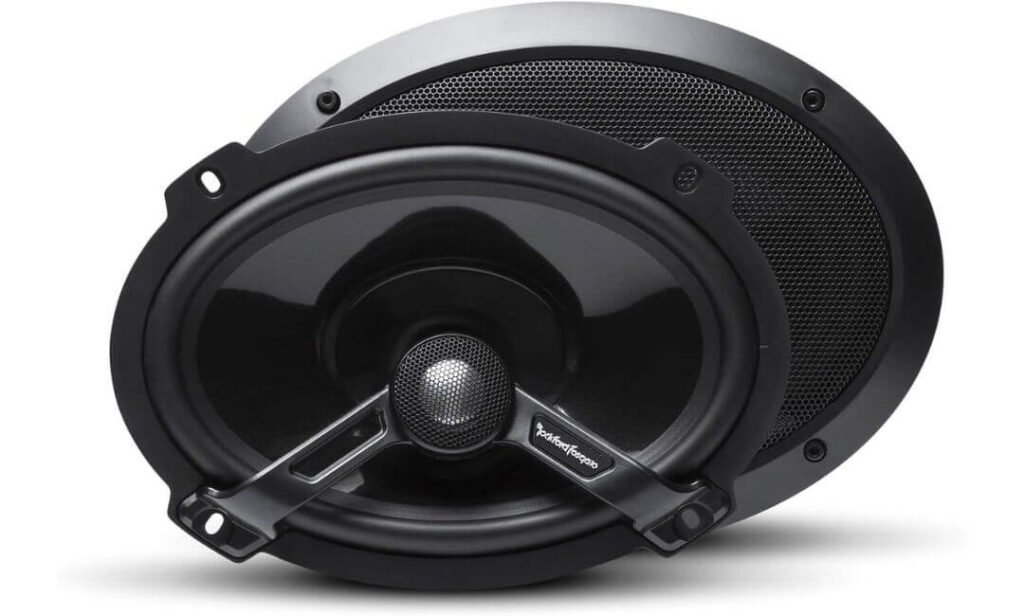
#4. Rockford Fosgate T1692 Power 6×9 2-Way Coaxial Full-Range Speakers
Best 6×9 Car Speakers for High-Output Bass, With 100W RMS Power, Strong Midbass, Durable Carbon-Fibre Polypropylene Cone and Factory Audio Upgrade Potential
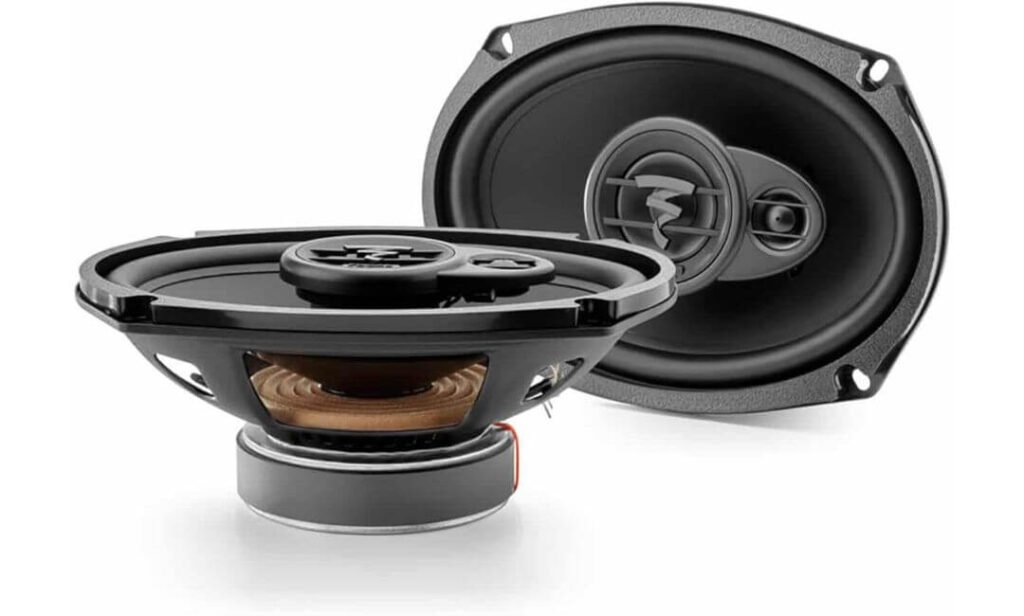
#5. Focal ACX690 Auditor EVO Series 6×9 3-Way Coaxial Kit
Best 6×9 Speakers With Good Bass and Sound Quality, With Balanced Midbass, 92dB Sensitivity, Clear Highs and Natural Full-Range Car Audio
Also Check: Best 6.5″ Car Speakers for Bass and Sound Quality
Expert Tip
Before buying any of these 6×9 speakers, check your car’s factory speaker depth, mounting pattern and amplifier output first. The “6×9” size only tells you the basic footprint; it does not mean every 6×9 will drop straight into every vehicle.
There is another point I would take seriously: more RMS power does not automatically mean more bass. A high-sensitivity speaker such as the Hertz CPX-690 can make strong use of limited amplifier power, while something like the Morel Tempo Ultra Integra makes more sense when you have enough clean power behind it. If you are keeping the factory radio, I would pay particularly close attention to sensitivity and impedance rather than buying purely on the biggest wattage number.
And if your idea of “bass” means the kind of very low rumble you feel in your seat, be realistic about what a 6×9 can do. These speakers are excellent for midbass impact and musical punch, but they are not a replacement for a dedicated subwoofer.
How We Choose These 6×9 Speakers
I did not rank these speakers by peak wattage, brand popularity or the number printed on the box. Those numbers can look impressive while telling you surprisingly little about how a speaker will actually behave inside a car.
The first thing I looked at was real-world bass capability. For a 6×9, I care more about how the woofer handles excursion, the type of cone and surround being used, sensitivity and usable low-frequency response than an exaggerated maximum-power figure. That is one reason the Alpine R2-S69 and Hertz CPX-690 sit at the top of this list, but for different reasons.
The Alpine R2-S69 brings a glass-fibre reinforced woofer cone, a larger motor structure and Alpine’s HAMR surround, along with 100W RMS power handling and 90dB sensitivity. That combination makes it a strong choice when the goal is more aggressive midbass without sacrificing control when the volume rises.
The Hertz CPX-690 earned its place because its numbers tell a particularly useful story for a car speaker. It offers 120W continuous power handling and 94dB sensitivity, which means it can produce substantial output without demanding an enormous amount of amplifier power. Its long-excursion suspension and three-way arrangement also make it especially interesting for someone wanting a lively rear-deck setup rather than simply a louder speaker.
I treated the Morel Tempo Ultra Integra 692 MKII differently. Its 150W RMS handling and 92dB sensitivity make it one of the more serious options here, but its appeal is not simply power. The point-source-style coaxial design and Morel’s emphasis on controlled, detailed reproduction make it a better fit for someone who wants the bass to remain part of a well-balanced music system. Its greater mounting depth is also something I would check carefully before ordering.
The Rockford Fosgate T1692 made the list because it occupies a useful middle ground. With 100W RMS handling, 90dB sensitivity and 6mm Xmax, it has the hardware for a stronger low-end presentation while remaining a sensible upgrade for many conventional car-audio systems. I would not choose it simply because it carries the Power Series name; its actual specifications are what make it relevant here.
Finally, the Focal ACX690 stays on the list because not every reader wants the hardest possible bass hit. Its 80W RMS rating and 92dB sensitivity, combined with its polypropylene woofer and three-way configuration, make it a sensible choice for someone who wants additional body from the 6×9 position without making the rest of the music sound overly aggressive.
I also considered factory-radio compatibility, amplifier requirements and installation reality rather than assuming every reader is building a competition system. That matters because a speaker capable of handling 150W RMS can be a poor purchase if the car’s factory system cannot provide the clean power it needs to perform properly.
Most importantly, I did not remove a product from consideration simply because it had fewer reviews than an older, more established model. Some of these are relatively current products and naturally have a smaller review footprint. In that situation, I put more weight on the manufacturer’s documented specifications, driver construction and the engineering behind the design rather than pretending a small number of online reviews tells the whole story.
That is ultimately what separates this list from a simple “highest-rated 6×9 speakers” roundup: each speaker is here for a specific reason. One is particularly convincing for output, another for sensitivity, another for controlled detail and another for a straightforward high-output upgrade. The right choice depends on what your car’s existing system can actually support.
#1. Alpine R2-S69 6×9 R-Series High-Resolution Coaxial Speakers, Pair
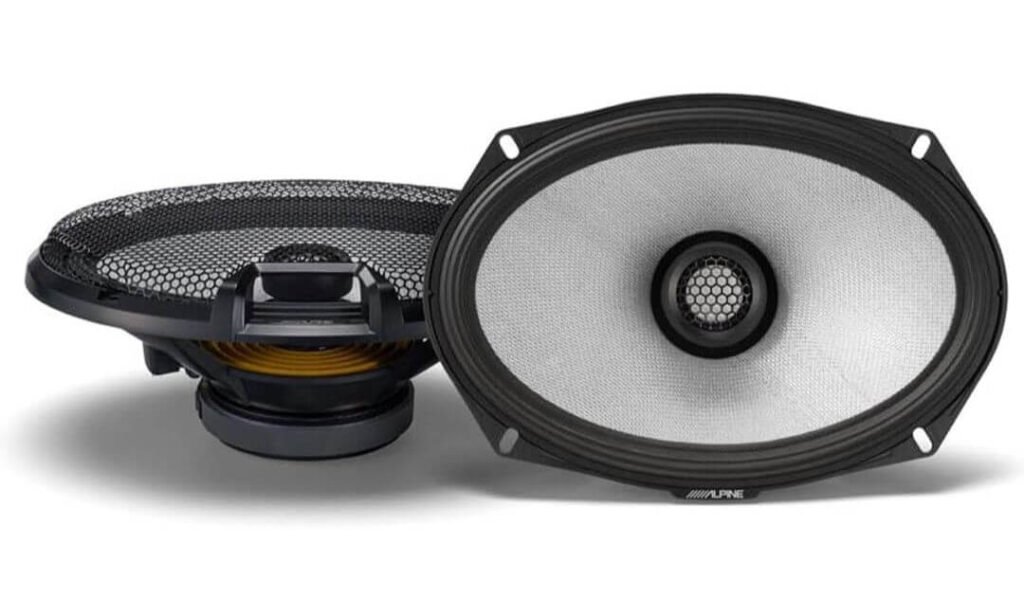
Quick Specs:
- Speaker Type: 6×9-inch 2-way coaxial
- Power Handling: 100W RMS / 300W peak
- Frequency Response: 60Hz–40kHz
- Tweeter: 1-inch magnesium hard-dome coaxial
- Woofer Cone: Glass-fibre reinforced
- Magnet: Ferrite
- Surround: Alpine HAMR
- Audio Certification: Hi-Res Audio
- Application: Door or rear-deck 6×9 installations
If you want a 6×9 that sounds noticeably more serious than a basic factory replacement, this is where the R2-S69 starts to make sense. The interesting part is not simply its 100W RMS rating; Alpine has changed the woofer itself, using a stiff but lightweight glass-fibre reinforced cone and a larger ferrite motor structure designed to produce more midbass. The HAMR surround then allows greater cone movement while keeping that movement controlled.
That combination matters in a car because bass from a 6×9 can easily become loose once you start turning the volume up. Here, the goal is different: more movement without simply making the cone feel heavy. The result should suit tracks where you want kick drums and bass guitar to have more physical impact, while the speaker still has enough control for vocals and instruments to remain clean.
The other thing I like is that this is still a coaxial design, so you are not automatically signing yourself up for the more involved installation of a component setup. Alpine includes the mounting hardware and grilles, while the tweeter housing can also be removed to reduce its overall installation size. That flexibility can matter when you are working around an existing factory grille or a tighter mounting location.
(The big takeaway: this is a bass-focused 6×9, but it achieves that through woofer construction and controlled excursion rather than just chasing a large peak-power number.)
What Stands Out After Looking Past the Box
- The glass-fibre cone is the real story here; it is lightweight and rigid, which helps the woofer react quickly instead of sounding sluggish.
- HAMR surround technology gives the cone more usable excursion, which is exactly the kind of engineering I want to see when a speaker is being considered for stronger midbass.
- The larger ferrite motor structure is a meaningful change from the previous-generation R-Series approach and is specifically intended to improve midbass output.
- The magnesium hard-dome tweeter reaches 40kHz and gives the speaker its Hi-Res certification, so the design is not sacrificing the upper range simply to make the woofer louder.
- I also like the removable tweeter housing, because installation problems are often caused by clearance rather than speaker size itself.
One Thing to Keep in Mind
The R2-S69 is a 100W RMS speaker, so its full potential makes much more sense with a clean amplifier than with a weak factory head unit. It can still be used in a factory system, but I would not buy it expecting the factory radio alone to turn it into a subwoofer-level bass setup.
Where Its Strength Really Shows
The R2-S69 is particularly convincing when you want stronger midbass without losing the rest of the music. Its 60Hz lower-frequency specification is useful, but I would not interpret that as “subwoofer bass”; a 6×9 still has physical limits. What you should expect instead is more authority in the bass guitar, kick drum and lower musical range.
It is also a sensible option for someone replacing older 6x9s in a vehicle that already has a conventional coaxial layout. The important part is to verify the actual mounting depth, cutout and grille clearance for your specific vehicle before ordering. Alpine itself provides a vehicle-fitment checker for the model.
The Insider Pro-Tip
If your car already has an aftermarket amplifier, this is the kind of 6×9 where I would pay attention to gain setting and crossover setup rather than simply giving the speakers everything the amplifier can produce. The 100W RMS rating gives you useful headroom, but clean power is far more valuable than a badly tuned amplifier pushing excessive low-frequency energy.
And there is a small detail that is easy to overlook: because Alpine uses a removable tweeter housing, do not assume the speaker’s nominal 6×9 footprint tells you everything about fitment. In a tight rear deck or door location, the tweeter assembly and grille clearance can be just as important as the woofer cutout. Check the installation space first, then choose the power setup. That is how you get the extra bass this speaker was designed to deliver without creating a fitment problem before the music even starts.
#2. Hertz Cento Pro Series CPX-690 6×9 3-Way Coaxial Speakers with Grilles
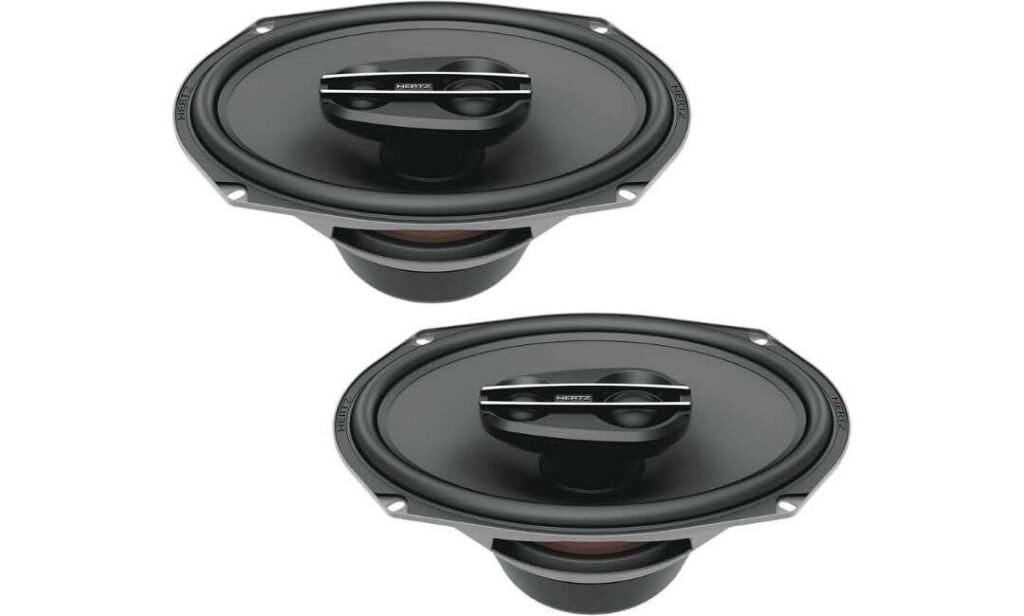
Quick Specs:
- Speaker Type: 6×9-inch 3-way coaxial
- Power Handling: 120W continuous / 360W peak
- Sensitivity: 94dB SPL
- Frequency Response: 35Hz–24kHz
- Woofer Cone: Water-repellent pressed paper
- Woofer Magnet: Ferrite
- Tweeter: 32mm Tetolon dome with neodymium magnet
- Supertweeter: 24mm with neodymium magnet
- Application: Rear deck, tailgate and other high-output installations
The first thing I would notice about the CPX-690 is not the “3-way” badge. It is the combination of 94dB sensitivity and 120W continuous power handling. That is a very useful pairing in a vehicle because it gives the speaker a lot of output potential without making amplifier power the only thing standing between you and a lively system.
Then there is the woofer itself. Hertz uses a water-repellent pressed-paper cone, which is a choice I actually like for this type of speaker. Paper is not automatically a cheap-material compromise; when it is properly engineered, its low moving mass can give a woofer a natural, responsive character. For a 6×9 whose job is to add punch and body to music, that matters more than simply advertising an enormous peak-power figure.
The 35Hz lower-frequency specification is also worth putting into perspective. It tells you this speaker is designed with serious low-frequency capability in mind, but it does not turn a 6×9 into a subwoofer. In a properly installed car, what I would expect to notice first is stronger bass presence and more physical impact rather than deep subwoofer-style rumble.
(In simple terms: this is the pick for someone who wants a 6×9 that can get properly loud while keeping the bass lively instead of sounding flat.)
What I Like About the Design
- 94dB sensitivity is a genuine advantage when you want strong output without requiring a huge amplifier.
- The 120W continuous rating gives you considerably more headroom than many ordinary factory-replacement 6x9s.
- The water-repellent cone makes sense for automotive use, particularly in locations where the speaker may encounter a less controlled environment.
- The 32mm Tetolon tweeter and 24mm supertweeter give the speaker a more ambitious high-frequency section than a basic 2-way coaxial.
- The use of neodymium magnets for the high-frequency drivers helps keep those smaller drivers responsive without adding unnecessary bulk.
The One Detail I Would Check Before Buying
The CPX-690 is best treated as a high-output installation speaker, not a universal “drop it into anything” upgrade. Before ordering, check the exact rear-deck or mounting location in your vehicle, particularly cutout size, mounting depth and clearance around the tweeter assembly. If you are using a factory grille, make sure it does not interfere with the three-way driver structure.
Where This Speaker Has the Advantage
The CPX-690 makes the most sense when output is part of the brief. A 94dB sensitivity rating means you do not have to throw huge amounts of amplifier power at it just to get an energetic presentation. That makes it particularly interesting for a truck, SUV or rear-deck system where you want the 6x9s to remain audible and punchy when the cabin is filled with road noise.
It is also a strong choice if you want more than bass alone. The separate tweeter and supertweeter arrangement gives Hertz room to handle the upper frequencies independently, while the larger woofer remains responsible for the lower portion of the music. That division is one of the reasons I would consider this a more serious full-range upgrade than a basic factory 6×9.
The Insider Pro-Tip
If you are pairing these with an amplifier, do not use the 360W peak figure as your amplifier target. The useful number here is the 120W continuous rating. A properly matched amplifier delivering clean power, with sensible gain and filtering, is a much better recipe for hard-hitting bass than simply choosing the biggest amplifier you can find.
And if your system is still running from the factory radio, the CPX-690 is actually one of the more interesting choices in this lineup because of its 94dB sensitivity. You may get a worthwhile increase in perceived output without needing an extreme power upgrade first. Just keep your expectations realistic: its 35Hz specification is impressive for a 6×9, but if you want the kind of bass that physically shakes the cabin, that is still a job for a dedicated subwoofer.
#3. Morel Tempo Ultra Integra 692 MKII 6″ x 9″ 2-Way Coaxial Speakers
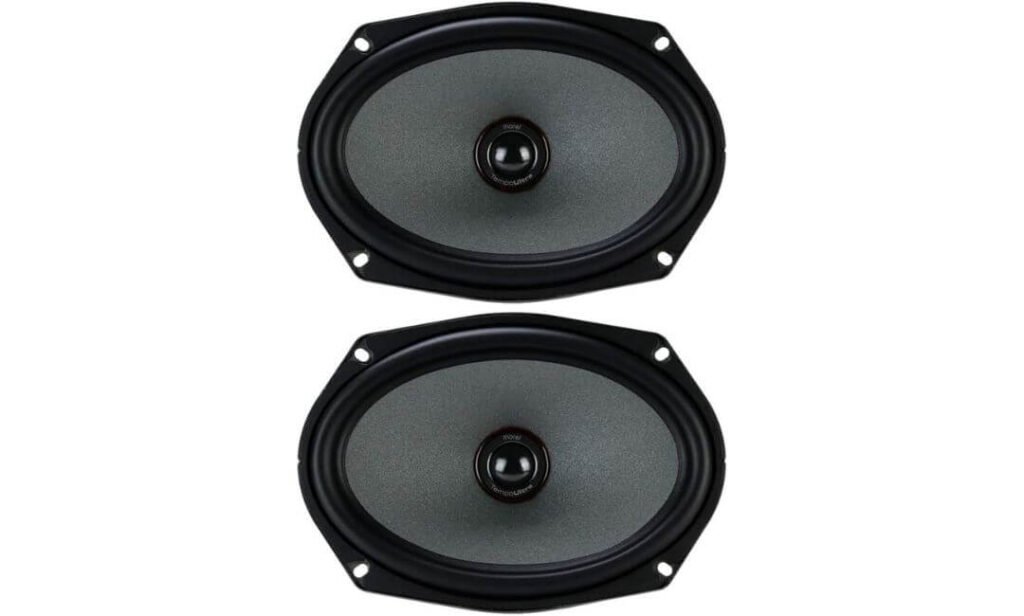
Quick Specs:
- Speaker Type: 6×9-inch 2-way coaxial
- Power Handling: 150W RMS / 250W peak per speaker
- Impedance: 4 ohms
- Frequency Response: 35Hz–22kHz
- Sensitivity: 92dB
- Woofer Cone: Treated paper composite
- Tweeter: 1-inch soft-dome neodymium
- Woofer Magnet: High-grade ferrite
- Mounting Depth: 3.35 inches / 85mm
There is a reason I would not judge the Tempo Ultra simply by its 6×9 size. 150W RMS per speaker puts it firmly into the higher-power category, but the more interesting part is how Morel has built around that power. The treated paper composite cone is designed to stay responsive and musical, while the high-grade ferrite motor gives the woofer the control it needs when you start asking more from the lower frequencies.
The 35Hz–22kHz response is another reason this speaker stands out on paper. I would not translate that number into “subwoofer bass” because that would be misleading, but it does indicate that Morel has designed this driver to reach considerably lower than a basic factory-style 6×9. In a properly sealed and correctly mounted vehicle location, that can mean more weight behind bass guitar, kick drums and the lower body of modern music.
The 1-inch soft-dome neodymium tweeter is equally important. Morel has kept the high-frequency driver relatively compact and positioned it concentrically with the woofer, giving the speaker a more coherent presentation than you might expect from a conventional 2-way. That makes this a particularly interesting option if you want stronger bass but do not want the rest of your music to become an afterthought.
(The important distinction here: this is not simply a high-wattage 6×9. It is a higher-power speaker built around controlled, musical output.)
What I Like About the Engineering
- 150W RMS per speaker gives this pair substantial headroom when matched with a capable amplifier.
- The treated paper composite cone is a sensible choice for natural, responsive bass rather than an overly artificial presentation.
- 92dB sensitivity gives it useful efficiency while still leaving room for serious amplifier power.
- The 1-inch soft-dome neodymium tweeter should give the upper range a smoother character than many aggressively voiced coaxials.
- The 4-ohm impedance makes it straightforward to integrate with a conventional aftermarket car amplifier.
The Fitment Detail I Would Not Ignore
The biggest practical consideration here is the 3.35-inch / 85mm mounting depth. That is not something I would overlook simply because your vehicle accepts a 6×9 speaker. Before ordering, measure from the mounting surface to anything behind the speaker—window glass, bracing, factory hardware or the rear-deck structure can all become problems.
This is particularly important if you are replacing an older factory 6×9 in a tight location. Speaker size and speaker depth are two different fitment measurements, and this is one of the deeper options in this group.
Where It Makes the Most Sense
The Tempo Ultra Integra is the pick I would lean toward when bass quality matters just as much as bass quantity. The 150W RMS rating gives it plenty of headroom for an amplified system, while the treated cone and soft-dome tweeter keep the design focused on music rather than simply maximum output.
It also makes sense for someone upgrading an older vehicle but building a more serious audio system around it. With 4-ohm impedance and 92dB sensitivity, it is not an exotic electrical load, but I would still pair it with a clean amplifier if the goal is to exploit its power handling rather than simply run it at modest factory-radio levels.
The Insider Pro-Tip
If you are installing these in a vehicle where the rear deck or door has limited acoustic sealing, do not judge the speaker before checking the installation itself. A powerful 6×9 can only work with the air space and mounting structure it is given. A solid adapter, secure mounting and proper sealing around the speaker can make a bigger audible difference than chasing another 20 or 30 watts on a specification sheet.
And there is one more thing I would keep in mind with the 35Hz specification: use it as an indication of the driver’s low-frequency capability, not as a promise that the speaker will reproduce subwoofer-level bass at full volume. If you want hard-hitting musical midbass, this is a very serious candidate. If you want the cabin physically shaking below the lowest notes, keep a subwoofer in the plan rather than asking a 6×9 to do a job it was never designed to handle.
#4. Rockford Fosgate T1692 Power 6×9 2-Way Coaxial Full-Range Speakers (Pair)
Quick Specs:
- Speaker Type: 6×9-inch 2-way coaxial
- Power Handling: 100W RMS / 200W peak
- Frequency Response: 50Hz–22kHz
- Sensitivity: 90dB
- Cone: Carbon fiber and polypropylene injection-molded
- Surround: Butyl rubber
- Tweeter: Aluminum dome with polyurethane suspension
- Crossover: ICC integrated concealed crossover
- Installation: Door or rear deck
The T1692 is an interesting choice because Rockford Fosgate has not tried to make it look impressive with one enormous wattage figure. Instead, the design focuses on cone strength, suspension control and efficient use of the available speaker area. The carbon-fiber and polypropylene injection-molded cone gives the woofer a rigid structure, while the butyl rubber surround allows it to move without feeling uncontrolled.
For a 6×9 aimed at bass, that combination makes sense. You want the woofer to react quickly when the kick drum hits, but you also want it to stop cleanly instead of leaving a loose, boomy tail behind it. The 100W RMS rating gives the speaker useful headroom, while its 90dB sensitivity means it does not require an extreme amount of amplifier power just to become lively.
I also like the fact that the ICC concealed crossover is built into the speaker rather than leaving an obvious external crossover box to find space for. That sounds like a small detail, but it is exactly the kind of thing that makes a coaxial replacement easier to live with once you are actually inside the vehicle rather than looking at the product on a screen.
(The real appeal here is controlled punch and a clean installation—not chasing the lowest possible bass number.)
What I Like About the Build
- The carbon-fiber/polypropylene cone gives the woofer a good balance between stiffness and controlled movement.
- Butyl rubber surround is a durable choice for an automotive environment and helps keep the woofer’s movement predictable.
- The 100W RMS handling makes it a much more serious upgrade than a basic OEM replacement.
- ICC concealed crossover keeps the installation tidy while separating the frequencies between the woofer and tweeter.
- The aluminum dome tweeter gives the speaker enough upper-range capability to remain a genuine full-range upgrade rather than becoming bass-heavy and dull.
One Installation Point I Would Check
Before ordering, verify the actual mounting depth, cutout and factory grille clearance for your vehicle. A 6×9 opening does not automatically mean every aftermarket 6×9 will fit without an adapter or modification. If your factory speaker uses a proprietary mounting bracket, you may also need a vehicle-specific adapter rather than relying on the supplied hardware alone.
Where This Model Makes the Most Sense
I would choose the T1692 when the goal is a stronger, more authoritative factory replacement without turning the whole audio system into an amplifier project. Its 100W RMS handling gives you room to add an amplifier later, while the 90dB sensitivity means it is not completely dependent on one to sound energetic.
With an amplifier, the difference becomes more meaningful. The extra clean power gives the woofer greater headroom, especially when you listen loudly, but I would still set the gain properly and use sensible filtering. More power can improve a speaker; badly controlled power can do exactly the opposite.
The Insider Pro-Tip
One thing I would do before installing these is listen to the factory system at your normal maximum volume and pay attention to when the bass starts becoming strained. That tells you more about your upgrade path than the “200W peak” figure ever will. If the factory radio is already running out of clean power, the T1692 can improve the speaker itself, but an appropriately matched amplifier is what will allow you to take advantage of its 100W RMS capability.
And do not overlook the crossover simply because it is hidden. The ICC design is part of why this speaker works as a clean 2-way package: the woofer is not being asked to reproduce everything while the tweeter tries to cover the rest. For a bass-focused 6×9, that separation helps keep the lower end punchy while the aluminum dome handles the detail above it.
#5. Focal ACX690 Auditor EVO Series 6″ X 9″ 3-Way Coaxial Kit
Quick Specs:
- Speaker Type: 6×9-inch 3-way coaxial
- Power Handling: 80W RMS / 160W maximum
- Frequency Response: 50Hz–20kHz
- Sensitivity: 92dB
- Woofer: Polypropylene cone with butyl rubber surround
- Tweeter: Inverted-dome design
- Configuration: 3-way with integrated crossover
- Design: Developed in France
- Application: Factory replacement or amplified systems
The ACX690 is not here because it claims the biggest bass figure. In fact, that is exactly why I think it deserves a place in this particular roundup. Focal has taken a more balanced approach, using a polypropylene woofer, butyl rubber surround and a three-way arrangement rather than trying to make the speaker sound impressive through exaggerated power claims.
Its 80W RMS handling and 92dB sensitivity make the electrical side fairly approachable. You can run it from a conventional car-audio system, while an amplifier gives you additional headroom when you want more volume. That flexibility is useful for someone replacing factory 6x9s today but potentially upgrading the rest of the system later.
The 6×9 woofer is responsible for the lower range, while the inverted-dome tweeter and additional high-frequency driver handle the upper part of the music through the integrated crossover. The result is a speaker aimed at giving you more body and clarity together, rather than making the bass dominate everything else.
(This is the choice for someone who wants a fuller 6×9 without turning the system into a bass-only setup.)
What I Like About the Package
- 92dB sensitivity makes it relatively easy to drive compared with many lower-sensitivity aftermarket speakers.
- The polypropylene cone is a sensible automotive choice for consistent performance and controlled low-frequency reproduction.
- Butyl rubber surround provides durable suspension for regular vehicle use.
- The 3-way configuration gives the woofer less responsibility for the upper frequencies, helping maintain a cleaner overall presentation.
- The integrated crossover keeps the installation considerably simpler than a separate component-style system.
One Thing I Would Keep in Perspective
The ACX690 is rated at 80W RMS, so I would not buy it expecting the same amplifier headroom as the Alpine, Hertz or Morel options higher on this list. Its strength is the combination of efficiency, balanced sound and easy amplification, not extreme power handling.
Also, the 50Hz lower-frequency specification should not be confused with subwoofer performance. It is perfectly reasonable for a 6×9 intended to add useful midbass to a car system, but the lowest frequencies are still better handled by a dedicated subwoofer.
Where It Fits Best in a Real System
I would choose this one when the goal is a clean factory-system upgrade with more substance, particularly if you listen to a mixture of music rather than constantly chasing maximum bass output. The 92dB sensitivity is helpful when working with limited factory power, while the 80W RMS rating leaves enough room for a modest amplifier later.
That makes the ACX690 a slightly different proposition from the more power-hungry models above it. It is less about seeing how hard you can push a 6×9 and more about making the rear speakers sound fuller, clearer and more complete without creating an unnecessarily complicated installation.
The Insider Pro-Tip
If your factory radio is staying in the car, I would actually pay more attention to the 92dB sensitivity than the 160W maximum figure. A speaker that uses limited power efficiently can sound more satisfying from a stock system than a higher-powered model that really needs an amplifier to wake up.
And if you eventually add an amplifier, keep the gains conservative and let the integrated crossover do its job. The ACX690 works best when you treat it as a balanced full-range 6×9, not as a substitute for a subwoofer. Get the installation solid, give it clean power and it can add the extra bass presence you wanted without sacrificing the clarity that makes the rest of your music enjoyable.
6×9 Car Speakers for Bass in 2026: RMS Power, Sensitivity and Bass Compared
| 6×9 Speaker | Design | Power You Can Actually Use | Low-End Reach | Bass Character | System Match | Best Real-World Use |
|---|---|---|---|---|---|---|
| Alpine R2-S69 R-Series High-Resolution | 2-way coaxial Glass-fibre cone + magnesium tweeter | 100W RMS 300W peak · 4Ω Strong headroom |
60Hz
Up to 40kHz overall
|
Punchy & controlled Fast midbass with good detail | Factory / Amplified Gets more from clean amplification | Best overall bass upgrade A strong middle ground when you want noticeable bass impact without sacrificing clarity. |
| Hertz CPX-690 Cento Pro Series | 3-way coaxial Woofer + Tetolon tweeter + supertweeter | 120W continuous 360W peak · 4Ω High output |
35Hz
Up to 24kHz overall
|
Big & energetic Strong output with 94dB sensitivity | Factory / Amplified Particularly efficient on limited power | Best for loud, lively bass The 94dB sensitivity makes this especially attractive when output matters as much as low-end weight. |
| Morel Tempo Ultra Integra 692 MKII Tempo Ultra Series | 2-way coaxial Treated paper composite + soft dome | 150W RMS 250W peak · 4Ω Highest RMS |
35Hz
Up to 22kHz overall
|
Rich & controlled Bass with a more refined presentation | Best with an amp Built for a more serious audio system | Best for bass quality The choice when you want stronger low-end without turning the rest of the music into background noise. |
| Rockford Fosgate T1692 Power Series | 2-way coaxial Carbon-fibre/polypropylene cone | 100W RMS 200W peak · 4Ω Solid headroom |
50Hz
Up to 22kHz overall
|
Punchy & direct Designed for strong everyday output | Factory / Amplified Easy path from OEM upgrade to amp system | Best straightforward upgrade A sensible pick when you want a noticeable step up from stock without overcomplicating the installation. |
| Focal ACX690 Auditor EVO Series | 3-way coaxial Polypropylene cone + inverted dome | 80W RMS 160W max · 4Ω Easy to drive |
50Hz
Up to 20kHz overall
|
Balanced & clean More body without chasing maximum bass | Factory-friendly Also works well with modest amplification | Best for balanced sound A good fit when bass matters but you still want the system to remain natural and easy to live with. |
Best 6×9 Car Speakers for Bass Buying Guide: What Actually Matters Before You Upgrade
Buying a 6×9 for bass is one of those jobs where the spec sheet can easily send you in the wrong direction. A speaker rated for 300W is not automatically going to produce deeper or harder bass than one rated for 100W, and a lower frequency-response number does not guarantee that you will hear more bass inside your particular car.
The better approach is to match the speaker to the power available, the vehicle’s mounting space and the way you actually listen. That is especially important with this group because these five models are not interchangeable in practice. Some make more sense on factory power, while others become much more interesting once you put a proper amplifier behind them.
Start With RMS Power, Not the Biggest Number on the Box
The first number I check is RMS power handling, not peak or maximum power.
Peak ratings describe what a speaker may tolerate briefly. RMS is much more useful because it gives you a better idea of the continuous power the speaker is designed to handle during normal operation.
For example:
- A 100W RMS 6×9 does not automatically sound weaker than a 150W RMS model.
- A higher RMS rating mainly gives you more thermal and mechanical headroom when the speaker is being driven hard.
- Your amplifier should provide clean, appropriate power rather than simply matching the largest number printed on the speaker.
- If your factory head unit only supplies modest power, buying an extremely high-power speaker may not give you the improvement you expected.
This is why I would separate the list into two situations: factory-powered systems and amplified systems. The Hertz benefits from its 94dB sensitivity when power is limited, while the Morel makes much more sense when you have an amplifier capable of feeding its 150W RMS rating.
Can You Get Good Bass From 6×9 Speakers Without an Amplifier?
Yes, but there is an important limit.
A sensitive 6×9 can make a factory system sound substantially fuller without an external amplifier. What it cannot do is magically create amplifier power that the vehicle does not have.
If you are specifically searching for best 6×9 speakers for bass without amp, pay attention to:
- Sensitivity, because it tells you how efficiently the speaker converts available electrical power into sound.
- Impedance, because the speaker must be suitable for the factory amplifier or head unit.
- Woofer efficiency and cone design, because these influence how the speaker behaves with limited power.
- Realistic expectations, because stronger midbass is possible, but subwoofer-level bass is not.
This is where a model with around 92–94dB sensitivity can make more sense than simply choosing the speaker with the highest RMS rating.
A factory radio can also have its own limitations. If you install a high-power 6×9 and then turn the radio almost all the way up trying to make it louder, you can end up hearing distortion from the source rather than getting the clean bass improvement you wanted.
Sensitivity Matters More Than Most Buyers Realise
Sensitivity is one of the most useful specifications for a factory-powered installation, yet it is routinely ignored.
A speaker with higher sensitivity generally needs less amplifier power to reach a given volume level. That does not mean a 94dB speaker automatically has deeper bass than a 90dB speaker. It means the available power is being converted into acoustic output more efficiently.
That distinction matters.
For example, the Hertz’s 94dB sensitivity makes it particularly attractive when you want a strong, lively system without immediately upgrading the amplifier. A lower-sensitivity speaker may still be the better choice once you have substantial clean amplifier power available.
So I would think about it this way:
| Your setup | What deserves more attention |
|---|---|
| Factory radio | Sensitivity + impedance |
| Factory amp | Sensitivity + electrical compatibility |
| Small aftermarket amp | Sensitivity + RMS handling |
| High-power aftermarket amp | RMS handling + thermal/mechanical control |
| Bass-focused system | Woofer design + installation + amplifier |
| Full system with subwoofer | 6×9 midbass quality rather than extreme low-end |
Impedance Has to Match the System
Most conventional aftermarket 6×9 speakers in this category use a 4-ohm impedance, which is important because the amplifier or head unit has to be designed to operate safely with that load.
Do not assume that any 6×9 can simply replace the factory speaker because the physical dimensions look right.
Before ordering, check:
- The factory speaker’s impedance.
- Whether the vehicle uses a separate factory amplifier.
- Whether the factory amplifier expects a particular speaker load.
- Whether the replacement requires an adapter harness.
- Whether the amplifier is stable at the replacement speaker’s impedance.
A lower-impedance speaker can draw more current from an amplifier that was not designed for it. That is not an upgrade I would make casually just to chase more output.
Cone Material Changes the Character of the Bass
There is no single “best” cone material for every car.
What matters is how the material works with the motor, surround and suspension.
The speakers in this list use noticeably different approaches:
- Glass-fibre reinforced cone: lightweight and rigid, giving the Alpine a quick, controlled response.
- Water-repellent pressed paper: used by Hertz for a responsive woofer with a more traditional material approach.
- Treated paper composite: Morel uses this to pursue a natural, controlled presentation while supporting high power handling.
- Carbon-fibre/polypropylene composite: Rockford combines stiffness with a durable automotive construction.
- Polypropylene: Focal uses it for a balanced, practical full-range design.
I would not choose a speaker solely because its cone material sounds more “premium” on paper. The entire woofer system matters: cone, surround, voice coil, magnet, suspension and enclosure environment all work together.
Mounting Depth Can Ruin an Otherwise Good Upgrade
This is one of the most important things to check before clicking Buy.
A 6×9 designation tells you the basic speaker footprint. It does not tell you whether the basket will clear the window glass, door structure, rear-deck bracing or factory hardware.
The Morel, for example, has a listed 3.35-inch / 85mm mounting depth, so I would measure the available space before ordering rather than assuming a 6×9 opening is enough.
Also check:
- Cutout dimensions
- Mounting-hole pattern
- Speaker depth
- Magnet clearance
- Window-glass clearance in doors
- Factory grille clearance
- Rear-deck structural clearance
- Whether a mounting bracket or adapter is required
A speaker that sounds fantastic but physically cannot clear the window mechanism is not a good recommendation for that vehicle.
Installation Can Change the Bass More Than Another Specification Point
This is where many online recommendations become too theoretical.
A woofer needs a stable mounting surface. If the speaker is loosely mounted, if air leaks around the frame, or if the adapter plate flexes, some of the potential bass performance is simply lost.
For a replacement installation, I would prioritise:
- A rigid mounting adapter where required.
- A proper seal between the speaker and mounting surface.
- Secure mounting hardware.
- Correct polarity.
- Adequate clearance around the cone and surround.
- No contact between the speaker basket and surrounding trim.
If the speaker is installed in a door, also remember that the door itself is part of the acoustic environment. Treating the mounting area and reducing unwanted panel vibration can make the system sound more controlled without changing the speaker.
Crossover Settings Matter When You Add an Amplifier
If you are adding an amplifier, do not simply connect the 6x9s and leave every control flat.
For a bass-focused 6×9 setup, a high-pass filter can actually help.
That may sound backwards, but it prevents the relatively small 6×9 woofer from being forced to reproduce frequencies that are better handled by a dedicated subwoofer. Once those extreme lows are removed, the speaker has more usable excursion available for the midbass range you actually hear and feel.
If you are running the 6x9s without a subwoofer, I would use a more conservative setting and listen carefully rather than applying an aggressive filter simply because an online setup guide recommends one number.
And if a subwoofer is already installed, the crossover becomes even more important because the 6x9s do not need to fight the subwoofer for the same lowest frequencies.
A Few 6×9 Bass Myths Worth Ignoring
More watts always means more bass
No.
Power handling tells you how much power the speaker can handle, not how much bass it will automatically produce. Sensitivity, cone behaviour, motor strength, excursion and installation all matter.
A 35Hz specification means it replaces a subwoofer
Not necessarily.
A frequency-response specification tells you what range the manufacturer states the speaker can reproduce under its test conditions. It does not mean the speaker will produce strong, room-shaking output at 35Hz inside every vehicle.
A 3-way speaker must have better bass than a 2-way
Again, no.
A 3-way design gives the manufacturer additional drivers for dividing the frequency range. It does not automatically make the woofer deeper or stronger.
That is why I would not rank a speaker higher simply because it has “3-way” printed on the box.
A more expensive 6×9 will always sound better
Not in every car.
If the installation is poor, the amplifier is mismatched, the factory source is clipping, or the speaker physically does not fit correctly, a more expensive model can become a very expensive way of solving the wrong problem.
Bigger peak power means a stronger speaker
Peak numbers are easy to market. RMS power, sensitivity and the actual driver construction tell you much more about whether a speaker fits your system.
The Best Approach Depends on the System You Already Have
If you are keeping the factory radio, I would lean toward an efficient 6×9 that can produce useful output without demanding huge amplifier power.
If you already have a quality aftermarket amplifier, the decision changes. Then higher RMS capability, cone control and the speaker’s overall voicing become more important because you have the electrical headroom to use them.
And if your vehicle already has a subwoofer, I would stop trying to make the 6x9s behave like one. Let the subwoofer handle the lowest frequencies and choose the rear speakers for clean, powerful midbass and full-range support.
That is ultimately the better way to shop for this category: choose the speaker around your car and system, not the system around a marketing number on a speaker box.
Best 6×9 Car Speakers for Bass Installation: How to Get the Upgrade Right the First Time
Installing a 6×9 is not particularly difficult, but getting the installation right is what determines whether the new speaker actually sounds better. A good speaker mounted loosely, wired incorrectly, or forced into a poor adapter can lose much of the bass improvement you paid for.
The exact procedure varies between doors, rear decks and tailgate-style installations, so treat the steps below as a practical framework rather than a vehicle-specific repair manual. Always check the vehicle’s service information before removing panels, particularly around side airbags, power-window wiring and factory amplifier connections.
Before You Remove Anything, Confirm the Fit
Do this first. It can save you from taking half the interior apart only to discover that the new 6×9 needs an adapter or has too much mounting depth.
Check these measurements against the original speaker:
- Cutout size
- Mounting-hole pattern
- Mounting depth
- Magnet clearance
- Grille clearance
- Window-glass clearance if mounted in a door
- Connector type
- Speaker impedance
- Whether the factory speaker uses a mounting bracket
The Morel, for example, has an approximately 3.35-inch / 85mm mounting depth, so this is not a specification I would ignore in a tight door or rear-deck location.
Also check whether your vehicle uses a factory amplifier. That can change the wiring arrangement and, in some cars, the impedance requirements.
Removing a Door Panel or Rear-Deck Grille Without Creating Problems
Start by disconnecting the negative battery terminal when the vehicle manufacturer’s procedure calls for it, especially if you will be working around electrical connectors or components associated with airbags.
For a door installation, the general sequence is:
- Remove the visible screws and fasteners holding the panel.
- Use a proper trim-removal tool to release the clips instead of prying aggressively with a screwdriver.
- Lift the panel carefully once the clips are released.
- Disconnect window, lock, speaker and other electrical connectors without pulling on the wires.
- Place the panel somewhere clean where its clips and trim will not get damaged.
- Remove the factory speaker and retain any original mounting hardware that may be needed with the adapter.
Rear-deck installations are often simpler mechanically, but they can have their own surprises. Some vehicles use concealed fasteners, while others have factory brackets or grille structures that must remain in place.
Do not force a panel because one section refuses to move. Usually there is still a screw, clip or hidden fastener holding it.
OEM Harness or Aftermarket Adapter?
If a vehicle-specific plug-and-play harness is available, I generally prefer it over cutting the factory wiring.
An adapter harness gives you:
- Factory wiring remains intact.
- Easier future speaker replacement.
- Less chance of reversing polarity.
- Cleaner installation.
- No unnecessary wire splicing.
If you must splice wires, use proper automotive-grade connectors or a correctly crimped connection rather than twisting wires together and covering them with tape.
And check polarity before finishing the installation. If one speaker is wired backward relative to the other, the two woofers can move in opposite directions and produce noticeably weaker bass around the crossover region.
Do You Need an Adapter Bracket?
Quite possibly.
A vehicle may use a proprietary factory 6×9 bracket even though the speaker itself looks like a conventional 6×9. In that case, a vehicle-specific mounting adapter is often the cleanest solution.
A good adapter should:
- Fit securely against the factory mounting location.
- Hold the speaker without flexing.
- Keep the woofer cone clear.
- Maintain enough clearance around the surround.
- Allow the factory grille to sit correctly.
- Seal the speaker against the mounting surface.
Avoid using a flimsy universal bracket simply because it is inexpensive. The mounting surface is part of the speaker installation, and unnecessary movement can work against the bass response you are trying to improve.
Built-In vs. External Crossovers: Keep the System Simple
Most of the speakers in this roundup use integrated crossover arrangements, which makes installation considerably easier.
With a conventional coaxial speaker, you generally connect the speaker to the vehicle’s speaker wiring and let the built-in network divide the frequencies between the woofer and tweeter.
That is very different from a component system, where you may have separate speakers and an external crossover that needs its own mounting location.
For these 6×9 coaxials, I would not add an external crossover simply because it sounds more “advanced.” If the manufacturer has already designed the speaker’s crossover into the assembly, use the system as intended unless you have a specific reason to change it.
If you are adding an amplifier, the amplifier’s high-pass filter becomes a separate consideration. It can prevent the 6x9s from wasting excursion on extremely low frequencies that a subwoofer can handle more effectively.
The Bass Upgrade Most People Forget: Seal the Speaker
If your goal is stronger bass, this is one of the installation details I would take seriously.
A speaker needs a stable relationship with the air around it. If air leaks between the speaker frame and mounting surface, some of the woofer’s movement is effectively working against the installation rather than producing the controlled acoustic output you want.
A simple foam speaker gasket or suitable automotive sealing material around the mounting interface can help.
The objective is not to glue everything permanently. You simply want the speaker and adapter to sit securely and seal properly against the mounting surface.
Sound Deadening: Where It Helps and Where It Does Not
You do not need to cover every square inch of the car with sound-deadening material to make a 6×9 sound better.
For a door-mounted speaker, concentrating treatment around the speaker mounting area and the surrounding metal panel can help reduce unwanted vibration.
The practical goals are:
- Reduce panel resonance.
- Give the speaker a more stable mounting surface.
- Reduce rattles.
- Seal obvious air leaks around the speaker.
- Keep the surrounding trim from buzzing against the panel.
If a door already has a good factory acoustic structure, do not assume adding large amounts of material will automatically produce more bass. Good sealing and rigid mounting usually matter before excessive material does.
What If the New Speaker Is Deeper Than the Factory One?
Stop and measure before installing it.
A deeper basket can interfere with:
- Window glass.
- Window regulator components.
- Door bracing.
- Factory wiring.
- Rear-deck supports.
- Other hardware behind the speaker.
If there is insufficient clearance, a proper spacer or adapter ring may solve the problem, provided it still leaves enough room for the door panel or factory grille.
Never allow the speaker surround, cone or magnet to contact another component during operation.
What If the Factory Connector Does Not Match?
This is normally an easy problem.
Use a vehicle-specific speaker adapter harness where available. If none exists, identify the factory positive and negative wires carefully and make a secure connection to the new speaker wiring.
Do not assume wire colour alone is universal across vehicles.
After connecting the speaker, test it at low volume before reinstalling the entire panel. Confirm that:
- Both channels play.
- Bass is present.
- There is no obvious distortion.
- The speaker is not rattling.
- The tweeter is functioning.
- Nothing is physically touching the cone.
Testing at this stage is much easier than discovering a wiring problem after every trim panel has been clipped back into place.
A Simple Installation Tool Checklist
For a normal 6×9 replacement, you will usually want:
- Trim-removal tools
- Phillips and flat-head screwdrivers
- Socket set
- Torx bits if your vehicle uses them
- Vehicle-specific speaker harness
- Mounting adapter if required
- Foam speaker gasket or sealing tape
- Quality crimp connectors or appropriate wiring terminals
- Wire stripper/crimper if wiring changes are required
- Multimeter for checking wiring and polarity
- Small flashlight
- Clean cloth for protecting trim
For a more involved installation, you may also need a rivet tool, drill, sound-deadening material and additional mounting hardware, but I would not drill or modify factory panels until you have confirmed that a simpler adapter-based installation will not work.
The Final Test Should Happen Before the Trim Goes Back On
This is a small step that saves a surprising amount of time.
Once the speaker is wired and secured, play several tracks you know well at low and moderate volume. Listen specifically for bass balance, rattles, missing frequencies and obvious distortion.
Then increase the volume gradually.
If the bass suddenly becomes weak, check polarity. If you hear a buzz that follows certain notes, check the speaker mounting and surrounding trim. If the speaker sounds strained at surprisingly low volume, check the amplifier or factory source rather than assuming the speaker itself is defective.
Only once everything sounds and behaves correctly should you reinstall the door panel or rear-deck trim.
The goal of a good 6×9 installation is not to make the installation look complicated. It should end up looking factory-clean, mechanically secure and acoustically sealed. That is when the money spent on a better speaker actually turns into the stronger midbass and cleaner output you were expecting.
6×9 Speakers for Punchy Bass: What Actually Creates That Kick
“Punchy bass” gets used pretty loosely in car-audio marketing. It does not simply mean a speaker reaches the lowest possible frequency. For a 6×9, punch is more about how quickly and cleanly the woofer produces the upper-bass and midbass region, particularly the kick-drum impact, bass guitar attack and the initial hit of electronic bass.
That is also why two 6×9 speakers with similar power ratings can sound noticeably different. Cone construction, motor strength, moving mass, enclosure environment, sensitivity and installation all influence what you actually hear from the driver’s seat.
Punchy Bass Is Not the Same as Deepest Bass
For this type of speaker, I would separate three things:
- Deep bass — the lower-frequency extension you feel more than hear.
- Midbass — roughly the region where kick drums, bass guitar body and much of the impact in modern music live.
- Punch — the perceived attack and definition of that bass rather than simply its depth.
A 6×9 can produce satisfying punch without behaving like a subwoofer. In fact, trying to force a door or rear-deck speaker to reproduce extreme low bass can make it sound less controlled once you turn the volume up.
That is why I have paid more attention here to RMS power, sensitivity, driver construction and usable low-frequency performance than to the lowest number printed on a specification sheet.
How Qts and Mms Help Explain Bass Behaviour
If you are going beyond basic shopping specifications, two Thiele-Small parameters worth understanding are Qts and Mms.
Qts describes the speaker’s total Q, combining the electrical and mechanical damping of the driver. It is useful when designing or evaluating how a woofer behaves in a particular enclosure, but it should not be treated as a simple “higher Qts equals more punch” rule.
That distinction matters in a car because a 6×9 mounted in a door or rear deck is not operating in the same controlled enclosure used for a dedicated subwoofer.
Mms, meanwhile, represents the moving mass of the driver, including the cone and other moving components. In simplified terms, a lower moving mass can make it easier for a driver to respond quickly, but Mms by itself does not tell you whether a speaker will sound punchy.
Motor strength, suspension, cone stiffness, damping and the acoustic environment all interact with it.
So I would not rank the five speakers in this article purely from Qts or Mms figures. Manufacturers do not consistently publish complete, directly comparable Thiele-Small data for these coaxial 6×9 models, and pretending otherwise would give a false impression of precision.
SPL and Sensitivity: The Number That Matters More for Many Car Installations
For a practical 6×9 upgrade, sensitivity is much easier to use.
Sensitivity gives you an indication of how efficiently a speaker converts amplifier power into acoustic output under the manufacturer’s test conditions. It becomes particularly important when you are keeping the factory head unit or factory amplifier.
Among the speakers here, the published sensitivity figures include:
- Hertz CPX-690 — 94dB
- Morel Tempo Ultra Integra 692 MKII — 92dB
- Focal ACX690 — 92dB
- Rockford Fosgate T1692 — 90dB
The Alpine R2-S69’s current manufacturer specifications do not give me a directly comparable sensitivity figure, so I would rather leave that number out than manufacture a comparison.
There is also no universal “SPL target” that makes a 6×9 a punchy-bass speaker. 90–94dB sensitivity is useful context, not a pass/fail test. The amplifier’s available power, impedance and the vehicle’s installation all matter.
Why These Picks Can Sound Punchy Without Making the Mids Muddy
The best result is not simply maximum bass. You want the woofer to add authority underneath vocals and instruments without masking the midrange.
That is where the different designs in this list become interesting.
The Alpine R2-S69 uses a glass-fibre reinforced woofer cone and a 100W RMS rating, giving it a more performance-oriented platform for controlled output.
The Hertz CPX-690 combines 120W continuous power handling with 94dB sensitivity and a water-repellent pressed-paper woofer. Its three-way arrangement also gives it a strong emphasis on efficient full-range output.
The Morel Tempo Ultra Integra 692 MKII is the high-power option here, with 150W RMS per speaker and a treated paper composite cone. It makes more sense when the system has a proper amplifier behind it rather than simply being connected to a weak factory source.
The Rockford Fosgate T1692 uses a carbon-fibre and polypropylene cone with a butyl rubber surround, 100W RMS handling and 90dB sensitivity. That combination makes it a sensible choice when you want strong output without moving into an extremely amplifier-dependent setup.
The Focal ACX690 takes a somewhat different approach, using an 80W RMS polypropylene woofer, 92dB sensitivity and a three-way coaxial configuration. It is a good fit for someone who wants bass presence while keeping the overall presentation balanced.
Installation Can Change Punch More Than Another Specification
This is worth repeating because it gets overlooked constantly.
A theoretically excellent 6×9 can sound disappointing if the mounting surface leaks air, flexes under pressure or allows the surrounding door panel to vibrate.
For punchy bass, I would prioritise:
- Rigid mounting
- A proper seal around the speaker
- Correct polarity
- Adequate amplifier power
- Sensible crossover settings
- Minimal unwanted panel vibration
A loose speaker can waste much of the advantage of a stronger woofer. Likewise, incorrect polarity between left and right speakers can make bass around the crossover region sound surprisingly thin.
Quick Pros and Cons: Which One Makes the Most Sense?
| Speaker | Biggest Strength | Bass Character | Main Advantage | Main Limitation |
|---|---|---|---|---|
| Alpine R2-S69 | Glass-fibre reinforced woofer | Tight, controlled punch | Strong all-round performance and 100W RMS handling | Fitment needs checking because of its substantial construction |
| Hertz CPX-690 | 94dB sensitivity | Strong, efficient midbass | Excellent choice when output from limited power matters | Its three-way design is more about full-range output than pure bass |
| Morel Tempo Ultra Integra 692 MKII | 150W RMS | Full, powerful and controlled | Best suited to a serious amplified system | 3.35-inch depth can create installation challenges |
| Rockford Fosgate T1692 | Carbon-fibre/polypropylene cone | Punchy and energetic | Good balance of output, efficiency and durability | 90dB sensitivity is lower than the Hertz and Morel |
| Focal ACX690 | 92dB sensitivity | Balanced, articulate bass | Easy choice for a more natural full-range upgrade | 80W RMS is the lowest power rating in this group |
Which 6×9 Is Best for Punchy Bass?
If punchy bass from a factory-powered system is the priority, I would pay particular attention to sensitivity and choose a speaker that does not demand more amplifier power than the vehicle can provide. That makes the Hertz CPX-690 particularly interesting.
If you are installing an aftermarket amplifier and want considerably more headroom, the Morel Tempo Ultra Integra 692 MKII makes more sense because its 150W RMS rating gives you substantially more usable power capacity.
For a more performance-focused all-rounder, the Alpine R2-S69 is a strong middle ground, while the Rockford Fosgate T1692 and Focal ACX690 make sense for buyers who want punch without turning the entire system into a bass-heavy setup.
And one final point: do not chase a Qts, Mms or sensitivity number in isolation. For a real car installation, the speaker’s mechanical fit, amplifier match, mounting seal and crossover setup can easily matter more than a specification that looks impressive on a product page.
FAQs About 6×9 Speakers for Bass
Can 6×9 speakers actually produce enough bass in a Ford F-150 or similar truck without adding a subwoofer?
Yes, but there is an important distinction between useful bass and subwoofer bass. A good 6×9 can make a factory system sound noticeably fuller, particularly in the kick-drum and upper-bass region, but it will not reproduce the same low-frequency pressure as a dedicated subwoofer.
In something like a Ford F-150, the installation itself can make a surprisingly large difference. A properly sealed 6×9 mounted rigidly to the factory location can sound considerably stronger than the same speaker installed against a leaking or flexible mounting surface.
If you are keeping the factory radio, I would prioritise:
- Higher speaker sensitivity.
- Sensible RMS requirements.
- Correct impedance.
- A properly sealed mounting surface.
- Correct polarity.
The Hertz CPX-690’s 94dB sensitivity, for example, is more relevant to a factory-powered installation than simply seeing a large peak-wattage figure on the box.
The real truth is that a 6×9 should be treated as a strong midbass driver, not a hidden subwoofer. If your music depends heavily on deep electronic bass, hip-hop sub-bass or sustained frequencies below what the speaker can comfortably reproduce, adding a properly integrated subwoofer will still be the better engineering solution.
Would upgrading the 6×9 speakers in a Chevrolet Silverado improve bass if the factory amplifier stays in place?
It can, but I would not assume that an expensive speaker automatically becomes an expensive upgrade when the factory amplifier remains.
A Chevrolet Silverado with a factory amplifier may have an audio system that is already applying its own equalisation, crossover points or output limitations. In that situation, changing the speaker does not necessarily give you the full benefit of its published power-handling capability.
This is where buyers often make an expensive mistake: they see something like 150W RMS and assume it will automatically produce substantially more bass than an 80W or 100W speaker.
It will not, unless the rest of the system can actually deliver the required power.
For a factory-powered Silverado, I would look at the upgrade in this order:
- Factory amplifier output and impedance requirements
- Speaker sensitivity
- Actual mounting and sealing
- RMS power handling
- Cone and suspension design
- Peak power rating last
If you later plan to install an amplifier, the calculation changes. A speaker such as the Morel Tempo Ultra Integra 692 MKII, with its 150W RMS rating, starts making considerably more sense because you can actually give the driver the power it was designed to handle.
Is a 6×9 with a 35Hz specification really better for bass than one rated at 50Hz?
Not necessarily, and this is one of the easiest specification traps to fall into.
The 35Hz figure on the Hertz CPX-690 looks impressive beside a 50Hz specification such as the Focal ACX690 or Rockford Fosgate T1692, but those numbers do not mean the Hertz will necessarily produce stronger bass at 35Hz inside your car.
Frequency-response figures are measured under particular conditions, and manufacturers do not always publish them using identical test methods or tolerance limits. A stated lower frequency therefore should not be treated as a universal ranking system.
More importantly, the vehicle installation changes the result dramatically.
A useful bass comparison should consider:
- How efficiently the speaker produces output.
- How the woofer behaves under power.
- Cone and surround construction.
- Installation volume and mounting.
- Factory equalisation.
- Amplifier power.
- Whether a high-pass filter is being used.
Real talk: if your only reason for choosing one 6×9 over another is “35Hz beats 50Hz,” I would stop before ordering. That is not enough information to predict which one will sound better in your car.
Why can two expensive 6×9 speakers sound completely different even when their RMS ratings are almost identical?
Because RMS is a power-handling specification, not a sound-quality specification.
Take the Alpine R2-S69 and Rockford Fosgate T1692. Both are rated at 100W RMS, yet their driver construction is different. Alpine uses a glass-fibre reinforced woofer with its HAMR surround system, while Rockford uses a carbon-fibre and polypropylene injection-moulded cone with a butyl rubber surround.
Those design differences affect how the drivers behave mechanically.
The same applies to the Morel and Hertz. Morel’s 150W RMS rating tells you it can handle substantial amplifier power, but its treated paper composite cone, motor structure and suspension are still part of the reason it behaves differently from a 120W RMS Hertz.
So when comparing premium 6x9s, I would look beyond the wattage and ask:
- What is the woofer actually made from?
- How is the surround constructed?
- What is the motor design?
- How sensitive is it?
- What amplifier will drive it?
- How deep is the basket?
- Is the installation properly sealed?
- What frequency range will the speaker actually be asked to reproduce?
That is much closer to how I would evaluate a speaker in a real installation than simply sorting an Amazon page from highest watts to lowest.
Can adding sound deadening make a bigger bass difference than replacing a good factory 6×9?
Sometimes, yes — particularly when the original installation has panel vibration, air leakage or poor mechanical support.
That does not mean sound deadening magically increases the speaker’s power. It means you are reducing losses and unwanted noise around the speaker.
For a door-mounted 6×9, I would first make sure the speaker is:
- Mounted firmly.
- Properly sealed to the mounting surface.
- Clear of the window mechanism.
- Wired with correct polarity.
- Free from surrounding trim contact.
Only then would I start looking at additional acoustic treatment.
There is also a point where more material becomes unnecessary. Covering every available surface with sound deadening because an installer says “more is better” is not automatically an audio upgrade.
The better approach is targeted treatment. Strengthen the area around the speaker, control obvious resonances and rattles, and create a stable mounting environment. If the original door is already well controlled, spending heavily on additional material may produce a smaller improvement than putting that money toward a better speaker or amplifier.
Is an amplifier actually necessary for the best 6×9 speakers for bass?
No, but the answer depends heavily on which speaker you choose and how hard you expect it to work.
A reasonably sensitive 6×9 can work perfectly well from a factory system. The Hertz CPX-690, with its 94dB sensitivity, is a good example of why sensitivity can matter when available amplifier power is limited.
An amplifier becomes much more useful when you want:
- Higher sustained volume.
- More dynamic headroom.
- Stronger bass without the amplifier running out of clean power.
- Better control of the woofer at higher output.
- The ability to use speakers with higher RMS requirements.
The mistake is installing a powerful amplifier and immediately turning the gain up as if it were a volume control. Gain should be set to match the source and amplifier, not used to manufacture extra bass.
And if you are chasing genuinely deep bass, I would not keep throwing amplifier power at the 6×9 indefinitely. At some point, the smarter upgrade is a properly integrated subwoofer and a sensible high-pass filter on the 6x9s.
That usually produces a cleaner system than asking the rear-deck or door speakers to reproduce frequencies they were never intended to dominate.
Final Verdict: Choosing the Right 6×9 for Bass Is About the Whole System
After comparing these five speakers, I would not call the best 6×9 for bass simply the one with the lowest frequency number, highest wattage or biggest magnet. Those specifications tell only part of the story. What matters in a real car is how the speaker, amplifier, factory tuning, mounting location and installation work together.
If your priority is punchy bass from a factory-powered system, the Hertz CPX-690 stands out because its 94dB sensitivity and 120W continuous rating make it particularly well suited to producing strong output without demanding an unusually powerful amplifier.
If you are building a more serious system around an aftermarket amplifier, I would look harder at the Morel Tempo Ultra Integra 692 MKII. Its 150W RMS capability gives you considerably more headroom, but that only becomes an advantage when the amplifier and installation can actually support it.
The Alpine R2-S69 is the choice I would make when I want a more performance-focused all-rounder. Its glass-fibre reinforced woofer, 100W RMS handling and substantial driver construction give it the sort of hardware that makes sense in a proper upgraded system.
The Rockford Fosgate T1692 sits in an interesting middle ground. It does not try to win the specification sheet with an enormous power number, but its cone construction, 90dB sensitivity and 100W RMS handling make it a sensible option for a strong everyday system.
And the Focal ACX690 makes the most sense when bass is important but you do not want the entire character of the car’s audio system to become bass-heavy. Its 92dB sensitivity and balanced three-way design make it a particularly reasonable choice for a factory-style upgrade.
The Part I Would Not Compromise On
Before ordering any of them, check the actual vehicle fitment.
A 6×9 label does not guarantee that the basket depth, mounting holes, adapter, grille or window clearance will work in your particular car. A speaker that looks perfect on paper can become a frustrating purchase if it physically does not fit.
And once the speaker is installed, do not judge the upgrade only by how much louder the bass becomes. Listen for definition, impact and control. A good 6×9 should make kick drums hit harder, bass guitar sound fuller and the lower part of vocals feel more substantial without turning the midrange into a thick, muddy mess.
That is ultimately what separates a worthwhile 6×9 upgrade from a specification-sheet upgrade.
My final ranking for this article:
- Alpine R2-S69 — Best overall performance-focused choice
- Hertz CPX-690 — Best for efficient punchy bass
- Morel Tempo Ultra Integra 692 MKII — Best for an amplified system
- Rockford Fosgate T1692 — Best balanced high-output upgrade
- Focal ACX690 — Best for balanced bass and full-range sound
If your existing system is already reasonably good, I would also resist the temptation to replace everything at once. A properly mounted pair of good 6x9s, correctly powered and sealed, can tell you more about what your system actually needs next than another round of shopping ever will.

