Best ATV Winches of 2026 With 2,500–4,500-Lb Pulling Power & Smart Recovery Tech
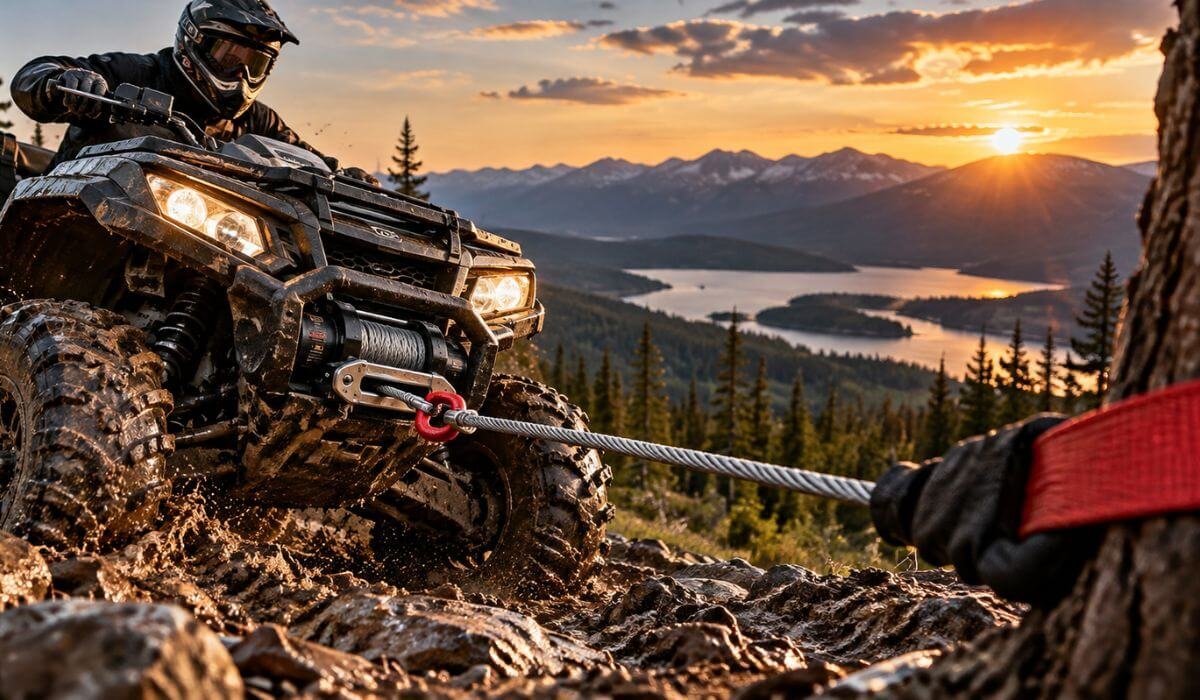
Choosing the best ATV winch is not simply about buying the highest pulling capacity. When your ATV is buried in mud, caught in deep ruts or struggling on a rocky trail, the right winch needs enough pulling power for the recovery, dependable controls and a line that suits the terrain. This guide covers six models from WARN, Superwinch, Rough Country and Champion, with 2,500–4,500 lb pulling capacities, steel cable and synthetic rope options, and features designed for different off-road recovery needs.
Based on the supplied listings, prices range from approximately $189 to $320. The WARN VRX 25 combines a 2,500 lb rating with 50 ft of 3/16-inch steel cable, a roller fairlead and IP68-rated protection, while the WARN R25-S offers the same rated capacity with 50 ft of synthetic rope and a hawse fairlead. For greater pulling capacity, the Superwinch LT3000 and LT4000SR are rated at 3,000 and 4,000 lb respectively, while the Champion and Rough Country models reach 4,500 lb. The Rough Country RS4500SA also lists a 1.4 hp motor, 50 ft of synthetic rope and wired and wireless controls.
Before buying, check the exact model, current price, included accessories and mounting compatibility. A higher pulling rating does not automatically make a winch suitable for your ATV, particularly when mud suction, steep inclines or a buried chassis increase recovery resistance. Confirm your machine’s make, model and year, along with its mounting requirements and electrical capacity, rather than assuming that a universal-looking winch kit will fit.
Best Value ATV Winches: Top 2026 Picks With Synthetic Rope, Steel Cable and Wireless Controls
#1. WARN VRX 25 Powersport Winch
Best 2,500 lb ATV Winch With Steel Cable, IP68 Protection and Roller Fairlead for Muddy Trail Recovery
#2. WARN R25-S Synthetic Rope Winch
Best 2,500 lb ATV Winch With 50-Ft Synthetic Rope, IP67 Sealing and Hawse Fairlead for Lightweight Recovery
#3. Superwinch LT4000SR Winch
Best 4,000 lb ATV Winch With Synthetic Rope, Sealed Solenoid and Braking Features for Demanding Recoveries
#4. Champion Power Equipment 4500-lb Wireless Winch Kit
Best 4,500 lb ATV/UTV Winch With Wireless Remote, Steel Cable and Handlebar Switch for Convenient Recovery
#5. Rough Country RS4500SA ProSeries Winch
Best 4,500 lb ATV Winch With 50-Ft Synthetic Rope, IP67 Protection and Wired or Wireless Controls
#6. Superwinch LT3000 12V DC Winch
Best 3,000 lb ATV Winch With a Sealed Motor, Dual Braking Features and Practical Recovery Controls
Expert Tip
A winch that looks powerful on paper can still be the wrong fit for your ATV. Before paying for a 4,000 or 4,500 lb model, check your machine’s recommended winch capacity, mounting plate and available electrical supply. A higher rating is not automatically better if the winch does not fit properly.
Pay attention to the rope, too. Steel cable is generally more resistant to abrasion but can develop sharp broken wires, while synthetic rope is lighter and easier to handle but needs protection from cuts, heat and rough surfaces. If you ride through wet trails, check the manufacturer’s actual water-ingress rating rather than relying on the word “waterproof” alone. And remember that a winch’s rated line pull is not permission to exceed your ATV’s recovery points or safe working limits.
How We Chose These ATV Winches
We selected these six models to cover different recovery needs rather than simply putting the highest-capacity winches at the top. The shortlist spans 2,500 to 4,500 lb of rated pulling capacity, with steel cable and synthetic rope options, different control arrangements and products intended for ATV or UTV applications. We also considered the supplied prices, which range from approximately $189 to $320, to keep the comparison relevant to buyers shopping within this budget.
Capacity and intended use: The WARN VRX 25 and R25-S provide 2,500 lb ratings for buyers considering a more compact recovery setup. The Superwinch LT3000 and LT4000SR step up to 3,000 and 4,000 lb, respectively, while the Rough Country and Champion models offer 4,500 lb ratings. We included this spread because the right capacity depends on the machine, its weight, the terrain and the manufacturer’s recommendations—not simply on choosing the largest number.
Rope and cable configuration: We included the WARN VRX 25 for its steel cable and the WARN R25-S for its 50-ft synthetic rope. The Rough Country RS4500SA also adds a synthetic-rope option at a higher rated capacity. This gives readers a practical way to compare cable type, handling and maintenance requirements instead of treating all winches as interchangeable.
Controls and weather protection: Remote operation can make recovery more convenient, but the exact arrangement matters. The Champion kit is listed with wireless control, while the Rough Country model is described with remote-control options and waterproof construction. The WARN VRX 25 is listed with an IP68 rating. We have not assumed that every model has the same protection rating or includes identical accessories; those details should be checked against the exact manufacturer’s specifications.
Price and practical value: The supplied listings place these products in an approximate $189–$320 price range. We considered the features offered at each capacity, but did not treat price alone as proof of quality or long-term reliability. Prices, kit contents and availability can change, so check the current listing before buying.
Compatibility and evidence: We kept the shortlist focused on identifiable models from WARN, Superwinch, Rough Country and Champion. However, this is a specification-based comparison, not a hands-on test. We have not independently measured pulling performance, verified every seller’s listing or established long-term failure rates. Before ordering, confirm the model number, mounting dimensions, electrical requirements, included fairlead and remote, warranty and suitability for your specific ATV or UTV.
The goal is straightforward: help you narrow the choice to a winch whose capacity, rope type, controls and fitment make sense for your machine, without pretending that a specification sheet can tell you everything about real-world reliability.
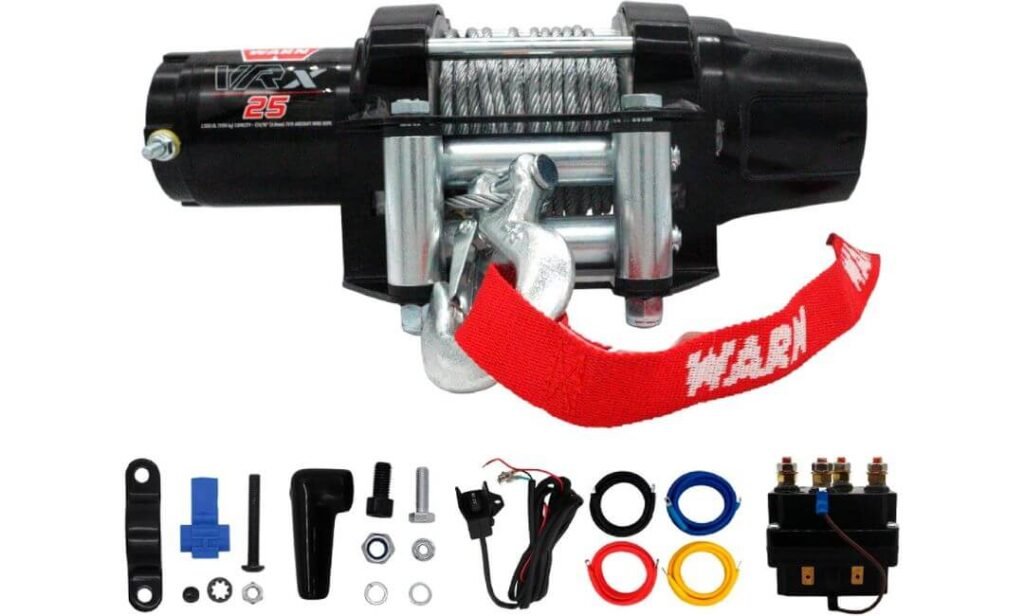
#1. WARN VRX 25 Powersport Winch
Quick Specs:
- Rated Pulling Capacity: 2,500 lb
- Power Supply: 12V DC
- Cable: 50 ft of 3/16-inch steel cable
- Water Protection: IP68-rated construction
- Included Accessories: Roller fairlead, hook, handlebar rocker switch and wiring harness
- Mounting Plate: Sold separately
- Warranty: Limited lifetime mechanical and limited one-year electrical warranty
A 2,500 lb winch can be a sensible choice for a recreational ATV that needs help getting out of muddy ruts, pulling through soft ground or handling occasional utility work. The WARN VRX 25 focuses on a straightforward setup rather than adding features you may never use. Its 12V motor runs from a compatible vehicle electrical system, while the steel cable provides a familiar option for riders who prioritise abrasion resistance during demanding outdoor use.
The 50 ft steel cable gives you useful reach when choosing a suitable recovery anchor, and the included roller fairlead guides the cable as it winds in and out. The handlebar rocker switch allows convenient operation from the riding position, while the supplied wiring harness and relay help simplify electrical installation. You will still need to route and secure the wiring properly according to the installation instructions.
The IP68 rating is another practical consideration for an ATV that sees mud, rain and wet trails. It indicates a defined level of protection against dust and water ingress under specified test conditions, rather than guaranteeing survival in every water crossing or prolonged submersion. WARN’s limited lifetime mechanical warranty and limited one-year electrical warranty add reassurance, although the applicable terms and exclusions should be checked before purchase.
What We Like About Its Design
- A useful 2,500 lb rating: Suitable for some smaller recreational ATVs when the machine manufacturer’s guidance and recovery setup support that capacity.
- Steel cable included: You do not need to purchase a separate rope just to get the supplied winch ready for installation.
- Roller fairlead and hook: Useful included hardware for guiding the cable and connecting an appropriate recovery attachment.
- Handlebar rocker switch: A practical control arrangement for ATV riders who prefer a fixed switch over relying solely on a wireless remote.
- Defined warranty coverage: Separate mechanical and electrical warranty periods make it easier to understand what protection is offered.
One Thing to Check Before Buying
The vehicle-specific mounting plate is sold separately. Confirm that a compatible plate is available for your exact ATV make, model and year before ordering. The winch’s dimensions, mounting pattern and available installation space matter just as much as its pulling rating.
Where the WARN VRX 25 Stands Out
This model makes sense for riders who want a conventional steel-cable winch with a clearly stated capacity, included installation hardware and a recognised powersports brand. It also gives you a useful baseline for comparing the synthetic-rope WARN R25-S and the higher-capacity Superwinch and 4,500 lb alternatives elsewhere in this guide.
It is not automatically the right option for every ATV. A heavier machine, loaded utility setup or demanding recovery situation may call for a different capacity. Choose according to the manufacturer’s recommendations and the conditions in which you expect to use the winch.
The Insider Pro-Tip
Before installation, check your ATV’s battery condition, charging-system capacity, mounting plate and the winch manufacturer’s wiring requirements. A 12V label alone does not guarantee compatibility, and the winch can draw substantial current under load. Use the specified wiring and electrical protection rather than connecting it through an unsuitable accessory circuit.
With steel cable, inspect regularly for kinks, crushed sections, corrosion and broken wire strands. Wear suitable gloves when handling it, keep your hands clear while winching and never stand in line with a tensioned cable. A well-matched winch and careful recovery setup will do more for dependable performance than simply choosing the highest advertised pulling number.
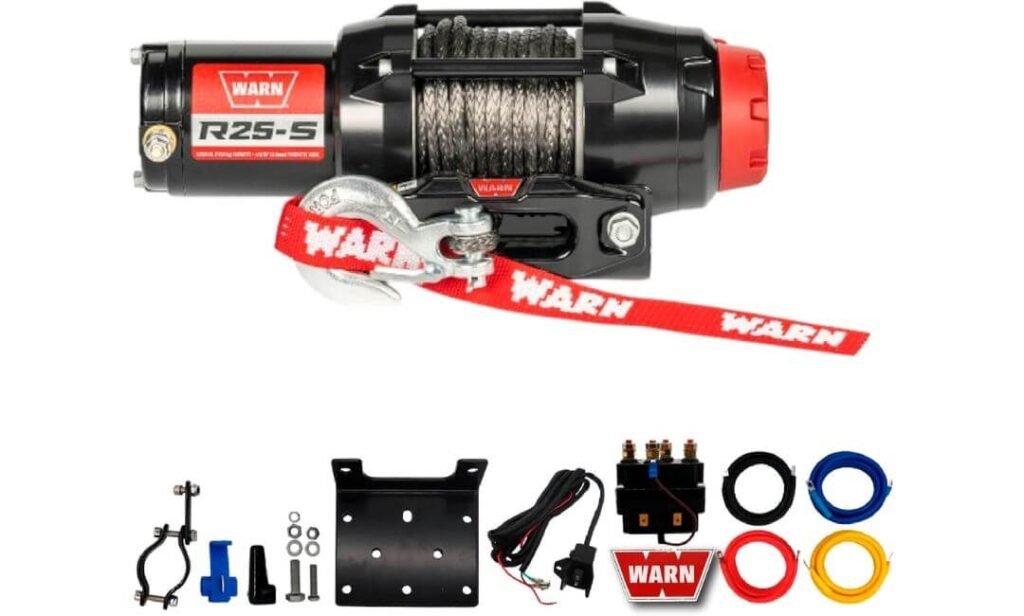
#2. WARN R25-S Synthetic Rope Winch
Quick Specs:
- Rated Pulling Capacity: 2,500 lb
- Power Supply: 12V DC
- Rope: 50 ft of 3/16-inch synthetic rope
- Water Protection: IP67-rated sealing
- Braking System: Automatic dynamic load-holding brake
- Controls: Handlebar rocker switch; handheld remote sold separately
- Mounting Plate: Vehicle-specific plate sold separately
- Warranty: Limited lifetime mechanical and limited one-year electrical warranty
Steel cable is a familiar choice for ATV recovery, but it is not always the easiest material to handle on the trail. The WARN R25-S takes a different approach with 50 ft of 3/16-inch synthetic rope, giving riders a lighter line that is generally easier to handle and store. That can be useful when you regularly ride muddy trails, travel through wooded terrain or need to set up a recovery without wrestling with a heavier steel cable.
Its 2,500 lb rated pulling capacity puts it in the same general capacity class as the VRX 25, so the choice between them comes down partly to rope preference and the equipment included. The automatic dynamic load-holding brake is designed to help control the load during winching, while the IP67-rated sealing protects the motor, gearbox and drum against dust and water ingress under specified conditions. That makes the design relevant to riders who encounter wet trails and muddy conditions, although no waterproof rating makes a winch immune to poor maintenance or every possible submersion scenario.
There is one purchasing detail worth checking before ordering. The vehicle-specific mounting plate and handheld remote are sold separately, according to the supplied product information. Confirm the exact package contents and whether the handlebar rocker switch and wiring components you need are included. Factoring in those extras gives you a more realistic picture of the installed cost than comparing the winch’s listing price alone.
What We Like About Its Design
- Lightweight synthetic rope: Easier to handle than steel cable in many recovery situations, with no steel strands to develop sharp wire splinters.
- 50 ft rope length: Offers useful reach when choosing a suitable anchor point, provided the rope is deployed and routed correctly.
- Automatic load-holding brake: Helps maintain control of the load during winching rather than relying on the operator to manage it manually.
- IP67-rated sealing: A useful feature for ATVs exposed to rain, mud and occasional water crossings within the rating’s limits.
- Clear warranty coverage: The stated mechanical and electrical warranty periods give buyers a defined starting point for checking support and coverage.
One Thing to Check Before Buying
The mounting plate and handheld remote are listed as separate purchases. Check exactly which controls come in the package and whether the mounting bracket fits your ATV’s make, model and year. These details can affect both installation time and the final price.
Where the WARN R25-S Stands Out
This model is worth considering if you prefer synthetic rope and want a 2,500 lb ATV winch with a dedicated load-holding brake and sealed construction. Compared with the steel-cable VRX 25, its main appeal is the rope system rather than a higher pulling rating. Synthetic rope can be easier to manage, but it still needs regular inspection for cuts, abrasion, contamination and heat damage.
The R25-S is not automatically the better choice for every rider. Steel cable may suit some users who prioritise abrasion resistance, while synthetic rope appeals to those who value lighter handling. Your ATV’s recommended winch capacity, mounting arrangement and expected recovery conditions should decide which configuration makes more sense.
The Insider Pro-Tip
Synthetic rope needs a little different care from steel cable. Before each demanding ride, inspect the line for cuts, flattened sections, fraying and damage near the drum or hook connection. Keep it away from sharp edges and excessive heat, and use the appropriate protective sleeve or abrasion guard where the rope could rub against a surface.
Also, do not assume a 2,500 lb rating is suitable for every ATV or UTV. Check the machine manufacturer’s recovery recommendations, the strength of the mounting point and the complete recovery setup. A properly matched winch with sound rope and secure mounting is far more useful than a higher capacity that your vehicle cannot safely support.
#3. Superwinch LT4000SR Winch
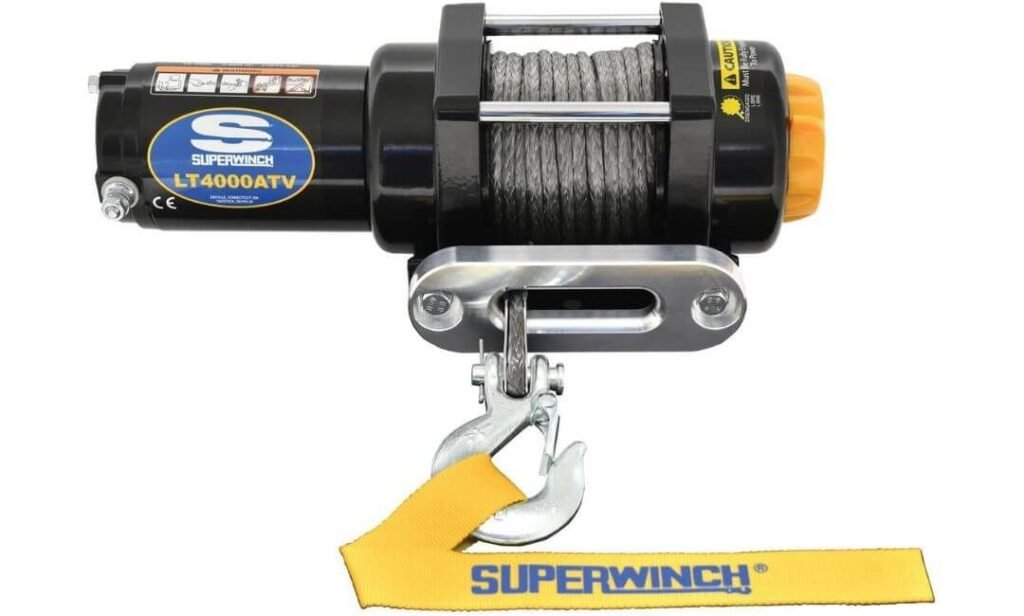
Quick Specs:
- Rated Pulling Capacity: 4,000 lb (1,814 kg)
- Motor: 1.4 HP sealed motor, according to the supplied product information
- Braking System: Mechanical and dynamic braking
- Solenoid: Sealed solenoid
- Rope: 50 ft of 3/16-inch synthetic rope, as listed in the supplied product details
- Controls: Corded handheld remote and handlebar rocker switch, subject to the exact kit configuration
- Mounting: Vehicle-specific fit; confirm the required mounting bracket
- Fairlead: Four-way roller fairlead, according to the supplied listing
When a smaller winch starts to feel limiting for your intended recovery work, stepping up to a 4,000 lb model can be worth considering. The Superwinch LT4000SR offers a higher rated line pull than the two 2,500 lb WARN options earlier in this guide. That additional capacity may suit some heavier ATVs and compatible UTVs, but the right choice still depends on the vehicle manufacturer’s recommendations, mounting strength and the conditions in which you expect to recover your machine.
The listed 1.4 HP sealed motor and sealed solenoid are useful features to consider if you ride in wet or muddy environments. Sealing helps protect components against environmental exposure, but it should not be interpreted as a guarantee that the complete winch can withstand any depth of water or prolonged submersion. The mechanical and dynamic braking systems are also relevant because controlled load movement matters when pulling a machine out of a rut or managing tension on uneven ground.
The supplied product details also describe a synthetic-rope configuration, a roller fairlead and multiple control options. Those features can make recovery more manageable, particularly when you need to operate the winch while maintaining a clear view of the line and anchor point. Before purchasing, verify the exact package contents: accessories and control arrangements can vary by listing, and the vehicle-specific mounting bracket may need to be purchased separately.
What We Like About Its Recovery Setup
- 4,000 lb rated line pull: Provides a step up in capacity from the 2,500 lb models, where the ATV or UTV and mounting arrangement support it.
- Sealed solenoid: Helps protect an important electrical component against exposure to mud and moisture.
- Mechanical and dynamic braking: Offers braking functionality designed to help control the load during winching.
- Synthetic-rope configuration: Gives buyers an alternative to steel cable, with lighter handling and different inspection requirements.
- Multiple control options: The listed handheld remote and handlebar rocker switch can offer flexibility, provided both are included in the purchased kit.
One Thing to Check Before Buying
The model is listed as vehicle-specific, so confirm the mounting bracket and exact fitment before ordering. Also verify the rope, fairlead, remote and wiring included in the particular package you are buying. If your ATV or UTV requires longer power cables because of its layout, use wiring that meets the manufacturer’s specified gauge and installation requirements.
Where the Superwinch LT4000SR Stands Out
Its main attraction is the combination of 4,000 lb rated pulling capacity, a sealed solenoid and mechanical and dynamic braking. That makes it a useful middle ground in this shortlist between the 3,000 lb Superwinch LT3000 and the 4,500 lb options from Rough Country and Champion.
However, the higher rating should not be the only reason to choose it. A winch must match the vehicle’s mounting system, electrical setup and intended recovery loads. We have not independently tested this model’s pulling speed, noise, long-term durability or rope life, so those qualities should not be treated as proven results.
The Insider Pro-Tip
Before your first trail ride, test the winch with no load and inspect the rope as it winds onto the drum. It should spool evenly, without bunching at one side. Poor spooling can damage synthetic rope and make a later recovery more difficult. Keep the line under appropriate tension during spooling, following the manufacturer’s instructions, and never guide it with your hands while the winch is running.
For a demanding recovery, pay as much attention to the anchor point, mounting hardware and recovery equipment as you do to the winch rating. A 4,000 lb line-pull rating does not mean every bumper, strap or attachment point is safe for that load. Use properly rated recovery equipment and stay clear of a tensioned line.
#4. Champion Power Equipment 4500-lb Wireless Winch Kit
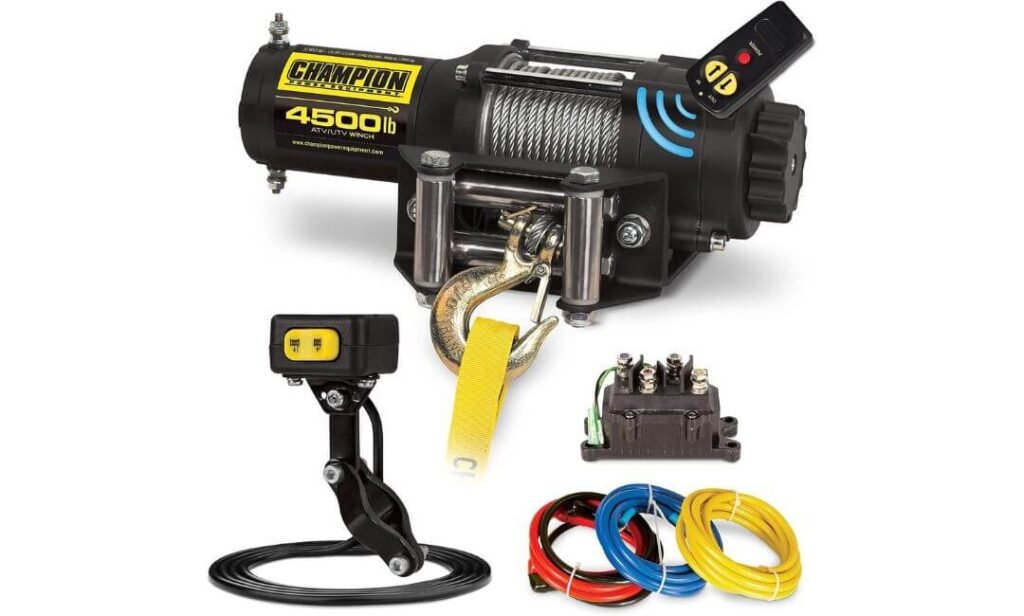
Quick Specs:
- Rated Pulling Capacity: 4,500 lb
- Motor: 1.6 HP, 12V DC
- Line Speed: 4.6 ft/min under full load; 12.8 ft/min without load
- Cable: 38 ft of galvanized steel aircraft cable
- Remote Control: Wireless remote with a stated 50-ft operating range
- Additional Controls: Mini-rocker handlebar switch
- Included Equipment: Wireless remote, antenna, mounting channel, roller fairlead, wiring kit and contactor
- Mounting: Confirm whether an ATV-specific mounting bracket is required for your vehicle
A higher-capacity winch is useful only if you can control it properly during a recovery. The Champion kit combines a 4,500 lb rated line pull with wireless operation, giving you the option to stand where you can better observe the cable, anchor point and vehicle while winching. That flexibility can be particularly helpful when recovering a UTV from a muddy trail or positioning a machine on uneven ground.
Its 1.6 HP, 12V DC motor has a stated line speed of 4.6 feet per minute under full load and 12.8 feet per minute without a load. The difference matters because a loaded winch moves considerably more slowly than it does when simply winding in loose cable. The supplied 38 ft galvanized steel aircraft cable is designed for abrasive conditions, while the roller fairlead helps guide it onto the drum. However, the cable length may be limiting if your preferred recovery anchor is some distance away.
The kit also includes a wireless remote with a stated operating range of 50 feet, an antenna and a mini-rocker handlebar switch. Having both wireless and fixed controls provides useful flexibility, and the remote’s automatic shut-off feature is intended to conserve battery power when it is not in use. Actual wireless performance depends on installation and operating conditions, so check the manufacturer’s instructions rather than assuming the maximum stated range is guaranteed in every setting.
What We Like About Its Recovery Setup
- 4,500 lb rated line pull: Offers a higher-capacity option for compatible ATVs and UTVs when supported by the vehicle and mounting system.
- Wireless operation: Lets the operator choose a suitable viewing position instead of remaining tethered to the winch.
- Useful line-speed figures: The stated loaded and unloaded speeds give a more realistic picture of how quickly the cable moves in different conditions.
- Galvanized steel cable: Offers a conventional cable option for riders who expect contact with abrasive terrain.
- Multiple installation components: The listed mounting channel, roller fairlead, contactor, wiring kit and handlebar switch reduce the number of separate parts you may need to source.
One Thing to Check Before Buying
The supplied 38 ft cable is shorter than the 50 ft ropes listed for some competing models. Consider the terrain you ride and the distance to likely anchor points before deciding that its length will be sufficient. Also confirm the vehicle-specific mounting requirements and whether the supplied kit matches your ATV or UTV.
Where the Champion Kit Stands Out
Its strongest selling point is the combination of 4,500 lb rated capacity, wireless control and a substantial set of included accessories. The extra control flexibility may appeal to riders who want to observe the recovery from a safe position, while the handlebar switch provides an alternative operating method.
There are trade-offs to consider. Steel cable is heavier to handle than synthetic rope, and the stated wireless range does not guarantee flawless reception in every environment. The product information supplied for this listing does not establish a verified waterproof rating, so do not assume the winch is suitable for prolonged submersion. Check the manufacturer’s environmental protection specifications before using it in deep water.
The Insider Pro-Tip
Before relying on the wireless remote on a trail, test both control methods in a safe, unloaded setup and confirm that the winch stops when you release the control. Keep the remote accessible during recovery, but never position yourself in the path of a tensioned cable or between the vehicle and its anchor.
For repeated heavy pulls, follow the manufacturer’s duty-cycle and cooling guidance. Winch motors can heat up under sustained load, and an ATV battery can lose charge during extended operation. Keep the vehicle’s electrical requirements in mind, inspect the cable for broken strands or corrosion, and use only properly rated recovery points and accessories.
#5. Rough Country RS4500SA ProSeries Winch
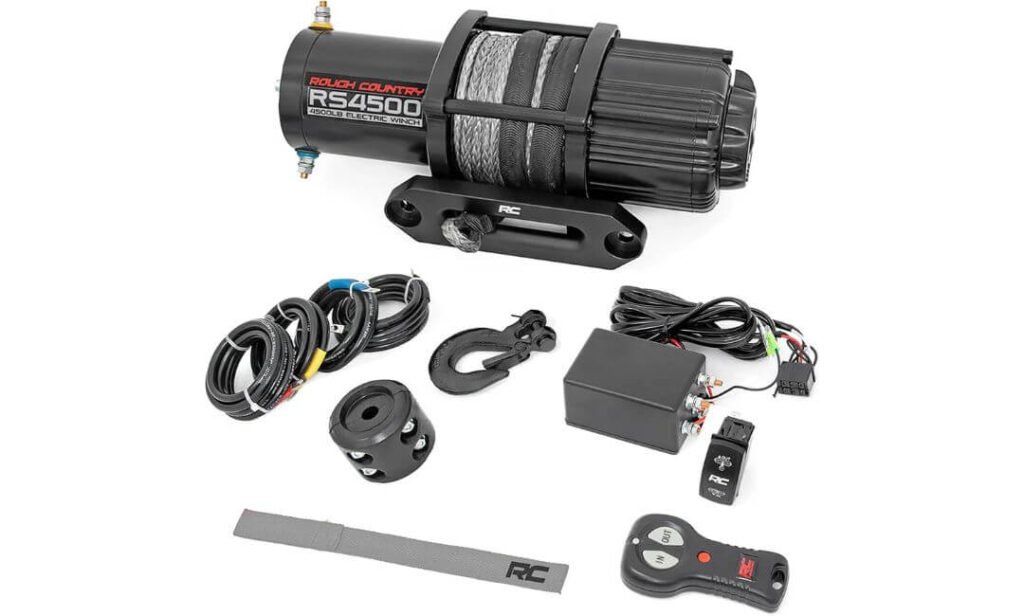
Quick Specs:
- Rated Pulling Capacity: 4,500 lb
- Motor: 1.4 HP, 12V electric motor
- Gear Ratio: 166:1, according to the supplied product description
- Rope: 50 ft of synthetic rope
- Water and Dust Protection: IP67-rated construction
- Controls: Wireless remote and wired rocker switch
- Braking System: Automatic braking
- Included Equipment: Aluminum hawse fairlead, clevis hook, wiring harness, mounting hardware and installation instructions
- Mounting: Check vehicle-specific fitment before ordering
The Rough Country ProSeries is worth considering if you want a 4,500 lb rated winch with synthetic rope and two control options. Its higher capacity makes it a candidate for compatible larger ATVs and UTVs, particularly when trail conditions involve deep mud, steep approaches or occasional utility work. The important qualification is fitment: a higher line-pull rating does not automatically make a winch suitable for every vehicle, bumper or mounting plate.
The 50 ft synthetic rope is a practical advantage for riders who prefer a lighter line that is generally easier to handle than steel cable. It also avoids the sharp wire splinters that can develop on damaged steel cable. Synthetic rope still needs care, though. Cuts, abrasion, contamination and heat can weaken it, and it should be protected wherever it might rub against sharp rocks or metal edges.
For wet and dusty riding conditions, the stated IP67 protection is another useful feature. The supplied description also lists a 1.4 HP motor, a 166:1 gear ratio, a water-resistant solenoid and heavy-gauge wiring. These details indicate the intended setup, but the exact protection of each component should be confirmed in the manufacturer’s documentation. The included wireless remote and wired rocker switch provide two ways to operate the winch, while the automatic braking system is designed to help control the load when winching stops.
What We Like About Its Recovery Setup
- 4,500 lb rated line pull: Offers a higher-capacity option for vehicles whose weight, mounting system and recovery requirements support it.
- 50 ft synthetic rope: Provides useful reach while keeping the line lighter and generally easier to handle than steel cable.
- Wireless and wired controls: Gives you operating flexibility without relying on a single control method.
- IP67-rated protection: A useful specification for riders who regularly encounter mud, dust and wet trails, within the rating’s limits.
- Included installation hardware: The listed hawse fairlead, clevis hook, wiring harness and mounting hardware can simplify the initial setup.
One Thing to Check Before Buying
Although the kit is described as suitable for many ATVs and UTVs, some vehicles may require a separate mounting plate or a different mounting arrangement. Check the bolt pattern, available space and cable-lead length before ordering. Do not assume that a universal-style winch will bolt directly onto every newer ATV.
Where the Rough Country ProSeries Stands Out
Its main appeal is the combination of 4,500 lb capacity, synthetic rope, IP67-rated protection and dual controls. Compared with the Champion 4500-lb kit in this guide, it uses synthetic rope rather than the Champion’s listed galvanized steel cable. That makes the choice partly about how you prefer to handle and maintain your recovery line, not just about pulling capacity.
The included accessories also make it easier to assess the overall package, but they do not eliminate the need to verify compatibility. We have not independently tested this winch’s pulling performance, waterproofing or long-term durability, so the stated specifications should not be treated as hands-on test results.
The Insider Pro-Tip
When installing a synthetic-rope winch, pay attention to how the rope first winds onto the drum. Keep the rope evenly layered under appropriate tension, following the manufacturer’s instructions. Loose or uneven winding can cause the line to bunch, pinch or become difficult to deploy during a later recovery.
Before buying, compare the winch’s mounting requirements with your exact ATV or UTV model and confirm that the supplied wiring reaches the battery safely. During use, stay clear of the tensioned line, choose a suitable rated anchor and allow the motor to cool according to the manufacturer’s duty-cycle guidance after demanding pulls. Those details matter far more to a dependable recovery setup than the headline capacity alone.
#6. Superwinch LT3000 12V DC Winch
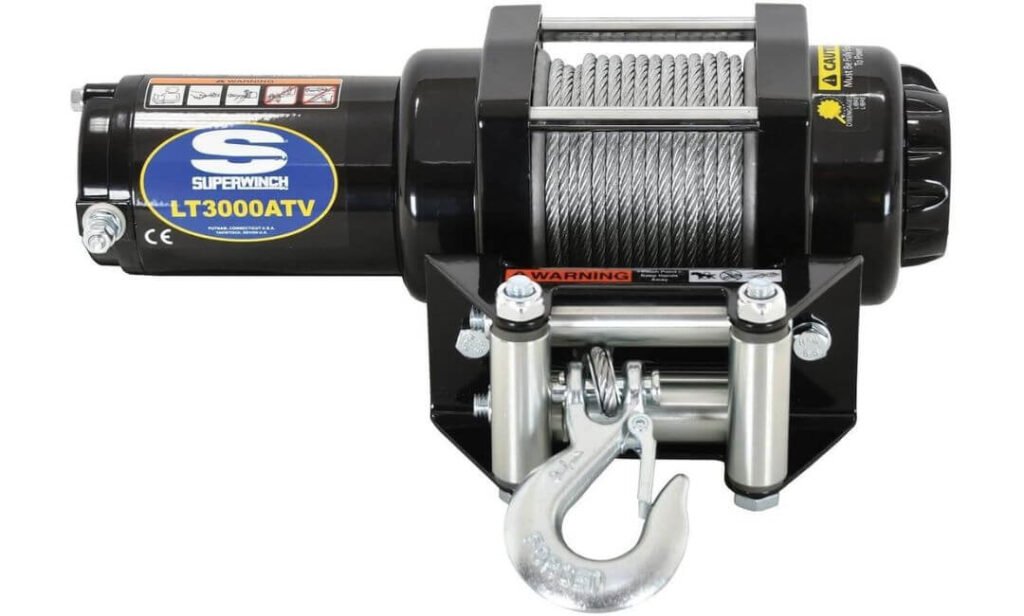
Quick Specs:
- Rated Pulling Capacity: 3,000 lb (1,361 kg)
- Power Supply: 12V DC
- Motor: Sealed, low-amperage permanent magnet motor
- Rope: Steel wire rope; confirm the supplied cable length for the exact kit
- Fairlead: Roller fairlead
- Controls: Handlebar-mounted rocker switch and handheld remote
- Braking System: Mechanical and dynamic braking
- Mounting: Mounting plate included in the supplied product description; verify vehicle-specific fitment
- Warranty: The supplied information lists two years of mechanical coverage and one year of electrical coverage; confirm the applicable terms
Not every ATV owner needs a 4,500 lb winch. For riders who want a middle-ground option for trail recovery and occasional utility work, the Superwinch LT3000 offers a 3,000 lb rated line pull in a 12V DC setup. It sits between the two 2,500 lb WARN models and the higher-capacity alternatives in this guide, making it useful for comparing capacity without automatically moving to the largest winch available.
Its sealed permanent magnet motor is described as a low-amperage design. That is worth considering when choosing electrical accessories for an ATV, although actual current draw depends on the load and operating conditions. The listed mechanical and dynamic braking systems are designed to help control the load during winching, while the roller fairlead guides the steel cable onto the drum. These are practical features for a machine that sees muddy trails, uneven ground and occasional recovery work.
Another advantage is the two-control arrangement. The product information lists both a handlebar-mounted rocker switch and a handheld remote, giving you different ways to operate the winch. The supplied description also lists a roller fairlead and mounting plate, but you should confirm the exact package contents and mounting compatibility before buying. A mounting plate included in a kit does not necessarily mean it will fit your specific ATV.
What We Like About Its Recovery Setup
- 3,000 lb rated line pull: Provides a useful middle option between lighter-duty and higher-capacity winches, subject to your vehicle’s requirements.
- Sealed permanent magnet motor: Designed to protect the motor and support operation in demanding outdoor conditions.
- Two control options: The handlebar rocker switch and handheld remote offer flexibility during setup and recovery.
- Roller fairlead: Helps guide steel cable onto the drum and reduce unnecessary rubbing when the cable is routed correctly.
- Mechanical and dynamic braking: Provides braking functions intended to help control the load during winching.
One Thing to Check Before Buying
Confirm the exact steel cable length, mounting pattern and wiring reach for the listing you intend to purchase. Some ATV installations place the solenoid farther from the winch, so the supplied wiring may not suit every layout. Any extension must meet the manufacturer’s specified cable gauge and electrical requirements.
Where the Superwinch LT3000 Stands Out
The LT3000 makes sense for buyers who want a 3,000 lb winch with straightforward controls, a sealed motor and a roller fairlead rather than paying for a higher pulling rating they may not need. It also gives this guide a practical alternative to the 2,500 lb WARN models and the 4,000–4,500 lb options.
Its rated capacity alone cannot establish whether it is suitable for a particular machine. ATV weight, accessories, mounting strength and recovery conditions all influence the decision. We have not independently tested its pulling speed, noise, electrical draw or long-term durability, so those qualities should be verified through reliable manufacturer information and current owner feedback.
The Insider Pro-Tip
Before installing the winch, lay out the cable routing and decide where the solenoid, rocker switch and remote connection will sit. This helps you identify a short lead or awkward mounting position before everything is bolted into place. Keep electrical cables away from hot surfaces, moving parts and sharp edges, and follow the supplied wiring diagram rather than improvising connections.
After installation, test the controls and braking behaviour in a safe, unloaded setup. Inspect the steel cable for broken strands, kinks and corrosion, and make sure it spools evenly through the fairlead. A correctly fitted 3,000 lb winch with sound cable and secure recovery points is a more useful choice than a higher-rated unit that does not suit your ATV.
Best ATV Winches for the Money (2026) Feature Comparison at a Glance
| Winch | Rated Pull | Rope Type | Controls | Key Feature | Check Before Buying |
|---|---|---|---|---|---|
| WARN VRX 25 | 2,500 lb | Steel cable 50 ft · 3/16 in |
Handlebar rocker switch | IP68-rated construction and roller fairlead | Vehicle-specific mounting plate sold separately |
| WARN R25-S | 2,500 lb | Synthetic rope 50 ft · 3/16 in |
Rocker switch; handheld remote sold separately | IP67 sealing and automatic dynamic load-holding brake | Mounting plate and handheld remote are listed separately |
| Superwinch LT4000SR | 4,000 lb | Synthetic rope Confirm exact kit |
Handheld remote and rocker switch, depending on kit | Sealed solenoid with mechanical and dynamic braking | Verify rope, controls and vehicle-specific bracket |
| Champion 4500 Wireless | 4,500 lb | Galvanized steel cable 38 ft |
Wireless remote rated for 50 ft; handlebar switch | 1.6 HP motor and stated loaded/unloaded line speeds | Confirm mounting fit and whether 38 ft is enough for your recovery needs |
| Rough Country RS4500SA | 4,500 lb | Synthetic rope 50 ft |
Wireless remote and wired rocker switch | IP67 rating, 1.4 HP motor and aluminum hawse fairlead | Check mounting pattern, wiring reach and exact kit contents |
| Superwinch LT3000 | 3,000 lb | Steel wire rope Length to verify |
Handlebar rocker switch and handheld remote | Sealed low-amperage motor and dual braking system | Confirm cable length, wiring reach and ATV-specific fitment |
Fitment note: all pulling ratings are manufacturer-listed figures, not a guarantee of suitability for every ATV or UTV. Check the exact product listing, mounting requirements, electrical system and included accessories before ordering.
Buying Guide for Choosing the Right ATV Winch for Your Terrain and Recovery Needs
An ATV winch should be chosen around the machine you own, the terrain you ride and the type of recovery you expect to handle. A winch used occasionally to pull a quad out of a muddy trail has different demands from one used regularly for utility work or recovering a heavier side-by-side. The goal is to find a setup that fits your vehicle properly and gives you enough pulling capacity, suitable controls and a line you can maintain confidently.
Match the Winch Capacity to Your ATV
Pulling capacity is a useful starting point, but it should not be the only deciding factor. The vehicle’s weight, added accessories, mounting strength, recovery angle and resistance from mud or uneven ground all affect the load placed on a winch. Always check your ATV manufacturer’s recommendations and the winch manufacturer’s fitment guidance before purchasing.
| Rated capacity | Models in this guide | What to consider |
|---|---|---|
| 2,500 lb | WARN VRX 25, WARN R25-S | Consider for compatible recreational ATVs and lighter recovery duties |
| 3,000 lb | Superwinch LT3000 | A middle option for buyers who need more rated pull than a 2,500 lb unit |
| 4,000 lb | Superwinch LT4000SR | Consider for compatible heavier machines and more demanding recovery requirements |
| 4,500 lb | Champion Wireless, Rough Country RS4500SA | Higher rated capacity for suitable ATVs and UTVs with compatible mounting and recovery points |
These ratings are not guaranteed vehicle-weight limits. A winch rated at 4,500 lb does not automatically make it appropriate for every UTV, and a 2,500 lb winch is not necessarily sufficient for every smaller ATV. Recovery conditions can increase the resistance substantially, so do not choose capacity using vehicle weight alone.
Choose Synthetic Rope or Steel Cable for Your Riding Conditions
The line supplied with a winch affects handling, maintenance and how well the setup suits your terrain. Neither material is universally better.
Synthetic rope is lighter and generally easier to handle than steel cable. It is a good option for riders who want to reduce the weight of the recovery equipment and prefer a line without steel wire strands. However, it can be damaged by abrasion, sharp edges, contamination and excessive heat, so inspection and suitable rope protection are important.
Steel cable is often preferred for its abrasion resistance in demanding environments, but it is heavier and can develop dangerous broken wire strands. It needs regular inspection and careful handling with suitable gloves.
For the six models in this guide, the WARN R25-S and Rough Country RS4500SA use synthetic rope according to the supplied specifications. The WARN VRX 25 and Champion kit use steel cable. Confirm the exact rope configuration and length of the Superwinch models in the particular listing before ordering.
Check Waterproofing and Motor Protection Carefully
A winch used on wet trails should have suitable protection against water and dust, but the word waterproof on a product listing does not tell you everything.
The WARN VRX 25 is listed with an IP68 rating, while the WARN R25-S and Rough Country RS4500SA are listed with IP67 protection. These ratings describe protection under specified test conditions. They should not be treated as proof that every component, electrical connection or installation can withstand unrestricted underwater use.
The Superwinch LT4000SR is listed with a sealed solenoid, and the LT3000 with a sealed permanent magnet motor. Those features are worth considering, but a sealed component does not establish the water-protection rating of the entire winch. The Champion listing supplied for this guide does not establish an equivalent IP rating, so verify its environmental protection requirements if you regularly ride through deep water.
After wet or muddy recovery work, inspect the rope, fairlead, mounting hardware and electrical connections. Follow the manufacturer’s maintenance instructions rather than assuming that a sealed winch never needs attention.
Decide Whether Wireless or Wired Controls Suit You Better
Controls influence how you operate the winch during recovery. A handlebar-mounted rocker switch is convenient because it stays within reach, while a handheld remote can give you more freedom to choose a suitable viewing position. A wireless remote removes the physical cable between the operator and control unit, but its stated range does not guarantee reliable operation in every environment.
The Champion 4500-lb kit is listed with a wireless remote rated for a 50-foot operating radius and a handlebar switch. The Rough Country RS4500SA also lists wireless and wired control options. The WARN R25-S has a handheld remote listed as a separate purchase, so confirm what comes in the package. The Superwinch LT4000SR’s and LT3000’s supplied configurations should also be checked for their exact control accessories.
Before your first demanding recovery, test the controls in a safe, unloaded setup. Make sure you know how to stop the winch immediately and never position yourself in the path of a tensioned line.
Check Mounting, Wiring and Included Accessories Before Ordering
Compatibility problems can turn an otherwise suitable winch into an expensive project. A 12V winch needs an appropriate electrical system, properly sized wiring and secure mounting points. The winch must also fit the available space on your ATV or UTV.
Before purchasing, check these details:
- Vehicle fitment: Confirm the exact make, model and year, mounting pattern and available installation space.
- Mounting plate: Check whether the kit includes a compatible vehicle-specific plate or whether you need to buy one separately.
- Electrical requirements: Follow the specified wiring gauge, fuse or circuit protection, solenoid arrangement and battery connection instructions.
- Control accessories: Verify whether the remote, rocker switch, antenna and wiring harness are included.
- Fairlead and hook: Confirm that the supplied components suit the line type and intended mounting arrangement.
- Warranty and support: Read the actual warranty terms, including electrical coverage, exclusions and any installation requirements.
A mounting channel or generic mounting hardware does not guarantee direct fitment to your particular machine. Similarly, the fact that a winch uses 12V power does not establish that every ATV battery and charging system can support it under heavy load.
Make Sense of the Price Before Choosing a Model
The supplied prices for this shortlist range from approximately $189 to $320. Compare the full installation cost, not just the winch’s advertised price. A model that requires a separate mounting plate, remote or wiring extensions may cost more once it is ready to use.
It is also worth distinguishing between stated specifications and proven long-term performance. A higher price, familiar brand name or impressive pulling rating does not independently establish reliability. We have not hands-on tested these six winches, so check current manufacturer documentation, warranty coverage and credible owner feedback before treating any model as the definitive winner.
Final Pre-Purchase Checklist
Use this checklist before placing an order.
- The winch’s rated pulling capacity matches the vehicle manufacturer’s recommendations and intended recovery use.
- The rope material and length suit your terrain and maintenance preferences.
- The weather-protection specifications are appropriate for your riding conditions.
- The mounting plate and bolt pattern fit your exact ATV or UTV.
- The included controls and accessories match what you need.
- The electrical system and wiring meet the manufacturer’s requirements.
- The final price includes any separately sold mounting or control equipment.
- You understand the warranty terms and the inspection requirements for the rope or cable.
The best ATV winch is the one that fits your machine, works with its electrical and mounting systems, and provides suitable control for the recoveries you expect to perform. Choose for compatibility first, pulling capacity second, and convenience features after that. That approach is more useful than buying the biggest winch on the shelf and hoping it will fit.
The Pulling Power Spectrum From 2,500 to 4,500 Lb
Winch capacity is one of the most important specifications to consider when choosing an ATV recovery system, but a higher number does not automatically make a winch the right choice. The useful pulling force you need depends on your ATV’s weight, the terrain, how deeply the tyres are buried, the slope of the recovery and whether the machine is carrying extra equipment. A relatively light ATV stuck on level ground may need far less pulling force than a heavier machine trapped in wet clay or facing uphill.
The six winches in this guide cover rated pulling capacities from 2,500 to 4,500 pounds. That range provides several options for recreational trail riding, muddy tracks and more demanding recovery situations. The important distinction is between a winch’s rated line pull and the actual resistance it must overcome during a recovery. Mud suction, rolling resistance, inclines and obstacles can increase the load considerably, so choosing a capacity requires more thought than matching the winch rating to the ATV’s advertised weight.
2,500 Lb ATV Winch for Light and Moderate Recoveries
A 2,500-pound winch can be a practical choice for compatible, relatively lightweight ATVs used for recreational trail riding, farm work and occasional self-recovery. It is particularly relevant when compact equipment and straightforward installation matter more than having the highest available pulling capacity.
In this guide, the WARN VRX 25 and WARN R25-S both have a rated pulling capacity of 2,500 pounds. Their main difference is the line system: the VRX 25 uses steel cable, while the R25-S uses synthetic rope. That makes them useful examples of how two winches with the same pulling rating can suit different maintenance preferences and riding conditions.
A winch in this class may be suitable for situations such as:
- Pulling a compatible ATV forward after its tyres lose traction on a relatively level trail.
- Recovering from a shallow muddy patch where the machine is not deeply embedded.
- Moving the ATV past a small obstacle when the load and anchor arrangement remain within safe limits.
- Carrying out occasional recovery work where a compact winch is sufficient for the machine and intended use.
However, 2,500 pounds should not be treated as a universal recommendation for every ATV weighing less than 2,500 pounds. The winch must have sufficient capacity for the actual recovery load, and the mounting system, anchor point and recovery equipment must also be rated appropriately. A heavy ATV can require substantially more pulling force when its tyres are buried in mud or the recovery involves an incline.
Choose this capacity when the manufacturer’s guidance and your expected recovery conditions support it, rather than selecting it simply because it is the smallest or potentially more affordable option.
3,000 Lb ATV Winch for a More Versatile Middle Ground
A 3,000-pound winch provides a step up from the 2,500-pound category without moving directly into the 4,000–4,500-pound range. For riders whose machines and recovery conditions justify the additional capacity, this can offer a useful balance between pulling capability and a manageable winch setup.
The Superwinch LT3000 is the 3,000-pound option in this comparison. Its sealed motor and mechanical and dynamic braking features are relevant considerations alongside its rated line pull. The motor and braking system influence how the winch operates, but neither should be interpreted as proof that it can safely recover every ATV in a particular weight class.
This capacity may make sense for riders who regularly encounter:
- Uneven trails where the ATV occasionally becomes stuck against ruts, loose ground or small obstacles.
- Moderate mud where the machine needs more assistance than a straightforward pull on firm ground.
- Routine utility work around compatible properties, provided the winch is correctly mounted and the recovery load remains within its limits.
- Situations where a 2,500-pound model does not provide enough capacity for the manufacturer-approved application.
The key is to avoid treating 3,000 pounds as an automatic upgrade for every rider. If your ATV is relatively light and your recoveries are uncomplicated, a suitable 2,500-pound model may already meet your needs. If your machine is heavier, carries substantial accessories or regularly encounters deep mud and steep terrain, you may need a higher-capacity winch or a different recovery arrangement.
Also, check the LT3000’s exact kit contents before ordering. Confirm the supplied rope or cable length, control arrangement, mounting compatibility and warranty terms rather than assuming every listing includes the same equipment.
4,000–4,500 Lb ATV Winches for More Demanding Recoveries
The 4,000–4,500-pound category offers the highest rated line-pull capacities among the models covered here. These winches may be worth considering for compatible larger ATVs, more demanding utility use and riding conditions where a correctly selected lower-capacity model would not provide sufficient pulling force.
This category includes the Superwinch LT4000SR, rated at 4,000 pounds, alongside the Champion Power Equipment wireless winch kit and Rough Country RS4500SA ProSeries, both rated at 4,500 pounds. Their features differ, so the capacity figure should not be the only deciding factor.
For example, the Champion kit lists a 38-foot galvanized steel cable, wireless control with a stated range of 50 feet and a handlebar rocker switch. The Rough Country model lists 50 feet of synthetic rope, an IP67 rating and both wireless and wired controls. The Superwinch LT4000SR is listed with synthetic rope and braking features, although the exact rope and control configuration should be confirmed for the particular kit being purchased.
These higher-capacity options may be relevant when:
- The ATV is relatively heavy or carries accessories that increase its operating weight.
- The rider frequently encounters deep mud, soft ground or uneven terrain that increases recovery resistance.
- The recovery involves a demanding approach, provided the winch, anchor, mounting structure and recovery equipment are all suitable for the expected load.
- The manufacturer’s capacity guidance indicates that a 4,000–4,500-pound winch is appropriate for the machine and intended application.
There is an important limitation, though: a 4,500-pound rating does not guarantee that a winch can pull an ATV out of every mud hole. Deep suction, a steep incline, a buried chassis or a poor anchor point can create loads beyond what the setup can safely handle. In those situations, improving the recovery angle, reducing resistance or using an appropriate rated recovery arrangement may be more effective than relying on a higher number alone.
A larger winch may also require additional attention to mounting strength, wiring, battery condition and available electrical capacity. Check the ATV manufacturer’s recommendations and the winch installation instructions before deciding that the highest-rated option is the best one.
How Terrain and Recovery Conditions Change the Required Pulling Force
The same ATV can require very different amounts of pulling force depending on where it becomes stuck. A machine stopped on firm, level ground is not facing the same resistance as one buried in sticky mud, wedged against a rut or being recovered uphill. This is why rated line pull should be considered alongside the conditions you are likely to encounter.
| Recovery situation | What affects the load | What to consider |
|---|---|---|
| Firm, level trail | Tyre traction and rolling resistance | A suitable lower-capacity winch may be sufficient if the ATV manufacturer’s guidance supports it. |
| Shallow mud or loose soil | Reduced traction and increasing resistance | Assess how deeply the tyres are buried and whether the ATV can be recovered without excessive strain. |
| Deep mud or a buried chassis | Mud suction and contact with the ground | Do not assume a higher-capacity winch alone makes the recovery safe. Reduce resistance and reassess the setup. |
| Uphill recovery | Slope, vehicle weight and rolling resistance | The required pulling force can increase substantially, making anchor placement and equipment ratings especially important. |
| Recovery around rocks, ruts or obstacles | Snagging, changing pull direction and uneven resistance | Avoid side pulls unless the winch and mounting arrangement specifically permit them; reposition the ATV or anchor when necessary. |
These are practical examples, not a substitute for calculating the recovery load or following the ATV and winch manufacturers’ instructions. If the machine is heavily stuck, the anchor point is uncertain or the load is difficult to estimate, stop and reassess instead of continuing to pull against an overloaded system.
Why Rated Line Pull Is Not the Same as Safe Recovery Capacity
A winch’s advertised pulling rating is a specification for its line-pulling capability under defined conditions. It is not a statement that the winch can safely recover an ATV of the same weight in every situation, nor does it establish the safe working load of the entire recovery setup.
Several factors matter during an actual pull:
- Winch capacity: The rated line pull must be appropriate for the expected load and the manufacturer’s specified operating conditions.
- Rope or cable layers: On a typical drum winch, pulling capacity is highest on the innermost rope or cable layer and decreases as additional layers build up on the drum. Consult the manufacturer’s line-pull specifications.
- Anchor strength: A tree, recovery anchor or other attachment point must be suitable for the expected load and connected with correctly rated equipment.
- Mounting strength: The winch plate, mounting bolts and ATV structure must be compatible with the winch and recovery forces.
- Electrical supply: A 12-volt winch needs a suitable electrical system, sound connections and an adequately maintained battery. A higher pulling rating does not remove these requirements.
- Recovery technique: A poor pulling angle, excessive resistance or an unsuitable recovery method can create dangerous loads, even when the winch appears powerful enough.
Do not use an unapproved pulley or double-line arrangement to assume the winch can safely handle twice its rated capacity. A snatch block can change the mechanical advantage and direction of pull, but the rope, winch, anchor, attachment points and recovery accessories must all be suitable for the resulting forces. It can also increase the load on the anchor and introduce additional hazards if the system is assembled incorrectly.
Which Pulling Capacity Makes the Most Sense for Your ATV?
Before choosing a rating, consider the ATV’s manufacturer-specified limits, its operating weight with accessories, the terrain you regularly ride and the severity of recoveries you expect. The following summary can help narrow the options, but it is not a vehicle-weight compatibility chart.
- Consider 2,500 pounds if you have a compatible ATV and expect mainly occasional, relatively straightforward recoveries. Compare the WARN VRX 25 and R25-S based on steel cable versus synthetic rope, weather protection and included controls.
- Consider 3,000 pounds if your expected recovery loads justify the additional capacity and the Superwinch LT3000 fits your ATV’s mounting and electrical requirements.
- Consider 4,000 pounds if your ATV and intended recovery work require greater pulling capability, and the Superwinch LT4000SR’s exact kit configuration meets your needs.
- Consider 4,500 pounds if the vehicle manufacturer’s guidance and your anticipated recovery loads support this rating. Compare the Champion kit and Rough Country RS4500SA based on cable length, line material, control options, weather protection and fitment.
The final decision should come from the combination of rated capacity, installation compatibility, recovery conditions and the equipment included in the kit. If you are uncertain whether a particular rating is appropriate for your ATV, confirm it with the vehicle and winch manufacturers before purchasing.
The most useful winch is not automatically the one with the biggest number on its box. It is the one that is correctly matched to your machine, installed properly and used within the limits of the complete recovery system.
Synthetic Rope vs Steel Cable for ATV Winches
The line fitted to an ATV winch affects more than its weight. It influences how easily you handle the line during recovery, how it responds to abrasion, how much maintenance it needs and what precautions you should take when a pull goes wrong. Both synthetic rope and steel cable can work well on an ATV, but neither is automatically the better choice for every rider.
In this comparison, the WARN VRX 25 and Champion Power Equipment 4500-lb kit use steel cable, while the WARN R25-S and Rough Country RS4500SA use synthetic rope. The Superwinch LT4000SR is also listed with synthetic rope, whereas the exact line specification and length for the Superwinch LT3000 should be checked against the kit being purchased. These differences matter because a winch’s pulling rating does not tell you how its line will perform in mud, around rocks or during regular maintenance.
Synthetic Rope for Easier Handling and Lower Weight
Synthetic winch rope is commonly made from high-strength synthetic fibres, often with a protective outer coating or sleeve. On an ATV, its lower weight can make a noticeable difference when you pull the line out, position it around a suitable anchor and feed it back onto the drum. It also avoids the sharp broken wires associated with damaged steel cable.
For riders who regularly recover their machines on trails, in wooded areas or in muddy conditions, synthetic rope can be a convenient option. It is generally easier to handle with gloves and is less likely to develop the painful wire splinters that can appear on worn steel cable. However, it still requires careful inspection and correct use.
The main advantages include:
- Lower weight: Synthetic rope is generally lighter than a comparable steel cable, which makes handling and managing the line easier.
- Convenient handling: It is usually more flexible, making it easier to position around a suitable recovery point when used with the correct rated accessories.
- No broken-wire splinters: Unlike steel cable, synthetic rope does not develop sharp metal strands that can puncture gloves or skin.
- Less stored kinetic energy in many setups: Synthetic rope generally stretches less elastically than steel cable under comparable conditions, although actual behaviour depends on the rope and recovery system. This does not make a loaded line harmless if it breaks.
- Reduced corrosion concerns: Synthetic fibres do not rust like steel, although dirt, moisture, chemicals, sunlight and abrasion can still damage the rope.
There are limitations. Synthetic rope can be damaged by sharp edges, repeated rubbing against rocks, excessive heat and certain chemicals. It also needs protection from prolonged ultraviolet exposure, which can gradually weaken some fibres. A protective sleeve helps where the rope contacts surfaces, but it cannot compensate for poor routing or an unsuitable anchor arrangement.
Water and mud are not automatically reasons to reject synthetic rope, either. The important question is whether the rope can be inspected, cleaned and dried according to the manufacturer’s instructions. Fine grit trapped between fibres can contribute to internal abrasion, so a line that looks clean on the outside may still need attention after demanding recoveries.
Steel Cable for Abrasion Resistance and Familiar Maintenance
Steel cable remains a practical option for ATV owners who prefer a traditional winch line and want a cable that can tolerate certain types of rough contact better than an unprotected synthetic rope. It is commonly used on utility-oriented winches and can be a sensible choice when the cable is properly matched to the drum, fairlead and winch.
The WARN VRX 25 uses 50 feet of 3/16-inch steel cable, while the Champion Power Equipment 4500-lb kit lists 38 feet of galvanized steel cable. That difference in supplied length is worth considering before buying, especially if you regularly need to reach suitable anchor points farther from the ATV.
Steel cable offers several practical benefits:
- Resistance to some forms of abrasion: Steel can tolerate certain rough-contact conditions better than synthetic rope, although repeated rubbing, crushing and sharp bends can still damage it.
- Traditional construction: Many riders are familiar with steel cable, and replacement cable is available for compatible winches.
- No ultraviolet degradation of the steel itself: Sunlight does not weaken steel in the same way that prolonged UV exposure can degrade synthetic fibres, although coatings and lubricants may deteriorate.
- Suitable for utility use: A correctly specified cable can be useful where the winch is used regularly and the owner is prepared to inspect and maintain it.
The trade-offs are important. Steel cable is heavier and can be more awkward to handle, particularly when it has developed kinks or bird-caging. Individual broken wires can cause painful injuries, so gloves are essential when handling it. Steel can also corrode, especially if its protective coating is damaged or it is repeatedly exposed to water, mud and road salts.
A steel cable should not be treated as maintenance-free simply because it is made of metal. Inspect it for rust, flattened sections, kinks, crushed areas, broken wires and other deformation. If the cable is damaged, follow the winch manufacturer’s replacement criteria rather than continuing to use it because the damage appears minor.
Which Line Material Suits Different ATV Recovery Conditions?
The right choice depends on how you ride and how much care you can realistically give the line. A rider who values easier handling and carries out frequent trail recoveries may prefer synthetic rope. Someone who prioritises a traditional cable and understands its handling and inspection requirements may prefer steel. The pulling rating alone should not determine the material.
| Riding or recovery condition | Synthetic rope | Steel cable |
|---|---|---|
| Frequent recreational trail riding | Often a good choice because it is lighter and easier to handle | Suitable, but heavier and more likely to develop sharp broken wires as it wears |
| Muddy trails | Can work well if cleaned, inspected and dried as recommended | Can work well, but corrosion and dirt around damaged strands require attention |
| Rocky terrain | Needs careful routing and protection from sharp edges and abrasion | May tolerate some rough contact better, but crushing, kinks and broken wires remain concerns |
| Regular outdoor storage | Requires attention to UV exposure and the manufacturer’s storage guidance | Requires inspection for corrosion and damage to protective coatings |
| Ease of handling | Generally easier to pull out and rewind by hand | Heavier and potentially more difficult to manage |
| Maintenance priority | Inspect for cuts, fraying, abrasion, contamination and heat damage | Inspect for broken wires, corrosion, kinks, crushing and deformation |
These are general tendencies, not guarantees. The quality of the line, its diameter, the winch drum and fairlead design, the recovery method and the environment all affect performance. Always use a line specified for the winch and follow its manufacturer’s operating instructions.
Does a 2,500–4,500 Lb Winch Need a Particular Rope Material?
No. A winch’s rated pulling capacity does not automatically dictate whether it should use synthetic rope or steel cable. The line must be rated and specified for the winch, and its compatibility with the drum, fairlead and braking arrangement matters more than choosing a material based on the capacity number alone.
For the models in this guide, the practical comparison is:
- 2,500-pound winches: The WARN VRX 25 offers steel cable, while the WARN R25-S offers synthetic rope. This gives buyers a direct opportunity to choose based on handling, exposure and maintenance preferences without changing the rated pulling capacity.
- 3,000-pound winches: Before choosing the Superwinch LT3000, verify the exact rope or cable supplied with the version you are purchasing. Do not assume the line material or length from another listing.
- 4,000-pound winches: The Superwinch LT4000SR is listed with synthetic rope. Confirm the precise rope specification and supplied controls for the particular kit.
- 4,500-pound winches: The Rough Country RS4500SA uses synthetic rope, while the Champion kit uses steel cable. Compare the 50-foot synthetic line with the Champion’s listed 38-foot steel cable, along with the other included features.
The useful distinction is therefore not that lower-capacity winches should use steel and higher-capacity models should use synthetic rope. Either material can be suitable when correctly specified. Choose according to the recovery conditions, your maintenance habits and the manufacturer’s compatibility requirements.
How to Maintain Synthetic Rope and Steel Cable
Regular inspection is part of responsible winch ownership, particularly after a demanding recovery. A line can be damaged even when the winch still operates normally, so do not use motor sound or pulling performance as the only indication that the system is safe.
Synthetic Rope Maintenance
- Inspect the full length: Look for cuts, fraying, flattened sections, severe fuzzing, discolouration, melted fibres and damage to the protective sleeve. Follow the manufacturer’s rejection criteria if you find damage.
- Remove embedded dirt: Mud and grit can contribute to fibre abrasion. Clean the rope according to the manufacturer’s instructions and allow it to dry as recommended before storage.
- Protect it from abrasion: Use an appropriate protective sleeve where the rope may contact a suitable surface, and reposition the pull to avoid sharp edges.
- Limit unnecessary UV exposure: Park or store the ATV so the line is not exposed to sunlight unnecessarily for long periods, following the rope manufacturer’s guidance.
- Check the drum attachment and spooling: Ensure the rope is correctly secured and wound evenly. Poor spooling can cause tangles, crushing and damage during the next recovery.
Steel Cable Maintenance
- Wear suitable gloves: Broken strands can puncture skin. Handle the cable carefully and do not run your bare hands along its length.
- Inspect for broken wires and deformation: Check for kinks, flattened areas, crushed sections, bird-caging and corrosion. Replace a cable when it meets the manufacturer’s rejection criteria.
- Keep it correctly spooled: Wind the cable evenly and under controlled tension as directed by the winch manufacturer. Loose or uneven layers can become trapped or damaged under load.
- Check the cable’s condition after wet use: Remove accumulated dirt and inspect the cable, fittings and accessible hardware for corrosion or other damage.
- Replace damaged cable with the correct specification: The replacement must match the winch’s approved diameter, length, construction and termination requirements.
For either material, disconnect or isolate the winch’s electrical supply as directed by the manufacturer before carrying out maintenance that could cause accidental operation. Never inspect, adjust or handle a loaded line while someone is operating the controls.
Fairlead Compatibility Is Just as Important as Line Material
The fairlead guides the winch line as it enters and leaves the drum. Its design must be compatible with the line material and the winch manufacturer’s instructions. Synthetic rope is commonly paired with a suitable hawse fairlead, while steel cable is often used with a roller fairlead. These are common arrangements, not universal rules, so check the specified setup for the exact winch.
The WARN VRX 25 and Champion kit list roller fairleads, while the WARN R25-S and Rough Country RS4500SA list hawse fairleads. If you change from steel cable to synthetic rope, do not assume that the existing fairlead is automatically suitable. Check for sharp edges, wear, damage and compatibility before using the replacement line.
The same principle applies to line diameter, drum capacity, rope termination and replacement parts. A line that physically fits on the drum is not necessarily an approved or safe match for the winch.
Safety Practices That Apply to Both Materials
Neither synthetic rope nor steel cable eliminates the risks of winch recovery. A line under tension can cause serious injury if a component fails, an anchor moves or the recovery setup is used incorrectly. The line material should influence how you maintain the system, but the basic safety precautions remain the same.
- Keep people away from the winch line, anchor point and potential line-of-fire areas during recovery.
- Never step over a loaded line or stand close to it while the winch is operating.
- Use rated recovery accessories and suitable attachment points. Do not substitute ordinary tie-down straps or improvised hardware for equipment designed for winching.
- Follow the winch manufacturer’s instructions for load limits, duty cycle and cooling periods. Stop if the motor or electrical system shows signs of overheating.
- Avoid shock loading, sudden jerks and uncontrolled pulls. If the ATV is not moving as expected, stop and reassess the resistance and recovery arrangement.
- Keep the line wound evenly on the drum and use the supplied or specified controls from a safe position.
- Never rely on a synthetic rope’s lighter weight or a steel cable’s apparent toughness as proof that the system is safe to stand near under load.
Which Line Material Is the Better Choice?
Synthetic rope is often the more convenient choice for riders who want lighter handling and are willing to inspect, clean and protect the line carefully. Steel cable remains a reasonable option for owners who prefer its traditional construction and accept the additional weight, glove requirements and corrosion checks.
For this particular group of winches, the WARN R25-S and Rough Country RS4500SA are the synthetic-rope options, while the WARN VRX 25 and Champion 4500-lb kit use steel cable. Confirm the exact specifications of the Superwinch models before ordering, especially if the line material or length differs between retailer listings.
Ultimately, choose the line that matches your riding conditions and maintenance habits, then make sure the winch, fairlead, mounting system and recovery accessories are all compatible. A properly maintained line and a correctly assembled recovery system matter far more than choosing one material simply because it sounds tougher or more modern.
Smart ATV Winch Features That Improve Control and Recovery Safety
A smart ATV winch is not necessarily one with a mobile app, an automatic recovery mode or a long list of electronic features. In practical terms, smarter recovery technology means having better control over the pull, reliable braking, appropriately protected electrical components and controls that let the rider operate the winch from a suitable position. These features can make recovery more convenient, but they do not replace correct winch sizing, compatible mounting hardware or safe recovery technique.
The six winches in this guide offer different levels of control and protection. The Champion Power Equipment 4500-lb kit includes wireless control and a handlebar rocker switch, while the Rough Country RS4500SA ProSeries offers both wireless and wired controls. Other models focus more on features such as weather protection, braking systems or a straightforward handlebar switch. The important point is to assess what each winch actually includes rather than assuming that every modern ATV winch has the same electronic capabilities.
Wireless Remotes and Wired Controls for Better Recovery Access
Wireless control is one of the most useful convenience features on an ATV winch. It allows the operator to control the winch without remaining beside the handlebar switch, which can be helpful when checking the line path or observing the ATV’s position from a suitable, safe location.
However, wireless operation does not mean the operator should stand anywhere around a loaded recovery system. You still need a clear view of the winch line, anchor point and vehicle, while remaining outside the potential line-of-fire area.
The Champion 4500-lb wireless winch kit lists a wireless remote with a stated operating range of 50 feet, along with a mini rocker switch. The Rough Country RS4500SA also lists wireless and wired control options. These arrangements provide flexibility, particularly when you want a backup wired control or prefer to use a remote during recovery.
Before choosing a wireless winch, check the following:
- Included remote: Confirm whether the remote is supplied in the box or sold separately. The WARN R25-S, for example, lists a rocker switch, with the handheld remote sold separately according to the supplied product information.
- Actual operating range: A manufacturer’s stated range is a specification, not a guarantee that the remote will work reliably at that distance in every environment. Terrain, obstructions, battery condition and interference can affect operation.
- Backup controls: A wired switch can be useful if the wireless remote battery runs out or the wireless connection becomes unreliable. Verify which controls are included with the exact kit.
- Safe operating position: Choose a position that gives you a clear view while keeping you away from the tensioned line, anchor point and other hazards.
- Control protection: Check that switches, connectors and remote components are suitable for the exposure expected during ATV use.
A wireless remote improves convenience, but it does not automatically make a winch safer. A reliable control system, good visibility and disciplined operation matter more than the number of controls supplied.
App-Based Controls and What to Check Before Paying Extra
Some vehicle recovery products advertise app connectivity, Bluetooth or Wi-Fi control, but these features should not be assumed to be standard on ATV winches. None of the six models compared in this guide has a verified app-based control feature in the supplied specifications. Their main control arrangements are conventional wired switches, handheld remotes or wireless remotes, depending on the model.
An app-based system could offer useful functions if the manufacturer specifically supports them, such as checking system status or adjusting permitted settings. However, the presence of a mobile app does not establish that it can safely manage a loaded recovery. Before paying extra for connected features, verify what the app actually controls, whether it is compatible with your phone and whether the manufacturer provides clear operating and safety instructions.
For most ATV owners, dependable wired or wireless controls, an appropriate braking system and correct installation are more important than app connectivity. If a listing uses terms such as “smart winch” without naming specific functions, check the manufacturer’s documentation rather than treating the marketing description as a technical specification.
Auto-Stop, Timed Pulling and Other Automatic Functions
Automatic features can sound appealing because they suggest the winch will stop before a problem develops. In practice, auto-stop and timed-pulling functions vary considerably between products, and they should never be assumed to be included unless the manufacturer documents them for the exact model.
An auto-stop system may refer to a specific limit switch, a motor-protection function or another mechanism that stops operation under defined conditions. These are not interchangeable features. A timer-based function, where available, may stop operation after a set period, but it cannot reliably determine whether the ATV is free, the line is overloaded or an anchor point is failing unless the system is specifically designed to detect those conditions.
For the six winches in this comparison, the supplied specifications do not establish that automatic obstacle detection, app-controlled pulling schedules or timer-based recovery are included. Buyers should therefore avoid treating these as standard features.
When assessing any automatic function, ask:
- What condition actually triggers the stop?
- Does the system detect a limit, a fault or a measured load?
- Can the feature be overridden, and what happens if a sensor or connection fails?
- Does the manufacturer provide clear instructions for testing and maintenance?
- Is the feature documented for the exact winch model rather than a different product in the same brand’s range?
Automatic controls should be considered an additional layer of convenience or protection, not permission to leave a winch unattended. Keep the recovery under observation and be prepared to stop the pull immediately if the line, vehicle or anchor behaves unexpectedly.
Weatherproofing and Corrosion Protection for Muddy Trails
ATV winches often operate in conditions that expose them to mud, water, dust and repeated vibration. Protection against these conditions can influence long-term reliability, especially when the ATV is used for trail riding, farm work or recovery in wet environments.
The weather-protection specifications differ among the models in this guide. The WARN VRX 25 is listed with an IP68 rating, while the WARN R25-S and Rough Country RS4500SA are listed with IP67 ratings. The supplied information identifies a sealed solenoid on the Superwinch LT4000SR and a sealed motor on the Superwinch LT3000. The Champion kit’s specifications provided for this comparison do not establish an equivalent IP rating.
An IP rating describes protection under defined test conditions. It does not mean that every component can be submerged indefinitely, that connectors never need inspection or that the complete installation is immune to corrosion. Protection also depends on the condition of seals, cable entries, connectors and other components.
When comparing weather protection, consider:
- Published IP rating: Check the exact rating and the components it covers. Do not assume the rating applies to every part of the winch or its wiring.
- Sealed electrical components: A sealed motor or solenoid can help protect specific components, but it does not prove that the whole installation is waterproof.
- Connector condition: Damaged insulation, loose terminals and poorly routed wiring can allow moisture to reach electrical connections.
- Corrosion resistance: Inspect exposed fasteners, terminals, mounting hardware and the line itself. Steel cable can corrode, while synthetic rope can suffer from contamination and fibre damage.
- Post-ride care: Remove accumulated mud and inspect the system according to the manufacturer’s instructions, particularly after water crossings or prolonged wet use.
A better weather rating can be valuable, but it should not outweigh basic fitment, suitable line capacity and the quality of the installation.
Braking Systems and Load Control During Recovery
The winch brake is a critical part of the recovery system because it helps control the load when the motor is not actively pulling. Different winches use different braking arrangements, and the terms used in product listings need to be interpreted carefully.
The WARN R25-S is listed with an automatic dynamic load-holding brake. The Superwinch LT4000SR and LT3000 are described in the supplied information as having mechanical and dynamic braking features. These specifications are relevant when comparing models, but they do not establish that one brake system is universally better without considering the full design and manufacturer’s instructions.
A braking system should not be confused with a load sensor. A brake helps control movement under specified conditions; a load-sensing system measures or estimates force and may provide feedback or trigger a response if the product is specifically designed to do so. The supplied specifications for these six models do not establish that they include electronic load sensing or automatic overload detection.
When assessing braking and load-control features, look for:
- A clearly specified braking arrangement rather than a vague claim of “smart braking.”
- Instructions explaining how the brake operates and what maintenance it requires.
- A published rated line pull and any relevant limitations in the manufacturer’s documentation.
- Clear guidance on duty cycle and thermal protection, where provided.
- A recovery setup that keeps the winch, rope or cable, anchor, mounting plate and accessories within their respective ratings.
Never rely on a brake or presumed overload protection to compensate for an undersized winch, damaged line or unsuitable anchor point. If the winch struggles, the line begins to bunch up or the ATV does not move as expected, stop and reassess the recovery.
Electrical Protection and Motor Safeguards
A winch’s electrical system deserves as much attention as its remote or brake. A 12-volt winch draws substantial current under heavy load, so battery condition, cable size, connections and the vehicle’s electrical capacity can all affect performance.
A sealed motor or solenoid can help protect components from environmental exposure, but sealing alone does not establish that a winch has electronic overload protection, temperature monitoring or automatic shut-off. These functions should only be claimed when the manufacturer specifically documents them.
Before installation, check that the ATV’s electrical system is suitable for the selected winch. Follow the supplied wiring diagram, use the specified cables and protective components, secure the wiring away from moving or hot parts, and verify that connections are tight and protected from moisture. Do not select a winch based solely on its pulling rating while ignoring its electrical requirements.
Also, follow the manufacturer’s duty-cycle guidance. Many winches are designed for intermittent use rather than continuous pulling. Repeatedly operating the motor under heavy load without the specified cooling periods can cause overheating and may damage the equipment.
Which Smart Features Matter Most in This ATV Winch Comparison?
Not every rider needs every available feature. A straightforward winch with a suitable rating and dependable controls can be a better choice than a feature-heavy model that does not fit the ATV correctly.
| Feature | Why it matters | Models to compare |
|---|---|---|
| Wireless control | Allows operation from a suitable position with a clear view of the recovery | Champion 4500-lb kit and Rough Country RS4500SA |
| Wired backup or handlebar switch | Provides a direct control option and may remain useful if wireless operation is unavailable | Champion kit, Rough Country RS4500SA and other models according to their supplied kit |
| Weather protection | Helps protect specified components from environmental exposure | WARN VRX 25, WARN R25-S and Rough Country RS4500SA |
| Braking system | Helps control the load under the conditions specified by the manufacturer | WARN R25-S, Superwinch LT4000SR and Superwinch LT3000 |
| Sealed electrical components | Can help protect the specified motor or solenoid from environmental exposure | Superwinch LT4000SR and Superwinch LT3000 |
| App control, automatic load sensing or timed pulling | May offer additional functionality when specifically supported | Not verified for the six models in this comparison; confirm any claim with the manufacturer |
This comparison focuses on documented or supplied specifications rather than assuming that a feature exists because a product is described as advanced or smart.
How Recovery Technology Should Influence ATV Winch Reviews
A useful ATV winch review should evaluate the features that affect real ownership, not simply count remotes, switches or technical labels. Wireless operation can improve convenience, but it is only useful if the controls are dependable and the operator can remain in a safe position. Weather protection matters when riding conditions expose the winch to moisture and mud, while braking and electrical safeguards deserve attention because they affect how the system behaves under load.
For a fair comparison, assess each model across several practical areas:
- Recovery capability: Is the rated line pull suitable for the ATV and the expected recovery conditions?
- Control options: Are the required wired or wireless controls included, and are their functions clearly documented?
- Environmental protection: Are the relevant ratings and sealed components specified by the manufacturer?
- Line and braking compatibility: Does the supplied rope or cable match the winch, fairlead and braking arrangement?
- Installation requirements: Are the mounting plate, wiring and electrical requirements suitable for the ATV?
- Ownership and maintenance: Can the line, electrical connections and exposed hardware be inspected and maintained according to the manufacturer’s instructions?
For this guide, the Champion kit and Rough Country RS4500SA stand out for their listed wireless control options, while the WARN models offer different line materials and specified weather-protection features. The Superwinch models are worth comparing for their stated motor or braking features, but buyers should verify the exact kit configuration before making a final decision.
None of these specifications alone proves that a winch will perform better in every recovery. Without controlled testing of pulling performance, electrical draw, heat build-up and durability, it would be misleading to rank a model as the most reliable solely because it has a wireless remote or a higher IP rating.
The Smartest Choice Is the One That Matches Your Recovery Needs
For most ATV owners, the most useful recovery technology is practical rather than complicated: controls that work when needed, a suitable braking system, appropriate environmental protection and an electrical installation that follows the manufacturer’s requirements. Wireless controls can be a genuine convenience, but app connectivity, automatic stop functions and load sensing should only influence your decision when those features are explicitly supported and properly documented.
Choose the winch based on your ATV, terrain and expected recovery load first. Then compare its line material, control arrangement, weather protection, braking system and included accessories. That approach is more reliable than paying extra for a “smart” label without knowing what the technology actually does.
Waterproofing and Durability for ATV Winches Used in Mud, Rain and Rough Terrain
An ATV winch can have plenty of pulling power and still become a frustrating purchase if its electrical components, mounting hardware or recovery line cannot cope with the conditions you ride in. Mud, rain, splashes, standing water, dust and repeated vibration all place different demands on a winch. That is why waterproofing and durability deserve a closer look alongside rated pulling capacity, rope material and control options.
The six winches in this guide offer different levels of documented environmental protection. The WARN VRX 25 is listed with an IP68 rating, while the WARN R25-S and Rough Country RS4500SA carry IP67 ratings in the supplied specifications. The Superwinch LT4000SR is described as having a sealed solenoid, and the LT3000 is listed with a sealed motor. The supplied information for the Champion Power Equipment 4500-lb wireless winch kit does not establish an equivalent IP rating, so its environmental protection should be confirmed with the manufacturer rather than assumed.
One important distinction: a waterproof rating does not mean the entire winch installation is immune to water damage, and it does not guarantee long-term durability in every environment. The rating, the components it covers, the condition of the seals and connectors, and the way the winch is installed all matter.
Understanding IP Ratings Before Buying an ATV Winch
IP stands for Ingress Protection. It is a standardised classification used to describe how well an enclosure protects against the entry of solid particles and water under specified test conditions. It is not a general score for overall product quality, corrosion resistance or expected service life.
An IP rating usually contains two digits. The first relates to protection against solid objects and dust, while the second relates to water ingress. When a manufacturer advertises an IP rating, check which components were tested and under what conditions the rating applies.
What IP67 Means for an ATV Winch
The WARN R25-S and Rough Country RS4500SA are listed with IP67 protection in the supplied specifications.
For an enclosure tested to IP67, the first digit, 6, indicates dust-tight protection under the applicable test requirements. The second digit, 7, indicates protection against temporary immersion under specified laboratory conditions, including defined depth and duration.
For ATV owners, this can be relevant when riding through dusty trails, muddy tracks or areas where components may encounter significant splashing and occasional immersion. However, it is not a guarantee that every part of the winch, remote, connector, cable termination or mounting installation can be submerged safely.
Do not treat IP67 as permission to drive through deep water without considering the vehicle manufacturer’s water-crossing limits, the winch’s installation instructions and the exposure of the complete electrical system.
What IP68 Means for an ATV Winch
The WARN VRX 25 is listed with an IP68 rating. The first digit, 6, indicates dust-tight protection under the applicable test requirements. The second digit, 8, relates to immersion under conditions specified by the manufacturer and agreed within the relevant testing framework. Those conditions can vary, so the rating alone does not tell you the exact immersion depth or duration permitted for a particular product.
An IP68 rating may be valuable for an ATV used in consistently wet or muddy environments, but the manufacturer’s documentation remains essential. Check the exact conditions covered, particularly if your riding involves water crossings or prolonged exposure to standing water.
It is also important to distinguish the winch enclosure from its surrounding installation. Damaged insulation, poorly sealed connectors, exposed terminals or incorrectly routed wiring can still cause electrical problems even when the winch itself has a strong ingress-protection rating.
Sealed Components Are Not the Same as a Verified IP Rating
The Superwinch LT4000SR is described as having a sealed solenoid, while the Superwinch LT3000 is listed with a sealed motor. These are useful design details, but they are not interchangeable with an IP67 or IP68 rating for the complete winch.
A sealed solenoid may help protect that electrical component from environmental exposure, and a sealed motor can provide protection for the motor assembly. Neither statement automatically establishes the ingress protection of the rope drum, gearbox, switches, connectors or wiring harness.
For the Champion 4500-lb wireless winch kit, the supplied specifications do not confirm a specific IP rating. That does not prove it lacks environmental protection; it means the rating has not been established by the information available for this comparison. If wet-weather use is a priority, request the relevant manufacturer documentation before buying.
How the Six ATV Winches Compare for Environmental Protection
| Winch | Protection stated in the supplied specifications | What to verify before purchase |
|---|---|---|
| WARN VRX 25 | IP68 rating | Exact immersion conditions covered and which components the rating applies to |
| WARN R25-S | IP67 rating | Protection coverage, connector condition and correct installation |
| Superwinch LT4000SR | Sealed solenoid | Whether other electrical components have specified ingress protection |
| Champion Power Equipment 4500-lb wireless kit | No equivalent IP rating established in the supplied information | Manufacturer’s water and dust protection specifications |
| Rough Country RS4500SA ProSeries | IP67 rating | Which assemblies are covered and the care required after wet use |
| Superwinch LT3000 | Sealed motor | Whether the complete installation has a published IP rating |
This table compares stated specifications, not the results of independent water-ingress testing. An IP rating is useful evidence when documented correctly, but it should not be used by itself to rank long-term reliability.
What Actually Determines Durability in Mud, Rain and Outdoor Use?
Ingress protection is only one part of durability. A winch also needs to tolerate vibration, repeated loading, dirt accumulation, temperature changes and the gradual wear that comes with regular use. A well-sealed enclosure cannot compensate for damaged wiring, an overloaded recovery system or neglected line maintenance.
Electrical Connections and Wiring
Electrical problems can develop when water reaches exposed terminals or damaged insulation. Mud and dirt can also collect around connectors, while vibration may loosen poorly secured wiring over time.
Before each demanding ride, look for damaged insulation, loose terminals, exposed conductors and signs of corrosion. Check that the wiring is secured away from moving parts, hot surfaces and locations where branches or debris could snag it. Follow the manufacturer’s installation instructions for cable routing, connection protection and electrical isolation.
If a winch starts operating intermittently, the remote loses connection or the motor behaves differently from normal, stop using it until the cause has been identified. Do not assume that a higher IP rating rules out an electrical fault.
Rope or Cable Condition
The recovery line is exposed to the same terrain as the ATV, and it may be more vulnerable to certain types of damage than the winch enclosure itself.
Synthetic rope needs inspection for cuts, fraying, abrasion, contamination and heat damage. Dirt trapped between fibres can contribute to wear, while prolonged ultraviolet exposure may weaken some synthetic materials. Follow the rope manufacturer’s cleaning, drying and replacement guidance.
Steel cable needs inspection for broken wires, kinks, crushing, deformation and corrosion. Its metallic construction does not make it immune to wet-weather damage, particularly when protective coatings have been scratched or the cable is not maintained properly.
The WARN VRX 25 and Champion kit use steel cable, while the WARN R25-S and Rough Country RS4500SA use synthetic rope. Confirm the supplied line specifications for the Superwinch models before purchase. Regardless of material, replace a damaged line according to the manufacturer’s rejection criteria rather than waiting for a visible failure during recovery.
Mounting Hardware and Structural Components
Mud and water can hide loose bolts, damaged brackets and early corrosion. Repeated recovery loads and vibration also place stress on the mounting plate and the ATV’s supporting structure.
Check the mounting hardware periodically, following the manufacturer’s instructions for inspection and tightening. Look for corrosion, cracks, deformation or signs that the winch has shifted. The mounting plate must be suitable for the specific ATV and winch, and the vehicle’s structure must be capable of handling the recovery forces.
A durable winch mounted incorrectly is still an unsafe setup. Confirm fitment before ordering, particularly when the vehicle-specific mounting plate is sold separately.
Motor Heat and Repeated Pulling
A sealed motor is not necessarily designed for continuous operation. Many ATV winches are intended for intermittent duty, which means the motor may need rest periods during demanding recovery work.
Heavy pulling, repeated attempts and prolonged operation can generate heat in the motor, wiring and electrical connections. Follow the manufacturer’s duty-cycle instructions, allow the specified cooling periods and stop if you notice unusual smells, excessive heat, smoke or a change in motor behaviour.
Do not keep operating the winch simply because it has a higher rated pulling capacity. If the ATV is not moving, assess the resistance, line path, anchor point and recovery method rather than repeatedly forcing the motor to pull.
Real-World Durability Checks You Can Perform Before and After Riding
A product’s IP rating is established through defined testing, while long-term durability depends on many additional factors. Without documented independent testing of these six winches under comparable conditions, it would be misleading to claim that one model has survived more mud, rain or immersion than another.
You can still assess important aspects of the installation through sensible inspections and normal use. These checks are not a substitute for laboratory testing or the manufacturer’s service procedures.
Before Riding in Wet or Muddy Conditions
- Check that the winch is mounted securely and that the mounting hardware shows no obvious signs of damage or corrosion.
- Inspect the line for wear, cuts, broken wires or other damage, and confirm that it is spooled evenly.
- Look over the accessible wiring and connectors for damaged insulation, loose connections and exposed terminals.
- Confirm that the remote and wired controls operate as described in the manual, using the manufacturer’s recommended test procedure.
- Check that the battery is in good condition and that the electrical connections are secure.
- Review the manufacturer’s restrictions on water exposure, duty cycle and operating conditions.
After a Wet Ride or Recovery
- Remove accumulated mud and debris using the cleaning method approved by the manufacturer. Avoid directing high-pressure water at seals, connectors or other components unless the instructions specifically permit it.
- Inspect accessible electrical connections and mounting hardware for moisture, corrosion or damage.
- Check the line along its length. Clean and dry synthetic rope as directed, or inspect steel cable for broken strands and corrosion.
- Look for uneven spooling, damage to the fairlead or evidence that the line has rubbed against a sharp surface.
- Allow the equipment to dry as recommended before storage, and investigate any unusual operation before the next recovery.
Never deliberately submerge a winch to test its advertised rating, and do not use a garden hose or pressure washer as an improvised ingress-protection test. Such testing may expose components to conditions that differ from the manufacturer’s approved procedure.
Best Practices for Extending Winch Life in Wet Conditions
Long-term reliability depends heavily on installation and maintenance. A winch that is correctly matched to the ATV, operated within its limits and inspected after demanding use is better positioned to deliver dependable service than one that is repeatedly overloaded or left covered in mud.
Clean the Winch Without Damaging Its Protection
Remove mud and debris after use, but follow the manufacturer’s cleaning instructions. High-pressure water can force moisture past seals or into connectors, so avoid using it directly on the winch assembly or electrical connections unless specifically approved.
Pay attention to areas where dirt collects around the drum, fairlead, mounting bracket and wiring. Cleanliness makes it easier to spot corrosion, damaged insulation and developing mechanical problems.
Protect the Electrical System
Use the specified wiring, terminals and protective components. Keep cables secured, prevent abrasion and ensure that connections are made according to the supplied wiring diagram. If the ATV is stored outdoors, follow the manufacturer’s advice for protecting the winch and its electrical connections from prolonged exposure.
Do not add unapproved sealants or modify electrical enclosures without guidance. An improvised repair can interfere with drainage, ventilation or the original sealing design.
Maintain the Line and Fairlead
Inspect the complete rope or cable, not just the section visible on the outside of the drum. Keep the line evenly spooled and follow the manufacturer’s procedure for rewinding it under controlled tension.
Make sure the fairlead is compatible with the line and has no sharp edges or excessive wear. If you switch from steel cable to synthetic rope, verify that the fairlead and drum arrangement are approved for the replacement line.
Avoid Overloading and Excessive Duty Cycles
Environmental protection cannot prevent damage caused by excessive loads. Choose a winch with an appropriate rated line pull for the ATV and expected recovery conditions, and use correctly rated recovery equipment.
If a recovery becomes unusually difficult, stop and reassess the setup. Repeatedly pulling against deep mud, a trapped chassis or an unsuitable anchor can strain the motor, wiring, mounting structure and line. Follow the manufacturer’s duty-cycle and cooling instructions rather than treating the winch as a continuous-use machine.
Store the ATV and Winch Sensibly
Where possible, store the ATV in a dry, sheltered location and follow the manufacturer’s recommendations for long-term storage. Check the winch periodically if the vehicle remains unused for an extended period, particularly after exposure to moisture or corrosive conditions.
For steel cable, look for corrosion and damaged strands. For synthetic rope, check for contamination, abrasion and signs of prolonged UV exposure. Storage does not eliminate the need for inspection before the next recovery.
Is a Higher IP Rating Always Worth Paying More For?
A higher or more suitable ingress-protection rating can be valuable if your ATV regularly encounters heavy rain, mud or water crossings. However, the value depends on what the rating covers and whether the rest of the winch installation is equally suitable for the conditions.
The WARN VRX 25’s listed IP68 rating may appeal to riders who prioritise documented immersion protection, while the WARN R25-S and Rough Country RS4500SA have listed IP67 ratings. The Superwinch models’ stated sealed components provide useful information, but a sealed motor or solenoid should not be treated as equivalent to a verified rating for the complete winch. For the Champion kit, ask the manufacturer for specific ingress-protection details if they are important to your use.
Do not pay more based on an IP number alone. Compare the winch’s rated pulling capacity, line material, controls, mounting compatibility, electrical requirements, warranty and the manufacturer’s exact protection claims. Also consider how often you ride in wet conditions and whether you are prepared to clean and inspect the equipment regularly.
The Bottom Line on Waterproofing and Durability
For an ATV winch, durability is a combination of environmental protection, sound construction, correct installation and regular maintenance. The IP67 and IP68 ratings listed for several models offer useful points of comparison, but they do not guarantee unrestricted submersion or prove that a winch will outlast another model. Sealed components can also be beneficial, provided their protection is understood in context.
Choose a winch that matches your ATV and riding conditions, confirm the manufacturer’s protection claims and maintain the complete recovery system, including the line, wiring, fairlead and mounting hardware. In wet and muddy environments, those practical details are just as important as the rating printed on the product listing.
FAQs About ATV Winches
Is a 4,500 lb ATV winch actually worth buying over a 2,500 lb model if I ride mostly in mud?
Not automatically. A 4,500 lb winch gives you a higher rated line-pull capacity, but that does not mean it will always recover an ATV more effectively in deep mud. Mud suction, tyre resistance, a buried chassis and the angle of the pull can increase the load considerably. A correctly selected 2,500 lb winch may be sufficient for a compatible ATV and relatively straightforward recoveries, while a heavier machine or more demanding terrain may justify a higher rating.
The more useful question is whether your expected recovery load, the winch mounting structure and your recovery accessories are suitable for the job. If your ATV regularly gets stuck deeply enough that the winch struggles, simply moving to a larger rating is not always the answer. You may need to reduce the resistance, improve the pulling angle or reassess the recovery method. Never assume that a 4,500 lb rating makes an unsuitable anchor point or mounting plate safe.
For an ATV used in heavy rain and muddy trails, should I prioritise an IP68 winch over an IP67 model?
The rating matters, but the difference needs to be understood properly. An IP67 enclosure is tested for temporary immersion under specified conditions, while IP68 covers immersion under conditions specified by the manufacturer and agreed within the relevant testing framework. IP68 does not automatically mean unlimited underwater operation, and neither rating proves that every electrical connection in the complete installation is protected to the same level.
For example, the WARN VRX 25 is listed with an IP68 rating, while the WARN R25-S and Rough Country RS4500SA are listed with IP67 ratings in the specifications used for this article. Before paying extra for the higher rating, confirm which components it covers and what immersion conditions the manufacturer permits. Also consider connector protection, wiring installation, corrosion resistance and post-ride maintenance. A well-maintained IP67 winch can be a more sensible purchase than an IP68 model installed incorrectly or used outside its stated limits.
Is synthetic rope still the better choice for an ATV winch if I regularly recover through rocky trails?
Synthetic rope is often easier to handle because it is lighter and does not develop the sharp metal splinters associated with damaged steel cable. However, rocky terrain introduces a real trade-off: synthetic fibres can be cut or abraded when dragged across sharp edges, so the rope needs careful routing and suitable protection wherever contact could occur.
Steel cable can tolerate some forms of rough contact better, but it is heavier and can develop kinks, corrosion and broken wires. Neither material is damage-proof. If you choose synthetic rope, inspect it for cuts, fraying and embedded grit after difficult recoveries. If you choose steel cable, wear suitable gloves and check for broken strands and deformation. The WARN R25-S and Rough Country RS4500SA are synthetic-rope options in this comparison, while the WARN VRX 25 uses steel cable. Choose according to your terrain and maintenance habits, not the assumption that one material is universally tougher.
Can I keep using an ATV winch if the motor works but the rope or cable has visible damage?
No. A motor that still runs normally does not prove that the recovery system is safe. A damaged line can fail under load without giving you a reliable warning, potentially causing serious injury or damage to the ATV and surrounding equipment.
Stop using the winch until the line has been inspected against the manufacturer’s rejection criteria. For synthetic rope, look for cuts, severe abrasion, damaged fibres, heat damage and other signs of deterioration. For steel cable, check for broken wires, kinks, crushing, bird-caging and corrosion. Replace the line with one that meets the winch manufacturer’s requirements for diameter, construction, length and termination.
Also inspect the fairlead and drum, because a sharp edge or damaged component may have contributed to the problem. Replacing the rope or cable without correcting the underlying cause can damage the new line as well.
What should I verify before buying a wireless ATV winch online when the listing promises a complete kit?
Check the actual contents and compatibility rather than relying on the word “complete.” A listing may include a wireless remote but still require a separate vehicle-specific mounting plate, or it may supply a control switch without including every accessory you expected. Cable length, line material, fairlead type and warranty coverage can also vary between versions.
Before ordering, confirm these details:
- Vehicle fitment: The winch and mounting plate must be compatible with your ATV’s make, model and year.
- Control package: Check whether the wireless remote, receiver, wired switch and required wiring are included.
- Line specification: Verify whether the winch uses steel cable or synthetic rope, and confirm the supplied length and diameter.
- Electrical requirements: Check the required voltage, wiring instructions, battery suitability and any installation requirements.
- Environmental protection: Look for a documented IP rating or specific manufacturer guidance instead of relying on vague claims such as “waterproof.”
- Warranty and replacement parts: Confirm the warranty terms, exclusions and availability of compatible replacement rope or cable.
Wireless control is useful, but it should not be the deciding factor if the winch does not fit your ATV or the kit leaves you needing essential parts. A slightly less feature-rich model with confirmed fitment and clearly specified components can be the better purchase.
Final Verdict on the Best ATV Winches of 2026
The best ATV winch is not necessarily the one with the highest pulling rating, the longest rope or the most convenient remote. It is the one that suits your machine, handles the recoveries you realistically expect and can be installed and maintained without compromising safety. Across these six options, the biggest differences come down to pulling capacity, line material, control arrangements and the level of environmental protection documented for each model.
For riders who want a straightforward 2,500 lb setup, the WARN VRX 25 and WARN R25-S offer two different approaches to the same rated pulling capacity. The choice between steel cable and synthetic rope is worth making carefully because it affects handling, inspection and maintenance. If you need a middle-ground option, the Superwinch LT3000 provides a 3,000 lb rating, while the Superwinch LT4000SR moves up to 4,000 lb for applications that justify the additional capacity. At the higher end, the Champion 4500-lb wireless kit and Rough Country RS4500SA offer different combinations of controls and line materials, so compare the complete specifications rather than choosing by capacity alone.
Before placing an order, verify three things: the winch fits your exact ATV, its rated pulling capacity suits your expected recovery loads, and the supplied kit contains the components you actually need. A vehicle-specific mounting plate, suitable wiring, compatible fairlead and correctly rated recovery accessories are not minor details. They are part of the system that makes the winch usable.
It is also worth being realistic about what a winch can achieve. No model makes every recovery safe or effortless. Deep mud, a buried chassis, a steep incline or a weak anchor point can turn an ordinary pull into a demanding recovery. When resistance becomes excessive, stopping to reassess the setup is often the smarter decision than continuing to pull. The same applies to maintenance: inspect the rope or cable, check the wiring and mounting hardware, and follow the manufacturer’s duty-cycle and weather-exposure guidance.
Ultimately, buy for the recoveries you are likely to encounter, not the most extreme situation you can imagine. Choose enough capacity for your actual application, prioritise compatibility over marketing claims, and pay for features that genuinely improve your use of the winch. A correctly matched, properly installed and well-maintained ATV winch is a more dependable investment than a higher-rated model chosen without checking the details.
Also Check:


