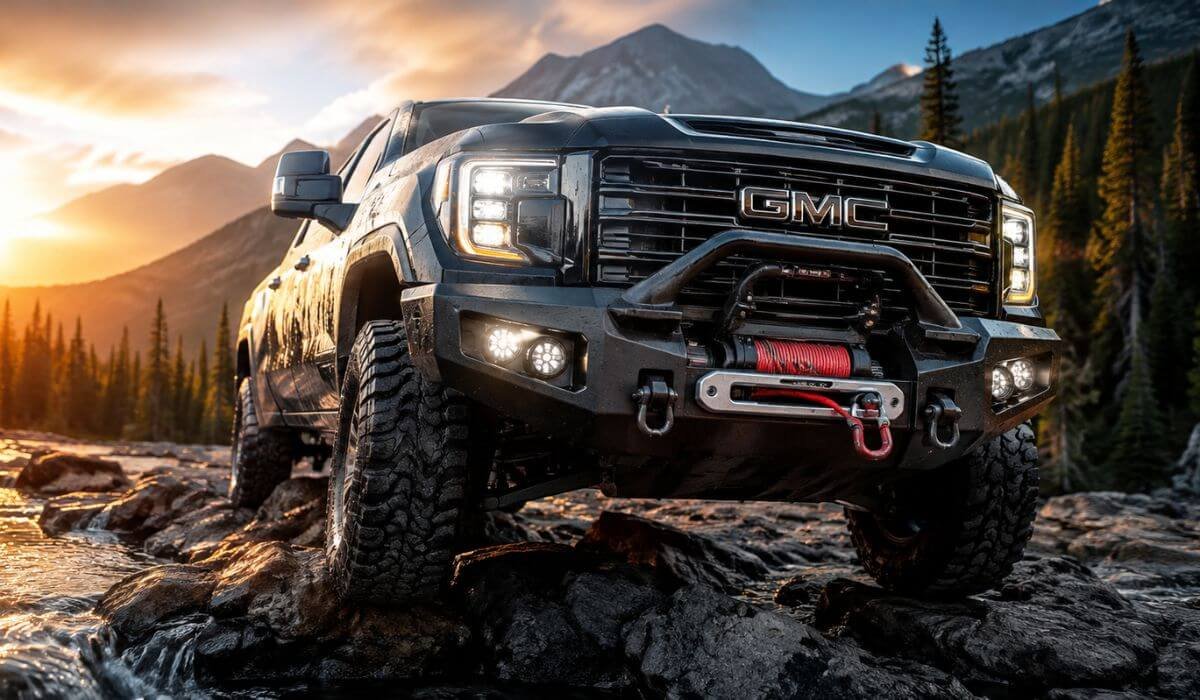
5 Best Winch for GMC Sierra 1500 in 2026: 10000LB–13500LB Pulling Power for AT4 & Denali
If you drive a GMC Sierra 1500, a winch isn’t just another off-road accessory—it’s the one recovery tool you hope you never need but will be grateful to have when the truck is buried in mud, snow, sand, or a washed-out trail. The challenge is that not every winch that looks good on paper is actually a good match for a half-ton pickup.
Most GMC Sierra 1500 models, including the 2014–2018, 2019–2026, AT4, Denali, Elevation, and SLT, perform best with a 10,000–13,500 lb winch, especially when equipped with steel bumpers, larger tires, overlanding gear, or towing equipment. A quality 12V winch paired with a healthy AGM battery and properly rated recovery points provides the pulling power needed without overloading your truck’s electrical system.
For this guide, I focused on winches that Sierra owners actually look for: synthetic rope models, proven waterproof protection, dependable wireless controls, strong load ratings, and brands with a track record of handling full-size truck recoveries. Instead of chasing marketing claims, the goal was simple—find winches that make sense for real GMC Sierra 1500 owners who want reliable recovery performance whether they are working on a ranch, towing a trailer, or exploring remote trails.
Best GMC Sierra 1500 Winches: Top 2026 Picks with Synthetic Rope & IP68 Protection
#1. WARN ZEON 10-S 10,000 lb Electric Winch with Spydura Synthetic Rope
Best Winch for GMC Sierra 1500 Denali Owners Seeking Premium Recovery Performance, Proven Reliability, and All-Terrain Confidence
#2. Superwinch SX12SR 12,000 lb Electric Winch with Synthetic Rope
Best Winch for GMC Sierra 1500 Recovery Duties Where Dependability, Consistent Pulling Power, and Long-Term Durability Matter Most
#3. Rough Country PRO12000S 12,000 lb PRO Series Electric Winch
Best Winch for GMC Sierra 1500 AT4 Drivers Looking for Strong Pulling Capacity, Synthetic Rope Safety, and Outstanding Overall Value
#4. XYCLE 13,500 lb Recovery Winch with IP68 Waterproof Housing
Best Winch for GMC Sierra 1500 Heavy-Duty Recovery, Overlanding Setups, and Demanding Towing Situations Requiring Maximum Pulling Strength
#5. X-BULL 10,000 lb Electric Winch with Synthetic Rope
Best Budget Winch for GMC Sierra 1500 4×4 Adventures, Trail Recovery Needs, and Weekend Off-Road Trips Without Overspending
Expert Tip From Real-World Truck Recovery Experience
One mistake I see GMC Sierra 1500 owners make all the time is focusing only on the advertised pull rating. In reality, a well-built 10,000 lb winch from a trusted manufacturer will often outperform a higher-rated winch with weaker internals, slower line speed, or questionable sealing.
For most Sierra 1500 setups, the sweet spot is a synthetic rope winch between 10,000 and 12,000 lbs. It provides more than enough recovery power for the truck’s weight while putting less strain on the electrical system. If your truck carries a steel bumper, overlanding gear, recovery tools, larger tires, or regularly pulls trailers, moving up to a 12,000–13,500 lb model makes far more sense than simply buying the biggest winch available.
The winch itself matters, but what really determines whether a recovery goes smoothly is the combination of rope quality, waterproof protection, motor consistency, remote reliability, and overall build quality. That’s exactly why some popular models didn’t make this list while others did.
How We Chose These Winches for the GMC Sierra 1500
There are hundreds of winches that claim to be perfect for full-size trucks. We took a different approach.
Instead of chasing the highest pull ratings or the newest product listings, we started with a simple question:
Would we trust this winch if a GMC Sierra 1500 was stuck miles away from pavement with no easy way out?
That immediately eliminated a large number of options.
The first thing we looked at was realistic pulling capacity. A Sierra 1500 is not a lightweight ATV or side-by-side. Once larger tires, recovery gear, bed cargo, camping equipment, toolboxes, or towing accessories are added, vehicle weight increases quickly. That’s why every winch on this list falls within the 10,000 lb to 13,500 lb range, which is where full-size truck recovery performance starts making practical sense.
Next, we focused heavily on synthetic rope systems. Every winch selected here uses synthetic rope because it is lighter, easier to handle on the trail, and generally safer than traditional steel cable during recovery situations. For many Sierra owners, that alone makes a noticeable difference during real-world use.
We also paid close attention to weather resistance and sealing quality. Recovery situations rarely happen on sunny afternoons. Mud, water crossings, snow, road salt, dust, and heavy rain are where a winch earns its reputation. Models such as the WARN ZEON 10-S and XYCLE 13,500 stood out because their sealing and overall construction were designed for exactly those conditions.
Another factor was brand confidence versus specifications.
A winch may look impressive on a product page, but long-term dependability matters more than marketing claims. That’s why established names like WARN, Superwinch, and Rough Country earned strong positions in our rankings. Their track records in truck recovery carry weight. At the same time, newer options such as XYCLE and X-BULL were only included because they delivered a combination of capacity, features, and value that made sense for Sierra owners shopping within specific budgets.
Finally, we compared the features that genuinely affect ownership rather than those that simply look good in advertisements. We prioritized:
- Reliable wireless and wired controls
- Synthetic rope quality
- Waterproof protection
- Load capacity suitable for full-size trucks
- Motor and gear train durability
- Value relative to performance
- Suitability for Denali, AT4, SLT, Elevation, and work-truck trims
The result is a list built around what GMC Sierra 1500 owners actually need: dependable recovery performance, practical features, and confidence when conditions stop being predictable.
That is why these five winches made the cut—and many others did not.
#1. WARN ZEON 10-S 10,000 lb Electric Winch with Spydura Synthetic Rope
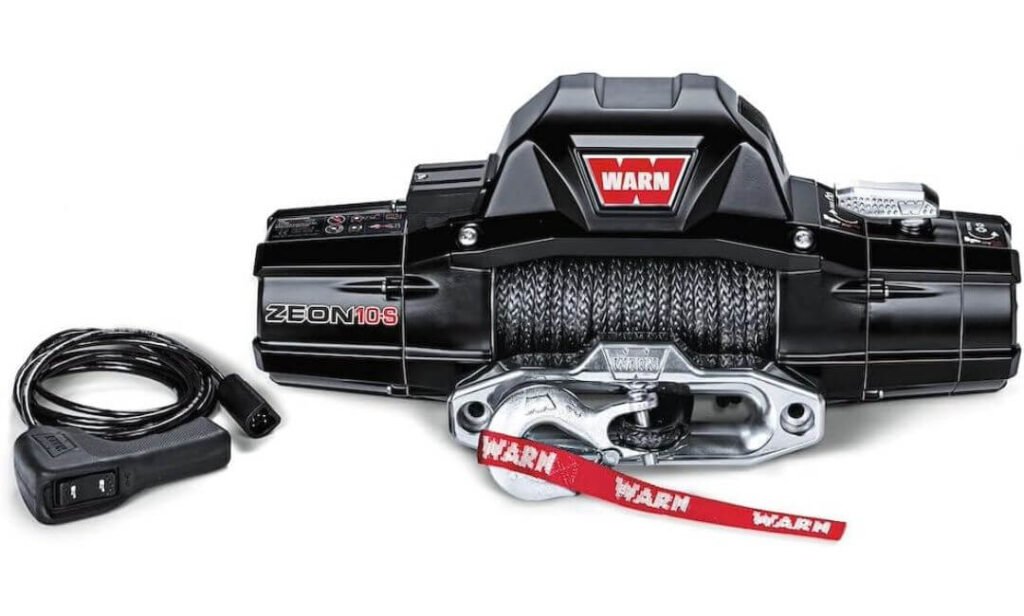
Quick Specs:
- 10,000 lb recovery capacity ideal for most GMC Sierra 1500 trims including AT4, Denali, SLT, and Elevation
- 100 ft Spydura synthetic rope with excellent strength-to-weight ratio
- Series-wound motor built for dependable recovery under load
- 216:1 planetary gear system for controlled pulling power
- IP68-rated sealing for mud, water, snow, and harsh trail conditions
- Convertible control pack for cleaner custom installations
- Cast-aluminum housing with corrosion-resistant finish
- Mechanical cone brake designed to reduce rope wear
- 80.6 lb overall weight with premium-duty internal components
- 26.25-inch overall width suitable for most aftermarket Sierra winch bumpers
Real talk, this is the kind of recovery gear people usually buy once and keep for years. The reason is simple. Everything about it feels purpose-built for full-size trucks rather than designed to hit a price point. From the cast-aluminum housing to the Spydura synthetic rope, every major component is built around reliability when conditions stop being predictable.
The 10,000 lb pulling capacity is also a smart match for the GMC Sierra 1500 platform. Whether you’re dealing with deep mud, loose sand, snow-covered access roads, or a heavily loaded truck at a remote worksite, the combination of the series-wound motor and 216:1 planetary gearing delivers smooth pulling power without feeling strained. The long 100-foot synthetic rope is especially useful when recovery anchor points aren’t conveniently nearby.
What stands out most is how refined the entire package feels. The sealing is excellent, the control pack offers installation flexibility, and the large drum design helps reduce unnecessary rope wear over time. Those details may not sound exciting on paper, but they become very important after years of ownership.
(If your goal is buying one premium winch that you can trust for both weekend adventures and unexpected recovery situations, this is the model most experienced truck owners rarely regret purchasing.)
What Stood Out During Our Evaluation
- Excellent balance of pulling power and long-term reliability
- Premium Spydura synthetic rope that is lighter and easier to manage
- Outstanding sealing against water, dust, road salt, and mud
- Flexible control-pack mounting simplifies custom Sierra builds
- High-quality internal components designed for years of service
A Small Consideration Before Ordering
- Due to its premium construction and larger footprint, verifying bumper and mounting clearance beforehand is recommended.
GMC Sierra 1500 Installation Considerations
This model works exceptionally well on GMC Sierra 1500 trucks equipped with a properly rated winch bumper or dedicated winch mounting system. AT4 and Denali owners running aftermarket off-road bumpers will usually have the easiest installation experience.
Before purchasing, simply confirm available mounting space and bumper compatibility. The winch itself is well suited for full-size Sierra applications, and the convertible control pack often gives installers more flexibility than many competing models.
The Insider Pro-Tip
Many buyers focus entirely on pull rating and ignore rope length. In real-world recovery situations, the included 100-foot synthetic rope often becomes one of the most valuable features because it provides more recovery options when trees, rocks, or anchor points are farther away than expected.
Another overlooked advantage is the convertible control pack. A cleaner mounting layout improves airflow, simplifies future maintenance, and often results in a more professional-looking installation on GMC Sierra 1500 builds. Small details like these are usually what separate premium recovery equipment from products that simply look good in online photos.
#2. Superwinch SX12SR 12,000 lb Electric Winch with Synthetic Rope
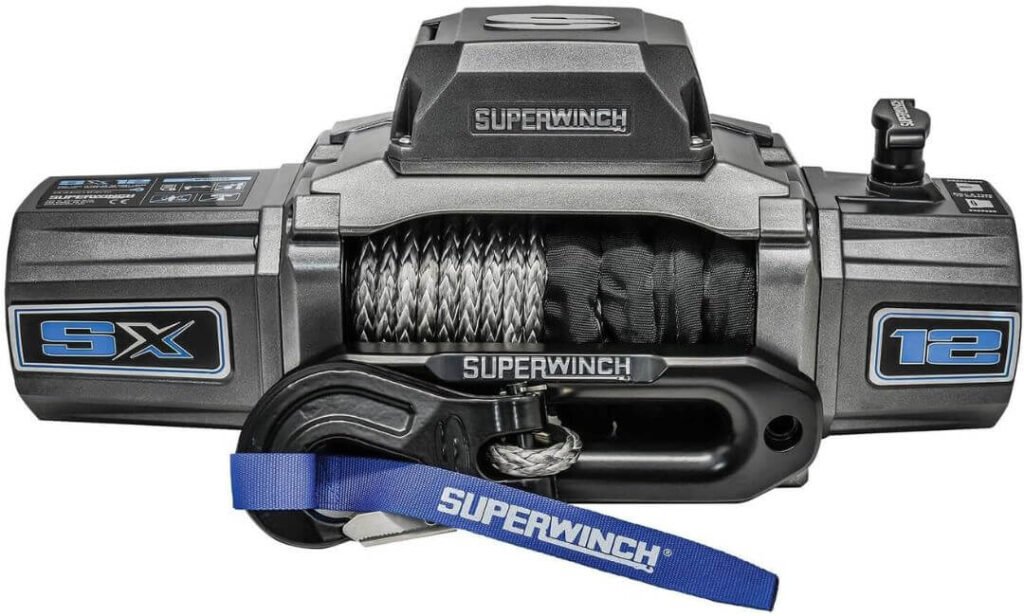
Quick Specs:
- 12,000 lb pulling capacity built for heavily loaded Sierra 1500 trucks
- 85 ft synthetic recovery rope designed for safer handling and easier field use
- 6.0 HP sealed motor paired with a 231:1 planetary gear system
- IP68-rated sealing across the drum, gearbox, and contactor
- Wireless remote and 12 ft wired remote included from the factory
- Integrated drum lighting for nighttime recoveries
- Relocatable control box for cleaner bumper installations
- Automatic load-holding brake for controlled recoveries
- 22″ x 6.3″ x 9.67″ compact footprint
- Approximately 60 lb installed weight
- Standard 10″ x 4.5″ mounting pattern used by most aftermarket Sierra winch systems
Here’s what immediately separates this model from many competitors. It wasn’t designed around marketing numbers. It was designed around surviving abuse.
The fully sealed drum, gearbox, and electrical components make a noticeable difference when a recovery turns messy. Deep mud, slush-covered trails, water crossings, and winter conditions are exactly where lesser winches start developing problems. The SX12SR was engineered for environments that most truck owners hope they never encounter. Add in its tested operating range from -40°F to 125°F, and it’s clear durability was a priority from the beginning.
The 12,000 lb rating is also right in the sweet spot for many GMC Sierra 1500 owners. Whether you’re carrying work equipment, towing recreational trailers, running oversized tires, or building an overland setup, the additional pulling capacity provides a healthy safety margin. Combined with the strong 6.0 HP motor and fast rope deployment speed, recoveries tend to feel controlled rather than forced.
Another detail that deserves attention is the dual-control setup. The wireless remote works exceptionally well for most situations, while the wired controller provides a dependable backup whenever conditions become more demanding. Small touches like the built-in drum light and rechargeable flashlight show that real recovery scenarios were considered during development rather than added later as marketing features.
(This is the type of winch that appeals to Sierra owners who would rather spend their money once on something durable than replace cheaper equipment later.)
What Earned It a Place on This List
- Excellent 12,000 lb capacity for full-size truck recoveries
- Complete IP68 sealing across critical components
- Dual remote system provides added flexibility
- Integrated recovery lighting improves nighttime usability
- Compact dimensions make installation easier than many heavy-duty competitors
One Thing Worth Planning Ahead For
- Like any serious recovery winch, proper mounting hardware and a quality winch-rated bumper are important to get the best performance.
GMC Sierra 1500 Mounting and Compatibility Notes
The standard 10-inch by 4.5-inch bolt pattern works with most aftermarket winch bumpers and mounting plates designed for GMC Sierra 1500 trucks. Many owners choose hidden-mount systems or full replacement off-road bumpers depending on how they use their truck.
Its relatively compact dimensions can also be helpful when space becomes limited behind modern Sierra front-end designs. The relocatable control box gives installers additional flexibility when working around intercoolers, lighting systems, or custom bumper layouts.
The Insider Pro-Tip
One feature that rarely gets enough attention is the fully sealed drum design. Most buyers focus on the motor and pull rating, but moisture entering the drum area is one of the biggest causes of long-term winch issues. The SX12SR addresses that problem better than many products in its class.
The other advantage is the combination of 12,000 lb pulling power and manageable overall size. That balance makes it particularly appealing for GMC Sierra 1500 owners who want heavy-duty recovery capability without adding unnecessary bulk to the front of the truck. In real-world ownership, that often matters more than chasing the highest number on the box.
#3. Rough Country PRO12000S 12,000 lb PRO Series Electric Winch
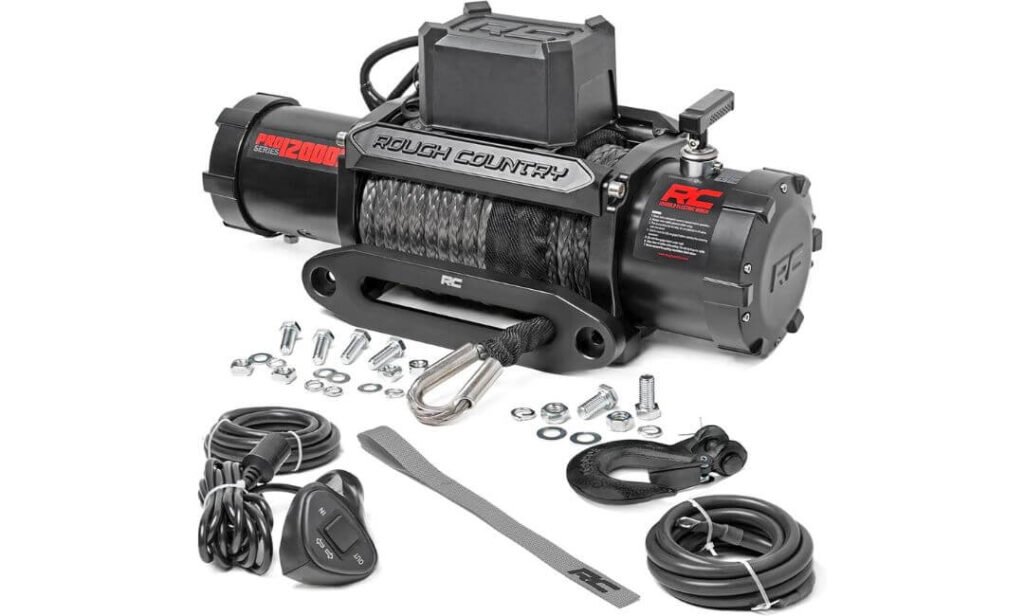
Quick Specs:
- 12,000 lb pulling capacity ideal for loaded Sierra 1500 recovery situations
- 85 ft x 3/8-inch synthetic rope designed for safer and easier handling
- 6 HP series-wound motor built for dependable pulling performance
- 265:1 gear reduction ratio for strong low-speed recovery control
- IP67 waterproof and dust-resistant protection
- 3-stage planetary gear system for consistent torque delivery
- Automatic in-drum braking system
- Removable control box for flexible installation options
- Standard 4.5-inch x 10-inch mounting footprint
- Approximately 63 lb operating weight
- Battery cables, fairlead, hook, rope, and mounting hardware included
There’s a reason this model keeps appearing on full-size truck builds. It delivers the features most Sierra owners actually need without forcing them into premium-brand pricing.
The first thing that stands out is the balance between power and practicality. A 12,000 lb rating, paired with a 6 HP series-wound motor, gives this winch more than enough muscle for most GMC Sierra 1500 recovery situations. Whether you’re pulling through deep mud, climbing out of washed-out trails, or helping another truck get moving again, the power delivery feels strong and predictable.
The 85-foot synthetic rope is another reason this model works so well on modern trucks. It’s lighter than steel cable, easier to manage with gloves, and far less frustrating during repeated recoveries. Combined with the IP67-sealed housing and 3-stage planetary gearing, it creates a package that feels purpose-built for real off-road use rather than occasional driveway duty.
What makes this option particularly appealing is how complete it arrives. Battery cables, fairlead, hook, mounting hardware, and the rope are already included. For many Sierra owners, that means fewer surprise purchases after the winch arrives and a much quicker path to getting everything installed and ready for action.
(For buyers looking for serious recovery capability without stepping into ultra-premium pricing territory, this is one of the strongest value-focused choices available.)
Why It Earned Strong Marks in Our Evaluation
- Excellent power-to-price ratio for full-size truck owners
- Strong 12,000 lb capacity with proven series-wound motor design
- Synthetic rope improves handling and overall usability
- IP67 sealing helps protect against mud, rain, and trail debris
- Complete installation package reduces additional expenses
One Minor Thing to Keep in Mind
- A wireless remote is not included from the factory, although many owners add one later if desired.
GMC Sierra 1500 Installation and Setup Insights
This model uses the common 4.5-inch by 10-inch winch mounting pattern, making it compatible with many aftermarket Sierra 1500 winch bumpers and hidden winch systems. Installation is generally straightforward when paired with a properly rated mounting solution.
The removable control box also provides additional flexibility for custom truck builds. Some owners relocate it to a more protected area or integrate it into cleaner bumper setups while maintaining easy service access.
The Insider Pro-Tip
One specification many buyers overlook is the 265:1 gear ratio. Higher-quality recovery experiences often come down to controlled pulling force rather than raw speed. That gearing helps the winch maintain strong pulling performance when the load becomes difficult.
Another reason this model made our shortlist is that it avoids unnecessary complexity. It focuses on the features Sierra owners use most—strong capacity, synthetic rope, dependable waterproofing, and a durable motor. That straightforward approach is exactly why so many truck owners continue recommending it long after the initial purchase.
#4. XYCLE 13,500 lb Recovery Winch with Synthetic Rope
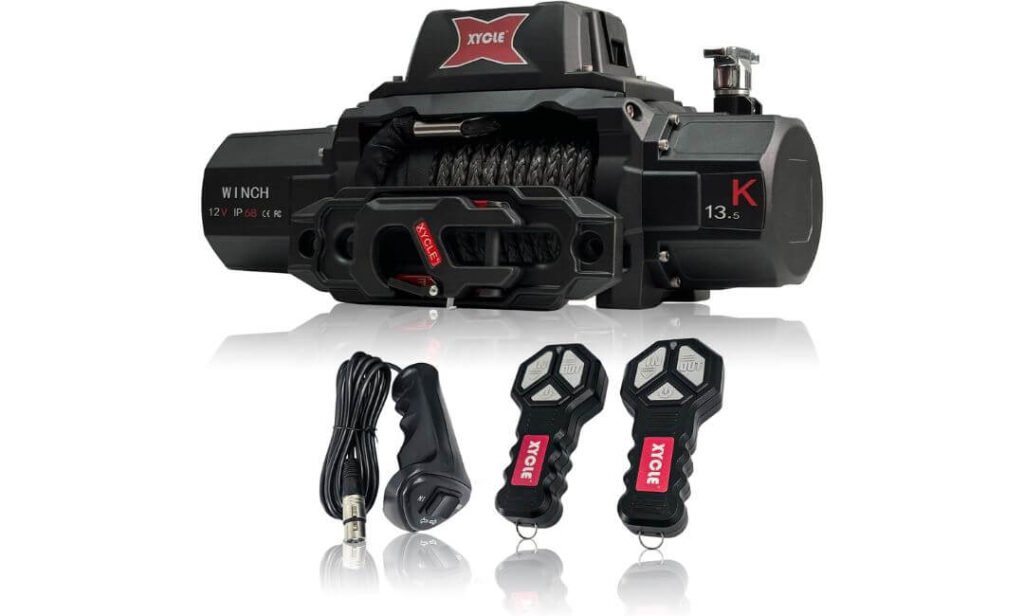
Quick Specs:
- 13,500 lb pulling capacity for heavily loaded trucks and difficult recoveries
- 70 ft x 1/2-inch synthetic rope stronger and thicker than many standard winch ropes
- 218:1 planetary gear system for smooth torque delivery
- IP68 waterproof and dust-resistant construction
- All-metal aluminum alloy housing
- Dual wireless remotes with 100 ft operating range
- Additional wired controller included
- Free-spooling clutch system
- 10-inch x 4.49-inch mounting footprint
- Approximately 60.9 lb operating weight
- Fairlead and recovery hook included
Not every Sierra owner needs a 13,500 lb winch. But for those who regularly tow, run larger tires, carry heavy gear, or spend time in deep mud and remote terrain, having additional recovery capacity can be a real advantage.
What immediately grabs attention here is the combination of 13,500 lb pulling force and a 1/2-inch synthetic rope. Most winches in this category rely on smaller rope diameters. The thicker rope used here provides a more substantial feel during recovery work and pairs well with the higher load rating. For truck owners who routinely carry extra weight, that additional margin can provide valuable peace of mind.
The IP68-rated housing also deserves credit. Mud, water crossings, heavy rain, and winter conditions are exactly the situations where recovery equipment gets tested. The all-metal aluminum construction not only helps resist corrosion but also improves heat management during extended winching sessions. Combined with the dual wireless remotes and wired backup controller, it creates a package that feels surprisingly complete for its price category.
Another area where this model stands out is overall value. It offers features often found on significantly more expensive recovery systems while maintaining a practical installation footprint that works well on many full-size truck builds.
(For Sierra owners who would rather have more pulling power available than wish they had it later, this option checks a lot of important boxes.)
What Impressed Us Most
- Highest pulling capacity in this guide
- Heavy-duty 1/2-inch synthetic rope inspires confidence
- IP68 protection suitable for harsh off-road environments
- Dual wireless remotes improve recovery flexibility
- Strong value compared with many premium-priced alternatives
One Small Thing Worth Knowing
- The wireless remotes require batteries that must be purchased separately before first use.
GMC Sierra 1500 Mounting and Recovery Considerations
This winch uses the widely accepted 10-inch mounting pattern, making it compatible with many aftermarket GMC Sierra 1500 winch bumpers and mounting plates. As with any heavy-duty recovery setup, verifying bumper load ratings before installation is always a smart step.
Its compact overall dimensions also help when fitting behind modern bumper systems. Many Sierra owners looking for a hidden winch setup should find the size manageable when paired with a properly engineered mounting solution.
The Insider Pro-Tip
A lot of buyers focus only on pull ratings, but one feature that often goes unnoticed here is the 1/2-inch synthetic rope. During difficult recoveries, especially with larger trucks, that extra rope thickness provides a reassuring level of durability and control.
The other advantage is having 13,500 lb of available pulling power without moving into extremely heavy winch designs. That balance makes this model particularly attractive for GMC Sierra 1500 owners who want substantial recovery capability while keeping overall front-end weight reasonable. When trails get worse, weather turns ugly, or the truck is carrying more weight than usual, that extra margin becomes far more valuable than most people realize.
#5. X-BULL 10,000 lb Electric Winch with Synthetic Rope
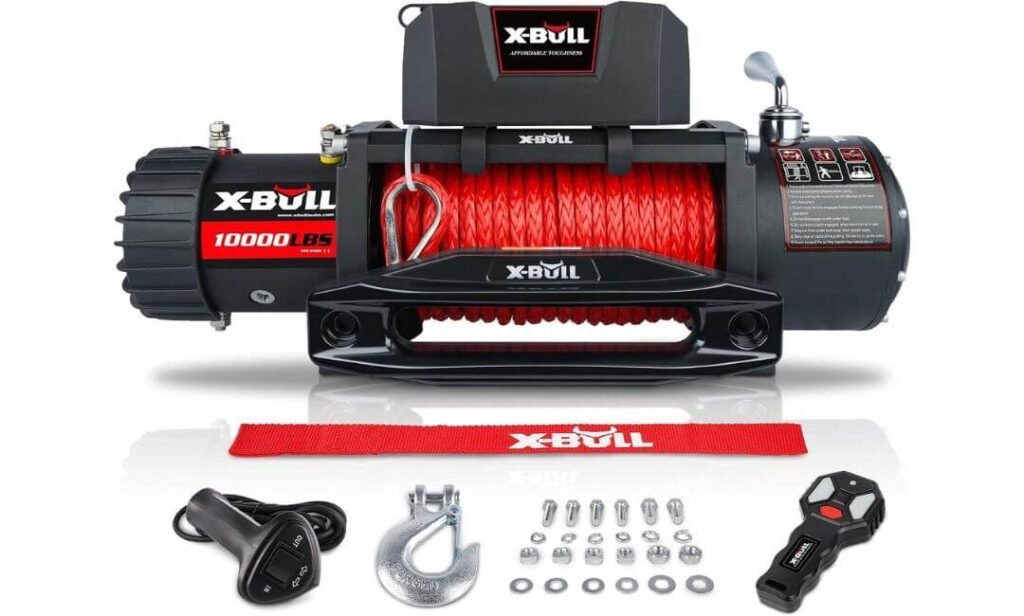
Quick Specs:
- 10,000 lb pulling capacity suitable for most Sierra 1500 recovery situations
- 78 ft x 3/8-inch synthetic rope designed for safer and lighter operation
- 5.6 HP 12V motor with strong low-speed pulling power
- 265:1 gear reduction ratio
- IP67 waterproof and dust-resistant protection
- 500 AMP heavy-duty solenoid system
- 3-stage planetary gear assembly
- Wireless remote and wired controller included
- Free-spooling clutch mechanism
- 20.8-inch x 6.5-inch x 10.24-inch compact dimensions
- Standard 10-inch x 4.5-inch mounting pattern
- Hawse fairlead and recovery hook included
Here’s the reality. Most GMC Sierra 1500 owners are not recovering vehicles every weekend. They need a winch that works when the situation demands it, installs easily, and doesn’t consume the entire modification budget.
That’s exactly where this model shines.
The combination of a 10,000 lb pull rating, 5.6 HP motor, and 265:1 planetary gearing delivers more recovery capability than many truck owners will ever fully use. Whether you’re dealing with muddy job sites, hunting trails, snowy backroads, or occasional off-road adventures, it provides enough power to handle the majority of recovery situations a Sierra 1500 is likely to encounter.
The synthetic rope setup is another major advantage. It keeps overall weight down while remaining easier to handle than traditional steel cable. Pair that with the IP67-rated protection and upgraded 500 AMP solenoid system, and you get a winch that feels surprisingly refined for its price range. The inclusion of both wireless and wired controls also adds flexibility that many budget-focused competitors fail to offer.
Perhaps the biggest surprise is how complete the package feels. Nothing about it gives the impression of being stripped down or unfinished. Instead, it focuses on practical features that truck owners actually use.
(For Sierra owners who want dependable recovery capability without paying premium-brand pricing, this is one of the easiest recommendations in this guide.)
What Earned Its Spot in This Ranking
- Excellent overall value for full-size truck owners
- Strong 10,000 lb capacity for everyday recovery needs
- 500 AMP solenoid improves long-term reliability
- Dual-control system adds convenience in the field
- Compact dimensions simplify installation on many builds
One Small Consideration Before Installation
- A proper winch-rated bumper or mounting plate is required since factory truck bumpers are not designed for recovery loads.
GMC Sierra 1500 Compatibility and Mounting Notes
The universal 10-inch by 4.5-inch mounting pattern works with many GMC Sierra 1500 aftermarket winch bumpers and hidden mounting systems. Its compact size can also be helpful for owners working with tighter front-end clearances.
Because the unit weighs less than many premium heavy-duty alternatives, installation is often more manageable while still providing enough recovery capability for most half-ton truck applications.
The Insider Pro-Tip
One feature many buyers overlook is the upgraded 500 AMP solenoid system. Pulling power gets most of the attention, but reliable power delivery is what keeps a winch working consistently when recovery conditions become difficult.
The other reason this model continues to attract attention is simple. It focuses on the fundamentals that matter most—adequate pulling strength, synthetic rope, waterproof protection, and easy operation. For many GMC Sierra 1500 owners, that combination delivers far more real-world value than chasing expensive features they may never actually use.
Top Rated GMC Sierra 1500 Winches for AT4, Denali & 4×4 Recovery Setups
| Comparison Area |
WARN ZEON 10-S
Best Overall
|
Superwinch SX12SR
Premium Alternative
|
Rough Country PRO12000S
Best Value
|
XYCLE 13,500
Heavy Recovery Pick
|
X-BULL 10,000
Budget Choice
|
|---|---|---|---|---|---|
| Pulling Capacity | 10,000 lbs | 12,000 lbs | 12,000 lbs | 13,500 lbs | 10,000 lbs |
| Recovery Style | Premium All-Around Recovery | Heavy-Duty Trail Recovery | Balanced Work & Trail Use | Maximum Pulling Force | Occasional Off-Road Recovery |
| Synthetic Rope | 100 ft Spydura | 85 ft Synthetic | 85 ft Synthetic | 70 ft 1/2″ Synthetic | 78 ft Synthetic |
| Waterproof Protection | IP68 | IP68 | IP67 | IP68 | IP67 |
| Motor Performance | Series-Wound Motor | 6.0 HP Sealed Motor | 6 HP Series-Wound | High-Torque 12V Motor | 5.6 HP Motor |
| Gear Ratio | 216:1 | 231:1 | 265:1 | 218:1 | 265:1 |
| Remote Options | Wired Remote | Wireless + Wired | Wired Remote | Dual Wireless + Wired | Wireless + Wired |
| Housing Quality | Cast Aluminum | Steel Drum Design | Heavy-Duty Composite Build | All-Metal Alloy Housing | Sealed Metal Construction |
| Best For | Denali Builds | Frequent Recoveries | AT4 Owners | Towing & Overlanding | Weekend Adventures |
| Installation Flexibility | Excellent | Excellent | Very Good | Very Good | Good |
| Value for Money | Premium Investment | Premium Value | Outstanding | Strong Feature Value | Budget-Friendly |
| Overall Recommendation | Best Overall Choice | Best Premium Alternative | Best Value Buy | Best Heavy Recovery Pick | Best Budget Buy |
Buyer’s Guide: Choosing the Best Winch for Your GMC Sierra 1500
A winch is one of those upgrades that most GMC Sierra 1500 owners don’t think much about until they actually need it. The problem is that recovery equipment is not something you want to discover is underpowered, poorly sealed, or difficult to operate when your truck is buried in mud, stuck on a snowy trail, or loaded with gear miles away from pavement.
The good news is that choosing the right winch becomes much easier when you focus on the specifications that genuinely affect recovery performance instead of marketing claims. Here are the factors that matter most for GMC Sierra 1500 owners.
Pulling Power and Vehicle Weight Considerations
One of the biggest mistakes buyers make is assuming bigger is always better.
A stock GMC Sierra 1500 typically weighs between 4,500 and 5,500 pounds, depending on cab configuration, engine choice, trim level, and equipment. However, once larger tires, steel bumpers, recovery gear, bed racks, camping equipment, toolboxes, or trailers enter the equation, total recovery weight increases significantly.
That’s why most experienced off-road enthusiasts follow the 1.5x vehicle weight rule when selecting a winch.
For GMC Sierra 1500 owners:
- 10,000 lb winches work well for stock and lightly modified trucks.
- 12,000 lb winches provide an excellent balance of power and versatility.
- 13,500 lb winches are ideal for heavily equipped trucks, towing setups, overlanding builds, and difficult recovery environments.
For most owners, the sweet spot remains the 10,000–12,000 lb range, while heavy-duty users benefit from the additional margin offered by 13,500 lb models.
Synthetic Rope vs Steel Cable
The debate between synthetic rope and steel cable has changed dramatically over the past decade.
For modern GMC Sierra 1500 applications, synthetic rope is usually the preferred option.
Synthetic rope offers several advantages:
- Significantly lighter than steel cable
- Easier to handle with gloves
- Does not develop sharp metal strands
- Floats in water
- Stores less kinetic energy if damaged
- Easier to repair in the field
Steel cable still has strengths in commercial environments where constant abrasion against rocks or sharp edges is expected. However, for recreational off-roading, overlanding, hunting, towing assistance, and trail recovery, synthetic rope provides a better overall ownership experience.
This is one reason every winch selected in this guide uses synthetic rope rather than traditional steel cable.
Line Speed, Motor Type, and Duty Cycle
Many buyers focus entirely on pulling capacity while ignoring how the winch actually performs under load.
A powerful winch with poor line speed can make recovery unnecessarily slow. Likewise, a fast winch that overheats quickly may become frustrating during extended use.
Several factors influence real-world performance:
- Motor design
- Gear ratio
- Drum size
- Internal cooling efficiency
- Electrical demand
Series-wound motors are generally favored for full-size truck recovery because they produce strong torque and handle heavy loads well. Permanent magnet motors often cost less and perform well for occasional use, but serious recovery situations typically favor series-wound designs.
Duty cycle is equally important. If your Sierra is regularly used for off-road travel, worksite access, ranch operations, or towing support, choosing a winch built for sustained operation is often more valuable than chasing the highest advertised pull rating.
Wiring, Control Options, and Wireless Remotes
The winch itself is only one part of the recovery system.
Reliable wiring and controls often determine how enjoyable ownership becomes over time.
A quality installation should include:
- Proper battery connections
- Correct cable routing
- Secure grounding points
- Protection from heat and abrasion
- Adequate battery capacity
Many modern GMC Sierra 1500 owners prefer wireless remotes because they allow operation from safer positions during recovery. Being able to stand away from the vehicle while maintaining visibility of the recovery path can significantly improve safety.
That said, a wired remote remains valuable because it eliminates battery concerns and provides a dependable backup if wireless communication becomes unavailable.
The strongest setups usually provide both options.
Mounting Compatibility for Crew Cab, AT4, Denali, and 4×4 Models
Not every winch installation is the same.
The mounting system often matters just as much as the winch itself.
GMC Sierra 1500 owners typically choose one of three approaches:
- Hidden winch mount systems
- Modular winch bumpers
- Full replacement off-road bumpers
AT4 owners frequently prefer off-road-focused bumper systems that maintain approach angles while accommodating recovery gear.
Denali owners often prioritize cleaner integrated installations that preserve the truck’s premium appearance.
Crew Cab models generally have no unique winch restrictions, but front bumper design and trim-specific features can affect mounting choices.
Before purchasing any winch, verify:
- Mounting bolt pattern compatibility
- Bumper weight ratings
- Airflow clearance
- Sensor and camera compatibility
- Front suspension capacity if additional accessories are planned
A properly engineered mounting system is every bit as important as the winch itself.
Weather Sealing, Corrosion Resistance, and Warranty
Recovery equipment lives in harsh environments.
Mud, road salt, water crossings, snow, sand, dust, and temperature swings can destroy poorly protected components surprisingly quickly.
For GMC Sierra 1500 owners who regularly encounter challenging conditions, pay close attention to:
- IP67 or IP68 waterproof ratings
- Sealed gearboxes
- Protected electrical components
- Corrosion-resistant fasteners
- Aluminum or coated housings
- Synthetic rope protection
A strong warranty can also reveal how much confidence a manufacturer has in its product. While warranty length should never be the only buying factor, it can provide useful insight into expected durability and long-term support.
Quick Reference: GMC Sierra 1500 Winch Buyers Guide
| Your Situation | Recommended Winch Capacity |
|---|---|
| Daily driving with occasional trail use | 10,000 lbs |
| AT4 off-road adventures | 10,000–12,000 lbs |
| Denali with premium build goals | 10,000–12,000 lbs |
| Overlanding and camping setups | 12,000 lbs |
| Heavy towing support | 12,000–13,500 lbs |
| Large tires and steel bumpers | 12,000–13,500 lbs |
| Frequent mud and snow recovery | 12,000 lbs or higher |
| Maximum recovery capability | 13,500 lbs |
The best winch for a GMC Sierra 1500 is rarely the one with the biggest number on the box. The right choice is the model that matches your truck’s weight, your recovery needs, your mounting setup, and the environments where you actually drive. When those factors align, recovery becomes safer, easier, and far more predictable when conditions take a turn for the worse.
Synthetic Rope vs Steel Cable for GMC Sierra 1500 Winches
One of the most important decisions GMC Sierra 1500 owners make when choosing a winch has nothing to do with pulling capacity, motor size, or gear ratios. It comes down to the recovery line itself.
For years, steel cable dominated the winch market because it was considered the toughest option available. Today, however, synthetic rope has become the preferred choice for many off-road enthusiasts, overlanders, ranch owners, and trail recovery specialists.
The reality is that both options have advantages and limitations. Understanding where each one excels will help you choose the setup that matches how your Sierra 1500 is actually used.
Why Most GMC Sierra 1500 Owners Prefer Synthetic Rope
Synthetic rope has become increasingly popular because it addresses several issues that truck owners commonly experience with steel cable.
The first advantage is weight.
A synthetic rope setup can significantly reduce the amount of weight sitting on the front of the vehicle. While the difference may not sound dramatic at first, every pound matters when additional accessories such as steel bumpers, grille guards, lighting systems, skid plates, and recovery gear are already being added to a GMC Sierra 1500.
Another major benefit is handling.
Synthetic rope is easier to pull, easier to spool, and far more comfortable to work with during recovery operations. Unlike steel cable, it does not develop sharp metal strands that can cut gloves or hands after repeated use.
Safety is another reason synthetic rope has become the preferred choice for many experienced recovery enthusiasts.
If a synthetic rope fails under load, it generally releases far less stored energy than steel cable. While every recovery situation requires proper safety procedures, synthetic rope typically produces a more controlled failure pattern when compared to steel cable.
Additional advantages include:
- Easier handling during recovery operations
- Reduced front-end weight
- Better flexibility in cold weather
- No rust formation
- Easier field repairs
- Floats during water recoveries
- Reduced recoil characteristics
These benefits explain why every winch selected in this GMC Sierra 1500 guide uses synthetic rope rather than traditional steel cable.
Situations Where Steel Cable Still Makes Sense
Although synthetic rope dominates many modern recovery setups, steel cable still has a place in certain environments.
Commercial operators, construction crews, logging applications, and heavy-duty work trucks sometimes prefer steel cable because of its resistance to abrasion and surface damage.
If your GMC Sierra 1500 frequently encounters:
- Sharp rocks
- Jagged metal surfaces
- Constant dragging over abrasive terrain
- Heavy commercial work environments
- Recovery operations involving repeated contact with rough edges
Steel cable may offer certain durability advantages.
It can tolerate surface abrasion that would require more caution when using synthetic rope. For this reason, some industrial users continue relying on steel cable despite its additional weight and handling challenges.
However, steel cable also introduces several trade-offs.
It is heavier, more difficult to manage, susceptible to corrosion, and can develop broken strands over time. Once cable fraying begins, handling becomes considerably less pleasant and often requires replacement.
For the average GMC Sierra 1500 owner focused on recreational off-roading, overlanding, towing support, hunting access roads, snow recovery, or trail exploration, synthetic rope generally remains the better overall choice.
Maintenance Tips and Inspection Checklist
Regardless of which recovery line you choose, regular inspection is one of the easiest ways to improve reliability and extend service life.
Recovery gear often sits unused for months at a time. Unfortunately, damage can develop long before a recovery situation ever occurs.
Before heading off-road, perform a quick inspection of the following areas:
Synthetic Rope Inspection Checklist
- Look for frayed outer fibers
- Check for flattened sections
- Inspect for melted spots caused by excessive heat
- Examine the rope near the drum attachment point
- Verify the protective sleeve remains intact
- Check for embedded dirt, sand, or debris
- Ensure the hook connection remains secure
If the rope becomes heavily contaminated with mud or sand, rinse it thoroughly with clean water and allow it to dry before respooling.
Steel Cable Inspection Checklist
- Look for broken wire strands
- Check for kinks and crushed sections
- Inspect for rust or corrosion
- Verify proper cable spooling
- Examine hook connections and mounting points
- Check for flattened or twisted areas
Any cable showing severe fraying, corrosion, or structural damage should be replaced immediately.
Recovery System Inspection Checklist
The rope or cable is only part of the system.
Before every major trip, inspect:
- Winch mounting bolts
- Fairlead condition
- Electrical connections
- Battery terminals
- Remote controls
- Solenoid operation
- Drum fasteners
- Recovery hooks and shackles
Many winch failures blamed on the winch itself are actually caused by neglected wiring, loose hardware, or damaged recovery components.
Which Option Is Best for a GMC Sierra 1500?
For most GMC Sierra 1500 owners, the answer is straightforward.
A quality synthetic rope winch provides the best balance of safety, handling, weight savings, corrosion resistance, and recovery performance. Whether you’re driving an AT4, Denali, Elevation, SLT, or a dedicated trail build, synthetic rope offers advantages that are difficult to ignore in modern recovery situations.
Steel cable still has value in specialized commercial environments, but for the majority of truck owners looking for dependable recovery capability on trails, work sites, snowy roads, hunting property, or overlanding routes, synthetic rope remains the option that delivers the most practical benefits over the long term.
Installation Essentials for a GMC Sierra 1500 Winch Setup
A quality winch is only as good as the installation behind it.
Even the most expensive recovery system can perform poorly if the mounting hardware is inadequate, electrical connections are undersized, or the winch is installed without considering airflow, weight distribution, and recovery angles. On the other hand, a properly installed winch can provide years of dependable service with very little maintenance.
The good news is that most GMC Sierra 1500 winch installations follow a similar process, whether you’re working with an AT4, Denali, SLT, Elevation, Pro, or a custom off-road build.
Step-by-Step Overview of a Typical GMC Sierra 1500 Winch Installation
The first step is selecting a properly rated mounting system.
A winch should never be attached directly to a factory bumper unless that bumper was specifically engineered for recovery loads. Most Sierra owners choose either a hidden winch mount, a modular winch bumper, or a full replacement off-road bumper.
Once the mounting solution is installed, the winch can be positioned and secured using the manufacturer’s recommended hardware and torque specifications.
A typical installation sequence looks like this:
- Disconnect the vehicle battery before beginning work.
- Install the winch mounting plate or winch-ready bumper.
- Position the winch and verify fairlead alignment.
- Install mounting hardware and torque bolts correctly.
- Mount the control box in a protected location.
- Route positive and negative power cables safely.
- Secure all wiring away from moving or hot components.
- Install the fairlead and recovery hook.
- Connect remote control systems.
- Perform initial function testing before loading the winch.
After installation, the rope should be tensioned correctly during the first spooling process. This helps create tight, even wraps on the drum and improves future recovery performance.
Common Installation Mistakes and How to Avoid Them
Many installation problems are completely preventable.
One of the most common mistakes is underestimating the forces generated during recovery. A winch capable of pulling 10,000 to 13,500 pounds can place tremendous stress on mounting hardware and attachment points.
Common mistakes include:
- Using low-grade mounting bolts
- Improper bolt torque
- Poor grounding connections
- Routing cables near exhaust components
- Ignoring battery capacity requirements
- Installing the fairlead out of alignment
- Leaving wiring unsupported
- Overlooking suspension sag from added front-end weight
Another mistake involves cable management.
Loose electrical cables may look acceptable during installation but can eventually rub against brackets, steering components, or engine bay hardware. Over time, this can damage insulation and create electrical issues that are difficult to diagnose.
Taking extra time during installation usually pays off in long-term reliability.
Wiring Basics and Proper Fuse Considerations
Electrical performance is one of the most overlooked parts of a winch installation.
A winch motor demands substantial current under load. During difficult recoveries, amperage draw can increase dramatically, especially when the truck is stuck in mud, sand, snow, or steep terrain.
For most GMC Sierra 1500 installations:
- Use the battery cables supplied by the winch manufacturer whenever possible.
- Keep cable runs as short as practical.
- Use properly sized heavy-gauge cables.
- Protect cables from heat and abrasion.
- Ensure all terminal connections remain clean and tight.
- Verify battery condition before operating the winch.
Many modern winches rely on heavy-duty contactors and sealed control systems rather than traditional fuse-based protection. However, if additional circuit protection is added to the system, it should always be sized according to the winch manufacturer’s specifications.
Electrical upgrades may also be worth considering for trucks that frequently use recovery equipment.
Examples include:
- High-quality AGM batteries
- Heavy-duty battery terminals
- Upgraded charging systems
- Additional grounding straps
- Auxiliary power distribution systems
A strong electrical foundation often improves winch performance more than many owners expect.
Control Box Placement and Remote System Setup
Modern winches offer far more installation flexibility than older designs.
Several of the winches featured in this guide include relocatable control boxes, allowing installers to position electrical components in cleaner, more protected areas.
When selecting a control box location, consider:
- Heat exposure
- Water intrusion
- Service accessibility
- Hood clearance
- Airflow around cooling components
- Wire routing simplicity
Wireless remotes should also be tested immediately after installation. Confirm operating range, signal reliability, and emergency stop procedures before relying on the system in a recovery situation.
A few minutes of testing now can prevent frustration later when conditions become difficult.
Creator’s Note: GMC Sierra 1500 Winch Installation Best Practices
After reviewing countless truck builds and recovery setups, one pattern consistently stands out.
The best-performing winch installations are rarely the most expensive ones.
Instead, they are the installations where attention was given to the details that many people overlook:
- Strong mounting systems
- Proper electrical connections
- Clean cable routing
- Reliable grounding
- Correct rope spooling
- Adequate battery support
- Routine inspection after installation
A GMC Sierra 1500 equipped with a properly mounted 10,000 to 13,500 lb winch can handle recovery situations that would otherwise require outside assistance. The goal is not simply installing a winch. The goal is creating a recovery system that performs confidently when conditions become unpredictable.
Spend the extra time making the installation right the first time. Long after the excitement of a new purchase fades, that attention to detail is what will continue delivering dependable recovery performance whenever your truck needs it most.
Real-World Use Scenarios: How These Winches Perform on a GMC Sierra 1500
Winch specifications tell only part of the story.
A recovery system can look impressive on a product page and still struggle when a full-size truck is buried to the frame rails in mud, sitting cross-axled on a rocky trail, or dragging through deep sand with camping gear loaded in the bed. That is why understanding real-world recovery situations matters far more than simply comparing pull ratings.
For GMC Sierra 1500 owners, recovery performance is usually influenced by three factors: vehicle weight, terrain type, and recovery technique. The same winch can feel incredibly powerful in one situation and completely different in another depending on how the recovery is approached.
Recovery Performance in Deep Mud, Loose Sand, and Rocky Terrain
Mud is often the toughest recovery challenge for a full-size truck.
When a GMC Sierra 1500 sinks into thick mud, rolling resistance increases dramatically. The truck is no longer being pulled only by its weight. The suction created by the mud can effectively double the recovery load in extreme situations.
In these conditions, winches in the 12,000 lb to 13,500 lb range tend to provide a noticeable advantage. The additional pulling force helps maintain steady movement without requiring repeated recovery attempts.
Mud recovery best practices include:
- Using the longest practical anchor point available
- Maintaining straight-line pulls whenever possible
- Avoiding sudden shock loads
- Applying light throttle only when necessary
- Keeping recovery gear clear of the rope path
Sand presents a different challenge.
Unlike mud, sand typically offers less suction but creates significant rolling resistance. A heavily loaded Sierra equipped with larger tires, rooftop gear, coolers, tools, or camping equipment can become surprisingly difficult to recover in soft dunes or loose beach sand.
In these situations, synthetic rope becomes particularly useful because it is easier to deploy over longer distances while reducing front-end weight.
Rock recovery introduces another set of variables.
On technical trails, the goal is often controlled vehicle movement rather than raw pulling force. Slow, steady line speed is usually more important than maximum pull ratings. Winches with quality braking systems and predictable control tend to perform better in these environments because they allow precise vehicle positioning.
AT4 vs Denali: How Recovery Needs Can Differ
Although both trucks share the same Sierra 1500 platform, recovery requirements often differ between AT4 and Denali owners.
AT4 models are typically used more aggressively off-road. Increased ground clearance, all-terrain tires, off-road suspension tuning, and trail-focused modifications often place these trucks in situations where recovery equipment becomes a regular part of ownership.
For AT4 owners, priorities usually include:
- Waterproof sealing
- Durable synthetic rope
- Faster deployment speeds
- Strong recovery capacity
- Reliable operation in mud and water
Denali owners often have different priorities.
Many Denali trucks spend more time towing, traveling long distances, accessing remote properties, navigating winter roads, or supporting outdoor recreation activities. While they may not encounter extreme terrain as frequently, they still benefit from having dependable recovery equipment available.
For Denali owners, priorities often include:
- Clean installation appearance
- Premium build quality
- Long-term reliability
- Corrosion resistance
- Quiet and smooth operation
The interesting reality is that both groups often end up choosing similar winch capacities. The difference usually comes down to how frequently the winch is expected to be used and the environments where recovery occurs.
Field Notes on Line Height, Anchor Points, and Recovery Angles
One area that rarely gets enough attention is recovery geometry.
Even the best winch cannot overcome poor recovery technique.
Line height plays a major role in how effectively pulling force is transferred to the vehicle. A winch mounted too high or too low relative to the recovery point can introduce unnecessary stress into the system and reduce overall efficiency.
When possible:
- Keep the rope aligned with the fairlead opening
- Avoid extreme side pulls
- Reposition the vehicle if necessary
- Use recovery blocks when changing pull direction
- Monitor rope layering during extended pulls
Anchor point selection is equally important.
Trees, recovery anchors, recovery vehicles, and fixed structures all behave differently under load. The strongest anchor point is not always the closest one.
Whenever possible:
- Choose healthy, stable anchor points
- Use tree-saver straps where appropriate
- Inspect shackles and recovery hardware before use
- Maintain clear communication between participants
- Keep spectators away from recovery zones
A longer, straighter pull is often safer and more effective than a shorter pull performed at an aggressive angle.
Safety Lessons That Matter More Than Pull Ratings
Most recovery problems do not happen because a winch lacks power.
They happen because safety procedures were overlooked.
Every recovery situation should begin with a quick assessment of:
- Vehicle position
- Terrain conditions
- Anchor point stability
- Recovery path
- Equipment condition
- Rope condition
- Communication plan
Synthetic rope has improved recovery safety considerably, but it should never create a false sense of security. Proper gloves, quality recovery hardware, and safe operating practices remain essential regardless of the winch being used.
The most experienced GMC Sierra 1500 owners often follow a simple rule: slow recoveries are usually successful recoveries.
What These Real-World Scenarios Reveal
After examining common GMC Sierra 1500 recovery situations, one conclusion becomes clear.
The best winch is not necessarily the one with the highest advertised capacity. It is the one that combines sufficient pulling power, dependable waterproofing, strong rope quality, reliable controls, and a mounting system that can handle the load safely.
That is exactly why the winches featured in this guide earned their positions. Whether recovering an AT4 from deep trail mud, helping a Denali navigate winter conditions, or supporting a heavily loaded overlanding build, each option offers a combination of capability and reliability that aligns with how real Sierra owners actually use their trucks.
Maintenance and Lifelong Care for a GMC Sierra 1500 Winch
A quality winch can last for many years on a GMC Sierra 1500, but longevity rarely comes from the badge on the housing alone. It comes from consistent maintenance, proper storage, and catching small problems before they become expensive failures.
One thing experienced truck owners quickly learn is that winches often spend months sitting unused. During that time, moisture, road salt, dust, vibration, and temperature changes continue affecting internal components. The worst time to discover a problem is during a recovery when the truck is already stuck.
The good news is that most maintenance takes only a few minutes and can dramatically improve long-term reliability.
Regular Inspection Routine
A quick visual inspection before major trips can prevent many common recovery issues.
Whether your GMC Sierra 1500 is used for overlanding, towing, hunting, ranch work, snow travel, or weekend trail adventures, it is worth checking the winch system periodically instead of waiting until recovery equipment is urgently needed.
A practical inspection routine should include:
- Verify all mounting bolts remain properly tightened
- Inspect the fairlead for wear or damage
- Check rope condition from hook to drum
- Examine electrical cables for rubbing or abrasion
- Confirm battery terminals remain clean and secure
- Inspect remote controls for proper operation
- Verify hook latches function correctly
- Check drum spooling for uneven rope layers
- Look for corrosion around mounting points and hardware
For trucks exposed to mud, snow, road salt, or water crossings, inspections should be performed more frequently.
One of the simplest habits is operating the winch briefly every month. Running the drum in and out under light load helps circulate internal lubricants and confirms the electrical system is functioning properly.
Solenoid and Motor Care
Most modern winch failures are not caused by gears or rope.
Electrical components are usually the first area where problems appear.
The solenoid, contactor, and motor work together to deliver power during recovery. If any of these components begin deteriorating, performance can suffer long before complete failure occurs.
To keep the system healthy:
- Inspect electrical connections regularly
- Tighten loose terminals immediately
- Remove corrosion as soon as it appears
- Keep battery voltage within recommended ranges
- Protect exposed wiring from heat sources
- Verify grounding points remain secure
If your Sierra 1500 frequently encounters water crossings, deep mud, or winter road salt, additional attention to electrical connections becomes even more important.
Another often-overlooked factor is battery health.
A weak battery can make a perfectly good winch appear unreliable. Slow line speed, intermittent operation, or poor pulling performance are sometimes electrical supply issues rather than winch problems.
Owners running larger tires, auxiliary lighting, refrigerators, air compressors, or other accessories may benefit from a high-quality AGM battery and upgraded charging system.
Motor maintenance is generally straightforward on modern sealed winches. The key is preventing contamination and avoiding excessive heat buildup caused by repeated long-duration pulls without cooling periods.
Synthetic Rope Maintenance Schedule
Synthetic rope is one of the best upgrades available for modern recovery systems, but it deserves regular attention.
Unlike steel cable, synthetic rope does not rust or develop broken wire strands. However, it can still suffer damage from abrasion, UV exposure, excessive heat, dirt contamination, and improper storage.
A simple maintenance schedule works well for most GMC Sierra 1500 owners.
After Every Recovery
- Inspect the entire rope length
- Remove mud, sand, and debris
- Check the hook connection
- Verify proper drum spooling
- Look for cuts, flattening, or abrasion
After Water Crossings or Mud Exposure
- Rinse the rope with clean water
- Allow it to dry completely before storage
- Remove trapped debris from the drum area
- Inspect the fairlead opening
Every Few Months
- Unspool the rope completely
- Inspect hidden sections near the drum
- Verify protective sleeves remain intact
- Check attachment points and hardware
- Re-spool under tension for even layering
One reason synthetic rope lasts longer is proper cleaning. Dirt and sand trapped inside rope fibers can act like sandpaper over time, gradually increasing wear. Simple rinsing after harsh use can significantly extend service life.
Protecting Your Winch During Long Periods of Non-Use
Many GMC Sierra 1500 owners use their winch only a few times per year.
During these periods:
- Keep the rope properly tensioned
- Protect the hook from unnecessary exposure
- Inspect electrical connections periodically
- Operate the winch occasionally
- Check remote batteries if equipped
- Verify mounting hardware remains secure
Even when a winch is not actively used, vibration from daily driving and seasonal weather changes continue affecting components.
A few minutes of preventive care is usually far easier than troubleshooting electrical issues or replacing damaged recovery equipment later.
The Long-Term Ownership Perspective
The best winches in this guide, whether from WARN, Superwinch, Rough Country, XYCLE, or X-BULL, all have one thing in common.
They perform best when treated as part of the truck’s recovery system rather than a forgotten accessory mounted behind the bumper.
Regular inspections, clean electrical connections, healthy batteries, and proper rope care do far more for long-term reliability than any marketing feature ever will.
For GMC Sierra 1500 owners who invest a small amount of time into maintenance, a quality winch can remain ready for recovery duty year after year, whether the challenge comes from mud, snow, sand, steep terrain, towing situations, or unexpected conditions far from help.
FAQs About GMC Sierra 1500 Winch
Can a 10,000 lb winch realistically recover a fully loaded GMC Sierra 1500, or should I automatically move to a 12,000 lb model?
Not necessarily. A properly installed 10,000 lb winch can recover most GMC Sierra 1500 trucks, including AT4 and Denali models, when recovery techniques are used correctly. What many owners overlook is that winch capacity is only one part of the equation. Recovery angle, anchor point quality, terrain resistance, tire pressure, and the use of a snatch block can dramatically change the load placed on the winch.
Where a 12,000 lb winch starts making more sense is when the truck consistently carries extra weight. Steel bumpers, larger tires, bed racks, rooftop tents, recovery gear, towing equipment, and overlanding accessories can add hundreds of pounds to the vehicle. In those situations, the extra pulling margin provides more flexibility and often reduces stress on the winch during difficult recoveries.
For a GMC Sierra 1500 AT4, what matters more in real-world recovery situations: pull rating, rope length, or waterproof protection?
If forced to choose only one, most experienced recovery enthusiasts would probably say waterproof protection.
A winch with impressive specifications means very little if moisture reaches critical electrical components. Mud, snow, creek crossings, road salt, and prolonged exposure to the elements are often what determine whether a winch performs reliably years later.
That said, the strongest setup usually combines all three factors:
- Adequate pulling capacity
- Quality synthetic rope length
- Excellent sealing and corrosion protection
Many recovery situations become more challenging because of limited anchor-point options. In those scenarios, a longer synthetic rope can be every bit as valuable as additional pulling power.
Is synthetic rope actually durable enough for a GMC Sierra 1500 that sees regular trail use and towing support?
This is one of the biggest misconceptions in the recovery world.
Modern synthetic rope is far stronger than many people assume. In fact, many Sierra owners who switch from steel cable are surprised by how well it holds up when properly maintained. The key difference is that synthetic rope requires awareness rather than brute-force abuse.
The biggest threats are usually:
- Sharp rock edges
- Excessive heat
- Improper spooling
- Long-term contamination from dirt and sand
When inspected regularly and cleaned after heavy use, synthetic rope can provide years of dependable service while offering significant handling and safety advantages compared with steel cable.
Why do some experienced off-road drivers use a snatch block even when their winch already has enough pulling power?
Because experienced recovery operators often focus on efficiency rather than maximum strain.
A snatch block changes the physics of the recovery system. By redirecting the winch line, it can reduce stress on the winch, improve control, and effectively increase available pulling force when conditions become difficult.
In challenging situations such as:
- Deep mud
- Steep inclines
- Sand recoveries
- Heavy trailer extractions
a snatch block can transform a difficult recovery into a much more controlled operation.
Many experienced Sierra owners carry one not because they expect failure, but because it expands recovery options when conditions become unpredictable.
What is the most overlooked winch upgrade GMC Sierra 1500 owners should consider after installation?
Most people immediately think about recovery lights, shackles, or wireless accessories.
In reality, one of the most overlooked upgrades is a healthy electrical system.
A winch can only perform as well as the power feeding it. Weak batteries, aging terminals, poor grounds, or undersized wiring often create performance problems that get blamed on the winch itself.
Owners who regularly use recovery equipment often see the biggest long-term benefits from:
- A high-quality AGM battery
- Clean grounding points
- Proper cable routing
- Regular electrical inspections
- Periodic winch function testing
A surprising number of recovery issues disappear once the electrical system is given the same attention as the winch. That may not be the most exciting upgrade on a GMC Sierra 1500, but it is often the one that makes the biggest difference when recovery equipment is finally called into action.
Final Verdict
After spending time comparing pulling power, rope quality, waterproof ratings, installation flexibility, recovery performance, and long-term ownership factors, one thing becomes clear: there is no single winch that is perfect for every GMC Sierra 1500 owner.
If you want the most refined and confidence-inspiring option in this guide, the WARN ZEON 10-S stands out for its premium construction, proven reliability, excellent sealing, and the kind of long-term durability that serious truck owners appreciate years after the purchase.
For owners who regularly tackle difficult trails, carry extra gear, or simply want additional recovery headroom, the Superwinch SX12SR and Rough Country PRO12000S deliver an outstanding balance of power, features, and real-world usability without pushing into excessive weight or complexity.
Meanwhile, the XYCLE 13,500 lb Recovery Winch offers impressive pulling muscle for heavily equipped trucks, towing setups, and demanding recovery situations where extra capacity can make a noticeable difference. And for owners looking for maximum value without sacrificing core recovery capability, the X-BULL 10,000 lb Winch remains one of the strongest budget-friendly options available.
The truth is, a winch rarely proves its value on a sunny day parked in the driveway. Its value shows up when the trail gets muddy, the weather turns bad, the truck settles into soft ground, or help is miles away. That is exactly why choosing the right recovery equipment matters.
For most GMC Sierra 1500 owners, the best investment is not necessarily the highest pull rating or the most expensive badge. It is the winch that matches how the truck is actually used, fits the vehicle correctly, and remains dependable when recovery becomes more than just a possibility.
Choose the one that fits your build, install it properly, maintain it regularly, and chances are you will never regret having it on the front of your Sierra when conditions stop being predictable.
Also Check:


