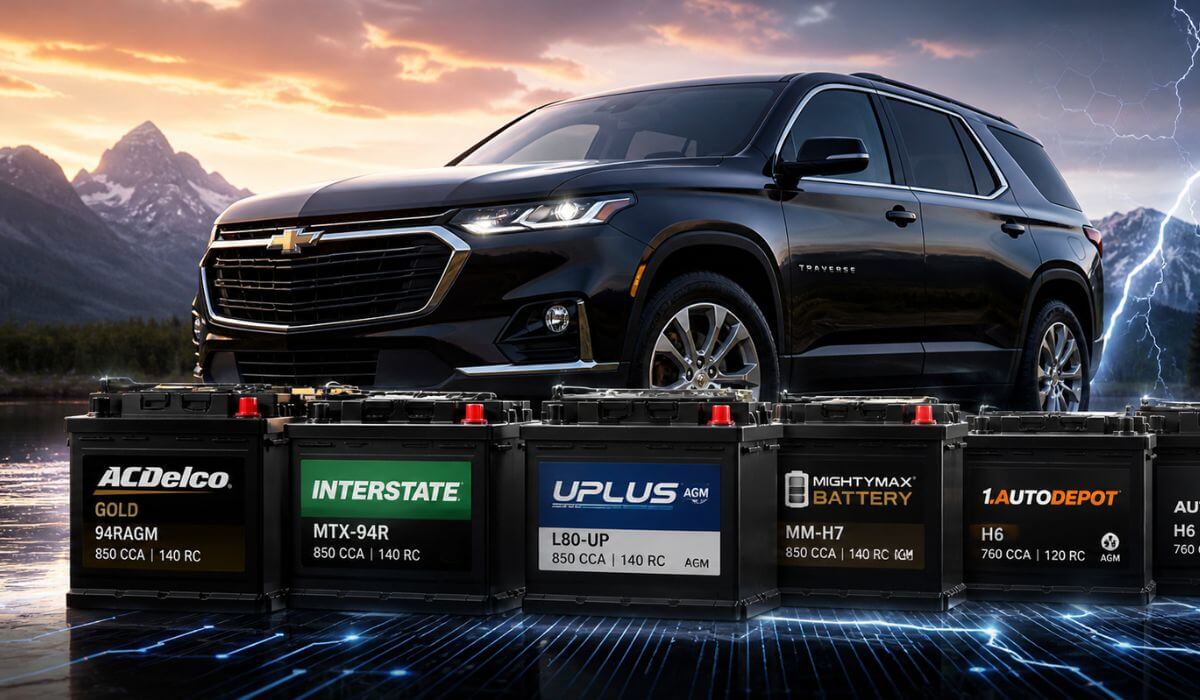
6 Best Batteries for Chevy Traverse in 2026: High-CCA AGM Power & No-Fail Starts
Last updated on May 3rd, 2026 at 08:39 pm
If you’ve owned a Chevy Traverse for more than a season, you already know this isn’t a light-duty crossover when it comes to electrical demand. Big screens, driver-assist systems, auto start-stop, and that constant cycle of short trips and idling—it all leans hard on the battery. And here’s where most owners get tripped up: not every battery that “fits” actually works well in a Traverse.
On newer models (2024–2026), the system is clearly built around H7 (Group 94R) AGM batteries—higher reserve capacity, better recovery, and stable voltage under load. Go smaller, and you’ll feel it: sluggish starts, random warning lights, or premature wear. Older and mid-generation models (2009–2023) are more forgiving, commonly running H6 (Group 48), but even there, stepping up to a stronger AGM unit makes a noticeable difference in daily reliability.
This list isn’t guesswork or spec-sheet hype. It’s built around what actually holds up in real-world Traverse use—correct group size, proper AGM construction, and enough CCA to handle cold starts and heavy electronics without drama. If you pick from these, you’re not just buying a battery—you’re avoiding the usual headaches before they even start.
Best Chevy Traverse Battery in 2026: Power, Fitment & No-Fail Start Picks
#1. ACDelco 94RAGM BCI Group AGM Battery
Best chevy traverse battery replacement with OEM-level reliability and correct H7 group size for modern models
#2. Interstate MTX-94R/H7 AGM Battery
High-CCA AGM battery for chevy traverse delivering consistent cold starts and long-term durability
#3. UPLUS AGM-L80-UP Group 94R Battery
Affordable AGM battery option for chevy traverse with strong specs and dependable daily performance
#4. Mighty Max MM-H7 AGM Battery
Budget-friendly chevy traverse battery (H7 group size) suitable for start-stop systems and regular driving
#5. 1AUTODEPOT Group 48 AGM Battery
Reliable H6 battery for older chevy traverse models needing a balanced replacement option
#6. Autocessking Group 48 AGM Battery
Cost-effective chevy traverse battery replacement (H6 size) for mid and older model years
Expert Tip (From Real-World Traverse Use)
If you want your Traverse to start the same way every single morning—no hesitation, no random warnings—don’t downgrade the group size just to save a little money. This SUV is sensitive to voltage drops. A weaker or smaller battery might “work” for a few weeks, but under heat, traffic idling, or short trips, it starts showing issues fast.
Stick to H7 AGM for newer models and a solid H6 AGM for older ones, and pay attention to CCA and reserve capacity, not just price. The difference isn’t theoretical—you feel it in smoother starts, stable electronics, and fewer surprises on the dash. That’s the kind of reliability most people only appreciate after they’ve had a bad battery once.
How We Chose These Batteries for Chevy Traverse
This list wasn’t built by chasing brand names or copying spec sheets. It’s based on what actually makes a battery work properly inside a Chevy Traverse, not just fit the tray.
First, we locked in the correct group sizes. That’s the foundation. Newer Traverse models are clearly designed around H7 (94R)—anything smaller compromises electrical stability. That’s why the top half of this list leans heavily toward H7. For older and mid-generation models, H6 (48) still works reliably, so we included only the strongest options there—not filler picks.
Then we filtered everything through real electrical demand, not marketing claims. Traverse isn’t a basic SUV—it runs high onboard electronics, start-stop systems, and frequent idle cycles. So we only kept batteries with:
- High CCA (around 750–850 range) for confident cold starts
- Strong reserve capacity (RC) so the system doesn’t struggle under load
- True AGM construction, not entry-level builds that fade quickly
After that, we looked at consistency over time, not just first-week performance. Some batteries look great on paper but drop voltage stability after a few months—that’s where warning lights and rough starts begin. The ones selected here are known to hold charge, recover quickly, and stay stable under daily stress.
We also made a clear call on brand trust vs real value. You’ll see a mix:
- Proven names that match OEM expectations
- And a few value-focused options that still meet the same core specs
Anything that felt inconsistent, underbuilt, or risky for a Traverse’s electrical system was left out—no matter how cheap or popular it looked.
At the end of the day, this isn’t about selling a battery. It’s about making sure that once you install it, you don’t have to think about it again for years. That’s the standard these picks had to meet.
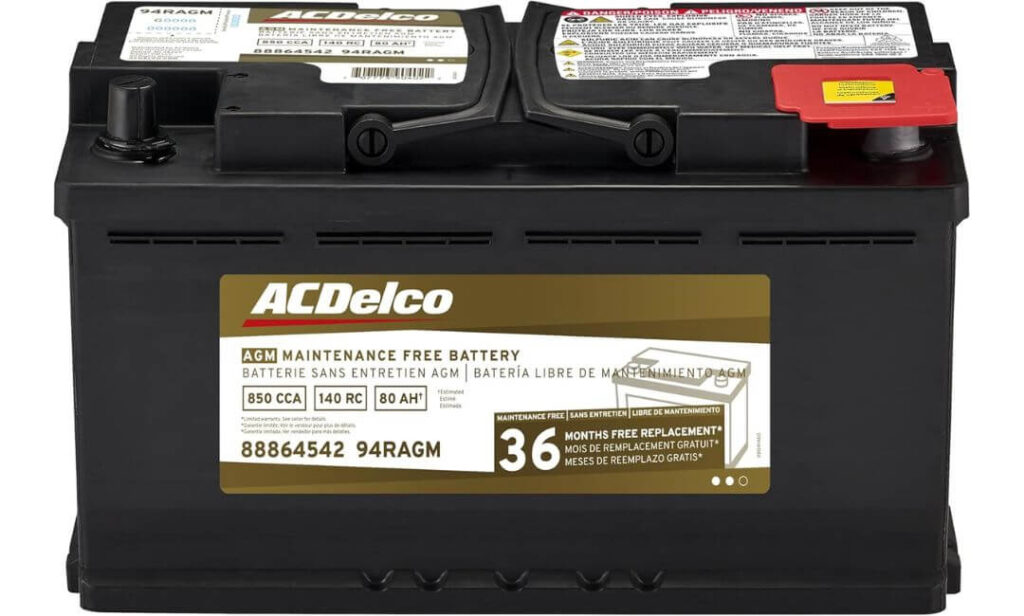
#1. ACDelco Gold 94RAGM (88864542)
Technical Specs:
- Group Size: H7 (94R) — correct fit for most newer Chevy Traverse models
- Battery Type: AGM with Silver-Calcium alloy (maintenance-free, sealed)
- Cold Cranking Amps: 850 CCA (strong cold-start reliability)
- Capacity: ~80Ah with high reserve support for electronics-heavy SUVs
- Voltage: 12V
- Weight: ~51.6 lbs (solid internal build, not lightweight)
- Dimensions: 12.4″ x 6.9″ x 7.5″
- Warranty: 36-month free replacement
Start with this—if you’ve ever had your Traverse hesitate on a cold morning or throw a random voltage warning after idling in traffic, you already know the battery matters more than most people admit. This one is built exactly for that kind of stress. The 850 CCA output paired with AGM stability means it doesn’t just start the engine—it holds voltage steady while everything else wakes up (screens, sensors, modules). That’s where cheaper batteries quietly fail.
What actually stands out here is the Silver-Calcium internal design. It’s not marketing fluff—it directly affects how the battery handles repeated charge cycles, especially in start-stop driving. In real use (school runs, short trips, heavy AC load), it recovers charge faster and resists early degradation, which is exactly what a Traverse needs. You’re not just getting power—you’re getting consistency over months, not just weeks.
Then there’s build quality. The high-density paste, reinforced separators, and pressure-tested casing all work toward one thing: long-term reliability. No leaks, no internal shorts, no sudden drop-offs. It’s the kind of battery that quietly does its job without ever demanding attention. (and yes, this is one of those rare cases where OEM-level spec actually feels like OEM behavior on the road)
What We Like About It
- Consistent 850 CCA delivery — no weak starts, even under load
- Silver-Calcium build improves cycle life in real stop-start driving
- Strong reserve capacity keeps electronics stable during idle and short trips
- Leak-resistant, pressure-tested casing — built for long-term use
- OEM-level compatibility — feels natural inside a Traverse system
What Could Be Better
- Slightly heavier than average, which can make installation a bit more effort
Chevy Traverse Compatibility Insight
For newer Traverse models, this H7 (94R) size isn’t optional—it’s what the system is designed around. The electrical architecture expects a battery that can handle high load without voltage dips, and that’s exactly where this fits in. Drop down to a smaller size, and you’ll notice the difference over time—this avoids that completely.
Even on older or mid-generation models, upgrading to a battery like this brings a noticeable change. Starts feel cleaner, electronics behave more consistently, and you’re not dealing with those small, annoying issues that slowly build up. It’s not about “fit”—it’s about how well it supports the vehicle daily.
The Insider Pro-Tip
Most people install a battery and forget about it—until something feels off. With a Traverse, the smarter move is different: match the battery to the electrical load, not just the tray size. That’s exactly where this kind of AGM unit earns its place.
And one more thing most won’t tell you—a stable battery reduces stress on the alternator and onboard systems over time. That means fewer hidden issues down the line. Pick it right once, and you quietly avoid a lot of problems you’ll never have to diagnose later.
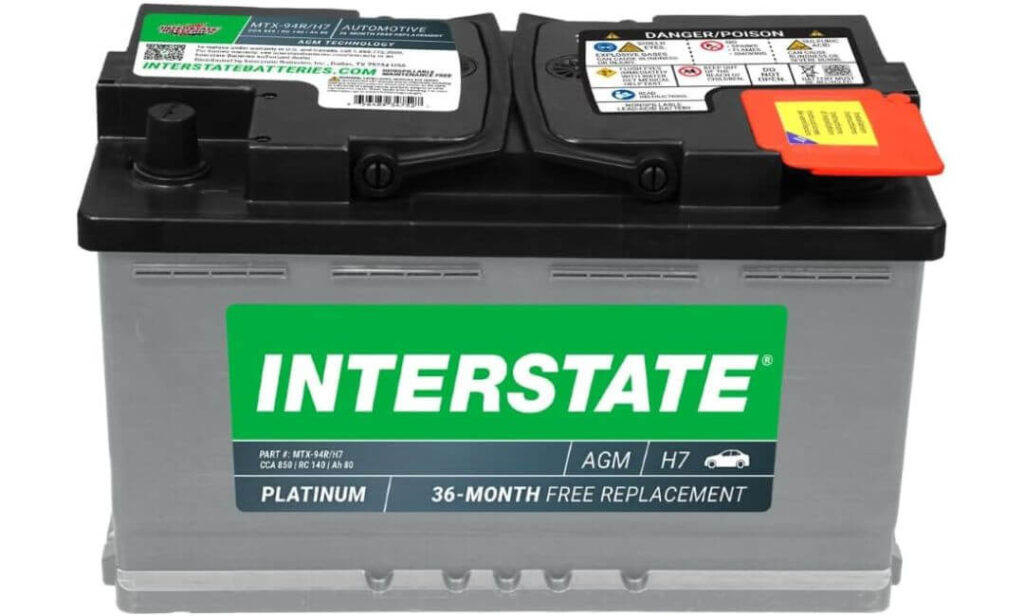
#2. Interstate MTX-94R/H7 AGM Battery
Technical Specs:
- Group Size: H7 (94R) — ideal for newer Chevy Traverse electrical systems
- Battery Type: AGM (VRLA, sealed maintenance-free)
- Cold Cranking Amps: 850 CCA
- Capacity: ~80Ah with ~140 minutes reserve capacity
- Voltage: 12V
- Construction: Pure lead AGM design (denser plate structure)
- Weight: ~52 lbs
- Dimensions: 12.44″ x 6.94″ x 7.5″
- Terminal: Top post
- Warranty: ~36-month replacement
Here’s the part most listings won’t tell you—this battery doesn’t just meet specs, it feels stable under pressure. In a Traverse, where everything from infotainment to safety modules pulls power at once, that pure lead AGM construction makes a noticeable difference. The voltage stays steady, even when the SUV is idling in traffic with AC blasting and multiple systems active.
What really sets this apart is how it handles daily abuse. Short trips, frequent start-stop cycles, or sitting unused for a couple of days—this is where weaker batteries start losing consistency. With 850 CCA and a solid 140-minute reserve capacity, it doesn’t hesitate or dip. It recovers quickly after every ignition, which matters more than people realize in real-world driving.
There’s also a long-term angle here. Interstate packed more lead into the internal plates, and that’s not just a spec—it directly impacts lifespan. Compared to standard AGM builds, this one is designed to last longer and resist vibration damage, which is exactly what heavier SUVs like the Traverse demand. (it’s one of those batteries that quietly keeps doing its job without giving you a reason to think about it)
What We Like About It
- Pure lead AGM build adds real-world durability, not just paper specs
- 850 CCA + 140 RC combo keeps starts strong and electronics stable
- Handles start-stop traffic and short drives without losing charge consistency
- Vibration-resistant design suits heavier SUVs like Traverse
- Backed by a long-standing, trusted battery brand
What Could Be Better
- Slightly premium pricing compared to entry-level AGM options, but justified by build quality
Chevy Traverse Compatibility Insight
For modern Traverse models, this battery fits exactly how the system expects it to—no compromises on size, power, or stability. The H7 footprint combined with AGM tech ensures everything from ignition to onboard electronics runs smoothly without voltage dips.
On older models, it still works as an upgrade rather than just a replacement. You’ll notice smoother starts and more consistent behavior, especially if the vehicle sees mixed driving conditions. It’s less about “fitting in” and more about bringing the electrical system up to a higher standard.
The Insider Pro-Tip
Most people focus only on CCA, but here’s the deeper truth—reserve capacity is what protects your driving experience. When your Traverse is running multiple systems at once, RC is what keeps everything stable in the background.
And one more thing—pure lead AGM batteries tend to age more gracefully, meaning performance drop-offs happen slower. That’s why batteries like this feel reliable not just in the beginning, but months down the road when it actually matters.
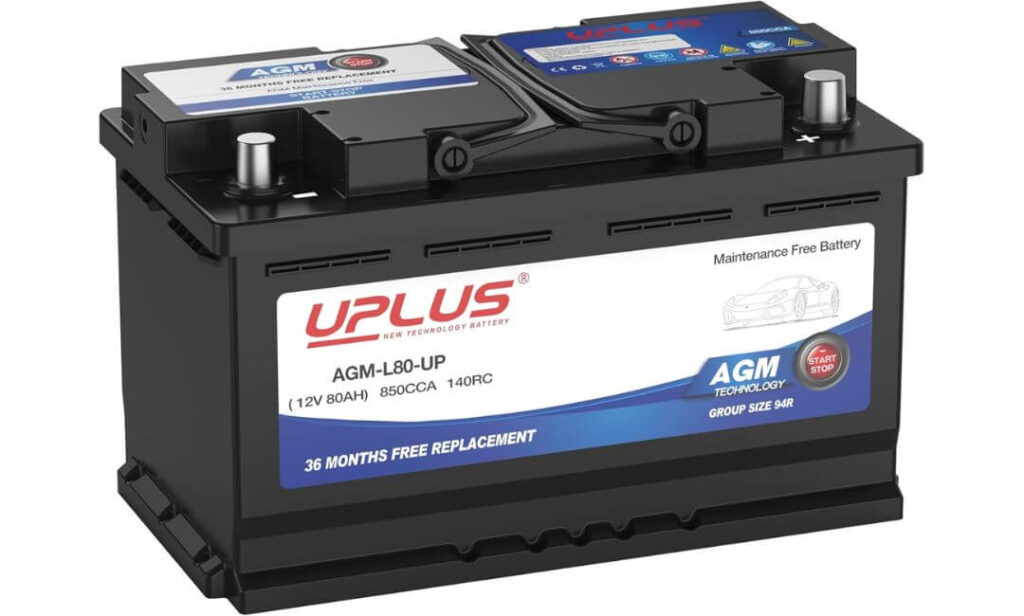
#3. UPLUS AGM-L80-UP Group 94R Battery
Technical Specs:
- Group Size: H7 (94R / L4) — correct size for newer Chevy Traverse
- Battery Type: AGM (sealed, maintenance-free)
- Cold Cranking Amps: 850 CCA
- Capacity: 80Ah with ~140 minutes reserve capacity
- Voltage: 12V
- Terminal Layout: Left (-) / Right (+), SAE posts
- Construction: High-density paste + Silver-Calcium alloy
- Weight: ~52 lbs
- Dimensions: 12.4″ x 6.89″ x 7.48″
- Warranty: 3 years
Funny thing is, this is the kind of battery people don’t expect much from at first—until it’s installed and quietly outperforms expectations. In a Chevy Traverse, where daily driving means stop-start traffic, short runs, and heavy electrical load, this one holds its ground better than most in its price range. The 850 CCA paired with 140 RC keeps starts sharp while making sure the voltage doesn’t sag when everything kicks in at once.
The real strength shows up over time. That “4x extra cycle life” claim actually translates into something practical—it doesn’t lose its edge after a few weeks of city driving. Frequent ignition cycles, sitting unused for days, or running accessories with the engine off—this battery handles those patterns without feeling drained or inconsistent. You don’t get that “slightly weaker start” feeling creeping in early.
Internally, the silver-calcium alloy and dense plate construction keep resistance low and efficiency high. That means faster charge recovery and less strain during each start. It’s not trying to be flashy—it’s built to stay dependable in the exact kind of mixed-use driving most Traverse owners deal with daily. (and in real use, that consistency matters more than brand hype ever will.
What We Like About It
- 850 CCA + 140 RC combo gives stable starts and solid backup power
- Designed for start-stop and short-trip driving patterns
- 4x cycle life focus makes it hold performance longer
- Strong internal build with silver-calcium efficiency
- Balanced option where price meets real-world durability
What Could Be Better
- Brand recognition isn’t as strong as premium legacy names, though performance holds up well
Chevy Traverse Compatibility Insight
For newer Traverse models, this battery checks all the right boxes—correct H7 size, proper terminal layout, and enough capacity to support full electrical load. It fits without adjustment and performs without compromise, which is exactly what you want in a daily-driven SUV.
Even if you’re upgrading from a weaker or aging battery, the difference shows immediately. Starts feel cleaner, electronics behave more consistently, and the system doesn’t struggle under pressure. It’s not just about fitting—it’s about bringing the vehicle back to how it’s supposed to feel.
The Insider Pro-Tip
A lot of people underestimate how much driving pattern affects battery life. If your Traverse sees frequent short trips or sits unused for days, you need a battery that can handle repeated partial charge cycles—that’s where this one quietly stands out.
And here’s the real truth—a battery that recovers quickly after each start will always feel stronger over time than one with slightly higher specs but slower recovery. That’s the difference between something that looks good on paper and something that actually holds up in daily use.
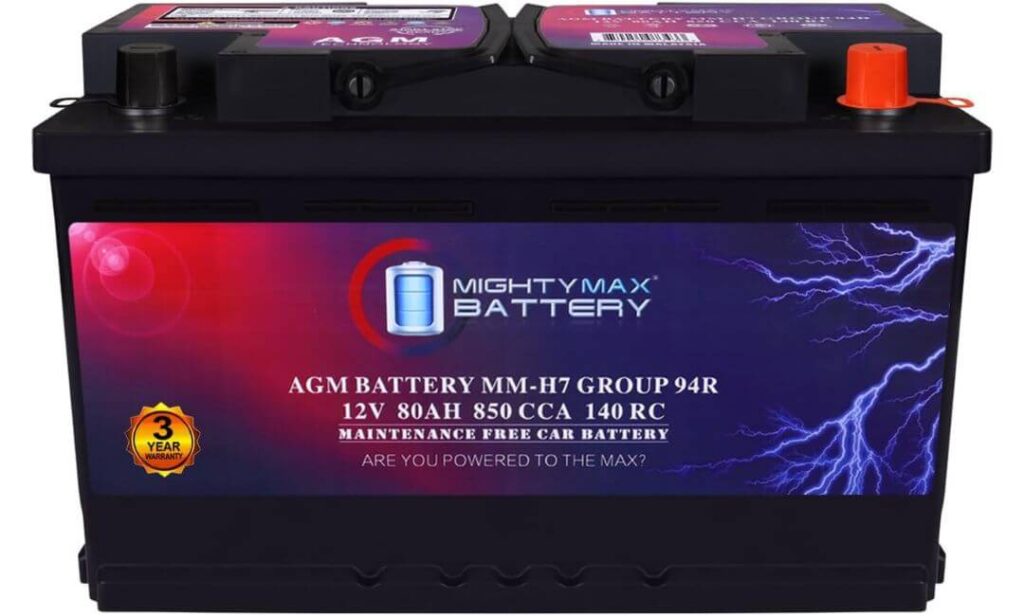
#4. Mighty Max MM-H7 AGM Battery
Technical Specs:
- Group Size: H7 (94R) — correct fit for newer Chevy Traverse setups
- Battery Type: AGM (sealed, maintenance-free)
- Cold Cranking Amps: 850 CCA
- Capacity: 80Ah with ~140 minutes reserve capacity
- Voltage: 12V
- Terminal Layout: Right (+) / Left (−)
- Construction: High-discharge AGM with deep discharge recovery
- Weight: ~50.9 lbs
- Dimensions: 12.5″ x 6.88″ x 7.48″
- Warranty: 3 years
Let’s be honest—this is the kind of battery most people scroll past thinking it’s just another budget option… until it’s actually put to work. In a Chevy Traverse, where daily driving means constant electrical demand and repeated start cycles, this one holds up better than expected. The 850 CCA output gives confident starts, but more importantly, it doesn’t feel strained when everything powers on together.
What makes it interesting is how it handles real-world conditions, not ideal ones. Heat, vibration, rough roads, stop-and-go traffic—this battery is built to take that kind of punishment. The 140-minute reserve capacity keeps systems stable when the engine isn’t doing all the work, and the deep discharge recovery design helps it bounce back quickly instead of slowly weakening over time.
Then there’s the overall build. It’s not trying to compete with premium brands on name—it focuses on rugged construction and consistent output. Shock-resistant casing, wide temperature tolerance, and simple install design—it’s all practical. (and in everyday use, that practicality often matters more than branding on the label)
What We Like About It
- 850 CCA + 140 RC setup delivers stable, reliable starting power
- Handles rough conditions and vibration without performance drop
- Deep discharge recovery helps maintain consistency over time
- Straightforward installation with clear terminal layout
- Strong value-to-performance balance for H7 AGM category
What Could Be Better
- Long-term lifespan can vary depending on driving conditions, though performance is solid initially
Chevy Traverse Compatibility Insight
For newer Traverse models, this battery fits right into the expected H7 AGM requirement, supporting both starting power and onboard electronics without compromise. It’s not oversized, not underpowered—just properly matched to what the system needs.
If you’re replacing an aging battery, this one brings the system back to a more stable state. Starts feel quicker, and electronics don’t struggle under load. It’s a practical upgrade that keeps things working the way they should without overcomplicating the choice.
The Insider Pro-Tip
Here’s something most people miss—a battery that handles vibration well tends to last more consistently in SUVs. Between road conditions and vehicle weight, that stress adds up over time. This is where rugged builds like this quietly prove their worth.
Also, don’t judge a battery only by brand name. If the core specs (CCA, RC, AGM build) are right and the construction is solid, real-world performance will follow—and that’s exactly what matters in a daily-driven Traverse.
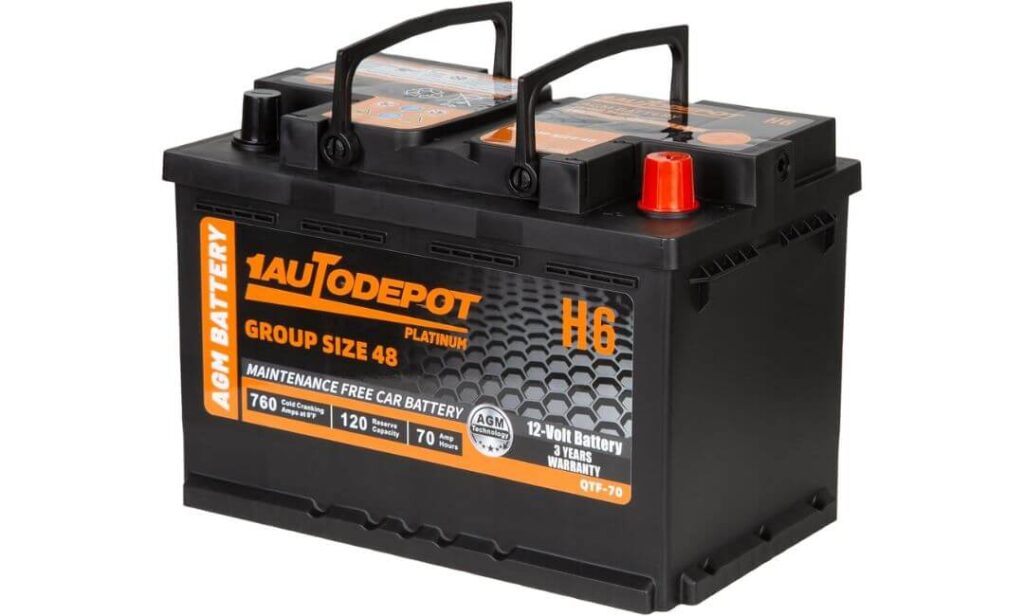
#5. 1AUTODEPOT Group 48 AGM Battery
Technical Specs:
- Group Size: H6 (48) — suitable for older and mid-generation Chevy Traverse
- Battery Type: AGM (sealed, maintenance-free)
- Cold Cranking Amps: 760 CCA
- Capacity: 70Ah with ~120 minutes reserve capacity
- Voltage: 12V
- Terminal Layout: Left (−) / Right (+)
- Operating Range: -22°F to 158°F (strong temperature tolerance)
- Weight: ~44.5 lbs
- Dimensions: 10.98″ x 6.89″ x 7.48″
- Warranty: 36 months
Most people upgrading an older Traverse don’t need extreme specs—they need something that just works every single day without drama. That’s exactly where this battery fits in. The 760 CCA output paired with AGM stability delivers clean, reliable starts without overcomplicating things, especially for models that don’t demand the heavier H7 setup.
What stands out here is how it behaves when the vehicle isn’t driven regularly. Thanks to its low self-discharge design, it holds charge better than typical flooded batteries. Leave your Traverse parked for a few days, come back, and it still fires up without hesitation. That’s a small detail, but in real ownership, it makes a big difference.
The internal build is focused on durability. With heat and cold resistance, vibration handling, and AGM construction, it’s built to survive everyday stress—whether that’s rough roads, temperature swings, or stop-start driving. It’s not trying to be overpowered—it’s designed to stay consistent where it actually matters. (and for most older Traverse setups, that consistency is exactly what keeps things running smoothly)
What We Like About It
- Balanced 760 CCA + AGM build suits older Traverse requirements perfectly
- Low self-discharge keeps starts reliable even after sitting idle
- Handles temperature extremes and daily driving stress well
- 2x cycle life improvement over basic flooded batteries
- Strong value option with practical, no-nonsense performance
What Could Be Better
- Not intended for high electrical load setups like newer models requiring H7 capacity
Chevy Traverse Compatibility Insight
For older and mid-generation Traverse models, this battery fits naturally into the system. The H6 size matches factory requirements, and the AGM upgrade adds a level of stability that older vehicles benefit from immediately.
If your current battery feels inconsistent—slow starts, dimming electronics, or random voltage drops—switching to something like this brings everything back into balance. It’s not about upgrading beyond limits—it’s about restoring dependable daily performance.
The Insider Pro-Tip
Older Traverse models don’t need the biggest battery—they need the right balance of power and stability. Overspending on higher specs won’t always translate into better performance if the system doesn’t demand it.
The smarter move is choosing a battery that matches the vehicle’s actual electrical load while offering AGM reliability. That’s how you get consistent starts, longer life, and fewer small issues creeping in over time.
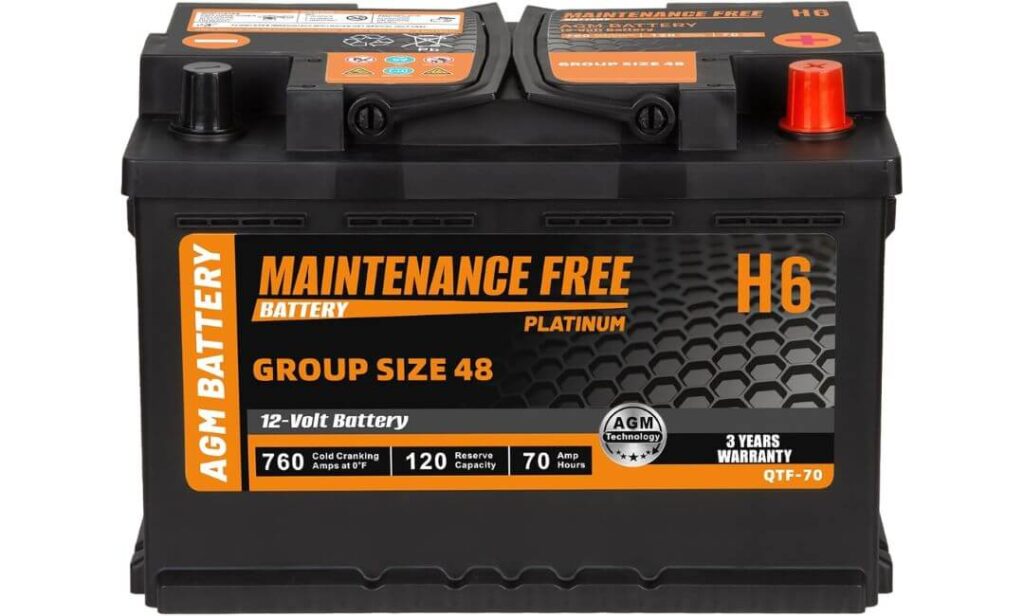
#6. Autocessking Group 48 AGM Battery
Technical Specs:
- Group Size: H6 (48) — suitable for older and mid-generation Chevy Traverse
- Battery Type: AGM (sealed, maintenance-free)
- Cold Cranking Amps: 760 CCA
- Capacity: 70Ah with ~120 minutes reserve capacity
- Voltage: 12V
- Terminal Layout: Standard H6 configuration
- Construction: Glass mat AGM with vibration-resistant build
- Weight: ~45 lbs
- Dimensions: 11″ x 6.9″ x 7.5″
- Warranty: ~3 years
Strange as it sounds, this is the kind of battery that quietly solves problems you didn’t even realize were coming. In an older Chevy Traverse, where the system isn’t as demanding as newer models but still needs consistency, this one delivers exactly that balance. The 760 CCA output is enough to fire up the engine confidently, without pushing unnecessary excess power.
Where it really proves itself is in everyday reliability. Leave your Traverse parked for a few days, deal with temperature swings, or drive through rough roads—this battery doesn’t lose its composure. The low self-discharge design ensures it holds charge longer, while the AGM construction keeps everything sealed, stable, and maintenance-free.
The internal build is clearly focused on durability. With vibration resistance, leak-proof design, and consistent output across climates, it’s built for real driving conditions, not ideal ones. It doesn’t try to overdeliver—it focuses on staying dependable every time you turn the key. (and for most older setups, that’s exactly the kind of reliability that matters day to day)
What We Like About It
- Stable 760 CCA output for consistent, no-hassle starts
- Low self-discharge helps retain charge during idle periods
- AGM design ensures leak-proof, maintenance-free operation
- Handles heat, cold, and vibration without performance drop
- Practical option for older Traverse electrical systems
What Could Be Better
- Not designed for high-demand or deep-cycle applications, but works perfectly for standard vehicle use
Chevy Traverse Compatibility Insight
For older Traverse models, this battery fits right into the expected H6 category, providing enough power without overloading the system. It’s a straightforward replacement that aligns with factory requirements while adding AGM reliability.
If your current battery feels inconsistent or struggles after sitting idle, this one stabilizes things quickly. Starts become predictable again, and the system runs without those small fluctuations that build up over time. It’s about keeping the vehicle simple, reliable, and ready whenever you need it.
The Insider Pro-Tip
A lot of owners overlook how important charge retention is, especially if the vehicle isn’t driven daily. A battery that holds its charge well will always feel more reliable than one with slightly higher specs but faster drain.
And here’s the real takeaway—for older Traverse models, consistency beats excess power every time. Choosing a battery that matches the system properly will always give you a smoother, more dependable experience in the long run.
Best Chevy Traverse Battery Comparison: H7 vs H6 AGM Picks That Actually Deliver
| Battery | Group | CCA | Reserve | Real Strength | Best For |
|---|---|---|---|---|---|
| ACDelco 94RAGM OEM Feel | H7 | 850 | High | Stable voltage, long cycle life, premium build | New Traverse owners who want zero headaches |
| Interstate MTX-94R Pro Grade | H7 | 850 | 140 min | Pure lead design, long lifespan, consistent output | Heavy daily use + start-stop driving |
| UPLUS AGM-L80-UP Smart Value | H7 | 850 | 140 min | Strong recovery, high cycle durability | City driving + short trip users |
| Mighty Max MM-H7 Budget Pick | H7 | 850 | 140 min | Rugged build, handles rough conditions well | Budget buyers needing solid performance |
| 1AUTODEPOT H6 Balanced | H6 | 760 | 120 min | Reliable daily performance, good charge retention | Older Traverse models (practical choice) |
| Autocessking H6 Simple Fit | H6 | 760 | 120 min | Low discharge, steady starts, durable design | Occasional driving + older models |
Why AGM Makes Sense for Chevy Traverse Owners (Real-World Fit, Not Just Spec Sheet)
A Chevy Traverse isn’t running a simple electrical setup anymore. Between the large infotainment system, driver-assist modules, sensors, climate control, and in newer models the auto start-stop behavior, the battery is constantly under load—even when you don’t notice it. This is exactly where AGM (Absorbent Glass Mat) batteries step in and do something a regular flooded battery can’t.
AGM batteries are built differently. Instead of liquid acid moving freely inside, it’s held in glass fiber mats, which keeps everything stable, controlled, and efficient. That one design change translates into multiple real-world benefits. You get faster energy delivery when starting, better recovery after each ignition cycle, and most importantly, consistent voltage output when multiple systems are running together. In a Traverse, that stability isn’t optional—it’s what keeps everything working smoothly without glitches.
What AGM Actually Fixes in Daily Driving
Stronger Starts Without Voltage Drop
Cold starts, early mornings, or even quick restarts after short trips—this is where AGM shines. With higher CCA (Cold Cranking Amps) and lower internal resistance, the engine fires up cleanly without hesitation. But more importantly, the voltage doesn’t dip sharply when everything powers on together. That’s why you don’t see flickering screens or delayed system response.
Better for Stop-and-Go and Short Trips
Traverse owners who drive in traffic or take short daily trips unknowingly stress their battery the most. AGM batteries handle frequent charge-discharge cycles much better, meaning they don’t lose performance quickly. They recover charge faster after each ignition, which keeps the system stable over time.
Vibration Resistance in a Heavy SUV
An SUV like the Traverse isn’t light, and road conditions aren’t always smooth. AGM batteries are naturally more resistant to vibration and internal damage, thanks to their tightly packed internal structure. Over time, this directly impacts longevity—less internal wear, fewer chances of early failure.
Lower Self-Discharge When Parked
If the vehicle sits unused for a few days (which happens more often than people admit), AGM batteries lose charge much slower. That means when you come back, the battery still has enough strength to start without feeling weak or delayed.
Why It Matters for Modern Traverse Features
Modern Traverse models are loaded with systems that never truly “switch off.” Even when the engine is off, there’s background activity—security systems, memory functions, electronic modules. Add to that features like traction control, adaptive systems, and large infotainment displays, and the battery becomes more than just a starting component.
AGM batteries support these systems better because they deliver stable, continuous power, not just bursts. In vehicles with start-stop systems, this becomes even more critical. A standard battery wears out quickly under that pattern, while AGM is designed specifically to handle repeated engine restarts without losing efficiency.
Chevy Traverse Battery Size and Fitment (What Actually Works)
H7 (Group 94R) – Newer Models
For newer Traverse models, the system is clearly built around H7 AGM batteries. This size isn’t just about fitting in the tray—it’s about delivering the right balance of CCA, reserve capacity, and voltage stability. Downsizing here might seem like a shortcut, but it usually leads to inconsistent performance over time.
H6 (Group 48) – Older and Mid Models
Older and mid-generation models commonly use H6 batteries, which still work well when matched correctly. AGM upgrades in this size bring noticeable improvements, especially in charge retention and start consistency, without overloading the system.
The Real Takeaway Most People Miss
Choosing AGM for a Traverse isn’t about “premium upgrade”—it’s about matching the battery to how the vehicle actually operates today. Modern SUVs demand stable power, quick recovery, and long-term consistency. AGM delivers that in a way traditional batteries simply don’t.
And once you experience that difference—no hesitation on starts, no random electronic quirks—you realize it wasn’t an upgrade at all. It was the correct choice from the beginning.
Buying Guide: Chevy Traverse Battery Basics You Should Know
If you strip away all the confusion, a Chevy Traverse doesn’t need “just any 12V battery.” It needs a battery that can handle high electrical demand, frequent starts, and stable voltage delivery. That’s why most modern Traverse models are designed around AGM (Absorbent Glass Mat) batteries, not the older flooded types.
AGM isn’t just a premium tag—it’s about how the battery behaves in real driving. Traverse systems (infotainment, sensors, safety modules, climate control) all depend on consistent voltage, not just raw starting power. A weaker or conventional battery might start the engine, but over time you’ll notice small issues—slow crank, dimming electronics, random warnings. AGM avoids that by delivering clean, stable power every time you start and drive.
Chevy Traverse Battery Size and Group Size (H7 vs H6 Explained)
H7 (Group 94R) — Newer Models
This is where most newer Traverse setups sit. The H7 size gives you:
- Higher CCA (around 800–850 range) for confident starts
- More reserve capacity, which keeps electronics stable during idle
- Better handling of start-stop systems and heavy loads
In simple terms, this size isn’t optional for newer models—it’s what the system expects to perform properly.
H6 (Group 48) — Older and Mid Models
Older Traverse models commonly use H6 batteries, which are slightly smaller:
- Lower CCA (typically around 700–760)
- Less reserve capacity compared to H7
- Still reliable when matched correctly
What Actually Matters in Fitment
This is where most people go wrong—battery size is not just about “fitting in the tray.” It’s about:
- Terminal position (left/right polarity must match)
- Height and length clearance
- Electrical capacity matching the vehicle’s demand
Going smaller than required might save money upfront, but it usually leads to voltage instability and shorter battery life.
Chevy Traverse Battery Location (Where It’s Actually Found)
Depending on the model year, the battery isn’t always sitting in plain sight under the hood.
- In many older models, it’s mounted under the hood, easy to access
- In some newer or mid-generation models, it’s placed under the rear floor (cargo area) or tucked away for better weight distribution
This design helps with space and balance, but it also means replacement isn’t always as straightforward as popping the hood—you may need to remove panels or covers to access it.
Chevy Traverse Battery Replacement (What to Expect)
You don’t need a full workshop, but you do need to be careful with the process.
Basic Flow:
- Turn off ignition completely and remove key
- Access battery location (hood or rear compartment)
- Disconnect negative terminal first, then positive
- Remove hold-down bracket
- Swap battery with correct group size and orientation
- Reconnect positive first, then negative
- Reset electronics if needed (clock, infotainment, etc.)
Real-World Note
On newer models, after replacement, some systems may take a few minutes to recalibrate. That’s normal. The key is installing the correct size and type—most issues after replacement come from wrong fitment, not the process itself.
Chevy Traverse Battery Price (What You’re Actually Paying For)
Battery pricing isn’t random—it directly reflects build quality and performance.
Typical Range:
- H6 AGM batteries: mid-range pricing, suitable for older models
- H7 AGM batteries: slightly higher cost due to larger capacity and performance
What Drives the Price:
- Higher CCA and reserve capacity
- AGM construction vs flooded
- Internal materials (denser plates, better alloys)
- Brand reliability and warranty
Real Talk
Going for the cheapest option usually means shorter lifespan and inconsistent performance. Spending a bit more on a proper AGM battery saves you from replacing it again sooner or dealing with annoying electrical issues.
How to Read Battery Labels (What Actually Matters)
CCA (Cold Cranking Amps)
This is your starting power. Higher CCA means:
- Better cold starts
- Less strain during ignition
- More confidence in all weather
For Traverse, staying in the 750–850 range is ideal depending on size.
Ah (Amp Hours)
This tells you how much energy the battery can store. Higher Ah:
- Supports longer accessory use
- Helps in stop-start driving
- Keeps systems running without quick drain
Reserve Capacity (RC)
Often ignored, but extremely important. RC tells you how long the battery can run essentials if the alternator isn’t supplying enough power. Higher RC = more stability during idle or heavy load.
AGM vs Conventional
- AGM: Stable, maintenance-free, better for modern vehicles
- Conventional (flooded): cheaper, but less durable and less stable
For a Traverse, AGM isn’t just better—it’s the correct match for how the vehicle operates today.
The Bottom Line Buyers Usually Miss
Choosing a battery for a Chevy Traverse isn’t about picking the biggest number or the cheapest option. It’s about matching:
- Correct group size (H7 or H6)
- AGM technology for stability
- Balanced CCA + reserve capacity for real driving conditions
Once those three are right, everything else falls into place—starts feel smoother, electronics behave properly, and you don’t have to second-guess your choice every morning.
How to Install and Maintain Your Chevy Traverse Battery (Real-World, No Shortcuts)
Battery replacement in a Traverse isn’t complicated, but doing it carelessly is where problems start. Modern SUVs rely on stable voltage and clean connections—so the goal isn’t just swapping parts, it’s installing it correctly so the system behaves properly afterward.
Step-by-Step Flow That Works in Real Life
- Shut everything down completely
Ignition off, key out, doors closed. Give the vehicle a minute so modules go to sleep. This prevents voltage spikes or memory glitches. - Access the battery properly
Depending on your model, you’ll find it under the hood or under the rear cargo floor. Don’t force panels—remove trims carefully so clips don’t break. - Disconnect terminals in the correct order
- Negative (−) first
- Then positive (+)
This avoids accidental short circuits.
- Remove hold-down bracket and lift the battery out
These batteries are heavy (40–50 lbs range), so lift steadily. Tilting too much isn’t ideal, even with AGM. - Clean the battery tray and terminals
This step gets skipped too often.- Remove dust, debris, or corrosion
- Check for rust or loose mounting points
A clean base ensures proper seating and grounding.
- Install the new battery with correct orientation
- Match group size (H7 or H6)
- Ensure terminal position aligns (left/right polarity)
- Seat it flat—no rocking or uneven placement
- Reconnect terminals (reverse order)
- Positive (+) first
- Then negative (−)
Tighten firmly, but don’t overtighten—damaging terminals creates long-term issues.
- Secure hold-down and check stability
The battery should not move at all. Movement leads to vibration damage over time.
Torque and Tightening (The Detail Most People Ignore)
- Terminal connections should be snug, not forced
- Over-tightening can crack terminals or damage posts
- Loose connections cause voltage drops, which show up as random electrical issues later
AGM Battery Maintenance (What You Actually Need to Do — and What You Don’t)
AGM batteries are designed to be low-maintenance, but that doesn’t mean zero care. The difference is—you’re not adding water or opening caps, you’re maintaining charging health and system balance.
What You Don’t Need to Do
- No water refilling
- No acid checks
- No routine opening or inspection inside
What Actually Keeps an AGM Battery Healthy
- Drive regularly or maintain charge
Short trips don’t fully recharge the battery. If the vehicle sits often, consider occasional longer drives or a smart charger. - Use a compatible charger (AGM mode)
AGM batteries prefer controlled charging. Overcharging or using basic chargers can reduce lifespan. - Avoid deep discharge cycles
Letting the battery drain too low repeatedly shortens its life. AGM handles it better than flooded batteries, but it’s still not ideal. - Keep terminals clean and tight
Even small resistance at the terminals affects performance over time. - Watch electrical load habits
Running accessories (music, lights, charging ports) with the engine off repeatedly adds stress. AGM can handle it—but not endlessly.
Real Insight
AGM batteries don’t fail suddenly without warning. They usually show small signs first—slightly slower starts, minor voltage dips. Paying attention early helps you avoid being stuck later.
Safety Reminders (Simple, But Critical)
Working with a battery isn’t risky if done right, but ignoring basics can cause problems.
- Always wear gloves and eye protection
- Never place tools across both terminals (short circuit risk)
- Avoid sparks or open flames near the battery
- Lift with care—these are heavy units
- Double-check polarity before connecting
One Mistake to Avoid
Connecting terminals in the wrong order or reversing polarity can damage vehicle electronics instantly. Always pause and confirm before tightening.
Disposal and Replacement Ethics (What Most People Overlook)
Old batteries are not regular waste—they contain lead and acid that must be handled properly.
What You Should Do
- Return the old battery to:
- Auto parts stores
- Authorized recycling centers
- Many sellers offer a core return system, which can also save money
Why It Matters
Recycling ensures:
- Safe handling of hazardous materials
- Recovery of usable lead for new batteries
- Reduced environmental impact
The Practical Bottom Line
Installing a battery in a Chevy Traverse isn’t about speed—it’s about doing it cleanly and correctly. A properly installed AGM battery will:
- Start consistently
- Support all electronics without fluctuation
- Last longer without hidden issues
Skip the small details, and problems show up later. Get them right once, and the battery becomes something you don’t have to think about again for years.
FAQs About Chevy Traverse Battery
Why does my Chevy Traverse still feel weak on startup even after installing a new AGM battery?
This is one of those situations where the battery gets blamed, but the real issue is often system calibration or charging behavior, not the battery itself. After installing a new AGM in a Chevy Traverse, especially newer models, the vehicle’s electrical system may take some time to recalibrate. During this phase, you might notice slightly delayed cranks or inconsistent behavior—it’s not failure, it’s adaptation.
There are also a few overlooked causes that show up in real ownership:
- Loose or slightly misaligned terminal connections
- Battery not fully charged before installation
- Alternator not delivering consistent charge under load
- Short-trip driving patterns preventing full recharge
The key point—a new battery only performs at its best when the entire charging system supports it. If everything is aligned properly, AGM batteries don’t feel “weak”—they feel stable and consistent.
Can I upgrade my Chevy Traverse from H6 to H7 battery safely, or does it create issues?
This is where things get interesting. Technically, upgrading from H6 (Group 48) to H7 (94R) can work—but only if the physical space and terminal layout allow it. The bigger question isn’t “can it fit,” it’s should you do it based on your usage.
In real-world terms:
- If your driving involves short trips, heavy accessory use, or frequent idling, a larger H7 battery can provide more stability
- If your vehicle is an older model with lower electrical demand, the gain may be minimal
But here’s the truth most people miss—going bigger doesn’t automatically mean better performance. The system is designed for a specific range, and oversizing without need can sometimes lead to inefficient charging cycles over time.
So yes, it can work—but only when done thoughtfully, not blindly.
Why do AGM batteries in a Chevy Traverse sometimes last less than expected?
AGM batteries are often marketed as long-lasting, and they are—but only under the right conditions. When they fail early, it’s rarely because of poor build quality. It’s usually due to how the vehicle is used daily.
Here’s what actually shortens AGM life in a Traverse:
- Repeated short drives that never fully recharge the battery
- Letting the vehicle sit for long periods without maintaining charge
- Running electronics heavily with the engine off
- Using incorrect charging methods (non-AGM compatible chargers)
AGM batteries are designed for modern vehicles, but they still rely on proper charge cycles and usage patterns. Treat them right, and they last. Ignore those patterns, and even a premium battery won’t reach its full lifespan.
Is reserve capacity (RC) more important than CCA for Chevy Traverse daily driving?
Most people focus only on CCA because it’s easy to understand—higher number, stronger start. But in a vehicle like the Traverse, reserve capacity quietly matters more in day-to-day driving.
CCA handles the moment of ignition. RC handles everything after that:
- Keeping systems stable during idle
- Supporting electronics when alternator output fluctuates
- Preventing voltage drops during heavy load
Think of it this way—CCA gets the engine running, but RC keeps the entire vehicle behaving properly once it’s running. That’s why a battery with balanced specs (good CCA + strong RC) always feels better in real use than one focused on just one number.
How do I know if my Chevy Traverse battery is actually the problem or something else?
This is where experience matters. Not every starting issue or electrical glitch points directly to the battery. In fact, many owners replace a good battery while the real issue sits elsewhere.
Signs it’s truly the battery:
- Slow crank that gets worse over time
- Difficulty starting after sitting idle
- Voltage dropping noticeably under load
Signs it might be something else:
- Sudden failure without warning
- Flickering electronics even with a strong start
- Battery draining overnight repeatedly
In those cases, the cause could be:
- Alternator inconsistency
- Parasitic drain from a module
- Poor grounding or wiring issues
The smart move is to observe patterns, not just symptoms. A failing battery usually gives gradual signs. Electrical system issues tend to appear suddenly and inconsistently. Knowing the difference saves both time and money—and avoids replacing parts that weren’t the problem to begin with.
Final Thoughts (What Actually Matters After All This)
At this point, the decision shouldn’t feel confusing anymore—it should feel clear. A Chevy Traverse isn’t the kind of SUV where you can throw in any battery and forget about it. It demands the right group size, the right construction, and the right balance of power, otherwise small issues start creeping in quietly—until they’re impossible to ignore.
What separates a good choice from a frustrating one isn’t just specs on paper. It’s how the battery behaves after a week, a month, a season. The ones we covered here are built around real Traverse usage—stop-start driving, heavy electronics, idle time, daily unpredictability. That’s why they hold up where others slowly fall off.
If you’re driving a newer model, sticking with H7 AGM isn’t optional—it’s what keeps everything running the way it should. For older models, a well-matched H6 AGM does the job without overcomplicating things. The key is not overthinking it—just match the battery to the vehicle’s actual needs, not assumptions.
And here’s the part most people realize too late—when the battery is right, you stop noticing it completely. No hesitation, no warning lights, no second thoughts when you turn the key. That’s not luck—that’s what happens when the choice is made properly the first time.
Pick it once, install it right, and let the vehicle do what it was built to do—without interruptions.
Also Check:

