
6 Best Batteries for Honda Civic in 2026: High CCA Starts, AGM Durability & Zero-Hassle Reliability
If you’ve ever tried to buy a battery for a Honda Civic and got hit with three different sizes at the store, you’re not alone. I’ve seen people pick a battery that almost fits, struggle with terminals, or end up with weak starts in winter—all because no one explained the fitment clearly.
Here’s the real deal. Most newer Civic models (last few generations) are built around the compact factory battery size—this is what fits perfectly without mods and works for daily driving. But if your car has start-stop, extra electronics, or you just want stronger performance, stepping up to a slightly larger AGM battery (the H5 size) gives you better cold starts and longer life. Now, if you’re running an older Civic, you might also see a smaller alternative size in play depending on the tray and setup.
That’s exactly how this list is built. Not random picks—only batteries that actually fit real Civic setups, covering:
- ✔️ Standard fit (no hassle install)
- ✔️ AGM upgrades (more power, longer life)
- ✔️ Older model compatibility
So whatever Civic you’ve got—new or old—you won’t end up guessing or returning the battery after install.
Best Honda Civic Battery: Top 2026 Picks for AGM Durability & Daily Use
#1. Interstate Batteries MTX-51R AGM Battery
best AGM battery for Honda Civic with strong cold start power and long-life durability for newer models
#2. Interstate Batteries MT-51R Flooded Battery
Honda Civic battery replacement cost friendly option with reliable daily starting and perfect OEM-style fit
#3. Goodyear 47-H5 AGM Battery
best H5 AGM upgrade for Honda Civic offering higher reserve capacity and consistent performance in extreme conditions
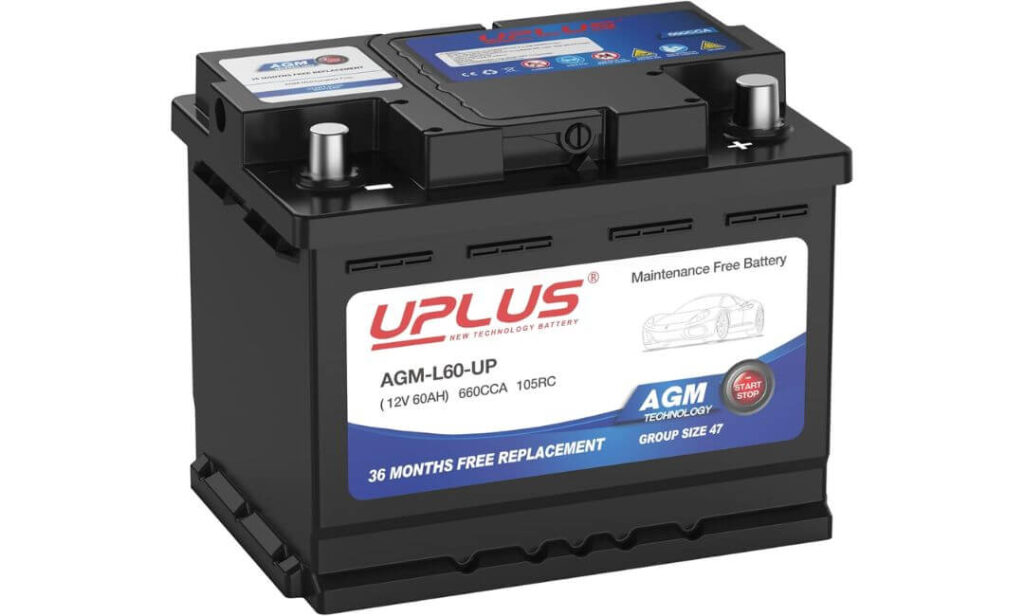
#4. UPLUS AGM-L60-UP Battery (Group 47 / H5)
best AGM battery for Honda Civic upgrade with strong CCA, long service life, and maintenance-free daily reliability
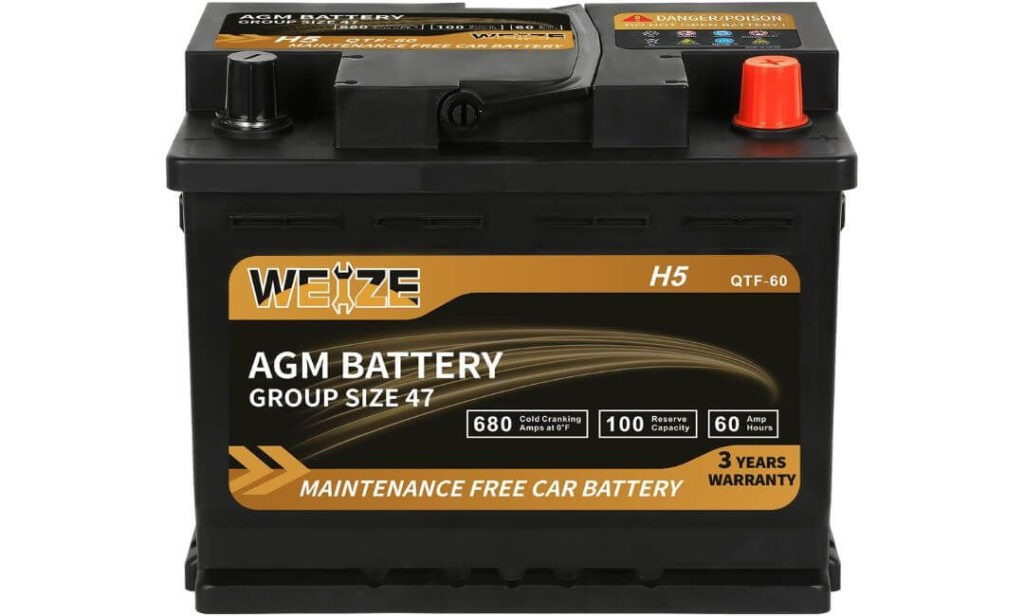
#5. Weize Platinum AGM Battery (Group 47)
reliable Honda Civic AGM battery meeting real CCA needs with solid warranty and consistent cold starts
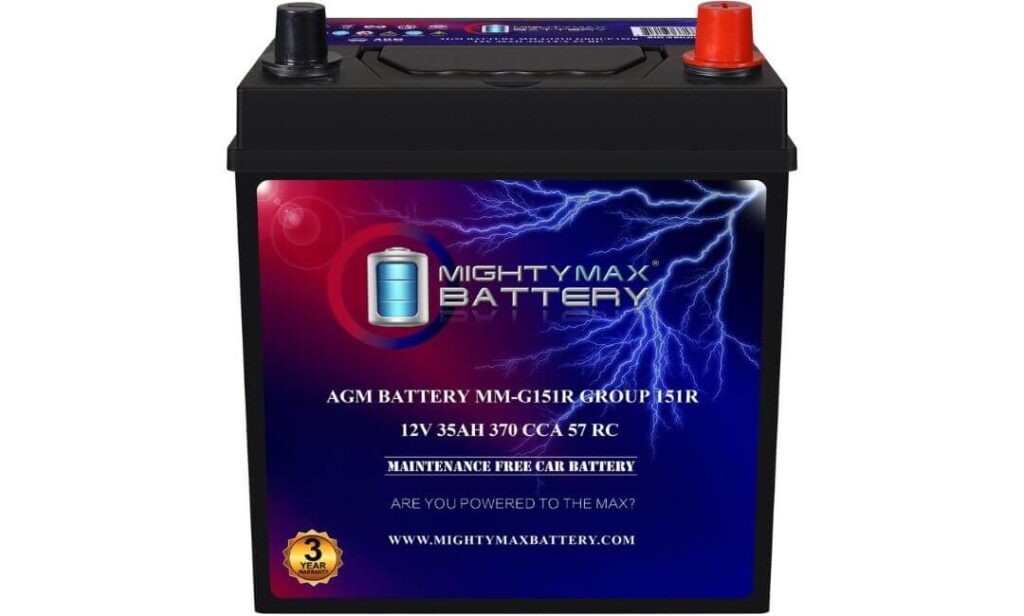
#6. Mighty Max MM-G151R AGM Battery
compact battery for Honda Civic older models offering AGM durability, efficient fit, and stable starting power
Expert Tip (From someone who’s actually dealt with Civic batteries)
If your Honda Civic starts fine today, don’t assume your battery is “good.” Most Civic batteries don’t fail suddenly—they get weaker slowly. You’ll notice slightly longer cranks, dimmer lights at idle, or the AC dip when you start the car. That’s your warning.
Here’s what most people get wrong: they replace the battery after it fails. By then, you’re already stuck somewhere or stressing the alternator. The smarter move is simple—if your battery is 3+ years old or your starts aren’t as sharp as before, replace it on your terms, not when the car forces you to.
And one more thing that actually matters:
If your driving is mostly short trips, go for an AGM battery. Civics with city use never fully recharge a basic battery, and that’s exactly why cheap ones die early. AGM handles that abuse better. It’s not hype—it’s real-world behavior.
How We Chose These Batteries (No guesswork, just what actually works)
I didn’t just pick random “top-rated” batteries. Most of these are newer listings with limited reviews, so relying on ratings alone would be misleading. Instead, this list is built the way someone experienced would choose for their own car.
First thing was fitment reality. Every battery here matches actual Civic setups—no loose fit, no terminal issues, no tray mismatch. If it doesn’t sit right in a Civic, it didn’t make the list. Simple.
Then came starting power (CCA). Civics don’t need extreme numbers, but they do need consistent cold starts. That’s why you’ll see a tight range here—enough power to crank instantly in winter or after sitting, without overspending on unnecessary specs.
Next is battery type and usage match.
- Standard flooded option is here for people who want a simple, cost-effective replacement.
- AGM options dominate the list because they handle modern driving habits better—short trips, traffic, electronics running in the background.
This isn’t theory—AGM simply holds up longer under real Civic usage.
After that, I looked at reserve capacity and daily behavior. Not just “how strong it is,” but how it performs when:
- headlights + AC + infotainment are all on
- car sits for a few days
- stop-and-go traffic drains the system
Weak batteries struggle here. These don’t.
Finally, brand consistency and build quality. Not just big names—but batteries that are known to deliver stable voltage, proper internal build, and predictable lifespan. No gimmicks, no inflated specs.
That’s why this list feels different.
It’s not built for clicks—it’s built so you install it once and don’t think about your battery again for years.
#1. Interstate Batteries MTX-51R AGM Battery
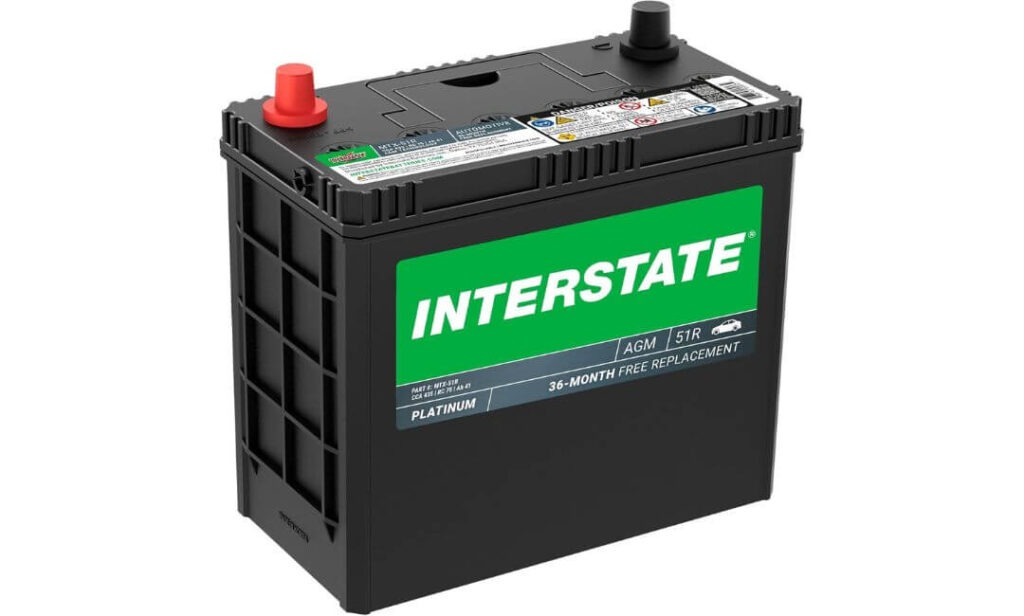
Technical Specs:
- Type: AGM (sealed, spill-proof)
- Voltage / Capacity: 12V / 41Ah
- Cold Cranking Amps: 435 CCA (reliable daily starts)
- Reserve Capacity: 75 minutes (handles accessories load better)
- Terminal: Top Post (standard fit)
- Weight: ~29.4 lbs
- Design: Compact OEM-style footprint for modern sedans
This is the kind of battery you install once and stop thinking about. In a Honda Civic, it just fits the way it should—no forcing cables, no adjusting brackets. Turn the key (or push the button), and it responds instantly. That 435 CCA might not sound huge on paper, but in real driving—morning cold starts, traffic stops—it delivers clean, confident ignition every time.
Where it actually separates itself is daily behavior. With 75 minutes reserve capacity, it doesn’t panic when you’ve got headlights, AC, and infotainment running together. AGM design means it recovers faster after short drives (which most city Civics deal with), so you’re not slowly draining it without realizing. It’s built for how people actually drive—not ideal conditions.
And yes, the “2x cycle life” claim isn’t just marketing fluff. Compared to basic flooded batteries, this one handles repeated charge/discharge cycles better—meaning fewer early failures. It’s not the cheapest option, but it’s the one that avoids those annoying “why is my car struggling to start?” moments after a year or two. (This is the kind of upgrade you feel over time, not just day one)
What Stands Out
- Consistent cold starts even after sitting overnight
- AGM design handles short trips + city driving better
- Strong reserve capacity for electronics-heavy usage
- Compact size = no fitment headache
- Proven brand reliability with long-term performance focus
What Could Be Better
- Not the highest CCA option if you want maximum performance headroom
Real-World Civic Fitment Insight
In most modern Civics, this size is the safe, no-guess choice. It drops in cleanly, terminals line up perfectly, and you don’t need to rethink your setup. That’s a big deal because a lot of people underestimate how annoying even slight fitment issues can get.
If you’re upgrading from a basic battery, you’ll notice the difference more in consistency than raw power—starts feel sharper, electronics stay stable, and the battery doesn’t feel “tired” after a few months. For daily drivers, this is exactly what you want.
The Insider Pro-Tip
Most Civic owners don’t realize this: batteries don’t fail suddenly—they weaken slowly. If your starts feel even slightly delayed compared to when the car was new, your battery is already on the way out.
If your usage is mostly city driving or short runs, AGM like this isn’t optional—it’s the smarter long-term move. It recharges faster and handles partial charging better than standard batteries. That’s the difference between replacing a battery every 2 years… and forgetting about it for much longer.
#2. Interstate Batteries MT-51R Flooded Battery
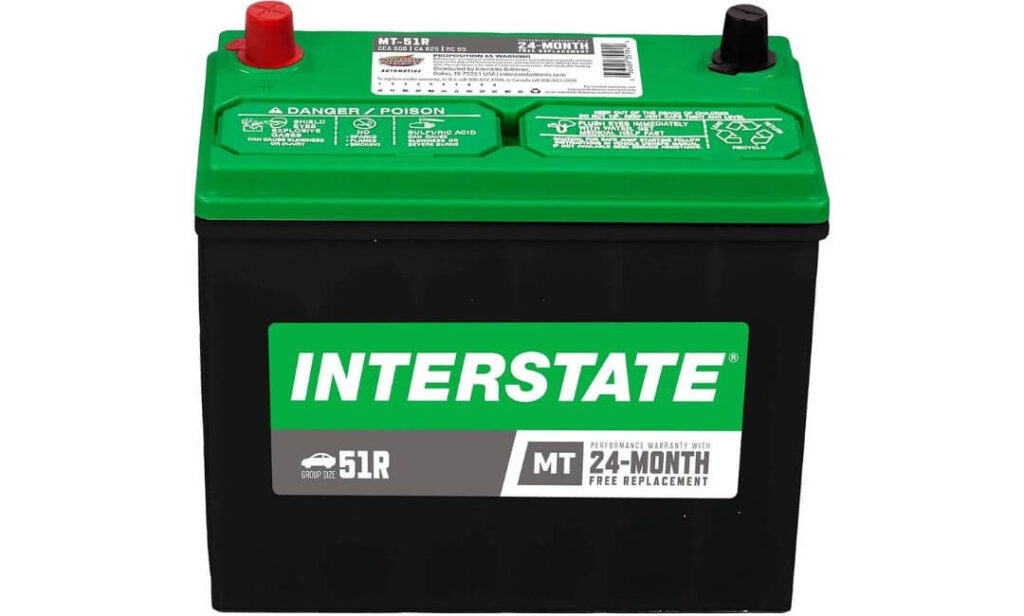
Technical Specs:
- Type: Flooded Lead-Acid (non-AGM)
- Voltage / Capacity: 12V (standard automotive capacity)
- Cold Cranking Amps: 500 CCA (stronger than most stock setups)
- Reserve Capacity: 85 minutes (solid backup for daily loads)
- Dimensions: 9.37″ × 5.06″ × 8.78″
- Weight: ~27.7 lbs
- Terminal: Top Post
- Cycle Life: ~25–30 cycles @ 80% depth of discharge
- Climate Focus: Built for hot to moderate conditions
Here’s the honest truth—most Civic owners don’t actually need an expensive AGM battery. What they need is something that starts every single time without drama, handles daily driving, and doesn’t burn a hole in the pocket. That’s exactly where this one comes in.
With 500 CCA, it delivers noticeably stronger cranking than typical entry-level batteries. You feel it on early morning starts—the engine fires up quicker, smoother, without that slight hesitation cheaper batteries develop over time. And that 85-minute reserve capacity matters more than people think. Lights on, AC running, infotainment active—it holds steady without dipping like weaker units.
What really makes this battery practical is how it’s built. The high electrolyte-to-lead ratio isn’t just a spec—it’s the reason it survives heat better. If your driving involves traffic, longer idles, or warmer climates, this design actually helps extend life instead of wearing it down. It’s not trying to be premium—it’s trying to be reliable where it counts. (And for most drivers, that’s exactly what matters more than fancy specs)
What Stands Out
- Higher 500 CCA gives sharper, quicker starts
- Strong 85-minute reserve capacity for real-world usage
- Designed to handle heat and daily stress better
- Simple, proven flooded design = cost-effective reliability
- Trusted long-term performance from a well-established brand
What Could Be Better
- Doesn’t offer the extended cycle life benefits you’d get from AGM options
Real-World Civic Fitment Insight
For most Civic setups, this is the kind of battery that just slots in and works without complications. No adjustments, no surprises—it fits like the original and behaves the way most drivers expect from a daily-use battery.
If your usage is mostly normal commuting, office runs, or highway driving, this type of battery actually makes more sense than upgrading unnecessarily. It delivers consistent starts and handles regular loads without overcomplicating things.
The Insider Pro-Tip
A lot of people upgrade to AGM thinking it’s always better—but that’s not the full picture. If your driving pattern includes longer drives or consistent running time, a good flooded battery like this can last just as reliably without the extra cost.
The real mistake isn’t choosing flooded vs AGM—it’s choosing a weak battery. This one avoids that problem by giving you extra starting power and better heat resistance, which is what actually impacts real-world performance over time.
#3. Goodyear 47-H5 AGM Battery
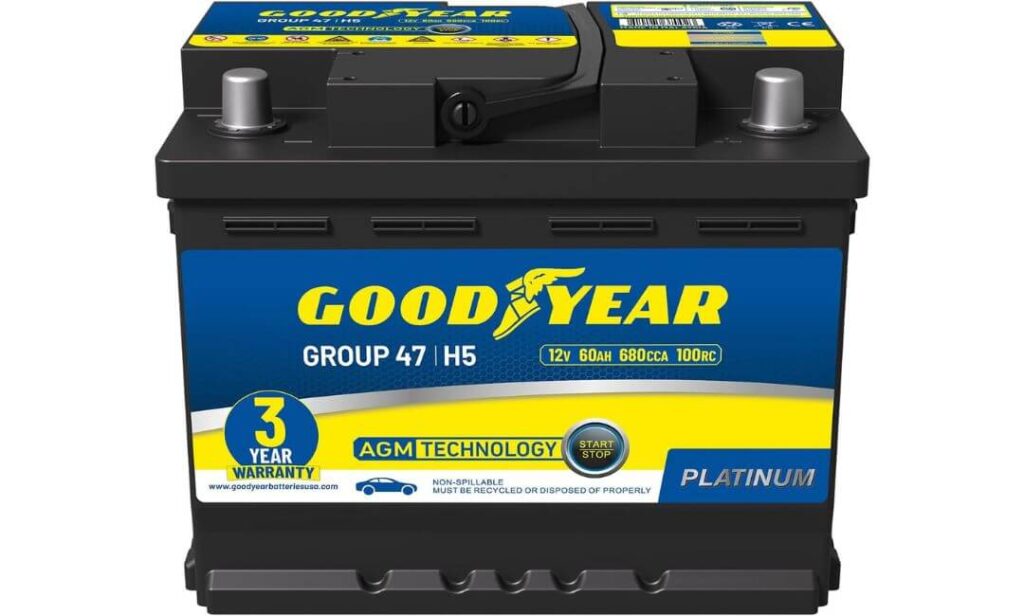
Technical Specs:
- Type: AGM (sealed, maintenance-free)
- Voltage / Capacity: 12V / 60Ah
- Cold Cranking Amps: 680 CCA (high-output starting power)
- Reserve Capacity: 100 minutes (strong accessory support)
- Dimensions: 9.37″ × 6.75″ × 7.5″
- Weight: ~40 lbs
- Terminal Layout: Standard polarity (positive right, negative left)
- Warranty: 36 months
- Build: Vibration-resistant, spill-proof AGM design
Let’s not sugarcoat it—this is where you step up from “just works” to serious power under the hood. The moment you switch to something like this in a Honda Civic, the difference isn’t subtle. Starts feel sharper, quicker—almost immediate. That 680 CCA isn’t just a number, it’s what you feel on cold mornings or after the car’s been sitting for days.
Now add in the 100-minute reserve capacity, and this is where things get interesting. Running AC, headlights, infotainment, charging devices—this battery doesn’t dip or struggle. It holds voltage steady, which means your electronics behave properly instead of flickering or lagging under load. That’s the kind of real-world stability most people don’t realize they’re missing until they upgrade.
And then there’s durability. AGM construction here isn’t just about being spill-proof—it’s about handling abuse. Rough roads, constant traffic, temperature swings—this battery is built to take it without degrading quickly. It’s not trying to be average—it’s built for drivers who want consistent performance every single day without second guessing their battery. (If you’ve ever dealt with weak starts or electronics acting weird, this is the kind of upgrade that quietly fixes all of that)
What Stands Out
- Strong 680 CCA for instant, confident starts
- High 100-minute reserve capacity for heavy electrical usage
- AGM design handles vibration, heat, and daily stress better
- Stable voltage output = better electronics performance
- Backed by 36-month warranty for long-term confidence
What Could Be Better
- Slightly heavier than standard batteries, which may matter during installation
Real-World Civic Fitment Insight
This size is typically used as an upgrade path in Civics—not the default, but a smart move if you want more performance. It fits well in setups that support a slightly larger battery, but you should always double-check tray space before switching.
If your driving includes heavy traffic, short trips, or lots of electronics, this battery makes a noticeable difference. It doesn’t just start the car—it keeps everything running smoothly without voltage drops.
The Insider Pro-Tip
Most people upgrade batteries only when forced—but doing it early with a higher-capacity AGM like this changes how the car feels daily. It’s not about extreme power—it’s about removing small annoyances you didn’t even realize were battery-related.
If your Civic runs multiple accessories or you rely on it daily without long drives, this kind of battery doesn’t just perform better—it ages better, which is what actually saves you money over time.
#4. UPLUS AGM-L60-UP Battery (Group 47 / H5)
Technical Specs:
- Type: AGM (maintenance-free, sealed)
- Voltage / Capacity: 12V / 60Ah
- Cold Cranking Amps: 660 CCA (strong cold start performance)
- Reserve Capacity: 105 minutes (extended runtime under load)
- Dimensions: 9.53″ × 6.89″ × 7.48″
- Weight: ~40 lbs
- Terminal Layout: SAE (Left Negative, Right Positive)
- Cycle Life: Up to 4× more than conventional batteries
- Build: High-density alloy + vibration-resistant design
Most people only notice their battery when it fails—this one flips that completely. The moment it’s installed in a Honda Civic, everything just feels sorted. Starts are instant, electronics stay stable, and there’s no sense of the system struggling in the background.
That 660 CCA is right in the sweet spot—it doesn’t just start the engine, it does it cleanly, even in colder conditions or after the car sits idle. But the real strength shows up in daily driving. With 105 minutes of reserve capacity, this battery keeps voltage steady when you’ve got multiple systems running—AC, lights, infotainment, charging—all at once. No flicker, no drop, no hesitation.
What sets it apart is how it handles modern usage. Short trips, stop-and-go traffic, even cars sitting unused for days—this is exactly what it’s built for. The 4× cycle life isn’t just a claim, it’s the reason it doesn’t degrade quickly under repeated starts. Add in 15× vibration resistance and a sealed design, and you get a battery that doesn’t just perform—it holds that performance over time. (This is the kind of battery that quietly does its job so well, you stop thinking about it entirely)
What Stands Out
- Strong 660 CCA for confident, repeatable starts
- High 105-minute reserve capacity for heavy daily usage
- Built for start-stop driving and short trips
- Up to 4× longer cycle life vs standard batteries
- Highly resistant to vibration and internal wear
What Could Be Better
- Slightly heavier build, which can make installation a bit more effort
Real-World Civic Fitment Insight
This is a smart upgrade option for Civics that can support a slightly larger battery. Fitment is straightforward if your tray allows it, and once installed, it feels like a proper step up from stock.
If your usage includes traffic-heavy driving, frequent starts, or extended idle periods, this battery handles it better than most. It’s designed around real-world driving patterns, not ideal conditions.
The Insider Pro-Tip
A battery doesn’t fail because it’s weak—it fails because it’s used in a way it wasn’t built for. Short trips and constant restarts slowly wear down standard batteries.
That’s exactly where something like this makes sense. It’s built to handle repeated stress without losing performance, which is why it stays consistent longer. If your driving isn’t perfectly smooth and predictable, this is the kind of upgrade that actually pays off.
#5. Weize Platinum AGM Battery (Group 47)
Technical Specs:
- Type: AGM (sealed, maintenance-free)
- Voltage / Capacity: 12V / 60Ah
- Cold Cranking Amps: 680 CCA (high cold-start output)
- Reserve Capacity: 100 minutes
- Dimensions: 9.52″ × 6.89″ × 7.48″
- Weight: ~41.6 lbs
- Terminal Layout: Standard SAE (Left Negative, Right Positive)
- Cycle Life: Up to 2× vs conventional flooded batteries
- Self-Discharge: <8% over 90 days
- Warranty: 36 months
What surprises most people about this battery isn’t the specs—it’s how stable everything feels after installation. Drop it into a Honda Civic, and the first thing you notice is how clean the starts are. No hesitation, no slow crank—just instant ignition backed by that 680 CCA doing exactly what it should.
But the real story is consistency. With 60Ah capacity and 100 minutes reserve, this battery doesn’t just start the engine—it keeps the entire electrical system calm under pressure. AC running, lights on, screen active—it holds voltage steady without those subtle drops that make the car feel strained. It’s the kind of performance you don’t notice at first… until you realize nothing is lagging anymore.
And then there’s durability. Built for start-stop systems and higher electrical loads, it’s designed to handle repeated starts without wearing down quickly. The low self-discharge rate (<8%) also means if the car sits for days, it still fires up without drama. It’s not trying to be flashy—it’s built to be quietly dependable over time, which is exactly what most drivers actually need. (This is the kind of battery that feels “normal” in the best possible way—because nothing goes wrong)
What Stands Out
- Strong 680 CCA for instant, reliable starts
- Stable 100-minute reserve capacity for real-world loads
- Low self-discharge = better performance after sitting idle
- Built for start-stop usage and modern electronics
- Backed by 36-month warranty for added confidence
What Could Be Better
- Slight variation in long-term durability depending on usage conditions
Real-World Civic Fitment Insight
This is a solid upgrade choice for Civics that can accommodate a Group 47 size. Fitment is straightforward if your battery tray supports it, and once installed, it feels like a proper step up from basic batteries.
For drivers dealing with daily traffic, multiple electronics, or occasional idle periods, this battery holds its ground well. It’s built for practical usage—not ideal lab conditions.
The Insider Pro-Tip
A battery isn’t just about starting the engine—it’s about how stable your car feels every day. If voltage fluctuates, small issues start showing up: dimming lights, slower response, inconsistent performance.
That’s why capacity and reserve matter more than most people think. A battery like this doesn’t just give power—it maintains balance across the system, which is what actually improves long-term driving experience.
#6. Mighty Max MM-G151R AGM Battery
Technical Specs:
- Type: AGM (sealed, maintenance-free)
- Voltage / Capacity: 12V / 35Ah
- Cold Cranking Amps: 370 CCA (steady, reliable starts)
- Reserve Capacity: 57 minutes
- Dimensions: 7.93″ × 5.31″ × 8.81″
- Weight: ~26.2 lbs
- Terminal Layout: SAE (Positive Right, Negative Left)
- Build: Shock & vibration resistant
- Warranty: 3 years
Sometimes bigger isn’t better—sometimes it’s about fitting right and working consistently. That’s exactly where this battery comes in. In certain Honda Civic setups (especially older ones or tighter battery trays), this compact size just makes more sense. No forcing, no adjustments—just clean fitment and straightforward performance.
The 370 CCA may look lower compared to larger batteries, but in real use, it’s tuned for efficiency rather than excess. It delivers steady starts without overloading the system, and because of its AGM design, it recovers quickly after each ignition. That matters more in daily driving than chasing high numbers on paper.
With a 57-minute reserve capacity, it holds enough backup power for normal usage—lights, basic electronics, short idles—without dropping off too quickly. Add in the sealed AGM build, and you get a battery that resists vibration, handles rough roads, and stays consistent across seasons. (It’s not about maximum output—it’s about getting exactly what your setup needs without compromise)
What Stands Out
- Compact size = perfect for tight battery spaces
- AGM design ensures stable and consistent performance
- Lightweight build makes installation easier
- Reliable 370 CCA for everyday starting needs
- Good balance between efficiency and durability
What Could Be Better
- Lower reserve capacity compared to larger battery sizes
Real-World Civic Fitment Insight
This size is typically seen in older Civic models or specific trims where space is limited. If your original battery matches this footprint, this is the kind of replacement that keeps everything simple and hassle-free.
It’s not meant as an upgrade—it’s meant as a correct-fit solution. And that’s exactly why it works well in the setups it’s designed for.
The Insider Pro-Tip
A lot of people try to “upgrade” battery size without checking fitment—and that’s where problems start. Wrong size can lead to loose mounting, cable strain, or improper connections.
If your Civic is built for a compact battery, sticking with the correct size like this isn’t playing it safe—it’s actually the smarter move. A properly fitted battery will always perform more reliably than an oversized one forced into place.
Best Honda Civic Battery Comparison: CCA, AGM vs Flooded & Size Guide
| Battery | Type | CCA | Capacity | Reserve | Best Use |
|---|---|---|---|---|---|
|
Interstate MTX-51R AGM
Best Overall
|
AGM | 435 | 41Ah | 75 min | Daily driving, smooth reliable starts |
|
Interstate MT-51R
Budget Pick
|
Flooded | 500 | — | 85 min | Low cost, strong basic performance |
|
Goodyear 47-H5 AGM
High Power
|
AGM | 680 | 60Ah | 100 min | Heavy electronics, max output |
|
UPLUS AGM-L60-UP
Upgrade Pick
|
AGM | 660 | 60Ah | 105 min | Traffic, short trips, long lifespan |
|
Weize Platinum AGM
Best Value
|
AGM | 680 | 60Ah | 100 min | Balanced power and price |
|
Mighty Max MM-G151R
Compact Fit
|
AGM | 370 | 35Ah | 57 min | Older models, tight battery space |
Honda Civic battery size guide: what actually fits, and why people get it wrong
If you open the hood on most modern Honda Civic models, you’ll usually find the compact 51R size sitting there. This is the OEM-style fit, meaning it drops in without any adjustment, the hold-down lines up properly, and the cables reach without tension.
The “R” in 51R matters more than people think. It refers to reversed terminal orientation, so the positive (+) terminal sits on the right and negative (-) on the left when the battery is facing you. Get this wrong and you’ll immediately run into cable length issues or awkward positioning.
In terms of performance, most 51R batteries sit around 400–500 CCA, which is perfectly fine for a Civic’s engine size. It’s not about brute power here, it’s about consistent, reliable starts and proper electrical balance. This size is ideal if:
- You want plug-and-play fitment
- Your driving is normal (city + highway mix)
- You don’t run heavy aftermarket electronics
It’s the safest choice, and for most people, it’s the correct choice without overthinking.
47 (H5) overview: when upgrading actually makes sense
Now, the 47 (H5) size is where things get interesting. It’s slightly larger and heavier, but it brings more capacity, higher CCA (typically 600–700+), and better reserve power.
This size isn’t always factory-installed, but many Civic owners move to it as an upgrade, especially when:
- The car has more electronics running constantly
- You do a lot of short trips or traffic driving
- You want longer battery life and stronger cold starts
The terminal layout is usually standard (positive right, negative left), and physically it will only fit if your battery tray has enough space. That’s the key point—this is not a universal drop-in for every Civic.
Where it shines is daily stress handling. AGM batteries in this size recover faster, handle repeated starts better, and don’t feel “tired” after a few months of use.
51R vs 47 (H5): what actually matters when choosing
This isn’t about which one is “better” on paper—it’s about which one fits your car and your driving style.
51R (Standard Fit)
- Perfect OEM alignment, no modification needed
- Lower cost, easier install
- Enough power for stock usage
- Best for: most drivers, simple replacement
47 (H5) (Upgrade Fit)
- Higher CCA, stronger starts
- More reserve capacity = better for electronics
- Longer lifespan under stress (especially AGM)
- Best for: heavy usage, short trips, stop-go traffic
The mistake people make is assuming bigger is always better. It’s not.
If your Civic is built around 51R and you force in an H5 without proper space, you’ll create more problems than you solve. But if your tray supports it, H5 can genuinely feel like an upgrade in daily driving.
Practical fitment tips most people ignore (but shouldn’t)
Before buying any battery, take 2 minutes and check these properly:
- Measure your current battery (length, width, height). Even small differences matter.
- Check terminal position carefully—positive and negative must match your cables naturally.
- Look at the battery tray and hold-down bracket, not just the battery itself.
- Don’t chase higher CCA blindly—your Civic doesn’t need extreme numbers, it needs stable power.
- If upgrading size, make sure there’s actual clearance, not just “almost fits” space.
One honest rule:
If a battery doesn’t fit cleanly and naturally, it’s the wrong battery—no matter how good the specs look.
Buying Guide: how to choose the right Honda Civic battery without wasting money or dealing with returns
Most people pick a battery based on brand or price, install it, and only realize later that something feels off—slower starts, weak electronics, or it just doesn’t last. The truth is, choosing the right battery for a Honda Civic isn’t about chasing the highest specs, it’s about matching the battery to how the car is actually used. Get that right, and you won’t think about your battery again for years. Get it wrong, and you’ll be back searching in a few months.
Understand your usage first, not the specs
Before even looking at numbers, think about how your Civic is driven.
If your driving is mostly short city trips, traffic, frequent stops, your battery rarely gets fully charged. This is where standard batteries struggle and wear out faster. In this case, an AGM battery makes more sense, because it handles partial charging and repeated starts better.
If your driving includes longer highway runs, steady speeds, and fewer restarts, a good quality flooded battery can still perform reliably without needing an upgrade.
The biggest mistake is buying based on “best” instead of what matches your usage pattern.
CCA matters, but only to a limit
Cold Cranking Amps (CCA) is important, but most Civic engines don’t need extreme numbers.
- Around 400–500 CCA → more than enough for standard daily use
- Around 600–700 CCA → useful if you want stronger starts or live in colder climates
Going beyond that doesn’t give real benefits—it just increases cost. What matters more is consistency over time, not peak power.
Reserve capacity is what you actually feel daily
This is the part most buyers ignore.
Reserve Capacity (RC) decides how your car behaves when:
- AC, lights, infotainment are running together
- You’re stuck in traffic
- The car sits unused for a few days
Higher RC means the battery doesn’t feel “drained” under load.
This is why bigger AGM batteries often feel smoother in daily driving—they maintain voltage better.
Size and fitment is non-negotiable
You can’t “adjust” a battery into place properly. It either fits correctly, or it doesn’t.
Always check:
- Battery dimensions (not just group size name)
- Terminal orientation (positive/negative sides must match)
- Tray space and hold-down alignment
Even a slight mismatch can lead to:
- Loose mounting
- Cable stress
- Poor connection over time
A perfect fit is more important than slightly better specs.
AGM vs Flooded: choose based on reality, not hype
AGM batteries are often marketed as better—and in some cases, they are. But not always necessary.
Go with AGM if:
- You drive in traffic daily
- You take short trips
- Your car has more electronics running
- You want longer lifespan under stress
Go with Flooded if:
- You drive longer distances regularly
- You want a budget-friendly replacement
- You don’t need upgrade-level performance
The right choice depends on how the car lives day to day.
Brand matters, but consistency matters more
A known brand gives confidence, but what actually matters is:
- Stable voltage output
- Reliable internal build quality
- Consistent performance over time
Some lesser-known batteries perform just as well if the specs and build are right. Don’t rely only on reviews—focus on the actual design and numbers.
Final reality check before buying
Before you click buy, pause for a second and confirm:
- Does this battery fit exactly like your current one?
- Are the terminals aligned naturally without stretching cables?
- Are you choosing it based on your usage, not just specs?
- Are you solving a real problem (weak starts, short trips), or just upgrading blindly?
Because at the end of the day, the best battery isn’t the one with the highest numbers—it’s the one that fits perfectly, performs consistently, and quietly does its job every single day without reminding you it exists.
In-depth specs that actually matter: CCA, size, fitment, and why most people get confused
Most buyers look at specs like CCA, Ah, or battery type and assume higher numbers automatically mean better performance. That’s not how it works in a real-world Honda Civic. The Civic is a balanced car—it doesn’t demand extreme power, but it does punish wrong choices over time. If you understand how these specs actually affect daily driving, you’ll avoid the common mistakes that lead to weak starts, short battery life, or fitment issues.
Honda Civic battery CCA requirements: what’s actually enough for cold starts
Cold Cranking Amps (CCA) is the battery’s ability to start the engine in low temperatures. For most Civic engines, the requirement is surprisingly moderate.
- Typical minimum range: ~350–400 CCA
- Ideal working range: 400–600 CCA
- Upgrade range (AGM/H5): 600–700+ CCA
Here’s the reality—anything above the required threshold doesn’t make the engine “start better,” it just gives extra headroom for colder climates or aging components.
Where CCA actually matters:
- Cold mornings where oil thickens
- Cars that sit unused for a few days
- Older starters or slightly worn ignition systems
Where it doesn’t matter as much:
- Warm climates with regular driving
- Short daily commutes with consistent use
The key is not chasing the highest number—it’s choosing a battery that can deliver consistent cranking without strain.
How much CCA you really need (based on climate and driving style)
This is where most guides stay generic—but real selection depends on your conditions.
If you live in warmer or moderate climates:
- 400–500 CCA is more than enough
- Focus more on battery quality and fitment
If you deal with colder winters:
- 500–650 CCA gives safer starts
- AGM becomes more useful here
If your usage is heavy (traffic, short trips, idle time):
- Go higher CCA + AGM
- Helps maintain performance even when battery isn’t fully charged
If your usage is light (long drives, fewer restarts):
- Standard CCA with flooded battery works fine
Simple rule most people miss:
CCA supports starting, but your driving pattern decides battery life.
Battery size and fit: the part that decides everything
Specs don’t matter if the battery doesn’t fit properly. This is where most wrong purchases happen.
In Civics, two common size categories show up:
- Compact OEM size (51R type fitment) → direct replacement
- Larger upgrade size (H5 / Group 47) → only if tray supports it
What you need to physically verify:
- Exact length, width, height of your current battery
- Terminal orientation (positive and negative must align naturally)
- Battery tray clearance and hold-down bracket position
Important practical check:
- If cables feel tight or twisted after installing → wrong size
- If battery moves slightly → wrong fit or mounting
Even a perfect battery on paper becomes a bad choice if fitment isn’t clean.
How to verify which battery fits your exact Civic (without guessing)
Instead of relying only on online listings, follow this simple real-world check:
- Look at your current battery label → note the group size
- Measure dimensions physically → don’t rely only on names
- Check terminal position → this avoids 90% of mistakes
- Confirm tray space → especially if upgrading to a larger size
- Match CCA range → no need to overshoot unnecessarily
If you’re upgrading size:
- Make sure there’s clear extra space, not just “almost fits”
- Check that hold-down bracket still secures properly
This process takes 2–3 minutes but saves you from returns, installation issues, and long-term problems.
AGM vs traditional batteries: what actually changes in daily driving
This is one of the most misunderstood parts.
Traditional (Flooded) batteries:
- Lower cost
- Work well in stable, longer driving conditions
- Struggle with repeated short trips and partial charging
AGM batteries:
- Higher upfront cost
- Recharge faster and handle incomplete charging cycles better
- More resistant to vibration and internal wear
- Longer lifespan in real-world city usage
Where AGM truly makes a difference:
- Stop-and-go traffic
- Short daily drives
- Cars with constant electrical load (AC, infotainment, charging devices)
Where flooded batteries still make sense:
- Long highway drives
- Budget-focused replacement
- Lower electrical demand
Real-world truth most people realize late:
A battery doesn’t fail because it’s “bad”—it fails because it’s used in conditions it wasn’t designed for.
Missing piece most guides ignore: reserve capacity and stability
CCA starts the engine—but reserve capacity (RC) keeps everything stable afterward.
Higher RC means:
- Less voltage drop when multiple systems run together
- Better performance in traffic or idle
- More tolerance if the car sits unused
This is why two batteries with similar CCA can feel completely different in daily use. One feels stable and smooth, the other feels slightly strained.
Final perspective that actually helps you choose right
Instead of asking “which battery is best,” ask:
- Does it fit perfectly without adjustment?
- Is the CCA appropriate, not excessive?
- Does the battery type match how I actually drive?
- Will it stay consistent after months of use, not just day one?
Because once you align fitment, usage, and specs correctly, the decision becomes simple—and you avoid the cycle of replacing batteries again and again.
Honda Civic battery replacement cost and real value: what you actually pay over time, not just at checkout
Most people look at the price tag, pick the cheapest option, and think they saved money. Then a year later, they’re buying another battery. The real cost of a Honda Civic battery isn’t what you pay once—it’s how long it lasts, how it performs daily, and whether it avoids repeat replacements.
Typical price ranges: 51R vs H5, AGM vs flooded (what you’re really paying for)
Battery pricing isn’t random—it directly reflects type, size, and internal build quality.
Standard size (51R type fitment):
- Flooded batteries → lower price range
- AGM versions → slightly higher, but longer life
Upgrade size (H5 / Group 47):
- AGM batteries dominate here
- Higher cost due to larger capacity + stronger internals
Real-world breakdown:
- Flooded (basic replacement): cheapest, does the job, shorter lifespan under stress
- AGM (same size): mid-range price, better durability, handles modern usage
- AGM (larger H5 size): highest price, strongest performance + longer consistency
What most people miss:
You’re not just paying for “power”—you’re paying for how long the battery stays reliable without degrading.
Why warranty matters more than most buyers think
A battery warranty isn’t just a safety net—it’s a signal of how confident the manufacturer is about long-term performance.
Typical ranges you’ll see:
- 2-year warranty (common in flooded batteries)
- 3-year warranty (common in AGM batteries)
But here’s the part people ignore:
- Warranty doesn’t mean the battery will last that long
- It means you’re protected if it fails early
What actually matters is:
- Consistent performance before warranty is needed
- Stable voltage output over time
- Resistance to real-world stress (heat, short trips, idle load)
A slightly higher-priced battery with a stronger warranty often ends up costing less because you’re not replacing it prematurely.
Real cost comparison: cheap vs smart buying
Let’s break this down the way it actually happens:
- Buy cheap flooded battery → lower upfront cost
- It struggles with short trips or traffic → wears faster
- Replace again sooner → total cost increases
Now compare that with:
- Buy AGM once → higher upfront
- Handles stress better → longer lifespan
- Fewer replacements → lower long-term cost
This is where “budget” vs “value” becomes clear.
Cheap saves money today. The right battery saves money over time.
Ways to reduce battery replacement cost (without compromising quality)
You don’t have to overspend—but you do need to be smart.
Look for timing-based deals
- Seasonal discounts (winter / festive sales)
- Online vs local store price comparison
Use core exchange properly
- Return your old battery
- Many sellers give a refund or discount for this
Choose installation wisely
- Local shops often charge less than dealerships
- Some batteries are simple enough for DIY install
DIY install (if you’re comfortable)
- Saves labor cost
- Takes 10–20 minutes with basic tools
- Just ensure correct terminal connection and tight fit
Avoid unnecessary upgrades
- Don’t jump to a larger size if your car doesn’t need it
- Fitment mistakes cost more than savings
Hidden costs most buyers don’t consider
This is where real-world experience matters.
A weak or wrong battery can lead to:
- Stress on the alternator
- Inconsistent electronics performance
- Unexpected breakdowns (which cost more than the battery itself)
Also, frequent replacements waste time, not just money.
That inconvenience is part of the real cost.
What “value” actually means for a Civic battery
Value isn’t about the lowest price—it’s about:
- Correct fit (no installation issues)
- Stable performance in daily use
- Lifespan that matches your driving conditions
If a battery runs smoothly for years without making you think about it, that’s value.
If you’re worrying about starts, charging, or replacing it early—that’s hidden cost.
Practical mindset before spending
Before you choose, ask yourself:
- Am I buying based on price only, or long-term use?
- Does this battery match how I actually drive?
- Will I have to think about replacing it again soon?
Because once you look at it this way, the decision becomes clear—
you’re not buying a battery, you’re deciding how often you want to deal with replacing one.
Installation and maintenance quick-start: do it right once, avoid problems later
A battery swap on a Honda Civic isn’t complicated—but the small details are where most issues start. Loose terminals, reversed polarity, or a poorly secured battery can lead to hard starts, warning lights, or even electrical faults down the line. If you install it cleanly and maintain it properly, you won’t have to think about it again for years. Rush it, and problems show up slowly—exactly when you don’t expect them.
Step-by-step quick install (safety first, no shortcuts)
Before touching anything, make sure the car is off, keys out, and everything powered down. If your Civic has a smart key, keep it a little away from the car to avoid accidental wake-up.
Basic install flow that actually works:
- Locate and access the battery properly
Open the hood, remove any covers if present. Take a second to observe terminal positions—this avoids confusion later. - Disconnect the negative terminal first (-)
Always start with negative. This prevents accidental short circuits while working. - Disconnect the positive terminal (+)
Once negative is off, remove the positive safely. - Remove the hold-down bracket
Don’t force the battery out—loosen the bracket fully so it lifts out cleanly. - Take out the old battery carefully
It’s heavier than it looks. Keep it upright to avoid spills (especially with older flooded batteries). - Clean the tray before placing the new battery
Dust, corrosion, or debris under the battery can cause uneven mounting. - Place the new battery and align it properly
Terminals should naturally match cable positions—no stretching or twisting. - Secure the hold-down bracket firmly
Battery should not move at all. Even slight movement leads to vibration damage over time. - Reconnect terminals (positive first, then negative)
Reverse of removal:- Positive (+) first
- Negative (-) last
- Final check before closing hood
Ensure:
- Terminals are tight
- No loose cables
- Battery is fully secure
Start the car and observe—engine should crank cleanly without delay.
Terminal cleaning, polarity check, and corrosion prevention (small steps, big impact)
This is where most long-term issues begin—not with the battery, but with the connections.
Terminal cleaning basics:
- If you see white/green buildup → that’s corrosion
- Use a brush or terminal cleaner to remove it
- Clean both battery posts and cable clamps
Polarity check (never assume):
- Positive is usually marked with + and red cable
- Negative is – and black cable
- Always double-check before connecting
Anti-corrosion measures that actually help:
- Apply a thin layer of petroleum jelly or terminal grease after tightening
- Prevents moisture and slows corrosion buildup
- Keeps connection stable over time
One real-world tip:
Loose terminals don’t always fail immediately—they cause inconsistent electrical behavior first (flickering lights, random warnings), which people often misdiagnose.
When to service or replace: signs most drivers ignore
A battery rarely fails instantly—it gives signals. The problem is, most people miss them.
Early warning signs:
- Engine cranks slightly slower than usual
- Headlights dim briefly during startup
- Infotainment resets or glitches occasionally
- Power windows feel slightly weaker
Clear signs it’s time to replace:
- Multiple failed starts
- Clicking sound without engine crank
- Battery struggles after sitting for 1–2 days
- Visible swelling or leakage
Parasitic drain: the hidden battery killer
Sometimes the battery isn’t bad—something in the car is draining it.
Common causes:
- Aftermarket accessories
- Faulty wiring
- Lights or modules staying active when car is off
If your battery dies repeatedly even after replacement:
- Get a parasitic drain test done
- Don’t keep replacing batteries without checking this
Corrosion and environment: slow damage most people overlook
Heat, moisture, and vibration all affect battery life.
- High heat → speeds up internal wear
- Moisture → increases terminal corrosion
- Loose mounting → vibration damage inside battery
Simple checks every few months:
- Look at terminals
- Ensure battery is still tight
- Check for any visible leaks or swelling
Practical mindset that keeps things trouble-free
You don’t need to be a mechanic—you just need to be aware of a few basics:
- Install it properly once
- Keep connections clean and tight
- Pay attention to small changes in starting behavior
Because battery problems rarely come from nowhere—they build up slowly.
If you catch them early, it’s a simple fix. If you ignore them, it becomes a breakdown at the worst possible time.
FAQs About Honda Civic Battery
Why does my Honda Civic still struggle to start even after installing a new battery?
This is one of those situations where people blame the battery, but the issue is often deeper. A new battery fixes only one part of the system—the starting circuit involves the starter motor, alternator, wiring, and even grounding points.
If your Civic still feels weak after installing a fresh battery, check these first:
- Loose or poorly tightened terminals (very common after DIY installs)
- Old or corroded ground connections
- Starter motor beginning to wear out
- Alternator not charging fully
There’s also a subtle case—voltage drop under load. The car may start, but if voltage dips too much, it feels like a weak crank. That’s not always battery failure, it’s system imbalance.
Real talk:
A new battery gives you a clean baseline. If the problem continues, it’s actually helping you expose the real issue faster, not causing it.
Is upgrading to a bigger battery in a Honda Civic actually worth it, or just hype?
It depends on why you’re upgrading. If you’re doing it just because “bigger is better,” then no—it’s not worth it. But if your usage demands it, the difference is very real.
A larger AGM battery (like H5 size) makes sense when:
- You drive mostly in traffic and short trips
- Your car runs multiple electronics constantly
- You’ve noticed voltage dips or inconsistent starts
Where people go wrong is forcing a bigger battery without checking fitment. That leads to:
- Cable strain
- Improper mounting
- Long-term reliability issues
The upgrade is not about power—it’s about stability and consistency under stress.
If your Civic feels slightly “tired” electrically, the right upgrade can fix that quietly.
How do I know if my Honda Civic battery is dying slowly and not suddenly failing?
Most batteries don’t fail overnight—they degrade in a way that’s easy to miss.
Watch for patterns, not just symptoms:
- Starts are still happening, but slightly slower than before
- Car starts fine in the morning, but struggles after sitting for a few hours
- Electrical components feel normal alone, but weak when used together
One real indicator people ignore:
If your car feels different depending on time of day or usage, the battery is already losing consistency.
Quick self-check:
- Turn on headlights before starting → notice brightness drop during crank
- If the drop feels sharper than before, battery strength is declining
This stage is where replacement makes the most sense—before you get stuck somewhere.
Why do some AGM batteries last years while others fail early in similar Civics?
This confuses a lot of people because on paper, specs look similar.
The difference comes down to usage pattern, not just battery quality.
Two identical batteries can behave completely differently:
- One car does long drives → battery stays fully charged → lasts longer
- Another does short trips → partial charging → faster wear
AGM batteries are better at handling this, but they’re not immune.
Other factors that quietly affect lifespan:
- Heat exposure (engine bay temperature)
- Charging system health
- Frequency of complete discharge cycles
Real truth most guides won’t tell you:
Battery life is less about brand and more about how your driving habits interact with that battery.
Can a wrong battery choice damage my Civic’s electrical system over time?
Yes—but not in the dramatic way people think. It’s not like things fail instantly. It’s slow, subtle, and often misdiagnosed.
A poorly matched battery can cause:
- Inconsistent voltage supply
- Extra load on the alternator
- Irregular behavior in electronics
For example:
- Low reserve capacity → system struggles under load
- Wrong size → loose fit → vibration damage
- Incorrect terminal setup → poor connections
Over time, this leads to:
- Reduced alternator efficiency
- More frequent electrical glitches
- Shorter lifespan of the battery itself
The key point:
A battery isn’t just a power source—it’s part of a balanced electrical system.
If one component is off, the entire system adjusts—and not always in a good way.
Closing Thoughts: what actually matters once you’ve read everything
At this point, you don’t need another “top 10” list—you already know what most people don’t. A battery for your Honda Civic isn’t about chasing the highest CCA or picking the biggest size. It’s about fitment, consistency, and how your car is actually used every day.
If there’s one thing to take away, it’s this:
The right battery should feel invisible. You shouldn’t be thinking about it, worrying about starts, or noticing voltage drops. It should just work—quietly, reliably, every single time you turn the key.
The mistake most owners make is waiting too long or choosing based on specs alone. But once you align:
- Correct size (clean fit, no adjustment)
- Right type (AGM vs flooded based on usage)
- Balanced performance (not overkill, not underpowered)
…everything else falls into place.
And here’s the real-world truth most guides miss:
A good battery doesn’t impress you on day one—it proves itself over months of daily use, in traffic, in heat, in those random moments when your car just needs to start without hesitation.
Choose once, choose right, and you won’t come back to this topic again for a long time.
Also Check:

