
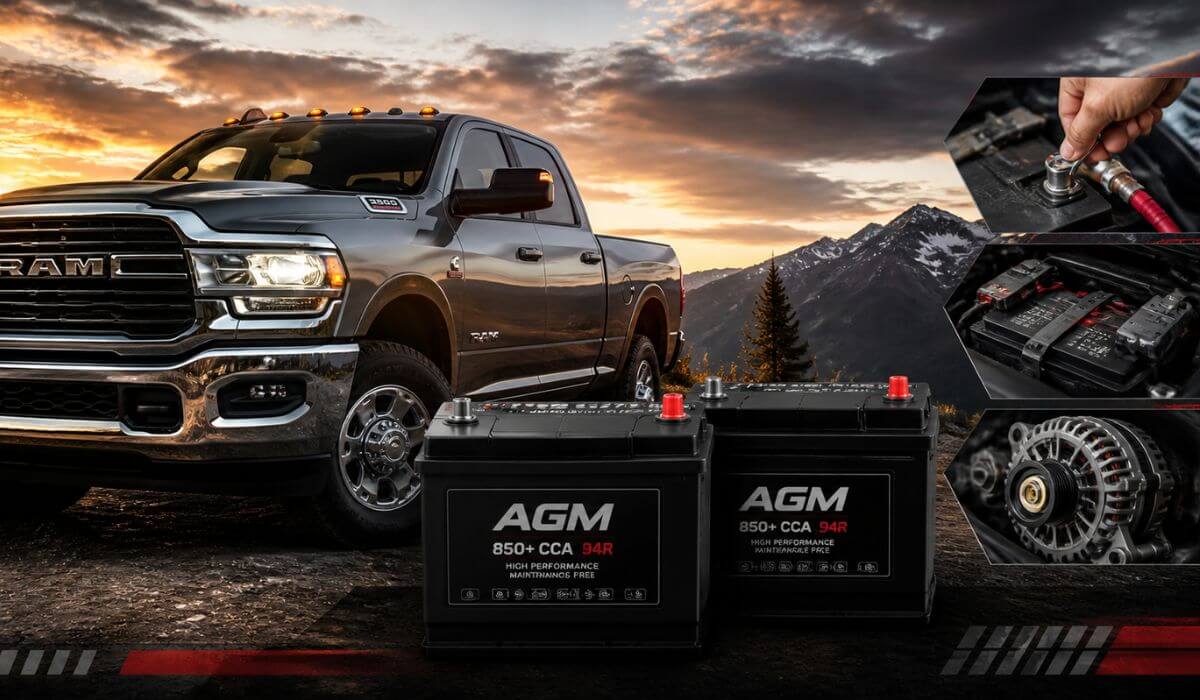
Best Battery for Ram 2500 Diesel in 2026: 850+ CCA Dual AGM Picks That Never Fail Cold Starts
If you’re running a diesel like the Ram 2500 with the 6.7L Cummins, you already know this truck doesn’t forgive weak batteries. Cold starts, glow plugs, heavy electrical loads—this isn’t a half-ton gas setup. After working with these trucks and seeing what actually holds up over time, one thing is clear: most 2019–2026 Ram 2500 diesel models run a dual H7 (94R) AGM battery setup, and anything below ~800 CCA just doesn’t cut it in real-world use.
Here’s the honest part—people cheap out or mix battery types and then blame the truck when it struggles to crank in winter or throws random electrical issues. That’s not the truck. That’s the wrong battery setup. So for this guide, I’ve only picked true H7 (94R) AGM batteries with ~850 CCA, the kind that actually match what this diesel needs day in, day out. No guesswork, no filler—just options that fit right and work the way they’re supposed to.
Best Ram 2500 Diesel Battery: Top 2026 Picks with High RC & Reliable Performance
#1. Interstate MTX-94R/H7 AGM Battery
94R AGM battery size for Ram 2500 diesel with 850 CCA, built for strong cold starts and reliable dual battery performance
#2. ACDelco Gold 94RAGMHR Battery
OEM-grade 94R AGM battery for Ram 2500 diesel, designed for long service life and stable power delivery
#3. Goodyear 94R-H7 AGM Battery
High-performance AGM battery for Ram 2500 diesel with 850 CCA and strong reserve capacity for towing and heavy loads
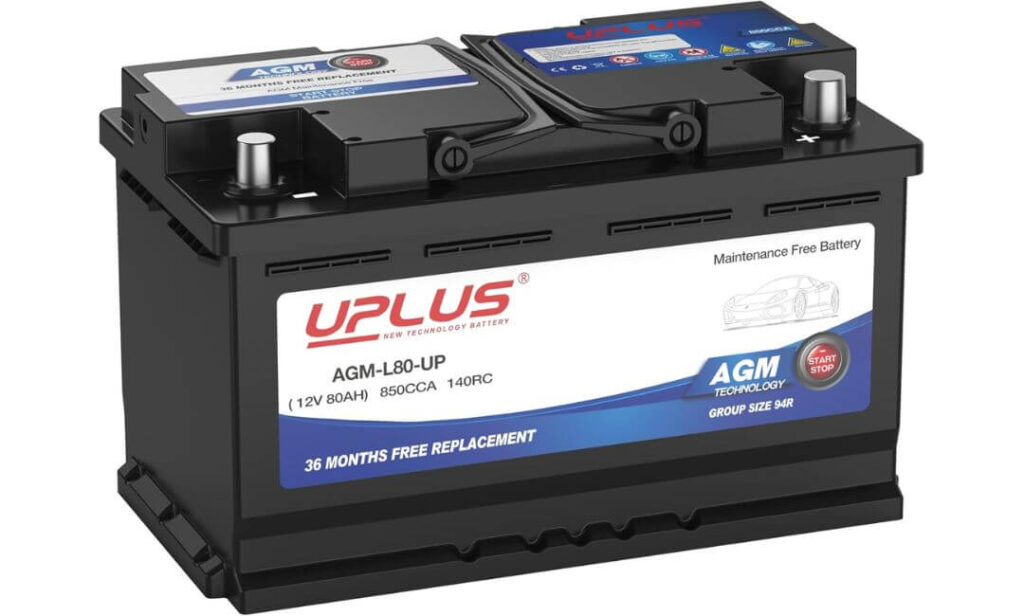
#4. UPLUS 94R AGM-L80-UP Battery
Affordable 94R AGM battery for Ram 2500 diesel offering solid cranking power and maintenance-free durability
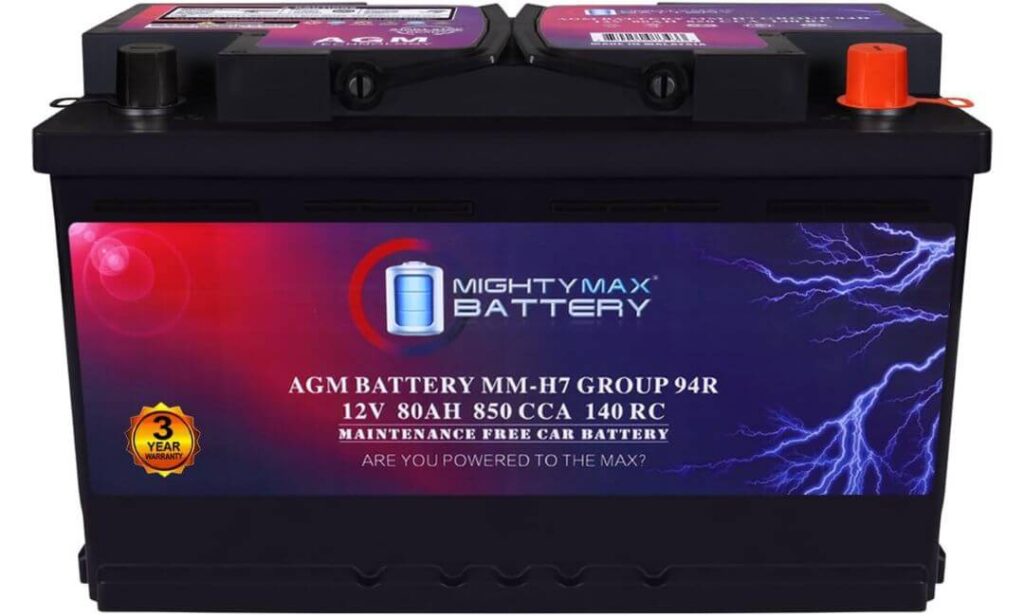
#5. Mighty Max MM-H7 AGM Battery
Budget-friendly 94R AGM battery for Ram 2500 diesel with dependable starting power and high CCA output
Expert Tip (from real diesel ownership, not theory)
If your Ram 2500 cranks a little slower than usual, don’t wait for it to fail. Diesel batteries don’t give long warnings—they drop off fast. And the biggest mistake I see? People replace just one battery. On a Cummins setup, that’s asking for uneven load and early failure again.
Always replace both H7 (94R) AGM batteries together, same brand, same spec. It keeps voltage balanced, protects your starter, and saves you from those “why won’t it start today?” moments—especially in cold mornings.
How We Chose These Batteries (Real Criteria That Actually Matters)
We didn’t just pick popular names. These were selected based on what actually works in a Ram 2500 diesel setup, where starting load and electrical demand are much higher than a normal truck.
First, correct size and fitment. Every battery here is H7 (94R)—the exact size most 2019–2026 diesel trucks are built around. No guesswork, no “close enough” options. Proper fit means stable mounting, correct terminal alignment, and zero installation issues.
Second, true AGM construction. Not all AGM batteries are built the same. We only kept models that can handle constant vibration, high heat, and repeated deep cycles—things a Cummins truck deals with daily. This is why you see brands like Interstate and ACDelco at the top—they’re known for consistent internal build quality, not just specs on paper.
Third, real cold cranking performance. Every option here sits around 850 CCA, which is where diesel reliability starts to feel normal—not stressed. Lower than that, and you’ll notice it in winter or after the truck sits. These batteries are picked to start strong even when conditions aren’t ideal.
Fourth, reserve capacity and electrical stability. Modern Ram trucks pull power even when off—modules, sensors, background systems. We focused on batteries with solid reserve capacity (~140 RC range) so you don’t get random low-voltage issues or weak restarts after short trips.
Finally, brand trust vs real value. The list is balanced on purpose.
- Top picks like Interstate and ACDelco are there because they’ve proven themselves over years in diesel applications.
- Mid options like Goodyear bring strong specs with slightly better value.
- Budget choices like UPLUS and Mighty Max are included because they still meet the core requirements (94R AGM, ~850 CCA) without cutting the essentials.
No inflated claims, no filler picks. Just batteries that match how this truck is actually used—heavy starts, long idles, towing loads, and real-world abuse. That’s the only way this selection makes sense, and that’s why you can trust it.
#1. Interstate MTX-94R/H7 AGM Battery
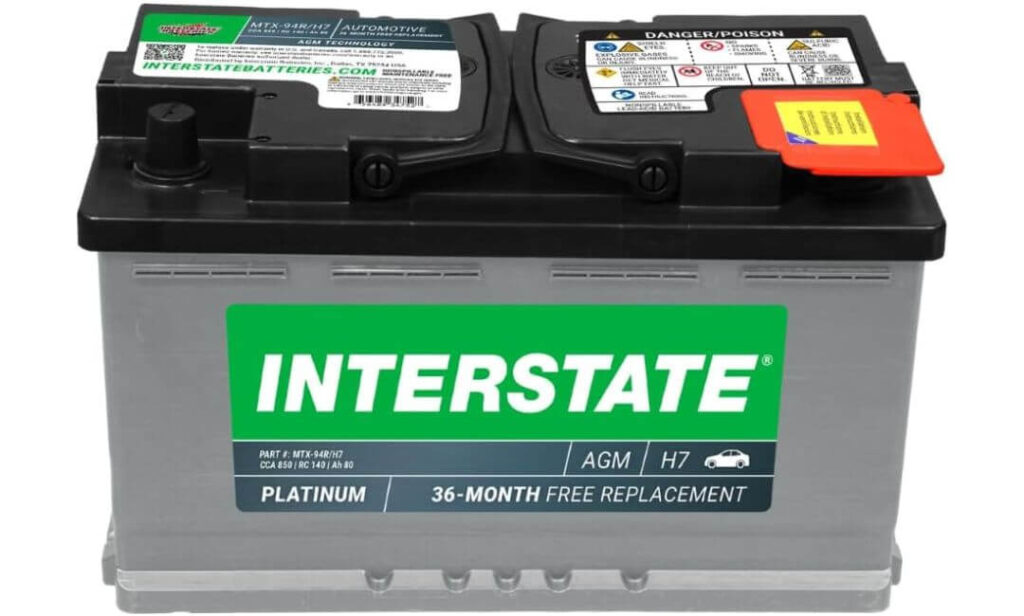
Technical Specs:
- Group Size: H7 / 94R (exact diesel truck fitment)
- Battery Type: AGM (sealed, maintenance-free, vibration resistant)
- Cold Cranking Amps: 850 CCA (diesel-grade starting power)
- Reserve Capacity: ~140 minutes (stable backup power for electronics)
- Capacity: 80Ah (balanced for dual battery setups)
- Voltage: 12V
- Design: Pure lead AGM with VRLA (spill-proof construction)
- Warranty: 36-month replacement support
First thing you notice when you actually install this in a heavy-duty diesel setup is how effortless the start feels—no hesitation, no dragging crank, just clean ignition even when the engine’s cold and sitting overnight. That’s where the 850 CCA + pure lead AGM build starts making sense. It’s not just numbers on paper; it’s that real “one-turn start” feeling diesel owners care about.
What sets this apart quietly is the internal lead density. More lead inside means better current flow under load (especially when glow plugs and electronics hit together). Add to that 140 RC, and you’re not dealing with voltage dips when the truck sits or runs accessories. It holds steady—exactly what modern trucks demand without throwing random low-voltage warnings.
Long-term, this is built for abuse—sealed AGM, vibration resistant, spill-proof, and no maintenance headaches. It doesn’t need babysitting. Install it, pair it properly in a dual setup, and it just does its job without drama. ( real-world choice when you want zero starting stress and consistent diesel performance )
What Stands Out in Real Use
- Strong 850 CCA output that actually delivers under cold diesel starts
- Pure lead AGM design improves lifespan vs standard AGM builds
- High reserve capacity (~140 RC) keeps voltage stable during idle or short trips
- Maintenance-free sealed build — no leaks, no upkeep
- Proven brand reliability trusted in real truck applications
Where It Falls Slightly Short
- Slightly heavier and pricier than entry-level AGM options
Real-World Diesel Fitment (What Actually Matters)
On trucks like Ram 2500 diesel, this fits exactly how it should—no terminal mismatch, no tray adjustment, no guesswork. The H7 (94R) size locks in clean, and when paired in dual setup, it keeps the electrical system balanced the way Cummins engines expect.
More importantly, it handles the real load scenario—cold starts, short runs, accessory drain—without dropping performance early. That’s where most cheaper batteries start showing weakness, and this one doesn’t.
The Insider Pro-Tip
Most people focus only on CCA and ignore how the battery behaves after a few months. That’s the mistake. What actually matters is how stable the voltage stays under repeated starts and idle cycles—and that’s where this battery quietly proves its value.
If you’re installing this, do it right—always pair it with an identical second battery and avoid mixing old + new. That one decision alone decides whether your truck starts like new every time… or slowly becomes unpredictable without warning.
#2. ACDelco Gold 94RAGMHR Battery
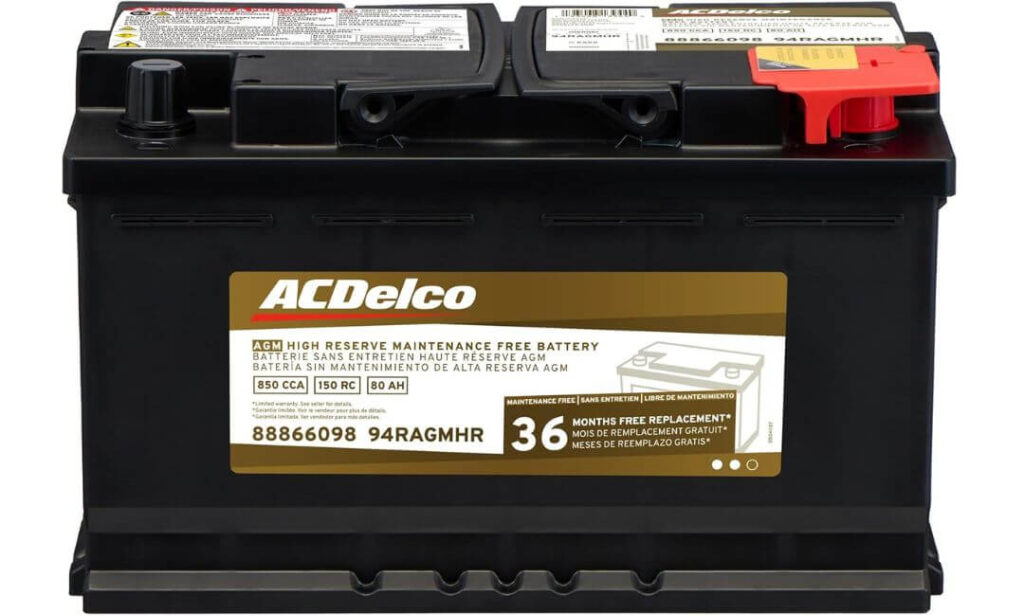
Technical Specs:
- Group Size: 94R / H7 (OEM-correct fitment for heavy-duty trucks)
- Battery Type: AGM (sealed, leak-proof, maintenance-free)
- Voltage: 12V
- Reserve Capacity: High RC (built for extended electrical demand)
- Design: High-density plate oxide for better power output per weight
- Terminal Type: SAE (standard automotive fit)
- Build: Pressurized valve-regulated system (prevents dry-out & leakage)
- Warranty: 36-month replacement
What stands out immediately here isn’t flashy specs—it’s how OEM-level consistency feels once installed. This is the kind of battery that doesn’t try to impress on day one, but quietly delivers stable starts, balanced voltage, and zero drama over time. You turn the key, and it responds the same way every single time—that’s where ACDelco earns its reputation.
Under the hood, the difference comes from its high-density plate design. More efficient power flow means the truck isn’t struggling during crank cycles, especially when multiple systems pull current together. Add in the high reserve capacity, and it handles real-world situations better—short drives, repeated starts, accessory loads—without that slow voltage drop you usually notice after a few weeks.
Then there’s the build quality. The sealed AGM + pressurized valve system isn’t just about being maintenance-free—it’s about preventing internal dry-out and terminal corrosion long-term. This is why many OEM setups rely on this kind of construction. It’s not about hype; it’s about predictable performance that doesn’t fall off early. (quietly one of the most stable choices when you want OEM-level reliability without surprises)
What Stands Out in Real Use
- OEM-grade reliability trusted across GM and heavy-duty platforms
- High reserve capacity keeps voltage stable under load and idle
- High-density plate design improves power delivery consistency
- Sealed AGM with valve system prevents leaks and internal damage
- Maintenance-free operation with no performance drop from neglect
Where It Falls Slightly Short
- Not the most aggressive CCA-focused option for extreme cold compared to some competitors
Real-World Diesel Fitment (What Actually Matters)
This fits exactly how an H7 (94R) battery should—no adjustments, no compromises, just clean drop-in compatibility. Terminal alignment, tray fitment, and connection points all line up the way OEM systems expect, which matters more than people realize.
Where it really proves itself is in consistency over time. Instead of strong performance for a few months and then decline, it holds steady—especially in dual battery setups where balance matters. That’s what keeps the truck feeling reliable, not just powerful.
The Insider Pro-Tip
A lot of people chase higher CCA numbers and ignore something more important—how evenly the battery delivers power across repeated cycles. That’s where this one quietly wins. It doesn’t spike, it doesn’t dip—it stays consistent.
If you want this to perform at its best, pair it with a matching unit and make sure your connections are clean and tight. That’s the difference between a battery that just works… and one that keeps your truck feeling dependable every single day.
#3. Goodyear 94R-H7 AGM Battery
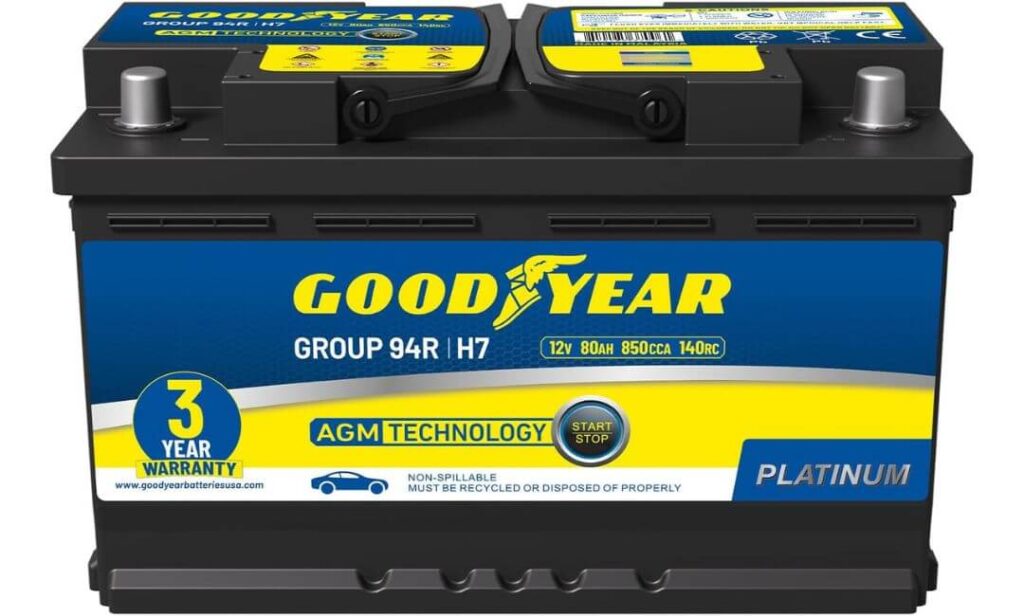
Technical Specs:
- Group Size: 94R / H7 (correct diesel truck fitment)
- Battery Type: AGM (sealed, spill-proof, maintenance-free)
- Cold Cranking Amps: 850 CCA (all-weather starting power)
- Reserve Capacity: 140 minutes (stable backup for electronics)
- Capacity: 80Ah
- Voltage: 12V
- Build: Calcium-alloy grid with valve-regulated AGM design
- Weight: ~52.5 lbs
- Warranty: 3-year coverage
Here’s the kind of battery that doesn’t feel “new”—it feels ready from day one. Turn the key in cold weather or after the truck’s been sitting, and it responds instantly. That’s the 850 CCA doing its job properly, not just on paper but in real-world starts where diesel engines usually test weak batteries.
Where it gets interesting is the 140 reserve capacity. This is what keeps things stable when you’re running electronics, doing short trips, or idling longer than usual. Instead of voltage dipping and stressing the system, it holds steady. Pair that with a calcium-alloy internal build, and you get a battery that handles repeated load cycles without feeling drained too quickly.
Durability is clearly a focus here—AGM sealed design, vibration resistance, and flexible mounting options. It’s built for conditions where roads aren’t smooth and temperatures aren’t predictable. This isn’t just about starting power; it’s about consistent output across different driving conditions. (solid pick if you want strong performance with balanced durability and everyday usability)
What Stands Out in Real Use
- 850 CCA delivers clean, quick starts in all weather conditions
- 140 RC helps maintain stable voltage during idle and short drives
- Calcium-alloy grid improves durability and cycle life
- Vibration-resistant AGM build handles rough use easily
- Flexible mounting design adds installation convenience
Where It Falls Slightly Short
- Slightly inconsistent long-term feedback compared to top-tier brands
Real-World Diesel Fitment (What Actually Matters)
Fits like a proper 94R battery should—no forcing, no misalignment, just clean placement and correct polarity setup. Terminals line up right, and the size sits properly in the tray, which is something you don’t want to gamble with in a heavy-duty truck.
In actual use, it handles daily starts, load cycles, and mixed driving conditions without feeling strained. Especially in dual setups, it keeps things balanced as long as both batteries are matched properly.
The Insider Pro-Tip
Most people don’t realize this, but batteries that perform well in both extreme heat and cold are built differently inside. This one is designed for that wider temperature range, which is why it doesn’t feel weak after seasonal changes.
If you’re using your truck regularly—short trips, towing, idling—this type of battery performs best when it’s kept properly charged and paired evenly. That’s what keeps performance consistent instead of fading over time.
#4. UPLUS 94R AGM-L80-UP Battery
Technical Specs:
- Group Size: 94R / H7 / L4 (exact fit for modern diesel trucks)
- Battery Type: AGM (sealed, maintenance-free, spill-proof)
- Cold Cranking Amps: 850 CCA (reliable cold start power)
- Reserve Capacity: 140 minutes (stable electrical backup)
- Capacity: 80Ah
- Voltage: 12V
- Internal Build: Calcium lead grid + high-density negative paste
- Terminal Layout: SAE (Left negative, Right positive)
- Warranty: 3-year coverage with local support
You don’t expect a battery in this price range to feel this composed—but once it’s in, it doesn’t behave like a “budget pick” at all. Starts are clean, no dragging, no hesitation—and that 850 CCA output feels properly tuned for diesel demand, not stretched to look good on paper.
What makes this one interesting is how it handles real usage patterns—short drives, stop-and-go traffic, or trucks that sit for days. The enhanced cycle life (up to 4X vs standard batteries) actually shows up in daily use. It doesn’t lose confidence after repeated starts, and the 140 reserve capacity keeps voltage stable when the system pulls extra load.
Internally, it’s built smarter than expected—calcium lead grid + high-density paste improves conductivity and reduces internal resistance. Add the sealed AGM design, and you get a battery that’s not just maintenance-free, but also resistant to vibration and heat stress. (surprisingly strong choice if you want real performance without paying premium-brand pricing)
What Stands Out in Real Use
- 850 CCA delivers strong, consistent starts even in cold conditions
- 4X cycle life design handles repeated short trips and idle cycles better
- 140 RC keeps voltage steady under electrical load
- Calcium grid construction improves power flow and durability
- Maintenance-free AGM build with solid vibration resistance
Where It Falls Slightly Short
- Long-term durability can vary slightly compared to top-tier premium brands
Real-World Diesel Fitment (What Actually Matters)
Fits exactly like a proper 94R battery should—no spacing issues, correct polarity, direct drop-in install. You don’t need to adjust anything, and that’s critical when dealing with dual battery setups where alignment matters.
In actual use, it performs best in trucks that deal with mixed driving—short runs, idle time, and occasional heavy loads. It keeps things balanced without early drop-off, especially when both batteries are matched.
The Insider Pro-Tip
A lot of people underestimate how important cycle life is until their battery starts weakening after a few months of city driving. That’s where this one holds its ground—it’s built to handle repeated starts without losing strength quickly.
If your truck isn’t driven long distances daily, this type of battery actually makes more sense than some premium options—just make sure it stays properly charged and paired, and it’ll perform far beyond what most expect at this price point.
#5. Mighty Max MM-H7 AGM Battery
Technical Specs:
- Group Size: 94R / H7 (correct diesel truck fitment)
- Battery Type: AGM (sealed, spill-proof, maintenance-free)
- Cold Cranking Amps: 850 CCA (strong starting power)
- Reserve Capacity: 140 minutes (steady backup support)
- Capacity: 80Ah
- Voltage: 12V
- Design: High discharge output with deep discharge recovery
- Terminal Layout: SAE (Right positive, Left negative)
- Weight: ~51 lbs
- Warranty: Up to 3-year coverage
What surprises most people here is how confident this battery feels right after installation—it doesn’t behave like an entry-level option. You hit the ignition, and the engine turns over cleanly without that slight hesitation you’d expect at this price point. The 850 CCA output is properly usable, not inflated, and it shows in everyday starts.
Where it earns its place is in power consistency under load. The 140 reserve capacity keeps voltage stable when the truck isn’t running long enough to fully recharge or when multiple systems are pulling power together. Add in the deep discharge recovery feature, and it handles those real-life situations—short drives, repeated starts—better than most budget batteries.
The build is straightforward but effective—AGM sealed design, vibration resistance, and high discharge capability. It’s designed to take abuse without constant maintenance or worry. You’re not getting premium-brand refinement here, but you are getting usable, dependable performance that covers the essentials properly. (solid choice if you want reliable starting power without stretching your budget)
What Stands Out in Real Use
- 850 CCA provides dependable starting power across seasons
- 140 RC supports stable voltage during short trips and idle use
- Deep discharge recovery helps maintain performance over time
- Sealed AGM design eliminates leaks and maintenance concerns
- Strong value for money with practical real-world usability
Where It Falls Slightly Short
- Long-term lifespan can be less predictable compared to premium brands
Real-World Diesel Fitment (What Actually Matters)
Fits like a standard 94R battery should—no complications during install, correct alignment, proper terminal reach. It drops in cleanly, which is critical when dealing with dual battery setups where both units need to match perfectly.
In real usage, it performs best when used in balanced conditions—daily driving, moderate loads, and proper charging cycles. It handles the essentials well as long as expectations stay realistic.
The Insider Pro-Tip
This is the kind of battery that performs best when you stay ahead of it, not behind it. It delivers solid power, but like most budget AGM options, it benefits from proper charging habits and matched pairing.
If you’re going with this setup, make sure both batteries are identical and avoid letting them sit discharged for long periods. Do that, and it’ll perform far better than most people expect at this price level.
Best Ram 2500 Diesel Battery Comparison Table: Real-World Performance, RC & Reliability
| Battery | Starting Power | Reserve Strength | Real Use Behavior | Best For |
|---|---|---|---|---|
|
Interstate MTX-94R/H7
Top Pick
|
850 CCA
Strong cold starts without hesitation
|
140 RC
Stable voltage even under load
|
Feels solid from day one, no voltage drop drama, built for long-term reliability
|
Drivers who want zero starting issues and proven performance
|
|
ACDelco Gold 94RAGMHR
OEM Feel
|
~850 CCA
Smooth, consistent crank every time
|
High RC
Handles repeated starts easily
|
Very stable over time, doesn’t lose performance early like typical batteries
|
Users who prefer OEM-like reliability and long-term consistency
|
|
Goodyear 94R-H7 AGM
Balanced
|
850 CCA
Quick starts in all weather
|
140 RC
Good support for accessories
|
Performs well across seasons, handles mixed driving without stress
|
All-round users needing performance + durability balance
|
|
UPLUS 94R AGM-L80-UP
Best Value
|
850 CCA
Strong starts even after idle days
|
140 RC
Supports short trips and stop-go use
|
Handles repeated cycles well, surprisingly stable for the price
|
Budget buyers who still want proper AGM performance
|
|
Mighty Max MM-H7 AGM
Budget Pick
|
850 CCA
Reliable daily starting power
|
140 RC
Basic but steady backup
|
Does the job without issues if maintained properly, no overpromises
|
Cost-focused users needing dependable everyday performance
|
What Size Battery for Ram 2500 Diesel?
If you open the hood of most modern Ram 2500 diesel trucks, you’ll almost always find H7 (94R) batteries sitting there—and that’s not random. This size is chosen because it hits the right balance between physical fitment, terminal layout, and real starting power.
The 6.7L Cummins engine pulls serious current during startup—glow plugs, fuel system priming, ECU load—all happening at once. A smaller battery simply can’t keep up consistently. That’s why 94R (H7) became the go-to size:
- It fits perfectly in the factory tray without modification
- It delivers around 800–850+ CCA, which diesel engines actually need
- It supports AGM construction, which handles vibration and load better
In short, it’s not just “compatible”—it’s what the truck was designed around.
Compatibility: Can You Use Other Sizes Like H8 or H6?
This is where most people get confused. Yes, technically other sizes exist—but that doesn’t mean they’re the right choice.
- H8 (Group 49) → Bigger battery, more capacity
- Used in some heavy-duty or cold-climate setups
- May not fit properly in all trays without adjustment
- H6 (Group 48) → Smaller battery
- Sometimes fits physically, but not ideal for diesel load
- Lower reserve and starting power = more stress on system
The reality is simple:
You can experiment with sizes, but H7 (94R) is the safest, factory-correct option that works without compromise. That’s why every battery in this guide sticks to that exact size.
How to Verify the Right Battery Size for Your Truck
Don’t guess this part—verify it once and avoid problems later.
Here’s the clean way to check:
- Look at your existing battery label → it will show “94R” or “H7”
- Check the owner’s manual → confirms group size and specs
- Measure the battery tray → length, width, height must match
- Confirm terminal position → (important: right positive, left negative in most cases)
One small mismatch—wrong terminal side or slightly taller battery—and suddenly cables don’t reach properly or the hold-down doesn’t lock. That’s where most installation issues come from.
Single vs Dual Battery Setup (This Actually Matters)
This is something many people overlook until it causes problems.
Most Ram 2500 diesel trucks come with a dual battery system, meaning:
- Two identical batteries working together
- Connected in parallel to increase starting power and stability
Why this setup exists:
- Diesel engines need higher cranking amps than gas engines
- Electrical load is heavier (modules, sensors, accessories)
- It prevents voltage drop during startup
Now the important part—real-world truth:
- If one battery fails, the second one is already under stress
- Replacing only one battery creates imbalance
- That imbalance leads to early failure, weak starts, and electrical issues
So the correct approach is always:
Replace both batteries together, same brand, same specs, same age
The Bottom Line (What Actually Works)
After everything—fitment, performance, long-term reliability—the answer stays simple:
- Group Size: H7 / 94R
- Type: AGM (not optional anymore)
- Setup: Dual batteries
- CCA Range: 800–850+ per battery
Anything outside this setup either creates compromise or future problems. Stick to this, and your truck starts the way it should—every single time.
Ram 2500 6.7 Cummins Battery Replacement: Essentials
Owning a Ram 2500 with the 6.7L Cummins means you’re dealing with a completely different level of electrical demand compared to a normal gas truck. Battery replacement here isn’t just routine maintenance—it directly affects how the truck starts, how stable the electronics stay, and how long your starter and charging system survive. If the battery setup is even slightly off, the truck will let you know quickly, usually at the worst possible time.
Understanding the 6.7 Cummins Electrical Demand
The 6.7L Cummins doesn’t just “start,” it pulls a heavy electrical load the moment you turn the key. You’ve got glow plugs or grid heaters warming the intake, fuel system priming, ECU and sensors waking up, and sometimes accessories already drawing power in the background. All of this happens in seconds, and it demands high current instantly, not gradually.
That’s why this engine is built around a dual battery system using high-CCA AGM batteries. One battery alone might start it on a good day, but under real conditions—cold weather, short drives, or partial charge—it’s not enough. The system is designed to share load across both batteries, keeping voltage stable and reducing stress on each unit.
If the batteries are weak, mismatched, or not holding charge properly, you’ll notice:
- Slower cranking than usual
- Slight delay before ignition catches
- Flickering electronics during start
- Random low-voltage warnings
These aren’t small issues—they’re early signals that the system isn’t getting the power it was designed for.
When to Replace: Real Signs, Not Guesswork
Battery life on a diesel truck isn’t about fixed timelines—it’s about how the truck is used. But in most real-world scenarios, AGM batteries in this setup last around 3 to 5 years, depending on driving habits and climate.
Instead of waiting for failure, watch for these signs:
- Engine crank feels heavier or slower than normal
- Truck struggles more after sitting overnight
- Voltage drops faster during short trips
- Electrical features feel slightly inconsistent
- One battery tests weaker than the other
The biggest mistake is ignoring early signs and pushing the batteries too far. Diesel systems don’t fail gradually—they often go from “working fine” to “no start” without much warning.
And one more thing that matters more than people think:
Never replace just one battery in a dual setup.
Even if only one seems weak, the second one has already been stressed. Mixing old and new creates imbalance, which leads to uneven charging and early failure again.
Cold Weather Reality and Why CCA Actually Matters
Cold starts are where the 6.7 Cummins really tests your battery setup. When temperatures drop, engine oil thickens, internal resistance increases, and the battery itself loses efficiency. At the same time, the truck demands even more power to fire up.
This is where high CCA (Cold Cranking Amps) stops being a number and becomes real-world performance. Around 850 CCA per battery is where diesel starting feels normal—anything lower, and you’ll start noticing hesitation, especially in winter mornings.
AGM batteries make a difference here because they:
- Deliver higher and more consistent current output
- Recover faster after each start
- Handle temperature changes better than flooded batteries
- Maintain stable voltage under load
In simple terms, a proper AGM setup doesn’t just start the truck—it keeps the entire system stable during that critical moment.
What Actually Works Long-Term
After everything—specs, usage, conditions—the replacement strategy that consistently works is straightforward:
- Stick to H7 (94R) AGM batteries
- Use two identical batteries, always replaced together
- Choose 850+ CCA with solid reserve capacity (~140 RC)
- Avoid mixing brands, ages, or battery types
Do that, and the truck behaves the way it should—quick starts, stable electronics, no surprises. Ignore it, and sooner or later, the system will remind you why this setup matters.
Dual Battery Setup for Diesel: Best AGM Battery for Ram 2500 Diesel
On a diesel like the Ram 2500, the dual battery setup isn’t an upgrade—it’s how the truck is meant to operate. You’re not just starting an engine; you’re powering grid heaters, fuel systems, ECUs, and multiple modules at once. That initial surge is heavy, and splitting it across two batteries keeps everything stable. When the setup is right, starts feel effortless. When it’s off—even slightly—you’ll notice it immediately.
Why a Dual Battery Setup Improves Cold-Start Reliability
Cold weather exposes every weakness in a battery system. Oil thickens, internal resistance rises, and the battery itself loses efficiency. A single battery has to push harder exactly when it’s least capable. With a dual setup, the load is shared, voltage drop is reduced, and the starter sees consistent current instead of a sudden dip.
Real-world difference you can feel:
- Faster, cleaner cranks on cold mornings
- Less strain on the starter motor
- Stable voltage for electronics during ignition
- Lower chance of “almost started” situations
That’s why most Ram 2500 diesels are configured with two H7 (94R) AGM batteries from the factory—because reliability depends on it, not preference.
Choosing the Right Pair: CCA, Capacity, and Chemistry
This is where people either get it right… or create problems without realizing it.
For a proper pair, both batteries must be:
- Same group size: H7 / 94R (exact physical match)
- Same type: AGM (never mix AGM with flooded)
- Same CCA range: ideally ~850 CCA each
- Same capacity: around 80Ah / ~140 RC
- Same brand and age: identical units installed together
Why this matters—real talk:
If one battery is stronger or newer, it carries more load. The weaker one drains faster, charging becomes uneven, and the system starts compensating. That leads to:
- Premature battery failure
- Charging inefficiency
- Inconsistent starting behavior
Balanced batteries don’t just last longer—they keep the entire electrical system stable.
Wiring and Installation Basics That Actually Matter
From the factory, these trucks use a parallel connection, meaning both batteries work together as one system. Voltage stays at 12V, but current capacity doubles. That’s exactly what a diesel needs.
Key points that make a real difference:
- Cables and terminals must be clean and tight — even slight resistance affects performance
- Ground connections matter more than people think — poor grounding leads to weak cranking
- Battery tray fitment must be exact — loose mounting causes vibration damage over time
- Alternator load is shared across both batteries — mismatched batteries confuse the charging system
Some people consider isolators, but in most Ram 2500 setups, they’re not required. The factory system is already designed to charge both batteries together efficiently. Adding unnecessary components can complicate things without real benefit.
850+ CCA Dual AGM Setup That Actually Works
For this truck, the formula is simple—and proven through real use:
- 2 × H7 (94R) AGM batteries
- Each rated around 850 CCA
- Reserve capacity ~140 minutes per battery
- Installed as a matched pair
This setup gives you:
- Reliable cold starts without hesitation
- Stable voltage under heavy load
- Longer battery life due to balanced usage
- Reduced stress on starter and alternator
Anything below this spec starts to feel compromised. Anything above it doesn’t necessarily add value unless you’re dealing with extreme climates or heavy auxiliary loads.
What Makes This Setup Worth It Long-Term
A properly matched dual AGM setup doesn’t just improve starting—it changes how the truck feels daily. Starts are consistent, electronics behave normally, and you’re not second-guessing whether it’ll fire up after sitting overnight.
The key isn’t chasing bigger numbers—it’s matching the right size, type, and balance. Do that once, and the system works the way it was designed to… quietly, reliably, every single time.
How to Build the Best Ram 2500 Dual Battery Setup Diesel
Building a proper dual battery setup on a Ram 2500 isn’t about adding parts—it’s about getting the basics right so the system works quietly and reliably every single day. The truck is already designed for two batteries, but when you’re replacing, upgrading, or correcting a setup, the details matter more than most people expect. Done right, it feels invisible—starts are clean, voltage stays stable, and nothing acts up.
Step-by-Step Wiring for a Safe Dual AGM Setup
Start with the foundation—two identical H7 (94R) AGM batteries, same brand, same CCA, same age. From there, keep the wiring simple and correct:
- Place both batteries securely in their trays, no movement, proper hold-down
- Connect positive (+) to positive (+) using a heavy-gauge cable
- Connect negative (–) to negative (–) or ensure both are grounded properly to the chassis
- Main vehicle positive lead connects to one battery, but because of parallel wiring, both share the load
- Ensure all terminals are clean, tight, and corrosion-free before final connection
This parallel setup keeps voltage at 12V but doubles available current. That’s exactly what a diesel needs—instant power without voltage drop.
Important real-world note: even a slightly loose terminal or weak ground can mimic a bad battery. Most “starting issues” people blame on batteries are actually wiring-related.
Choosing the Right Isolator (If You Actually Need One)
Factory setups usually don’t use isolators—they charge both batteries together, and for most users, that’s perfectly fine. But if you run extra loads (lights, winch, fridge, inverter), an isolator can protect your starting system.
Types that actually matter:
- Voltage-Sensitive Relay (VSR)
- Connects batteries only when charging voltage is high
- Simple, automatic, reliable for most setups
- Smart Isolator
- More advanced control, adjusts based on load and voltage
- Better for complex builds with multiple accessories
- Diode Isolator
- Old-school option, splits current using diodes
- Downsides: voltage drop, less efficient in modern systems
Real talk—if you’re running a stock truck or mild upgrades, skip the isolator. If you’re adding heavy accessories, go with a VSR or smart isolator, not the older diode style.
Alternator Load and When You Should Upgrade
The alternator is the backbone of the entire system. In a dual battery setup, it’s responsible for charging both batteries evenly. The stock alternator is usually capable—but only up to a point.
You should start thinking about an upgrade if:
- You’ve added high-draw accessories (off-road lights, air compressors, audio systems)
- Batteries take longer to recharge after short trips
- Voltage drops under load even with new batteries
A higher-output alternator doesn’t just charge faster—it reduces strain on the system. It ensures both batteries stay properly charged, which directly affects starting performance and battery lifespan.
Space and Mounting: Getting the Fitment Right
With H7 (94R) batteries, fitment is usually straightforward—but it still needs attention.
Key things that matter more than people think:
- Battery must sit flat and fully supported in the tray
- Hold-down bracket should lock it firmly—no vibration movement
- Terminal orientation must match (right positive, left negative in most setups)
- Cable length should not be stretched or forced
If you’re adding a second battery in a custom setup, placement matters. Keep it:
- Close to the primary battery to reduce cable resistance
- Away from excessive heat sources
- Securely mounted with proper ventilation
A poorly mounted battery might work at first, but over time, vibration and heat will reduce lifespan quickly.
What a Proper Setup Feels Like
When everything is done right—matching batteries, clean wiring, correct fitment—you don’t notice the system. That’s the point.
- Starts feel immediate, not strained
- Voltage stays stable during ignition
- No flickering electronics, no random warnings
- Batteries last their full expected life
The mistake most people make is overcomplicating it. You don’t need exotic parts—you need balance, proper wiring, and correct components. Get those right once, and the truck behaves exactly the way it was built to.
Maintenance and Longevity Tips for AGM Batteries
A good AGM setup in a Ram 2500 doesn’t fail because of poor specs—it fails because of poor habits. These batteries are built to handle heavy diesel loads, but they still need the right charging behavior, clean connections, and a bit of attention over time. Do that, and they last. Ignore it, and even the best battery won’t make it to its expected life.
Charging Discipline: What AGM Batteries Actually Need
AGM batteries are different from old flooded types—they prefer controlled, consistent charging, not random voltage spikes or constant undercharging.
Here’s what works in real use:
- Ideal charging range sits around 14.4V–14.7V during charging, then settles near 13.5V–13.8V float
- Short drives don’t fully recharge the battery—diesel trucks need longer runs or proper top-up charging
- Avoid letting voltage drop too low repeatedly; AGM batteries don’t like staying discharged
If your truck is mostly used for short trips, a smart charger (AGM mode) once in a while keeps the batteries healthy. That one habit alone extends life more than most people realize.
After Installation: What Most People Skip
Right after installing new batteries, most people just start the truck and drive off. That works—but it’s not ideal.
A better approach:
- Make sure both batteries are fully charged before installation or immediately after
- Check resting voltage (around 12.6V–12.8V) to confirm they’re properly charged
- Let the truck idle briefly, then take a longer drive to stabilize the system
This “settling period” helps the batteries sync with the charging system. It’s a small step, but it prevents uneven charging early on.
Maintenance Routine That Actually Extends Life
AGM batteries are maintenance-free internally, but externally, they still need attention.
Simple routine that makes a real difference:
- Keep terminals clean and tight — even slight corrosion increases resistance
- Check cable connections for looseness or wear
- Ensure hold-down brackets are secure — vibration kills batteries slowly
- Inspect ground points — poor grounding leads to weak performance
- Avoid over-tightening terminals — correct torque matters more than force
You don’t need to check them every week, but a quick inspection every few months keeps problems away before they start.
Seasonal Storage and Winter Readiness
Weather plays a bigger role than people think, especially in diesel trucks.
For colder conditions:
- Make sure batteries are fully charged before winter hits
- Weak batteries struggle more as temperatures drop
- Higher CCA batteries (like 850 CCA range) help maintain reliable starts
If the truck sits unused for long periods:
- Disconnect or use a battery maintainer
- Avoid letting voltage drop for weeks—it shortens lifespan quickly
- Store in a place where extreme temperature swings are minimized
In hot climates, heat is the silent killer. Parking in shade and ensuring proper airflow around the battery helps more than most expect.
What Actually Keeps AGM Batteries Alive Longer
At the end of the day, AGM batteries don’t need constant attention—they need consistency.
- Keep them properly charged
- Avoid deep discharge cycles
- Maintain clean, solid connections
- Replace both batteries together when the time comes
Do this, and they deliver exactly what they’re built for—reliable starts, stable power, and long service life without surprises. Ignore it, and even a premium battery won’t last the way it should.
FAQs About Ram 2500 Battery
Why does my Ram 2500 diesel still crank slow even after installing new AGM batteries?
This is where most people get frustrated—and honestly, it’s not always the battery. On a Ram 2500 diesel, slow cranking after a fresh install usually points to voltage delivery, not battery capacity. You can have two brand-new 850 CCA AGM batteries, and still feel a weak start if the current isn’t flowing cleanly.
Real causes I’ve seen again and again:
- Slight corrosion inside cable ends (looks clean outside, not inside)
- Weak or loose ground connection to chassis
- Starter motor drawing more amps than normal (early wear sign)
- Batteries not fully charged at install (very common, rarely checked)
So the real move isn’t guessing—it’s checking voltage drop during crank. If voltage collapses under load, it’s not about buying a bigger battery. It’s about fixing the path the power takes.
Can I upgrade my Ram 2500 diesel to a bigger battery than 94R for more power?
You can go bigger, like H8 (Group 49), but here’s the truth—bigger doesn’t always mean better in this truck. The Ram 2500 system is designed around dual H7 (94R) batteries, and once you go outside that, you start dealing with fitment compromises, cable tension, and uneven mounting.
What actually improves performance isn’t size—it’s balance:
- Matching dual AGM batteries
- Proper CCA (~850 each, not random higher numbers)
- Clean wiring and stable charging
A larger battery might give you more reserve, but if the system isn’t designed for it, you won’t feel a real-world difference in starting. In fact, poor fitment or airflow can reduce lifespan instead of improving performance.
Why do diesel dual batteries fail earlier even when specs look perfect?
This one catches people off guard. On paper, everything looks right—AGM, 850 CCA, correct size—and still, batteries fail early. The reason isn’t the battery itself—it’s how diesel trucks use them daily.
Diesel setups go through:
- High current draw at every start
- Frequent short trips that don’t fully recharge
- Constant background electrical load
Now combine that with one mistake—like replacing only one battery—and you create imbalance. One battery works harder, the other lags behind, and the system never stabilizes.
The truth is simple but ignored:
Diesel battery life depends more on usage pattern and balance than brand name or specs.
Get those wrong, and even premium batteries won’t last.
Is higher CCA always better for a Ram 2500 diesel setup?
It sounds logical—more CCA, better performance. But in real-world diesel use, there’s a point where higher numbers stop making a difference.
Around 850 CCA per battery, the truck already has enough power to start cleanly in most conditions. Going much higher doesn’t necessarily improve starts—it just increases cost and sometimes internal resistance differences.
What actually matters more than chasing CCA:
- Consistent voltage under load
- Reserve capacity (RC) for stability
- Matching pair performance
A balanced dual setup at 850 CCA each will outperform mismatched or poorly maintained higher-CCA batteries every time. That’s something specs alone won’t tell you.
What’s the biggest mistake people make with dual AGM batteries without realizing it?
The biggest mistake isn’t buying the wrong battery—it’s assuming installation is the final step. In reality, that’s where most problems begin.
What people overlook:
- Not fully charging batteries before install
- Ignoring small voltage differences between the pair
- Letting the truck sit for long periods without maintenance charging
- Assuming “maintenance-free” means “no attention needed at all”
Here’s the real truth—AGM batteries are low-maintenance, not no-maintenance. If you treat them like install-and-forget parts, they’ll still work… just not for as long as they should.
The setups that last are the ones where owners pay attention to charging habits, balance, and early warning signs. That’s the difference between replacing batteries every 2 years… or getting a solid 4–5 years without issues.
Final Verdict: What Actually Works for Ram 2500 Diesel Owners
At this point, it should be clear—this isn’t about picking “any good battery,” it’s about matching what the truck actually needs and how it’s used daily. A Ram 2500 diesel doesn’t reward shortcuts. It responds to correct setup, balanced components, and consistent power delivery.
The pattern across everything we’ve covered stays the same:
- H7 (94R) AGM batteries aren’t optional—they’re the right fit
- Dual battery setup isn’t overkill—it’s required for stability
- ~850 CCA per battery is the real-world sweet spot
- Matching pair matters more than chasing bigger specs
What separates a truck that starts flawlessly every day from one that feels unpredictable isn’t brand hype—it’s how well the system is put together. Two properly matched AGM batteries, installed cleanly, charged correctly, and maintained even at a basic level… that’s what delivers long-term reliability.
And here’s the part most guides won’t say directly:
You don’t need the most expensive option on the list—you need the right combination that stays consistent over time. A balanced setup will always outperform a mismatched “premium” one.
If you follow what’s outlined here, you won’t be thinking about your batteries again for a long time—and that’s exactly how it should be.
Also Check:

