
6 Best Batteries for Chevy Tahoe in 2026: High CCA, AGM & Heavy-Duty Options
If you own a Chevy Tahoe, you already know this isn’t a lightweight SUV—it’s a full-size machine loaded with electronics, start-stop systems, and serious power demands. And that means one thing: a weak or wrong battery will show up fast—slow starts, random warnings, or worse, getting stranded when you least expect it.
From what actually fits under the hood, most newer Tahoe models (especially 2021–2026) run best on H6 (Group 48) AGM batteries. That’s the safe, no-guess option for daily reliability. If you want more reserve power or deal with colder climates and heavy electrical load, stepping up to an H7 (94R) makes sense. And for towing setups or older heavy-duty use, Group 65 still holds strong.
Instead of throwing random picks at you, this list is built around what actually works in real Tahoe ownership—correct sizing, proper fitment, and batteries that won’t struggle under load. No fluff, no guesswork—just options you can install with confidence.
Best Chevy Tahoe Battery: Top 2026 Picks with Reliable Power & Fitment
#1. Interstate MTX-48/H6 AGM Battery
Best AGM battery for Chevy Tahoe with reliable cold starts, correct H6 group size fitment, and long-term daily driving durability for modern SUVs
#2. Goodyear 48-H6 AGM Battery
High CCA AGM battery for Chevy Tahoe offering stable performance, maintenance-free design, and strong power output for everyday use
#3. Autocessking H6 AGM Battery
Affordable H6 battery replacement for Chevy Tahoe with start-stop support, solid reserve capacity, and budget-friendly reliability
#4. ACDelco 94R AGM Battery
Premium upgrade AGM battery for Chevy Tahoe with higher capacity, OEM-level trust, and strong performance for heavy electrical loads
#5. Mighty Max MM-H7 AGM Battery
High-performance H7 battery for Chevy Tahoe delivering extra CCA, longer runtime, and better support for cold weather and power-hungry systems
#6. Weize Group 65 AGM Battery
Heavy-duty battery for Chevy Tahoe towing setups with durable build, strong cranking power, and dependable performance for older or load-focused use
Expert Tip (Real Owner Talk)
If you remember just one thing, make it this: don’t guess the size—match the group and upgrade only if you actually need it. Tahoe owners run into problems not because the battery is “bad,” but because it’s slightly undersized for the load. If your SUV has start-stop, heated seats, big infotainment, or you idle a lot, stick with H6 AGM at minimum—and don’t hesitate to move to H7 if you’ve ever seen slow cranks or voltage dips. It’s a small step up, but it saves you from repeat replacements and random electrical glitches later. Fitment first, then power—that’s how you avoid headaches.
How We Chose These Batteries (What Actually Matters for a Tahoe)
We didn’t pick these based on brand hype or random ratings. Every option here was filtered against what a Chevy Tahoe actually demands in real use—cold starts, electrical load, and long idle time.
First, correct group size was non-negotiable. Newer Tahoe models are built around H6 (Group 48)—that’s the baseline that fits right and works with the vehicle’s electrical system. That’s why the list is anchored by multiple H6 options. Then we included H7 (94R) because some owners need extra headroom—higher capacity and stronger cold cranking for colder climates, frequent short trips, or fully loaded interiors. Finally, Group 65 is here for a reason: older Tahoes and towing setups still benefit from a larger, heavy-duty footprint that can handle sustained load.
Second, we focused on AGM technology only. A Tahoe isn’t the kind of SUV where a basic flooded battery makes sense anymore. AGM handles start-stop cycles, voltage stability, and deep cycling far better. That directly translates to fewer warning lights, smoother starts, and longer service life—especially in real stop-and-go driving.
Third, we looked at usable power, not just numbers on paper. CCA (cold cranking amps) matters, but what really shows up day to day is reserve capacity and consistent voltage under load. That’s why the picks here sit in a realistic range—strong enough to handle winter starts and heavy electronics, without overselling specs that don’t translate to actual gains.
Fourth, we balanced reliability vs. value. You’ll notice there’s a mix—some batteries are trusted for consistent long-term performance, while others give you solid output at a lower cost. That’s intentional. Tahoe owners don’t all use their SUV the same way, so the list reflects real usage scenarios, not just premium-only recommendations.
And finally, fitment and installation reality. No odd sizes, no “might work” options. Every battery here is chosen so you’re not dealing with terminal issues, tray mismatches, or clearance problems. You get something that fits right, performs right, and lasts the way it should.
That’s the whole idea behind this selection—no guesswork, no filler—just batteries that actually make sense for a Tahoe.
#1. Interstate MTX-48/H6 AGM Battery
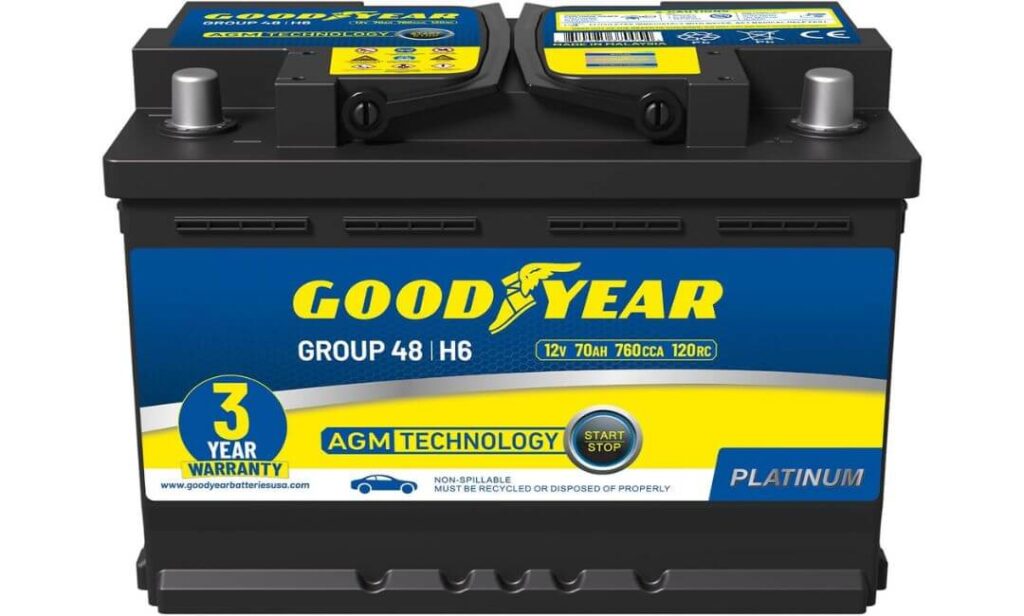
Technical Specs:
- Group Size: H6 (Group 48) — direct-fit for most modern Chevy Tahoe setups
- Battery Type: AGM (absorbed glass mat), sealed & maintenance-free
- Voltage / Capacity: 12V, 70Ah — stable power for daily + accessory load
- Cold Cranking Power: 760 CCA — reliable ignition even in colder mornings
- Reserve Capacity: ~120 minutes — supports electronics during idle
- Build: Pure lead AGM design — higher density, longer usable life
- Weight / Fit: ~45 lbs, standard top-post terminals
From real-world Tahoe use, this is the kind of battery that just fits right and works without drama. No overselling here—H6 is exactly what most Tahoe owners need, and this one delivers clean, consistent power where it matters. Cold starts feel solid, electronics stay stable, and there’s no weird voltage drop when everything’s running at once (which Tahoe is known for).
What actually stands out is how it handles daily load. Heated seats, infotainment, sensors, start-stop—this battery doesn’t struggle under that pressure. The 760 CCA + 120 RC combo gives you that balance where it’s not just about starting the engine, but also keeping everything running smoothly when the SUV is idling or stuck in traffic.
Then there’s the build. The pure lead AGM design isn’t marketing fluff—it simply means more usable material inside, which usually translates into longer service life and better resistance to vibration (important for a heavy SUV like Tahoe). It’s sealed, spill-proof, and doesn’t need babysitting.
(realistically, this is the kind of battery you install and forget about until it actually needs replacement)
What Stands Out in Real Use
- Strong 760 CCA — dependable starts without hesitation
- H6 perfect fit — no adjustment, no guesswork in Tahoe
- AGM build handles start-stop & electronics load smoothly
- Good reserve capacity (120 RC) for idle + accessory usage
- Vibration-resistant design — suits large SUVs well
What Could Be Better
- Slightly heavier side — not ideal if you prefer lightweight swaps
Chevy Tahoe Fitment Reality
For most newer Tahoe models, H6 (Group 48) is the safe, correct fit, and this battery aligns exactly with that requirement. No tray issues, no terminal mismatch—it installs the way it should, which matters more than people think.
If your Tahoe runs a lot of electronics or start-stop functions, this setup holds steady without dipping voltage or triggering random warnings. It’s not oversized, not undersized—just properly matched to how Tahoe actually operates.
The Insider Pro-Tip
A lot of Tahoe owners make the mistake of chasing bigger batteries thinking “more power is always better.” Truth is, correct group size + stable output matters more than going oversized. This battery hits that sweet spot where you get reliable starts, steady voltage, and long-term durability without stressing the system.
If your Tahoe is your daily driver and you don’t want to think about battery issues again anytime soon, this type of setup quietly does its job in the background—no surprises, no second guesses.
#2. Goodyear 48-H6 AGM Battery
Technical Specs:
- Group Size: H6 (Group 48) — proper fit for most Chevy Tahoe setups
- Battery Type: AGM, sealed & maintenance-free
- Voltage / Capacity: 12V, 70Ah — balanced for daily driving + electrical load
- Cold Cranking Power: 760 CCA — reliable ignition across seasons
- Reserve Capacity: ~120 minutes — supports accessories during idle
- Build Quality: Vibration-resistant, spill-proof AGM design
- Weight / Size: ~47.7 lbs, compact H6 dimensions with standard terminal layout
Here’s the thing most Tahoe owners don’t realize until it’s too late—not every AGM battery delivers consistent power under load, even if the numbers look similar. This one actually holds up where it matters. Starts feel clean, no lag, no hesitation—even when the SUV has been sitting overnight or dealing with temperature swings.
What makes it practical for Tahoe use is how it balances 760 CCA with 120 RC. That combo isn’t just about turning the engine—it’s about keeping voltage stable when everything is running together (AC, infotainment, sensors, lights). In real conditions, that’s where weaker batteries start showing cracks—but this one stays steady without dips or flickering behavior.
Another detail that stands out is the AGM durability factor. Tahoe isn’t a light vehicle, and road vibration or uneven terrain does affect battery life over time. This design handles that better than basic units, plus the sealed, spill-proof setup means you’re not worrying about maintenance or leaks.
(for a daily-driven Tahoe, this is the kind of setup that quietly handles load without drawing attention to itself)
What Stands Out in Real Use
- Reliable 760 CCA output — consistent starts in both hot and cold conditions
- H6 direct-fit size — no adjustment needed for Tahoe installation
- Strong 120 RC backup — handles idle + accessory load smoothly
- Durable AGM build — resists vibration and rough usage
- Maintenance-free design — install once, no ongoing hassle
What Could Be Better
- Real-world lifespan can vary slightly depending on driving habits and load usage
Tahoe Compatibility Insight
For Tahoe owners running standard electrical setups, H6 is the most balanced and correct size, and this battery fits that requirement without any compromise. No tray issues, no cable stretch—just a proper drop-in fit that aligns with factory expectations.
If your Tahoe is used daily with mixed driving (city + highway), this kind of battery keeps things stable without overcomplicating the setup. It’s not oversized, not underpowered—just correctly matched for real usage.
The Insider Pro-Tip
A lot of people focus only on CCA, but Tahoe actually benefits more from balanced output + reserve capacity working together. That’s what prevents those small but annoying issues—slow cranks, voltage drops, or system warnings.
With something like this, you’re not chasing extreme specs—you’re choosing consistency over time, which is exactly what a full-size SUV like Tahoe needs to stay dependable day after day.
#3. Autocessking H6 AGM Battery
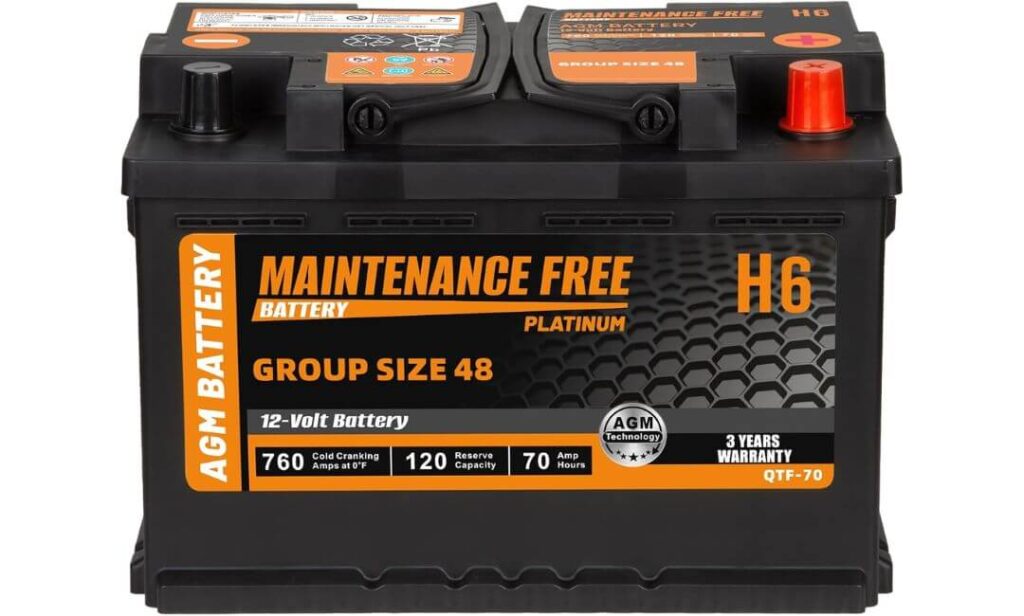
Technical Specs:
- Group Size: H6 (Group 48) — correct drop-in fit for Chevy Tahoe
- Battery Type: AGM, sealed & maintenance-free
- Voltage / Capacity: 12V, 70Ah — balanced output for daily + accessory load
- Cold Cranking Power: 760 CCA — steady starts across weather conditions
- Reserve Capacity: ~120 minutes — supports electronics during idle
- Build: Leak-proof AGM with vibration-resistant construction
- Weight / Size: ~45 lbs, standard H6 dimensions with top-post terminals
What usually surprises Tahoe owners isn’t starting power—it’s how some batteries lose stability after a few weeks of real use. This one feels different from the start. Starts are consistent, not just strong, and more importantly, they stay that way even after days of sitting idle.
The biggest advantage here is how it handles real-world conditions. Whether it’s heat, cold, or just stop-and-go driving, the combination of 760 CCA + 120 RC keeps the system stable. Tahoe runs multiple electronics at once, and weaker batteries tend to show voltage dips—but this one keeps things smooth without those small glitches people often ignore at first.
Another practical benefit is the low self-discharge behavior. If your Tahoe sits for a few days (or even longer), this battery holds its charge better than average. Add to that the AGM leak-proof design + vibration resistance, and it becomes a solid everyday option that doesn’t demand attention after installation.
(for a daily Tahoe that isn’t driven every single day, this kind of stability actually makes a noticeable difference)
What Stands Out in Real Use
- Consistent 760 CCA output — no drop-off after initial use
- Strong charge retention — ideal for vehicles that sit idle
- H6 exact fitment — installs cleanly without adjustment
- AGM build handles temperature changes + vibration well
- Balanced 70Ah + 120 RC — stable performance under load
What Could Be Better
- Not designed for deep-cycle applications, strictly a starting battery
Tahoe Compatibility Insight
For Tahoe owners sticking with factory-recommended sizing, H6 remains the most practical choice, and this battery aligns perfectly with that setup. No fitment issues, no guesswork—just a straightforward replacement that works the way it should.
If your Tahoe sees mixed usage—some days daily driving, some days parked—this battery holds up well without draining quickly or struggling on restart. It’s built around real usage patterns, not just spec sheets.
The Insider Pro-Tip
A lot of people underestimate how important charge retention is, especially for larger SUVs like Tahoe. It’s not just about starting today—it’s about starting the same way after sitting unused.
With something like this, you’re getting a setup that doesn’t just perform on day one, but stays consistent over time—and that’s what actually reduces long-term battery headaches.
#4. ACDelco 94R AGM Battery
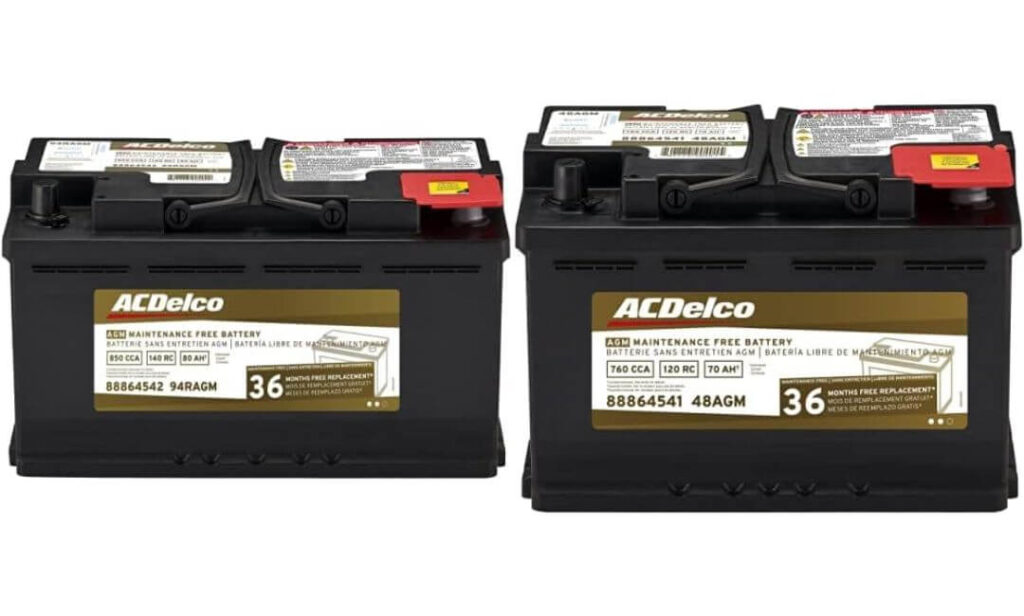
Technical Specs:
- Group Size: H7 (94R) — upgrade fit for Chevy Tahoe needing higher capacity
- Battery Type: AGM with Silver-Calcium alloy design
- Voltage: 12V — optimized for modern electrical systems
- Performance Build: High-density negative paste + calcium lead grid for better conductivity
- Cycle Capability: High cycling performance — suited for start-stop systems
- Construction: Puncture-resistant envelope separators + vibration-resistant design
- Warranty: 36-month replacement coverage
What most Tahoe owners notice the moment they switch to something like this is not just power—it’s how stable everything suddenly feels. No random dips, no sluggish crank, no “maybe it’ll start” moments. It’s the kind of upgrade where the SUV feels more controlled electrically, not just mechanically.
The real strength here comes from the Silver-Calcium chemistry + AGM structure. That combination improves charge acceptance and reduces internal resistance, which matters when your Tahoe is constantly cycling power—short drives, stop-start traffic, heavy accessory use. Instead of draining fast and recovering slow like basic batteries, this one recovers quicker and maintains voltage consistency under load.
Then there’s durability. Tahoe isn’t light, and over time vibration + heat kills average batteries early. This design uses reinforced separators + dense internal build, which helps it stay cooler and last longer under pressure. It’s not just about specs—it’s about how those specs hold up after months of real driving.
(if your Tahoe runs multiple electronics daily, this is the kind of battery that quietly handles it without showing stress)
What Stands Out in Real Use
- Silver-Calcium design — better conductivity and longer cycle life
- Strong charge recovery — performs well in stop-start conditions
- Handles heavy electrical loads without voltage instability
- Durable internal build — resists heat, vibration, and wear
- Trusted OEM-level engineering — widely used in premium setups
What Could Be Better
- Slightly higher cost compared to basic H6 batteries
Tahoe Compatibility Insight
For Tahoe owners who feel their current battery is “just enough” but not truly stable, H7 (94R) is the natural step up. This size gives you more capacity and better reserve without pushing into unnecessary oversizing.
If your SUV has high electrical demand or frequent short drives, this kind of upgrade makes sense. It’s not about replacing—it’s about improving how the system performs overall, especially under load.
The Insider Pro-Tip
Most people upgrade batteries only after facing issues—but the smarter move is upgrading before those small signs turn into real problems. Voltage drops, slower cranks, inconsistent performance—they all start quietly.
With a setup like this, you’re not chasing extreme specs—you’re investing in stability and long-term consistency, which is exactly what a full-size SUV like Tahoe benefits from the most.
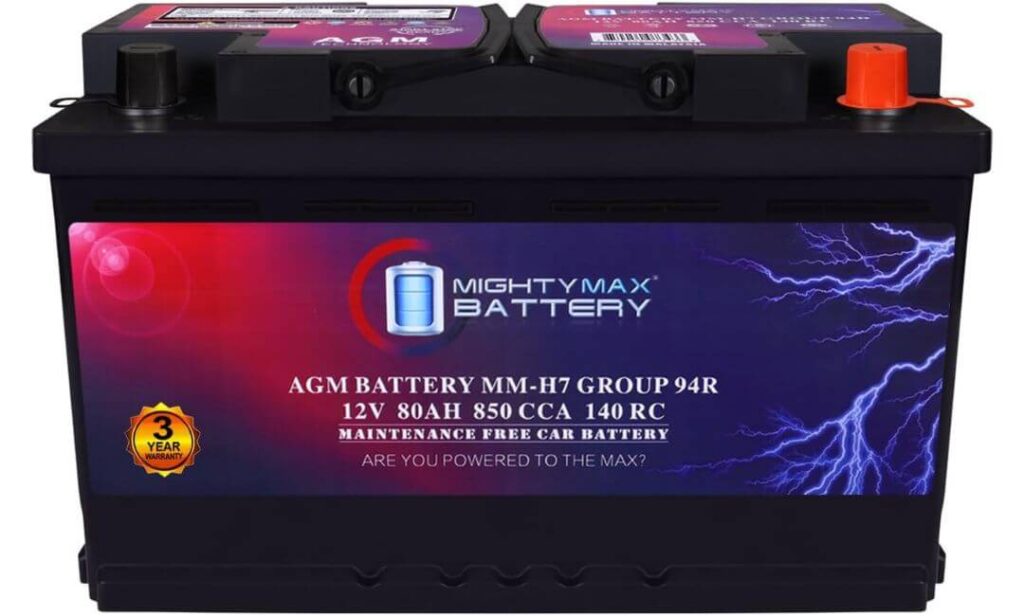
#5. Mighty Max MM-H7 AGM Battery
Technical Specs:
- Group Size: H7 (94R) — higher-capacity upgrade for Chevy Tahoe
- Battery Type: AGM, sealed & maintenance-free
- Voltage / Capacity: 12V, 80Ah — increased energy storage vs standard H6
- Cold Cranking Power: 850 CCA — strong ignition even in colder conditions
- Reserve Capacity: ~140 minutes — extended runtime for accessories
- Build: High-discharge AGM with deep discharge recovery
- Weight / Size: ~51 lbs, larger footprint than H6 with standard polarity layout
You know that moment when a Tahoe starts feeling slightly “lazy” on ignition or struggles when everything’s running at once? That’s exactly where a battery like this changes the experience. It’s not just stronger—it’s noticeably more capable under pressure.
The jump to 850 CCA + 80Ah + 140 RC isn’t small—it’s a real upgrade. Starts are quicker, more confident, and more consistent, especially if your SUV sits overnight in colder weather or runs multiple systems at once. And when the engine is idling with AC, lights, and infotainment active, this battery keeps voltage stable instead of slowly dipping like smaller units.
What really makes it practical is the deep discharge recovery + high discharge output. Tahoe doesn’t always run in ideal conditions—short drives, stop-start traffic, long idle times—and weaker batteries wear out faster in those patterns. This one is built to handle that cycle without losing performance early. Add the rugged internal construction, and it holds up well against vibration and heat too.
(if your Tahoe feels like it needs “more than just a standard battery,” this is exactly the kind of step-up that actually delivers)
What Stands Out in Real Use
- Strong 850 CCA output — noticeably quicker, more confident starts
- Higher 80Ah capacity — better energy reserve for modern SUV load
- 140 RC backup — supports longer idle and accessory usage
- Handles deep discharge cycles better than basic AGM units
- Durable build — resists vibration, heat, and heavy usage
What Could Be Better
- Larger size and weight may feel excessive for basic daily use setups
Tahoe Compatibility Insight
If your Tahoe runs heavier electrical loads or you’ve noticed your current battery struggling under pressure, H7 (94R) is a logical upgrade path. It provides more capacity and stronger output without stepping into unnecessary oversizing.
For owners dealing with cold starts, frequent short trips, or high accessory usage, this setup feels more stable over time. It’s not just about extra power—it’s about maintaining performance consistency day after day.
The Insider Pro-Tip
A lot of Tahoe owners wait until their battery starts failing before upgrading—but by then, the electrical system has already been under stress for weeks.
Moving to a higher-capacity setup like this early means you’re not just fixing a problem—you’re preventing performance drop-offs before they even start, and that’s what keeps the SUV feeling solid every single time you turn the key.
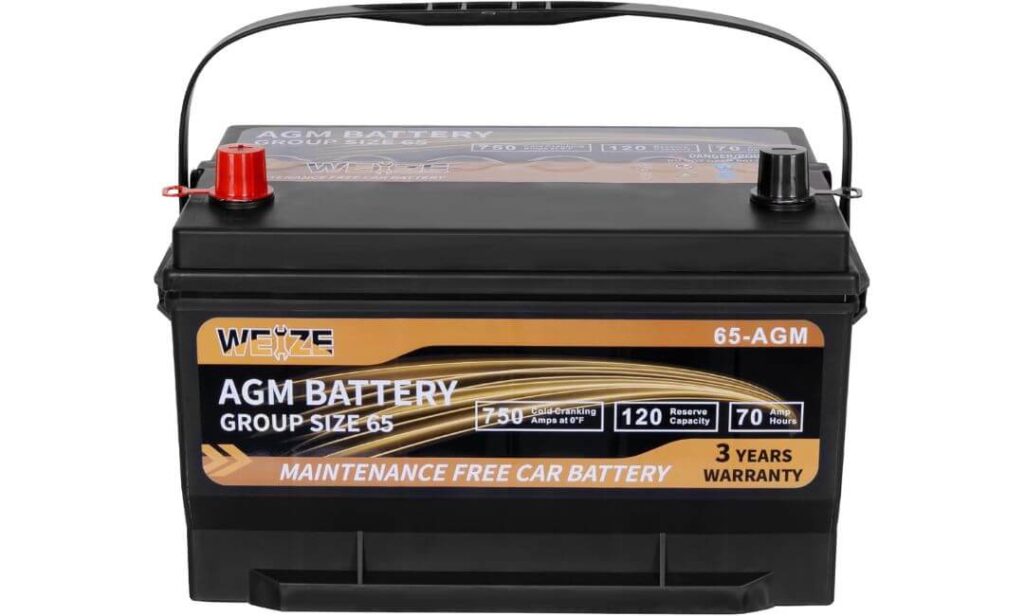
#6. Weize Platinum AGM Battery (Group 65)
Technical Specs:
- Group Size: 65 — larger footprint for heavy-duty Chevy Tahoe setups
- Battery Type: AGM, sealed & maintenance-free
- Voltage / Capacity: 12V, 70Ah — steady output for sustained load
- Cold Cranking Power: 750 CCA — reliable starts across conditions
- Reserve Capacity: ~120 minutes — supports long idle + accessory usage
- Build: Leak-proof AGM with low self-discharge and temperature resistance
- Weight / Size: ~46 lbs, wider Group 65 dimensions with tapered terminals
There’s a clear difference between a battery that “works” and one that actually handles a full-size SUV under load—and this falls into the second category. It’s not about flashy numbers; it’s about how consistently it delivers when the Tahoe is doing real work.
The Group 65 size itself tells you what this battery is built for—more surface area, more stability, and better handling of sustained electrical demand. Pair that with 750 CCA + 120 RC, and you get a setup that doesn’t just start the engine but keeps things running smoothly when the vehicle is idling with multiple systems active.
Another thing Tahoe owners notice over time is how some batteries drain faster when the vehicle isn’t used daily. This one benefits from low self-discharge, meaning it holds charge better during gaps in usage. Add the AGM construction with heat and cold resistance, and it stays dependable whether the SUV is parked for days or pushed through extreme conditions.
(for towing setups or older Tahoe models, this kind of stable output matters more than chasing higher CCA numbers)
What Stands Out in Real Use
- Group 65 size — better suited for heavy-duty and load-focused setups
- Stable 750 CCA output — consistent starting performance
- Strong 120 RC backup — handles long idle + accessory use
- Low self-discharge — holds charge during downtime
- AGM durability — resists temperature extremes and vibration
What Could Be Better
- Larger size may not fit newer Tahoe models designed specifically for H6 or H7
Tahoe Compatibility Insight
This is where size really matters. Group 65 isn’t for every Tahoe, especially newer models that are built around H6 or H7. But for older generations or towing-focused setups, this size makes more sense because it provides stable output over longer periods.
If your Tahoe is used for heavier tasks—trailers, extra accessories, or extended idling—this type of battery supports that usage without feeling strained. It’s less about peak numbers and more about consistent delivery over time.
The Insider Pro-Tip
A lot of Tahoe owners chase higher CCA thinking it solves everything—but real-world performance depends more on how long the battery can sustain power under load.
With a setup like this, you’re focusing on stability and endurance, not just startup strength—and that’s exactly what separates a battery that lasts from one that needs replacing sooner than expected.
Best Chevy Tahoe Battery Comparison: Side-by-Side Performance, Fit & Value Guide
| Battery | Group Size | CCA | Capacity | Reserve | Real Use Case |
|---|---|---|---|---|---|
| Interstate MTX-48 Best Overall Fit |
H6 (48) | 760 | 70Ah | 120 RC | Perfect daily Tahoe setup — stable starts, no voltage drops, just works every time |
| Goodyear H6 AGM Balanced Choice |
H6 (48) | 760 | 70Ah | 120 RC | Consistent power for mixed driving — handles heat, cold, and daily load smoothly |
| Autocessking H6 AGM Value Pick |
H6 (48) | 760 | 70Ah | 120 RC | Best for budget Tahoe owners — reliable starts with good charge retention |
| ACDelco 94R AGM OEM Upgrade |
H7 (94R) | ~800+ | Higher | Higher | Premium stability — ideal if your Tahoe runs heavy electronics or short drives |
| Mighty Max MM-H7 High Power |
H7 (94R) | 850 | 80Ah | 140 RC | Maximum output — best for cold starts, long idling, and power-hungry setups |
| Weize Group 65 AGM Heavy Duty |
65 | 750 | 70Ah | 120 RC | Towing & older Tahoe builds — built for endurance, not just starting power |
How to Choose the Best Battery for Chevy Tahoe (Real-World Buying Guide)
When it comes to a full-size SUV like a Chevy Tahoe, choosing a battery isn’t about picking the “highest number” or the cheapest option—it’s about matching the battery to how the vehicle actually runs. Tahoe pulls more load than a regular car, from electronics to start-stop systems, and that changes everything. If the battery isn’t aligned with that demand, problems don’t show immediately—they build slowly, then hit all at once.
Key Factors That Actually Matter (Not Just Specs on Paper)
Cold Cranking Amps (CCA)
CCA is what gets your engine started, especially in colder conditions. For Tahoe, anything around 700–850 CCA is the realistic sweet spot. Lower than that, and you’ll start noticing hesitation. Higher is fine, but only if the size supports it properly.
Reserve Capacity (RC)
This is where most people get it wrong. RC tells you how long the battery can run electronics when the engine isn’t fully supporting it. Tahoe has multiple systems running together—AC, infotainment, sensors—so a battery with around 120–140 RC gives you stability during idle and traffic.
AGM vs Flooded Batteries
Modern Tahoe setups are built around AGM batteries, not basic flooded ones. AGM handles:
- Start-stop cycles
- Voltage stability
- Faster recharge
Flooded batteries might work short term, but they don’t handle load well over time. That’s where issues start creeping in.
Capacity (Ah)
This decides how much energy the battery can store. Around 70Ah (H6) is standard, while 80Ah (H7) gives more headroom. If your usage is heavier, higher capacity makes a noticeable difference in consistency.
Durability & Build Quality
Tahoe isn’t light. Heat, vibration, and long drives wear batteries faster. Look for:
- Vibration-resistant design
- Sealed AGM construction
- Strong internal grid (calcium or lead alloy)
This directly impacts how long the battery actually lasts—not just what the label claims.
Warranty (Real Indicator, Not Just Marketing)
A solid 3-year replacement warranty usually reflects confidence in build quality. It doesn’t guarantee lifespan, but it filters out weaker options.
Chevy Tahoe Battery Group Size Explained (What Actually Fits)
This is where most buying mistakes happen—wrong size = wrong performance.
- H6 (Group 48)
Standard size for most modern Tahoe models. Balanced, reliable, and fits without issues. - H7 (Group 94R)
Slightly larger, higher capacity. Ideal for heavy usage, cold climates, or electrical upgrades. - Group 65
Bigger footprint. Best for older Tahoe models or towing setups where sustained load matters more than compact fit.
Each size isn’t just about dimensions—it changes how the battery performs inside the vehicle.
What Size Battery for Chevy Tahoe (Fitment Reality)
Fitment is more than just “will it go in.” You need to match:
- Tray size — H6 and H7 fit differently
- Terminal position — incorrect polarity causes installation issues
- Cable length — bigger batteries may need more reach
- Height clearance — especially important in tight engine bays
H6 is usually the safest direct-fit. H7 works if space allows. Group 65 needs proper confirmation before installing.
Chevy Tahoe Battery Replacement Guide (Real-World Steps)
Step 1: Turn Off Everything
Ignition off, lights off, no accessories running. Let the system fully shut down.
Step 2: Disconnect Negative First
Always remove the negative terminal first, then positive. This avoids short circuits.
Step 3: Remove Battery Safely
Tahoe batteries are heavy. Lift carefully, keep it upright (AGM helps here, but still handle properly).
Step 4: Clean Terminals
Corrosion affects performance more than people realize. Clean before installing new battery.
Step 5: Install New Battery
Place correctly, connect positive first, then negative. Tighten securely, not excessively.
Step 6: System Reset (If Needed)
Some models may need system recalibration or idle relearn. Usually automatic, but worth noting.
Step 7: Dispose Old Battery Properly
Never throw it away. Return it for recycling—most stores accept it.
AGM vs Standard Flooded Battery (What Actually Changes)
AGM Battery (What Tahoe Needs)
- Better for start-stop systems
- Handles deep discharge better
- More stable voltage output
- Spill-proof and maintenance-free
Flooded Battery (Where It Falls Short)
- Cheaper upfront
- Struggles with modern electrical load
- Shorter lifespan in SUVs like Tahoe
In real usage, AGM isn’t an upgrade—it’s what the vehicle is designed around.
Real Examples of Tahoe Battery Sizes (Based on Use)
- Daily driving, standard usage → H6 AGM (balanced choice)
- Heavy electronics, short trips, cold weather → H7 AGM (upgrade)
- Towing, older models, long idle → Group 65 AGM (heavy-duty)
This isn’t theory—it’s based on how Tahoe behaves under different conditions.
Final Real Talk (What Most Guides Don’t Tell You)
A battery doesn’t fail suddenly—it gives signs first: slower crank, slight voltage drops, electronics acting inconsistent. Most people ignore that phase and end up replacing it under stress.
Choosing the right battery from the start means you avoid that entire cycle. It’s not about buying the “best” battery—it’s about choosing the one that fits your Tahoe’s real usage without compromise.
Group Size and Compatibility Deep-Dive for Chevy Tahoe
Choosing the right battery for a Chevy Tahoe isn’t just about power numbers—it starts with getting the group size and compatibility exactly right. Tahoe is a full-size SUV with tight electrical tolerances, and even a slightly incorrect battery size can lead to poor fitment, unstable voltage, or long-term electrical issues. This is the part most people overlook, and it’s also where most problems begin.
Chevy Tahoe Battery Group Size Explained (What These Sizes Actually Mean)
Battery group size isn’t random—it defines physical dimensions, terminal placement, and overall compatibility with your vehicle.
H6 (Group 48)
This is the standard and most widely used size in modern Tahoe models. It offers:
- Balanced dimensions for direct fit
- Enough power for daily driving and electronics
- No modification required
For most owners, this is the safest and most practical option.
H7 (Group 94R)
This is a step up in size and capacity, not just a different number. It brings:
- Higher amp-hour capacity
- Better reserve power
- Stronger cold start performance
It’s ideal if your Tahoe runs heavier electrical loads or operates in tougher conditions.
Group 65
This is a larger, more traditional truck-style battery size. It provides:
- Wider footprint and stable output
- Better performance for towing or long idle use
- Higher durability under sustained load
However, it’s not meant for every Tahoe—fitment must be confirmed before choosing this size.
How to Confirm What Battery Size Your Tahoe Actually Needs
Guesswork doesn’t work here. The correct size comes from verified sources, not assumptions.
Check the Owner’s Manual
This is the most direct answer. It lists:
- Recommended group size
- Battery type (AGM or flooded)
- Minimum required specifications
Look at the Existing Battery Label
Your current battery already tells you:
- Group size (H6, H7, etc.)
- Terminal orientation
- Capacity details
If it’s been working fine, replacing it with the same size is the safest move.
Use VIN-Based Lookup
Using your vehicle’s VIN helps confirm:
- Exact factory specification
- Trim-specific requirements
- Electrical system compatibility
This is especially useful for newer Tahoe models with advanced systems.
Inspect the Battery Tray and Cables
Sometimes physical confirmation is just as important:
- Tray size limits what fits
- Cable length restricts larger upgrades
- Terminal position must align perfectly
Even a powerful battery won’t work properly if it doesn’t sit and connect correctly.
What Size Battery to Expect by Chevy Tahoe Model Year and Usage
Battery size isn’t identical across all Tahoe generations—it evolves with the vehicle.
Newer Tahoe Models (Recent Generations)
- Typically use H6 (Group 48) as standard
- AGM battery is expected, not optional
- Designed for start-stop systems and electronics
For most daily drivers, this setup works perfectly without needing upgrades.
Mid-Range Usage or Upgraded Electrical Load
- H7 (94R) becomes more relevant
- Better suited for short trips, cold starts, or heavy accessory use
- Provides extra stability under load
This is where many owners upgrade after experiencing minor performance drops.
Older Tahoe Models or Heavy-Duty Use
- Often compatible with Group 65
- Suitable for towing, long idling, or work-focused setups
- Requires proper fitment confirmation before installing
Older models are generally more flexible, but still require correct sizing.
Real Fitment Factors Most Guides Ignore
Terminal Orientation
Positive and negative terminals must align exactly. Even if the size fits, wrong polarity position creates installation issues.
Height and Clearance
Tahoe engine bays are spacious, but not unlimited. Taller batteries can interfere with brackets or covers.
Weight and Handling
Heavier batteries like H7 or Group 65 provide more capacity, but also require careful installation due to size and weight.
Electrical System Sensitivity
Modern Tahoe systems monitor voltage closely. Incorrect battery size or type can lead to:
- Warning messages
- Irregular charging behavior
- Reduced battery life
Final Real-World Insight
Battery compatibility isn’t about forcing the biggest option into the tray—it’s about choosing the size that works with the vehicle’s design and your usage pattern.
H6 gives you reliability and simplicity, H7 gives you extra stability and performance, and Group 65 supports heavy-duty scenarios—but only when it truly fits.
When you match the size correctly, everything else—performance, lifespan, reliability—falls into place naturally.
What Size Battery for Chevy Tahoe (Quick Reference That Actually Helps)
When someone asks “what size battery fits a Chevy Tahoe,” the real answer isn’t a single number—it depends on generation, usage, and electrical demand. But instead of making it confusing, here’s a clean, real-world breakdown you can actually rely on.
Quick Reference Table (Model Year vs Group Size vs Real Notes
H6 (Group 48) — Standard Fit
- Approx size: 11″ × 7″ × 7.5″
- Terminal layout: top-post, standard orientation
- Real use: balanced, clean fit, no adjustments required
This is what most Tahoe owners should start with—it fits naturally and performs consistently.
H7 (Group 94R) — Upgrade Fit
- Approx size: 12.4″ × 6.9″ × 7.5″
- Slightly longer than H6
- Same terminal style, but requires space check
This gives you more capacity, but only works if your tray and cables allow it comfortably.
Group 65 — Heavy-Duty Fit
- Approx size: 12″ × 7.5″ × 7.5″
- Wider footprint, heavier build
- Terminals may vary slightly depending on brand
Used mostly in older Tahoe models or setups where endurance matters more than compact fit.
What Actually Decides the Right Size (Real Talk)
It’s not just model year—it’s how you use your Tahoe.
- Daily driving, normal load → H6 is enough
- Heavy electronics, short trips, cold weather → H7 makes sense
- Towing, long idle, older setup → Group 65 fits better
A lot of people jump to bigger batteries thinking it’s better—but if it doesn’t fit properly or match the system, it creates more issues than it solves.
Fitment Reality Check (Before You Buy Anything)
Measure Before You Upgrade
Even if H7 or Group 65 looks better on paper:
- Check tray dimensions
- Confirm cable reach
- Verify terminal orientation
Don’t Ignore Height Clearance
Battery height rarely gets attention—but a taller unit can interfere with brackets or covers.
Stick With AGM When Required
If your Tahoe came with AGM, don’t downgrade to flooded. It affects charging behavior and long-term reliability.
Final Straight Talk
There’s no “one-size-fits-all” answer—but there is a right size for your specific Tahoe and usage.
H6 is safe and proven, H7 is a smart upgrade when needed, and Group 65 is for specific heavy-duty cases. The key is not choosing the biggest—it’s choosing what actually fits, works, and lasts without causing problems later.
Chevy Tahoe Battery Replacement Guide (Step-by-Step, Real-World Safe Process)
Replacing a battery in a Chevy Tahoe isn’t complicated, but it’s also not something you rush through. This SUV has sensitive electronics, high current flow, and a heavy battery setup, so doing it the right way avoids problems later—like warning lights, poor charging, or even system glitches.
Safety Checklist (Before You Touch Anything)
Start here, not with tools.
- Engine completely off, key removed, no accessories running
- Let the vehicle sit for a few minutes so systems fully shut down
- Wear gloves and eye protection (battery acid exposure is rare with AGM, but still possible)
- No metal tools touching both terminals at once (this is how sparks happen)
- Work in a dry, well-ventilated area
Important real-world note
Even though modern Tahoe batteries are AGM and sealed, they still carry high current, so careless handling can damage electronics instantly.
Tools You Actually Need (Nothing Extra)
Keep it simple—no overthinking.
- Socket wrench (usually 10mm for terminals)
- Battery terminal puller (optional, but helpful if stuck)
- Cleaning brush or terminal cleaner
- Gloves (for grip and safety)
That’s it. No special tools required.
Removal Steps (Do This in the Right Order)
Step 1: Locate the Battery
In most Tahoe models, it’s under the hood, clearly accessible. No hidden compartments.
Step 2: Disconnect Negative Terminal First
Always start with negative (-)
This cuts the circuit and prevents accidental shorting.
Step 3: Disconnect Positive Terminal
Now remove positive (+) carefully.
Step 4: Remove Hold-Down Bracket
There will be a clamp or bracket securing the battery. Remove it fully before lifting.
Step 5: Lift the Battery Out
Tahoe batteries are heavy (often 45–50 lbs), so lift straight and steady.
Avoid tilting unnecessarily, even though AGM is spill-proof.
Installation Steps (Where Most People Make Mistakes)
Step 1: Clean the Terminal Area
Before placing the new battery:
- Remove corrosion
- Ensure clean contact points
This directly affects performance.
Step 2: Place the New Battery Correctly
Align:
- Tray fit
- Terminal orientation (positive and negative must match exactly)
If it doesn’t sit naturally, don’t force it.
Step 3: Secure the Hold-Down Clamp
Tighten properly so the battery doesn’t move.
Loose batteries = vibration damage over time.
Step 4: Connect Positive First
Attach positive (+) terminal first, then negative.
This reduces risk of accidental shorting.
Step 5: Tighten Connections Firmly
Not too loose, not overtightened—just secure enough to avoid movement.
Post-Installation Checks (Don’t Skip This Part)
Once installed:
- Start the engine — it should crank clean, without hesitation
- Check dashboard — no warning lights related to battery or charging
- Test electronics — AC, lights, infotainment should run smoothly
- Let the engine idle — ensure stable voltage, no flickering
Real-world insight
If something feels slightly off after installation, it’s usually:
- Loose terminal
- Incorrect fitment
- Weak battery choice
Disposal Tips (Do It the Right Way)
Old batteries should never be thrown in regular trash.
- Return it to an auto parts store (most accept free recycling)
- Many retailers offer core return credit
- Batteries contain lead and acid—proper recycling is required
Final Practical Advice
Replacing a Tahoe battery is less about the process and more about doing small things correctly—terminal order, fitment, secure mounting.
Do it once, do it right, and you won’t have to think about it again for years. Rush it, or skip steps, and small mistakes show up later as bigger problems.
FAQs About Chevy Tahoe Battery
Can a Chevy Tahoe run fine on an H6 battery even if I upgrade accessories later?
Short answer—yes, but only up to a point. H6 (Group 48) is designed to handle stock Tahoe electrical load, and for most owners, it performs perfectly. The problem starts when you quietly increase demand—extra lighting, upgraded audio, frequent short drives, or heavy idle time. That’s when the battery doesn’t fail instantly, but you begin to notice subtle signs: slightly slower crank, voltage dips, or electronics behaving inconsistently.
Here’s the real truth most people miss: Tahoe doesn’t “reject” H6—it just starts operating closer to its limits. If your usage grows, the smarter move isn’t waiting for failure, it’s stepping up early. That’s where H7 makes sense—not as an upgrade for power, but as a buffer for stability. It’s less about “will it work” and more about “how long it will keep working without stress.”
Why do some Chevy Tahoe owners face battery drain even after installing a new AGM battery?
This is where things get interesting. Many assume a new battery solves everything—but Tahoe is a high-demand electrical system, not just an engine starter. If you’re still facing drain issues, the battery is often not the root cause—it’s how the system interacts with it.
Real-world reasons this happens:
- Short drives that don’t allow full recharge
- Parasitic draw from modules staying active
- Incorrect battery size (fits physically, but not electrically balanced)
The key insight is this: Tahoe needs time + correct battery type + proper size alignment. AGM helps, but if your driving pattern doesn’t support charging cycles, even a premium battery will feel weak over time. Fixing the pattern matters just as much as upgrading the battery.
Is upgrading from H6 to H7 in a Chevy Tahoe always worth it, or just overkill?
It’s not overkill—but it’s also not always necessary. The value of H7 shows up only when your Tahoe’s usage actually demands it. If you’re driving daily, with long enough trips and standard load, H6 already performs exactly how it should.
Where H7 becomes genuinely useful:
- Cold climates where startup resistance is higher
- Heavy accessory use (audio systems, additional electronics)
- Frequent stop-start or short-distance driving
Think of it like this—H6 is balanced performance, H7 is headroom and stability under pressure. If you don’t need that extra margin, you won’t notice a big difference. But if you do, the difference feels immediate.
What are the early warning signs that a Tahoe battery is underperforming (before it fails completely)?
Battery failure rarely happens suddenly—it gives signals, but most people ignore them. Tahoe, being a heavy electrical system, shows these signs more clearly if you pay attention.
Watch for patterns like:
- Engine crank feels slightly slower than usual
- Infotainment or lights flicker during startup
- Idle feels electrically “unstable” with multiple systems on
- Battery struggles more after sitting unused for a few days
The key insight here is timing—these signs appear weeks before actual failure. Acting early doesn’t just prevent breakdowns, it protects the vehicle’s electrical system from stress. Waiting until it dies usually means you’ve already pushed the system too far.
Does choosing a higher CCA battery always improve performance in a Chevy Tahoe?
Not necessarily—and this is one of the biggest misconceptions. Higher CCA helps with cold starts, but Tahoe performance depends more on overall balance, not just peak power.
What actually matters more in real usage:
- Reserve capacity (for idle + electronics)
- Capacity (Ah) for sustained load
- Stability of voltage under multiple systems
A battery with extremely high CCA but poor balance in other areas won’t feel better—it may even behave inconsistently. Tahoe doesn’t need “maximum numbers,” it needs consistent delivery across different conditions.
The smartest approach is choosing a battery where:
- CCA is sufficient (not extreme)
- RC and Ah match your usage
- Size fits perfectly
That’s what creates a setup that feels reliable every single day—not just strong on paper.
Final Verdict (What Actually Matters After All This)
At this point, it should be clear—this isn’t about picking a random “top-rated” battery and hoping it works. A Chevy Tahoe doesn’t reward guesswork. It rewards correct sizing, balanced output, and consistency over time.
Most people only think about a battery when it fails. But the reality is, the experience starts changing long before that—slightly slower starts, small voltage drops, electronics not feeling as smooth as they should. That’s not coincidence, that’s the battery telling you it’s either undersized, aging, or not matched to your usage.
What separates a good choice from a frustrating one is simple:
- H6 if you want a clean, factory-level setup that just works
- H7 if your Tahoe is under more load and needs extra stability
- Group 65 if you’re dealing with older setups or heavy-duty use
There’s no “best battery” in isolation—only the one that fits your Tahoe’s real-world demand without compromise.
And here’s the part most guides won’t say directly:
A battery that feels invisible is the best one you can buy. No second thoughts, no weird behavior, no early warning signs—it just starts, runs, and stays out of your way.
Choose based on how your Tahoe actually lives day to day, not just specs on a page—and you won’t be revisiting this decision anytime soon.
Also Check:

