
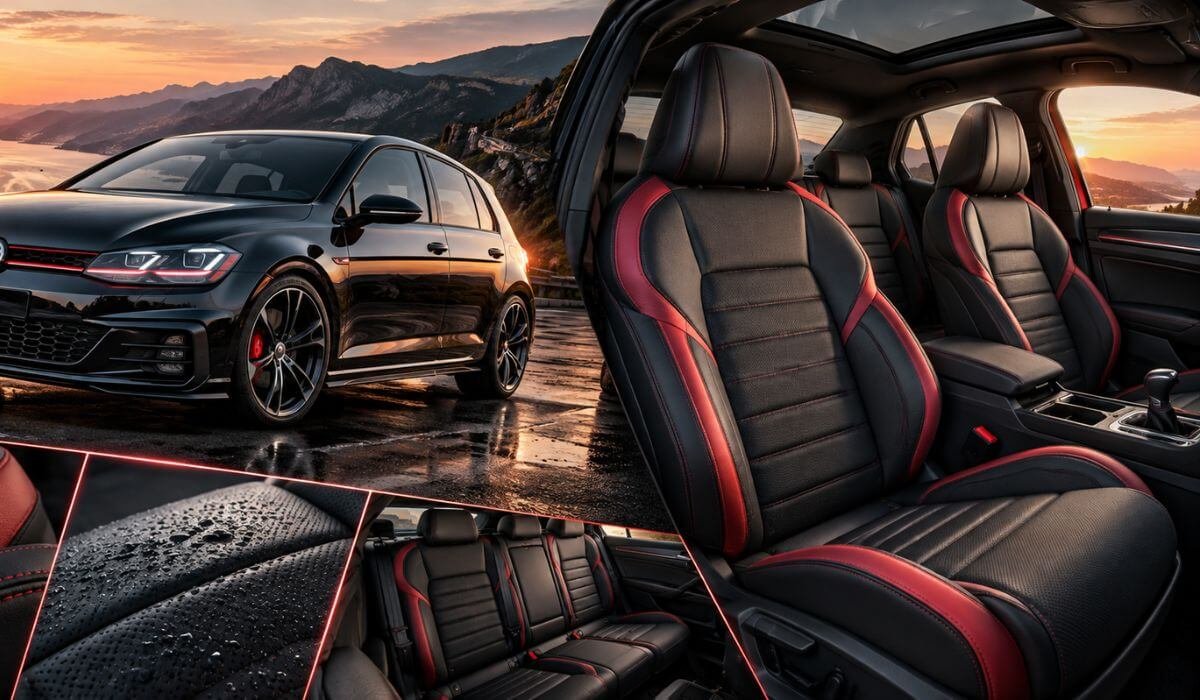
6 Best Seat Covers for Volkswagen Golf GTI in 2026: Nappa Leather, Sport Fit & Spill-Ready Protection
If you drive a Volkswagen Golf GTI, a seat cover needs to do more than simply look good inside the car. The GTI has a tighter, more performance-focused cabin than a typical family hatchback, which means a loose universal cover can quickly become frustrating around the bolsters, headrests, seat controls and rear-seat split.
For this list, I focused on covers specifically marketed for the Golf GTI from 2015 through 2026, rather than assuming every Volkswagen Golf uses the same seats. That distinction matters because the Mk7/Mk7.5 GTI (2015–2021) and the newer Mk8 GTI (2022–2026) can differ in seat design and configuration. I also compared the practical details that actually matter once the covers are installed—Nappa leather, water resistance, grip, coverage, breathability and sport-focused styling—rather than judging them on appearance alone.
There is one important point to keep in mind before ordering: these are aftermarket seat covers, so always verify your exact model year, seat configuration, headrest arrangement and seat-mounted airbag clearance. A cover advertised for the Golf is not automatically a proper GTI fit. The six options below are therefore organized around specific use cases, making it easier to see which set suits your GTI, your interior and the way you actually drive it.
Best VW Golf GTI Seat Covers (2015–2026): Top Custom-Fit, Waterproof & Comfort Picks
#1. HESHS Full Set Car Seat Covers
Best Custom-Fit Volkswagen Golf GTI Seat Covers for 2015–2026 With Waterproof Nappa Leather & Full 5-Seat Coverage
#2. ZWCS Full Set Car Seat Covers
Best VW Golf GTI Seat Covers for 2015–2026 With Sporty Custom Fit, Non-Slip Waterproof Leather & Airbag Clearance
#3. CTDS Premium Car Seat Covers
Best Leather Seat Covers for Volkswagen Golf GTI for 2015–2026 With Premium Nappa-Style Finish, Breathable Padding & Snug Fit
#4. Proofwater Full Set Car Seat Covers
Best Waterproof Seat Covers for VW Golf GTI for 2015–2026 With Full Front & Rear Coverage, Cushioned Layers & Non-Slip Fit
#5. Axflong Premium Car Seat Covers
Best Breathable VW Golf GTI Seat Covers for 2015–2026 With Wear-Resistant Waterproof Leather, Flexible Rear Fit & Added Comfort
#6. IKABEVEM Full Set Car Seat Covers
Best Volkswagen Golf Seat Covers for 2006–2021 With Custom-Fit 5-Seat Coverage, Waterproof Leatherette & Comfortable Contoured Support
Also Check: Best Seat Covers for VW Jetta
Expert Tip
Before ordering a seat cover for your Golf GTI, check the fitment before the material. A cover can have excellent Nappa leather and still be the wrong choice if it interferes with the seat’s shape, headrests or side-airbag area.
For the 2015–2021 GTI, pay particular attention to the exact seat configuration listed by the seller. For the 2022–2026 GTI, do the same rather than assuming that a cover advertised for an earlier Golf automatically fits the newer cabin. I would also confirm that the cover leaves seat controls, buckles and airbag deployment areas unobstructed.
One more honest point: several of these are newer aftermarket listings, so there is not enough independent long-term owner feedback to pretend otherwise. That is exactly why I have put more weight on specific fitment information, construction, coverage and useful features than on star ratings or flashy product photography.
How We Choose These Volkswagen Golf GTI Seat Covers
We did not choose these six covers simply because they look good in a product image. The starting point was fitment. A Golf GTI is not just another five-seat hatchback, and the difference between a general Golf listing and a product specifically marketed for the GTI matters. Where a listing gives a 2015–2026 GTI range, that information is treated differently from a broader Volkswagen Golf fitment claim.
The next filter was what the cover actually brings to the car. Waterproof construction matters if the GTI is a daily driver. Nappa leather makes sense for buyers who want a more finished cabin and easier surface cleaning. Non-slip construction can be useful when you want the cover to stay positioned instead of gradually shifting under normal use. Breathability and no-odor claims also deserve attention because a seat cover is something you sit on for hours, not a product you simply look at.
We also separated styling from genuine usefulness. The black-red ZWCS design, for example, has a naturally sportier appearance that suits the GTI, while the CTDS set leans more toward a luxury interior treatment. Those differences are useful because not every GTI owner wants the same cabin look.
Coverage was another deciding factor. Full-set products covering the five-seat cabin have an advantage for buyers who want a consistent interior rather than mixing front and rear protection. Headrest coverage is also worth checking because an otherwise well-finished set can become frustrating if the rear or front headrest arrangement is not properly accommodated.
Finally, we considered how confidently each product can be recommended from the information available today. We have not treated a broad “fits Volkswagen Golf” statement as proof of exact GTI compatibility, and we have not turned limited review history into a claim of proven long-term durability. That is why IKABEVEM sits differently from the GTI-specific 2015–2026 listings: its advertised range is broader, so confirming the exact GTI application becomes more important before purchase.
The result is not a list built around whoever has the most impressive-looking specification sheet. It is a shortlist built around the things that can actually affect your ownership experience: correct vehicle fitment, seat configuration, coverage, material, protection, grip, comfort and honest expectations about aftermarket compatibility.
That distinction matters. The best seat cover for your GTI is not necessarily the one with the longest feature list. It is the one that fits your particular car properly and solves the problem you bought it to solve.
#1. HESHS Full Set Car Seat Covers
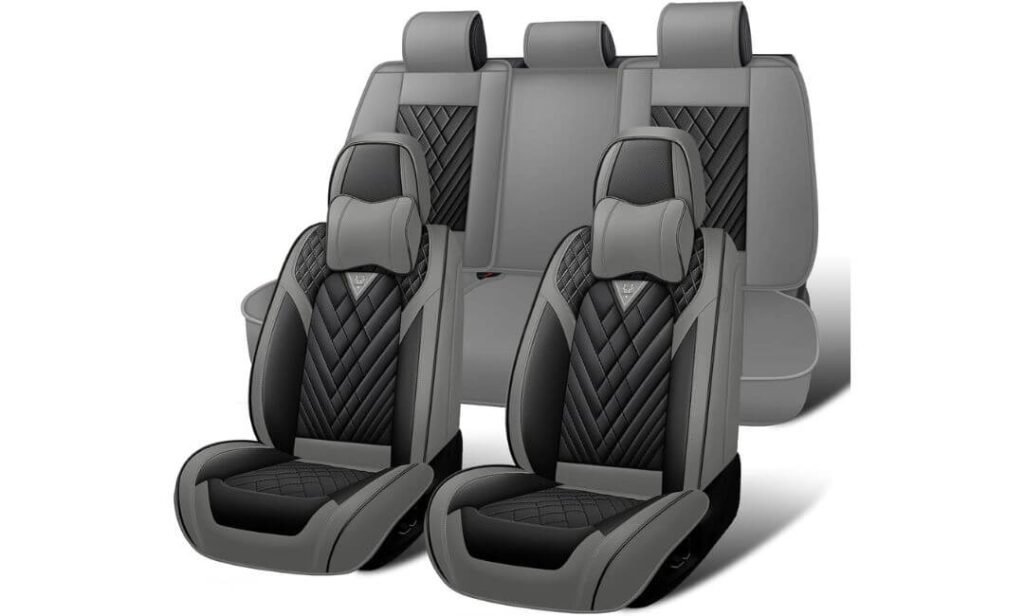
Quick Specs:
- Vehicle Fit: Volkswagen Golf GTI, 2015–2026
- Fit Type: Custom-fit design
- Seat Coverage: Full 5-seat set with headrest coverage
- Material: Nappa leather
- Protection: Waterproof, all-weather coverage
- Seat Hold: Non-slip backing to help prevent movement
- Comfort: Breathable surface with moisture-absorbing properties
- Storage: Two rear pockets for small everyday items
- Colours: Black, Black Red, Black Gray, Black White, Gray Black and Brown Coffee
- Installation: Adjustable installation designed to be fitted without specialist tools
A Golf GTI is the kind of car where a seat cover can easily feel like an afterthought if the material is stiff or the fit is loose. This set takes a more considered approach. The Nappa leather surface is intended to give the seats a softer, more comfortable feel while its breathable and moisture-absorbing properties make more sense for a car that gets driven every day. The non-slip backing is another small but important detail—it helps keep the cover from gradually shifting every time you get in and out.
The coverage is where this set becomes particularly useful. It is sold as a five-seat configuration with headrests, rather than simply being a pair of front-seat protectors. For a GTI owner who wants the interior to look consistent, that makes a difference. The waterproof construction also gives the original upholstery another layer between it and spilled drinks, wet clothing or the occasional bad-weather commute. You also get two pockets behind the seats, which are genuinely useful for keeping smaller items from wandering around the cabin.
There is also a nice bit of personalisation without going overboard. The Gray Black version used here has a relatively restrained appearance, while the available black-red and black-white combinations can give the cabin a more pronounced performance look. Installation still requires some adjustment to get the covers sitting properly, but that is preferable to a universal cover that simply hangs over the upholstery and leaves excess material around the edges.
What We Like About It
- GTI-specific year coverage: The 2015–2026 listing gives buyers a much clearer starting point than a generic Golf seat-cover claim.
- Nappa leather surface: A useful balance of appearance, comfort and everyday cleanability.
- Non-slip construction: Helps the covers stay positioned during normal entry and exit.
- Complete five-seat setup: Better suited to owners wanting a consistent front-and-rear interior.
- Small storage pockets: A simple feature, but handy for keys, phones or other small items.
One Thing to Keep in Mind
The cover still needs to be adjusted carefully during installation. Taking a little extra time to align the seat, headrest and edges is worthwhile if you want the finished result to look properly fitted rather than simply covered.
Where It Makes the Most Sense in a Golf GTI
The strongest part of this set is the combination of coverage, comfort and day-to-day protection. It is not trying to turn the GTI into a luxury lounge; instead, it gives the original seats a protective layer while keeping the interior reasonably close to the car’s sporty character.
For 2015–2021 GTI owners, confirm your exact seat configuration before ordering, particularly if your car has a specific seat or headrest arrangement. For 2022–2026 GTI models, I would make the same check rather than assuming that every Golf seat configuration is interchangeable. The seller specifically markets this set for the GTI across the stated year range, but the final check should always be against your actual car.
The Insider Pro-Tip
The trick with a full-set cover is not to rush the installation just because the seller calls it easy. Start with the seat position and headrests, then work outward, making sure the material is sitting naturally around the contours instead of pulling it into place with excessive tension. That small bit of patience is what separates a cover that looks genuinely fitted from one that looks like it was simply thrown over the seats.
And because this is an aftermarket cover, check the seat-mounted airbag area and seat-belt access on your particular GTI before final installation. The goal is to protect the upholstery without changing how the original safety equipment is designed to operate. (A proper fit should complement the GTI interior—not fight against it.)
#2. ZWCS Full Set Car Seat Covers
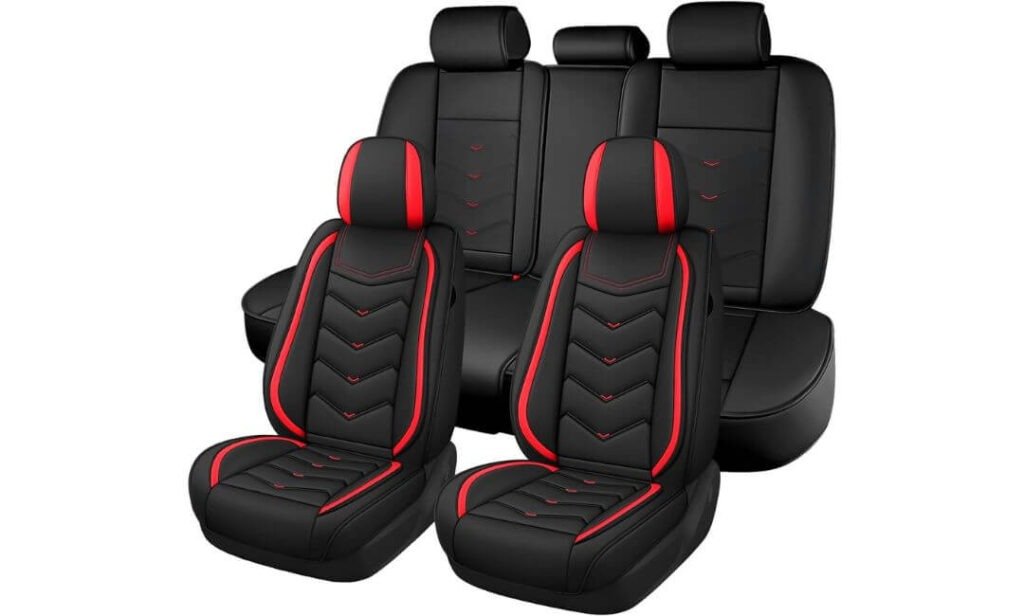
Quick Specs:
- Vehicle Fit: Volkswagen Golf GTI, 2015–2026
- Fit Type: Model-specific custom fit
- Seat Coverage: Standard 5-seat full set
- Material: Nappa leather-style faux leather
- Protection: Waterproof, scratch-resistant and wear-resistant
- Grip: Non-slip construction to help limit shifting
- Safety Design: Airbag-conscious construction with exposed seat-belt buckles
- Installation: DIY installation, advertised at around 15–20 minutes
- Comfort: Soft surface designed for extended driving
- Cleaning: Wipe-clean surface for spills, mud and pet marks
- Colour: Black Red, with other colour combinations available
The first thing I would look at here is how closely the cover is supposed to follow the GTI’s seat shape. The seller specifically describes the design around the Golf GTI’s dimensions and curves, with the intention of keeping the cover from becoming loose or shifting during normal driving. That matters more than simply seeing “custom fit” in a product title because a cover that moves underneath you can quickly become irritating.
The Nappa leather-style surface also gives this set a useful everyday balance. It is described as soft, abrasion-resistant and scratch-resistant, while the waterproof outer surface makes routine cleaning considerably easier. If you have ever had a drink spill into fabric upholstery, you already know why that distinction matters. Here, the manufacturer specifically says that wet drinks, mud and pet marks can be wiped away with a damp cloth rather than becoming a bigger cleaning job.
Then there is the part I would not overlook on a modern GTI: the safety-oriented construction. The listing says the seat-belt buckles remain exposed and that the cover is designed not to interfere with airbag deployment. That is the right type of detail to look for, although I would still inspect the finished installation around the seat-mounted airbag area rather than taking any aftermarket safety claim as a substitute for checking your own car.
What We Like About It
- GTI-specific fitment: The 2015–2026 range is clearly stated rather than relying solely on a generic Golf description.
- Stable fit: The contoured design and non-slip construction are intended to reduce movement during everyday driving.
- Easy-care surface: Waterproof material makes small spills and muddy marks much less troublesome.
- Useful safety details: Exposed belt-buckle access and an airbag-conscious design are reassuring features to see.
- Strong GTI styling: The Black Red version suits the performance-oriented character of the car without requiring an overly complicated design.
One Thing to Keep in Mind
The product description uses Nappa leather in its marketing while the material table identifies it as faux leather. That is worth understanding before ordering: you are getting the look and practical characteristics of a leather-style cover, not genuine Nappa hide.
Why It Fits the GTI Use Case
This is a particularly sensible option if your GTI is doing real daily-driver duty rather than sitting in the garage as a weekend toy. The combination of a model-specific shape, non-slip construction and wipe-clean waterproof surface addresses the little problems that build up over time—dirty clothing, drinks, pets, muddy shoes and repeated getting in and out.
The Black Red finish also gives the interior a more deliberate performance-car feel. For a GTI, that is a better match than a completely generic-looking cover, especially if you want protection without making the cabin look disconnected from the car.
The Insider Pro-Tip
Give yourself the full installation time rather than trying to force the process into five minutes. Fit the main sections first, position the headrests and belt-buckle openings, then work around the seat contours. The closer the material follows the original upholstery, the more convincing the finished result will look.
One other thing is worth doing before you settle everything into place: sit in the driver’s seat and move through your normal range of seat adjustment. Check that nothing pulls, bunches or obstructs the controls. A good aftermarket cover should disappear into the interior once installed—you should notice the protection, not constantly notice the cover.
#3. CTDS Premium Car Seat Covers
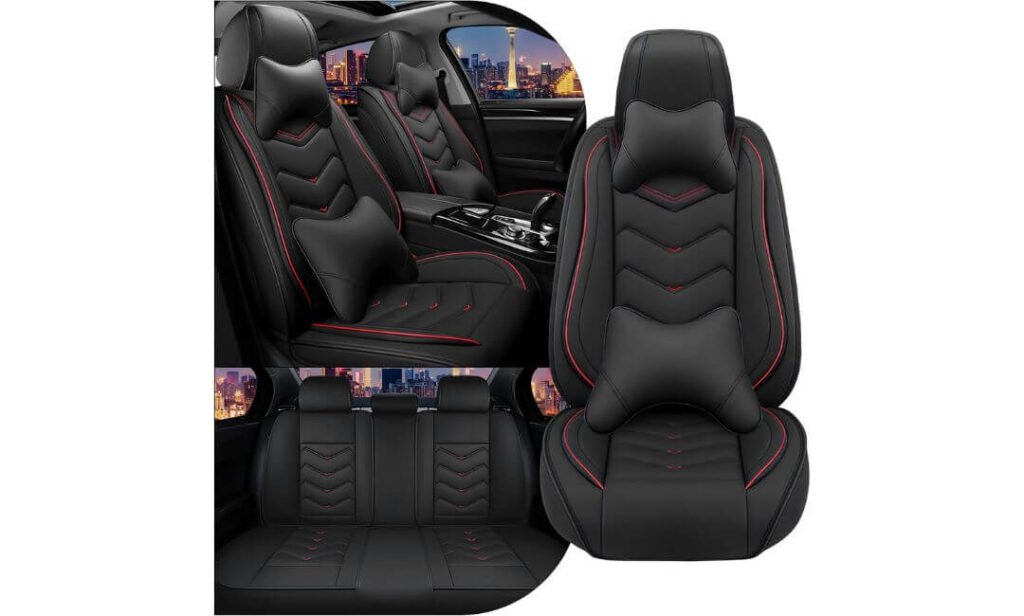
Quick Specs:
- Vehicle Fit: Volkswagen Golf GTI, 2015–2026
- Fit Type: Model-specific snug fit
- Seat Coverage: Luxury 5-seat full set
- Material: Wear-resistant faux leather
- Protection: Water-resistant and wipe-clean surface
- Comfort Layer: Double-thickened rebound sponge
- Breathability: 3D structure designed to reduce heat and sweat buildup
- Safety Design: Reserved side-airbag exit with seat-belt access
- Configuration: 2-seat front-only or 5-seat full coverage
- Installation: DIY installation with included instructions
- Colour: Black, with additional colour combinations available
What caught my attention here is not simply the leather-style finish. The double-thickened rebound sponge underneath the surface gives the cover a little more substance than a very thin slip-on protector. CTDS says the sponge is designed to retain its shape, while the outer material is built to handle normal wear and scratches. For a GTI that sees regular commuting, that extra layer can make the seats feel less like they have a cover thrown over them and more like the upholstery has been properly padded.
The other useful detail is the 3D breathable structure. This is the kind of feature that can easily get lost in a product listing, but it is relevant if you spend a lot of time behind the wheel. Leather-style surfaces can become noticeably warmer during longer drives, so anything designed to reduce heat and sweat buildup is worth considering. The water-resistant surface adds another practical advantage: if a drink gets knocked over, the idea is to wipe it away rather than let it immediately soak through.
There is also a sensible approach to the GTI’s safety hardware. The side section is deliberately left with a reserved airbag exit, while the seat-belt area remains usable. That is a much more reassuring design detail than a completely enclosed universal cover. Still, because this is aftermarket equipment, I would inspect the finished fit around the airbag area on your individual GTI rather than assuming that any manufacturer’s “airbag compatible” statement removes the need for a proper fit check.
What We Like About It
- Extra cushioning: The thickened rebound sponge gives the cover more structure and helps it resist deformation.
- Breathable construction: A useful addition for longer drives, especially in warmer weather.
- Practical protection: The water-resistant outer surface is easy to wipe after everyday spills.
- GTI-specific fitment: The listing directly covers 2015–2026 Golf GTI models.
- Full luxury configuration: The five-seat version gives the entire cabin a more consistent finished appearance.
One Thing to Keep in Mind
This is listed as faux leather, despite the product title using “Nappa leather” language. If genuine leather is important to you, that distinction matters; if your priority is an easy-clean, wear-resistant surface, the material is more straightforward to justify.
Why We Think It Works for a Golf GTI
The appeal here is the combination of structure and comfort. A lot of seat covers concentrate heavily on protecting the original upholstery, but this one adds a substantial sponge layer and a more breathable construction. That makes it interesting for someone who actually spends considerable time in the car rather than simply wanting something to protect the seats from occasional mess.
The all-black version also has a quiet advantage in a GTI: it doesn’t compete with the rest of the interior. Instead of introducing another loud colour combination, it keeps the cabin understated while giving the seats a more substantial appearance.
The Insider Pro-Tip
With a cover like this, don’t judge the fit while the material is still loose from installation. The sponge needs to settle into the seat contours, and the edges need to be pulled into their proper positions before you decide whether the fit is good. Work around the seat gradually rather than tightening one area completely and then trying to correct the rest.
And if you’re choosing between the 2-seat and luxury 5-seat versions, think about the finished cabin rather than just the price difference. If the rear seats are regularly used, a complete set will look far more intentional. If the GTI is primarily a two-person daily driver, front-seat coverage may be all the protection you actually need.
#4. Proofwater Full Set Car Seat Covers
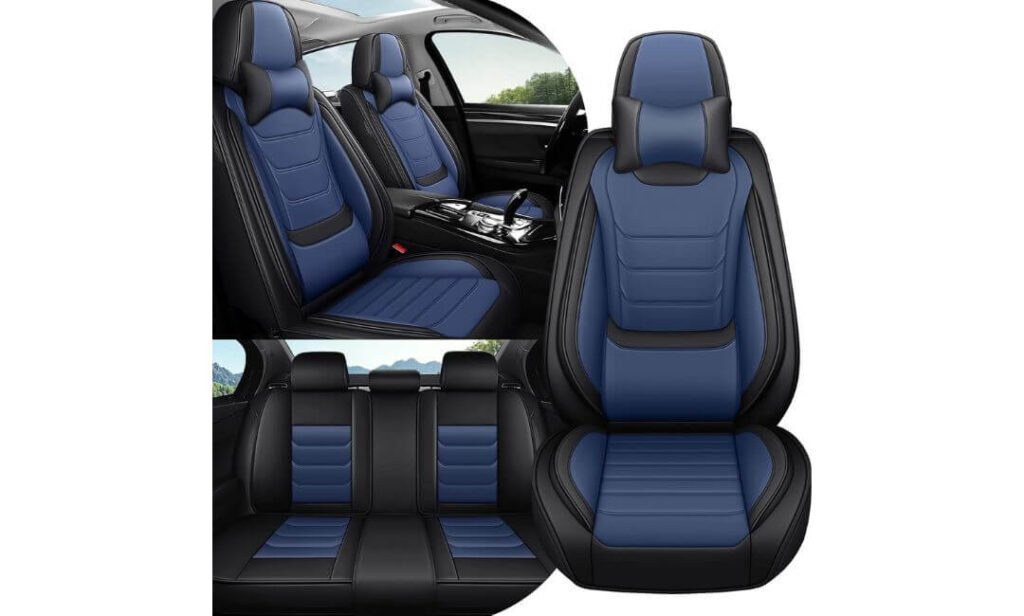
Quick Specs:
- Vehicle Fit: Volkswagen Golf GTI, 2015–2026
- Fit Type: Vehicle-specific custom fit
- Seat Coverage: Full front and rear coverage
- Material: Nappa leather
- Construction: Five-layer design with breathable sponge and soft cotton
- Protection: Waterproof and scratch-resistant
- Seat Hold: Non-slip bottom for a more secure fit
- Safety Design: Airbag openings with accessible deployment areas
- Installation: DIY installation with included tools and instructions
- Estimated Setup: Around 15–30 minutes for one person
- Colour: Black Blue, plus Black, Beige, Black Red and Black White
There is more going on underneath this cover than the Black Blue finish initially suggests. The five-layer construction combines a leather outer surface with high-resilience breathable sponge and soft cotton, giving the cover some cushioning instead of making it feel like a thin protective sheet over the original upholstery. For a GTI used every day, that extra structure can make a noticeable difference in how the seats feel after longer drives.
The outer surface is designed to deal with the messier side of ownership. It is marketed as waterproof and scratch-resistant, so spilled drinks, pet marks and normal day-to-day wear are less of a concern for the original seats. The non-slip bottom is equally practical because protection only works properly when the cover stays where you installed it. This is particularly useful on the driver’s seat, where constant entry, exit and adjustment can expose a poorly secured cover very quickly.
Another detail worth giving proper attention to is the airbag opening. The design leaves a dedicated area for deployment rather than completely wrapping the side of the seat. The manufacturer also includes installation tools and instructions, with no seat removal required. That makes this one of the more approachable full-set options for someone who wants to do the installation at home without turning the job into a workshop project.
What We Like About It
- Five-layer construction: Adds cushioning and gives the cover a more substantial feel.
- Non-slip underside: Helps keep the cover seated instead of gradually migrating during use.
- Full-cabin protection: Front and rear coverage makes sense for families, pets or frequent passengers.
- Practical outer surface: Waterproof and scratch-resistant protection is useful for genuine daily-driver wear.
- Installation support: Included tools, instructions and an installation video make the DIY process easier to approach.
One Thing to Keep in Mind
The 15–30 minute installation estimate is seller guidance, not a guarantee. Getting a neat, properly aligned fit can take longer depending on your GTI’s exact seat configuration, so don’t rush the job simply to match the advertised installation time.
Where It Fits in the GTI Lineup
This set makes the most sense for an owner who wants protection without giving up a more finished interior appearance. The Black Blue combination adds some contrast, but the bigger reason to consider it is the combination of waterproofing, cushioning and full-seat coverage.
The five-layer construction is particularly interesting if you regularly carry children, pets, gym gear or passengers in wet clothing. You are not relying on the outer leather-style surface alone—the underlying sponge, cotton and non-slip layer are part of what gives this set its practical character.
The Insider Pro-Tip
When installing a five-layer cover, fit the major panels first and leave the final tightening until everything is correctly positioned. That gives the padding room to settle naturally into the seat contours instead of creating unnecessary bunching.
Before calling the installation finished, run through the driver’s normal seat adjustment range and check the belt buckle, controls and side-airbag area. If everything remains accessible and the cover stays smooth while the seat moves, you’ve achieved what matters most: protection that works quietly in the background without making the GTI feel less like itself.
#5. Axflong Premium Car Seat Covers
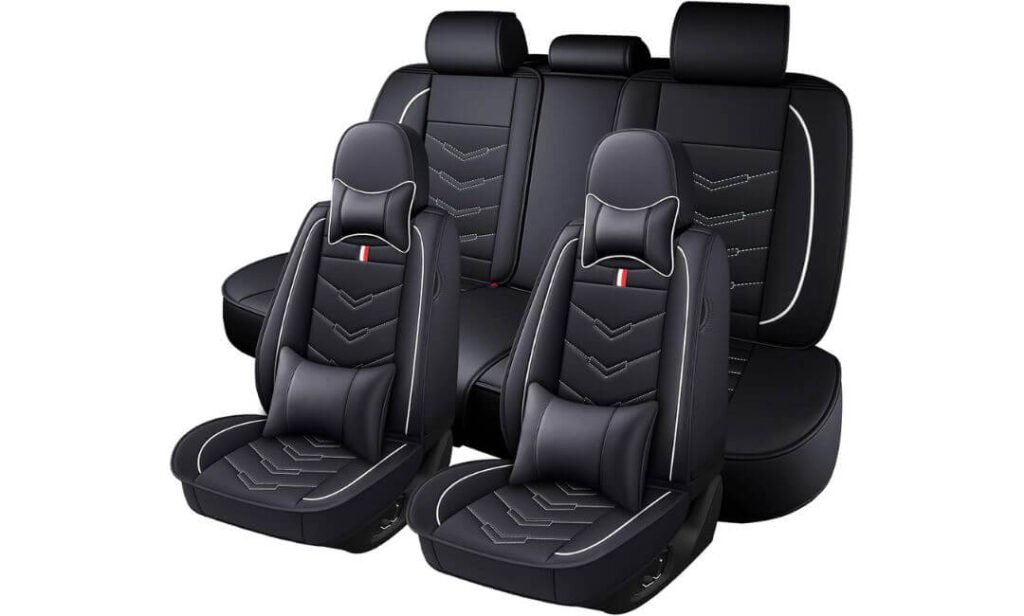
Quick Specs:
- Vehicle Fit: Volkswagen Golf GTI, 2015–2026
- Fit Type: Vehicle-specific custom fit
- Seat Coverage: Full front and rear coverage
- Material: Five-layer high-elastic composite faux leather
- Protection: Waterproof, stain-resistant and wear-resistant
- Seat Hold: Non-slip fabric underneath
- Rear Seat Fit: Adjustable for 50/50, 40/60 and 60/40 split benches
- Safety Design: Reserved space around the side-airbag area
- Storage: Two pockets on the front-seat backs
- Comfort Extras: Luxury package includes lumbar pillows and headrests
- Installation: DIY installation, advertised at around 25 minutes
- Colour: Black White, plus Black, Black Blue and Black Red
At first glance, this looks like another full leather-style cover set, but the adjustable rear-seat design is what makes it more interesting for a Golf GTI. The rear covers use Velcro connections and can be adjusted around 50/50, 40/60 and 60/40 split benches, so you have more flexibility than you would with a rigid one-piece rear section. That is useful when you actually use the rear seats and need the original split functionality to remain practical.
The construction is also more substantial than a basic seat protector. The five-layer faux leather material is described as waterproof, wear-resistant and soft, while the non-slip fabric underneath is intended to reduce movement when you climb in and out. For everyday GTI use, that combination is more valuable than simply adding another decorative layer—the surface can be wiped with a wet towel, while the underlying construction is designed to take some of the abuse away from the original upholstery.
The luxury configuration adds another layer of comfort with lumbar pillows and headrests, and there are two storage pockets behind the front seats. I particularly like the fact that the package accounts for more of the cabin than just the obvious seating surfaces, although you should still verify the exact contents of the package you select before ordering because the listing distinguishes between standard and luxury versions.
What We Like About It
- Flexible rear-seat coverage: The adjustable design accommodates several common Golf GTI split-bench layouts.
- Five-layer construction: Gives the cover more structure while adding waterproof and wear-resistant protection.
- Non-slip underside: Helps reduce unwanted movement during repeated entry and exit.
- Useful luxury extras: Lumbar pillows and headrests add comfort rather than simply decoration.
- Everyday practicality: Rear storage pockets and wipe-clean material are genuinely useful for daily driving.
One Thing to Keep in Mind
The Luxury package includes additional pieces, so check the exact variant selected before checkout. The photos and package description should match what you expect to receive.
Why This One Deserves a Closer Look
The strongest argument here is flexibility. If your GTI’s rear bench gets regular use, having a cover that can accommodate different split arrangements is considerably more useful than a set that simply assumes one fixed rear-seat layout. It lets the protection work around the car instead of forcing the car’s seating arrangement to work around the cover.
The Black White version also gives the interior a more distinctive appearance, while the underlying five-layer construction keeps the focus on protection. If your priority is keeping the original upholstery away from stains, dust, pet scratches and everyday wear without losing access to the rear-seat configuration, this is where the Axflong design makes its strongest case.
The Insider Pro-Tip
Before installing the rear section, fold and operate your rear bench exactly as you normally would. Set the Velcro adjustment around the actual split rather than trying to make the cover look perfect while the seats are stationary. Once the bench is positioned correctly, tighten the cover around it.
And don’t overlook the two front-seat pockets. They are small, but putting keys, charging cables or other loose items there can keep the cabin cleaner and prevent those objects from ending up underneath the seat. For a daily-driven GTI, those little practical details are often more valuable than another decorative feature.
#6. IKABEVEM Full Set Car Seat Covers
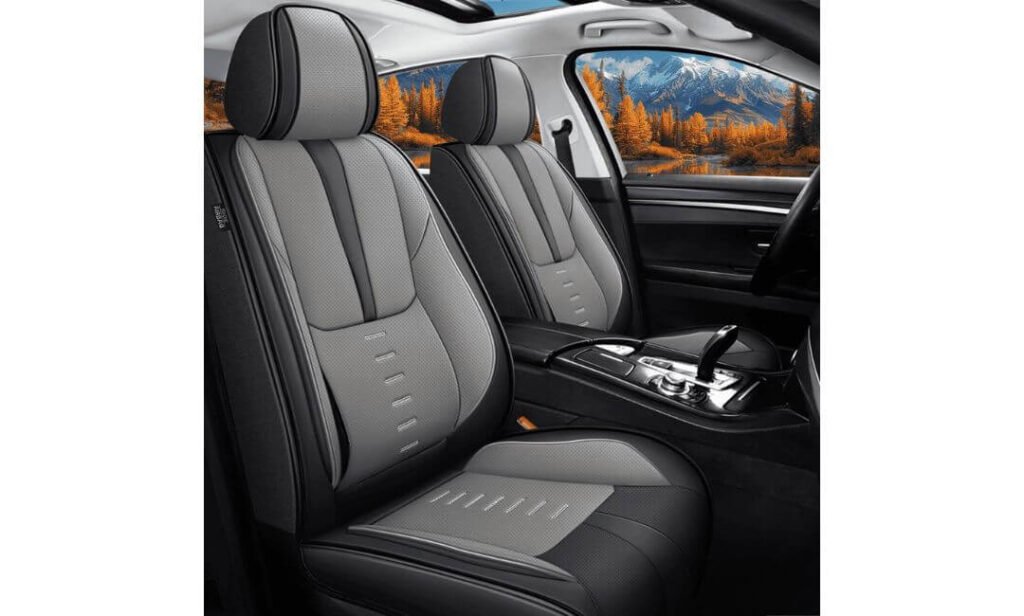
Quick Specs:
- Vehicle Fit: Volkswagen Golf, 2006–2021; verify exact GTI fitment
- Fit Type: Vehicle-specific custom fit
- Seat Coverage: Full 5-seat set
- Material: Multi-layer faux leather with foam padding
- Protection: Waterproof, stain-resistant and scratch-resistant
- Comfort: 3D lumbar and contoured side support
- Seat Hold: Anti-slip rubber dots
- Safety Design: Stitched side-airbag cutouts with seat-belt access
- Seat Functions: Designed to retain factory heating and ventilation functions
- Installation: Tool-free installation, advertised at around 20–30 minutes
- Colour: Black & Gray, Black & Blue, Black & Red, Black & White and solid Black
This set is slightly different from the other products in this list because the advertised fitment is Volkswagen Golf 2006–2021, rather than specifically naming every GTI generation. That does not automatically make it unsuitable, but it does mean I would treat exact GTI compatibility as something to verify before ordering, particularly if you have a later Mk7 GTI. The broader Golf fitment is useful for older models, but the GTI’s seat shape and equipment should still match the seller’s application.
Where this set becomes interesting is comfort. The multi-layer construction combines faux leather with foam padding, while the raised 3D lumbar section and contoured side bolsters are intended to provide additional support. For someone who spends a lot of time commuting or takes the GTI on longer trips, that is a more meaningful feature than simply adding a different surface to the seats.
The practical details are well thought out too. Anti-slip rubber dots are intended to reduce movement, while stitched cutouts keep the seat-belt buckle area accessible and provide an opening around the side-airbag zone. The perforated material is also advertised as retaining the functionality of factory seat heating and ventilation. Those are useful claims, but as with any aftermarket cover, I would verify the actual fit and operation on your particular seat before relying on those functions.
What We Like About It
- Comfort-focused design: 3D lumbar padding and shaped side support give this set a different purpose from purely protective covers.
- Older Golf coverage: The 2006–2021 range makes it worth considering for owners of earlier Golf generations.
- Anti-slip base: Rubber grip points help limit movement during everyday driving.
- Useful seat-function consideration: The listing specifically addresses heated and ventilated seats.
- Tool-free installation: No seat removal or specialist equipment is advertised as necessary.
One Thing to Keep in Mind
The listing is Golf-specific rather than GTI-specific, so this is the one option where I would be particularly careful about confirming your exact GTI year and seat configuration before purchasing.
Where It Makes Sense for a Golf GTI
If the fitment checks out, the main reason to choose this set is its emphasis on long-drive comfort rather than styling alone. The lumbar padding and contoured bolsters give it a more supportive character, while the faux-leather surface adds protection against spills, dirt and normal wear.
It can also make sense for an older GTI whose original seats have already accumulated some wear. Instead of trying to make the cover look flashy, the design concentrates on covering the existing upholstery, adding some cushioning and making everyday cleaning easier.
The Insider Pro-Tip
For this particular option, fitment verification matters more than the advertised installation time. Before ordering, send the seller your exact GTI model year and, if possible, an interior-seat photo. That takes very little effort and removes the biggest uncertainty with a product whose listing is written for the wider Golf range.
If your GTI has heated or ventilated seats, test those functions after installation and make sure the cover is sitting naturally over the relevant areas. A well-fitted cover should add protection and support while leaving the car’s original seat functions behaving exactly as they should.
Best Seat Covers for Volkswagen Golf GTI (2015–2026): Side-by-Side Comparison
| What Matters for Your GTI |
HESHS Full Set Car Seat Covers
Best Full Coverage
|
ZWCS Full Set Car Seat Covers
Best Sport Fit
|
CTDS Premium Car Seat Covers
Best Cushioning
|
Proofwater Full Set Car Seat Covers
Best Protection
|
Axflong Premium Car Seat Covers
Best Rear Flexibility
|
IKABEVEM Full Set Car Seat Covers
Verify GTI Fit
|
|---|---|---|---|---|---|---|
| Advertised Vehicle Fit | Golf GTI 2015–2026 GTI-specific listing | Golf GTI 2015–2026 GTI-specific listing | Golf GTI 2015–2026 GTI-specific listing | Golf GTI 2015–2026 Vehicle-specific fit | Golf GTI 2015–2026 Vehicle-specific fit | Golf 2006–2021 GTI fitment should be confirmed |
| Coverage | Full 5-seat set Headrest coverage included in listed configuration | Standard 5-seat set Front and rear coverage | Luxury 5-seat set Front and rear coverage | Full-set coverage Front and rear seats | Full front + rear set Adjustable rear sections | Full 5-seat set Broader Golf fitment |
| Material & Construction | Nappa leather Breathable surface with non-slip backing | Nappa leather-style faux leather Soft, wear-resistant surface | Faux leather Double-thickened rebound sponge | Nappa leather Five-layer construction | Five-layer faux leather High-elastic composite construction | Multi-layer faux leather Foam padding and breathable construction |
| Protection | Waterproof All-weather surface protection | Waterproof + scratch resistant Useful for spills, mud and daily wear | Water-resistant Designed for wipe-clean maintenance | Waterproof + scratch resistant Strong focus on everyday protection | Waterproof + stain resistant Also designed for pet scratches and dust | Waterproof + stain resistant Easy-clean daily protection |
| Non-Slip / Stability | Non-slip backing | Non-slip construction | Not a major listed feature | Non-slip bottom | Non-slip fabric | Anti-slip rubber dots |
| Comfort Focus | Breathable Nappa surface Moisture absorption and softer touch | Soft Nappa-style surface Designed for longer driving comfort | Rebound sponge + 3D structure Focused on cushioning and heat reduction | Breathable sponge + soft cotton Five-layer construction | Soft five-layer construction Luxury package adds lumbar support | 3D lumbar + side support Strongest comfort-oriented design here |
| Airbag / Seat-Belt Design | Airbag-conscious design Check final fit around side-airbag area | Reserved airbag area Seat-belt buckles remain accessible | Reserved side-airbag exit Seat-belt access maintained | Dedicated airbag openings Designed around deployment area | Reserved airbag space Seat functions remain accessible | Stitched airbag cutouts Seat-belt buckle access retained |
| Rear-Seat Flexibility | Standard full-set configuration | Standard configuration | Standard 5-seat configuration | Full rear coverage | 50/50, 40/60 & 60/40 Adjustable rear cover design | Full-set coverage |
| Everyday Convenience | 2 rear pockets Small-item storage | Easy wipe-clean surface Installation guidance supplied | Easy-clean surface Installation instructions included | Installation tools + guide Video guidance listed | 2 rear pockets Luxury version adds comfort pieces | Dual storage pockets Wipe-clean surface |
| Installation | DIY adjustable fit Time depends on careful alignment | About 15–20 min Seller’s estimate | DIY installation Instructions included | About 15–30 min One-person estimate | About 25 min Adjustable to seat dimensions | About 20–30 min Tool-free installation |
| Best Reason to Consider It | Complete coverage Strong all-round combination of fit, material and protection | Sporty daily-driver setup Black-red styling with grip and easy cleaning | Added cushioning More comfort-oriented construction | Layered protection Waterproof surface plus padded construction | Rear-seat versatility Best suited to owners who use the split rear bench | Long-drive comfort Lumbar support, but GTI fit should be verified |
| Important Buying Check | Verify exact seat/headrest configuration | Confirm airbag area after installation | Confirm faux leather material preference | Allow time for careful five-layer fitting | Match rear split to your GTI | Confirm exact GTI fit before ordering |
Seat Cover Materials and Construction That Actually Matter in a Golf GTI
A Golf GTI does not need the same type of seat cover as a large family SUV. The cabin is compact, the front seats are used heavily, and the wrong material can make the car feel hotter, less comfortable or simply less natural to sit in. That is why I would look beyond the word “premium” on a product page and pay attention to what the material is made of, what sits underneath it, how it handles moisture, and how well it stays in position.
The six options in this guide are mostly built around Nappa-style or faux-leather construction, but they are not identical. Some add sponge or cotton layers, some concentrate on non-slip stability, and others put more emphasis on breathability or cushioning. Those differences are more useful to a GTI owner than a generic material ranking.
Nappa Leather and Nappa-Style Faux Leather
“Nappa” is the word you will see most often in this category, but it is important to read the material description carefully. Nappa leather and Nappa-style faux leather are not the same thing. In the products reviewed here, some listings use Nappa leather terminology while their specifications identify the actual material as faux leather.
That is not automatically a negative. Modern synthetic leather can be a practical choice for a daily-driven GTI because it is generally easy to wipe clean, resistant to everyday spills and available in consistent colours and finishes. What matters is knowing what you are buying rather than assuming that “Nappa” means genuine leather.
For comfort, the construction underneath the surface can be just as important as the surface itself. The HESHS option, for example, focuses on a breathable Nappa-style surface and non-slip backing, while CTDS adds double-thickened rebound sponge. Proofwater goes further with a five-layer construction incorporating breathable sponge and soft cotton.
Care is relatively straightforward. For ordinary dirt, dust and small spills, a damp cloth is usually the sensible first step. Avoid treating an aftermarket leather-style cover as if it were indestructible; harsh cleaners, excessive rubbing and unnecessary soaking can eventually affect the surface finish.
Faux Leather and Leatherette for Daily GTI Use
For a car that gets driven every day, leatherette or faux leather can make a lot of practical sense. You get a smoother surface than traditional cloth, cleaning is usually quicker, and the material gives the interior a more finished appearance without requiring the maintenance associated with some genuine leather surfaces.
The bigger question is how the material is constructed. A thin faux-leather cover with little support underneath can feel quite different from a multi-layer version with foam or cotton. That is why the five-layer construction found in the Proofwater and Axflong options is worth noticing. It is not simply about adding more material; the additional layers are intended to contribute to cushioning, flexibility and stability.
Heat is the trade-off worth remembering. A dark leather-style surface can become warm when the car has been sitting in direct sunlight. If your GTI spends a lot of time outdoors, a breathable construction becomes more valuable than choosing a cover purely because its surface looks luxurious.
Neoprene Is Not the Main Story Here
Neoprene is often recommended for vehicle seat covers because it is flexible, water-resistant and able to conform reasonably well to different seat shapes. It can be particularly useful for drivers who regularly deal with wet clothing, outdoor activities or muddy conditions.
However, neoprene is not the dominant material in the six products selected for this Golf GTI guide, so I would not force it into the buying decision simply because it is popular elsewhere.
For these particular options, the more relevant comparison is between leather-style surfaces and their underlying construction. If you specifically prefer the softer, more flexible feel of neoprene, that is a separate direction worth considering, but it would not accurately describe the products reviewed here.
Fabric and Poly-Cotton: When Cooler Matters More
Traditional fabric and poly-cotton covers can still be attractive if your biggest concern is heat and everyday comfort. Fabric tends to feel less cold in winter and less immediately hot after the car has been sitting in the sun. It can also provide a less slippery surface than some smooth leather-style materials.
The trade-off is cleaning. A fabric cover can absorb liquid instead of allowing it to sit on the surface, which means a spilled drink can become a much bigger job. Pet hair, food particles and stains can also be harder to remove completely.
That is why fabric is not necessarily the obvious choice simply because it feels cooler. For a GTI used by someone who regularly carries children, pets or gym equipment, the wipe-clean advantage of a waterproof faux-leather surface can outweigh the softer feel of fabric.
Waterproofing Is More Than a Marketing Word
“Waterproof” sounds straightforward, but there are several different things happening in a seat cover. The outer surface, the seams, the underlying padding and the way the cover fits around the seat all affect how well moisture is actually kept away from the original upholstery.
A waterproof outer material is useful for spilled coffee, rain-soaked clothing, muddy clothes and pet-related messes, but it does not mean you should deliberately soak the entire seat cover. Liquid can still find its way through seams, openings, adjustment areas or uncovered sections.
The better approach is to think of waterproofing as an extra layer of protection rather than permission to ignore the original upholstery. Wipe spills promptly, keep the cover properly fitted and avoid allowing moisture to sit underneath it.
Breathability Can Matter More Than You Expect
A seat cover spends hours directly against your body, so breathability is not a cosmetic feature. A material that traps heat can become uncomfortable on longer drives, particularly during summer.
This is where the differences between these products become useful. HESHS specifically highlights breathable properties, CTDS advertises a 3D breathable structure, while Proofwater combines breathable sponge and soft cotton within its layered construction. Axflong also positions its construction around comfort and breathability.
There is no single material that will feel perfect for every driver. If your GTI is mostly used for short trips, waterproofing and easy cleaning may matter more. If you regularly drive for an hour or more, the underlying padding and airflow characteristics deserve much more attention.
The Material Is Only Half the Fit
One of the easiest mistakes is choosing a material first and treating fitment as an afterthought. For a Golf GTI, that order should be reversed.
A well-made cover should sit naturally around the seat bolsters, headrests, rear-seat split, seat-belt buckles and adjustment controls. If the material is excellent but the cover bunches up around the driver’s thigh bolster, moves every time you enter the car or leaves an awkward gap around the rear bench, the material itself will not rescue the experience.
That is also why the Axflong adjustable rear-seat construction deserves attention. Its ability to accommodate 50/50, 40/60 and 60/40 split arrangements is a practical fitment feature, not just another specification to add to a table.
Which Material Approach Makes Sense for Your GTI?
If your priority is easy cleaning and everyday protection, a waterproof faux-leather or Nappa-style surface is the most relevant direction among the products reviewed here.
If you care more about long-drive comfort, look beyond the outer material and examine whether the cover adds breathable layers, foam, cotton or lumbar support.
If you regularly carry pets, children or messy gear, waterproof and scratch-resistant construction becomes more important than a luxury-looking finish.
And if you own an older GTI and are considering the IKABEVEM option, remember that its listing is for the broader Volkswagen Golf 2006–2021 range, so exact GTI compatibility should be confirmed before ordering.
The most useful takeaway is simple: do not buy a seat cover because the material name sounds expensive. Buy it because the complete construction—surface, padding, grip, coverage and fit—makes sense for the way you actually use your Golf GTI.
Volkswagen Golf GTI Seat Covers Buying Guide for a Proper Factory-Like Fit
Buying a seat cover for a Golf GTI is one of those jobs where the product page can make everything sound interchangeable. It is not. A cover can be advertised for the right model and still need careful checking around the seat shape, headrests, rear bench, side-airbag area and seat controls.
The safest way to approach the purchase is to work backwards from your actual GTI: identify the generation and seat configuration first, decide how much of the cabin you want covered, then choose the material and styling. That prevents the common mistake of buying a good-looking set that becomes frustrating once it is actually installed.
Start With Your Exact GTI and Seat Configuration
The first distinction in this guide is between products that explicitly advertise Golf GTI 2015–2026 fitment and the broader Golf listing from IKABEVEM.
For the 2015–2021 GTI, you are generally looking at the Mk7/Mk7.5 period, while 2022–2026 models belong to the newer Mk8 generation. Do not assume that a cover made for one generation will automatically fit the other simply because both cars are called Golf GTI.
Before ordering, check:
- Model year and generation
- Front-seat shape and bolsters
- Headrest arrangement
- Rear-seat split
- Seat-belt buckle position
- Seat-mounted airbag location
- Manual or powered seat controls
- Heated or ventilated seat equipment, if fitted
- Whether you want front-only or complete five-seat coverage
This is especially important with the broader 2006–2021 Volkswagen Golf listing. If you own a GTI, I would verify the exact application with the seller rather than relying on the word “Golf” alone.
Factory Seats vs Aftermarket Seat Shapes
A useful seat cover should follow the original seat architecture, not simply cover the general area.
Golf GTI seats have pronounced bolsters and a more supportive shape than a completely flat universal seat. If a cover is too loose, you may notice wrinkles along the thigh area, movement when getting in and out, or excess material around the sides.
That is why the model-specific listings in this article are more interesting than generic universal covers. The sellers describe their products as being shaped around the GTI’s dimensions, but remember that “custom fit” is still an aftermarket claim. Your final check should be the actual installed fit.
A good result should look something like this:
| Area to Check | What You Want to See |
|---|---|
| Seat base | Material follows the cushion without large folds |
| Side bolsters | No excessive bunching or loose material |
| Headrests | Openings sit naturally without pulling |
| Seat belt buckle | Remains completely accessible |
| Seat controls | Movement remains unobstructed |
| Rear bench | Split sections can still operate normally |
| Side-airbag area | Designed opening remains clear |
| Seat adjustment | Full normal movement remains available |
Installation: A Better Way to Fit Golf GTI Seat Covers
“Easy installation” does not mean rush the job. A properly fitted cover usually looks better because you spend time positioning it correctly, not because the installation itself is technically difficult.
A sensible installation sequence is:
- Move the front seat to a convenient position. Give yourself enough room to work around the front, sides and rear of the seat.
- Remove or reposition the headrests where required. Do not force a cover over hardware it is designed to accommodate separately.
- Position the main seat section first. Centre the material before tightening anything.
- Work around the seat contours. Pull the cover evenly rather than tightening one side completely.
- Secure the underside and non-slip sections. This is where a lot of the final stability comes from.
- Fit the backrest carefully. Make sure the material follows the original contours instead of creating a large fold.
- Check the seat-belt buckle and controls. Nothing should be trapped underneath the cover.
- Check the side-airbag area. The designated opening or reserved section should remain correctly positioned.
- Fit the rear section according to your split. This is particularly important for 50/50, 40/60 or 60/40 arrangements.
- Move the seat through its normal adjustment range. If anything catches, pulls or shifts, correct it before finishing.
Some of the sets in this guide advertise installation times around 15–30 minutes, but treat those as seller estimates rather than a target. A careful first installation can take longer, especially when you are fitting a complete five-seat set.
Colour and Stitching: Make the GTI Interior Look Intentional
Colour is where you can easily go too far.
The Black Red combination has an obvious performance-car character and works naturally with the GTI’s sporty identity. Black and blue or black and white create more contrast, while an all-black finish tends to look closer to a factory-style interior.
The stitching matters too. Bright contrast stitching can make a cover look more premium when it follows the seat’s existing lines. If the stitching pattern fights the original seat shape, however, the result can look aftermarket very quickly.
I would use this simple rule:
- Black: Most understated and easiest to blend into the cabin.
- Black Red: Strongest sporty appearance.
- Black Blue: More distinctive without being as aggressive.
- Black White: Higher visual contrast and more noticeable.
- Gray Black: A softer alternative to an all-black interior.
- Beige/Brown: Better suited to someone deliberately changing the cabin’s overall appearance.
Do not choose colour before checking the fit. A perfectly fitted black cover will usually look more convincing than a badly fitted cover in your favourite colour.
Maintenance: Keep the Surface Looking Good
The easiest way to extend the life of a seat cover is also the least exciting: clean small messes before they become permanent problems.
For the leather-style and faux-leather products in this guide, a practical routine is:
- Wipe dust and loose dirt away regularly.
- Clean spills as soon as reasonably possible.
- Use a soft damp cloth for ordinary marks.
- Avoid aggressive household chemicals unless the manufacturer specifically approves them.
- Do not leave moisture trapped underneath the cover.
- Check the seams and attachment points occasionally.
- If you carry pets, remove hair and grit before it gets worked into the stitching.
- After cleaning, allow the surface and underlying areas to dry properly.
The waterproof claims on these products should be treated as surface protection, not an invitation to soak the seats. Water can still reach seams, openings and uncovered areas.
For a breathable or padded cover, the same principle becomes even more important. If moisture gets underneath and remains there, the original upholstery may suffer even though the outer cover looks perfectly clean.
Maintenance by Material
| Material / Construction | Best Cleaning Approach | What to Avoid |
|---|---|---|
| Nappa-style leather | Soft damp cloth, gentle approved cleaner | Harsh solvents and excessive rubbing |
| Faux leather / leatherette | Wipe spills promptly, use mild cleaner if approved | Abrasive brushes and strong chemicals |
| Multi-layer padded covers | Surface wipe followed by proper drying | Leaving moisture trapped underneath |
| Fabric or textile | Vacuum first, then use appropriate fabric cleaner | Saturating the padding |
| Neoprene | Mild soap and water where manufacturer permits | High heat and aggressive chemicals |
Do Not Ignore the Warranty and Return Policy
This is one of the less glamorous parts of buying a seat cover, but it can save you a headache.
Before ordering, look for:
- Vehicle-specific return conditions
- Whether opened or installed covers can be returned
- The time allowed for returns
- Who pays return shipping
- Whether colour or fitment issues are covered
- Whether the warranty covers material defects
- Whether installation damage is excluded
- Whether the seller requires photos or vehicle details for fitment claims
This matters particularly with aftermarket covers because fitment can be subjective. A seller may consider a cover correctly fitted while you may feel that a particular seam or section does not sit as expected.
It is worth keeping the packaging and installation information until you are completely satisfied with the fit.
One Important Check Before You Finish the Installation
Once the covers are installed, do not judge them while the car is parked.
Sit in the driver’s seat, adjust it normally, fasten the seat belt and move the seat through its available range. Then check the side-airbag area, buckle access, seat controls and rear-seat operation.
If you have heated or ventilated seats, test those functions as well. The cover should not change how the original controls operate.
This final check is particularly useful because a seat cover can look excellent from outside the car while still being incorrectly positioned around a control or opening.
The Best Fit Is the One You Stop Noticing
That is really the standard I would use for any Golf GTI seat cover. Once installed, you should not constantly think about the cover shifting underneath you, catching on the seat controls or making the cabin feel awkward.
The right set should simply protect the original upholstery, remain stable, preserve normal seat functions and still look like it belongs inside the GTI. That’s a much more useful definition of “custom fit” than simply seeing those two words in a product title.
Installation Tips and Tricks for a Cleaner Golf GTI Seat Cover Fit
Installing a custom-fit seat cover is not difficult, but the quality of the finished fit depends heavily on how you install it. The mistake I see most often with aftermarket covers is trying to make everything tight too early. Once one section is pulled into position before the rest of the cover is aligned, you can end up chasing wrinkles, uneven seams and loose sections for the rest of the installation.
With the Golf GTI, I would take a little extra time around the front-seat bolsters, headrests, seat-belt buckles, side-airbag area and rear-seat split. Those are the areas that tell you whether the cover actually fits the car or merely covers it.
A Practical Step-by-Step Installation Method
Most of the custom-fit sets in this guide are designed for DIY installation, and several sellers advertise installation times of roughly 15–30 minutes. Treat that as an approximate starting point, not a race.
1. Prepare the GTI Before You Start
Park the car somewhere with enough light and working space around all four doors. Clean loose dust and debris from the seats first.
Move the front seats into a position that gives you access to the front and rear edges. If you are installing a complete five-seat set, it is easier to work through the cabin methodically rather than opening every package and trying to fit everything simultaneously.
Keep the installation instructions nearby. Some sets use straps, Velcro, non-slip backing or specific attachment sections, so the manufacturer’s intended installation method is worth following.
2. Identify Every Cover Before Fitting Anything
Lay the pieces out before putting them on the seats.
Separate:
- Driver’s seat section
- Front passenger section
- Rear seat base sections
- Rear backrest sections
- Headrest covers
- Armrest pieces, if included
- Lumbar pillows or additional comfort pieces
- Straps, hooks, Velcro and other attachment parts
This sounds obvious, but it saves time. A full five-seat set can contain more individual pieces than expected, particularly with luxury configurations.
3. Start With the Front Seat Base
Place the cover centrally over the seat cushion and do not tighten everything immediately.
Check that the front edge is sitting evenly and that the material follows the original seat contours. Work gradually toward the sides, keeping the material centred as you go.
This is where the GTI’s bolstered seats matter. If you pull the cover too aggressively toward one side, you can create tension on the opposite side and end up with a visible fold.
4. Shape the Cover Around the Bolsters
Run your hand along the side bolsters after the main section is positioned.
You are looking for a cover that follows the seat rather than floating over it. Small natural folds during installation are normal, but large wrinkles or loose pockets of material usually mean that another section needs repositioning.
Do not try to eliminate every crease by pulling harder. With padded or multi-layer covers, the material often needs to settle naturally into the seat shape.
5. Fit the Backrest Slowly
Once the base looks centred, move onto the backrest.
Pull the cover down evenly and check both sides before securing the lower section. The stitching should remain reasonably aligned with the original seat shape.
If the backrest has controls, levers or other hardware nearby, make sure the cover does not restrict them.
6. Deal With the Headrests Separately
Headrest covers should sit smoothly without excessive tension.
If the cover has dedicated openings, align them before tightening the surrounding material. Do not force the headrest through an opening that appears too small or incorrectly positioned.
Once installed, raise and lower the headrest if the vehicle allows it. The cover should not prevent normal adjustment.
7. Leave the Airbag Area Alone
This is one area where you should never improvise.
The products in this guide describe different reserved side-airbag openings or airbag-conscious construction. Make sure the designated area remains correctly positioned after the cover has been tightened.
Do not cut, sew, tape or otherwise modify an aftermarket cover around the airbag area yourself to make it fit.
If the cover does not sit correctly around the factory airbag location, stop and contact the seller rather than forcing the installation.
8. Check the Seat-Belt Buckle
The buckle should remain completely accessible.
Fasten and release the belt once after installation. Make sure the cover is not sitting underneath the buckle in a way that restricts normal operation.
This is a small check, but it is exactly the type of thing that can be missed when the cover looks perfect from outside the car.
Fitting the Rear Seat Without Losing Its Function
The rear bench deserves more attention than it usually gets.
If your GTI has a split-folding rear seat, the cover should allow those sections to operate normally. The Axflong set, for example, specifically describes adjustment for 50/50, 40/60 and 60/40 split arrangements, which is a useful feature if it matches your actual configuration.
Do not tighten a rear cover while the seat is folded if the cover is supposed to remain functional with the seat upright.
Instead:
- Put the rear seat into its normal position.
- Centre the cover.
- Identify the split between the sections.
- Adjust the cover around that split.
- Secure the material without covering release mechanisms.
- Fold and return the seat once to check movement.
- Correct any material that pulls or bunches.
A rear cover that looks perfect while stationary but prevents the seat from folding is not a successful installation.
Common Installation Mistakes Worth Avoiding
Tightening One Side Too Early
This is probably the easiest way to create an uneven fit.
Better approach: centre the cover first, loosely position all major sections, then tighten progressively.
Ignoring the Seat Controls
A cover can look neat while sitting still and then catch against a lever when the seat is adjusted.
Better approach: operate every relevant adjustment after installation.
Pulling Padded Covers Too Hard
Five-layer covers and sponge-backed designs can develop unnecessary tension if you try to stretch them into position.
Better approach: let the padding settle and reposition the cover instead of forcing it.
Treating Every Golf as the Same Seat
A listing saying “Volkswagen Golf” is not automatically proof of GTI compatibility.
Better approach: verify the exact GTI year, generation and seat configuration, especially with broader-fit products.
Covering the Airbag Area
Never create your own opening because a section does not appear to line up.
Better approach: use only the manufacturer’s intended airbag-compatible design and contact the seller if the positioning is wrong.
Forgetting the Rear Seat Split
A full-set cover should not sacrifice the functionality of the folding rear bench.
Better approach: test the split and release mechanism before considering the installation finished.
Tools You May Actually Need
Most of the sets reviewed here are marketed for DIY installation without specialist tools, so you should not need a garage full of equipment.
Useful items include:
- A clean microfiber cloth
- A small flashlight for working around the underside of the seats
- The supplied installation straps or hooks
- A plastic trim tool only if the manufacturer’s instructions specifically call for one
- The product’s installation guide or video
- Enough working space to open the doors fully
Avoid using sharp blades, screwdrivers or improvised hooks to force material into tight areas. It is very easy to damage the cover, wiring or original upholstery while trying to make an aftermarket piece fit.
When It Is Better to Stop and Ask for Help
You generally do not need professional installation simply because the set is a full five-seat kit. However, I would stop rather than improvise if:
- The cover does not line up with the side-airbag area.
- A seat-belt buckle becomes difficult to access.
- A powered seat stops moving normally.
- The cover interferes with wiring underneath the seat.
- A heated or ventilated seat no longer behaves normally.
- The rear seat cannot fold or release correctly.
- The product appears fundamentally different from the seat configuration advertised.
If the issue is clearly a fitment problem, contacting the seller is usually more useful than trying to modify the cover yourself.
How to Tell When the Fit Is Actually Good
Do not judge the installation solely from the driver’s doorway. Walk around the car and inspect it from several angles.
A properly fitted cover should show:
- Even tension across the seat surface
- No large empty pockets around the bolsters
- Stitching that follows the natural seat shape
- Headrest sections sitting centrally
- Seat-belt buckles fully accessible
- Side-airbag openings correctly positioned
- Seat controls unobstructed
- Rear-seat split still functional
- Minimal unwanted movement when you sit down
- No section pulling aggressively against another part of the cover
Then perform the most important test: sit in the seat and use the car normally.
Adjust the seat, fasten the belt, get out, get back in and move the rear seats if applicable. If the cover remains where you installed it and none of the car’s normal functions have become awkward, that is a much better indication of a successful fit than how it looked five minutes after opening the package.
The Final Fit Test I Would Always Do
Give the installation a short settling period, then inspect it again. Some padded covers will sit slightly differently once you have actually sat on them.
The goal is not to make the cover look unnaturally stretched. The goal is for it to follow the original Golf GTI seat closely, stay stable during normal use and leave the car’s original controls and safety equipment functioning as intended.
That is the difference between simply putting a seat cover on a GTI and actually installing one properly.
FAQs About Volkswagen Golf GTI Seat Covers
Are 2015–2026 Volkswagen Golf GTI seat covers really interchangeable across every GTI year?
Not automatically. This is one of those places where a product title can make fitment sound simpler than it actually is. The products in this guide that specifically advertise Golf GTI 2015–2026 give you a much stronger starting point, but that should still be treated as the seller’s stated fitment rather than a guarantee that every seat configuration is identical.
There is also a generation change within that range, so I would check your exact model year, front-seat shape, headrests and rear-seat configuration before ordering. If the listing only says “Volkswagen Golf 2006–2021,” as with the IKABEVEM option, I would ask the seller to confirm the GTI application rather than assuming the broader Golf fitment covers your car.
Can a Golf GTI seat cover be waterproof without making the seats uncomfortably hot?
Yes, but waterproofing and breathability are two different things. A waterproof outer surface can be excellent for protecting the original upholstery from drinks, wet clothing, mud and pet mess, but a completely non-breathable construction can feel warmer during long summer drives.
That is why the construction underneath the surface matters. Some of the options here combine the leather-style exterior with breathable sponge, cotton or a 3D structure, rather than relying on the outer material alone.
For a GTI that spends hours on the road, I would look at:
- Breathable backing or padding
- Sponge construction rather than an extremely thin cover
- Whether the material is described as moisture-absorbing
- How much of the original seat remains covered versus exposed
In other words, “waterproof” is not automatically better if comfort has been ignored. The best balance depends on whether your GTI is mainly doing short commutes or long-distance driving.
How should I handle side airbags when installing Volkswagen Golf GTI seat covers?
This is the one part of the installation where I would never improvise. Several products in this guide specifically describe reserved airbag openings, exposed side sections or stitched cutouts, which is what you want to see in an aftermarket design.
Once installed, check that the designated airbag area remains correctly positioned and that the cover has not shifted over it. Also make sure the seat-belt buckle remains completely accessible and that normal seat adjustment still works.
If the cover does not line up with the factory airbag area, don’t cut a larger opening yourself just to make it fit. Stop, take photographs and contact the seller. A seat cover is there to protect the upholstery; it should never be modified casually around a factory safety system.
Is a five-seat Golf GTI cover set actually better than buying front-seat covers only?
It depends on how the car is used, and this is one situation where buying the larger set simply because it says “full coverage” is not necessarily the smartest decision.
If the GTI regularly carries passengers, children, pets or equipment, matching front and rear protection makes sense. It also gives the interior a more consistent appearance.
If you almost always drive alone or with one passenger, front-seat coverage may be perfectly adequate. The more important question is whether you actually need protection on the rear seats.
There is another detail people often overlook: rear-seat functionality. If you use the folding rear bench, make sure the cover accommodates its split. A set that protects the upholstery beautifully but prevents you from using the rear-seat release properly has missed an important part of the job.
What is the biggest mistake to avoid when buying a Golf GTI seat cover from a newer aftermarket listing?
The biggest mistake is confusing a detailed product description with independently proven long-term performance.
Some of the covers in this guide are newer aftermarket products, so there may not be years of owner feedback available. That does not make them unusable, but it does mean you should judge them by the information that can actually be verified: advertised vehicle fitment, seat coverage, construction, material, installation method, airbag design and return policy.
Before ordering, I would save the product page and confirm:
- Your exact GTI year and seat configuration.
- Whether the selected variant is the 2-seat or 5-seat version.
- Whether headrest or lumbar pieces are included.
- The actual material listed in the specifications, rather than relying only on marketing wording such as “Nappa.”
- The seller’s return conditions if the physical fit does not match your car.
That last point is particularly important. A product can look excellent in photographs and still require adjustment once it meets the exact contours of your GTI seats. A careful fitment check before purchase is worth far more than trusting a generic five-star badge.
Final Take: Choose the Cover That Fits the GTI You Actually Drive
A seat cover should not make your Volkswagen Golf GTI feel like a different car. The best result is much quieter than that: the original seats stay protected, the cover stays where you put it, the rear bench remains usable, and you do not spend every drive noticing that something underneath you is moving.
That is why I would not choose from this list purely by colour or by whichever product has the longest feature list. Fitment comes first, particularly when you are comparing the 2015–2026 GTI-specific options with the broader Golf fitment of the IKABEVEM set. After that, the decision becomes much easier: think about how much protection you actually need, whether you spend long hours in the car, how important breathability is, and whether you want the interior to remain understated or take on a more obvious sportier look.
The material descriptions also deserve a little common sense. Several of these products use Nappa or premium leather terminology, while their specifications identify faux leather or synthetic construction. That can still be a perfectly sensible choice for a daily-driven GTI; it simply means you should know what you are paying for. Likewise, “waterproof” is useful protection against everyday spills, but it does not replace sensible cleaning or mean moisture cannot reach seams and uncovered areas.
If I were narrowing the list for my own GTI, I would first match the exact model year and seat configuration, then decide between the different strengths we found here—full coverage, sporty styling, cushioning, layered protection, rear-seat flexibility or additional lumbar support. That is a far more reliable way to buy than chasing whichever specification sounds most impressive.
And one final check is worth doing before you click Buy: once the cover arrives, make sure the seat moves normally, the belt buckle remains accessible, the rear seat still operates correctly and the designated side-airbag area is positioned properly. If all of that works and the cover settles naturally into the original seat contours, you have achieved what a good aftermarket cover should do—protect the GTI without getting in the way of the GTI.


