5 Best Winches for Chevy Silverado 2500 in 2026: IP68 Waterproof & Wireless Control
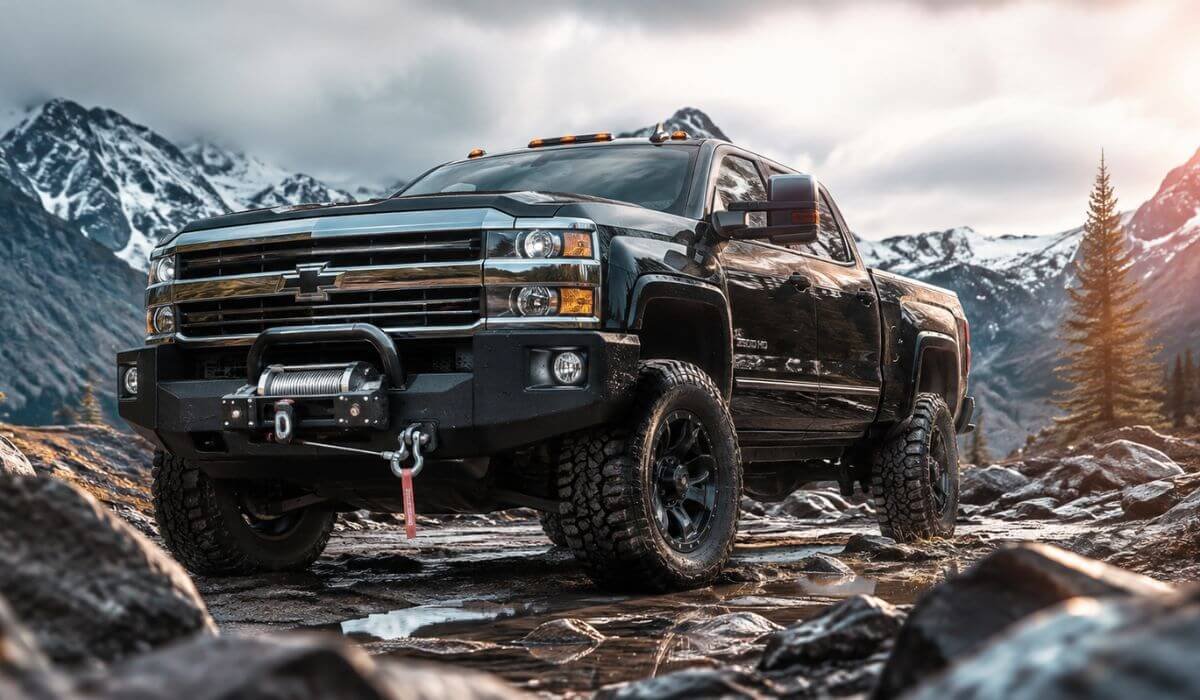
If you own a Chevy Silverado 2500, you already know this truck plays in a different league than a standard half-ton pickup. Whether you’re pulling equipment to a job site, recovering a loaded trailer, tackling muddy backroads, or heading into remote hunting and camping areas, a winch isn’t just an accessory—it’s a piece of recovery gear you hope you never need, but are glad to have when things go wrong.
The Silverado 2500HD weighs significantly more than most midsize and half-ton trucks, which means choosing the wrong winch can leave you short on pulling power when it matters most. That’s why we focused on heavy-duty models with proven recovery capability, durable construction, weather-resistant protection, and reliable remote operation. We also considered fitment for both older Silverado 2500HD models and newer generations, including trucks commonly equipped with aftermarket bumpers, diesel powertrains, larger tires, and overlanding setups.
After comparing real-world specifications, recovery features, build quality, rope systems, waterproof ratings, and overall value, these are the winches we would confidently recommend for Silverado 2500HD owners who need dependable recovery performance without second-guessing their equipment.
Best Chevy Silverado 2500HD Winches: Top 2026 Picks with Waterproof Design and Advanced Control Systems
#1. WARN M15000 Series Electric Winch
Best Overall Recovery Winch for Chevy Silverado 2500HD Owners Who Need Maximum Reliability in Demanding Recovery Situations
#2. SUPERWINCH Tiger Shark 15000
Best Premium Synthetic Rope Winch for Silverado 2500HD Drivers Seeking Proven Recovery Performance and Durability
#3. XYCLE 13,500 lb Recovery Winch
Best Value-Packed Heavy-Duty Winch for Chevy Silverado 2500HD Trucks Built for Worksites, Trails, and Everyday Recovery Needs
#4. OPENROAD Panther Series 13500
Best IP68 Waterproof Recovery Winch for Silverado 2500HD Owners Facing Mud, Water Crossings, and Harsh Weather Conditions
#5. SINOKING 13500 lb Electric Winch
Best Budget-Friendly Recovery Winch for Chevy Silverado 2500HD Drivers Looking for Solid Features at a Lower Price Point
Expert Tip From Our Research
One thing we’ve learned after looking at dozens of winch setups for heavy-duty trucks is that most recovery problems don’t happen because a winch is too weak—they happen because the winch wasn’t built for the conditions the truck actually sees.
A Chevy Silverado 2500HD is often carrying more weight, larger tires, steel bumpers, toolboxes, fuel tanks, trailers, or overlanding gear than the average pickup. That’s why we would personally prioritize build quality, waterproof protection, motor durability, rope quality, and control reliability before chasing extra features that look impressive on a product page.
If your truck regularly sees mud, snow, steep grades, remote trails, hunting land, construction sites, or heavy towing duties, choosing a winch from a trusted heavy-duty category is usually a smarter investment than saving a small amount upfront and wondering whether the equipment will perform when recovery becomes unavoidable.
How We Chose These Winches for Chevy Silverado 2500HD
A lot of winch roundups simply sort products by price, star ratings, or marketing claims. We took a different approach.
The Silverado 2500HD is not a lightweight trail rig. It is a heavy-duty work truck that often operates under conditions where recovery equipment has very little margin for error. Because of that, we focused on the factors that actually matter when a truck needs to be recovered, not the features that only sound good in advertisements.
We Prioritized Recovery Capacity Suitable for a Heavy-Duty Truck
The first thing we looked at was whether each winch was realistically capable of handling the demands of a Silverado 2500HD.
Instead of filling this list with lower-capacity models, we focused on winches designed for serious recovery work. Every product selected falls into the heavy-duty category commonly preferred by truck owners running larger tires, aftermarket bumpers, diesel powertrains, work equipment, trailers, or off-road accessories.
We Looked for Proven Recovery Features Instead of Marketing Buzzwords
Recovery situations rarely happen on dry pavement. They happen in mud, deep ruts, snow, loose gravel, steep inclines, and uneven terrain.
That is why features such as synthetic rope systems, reliable braking mechanisms, durable gearing, wireless controls, and weather-resistant construction carried far more weight in our evaluation than flashy marketing claims.
Products like the WARN M15000 and SUPERWINCH Tiger Shark stood out because their designs focus on recovery performance first and marketing second.
Waterproof Protection Was a Major Factor
Many Silverado 2500HD owners use their trucks year-round. Rain, snow, water crossings, road salt, and mud can quickly expose weaknesses in lower-quality winches.
For that reason, we gave additional consideration to models offering IP68-rated protection, sealed housings, corrosion resistance, and durable external components. Several products on this list earned their place because they provide stronger environmental protection than many similarly priced alternatives.
We Evaluated Real-World Value, Not Just Brand Names
Brand reputation matters, but value matters too.
While premium options like WARN and SUPERWINCH are well-known names in the recovery industry, we also wanted to identify products that deliver strong specifications and useful recovery features for buyers who are working within a budget.
That is why options such as XYCLE, OPENROAD, and SINOKING were included. They offer combinations of synthetic rope systems, wireless operation, waterproof protection, and heavy-duty construction that make them worth considering for many Silverado 2500HD owners.
We Chose Products We Would Feel Comfortable Mounting on a Silverado 2500HD
The simplest way to explain our selection process is this:
If we were equipping a Silverado 2500HD for towing, worksite duties, remote travel, hunting trips, off-road recovery, or emergency situations, these are the winches we would feel comfortable having on the front of the truck.
Every model on this list earned its position because it offers a combination of recovery capability, durability, weather protection, control convenience, and overall value that makes sense for the size and purpose of a heavy-duty Chevrolet pickup.
That approach guided every recommendation in this guide, and it is the same standard we would use when choosing recovery equipment for our own truck.
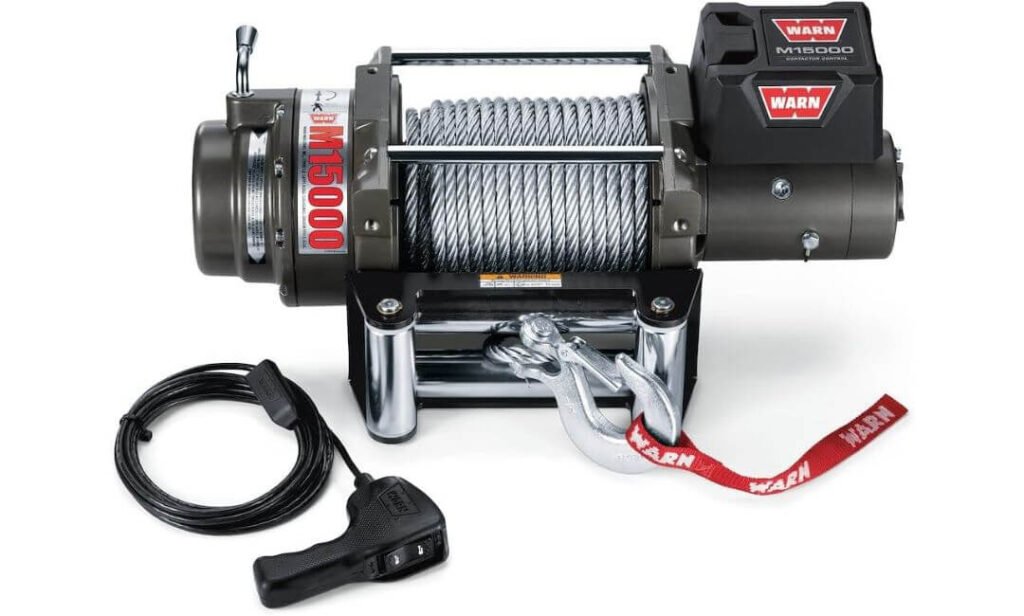
#1. WARN M15000 Series Electric Winch
Quick Specs:
- 15,000 lb recovery capacity built for heavy-duty truck recoveries
- 4.6 HP 12V motor with strong low-speed pulling force
- 90 ft steel wire rope for extended recovery reach
- 7/16-inch cable diameter designed for demanding loads
- Handheld remote with 12-ft lead for controlled operation
- Heavy-duty all-metal construction weighing approximately 130 lbs
- Designed specifically for larger trucks, HD pickups, and expedition builds
- Reliable pulling performance under sustained load conditions
Real talk—there is a reason this model has remained a benchmark in the heavy-duty recovery world for years. Most Silverado 2500HD owners are not looking for flashy features or gimmicks. They want a winch that works when the truck is buried in mud, hooked to a loaded trailer, or stuck on terrain where calling for help is not an option. That is exactly where this unit has earned its reputation.
The first thing that stands out is the combination of a 15,000 lb pulling capacity, a 4.6 HP motor, and a 90-foot steel cable. On a truck as substantial as the Silverado 2500HD, having that extra recovery margin matters. Whether the truck is carrying tools, towing equipment, running oversized tires, or loaded for a weekend off-grid trip, the setup feels appropriately matched to the vehicle rather than undersized.
Another reason experienced truck owners gravitate toward this option is its straightforward design philosophy. No unnecessary complexity. No questionable shortcuts. Just a proven motor, heavy-duty internal components, a substantial steel cable, and a control system designed to be easy to access when conditions are less than ideal. That simplicity is often what builds confidence when recovery equipment is expected to perform under pressure.
(If your goal is buying one winch and not thinking about upgrading again for a very long time, this is the type of recovery equipment that tends to stay on a truck for years rather than seasons.)
What Stood Out During Our Evaluation
- Excellent recovery capacity for Silverado 2500HD trucks carrying additional weight
- 90-foot steel cable provides valuable reach in difficult recovery situations
- Built around durability rather than marketing-driven features
- Trusted by heavy-duty truck owners, overlanders, and towing enthusiasts
- Strong low-speed pulling performance when maximum control matters
One Thing Buyers Should Know
- The steel cable requires a little more handling care than modern synthetic rope alternatives, though many truck owners still prefer its long-term durability.
Silverado 2500HD Installation & Use Considerations
For Silverado 2500HD owners running aftermarket winch bumpers, heavy-duty front-end accessories, work-truck builds, or off-road setups, this winch feels appropriately sized for the vehicle. The overall design complements the truck’s heavy-duty nature rather than feeling like a light-duty compromise.
Because the unit weighs considerably more than many recreational winches, verifying bumper ratings, mounting hardware, and front suspension condition before installation is always a smart move. Most properly equipped Silverado 2500HD setups should have no issue accommodating it.
The Insider Pro-Tip
Many buyers focus entirely on advertised pulling capacity and ignore cable length. In real-world recoveries, the extra reach provided by a 90-foot cable can be just as valuable as raw pulling power. Sometimes the strongest recovery point is farther away than expected, especially on trails, job sites, or remote access roads.
For a truck the size of a Silverado 2500HD, recovery confidence often comes from having enough capacity, enough reach, and enough durability working together. That balance is one of the biggest reasons this model continues to be a popular choice among serious truck owners.
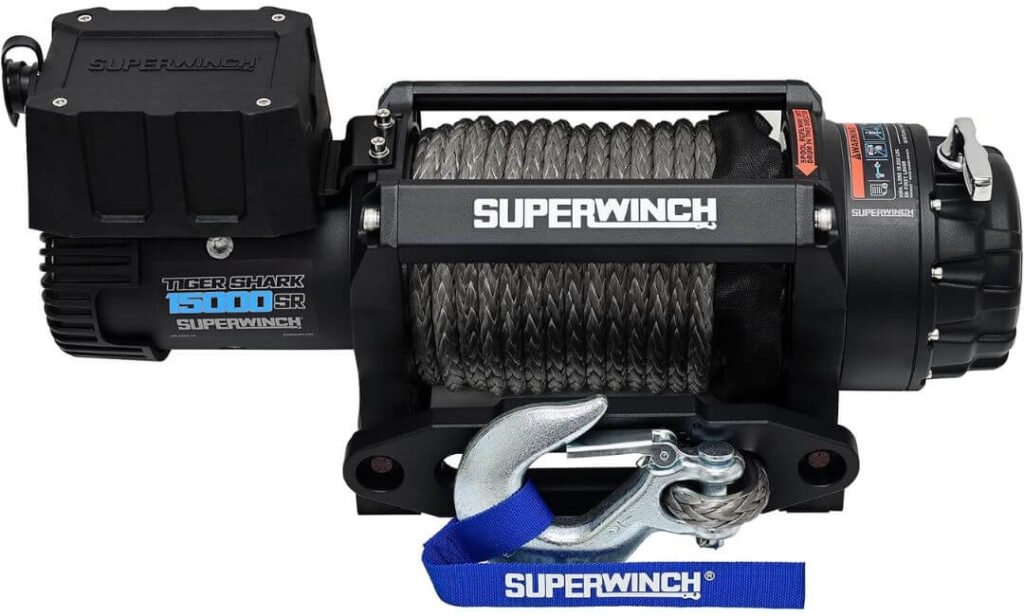
#2. SUPERWINCH Tiger Shark 15000
Quick Specs:
- 15,000 lb recovery capacity built for heavy-duty truck applications
- 6.8 HP motor paired with a 3-stage planetary gear system
- 262:1 gear ratio for controlled pulling force under load
- 78 ft synthetic rope designed for easier handling and safer recovery
- Aluminum hawse fairlead to reduce rope wear during operation
- Automatic cone brake for improved load control on uneven terrain
- 30 ft wired remote for safer winch operation
- 77 lb overall weight significantly lighter than many comparable heavy-duty winches
- Lifetime mechanical warranty support from a long-established manufacturer
Interestingly, this is one of the few high-capacity winches that manages to deliver serious recovery performance without bringing excessive weight to the front of the truck. That balance becomes especially valuable for Silverado 2500HD owners who already have diesel engines, grille guards, aftermarket bumpers, toolboxes, or towing equipment adding weight throughout the vehicle.
The combination of a 15,000 lb capacity, a 6.8 HP motor, and a 262:1 planetary gear system gives this unit the kind of controlled pulling force that inspires confidence during difficult recoveries. Instead of relying purely on brute strength, the entire system feels engineered to deliver smooth and predictable performance when traction disappears and recovery becomes necessary.
One feature that genuinely stands out is the 78-foot synthetic rope setup. Compared to traditional steel cable systems, the rope is noticeably easier to handle during repeated recoveries, particularly in cold weather, muddy conditions, or long recovery sessions. Paired with the aluminum hawse fairlead, it creates a setup that feels modern, practical, and purpose-built for truck owners who actually use their recovery gear rather than simply mounting it for appearance.
(For Silverado 2500HD owners who want maximum pulling capability without adding unnecessary front-end weight, this combination is difficult to ignore.)
What Earned Its Place on This List
- Excellent power-to-weight balance for a heavy-duty recovery setup
- Synthetic rope system that is easier to manage during real-world recoveries
- Powerful 6.8 HP motor built for demanding pulling situations
- Automatic cone brake helps maintain control on challenging terrain
- Strong warranty coverage backed by an established recovery equipment brand
One Small Consideration
- Wireless control is available separately, so the included setup relies on the wired remote out of the box.
Silverado 2500HD Compatibility & Installation Notes
This winch works particularly well on Silverado 2500HD builds equipped with aftermarket bumpers, towing packages, overlanding equipment, and larger tire setups. Its lighter overall weight compared to many heavy-duty competitors can also help reduce unnecessary strain on the front suspension.
The included mounting hardware simplifies installation, which is always welcome on larger truck builds where accessory fitment can sometimes become more complicated than expected. As always, verifying bumper compatibility and mounting dimensions before installation is recommended.
The Insider Pro-Tip
Many truck owners focus exclusively on capacity numbers, yet overlook overall winch weight. On heavy-duty pickups that already carry substantial front-end mass, saving 40 to 50 pounds compared to some competing models can be more meaningful than most buyers realize.
The reason this model continues to attract attention is not simply because it offers strong pulling power. It combines high-capacity recovery performance, synthetic rope convenience, dependable braking, and a noticeably lighter design in a package that feels exceptionally well-suited to the real-world demands of a Silverado 2500HD.
#3. XYCLE 13,500 lb Recovery Winch
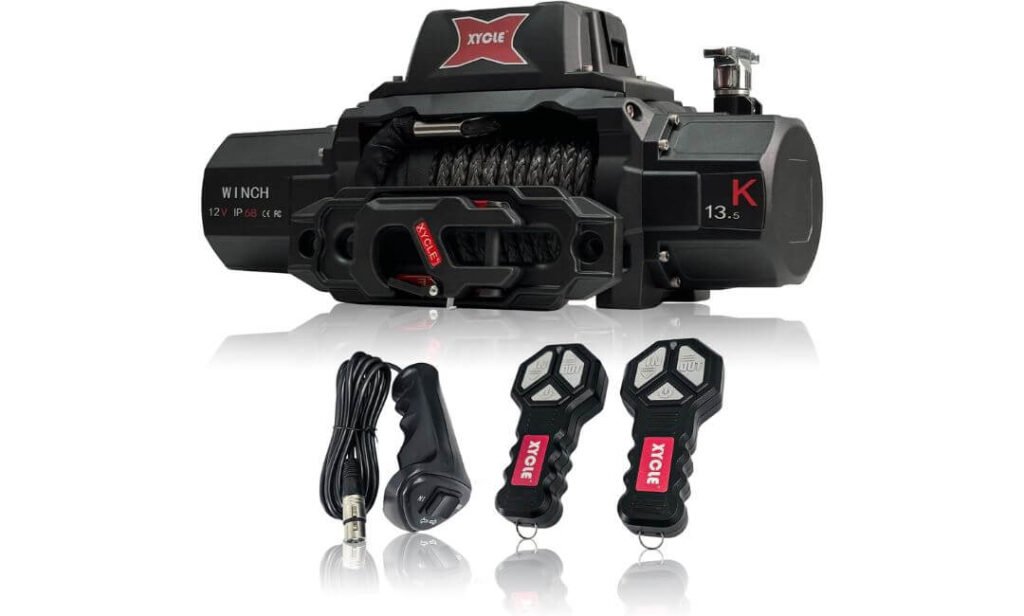
Quick Specs:
- 13,500 lb pulling capacity designed for heavy-duty recovery situations
- IP68 waterproof and dust-resistant construction
- 1/2-inch × 70 ft synthetic rope for easier and safer handling
- All-metal housing with aluminum alloy construction
- Dual wireless remotes with up to 100 ft operating range
- Additional wired controller included
- Heavy-duty upgraded clutch system
- 10-inch × 4.49-inch mounting footprint
- Built for trucks, trailers, work vehicles, and off-road applications
What makes this option interesting is not the specification sheet alone. It is how much practical recovery equipment is packed into a winch that costs significantly less than many established heavy-duty competitors. For Silverado 2500HD owners trying to balance capability and budget, that immediately gets attention.
The foundation starts with a 13,500 lb recovery rating, which places it firmly in territory that makes sense for a heavy-duty pickup. Add the all-metal housing, IP68 waterproof protection, and 1/2-inch synthetic rope, and it becomes clear that the design was aimed at real recovery use rather than occasional weekend convenience. Mud, standing water, snow-covered access roads, job sites, and rough terrain are exactly the environments where these features start paying off.
The control system is another area where this winch feels unexpectedly complete. Having two wireless remotes with up to 100 feet of range, along with a wired controller, provides flexibility that many truck owners appreciate during solo recoveries. Being able to safely position yourself while maintaining a clear view of the recovery operation often matters more than most buyers realize until the moment they actually need it.
(This is the type of product that often makes buyers question whether they really need to spend hundreds more to get the recovery features they were looking for in the first place.)
What Made It Stand Out During Our Review
- Excellent value compared to many higher-priced alternatives
- IP68 waterproof construction built for year-round truck use
- Dual wireless remotes provide added recovery flexibility
- 1/2-inch synthetic rope is easier to handle than traditional steel cable
- All-metal housing adds confidence for demanding environments
One Small Thing Worth Knowing
- The wireless remotes require A23 12V batteries, which are purchased separately.
Silverado 2500HD Mounting & Real-World Use
This winch has already been successfully installed by Silverado 2500HD owners, and the compact mounting dimensions make it a practical option for many aftermarket bumper setups. Before purchasing, it is still worth confirming that the 10-inch × 4.49-inch mounting pattern matches your specific mounting plate or bumper configuration.
For truck owners who frequently encounter muddy job sites, snowy backroads, boat ramps, hunting property access roads, or remote trail systems, the combination of waterproof protection and synthetic rope makes a lot of sense for long-term ownership.
The Insider Pro-Tip
One thing experienced truck owners learn quickly is that waterproof ratings only matter if the rest of the winch is built to survive the same conditions. That is why the combination of an IP68-rated design, all-metal housing, and synthetic rope system is more important than any single specification on its own.
For Silverado 2500HD owners who want modern recovery features, strong pulling capability, multiple control options, and solid weather protection without stepping into premium-brand pricing, this is easily one of the most compelling value-focused choices in the lineup.
#4. OPENROAD Panther Series 3S 13500
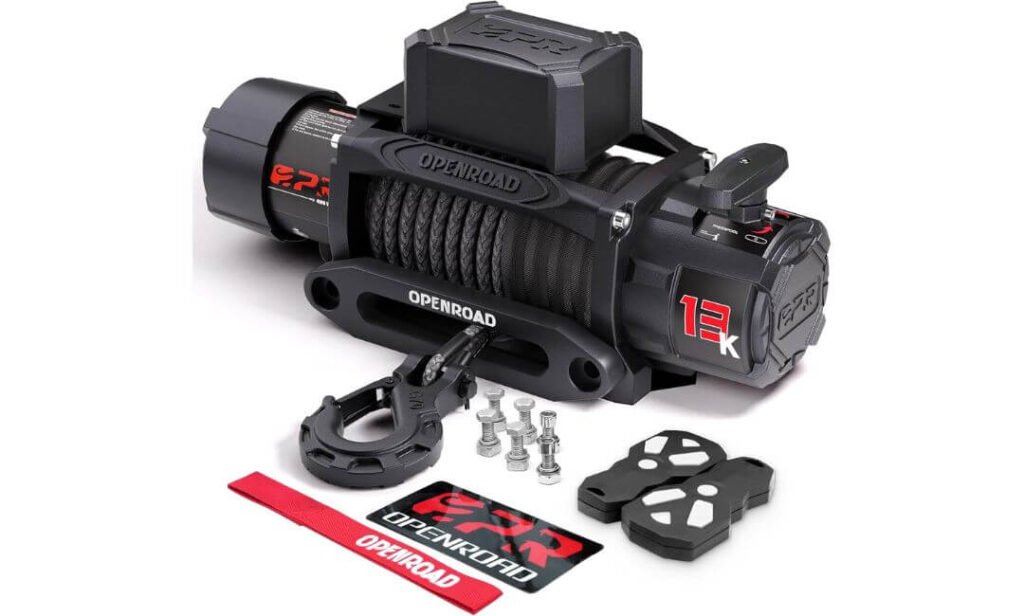
Quick Specs:
- 13,500 lb pulling capacity for demanding truck recovery situations
- 6.6 HP motor paired with a planetary gear system
- 218:1 gear ratio designed for controlled pulling performance
- 3/8-inch × 85 ft synthetic rope
- Dual wireless remotes plus wired controller
- IP68-rated weather protection
- Universal 10-inch × 4.5-inch mounting pattern
- Corrosion-resistant Dacromet-coated hardware
- Factory pre-assembled for easier installation
- Lifetime technical support coverage
There are winches loaded with impressive marketing claims, and then there are products that focus on the things truck owners actually use. This is one of those setups. Everything about it feels aimed at making recovery easier, faster, and less complicated when conditions are already working against you.
The first thing Silverado 2500HD owners will appreciate is the balance between recovery capability and everyday usability. A 13,500 lb pulling capacity, 6.6 HP motor, and 218:1 gear reduction provide more than enough muscle for most heavy-duty recovery scenarios while maintaining smooth and predictable operation. Whether the truck is dealing with deep mud, loose gravel, snow-covered terrain, or trailer recovery duties, the setup feels properly matched to the size of the vehicle.
The second standout feature is convenience. The 85-foot synthetic rope, dual wireless remotes, and factory pre-assembled design remove a lot of the frustration commonly associated with winch ownership. Instead of spending hours sorting components and troubleshooting setup issues, most of the work is already handled before the box arrives. For many Silverado owners, that practical approach can be just as valuable as another thousand pounds of advertised pulling power.
(Not every recovery upgrade needs to be complicated. Sometimes having dependable equipment that is easy to install and easy to use is exactly what makes it valuable.)
Why It Earned a Spot in This Guide
- Excellent combination of recovery capability and ease of use
- 85-foot synthetic rope provides valuable reach during recoveries
- Dual wireless remotes add flexibility during solo recovery situations
- Corrosion-resistant hardware designed for long-term durability
- Factory pre-assembled design significantly simplifies installation
One Small Consideration
- While more than capable for most Silverado 2500HD recovery needs, buyers wanting the absolute maximum pulling reserve may still prefer a 15,000 lb model.
Silverado 2500HD Installation & Ownership Notes
This winch uses the widely recognized 10-inch × 4.5-inch mounting pattern, making it compatible with many Silverado 2500HD winch bumpers and mounting systems. As always, confirming fitment before ordering is the safest approach, especially on custom truck builds.
The pre-assembled design is a genuine advantage here. Much of the setup work has already been completed at the factory, which helps reduce installation time and gets the winch operational faster once mounted.
The Insider Pro-Tip
One feature buyers often underestimate is rope length. In many real-world recoveries, finding a safe anchor point becomes the biggest challenge—not pulling power. Having 85 feet of synthetic rope can provide significantly more flexibility when the nearest recovery point is farther away than expected.
For Silverado 2500HD owners who value easy installation, long rope reach, modern wireless controls, strong weather protection, and dependable recovery performance, this model delivers an impressively well-rounded package that feels purpose-built for real truck use rather than showroom specifications.
#5. SINOKING 13500 lb Electric Winch
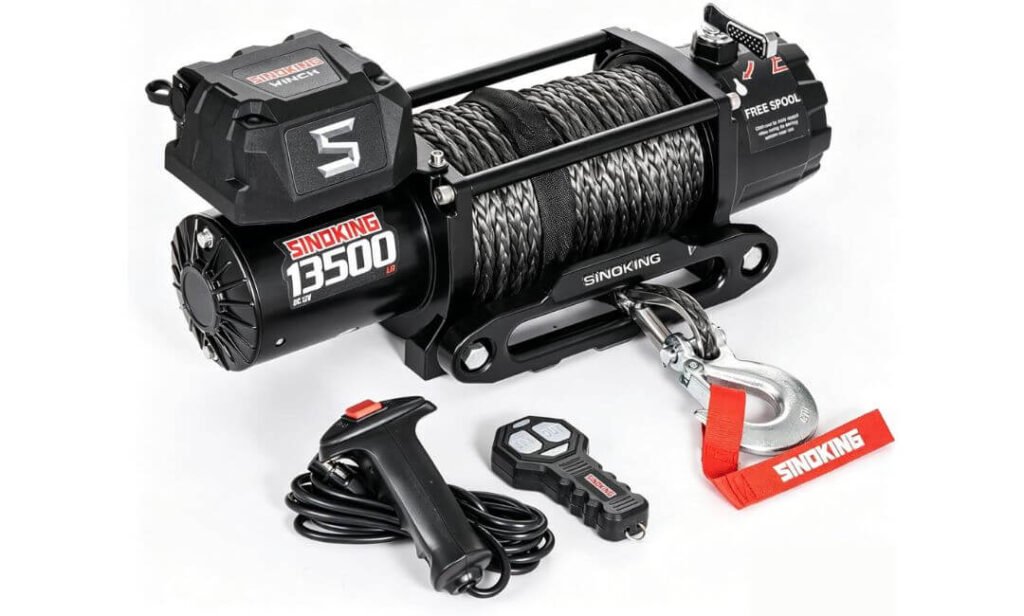
Quick Specs:
- 13,500 lb pulling capacity for truck and trailer recovery
- 7/16-inch × 80 ft synthetic rope
- Heavy-duty aluminum fairlead
- Wireless remote with 100 ft operating range
- Additional wired controller included
- Upgraded gear system for smoother recovery performance
- Reliable braking system for better load control
- Corrosion-resistant powder-coated finish
- Water-resistant 12V recovery platform
- Approximately 54 lb overall weight
By the time most Silverado 2500HD owners reach the end of their winch research, they usually discover one thing: not everyone needs to spend premium-brand money to get dependable recovery equipment. That is exactly where this option starts making a lot of sense.
At its core is a 13,500 lb pulling capacity, paired with an 80-foot synthetic rope, aluminum fairlead, and an upgraded drive system designed to deliver smoother recovery performance. Those are the kinds of features truck owners actually benefit from in the real world. Whether the truck is pulling itself out of soft ground, recovering a trailer, handling property work, or dealing with difficult weather conditions, the overall package feels surprisingly capable for the price category.
Another area where this model impresses is everyday usability. The 100-foot wireless remote range gives operators far more flexibility than many people expect, especially when recovering alone. Being able to position yourself where you can clearly see the truck, recovery line, and anchor point often creates a safer and less stressful recovery experience.
(Sometimes the best value is not the cheapest option. It is the product that delivers the features you actually need without forcing you to pay for features you never use.)
Why We Included It in This Guide
- Excellent overall value for Silverado 2500HD owners
- 80-foot synthetic rope offers a strong balance of reach and safety
- 100-foot wireless control range exceeds many competing systems
- Aluminum fairlead helps protect rope life over time
- Relatively lightweight design compared to many heavy-duty alternatives
One Small Thing Buyers Should Keep in Mind
- Depending on the bumper setup, some installations may require minor adjustment of component placement to achieve the cleanest fit.
Silverado 2500HD Compatibility & Setup Notes
This winch has already been successfully installed on Silverado 2500HD trucks, and its lighter overall weight can be a real advantage for owners who want strong recovery capability without adding unnecessary front-end mass.
The combination of a synthetic rope system, compact design, and long-range wireless control makes it particularly appealing for truck owners who use their vehicles for towing, property maintenance, utility work, hunting trips, camping, and occasional off-road travel.
The Insider Pro-Tip
One mistake many buyers make is focusing entirely on pulling capacity while ignoring how often they will actually use the winch. In reality, features such as rope handling, remote range, fairlead quality, braking performance, and ease of operation often have a bigger impact on day-to-day ownership.
For Silverado 2500HD owners looking for a recovery setup that balances capability, convenience, manageable weight, and overall value, this is the type of winch that quietly exceeds expectations and leaves owners feeling like they spent their money in the right place.
Best Recovery Winches for Chevy Silverado 2500HD Ranked by Features and Value
| Comparison Area | WARN M15000 | SUPERWINCH Tiger Shark 15000 | XYCLE 13500 | OPENROAD Panther 3S | SINOKING 13500 |
|---|---|---|---|---|---|
| Our Verdict |
Best Overall Maximum Recovery Confidence |
Premium Pick High-End Synthetic Rope Setup |
Best Value Feature-Rich For The Money |
Weather Ready Balanced Everyday Performer |
Budget Choice Affordable Recovery Upgrade |
| Recovery Capacity | 15,000 lb | 15,000 lb | 13,500 lb | 13,500 lb | 13,500 lb |
| Motor Strength | 4.6 HP | 6.8 HP | High-Torque 12V Motor | 6.6 HP | Upgraded High-Output Motor |
| Rope Type | Steel Wire Rope | Synthetic Rope | Synthetic Rope | Synthetic Rope | Synthetic Rope |
| Rope Length | 90 ft | 78 ft | 70 ft | 85 ft | 80 ft |
| Weather Protection | Heavy-Duty Sealed Design | Corrosion Resistant Finish | IP68 Rated | IP68 Rated | Water-Resistant Construction |
| Remote Options | Wired Remote | 30 ft Wired Remote | 2 Wireless + Wired | 2 Wireless + Wired | Wireless + Wired |
| Wireless Range | Optional Upgrade | Optional Upgrade | Up To 100 ft | Up To 50 ft | Up To 100 ft |
| Construction Focus | Maximum Durability | Power-To-Weight Balance | All-Metal Housing | Corrosion-Resistant Hardware | Lightweight Recovery Setup |
| Approx. Weight | 130 lb | 77 lb | Not Specified | Not Specified | 54 lb |
| Best For |
Heavy-duty towing Work trucks Large tire builds Maximum recovery margin |
Premium truck builds Frequent recoveries Synthetic rope users Long-term ownership |
Budget-conscious buyers Harsh weather use Off-road travel Daily utility work |
Mixed truck use Easy installation Long rope reach Remote recovery work |
Occasional recovery Trailer duties Property maintenance Everyday truck owners |
| Why Silverado 2500HD Owners Like It | Built for people who never want to question whether their winch can handle the recovery. | Delivers premium-level capability while keeping front-end weight lower than many rivals. | Offers modern recovery features usually found on significantly more expensive winches. | Combines long rope reach, weather protection and easy installation in one package. | Provides dependable recovery capability without stretching the budget. |
Chevy Silverado 2500 Winch Buyer’s Guide: What Actually Matters When Recovery Is No Longer Optional
Buying a winch for a Chevy Silverado 2500 is very different from shopping for one on a lighter SUV or weekend trail rig. A heavy-duty truck places more stress on recovery equipment, especially when larger tires, diesel engines, steel bumpers, toolboxes, trailers, camping gear, or work equipment are involved. That is why the best choice is not always the one with the biggest number on the box.
The goal is to find a winch that matches how your truck is actually used. A Silverado that spends most of its time towing equipment will have different recovery needs than a truck built for hunting trips, overlanding, job sites, snow-covered backroads, or off-road travel.
Choosing the Right Pulling Capacity for a Silverado 2500HD
One of the biggest mistakes truck owners make is focusing only on the highest capacity available without considering how the truck will actually be used.
For most Silverado 2500HD owners, a winch in the 13,500 lb to 15,000 lb range provides an excellent balance of recovery capability and real-world usability. This range offers enough pulling force for common recovery situations while still fitting many aftermarket bumper systems designed for heavy-duty trucks.
A 13,500 lb winch is often a smart choice for owners who use their trucks for daily driving, towing, camping, property maintenance, and occasional off-road travel. It provides substantial recovery capability without moving into oversized equipment territory.
A 15,000 lb winch makes more sense for owners running heavier setups, including diesel models, steel bumpers, oversized tires, overlanding gear, service bodies, enclosed trailers, or equipment-hauling applications. The additional recovery reserve can be valuable when the truck is carrying significant extra weight.
The most important thing is matching the winch to the truck’s actual operating weight rather than buying solely based on marketing claims.
Synthetic Rope vs Steel Cable: Which One Makes More Sense Today?
This is one of the most common decisions Silverado 2500HD buyers face.
Steel cable remains popular because it has a long track record, performs well under heavy loads, and can tolerate rough treatment. Many experienced truck owners still prefer steel because they trust its durability and familiarity.
Synthetic rope, however, has become increasingly popular for good reasons.
It is lighter, easier to handle, safer during recovery operations, and significantly more user-friendly during repeated use. It does not develop sharp wire strands over time, is easier to spool, and generally creates a better ownership experience for drivers who use their winch regularly.
That is why most modern recovery setups on heavy-duty trucks now lean toward synthetic rope systems unless the owner specifically prefers traditional steel cable.
Why Waterproof Protection Matters More Than Most Buyers Realize
A surprising number of winches spend their entire lives exposed to rain, road salt, snow, mud, standing water, dust, and temperature extremes.
Even if your Silverado 2500HD never enters deep water, the front of the truck constantly encounters harsh environmental conditions throughout the year.
That is why weather protection deserves serious attention during the buying process.
Models featuring IP68-rated protection, sealed electronics, corrosion-resistant hardware, and durable external finishes typically provide better long-term reliability than units with minimal environmental protection.
For truck owners who regularly encounter mud, snow, boat ramps, creek crossings, or remote trails, waterproof construction quickly becomes one of the most valuable features on the entire winch.
Wireless Controls Are More Useful Than Many Buyers Expect
Years ago, wired remotes were the standard solution for nearly every winch installation.
Today, wireless operation has become one of the most practical upgrades available.
Being able to stand away from the vehicle while maintaining a clear view of the recovery area often improves both safety and control. This becomes especially important when recovering a heavy-duty truck on uneven terrain or when working alone.
Many Silverado 2500HD owners now prefer systems that include both wireless and wired controls. This approach provides convenience during normal operation while maintaining a backup option if conditions become challenging.
Compatibility Matters More Than Brand Names
A premium winch that does not fit your truck correctly is not a premium purchase.
Before ordering any winch, verify the mounting dimensions, bumper compatibility, fairlead requirements, control box clearance, and overall available installation space.
Many Silverado 2500HD owners install aftermarket bumpers, grille guards, front receivers, and recovery systems that can influence fitment requirements.
Taking a few minutes to confirm mounting measurements before purchase can prevent significant installation headaches later.
Important Installation Details Many First-Time Buyers Overlook
Winch installation is not always as simple as bolting a unit to the front of the truck.
The mounting surface must be strong enough to support recovery loads. Electrical connections should be routed carefully and protected from heat, vibration, and moving components. Battery condition should also be evaluated before installation, especially on trucks expected to perform demanding recoveries.
Control box placement deserves attention as well.
Some owners relocate the solenoid or control pack to improve accessibility, increase airflow, or create additional clearance around aftermarket bumpers and grille assemblies. In regions with severe weather, many owners also upgrade to more weather-resistant control pack configurations for added long-term protection.
A properly installed winch often performs better and lasts longer than one installed quickly without considering these details.
Recovery Safety Practices Every Silverado 2500HD Owner Should Follow
A winch is one of the most useful recovery tools you can own, but it also deserves respect.
Always keep bystanders away from the recovery area. Wear gloves when handling recovery equipment. Maintain clear communication with everyone involved in the recovery process. Inspect ropes, hooks, shackles, and recovery points regularly.
Never rush a recovery simply because conditions are difficult.
Slow, controlled recoveries are usually safer and more effective than aggressive pulls. Taking an extra few minutes to set up properly often prevents equipment damage and unnecessary risk.
The most experienced recovery operators are usually the ones who prioritize preparation over speed.
Silverado 2500HD Winch Questions We Hear Most Often
Is there a difference between choosing a winch for a Silverado 2500 and a Silverado 2500HD?
For most buyers, the process is nearly identical. The key consideration is the truck’s actual operating weight, including cargo, accessories, trailers, and modifications. Heavier setups generally benefit from larger recovery margins.
Is a 13,500 lb winch enough for a Silverado 2500HD?
For many owners, yes. A quality 13,500 lb winch provides substantial recovery capability and works well for towing, work-truck duties, trail use, hunting trips, camping setups, and everyday heavy-duty truck ownership.
Should I choose a 15,000 lb model instead?
If your truck regularly carries additional equipment, larger tires, steel bumpers, diesel powertrains, service bodies, trailers, or overlanding gear, stepping up to a 15,000 lb winch can provide extra confidence during demanding recoveries.
Is synthetic rope really worth it?
For many Silverado 2500HD owners, absolutely. Synthetic rope is easier to handle, lighter, safer during recovery operations, and generally more convenient for long-term ownership. That is why most modern premium recovery setups now use synthetic rope rather than traditional steel cable.
What is the biggest mistake Silverado owners make when buying a winch?
Focusing entirely on capacity while ignoring fitment, weather protection, installation quality, rope type, control systems, and long-term durability. The best winch is the one that fits the truck properly and performs reliably when recovery is actually needed.
Chevy Silverado 2500 Winch Installation Guide: The Details That Separate a Reliable Setup From a Future Headache
Installing a winch on a Chevy Silverado 2500HD is not simply a matter of tightening a few bolts and connecting battery cables. A heavy-duty truck generates significant recovery forces, and every part of the installation—from the mounting surface to the electrical connections—plays a role in how safely and effectively the system performs.
The good news is that most installation problems are preventable. Taking the time to verify compatibility, check clearances, and route wiring correctly can save hours of frustration later. More importantly, it can ensure the winch performs exactly as expected when recovery becomes necessary.
Start With Mounting Compatibility Before Opening the Toolbox
Before installation begins, verify that the winch mounting pattern matches your bumper, mounting plate, or winch cradle.
Many Silverado 2500HD owners run aftermarket bumpers, grille guards, front receivers, snow-plow mounts, ranch-style bumpers, or custom fabrication work. While most modern winches use industry-standard mounting patterns, assuming compatibility without measuring can create unnecessary problems.
Look for:
- Mounting bolt pattern compatibility
- Adequate winch tray strength
- Proper weight capacity ratings
- Sufficient space for motor and gearbox clearance
- Access to control box connections
- Fairlead mounting compatibility
A winch can only perform as well as the structure supporting it. Even the strongest recovery equipment becomes a weak link if the mounting platform is not designed to handle recovery loads.
Prepare the Bumper Area Before Final Installation
One of the most overlooked parts of the installation process is bumper preparation.
Before mounting the winch, inspect the area for wiring harnesses, sensors, intercooler components, transmission coolers, skid plates, fog light wiring, and any accessories that could interfere with the installation.
This is especially important on newer Silverado 2500HD models equipped with advanced driver-assistance systems and additional front-end electronics.
During this stage, it is also worth checking:
- Airflow around cooling components
- Access to tow hooks and recovery points
- Front camera visibility
- Sensor placement
- Future maintenance accessibility
Many experienced installers spend more time planning the mounting location than actually tightening the hardware.
Fairlead Alignment Deserves More Attention Than Most Owners Give It
The fairlead is responsible for guiding the rope or cable onto the drum correctly.
If the fairlead is misaligned, the rope may spool unevenly, wear prematurely, or create unnecessary stress on the winch under load.
When installing the fairlead:
- Ensure it sits perfectly centered with the drum
- Verify there is no contact with bumper edges
- Check rope travel through the full operating range
- Confirm mounting hardware remains accessible
- Inspect for interference during angled pulls
Even small alignment issues can create long-term wear that may not become obvious until months later.
Route Electrical Wiring Like It Will Be There for the Next Ten Years
The electrical system is the heart of every winch installation.
A Silverado 2500HD can support heavy-duty winch setups very well, but poor wiring practices are one of the most common causes of future problems.
When routing power cables:
- Keep wiring away from exhaust components
- Avoid sharp metal edges
- Protect cables inside loom where possible
- Secure wiring to prevent vibration damage
- Leave adequate flexibility for engine movement
- Protect connections from water intrusion
Clean electrical routing not only improves reliability but also makes future troubleshooting significantly easier.
Understanding Electrical Demands Before Your First Recovery
Many heavy-duty winches can draw substantial amperage under load.
That means battery health, charging system condition, and cable integrity matter far more than many owners realize.
Before relying on a new winch, inspect:
- Battery condition
- Terminal cleanliness
- Ground connections
- Alternator performance
- Charging voltage consistency
Owners who regularly perform demanding recoveries, remote travel, or work-truck operations often benefit from premium batteries and upgraded charging system maintenance.
The winch is only as strong as the electrical system powering it.
When Relocating the Solenoid or Control Box Makes Sense
Not every Silverado 2500HD installation provides ideal space around the front bumper area.
In some situations, relocating the control box or solenoid pack can improve:
- Accessibility
- Cooling airflow
- Weather protection
- Appearance
- Serviceability
- Front-end clearance
This is particularly common on trucks equipped with custom bumpers, grille guards, auxiliary lighting, or additional recovery equipment.
If relocation is necessary, ensure all wiring remains properly protected and routed according to manufacturer recommendations.
Creating Better Weather Protection for Long-Term Reliability
Even winches with strong waterproof ratings benefit from additional protection.
A Silverado 2500HD used for work, towing, winter driving, hunting, or off-road travel will spend years exposed to moisture, road salt, dust, and temperature changes.
To improve long-term reliability:
- Seal electrical connections properly
- Inspect cable boots regularly
- Protect exposed terminals
- Clean recovery equipment periodically
- Check fairlead hardware after severe weather
- Re-spool rope or cable when contamination occurs
A few minutes of preventative maintenance often extends equipment life considerably.
Common Installation Mistakes That Cause Problems Later
Many installation issues do not appear immediately. Instead, they reveal themselves weeks or months after the project is finished.
The most common mistakes include:
- Incorrect mounting bolt torque
- Inadequate mounting plate strength
- Poor electrical grounding
- Misaligned fairlead positioning
- Loose control box mounting
- Insufficient wiring protection
- Failure to verify rope spooling direction
These problems are often easy to prevent but frustrating to correct after the winch is already installed.
Rope Management Is More Important Than Most First-Time Owners Expect
Whether using steel cable or synthetic rope, proper spooling is critical.
An improperly wound rope can create uneven drum loading, reduced pulling efficiency, excessive wear, and difficult future recoveries.
After installation:
- Perform an initial controlled spool-in
- Maintain light tension during winding
- Inspect rope layering regularly
- Remove twists before heavy use
- Re-spool after demanding recoveries
Good rope management becomes one of the simplest ways to protect the investment over time.
Final Clearance Checks Before Calling the Installation Complete
Before the first recovery, perform a complete inspection of the entire system.
Verify:
- Hood operation
- Bumper clearance
- Grille clearance
- Sensor functionality
- Fairlead alignment
- Rope movement
- Electrical connections
- Remote operation
- Mounting hardware torque
Many experienced installers consider this final inspection just as important as the installation itself.
The reality is simple: a properly installed winch should feel like it was designed as part of the truck from day one. When everything is aligned correctly, wired properly, and mounted securely, the result is a recovery system that inspires confidence every time you head onto a job site, tow a trailer, or venture beyond pavement.
Why IP68 Waterproof Protection and Wireless Control Matter More Than Most Silverado 2500HD Owners Realize
On paper, features like IP68 protection and wireless control can sound like simple marketing terms. In the real world, however, they often become the difference between a recovery that goes smoothly and a recovery that creates even bigger problems.
For a Chevy Silverado 2500HD, a winch is usually exposed to far harsher conditions than most vehicle accessories. Rainstorms, muddy job sites, snowy roads, flooded trails, dust-covered work areas, and months of outdoor exposure all put stress on recovery equipment. That is why weather protection and control convenience deserve far more attention than many buyers initially give them.
What IP68 Protection Actually Means During Real Recoveries
Most truck owners will never intentionally submerge their winch. Yet many winches spend years facing conditions that are just as challenging.
Mud splashes, pressure washing, heavy rain, melting snow, road salt, creek crossings, standing water, and fine dust all find ways into weak electrical systems.
This is where IP68 protection becomes valuable.
A properly sealed IP68-rated winch is designed to provide significantly better protection against water intrusion and dust contamination than basic weather-resistant alternatives. The goal is not simply surviving one rainy day. The goal is protecting the motor, control system, seals, and internal components over years of ownership.
For Silverado 2500HD owners who use their trucks for:
- Off-road travel
- Hunting properties
- Ranch and farm work
- Construction sites
- Boat launching
- Snow-covered roads
- Flood-prone areas
- Remote backcountry access
A well-sealed winch often becomes one of the smartest long-term investments on the front of the truck.
Why Mud Is Often More Dangerous Than Water
Many people focus on water resistance while overlooking one of the biggest threats to winch longevity: mud.
Mud contains moisture, sand, grit, minerals, and abrasive particles that can work their way into moving components over time. Once those contaminants enter gears, seals, bearings, or electrical connections, wear can accelerate quickly.
That is why many experienced recovery enthusiasts pay close attention to both waterproofing and overall construction quality.
A winch with strong sealing, durable housing materials, corrosion-resistant hardware, and protected electronics generally handles long-term exposure much better than one relying solely on a waterproof rating sticker.
How Wireless Control Changes Real Recovery Situations
Years ago, most recoveries were performed using short wired remotes that forced the operator to remain close to the vehicle.
While wired systems still work well, modern wireless control has changed how many Silverado 2500HD owners approach recovery operations.
The biggest advantage is visibility.
Instead of standing next to the bumper, the operator can move to a position where the truck, recovery line, anchor point, and surrounding terrain are easier to monitor.
That additional perspective often helps:
- Improve recovery accuracy
- Reduce communication mistakes
- Increase operator confidence
- Improve safety awareness
- Minimize unnecessary repositioning
For solo recoveries, wireless control can be even more valuable because it allows one person to observe the entire recovery process while maintaining control of the winch.
Reducing Clutter Around the Front of the Truck
Another benefit that receives less attention is simplicity.
Modern wireless systems reduce the need for extra cables hanging around the grille area during operation. There is less equipment to manage, fewer cords to route, and fewer obstacles around the recovery zone.
That cleaner setup becomes particularly useful when working around:
- Heavy trailers
- Muddy terrain
- Deep snow
- Dense brush
- Tight work sites
- Rocky recovery locations
Small conveniences often become major advantages when conditions are difficult.
Why Wireless and Wired Controls Together Are Often the Best Combination
Many experienced truck owners prefer systems that include both wireless and wired control options.
Wireless operation provides flexibility and visibility during most recoveries, while wired controls remain available as a dependable backup when needed.
This combination provides additional peace of mind for Silverado 2500HD owners who regularly travel into remote locations where equipment reliability matters.
Having options is rarely a disadvantage during a recovery.
Protecting Synthetic Rope for Maximum Service Life
Several of the winches in this guide use synthetic rope, and for good reason.
Synthetic rope is lighter, easier to handle, safer during recovery operations, and generally more user-friendly than traditional steel cable.
However, synthetic rope benefits from proper care.
To maximize lifespan:
- Inspect rope after every recovery
- Remove embedded dirt and debris
- Allow wet rope to dry when possible
- Avoid dragging rope across sharp surfaces
- Watch for abrasion near recovery points
- Re-spool under tension after heavy use
A few minutes of maintenance can dramatically extend rope life.
Preventing Corrosion Before It Starts
Corrosion rarely appears overnight.
Instead, it develops slowly through repeated exposure to moisture, road salt, humidity, and environmental contaminants.
Silverado 2500HD owners living in coastal areas, snowy climates, or regions where roads are heavily treated during winter should pay particular attention to corrosion prevention.
Good habits include:
- Rinsing the winch after severe weather exposure
- Cleaning accumulated mud
- Inspecting hardware periodically
- Checking electrical connections
- Protecting exposed metal surfaces
- Verifying fairlead condition
Preventative maintenance is usually easier and less expensive than repairs.
The Maintenance Routine Most Reliable Winches Have in Common
One interesting pattern appears among truck owners who report years of dependable winch performance.
They do not wait for problems to appear.
Instead, they routinely inspect:
- Rope condition
- Mounting hardware
- Electrical connections
- Fairlead wear
- Control box seals
- Remote functionality
- Drum operation
Most inspections take only a few minutes, yet they often catch small issues before they become expensive ones.
The Real Value of These Features Over Time
A Silverado 2500HD owner may only perform a handful of serious recoveries each year.
That is exactly why reliability matters.
When a winch sits exposed to weather for months and then suddenly needs to perform under pressure, features such as IP68 protection, quality sealing, synthetic rope systems, corrosion resistance, and wireless control stop being convenience upgrades and start becoming genuine ownership advantages.
The best recovery equipment is not the equipment with the longest feature list. It is the equipment that continues working when conditions are poor, the truck is stuck, and there is no room for second chances. That is precisely where strong weather protection, dependable controls, and consistent maintenance prove their value.
Chevy Silverado 2500 Winch Maintenance Guide: The Difference Between a Winch That Lasts Years and One That Fails When You Need It Most
Most winch failures do not happen because the winch was overloaded. They happen because small maintenance issues were ignored for months or even years.
A Silverado 2500HD places serious demands on recovery equipment. These trucks are often used for towing, hauling, hunting trips, construction work, overlanding, winter driving, and off-road travel. In many cases, the winch spends far more time exposed to weather than it does actually performing recoveries.
That is why maintenance matters.
The good news is that modern winches do not require constant attention. A few simple inspections throughout the year can dramatically improve reliability, reduce unexpected failures, and help ensure the winch is ready when recovery becomes necessary.
Build a Simple Inspection Routine Instead of Waiting for Problems
The easiest maintenance strategy is also the most effective.
Rather than waiting until a recovery situation occurs, perform a quick inspection every few weeks or after major trips.
Look for:
- Loose mounting hardware
- Damaged wiring
- Corrosion around electrical terminals
- Rope wear
- Fairlead damage
- Moisture intrusion
- Remote control issues
- Abnormal drum movement
Most of these checks take only a few minutes but can prevent expensive repairs later.
A winch that looks good from ten feet away may still hide problems that become obvious during a closer inspection.
Pay Attention to Electrical Connections Year-Round
Electrical problems are responsible for a large percentage of winch performance issues.
Even the most powerful recovery system depends on clean, reliable power delivery.
Periodically inspect:
- Battery terminals
- Ground connections
- Positive power cables
- Solenoid connections
- Control box wiring
- Remote connectors
Look for corrosion, discoloration, loose terminals, damaged insulation, or signs of moisture.
Silverado 2500HD owners who frequently drive through snow, rain, mud, or road salt should inspect electrical connections more often because environmental exposure accelerates corrosion.
Understanding Lubrication and Internal Components
Many modern electric winches are designed with sealed gear systems that require minimal routine service.
However, that does not mean they should be ignored entirely.
Follow manufacturer recommendations regarding:
- Gearbox lubrication
- Internal grease inspection
- Seal condition
- Bearing operation
- Free spool performance
If your winch sees frequent use, especially in mud, water, or dusty conditions, periodic inspection becomes even more important.
Some heavy-duty and hydraulic systems may also require additional fluid checks depending on design and application.
Why Synthetic Rope Maintenance Matters
Most of the winches featured in this guide use synthetic rope, which offers numerous advantages for Silverado 2500HD owners.
Synthetic rope is lighter, easier to handle, safer during recoveries, and generally more user-friendly than steel cable.
However, it does benefit from routine care.
After recovery operations:
- Inspect the entire rope length
- Remove embedded dirt and debris
- Check for abrasion
- Look for cuts or damaged fibers
- Verify proper spooling
Dirt trapped inside synthetic rope can act like sandpaper over time. Cleaning the rope periodically helps reduce unnecessary wear.
Allowing wet rope to dry whenever possible also helps preserve long-term strength.
Steel Cable Maintenance Requires a Different Approach
While fewer modern truck owners choose steel cable today, many heavy-duty setups still use it successfully.
Steel cable offers excellent durability but requires different maintenance practices.
Inspect regularly for:
- Broken wire strands
- Kinks
- Flattened sections
- Corrosion
- Rust development
- Uneven spooling
Always wear gloves when handling steel cable.
Small wire splinters may seem minor, but they can quickly become painful and frustrating during recovery operations.
Keeping the cable clean and lightly protected from corrosion helps maximize service life.
Proper Rope and Cable Spooling Is More Important Than Most Owners Realize
Many premature winch problems begin with improper spooling.
Whether using synthetic rope or steel cable, poor winding habits create uneven loading on the drum and increase wear over time.
After each recovery:
- Re-spool under light tension
- Eliminate twists
- Maintain even layering
- Avoid loose wraps
- Check drum alignment
A properly spooled line not only looks better but also performs more consistently during future recoveries.
Protecting the Fairlead and Recovery Hardware
The rope receives most of the attention, but the fairlead deserves maintenance as well.
Inspect regularly for:
- Sharp edges
- Excessive wear
- Impact damage
- Loose mounting bolts
- Corrosion
A damaged fairlead can quickly shorten rope life, regardless of how carefully the rope itself is maintained.
Recovery hooks, shackles, straps, and related hardware should also be inspected after heavy use.
Winter Care for Silverado 2500HD Winches
Winter creates some of the harshest conditions a winch will ever experience.
Road salt, freezing temperatures, moisture, slush, and repeated temperature changes can accelerate wear on both electrical and mechanical components.
Before winter arrives:
- Inspect all electrical connections
- Clean exposed hardware
- Verify waterproof seals
- Test remote operation
- Check battery health
- Inspect rope condition
During winter, periodically remove accumulated salt and road grime whenever practical.
This simple step often provides significant long-term benefits.
Preparing a Winch for Long-Term Storage
Some Silverado 2500HD owners use their winch regularly. Others may go months between recoveries.
If the winch will remain unused for an extended period:
- Clean the rope or cable
- Inspect electrical connections
- Test remote controls
- Verify free spool operation
- Remove heavy contamination
- Protect exposed components
Running the winch briefly every few months can also help confirm everything remains operational.
It is far better to discover an issue in the driveway than during a recovery situation.
Signs Your Winch Needs Attention Immediately
Do not ignore warning signs.
Investigate promptly if you notice:
- Slower-than-normal operation
- Unusual noises
- Excessive heat
- Electrical interruptions
- Rope damage
- Water inside control components
- Difficulty engaging or disengaging free spool
Small problems rarely improve on their own.
Addressing them early usually costs less and prevents larger failures later.
The Maintenance Habit Most Experienced Recovery Owners Share
The most reliable winches are rarely the newest ones.
They are usually the winches owned by people who inspect them regularly, clean them after difficult recoveries, protect them from unnecessary corrosion, and address small issues before they become major repairs.
For Silverado 2500HD owners, a winch is often expected to sit quietly for months and then perform flawlessly when conditions become difficult.
That level of reliability does not happen by accident.
Consistent inspections, proper rope care, attention to electrical connections, and seasonal maintenance are what allow recovery equipment to remain dependable year after year. When those habits become routine, the winch becomes more than an accessory—it becomes equipment you can genuinely trust when the situation demands it.
Chevy Silverado 2500 Winch Troubleshooting Guide: Solving Problems Before They Leave You Stranded
Even the best winch on the market can occasionally develop issues. The important thing to understand is that most winch problems do not begin with catastrophic failures. More often, they start as small warning signs that are easy to overlook until the day the winch is needed most.
For Silverado 2500HD owners, recovery equipment is expected to work in situations where options are limited. Whether you are dealing with a muddy worksite, a snow-covered access road, a remote trail, or a loaded trailer recovery, the last thing you want is uncertainty about your equipment.
The good news is that many common winch issues can be identified and corrected before they become major problems.
Winch Motor Feels Excessively Hot During Operation
Some heat is completely normal during heavy pulling.
A winch motor works extremely hard, especially when recovering a heavy-duty truck like a Silverado 2500HD. However, excessive heat can indicate that the system is being pushed beyond its intended duty cycle.
Common causes include:
- Long continuous pulls without cooling periods
- Excessive load on the recovery system
- Low battery voltage
- Poor electrical connections
- Binding rope on the drum
- Internal mechanical resistance
If the motor becomes unusually hot, stop the recovery operation and allow the unit to cool before continuing.
Many experienced operators perform recoveries in controlled stages rather than attempting one long continuous pull.
Slow Winch Performance or Weak Pulling Power
A noticeable reduction in pulling speed is often one of the earliest warning signs that something needs attention.
Before assuming the winch itself is at fault, inspect the supporting systems.
Common causes include:
- Weak battery performance
- Corroded battery terminals
- Undersized electrical cables
- Loose ground connections
- Low charging system output
- Excessive voltage drop
A Silverado 2500HD can place significant electrical demands on recovery equipment, especially during heavy pulls.
Many apparent winch problems are actually electrical system problems.
Winch Clicks but Does Not Operate
This issue can be frustrating because it often appears without warning.
When the control switch is activated, you may hear a click from the solenoid or control box, but the drum does not move.
Possible causes include:
- Weak battery voltage
- Faulty solenoid operation
- Damaged wiring
- Poor electrical connections
- Internal motor issues
- Corroded terminals
Begin with the simplest checks first.
Verify battery condition, inspect cable connections, and confirm that all terminals are clean and secure before assuming a major component has failed.
Wireless Remote Suddenly Stops Responding
Wireless control systems have become extremely popular, particularly on modern Silverado 2500HD recovery setups.
When communication problems occur, the solution is often straightforward.
Check:
- Remote batteries
- Signal interference
- Receiver connections
- Pairing procedures
- Moisture intrusion
- Physical damage
Many wireless issues are resolved by replacing batteries or re-establishing the connection between the transmitter and receiver.
Keeping a wired controller available as a backup remains a smart practice.
Wired Controller Works Intermittently
If the winch operates inconsistently using a wired remote, inspect the control cable carefully.
Look for:
- Pinched wires
- Connector damage
- Corrosion
- Loose terminals
- Bent contact pins
Repeated exposure to weather and vibration can eventually affect remote cable reliability.
In many cases, a damaged controller can be replaced without replacing the entire winch.
Rope Refuses to Spool Evenly on the Drum
Uneven spooling is one of the most common maintenance-related issues.
While it may seem cosmetic at first, poor rope management can create additional stress on the recovery system over time.
Possible causes include:
- Loose spooling practices
- Side-angle pulling
- Lack of tension during winding
- Twisted rope
- Damaged fairlead alignment
After each recovery, take a few extra minutes to rewind the rope properly under controlled tension.
This simple habit often prevents future complications.
Synthetic Rope Shows Excessive Wear
Synthetic rope is incredibly strong, but it is not indestructible.
Inspect regularly for:
- Fraying
- Abrasion
- Flattened sections
- Heat damage
- Embedded debris
- Discoloration
Minor wear does not always require immediate replacement, but significant damage should never be ignored.
Recovery equipment should inspire confidence, not uncertainty.
Steel Cable Develops Kinks or Broken Strands
Steel cable users should inspect their lines carefully before every major recovery.
Watch for:
- Wire splinters
- Corrosion
- Kinks
- Flattened sections
- Uneven winding
Once severe cable damage develops, replacement is usually the safest option.
Attempting to work around damaged cable often creates greater risk later.
Control Box or Solenoid Appears Unresponsive
The control box acts as the command center for the entire winch system.
If response becomes inconsistent, inspect:
- Main power connections
- Ground connections
- Solenoid terminals
- Moisture seals
- Wiring harnesses
In regions exposed to heavy rain, snow, road salt, or humidity, electrical corrosion can gradually affect performance.
Routine inspection helps catch these problems early.
Dashboard Voltage Drops During Recovery
Heavy-duty winches draw substantial current under load.
Some voltage drop is normal, especially during demanding recoveries.
However, significant drops may indicate:
- Weak batteries
- Charging system limitations
- Cable resistance
- Poor grounds
- Aging electrical components
For Silverado 2500HD owners who frequently perform recoveries, maintaining a healthy battery and charging system is just as important as maintaining the winch itself.
Unusual Noises Should Never Be Ignored
Grinding, popping, clicking, squealing, or abnormal vibration often indicates that something requires attention.
Possible causes include:
- Gear wear
- Bearing issues
- Loose mounting hardware
- Rope binding
- Internal component damage
Unusual sounds are often early warning signs.
Addressing them promptly can prevent more expensive repairs later.
When Basic Troubleshooting Is No Longer Enough
Many minor issues can be corrected through routine inspection and maintenance.
However, some situations require professional evaluation.
Consider seeking professional service if you experience:
- Persistent electrical failures
- Repeated overheating
- Internal water contamination
- Gearbox problems
- Structural damage
- Solenoid failure after replacement
- Motor performance issues that continue after electrical checks
If a problem continues despite proper troubleshooting, further operation can sometimes create additional damage.
The Best Troubleshooting Strategy Is Prevention
The most reliable Silverado 2500HD winches are usually owned by people who rarely need troubleshooting guides at all.
They inspect wiring regularly, maintain rope condition, monitor mounting hardware, protect electrical connections, and address small issues before they become larger problems.
That proactive approach is what separates equipment that performs reliably for years from equipment that becomes unpredictable when recovery conditions are already difficult.
A well-maintained winch should give you confidence every time you leave pavement, hook up a trailer, head to a worksite, or travel into remote areas. And when something does seem unusual, paying attention early is almost always the fastest path back to dependable operation.
FAQs About Chevy Silverado 2500HD Winch
Is a 15,000 lb winch overkill for a Chevy Silverado 2500HD, or is it actually the smarter long-term choice?
Not necessarily. On paper, many Silverado 2500HD owners assume a lower-capacity winch will be enough because they focus only on the truck’s curb weight. The reality is that recovery situations rarely happen under ideal conditions.
Once you add larger tires, diesel engine weight, steel bumpers, recovery gear, a loaded bed, towing equipment, mud resistance, steep grades, or deep snow, recovery loads increase dramatically. That extra reserve capacity often means the winch works with less strain rather than operating near its limits.
For many Silverado 2500HD owners, a 15,000 lb winch is less about extreme recoveries and more about maintaining a larger safety margin when conditions become unpredictable. That is one reason why experienced truck owners often upgrade once and stay in the 15K category for years.
What matters more on a Chevy Silverado 2500HD: pulling capacity, rope length, or motor power?
This is one of the most misunderstood winch-buying questions.
Many buyers focus entirely on the advertised pulling number while ignoring the features that affect real-world recoveries. In practice, successful recoveries usually come from a combination of factors working together.
The priorities often look like this:
- Proper recovery capacity
- Reliable motor and gear system
- Sufficient rope length
- Strong electrical system
- Quality mounting setup
- Weather protection
A winch with slightly less pulling power but better rope reach and stronger reliability can often be the more useful tool on a Silverado 2500HD. That is especially true when the nearest recovery point is farther away than expected.
How much does front-end weight from a winch actually affect Silverado 2500HD handling and suspension?
For many owners, the effect is smaller than expected. However, it becomes more noticeable when several front-end accessories are combined together.
A typical setup might include:
- Winch
- Steel bumper
- Grille guard
- Auxiliary lighting
- Skid plates
- Front receiver system
When all of those components are installed together, total front-end weight can increase significantly.
That is why some Silverado 2500HD owners prefer lighter synthetic-rope winches or compact control-box designs. The goal is not simply reducing weight—it is maintaining balanced handling, suspension performance, and ride quality over thousands of miles.
Why do some experienced recovery operators still choose steel cable when synthetic rope is available?
Synthetic rope has earned its popularity for good reasons. It is lighter, easier to handle, safer during recovery operations, and generally more user-friendly.
However, steel cable still has a loyal following among experienced truck owners who spend years working in construction, forestry, agriculture, utility work, and demanding recovery environments.
The reasons usually include:
- Excellent abrasion resistance
- Proven long-term durability
- Familiar maintenance routines
- Resistance to sharp surface contact
- Confidence built through years of use
Neither option is automatically better for every owner. The right choice depends on where the Silverado 2500HD operates and how often the winch is expected to work under difficult conditions.
What is the biggest mistake Silverado 2500HD owners make after installing a new winch?
Surprisingly, it is not buying the wrong winch.
The most common mistake is installing the winch and assuming the job is finished.
Experienced recovery operators know that long-term reliability comes from the entire system, not just the winch itself. A high-quality winch can still perform poorly if the electrical system is weak, the mounting platform flexes under load, the rope is poorly maintained, or recovery practices are rushed.
The owners who get the best results usually pay attention to the details after installation:
- Battery health
- Cable condition
- Rope inspection
- Hardware torque checks
- Fairlead alignment
- Recovery technique
- Seasonal maintenance
That approach often matters more than spending another few hundred dollars on a different winch model. In real-world ownership, preparation and maintenance are what turn a good recovery setup into one you can genuinely trust when conditions get difficult.
Final Thoughts
After spending countless hours comparing specifications, installation requirements, recovery features, rope types, weather protection, and real-world owner feedback, one thing became clear: there is no single perfect winch for every Chevy Silverado 2500HD owner.
The right choice depends on how your truck is actually used.
If maximum recovery confidence is your priority, the WARN M15000 and SUPERWINCH Tiger Shark stand out as serious heavy-duty options that never feel out of place on a Silverado 2500HD. If value, modern features, and day-to-day usability matter more, the XYCLE, OPENROAD, and SINOKING prove that you do not always need to spend premium money to get dependable recovery capability.
What matters most is choosing a winch that matches your truck’s weight, your recovery needs, your bumper setup, and the environments where the truck spends most of its time. A well-matched winch will feel like something you hope you never need, but are extremely glad to have when the situation changes.
At the end of the day, the best winch for a Chevy Silverado 2500HD is not the one with the biggest marketing claims. It is the one that starts every time, pulls consistently under load, survives years of weather exposure, and gives you confidence when the road, trail, job site, or recovery situation does not go according to plan.
(A recovery is rarely remembered because the winch looked good on the bumper. It is remembered because the winch worked when everything else stopped working.)
Also Check:


