

Best Head Gasket Sealers for 2026 (Real-World Results & Buying Advice)
A failing head gasket is one of those engine problems that starts small—and gets expensive fast. Coolant loss, unexplained overheating, white exhaust smoke, or rough idling are often the first signs. For many drivers, especially those facing high labor costs or older vehicles, replacing a head gasket isn’t always the immediate or practical option. That’s exactly where the best head gasket sealer comes into the conversation.
Modern head gasket sealers in 2026 are no longer the crude, temporary fixes they once were. Today’s formulations are engineered to withstand real engine heat, pressure, and chemical exposure—making them a legitimate option for minor gasket leaks, coolant seepage, and early-stage failures. When used correctly and in the right situations, a quality sealer can restore drivability, stabilize temperatures, and buy valuable time without tearing the engine apart.
That said, not every engine—or leak—responds the same way. Diesel engines operate under higher compression and sustained temperatures, which means they demand diesel-specific head gasket sealers designed for extreme conditions. Similarly, large-displacement and V8 engines put additional stress on sealing surfaces, making product choice even more critical. There is no single “one-size-fits-all” solution, and believing otherwise is where most people go wrong.
This guide focuses on what actually works in real-world use, not marketing claims. We’ve looked at formulation types, compatibility with gasoline and diesel engines, long-term reliability, and feedback from mechanics and experienced owners who’ve used these products beyond the first few days. Whether you’re trying to avoid an immediate teardown, extend the life of a high-mileage engine, or decide if a sealer is even the right move for your situation, this article breaks it down clearly.
Below, you’ll find a carefully selected list of the best head gasket sealers for 2026, along with practical buying advice, realistic expectations, and clear guidance on when a sealer makes sense—and when it doesn’t. If you’re going to use a head gasket sealer, using the right one, the right way, is the difference between a smart temporary fix and wasted money.
6 Best Head Gasket Sealers Of 2026
#1. Permanent Repair: Steel Seal Blown Head Gasket Fix Repair Sealer
#2. Quick Fix: K-Seal Permanent Head Gasket and Block Repair
#3. Heavy Leaks: BlueDevil Head Gasket Sealer
#4. Gasket Assembly Gasgacinch Gasket Sealer and Belt Dressing
#5. Gasket Holding: Permatex High Tack Gasket Sealant
#6. Budget Fix: Bar’s Leaks Block Seal Head Gasket Fix
Expert Tip
Also Check:
Advantages of the Top-Rated Gasket Sealer for Engines
Due to the multiple benefits that they provide, head gasket sealers have quickly become a very popular choice in the field of car maintenance. The conventional method of replacing the head gasket is challenged by the introduction of these ground-breaking solutions, which provide an effective and economical alternative. In this article, we will investigate the benefits of using the finest head gasket sealer, throwing light on the reasons why it has become the favourite option for technicians and automobile owners alike.
Using the best head gasket sealer offers several significant benefits, including the following six:
1. Efficient Use of Resources:
One of the most important advantages of using a head gasket sealer is the fact that it is very cost-effective. Changing a head gasket is a financially challenging alternative since it requires a significant amount of labour and requires the purchase of pricey components. On the other hand, premium sealers are not only helpful at fixing head gasket difficulties, but they are also quite economical. Because of this, you will not need to worry about spending as much money.
2. Efficient use of time:
The repair of the head gasket is a time-consuming operation that may need the mechanic to keep your car in their shop for a lengthy amount of time, which may be inconvenient for you. Due to the ease and speed with which they may be applied, head gasket sealers greatly cut down on maintenance and repair times. Because of this, you will be able to get your car back on the road much more quickly.
3. Decreased Expenditures on Labour:
The costs connected with replacing the head gasket include a significant percentage dedicated to the labour involved in the process. When compared to the total labour involved in replacing a gasket, the use of a sealer needs very little effort, which results in significant cost savings.
4. Effortlessness of Implementation:
Even those with minimal knowledge of vehicle maintenance should not have any trouble using the majority of head gasket sealers since they are meant to be user-friendly. They often come with straightforward instructions that streamline the application process and make it more approachable for a diverse variety of consumers.
5. The ability to adapt:
Sealants for the head gasket may be used on a variety of vehicles, including automobiles, trucks, and motorcycles, among others. Because of their adaptability, they are an excellent option for a wide variety of automotive applications. This ensures that a wider variety of vehicle owners will be able to profit from using them.
6. Preventative maintenance and repair:
Some head gasket sealers can perform the role of a preventative measure. Sealers like these may help you prolong the life of your engine and save you money on expensive repairs in the future by preventing small gasket leaks or weaknesses from developing into more serious issues and sealing them before they do so.
The most effective head gasket sealers provide several key benefits, including cost-effectiveness, decreased labour costs, simplicity of application, adaptability across a range of vehicle types, and the opportunity for preventative maintenance. The accumulation of these advantages makes head gasket sealers an appealing choice for treating head gasket concerns. They enable vehicle owners to save money, time, and bother while keeping the dependability of their automobiles. Always follow the directions provided by the sealer maker when selecting a sealer for the best possible results. If you are unclear about the severity of the issue with your head gasket, you should seek the advice of a specialist.
Best Head Gasket Sealers on the Market (Reviews & Buying Guide)
In this detailed guide, we’ve taken the time to thoroughly review the top 6 head gasket sealers that you can find on the market today. Whether you’re facing a small leak or a more significant head gasket problem, our aim is to provide you with real insights and advice. We want to help you make the best decision to address your engine issues, ultimately saving you money on potential repairs. So, let’s dive in and explore our expert recommendations, ensuring your engine runs smoothly once again.
#1. Steel Seal Blown Head Gasket Fix Repair Sealer

Steel Seal is often chosen by drivers who want a head gasket sealer that behaves more like a controlled repair than a short-term patch. Instead of relying on fibers or thick chemical fillers, it uses a heat-activated formula that reacts at the point of failure inside the engine. When the engine reaches operating temperature, the sealer bonds with metal surfaces around the leak area, helping close small gaps where coolant and combustion gases begin to mix.
In practical use, Steel Seal is best suited for engines showing early signs of head gasket failure, such as coolant loss, mild overheating, or white exhaust smoke—before major mechanical damage has set in. It works with both gasoline and diesel engines, provided the cooling system is clean and the engine hasn’t been repeatedly overheated or physically warped.
This isn’t a “pour it in and forget it” product. The process requires proper preparation and patience, including flushing the system and following the heat-cycle steps exactly as directed. That extra effort is part of why Steel Seal has a stronger reputation than many quick-fix sealers, especially among owners trying to avoid an immediate engine teardown.
Because it contains no fibers or abrasive particles, Steel Seal doesn’t carry the same risk of clogging radiators or heater cores as cheaper sealers. It’s also non-toxic and safe to handle, which makes it a realistic option for both DIY users and professional shops looking for a lower-risk alternative to head gasket replacement.
For the right engine and the right situation, Steel Seal offers a measured, well-engineered approach to extending engine life without committing to a full repair right away.
Features:
- Head gaskets that have blown need a special recipe.
- Compatible with several kinds of motors.
- Holds up well in scorching engines.
- Convenient liquid form for use.
- Problems with the coolant and the cylinder heads have been fixed.
- Recognised for producing effects that persist.
Must Check:
#2. K-Seal Permanent Head Gasket and Block Repair

K-Seal is widely known as a convenience-first head gasket and cooling system repair solution, especially for drivers who want to address leaks without taking the engine apart. Unlike repair-focused sealers that require draining and heat cycling, K-Seal is designed to work while the engine is in normal operation, circulating through the cooling system to locate and seal leaks as they appear.
The formula is engineered to seal small head gasket leaks, block cracks, and coolant system seepage without thick fillers or fibrous material. As it moves through the system, it reacts to changes in temperature and pressure, allowing it to concentrate at leak points rather than coating the entire cooling circuit. This makes it suitable for routine use in engines where the cooling system is still functioning normally.
In real-world scenarios, K-Seal tends to work best for minor coolant leaks and early-stage gasket issues, particularly when symptoms are limited to slow coolant loss or mild overheating. It’s compatible with most gasoline and diesel engines and can be used alongside standard antifreeze or coolant, making it a flexible option for mixed-vehicle households or fleet use.
One of the biggest reasons owners choose K-Seal is ease of use. There’s no need to flush the system or drain coolant before application. The sealer is simply added to the radiator or expansion tank and allowed to circulate during normal driving, which makes it appealing for drivers who want a low-effort solution or need a quick repair to stay on the road.
K-Seal is also non-toxic and safe for regular handling, which adds peace of mind for DIY users. While it’s not intended to fix severe head gasket failures or mechanically damaged engines, it remains a practical option for stabilizing cooling-system-related leaks and extending engine usability without immediate repairs.
Features:
- Rapid and effective repair for leaking coolant.
- Ready to adjust to new kinds of coolant and antifreeze.
- Useful for a wide variety of vehicles.
- Innocuous to humans and the natural world alike.
- There’s no need to drain or replace anything in the system.
- Potentially increases the durability of air conditioning parts.
#3. BlueDevil Head Gasket Sealer
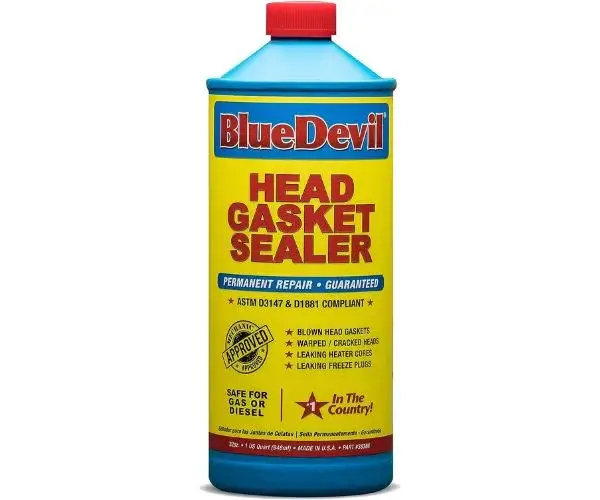
BlueDevil is often chosen when head gasket symptoms are more advanced and lighter sealers no longer seem sufficient. It’s positioned as a stronger, last-step option for engines experiencing persistent coolant loss, overheating, or combustion gases entering the cooling system—situations where many drivers are trying to avoid an immediate engine teardown.
BlueDevil uses a heat-activated sealing formula that circulates through the cooling system and concentrates at leak points once the engine reaches operating temperature. Unlike fiber-based sealers, it’s designed to seal cracks and gasket failures without leaving solid particles behind, reducing the risk of clogging radiators or heater cores when used correctly.
In real-world use, BlueDevil is commonly applied to moderate to more serious head gasket leaks, especially on high-mileage engines where mechanical repair costs outweigh the vehicle’s value. It’s compatible with gasoline and diesel engines and works across a wide range of vehicle types, from passenger cars to light trucks and SUVs.
Application requires more attention than quick pour-in sealers. Proper preparation—such as flushing the cooling system and following temperature guidelines—is critical for results. When rushed or incorrectly applied, performance can be inconsistent, which is why BlueDevil tends to work best for users willing to follow instructions precisely.
BlueDevil is non-toxic and safe to handle, making it suitable for both experienced DIY users and repair shops offering it as a cost-saving alternative. While it won’t fix warped heads or mechanically damaged engines, it’s often viewed as a final non-invasive option before committing to major engine work.
Features:
- Developed specifically for fixing blown head gaskets.
- Designed to work under the most demanding engine conditions.
- Fits a wide range of automobile models.
- Simple steps for applying.
- Seals off harmful combustion and cooling gas leaks.
- Permanent repair for leaking head gaskets.
#4. Gasgacinch Gasket Sealer and Belt Dressing

Gasgacinch is a very different kind of product compared to typical head gasket sealers, and it’s important to understand that distinction upfront. This isn’t a pour-in coolant fix or an internal sealing solution. Gasgacinch is designed for external gasket sealing and assembly work, where precision and long-term reliability matter more than emergency repairs.
In real-world shop use, Gasgacinch is commonly applied to gaskets, O-rings, valve covers, oil pans, thermostat housings, and similar mating surfaces where leaks usually come from imperfect sealing rather than internal engine failure. Once applied, it creates a tacky, durable bond that helps gaskets stay seated correctly, even under heat and vibration.
The formula handles high temperatures and pressure well, which is why it’s often used during engine reassembly rather than as a post-failure fix. It’s especially useful in situations where mechanics want to prevent future leaks instead of reacting to existing ones. Because it’s brush-applied, placement is controlled and clean, avoiding the over-application issues common with tube-style sealants.
Gasgacinch also doubles as a belt dressing, helping reduce squeal and slippage in accessory belts. While this isn’t its primary reason for inclusion in most toolboxes, it does add practical versatility for ongoing vehicle maintenance.
This product is best suited for preventive sealing and mechanical repairs, not for sealing blown head gaskets or internal coolant-to-cylinder leaks. For technicians and DIY users who regularly work on engines, it’s a trusted, old-school solution that focuses on doing the job right during assembly rather than offering a temporary internal fix.
Features:
- Sealant that may be used on both gaskets and belts.
- Holds up well under intense conditions.
- Useful in a wide range of automobile contexts.
- Spray the container with a handy brush tip for pinpoint accuracy.
- Useful in avoiding annoying belt squeaks.
- The belts are interchangeable.
#5. Permatex High Tack Gasket Sealant
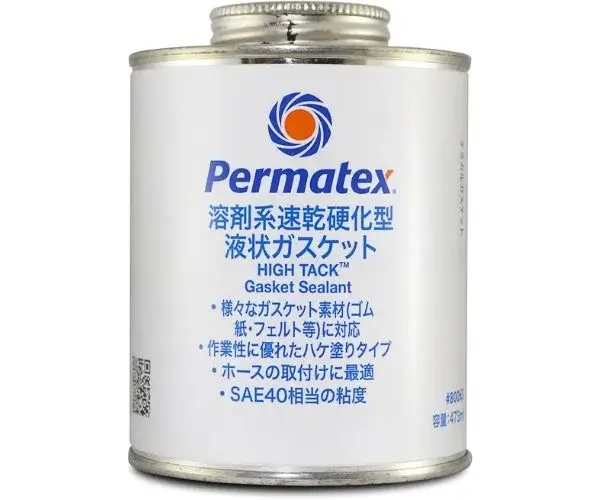
Permatex High Tack Gasket Sealant is built for a very specific kind of job: making sure gaskets stay exactly where they’re supposed to during installation and continue sealing under heat, oil exposure, and vibration. This isn’t an internal head gasket repair solution, but rather a trusted assembly sealant used before an engine ever goes back together.
In real-world use, High Tack is commonly applied to valve covers, oil pans, water pumps, thermostat housings, and transmission pans—areas where gasket movement or poor adhesion can lead to slow leaks over time. Once applied, it becomes tacky and helps “lock” the gasket in position, reducing the chances of shifting during installation or torque-down.
The sealant holds up well against engine heat, oil, fuel, and other automotive fluids, which is why it’s often used on older engines or during rebuilds where sealing surfaces may not be perfectly clean or flat. Mechanics rely on it not to fill gaps aggressively, but to support the gasket’s job by improving surface contact and long-term sealing reliability.
Application is straightforward and controlled, allowing precise coverage without excess mess. This makes it equally practical for professional shops and DIY users who want predictable results without overcomplicating the job.
Permatex High Tack is best viewed as a preventive and assembly-focused solution, not a repair for blown head gaskets or internal coolant leaks. When used in the right context—during gasket replacement or engine service—it helps reduce repeat leaks and callbacks by ensuring everything seals correctly the first time.
Features:
- Sealant adhesive with a high tack for use on gaskets.
- High temperature and fluid resistance.
- Useful for a wide range of engine parts.
- Application is made simple with a convenient tube or container.
- A dependable method of stopping leaks from occurring.
- Able to work with a wide range of motors.
#6. Bar’s Leaks Block Seal Head Gasket Fix

Bar’s Leaks Block Seal is usually considered when a head gasket issue has moved past the “minor seepage” stage and the goal is simply to keep an engine running without investing in major mechanical repairs. It’s been on the market for decades and is commonly used on older or high-mileage vehicles where repair costs exceed the car’s value.
The formula is designed to circulate through the cooling system and concentrate at leak points caused by head gasket failures, block cracks, or casting porosity. Once the engine reaches operating temperature, the sealer reacts with heat and pressure to help close gaps where coolant and combustion gases escape. This makes it a more aggressive option than basic coolant leak sealers.
In real-world use, Bar’s Leaks Block Seal is most often applied to moderate to serious head gasket leaks, especially in engines that already show symptoms like persistent overheating, visible coolant loss, or exhaust gases entering the cooling system. It’s compatible with many gasoline and diesel engines, but results depend heavily on following preparation steps and using it in situations where internal damage hasn’t gone too far.
Application is straightforward, but attention to instructions matters. Proper cooling-system condition and correct heat cycling play a big role in whether the seal holds or fails prematurely. When rushed or misused, results can be inconsistent—one reason this product is often viewed as a last practical option before engine teardown or vehicle retirement.
Bar’s Leaks Block Seal isn’t meant to restore engines with warped heads or severe mechanical damage. However, for drivers trying to extend the usable life of an aging vehicle, it remains a commonly chosen solution when replacement or rebuild simply isn’t on the table.
Features:
- Designed to prevent head gasket leaks forever.
- Developed to perform under the most demanding engine conditions.
- Able to work with a wide range of motors.
- Liquid format allows for simple application.
- Generally regarded as a reliable and sturdy seal.
- The leakage of coolant and gas is effectively prevented.
Head Gasket Sealer Comparison Table
Quick Decision Box: Pick the Right Head Gasket Sealer in 30 Seconds
If you’ve made it this far, you already know there’s no single “best” head gasket sealer for every engine. The right choice depends on how bad the leak is, how much time you have, and whether the engine is worth rebuilding.
If the leak is small and you just need a fast fix
Go with K-Seal.
It’s the easiest option to use, doesn’t require flushing, and works well for slow coolant loss or early seepage.
If you want the closest thing to a long-term repair without tearing the engine apart
Choose Steel Seal.
It takes more effort to apply, but it’s one of the few sealers that actually tries to bond at the failure point instead of just circulating in the system.
If the symptoms are more serious and a teardown isn’t happening
BlueDevil makes the most sense.
It’s often used when lighter sealers won’t hold and the goal is to keep the engine running rather than restore it perfectly.
If you’re rebuilding or reinstalling gaskets
Skip pour-in sealers entirely and use Permatex High Tack or Gasgacinch.
These are for proper assembly work, not internal leak repairs.
If the vehicle is old and the budget is tight
Bar’s Leaks Block Seal is the practical call.
It’s a last-resort solution when repair costs no longer make financial sense.
Choosing the Perfect Head Gasket Sealer: Your Complete Guide
If you are thinking about obtaining a head gasket sealer, you must make an educated selection to guarantee that you choose the appropriate solution for your requirements. When shopping for the best head gasket sealer, it is important to keep the following recommendations in mind:
1. Determine the issue:
It is very necessary to get a precise diagnosis of the issue before purchasing a head gasket sealer. Find out whether the gasket leak you’re experiencing is a very small one or if it’s a more serious one. Once you have an understanding of the scope of the issue, selecting the most appropriate solution will be much easier. If you are unsure about the seriousness of the problem, you should seek the advice of a qualified technician.
2. Do Your Homework on the Brands:
On the market, you can find a variety of brands of head gasket sealers, each of which has its formulation and set of characteristics. Do some research on the many brands available to select one that has a solid track record for both efficacy and dependability. Check out the ratings and reviews left by other users to see how satisfied they were.
3. Make Sure Everything Is Compatible:
Brand sure that the sealer you purchase is suitable for the brand and model of the car you will be using it on. Even though there are a lot of sealers that are adaptable, it is crucial to make sure that the product you choose is going to perform well with the kind of engine that you have.
4. Opt for a Product That Is of High Quality:
Choose a head gasket sealer that is of a high grade and comes from a renowned brand. It is more probable that high-quality sealers will give a remedy to your head gasket problem that is both long-lasting and effective. Look for goods that have been put through rigorous testing to ensure that they can resist the high pressures and temperatures that exist inside an engine.
5. Familiarize yourself with the Product Labels and Specifications:
Pay careful attention to the warning labels as well as the product specs. Investigate the temperature range that the sealer can withstand, the diameter of the leaks it can stop, and whether or not it is intended to be a temporary or permanent solution. These specifics will assist you in tailoring the product to meet the requirements that are unique to your situation.
6. Take Into Account the Application Method:
Sealers for head gaskets may be purchased in several different formats, including liquid, pellet, and powder. Take into consideration the technique of application that you feel most at ease with and that corresponds with the amount of car repair skill that you possess. Sealants that come in liquid form are often the simplest to apply.
7. Conduct an Analysis of the Ease of Use:
Check to see whether the product you’re thinking about purchasing comes with instructions that are both clear and detailed. If you are not an experienced technician, simplicity of operation is extremely important. You should be able to follow the directions to complete the application procedure step by step.
8. Determine the Effects on the Environment:
There are head gasket sealers available, some of which are better for the environment than others. You should opt for things that are non-toxic and safe for the environment if you are worried about the influence they will have on the environment. These sealers may be a better option from a social responsibility standpoint.
9. Give Some Thought to Additional Features:
Some sealers provide other capabilities, such as the capability to handle problems with the cooling system or increase engine performance. Other sealers do not include these additional features. Check to see whether these extra features meet your unique needs and then make your decision.
10. Some Considerations Regarding the Budget:
Although there is a large reduction in expenses associated with the use of head gasket sealers, it is still necessary to establish a financial plan. Because prices may range widely, you should first assess how much money you are ready to spend and then look for a product that strikes a good balance between being affordable and being of high quality.
11. Seek the Advice of Experienced Individuals:
Do not be afraid to seek the advice of an experienced technician if you are unsure which product would be most appropriate for your circumstances or how to effectively apply it. They can provide insightful advice and suggestions based on their extensive knowledge.
12. Take a Look at the Warranties and Guarantees:
There are head gasket sealers on the market that come with warranties or guarantees, giving consumers an additional sense of security. Examine the specifics of the product warranty to determine what is and is not covered, as well as the duration of the guarantee.
When looking for the best head gasket sealer, it is important to give careful thought to the severity of the problem, conduct research on well-known brands, ensure compatibility with your vehicle, consider product quality, application method, ease of use, environmental impact, additional features, and cost, and consider the possibility of seeking advice from industry experts. By according to these instructions, you will be able to choose the appropriate head gasket sealer to properly handle the particular head gasket problem you are experiencing, save money on the cost of repairs, and get your car back on the road with complete confidence. Always make sure you remember to follow the directions provided by the manufacturer for the best possible outcomes.
FAQs About Best Head Gasket Sealer
What is the most effective head gasket sealer?
The efficiency of a head gasket sealer may vary widely, depending not only on the product itself but also on the degree to which the head gasket is leaking. BlueDevil, Bars Leak, and K-Seal are just a few examples of well-known and respected brand names. For the best possible outcomes, it is essential to carefully follow the directions provided by the manufacturer.
Is the gasket sealer safe?
Head gasket sealers are typically considered to be safe for use as temporary repairs when they are applied according to the recommendations provided by the manufacturer. On the other hand, one should not look at them as a solution for the long run. Because engine damage may be caused by prolonged usage or abuse, the underlying problem must be addressed as soon as possible.
How long will the head gasket sealer last?
Sealers for head gaskets are intended to be a short-term solution to the problem of stopping tiny leaks and should not be depended upon for longer lengths of time. Depending on the product and the extent of the leak, they may continue to function for anywhere from a few days to a few months at a time. To ensure that the problem is solved for good, the head gasket will need to be properly repaired or replaced.
Can you use too much gasket sealer?
Applying an excessive amount of head gasket sealer might indeed be counterproductive. This can lead to difficulties such as obstructing cooling channels or producing other engine troubles. To prevent using too much of the product, be sure to follow the directions supplied by the manufacturer about the dose and application.
Will head gasket sealer ruin an engine?
Head gasket sealers are not a permanent remedy; their purpose is to give a temporary solution for tiny leaks, but they do not stop leaks completely. Using sealers for an extended period, particularly in situations when the damage to the gaskets is extensive, poses the risk of causing further harm to the engine. To avoid serious long-term damage to the engine, it is essential to get to the bottom of the problem and make the necessary repairs.
Conclusion
In conclusion, selecting the most effective head gasket sealer calls for taking into consideration several aspects, including the extent of the gasket leak, the kind of vehicle, and one’s preferences. Although there are several trustworthy solutions available on the market, it is vital to place a higher priority on quality and efficiency than on cost. You may improve your ability to make an educated selection about an automobile by attentively reading product evaluations and talking with automotive professionals. It is important to keep in mind that head gasket sealers are often just a short-term solution and that a professional repair may be required for a more permanent solution. In the end, the head gasket sealer that is perfect for you is the one that efficiently attends to your particular requirements and guarantees that your car will continue to work well.