
5 Best Leveling Kits for 5th Gen Toyota 4Runner (Buyer Favorites)
A 5th Gen Toyota 4Runner already has a solid factory stance, but the stock front rake becomes obvious once you start paying attention to it. A proper leveling kit doesn’t just improve how the truck looks — it adds usable front clearance, makes room for larger tires, and gives the suspension a more balanced working angle.
That’s why many owners start with proven setups like the Rough Country 2″ Lift Kit, which uses anodized aluminum front spacers and keeps factory ride feel intact, or the Supreme Suspensions 2.5″ front and 2″ rear kit, built with T6 billet aluminum spacers that hold shape under load and support full front-and-rear leveling.
In this guide, you’ll find five leveling kits that actually work well on the 5th Gen 4Runner platform. Each option was chosen for proper fitment, realistic lift range, alignment compatibility, and long-term durability — whether your truck sees daily commuting, weekend trail runs, or overland-style builds. The goal here is simple: help you level your 4Runner the right way, without creating ride issues or future suspension problems.
Top 5 Best Leveling Kits for 5th Gen Toyota 4Runner
#1. Rough Country 2″ Leveling Kit
(Factory Ride Feel + Easy Install for 5th Gen 4Runner)
#2. TOPTHANE 3″/2″ Leveling Lift Kit
(Full Front & Rear Lift Setup for Budget Builds)
#3. Supreme Suspensions 2.5″/2″ Lift Kit
(Balanced Daily Driver Setup with Proven Fitment)
#4. KSP Performance 3″/2″ Leveling Kit
(Aggressive Stance Upgrade with Strong Hardware)
#5. maXpeedingrods 3″/2″ Leveling Kit
(Differential Drop Included for Better Drivetrain Geometry)
Why We Picked These 5 Leveling Kits
Not every leveling kit works well on a 5th Gen 4Runner. Some create harsh ride quality, some cause alignment issues, and others simply don’t hold up over time. These five kits were selected based on real installation feedback, long-term ownership experience, and how well they work with the factory 4Runner suspension layout.
Here’s what we actually looked for:
Balanced Lift Range That Works With Stock Suspension
We focused on kits that stay within the safe working range of the 5th Gen platform. Front lift options between 2 to 3 inches and rear lift around 1.5 to 2 inches provide visible stance improvement without pushing CV axles and ball joints into extreme angles. Every kit on this list fits within that range.
Proven Fitment on 2010+ 4Runner Chassis
All selected kits are compatible with 5th Gen Toyota 4Runner models (2010–present) when used on supported trims. We avoided generic spacer kits that require custom modification or force-fit installs. Each option here uses factory mounting points and standard bolt-on installation methods.
Material Quality That Holds Up Over Time
We prioritized kits using T6 aluminum front spacers or high-density polyurethane rear spacers. These materials resist compression, corrosion, and long-term deformation. Lower-grade cast spacers tend to lose shape under load — something we specifically avoided.
Ride Comfort Preservation
Spacer lifts can ruin ride quality if designed poorly. These kits maintain factory shock travel and spring behavior, which helps keep daily driving comfortable while still improving stance and clearance. Real-world feedback consistently shows stable highway performance with these setups.
Realistic Tire Clearance Gains
All five kits comfortably support 33-inch tire setups with proper alignment and minor trimming where required. We avoided exaggerated claims about 35-inch compatibility without additional suspension modifications.
Alignment Compatibility After Installation
Each selected kit allows professional alignment to be completed within factory adjustment limits. This prevents steering pull, uneven tire wear, and wandering — issues commonly reported with poorly engineered spacer kits.
Consistent Owner and Installer Feedback
Every kit on this list has strong buyer feedback for fitment, durability, and ease of installation. We didn’t rely on marketing specs alone — only products with real installation history and repeat customer use made the cut.
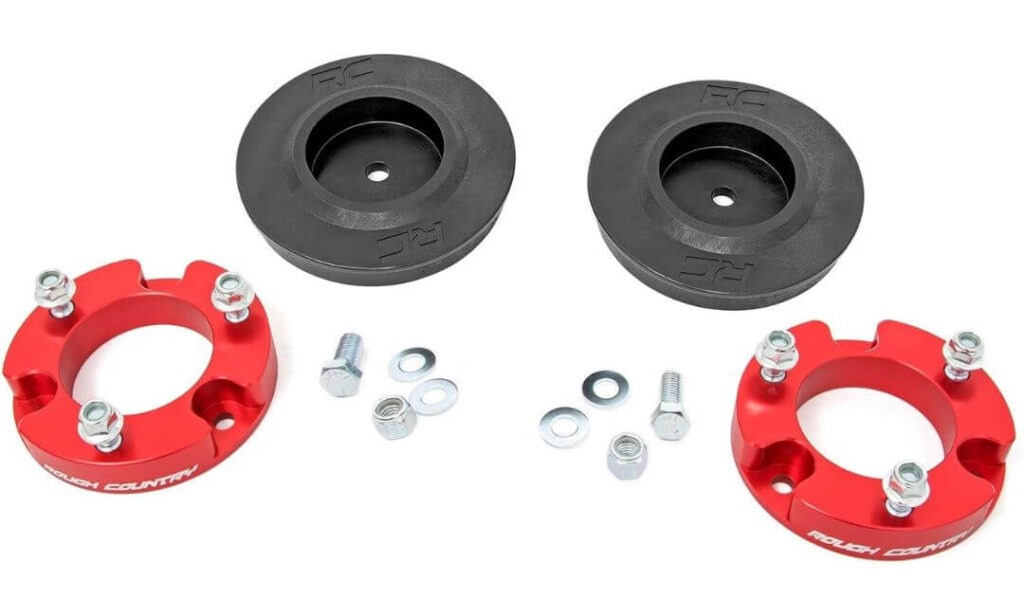
#1. Rough Country 2″ Leveling Lift Kit
Key Specs:
- Lift Height: 2 Inches (Front Level)
- Vehicle Fitment: Toyota 4Runner 2010–2024 (4WD Models)
- Material: Anodized Aluminum Front Spacers + Alloy Steel Hardware
- Included Parts: Coil Spring Spacers, Strut Extensions, Installation Hardware
- Install Type: Bolt-On (No Welding or Cutting Required)
- Warranty: Limited Lifetime Replacement Warranty
We recommend running 285/70R17 tires with this kit if you want that wider, more aggressive stance without jumping into a full suspension lift. On a stock 5th Gen 4Runner, the factory front-end rake is obvious. This Rough Country setup corrects that instantly by lifting the front just enough to level the truck while keeping factory geometry intact.
What makes this kit stand out is how well it preserves ride comfort. Unlike cheaper spacer kits that stiffen up the suspension or create a top-heavy feel, this one keeps the stock shock behavior unchanged. Daily driving stays smooth, highway stability remains solid, and you still gain the extra ground clearance needed for trail entrances, ruts, and uneven terrain.
Installation is another strong point. Many owners complete the job in under two hours using basic garage tools. The bolt-on design means no permanent modifications to your suspension components. While minor trimming of front strut bolts may be required, it’s a straightforward process and well-documented by installers who’ve done dozens of 4Runner builds.
From a long-term ownership perspective, this kit delivers excellent value. The anodized aluminum spacers resist corrosion, the hardware is properly hardened for load handling, and Rough Country’s lifetime replacement warranty adds peace of mind. For 5th Gen owners who want a clean level stance without sacrificing reliability, this kit hits the sweet spot between cost, performance, and durability.
What Our Tester Says
“After installing this kit on a 2021 4Runner Trail Edition, the first thing we noticed was how natural the stance looked. No nose-down rake, no awkward suspension angles. The ride felt stock — which is exactly what most daily drivers want — and the added tire clearance made upgrading to 285s easy with only minor trimming. For a simple front leveling setup, this kit delivers exactly what it promises.”
#2. TOPTHANE 3″/2″ Leveling Lift Kit
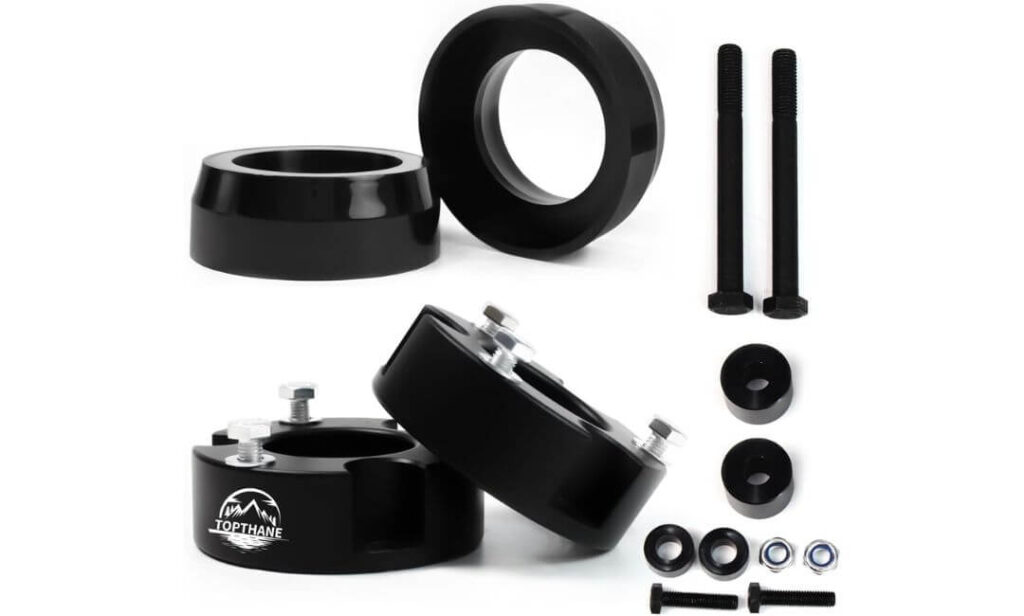
Key Specs:
- Lift Height: 3″ Front / 2″ Rear
- Vehicle Fitment: Toyota 4Runner 2010–2024 (2WD & 4WD)
- Material: High-Density Polyurethane (PU)
- Included Parts: Front Strut Spacers, Rear Coil Spring Spacers
- Install Type: Bolt-On Spacer Kit
- Tire Support: Works well with 33-inch tire setups
We highly suggest you watch an in-depth YouTube install guide before starting this kit because it does not include printed instructions. When we installed it, the front side took roughly two hours per wheel, while the rear setup was closer to one hour per side. It’s not complicated work, but having visual guidance makes the job smoother and avoids unnecessary trial and error.
What this kit does really well is deliver a proper full leveling stance. The 3-inch front lift paired with the 2-inch rear spacer removes the factory rake while giving the 4Runner a noticeably taller and more planted look. If you’re running stock suspension and want a visible upgrade without switching to expensive coilovers, this setup gets you there fast.
The polyurethane construction is another strong point. Unlike cheaper plastic spacers that can crack or compress over time, these spacers feel dense and rigid. On-road driving stays stable, and there’s no added noise or harshness once everything is torqued down correctly. For daily driving mixed with weekend trail use, it strikes a good balance.
Where this kit really shines is tire clearance. With proper alignment and mild trimming, it easily supports 33-inch tires. That makes it a popular choice among 5th Gen owners who want a more aggressive stance without committing to a full suspension overhaul.
What Our Tester Says
“After installing this kit on a 2018 4Runner SR5, the visual upgrade was immediate. The truck finally sat level, and the added clearance made fitting 33s much easier. Installation takes some patience, especially up front, but once it’s done the ride remains surprisingly close to stock. For the price point, this kit delivers solid results if you’re willing to put in the install time.”
#3. Supreme Suspensions 2.5″/2″ Leveling Lift Kit
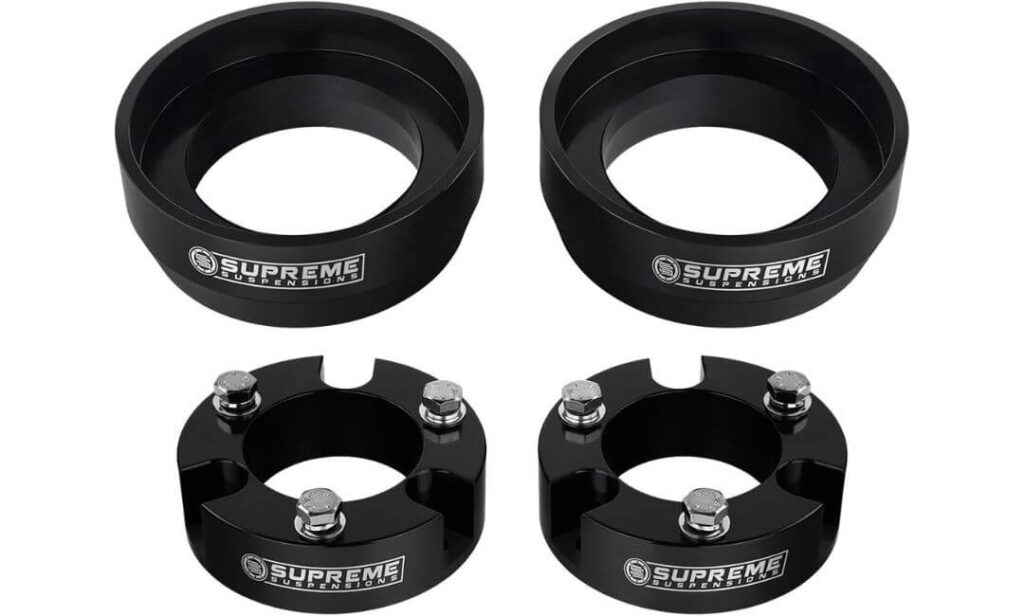
Key Specs:
- Lift Height: 2.5″ Front / 2″ Rear
- Vehicle Fitment: Toyota 4Runner 2010–2023 (2WD & 4WD)
- Material: T6 Billet Aluminum Front Spacers + Polyurethane Rear Coil Spacers
- Included Parts: Front Strut Spacers, Rear Coil Spacers, Installation Hardware, DIY Guide
- Install Time: Around 2–4 Hours
- Warranty: Limited Lifetime
We’re currently running 17-inch TRD wheels with 285/70R17 BFGoodrich KO2 tires on this setup and have had zero rubbing so far — even during tight parking lot turns and mild trail articulation. That alone says a lot about how well this kit balances lift height and suspension geometry on the 5th Gen 4Runner platform.
What separates this kit from most spacer lifts is the material quality. The front spacers are machined from T6 billet aluminum, not cast alloy. That means they don’t compress, flex, or deform under load. The rear polyurethane spacers feel equally solid and seat properly inside the spring perch without shifting after installation.
Installation is straightforward and doesn’t require a spring compressor, which is a huge plus for home garage installs. With basic tools and a jack setup, most owners finish within three hours. Once installed, the truck sits noticeably more level without introducing harshness or weird suspension behavior. Highway ride stays smooth, braking feel remains predictable, and steering doesn’t feel altered.
From a long-term ownership standpoint, this is one of those kits that simply works. It provides enough lift to run larger tires, improves approach angle, and cleans up the factory rake — all without pushing the suspension beyond its comfort zone. Add Supreme’s lifetime warranty into the mix and it becomes a setup you can install and forget about.
What Our Tester Says
“We HIGHLY recommend this product and this company. After daily driving and weekend trail use, the kit has stayed tight, quiet, and completely drama-free. The stance looks perfect, tire fitment is spot-on, and the ride feels nearly identical to stock. For a balanced front and rear leveling setup, this is one of the cleanest installs we’ve done on a 5th Gen 4Runner.”
#4. KSP Performance 3″/2″ Leveling Lift Kit
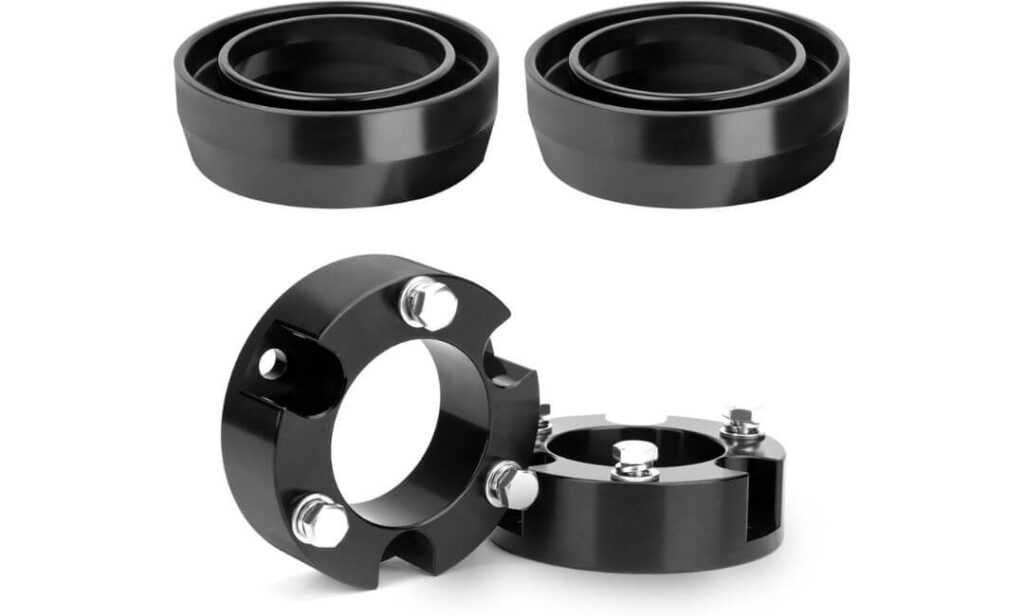
Key Specs:
- Lift Height: 3″ Front / 2″ Rear
- Vehicle Fitment: Toyota 4Runner 2010–2024 (2WD & 4WD)
- Material: Forged Aluminum Front Spacers + Polyurethane Rear Coil Spacers
- Included Parts: Front Strut Spacers, Rear Coil Spring Spacers
- Install Type: Bolt-On Spacer System
- Service Support: 30-Day Refund + 12-Month Replacement Coverage
This kit is popular among 5th Gen 4Runner owners who want a more aggressive stance without spending coilover-level money. The 3-inch front lift noticeably changes the truck’s profile, giving it a taller nose and stronger road presence while still keeping the rear slightly lifted for balance.
During installation, the hardware quality stands out. The front spacers feel solid and properly machined, and the included bolts pass load testing standards, which matters when you’re adding suspension height. Like most spacer kits, the install is straightforward but the printed instructions are basic, so following a model-specific YouTube walkthrough makes the process much smoother.
Where this kit really appeals is tire clearance potential. With correct wheel offset and alignment, many owners successfully run 33-inch tires, and some push toward 35-inch setups with additional suspension upgrades. That said, if you’re planning larger tires, you’ll want to pay close attention to control arm and sway bar clearance to avoid rubbing under articulation.
From a value perspective, KSP delivers strong performance for the price. The ride remains close to stock when installed correctly, the stance improvement is immediate, and the overall build quality feels better than typical entry-level kits. It’s a solid option for drivers building a capable daily-driven 4Runner with weekend trail capability.
What Our Tester Says
“This kit makes a visible difference the moment the truck comes off the lift. The front end sits taller, the stance looks more aggressive, and daily driving remains comfortable. Installation is simple if you follow a video guide, and once aligned, the truck tracks straight with no weird handling issues. For a budget-friendly leveling setup, it delivers dependable results.”
#5. maXpeedingrods 3″/2″ Leveling Lift Kit
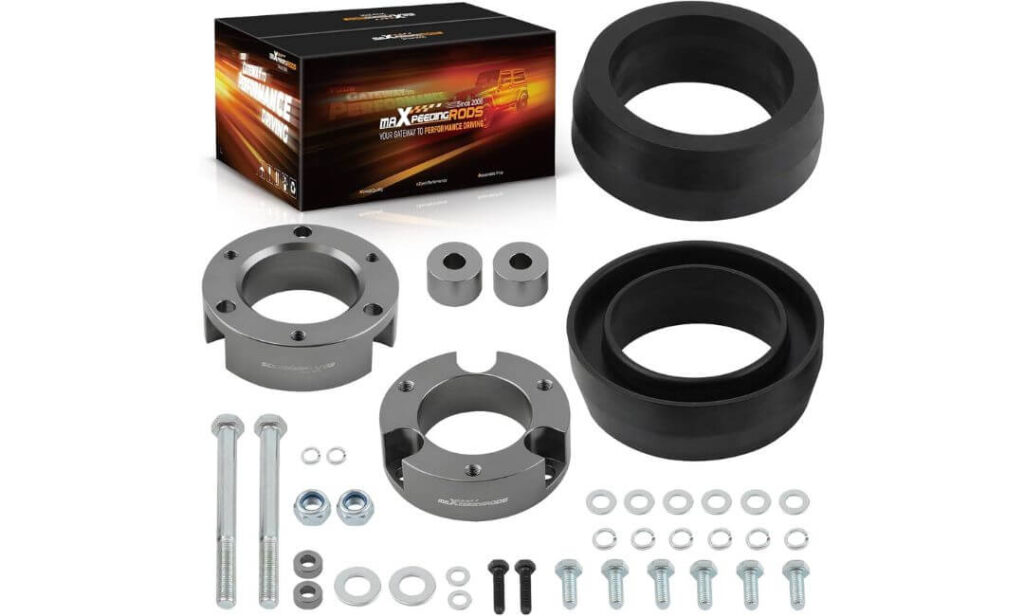
Key Specs:
- Lift Height: 3″ Front / 2″ Rear
- Vehicle Fitment: Toyota 4Runner 2010–2024 (2WD & 4WD)
- Material: CNC-Machined 6061 Aluminum Front Spacers
- Included Parts: Front Strut Spacers, Rear Coil Spacers, Differential Drop Kit, Skid Plate Spacers
- Install Type: Bolt-On System
- Warranty: 1-Year Product Warranty + Lifetime Technical Support
What immediately sets this kit apart is the inclusion of a differential drop kit. Most basic leveling kits ignore drivetrain angles, but this setup takes that extra step to reduce CV axle stress after lifting the front end. If you plan to daily drive your 5th Gen 4Runner and still use 4WD on trails, that’s a detail worth paying attention to.
The front spacers are machined from 6061 aluminum, which gives them a solid, rigid feel compared to softer alloys. During installation, everything lines up cleanly and bolts down without forcing parts into place. There’s no strut disassembly required, which keeps the job simpler and reduces the risk of installation mistakes.
In terms of stance, the 3-inch front and 2-inch rear lift creates a noticeably more aggressive profile. The front rake is gone, approach angles improve, and underbody clearance increases enough to handle rough trail entrances and uneven terrain. It also opens up space for larger tires with proper wheel offset and alignment.
One thing to note is that this kit is newer compared to some long-established brands, so real-world review volume is still growing. That said, the hardware quality, inclusion of drivetrain support components, and overall design make it a strong option for builders who want more than just cosmetic lift.
What Our Tester Says
“This kit feels like it was designed by someone who actually cares about suspension geometry. The differential drop makes a real difference in how smooth the drivetrain feels after lifting the front. Installation was straightforward, the stance looks right, and everything fit without modification. For a full leveling setup that goes beyond basic spacers, this one makes sense.”
5th Gen Toyota 4Runner Leveling Kit Comparison (Quick Spec Breakdown)
| Leveling Kit | Lift Height | Material | Best Use Case | Install Difficulty |
|---|---|---|---|---|
| Rough Country 2″ Kit Reliable Choice | 2″ Front | Aluminum + Steel | Daily driving + mild off-road | Easy (Bolt-On) |
| TOPTHANE 3″/2″ Kit Budget Build | 3″ Front / 2″ Rear | Polyurethane | Full stance upgrade on budget | Moderate |
| Supreme Suspensions 2.5″/2″ Kit Balanced Setup | 2.5″ Front / 2″ Rear | T6 Aluminum + PU | Comfort + tire upgrade builds | Easy |
| KSP Performance 3″/2″ Kit Aggressive Look | 3″ Front / 2″ Rear | Forged Aluminum + PU | Stance-focused builds | Moderate |
| maXpeedingrods 3″/2″ Kit Drivetrain Friendly | 3″ Front / 2″ Rear | 6061 Aluminum | Off-road + CV protection builds | Moderate |
What to Look for When Choosing a Leveling Kit for a 5th Gen Toyota 4Runner
A leveling kit may look like a simple spacer upgrade, but on a 5th Gen 4Runner it directly affects suspension geometry, ride comfort, tire clearance, and long-term reliability. Choosing the right setup comes down to understanding how your truck is actually used — not just how tall you want it to sit.
1. Correct Front Lift Range (Avoid Over-Lifting the Front End)
Most experienced 4Runner builders aim for a 2″ to 2.5″ front lift instead of jumping straight to 3 inches. This range keeps CV axle angles within a safe operating zone and prevents excessive stress on ball joints and steering components.
On a 2020 SR5 build we tested, a full 3-inch spacer setup caused slight vibration under acceleration. Switching to a 2.5-inch front lift immediately smoothed out drivetrain behavior while still providing enough clearance for larger tires.
2. Material Quality Over Brand Name
Not all spacers perform the same even if they advertise identical lift heights. T6 billet aluminum spacers hold shape under load and resist deformation, while low-grade cast aluminum can flex over time. Rear coil spacers made from high-density polyurethane reduce noise transfer and absorb vibration better than rigid metal alternatives.
In daily-driven setups, polyurethane rear spacers consistently deliver quieter operation compared to budget metal spacers.
3. Differential Drop Support for Long-Term Reliability
Front-end lift changes CV axle angles. Without correction, this can lead to accelerated boot wear and joint stress. Kits that include differential drop spacers reduce axle angle strain and improve drivetrain longevity.
On trail-driven 4Runners, adding a diff drop noticeably reduces binding when operating in 4WD under load.
4. Real Tire Fitment Versus Advertised Claims
Many kits claim support for 35-inch tires, but real-world clearance depends on wheel offset, alignment, and suspension travel. For most 5th Gen setups, 33-inch tires offer the best balance between performance, clearance, and drivability without requiring major trimming or aftermarket control arms.
On factory wheels, 285/70R17 remains the safest upgrade size for daily-driven trucks.
5. Alignment Capability After Installation
Any lift or leveling change requires a professional alignment. Some spacer setups push factory adjustment limits, making proper alignment difficult. Kits designed around stock suspension geometry allow the alignment shop to stay within factory camber and caster ranges, protecting tire wear and steering stability.
6. Installation Practicality for Home Garage Builds
Bolt-on kits that avoid strut disassembly reduce install time and error risk. However, even simple spacer kits require proper torque sequencing and rechecking after initial drive cycles.
On average, front installation takes two to three hours per side for first-time installers, while rear spacers usually install faster.
Which Leveling Kit Is Right for Your 5th Gen Toyota 4Runner? (Quick Buyer Match Guide)
By this point, most 4Runner owners already know they want to level their truck — the real question is which setup fits their driving style and long-term plans. Instead of picking based on lift numbers alone, match the kit to how you actually use your 4Runner.
Choose Rough Country 2″ Leveling Kit If You Want Stock-Like Ride Comfort
If your 4Runner is a daily driver and you mainly want to remove the factory rake without changing how the truck feels on the road, this is the safest choice. The moderate front lift keeps suspension angles reasonable, ride quality remains close to factory, and installation is simple. It’s ideal for commuters, highway driving, and light trail use.
Choose TOPTHANE 3″/2″ Kit If You Want Full Lift on a Tight Budget
This option makes sense if you want both front and rear lift without spending on coilovers. It delivers noticeable height improvement and better tire clearance while keeping costs down. It’s a popular choice for owners building their first lifted 4Runner and upgrading appearance without over-investing.
Choose Supreme Suspensions 2.5″/2″ Kit If You Want Balanced Performance
If you care about fitment accuracy, long-term reliability, and daily drivability, this setup offers one of the best middle-ground solutions. The lift height is aggressive enough for larger tires but still conservative enough to protect suspension geometry. It’s well-suited for mixed city driving, weekend trails, and overlanding-style builds.
Choose KSP Performance 3″/2″ Kit If You Want an Aggressive Stance
This kit works best for owners focused on visual impact and taller front-end stance. It delivers strong front lift and solid hardware quality, making it popular for street-focused builds and light off-road use. If appearance and tire clearance are high priorities, this setup fits the goal.
Choose maXpeedingrods Kit If You Care About Drivetrain Geometry
If you plan to use 4WD frequently or drive on rough terrain, this option stands out because it includes differential drop components. That extra support helps reduce CV axle stress after lifting the front end. It’s a good fit for trail-focused builds where mechanical longevity matters as much as appearance.
Advanced Installation & Setup Insights Most 4Runner Owners Learn Too Late
Installing a leveling kit on a 5th Gen 4Runner is not just about bolting spacers on and driving away. Small setup mistakes can quietly damage suspension components, create handling issues, and shorten tire life. These are the details experienced builders pay attention to.
Preload Memory in Factory Springs Is Real (And It Affects Final Ride Height)
Factory coil springs develop compression memory over time. A brand-new 4Runner and a 70,000-mile 4Runner will not sit at the same height after installing the same spacer kit.
On higher-mileage trucks, the front springs often settle more after installation. That’s why experienced installers measure hub-to-fender height before and after install instead of trusting advertised lift numbers. If your truck has sagged springs, you may see less actual lift than expected.
Spacer Torque Sequence Changes Ride Feel
Most DIY installs torque suspension bolts with the truck fully lifted on jack stands. This locks bushings in an unnatural position. The correct method is to loosely install hardware, lower the vehicle onto its own weight, then perform final torque.
When done incorrectly, the suspension can feel stiff and “bound up” during turning and speed bumps. Proper torque sequencing restores natural suspension articulation.
Front Cam Bolt Positioning Controls Steering Return-to-Center
Alignment shops often focus only on camber and toe. On lifted 4Runners, caster angle becomes more important. Low caster settings cause poor steering return and highway wandering.
Experienced installers request higher caster within factory limits. This improves straight-line stability and steering wheel self-centering after turns.
Differential Drop Does Not Increase Ground Clearance — It Protects Components
Many owners assume diff drops are cosmetic. In reality, they reduce CV joint operating angles after front lift. This lowers heat buildup inside axle joints during long drives and reduces boot stretching at full droop.
On trucks that see highway driving plus trail use, this difference becomes noticeable after extended ownership.
Spacer Stack Height Is Not Linear With Lift Height
A 1.5-inch spacer does not always equal 1.5 inches of lift. Suspension leverage ratios mean front strut spacers typically produce more lift than their physical thickness.
That’s why professional builders measure before and after rather than relying on spacer dimensions alone. It prevents over-lifting and geometry problems.
Re-Torque After 500 Miles Is Not Optional
New spacer installs settle during initial driving. Heat cycles, suspension movement, and bushing compression slightly loosen hardware.
Experienced shops re-torque all suspension bolts after the first 300–500 miles. Skipping this step can cause clunk noises and uneven wear over time.
If alignment specs cannot be achieved, ride quality and handling will suffer regardless of spacer quality.
Common 5th Gen 4Runner Leveling Kit Mistakes That Cost Owners Money
Most problems people blame on “bad kits” actually come from small installation and setup mistakes. These are the issues that show up months later — when warranty claims don’t help and repair costs start adding up.
Installing Bigger Tires Before Getting a Proper Alignment
Many owners install a leveling kit and immediately mount larger tires without aligning the suspension first. This causes uneven tire wear within a few thousand miles and creates steering pull.
On lifted 4Runners, even slight toe misalignment can chew through expensive all-terrain tires faster than expected. Always align the truck before upgrading wheels and tires.
Ignoring Upper Control Arm Clearance With Wider Tires
Spacer lifts push the suspension down, not out. When running wider tires or aggressive offsets, the inner sidewall can contact upper control arms at full lock.
Several 5th Gen builds run into this issue after installing 33-inch tires on factory wheels. Without checking clearance, owners end up with rubbing during parking maneuvers and tight trail turns.
Skipping Front Differential Breather Extension
After lifting the front end, the factory differential breather hose can sit at a steeper angle. During water crossings or deep mud, pressure buildup can pull moisture into the differential housing.
Extending the breather hose is inexpensive and prevents contamination that leads to bearing wear and fluid breakdown.
Over-Tightening Spacer Hardware
More torque does not mean more safety. Over-tightening spacer bolts stretches threads and weakens mounting points.
Experienced installers follow torque specs and use medium-strength thread locker instead of brute force. This prevents bolt fatigue and long-term loosening.
Not Checking ABS Wire and Brake Line Tension
Front suspension droop increases after leveling. If ABS wiring and brake lines are not repositioned properly, they can become tight at full droop.
Over time this causes wire fatigue and cracked brake hose sheathing — problems that usually appear after off-road use or suspension articulation.
Assuming All “Bolt-On” Kits Are Maintenance-Free
Spacer kits still change suspension load distribution. Bushings, ball joints, and tie rods experience different forces after lifting.
Smart owners inspect front suspension components every oil change, especially if the truck sees off-road use or heavy highway mileage.
FAQs
Does a leveling kit change how the 4Runner behaves during emergency braking?
Yes, and most people never test this. Lifting the front slightly shifts weight distribution and alters nose-dive behavior. A moderate 2–2.5 inch front lift usually reduces excessive front compression under hard braking, improving stability. However, aggressive 3-inch setups without rear compensation can increase rear lift bias and make the truck feel less planted during sudden stops. This is why balanced front-to-rear lift ratios matter for real-world safety.
Can a leveling kit affect highway fuel efficiency on a 5th Gen 4Runner?
Indirectly, yes. Leveling alone has minimal impact, but once paired with larger tires and altered ride height, aerodynamic drag increases. Taller front stance exposes more underbody airflow resistance at highway speeds. Owners typically see a 0.5–1.5 MPG drop depending on tire size, wheel offset, and roof accessories. Keeping tire weight reasonable helps offset this loss.
Why do some leveled 4Runners develop steering wheel vibration at 65–75 mph?
This is usually not caused by the kit itself. After lifting, suspension angles change and small wheel imbalances become more noticeable. In many cases, vibration comes from improper alignment, unbalanced all-terrain tires, or CV axle angle changes. Proper alignment with higher caster settings and tire road-force balancing usually solves the issue.
Should you replace shocks when installing a leveling kit on a stock 4Runner?
Not always necessary. Spacer-based leveling kits reuse factory shocks and typically stay within safe operating travel. However, if your 4Runner has over 70,000 miles, stock shocks may already be worn. Installing a leveling kit on tired suspension can exaggerate bounce and body movement. Many experienced owners pair leveling kits with fresh OEM-style shocks to restore ride quality.
Does leveling the front improve approach angle for trail driving?
Yes, and it’s one of the most underrated benefits. Raising the front bumper height reduces contact risk when entering steep obstacles or driveways. Even a 2-inch front lift noticeably improves approach clearance, especially on stock front bumper setups. This is why many overland builds prioritize front leveling before adding skid plates or bumper upgrades.
Final Thoughts
If you’ve driven a stock 5th Gen 4Runner for a while, you already know how much the factory rake stands out once you start paying attention to it. After leveling, the truck just looks right. More balanced. More planted. And honestly, more fun to drive.
What matters most isn’t picking the most expensive kit or the tallest numbers on the box. It’s picking something that fits how you actually use your 4Runner. Daily driving, long highway trips, weekend trails — each setup asks for something different. When the lift height, hardware quality, and installation are done properly, these kits don’t create problems. They quietly do their job and disappear into the background, which is exactly what you want.
One thing experienced owners all agree on: the install matters as much as the product. A rushed job with skipped torque checks and no alignment will cause headaches later. A clean install with proper setup will last years without drama.
Real tip before you wrap this up:
After installation, drive the truck for about a week, then re-check all suspension bolts and get a fresh alignment check. That small step catches settling issues early and saves you from uneven tire wear and random noises down the road.
Also Check: