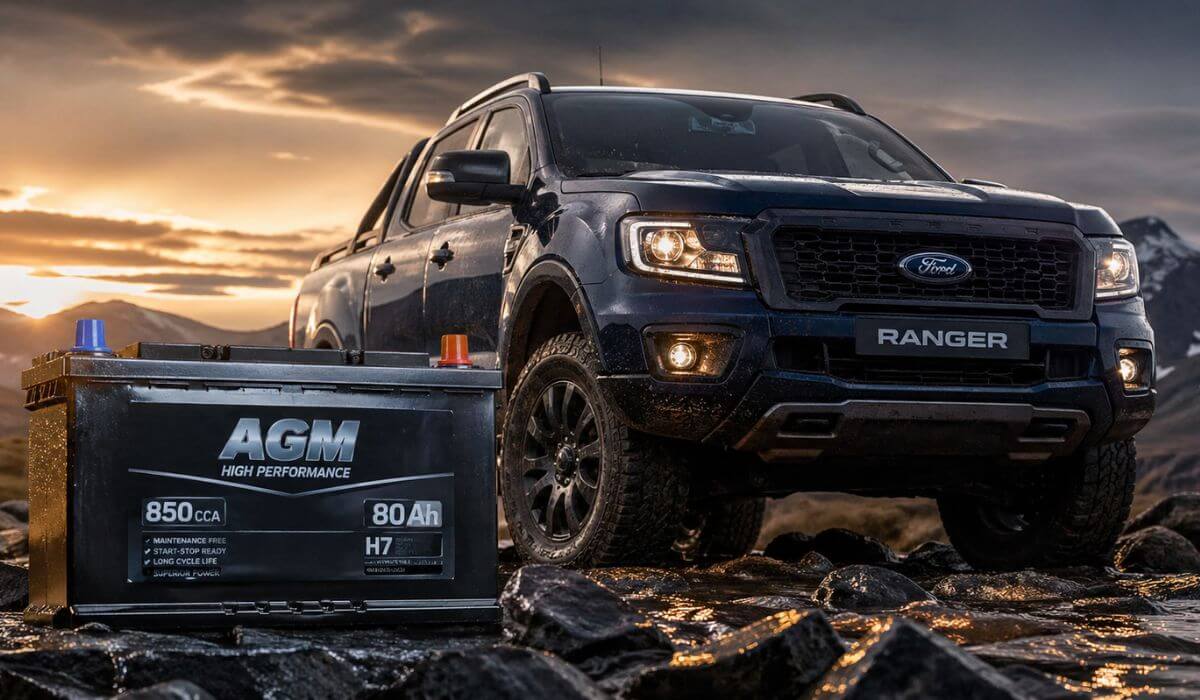
6 Best Batteries for Ford Ranger in 2026: Power-Packed AGM Picks (850 CCA, H7/H6 Fit)
If you’ve spent any time around the latest Ford Ranger, you already know this isn’t the old, simple pickup anymore. The 2026 Ranger runs a lot more tech than people expect—start-stop systems, sensors, infotainment, and smart charging that doesn’t forgive a weak battery. That’s exactly why so many owners end up replacing their battery earlier than they thought.
Here’s the straight truth most guides skip: there isn’t just one battery size. Newer Rangers typically use H6 (Group 48) or H7 (Group 94R)—and if your truck has more electronics, towing setup, or higher trim, H7 AGM is usually the better call. AGM isn’t optional fluff either—it handles repeated start-stop cycles, holds voltage better under load, and avoids the random warning lights cheap batteries trigger.
This list isn’t based on hype or recycled specs. These are real AGM batteries that actually match how the new Ranger behaves on the road—cold starts, daily driving, and heavy electrical load. If you just want a battery that fits, works, and doesn’t leave you second-guessing every morning, start here.
Best Ford Ranger Battery: Top 2026 Picks with H7/H6 AGM & 850 CCA Power
#1. Weize Platinum AGM 94R H7 Battery
Best Ford Ranger AGM battery replacement (H7 94R group size, 850 CCA real-world performance)
#2. ACDelco Gold 94RAGM Battery
Premium AGM battery for Ford Ranger with OEM-level reliability and consistent start-stop support
#3. Interstate MTX-94R/H7 AGM Battery
High-performance Ford Ranger H7 battery for towing, heavy electronics, and cold-start confidence
#4. Goodyear 94R-H7 AGM Battery
Reliable H7 AGM alternative for Ford Ranger with strong CCA and durable daily-use performance
#5. Mighty Max MM-H6 AGM Battery
Best value Ford Ranger H6 battery option (Group 48 AGM for standard trims and daily driving)
#6. UPLUS AGM-L70 Group 48 Battery
Affordable AGM battery for Ford Ranger H6 fitment with stable power for everyday use
Expert Tip (From Real Ranger Use, Not Spec Sheets)
If you’re unsure between H6 and H7, don’t overthink it—look at how your Ranger is actually used. If it’s a higher trim, runs a lot of electronics, or sees towing even occasionally, go straight to H7 AGM and don’t look back. It gives you headroom, not just enough power.
Most battery issues I see on newer Rangers don’t come from “bad brands”—they come from undersized batteries trying to keep up with a truck that’s doing more than it used to. Spend once, get the right size, and you’ll forget about it for years. Go cheap or undersized, and you’ll feel it every cold morning.
How We Chose These Batteries for the 2026 Ford Ranger
This list isn’t built on brand names or recycled “top 10” fluff. Every battery here earned its place based on how the modern Ford Ranger actually behaves, not just what looks good on paper.
First, we locked in the only thing that matters for fitment: Group size and platform compatibility. The 2026 Ranger runs on a system that expects either H6 (Group 48) or H7 (Group 94R), and anything outside that creates problems—mounting issues, voltage inconsistencies, or straight-up warning lights. That’s why every option here sticks to those two sizes only, no guesswork.
Next, we filtered for AGM technology only. Not because it sounds premium—but because the Ranger’s start-stop system and smart charging demand it. A standard flooded battery might technically fit, but it won’t handle repeated cycling or voltage stability the way AGM does. Over time, that shows up as rough starts, flickering electronics, or early failure. Every battery here is AGM because anything less doesn’t match how this truck operates.
Then comes the part most lists ignore: usable power, not just specs. We focused on batteries delivering real 730–850 CCA range, not inflated claims. The H7 options sit at the top because they consistently provide stronger cold starts and better reserve under load—which matters when your Ranger is running multiple systems at once. The H6 picks are included for a reason too—they’re not “cheap alternatives,” they’re right-sized solutions for standard trims and daily use.
Brand selection wasn’t about hype either. We balanced proven names like ACDelco and Interstate—known for long-term reliability—with value-driven options like Weize and UPLUS that deliver solid performance without overpricing. The idea was simple: whether you want maximum reliability, best value, or a balanced daily driver, there’s a pick here that actually makes sense.
Finally, we looked at what happens after installation—because that’s where most batteries get exposed. Heat cycles, short trips, long idle times, cold starts—these are the real tests. Every battery on this list is chosen because it can handle real-world Ranger usage without constant second-guessing.
At the end of the day, this isn’t about finding “a battery that fits.” It’s about choosing one that keeps up with what your Ranger is actually doing every day—and that’s exactly what these six options are built for.
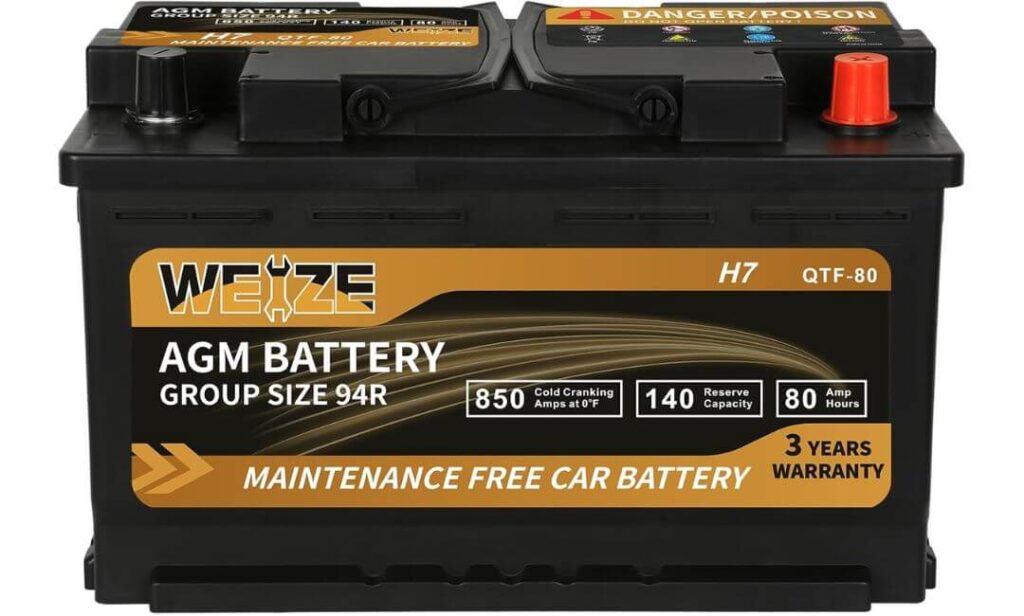
#1. Weize Platinum AGM 94R H7 Battery
Quick Specs:
- Group Size: H7 (94R) — full-size fit for modern Ranger battery tray
- Power Output: 850 CCA — strong cold-start reliability even under load
- Capacity: 80Ah — stable power delivery for electronics + start-stop
- Reserve Capacity: 140 RC — holds charge longer during idle/traffic use
- Battery Type: AGM (sealed, maintenance-free)
- Voltage: 12V
- Terminal Layout: Left (-) / Right (+)
- Size: 12.4″ x 6.89″ x 7.48″
- Warranty: 36 Months
Right out of the gate, this is one of those batteries that doesn’t try to look premium—it just quietly delivers where it matters. You’re getting 850 CCA with a full 80Ah capacity, which means cold starts feel effortless and your Ranger’s electronics don’t dip or hesitate when everything’s running together (infotainment, sensors, lights, start-stop cycling).
What actually makes a difference here is the 140 reserve capacity. In real use—traffic, short trips, engine off with accessories on—this battery doesn’t feel strained. It holds voltage properly, which is exactly what newer Rangers expect. Cheap batteries drop voltage under load; this one stays stable, and that’s the difference between a smooth start and random warning lights popping up.
Then there’s the AGM build—sealed, vibration-resistant, and designed for repeated start-stop cycles. It’s not just “maintenance-free” on paper; it actually handles heat, recharge cycles, and daily abuse better than most budget options. Installation is straightforward too, as long as your terminal layout matches (left negative, right positive). (If you want H7-level performance without overspending, this is where most people end up—and stay.)
What Stands Out in Real Use
- Consistent 850 CCA delivery — no weak starts, even in colder conditions
- 140 RC actually usable — handles idling + accessory load without voltage drop
- AGM design holds up — better cycle life vs standard batteries
- Strong value play — performs close to premium brands without the markup
- Stable charging behavior — works cleanly with modern smart charging systems
Where It Falls Short
- Brand reputation isn’t as established as OEM names, which might matter to some buyers
Ford Ranger Compatibility & Fit Insight
If your Ranger is running a factory H7 / 94R setup, this drops in without drama—dimensions and terminal layout line up properly. That’s important because newer Rangers are tight on space, and even small mismatches cause headaches. Here, the fit is straightforward as long as your current battery matches H7 sizing.
For trucks running heavier electronics or start-stop systems, this size just makes more sense. The extra capacity and reserve aren’t overkill—they’re what keep everything running smoothly without stressing the battery every day.
The Insider Pro-Tip
Most people focus only on CCA and miss what actually affects long-term performance—reserve capacity and recharge behavior. That’s where this battery quietly wins. The 140 RC means it doesn’t drain as quickly in real-world driving, especially if you do short trips or sit in traffic often.
And here’s the part nobody talks about: if your Ranger has ever shown random electrical quirks—slow crank, flickering lights, delayed start-stop—it’s usually not a “fault,” it’s the battery struggling to keep voltage stable. Moving to a proper H7 AGM with this kind of output fixes that without you even realizing why.
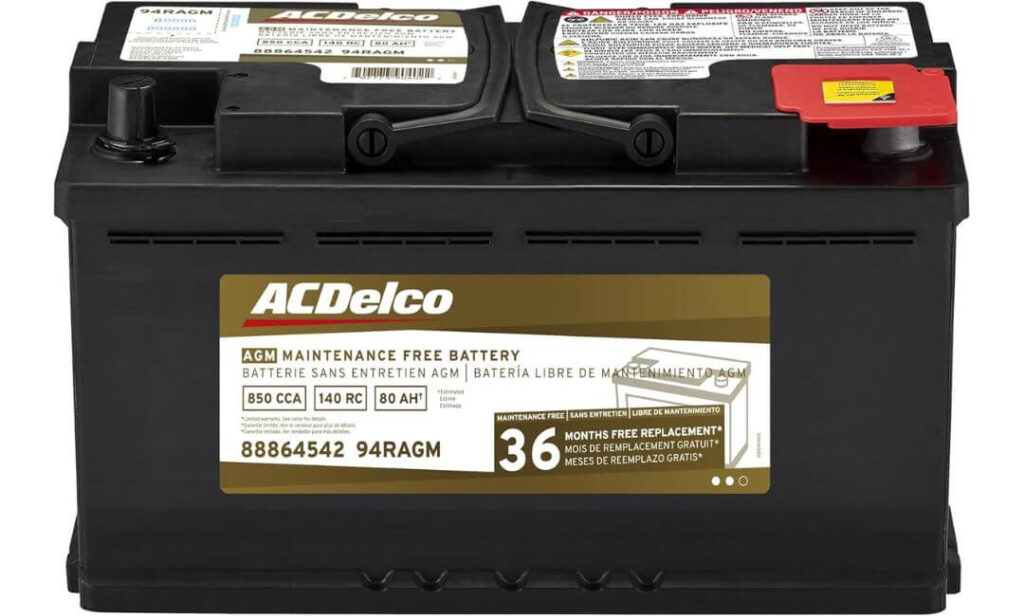
#2. ACDelco Gold 94RAGM Battery
Quick Specs:
- Group Size: H7 (94R) — full-size OEM-style fit
- Power Output: ~850 CCA — consistent cold-start strength
- Capacity: ~80Ah — stable output for modern electrical systems
- Battery Type: AGM with Silver-Calcium alloy
- Voltage: 12V
- Build: High-density plates + advanced grid design
- Weight: ~51.6 lbs
- Dimensions: 12.4″ x 6.9″ x 7.5″
- Warranty: 36 Months
Some batteries try to impress with numbers—this one builds its reputation on how long it quietly works without giving you a reason to think about it. The internal design here is where things get serious: silver-calcium alloy grids, high-density negative paste, and reinforced separators. That combination isn’t marketing—it directly translates into better conductivity, lower resistance, and longer cycle life under real driving conditions.
In a Ranger that’s constantly cycling start-stop and running multiple systems, that matters. You’re not just starting the engine—you’re maintaining voltage stability across everything else. This battery holds that line well. The AGM structure keeps it sealed and controlled, while the internal plate density ensures it doesn’t feel “weak” after a few months the way cheaper options often do.
Another detail that stands out is how well it handles heat and repeated charging cycles. The enhanced acid circulation and pressure-tested casing help keep internal temperatures stable, which is a big deal in stop-and-go driving or hotter climates. It’s the kind of battery you install and then forget—no drama, no second-guessing. (If long-term reliability matters more than saving a few bucks upfront, this is where most experienced owners lean.)
What Stands Out in Real Use
- Strong and stable 850 CCA output — reliable starts without fluctuation
- Silver-calcium construction — better conductivity and longer life cycle
- Handles heat well — improved internal cooling vs basic AGM builds
- Consistent voltage delivery — supports modern electronics without dips
- OEM-level trust factor — widely used in factory-level replacements
Where It Falls Short
- Slightly heavier and sometimes a tighter fit in compact battery trays, so checking dimensions beforehand helps avoid surprises
Ford Ranger Compatibility & Fit Insight
For Rangers designed around H7 / 94R batteries, this fits the way it should—solid, secure, and aligned with factory expectations. The dimensions are close to standard H7 sizing, but since newer battery trays can be tight, it’s worth a quick measurement check before installation.
Where it really fits the Ranger’s personality is in how it handles electrical load over time. Trucks running higher trims, more tech, or frequent short drives benefit from the consistent voltage behavior this battery provides. It doesn’t just start the engine—it keeps everything else stable while doing it.
The Insider Pro-Tip
Here’s something most people don’t realize until it’s too late: battery performance drops slowly, not suddenly. You don’t notice it day one—but over months, weaker batteries start losing voltage stability before they fail completely. That’s when you get random electrical quirks, not just slow starts.
This is where a build like this makes a difference. The silver-calcium grid and dense plate design don’t just improve lifespan—they slow down that gradual decline. So instead of dealing with unpredictable behavior, you get a battery that stays consistent almost till the end. And in a modern Ranger, that consistency matters more than peak numbers.
#3. Interstate MTX-94R/H7 AGM Battery
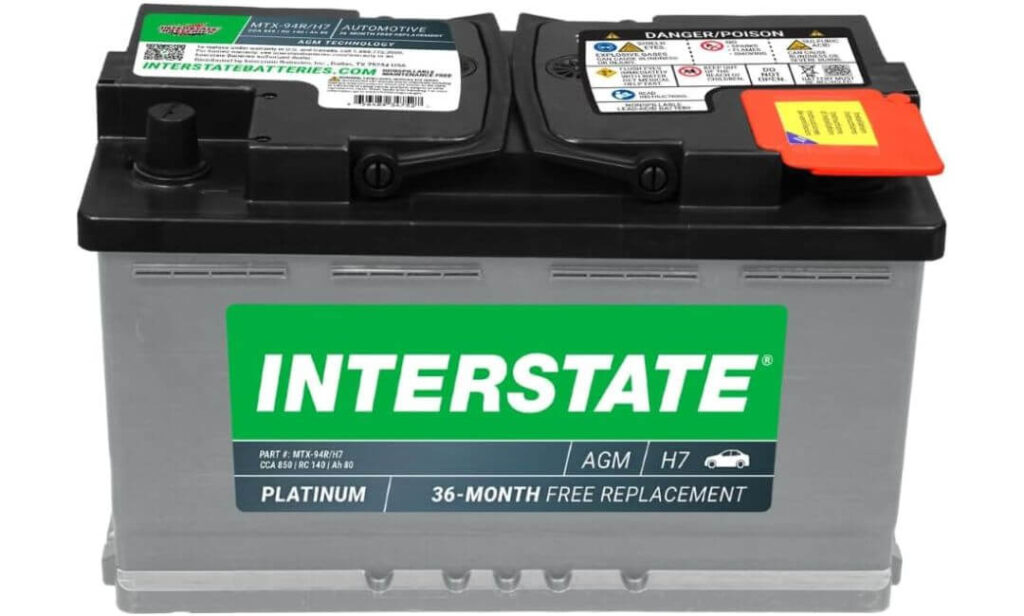
Quick Specs:
- Group Size: H7 (94R) — proper full-size fit for modern Ranger setups
- Power Output: 850 CCA (up to ~1000 CA peak)
- Capacity: 80Ah
- Reserve Capacity: ~140 minutes RC
- Battery Type: Pure Lead AGM (VRLA sealed design)
- Voltage: 12V
- Terminal: Top Post (standard automotive layout)
- Dimensions: 12.44″ x 6.94″ x 7.5″
- Build Focus: High lead density for extended lifespan
- Warranty: 36 Months
There’s a reason this name keeps coming up in workshops and not just online lists—this battery is built around one thing: long-term reliability under real load, not just spec-sheet numbers. The standout here is the pure lead AGM design, which simply means more usable material inside. More lead = better durability, slower degradation, and stronger performance over time.
In a Ranger that sees daily use, short trips, and constant start-stop cycling, that difference shows up quickly. You’re not just getting 850 CCA for cold starts, you’re getting a battery that holds that performance longer instead of fading after a year. The ~140 RC reserve also plays a big role—whether you’re idling with accessories on or dealing with traffic, it keeps voltage stable instead of dipping under pressure.
What really separates it is how it behaves months down the line. A lot of batteries start strong and then quietly lose consistency. This one doesn’t rush—it’s built to age slower, thanks to its dense internal construction and vibration-resistant AGM build. It’s not flashy, but it’s the kind of battery professionals install when they don’t want comebacks. (If your goal is “install once and forget for years,” this sits right at the top of that list.)
What Stands Out in Real Use
- Pure lead AGM build — more internal material = longer usable life
- Consistent 850 CCA delivery over time — not just when new
- ~140 RC reserve capacity — handles idle load and accessories easily
- Excellent vibration resistance — built for real road conditions
- Widely trusted by mechanics — not just a consumer brand
Where It Falls Short
- Slightly higher price compared to value brands, though it reflects in long-term durability
Ford Ranger Compatibility & Fit Insight
For Rangers running H7 / 94R battery setups, this fits clean and secure with standard top-post terminals. The dimensions follow true H7 sizing, so installation is straightforward as long as your current battery matches this group.
Where it really suits the Ranger is in how it handles electrical demand over time. Trucks with heavier usage—frequent starts, accessories running, or longer idle periods—benefit from the extra internal capacity and stable output. It doesn’t just meet requirements, it stays consistent even as the battery ages.
The Insider Pro-Tip
Most people think battery life is about how long it lasts—but the real game is how long it performs at full strength before dropping off. That’s where pure lead designs quietly win. They don’t just last longer, they hold their performance curve flatter for longer, which means fewer surprises.
And here’s the part you only realize after switching: a stable battery like this doesn’t just improve starts—it smooths out the entire electrical system. From start-stop behavior to accessory performance, everything feels more “settled.” It’s subtle, but once you notice it, you won’t go back.
#4. Goodyear 94R-H7 AGM Battery
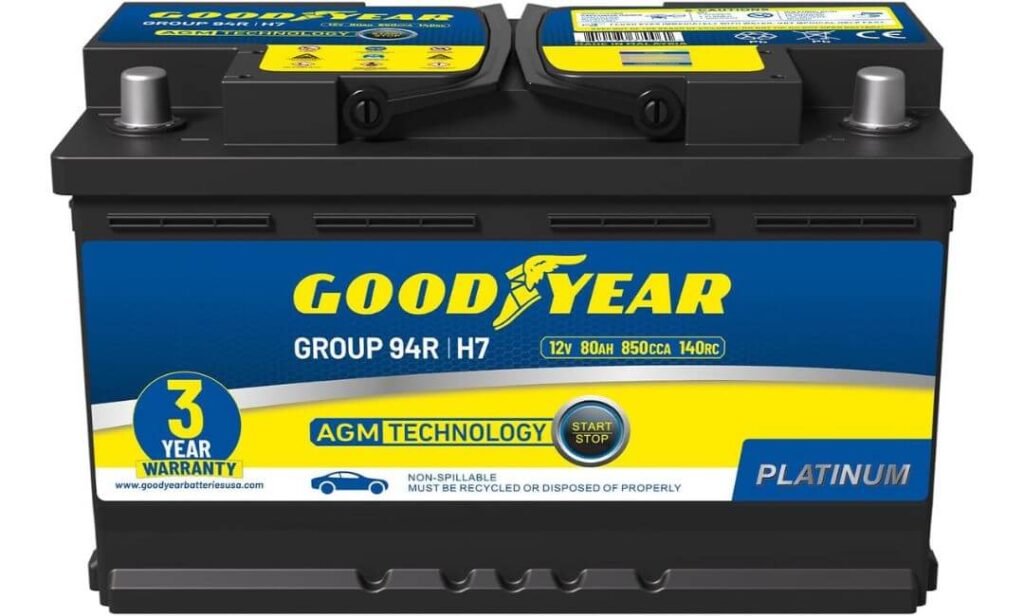
Quick Specs:
- Group Size: H7 (94R) — direct-fit for modern Ranger battery tray
- Power Output: 850 CCA — reliable cold-start strength across climates
- Capacity: 80Ah
- Reserve Capacity: 140 RC — sustained power during idle and load
- Battery Type: AGM (sealed, maintenance-free)
- Voltage: 12V
- Build: Calcium-alloy grid + vibration-resistant design
- Terminal Layout: Right (+) / Left (-)
- Dimensions: 12.25″ x 6.87″ x 7.5″
- Weight: ~52.5 lbs
- Warranty: 36 Months
Not every battery needs to prove itself loudly—some just work the way you expect every single day. This one sits right in that zone. You’re getting 850 CCA paired with 80Ah capacity, which means your Ranger fires up cleanly whether it’s been sitting overnight or dealing with heavy electrical load during the day.
Where it starts to feel different is in consistency under pressure. The 140 RC reserve isn’t just a number—it’s what keeps things stable when you’re idling, running accessories, or stuck in traffic. Instead of voltage dipping and systems feeling strained, everything stays smooth and predictable, which is exactly how a modern Ranger should behave.
The AGM construction here is built for real conditions—shock resistance, temperature swings, and repeated start-stop cycles. Add in the calcium-alloy grid, and you’re looking at a battery that not only starts strong but maintains that performance over time. It’s not trying to be the cheapest or the most premium—it lands right in that balanced space where most owners actually end up satisfied. (If you want a no-drama H7 AGM that just does its job properly, this fits that role cleanly.)
What Stands Out in Real Use
- 850 CCA delivers reliable starts — no hesitation in cold or heat
- 140 RC reserve holds steady — supports accessories without voltage drop
- Calcium-alloy construction — improves durability and recharge efficiency
- AGM build handles vibration well — suited for daily driving conditions
- Balanced performance — not overkill, not underpowered
Where It Falls Short
- Long-term lifespan can vary slightly depending on driving patterns, though performance remains solid initially
Ford Ranger Compatibility & Fit Insight
For Rangers designed around H7 / 94R batteries, this fits right without modification. The dimensions and terminal layout align properly, so installation stays simple and predictable.
This size works especially well for Rangers running moderate to high electrical load—daily driving, infotainment use, and occasional idling. It gives you enough headroom without stepping into unnecessary overkill, which is exactly where most owners want to be.
The Insider Pro-Tip
A lot of people chase the “highest spec” battery thinking it’s always better—but real-world driving doesn’t work like that. What matters more is how stable the battery stays under repeated daily use, not just peak numbers.
This is where balanced builds like this make sense. You get enough power, enough reserve, and consistent behavior over time, without stressing the charging system or overspending. For most Ranger owners, that balance is what actually delivers the best long-term experience—not extremes.
#5. Mighty Max MM-H6 AGM Battery
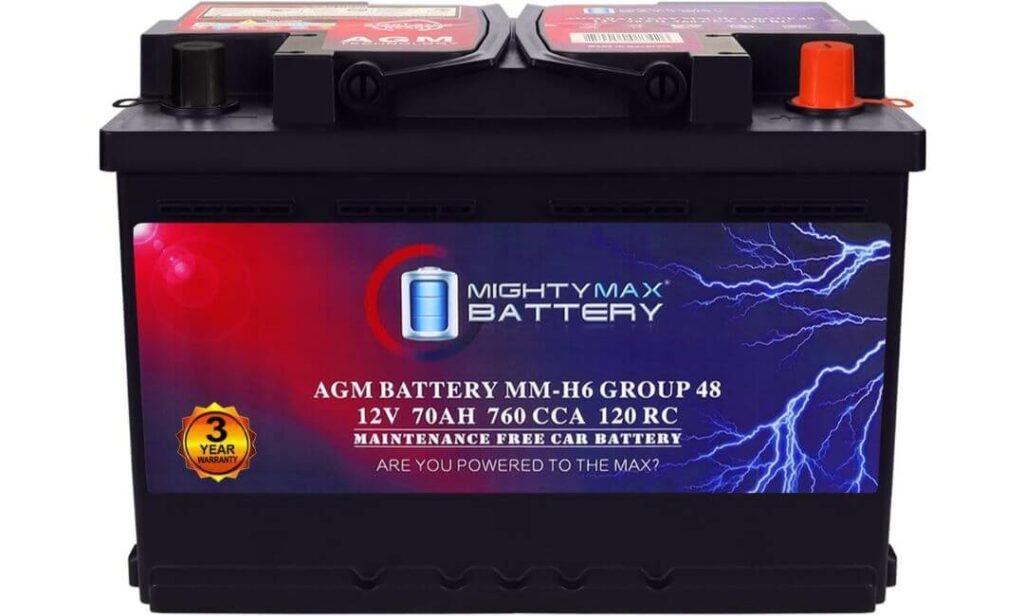
Quick Specs:
- Group Size: H6 (Group 48) — compact fit for standard Ranger setups
- Power Output: 760 CCA — solid cold-start reliability
- Capacity: 70Ah
- Reserve Capacity: 120 RC — stable runtime for daily driving
- Battery Type: AGM (sealed, spill-proof)
- Voltage: 12V
- Terminal Layout: Right (+) / Left (-)
- Dimensions: 10.94″ x 6.88″ x 7.48″
- Mounting: Multi-position (except upside down)
- Warranty: Up to 3 Years (variant-based)
Here’s the kind of battery most people end up appreciating after living with it for a while—not flashy, not oversized, just right for how a Ranger is actually used daily. With 760 CCA and 70Ah capacity, it delivers clean, reliable starts without overloading the system or pushing unnecessary capacity where it’s not needed.
Where it earns its place is in balanced performance. The 120 RC reserve keeps things stable when you’re stuck in traffic, running AC, lights, and infotainment together. It doesn’t try to compete with bigger H7 units—that’s not its role. Instead, it focuses on consistent output, smooth cycling, and efficient recharge, which is exactly what standard Ranger trims benefit from.
The AGM build here is properly done—sealed, vibration-resistant, and capable of handling repeated start-stop use without stressing out early. Add to that its compact size, and installation becomes easier in tighter engine bays. It’s the kind of battery that fits, works, and doesn’t demand attention later. (If your Ranger doesn’t need oversized power, this is where smart buyers land.)
What Stands Out in Real Use
- 760 CCA is more than enough for daily starts in most conditions
- 120 RC reserve supports regular driving loads without instability
- Compact H6 size — easier fit, less hassle during installation
- AGM design handles cycling well — good for start-stop usage
- Strong value positioning — practical performance without overspending
Where It Falls Short
- Not designed for heavy electrical loads or towing setups, so higher trims may benefit more from an H7 option
Ford Ranger Compatibility & Fit Insight
This fits Rangers that are built around H6 (Group 48) battery size, typically found in more standard or base configurations. The smaller footprint makes installation straightforward, especially in tighter battery trays where larger H7 units might feel cramped.
It’s best suited for daily driving scenarios—commutes, regular usage, moderate electronics load. If your Ranger isn’t heavily accessorized, this size keeps everything running smoothly without unnecessary bulk or cost.
The Insider Pro-Tip
A lot of people assume bigger is always better when it comes to batteries—but that’s not always true. If your Ranger doesn’t demand high electrical load, running an oversized battery can actually be unnecessary.
What matters more is matching the battery to your usage pattern. This H6 setup delivers exactly that—enough power, stable cycling, and efficient charging without excess. And when everything is matched correctly, the battery doesn’t just last longer—it performs more consistently day after day.
#6. UPLUS AGM-L70 Group 48 Battery
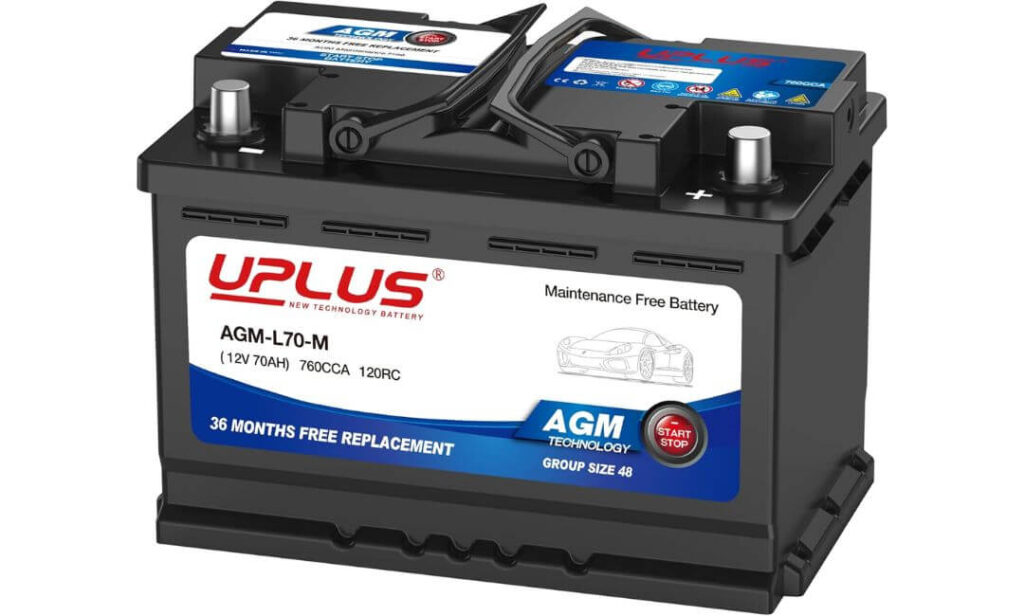
Quick Specs:
- Group Size: H6 (Group 48 / L3) — compact OEM-style fit
- Power Output: 760 CCA — dependable cold-start strength
- Capacity: 70Ah
- Reserve Capacity: 120 RC — stable runtime for daily load
- Battery Type: AGM with enhanced silver-calcium alloy
- Voltage: 12V
- Terminal Layout: Left (-) / Right (+) SAE terminals
- Dimensions: 10.98″ x 6.81″ x 7.51″
- Build: High-density paste + 15x vibration resistance
- Warranty: 3 Years
Ending this list on a note most people don’t expect—this is one of those batteries that quietly overdelivers if your Ranger setup matches it. On paper, 760 CCA and 70Ah look standard, but the way this battery is built makes a difference once you actually start using it daily.
The standout here is cycle durability. With its enhanced silver-calcium alloy and high-density internal structure, it’s designed to handle frequent start-stop cycles, short drives, and repeated charging without fading quickly. That’s exactly where many batteries struggle—especially in city driving where the engine isn’t running long enough to fully recharge.
Then comes stability. The 120 RC reserve combined with AGM construction keeps voltage steady when you’re running multiple systems—AC, lights, infotainment—without that subtle dip you feel in weaker setups. Add in 15x vibration resistance, and it’s clearly built for real-world conditions, not just ideal scenarios. (If your Ranger is used regularly but not heavily loaded, this delivers more than expected for the price range.)
What Stands Out in Real Use
- 4x cycle life claim actually reflects in usage — handles repeated start-stop well
- 760 CCA + 70Ah combo — balanced power without overloading system
- High vibration resistance — built for rougher driving conditions
- Stable voltage output — supports electronics without fluctuation
- Strong value positioning — performs close to higher-priced options
Where It Falls Short
- Not aimed at heavy-duty or high-load setups, so performance-focused users may still prefer an H7 option
Ford Ranger Compatibility & Fit Insight
This battery fits Rangers that are configured for H6 (Group 48) size. The dimensions and terminal layout align with standard setups, so installation is straightforward as long as your existing battery matches this format.
It works best for daily-driven Rangers with moderate electrical demand—regular commutes, occasional idle time, and standard feature usage. If your truck isn’t heavily modified or loaded with accessories, this size feels properly matched without unnecessary excess.
The Insider Pro-Tip
Here’s something most people overlook: batteries don’t fail because of one big moment—they wear out from repeated small cycles that never fully recharge. That’s exactly what city driving does.
This is where cycle-focused batteries like this stand out. Instead of just delivering power, they’re built to recover faster and handle incomplete charge cycles better. So even if your Ranger spends most of its time in short trips, the battery doesn’t degrade as quickly—and that’s what actually saves you money long-term.
Best Ford Ranger Battery Comparison: Side-by-Side Breakdown of H7 & H6 Power Picks
| Battery | Group Size | CCA | Capacity | Reserve | Best For | Real Talk Verdict |
|---|---|---|---|---|---|---|
|
Weize Platinum AGM 94R Best Overall |
H7 (94R) | 850 | 80Ah | 140 RC | All-round Ranger use | Delivers the balance most owners actually need — strong starts, stable power, and no unnecessary premium pricing. |
|
ACDelco Gold 94RAGM Premium Pick |
H7 (94R) | 850 | 80Ah | ~140 RC | Long-term reliability | Built for consistency over time — not flashy, but holds performance longer than most once installed. |
|
Interstate MTX-94R/H7 Heavy Duty |
H7 (94R) | 850 | 80Ah | 140 RC | Towing & high load | Pure lead build shows its strength months later — ideal if your Ranger sees real work, not just city runs. |
|
Goodyear 94R-H7 AGM Balanced Pick |
H7 (94R) | 850 | 80Ah | 140 RC | Daily + mixed use | Nothing overdone here — just stable, predictable performance that fits most real-world driving. |
|
Mighty Max MM-H6 Best Value |
H6 (48) | 760 | 70Ah | 120 RC | Base trims | Right-sized for standard setups — no excess, no struggle, just dependable everyday starting power. |
|
UPLUS AGM-L70 H6 Budget Smart |
H6 (48) | 760 | 70Ah | 120 RC | City driving | Handles short trips and repeated starts better than expected — built for real daily use, not ideal conditions. |
Buying Guide for Ford Ranger Battery (Real-World Selection, Not Guesswork)
If you’ve reached this point, you already know picking a battery for the Ranger isn’t about grabbing the highest number on the box. It’s about matching the battery to how your truck actually runs every day—start-stop cycles, electrical load, driving pattern, and fitment. This guide is built exactly around that, not generic advice.
Choosing the Right Battery Type (AGM Isn’t Optional Here)
Modern Rangers are built around AGM (Absorbed Glass Mat) batteries, not traditional flooded ones. That’s not marketing—it’s because the truck’s start-stop system and smart charging demand stable voltage and repeated cycling ability.
- AGM batteries recover faster after each start
- They handle frequent engine restarts without wearing out early
- They maintain consistent voltage for electronics
If you install a standard battery, it might work for a while—but over time, you’ll notice slower starts, system warnings, or unstable performance. AGM avoids all of that.
Understanding Group Size (H6 vs H7 — What Actually Matters)
This is where most people get confused. The Ranger doesn’t run one fixed size—it depends on setup.
- H7 (Group 94R) → Larger, higher capacity, better for:
- Higher trims
- More electronics
- Towing or heavy usage
- H6 (Group 48) → Smaller, efficient, better for:
- Base trims
- Daily driving
- Moderate electrical load
The key isn’t “bigger is better”—it’s correct fit + enough headroom. If your truck came with H7, don’t downgrade. If it runs fine on H6, no need to overspend.
Core Specs That Actually Impact Performance
A lot of specs get thrown around, but only a few really matter in daily use:
Cold Cranking Amps (CCA)
This is your starting power, especially in cold conditions.
- H6 range: ~730–760 CCA
- H7 range: ~800–850 CCA
More CCA = easier starts, but only if your truck needs it.
Reserve Capacity (RC)
This is what keeps your truck stable when the engine isn’t doing all the work.
- Traffic, idling, accessories running
- Higher RC = less voltage drop, smoother system behavior
Amp-Hour (Ah)
This defines how long the battery can sustain load.
- 70Ah (H6) → standard use
- 80Ah (H7) → heavier demand
Dimensions & Terminal Layout
This is where real problems happen if ignored.
- Battery must physically fit the tray
- Terminal position must match (Left – / Right + typically)
Even a slight mismatch causes installation issues or cable strain.
Ford Ranger Battery Fitment Checklist (Before You Buy)
This is the part most people skip—and regret later.
- Check your current battery group size (H6 or H7)
- Match dimensions exactly (length, width, height)
- Confirm terminal layout (polarity position matters)
- Verify mounting type and hold-down fit
- Make sure it supports start-stop (AGM required)
If all 5 match, you’re safe. If even one is off, expect issues.
Real-World Performance Factors Most Guides Ignore
Driving Pattern
- Short trips → battery doesn’t fully recharge → needs strong cycling ability
- Long drives → less stress on battery
Electrical Load
- Heated seats, screens, lights, accessories
- More load = need higher RC and stable voltage
Climate Impact
- Cold → higher CCA matters
- Heat → battery durability matters more than raw power
Quick Reality Check Before You Decide
Instead of overthinking specs, ask yourself:
- Do I run heavy electronics or towing? → go H7
- Is my use mostly daily driving? → H6 is enough
- Do I want long-term reliability? → choose better build quality, not just price
Simple Test to Compare Any Battery (Before Buying)
You don’t need tools—just compare these three:
- Voltage stability → AGM + higher RC = better
- Cranking strength → CCA rating (don’t go below requirement)
- Warranty + build quality → tells you how long it’ll stay consistent
Final Thought (What Actually Matters)
A battery isn’t something you upgrade for fun—it’s something you stop thinking about once it’s right. The goal isn’t the highest spec or the cheapest deal, it’s a battery that fits properly, handles your usage, and stays consistent over time.
Get that combination right, and your Ranger won’t just start—it’ll feel stable every single day.
Ford Ranger Battery Size and Specs — Deep Dive That Actually Clears the Confusion
If there’s one place people go wrong with the Ranger, it’s here. Not because the information isn’t available—but because it’s usually oversimplified. The reality is, the Ranger doesn’t rely on just “a battery,” it relies on a battery that matches its electrical behavior, physical tray design, and charging system. Miss any one of those, and things start feeling off even if the truck still starts.
H6 vs H7 — What Changes Beyond Just Size
On paper, H6 (Group 48) and H7 (Group 94R) look like simple size differences. In real use, they behave differently because of capacity, reserve, and internal build scale.
Physical Dimensions & Fit
- H6 (Group 48)
Approx size: ~10.9″ L × 6.8″ W × 7.5″ H
Compact footprint, lighter, easier to install - H7 (Group 94R)
Approx size: ~12.4″ L × 6.9″ W × 7.5″ H
Longer body, slightly heavier, tighter fit
That extra length in H7 isn’t just physical—it allows for more internal material, which translates into higher capacity and reserve.
Terminal Layout (Critical but Often Ignored)
Most Ranger-compatible batteries follow:
- Left side = Negative (-)
- Right side = Positive (+)
If you get this wrong, cables either won’t reach properly or will sit under tension. That leads to long-term issues like loose connections, heat buildup, or intermittent electrical faults.
Performance Difference That You Actually Feel
This is where the real distinction shows up, not in numbers but in behavior:
- H6 (Group 48)
- ~70Ah capacity
- ~730–760 CCA
- ~120 RC
- Feels responsive for normal driving, lighter electrical load
- H7 (Group 94R)
- ~80Ah capacity
- ~800–850 CCA
- ~140 RC
- Feels more stable under stress, better for heavy usage
In real-world terms:
H6 starts the truck just fine.
H7 keeps everything running smoother when the truck is doing more than just starting.
Weight and Build Impact (Something Most People Miss)
- H6 batteries are typically lighter (around mid-40 lbs range)
- H7 batteries are heavier (50+ lbs range)
That extra weight comes from more lead inside, which directly affects:
- Longer lifespan
- Better resistance to voltage drops
- Slower performance degradation
This is why heavier batteries often feel “stronger” months later, not just day one.
How to Verify the Exact Fit for Your Ranger
Before buying anything, don’t guess—verify. It takes 2 minutes and saves hours later.
Here’s the exact process that works:
- Check your current battery label
- It will clearly mention H6 or H7 (or 48 / 94R)
- Measure your battery tray space
- Length is the key difference
- Even 1 inch mismatch = poor fit
- Confirm terminal position visually
- Stand in front of the battery
- Check left/right polarity orientation
- Look at hold-down bracket position
- Some trays are designed specifically for H6 or H7
- Wrong size = battery won’t secure properly
- Match AGM requirement
- If your Ranger has start-stop, AGM is not optional
Common Mistakes People Make (And How to Avoid Them)
This is where most problems start—not during purchase, but after installation.
1. Choosing Only Based on CCA
More CCA doesn’t fix everything.
If the battery doesn’t fit or lacks reserve capacity, you’ll still face issues.
2. Ignoring Dimensions
“Almost same size” doesn’t work.
Even slight differences cause:
- Loose mounting
- Cable stretch
- Vibration damage over time
3. Mixing Battery Types
Installing a non-AGM battery in a system designed for AGM leads to:
- Poor charging behavior
- Shorter lifespan
- Electrical inconsistencies
4. Downgrading Size (H7 → H6)
It might fit physically, but:
- Lower capacity = more strain
- Faster wear under load
5. Overlooking Driving Pattern
City driving (short trips, stop-go traffic) demands:
- Better cycle life
- Higher reserve capacity
Extra Details That Actually Matter in Daily Use
There are a few things you don’t notice immediately—but they define how the battery performs over time:
- Recharge behavior — AGM batteries recharge faster after short drives
- Voltage stability — keeps electronics smooth, avoids flicker or lag
- Heat resistance — critical in traffic-heavy or hot environments
- Cycle durability — how well it handles repeated starts without degrading
These aren’t headline specs, but they’re the reason some batteries feel “solid” for years while others start acting weak early.
One Practical Way to Think About It
If your Ranger is mostly:
- Daily driving, light load → H6 works cleanly
- Mixed use, electronics, occasional towing → H7 makes more sense
Not because it’s bigger—but because it gives the system breathing room instead of running at its limit.
Getting this part right isn’t complicated—it just requires paying attention to fit, usage, and real performance behavior, not just numbers. Once those align, the battery becomes something you stop thinking about—and that’s exactly how it should be.
Start-Stop Systems, Electrical Load, and What Your Ranger Actually Demands from a Battery
Modern Ranger setups don’t treat the battery like a simple starter anymore—it’s part of the entire electrical ecosystem. From start-stop cycles to sensors, infotainment, lighting, and background modules, everything depends on stable voltage and repeatable performance, not just raw cranking power. That’s why this section matters more than most people realize.
Do You Really Need a Start-Stop Optimized AGM Battery?
Short answer—if your Ranger has start-stop, then yes, it’s not optional. But instead of guessing, here’s how you can tell properly:
- Your engine automatically shuts off at signals or traffic stops
- You see a start-stop icon on the dashboard or settings menu
- The vehicle restarts instantly when you release the brake
If any of that applies, your system is designed around AGM behavior, not conventional batteries.
Now here’s what’s happening behind the scenes:
Start-stop systems can cycle the engine dozens of times in a single drive, and each restart pulls power while other systems are still running. A normal battery isn’t built for that—it wears out faster, loses charge consistency, and starts showing issues early.
AGM batteries handle this because they:
- Recover faster after each start
- Maintain stable voltage even under repeated cycling
- Resist internal wear from constant charge/discharge
That’s why all the batteries in this list are AGM. It’s not an upgrade—it’s what the system expects to function correctly.
Understanding Electrical Load (Why Your Battery Feels “Weak” Even When It’s Not Dead)
The Ranger today runs far more than just the engine:
- Infotainment system
- Digital displays and sensors
- Climate control, heated features
- Charging ports, cameras, driver-assist systems
All of these draw power continuously. So even when the engine is running, the battery is still working in the background to stabilize voltage and support peak demand moments.
Here’s where battery size and reserve capacity come into play:
- Lower capacity → system feels strained under load
- Lower reserve → voltage dips during idle or heavy usage
- Weak cycling ability → inconsistent performance over time
This is why some people experience:
- Slight delay in start-stop response
- Flickering lights or dimming at idle
- Slower cranking even when the battery isn’t “dead”
It’s not failure—it’s the battery struggling to keep up with demand.
Why the 850 CCA Range Actually Makes a Difference
A lot of people treat CCA as just a cold-weather number, but in modern Rangers, it does more than that.
- Cold starts → obvious benefit, faster ignition in low temps
- High-load starts → when multiple systems are active during ignition
- Voltage stability at crank → prevents electronics from dipping
When your battery has 850 CCA (H7 range), it doesn’t just start the engine—it does it without dragging down everything else connected to it.
In real-world use, that means:
- Smoother engine start
- No hesitation or lag
- Systems stay responsive even during ignition
Lower CCA batteries can still start the truck, but they tend to feel slightly strained under combined load, especially over time.
Battery Maintenance That Actually Extends Life (Not Just Basic Advice)
Most battery issues aren’t because of bad products—they come from usage patterns and small neglect over time. Here’s what actually helps:
Keep Charge Levels Healthy
- Avoid repeated short trips without longer drives
- If the truck sits often, consider occasional longer runs
- AGM batteries recharge faster, but still need proper cycles
Check Terminal Condition
- Loose or dirty terminals create resistance
- That leads to voltage drops and inconsistent performance
Watch for Early Signs
- Slower cranking than usual
- Start-stop not engaging consistently
- Electrical systems feeling slightly delayed
These are early indicators—not failure, but declining efficiency
Secure Fit Matters More Than You Think
- A loose battery = vibration
- Vibration = internal wear
- Over time, this shortens lifespan even in good batteries
What Most People Don’t Realize About Battery Life
Battery lifespan isn’t just about years—it’s about how consistently it performs during those years.
Two batteries can last the same time on paper, but:
- One stays strong almost till the end
- The other slowly loses performance months before failure
That difference comes down to:
- Internal build quality
- Cycle resistance
- How well it handles repeated load
One Simple Way to Match Your Battery to Your Ranger
Instead of focusing on specs alone, look at how your truck is used:
- Frequent traffic, short trips → needs strong cycle durability + AGM
- Heavy electronics, accessories → needs higher reserve + stable voltage
- Mixed driving, moderate load → balanced setup works best
Once you match the battery to your usage—not just the vehicle—you stop dealing with small issues that slowly build up over time.
This is the part most guides skip, but it’s what actually determines whether your battery feels “solid” every day or slowly becomes something you keep second-guessing.
Battery Installation & Replacement Tips for Ford Ranger (Done Right the First Time)
Replacing a battery on a modern Ranger isn’t difficult—but doing it casually is where problems start. The truck’s electrical system is sensitive to voltage drops, incorrect reconnections, and poor fitment, so the goal here isn’t just to “swap a battery,” it’s to install it cleanly so everything continues to work exactly as it should.
Safe Removal — What Most People Rush (and Regret Later)
Before touching anything, understand this: the moment you disconnect the battery, you’re cutting power to multiple systems at once. That’s fine—but only if you do it in the right order.
Start with:
- Turn off ignition completely, remove key
- Make sure all accessories are off (lights, AC, infotainment)
- Let the vehicle sit for a minute so modules power down
Now remove terminals in this exact order:
- Negative (-) terminal first
- Then Positive (+) terminal
This prevents accidental short circuits. If you remove positive first and your tool touches metal, you risk sparks or damage.
Once terminals are off:
- Remove hold-down bracket carefully
- Lift the battery straight up (these are heavy—don’t tilt unnecessarily)
Installation — Where Precision Actually Matters
Putting the new battery in isn’t just the reverse process—it’s where fitment and alignment become critical.
Place the battery:
- Ensure it sits flat and fully aligned in the tray
- Check that no cables are being stretched or twisted
Reconnect terminals in reverse order:
- Positive (+) first
- Then Negative (-)
This reduces the chance of accidental grounding during installation.
Now comes the part most people overlook—tightening.
Terminal Tightening (Small Detail, Big Impact)
Loose terminals are one of the most common causes of:
- Random starting issues
- Flickering electronics
- Charging inconsistencies
But overtightening is just as bad—it can damage terminals or posts.
Here’s the correct approach:
- Tighten until firm and secure, not forced
- Terminal should not rotate by hand
- Avoid crushing the clamp
If you want to do it properly:
- A light coating of dielectric grease helps prevent corrosion
- Make sure contact surfaces are clean before tightening
Securing the Battery (Not Optional)
Once connected, lock the battery down using the hold-down bracket.
- Battery should not move when pushed
- Even slight movement = vibration damage over time
- AGM batteries are durable, but constant vibration still reduces lifespan
This step directly affects how long your battery lasts—ignore it, and even a good battery wears out early.
First Start After Installation (What to Expect)
When you start the Ranger after replacement:
- It may take slightly longer than usual on the first crank
- Some systems may reset or recalibrate (clock, windows, idle behavior)
This is normal. The system is relearning baseline values.
Let the engine run for a few minutes:
- Avoid turning everything on immediately
- Give the battery a clean initial charge cycle
Disposal & Recycling (Don’t Skip This Part)
Old batteries aren’t regular waste—they contain materials that need proper handling.
- Always return it to:
- Battery shop
- Auto parts store
- Authorized recycling center
Most places:
- Offer exchange discounts
- Ensure safe recycling of lead and acid
Never store old batteries long-term or throw them in general waste. It’s not just unsafe—it’s illegal in many places.
Extra Things That Make a Real Difference (But Rarely Mentioned)
Avoid Immediate Short Drives After Installation
Give the battery at least 15–20 minutes of proper running time so it stabilizes.
Don’t Judge Performance Instantly
New batteries settle in after a few cycles—initial behavior can feel slightly different.
Watch Early Signs Carefully
If you notice:
- Loose terminal feel
- Slight hesitation in start
- Electrical flicker
Fix it immediately—it’s usually a connection issue, not the battery.
One Practical Way to Get It Right Every Time
Think of installation as three checkpoints:
- Correct order (remove negative first, install positive first)
- Proper fitment (size, alignment, secure hold-down)
- Clean connections (tight, stable, no corrosion)
If these three are done properly, the battery won’t just work—it’ll perform the way it’s supposed to without giving you reasons to doubt it later.
Done right, this is a one-time job you won’t think about again for years. Done casually, and you’ll keep chasing small issues that shouldn’t exist in the first place.
Warranty and After-Sales Support for Ford Ranger Batteries (What Actually Protects You)
A battery warranty looks simple on paper—“36 months” sounds reassuring—but what matters is how that warranty works when something goes wrong. With AGM batteries, especially the ones in this list, you’re not just buying power—you’re buying peace of mind over time. And that only holds value if you understand what’s actually covered, what isn’t, and how to claim it without hassle.
What You Can Realistically Expect from AGM Battery Warranties
Most AGM batteries in this category come with 2 to 3 years of warranty, but there’s a difference between what’s promised and how it’s structured.
- Free replacement period (full coverage)
This is the most important part. If the battery fails within this window, you typically get a no-cost replacement, not repair. - Limited or pro-rated coverage (if applicable)
Some brands extend support beyond the free period, but it’s partial value, not full replacement. - Defect-based coverage, not usage-based
Warranty covers manufacturing defects, not wear from:- Improper installation
- Deep discharge due to neglect
- Electrical system faults in the vehicle
This is where many users get confused—they assume any failure is covered. In reality, how the battery was used and installed matters just as much as the product itself.
What Brands Actually Look For During a Claim
When you file a warranty claim, the battery isn’t just swapped instantly—it’s usually tested. And here’s what they check:
- Voltage condition — whether the battery is holding charge properly
- Load test performance — how it behaves under simulated start
- Signs of misuse — swelling, leakage, physical damage
If the battery fails under normal conditions, replacement is straightforward. But if it shows signs of:
- Over-discharge
- Incorrect charging
- Loose terminal damage
…it may not qualify.
How to File a Warranty Claim (Without Running Around)
The process is simple if you prepare properly.
Step-by-step approach:
- Go back to the seller or authorized dealer first
That’s usually faster than contacting the manufacturer directly - Carry basic documentation
- Purchase invoice or receipt
- Warranty card (if provided)
- Battery itself for testing
- Request on-the-spot testing
- Most shops have load testers
- You’ll get a clear answer immediately
- If required, escalate to manufacturer support
- Some brands handle claims directly after initial purchase window
Documentation You Should Always Keep (This Saves Time Later)
Don’t overcomplicate this—just keep these safe:
- Original purchase invoice
- Warranty card or digital proof
- Battery model and serial details (take a photo)
Without these, even a valid claim becomes difficult. This is one of the most common reasons people get stuck—not because the battery isn’t covered, but because proof is missing.
Real-World Factors That Affect Warranty Outcomes
This is the part rarely discussed, but it’s what actually decides whether your claim gets approved smoothly.
Installation Quality
- Loose terminals or poor fitment can cause damage
- That damage is often considered user-related, not a defect
Charging System Health
- If your Ranger’s alternator isn’t working properly
- The battery gets blamed, but technically it’s not at fault
Usage Pattern
- Constant short trips without proper recharge
- Leads to deep discharge cycles, which can reduce lifespan
What Good After-Sales Support Looks Like
Not all brands handle support the same way, but strong support usually includes:
- Quick response time — same-day or next-day testing
- Clear replacement policy — no confusion on coverage
- Local service points — easier handling vs shipping delays
Brands with established networks (like Interstate or ACDelco) tend to be smoother here, but even newer brands can be reliable if documentation is in place.
Small Things That Make a Big Difference Later
- Always install the battery properly the first time
- Keep your receipt digitally (photo backup helps)
- If something feels off early, don’t wait months—get it checked immediately
Delays are where most warranty claims become complicated.
One Practical Way to Think About Warranty
A warranty isn’t just a safety net—it’s a reflection of how confident a brand is in its product. But it only works smoothly when you meet it halfway with proper installation, usage, and documentation.
Do that, and even if something goes wrong, the process stays simple. Skip it, and even a valid warranty starts feeling like a problem.
FAQs About Ford Ranger Battery
How do I know if my Ford Ranger actually needs an H7 instead of H6—and not just “recommended”?
This is where most advice online falls flat. The real answer isn’t in the manual alone—it’s in how your Ranger behaves day to day. If your truck feels completely normal but starts showing subtle signs like slightly slower cranks, start-stop not engaging consistently, or voltage dips when multiple systems are on, that’s your hint the battery is operating at its limit, not failing.
Here’s a more practical way to decide:
- Running heated seats, infotainment, lights together often → H7 makes sense
- Frequent stop-go traffic + short trips → H7 handles cycling better
- Pure highway use, minimal electronics → H6 is still fine
The difference isn’t about “will it start?”—both will. It’s about how stable everything feels while the truck is doing more than just starting. That’s where H7 quietly proves its value.
Can I upgrade my Ford Ranger from H6 to H7 without causing electrical issues or overloading the system?
This is one of those questions where people expect a technical warning—but in reality, upgrading to H7 is usually beneficial, not harmful, if it physically fits your tray and connections.
The charging system in the Ranger doesn’t “force” extra power into the battery—it adjusts based on demand. So a larger battery:
- Doesn’t overload anything
- Doesn’t damage the alternator
- Simply provides more reserve and stability
Where people go wrong is ignoring fitment:
- If the tray doesn’t support H7 → mounting issues
- If cables feel tight → long-term stress
So the upgrade itself is fine—but only when fitment and alignment are correct. Done right, it actually reduces strain on the system, not increases it.
Why does my Ranger still feel electrically “off” even after installing a new AGM battery?
This is the kind of question you only hear from someone who’s actually paying attention—and it’s valid. A new battery doesn’t instantly fix everything because the Ranger’s system needs time to recalibrate and stabilize around it.
Here’s what can cause that “off” feeling:
- The system hasn’t relearned charging behavior yet
- Terminals aren’t perfectly tight or clean
- The previous battery caused slight voltage inconsistencies that haven’t reset
In some cases, it’s also about expectations. A proper AGM battery improves:
- Start smoothness
- Voltage stability
- Accessory behavior
…but it won’t feel like a dramatic upgrade overnight. The real difference shows up over days—consistent starts, no random dips, and smoother system response. If something still feels wrong after that, it’s usually connection or installation—not the battery itself.
Is higher CCA always better for the Ranger, or can it actually be unnecessary?
Higher CCA sounds like an easy win—but it’s only useful if your usage actually demands it. A Ranger doesn’t need extreme CCA to start—it needs consistent, usable power across conditions.
Think of it like this:
- Higher CCA helps in cold starts and heavy load situations
- But beyond a certain point, extra CCA doesn’t add noticeable benefit
Where it does matter:
- Cold climates
- High electrical load during startup
- Aging vehicles where resistance increases
Where it doesn’t change much:
- Warm climates
- Light daily driving
- Well-maintained electrical systems
The smarter approach is balancing CCA + reserve capacity + build quality, not chasing the highest number. That’s what actually keeps performance stable over time.
Why do some AGM batteries last years while others fail early—even with similar specs?
This is the question that separates spec-readers from real users. On paper, many batteries look identical—same CCA, same Ah—but internally, they’re not built the same.
The real differences come from:
- Plate density and material quality — more lead = slower degradation
- Cycle resistance — how well it handles repeated start-stop use
- Heat management — critical in traffic-heavy or hot environments
Then comes usage, which matters just as much:
- Frequent short trips without full recharge
- Long idle periods with accessories running
- Loose mounting causing vibration
Two batteries with identical specs can perform completely differently depending on these factors. That’s why some last 5+ years while others struggle early—it’s not just what’s written on the label, it’s how the battery is built and how the Ranger is used around it.
Closing Thoughts — What Actually Matters After All the Specs
By now, you’ve probably realized this isn’t about picking “the best battery” in a generic sense. It’s about picking the one that matches how your Ford Ranger actually lives day to day—and that’s where most people either get it right once… or keep replacing batteries every couple of years.
Here’s the real truth most guides won’t say clearly:
a battery doesn’t fail suddenly—it slowly stops keeping up. Starts feel a bit heavier, electronics don’t feel as sharp, start-stop becomes inconsistent… and you ignore it until one day it just gives up. That entire process is avoidable when the battery is sized and built correctly from the start.
If your Ranger runs more than just the basics—traffic, short trips, accessories, idle time—then a proper H7 AGM isn’t an upgrade, it’s just the right tool for the job. If your usage is lighter and predictable, a well-built H6 AGM will do exactly what you need without overcomplicating things. The key isn’t bigger or more expensive—it’s aligned with usage.
What separates a good choice from a frustrating one isn’t the brand name or the highest number on the label. It’s:
- Correct group size that fits cleanly
- Stable reserve capacity that supports real driving
- Build quality that holds performance over time, not just day one
Get those three right, and the battery disappears into the background—which is exactly what you want. No second-guessing, no random electrical quirks, no thinking about it every few weeks.
And that’s really the point here.
Not just to buy a battery—but to install something once and stop thinking about it altogether.
Also Check:


