
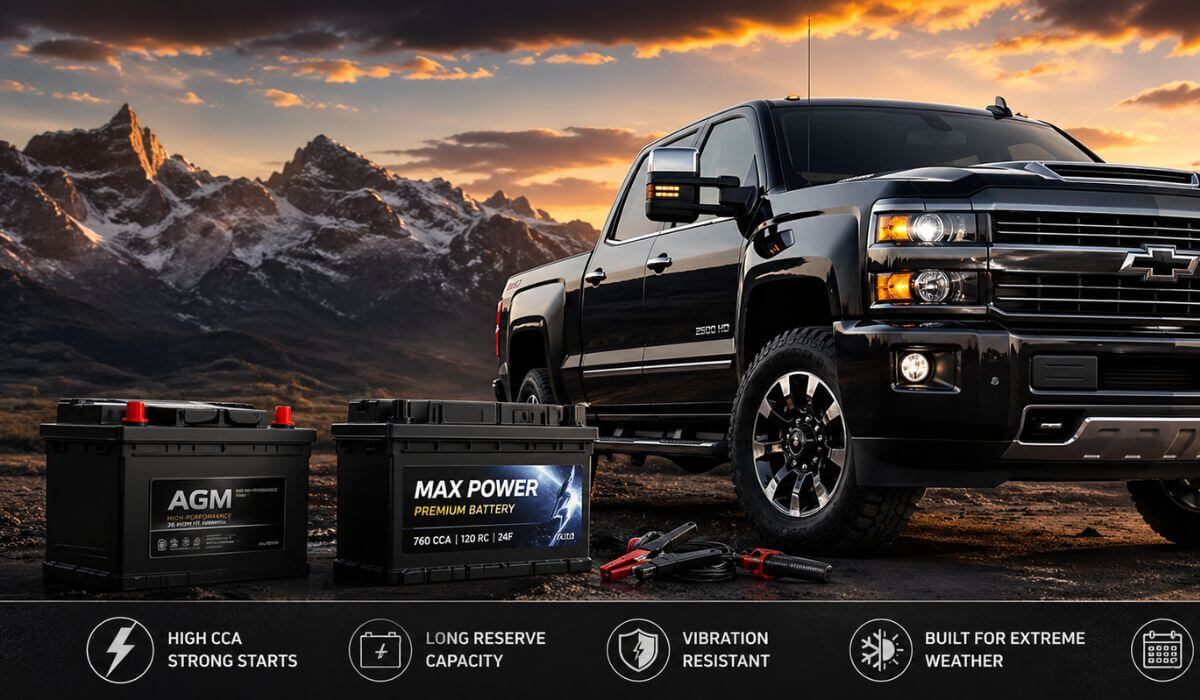
5 Best Batteries for Chevy Silverado 2500HD in 2026: Max CCA, Longer Life, Zero Cold-Start Stress
If you own a Chevrolet Silverado 2500HD, you already know this truck doesn’t forgive a weak battery. Cold mornings, towing loads, diesel compression—this isn’t a sedan you can cheap out on. I’ve seen perfectly good trucks refuse to crank just because the battery couldn’t deliver real-world CCA when it mattered.
Here’s the part most articles don’t tell you straight: newer Silverado 2500HD models (especially 2020–2026) typically run Group 48 (H6) as the baseline, while Group 94R (H7) is the smarter upgrade if you want stronger cold starts and less stress under load. If you’re running a Duramax diesel, you’re likely dealing with a dual battery setup (usually two H6 units)—and that changes everything about reliability. Go too small, and you’ll feel it immediately. Go slightly bigger (like H7), and the truck just starts… effortlessly.
That’s exactly why the picks below aren’t random. These are chosen based on fitment reality, cranking power, reserve capacity, and how these trucks are actually used—not just lab specs. If you want a battery that works when it’s cold, loaded, and inconvenient, you’re in the right place.
Best Chevy Silverado 2500HD Battery: Top 2026 Picks for Strong Starts & AGM Durability
#1. Interstate MTP-94R/H7 Flooded Automotive Battery
best battery for chevy silverado 2500hd with high cca and reliable cold start performance
#2. Mighty Max MM-H6 AGM Automotive Battery
chevy silverado 2500hd battery size group 48 best value replacement for daily use
#3. Goodyear 49-H8-AGM Platinum Automotive Battery
high cca battery for silverado 2500hd heavy duty towing and maximum reserve capacity
#4. Weize Platinum AGM Group 65 Automotive Battery
what battery fits chevy silverado 2500hd alternative group 65 option with solid backup power
#5. Autocessking H6 AGM Start-Stop Automotive Battery
best battery for silverado 2500hd duramax dual battery setup reliable agm performance
Expert Tip (from someone who’s dealt with dead 2500HDs at the worst time)
If you remember only one thing, remember this: don’t buy the exact minimum your truck can run—buy one step stronger than what it came with. On a Chevrolet Silverado 2500HD, that small upgrade—from H6 to H7, or from basic flooded to AGM—changes how the truck behaves every single morning. Faster crank, less hesitation, no voltage dip when lights, heater, and infotainment all hit at once.
And if it’s a Duramax diesel, treat the battery setup as a system, not a single part. Both batteries should match in type, age, and power. Mixing an old battery with a new one is the quickest way to kill the new one early. I’ve seen it happen more times than people admit.
Also, check the boring stuff most people ignore: terminal orientation, tray fit, and reserve capacity (RC). A battery can have big CCA numbers on paper and still feel weak if the reserve isn’t there when the truck is idling with load.
How We Chose These Batteries (No fluff—just what actually matters)
We didn’t pick these based on brand hype or spec-sheet bragging. Every option here had to make sense on a real Silverado 2500HD, under real conditions—cold starts, towing weight, long idle times, and electrical load.
First filter was fitment reality. The list covers the sizes that actually show up in newer trucks: H6 (Group 48) as the baseline, H7 (94R) as the smarter upgrade, and H8 (49) for maximum reserve and power. We included a Group 65 because some owners need a workable alternative, and a second H6 AGM specifically for diesel dual setups—because that’s a different use case altogether. If it doesn’t physically fit right or connect cleanly, it’s not on this list.
Next came starting power that holds up under load. A spec like CCA only matters if it’s usable in the real world. That’s why the H7 sits at the top—it delivers strong cold starts without being oversized. The H8 option is here for people who run their trucks hard—towing, extra accessories, long idle sessions—where reserve capacity becomes just as important as raw cranking amps.
We also looked at battery type, not just size. You’ll notice multiple AGM batteries on this list. That’s intentional. AGM handles vibration better, recovers faster, and stays stable when the truck’s electrical system is under pressure. For a heavy-duty pickup, that matters more than most people realize.
Then there’s real-world balance. Not everyone needs the biggest, most expensive battery. That’s why the H6 (Group 48) option is still here—it’s the size most trucks are built around, and a solid unit in that category does the job reliably for daily use. But we didn’t stop there—we added an upgraded H6 AGM specifically for Duramax owners running dual batteries, because those trucks demand consistency more than anything else.
Finally, we paid attention to what happens after the first month. A battery that looks good on paper but drops off under repeated starts, heat, or load doesn’t belong here. These picks are about consistency—the kind where you stop thinking about your battery altogether because it just works.
That’s the difference. Not five random batteries—but five that make sense depending on how your Silverado is actually used.
#1. Interstate MTP-94R/H7 Flooded Automotive Battery
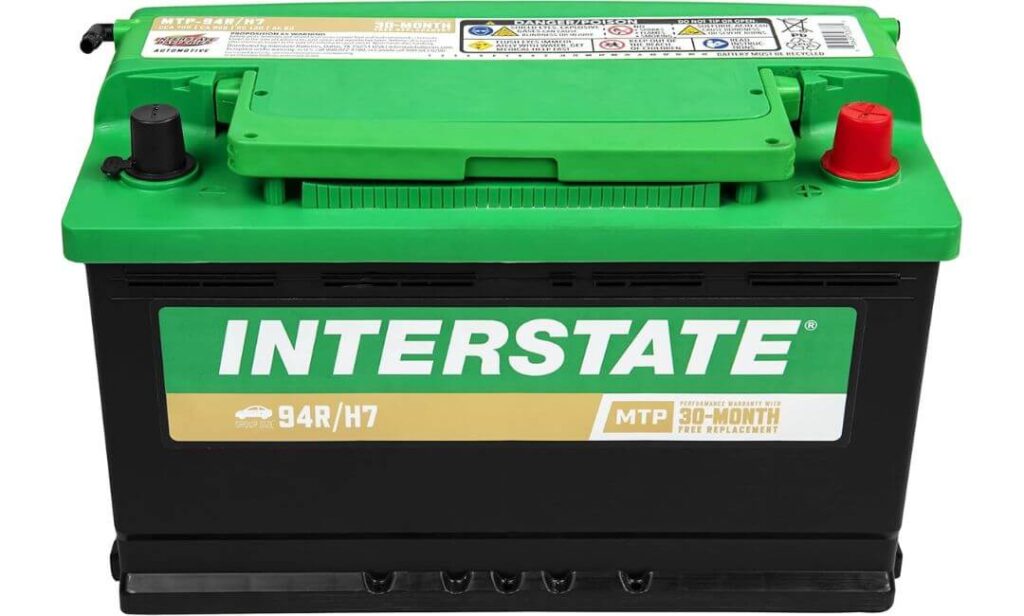
Technical Specs:
- Group Size: H7 (94R) — ideal upgrade fit over stock H6
- Cold Cranking Amps: 790 CCA (strong cold starts, even under load)
- Reserve Capacity: 130 minutes (handles lights, electronics, idle drain)
- Battery Type: Conventional flooded lead-acid (stable, proven design)
- Voltage: 12V
- Weight: 42.9 lbs (solid internal lead mass = consistent output)
- Terminal Layout: Standard top post (no fitment drama)
- Dimensions: 12.38 × 6.88 × 7.5 inches
- Warranty: 30 months
You feel it the first time you turn the key — that instant, confident crank instead of that half-second hesitation most trucks develop over time. This one doesn’t try to be flashy; it just delivers real, usable power where a heavy-duty truck actually needs it. With 790 CCA and 130-minute reserve, it doesn’t blink when your Silverado’s loaded, cold, or sitting with accessories running longer than expected.
Here’s the thing most people miss — not every Silverado owner needs AGM. A well-built flooded battery like this actually works better for a lot of real-world driving: steady starts, predictable performance, and less sensitivity to charging quirks. It’s tuned more like OEM intent, just with a bit more muscle thanks to the H7 size.
And that size upgrade matters. Moving from H6 to H7 gives you breathing room — less strain during ignition, smoother voltage delivery, and better recovery after short drives. It’s not about chasing numbers; it’s about how the truck feels day after day. (basically, this is the kind of battery you install once and stop thinking about)
What Stands Out in Real Use
- Stronger cold starts vs stock H6 setups (noticeable difference)
- 130 RC keeps systems stable during idle or accessory use
- Flooded design = reliable, predictable behavior over time
- H7 size upgrade reduces strain on starter and alternator
- Backed by a long-standing brand track record (not a random name)
What to Keep in Mind
- Not AGM — so if you run extreme electrical loads, AGM might suit better
Silverado 2500HD Fitment Reality Check
On most Chevy Silverado 2500HD gas models, this fits as a direct or slight upgrade over Group 48 (H6). The tray usually accommodates it, and the top-post terminals line up cleanly—no weird cable tension or adjustments.
For diesel setups, this isn’t typically used in mixed pairs. If you’re running dual batteries, consistency matters more than size — but as a single-battery upgrade for gas trucks, this hits a very practical sweet spot.
The Insider Pro-Tip
If your truck ever felt like it’s “working harder than it should” just to start, that’s not the engine — it’s usually the battery sitting right on the edge of its capacity. Stepping up to H7 quietly fixes that stress. You won’t see it on paper, but you’ll feel it every single morning.
Also, don’t install this and ignore your cables. A strong battery exposes weak connections instantly. Clean terminals, tight fit, and you’ll get the full benefit of that 790 CCA and 130 RC combo instead of wasting it at the contact points.
#2. Mighty Max MM-H6 AGM Automotive Battery
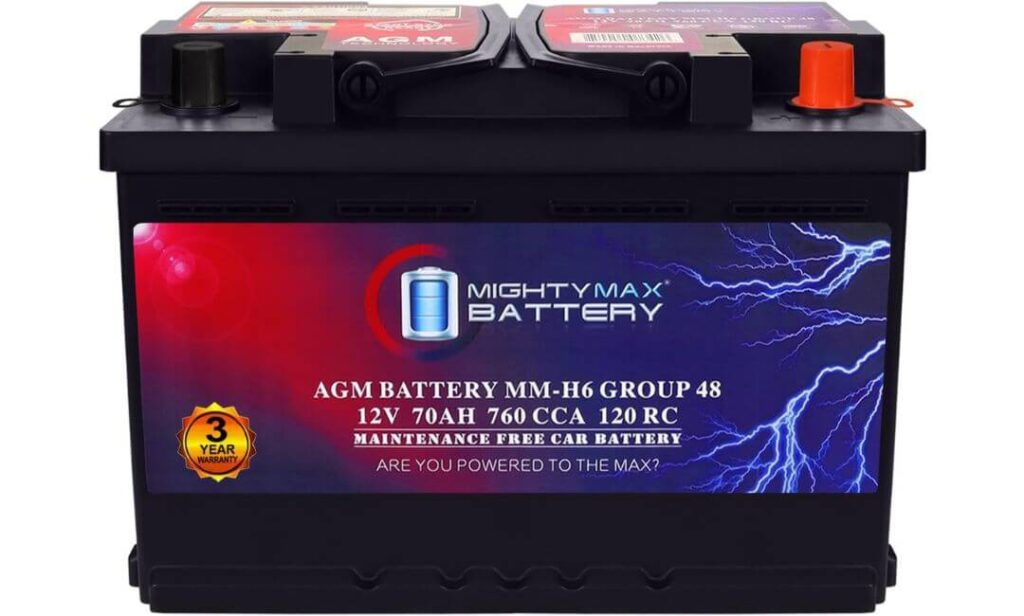
Technical Specs:
- Group Size: H6 (Group 48) — OEM-standard fit for most setups
- Cold Cranking Amps: 760 CCA (strong, steady ignition power)
- Reserve Capacity: 120 minutes (holds voltage under accessory load)
- Capacity: 70Ah (balanced energy storage for daily + moderate load use)
- Battery Type: AGM (Absorbent Glass Mat) — sealed, spill-proof
- Voltage: 12V
- Terminal Type: Stud terminals (positive right / negative left)
- Dimensions: 10.94 × 6.88 × 7.48 inches
- Build: Vibration-resistant internal structure
- Warranty: Up to 3 years
Not everyone needs a bigger battery—sometimes you just need a better-built version of what your truck already uses. That’s exactly where this H6 AGM lands. Same general size your Silverado 2500HD is designed around, but with 760 CCA and AGM stability, it starts cleaner, recovers faster, and doesn’t get shaky when the load builds up.
What makes this different from basic flooded H6 units is how it handles stress. AGM construction means no acid movement, no spills, and far better vibration resistance—which matters more in a heavy-duty truck than people think. Add in 120-minute reserve capacity, and it holds voltage longer when you’re idling with lights, infotainment, or tools running.
There’s also a practical side most buyers appreciate: it comes pre-charged, easy to install, and flexible in mounting (except upside down). No fuss, no maintenance, just consistent output day after day. (if you want a stock-size battery that feels like an upgrade without changing anything else, this is exactly that move)
Where It Actually Delivers
- AGM design = more stable voltage under load vs basic batteries
- 760 CCA handles cold starts without hesitation
- 120 RC supports longer accessory use and idle time
- Vibration-resistant build suits heavy-duty truck environments
- Maintenance-free — no topping up, no mess
What to Keep in Mind
- Stud terminals may need quick adjustment depending on your cable setup (nothing complicated, just check before install)
Silverado 2500HD Fitment Reality Check
For most Chevy Silverado 2500HD gas models, this is the closest match to factory size (Group 48 / H6)—which means drop-in compatibility in many cases. No tray changes, no guessing, just confirm terminal alignment and you’re good.
If you’re running a Duramax diesel with dual batteries, this type works best when installed as a matched pair. AGM consistency across both batteries helps avoid uneven load sharing and keeps the system stable over time.
The Insider Pro-Tip
A lot of Silverado owners upgrade size first—but forget battery type matters just as much. Moving from a basic flooded H6 to an AGM H6 like this often feels like a bigger upgrade than jumping sizes alone. You get cleaner starts, less voltage drop, and better recovery after short trips.
Also, if your truck has start-stop behavior, accessories, or sees rough roads, AGM isn’t optional—it’s the difference between a battery that handles it quietly and one that slowly loses strength without warning.
#3. Goodyear 49-H8-AGM Platinum Automotive Battery
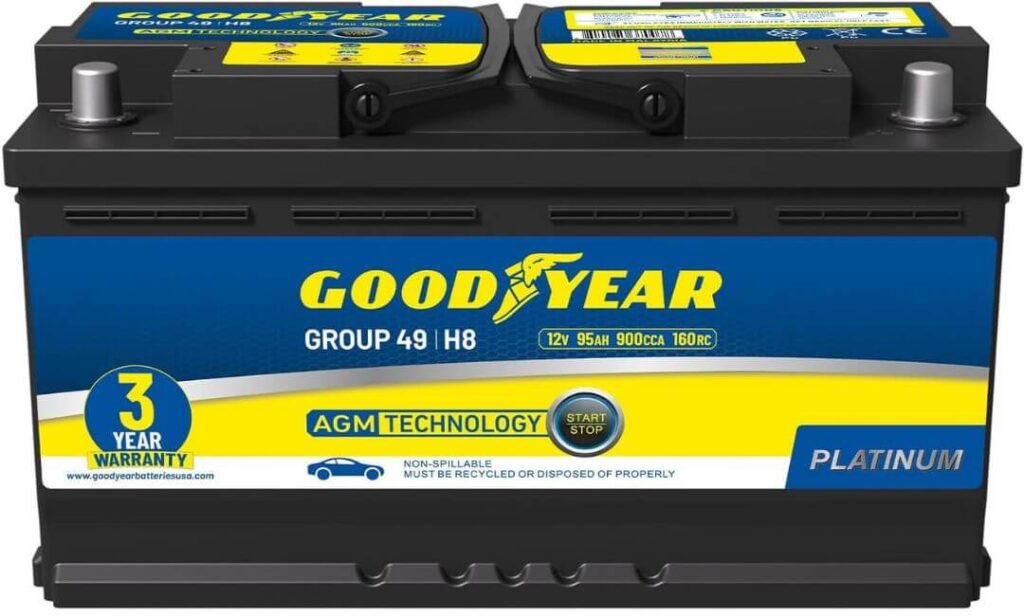
Technical Specs:
- Group Size: H8 (Group 49) — oversized upgrade for max power
- Cold Cranking Amps: 900 CCA (extreme cold-start strength)
- Reserve Capacity: 160 minutes (holds systems longer under load)
- Capacity: 95Ah (serious energy storage for heavy-duty use)
- Battery Type: AGM (sealed, spill-proof, maintenance-free)
- Voltage: 12V
- Weight: 59 lbs (heavy internal build = high reserve + durability)
- Dimensions: 13.75 × 6.75 × 7.5 inches
- Terminal Layout: Positive right / Negative left
- Warranty: 36 months
Here’s the point where a Silverado 2500HD stops “starting” and starts firing up like it means it. This isn’t just a battery upgrade—it’s a capacity jump. With 900 CCA and 160 minutes of reserve, this thing doesn’t just handle cold starts; it shrugs off heavy electrical load like it’s nothing.
Where it really separates itself is under pressure. Towing, long idle sessions, multiple accessories running—situations where normal batteries slowly drop voltage—this one stays stable, consistent, and unfazed. That 95Ah capacity isn’t just a number; it translates into real-world endurance when your truck is doing more than just commuting.
And then there’s AGM construction layered on top of all that size. No spills, no maintenance, and far better resistance to vibration and heat. It’s built for trucks that actually get used like trucks. (this is the kind of battery you buy when you’re done dealing with “almost enough power”)
Where It Actually Delivers
- 900 CCA = instant, aggressive cold starts even in extreme conditions
- 160 RC keeps electronics stable during long idle or accessory use
- 95Ah capacity supports heavy-duty workloads without voltage drop
- AGM design handles vibration, heat, and rough use better
- Longer cycle life compared to standard flooded batteries
What to Keep in Mind
- Bigger size means you should double-check tray space before installing (worth it for the extra power)
Silverado 2500HD Fitment Reality Check
For Silverado 2500HD owners looking beyond stock, this fits as a true upgrade over H6/H7 sizes, but space matters. Many setups can handle it, but it’s not a blind drop-in like H6—quick measurement check is smart before buying.
If your truck runs extra load—towing gear, lighting, sound systems, or frequent idling—this size finally gives you breathing room. It’s less about “fit” and more about how much demand your truck actually sees daily.
The Insider Pro-Tip
Most people chase higher CCA and stop there. The real advantage here is reserve capacity + amp hours working together. That’s what keeps your truck stable when everything is on at once—not just the initial start.
If you’ve ever noticed dimming lights, slow crank after short drives, or electrical strain under load, that’s your battery running out of depth—not power. This fixes that at the root.
#4. Weize Platinum AGM Group 65 Automotive Battery
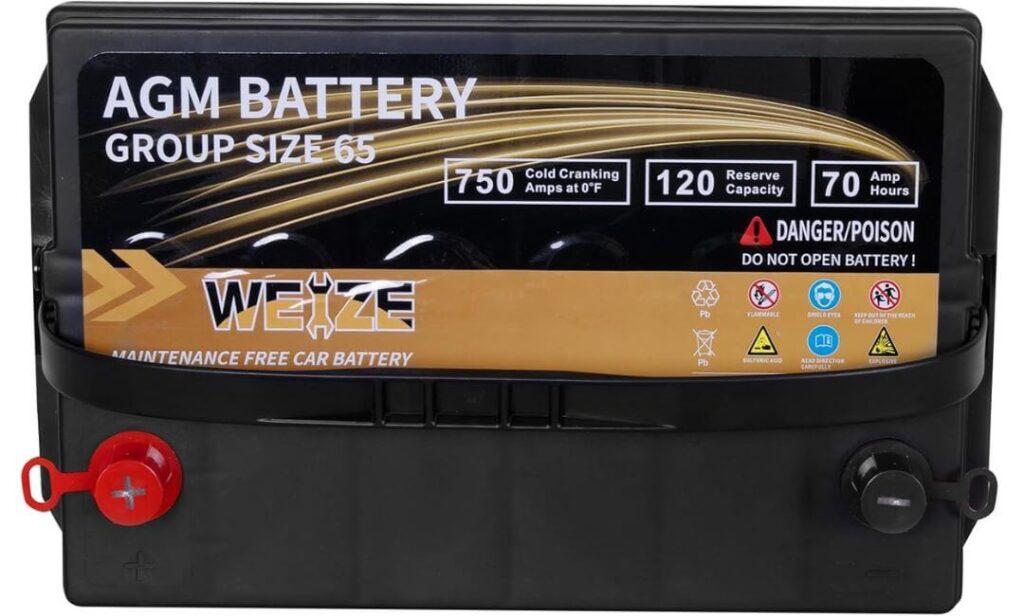
Technical Specs:
- Group Size: 65 — alternative fit for specific setups
- Cold Cranking Amps: 750 CCA (reliable cold starts without strain)
- Reserve Capacity: 120 minutes (steady backup for accessories + idle)
- Capacity: 70Ah (balanced energy storage for consistent use)
- Battery Type: AGM (sealed, spill-proof, maintenance-free)
- Voltage: 12V (charging range 14.4–15.0V)
- Weight: 46 lbs
- Dimensions: 12.05 × 7.56 × 7.56 inches
- Terminal Layout: Left positive / Right negative (tapered posts)
- Temperature Range: -22°F to 158°F
- Warranty: 36 months
Let’s be honest—this isn’t the “default” Silverado choice, and that’s exactly why it exists here. This is for the owner who needs a solid alternative that still delivers real AGM performance without overcomplicating things. With 750 CCA and 120 RC, it doesn’t try to overpower—it just stays consistent, stable, and dependable in everyday truck use.
What makes this stand out is how it handles extremes. Whether it’s heat soaking the engine bay or sitting unused for days, AGM construction here keeps self-discharge low and voltage steady. That means fewer surprises when you come back to your truck and expect it to fire up instantly.
There’s also a practical edge—this battery is built for modern electrical demands, including start/stop systems and higher accessory loads. It’s not flashy, but it quietly delivers where it matters. (this is the kind of pick that makes sense when your setup doesn’t follow the “standard” path but still needs reliable power)
Where It Actually Delivers
- AGM durability handles heat, vibration, and daily stress better
- 750 CCA provides confident, no-drama starts
- 120 RC keeps systems running during idle or emergency draw
- Low self-discharge = holds charge longer when parked
- Safer sealed design reduces leak and corrosion risks
What to Keep in Mind
- Not the most common Silverado size—quick dimension and terminal check makes everything smooth
Silverado 2500HD Fitment Reality Check
This is where things get real—Group 65 isn’t the standard size for most Silverado 2500HD setups, but it can work in certain configurations where space and terminal alignment match. That’s why it’s here as an alternative option, not a default recommendation.
If your current battery already matches these dimensions and terminal layout, this becomes a clean AGM upgrade without changing your setup. Otherwise, sticking with H6 or H7 is usually the safer path.
The Insider Pro-Tip
A lot of people chase “bigger is better,” but sometimes fitment consistency matters more than raw size. A properly fitting AGM battery like this will outperform a mismatched larger unit every single day.
Also, if your truck sits unused for stretches, AGM’s low self-discharge advantage becomes noticeable fast—you come back, turn the key, and it just works without that slow, lazy crank.
#5. Autocessking H6 AGM Start-Stop Automotive Battery
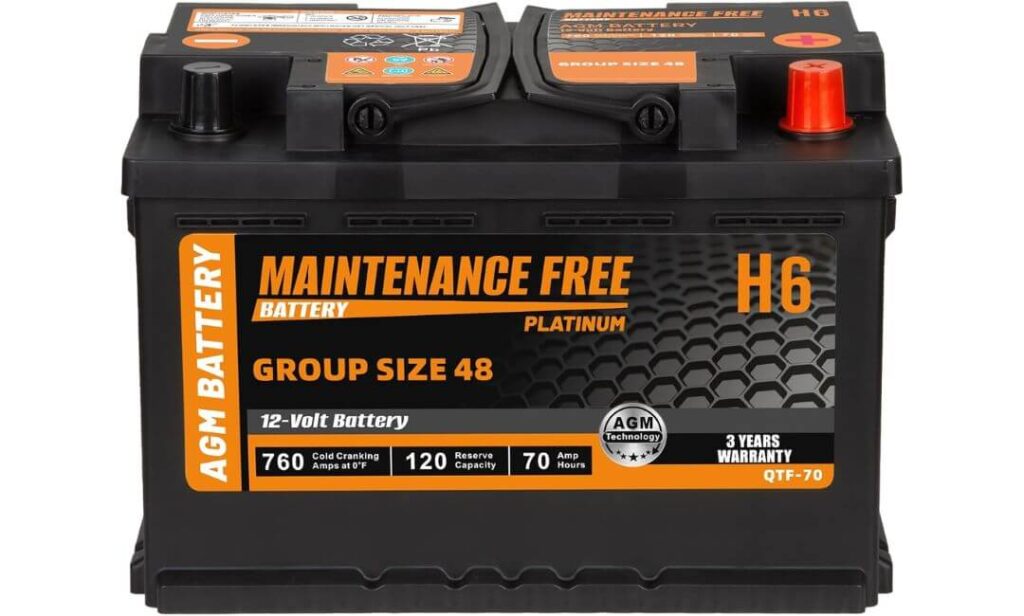
Technical Specs:
- Group Size: H6 (Group 48) — standard + dual battery compatible
- Cold Cranking Amps: 760 CCA (steady, reliable ignition power)
- Reserve Capacity: 120 minutes (holds voltage during idle/load)
- Capacity: 70Ah (balanced output for daily + moderate heavy use)
- Battery Type: AGM (sealed, spill-proof, maintenance-free)
- Voltage: 12V
- Weight: 45 lbs
- Dimensions: 11 × 6.9 × 7.5 inches
- Build: High vibration resistance + leak-proof design
- Service Life: Up to 2–3x longer than flooded batteries
Here’s what most Silverado 2500HD owners figure out the hard way—diesel trucks don’t forgive inconsistent batteries. This H6 AGM isn’t trying to be flashy; it’s built for consistency under pressure, especially when you’re running a dual battery setup where both units need to stay in sync.
What stands out immediately is how stable it feels. With 760 CCA and AGM construction, it delivers clean, repeatable starts, not just once but every time—even after sitting for days. That low self-discharge isn’t marketing talk; it’s what keeps your truck ready when it’s been parked longer than usual.
And then there’s durability. Silverado 2500HD trucks aren’t exactly gentle—vibration, heat cycles, rough roads—and this battery is built to take that without losing performance. It’s sealed, leak-proof, and designed to handle stress quietly in the background. (this is the kind of battery that doesn’t need attention—it just keeps the system balanced and working)
Where It Actually Delivers
- AGM build = stable voltage across both batteries in diesel setups
- 760 CCA ensures consistent, repeatable cold starts
- 120 RC supports idle load without quick drain
- Low self-discharge keeps charge intact during downtime
- High vibration resistance suits heavy-duty truck environments
What to Keep in Mind
- Works best when used in matched pairs for dual battery systems (recommended approach)
Silverado 2500HD Fitment Reality Check
For most Silverado 2500HD setups, Group 48 (H6) is the base size—and this fits right into that category. No major fitment surprises, just make sure your terminal layout aligns cleanly before installation.
Where this really makes sense is Duramax diesel trucks running dual batteries. In that setup, using two identical AGM batteries like this keeps charging and discharge balanced, which directly affects lifespan and performance.
The Insider Pro-Tip
Dual battery systems aren’t about “more power”—they’re about balanced power. Even a strong battery will fail early if paired with a weaker or older unit. If you’re replacing one, replace both—it saves money in the long run and keeps your truck reliable.
Also, AGM in dual setups isn’t optional anymore. It handles heat, vibration, and repeated starts far better than flooded batteries, especially in diesel applications where the load is constant and unforgiving.
Best Chevy Silverado 2500HD Battery Comparison: Power, CCA, and Real-World Performance
| Battery | Type | CCA | Reserve | Capacity | Best For | Real Use Insight |
|---|---|---|---|---|---|---|
|
Interstate H7 (94R)
Best Overall
|
Flooded | 790 | 130 min | – | Balanced power + daily reliability | Feels stronger than stock without overdoing it. Smooth starts, less strain, just works every day. |
|
Mighty Max H6 AGM
Best Value
|
AGM | 760 | 120 min | 70Ah | Stock replacement + budget AGM | Same size as OEM but more stable. Perfect if you want upgrade feel without changing fitment. |
|
Goodyear H8 AGM
Max Power
|
AGM | 900 | 160 min | 95Ah | Towing, heavy load, long idle | This is overkill in a good way. No voltage drop, no weak crank—handles everything you throw at it. |
|
Weize Group 65 AGM
Alt Fit
|
AGM | 750 | 120 min | 70Ah | Alternative setups | Not standard, but works if dimensions match. Solid AGM performance without overcomplication. |
|
Autocessking H6 AGM
Diesel Setup
|
AGM | 760 | 120 min | 70Ah | Dual battery (Duramax) | Best when used in pairs. Keeps both batteries balanced, which matters more than raw power in diesel trucks. |
Buying Guide for Chevy Silverado 2500HD Batteries (What Actually Matters Before You Buy)
Cold Cranking Amps (CCA) is the first number everyone looks at, and yes, it matters—but only up to a point. On a Chevrolet Silverado 2500HD, anything around 750–900 CCA is the real-world sweet spot. Below that, you’ll feel slower cranks in cold weather. Above that, you’re not gaining much unless your truck is under heavy load or extreme conditions.
What separates a “good” battery from one that actually feels strong is Reserve Capacity (RC). That’s what keeps your truck stable when it’s idling, running accessories, or dealing with short trips. A battery with 120–160 minutes RC doesn’t just start your truck—it keeps everything working without voltage drops.
Real-world takeaway
CCA starts the engine. Reserve capacity keeps the truck alive after it starts. Ignore RC, and even a high-CCA battery can feel weak over time.
Battery Size and Group Number — fitment is everything
This is where most Silverado owners mess up. The truck is designed around specific sizes:
- Group 48 (H6) → stock size for most setups
- Group 94R (H7) → smarter upgrade (more power, same usability)
- Group 49 (H8) → maximum capacity, but requires space check
- Group 65 → alternative, not standard
Going bigger doesn’t always mean better. If the battery doesn’t sit right in the tray or the terminals feel forced, you’re creating problems long-term.
Real-world takeaway
A perfectly fitting H6 or H7 battery will outperform a poorly fitted bigger battery every single day.
Durability and Warranty — what actually lasts
Spec sheets don’t show durability. Real trucks expose weak batteries fast—heat, vibration, daily starts. That’s why AGM batteries show up more in modern Silverado setups. They handle:
- Vibration better
- Heat cycles more consistently
- Faster recovery after short drives
Warranty matters, but not the way people think. A longer warranty is useful, but what you actually want is consistent performance before you ever need that warranty.
Real-world takeaway
AGM = stability and lifespan, flooded = budget and simplicity. Choose based on how hard your truck is used, not just price.
Diesel-Specific Considerations — this changes everything
If you’re running a Duramax diesel Silverado 2500HD, your battery setup isn’t the same as gas models.
- Diesel engines demand higher starting load
- Most setups use dual batteries
- Both batteries must match in type, size, and age
Mixing batteries (old + new, AGM + flooded) is one of the fastest ways to kill performance and shorten lifespan.
Real-world takeaway
Diesel trucks don’t need “strong batteries”—they need balanced batteries working together.
Fitment and Compatibility — small details, big impact
A battery can look perfect on paper and still cause issues if fitment isn’t right. Always check:
- Tray size and hold-down alignment
- Terminal position (left/right orientation)
- Cable reach without tension
Even a small mismatch creates resistance, which directly affects starting performance and battery life.
Real-world takeaway
Clean fit = better power delivery. Poor fit = hidden performance loss.
Maintenance and Replacement Timing — when to actually change it
Most batteries don’t fail suddenly—they get weaker over time. Signs to watch:
- Slower crank than usual
- Lights dimming at startup
- Voltage drop during idle
Typical lifespan:
- Flooded batteries → ~3–4 years
- AGM batteries → ~4–6 years (sometimes more with proper use)
Real-world takeaway
Replace before failure, not after. A weak battery doesn’t just risk a no-start—it puts extra stress on your starter and alternator.
Final Buying Mindset (what experienced owners actually do)
You don’t need the biggest battery. You need the right size, strong enough CCA, and enough reserve to match how your Silverado is used daily.
- Daily driving → H6 AGM is enough
- Mixed use + towing → H7 upgrade makes sense
- Heavy load, long idle → H8 is worth it
- Diesel → matched dual H6 AGM setup
Once you match the battery to your usage instead of chasing specs, the truck simply feels right every time you start it.
Compatibility and Fitment Deep-Dive for Chevy Silverado 2500HD Batteries
Buying the right battery for a Chevrolet Silverado 2500HD isn’t about guessing sizes or copying what someone else installed—it’s about matching your exact truck configuration, electrical demand, and physical fitment. This is where most people either get it perfectly right… or create small issues that slowly turn into starting problems, voltage drops, or early battery failure.
Let’s break it down properly so you don’t have to redo the job twice.
How to Verify the Correct Battery Size (Group 48 vs 94R vs Others)
Start with what your truck is already using. Open the hood, check the label on the existing battery—you’ll usually see Group 48 (H6) or sometimes 94R (H7).
Here’s how to interpret that:
- Group 48 (H6) → factory baseline for most Silverado 2500HD gas models
- Group 94R (H7) → slightly larger upgrade, more power, usually fits without major issues
- Group 49 (H8) → bigger capacity, but requires tray clearance check
- Group 65 → alternative fit, not standard
Now here’s the real-world part most skip—don’t just match the number, check the space. Even if H7 is “compatible,” your tray, bracket, and cable length must support it comfortably.
Practical check you should actually do
- Measure your current battery (length, width, height)
- Compare with the new one before ordering
- Check if hold-down bracket still aligns properly
A battery that “almost fits” will eventually cause movement, vibration stress, or loose contact.
Gas vs Duramax Diesel — What Actually Fits
This is where things split clearly.
Gas Silverado 2500HD
- Usually runs single battery setup
- Common fit: H6 (Group 48)
- Upgrade path: H7 (94R) for better starting and reserve
This setup is straightforward. You’re choosing between same size vs slight upgrade, not redesigning the system.
Duramax Diesel Silverado 2500HD
- Typically uses dual battery setup
- Most common: two Group 48 (H6) batteries
Here’s the part people underestimate—diesel isn’t about “one strong battery,” it’s about two batteries working in sync.
Important rules:
- Both batteries must be same type (AGM or flooded)
- Same capacity and rating
- Ideally replaced at the same time
Mixing batteries (old + new, different specs) creates imbalance → one drains the other → system weakens faster.
How to Confirm “What Battery Fits Your Silverado 2500HD”
Don’t rely only on online tools. They’re helpful, but not always perfect. Combine them with physical checks.
Do this step-by-step:
- Check owner’s manual (factory recommendation)
- Look at current battery label
- Measure battery tray space
- Confirm terminal layout and cable reach
- Then verify using online fit tools
What you’re really confirming:
- Size (H6, H7, etc.)
- Terminal position (left/right)
- Height clearance (hood clearance matters more than you think)
Polarity, Terminals, and Mounting — Small Details That Matter
This is where a lot of “it fits but doesn’t feel right” problems come from.
Terminal orientation
- Most Silverado setups: positive on right, negative on left
- If reversed, cables may stretch or twist → long-term damage
Terminal type
- Top post → standard, easiest install
- Stud terminal → may need minor adjustment
Mounting fit
- Battery must sit flat and secure
- Hold-down bracket should lock without forcing
- No side movement once installed
If the battery shifts even slightly, vibration will reduce lifespan over time.
Silverado 2500HD Battery Replacement Guide (Real-World Process)
Replacing the battery isn’t complicated—but doing it properly avoids electrical issues.
Basic removal steps
- Turn off ignition, remove key
- Disconnect negative terminal first
- Then disconnect positive terminal
- Remove hold-down bracket
- Lift battery out carefully (they’re heavy—40–60 lbs)
Installation steps
- Place new battery securely in tray
- Connect positive terminal first
- Then connect negative terminal
- Tighten connections firmly (not over-tightened)
Safety details most ignore
- Avoid sparks near battery
- Wear gloves if possible
- Don’t tilt battery excessively (even AGM should stay upright ideally)
Disposal and Core Return — Don’t Skip This
Old batteries aren’t trash—they’re recyclable and usually tied to a core charge refund.
- Return old battery to seller or service center
- Most places give refund on core deposit
- Proper recycling prevents environmental damage
This isn’t optional—it’s part of responsible ownership.
Extra Fitment Factors Most Articles Miss
Electrical load matters
If your truck runs:
- Auxiliary lights
- Sound systems
- Winch or tools
Then you need more than “just fits”—you need extra reserve capacity (RC).
Climate impact
- Cold regions → higher CCA matters more
- Hot regions → heat resistance + AGM durability matters
Driving pattern
- Short trips → battery needs better recovery (AGM helps)
- Long idle → higher reserve capacity becomes critical
What Experienced Owners Actually Check Before Buying
They don’t just ask “will it fit?”—they check:
- Will it fit cleanly without stress
- Will it handle my daily load without dropping voltage
- Will it last without constant attention
That’s the difference between a battery that works… and one you never have to think about again.
Duramax Diesel Battery Setup for Silverado 2500HD (What Actually Matters Under the Hood)
If you’re running a Chevrolet Silverado 2500HD with the Duramax diesel, the battery conversation changes completely. This isn’t about “will it start?”—it’s about how consistently it starts under pressure, temperature, and load. Diesel engines demand more from the battery every single time you turn the key, and if the setup isn’t right, you feel it immediately.
Why Diesel Engines Demand Higher CCA and Startup Strength
A diesel engine doesn’t rely on spark plugs—it depends on compression and heat to ignite fuel. That means:
- The starter motor has to work harder and longer
- Internal resistance is higher, especially in cold conditions
- Glow plugs draw additional current before ignition
All of this happens within seconds, but it creates a massive initial load on the battery system.
That’s why CCA (Cold Cranking Amps) matters more here than on gas trucks. But here’s the part most people miss—it’s not just about hitting a high number. It’s about delivering that power consistently without voltage collapse.
What this means in real use
- Weak battery → slow crank, delayed start
- Slightly underpowered battery → works fine warm, struggles cold
- Proper setup → immediate, confident ignition every time
Standard vs Diesel Battery Setup — The Real Difference
On paper, a battery is just a battery. In reality, diesel trucks operate on a different level of demand.
Gas Silverado setup
- Single battery
- Moderate starting load
- Less sensitive to minor voltage drops
Duramax diesel setup
- Dual battery system (most common)
- High initial current draw
- Requires stable voltage across both units
Here’s where problems usually start—people treat diesel batteries like gas truck batteries. That doesn’t work.
A diesel setup requires:
- Matched batteries (same size, same type, same rating)
- Equal load distribution
- Consistent charge and discharge cycles
If one battery is even slightly weaker, the entire system starts compensating—and that’s when performance drops and lifespan shortens.
AGM vs Flooded in Diesel Trucks — What Actually Holds Up
This isn’t a theory debate—it’s real-world behavior.
AGM batteries (what most serious setups use)
- Better vibration resistance
- Faster recovery after heavy starts
- More stable under heat and electrical load
- Lower self-discharge when truck sits
Flooded batteries
- Work fine in basic setups
- Lower cost
- But less stable under repeated heavy load
For a Duramax, AGM isn’t about being premium—it’s about handling repeated stress without weakening over time.
Building a Proper Diesel Battery Setup (What Actually Works)
If you want reliability, not just specs, follow this approach:
Use matched batteries
- Same group size (typically H6 / Group 48)
- Same brand and model if possible
- Same age (replace both together)
Choose balanced specs, not extremes
- Around 750–800+ CCA per battery
- At least 120 RC or higher
Focus on system health, not just batteries
- Clean terminals
- Strong cable connections
- Proper alternator output
A strong battery won’t fix a weak connection—but a clean system makes even a good battery perform like a great one.
Cold Weather Reality — Where Diesel Setups Are Tested
This is where you’ll know if your setup is right or not.
Cold weather increases:
- Oil thickness → harder engine rotation
- Battery resistance → reduced output
- Glow plug demand → extra load before start
What a weak setup feels like
- Slow, dragging crank
- Multiple attempts needed
- Voltage dip (lights dim, electronics reset)
What a proper setup feels like
- Quick crank
- Immediate ignition
- No hesitation, even in low temperatures
What actually helps in cold conditions
- Higher CCA (but within reason)
- AGM batteries for stability
- Fully charged system (diesel hates partial charge)
Common Mistakes That Kill Diesel Battery Performance
These don’t show up immediately—but they shorten battery life fast:
- Replacing only one battery in a dual setup
- Mixing AGM with flooded batteries
- Ignoring early signs like slower crank
- Letting batteries sit partially discharged
- Overlooking terminal corrosion or loose fit
Each of these creates imbalance, and diesel systems don’t tolerate imbalance well.
Real-World Setup That Works for Most Owners
For a Silverado 2500HD Duramax, a reliable setup looks like this:
- Dual Group 48 (H6) AGM batteries
- Around 760 CCA each
- Minimum 120 RC
- Installed as a matched pair
This setup doesn’t just meet requirements—it gives you consistent performance in daily use, heavy load, and cold starts.
What Experienced Duramax Owners Know
They don’t chase the biggest numbers—they focus on consistency and balance.
- Two average batteries working together properly > one oversized battery
- Stable voltage matters more than peak output
- A clean, matched setup outperforms a mismatched “high-spec” setup every time
Once the battery system is right, the truck stops feeling “heavy” to start—and just behaves the way a Duramax should: instant, controlled, and reliable every single time.
Installation and Maintenance for Silverado 2500HD Batteries (Do It Once, Do It Right)
On a Chevrolet Silverado 2500HD, a battery swap isn’t just a quick part change—it’s part of the truck’s electrical health. Done right, the new battery will feel stronger from day one and stay that way. Done casually, you’ll get small issues—slower crank, voltage dips, random warnings—that show up weeks later. This section follows the spirit of a proper silverado 2500hd battery replacement guide, but with the details people usually skip.
Quick Installation Steps (safe, clean, and actually effective)
Before you even touch the terminals, make sure the truck is completely off—no accessories, no lights, key out. Give it a minute so modules go to sleep.
Removal (don’t rush this part)
- Disconnect negative terminal first (this prevents accidental shorting)
- Then disconnect positive terminal
- Remove the hold-down bracket or clamp
- Lift the battery straight up—these weigh 40–60 lbs, so keep it steady
Now look at the tray before dropping the new one in. Dirt, acid residue, or rust here directly affects battery life.
Installation (this is where performance is decided)
- Clean the tray and terminals before placing the new battery
- Set the battery flat—no tilt, no rocking
- Secure the hold-down bracket firmly (movement kills batteries over time)
- Connect positive terminal first, then negative
Tight connections matter more than people think. Loose terminals create resistance, and resistance kills starting power.
Corrosion prevention (simple but powerful)
- Apply a light coat of dielectric grease or anti-corrosion spray
- Make sure terminals are fully seated, not half-tight
A clean connection today saves you from electrical issues later.
Maintenance Cadence (what actually keeps the battery healthy)
Most people don’t “maintain” a battery—they wait until it fails. That’s the wrong approach, especially on a heavy-duty truck.
Monthly quick check (takes 2 minutes)
- Look for corrosion on terminals
- Check if cables feel loose
- Listen to startup—any delay or sluggish crank is a warning sign
Every 3–4 months
- Clean terminals if needed
- Check battery voltage (should sit around 12.6V when healthy)
- Inspect hold-down bracket for tightness
Once or twice a year
- Test battery health (load test if possible)
- Check alternator output (weak charging ruins good batteries)
AGM batteries require less maintenance, but they still need clean connections and proper charging to last.
Winter Prep (where most batteries fail)
Cold weather exposes weak setups instantly. A battery that felt “fine” in summer can struggle the moment temperatures drop.
Before winter hits
- Make sure battery is fully charged (diesel trucks especially hate low charge)
- Clean terminals—corrosion increases resistance in cold
- Check CCA rating vs your climate needs
What helps in real conditions
- Park in a garage or covered area if possible
- Turn off accessories before shutting down the engine
- Let glow plugs cycle fully (for diesel) before cranking
What to avoid
- Short drives without recharge
- Leaving truck unused for long periods without starting
- Ignoring slow crank—it’s an early warning, not a one-time issue
Cold doesn’t kill batteries—weak batteries fail in cold.
Small Habits That Extend Battery Life More Than Specs
This is the part most spec sheets won’t tell you.
- Don’t leave lights or electronics running after engine off
- Avoid repeated short trips without full recharge
- If truck sits for days, start it occasionally or use a maintainer
- Keep terminals clean—this alone can extend life noticeably
A strong battery can still wear out early if it’s constantly undercharged or dealing with poor connections.
Real-World Silverado 2500HD Replacement Mindset
Installing a battery isn’t just about getting the truck to start—it’s about how it starts, how stable it feels, and how long that consistency lasts.
- A properly installed battery delivers clean, immediate crank
- A well-maintained battery avoids sudden failures
- A balanced setup (especially diesel) keeps the entire system stable
Once everything is done right—fitment, connections, maintenance—you stop thinking about the battery altogether. And that’s exactly how it should be.
FAQs About Silverado 2500HD Battery
How do I know if my Chevy Silverado 2500HD battery is actually underpowered, not just old?
Most people assume “battery weak = battery old,” but that’s not always true. On a Chevrolet Silverado 2500HD, an underpowered battery shows up differently than a dying one. You’ll still get starts—but they won’t feel right. Slight delay, heavier crank sound, or electronics dipping for a split second.
Here’s the real giveaway:
- Truck starts fine warm, struggles slightly cold
- Headlights dip briefly during ignition
- Feels like engine is “pushing through” instead of firing instantly
That’s not failure—that’s capacity mismatch. The battery is working, but it’s sitting right at the edge of what your truck demands. Upgrading from H6 → H7 or moving to AGM usually fixes this instantly.
Should I upgrade from H6 to H7 in my Chevy Silverado 2500HD, or is it just overkill?
It’s not overkill—it’s margin. And margin is what makes a truck feel reliable instead of “just okay.”
If your Silverado is used for:
- Towing
- Short trips with heavy electrical load
- Cold morning starts
- Long idle sessions
Then H7 isn’t an upgrade for bragging—it’s a stress reducer for the entire system.
What most people don’t realize is that a slightly bigger battery doesn’t just give more power—it reduces how hard the battery works every day. That means:
- Less strain per start
- Better voltage stability
- Longer lifespan
If your usage is basic daily driving, H6 is fine. But if your truck actually works, H7 just makes it feel more effortless.
Why do some Silverado 2500HD diesel owners still face starting issues even with “good” batteries?
Because diesel problems are rarely about one battery—they’re about the system as a whole.
You can have two “good” batteries and still get poor performance if:
- One battery is slightly weaker than the other
- Connections aren’t perfectly clean
- Alternator isn’t charging evenly
Here’s the uncomfortable truth—diesel setups don’t tolerate imbalance. Even a small mismatch turns into:
- Uneven load sharing
- Faster wear on one battery
- Gradual drop in starting performance
That’s why experienced owners always:
- Replace both batteries together
- Use identical specs (same brand/model ideally)
- Keep connections spotless
It’s not about buying stronger batteries—it’s about keeping both batteries equal.
Is AGM really worth it for Silverado 2500HD, or just marketing hype?
If you’re driving casually, AGM might feel like overkill. But on a heavy-duty truck, the difference shows up over time—not day one.
AGM shines in conditions where regular batteries slowly degrade:
- Constant vibration (rough roads, towing)
- Heat cycles (engine bay temperature)
- Repeated short drives (partial charging)
What you notice isn’t “more power”—it’s consistent power. The truck starts the same way every time, even months later.
The real advantage of AGM isn’t performance—it’s stability. And stability is what keeps you from dealing with unexpected battery issues down the road.
What’s the biggest mistake people make when replacing a Silverado 2500HD battery?
They focus on specs and ignore the basics that actually matter.
A perfect battery installed poorly will still perform badly. The common mistakes:
- Loose or slightly misaligned terminals
- Battery not fully secured in tray
- Ignoring corrosion on cables
- Mixing battery types (especially in diesel setups)
And here’s the part no one talks about—most battery issues after replacement aren’t battery defects. They’re installation and system issues showing up later.
A properly installed, correctly sized battery with clean connections will outperform a “higher spec” battery installed carelessly every single time.
How long should a Silverado 2500HD battery realistically last in real-world use?
Forget ideal conditions—real trucks don’t live easy lives.
In actual Silverado usage:
- Flooded battery: ~3–4 years
- AGM battery: ~4–6 years (sometimes more)
But lifespan depends more on usage than brand:
- Short trips + heavy load → shorter life
- Long drives + proper charging → longer life
- Extreme heat or cold → faster degradation
The real truth? Batteries don’t suddenly die—they fade slowly. If your truck feels slightly weaker over time, that’s the battery aging, not failing.
Smart owners don’t wait for failure—they replace when performance drops. That’s how you avoid getting stuck at the worst possible moment.
Closing Thoughts — What Actually Makes a Silverado 2500HD Feel Right
By now, you’ve probably noticed something—this wasn’t about chasing the highest numbers or picking the most expensive battery. On a Chevrolet Silverado 2500HD, the difference between a “working” battery and a right battery shows up in small moments you don’t think about… until they’re gone.
It’s that instant crank on a cold morning. No hesitation, no second attempt.
It’s your lights staying steady when everything’s running at once.
It’s the truck feeling effortless instead of slightly strained.
That’s not luck—that’s correct sizing, proper reserve, and a balanced setup.
The truth most people learn late is simple:
You don’t notice a good battery. You only notice a bad one.
And the fix isn’t complicated:
- Match the battery to how your truck is actually used
- Don’t undersize just to save a little upfront
- Keep the system clean, tight, and balanced
Whether it’s a solid H6 AGM for daily use, a stronger H7 upgrade for real-world load, or a matched dual setup for Duramax, the right choice makes the truck feel the way it was meant to from the factory—just more confident.
Once you get that right, the battery stops being something you think about.
And honestly, that’s the whole point.
Also Check:

