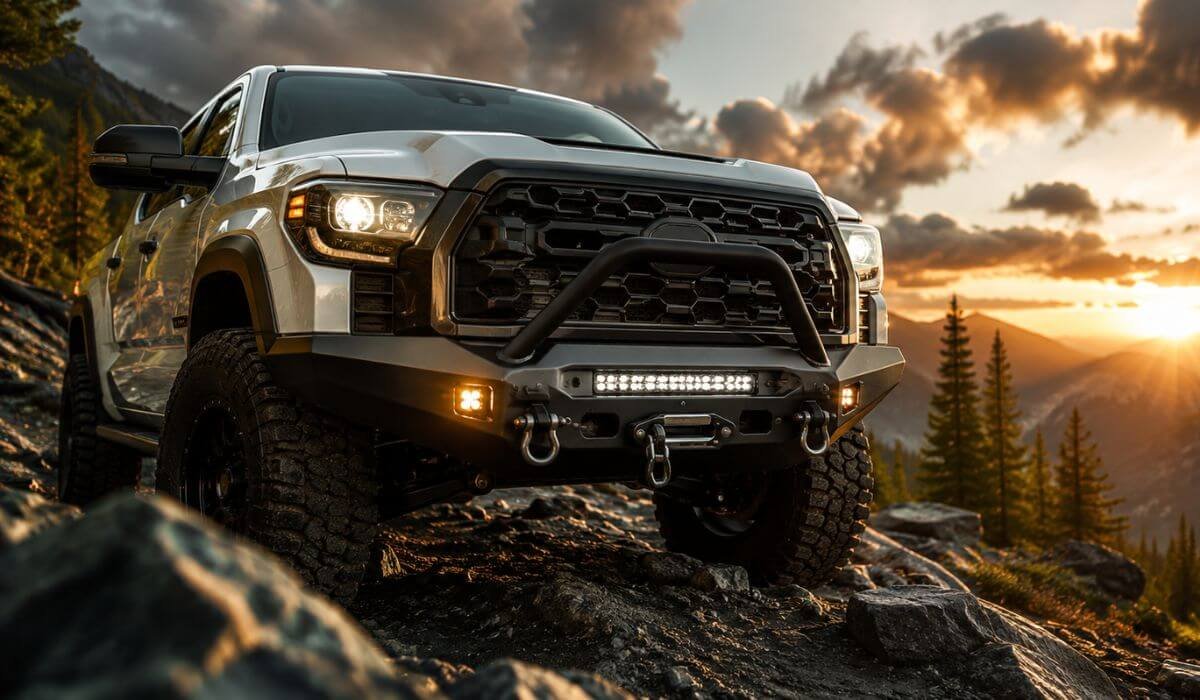
5 Best Toyota Tundra Front Bumpers in 2026: Heavy-Duty Protection, Winch Mounts & Off-Road Upgrades
If you own a 2022–2026 Toyota Tundra, the front bumper is one of those upgrades where fitment matters far more than appearance alone. These trucks are from the third-generation Tundra, introduced for the 2022 model year, so this list is focused specifically on that newer body style rather than older 2007–2021 Tundras. I’ve also kept the selection around real-world needs such as mid-width clearance, recovery points, winch mounting, lighting provisions, and steel construction rather than simply picking the most aggressive-looking bumper.
One thing worth knowing before buying: these bumpers can change the truck’s front-end weight and clearance, and some designs may affect parking sensors, cameras, grille clearance, or factory hardware depending on the trim. That is why I’ve separated the options by what they actually bring to a Tundra, so you can choose the setup that makes sense for your truck instead of paying for features you will never use.
Best Toyota Tundra Front Bumper: Top 2026 Picks With D-Rings, Steel Builds & Trail Features
#1. DV8 Centric Series Front Bumper
Best Toyota Tundra Front Bumper for 2022-2026 Models With Winch Support, Recovery Points and Purpose-Built Off-Road Protection
#2. WOLFSTORM Heavy-Duty Mid-Width Front Bumper
Best Winch-Ready Toyota Tundra Front Bumper for 2022-2026 Models With D-Rings, Mid-Width Clearance and Heavy-Duty Trail Protection
#3. ROXX Front Bumper
Best Toyota Tundra Steel Front Bumper for 2022-2026 Models Seeking Rugged Protection and a More Aggressive Off-Road Build
#4. Hawkley 22-26 Tundra Front Bumper
Best Toyota Tundra Off-Road Front Bumper for 2022-2026 Models With 6-Inch LED Pods, D-Rings and Rock-Crawler Styling
#5. Longsun Tundra Mid-Width Front Bumper
Best Toyota Tundra Mid-Width Front Bumper for 2022-2026 Models Wanting Added Front-End Protection Without Excessive Bulk
Must Check: Best Toyota Tundra Winch Bumper
Expert Tip
Before you order any of these bumpers, check your exact Tundra trim and the bumper’s sensor/camera provisions. A bumper can be listed for 2022–2026 and still require extra attention to factory parking sensors, cameras, brackets or wiring. Also remember that a steel bumper adds weight ahead of the front axle, so if your Tundra already carries a winch, skid plates or other heavy accessories, suspension load matters. Buy for the way you actually use the truck, not simply for the most aggressive-looking design.
How We Chose These Toyota Tundra Front Bumpers
I did not rank these five simply by how tough they look in a product photo. The more useful question is what each bumper actually gives a 2022–2026 Tundra owner and whether those features justify putting it on this list.
First, I kept the selection focused on the third-generation Tundra introduced for 2022, rather than mixing older 2007–2021 bumper designs into the same recommendation. That matters because bumper shape, mounting points, front-end electronics and overall body design changed significantly with the new generation.
1. Fitment came before everything else
All five selections are aimed at the 2022–2026 Tundra, which gives this list a much cleaner fitment range. I would rather leave out a popular bumper than recommend something that creates unnecessary compatibility questions for the buyer.
2. We looked for actual protection, not just styling
A front bumper should earn its place by doing more than making the truck look aggressive. Steel construction, recovery points, mid-width designs and off-road-focused protection were given more weight than cosmetic styling alone.
That is why the list includes different approaches instead of five nearly identical bumpers.
3. Recovery capability matters on a Tundra
For owners who actually take their trucks off-road, D-rings and winch provisions can be far more valuable than decorative features. The WOLFSTORM, for example, makes a strong case around its heavy-duty mid-width design and winch-focused layout, while the DV8 Centric Series takes the more purpose-built route.
4. We considered different types of Tundra owners
Not everyone needs the same bumper.
The DV8 is positioned for buyers wanting a serious off-road-oriented upgrade.
The WOLFSTORM makes more sense for someone prioritising recovery and winch capability.
The ROXX gives buyers a rugged steel alternative.
The Hawkley earns its place through its 6-inch LED pods and D-rings, making it particularly interesting for night-time trail use.
The Longsun brings a cleaner mid-width approach for owners who do not want an unnecessarily bulky front end.
That variety is intentional.
5. We did not treat “more features” as automatically better
This is one of the easiest mistakes to make when shopping for an aftermarket bumper. A winch mount is only useful if you actually plan to run a winch. Extra lighting is valuable if you need auxiliary illumination. A heavy steel design makes sense if protection is the priority.
So instead of declaring one bumper universally best, the rankings reflect where each product makes the most sense.
6. These are newer aftermarket options, so we kept the claims conservative
Most of these products do not have the enormous amount of long-term owner feedback you might find for older, established Tundra accessories. I would not pretend otherwise. Limited reviews do not automatically make a bumper bad, but they do mean buyers should pay closer attention to installation details, hardware, sensor compatibility and seller support.
That is also why this list focuses on clearly identifiable features and intended use, rather than making exaggerated claims about durability that cannot be established from a product listing alone.
The Bottom Line
If I were narrowing these down for a real Tundra build, I would start with the DV8 Centric Series for a serious all-around off-road setup, look closely at the WOLFSTORM if winch and recovery capability are the priority, and choose between the Hawkley and Longsun depending on whether I wanted added lighting or a cleaner mid-width appearance.
That is the real reason these five made the cut: they are not five copies of the same bumper. Each one gives the 2022–2026 Tundra owner a slightly different reason to spend the money, which makes the comparison far more useful than simply ranking five aggressive-looking bumpers from a product catalogue.
#1. DV8 Centric Series Front Bumper
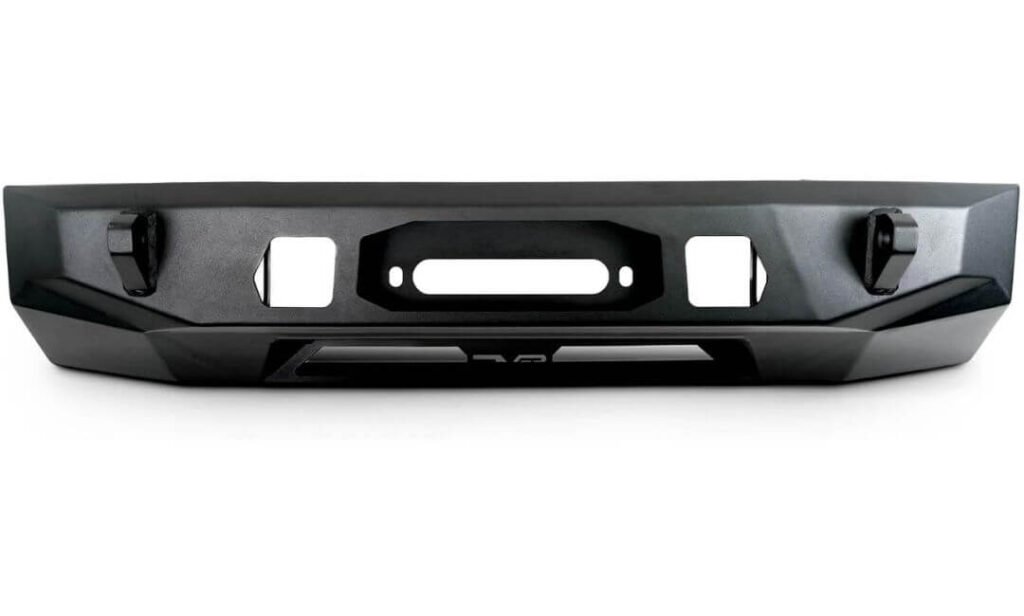
Quick Specs:
- Fitment: 2022–2026 Toyota Tundra, all trim levels
- Construction: Heavy-duty steel
- Weight: 89.8 lbs
- Width: 46 inches
- Depth: 16 inches
- Height: 12 inches
- Finish: Micro-texture black powder coat
- Winch setup: Concealed winch mount
- Lighting: Two 3-inch LED pod cutouts + 20-inch single-row light bar mount
- Recovery: 1-inch-thick recovery mounts for 3/4-inch D-rings with 7/8-inch shackle pins
- Factory features: Designed to retain adaptive cruise control and parking sensors
- Skid plate: Compatible with factory skid plates
- Installation: Minor centre bumper-cover cutting; no front-fender cutting required
- Warranty: 1 year against manufacturing defects
Some aftermarket Tundra bumpers look tougher simply because they add more metal. This one takes a different approach. The compact 46-inch width and low-profile shape keep the front end relatively close to the truck’s original proportions, which is a big deal if you want added protection without turning the Tundra into a completely different-looking vehicle.
The concealed winch arrangement is another detail I genuinely like. Instead of leaving the winch sitting prominently across the front, the mounting position keeps the setup tucked behind the bumper while still giving you practical access. Add the two 3-inch pod locations and 20-inch light-bar provision, and this is clearly designed around someone who wants the front end to do real work after sunset, not just look aggressive in photographs.
There is also some thoughtful engineering underneath the styling. The narrow profile avoids cutting into the wraparound front fenders, while the design is intended to retain the factory approach angle, parking sensors and adaptive cruise-control hardware. You only need minor cutting around the centre bumper cover for installation, and compatibility with the factory skid plates means you do not necessarily have to rebuild the entire front underside just to make the bumper work.
What We Like
- Low-profile shape gives the Tundra more protection without an oversized appearance.
- Hidden winch mounting keeps the front end cleaner while leaving room for serious recovery equipment.
- The combination of 3-inch pod mounts and a 20-inch light-bar mount gives you useful lighting flexibility.
- Retaining factory skid-plate compatibility, parking sensors and adaptive cruise control makes the upgrade feel better integrated with the truck.
- The micro-texture black powder coat is a practical finish for an off-road bumper that will inevitably see dirt, gravel and trail debris.
One Thing We’d Keep in Mind
The only detail I would plan for before installation is the minor cutting of the centre bumper cover. It is not the kind of modification that should put off a Tundra owner considering a properly fitted aftermarket bumper, but it is worth knowing beforehand so the installation does not come as a surprise.
Toyota Tundra Fitment
This particular setup is designed for the 2022–2026 Toyota Tundra across all trim levels, making it one of the easier choices in this list when you want a bumper specifically developed around the third-generation truck. The important part is that you are buying for the correct Tundra generation rather than trying to adapt a bumper intended for the older body style.
The narrow construction also has a practical advantage during installation: the wraparound front fenders do not need to be cut. There is still some centre bumper-cover trimming involved, but the overall approach is much less intrusive than a design that requires reshaping larger sections of the front end. If your Tundra has factory parking sensors or adaptive cruise control, verify the exact configuration before ordering so your particular truck is set up as intended.
The Insider Pro-Tip
If you are building the Tundra around a winch, decide on the winch and lighting package before installing the bumper, rather than treating those as later additions. The concealed mounting area and dedicated lighting provisions are some of the reasons this design makes sense, and planning those components together will give you a much cleaner final installation.
One more thing I would not overlook is the 89.8-pound bumper weight. That is substantial enough to matter on a truck that already carries a winch, skid plates or other front-end equipment. It is not necessarily a downside; it is simply part of building the truck properly. If you are adding serious weight up front, think about the complete setup rather than judging the bumper in isolation. That is how you end up with a Tundra that feels deliberately built instead of simply loaded with accessories.
#2. WOLFSTORM Heavy-Duty Mid-Width Front Bumper
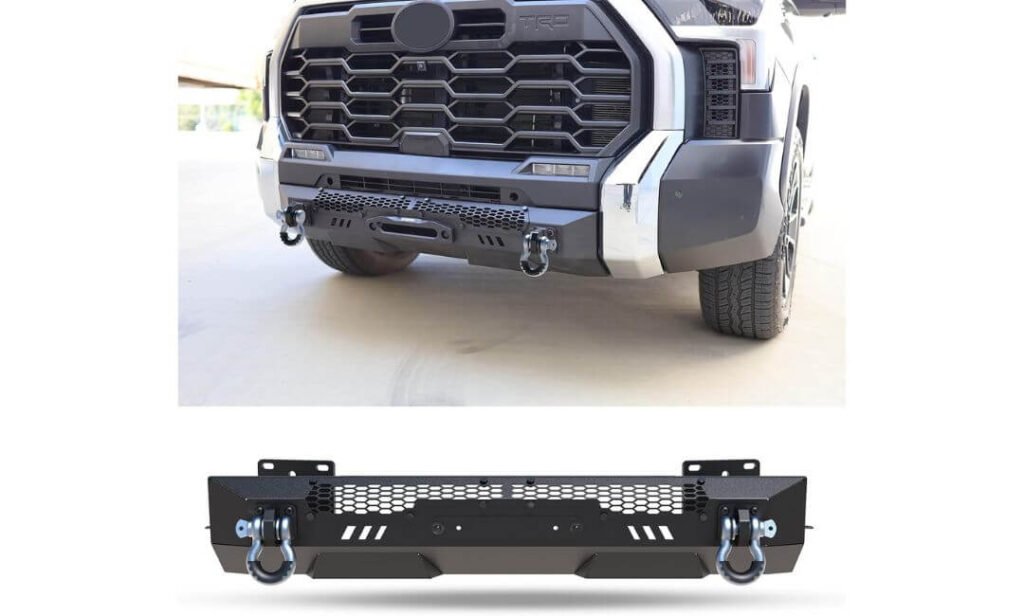
Quick Specs:
- Fitment: 2022–2026 Toyota Tundra
- Construction: Q235A alloy steel
- Weight: 43 lbs
- Width: 49.1 inches
- Depth: 14.57 inches
- Height: 8.6 inches
- Finish: Textured black powder coat
- Winch provision: Reserved fairlead mounting for up to 12,000-lb winches
- Lighting: Bracket for LED light bars up to 21 inches
- Recovery: Dual D-ring mounting points
- Design: Mid-width profile with segmented paintable bezels
- Installation: Bolt-on installation; requires bumper/body cutting and factory front-spoiler motor relocation
- Warranty: 1 year
- Important fitment note: Models with the factory front spoiler require additional modification; confirm your exact configuration before ordering
What immediately separates this bumper from a lot of generic Tundra options is the 43-pound weight. You are still getting a steel mid-width bumper with recovery points and winch provisions, but without adding the kind of front-end mass associated with some larger off-road bumpers. For a Tundra that already carries other accessories up front, that lighter approach is genuinely worth considering.
The useful part is underneath the styling. The reserved winch fairlead mounting area is designed around winches up to 12,000 lb, while the separate light-bar bracket accepts up to a 21-inch LED bar. That gives the front end two very different jobs—recovery and trail visibility—without forcing you into a huge full-width design. The dual D-ring points add another practical recovery option when you are actually outside the pavement.
Then there is the part buyers should know before the box arrives. This is a mid-width bolt-on design, but it is not a completely trim-free installation. The factory front spoiler needs attention, including relocating the spoiler motor, and some cutting is required to adapt the bumper to the truck. The good news is that the manufacturer describes the installation as bolt-fixed with no welding required, so the work is more about preparing the Tundra correctly than fabricating a bumper from scratch.
What We Like About the Design
- 43-pound steel construction keeps the setup relatively manageable for a recovery-oriented bumper.
- The 12,000-lb winch provision gives serious recovery potential without requiring a bulky full-width layout.
- A 21-inch light-bar bracket is a useful size for adding trail lighting without overcrowding the front.
- The paintable segmented bezels give owners room to personalise the bumper instead of being locked into one appearance.
- The textured powder-coated finish adds a practical layer of corrosion and rust resistance for a bumper intended to see outdoor use.
The One Detail to Plan Around
The factory front spoiler and its motor are the main installation consideration. It is not necessarily a reason to skip the bumper, but it is something I would sort out before ordering rather than discovering it halfway through installation. Having the right tools and a clear plan for the spoiler relocation will make the job considerably smoother.
Tundra Fitment and Installation Reality
The bumper is intended for 2022–2026 Toyota Tundra models, but the manufacturer’s fitment information specifically calls attention to trucks equipped with the factory front spoiler. Those trucks need the spoiler removed and the motor relocated, along with the required cutting for the bumper’s shape.
That is actually useful information to have upfront. A proper aftermarket bumper should not be judged only by whether it says “2022–2026” on the listing; the factory equipment on your individual Tundra matters. If your truck has the spoiler setup mentioned above, check the installation requirements before purchasing so you know exactly what the conversion involves.
The Insider Pro-Tip
If you are choosing this one specifically because of its 12,000-lb winch capability, decide on your recovery hardware before installation. The fairlead position, winch clearance and cable routing are much easier to think through while the bumper is being fitted than after everything is already bolted up.
And honestly, the 43-pound weight is one of its strongest selling points. If your Tundra is becoming a complete overland or recovery build with a winch, lighting, skid plates and other equipment, every pound added to the nose eventually matters. This design gives you steel construction, recovery points and useful lighting provision while keeping the bumper considerably more restrained than many oversized alternatives.
#3. ROXX Front Bumper
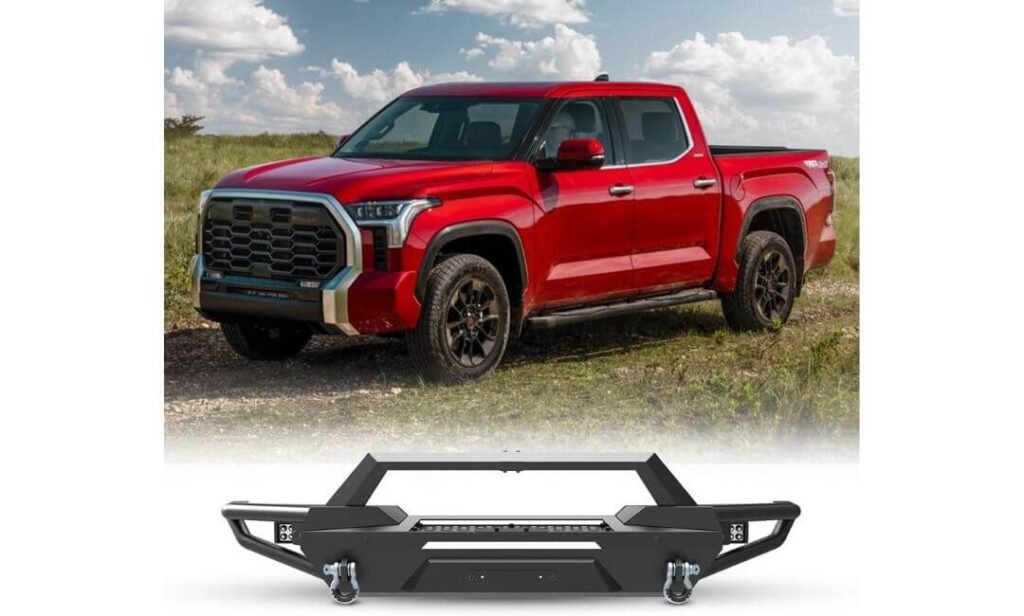
Quick Specs:
- Fitment: 2022–2026 Toyota Tundra pickup trucks
- Construction: Q235A carbon steel
- Weight: 70.55 lbs
- Finish: E-coat pre-coating + textured black powder coat
- Configuration: 3-piece bumper, side wings and bull bar
- Design: Mid-width modular construction
- Recovery: High-strength D-ring mounts welded inside and outside
- Lighting: Four included 4-inch LED pods; supports 3-inch or 4-inch pods
- Light-bar provision: Supports up to 28-inch light bar
- Customisation: Detachable bull bar, side wings and decorative panels
- Installation: Direct bolt-on with pre-drilled mounting points; no drilling or cutting required
- Warranty: 12 months
The interesting thing about this setup is not simply that it is made from Q235A steel. It is the fact that the front end is treated as a modular build rather than one fixed piece. The bumper comes as a three-piece combination with the main bumper, side wings and bull bar, so you have more freedom to shape the final look around how you actually use the Tundra.
The lighting setup is particularly well thought out for an owner who wants the truck ready for night trails. The bumper accepts 3-inch or 4-inch pod lights, and this particular package includes four 4-inch pods. There is also provision for a light bar up to 28 inches, giving you considerably more room to build the lighting arrangement you want instead of being restricted to one small mounting point.
Then you get the recovery hardware where it matters. The D-ring mounts are welded both internally and externally, giving the recovery points a more substantial foundation than a purely cosmetic mounting arrangement. Combined with the mid-width profile, the design is aimed at giving the Tundra a tougher front end while still keeping the bumper relatively useful on trails where approach angle matters.
What We Like About It
- Modular construction lets you change the front-end setup instead of committing to one permanent configuration.
- The included four 4-inch LED pods add genuine value if auxiliary lighting was already on your shopping list.
- Internally and externally welded D-ring mounts give the recovery points a serious, purpose-built feel.
- The E-coat plus textured powder-coat finish is a thoughtful two-stage approach for a part exposed to road grime, moisture and trail debris.
- The mid-width shape gives the truck a stronger stance without the visual bulk of some oversized bumper designs.
One Detail Worth Knowing
At around 70.55 pounds, this is noticeably heavier than the WOLFSTORM option above. That is not something I would call a problem—the three-piece construction, steel body, side wings and bull bar naturally contribute to the weight—but it is worth considering if your Tundra already carries a winch or several other front-end accessories.
Built for the 2022–2026 Tundra
ROXX lists this configuration specifically for 2022–2026 Toyota Tundra pickup trucks, making it a straightforward match for the third-generation Tundra covered in this guide. The supplied mounting hardware and pre-drilled bolt-on design also make the installation approach refreshingly simple compared with bumpers that require fabrication work.
The real attraction here is that you are not locked into the complete appearance forever. The bull bar, side wings and decorative panels are designed around a modular setup, while the detachable panels can also be colour-matched if you want something beyond the standard textured-black finish.
The Insider Pro-Tip
If you already know that you want auxiliary lighting, this is one of those products where the included hardware changes the value equation. You are getting four 4-inch pods with the combo, rather than buying a bumper and then immediately starting another shopping list for basic lighting.
I would also decide on the final configuration before tightening everything down. The ability to run the bull bar, side wings and lighting in a combination that suits your build is one of the strongest reasons to choose this design. Use that flexibility rather than treating it like a conventional one-piece bumper.
#4. Hawkley 22–26 Tundra Front Bumper
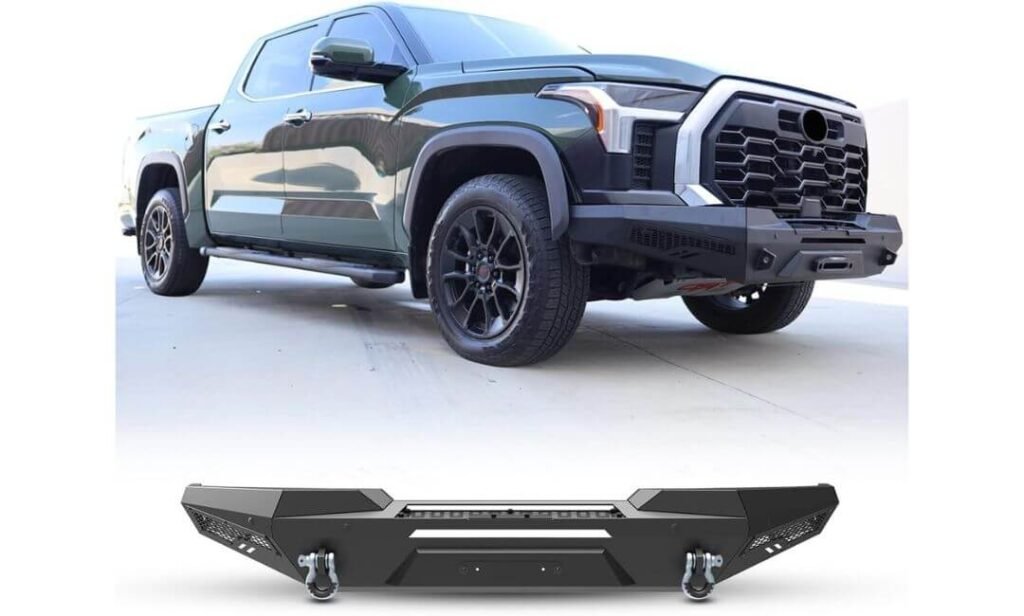
Quick Specs:
- Fitment: 2022–2026 Toyota Tundra
- Construction: Q235A steel
- Weight: 167 lbs
- Configuration: Main body + side wings
- Design: Full-width modular bumper
- Finish: Two-stage textured black powder coating
- Lighting: Two integrated 6-inch LED spotlights
- Recovery: Dual internally and externally welded D-ring mounts
- D-rings: Two 4.75-ton D-rings included
- Protection: Bull bar brush guard
- Sensor provision: Pre-drilled backup sensor holes
- Installation: Direct bolt-on using factory mounting points
- Installation work: Original bumper cutting and front spoiler motor relocation required
- Customisation: Removable honeycomb mesh panels for DIY colour matching
- Warranty: 1-year coverage
There is no pretending this is a lightweight bumper. At 167 pounds, this is the kind of front-end upgrade you choose because you want a substantial physical barrier between the Tundra and whatever the trail throws at it. The Q235A steel construction, side wings and bull bar give the front end a much more serious presence, while the two-stage textured powder coating is there to help the finish cope with the kind of dirt, moisture and road grime an off-road truck regularly encounters.
What makes it more interesting is how much of the useful equipment is already built into the package. You get two 6-inch LED spotlights, two 4.75-ton D-rings and a bull bar brush guard rather than having to start adding every accessory separately. The D-ring mounts are welded both inside and outside, which is exactly the sort of construction detail I look for when a bumper is being considered for genuine recovery use rather than just appearance.
The modular approach also gives the front end some personality. The honeycomb mesh panels can be customised, so you can change the finish instead of accepting the bumper exactly as it arrives. There are also pre-drilled provisions for backup sensors, while the bumper reuses the factory mounting points for the main installation. It is still a modification job—the original bumper needs cutting and the front spoiler motor needs relocating—but the actual mounting strategy remains straightforward.
What We Like About It
- The 167-pound build makes sense for owners specifically looking for maximum front-end presence and substantial steel coverage.
- Two 6-inch LED spotlights are already included, giving the bumper genuine night-driving usefulness from day one.
- The 4.75-ton D-rings and dual-sided welded mounts are a meaningful recovery-focused addition.
- The bull bar and side wings provide considerably more coverage than a minimalist bumper design.
- The customisable honeycomb panels give the owner a simple way to make the finished bumper look less generic.
The One Thing to Plan For
The main consideration is simply the amount of hardware involved. With 167 pounds of bumper weight, plus any additional winch or recovery equipment you add later, this is better suited to a Tundra build where front-end weight has been considered in advance. It is a serious bumper, and that is precisely why it appeals to the right buyer.
Made Around the 2022–2026 Tundra
The bumper is designed specifically around 2022–2026 Toyota Tundra pickup trucks, including the newer third-generation body style. It uses the truck’s factory mounting points and includes pre-drilled provisions for backup sensors, helping keep the finished installation looking more integrated.
There is some preparation involved before it goes on. The factory front bumper must be cut, and trucks equipped with the front spoiler require the spoiler to be removed with its motor relocated. Those are important installation steps, but they are also the kind of work worth knowing about before the bumper arrives so you can prepare properly rather than treating them as unexpected problems.
The Insider Pro-Tip
This is the bumper I would consider when the goal is protection first and minimalism second. If your Tundra is being built for rough trails, recovery work or a more serious off-road setup, the included D-rings, brush guard and 6-inch lighting make the package much more complete than a bare steel bumper.
One thing I would do before installation is lay out the entire front-end build—bumper, lighting, recovery gear and any future winch—and think about the total weight together. That simple bit of planning can save you from building the front of the truck twice. The Hawkley already brings a lot to the table, so it makes the most sense when you want one substantial upgrade rather than a series of smaller front-end additions.
#5. Longsun Tundra Front Bumper Mid-Width
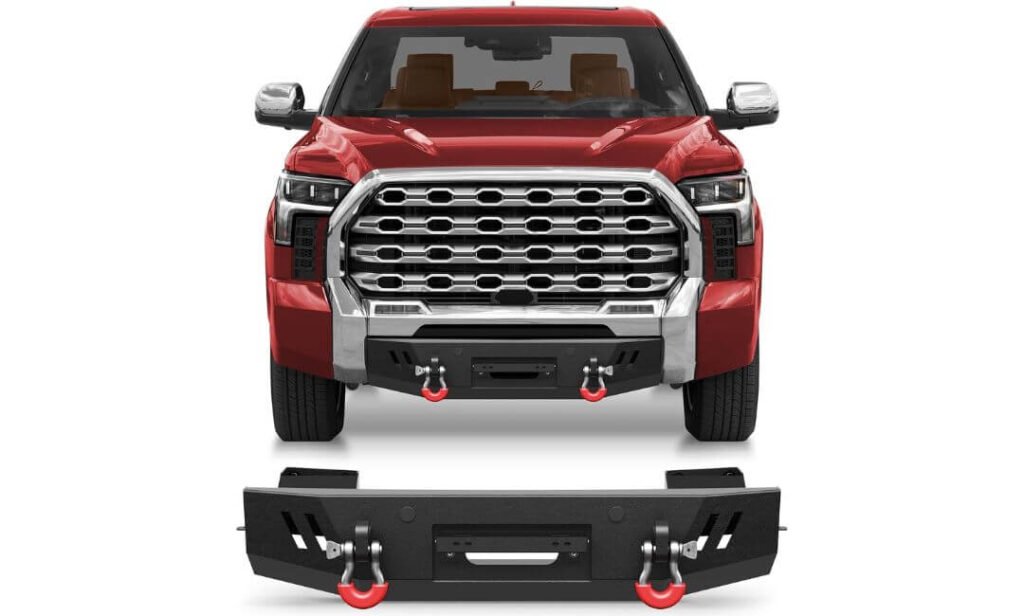
Quick Specs:
- Fitment: 2022–2026 Toyota Tundra
- Construction: Low-carbon steel
- Weight: 63 lbs
- Profile: Mid-width, one-piece design
- Dimensions: 43.91″W × 10.94″D × 9.84″H
- Finish: Textured black powder coating
- Winch capacity: 12,000-lb winch plate
- Recovery: Two D-ring mounts
- Lighting: Integrated LED fog lights
- Sensors: Two pre-drilled parking-sensor openings; sensors not included
- Extras: License-plate bracket
- Installation: Front-end cutting required; professional installation recommended
- Warranty: 1 year
Not every Tundra owner wants a massive front bumper. The appeal here is the 43.91-inch mid-width profile, which gives the truck a tougher front end while keeping the overall shape relatively compact. At 63 pounds, it also sits in a more manageable range than the much heavier full-coverage designs, making it an interesting option for someone building the truck gradually.
The useful hardware is where this bumper earns its place. A 12,000-lb winch plate and two D-ring recovery points give it genuine recovery capability, while the integrated LED fog lights add something you can actually use rather than simply filling space in the bumper. The two pre-drilled parking-sensor openings are another thoughtful touch, although the sensors themselves are not supplied.
There is one installation detail I would take seriously: this is not a simple “remove the old bumper and bolt this straight on” upgrade. Cutting the front section of the truck is required for the intended fit, so I would have the installation planned properly before ordering. For a bumper involving this type of modification, professional installation is money well spent if you are not already comfortable working on the Tundra’s front end.
What We Like About It
- Mid-width proportions keep the design more restrained than a large full-width bumper.
- The 12,000-lb winch plate gives the bumper serious recovery potential.
- Integrated LED fog lights add useful lighting without requiring an immediate separate lighting upgrade.
- The 63-pound weight keeps it considerably lighter than some heavy-duty alternatives in this category.
- Pre-drilled parking-sensor openings make room for a more factory-like finished setup if your truck is equipped with compatible sensors.
One Detail We’d Keep in Mind
The biggest thing to plan around is the required cutting during installation. That does not make the bumper a poor choice; it simply means this is better approached as a proper modification rather than a quick weekend swap without preparation.
2022–2026 Tundra Compatibility
This bumper is designed specifically for the 2022–2026 Toyota Tundra, so it belongs to the same third-generation fitment range as the other selections in this guide. Its one-piece construction and vehicle-specific dimensions are intended to follow the shape of that newer Tundra front end.
The two sensor openings are already prepared, but parking sensors are not included. If your truck uses factory sensors, check your exact setup before installation and plan the wiring and sensor fitment accordingly. That small bit of preparation can make the difference between a clean finished bumper and a frustrating installation.
The Insider Pro-Tip
If you want a 12,000-lb recovery setup without jumping straight to a 150-plus-pound bumper, this is the kind of option worth considering. The 63-pound construction keeps the package more restrained while still giving you the winch plate and D-ring points that matter when the truck leaves the pavement.
I would also treat the integrated fog lights as part of the buying decision rather than an afterthought. You are getting a bumper that combines mid-width protection, recovery hardware and useful lighting in one package. If that matches your build, it can save you from buying several separate front-end upgrades later.
Best Toyota Tundra Front Bumper Options for Trail Builds (2022–2026)
Buyer’s Guide: Choosing the Right Front Bumper for Your Toyota Tundra
A front bumper should be chosen around the job you expect it to do, not just the way it looks in a listing photo. The five bumpers in this guide range from a relatively light 43-pound mid-width design to a substantial 167-pound setup, so the right choice can change considerably depending on whether your Tundra is a daily driver, trail truck, recovery rig, or a mix of all three.
Start With How You Actually Use Your Tundra
For a Tundra that spends most of its time on pavement with occasional dirt-road trips, a compact or mid-width bumper generally makes more sense. It adds protection without unnecessarily increasing front-end weight or making the truck harder to manoeuvre in tight spaces.
If your truck regularly sees rocky trails, deep ruts, steep approach angles or recovery situations, the priorities change. Recovery points, winch provisions, steel construction and bumper clearance become much more important than decorative features.
For overlanding, I would look at the complete setup rather than the bumper alone. A winch, auxiliary lights, skid plates, recovery equipment and other front-end accessories can add up quickly. A bumper that seems reasonably light on its own can become a considerably heavier package once everything is installed.
Do You Actually Need a Winch?
This is one of the first questions worth answering honestly.
If you rarely leave maintained roads, paying extra for a heavy-duty winch-ready bumper may not give you much practical benefit. But if self-recovery is part of your Tundra’s intended use, a proper winch mounting system can completely change the value of the bumper.
The options in this guide are not identical here:
- DV8 Centric Series: concealed winch mounting with a low-profile layout.
- WOLFSTORM: winch-ready provision designed around up to a 12,000-lb winch.
- ROXX: modular design with a winch plate option.
- Hawkley: modular configuration with winch-related add-on options.
- Longsun: integrated 12,000-lb winch plate.
Do not choose a bumper simply because it says “winch-ready.” Check the winch capacity, mounting arrangement, fairlead location and available clearance for the exact winch you intend to use.
Think About Weight Before Adding Steel
This is probably the most overlooked part of aftermarket bumper shopping.
The weight difference between these five options is significant. The WOLFSTORM is listed at 43 pounds, while the ROXX is around 70.55 pounds, the DV8 is 89.8 pounds, and the Hawkley reaches 167 pounds. The Longsun sits at 63 pounds.
That difference matters because the bumper is mounted at the very front of the vehicle. Add a winch, recovery gear, skid plates and lighting, and the total front-end load can climb considerably.
Before choosing the heaviest design, consider:
- Your current suspension setup.
- Whether you already run a winch.
- Additional skid plates or armour.
- Auxiliary lighting and wiring.
- Recovery equipment carried on the truck.
- How much factory ride height and handling you want to preserve.
A heavier bumper is not automatically a better bumper. The best weight is the weight your truck is properly set up to carry.
Steel, Finish and Long-Term Exposure
For these Tundra bumpers, steel is the dominant choice because the products are designed around impact protection, recovery hardware and off-road use. Steel also allows manufacturers to build substantial mounting points and reinforced sections without relying on a lightweight cosmetic shell.
But the steel itself is only part of the story.
Pay attention to the surface treatment as well. The products here use variations of textured or micro-textured powder coating, while the ROXX adds an E-coat pre-coating underneath its textured black finish. These treatments are intended to help protect the exposed metal from moisture, road grime and corrosion.
That does not mean any powder-coated bumper is maintenance-free. If the coating gets chipped by rocks or deep trail impacts, exposed metal should be dealt with rather than left unattended.
Do Not Forget Sensors and Factory Electronics
Modern Tundras are not as simple as older trucks where you could replace the bumper and forget about the electronics.
Your exact truck may have parking sensors, adaptive cruise-control hardware, cameras or other front-end equipment, and bumper design can affect how those components sit or operate.
The DV8 Centric Series is particularly interesting because its design is intended to retain adaptive cruise control and parking sensors, while the Longsun provides pre-drilled openings for parking sensors. The Hawkley also includes pre-drilled backup-sensor holes.
Still, treat those claims as a starting point rather than a reason to skip checking your own truck. Trim, factory equipment and bumper configuration can matter. Before ordering, compare your current front-end hardware with the manufacturer’s installation information.
Installation Is Part of the Buying Decision
Two bumpers can have almost identical-looking specifications and still involve very different installation jobs.
The ROXX is the easiest on paper, using pre-drilled mounting points with a bolt-on installation and no drilling or cutting required. The DV8 requires minor cutting around the centre bumper cover, while the WOLFSTORM and Hawkley require more preparation involving the factory front spoiler and its motor.
The Longsun also requires front-end cutting, making professional installation a sensible choice if you are not already comfortable modifying the Tundra’s bumper area.
Before buying, ask yourself:
- Is the bumper genuinely bolt-on for my configuration?
- Does the factory bumper need cutting?
- Does the front spoiler need removal?
- Does the spoiler motor need relocation?
- Are sensor holes already provided?
- Will existing skid plates remain usable?
- Do I need specialist tools or a second person for installation?
Knowing those answers beforehand can save considerably more frustration than choosing a bumper solely because it looks good.
Mid-Width or Full-Width?
A mid-width bumper is usually the more balanced choice if you want added protection while keeping the Tundra’s front end relatively compact. It can also make sense for trail driving where clearance and manoeuvrability are important.
A full-width setup, such as the Hawkley configuration in this guide, gives you substantially more front-end coverage and a much more imposing appearance. That can be exactly what you want for a serious build, but it also brings additional weight and bulk.
There is no universal winner here. Choose the width based on the terrain, protection level and overall build you actually want.
Recovery Points Deserve More Attention Than They Get
If you plan to use the bumper for recovery, inspect the D-ring mounting construction, not just whether the product description contains the words “D-rings.”
The five options take different approaches. The DV8 uses thick recovery mounts, the ROXX reinforces its D-ring mounts internally and externally, and the Hawkley includes 4.75-ton D-rings with dual-sided welded mounting points.
The important thing is to understand the complete recovery system. A bumper’s recovery points should be treated as part of a properly rated setup, with suitable shackles, straps, winch equipment and recovery technique. Never assume a decorative tow point is automatically a recovery-rated anchor.
Lighting: Useful Upgrade or Just Extra Hardware?
Lighting is another area where it is easy to buy more than you need.
The DV8 provides locations for 3-inch pods and a 20-inch light bar, WOLFSTORM supports up to a 21-inch bar, ROXX accommodates 3- or 4-inch pods and up to a 28-inch bar, while Hawkley includes two 6-inch LED spotlights. Longsun takes a different route with integrated LED fog lights.
If you regularly drive trails after dark, these provisions can be genuinely useful. If your Tundra is mainly a commuter, however, you may get more value from choosing the bumper for its protection, weight and fitment rather than paying extra attention to every available light mount.
Check the Complete Build, Not Just the Bumper
The smartest way to choose is to picture the Tundra six months after installation, not on the day the bumper arrives.
If you plan to add a winch later, account for its weight now. If you want auxiliary lights, consider wiring and mounting positions now. If you already have factory skid plates, make sure the bumper works with them. If your truck has sensors or a camera, make sure the final setup will accommodate them.
That approach usually leads to a better result than buying the most aggressive bumper first and figuring out the rest afterwards.
A Simple Way to Narrow the Five Down
If your priority is balanced protection with factory-feature consideration, the DV8 Centric Series is the most natural starting point.
If you want a lighter steel bumper with serious winch capability, look closely at WOLFSTORM.
If customization and included lighting matter most, ROXX is the more flexible choice.
If you specifically want maximum coverage, substantial steel and built-in 6-inch lighting, the Hawkley is the heavyweight option.
And if you want a mid-width design with a 12,000-lb winch plate while keeping the bumper lighter than the heavyweight alternatives, Longsun deserves consideration.
The important part is that none of those choices is automatically right for every Tundra. Your trim, factory equipment, suspension setup, recovery plans and actual driving habits should make the final decision.
Toyota Tundra Front Bumper Installation Tips
Installing an aftermarket bumper on a 2022–2026 Tundra is not always a simple remove-and-replace job. The exact work depends on the bumper you choose, but the products in this guide range from straightforward bolt-on installation to designs requiring bumper-cover cutting and factory spoiler-motor relocation. A little preparation before you start can make the entire job much cleaner.
Confirm the Bumper Against Your Exact Tundra
Before removing anything, verify that the bumper matches your 2022–2026 Tundra configuration and check whether your truck has parking sensors, adaptive cruise-control hardware, a front camera, or the factory front spoiler.
Do not rely only on the year range printed on the product listing. Compare the mounting points and factory equipment with the manufacturer’s installation instructions, especially if your truck has additional front-end technology.
Prepare the Front End Before Cutting
Some of these bumpers require trimming the factory bumper cover, so measure twice before making the first cut. Mark the required area carefully and protect nearby painted surfaces, wiring and sensors from accidental damage.
The DV8 requires minor centre-cover cutting, while the WOLFSTORM, Hawkley and Longsun involve more substantial front-end preparation. If you are not comfortable cutting vehicle panels, professional installation is the safer route.
Pay Attention to the Factory Front Spoiler
This matters particularly with the WOLFSTORM and Hawkley designs. Their installation information calls for removing the factory front spoiler and relocating its motor.
Handle the spoiler hardware and wiring carefully rather than forcing anything out of position. Make sure the motor and associated components are securely relocated before final bumper alignment.
Test-Fit Everything Before Final Tightening
This is one step I would not skip.
Install the bumper loosely first and check panel alignment, grille clearance, sensor openings, skid-plate compatibility and side-to-side positioning. Once everything sits correctly, tighten the hardware according to the manufacturer’s instructions.
A few extra minutes here can prevent the annoying situation where everything looks perfect on one side but sits slightly off on the other.
Plan the Winch and Lighting Wiring Early
If your bumper includes a winch mount or lighting provisions, route the wiring before the bumper is completely secured.
For a winch, check fairlead alignment, cable path and access to the winch controls. For LED pods or light bars, plan the wiring route so it stays away from sharp edges, moving components and areas exposed to excessive heat or water.
The ROXX, for example, gives you several lighting possibilities, while the DV8 and WOLFSTORM provide dedicated light-bar and pod mounting locations. Decide which lights you are actually using before final assembly.
Recheck Sensors and Factory Features
After installation, test every factory feature that was near the original bumper.
Check:
- Parking sensors
- Front or backup camera
- Adaptive cruise-control operation
- License-plate mounting
- Factory skid-plate fitment
- Lighting and wiring
- Winch and fairlead clearance
If a sensor suddenly behaves differently after installation, do not assume the bumper is automatically defective. The sensor position, angle or surrounding bumper structure may need to be checked.
Get a Second Set of Hands
Steel bumpers are awkward even when their listed weight does not sound excessive. A second person makes lifting, alignment and temporary positioning much easier and reduces the chance of scratching the truck during installation.
For the 167-pound Hawkley in particular, I would not treat installation as a one-person job.
Finish With a Full Safety Check
Once everything is installed, inspect every mounting point, recovery attachment, electrical connection and clearance area before driving.
Then take a short, slow test drive and listen for rattles, contact points or unusual movement. Recheck the hardware after the initial drive according to the manufacturer’s installation guidance.
The goal is not simply to get the bumper onto the Tundra. A good installation should leave you with a front end that is properly aligned, securely mounted and ready for the equipment you intend to use with it.
Real-World Toyota Tundra Bumper Scenarios
The right bumper becomes much easier to choose when you stop comparing specifications on paper and think about where your Tundra actually spends its time. A daily-driven truck, weekend trail rig and dedicated recovery build can all need completely different front-end setups.
Daily Driver With Occasional Off-Road Trips
If your Tundra spends most weekdays commuting but occasionally heads onto gravel roads, campsites or mild trails, I would avoid adding more weight and bulk than you genuinely need.
A compact or mid-width bumper is usually the smarter direction here. The DV8 Centric Series is particularly appealing because its low-profile design keeps the truck closer to its original shape while still giving you recovery and lighting provisions. Longsun is another sensible route if you want a mid-width setup with a 12,000-lb winch plate without moving into a very heavy bumper.
The idea is simple: add capability without turning a comfortable daily truck into an unnecessarily heavy build.
Weekend Rock-Crawling Tundra
Rocky trails change the priorities completely. Approach angle, recovery points, steel protection and winch access become much more important than keeping the front end looking factory.
This is where the DV8 or WOLFSTORM makes more sense. The DV8 keeps a relatively compact profile while providing concealed winch mounting and recovery hardware. WOLFSTORM takes a more recovery-focused approach with its 12,000-lb winch provision and mid-width construction.
If your trails regularly involve getting stuck rather than simply driving over maintained dirt roads, recovery capability should be high on your buying list.
Overlanding and Long-Distance Trips
For overlanding, I would think about the entire loadout before choosing the bumper.
You may already be carrying a roof rack, recovery equipment, skid plates, camping gear and additional lighting. In that situation, the 43-pound WOLFSTORM can make more sense than immediately jumping to a 167-pound bumper.
ROXX is also interesting here because its modular construction lets you tailor the front end around your equipment. That flexibility is useful when your build is likely to evolve over time.
Night Trail and Desert Driving
If your Tundra regularly travels remote roads after dark, lighting becomes a genuine buying factor rather than decoration.
The Hawkley comes with two 6-inch LED spotlights, while ROXX includes four 4-inch pods and offers room for additional lighting. DV8 gives you mounting locations for two 3-inch pods and a 20-inch light bar.
For this type of use, I would look at where the lights sit, how easy the wiring will be to route, and what other accessories will occupy the same space. More light mounts do not automatically mean a better lighting setup.
Serious Recovery Build
If the Tundra is being built around a winch and recovery equipment, the bumper should be treated as part of the recovery system rather than an isolated accessory.
Look closely at the winch mounting arrangement, fairlead position and D-ring construction. WOLFSTORM and Longsun both offer 12,000-lb winch provisions, while DV8 uses a concealed mounting arrangement. ROXX provides a modular winch-plate option.
In this scenario, I would also pay close attention to total front-end weight. A bumper, winch and recovery equipment can add up quickly, so suspension capacity becomes part of the bumper decision.
Maximum Front-End Protection
If your priority is substantial coverage and a more aggressive trail-oriented build, the Hawkley is the obvious heavyweight choice from this group.
Its 167-pound construction, side wings, bull bar, dual 4.75-ton D-rings and included 6-inch lighting make it considerably more substantial than the mid-width alternatives.
That extra material is useful if maximum coverage is your goal, but it is also why I would consider the complete front-end weight before choosing it. This is a bumper for someone who wants a serious build, not simply a cosmetic upgrade.
The Tundra That Does a Bit of Everything
This is probably the most common situation: the truck commutes during the week, carries the family on weekends, visits trails occasionally and may eventually get a winch.
For that kind of mixed use, I would start with DV8 Centric Series. Its low-profile design, concealed winch mounting, recovery points, lighting provisions and compatibility with factory skid plates give it a well-rounded balance without going to the extreme weight of the largest option.
That is ultimately what makes a bumper “right” for your truck. You do not need the biggest bumper, the most lights or the highest number on a specification sheet. You need the combination of protection, recovery capability, weight and fitment that matches the way you actually use your Tundra.
FAQs About Toyota Tundra Front Bumper
Is a 2022–2026 Toyota Tundra front bumper compatible across every trim, or can factory equipment change the fit?
The 2022–2026 Toyota Tundra shares the same third-generation body generation, but “fits 2022–2026” should not be treated as a guarantee that every truck has identical front-end equipment. Trim-level equipment, parking sensors, cameras, adaptive cruise-control hardware and the factory front spoiler can change what is involved in the installation.
That is why I would check your exact truck before ordering, particularly with bumpers that require cutting or spoiler-motor relocation. A bumper can physically fit the body and still require additional work around the equipment already installed on your Tundra.
Will replacing the Toyota Tundra bumper affect parking sensors or adaptive cruise control?
It can, depending on the bumper design and your truck’s factory equipment. The DV8 Centric Series is specifically designed to retain parking sensors and adaptive cruise control, while other designs provide pre-drilled sensor openings rather than retaining every factory component automatically.
Before installation, I would make a quick checklist:
- Identify every sensor or camera located around the factory bumper.
- Compare those locations with the aftermarket bumper.
- Confirm whether the manufacturer provides compatible mounting provisions.
- Test the systems after installation rather than assuming they will behave exactly as before.
The important distinction is between “the bumper fits the truck” and “all factory electronics remain fully integrated.” Those are not always the same thing.
Does a heavier steel bumper make a Toyota Tundra better for off-roading?
Not automatically. This is one of those areas where aftermarket marketing can make weight sound like a quality measurement when it really is a build decision.
The five bumpers here range from about 43 pounds to 167 pounds, which is a huge difference. A heavier design can provide more substantial coverage and hardware, but once you add a winch, skid plates and recovery equipment, the total front-end load becomes much more important.
For a Tundra that is already heavily equipped, a lighter bumper such as the WOLFSTORM can make more sense. If maximum coverage is the priority and the truck is being built around that weight, the substantially heavier Hawkley may be the better match.
Do I need a winch-ready bumper if I only occasionally go off-road?
Not necessarily, and I would not buy one simply because “winch-ready” sounds like the more capable option.
If you mainly drive forest roads, campsites and moderate trails, recovery points and sensible protection may be more useful than carrying a winch you rarely use. On the other hand, if you travel alone into remote terrain, a properly planned winch system can become a very worthwhile safety and recovery tool.
There is also a practical middle ground: choose a bumper that provides a proper winch provision without forcing you to install the winch immediately. That gives you room to expand the Tundra later without replacing the bumper.
Which Toyota Tundra bumper makes the most sense if I want one upgrade that I will not outgrow quickly?
I would look for a bumper that leaves room for your build to evolve rather than buying around today’s setup alone. That means considering recovery points, winch access, lighting provisions, sensor compatibility, skid-plate compatibility and total weight together.
For this particular selection, the DV8 Centric Series is the most balanced starting point because it combines a low-profile design with concealed winch mounting, recovery hardware, lighting provisions and factory-feature consideration. ROXX is especially interesting if you expect your setup to change because its modular design gives you more freedom over the bull bar, side wings and lighting configuration.
The bigger lesson is this: buy the bumper for the Tundra you are realistically building, not the imaginary truck you might build someday. A good bumper should solve today’s problem while leaving sensible room for tomorrow’s upgrades.
Final Verdict: Which Toyota Tundra Front Bumper Is Right for You?
After looking at these bumpers as actual truck upgrades rather than simply comparing product listings, the biggest takeaway is that there is no single “best” bumper for every Tundra. The right choice depends on how much weight you are willing to add, whether recovery capability matters, how much front-end coverage you want, and how much modification you are comfortable making during installation.
For the most balanced build, I would put the DV8 Centric Series at the top. Its low-profile shape, concealed winch mounting, recovery points, lighting provisions and consideration for factory features make it the easiest recommendation for someone who wants one serious upgrade without going to an extreme full-width setup.
The WOLFSTORM is the more interesting choice if weight is high on your list and you still want a 12,000-lb winch provision. ROXX stands out when customisation and included lighting matter more, while the Hawkley is the heavyweight option for owners who genuinely want maximum coverage and a substantial front-end build. The Longsun sits in a useful middle ground, combining a mid-width profile with a 12,000-lb winch plate and integrated lighting.
One final piece of advice is worth taking seriously: do not let the most aggressive-looking bumper automatically win the decision. Look at the complete Tundra build, including the winch, suspension, skid plates, sensors, lighting and the kind of roads you actually drive. A bumper that works with the rest of the truck will always be a better upgrade than one that simply looks impressive sitting on a product page.
If you have a 2022–2026 Tundra, this shortlist gives you five genuinely different directions to consider. Pick the one that fits your use, your weight budget and your installation comfort level, and you will be far more likely to end up with a front end you are still happy with long after the initial excitement of the upgrade wears off.
Also Check:


