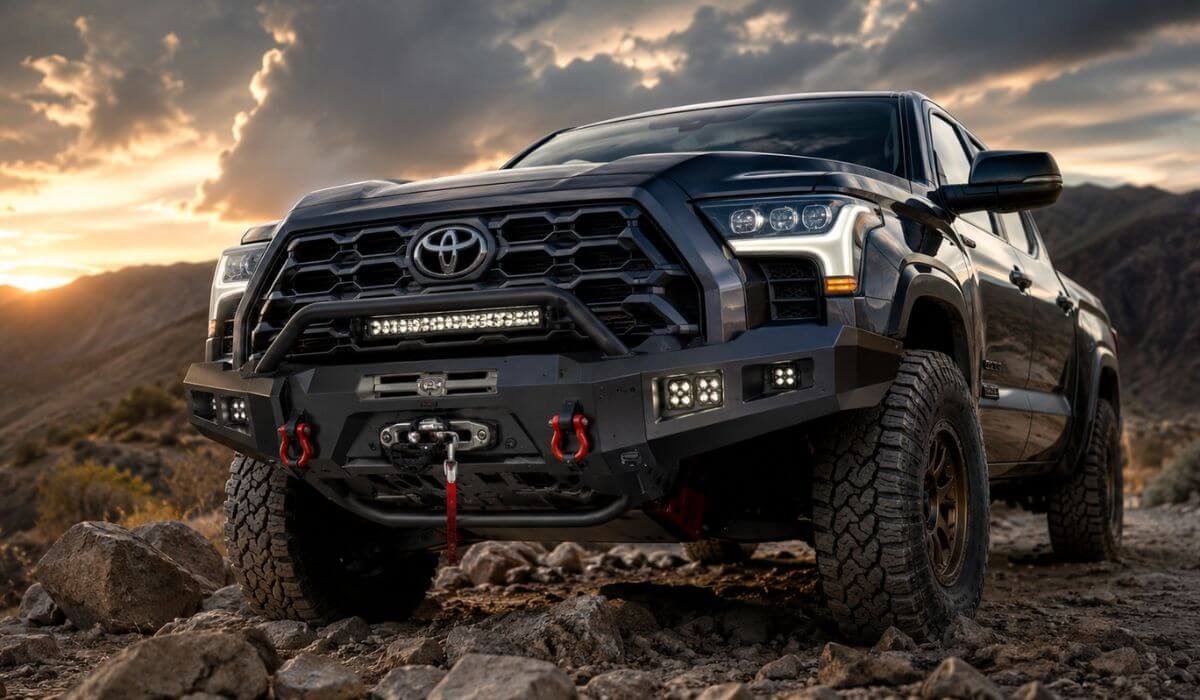
5 Best Toyota Tundra Winch Bumpers in 2026: Factory Sensor Ready Picks With Trail-Proven Armor
When you start shopping for a winch bumper for a 2022–2026 Toyota Tundra, the biggest mistake is focusing only on appearance. The latest Tundra is packed with factory technology, including parking sensors, adaptive cruise control hardware, cameras, and airflow systems that many aftermarket bumpers fail to accommodate properly. A bumper that looks aggressive in photos can quickly become frustrating if it creates sensor issues or limits future upgrades.
After comparing the most popular options currently available for the third-generation Tundra, we focused on the features that matter most to real owners: winch compatibility, recovery-point strength, sensor integration, approach angles, steel construction, air dam compatibility, and long-term durability in harsh conditions. We also considered how well each bumper fits different trims, from work-focused SR5 models to fully equipped TRD Pro, Limited, Platinum, and 1794 Edition trucks.
The result is a shortlist of five bumpers that stand out for different reasons. Some prioritize factory-style integration, some maximize front-end protection, and others are built specifically for drivers who spend weekends tackling difficult trails. If you’re investing in a winch setup and want a bumper that won’t require compromises later, these are the options worth considering.
Best Toyota Tundra Winch Bumpers: Top 2026 Picks for Sensor-Friendly Off-Road Builds
#1. DV8 Centric Series Heavy-Duty Front Winch Bumper
Best Winch Bumper for Toyota Tundra TRD Pro and Premium Trims Demanding Factory Sensor Compatibility, Adaptive Cruise Support, and OEM-Style Integration
#2. I1MOTOR Full Width Steel Winch Bumper
Best Heavy-Duty Winch Bumper for Toyota Tundra 4×4 Owners Seeking Maximum Front-End Protection, Serious Recovery Capability, and Rugged Trail Confidence
#3. ROXX Full-Width Off-Road Winch Bumper
Best Winch Bumper for Toyota Tundra Limited and Platinum Models Requiring Sensor-Friendly Protection, Integrated Lighting, and Daily-Driver Practicality
#4. Hawkley Stubby Steel Front Winch Bumper
Best Winch Bumper for Toyota Tundra Off-Road Builds Focused on Superior Approach Angles, Increased Tire Clearance, and Technical Trail Performance
#5. Longsun Complete Steel Bumper Package
Best Front Bumper Upgrade for Toyota Tundra Owners Looking for a Complete Winch-Ready Protection Package with Recovery Gear and Auxiliary Lighting
Must Check: Best Winch For Toyota Tundra
Expert Tip Before You Buy a Toyota Tundra Winch Bumper
One thing many Tundra owners realize only after installation is that a winch bumper becomes a long-term part of the truck, not just an accessory. A bumper can always be replaced later, but dealing with sensor issues, poor fitment, rattles, recovery-point concerns, or airflow problems gets expensive and frustrating very quickly.
That is why it makes sense to look beyond steel thickness and aggressive styling. The better question is whether the bumper will still make sense three years from now when you add a winch, recovery gear, auxiliary lighting, larger tires, or suspension upgrades. In our experience, the best bumpers are the ones that continue working with the truck as your build evolves rather than forcing compromises later.
How We Chose These Toyota Tundra Winch Bumpers
We did not build this list around marketing claims, sponsored rankings, or whichever product had the most reviews. In fact, several newer Tundra bumpers have limited long-term owner feedback simply because the third-generation Tundra platform is still relatively new. Instead, we focused on the details that experienced truck owners pay attention to before spending their money.
First, we looked at winch readiness. Every bumper on this list offers a dedicated winch mounting solution because many products advertised as “off-road bumpers” still require additional fabrication or modifications before a winch can be installed properly. A true winch bumper should be recovery-ready from the start.
Next, we evaluated sensor and factory technology compatibility. Modern Tundras are loaded with expensive driver-assistance systems, parking sensors, and safety equipment. A bumper that interferes with those systems can create more problems than it solves. Products like the DV8 and ROXX stood out because they were designed with factory technology in mind rather than treating it as an afterthought.
We also paid close attention to real-world protection design. Full-width options such as the I1MOTOR provide additional coverage for drivers who spend time on remote trails or rough work sites, while compact designs like the Hawkley prioritize approach angles and front tire clearance for more technical off-road driving. Neither approach is automatically better; it depends on how the truck is actually used.
Another major factor was recovery capability. Strong D-ring mounting points, reinforced winch areas, and overall structural design mattered far more to us than cosmetic features. Recovery gear places enormous stress on a bumper, especially when pulling a full-size truck from mud, sand, snow, or rocky terrain.
Finally, we considered overall ownership value. We favored bumpers that offer meaningful features such as integrated lighting provisions, recovery equipment support, factory-style fitment, durable steel construction, and upgrade flexibility. The goal was not to find the cheapest option or the most aggressive-looking option. The goal was to identify products that make sense for actual Tundra owners investing in a truck they plan to keep for years.
That is why every bumper on this list earned its place for a specific reason. Some excel at factory integration, some focus on maximum protection, and others deliver better off-road geometry. Together, they represent the strongest winch-ready options currently available for Toyota Tundra owners who want capability without unnecessary compromises.
#1. DV8 Centric Series Heavy-Duty Front Winch Bumper
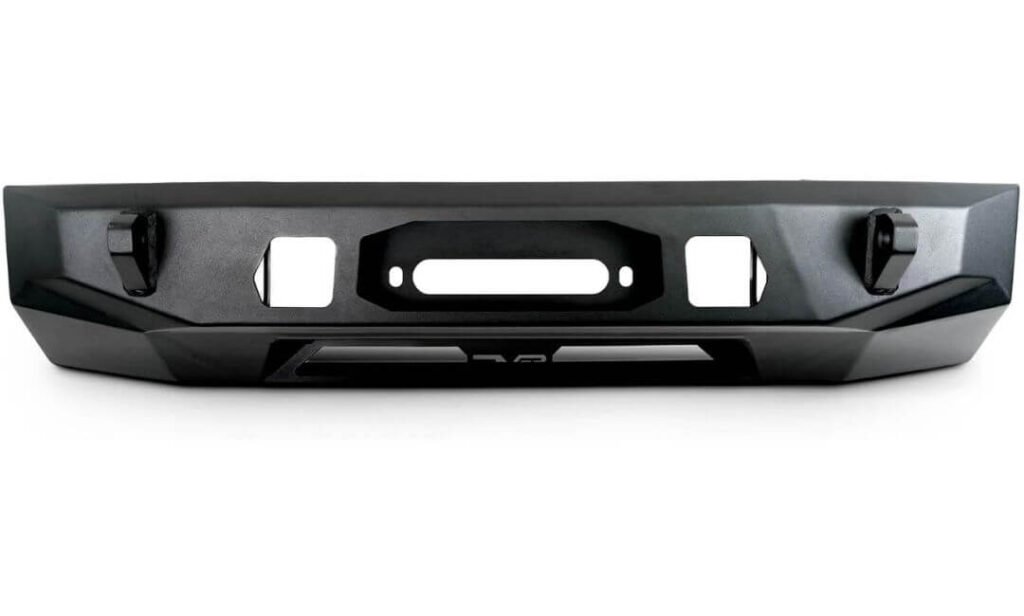
Quick Specs:
- Concealed winch-ready mounting system
- Supports 20-inch LED light bar and dual 3-inch pod lights
- Retains adaptive cruise control and parking sensors
- Compatible with factory air dam and skid plates
- Heavy-duty steel construction with powder-coated finish
- Low-profile factory-style design
- Recovery-ready D-ring mounting points
- Approx. 89.6 lbs assembled weight
Real talk, most winch bumpers force owners to choose between factory technology and off-road capability. This one doesn’t. What immediately stood out to us was how much effort went into keeping the truck’s original functionality intact while still delivering the upgrades serious owners actually want. Adaptive cruise control, parking sensors, factory air dam compatibility, skid plate compatibility, recovery points, lighting provisions, and hidden winch support all exist together without making the front end look oversized or overbuilt.
Another detail we genuinely appreciate is the concealed winch setup. Instead of hanging a winch out in the open, the mounting location stays tucked neatly behind the bumper. That creates a cleaner appearance while still allowing easy access when recovery equipment is needed. Add the integrated 20-inch light bar provision and dual pod-light cutouts, and it becomes clear this bumper was designed by people who actually spend time building trucks rather than simply selling accessories.
The low-profile layout is also a major advantage. Many aftermarket bumpers add unnecessary bulk to the front of the truck, but this design preserves the original stance and approach angle that owners paid for in the first place. The result is a setup that feels closer to a factory performance package than a traditional aftermarket bumper.
(If your goal is adding a winch, recovery gear, and auxiliary lighting without sacrificing factory features, this is one of the cleanest solutions currently available.)
What Stood Out During Our Evaluation
- Retains important factory technology including adaptive cruise control
- Parking sensor friendly design
- Hidden winch mounting keeps the front end clean
- Supports both LED pod lights and a 20-inch light bar
- Compatible with factory air dam and skid plates
- Maintains the truck’s original approach angle and styling
One Thing Worth Knowing
- Minor trimming of the center bumper cover is required during installation
Fitment and Ownership Notes for Tundra Drivers
This bumper is designed specifically for third-generation Toyota Tundra models and works across the trim range, making it one of the most versatile options currently available. Whether the truck is a work-focused SR5 or a feature-packed TRD Pro, the overall integration feels well thought out.
Owners planning future upgrades will also appreciate that the bumper leaves room for a natural build path. Winches, lighting, recovery equipment, and underbody protection can all be added without forcing major changes later.
The Insider Pro-Tip
One mistake many owners make is choosing the most aggressive-looking bumper available and worrying about compatibility afterward. In practice, long-term satisfaction usually comes from a bumper that works with the truck rather than fighting against it.
That is exactly why this option earned the top spot on our list. It delivers the upgrades most owners actually use—winch support, recovery capability, lighting provisions, and durable protection—while preserving the factory systems that make modern Tundras comfortable to drive every day. A few years from now, that balance will matter far more than how aggressive the bumper looked on day one.
#2. I1MOTOR Full Width Steel Winch Bumper
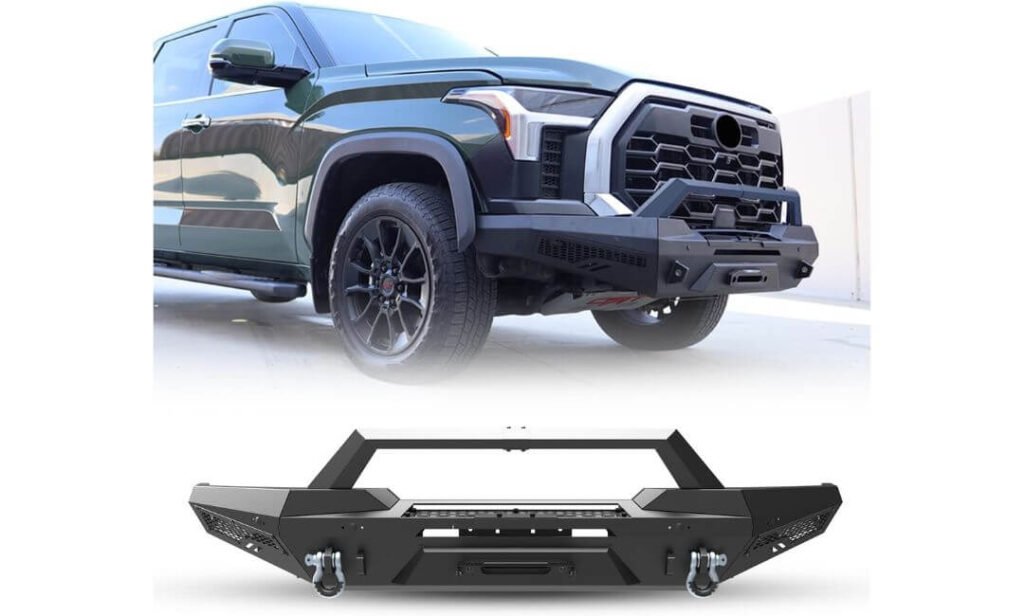
Quick Specs:
- Supports winches up to 12,000 lbs
- Full-width modular design with side wings and bull bar
- Heavy-duty Q235A carbon steel construction
- 3.5mm steel plates with reinforced 5mm supports
- Textured black powder-coated finish
- Includes D-ring recovery mounts and shackles
- Fits up to 21-inch center light bar
- Supports up to 28-inch bull bar light bar or four pod lights
- Includes dual 6-inch LED light bars
- Sensor-ready design with reserved mounting locations
Unlike low-profile bumpers that focus primarily on appearance, this setup takes a completely different approach. The first thing that stands out is the sheer amount of protection built into the design. The full-width layout extends farther across the front of the truck, while the integrated side wings help shield areas that often remain exposed with narrower bumper systems.
What impressed us most was how much functionality is packed into a single package. The winch system is rated for up to 12,000 pounds, recovery points are already incorporated into the design, and multiple lighting locations are available without requiring additional fabrication. Whether you’re building a recovery-focused truck, an overland setup, or simply want more confidence when traveling off pavement, everything feels purpose-built rather than added as an afterthought.
The steel construction deserves attention as well. With 3.5mm steel plating, reinforced 5mm supports, and a textured powder-coated finish, the structure feels substantially stronger than many entry-level alternatives. We also like the fact that owners can customize the removable bezels with their own color choice, creating a more personalized look without permanent modifications.
(For drivers who want one of the most feature-packed winch-ready bumpers available, this package checks nearly every box in a single purchase.)
What Earned It a Spot on Our Shortlist
- Supports recovery winches up to 12,000 lbs
- Full-width design provides exceptional front-end coverage
- Heavy-duty steel construction with reinforced support structure
- Multiple lighting configurations supported
- D-ring recovery points and shackles included
- Customizable bezels allow personalized styling
- Sensor-ready layout for modern truck technology
- Includes dual 6-inch LED light bars
One Detail Buyers Should Know
- Installation requires removal of the factory front spoiler before mounting
Ownership Notes for Serious Tundra Builds
This bumper makes the most sense for owners who view protection as a priority rather than a secondary feature. The wider profile, integrated bull bar, recovery hardware, and extensive lighting support create a setup that feels ready for future upgrades without needing additional front-end modifications.
It is also one of the few options on this list that can comfortably grow with the truck. Larger recovery gear, additional lighting, and a high-capacity winch can all be added later without forcing a bumper replacement.
The Insider Pro-Tip
Many buyers focus exclusively on winch ratings and overlook overall bumper structure. In reality, the strength of the surrounding mounting system matters just as much as the winch itself when recovery loads start increasing.
That is one reason this model stood out during our evaluation. The combination of reinforced steel supports, full-width protection, integrated recovery points, lighting flexibility, and high-capacity winch support creates a bumper that feels engineered for long-term ownership rather than short-term appearance upgrades. For many Tundra owners, that difference becomes obvious the first time the truck is pushed beyond normal pavement.
#3. ROXX Full-Width Off-Road Winch Bumper
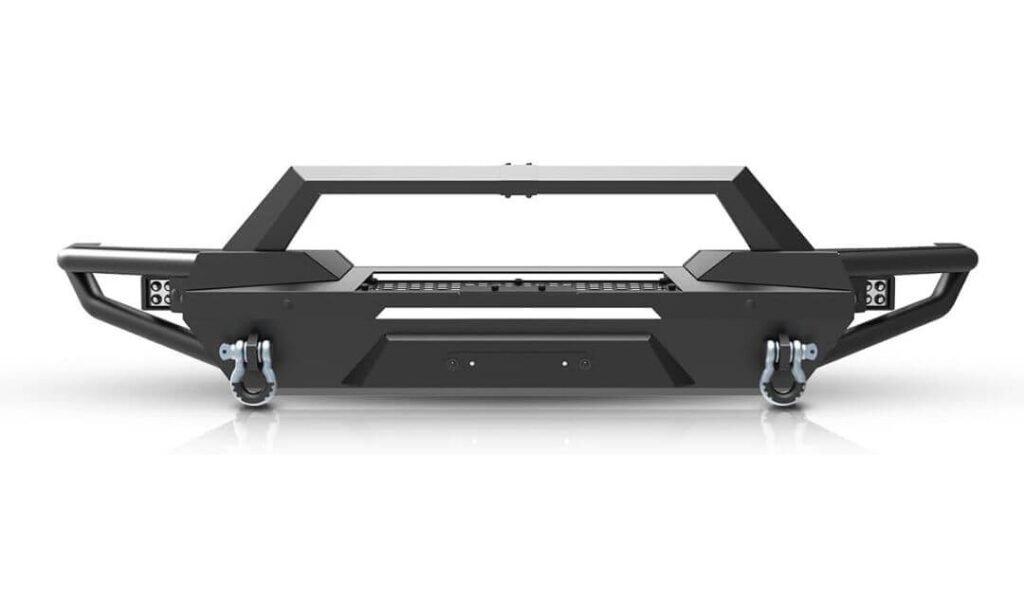
Quick Specs:
- Modular full-width bumper system
- Detachable bull bar and side wings
- Heavy-duty Q235 steel construction
- Rust-resistant black powder-coated finish
- Supports up to 12,000 lb winch with optional winch plate
- Retains adaptive cruise control and parking sensors
- Front camera friendly design
- Includes two LED pod lights
- Includes D-ring recovery shackles
- Flip-up license plate bracket included
Something that immediately caught our attention is the amount of flexibility built into this design. Most full-width bumpers lock owners into a single configuration from the day they install it. This setup takes the opposite approach. The detachable bull bar and removable side wings allow the front end to evolve as the truck evolves. That may not sound important on paper, but it becomes incredibly valuable when owners start adding new accessories or changing the overall direction of their build.
What also impressed us was how well it balances protection with factory functionality. Despite the aggressive appearance, the bumper continues to support adaptive cruise control, parking sensors, and front camera operation, which are often the first features sacrificed on poorly designed aftermarket bumpers. For owners driving their truck every day, that balance matters far more than flashy marketing claims.
The recovery and lighting provisions add even more value. Included D-ring shackles, integrated LED pod lights, light-bar support, and winch-ready architecture make it feel like a complete off-road foundation rather than just a replacement bumper. The heavy-duty Q235 steel construction further reinforces the feeling that this bumper was built with real-world use in mind.
(If you want strong protection today but also want flexibility for future upgrades, this is one of the smartest modular options currently available.)
Why It Earned a Place in This Guide
- Modular design allows multiple configuration options
- Retains adaptive cruise control functionality
- Parking sensor and front camera friendly
- Heavy-duty Q235 steel construction
- Includes LED pod lights from the start
- D-ring recovery shackles included
- Supports future lighting upgrades
- Excellent balance between daily driving and off-road capability
One Thing Worth Considering
- Winch plate is sold separately for owners planning a winch installation
Real-World Ownership Perspective
This bumper feels particularly well suited for owners who are still deciding what direction their truck build will take over the next few years. The modular architecture means you’re not locked into one setup forever, which can save both money and frustration down the road.
The ability to remove or retain components also makes future maintenance, upgrades, and repairs much simpler compared to many welded one-piece bumper systems. That practical advantage is something many buyers overlook until they actually need it.
The Insider Pro-Tip
One of the easiest ways to judge a bumper is to ask whether it will still fit your plans two years from now. Many products look great on installation day but become limiting once lighting, recovery gear, and additional accessories start entering the picture.
That is where this option separates itself from many competitors. The modular structure gives owners room to grow, while the retained factory technology ensures the truck continues to behave like a modern Tundra rather than a heavily modified project vehicle. For buyers who want flexibility without sacrificing capability, that combination is surprisingly difficult to find.
#4. Hawkley Stubby Steel Front Winch Bumper
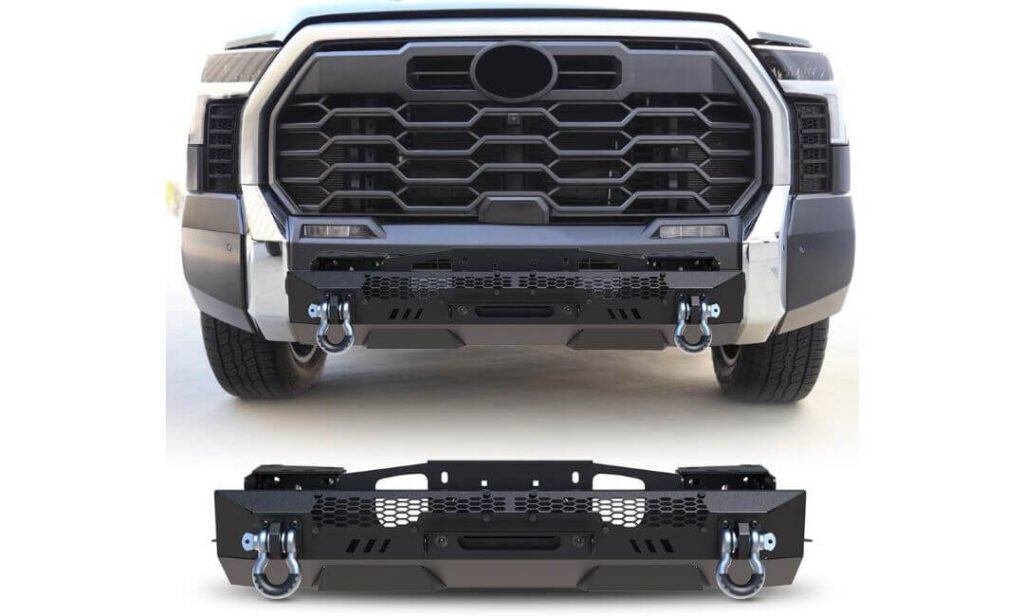
Quick Specs:
- Stubby off-road focused design
- Rated for winches up to 12,000 lbs
- Reinforced steel winch plate
- Two 4.75-ton recovery shackles included
- Q235A steel construction
- Two-stage textured powder-coated finish
- Supports up to 21-inch LED light bar
- Lightweight 43.2 lb design
- Direct bolt-on installation
- Flip-up license plate bracket included
At first glance, some buyers may wonder why a smaller bumper earned a place in this guide alongside several larger full-width options. The answer becomes obvious the moment you look at the design philosophy behind it. Instead of adding more steel everywhere possible, this bumper focuses on preserving what serious off-road drivers care about most—approach angle, front tire clearance, and obstacle visibility.
That compact footprint creates real advantages once the pavement ends. The narrower profile exposes more of the front tires and reduces the chances of bumper corners contacting rocks, ruts, steep ledges, or uneven terrain. For drivers who spend time navigating technical trails, that difference becomes noticeable very quickly. It is one of the reasons stubby bumpers continue to have such a loyal following among experienced off-road enthusiasts.
The winch system is equally impressive for a bumper of this size. The reinforced mounting plate supports recovery winches up to 12,000 pounds, while the included 4.75-ton D-rings provide dependable recovery points when conditions become challenging. Add the durable Q235A steel construction and corrosion-resistant powder coating, and the result is a bumper that prioritizes capability without carrying unnecessary bulk.
(For drivers who care more about trail performance than oversized styling, this design makes a strong argument for keeping things simple.)
What Impressed Us Most
- Excellent approach-angle friendly design
- Lightweight construction compared to many full-width alternatives
- Supports recovery winches up to 12,000 lbs
- Reinforced winch plate adds confidence during recovery situations
- Two 4.75-ton recovery shackles included
- Direct bolt-on mounting using factory locations
- Supports auxiliary lighting upgrades
- Durable rust-resistant powder-coated finish
One Installation Detail to Know
- Factory front spoiler removal and spoiler motor relocation are required
Built for Owners Who Actually Leave the Pavement
Not every Tundra owner needs maximum front-end coverage. Some owners care more about maneuverability, obstacle clearance, and keeping unnecessary weight off the front suspension. This bumper serves that audience extremely well.
The reduced weight is another advantage many buyers overlook. Compared to larger steel bumpers, the lighter structure places less additional load on the front of the truck while still providing the recovery capability most owners are looking for.
The Insider Pro-Tip
A common mistake among first-time off-road builders is assuming that more steel automatically equals a better bumper. In reality, the best bumper is often the one that matches how the truck will actually be used.
That is exactly why this option earned a place on our shortlist. It delivers the recovery strength, winch capability, and durability most owners need while preserving the agility and trail-friendly characteristics that make a capable off-road truck enjoyable to drive. For many drivers, that balance is worth far more than carrying extra weight they may never actually use.
#5. Longsun Complete Steel Bumper Package
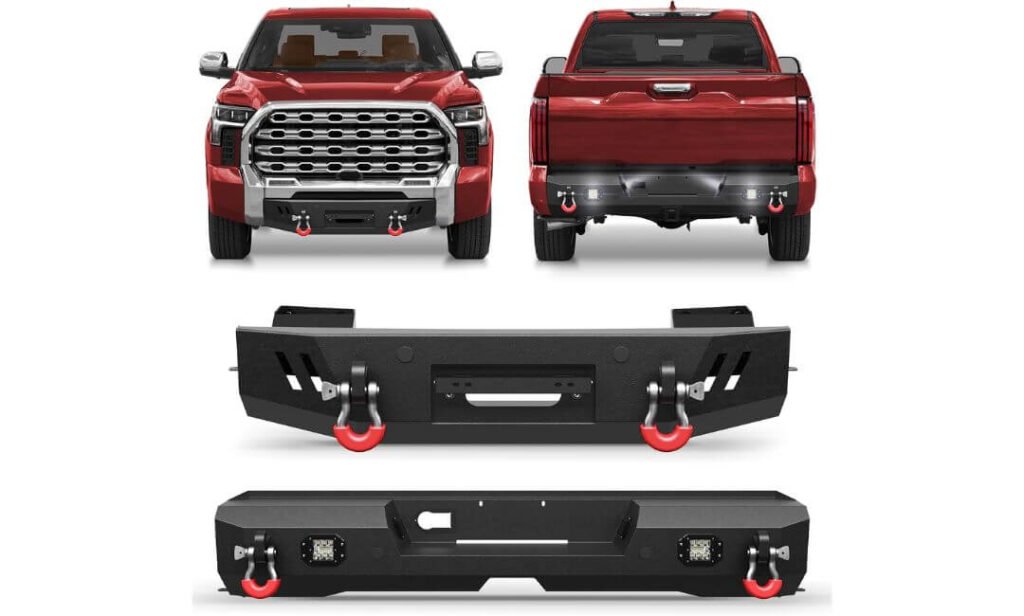
Quick Specs:
- Complete front and rear bumper package
- Supports winches up to 12,000 lbs
- Heavy-duty carbon steel construction
- Textured black powder-coated finish
- Includes front and rear bumper assemblies
- Integrated LED fog lights included
- D-ring recovery points included
- Parking sensor compatible design
- License plate bracket included
- Approx. 127 lbs total system weight
Most bumpers in this guide focus exclusively on the front end. This package takes a different route by upgrading both ends of the truck at the same time. For owners who want a more complete transformation rather than a single component upgrade, that immediately makes it stand out from the crowd.
The biggest advantage is consistency. Instead of pairing a new front bumper with a factory rear bumper that looks completely different, this package creates a unified appearance across the entire truck. The textured black finish, integrated recovery hardware, included lighting, and matching design language help deliver a finished look that feels intentional rather than pieced together over time.
Performance is not ignored either. The integrated winch plate supports recovery systems rated up to 12,000 pounds, while the heavy-duty carbon steel construction provides significantly more protection than the factory bumpers. The included 18W LED fog lights are another welcome addition for drivers who regularly encounter dark backroads, work sites, or remote trails.
(For owners planning a full truck makeover instead of a single front-end upgrade, this package delivers more visual impact than anything else on our shortlist.)
Why It Made Our Final Recommendations
- Includes both front and rear bumpers
- Supports recovery winches up to 12,000 lbs
- Heavy-duty carbon steel construction
- Integrated LED fog lights included
- D-ring recovery points included
- Parking sensor compatible design
- Creates a matched front-to-rear appearance
- Excellent value for owners upgrading both ends of the truck
One Thing Buyers Should Plan For
- Professional installation is recommended because front-end trimming is required for proper fitment
Ownership Perspective Before Buying
This package makes the most sense for owners who already know they eventually want matching bumpers. Buying a complete system upfront is often simpler than trying to match finishes, styling, and fitment between separate front and rear bumper purchases later.
The one-piece construction also gives the truck a clean and cohesive appearance once installed. Combined with the included lighting and recovery features, it offers a level of completeness that individual bumper purchases typically cannot match.
The Insider Pro-Tip
One of the easiest ways to increase the perceived value of a truck build is maintaining visual consistency. A premium front bumper paired with a completely stock rear bumper often leaves the build looking unfinished, even when thousands of dollars have been spent.
That is where this package shines. By upgrading both ends of the truck simultaneously, owners achieve a far more balanced result while gaining additional recovery capability, integrated lighting, and stronger protection. For buyers looking beyond a simple bumper replacement and toward a complete truck transformation, that approach can make a surprising difference over the long term.
Best Toyota Tundra Winch Bumper Comparison Chart for Off-Road Protection and Recovery
| Key Buying Factors |
Best Overall DV8 Centric Series |
Heavy-Duty Choice I1MOTOR Full Width |
Tech-Friendly Pick ROXX Full Width |
Trail Specialist Hawkley Stubby |
Complete Package Longsun Set |
|---|---|---|---|---|---|
| Overall Personality | Factory-style off-road upgrade | Maximum front-end armor | Modular daily-driver build | High-clearance trail setup | Full truck transformation |
| Winch Support | Hidden winch mount | Up to 12,000 lbs | Winch-ready architecture | Up to 12,000 lbs | Up to 12,000 lbs |
| Sensor Compatibility | Excellent | Sensor Ready | Excellent | Limited integration | Sensor holes provided |
| Adaptive Cruise Support | Retained | Not clearly specified | Retained | Not specified | Not specified |
| Approach Angle Benefit | Very Good | Moderate | Good | Best In Class | Moderate |
| Protection Coverage | Center-focused protection | Maximum Coverage | Full-width protection | Trail-focused protection | Front + Rear coverage |
| Steel Construction | Heavy-duty steel | Q235A reinforced steel | Q235 steel | Q235A steel | Carbon steel |
| Recovery Capability | D-ring recovery mounts | D-rings included | D-rings included | 4.75-ton shackles | D-ring recovery setup |
| Lighting Support | 20″ light bar + pod lights | 21″ center + 28″ upper mount | LED pods + light bar support | 21″ light bar ready | LED fog lights included |
| Installation Difficulty | Moderate | Moderate | Moderate | Easier than most | Most involved |
| Best For | Owners wanting OEM refinement with recovery capability | Drivers needing maximum protection and winch strength | Owners balancing technology and off-road readiness | Trail enthusiasts prioritizing clearance and agility | Buyers upgrading both ends of the truck at once |
| Our Verdict | Most Balanced Choice | Best Heavy-Duty Value | Best Tech-Friendly Setup | Best Off-Road Geometry | Best Complete Upgrade |
Toyota Tundra Winch Bumper Buying Guide
A winch bumper is one of the few upgrades that can completely change how a Toyota Tundra performs both on and off the pavement. However, choosing the right one is not as simple as selecting the heaviest steel bumper or the most aggressive design. Modern Tundras are equipped with advanced safety technology, factory sensors, cameras, air management systems, and trim-specific features that can significantly impact compatibility.
The bumpers featured in this guide were selected because they solve different problems for different types of owners. Some prioritize factory integration, some focus on heavy-duty protection, and others are designed for maximizing trail performance. Understanding what matters most before buying will help you avoid expensive mistakes and choose a bumper that continues to work well years down the road.
Fitment, Sensor Compatibility, Mounting Style, and Off-Road Protection
The first thing to evaluate is vehicle-specific fitment. A bumper designed specifically for the third-generation Toyota Tundra will almost always provide better alignment, fewer installation challenges, and better compatibility with factory systems than a universal alternative.
Sensor compatibility deserves special attention. Many Tundra owners rely on parking sensors, adaptive cruise control, front cameras, and driver-assistance technology every day. Losing those features simply to install a bumper is rarely worth the trade-off. Products such as the DV8 Centric Series and ROXX bumper stand out because they were designed around factory technology rather than forcing owners to sacrifice it.
Mounting style is equally important. Full-width bumpers typically provide the greatest protection and are ideal for trucks used on remote trails, ranches, work sites, or overlanding routes. Stubby bumpers focus on approach angles and tire clearance, making them better suited for technical terrain where every inch of front-end clearance matters.
Protection should also be evaluated realistically. Recovery points, reinforced winch mounts, structural support brackets, and impact resistance are far more important than decorative styling elements. A bumper should first and foremost be able to handle real recovery situations without becoming a weak point.
Materials and Construction Quality
Most quality Toyota Tundra winch bumpers use heavy-duty steel construction, and for good reason. Steel provides superior impact resistance, better recovery strength, and greater durability under demanding off-road conditions.
Q235 and Q235A steel are commonly used throughout the industry because they offer an excellent balance of strength, affordability, and long-term durability. The I1MOTOR, ROXX, and Hawkley bumpers all utilize variations of this material.
Powder coating is another feature buyers should not overlook. A quality powder-coated finish helps protect against corrosion, road salt, moisture, mud, and daily exposure to the elements. Textured finishes often hide scratches and trail marks better than smooth painted surfaces, making them a practical choice for trucks that see regular off-road use.
While aluminum bumpers exist, they are less common in the Toyota Tundra winch bumper market. Steel remains the preferred material for owners who prioritize recovery capability, impact protection, and long-term toughness.
Winch Compatibility and Recovery Readiness
Not all winch-ready bumpers offer the same level of capability. Some include fully integrated winch mounting systems, while others require additional brackets or optional accessories before a winch can be installed.
For most Toyota Tundra owners, winches in the 10,000 to 12,000-pound range provide the ideal balance between recovery power and practicality. Several bumpers in this guide support winches rated up to 12,000 pounds, making them suitable for vehicle recovery, overlanding, snow, mud, and trail situations.
Fairlead mounting is another important consideration. A properly integrated fairlead location helps reduce rope wear and improves recovery performance. Hidden winch systems can also improve appearance while protecting expensive equipment from weather and trail debris.
Electrical planning matters as well. Before purchasing a bumper, consider how power cables will be routed, where the winch control box will be mounted, and whether future lighting upgrades will require additional wiring solutions. Thinking ahead can save significant time during installation.
Parking Sensors, Cameras, Radar, and Driver Assistance Systems
Modern Toyota Tundras are much more technologically advanced than older generations. Features such as adaptive cruise control, parking sensors, front cameras, and radar-based safety systems have become standard equipment on many trims.
This makes bumper selection more important than ever.
A poorly designed bumper can interfere with radar signals, create false sensor readings, block camera views, or trigger warning messages. These issues often do not appear immediately after installation but can become frustrating over time.
If maintaining factory functionality is a priority, look for bumpers specifically engineered around these systems. The best designs integrate sensors into the bumper itself and preserve the operation of nearby factory hardware whenever possible.
Owners should also verify sensor hole placement, camera visibility, and radar compatibility before purchasing. Spending a few extra minutes confirming these details can prevent expensive headaches later.
Choosing the Right Bumper for Your Tundra Trim
Different Toyota Tundra trims often have different priorities, even when they share the same basic platform.
TRD Pro owners typically benefit most from bumpers that preserve factory technology, approach angles, and overall off-road capability. The DV8 Centric Series is a good example of this philosophy.
SR5 owners often focus on practical upgrades and overall value. A well-built full-width bumper with winch support and recovery points usually delivers the best return on investment.
Limited and Platinum owners frequently place greater emphasis on sensor compatibility, clean styling, and retaining premium factory features. A bumper that integrates well with the truck’s technology generally makes more sense than one focused solely on aggressive styling.
CrewMax owners may prioritize overlanding capability, long-distance travel, and accessory integration. In those cases, lighting support, recovery features, and future upgrade flexibility become particularly important.
For dedicated 4×4 and trail-focused builds, approach angles, winch accessibility, recovery strength, and overall ground clearance should remain at the top of the priority list.
Maintenance, Long-Term Ownership, and Warranty Considerations
Even the best winch bumper requires occasional maintenance. Mud, road salt, moisture, and trail debris can all accelerate wear if left unattended.
Regular inspections should focus on mounting hardware, recovery points, powder-coated surfaces, winch mounts, and electrical connections. Touching up damaged coatings early helps prevent corrosion from spreading and protects the bumper’s appearance over time.
Recovery hardware should also be checked periodically, especially after difficult recoveries or extended off-road trips. Loose bolts and worn components are much easier to address in the garage than on the side of a trail.
Warranty coverage varies significantly between manufacturers. Before purchasing, review what is actually covered, how claims are handled, and whether replacement components are available. Strong customer support often becomes just as valuable as the bumper itself when ownership extends beyond the initial installation.
Ultimately, the best Toyota Tundra winch bumper is not necessarily the largest, heaviest, or most aggressive-looking option. It is the one that matches your truck, your driving style, your future upgrade plans, and the way you actually use your Tundra every day.
How to Compare Toyota Tundra Winch Bumpers and Choose the Right One
One of the biggest mistakes buyers make is assuming that every winch bumper serves the same purpose. In reality, the best bumper for one Toyota Tundra owner can be completely wrong for another. A truck used primarily for overlanding, towing, and long-distance travel has very different requirements than a truck built for technical trails, recovery work, or heavy-duty off-road adventures.
That is why comparing bumpers should go far beyond appearance, price, or steel thickness. The smartest buyers focus on how the bumper will affect the truck’s capability, technology, maintenance requirements, and future upgrade plans. Looking at the complete picture usually leads to a much better long-term decision.
Compare Weight Before Looking at Anything Else
Weight affects more than most buyers realize.
A heavier bumper can provide excellent protection and recovery strength, but it also places additional load on the front suspension, steering components, and tires. This becomes even more noticeable after adding a winch, recovery gear, auxiliary lighting, and skid plates.
For example, a lighter option such as the Hawkley Stubby helps preserve the truck’s agility and front suspension feel. On the other hand, larger full-width systems such as the I1MOTOR and Longsun provide additional protection but add more weight to the front end.
There is no universally correct choice here. The best decision depends on how the truck is actually used.
If trail performance and maneuverability matter most, lighter solutions often make more sense.
If maximum protection and recovery capability are the priority, additional weight may be worth accepting.
Understand How Approach Angle Impacts Real-World Driving
Approach angle is often overlooked until the truck encounters steep terrain.
A bumper with poor clearance can contact obstacles long before the tires reach them. This becomes especially noticeable on rocky trails, deep ruts, steep inclines, and technical off-road routes.
Stubby bumpers generally offer the greatest approach-angle improvement because they expose more of the front tires and reduce corner interference.
Full-width bumpers provide broader protection but typically sacrifice some clearance in exchange for greater coverage.
Drivers who spend most of their time on pavement may never notice the difference. Serious off-road enthusiasts almost certainly will.
Evaluate Sensor Clearance and Factory Technology Integration
Modern Toyota Tundras are equipped with significantly more technology than previous generations.
Parking sensors, adaptive cruise control, front cameras, radar systems, and driver-assistance features can all be affected by bumper design.
Some bumpers are engineered specifically to retain these systems, while others focus primarily on protection and styling.
Before purchasing, verify:
- Parking sensor compatibility
- Adaptive cruise control functionality
- Radar system clearance
- Front camera visibility
- Air dam compatibility
- Factory skid plate compatibility
This is one reason the DV8 and ROXX options performed so well during our evaluation. Both place a strong emphasis on preserving factory functionality alongside off-road capability.
Installation Complexity Matters More Than Most Buyers Expect
Many bumper listings describe installation as straightforward, but the reality can vary significantly from one product to another.
Some bumpers reuse factory mounting points and require only basic mechanical experience.
Others may require:
- Front spoiler removal
- Spoiler motor relocation
- Sensor relocation
- Wiring modifications
- Trimming of factory components
- Additional lighting installation
Buyers planning a weekend DIY installation should always review installation requirements before placing an order.
A bumper that appears less complicated on paper can sometimes save several hours of work during installation.
Warranty Coverage Should Never Be an Afterthought
Warranty terms rarely influence purchasing decisions initially, but they often become important later.
Manufacturing defects, coating issues, hardware concerns, shipping damage, and replacement component availability all become much easier to address when a manufacturer provides reliable support.
When comparing options, pay attention to:
- Warranty duration
- Coverage limitations
- Replacement part availability
- Customer service reputation
- Technical support accessibility
Strong after-sale support can significantly improve the ownership experience, especially when dealing with larger steel components.
Quick Comparison Framework for Different Types of Tundra Owners
If your priority is maintaining factory technology while adding recovery capability, sensor-friendly designs with OEM-style integration should move to the top of your list.
If your priority is maximum front-end protection, heavy-duty full-width bumpers with reinforced recovery points generally provide the greatest confidence.
If you spend most of your time on technical trails, compact and high-clearance designs typically offer better approach angles and improved maneuverability.
If you plan to build a complete overland or expedition truck over time, focus on future upgrade flexibility, lighting provisions, recovery support, and winch integration rather than appearance alone.
If you want matching protection across the entire truck, complete front-and-rear systems may provide better long-term value than upgrading one end at a time.
Important Fitment Differences Between 2022–2026 and Older Toyota Tundra Models
This is one area where many buyers run into problems.
The 2022 Toyota Tundra introduced a completely redesigned platform with major changes to the front fascia, sensor locations, camera systems, grille structure, and safety technology.
As a result, most bumpers designed for 2022–2026 models are not directly compatible with earlier Tundra generations.
Similarly, bumpers built for older trucks typically will not fit newer models correctly.
When shopping for a bumper, always confirm compatibility specifically for the third-generation platform rather than assuming all Tundras share the same mounting architecture.
Even when a bumper appears visually similar, differences in sensor placement, radar systems, frame mounting locations, and body design can create major installation issues.
For the bumpers featured in this guide, compatibility was one of our primary evaluation criteria because proper fitment is the foundation of everything else. A bumper can have excellent recovery capability, premium materials, and outstanding styling, but none of those advantages matter if it does not integrate correctly with the truck it was designed to protect.
Toyota Tundra Winch Bumper Installation and Maintenance Tips
A winch bumper is not the kind of upgrade most owners want to install twice. Whether you choose a compact recovery-focused setup or a full-width steel bumper with integrated lighting and winch support, taking the time to install and maintain it correctly can make a noticeable difference in long-term durability, safety, and overall ownership satisfaction.
One thing we consistently see among experienced Tundra owners is that the best results rarely come from rushing the installation process. Most fitment complaints, sensor issues, rattles, wiring problems, and premature corrosion can usually be traced back to shortcuts taken during installation rather than flaws in the bumper itself.
Pre-Installation Checklist Before You Start
Before removing the factory bumper, it is worth spending a few minutes planning the entire installation from start to finish.
First, verify that all hardware is included and compare the contents against the manufacturer’s instructions. Even a missing bracket or bolt can quickly turn a simple weekend project into a frustrating delay.
Basic tools commonly required include:
- Socket and ratchet sets
- Torque wrench
- Trim removal tools
- Screwdrivers
- Wire crimpers and connectors
- Electrical tape or heat shrink tubing
- Floor jack or installation assistance
- Protective gloves and eye protection
For heavier full-width bumpers, having a second person available is highly recommended. While some lightweight options can be installed alone, larger steel bumpers are significantly easier to align when two people are involved.
It is also smart to inspect the frame mounting points before installation. Dirt, rust, road debris, or damaged hardware can affect alignment and make the installation more difficult than necessary.
Plan Winch and Wiring Routes Before Mounting the Bumper
One of the most common installation mistakes happens before the bumper is even fully mounted.
Many owners focus on the bumper itself and forget about future wiring needs.
If the bumper will eventually support:
- A winch
- Auxiliary lighting
- LED pod lights
- Light bars
- Air compressors
- Recovery accessories
Then cable routing should be planned before everything is tightened into place.
Running power cables after the bumper is fully installed often requires unnecessary disassembly and additional labor.
Pay special attention to:
- Battery connection locations
- Grounding points
- Cable protection
- Heat exposure near engine components
- Areas where wires may rub against steel edges
- Future accessibility for maintenance
A clean wiring layout not only looks better but also reduces long-term reliability issues.
Sensor Calibration and Technology Checks Matter More Than Ever
Modern Toyota Tundras contain far more technology than previous generations.
Depending on the trim level, the truck may include:
- Parking sensors
- Adaptive cruise control
- Front radar systems
- Front cameras
- Driver-assistance technologies
After installation, every system should be tested individually before considering the project complete.
Check for:
- Sensor warning messages
- False proximity alerts
- Radar interruptions
- Camera obstruction
- Adaptive cruise operation
- Front-end vibration at highway speeds
Even when a bumper is specifically designed for factory compatibility, a quick verification process can help identify any alignment issues before they become larger problems.
Protecting the Finish and Preventing Corrosion
Most premium winch bumpers use powder-coated finishes because they offer significantly better protection than traditional paint.
However, no coating is completely immune to damage.
Road debris, rocks, recovery equipment, trail impacts, road salt, and weather exposure can eventually create small chips or scratches.
The best approach is preventative maintenance.
A few simple habits can dramatically extend bumper life:
- Wash mud and road salt off promptly
- Inspect powder-coated surfaces regularly
- Touch up exposed steel quickly
- Avoid leaving recovery equipment wet for extended periods
- Clean behind mounting points when possible
- Remove trapped debris after off-road trips
Many owners focus exclusively on visible surfaces while ignoring hidden areas where moisture can accumulate. Those concealed locations are often where corrosion begins.
Recovery Hardware Deserves Regular Inspection
The bumper itself is only part of the recovery system.
D-ring mounts, shackles, winch hardware, mounting bolts, and recovery points all experience significant stress over time.
After difficult recoveries or extended off-road trips, inspect:
- Recovery points
- D-ring mounts
- Shackle threads
- Winch mounting hardware
- Fairlead hardware
- Frame attachment points
Loose hardware may not be obvious during daily driving but can become a serious issue during an actual recovery situation.
A few minutes of inspection can prevent much larger problems later.
Common Mistakes Tundra Owners Should Avoid
One of the most frequent mistakes is purchasing a bumper based solely on appearance while overlooking compatibility requirements.
Modern Tundras require careful consideration of sensors, cameras, radar systems, and trim-specific features. Confirming compatibility before purchase is always easier than trying to solve fitment issues afterward.
Another common mistake involves underestimating bumper weight.
Adding a steel bumper, winch, recovery gear, lighting, and accessories can place significant additional load on the front suspension. Owners planning extensive upgrades should consider how the combined weight may affect ride quality and suspension performance.
Improper wiring is another issue that appears regularly. Exposed wiring, poor grounding, inadequate cable protection, and rushed electrical work often create more problems than the bumper itself.
Finally, many owners fail to retorque hardware after the first few hundred miles. Steel components naturally settle after installation, and checking bolt torque after initial use is one of the simplest ways to maintain long-term reliability.
The reality is that a quality Toyota Tundra winch bumper can easily provide years of dependable service when installed correctly and maintained consistently. Most long-term issues are preventable, and a little attention during installation usually pays off every time the truck leaves the pavement.
FAQs About Toyota Tundra Winch Bumper
Will a winch bumper affect adaptive cruise control or parking sensors on a Toyota Tundra?
It can, but the answer depends far more on bumper design than most buyers realize. Many owners assume that any bumper advertised as “sensor compatible” will automatically preserve every factory feature. In reality, the placement of radar modules, sensor openings, mounting brackets, and surrounding steel structure all play a role in how the system performs after installation.
That is one reason we ranked options such as the DV8 Centric Series and ROXX bumper so highly. They were designed with factory technology in mind rather than treating it as an afterthought. If retaining adaptive cruise control, parking sensors, and front-end driver-assistance features is important to you, choosing a bumper specifically engineered around those systems is usually worth more than simply choosing the thickest steel available.
What size winch makes the most sense for a Toyota Tundra with an aftermarket bumper?
Many first-time buyers automatically assume bigger is always better. In practice, most experienced Tundra owners find that a quality winch in the 10,000 to 12,000-pound range provides the best balance of recovery capability, weight, and real-world usability.
Before purchasing a winch, verify three things:
- Winch mounting dimensions
- Fairlead compatibility
- Total front-end weight after installation
Adding an oversized winch may sound impressive, but excessive weight can affect suspension performance, steering feel, and overall vehicle balance. For most Tundra builds, a properly installed 12,000-pound winch already provides more recovery capability than owners will ever realistically need.
Why do serious Toyota Tundra owners often choose a stubby bumper instead of a full-width bumper?
This is one of the most misunderstood topics in the off-road world.
At first glance, a full-width bumper appears stronger because it covers more of the truck. However, experienced trail drivers often prioritize approach angle and tire clearance over maximum coverage. A stubby bumper exposes more of the front tires and reduces the likelihood of bumper corners contacting obstacles before the tires reach them.
That is why many dedicated trail builds favor compact designs such as the Hawkley. The goal is not necessarily reducing protection. The goal is improving maneuverability in situations where every inch of clearance matters.
For daily driving and work-focused trucks, full-width protection often makes more sense. For technical off-road terrain, the advantages of a well-designed stubby bumper become much easier to appreciate.
Is a front-only bumper upgrade enough, or does a Toyota Tundra benefit from matching front and rear protection?
The honest answer depends on how the truck will be used over the next several years.
For many owners, upgrading the front bumper first makes perfect sense because that is where winches, recovery points, lighting, and most off-road impacts occur. However, owners planning a long-term overland build often discover that a factory rear bumper eventually becomes the weakest visual and functional link in the setup.
A complete system can provide benefits beyond appearance:
- Better recovery options
- Improved protection at both ends
- Consistent ground-clearance characteristics
- More balanced overall build
That is one reason packages such as the Longsun system appeal to buyers who already know they want a comprehensive upgrade rather than a single component replacement.
What installation mistake causes the most problems after a Toyota Tundra winch bumper upgrade?
Surprisingly, it is not usually the bumper itself.
The most common long-term issues often come from poor planning around wiring, sensor verification, and future upgrades. Many owners focus entirely on mounting the bumper and forget to think about how winch cables, auxiliary lighting, recovery gear, and electrical accessories will be integrated later.
The smartest installations typically follow a simple process:
- Confirm bumper alignment.
- Verify sensor and radar operation.
- Plan wiring before final assembly.
- Retorque hardware after initial use.
- Inspect recovery points periodically.
Most bumper complaints that appear months later can be traced back to one of those steps being skipped. Spending a little extra time during installation is usually far cheaper than troubleshooting problems after everything is already mounted and wired.
Final Thoughts
After spending countless hours comparing specifications, fitment details, recovery features, sensor integration, construction quality, and long-term ownership considerations, one thing became clear: there is no single “perfect” Toyota Tundra winch bumper for every owner.
The right choice depends on how your truck is actually used.
If maintaining factory technology while adding serious recovery capability is your priority, the DV8 Centric Series stands out as the most balanced option in this guide. If maximum protection and heavy-duty capability matter most, the I1MOTOR delivers exceptional front-end coverage and winch-ready strength. Owners who value modularity and future upgrade flexibility will appreciate the ROXX, while dedicated off-road enthusiasts may find the trail-focused approach of the Hawkley Stubby difficult to ignore. For those planning a complete transformation rather than a simple front-end upgrade, the Longsun Bumper Set offers a compelling all-in-one solution.
The most important takeaway is not which bumper finished first on our list. It is choosing a bumper that still makes sense years from now.
A well-selected winch bumper should do more than improve appearance. It should support recovery equipment, preserve important factory features, withstand harsh conditions, accommodate future upgrades, and continue performing long after the excitement of installation day has passed.
That philosophy guided every recommendation in this guide.
If you focus on fitment, recovery capability, sensor compatibility, construction quality, and the way you genuinely use your truck, you will end up with a bumper that feels like an investment rather than just another accessory. And in our experience, those are the upgrades owners are happiest with long after the purchase is made.
Also Check:


