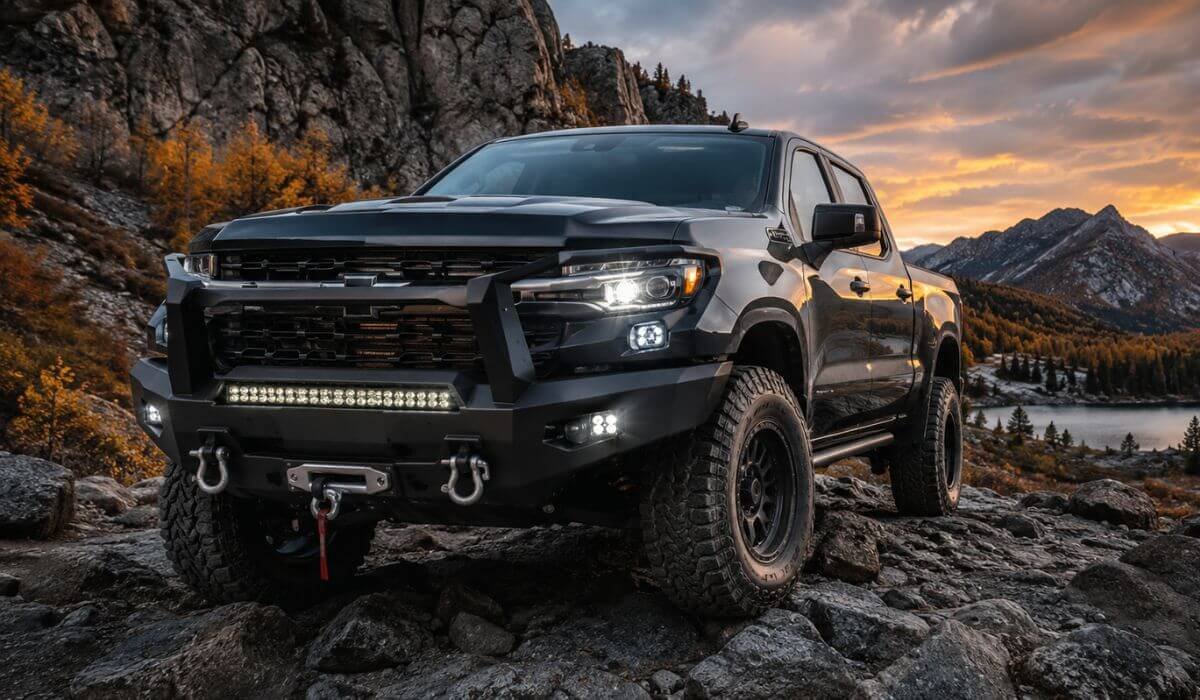
5 Best Chevy Colorado Winch Bumpers in 2026: Recovery-Ready Designs With Integrated Lighting
If you own a Chevy Colorado and plan to run a winch, the bumper matters just as much as the winch itself. Many factory bumpers simply aren’t designed to handle the weight, recovery loads, and mounting requirements that come with serious off-road use. That’s why choosing a proper winch-ready bumper is one of the smartest upgrades Colorado owners can make before heading onto trails, remote work sites, or overland routes.
For this guide, I focused on bumpers that offer real winch compatibility, heavy-duty steel construction, recovery-point integration, lighting support, and fitment for both older second-generation Colorado models (2015-2022) and the newer third-generation trucks (2023-2026). I also paid close attention to practical details that owners actually care about, including sensor compatibility, fog light retention, ground clearance, and whether the bumper provides enough room for common 8,000-12,000 lb winches used on Colorado builds.
Not every bumper here comes from a household brand, and that’s intentional. Since the latest Colorado generation is still relatively new, some of the strongest options currently available come from emerging manufacturers that offer solid construction, useful features, and better value than many overpriced alternatives. The goal was simple: recommend bumpers that make sense for real Colorado owners, not just products with the loudest marketing.
Best Chevy Colorado Winch Bumpers: Top 2026 Picks for Full-Width Coverage and Winch Compatibility
#1. DV8 Steel Front Winch Bumper
Best Winch Bumper for 2023-2026 Models Seeking Premium Steel Construction, High-Clearance Recovery Capability and OEM-Friendly Integration
#2. VISIDA Textured Steel Front Bumper
Best Winch Bumper for 2015-2022 Models Wanting Broad Fitment Coverage, Integrated Lighting and Everyday Off-Road Protection
#3. YZONA Front and Rear Bumper Kit
Best Front and Rear Winch Bumper Kit for 2015-2020 Models Requiring Complete Recovery Protection, Matching Steel Armor and Trail-Ready Utility
#4. Hooke Road Full-Width Front Bumper Guard
Best Full-Width Winch Bumper for 2015-2020 Overland Builds Needing Added Front-End Coverage, Bull Bar Protection and Recovery-Ready Strength
#5. POFENZE Full-Width Off-Road Bumper
Best Budget Winch Bumper for 2015-2020 Models Looking for Integrated LED Lighting, Recovery Points and Strong Value for Off-Road Adventures
Must Check: Best Winch for Chevy Colorado
Expert Tip Before You Buy a Chevy Colorado Winch Bumper
One mistake I see Colorado owners make all the time is buying a bumper based only on looks. A bumper can have aggressive styling, multiple light mounts, and a great price, but if the winch plate, recovery points, and steel thickness aren’t properly designed, none of that matters when you’re actually stuck on a trail.
The smartest buyers focus on recovery capability first and appearance second. A well-built bumper should comfortably support the weight of a winch, provide solid recovery points for shackles, and maintain enough clearance so the truck remains useful off-road. That’s why several of the bumpers in this guide may look simpler than some flashy alternatives, but they offer features that matter when your truck is carrying extra gear, climbing obstacles, or pulling itself out of mud, sand, or snow.
A bumper is one of those upgrades where you only discover its true value when you need it. When that moment comes, you’ll care far more about the strength behind the steel than the design on the front.
How We Chose These Chevy Colorado Winch Bumpers
There are dozens of Colorado bumpers available online today, but most never made it into this guide. Some were removed because they offered little more than cosmetic styling. Others lacked clear winch support, used questionable construction details, or simply didn’t provide enough information about fitment and recovery hardware.
For this list, the first thing we looked at was real winch readiness. Every bumper selected here includes a dedicated winch mounting solution rather than forcing owners to rely on aftermarket brackets or custom fabrication. Since the entire purpose of this guide is helping Colorado owners find a dependable winch bumper, anything that treated winch compatibility as an afterthought was immediately excluded.
The second factor was construction and recovery-focused design. We prioritized bumpers built from steel and equipped with practical features such as D-ring mounts, recovery points, integrated lighting provisions, and reinforced mounting structures. These details matter far more in real-world use than decorative cutouts or marketing claims.
We also paid close attention to generation-specific fitment. The 2023-2026 Colorado is a completely different truck than earlier models, which is why products like the DV8 bumper earned a top position. At the same time, thousands of owners still drive 2015-2022 Colorado trucks, so we made sure those years were properly represented with options that offer proven fitment and useful features rather than simply filling space on the list.
Another important consideration was overall ownership value. We didn’t automatically rank the most expensive product higher. Instead, we looked at what each bumper delivers for the money. Some options stood out because they included front and rear protection, while others earned their place through broader year coverage, integrated lighting, recovery hardware, or practical everyday usability.
Finally, we evaluated each bumper the same way many Colorado owners actually shop: by asking a simple question.
If this were our own truck, would we feel confident mounting a winch, heading off-road, and relying on this bumper when recovery equipment is needed?
The products that consistently answered that question with confidence are the ones that made this list. That’s why you’ll find a mix of established names and newer manufacturers here. The goal was never to chase brand recognition. The goal was to find bumpers that offer the combination of fitment, recovery capability, construction quality, and real-world usefulness that Colorado owners are actually looking for.
#1. DV8 Steel Front Winch Bumper
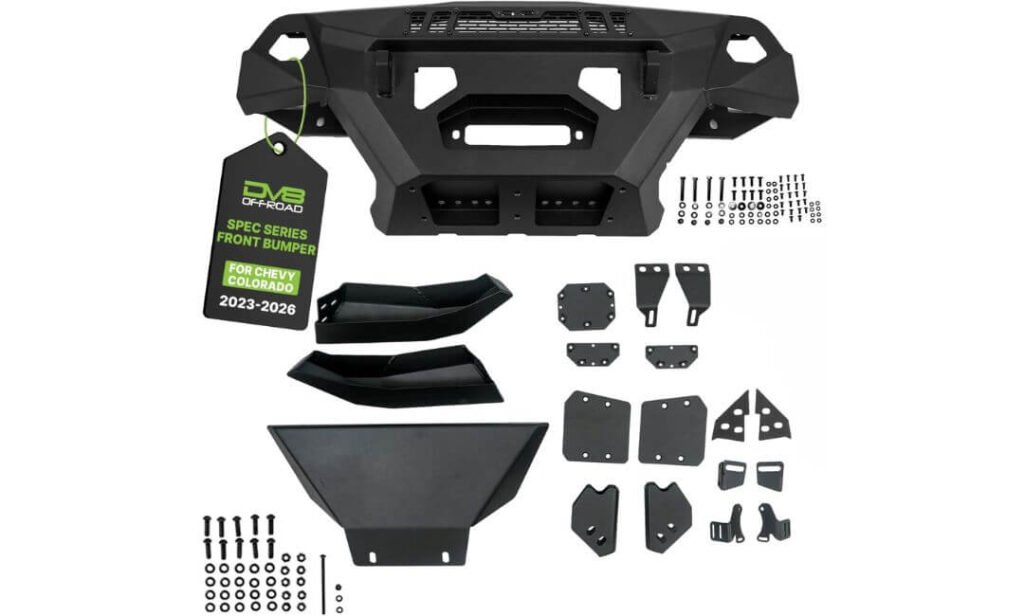
Quick Specs:
- Fits 2023-2026 models (excluding ZR2)
- Supports most popular 8,000-12,000 lb recovery winches
- Heavy-duty 3.5mm and 5mm steel construction
- Integrated full front skid plate
- Retains factory front camera, parking sensors, adaptive cruise control and fog lights
- Two 1-inch recovery shackle mounts
- Hidden 20-inch light bar mount
- Dual 3-inch pod light mounts
- Low-profile design for improved trail clearance
- Approximate bumper weight: 114 lbs
- Durable micro-texture powder-coated finish
Real talk, finding a winch bumper for the newest generation Colorado isn’t nearly as easy as it is for older trucks. Many options either sacrifice factory technology or create fitment headaches that owners discover halfway through installation. This one stands out because it was designed around the truck rather than forcing the truck to adapt around the bumper.
What immediately caught my attention is how much factory functionality remains intact. Front camera support, parking sensors, adaptive cruise control, factory fog lights and recovery capability all exist in the same package. That’s something many buyers overlook until after installation. On a daily-driven truck, keeping those features working makes a bigger difference than most marketing departments will ever admit.
The steel construction feels purpose-built for real-world use rather than showroom photos. The integrated skid plate adds meaningful protection underneath the front end, while the low-profile wings improve approach angles when navigating rough terrain. Add the dedicated winch mount, recovery points and lighting provisions, and you end up with a setup that feels engineered for owners who actually use their trucks beyond pavement.
(If you’re planning to build a modern recovery-ready Colorado without giving up factory technology, this is one of the most complete solutions currently available.)
Why This Option Earned a Top Spot
- Retains factory driver-assistance and camera systems
- Heavy-duty steel construction with integrated skid protection
- Better approach angles than many bulky alternatives
- Dedicated winch mounting platform designed into the bumper
- Clean lighting integration without cluttered add-ons
A Small Thing Worth Knowing
- Installation requires minor cutting for proper fitment
Real-World Vehicle Compatibility
This bumper was developed specifically for 2023-2026 models and fits nearly every trim level except ZR2. That makes it one of the few newer-generation options built around the latest truck architecture rather than adapted from older designs.
Owners planning larger tires, overland equipment, auxiliary lighting or a front recovery system will appreciate how well the bumper integrates with factory components while still providing room for future upgrades.
The Insider Pro-Tip
The biggest mistake owners make with a premium winch bumper isn’t choosing the wrong bumper. It’s pairing a strong bumper with an undersized recovery setup. Before installation, decide which winch you plan to run and confirm cable access, control box placement and fairlead clearance. Doing this before the bumper goes on can save hours of frustration later.
One more thing experienced builders rarely mention. A bumper that preserves factory cameras, sensors and driver-assistance systems often delivers a better ownership experience than a bumper with ten extra cosmetic features. After the excitement of installation wears off, those factory functions are what you’ll use every single day.
#2. VISIDA Textured Steel Front Bumper
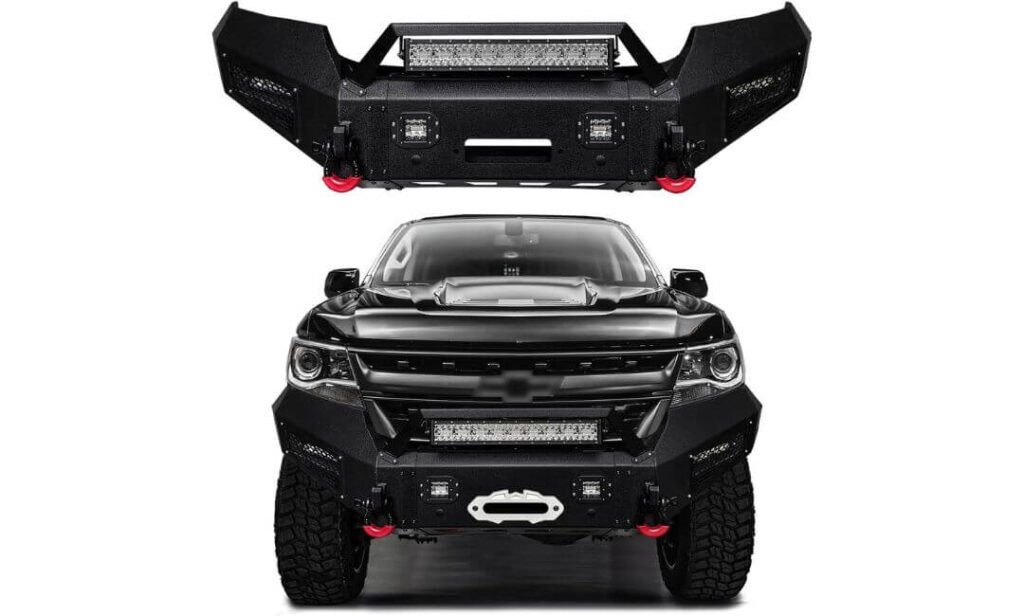
Quick Specs:
- Fits 2015-2022 models (excluding ZR2)
- Integrated winch-ready mounting platform
- Heavy-duty 7/64-inch steel bumper body
- Reinforced 3/16-inch steel winch plate and mounting brackets
- Approximate bumper weight: 135 lbs
- Includes 144W LED light bar
- Includes four 20W auxiliary LED lights
- Two 3/4-inch D-ring recovery points with isolators
- Textured black powder-coated finish
- Direct bolt-on mounting design
- Three-piece construction that follows factory body lines
There’s a reason many long-term Colorado owners eventually move away from lightweight cosmetic bumpers and start looking for something substantially stronger. Once recovery gear, trail equipment and extra lighting become part of the truck’s setup, structural strength matters far more than appearance. That’s exactly where this option begins to separate itself from many competitors in the same price range.
What stands out immediately is the amount of hardware included from day one. The integrated 144W light bar, four auxiliary lights, D-ring recovery points and built-in winch support create a package that feels ready for use rather than incomplete. Many bumpers require owners to spend additional money on lighting and recovery accessories after installation. Here, much of that work is already done before the truck leaves the garage.
The heavier 135-pound construction also deserves attention. While that weight won’t appeal to every owner, it usually tells a story about material thickness and reinforcement. Combined with the dedicated steel winch plate, reinforced mounting structure and full-width protection, the result is a bumper that feels built with durability in mind rather than simply chasing aggressive styling.
(For owners keeping a second-generation Colorado for the long haul, this is the type of upgrade that can transform the front end from basic transportation into a serious recovery-ready setup.)
Standout Reasons It Made This List
- Covers the widest year range among the bumpers featured
- Includes both a large light bar and auxiliary lighting
- Reinforced winch plate designed into the structure
- Heavy-duty construction with substantial front-end protection
- Recovery hardware included from the start
One Thing to Keep in Mind
- Factory parking sensors require separate compatible 22mm sensors
Best Fit for Colorado Owners
This bumper is designed for 2015-2022 models and fills an important gap for owners who want broad compatibility without sacrificing recovery capability. The design follows factory body lines surprisingly well while still delivering the rugged appearance most truck owners are looking for.
It’s particularly appealing for drivers planning a winch installation, additional lighting upgrades or regular trail use. The included lighting package alone provides more out-of-the-box functionality than many competing bumpers that arrive as a bare shell.
The Insider Pro-Tip
When evaluating a winch bumper, don’t focus only on steel thickness. Look at what comes integrated into the package. A bumper that already includes recovery points, auxiliary lighting and a properly reinforced winch platform often ends up delivering far better value than a cheaper bumper that requires several rounds of upgrades afterward.
Another detail experienced owners appreciate over time is how well a bumper supports future modifications. Recovery gear, lighting accessories and overland equipment tend to grow with the truck. Starting with a platform that already has those mounting provisions built in usually saves both money and frustration later on.
#3. YZONA Front and Rear Bumper Kit
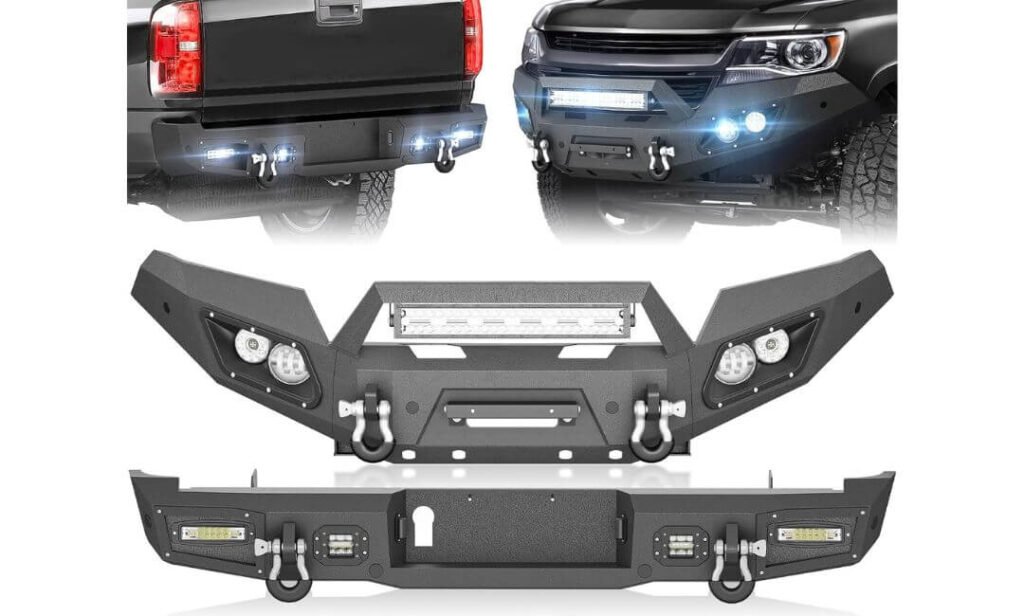
Quick Specs:
- Fits 2015-2020 models (excluding ZR2)
- Includes both front and rear steel bumpers
- Integrated 12,000 lb winch-ready mounting plate
- High-strength carbon steel construction
- Dual-stage textured powder-coated finish
- Approximate combined weight: 160.6 lbs
- Four 4.75-ton D-ring recovery points
- Front 120W LED light bar
- Multiple front and rear auxiliary LED lights included
- Rear stainless-steel step/skid plate
- Flip-up front license plate bracket
- Bolt-on installation design
What makes this setup different isn’t the winch mount or the steel construction. Plenty of bumpers offer those. The real advantage here is that you’re upgrading both ends of the truck at the same time. Most Colorado owners start with the front bumper and eventually realize the rear bumper becomes the weak link once recovery gear, towing duties and trail use become part of the equation.
The integrated 12,000-pound winch plate immediately stands out because it supports the recovery equipment most Colorado owners actually buy. Add the four recovery-rated D-rings, front light bar, auxiliary lighting and rear lighting package, and you end up with a system that feels designed around real-world utility rather than appearance alone. Few options in this price range deliver this much equipment in a single package.
Another reason this kit earned a place on the list is balance. The front bumper improves recovery capability and trail protection, while the rear bumper adds practical functionality with its stainless-steel step plate and additional recovery points. For owners building a truck for camping, overlanding, work sites or remote travel, having protection and recovery hardware at both ends of the vehicle often proves more valuable than investing heavily in only the front.
(If you’re planning a complete Colorado transformation rather than a single front-end upgrade, this package delivers more usable equipment in one purchase than almost any standalone bumper on the market.)
Why It Stands Above Most Bumper Kits
- Complete front and rear protection in one package
- Integrated 12,000 lb winch-ready platform
- Four recovery-rated D-rings included
- Extensive factory-supplied lighting package
- Rear bumper adds functionality, not just appearance
A Minor Detail Worth Knowing
- Lighting installation may require additional wiring extensions depending on your setup
Best Match for Colorado Owners
This package is ideal for 2015-2020 models whose owners want to build a truck once and do it properly. Instead of upgrading the front bumper now and revisiting the rear later, this kit addresses recovery, protection and utility from both directions.
It also makes sense for drivers who frequently tow, explore remote areas or carry recovery equipment. Having secure recovery points and durable steel protection front and rear can make a significant difference when conditions become challenging.
The Insider Pro-Tip
One thing experienced off-roaders learn quickly is that recovery situations rarely happen exactly as planned. Sometimes you’re pulled forward. Sometimes you’re pulled backward. That’s why trucks equipped with quality recovery points at both ends tend to be far easier and safer to recover when conditions deteriorate.
Another overlooked benefit of a front-and-rear setup is consistency. Matching bumpers often provide better ground clearance, improved protection and a cleaner overall build than mixing unrelated components over several years. Many owners who start with only a front bumper eventually wish they had gone with a complete system from the beginning.
#4. Hooke Road Full-Width Front Bumper Guard
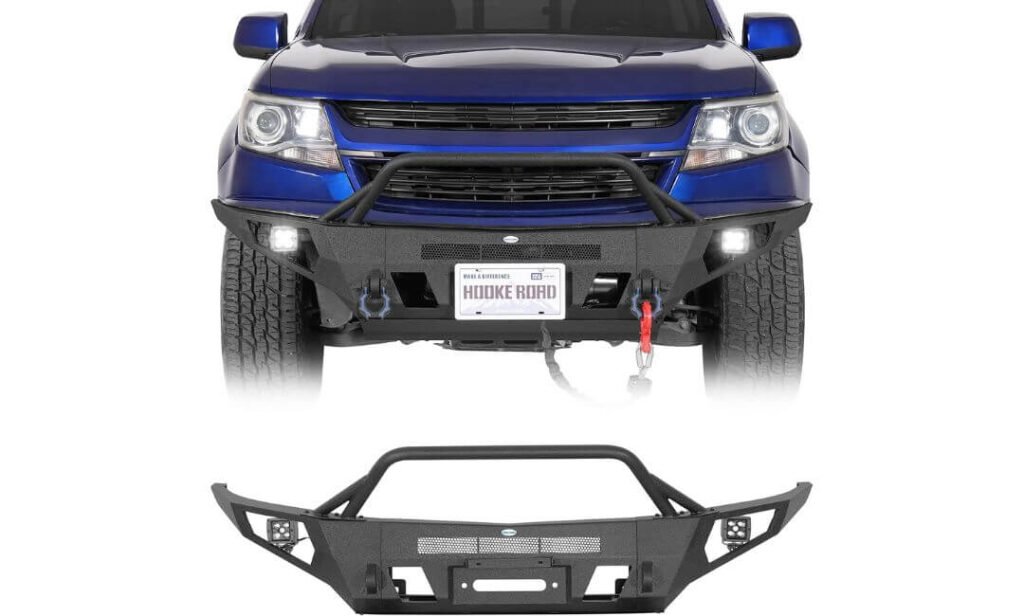
Quick Specs:
- Fits 2015-2020 models (excluding ZR2)
- Integrated 12,000 lb winch-ready mounting plate
- Full-width design with welded brush guard
- Heavy-duty 11-gauge steel main structure
- Reinforced 5/32-inch winch plate
- Full lower skid plate protection
- Two 25W LED spotlights included
- Heavy-duty recovery shackle mounts
- Corrosion-resistant powder coat with internal E-coating
- Flip-up front license plate mount
- Approximate bumper weight: 77 lbs
- Backed by a 2-year warranty
Interestingly, this is one of the few bumpers in this guide that manages to deliver serious front-end protection without becoming excessively heavy. Many full-width bumpers quickly add significant weight to the front suspension, but the 77-pound construction here keeps things far more manageable while still providing the features most Colorado owners actually need.
The first thing you’ll notice is the integrated grille guard. While some buyers see it as a styling feature, it becomes genuinely useful on wooded trails, hunting roads, ranch properties and overland routes where brush, branches and trail debris can easily contact the front of the truck. Combined with the lower skid plate, the bumper creates a much larger protective zone than many minimalist alternatives.
Recovery capability is equally impressive. The built-in 12,000-pound winch platform, reinforced shackle mounting points and sturdy steel structure give this bumper legitimate off-road credentials. The included LED spotlights are a nice bonus, but the real strength of this setup is the balance between protection, recovery readiness and reasonable weight.
(For owners who spend as much time navigating rough terrain as they do driving highways, this design strikes an unusually smart balance between coverage and practicality.)
Why It Earned Its Place on This List
- Full-width protection for the grille and front corners
- Integrated brush guard adds real-world trail protection
- 12,000 lb winch-ready recovery platform
- Surprisingly manageable weight for its size
- Internal E-coating improves long-term corrosion resistance
A Small Detail to Know Before Ordering
- Factory parking sensors are not supported
Ideal Application and Fitment
Designed specifically for 2015-2020 models, this bumper works particularly well for drivers who regularly encounter brush-covered trails, remote access roads or long-distance overland routes where additional front-end protection becomes valuable.
Unlike low-profile bumpers that prioritize appearance and clearance above everything else, this design focuses on creating a stronger protective barrier while still retaining practical recovery functionality and lighting support.
The Insider Pro-Tip
Many buyers focus entirely on steel thickness when comparing bumpers. In reality, overall design matters just as much. A bumper with a properly engineered grille guard, skid plate and reinforced recovery points often provides more real-world protection than a heavier bumper with fewer structural features.
Another thing seasoned Colorado owners learn over time is that front-corner protection becomes incredibly valuable. Most trail damage doesn’t happen directly in the center of the bumper. It usually happens when a tire drops into a rut or the truck squeezes through a narrow section of trail. That’s exactly where a full-width design like this starts earning its keep long after the installation is finished.
#5. POFENZE Full-Width Off-Road Bumper
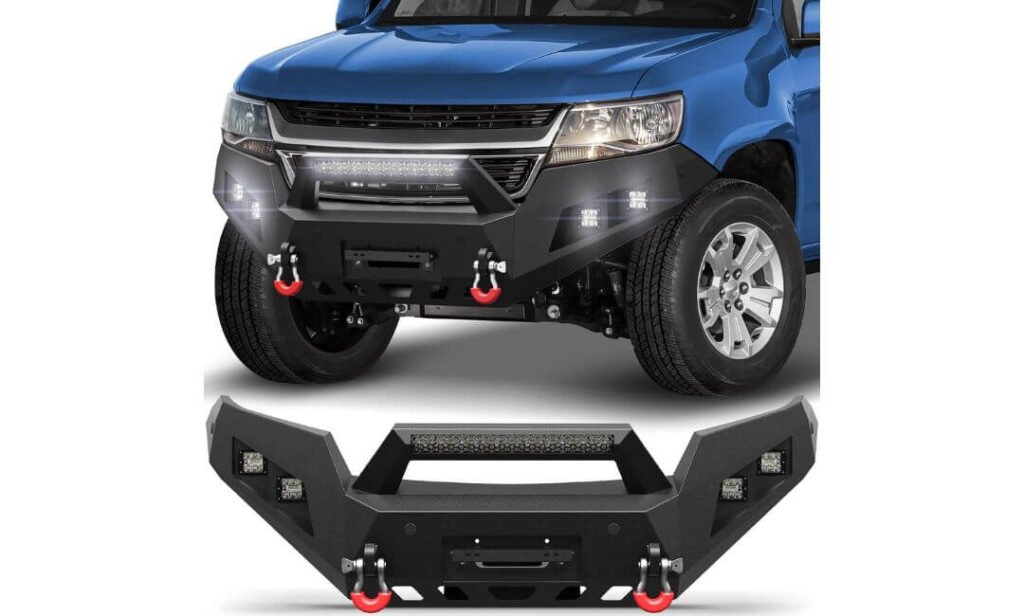
Quick Specs:
- Fits 2015-2020 models (excluding ZR2)
- Reinforced 12,000 lb winch-ready mounting plate
- Heavy-duty carbon steel construction
- Corrosion-resistant E-coating and powder-coated finish
- Approximate bumper weight: 123 lbs
- Integrated 144W LED light bar
- Four 18W auxiliary LED lights included
- Recovery-ready D-ring mounting points
- Full-width front-end protection
- Pre-drilled sensor openings
- Street-legal license plate bracket included
- Direct bolt-on 3-piece installation design
Sometimes the best value isn’t the cheapest option. It’s the product that delivers the most useful equipment without forcing you to spend hundreds more after installation. That’s exactly where this bumper quietly stands out. While many competing bumpers arrive as little more than a steel shell, this one includes much of the hardware Colorado owners end up purchasing later anyway.
The integrated lighting package immediately adds value. Between the 144W center light bar and four auxiliary lights, there is already enough lighting capability for trail driving, remote campsites and low-visibility conditions. Combined with the built-in recovery system and full-width steel construction, the bumper feels ready for real-world use right out of the box.
Another detail worth appreciating is the practical design approach. The 3-piece construction simplifies installation, the pre-drilled sensor openings help future upgrades, and the reinforced winch platform supports the recovery equipment most owners actually run. Add the corrosion-resistant coating system and you have a bumper that was clearly designed with long-term ownership in mind.
(For Colorado owners looking to maximize features per dollar, few options in this guide deliver a more complete package straight from the start.)
Reasons It Earned a Spot on This List
- Strong feature-to-price value
- Integrated lighting package included
- 12,000 lb recovery-ready winch platform
- Corrosion-resistant dual-layer finish
- Practical installation-friendly design
One Small Thing to Be Aware Of
- Lighting harness is not included with the supplied lights
Best Fit for Colorado Owners
Built specifically for 2015-2020 models, this bumper makes a lot of sense for owners who want recovery capability, lighting upgrades and front-end protection without piecing together multiple aftermarket components.
The full-width layout also appeals to drivers who prefer maximum front-corner coverage while still maintaining compatibility with common off-road accessories and recovery equipment.
The Insider Pro-Tip
One thing experienced truck owners rarely mention is that included accessories matter more than most buyers think. By the time many owners add a quality light bar, auxiliary lights, recovery points and mounting hardware to a basic bumper, the final cost often ends up much higher than expected.
That’s why feature-packed options like this deserve attention. A bumper that arrives with useful recovery and lighting equipment already integrated often provides a better ownership experience than a bare bumper that requires months of additional upgrades before it feels complete. Over time, convenience becomes just as valuable as steel thickness.
Best Chevy Colorado Winch Bumpers Compared by Fitment, Winch Capacity and Trail Features
Chevy Colorado Winch Bumper Buying Guide
A winch bumper is one of the few upgrades that can completely change how your Colorado performs on the trail. It affects recovery capability, front-end protection, approach angles, lighting options, weight distribution, and even how easily future accessories can be added. That’s why choosing the right bumper is often more important than choosing the winch itself.
The bumpers featured in this guide were selected for different types of owners. Some are designed for newer-generation trucks that need to retain factory technology, while others focus on maximum recovery capability, full-width protection, or overall value. Before making a purchase, it’s worth understanding what actually matters and what is simply marketing noise.
Start With Proper Vehicle Fitment
The biggest mistake buyers make is assuming all Colorado bumpers fit all Colorado trucks.
The Colorado has multiple generations, different trim levels, and varying front-end designs. A bumper built for a 2018 truck will not automatically fit a 2024 model. Likewise, many bumpers that fit WT, LT, or Z71 trims may not fit ZR2 models due to differences in suspension, bodywork, and front-end components.
Before looking at lighting, steel thickness, or recovery points, verify the exact model year and trim. A perfectly built bumper is worthless if the fitment isn’t correct.
For example, the DV8 bumper in this guide was designed specifically for newer-generation trucks, while the VISIDA, YZONA, Hooke Road, and POFENZE options focus primarily on earlier Colorado models.
Understand the Difference Between Full-Width and Low-Profile Designs
Not every off-road bumper serves the same purpose.
Full-width bumpers provide greater front-corner protection and are often preferred by overlanders, ranch owners, hunters, and drivers who regularly encounter brush, rocks, or rough terrain. They protect more of the vehicle’s front end and usually offer a more aggressive appearance.
Low-profile designs prioritize approach angles and ground clearance. They typically sit closer to the body, reduce front overhang, and make it easier to navigate steep obstacles without contacting the terrain.
Neither design is automatically better. The right choice depends on how the truck is actually used.
If your Colorado spends most of its time on technical trails, clearance may be the priority. If it sees long-distance travel, work sites, remote roads, or overland routes, additional coverage often becomes more valuable.
Winch Compatibility Matters More Than Most Buyers Realize
Many bumpers advertise themselves as winch-ready, but there is a significant difference between having a mounting location and having a properly engineered winch platform.
A quality bumper should include a reinforced winch plate capable of handling recovery loads without excessive flex. The mounting structure should distribute force through the bumper and frame rather than concentrating stress in one area.
For most Colorado owners, an 8,000 to 12,000-pound winch is the sweet spot. Fortunately, the bumpers featured in this guide were selected specifically because they support the recovery equipment commonly used on Colorado builds.
When evaluating a bumper, don’t just ask whether a winch fits. Ask whether the bumper was truly designed to support one.
Recovery Features Deserve More Attention Than Styling
Recovery hardware is often overlooked until it is actually needed.
Strong recovery points, reinforced shackle mounts, integrated D-ring locations, and secure winch mounting systems can make recovery operations safer and more effective. These features are often far more important than decorative panels, extra cutouts, or aggressive styling cues.
A bumper should contribute to recovery capability, not simply improve appearance.
That is why the bumpers in this guide place significant emphasis on recovery points, D-ring mounts, and reinforced steel construction rather than cosmetic features alone.
Lighting Integration Can Save Time and Money
Many Colorado owners eventually add auxiliary lighting.
Whether the goal is trail visibility, campsite illumination, work-site lighting, or night driving support, integrated light mounting provisions can make future upgrades much easier.
Some bumpers provide dedicated locations for light bars and pod lights, while others include lighting systems directly from the factory. Choosing a bumper with built-in lighting support often results in a cleaner installation and fewer wiring headaches later.
Even if additional lighting is not part of the current plan, it’s worth considering future needs before making a final decision.
Steel vs. Aluminum Winch Bumpers
Steel remains the most common material for serious recovery-focused bumpers.
It offers excellent durability, strong recovery performance, and greater resistance to impacts from rocks, trail debris, and off-road obstacles. Most of the bumpers featured in this guide use steel construction because recovery strength was a major factor during evaluation.
Aluminum bumpers are lighter and can improve overall vehicle weight management, but they are less common in the Colorado winch bumper market and often cost more.
For most owners seeking maximum durability and recovery capability, steel remains the preferred choice.
Weight Is More Important Than Advertisements Suggest
Adding a winch bumper changes the weight carried by the front suspension.
A heavier bumper combined with a winch can add well over 150 pounds to the front of the truck. While that may not sound significant, it can affect ride quality, suspension performance, and front-end sag over time.
This doesn’t mean heavy bumpers should be avoided. It simply means buyers should understand the total weight of the bumper, winch, recovery equipment, and accessories before making a purchase.
The best choice is often the bumper that delivers the features you need without adding unnecessary weight.
Installation Complexity Varies More Than Expected
Not all bumpers install the same way.
Some use factory mounting points and require only basic tools. Others may require trimming, minor cutting, additional wiring work, sensor relocation, or assembly before installation.
Review installation requirements carefully before ordering. A bumper that appears inexpensive can become significantly more expensive if professional installation is required.
For owners planning a weekend installation, understanding the process ahead of time can prevent unnecessary surprises.
Safety and Legal Considerations
A winch bumper should improve safety, not create new problems.
Make sure recovery points are used properly, recovery hardware is rated appropriately, and winching equipment is installed according to manufacturer recommendations. Recovery loads place tremendous stress on equipment, which is why quality construction and proper installation are so important.
It’s also worth checking local regulations regarding auxiliary lighting, license plate placement, and bumper modifications. Some areas have specific requirements that may affect how accessories and lighting systems can be used on public roads.
Final Buying Advice
The best Chevy Colorado winch bumper is not necessarily the heaviest, most expensive, or most aggressive-looking option.
The right bumper is the one that matches your truck, supports your recovery equipment, fits the way you use your Colorado, and provides the protection and functionality you actually need.
Focus on fitment, recovery capability, construction quality, future accessory support, and real-world usability. If those areas are covered, you’ll end up with a bumper that continues to make sense long after the excitement of installation day is over.
Chevy Colorado Winch Bumper Installation Essentials
Installing a winch bumper on a Chevy Colorado is not a particularly difficult project, but it is one of those upgrades where preparation makes a huge difference. A well-planned installation usually goes smoothly, while a rushed installation can lead to alignment issues, wiring headaches, damaged sensors, and unnecessary frustration.
The good news is that most modern Colorado winch bumpers are designed around factory mounting locations. However, because bumper weights often range from 75 pounds to over 160 pounds, this is rarely a one-person job. Taking the time to understand the process before turning a wrench can save hours of work later.
What a Typical Installation Process Looks Like
Although every bumper has its own instructions, the overall installation process is usually very similar.
The first step is removing the factory front bumper assembly and inspecting the frame mounting points. Before installing any new components, it is worth cleaning mounting surfaces and checking for corrosion, damaged hardware, or bent brackets that could affect alignment.
Once the factory bumper is removed, most owners perform a test fit of the new bumper before tightening anything. This step is often skipped, but it is one of the easiest ways to catch alignment issues early.
If a winch will be installed, it is usually easier to mount the winch, fairlead, wiring, and control box before the bumper is fully secured to the truck. Access becomes significantly more limited once everything is bolted in place.
After the winch and bumper are positioned correctly, recovery hardware, lighting components, skid plates, and auxiliary accessories can be installed. The final stage involves checking clearances around the grille, fenders, cameras, sensors, and lighting systems before performing a final torque check on all hardware.
The owners who experience the fewest installation problems are usually the ones who spend the most time during the test-fit stage.
Installation Requirements Can Vary Between Bumpers
One thing many buyers discover after ordering a bumper is that installation requirements can differ dramatically.
Some bumpers install directly onto factory mounting points with minimal modifications. Others may require trimming plastic components, relocating brackets, assembling multiple bumper sections, or routing additional wiring for auxiliary lighting.
Several bumpers featured in this guide include integrated lighting systems, winch provisions, skid plates, or sensor openings. These features add capability, but they also add installation steps that should be planned for ahead of time.
Before installation day arrives, reviewing the instructions completely can prevent unexpected delays.
Common Installation Mistakes That Cause Problems Later
The most common mistake is tightening everything too early.
Many alignment issues occur because installers fully tighten one side before the entire bumper is centered on the truck. Leaving hardware slightly loose until final positioning allows for small adjustments that can dramatically improve fitment.
Another frequent issue involves winch wiring. Owners often focus on mounting the bumper and forget to plan cable routing. Once the bumper is installed, accessing wiring locations can become far more difficult.
Lighting connections are another area where problems occur. Auxiliary lights should be tested before the bumper is fully assembled. Finding a faulty connection after everything has been installed is never fun.
Sensor compatibility can also create confusion. Some bumpers retain factory technology while others require aftermarket sensor solutions. Verifying sensor requirements before installation avoids surprises later.
Tools That Make the Job Easier
A basic installation can often be completed using common garage tools, but a few additional items make the process much smoother.
Recommended tools include:
- Complete socket and ratchet set
- Torque wrench
- Trim removal tools
- Combination wrench set
- Screwdriver set
- Cordless impact driver
- Wire crimping tools
- Electrical tape and heat shrink tubing
- Floor jack or support stand
- Protective gloves
- Safety glasses
- Work light for wiring and alignment
A second person is also one of the most valuable tools available during installation. Many bumpers are simply too large and heavy to safely position alone.
Recovery Equipment Should Be Installed Correctly
A winch bumper is only as reliable as the recovery equipment attached to it.
Before final installation, confirm that the winch mounting pattern matches the bumper’s winch plate. Verify fairlead alignment, cable clearance, and access to the winch controls. Small issues that seem insignificant during installation can become major problems during a recovery situation.
Recovery points should also be inspected after installation. D-rings, shackles, and recovery mounts should move freely without contacting bumper surfaces during use.
When recovery equipment is installed correctly, the entire system functions as a single unit rather than a collection of separate parts.
Lighting and Electrical Planning Often Gets Overlooked
Many of today’s bumpers include light bars, pod lights, fog lights, or auxiliary lighting provisions.
Before running wires, determine where switches, relays, fuse blocks, and power sources will be located. A clean wiring plan usually results in easier maintenance and a more professional installation.
Poor wiring is one of the fastest ways to make a high-quality bumper feel like a low-quality upgrade.
The cleanest builds are usually the ones where electrical planning happened before installation started.
Quick-Release vs Permanent Winch Setups
Most Colorado owners choose a permanent winch installation because it provides immediate recovery access whenever needed.
A permanently mounted winch remains protected within the bumper structure, offers faster deployment, and eliminates the need to transport heavy equipment separately.
Quick-release systems appeal to some owners because they reduce front-end weight when the winch is not needed. However, they also require storage space, additional mounting hardware, and more setup time during an actual recovery situation.
For trucks that regularly see trails, overland routes, work sites, or remote travel, permanent mounting is usually the more practical solution.
Safety Should Always Come First
Winch bumpers are heavy components, and winches generate tremendous recovery forces.
Never position yourself underneath an unsupported bumper during installation. Use proper lifting equipment when necessary and follow all torque specifications provided by the manufacturer.
After installation, inspect every mounting point, recovery mount, electrical connection, and winch fastener before using the vehicle off-road.
A careful installation not only protects the truck, it protects everyone around it.
Final Installation Advice
The best bumper installations rarely happen quickly.
They happen when owners take their time, verify fitment, plan wiring routes, test accessories, and check every detail before the final bolt is tightened.
A properly installed winch bumper should look factory-aligned, support recovery equipment confidently, retain the functionality you need, and provide years of dependable service without constant adjustments or repairs.
Investing a little extra time during installation almost always pays off long after the truck leaves the garage.
Lighting and Electrical Considerations for Chevy Colorado Winch Bumpers
One thing many Colorado owners underestimate is how quickly electrical demands increase once a winch bumper is installed. The bumper itself is only the beginning. Add a winch, a light bar, auxiliary lights, recovery lighting, camp lighting, air compressors, or future accessories, and suddenly the electrical system becomes just as important as the bumper itself.
This is especially relevant because several bumpers featured in this guide either include lighting systems from the factory or provide dedicated mounting locations for additional lighting. A clean electrical setup not only improves reliability but also reduces troubleshooting, protects expensive components, and helps ensure everything works when you actually need it.
Planning Your Wiring Layout Before Installation
The cleanest bumper installations usually start with a wiring plan before the first wire is connected.
Many owners mount lights first and think about wiring afterward. That often leads to crowded engine bays, exposed wiring, unnecessary splices, and future maintenance headaches.
A better approach is to identify every accessory that will be installed over the next year or two. This includes light bars, pod lights, fog lights, winches, air compressors, chase lights, recovery lights, and any other accessories that may draw power.
Once those future upgrades are considered, routing paths become easier to plan. Proper routing reduces heat exposure, prevents wire abrasion, and makes future troubleshooting significantly easier.
The goal is not simply getting power to the lights. The goal is creating a system that remains reliable years later.
Understanding Lighting Loads and Power Requirements
Not all bumper lighting systems place the same demand on the electrical system.
A pair of small LED pod lights may have very little impact, while a large light bar combined with multiple auxiliary lights can create a much heavier electrical load.
Several bumpers featured in this guide already include substantial lighting packages. Systems equipped with large LED light bars and multiple auxiliary lights should always be wired through properly rated relays and fused circuits rather than connected directly through basic switches.
This approach improves reliability, reduces heat buildup, and protects the vehicle’s electrical system from unnecessary stress.
When building a recovery-focused truck, electrical reliability is just as important as mechanical reliability.
Battery Capacity Matters More Than Most Owners Expect
Many Colorado owners focus heavily on winch ratings but overlook battery capacity.
A winch can place enormous demand on the electrical system during recovery operations. When lighting, compressors, communication equipment, and charging accessories are operating at the same time, that demand increases even further.
For trucks running a winch bumper and recovery equipment regularly, a high-quality AGM battery is often one of the smartest supporting upgrades. AGM batteries generally provide stronger reserve capacity, better vibration resistance, and improved performance under repeated electrical loads.
Owners who spend significant time overlanding or operating accessories with the engine off may also benefit from a dual-battery system, particularly when multiple electrical accessories are installed.
Fuse Protection Is Not Optional
One of the easiest ways to protect expensive electrical components is proper fuse selection.
Every major accessory should be protected by an appropriately sized fuse positioned as close to the power source as possible. This helps prevent wiring damage in the event of a short circuit or component failure.
A common mistake is installing oversized fuses simply to avoid nuisance trips. While that may seem convenient, it can allow excessive current to flow through wiring during a fault condition.
Proper fuse sizing protects not only the accessory but also the vehicle itself.
When in doubt, follow the manufacturer’s electrical recommendations rather than guessing.
Relay Systems Improve Long-Term Reliability
As accessory counts increase, relay-controlled systems become increasingly valuable.
Relays allow high-current devices such as light bars and auxiliary lighting systems to draw power directly from the battery while using low-current switches inside the cab. This reduces stress on switches and improves overall system reliability.
Many professional-looking builds owe much of their reliability to proper relay management rather than expensive accessories.
For Colorado owners planning multiple lighting upgrades, a dedicated relay and fuse management system often pays for itself over time.
Protecting Connections From Water and Dust
Off-road environments are unforgiving.
Mud, water crossings, dust, road salt, and extreme weather constantly attack electrical connections. Even high-quality lights can fail prematurely if the wiring and connectors are not properly protected.
Weather-sealed connectors should be used whenever possible. Heat-shrink tubing provides additional protection at splice locations, while braided wire loom helps shield wiring from abrasion and debris.
Routing wires away from sharp edges, moving suspension components, and high-heat areas can dramatically improve long-term durability.
The most reliable lighting systems are often the ones you never notice because they simply continue working year after year.
Grounding Is Frequently Overlooked
Poor grounds are responsible for a surprising number of lighting problems.
Flickering lights, intermittent operation, dim output, and mysterious electrical issues often trace back to inadequate grounding points.
Whenever possible, grounding locations should be clean, corrosion-free, and securely attached to bare metal surfaces. Applying dielectric grease after installation can help reduce future corrosion.
Strong grounds are one of the simplest ways to improve electrical reliability.
Managing Winch Power Safely
A winch is often the largest electrical load on a Colorado build.
Power cables should be routed carefully, protected from abrasion, and secured properly to prevent movement during vehicle operation. Loose winch cables can eventually rub through insulation and create significant problems.
Cable connections should remain clean and tight, especially after the first few recovery sessions. Periodic inspection helps ensure the system remains ready for use when needed.
Recovery situations are not the time to discover a loose electrical connection.
Long-Term Maintenance Tips
Electrical systems benefit from occasional inspection just like mechanical components.
At least a few times each year, inspect visible wiring, connectors, terminals, relays, and fuse blocks. Look for corrosion, damaged insulation, loose hardware, or signs of moisture intrusion.
Small issues discovered early are usually inexpensive and easy to correct. Left unattended, those same issues can become much larger problems later.
Final Electrical Advice
The best Chevy Colorado winch bumper setups are not necessarily the ones with the most lights. They are the ones with electrical systems designed to support those lights reliably.
A properly planned wiring layout, quality battery, correctly sized fuse protection, sealed connections, and thoughtful cable routing will do more for long-term reliability than almost any accessory upgrade.
The goal is simple. When you press the winch controller, activate the light bar, or need recovery lighting on a dark trail, everything should work immediately without hesitation. That’s what separates a clean build from one that constantly requires attention.
Real-World Scenarios: Which Chevy Colorado Winch Bumper Should You Choose?
One of the biggest mistakes buyers make is assuming there is a single “best” winch bumper for every Colorado owner. In reality, the right bumper depends entirely on how the truck is used. A bumper that performs brilliantly on technical rock trails may not be the smartest choice for a daily-driven truck that occasionally sees camping trips. Likewise, a bumper packed with features may not provide the best value for someone simply looking for dependable protection and recovery capability.
That is exactly why the products in this guide were selected. Each one excels in a different type of ownership situation. Instead of focusing only on specifications, let’s look at which bumper makes the most sense in real-world use.
Scenario A: Frequent Recoveries, Tough Trails, and Serious Off-Road Use
If your Colorado regularly encounters rocky terrain, deep ruts, steep climbs, mud, snow, or situations where recovery equipment is more than just insurance, the DV8 Steel Front Winch Bumper deserves the strongest consideration.
Its heavy-duty steel construction, integrated skid plate, recovery-ready design, reinforced mounting structure, and improved approach angles make it particularly well suited for demanding trail environments. The ability to retain factory cameras, sensors, adaptive cruise control, and fog lights is an added bonus for owners who use their trucks both on and off the trail.
The lower-profile design also helps maximize clearance where it matters most. When navigating obstacles, approach angle often becomes more important than additional cosmetic protection.
If recovery capability is near the top of your priority list, this is the bumper most likely to make sense long term.
Scenario B: Overlanding, Camping, and Long-Distance Adventure Travel
For owners building a Colorado for overland travel, extended camping trips, remote exploration, and self-supported adventures, the YZONA Front and Rear Bumper Kit stands out.
The reason is simple. Overlanding places demands on both ends of the vehicle.
Recovery situations do not always happen from the front. Additional gear often increases vehicle weight. Campsites frequently require extra lighting. Rear protection becomes increasingly valuable when trucks are loaded with equipment, fuel, recovery tools, and cargo.
The combination of front and rear steel bumpers, integrated recovery points, extensive lighting, rear step functionality, and 12,000-pound winch support creates a package that feels designed around long-distance self-sufficiency.
For owners planning to spend days away from pavement, having protection and recovery capability at both ends of the truck is often more valuable than investing heavily in a front bumper alone.
Scenario C: Daily Drivers That Need Rugged Protection
Not every Colorado owner spends weekends crawling over rocks.
Many simply want a stronger, more capable front end that looks good, improves recovery options, and provides better protection than the factory bumper without turning the truck into a dedicated trail rig.
For that type of owner, the Hooke Road Full-Width Front Bumper Guard is an excellent fit.
The integrated grille guard provides meaningful front-end protection against brush, debris, and minor impacts. The full-width design protects more of the truck’s front corners than many compact bumpers. At the same time, the overall weight remains surprisingly manageable compared to many other full-width alternatives.
This makes it a practical choice for owners who spend most of their time on roads but still want genuine off-road capability available when needed.
It delivers rugged protection without forcing the truck to become something it isn’t.
Scenario D: Maximum Features Without Overspending
For buyers trying to balance capability, appearance, recovery readiness, and overall value, the POFENZE Full-Width Off-Road Bumper is difficult to ignore.
What makes it attractive is the amount of equipment included from the start.
The integrated winch platform, full-width protection, recovery hardware, LED light bar, auxiliary lighting, and corrosion-resistant construction eliminate many of the upgrades buyers would otherwise need to purchase separately.
This is important because the true cost of a bumper is rarely just the bumper itself. Lighting systems, recovery points, mounting hardware, and accessories can quickly increase the final investment.
By arriving with many of those features already included, this option provides one of the strongest feature-to-dollar ratios in the guide.
For value-focused buyers, that matters.
Scenario E: Keeping an Older Colorado for the Long Haul
There is another type of owner worth mentioning.
The driver who already owns a well-maintained second-generation Colorado and plans to keep it for years.
For that situation, the VISIDA Textured Steel Front Bumper deserves special attention.
Its broad year coverage, integrated lighting package, recovery hardware, winch-ready design, and substantial construction make it one of the most versatile upgrades available for 2015-2022 models.
Rather than focusing on one specific strength, it offers a balanced combination of protection, recovery capability, lighting support, and overall usability.
For many long-term owners, that balance becomes more valuable than chasing a single standout feature.
So Which One Would We Personally Choose?
If the goal is building the most capable recovery-focused front-end setup for a newer truck, the DV8 remains the strongest overall choice.
If complete vehicle protection and overland readiness matter most, the YZONA package offers advantages that single bumpers simply cannot match.
If everyday protection and rugged styling are the priorities, the Hooke Road bumper earns its place.
If value is the primary goal, the POFENZE delivers a surprisingly complete package.
And if you’re looking for the most balanced option for a second-generation truck, the VISIDA remains one of the safest recommendations in this guide.
The reality is that none of these bumpers were chosen because of marketing claims or flashy styling. They were selected because each one solves a different problem for a different type of Colorado owner.
Choosing the bumper that matches how you actually use your truck will almost always lead to a better result than simply choosing the most expensive option on the page.
FAQs About Chevy Colorado Winch Bumper
Can a Chevy Colorado winch bumper actually affect suspension performance after installation?
Yes, and this is something many owners don’t notice until several weeks after the install.
A winch bumper alone can add anywhere from 75 to 135 pounds to the front of a Chevy Colorado. Once you add a winch, recovery gear, fairlead, wiring, and accessories, the total additional front-end weight can easily exceed 180 to 220 pounds. That extra weight changes how the front suspension behaves during braking, cornering, and rough-terrain driving.
The real question isn’t whether the bumper fits the truck. The real question is whether the truck is properly set up to carry the added weight. Owners planning larger winches, steel bumpers, skid plates, and overland equipment should evaluate front spring rates and suspension capacity before the build is complete rather than after front-end sag appears.
For a Chevy Colorado that spends 80% of its time on-road and 20% off-road, should I prioritize recovery capability or front-end protection?
Most experienced Colorado owners eventually learn that front-end protection often gets used more frequently than recovery equipment.
A winch may only be needed a few times per year, but protection against road debris, brush, trail obstacles, wildlife encounters, and accidental impacts can provide value every time the truck leaves the driveway. That’s one reason full-width designs remain popular among many owners who travel long distances.
The smartest approach is usually finding a bumper that provides both. A strong winch platform without proper protection can leave vulnerable areas exposed. Likewise, a protective bumper without recovery capability may become frustrating during an actual recovery situation. Balance is usually more valuable than maximizing a single feature.
Is it worth buying a Chevy Colorado winch bumper if I don’t plan to install a winch immediately?
In many cases, yes.
A quality winch bumper does far more than hold a winch. It often improves recovery options, provides stronger mounting points, adds lighting flexibility, increases front-end protection, and creates a foundation for future upgrades.
Many owners install the bumper first, use it for months, and add a winch later once they better understand how they use the truck. This approach can actually be beneficial because it gives you time to determine the ideal winch size, rope type, control configuration, and accessory requirements.
The key is choosing a bumper with a properly engineered winch platform from the beginning so future upgrades remain simple.
How much winch capacity is realistically needed for a Chevy Colorado build?
This is one of the most misunderstood topics in the recovery world.
Many buyers automatically assume bigger is better. In reality, recovery performance depends on far more than maximum winch rating alone. Vehicle weight, terrain conditions, tire size, cargo load, recovery technique, and rigging equipment all play important roles.
For most Colorado owners, a quality winch in the 8,000 to 12,000-pound range provides an excellent balance of recovery performance and practicality. Before purchasing, consider:
- Typical vehicle weight when fully loaded
- Tire size and wheel setup
- Camping or overland equipment carried regularly
- Frequency of solo off-road travel
- Terrain typically encountered
A properly matched recovery system almost always performs better than simply buying the largest winch available.
What is the biggest mistake buyers make when choosing a Chevy Colorado winch bumper?
The biggest mistake is focusing on appearance before function.
Aggressive styling photographs well, but real-world ownership quickly reveals whether a bumper was designed for actual use. The details that matter most are often the least exciting on paper: frame mounting design, recovery-point strength, steel quality, winch accessibility, wiring management, corrosion protection, and compatibility with future upgrades.
A useful rule is to imagine the truck five years from now rather than five days from now. Will the bumper still support future lighting upgrades? Will recovery points remain accessible? Will maintenance be simple? Will corrosion resistance hold up to the environment where the truck operates?
The bumpers that continue to satisfy owners years later are usually the ones that solved practical problems first and looked good second. That’s why experienced builders spend more time evaluating engineering details than marketing photos.
Final Thoughts
After spending time comparing these bumpers side by side, one thing becomes clear: there is no single winch bumper that is perfect for every Chevy Colorado owner.
Some buyers need maximum recovery capability for demanding trails. Others want better front-end protection for daily driving, overlanding, hunting trips, or remote backroads. And many simply want a bumper that adds real functionality without creating installation headaches or forcing additional upgrades later.
That’s exactly why the products in this guide were selected. Each one solves a different problem while still delivering the fundamentals that matter most—proper fitment, reliable recovery support, durable construction, and long-term usability.
If you’re driving a newer truck, the DV8 Steel Front Winch Bumper stands out for its ability to combine recovery capability with factory technology retention. For second-generation owners seeking broad compatibility and strong overall value, the VISIDA Textured Steel Front Bumper remains one of the most balanced choices available. Those building a complete adventure-ready truck should take a serious look at the YZONA Front and Rear Bumper Kit, while the Hooke Road and POFENZE options continue to offer compelling solutions for protection-focused and value-focused builds.
The most important takeaway is this: buy for how you actually use your Colorado, not how you imagine using it once a year.
The bumper that performs best over the next five years is usually the one that matches your driving habits, recovery needs, and future upgrade plans from day one. When fitment, recovery capability, protection, and practicality are all working together, that’s when a winch bumper stops being an accessory and starts becoming one of the most valuable upgrades on the truck.
(A well-chosen winch bumper won’t make you think about it every day. It will simply be there when the trail gets rough, the weather turns bad, or the recovery situation becomes real—and that’s exactly what makes it worth buying.)
Also Check:


