
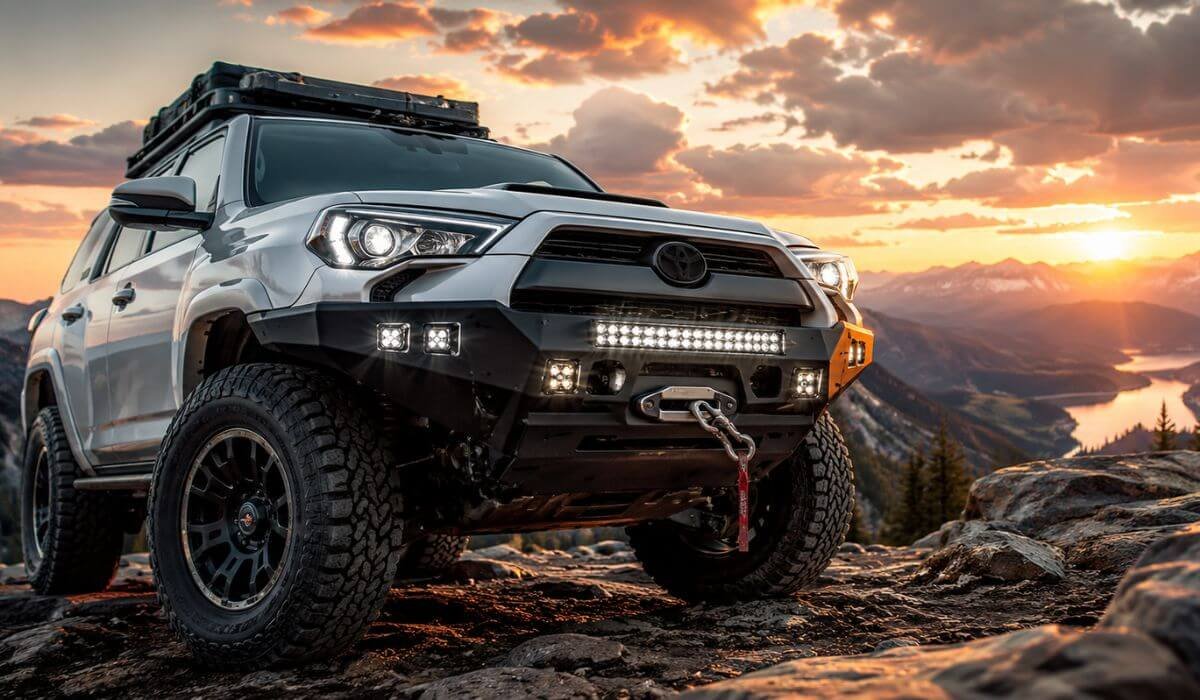
5 Best Toyota 4Runner Winch Bumpers in 2026: Next Gen Trail Armor and Recovery Ready Designs
If you have spent any time building a Toyota 4Runner for overlanding, rock crawling, or backcountry recovery, you already know that not every winch bumper is worth the weight hanging off the front of the truck. The right bumper is not just about looks—it affects approach angle, recovery capability, winch fitment, lighting options, and even how confidently you can tackle technical trails.
For this guide, we focused on winch-ready bumpers designed for both 5th-generation Toyota 4Runner models (2010-2024) and the all-new 6th-generation 2025-2026 Toyota 4Runner. We looked at steel construction, winch compatibility, recovery points, trail clearance, mounting design, and real-world usability rather than marketing claims. Some of these options are built for serious off-road abuse, while others are better suited for overland travel and weekend adventures.
The result is a shortlist of winch bumpers that offer the best balance of protection, recovery readiness, fitment quality, and long-term value for 4Runner owners who actually use their trucks beyond the pavement.
Best Toyota 4Runner Winch Bumpers: Top 2026 Picks with High-Clearance and Steel Construction
#1. DV8 Centric Winch Front Bumper
Best Winch Bumper for 2025-2026 Toyota 4Runner Owners Seeking Next Generation Recovery Capability and Premium Trail Protection
#2. Tyger Auto FURY Center Bumper Guard
Best Winch Bumper for 2014-2024 Toyota 4Runner Drivers Wanting Rock Crawler Strength and Everyday Usability
#3. Hooke Road Stubby Front Bumper
Best Stubby Winch Bumper for 5th Gen Toyota 4Runner Owners Prioritizing Trail Clearance and Recovery Performance
#4. UTVJATV Front Bumper
Best Budget Winch Bumper for Toyota 4Runner Buyers Looking for Integrated Lighting and Recovery Ready Features
#5. WARN Semi Hidden Fixed Winch Mount
Best Hidden Winch Mount for Toyota 4Runner Owners Who Prefer Factory Styling With Added Recovery Capability
Must Check: Best Winch For Toyota 4Runner
Expert Tip
One mistake we see repeatedly is people shopping for a winch bumper based on appearance first and recovery performance second. In reality, the best-looking bumper quickly becomes the wrong bumper if it limits winch access, reduces airflow, or creates fitment headaches when you’re miles from pavement.
Match the bumper to how you actually use your 4Runner. If you’re building a 2025-2026 model for overlanding and long-distance travel, a modern platform like the DV8 makes more sense than forcing an older design to fit. If you’re driving a proven 5th-gen truck and regularly encounter rocky terrain, recovery points, steel thickness, approach angle, and winch accessibility will matter far more than aggressive styling. The bumper you never have to think about on the trail is usually the bumper you chose correctly.
How We Chose These Toyota 4Runner Winch Bumpers
There are hundreds of bumpers advertised as “off-road ready,” but after years of watching what works and what gets replaced, we’ve learned that the real differences are usually hidden in the details.
For this guide, we didn’t focus on flashy marketing photos or exaggerated claims. Instead, we looked at the factors that actually matter once a winch is mounted and the truck starts seeing real trail use.
The first thing we evaluated was vehicle-specific fitment. A bumper designed around the all-new 2025-2026 Toyota 4Runner has very different requirements than one built for a 5th-generation truck. That’s why we included options covering both generations rather than recommending a one-size-fits-all solution.
Next, we examined winch compatibility and recovery readiness. Every product on this list either includes a dedicated winch mounting system or was engineered specifically around winch installation. We also prioritized designs that provide strong recovery-point integration because recovery hardware is only as reliable as the structure supporting it.
Another major factor was trail clearance and approach angle. Full-width protection is useful, but excessive front overhang can become a liability on technical terrain. Products like the Hooke Road Stubby Front Bumper earned a place on this list because they balance protection with improved front-end clearance where it matters most.
We also looked closely at construction quality and long-term durability. Steel thickness, reinforcement design, recovery-point mounting, weld consistency, and protective finishes all played a role. A bumper may look impressive when new, but durability becomes far more important after years of exposure to mud, water crossings, road salt, and trail impacts.
Finally, we considered real-world value rather than price alone. That’s why this list includes everything from budget-friendly options such as the UTVJATV Front Bumper to premium solutions like the DV8 Centric Winch Front Bumper. Each earned its place because it delivers a specific advantage for a particular type of 4Runner owner.
The truth is that there isn’t one perfect winch bumper for every Toyota 4Runner. The right choice depends on your generation, intended use, recovery needs, and future build plans. Our goal was to identify the options that solve those needs most effectively—not simply the products with the loudest advertising or the highest sales numbers.
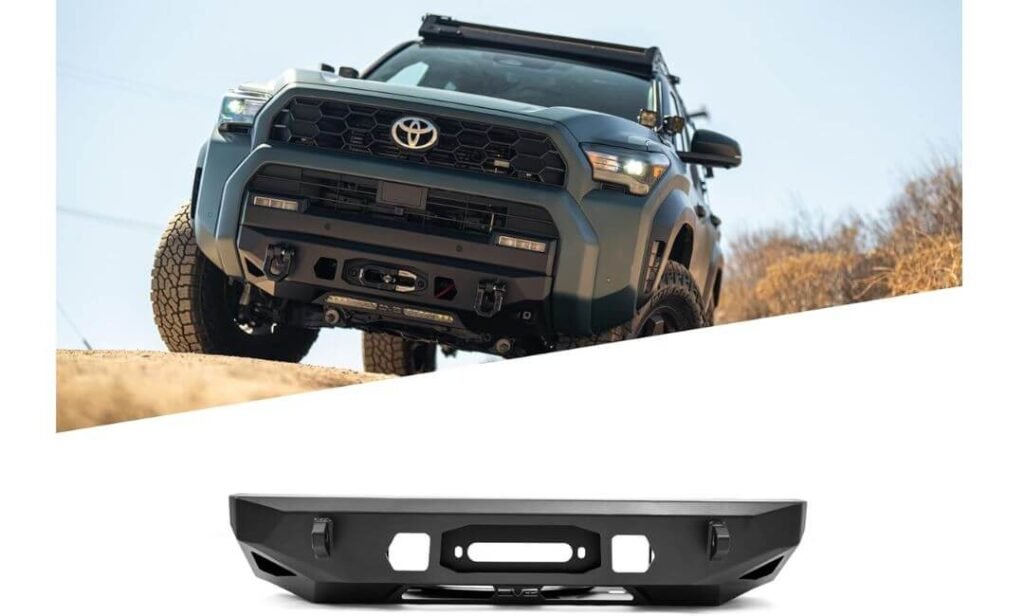
#1. DV8 Centric Winch Front Bumper
Quick Specs:
- Designed specifically for 2025-2026 6th Gen Toyota 4Runner
- Integrated winch platform for most popular recovery winches
- Dual 1-inch thick recovery shackle mounts
- Supports 20-inch single-row light bar
- Includes mounts for two 3-inch auxiliary pod lights
- Retains factory parking sensors, front camera, fog lights, and adaptive cruise control
- Heavy-duty steel construction with micro-texture powder-coated finish
- Approximate dimensions: 46 inches wide, 15 inches deep, 10 inches high
- OEM-inspired center-mount design with minimal visual bulk
The newest Toyota 4Runner created a problem that many aftermarket companies weren’t ready for. Owners wanted a winch-ready setup without sacrificing the clean factory appearance that makes the sixth-generation truck look so refined. This option solves that challenge better than most early-release bumpers currently available.
What immediately stands out is how naturally the center section flows into the factory front end. Instead of transforming the vehicle into a dedicated rock crawler, it adds serious recovery capability while preserving the design language Toyota spent years developing. The integrated winch mounting system, 1-inch recovery points, and steel construction provide genuine trail functionality without making the front end appear overloaded.
Lighting support is equally well thought out. A dedicated 20-inch light bar location combined with dual 3-inch pod light mounts creates a practical night-driving setup for overland travel, remote trails, and recovery situations. More importantly, factory sensors, adaptive cruise control, front camera systems, and fog lights remain functional, which is often where many early aftermarket designs fall short.
(For owners building a modern overland-focused 4Runner, this is one of the few options that improves capability without compromising the technology and styling that made the sixth-generation platform so appealing in the first place.)
Why It Earned a Spot on This List
- Purpose-built for the 6th Gen Toyota 4Runner rather than adapted from an older platform
- Preserves factory safety and driver-assistance technology
- Strong recovery setup with integrated winch support and thick D-ring mounts
- Clean center-mount design maintains OEM-inspired styling
- Multiple lighting options for trail, overland, and recovery use
- Durable powder-coated steel construction built for long-term outdoor exposure
A Small Consideration Before Installation
- Because this bumper is engineered specifically around the newest platform, installation requires careful alignment of factory components to ensure all sensors and camera systems continue operating exactly as intended.
6th Gen Toyota 4Runner Compatibility Notes
This bumper was developed specifically for the 2025-2026 Toyota 4Runner and is not intended for earlier fifth-generation models. The mounting architecture, body lines, and sensor locations were designed around the new platform from the beginning.
For owners planning a complete build that includes a winch, auxiliary lighting, recovery gear, and trail protection, this design provides a strong foundation without forcing major compromises in appearance or daily drivability.
The Insider Pro-Tip
Most buyers focus on winch ratings first and bumper design second. Experienced builders usually do the opposite. A well-engineered bumper determines how accessible the winch remains, how well airflow is maintained, and whether factory technology continues functioning properly after installation.
If your goal is to build a capable trail-ready 4Runner that still feels refined on the road, prioritize recovery integration, sensor retention, and long-term usability over aggressive styling alone. Those are the details owners appreciate years later, long after the excitement of a new purchase fades.
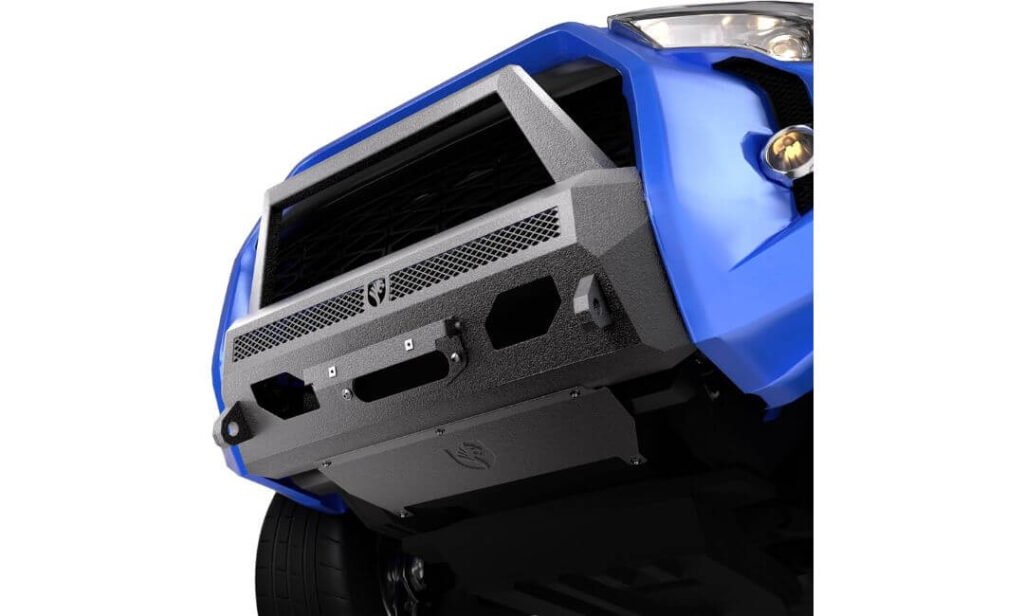
#2. Tyger Auto FURY Center Bumper Guard
Quick Specs:
- Built for 2014-2024 Toyota 4Runner (5th Gen)
- Compatible with Toyota Safety Sense Pre-Collision sensors
- Heavy-duty 5mm carbon steel construction
- Integrated winch plate supporting 10-inch x 4.5-inch mounting pattern
- Recovery-ready D-ring mounting points
- Supports up to a 30-inch LED light bar
- Includes integrated skid plate protection
- License plate relocation bracket included
- Textured black corrosion-resistant finish
- Approximate weight: 87.8 lbs
- Backed by a 3-year manufacturer warranty
The easiest way to tell whether a bumper was designed by people who actually use their trucks is to look beyond the front view. Recovery points, skid protection, winch mounting, lighting support, and sensor compatibility all need to work together. This setup gets that balance right, which explains why it continues to be one of the most talked-about options among 5th Gen 4Runner owners.
Instead of focusing purely on appearance, the design adds capability where it matters most. The 5mm carbon steel construction creates a noticeably solid foundation for recovery equipment, while the integrated winch plate accepts common mounting patterns used by many popular off-road winches. The addition of a skid plate is another detail experienced trail users immediately appreciate because front-end impacts rarely stop at the bumper itself.
Another reason this option stands out is practicality. The ability to retain Toyota Safety Sense compatibility, add a 30-inch light bar, relocate the license plate, and install recovery gear without turning the front of the vehicle into an oversized steel wall makes it particularly attractive for owners who split their time between daily driving and weekend adventures.
(For many 5th Gen owners, this hits the sweet spot between serious trail capability, clean fitment, and long-term durability without pushing the build into extreme territory.)
Standout Reasons It Made Our Shortlist
- Strong 5mm carbon steel construction designed for real-world abuse
- Integrated skid plate adds protection beyond the bumper itself
- Winch-ready platform compatible with common recovery setups
- Retains compatibility with Toyota Safety Sense equipped vehicles
- Supports larger 30-inch auxiliary lighting systems
- Excellent balance between trail capability and daily usability
- Long 3-year manufacturer-backed warranty coverage
One Thing Worth Planning Ahead For
- Minor trimming of the lower factory bumper section is typically required, so taking extra time during installation helps achieve the cleanest finished appearance.
5th Gen Toyota 4Runner Compatibility Insights
This bumper was engineered specifically for 2014-2024 Toyota 4Runner models and works particularly well for owners building a recovery-focused overland or trail vehicle. It is compatible with Toyota Safety Sense equipped models, which is an important advantage in this category.
It is not intended for Limited, Nightshade, or TRD Sport trims because of their unique front fascia design. For compatible trims, however, fitment and overall integration are among the strongest points of the package.
The Insider Pro-Tip
Many buyers compare bumpers based on recovery points and winch compatibility, which are obviously important. What often gets overlooked is underbody protection. Once you start exploring rocky trails, ledges, and washouts, damage frequently occurs below the bumper rather than directly in front of it.
That is why integrated skid protection deserves more attention than it usually gets. A bumper that protects both the front face and critical lower components often proves more valuable over time than a heavier design that focuses only on appearance. Experienced 4Runner owners understand that protecting what sits behind the bumper is just as important as strengthening the bumper itself.
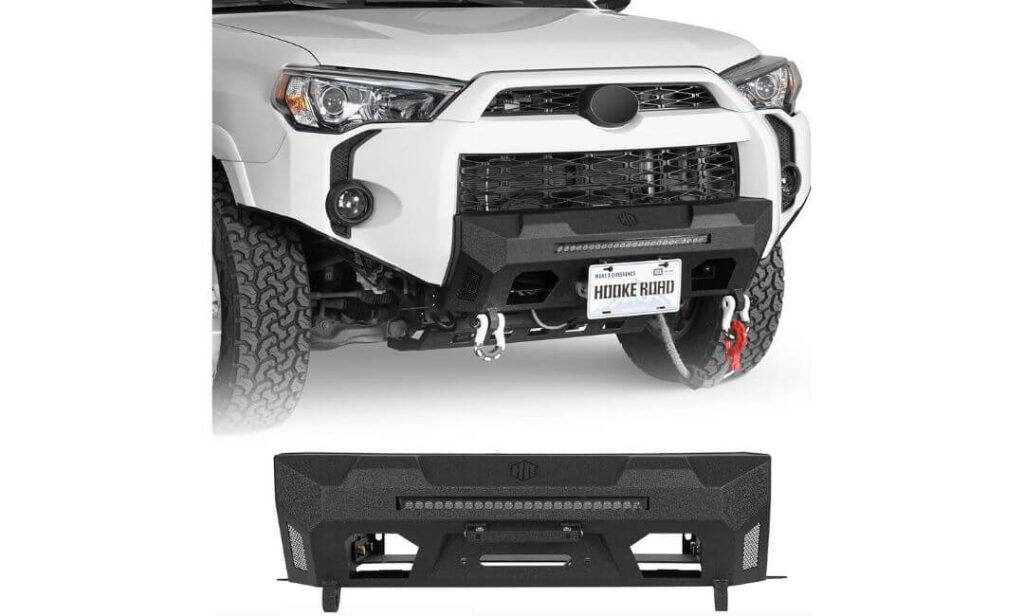
#3. Hooke Road Stubby Front Bumper
Quick Specs:
- Engineered for 2014-2024 Toyota 4Runner (5th Gen)
- Stubby design for improved approach angles
- Integrated winch platform supporting up to 12,000 lb winches
- Recovery mounts rated for 4.75-ton pulling capacity
- Includes 72W LED spotlight bar
- Heavy-duty 11-gauge steel shell construction
- Reinforced 9-gauge winch mounting structure
- Dual-layer powder coat and E-coating protection
- Approximate bumper weight: 70 lbs
- Flip-up license plate mounting system included
- Backed by a 2-year warranty and lifetime customer support
Some bumpers are built to cover as much of the front end as possible. Others are built to help the truck move through obstacles more efficiently. This one clearly belongs in the second category. The compact stubby layout removes unnecessary bulk while giving the front tires more room to work when the trail becomes technical.
That design philosophy becomes obvious once you look at the details. The integrated winch platform supports recovery setups up to 12,000 pounds, while reinforced recovery points provide a strong foundation for difficult extractions. Unlike many oversized bumpers that add weight without improving capability, this design keeps things focused on the features most owners actually use on the trail.
The included 72W LED spotlight bar is another welcome addition. Combined with the corrosion-resistant powder coat and internal E-coating protection, the overall package feels purpose-built for drivers who spend their weekends exploring dirt roads, forest routes, desert terrain, and rocky backcountry trails. It is a practical setup rather than a flashy one, which is exactly why many experienced 4Runner owners gravitate toward it.
(If maximizing front-end clearance is higher on your priority list than maximizing bumper size, this is one of the smartest configurations currently available for the 5th Gen platform.)
Why It Stands Out Among Trail-Focused Options
- Stubby profile helps improve approach angles on challenging terrain
- Supports recovery winches up to 12,000 lbs
- Strong 4.75-ton recovery mounting points
- Includes auxiliary trail lighting straight out of the box
- Reinforced steel construction where recovery loads matter most
- Dual-layer corrosion protection designed for long-term outdoor exposure
- Balanced combination of capability, weight management, and clearance
Installation Consideration
- The center portion of the factory bumper cover requires trimming, but the included hardware and rubber finishing strips help create a clean, factory-like final appearance.
5th Gen Toyota 4Runner Compatibility Notes
This bumper was designed specifically for 2014-2024 Toyota 4Runner models and integrates alongside portions of the factory front bumper structure rather than replacing everything outright. That approach helps maintain a cleaner appearance while still delivering meaningful off-road capability.
It is not intended for Limited or Nightshade models due to differences in front-end design. For compatible trims, it offers one of the best clearance-focused solutions available without moving into extremely heavy full-width bumper territory.
The Insider Pro-Tip
When experienced off-road drivers discuss bumper performance, they often talk about recovery points and winch capacity. What receives far less attention is how much bumper width can affect trail performance.
A compact stubby design often allows a vehicle to approach rocks, ledges, washouts, and steep inclines more confidently because there is less material extending beyond the frame rails. On technical terrain, that extra clearance can make a noticeable difference long before recovery gear is ever needed.
For many 4Runner owners, the best bumper is not necessarily the biggest one. It is the one that helps the vehicle move through obstacles with fewer compromises while still providing the recovery capability needed when conditions become unpredictable.
#4. UTVJATV Front Bumper
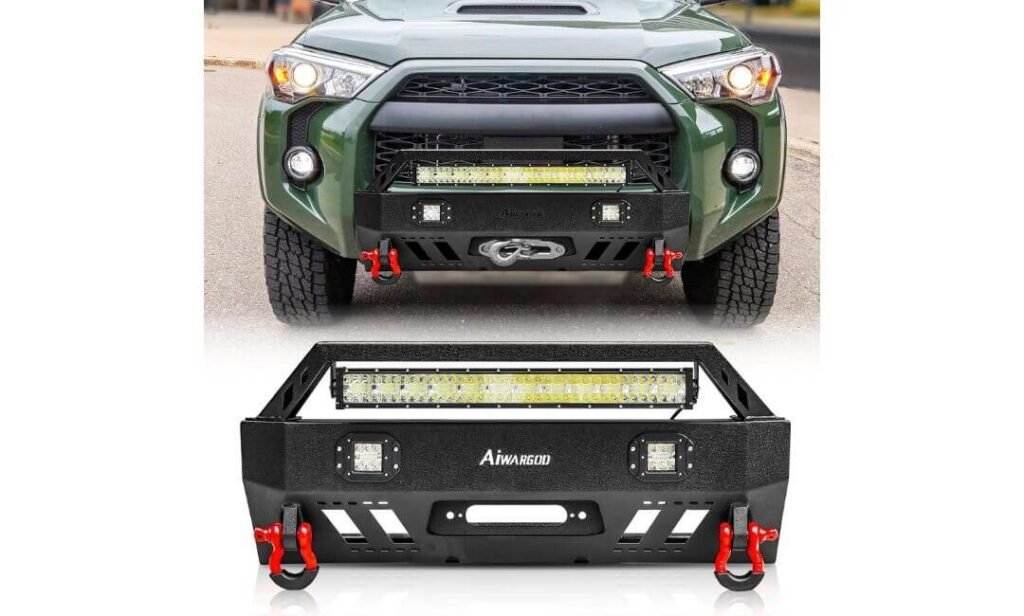
Quick Specs:
- Compatible with 2010-2024 Toyota 4Runner (5th Gen)
- Integrated winch platform supporting up to 12,000 lb winches
- Constructed from 5/32-inch steel and heavy-duty tubular reinforcement
- Dual recovery points with 4.75-ton D-ring capacity
- Includes 144W LED light bar
- Includes two auxiliary LED work lights
- Textured black corrosion-resistant finish
- Approximate bumper weight: 70 lbs
- Vehicle-specific mounting design
- Broad fitment range covering most 5th Gen model years
The reality is that most 4Runner owners are not building a dedicated rock crawler. They want one bumper that delivers recovery capability, front-end protection, integrated lighting, and solid value without turning the build into a complicated project. That is exactly where this option earns its place.
What makes it appealing is the amount of functionality packed into a single package. The integrated winch platform supports recovery setups up to 12,000 pounds, while reinforced recovery mounts provide dependable extraction points when conditions become challenging. Add the included 144W light bar and auxiliary work lights, and you already have several upgrades that many owners would otherwise purchase separately.
The steel construction also deserves attention. A combination of 5/32-inch steel plating and reinforced tubular structure gives the bumper a reassuringly solid feel without pushing weight into extreme territory. For owners looking to upgrade protection, recovery capability, and trail visibility in one move, this setup offers a practical all-in-one solution that covers the essentials surprisingly well.
(For many 5th Gen builds, this is the type of bumper that checks multiple boxes at once instead of requiring a long list of additional upgrades afterward.)
Key Strengths That Caught Our Attention
- Extremely broad fitment across most 5th Gen Toyota 4Runner model years
- Supports winches rated up to 12,000 lbs
- Includes both a 144W LED light bar and auxiliary work lights
- Reinforced D-ring recovery mounting points
- Durable steel construction designed for trail use
- Textured powder-coated finish helps resist corrosion
- Strong value for owners seeking multiple upgrades in a single purchase
Before Beginning the Installation
- Because vehicle configurations vary across the long 2010-2024 production run, taking time to verify accessory placement and recovery equipment layout before installation can help create the cleanest finished setup.
5th Gen Toyota 4Runner Compatibility Overview
One of the biggest advantages of this bumper is its wide compatibility range. It was developed for 2010-2024 Toyota 4Runner models, making it one of the more versatile options available for the 5th-generation platform.
For owners upgrading older 5th Gen models or newer TRD-focused builds, the combination of recovery capability, lighting integration, and protective steel construction creates a well-rounded foundation for future modifications and trail-focused upgrades.
The Insider Pro-Tip
Many buyers focus entirely on winch capacity when comparing bumpers. Experienced 4Runner owners often pay just as much attention to lighting integration because recovery situations rarely happen under perfect daylight conditions.
A bumper that already includes dedicated lighting provisions can save time, wiring complexity, and additional fabrication later on. When recovery equipment, auxiliary lighting, and front-end protection are designed to work together from the start, the overall build usually feels cleaner, more functional, and easier to live with over the long term.
That is one reason combination packages like this continue to attract attention from owners who want practical capability without overcomplicating their build strategy.
#5. WARN Semi-Hidden Fixed Winch Mount
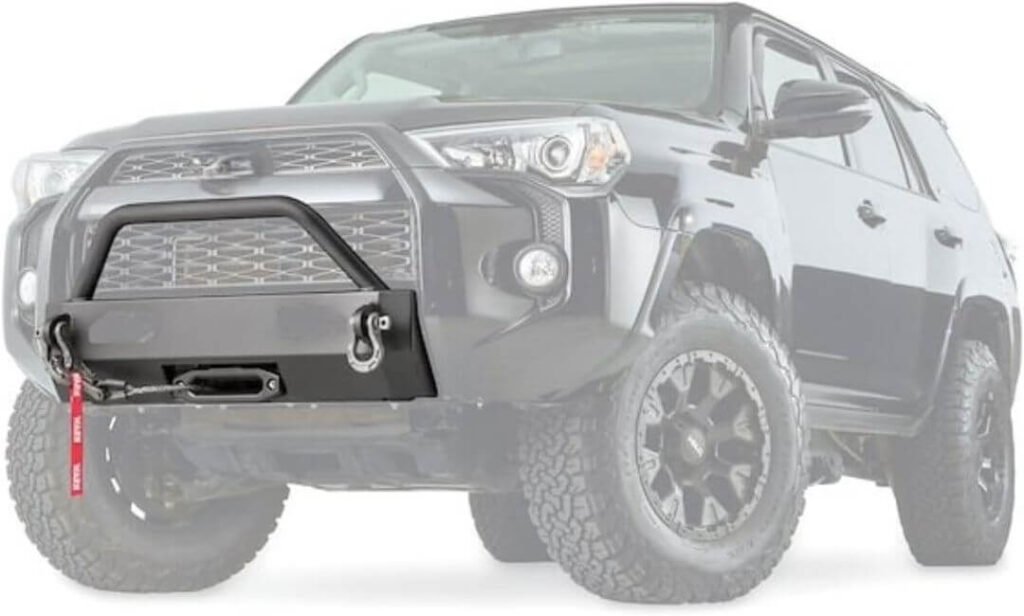
Quick Specs:
- Designed for 2014-2023 Toyota 4Runner
- Semi-hidden recovery-focused design
- Compatible with most WARN mid-frame winches
- Integrated shackle recovery points
- Low-profile 2-inch grille guard tube
- Heavy-duty steel construction
- Textured black protective finish
- Built-in clutch access opening
- Approximate assembly weight: 88.8 lbs
- Maintains a near-factory front-end appearance
- Manufactured by one of the most recognized names in vehicle recovery
Sometimes the smartest upgrade is the one most people never notice. While many winch bumpers completely transform the front of a vehicle, this setup takes the opposite approach by hiding most of the recovery hardware behind a clean, understated design. For many 4Runner owners, that balance is exactly what makes it appealing.
The biggest advantage here is integration. The winch sits tucked behind the front fascia rather than becoming the visual centerpiece of the vehicle. At the same time, recovery capability remains readily accessible through dedicated shackle points and a practical clutch access opening. The result is a setup that looks far closer to factory than most traditional winch bumper systems.
Another reason this option deserves attention is the company behind it. WARN has spent decades building recovery equipment that is trusted by overlanders, trail guides, search-and-rescue teams, and serious off-road enthusiasts. Pairing a quality winch with a mount designed specifically around recovery functionality often creates a more refined setup than many oversized bumper replacements that prioritize appearance over engineering.
(For owners who want real winch capability without advertising it to everyone at the next fuel stop, few solutions feel as clean and purpose-built as this one.)
What Makes This Setup Different
- Semi-hidden design preserves factory-inspired styling
- Compatible with a wide range of popular WARN mid-frame winches
- Integrated recovery points ready for trail extraction duties
- Low-profile grille guard adds subtle front-end protection
- Dedicated clutch access simplifies winch operation
- Excellent option for daily-driven 4Runners
- Developed by one of the most respected recovery brands in the industry
Installation Insight
- Installing the winch onto the mount before final vehicle installation typically makes the process smoother and provides easier access to mounting hardware.
Toyota 4Runner Application Notes
This system was developed specifically for 2014-2023 Toyota 4Runner models and works particularly well for owners who prioritize recovery capability while maintaining a clean exterior appearance.
Unlike larger off-road bumpers that become the focal point of the front end, this design blends naturally into the vehicle. That makes it especially attractive for overland builds, daily drivers, and adventure-focused rigs where subtle functionality is preferred over aggressive styling.
The Insider Pro-Tip
One of the most common mistakes buyers make is assuming that a larger bumper automatically creates a better recovery setup. In reality, many experienced overlanders place equal importance on weight management, airflow, visibility, and day-to-day drivability.
A semi-hidden winch system often delivers the capability people actually need while avoiding unnecessary bulk. The truck retains much of its original character, fuel economy impacts remain more manageable, and recovery equipment stays available whenever conditions demand it.
That balance between capability and restraint is exactly why hidden and semi-hidden winch systems continue to have such a loyal following among experienced 4Runner owners.
Best Toyota 4Runner Winch Bumpers Compared: Recovery Strength Protection and Trail Performance
| Comparison Point | DV8 Centric | Tyger FURY | Hooke Road Stubby | UTVJATV | WARN Semi-Hidden |
|---|---|---|---|---|---|
| Best For |
Next Gen Pick 2025+ Owners
|
Overall Value Balanced Trail Build
|
High Clearance Technical Trails
|
Budget Choice Feature Packed Setup
|
Hidden Recovery OEM Look Lovers
|
| Fitment | 2025-2026 Toyota 4Runner | 2014-2024 Toyota 4Runner | 2014-2024 Toyota 4Runner | 2010-2024 Toyota 4Runner | 2014-2023 Toyota 4Runner |
| Construction | Multi-Thickness Steel | 5mm Carbon Steel | 11-Gauge Steel Body | 5/32″ Steel + Tube Structure | Heavy-Duty Steel System |
| Winch Support | Integrated Winch Platform | 10 x 4.5 Mount Pattern | Up To 12,000 lbs | Up To 12,000 lbs | Most WARN Mid-Frame Winches |
| Recovery Points | Dual 1″ D-Ring Mounts | Integrated D-Ring Mounts | 4.75 Ton Recovery Mounts | 4.75 Ton D-Ring Mounts | Dual Shackle Points |
| Lighting Support | 20″ Light Bar + Dual Pods | Up To 30″ Light Bar | Included 72W LED Bar | 144W LED Bar + Work Lights | Optional Lighting Port |
| Factory Appearance | Excellent | Very Good | Aggressive Stubby Style | Off-Road Focused Look | Near Factory Appearance |
| Trail Clearance | Very Good | Good | Excellent | Very Good | Good |
| Sensor Retention | Front Sensors Camera ACC | TSS Compatible | TSS Compatible Design | Depends On Build Setup | Basic Recovery Focus |
| Weight | Not Excessively Heavy | 87.8 lbs | 70 lbs | 70 lbs | 88.8 lbs |
| Installation Difficulty | Moderate | Moderate | Moderate | Moderate | Moderate |
| Ideal Buyer | Building A New 6th Gen Adventure Rig | Wanting Capability Without Overspending | Prioritizing Approach Angles | Seeking Maximum Features Per Dollar | Wanting Recovery Capability Without A Full Bumper Swap |
| MotorAxle Verdict | Best For 2025+ Models | Best Overall Choice | Best Trail Clearance | Best Budget Value | Best Hidden Winch Setup |
Buying Guide: How to Choose the Right Winch Bumper for Your Toyota 4Runner
A winch bumper is one of those upgrades that looks simple until you start comparing options. Two bumpers can appear nearly identical in photos, yet deliver completely different results once a winch is installed and the vehicle starts seeing real trail use.
The truth is that the best winch bumper is not always the biggest, heaviest, or most expensive option. The right choice depends on how you use your 4Runner, what type of recovery gear you plan to run, and whether your vehicle spends more time on technical trails, overland routes, or daily commutes.
After evaluating the options in this guide, several factors consistently separated the strongest choices from the rest.
Winch Mount Design Matters More Than Most Buyers Realize
Many shoppers focus on winch capacity first, but the bumper itself is what determines how effectively that winch performs.
A properly engineered winch mount distributes recovery loads across reinforced mounting points rather than concentrating stress in a single area. It should also provide enough room for installation, wiring access, and routine maintenance.
For example, the DV8 Centric and Tyger FURY models were designed around recovery functionality from the beginning, while the WARN system takes a different approach by integrating the winch into a semi-hidden configuration.
Before buying, verify the mounting pattern, fairlead compatibility, and maximum winch size supported by the bumper. Most 4Runner owners run recovery winches in the 9,000 to 12,000-pound range, making proper fitment far more important than simply choosing the highest-rated winch available.
Steel vs. Aluminum Construction
For most Toyota 4Runner owners, steel remains the preferred choice because of its durability, repairability, and ability to withstand repeated impacts.
Steel bumpers generally offer:
- Better resistance to trail impacts
- Stronger recovery-point integration
- Improved winch support under heavy loads
- Greater long-term durability
The trade-off is weight.
A heavy bumper, winch, recovery gear, and auxiliary lighting can add significant weight to the front suspension. This is why many experienced builders consider suspension upgrades when adding a full recovery system.
The bumpers featured in this guide use steel construction because they are designed primarily for protection and recovery rather than weight savings.
Recovery Points Are Just As Important As The Winch
One of the most overlooked details in a winch bumper is the recovery-point design.
A winch can only help if recovery points are properly integrated into the bumper structure. Strong D-ring mounts allow for snatch recoveries, strap recoveries, and controlled vehicle extraction when a winch is not the best tool for the situation.
Look for:
- Reinforced recovery-point mounting
- Welded recovery tabs
- Thick steel attachment points
- Compatibility with common shackles and soft shackles
Several bumpers in this guide feature dedicated recovery points designed specifically for real-world off-road use rather than decorative appearance.
Synthetic Rope Compatibility
Most modern off-road enthusiasts now prefer synthetic winch rope over traditional steel cable.
Synthetic rope is lighter, easier to handle, and generally safer during recovery situations.
When selecting a bumper, verify that the fairlead mounting area supports common hawse fairleads used with synthetic rope systems.
A recovery-ready bumper should provide adequate clearance around the fairlead opening while allowing smooth rope operation from multiple recovery angles.
Approach Angles and Tire Clearance
A bumper should improve off-road capability, not reduce it.
This is where bumper design becomes extremely important.
Full-width bumpers typically provide maximum protection, while stubby designs prioritize clearance and obstacle approach performance.
The Hooke Road Stubby model featured in this guide is a good example of a bumper designed around trail clearance rather than maximum coverage.
If your 4Runner regularly encounters:
- Rock ledges
- Steep climbs
- Deep washouts
- Technical trail obstacles
Then approach angle should become a major buying consideration.
Many experienced 4Runner owners discover that additional clearance often provides more real-world value than additional steel.
Front-End Protection Beyond The Bumper
A quality bumper should protect more than just the front fascia.
The best designs create a defensive system that helps shield critical components such as:
- Lower radiator areas
- Front-end bodywork
- Recovery equipment
- Lighting systems
- Undercarriage components
This is one reason integrated skid protection has become increasingly popular among serious trail users.
Protection should extend beyond what is immediately visible from the front of the vehicle.
Installation Complexity and Hardware Quality
Not every bumper installs the same way.
Some systems are primarily bolt-on, while others require trimming, alignment adjustments, or modifications to factory components.
Before purchasing, review:
- Required cutting or trimming
- Hardware quality
- Included instructions
- Sensor relocation requirements
- Winch installation access
Even well-designed bumpers can become frustrating projects if installation requirements are not understood beforehand.
For many owners, professional installation may be worthwhile when integrating winches, lighting systems, recovery gear, and advanced vehicle electronics.
Understanding Common 4Runner Winch Bumper Configurations
Not all winch bumpers serve the same purpose.
The most common configurations include:
Full Bumper With Integrated Winch Mount
Provides maximum protection, integrated recovery points, and dedicated winch support. Usually preferred for serious off-road builds.
Center-Mount Winch Bumper
Focuses on recovery capability while preserving more of the factory appearance. The DV8 Centric is a strong example of this approach.
Stubby Winch Bumper
Prioritizes approach angles and obstacle clearance while still providing recovery functionality. Popular among technical trail users.
Semi-Hidden Winch System
Conceals much of the winch behind factory bodywork while maintaining a cleaner exterior appearance. The WARN setup follows this philosophy.
Armor-Focused Bumper
Adds protection and styling improvements while offering optional recovery upgrades depending on the design.
Quick 5th Gen Toyota 4Runner Compatibility Check
Before ordering any bumper, verify trim-level compatibility.
SR5
Generally offers the widest aftermarket compatibility across most bumper manufacturers.
Trail Edition
Usually works well with recovery-focused bumper designs and off-road-oriented accessories.
TRD Off-Road and TRD Off-Road Premium
Often provide the best balance of compatibility and off-road functionality when installing winch bumpers.
TRD Pro
Many premium bumpers support TRD Pro models, but always verify sensor and grille compatibility before purchase.
Limited
Requires extra attention because the front fascia differs significantly from most other 5th Gen trims. Many bumpers specifically exclude Limited models.
Final Buying Advice
The smartest buyers do not choose a bumper based solely on appearance.
Instead, they match the bumper to their recovery strategy, trail difficulty, future modifications, and overall vehicle goals.
If your priority is next-generation compatibility and modern technology retention, a bumper designed specifically for the newest platform makes the most sense. If trail clearance is your priority, a stubby design may be the better choice. If maintaining a factory-like appearance matters most, a semi-hidden system could be the ideal solution.
When the right bumper matches the way your 4Runner is actually used, it becomes more than a visual upgrade. It becomes a functional part of the vehicle’s recovery system, protection package, and long-term adventure capability.
Real-World Scenarios: Which Toyota 4Runner Winch Bumper Should You Actually Choose?
One of the biggest mistakes buyers make is assuming there is a single “best” winch bumper for every Toyota 4Runner owner. In reality, the right bumper depends entirely on how the vehicle is used.
A weekend overland traveler, a technical rock crawler, a daily driver owner, and someone building a long-range expedition vehicle all have very different priorities. What works perfectly for one owner can be the wrong choice for another.
That is why we recommend starting with your intended use rather than focusing on price, appearance, or marketing claims.
If Maximum Protection and Recovery Strength Are Your Top Priorities
For owners who regularly encounter rocky terrain, deep ruts, remote trails, or situations where vehicle recovery is a realistic possibility, protection should come before styling.
In this situation, the Tyger Auto FURY Center Bumper Guard stands out as one of the strongest options on this list.
Its heavy-duty 5mm carbon steel construction, integrated skid plate, recovery-ready design, winch support, and lighting provisions create a package focused on durability rather than appearance alone. The bumper feels purpose-built for owners who expect their equipment to take abuse and continue performing season after season.
The added skid protection is particularly valuable because trail damage often occurs underneath the front end rather than directly in front of it. That extra layer of protection can make a meaningful difference during long-term ownership.
If your 4Runner regularly ventures into rough environments where protection and recovery matter more than appearance, this type of steel bumper makes the most sense.
If Daily Driving Comfort Matters As Much As Weekend Adventures
Not every 4Runner spends its life crawling over boulders.
Many owners use their vehicle as a daily driver during the week and an adventure vehicle on weekends. In those situations, maintaining a clean appearance, retaining factory technology, and avoiding excessive bulk become important considerations.
The WARN Semi-Hidden Fixed Winch Mount excels here.
Rather than replacing the entire front-end personality of the vehicle, it integrates recovery capability into a more subtle package. The winch remains accessible when needed, but the overall look stays remarkably close to factory.
This approach often appeals to owners who want real recovery capability without attracting unnecessary attention or dramatically changing the character of their vehicle.
For commuters, road-trip enthusiasts, and overland travelers who spend significant time on pavement, the semi-hidden approach offers a compelling balance between function and everyday usability.
If Expedition-Grade Recovery Capability Is The Main Goal
Expedition travel places unique demands on a vehicle.
When operating hundreds of miles from the nearest repair facility, recovery equipment becomes less about convenience and more about self-sufficiency.
For this type of use, recovery-point strength, winch integration, durability, and long-term reliability should take priority over styling trends.
The DV8 Centric Winch Front Bumper earns special attention here for newer 6th Gen 4Runner owners.
The integrated winch platform, dual 1-inch recovery mounts, steel construction, and compatibility with factory technology create a foundation capable of supporting serious overland and expedition builds.
What makes it particularly attractive is that these recovery-focused features are delivered without sacrificing adaptive cruise control, front camera systems, parking sensors, or factory lighting. That combination is surprisingly difficult to find on newer vehicles.
For owners building a modern expedition platform, maintaining both capability and technology often becomes a major advantage during long-distance travel.
If Trail Clearance Is More Important Than Maximum Coverage
Some drivers spend most of their time navigating technical terrain where approach angle matters more than bumper width.
In these environments, excessive front-end overhang can become a limitation long before recovery gear is needed.
The Hooke Road Stubby Front Bumper was built with this philosophy in mind.
Its compact design helps maximize approach angles while still providing winch compatibility, recovery points, and front-end protection. Instead of covering every inch of the front fascia, it focuses on improving how the vehicle moves through obstacles.
For drivers who frequently encounter:
- Rocky climbs
- Tight switchbacks
- Deep washouts
- Technical trail systems
- Steep ledges
A stubby bumper often delivers more real-world benefits than a larger full-width design.
This is one of those upgrades where less material can actually create more capability.
If You Want The Most Features For The Money
Many buyers are not looking for the most expensive bumper on the market.
They simply want a solution that combines recovery capability, lighting support, front-end protection, and solid construction without requiring a long list of additional purchases.
That is where the UTVJATV Front Bumper becomes an interesting option.
With integrated winch support, recovery mounts, a 144W light bar, auxiliary work lights, and steel construction already included, it delivers a surprising amount of functionality in a single package.
For owners building a capable trail vehicle on a practical budget, this type of all-in-one approach can simplify the upgrade process while still covering the features most people actually need.
The Reality Most Buyers Discover Later
After years of watching 4Runner builds evolve, one pattern becomes obvious.
Owners rarely regret buying a bumper that matches how they actually use their vehicle.
What they often regret is buying a bumper based solely on appearance.
A recovery-focused overlander needs different features than a weekend trail explorer. A daily-driven adventure rig has different priorities than a dedicated off-road build. A 6th Gen owner faces different fitment considerations than someone driving a proven 5th Gen platform.
That is why there is no universal winner in this guide.
The best choice is the one that aligns with your vehicle, your recovery plans, your terrain, and the way your Toyota 4Runner is genuinely used throughout the year. When those factors line up correctly, the bumper stops being an accessory and becomes one of the most valuable upgrades on the entire vehicle.
Installation Snapshot: What Toyota 4Runner Owners Should Expect Before Starting
One thing that becomes clear after working with different winch bumper systems is that installation difficulty rarely depends on the bumper alone. The winch, lighting setup, recovery accessories, sensor placement, and vehicle generation all influence how much time the project actually requires.
The good news is that every bumper featured in this guide was designed specifically for Toyota 4Runner applications rather than universal fitment. That alone eliminates many of the headaches commonly associated with aftermarket off-road accessories.
Still, a successful installation comes down to preparation. Taking an extra hour to organize tools, inspect hardware, and understand mounting points usually saves far more time than rushing into the project.
Start With A Complete Pre-Installation Inspection
Before removing a single factory fastener, take a few minutes to inspect everything that came in the box.
Check for:
- Mounting brackets
- Hardware packs
- Recovery mounts
- Light mounting components
- Winch plate hardware
- Installation instructions
- Sensor relocation components if included
This is also a good time to verify winch dimensions, fairlead compatibility, and wiring routes. Discovering a clearance issue after the bumper is mounted is never enjoyable.
Many experienced installers perform a complete floor mock-up before touching the vehicle. It sounds simple, but it often prevents unnecessary delays later in the process.
Removing The Factory Front Components
Most Toyota 4Runner winch bumper installations begin with removing portions of the factory front-end assembly.
Depending on the bumper design, this may include:
- Factory bumper cover sections
- Front trim panels
- Factory skid components
- License plate brackets
- Plastic air deflectors
- Factory mounting supports
Certain bumpers require minor trimming of factory plastic components while others replace larger sections of the front fascia.
Measure carefully before making any cuts. Removing additional material is easy. Putting it back is not.
Mounting Bracket Alignment Is The Most Important Step
Many installation problems are not caused by the bumper itself.
They happen because installers rush the bracket alignment stage.
Before fully tightening any hardware:
- Loosely mount all brackets
- Confirm frame alignment
- Verify bumper centering
- Check body-line consistency
- Confirm grille clearance
- Inspect sensor and camera positioning
A bumper that is off by even a few millimeters can become noticeable once the entire installation is complete.
Professional installers often spend more time aligning than tightening, and for good reason.
Winch Installation Should Happen Before Final Bumper Placement
Whenever possible, install the winch onto the bumper or mounting system before the bumper is fully secured to the vehicle.
This approach offers several advantages:
- Easier hardware access
- Simpler wiring management
- Better fairlead alignment
- Faster overall installation
- Reduced risk of scratched finishes
Heavy recovery winches become much harder to access once the bumper is mounted against the frame.
Planning ahead here can save significant frustration later.
Wiring Pass-Through And Electrical Planning
Modern winch bumper installations often involve more than just recovery equipment.
Many owners add:
- Light bars
- Auxiliary pod lights
- Rock lights
- Air compressors
- Dual battery systems
- Winch isolators
Because of this, cable management deserves more attention than it typically receives.
Take time to:
- Protect wiring from heat sources
- Avoid moving suspension components
- Use abrasion-resistant loom where necessary
- Secure cables away from recovery points
- Leave service loops where future maintenance may be required
A clean wiring installation usually indicates a carefully planned build.
Test Fit Everything Before Final Tightening
One habit shared by experienced installers is performing multiple test fits throughout the installation process.
Before applying final torque:
- Check bumper alignment
- Verify hood clearance
- Confirm grille spacing
- Inspect camera visibility
- Test parking sensor operation
- Verify fairlead positioning
- Check light mounting clearance
A final inspection at this stage often catches small issues before they become larger problems.
Final Torque Checks And Post-Installation Inspection
Once everything is positioned correctly, complete a systematic torque inspection.
Focus on:
- Frame mounting hardware
- Recovery-point hardware
- Winch mounting bolts
- Fairlead fasteners
- Light mounting brackets
- Skid plate connections
After the first few hundred miles of driving, it is good practice to recheck all accessible hardware.
Off-road vibration, recovery loads, and trail impacts can sometimes loosen components during the initial break-in period.
Essential Tool Checklist
Most Toyota 4Runner winch bumper installations can be completed using common workshop tools.
Recommended equipment includes:
- Complete socket set
- Combination wrench set
- Torque wrench
- Trim removal tools
- Ratchet extensions
- Allen key set
- Drill and bits if required
- Measuring tape
- Panel marking tools
- Protective gloves
- Safety glasses
- Floor jack or assistance for lifting heavier bumpers
Because many steel bumpers weigh between 70 and 90 pounds before a winch is added, a second person can make installation significantly easier.
Important Safety Considerations
A winch bumper is not simply a cosmetic accessory.
Once installed, it becomes a structural recovery component.
For that reason:
- Never reuse damaged hardware
- Verify all recovery points are properly secured
- Follow manufacturer torque specifications
- Inspect winch mounting hardware regularly
- Keep wiring protected from sharp edges
- Confirm recovery equipment ratings match intended use
A recovery system is only as strong as its weakest component.
Typical Installation Time By Bumper Style
The actual installation time depends on experience level, available tools, and whether additional accessories are being installed simultaneously.
Semi-Hidden Winch Systems
- Approximate time: 3 to 5 hours
- Usually involve fascia trimming and winch integration
Center-Mount Winch Bumpers
- Approximate time: 4 to 6 hours
- Additional time may be required for lighting installation
Stubby Winch Bumpers
- Approximate time: 4 to 7 hours
- Alignment and trimming often determine total installation time
Full Recovery-Oriented Steel Bumpers
- Approximate time: 5 to 8 hours
- Winch installation, lighting, and recovery accessories may increase labor requirements
Final Installation Advice
The most successful installations are rarely the fastest.
Experienced 4Runner owners understand that taking extra time during alignment, wiring, and hardware inspection often produces a cleaner result than rushing to finish the project in a single afternoon.
A properly installed winch bumper should look like it belongs on the vehicle, operate without interfering with critical systems, and provide years of reliable service when recovery situations arise. That level of confidence usually comes from patience during installation rather than speed.
Maintenance and Longevity Tips for Toyota 4Runner Winch Bumpers
A quality winch bumper is not a short-term accessory. When properly maintained, it can remain one of the most durable components on a Toyota 4Runner for many years. The reality, however, is that even the strongest steel bumper can begin showing wear if mud, road salt, moisture, and recovery equipment are ignored for long periods.
The good news is that maintaining a winch bumper is neither difficult nor expensive. Most long-term problems can be prevented with simple inspections and a few minutes of routine care after major trips.
Owners who consistently perform these checks often get significantly more life from both the bumper and the recovery equipment attached to it.
Protecting Against Corrosion Before It Starts
The biggest threat to any steel winch bumper is not trail damage. It is corrosion.
Most premium bumpers use powder-coated finishes, textured coatings, E-coating treatments, or protective paint systems. These finishes provide excellent protection, but they are not indestructible.
After off-road trips, especially those involving:
- Mud
- Water crossings
- Road salt
- Coastal environments
- Winter driving conditions
Take time to thoroughly rinse the entire bumper assembly.
Pay special attention to:
- Recovery point openings
- Winch mounting areas
- Weld seams
- Bracket mounting locations
- Skid plate connections
- Underside surfaces hidden from view
Many corrosion issues begin in areas owners rarely inspect.
Allowing mud and moisture to remain trapped behind mounting brackets for months at a time often creates more damage than a difficult trail ever will.
Why Underbody Cleaning Matters More Than Most People Think
A surprising amount of debris collects behind a winch bumper.
Fine dirt, wet clay, gravel, leaves, and road grime often become trapped in locations that are difficult to see during routine washing.
At least several times each year, perform a more detailed underbody cleaning and inspection.
Focus on:
- Frame mounting points
- Recovery tabs
- Winch tray surfaces
- Skid plate attachment points
- Drainage areas
- Wiring routes
Removing trapped debris not only helps prevent corrosion but also makes future inspections far easier.
Many experienced overlanders schedule a complete underbody inspection after every major adventure trip rather than waiting for visible problems to appear.
Winch Maintenance Is Just As Important As Bumper Maintenance
Many owners invest heavily in recovery equipment and then rarely inspect it afterward.
The winch should receive the same attention as the bumper supporting it.
At regular intervals:
- Inspect electrical connections
- Check power cables for abrasion
- Verify mounting hardware remains secure
- Confirm fairlead alignment
- Test winch operation
- Inspect hook and recovery hardware
Even a high-quality winch can become unreliable if dirt, moisture, or corrosion are allowed to accumulate over time.
Running the winch periodically is also beneficial. Recovery equipment that sits unused for years often develops more issues than equipment that is exercised occasionally.
Roller and Hawse Fairlead Care
The fairlead is one of the most overlooked components in a recovery system.
Whether your setup uses a roller fairlead or a hawse fairlead, routine inspection is important.
For roller fairleads:
- Verify rollers rotate freely
- Inspect for surface damage
- Remove dirt and debris buildup
- Check mounting hardware
For hawse fairleads:
- Inspect rope contact surfaces
- Look for sharp edges or wear marks
- Verify mounting bolts remain secure
- Clean accumulated dirt and grit
A damaged fairlead can significantly reduce the lifespan of synthetic winch rope and negatively affect recovery performance.
Recovery Points Deserve Regular Attention
Recovery points experience some of the highest loads on the entire vehicle.
Even if they appear fine externally, regular inspection remains important.
Look for:
- Cracked coatings
- Surface rust
- Hardware movement
- Weld abnormalities
- Excessive wear from shackles
A recovery point should never be assumed safe simply because it looks strong.
Many experienced off-road enthusiasts perform a quick inspection before every major trip, especially if the vehicle has recently been used in demanding recovery situations.
Hardware Inspection Intervals
Every bumper on this list relies on multiple mounting points to safely distribute recovery loads.
Because of this, mounting hardware deserves scheduled inspections rather than waiting until something feels loose.
A practical inspection schedule includes:
After Initial Installation
- Recheck all hardware after the first few hundred miles
After Heavy Off-Road Use
- Inspect mounting bolts and recovery-point hardware
Every Three To Six Months
- Perform a complete visual inspection
Annually
- Verify torque values where accessible
- Inspect brackets and frame attachment points
Small issues are usually inexpensive to correct when discovered early.
Large issues often begin as small ones that went unnoticed.
Inspect Auxiliary Lighting and Wiring
Many modern winch bumpers include integrated lighting systems, pod lights, or light bars.
These components are exposed to:
- Vibration
- Moisture
- Dust
- Road debris
- Temperature changes
At regular intervals:
- Check wiring insulation
- Inspect connectors
- Verify mounting hardware
- Test light operation
- Examine protective loom coverings
Electrical issues are often easier to prevent than diagnose later.
Seasonal Maintenance Recommendations
Different climates place different demands on a bumper system.
Winter Conditions
Focus on removing road salt and inspecting coating damage.
Coastal Environments
Inspect more frequently for corrosion caused by salt-laden air.
Desert Regions
Monitor for abrasion caused by fine dust and sand.
Wet Forest Trails
Pay close attention to trapped moisture and organic debris accumulation.
Adapting maintenance to your environment often produces better long-term results than following a generic schedule.
Long-Term Ownership Advice
The most reliable recovery setups are usually owned by people who inspect them regularly rather than those who wait for a problem to appear.
A few minutes spent checking hardware, cleaning hidden areas, inspecting recovery points, and exercising the winch can dramatically extend the life of the entire system.
The bumpers featured in this guide were selected because they are built to handle years of use. Giving them periodic attention ensures they continue providing the protection, recovery capability, and confidence that made them worthwhile upgrades in the first place.
FAQs About Toyota 4Runner Winch Bumper
Will a winch bumper affect Toyota 4Runner ride quality even if I rarely use the winch?
Yes, and this is something many owners do not fully appreciate until after installation. A steel winch bumper alone can add significant weight to the front of a Toyota 4Runner, and once a winch, synthetic rope, fairlead, recovery gear, and lighting are added, the total increase can become noticeable.
The impact varies depending on the bumper design and your existing suspension setup. Owners running factory springs often notice a slightly lower front ride height over time, while those with upgraded suspension usually experience fewer changes. The key is looking at the entire front-end package rather than the bumper alone.
A useful rule many experienced builders follow is to evaluate the combined weight of the bumper, winch, recovery gear, and accessories before purchasing. The bumper is rarely the only component affecting ride quality.
Is a hidden or semi-hidden winch setup better than a full winch bumper on a Toyota 4Runner?
Neither is automatically better. They simply solve different problems.
A semi-hidden setup such as the WARN system is ideal for owners who want recovery capability while maintaining a cleaner factory appearance. These systems typically preserve more of the original vehicle styling and often appeal to daily drivers or overland-focused builds.
A full winch bumper generally makes more sense when maximum front-end protection is the priority. Benefits often include:
- Larger recovery mounting structures
- Better protection during trail impacts
- More lighting mounting options
- Increased accessory compatibility
The right choice depends on whether your priority is appearance, protection, or recovery functionality. Most owners who regularly encounter technical terrain ultimately appreciate the extra protection offered by a dedicated bumper system.
How do I know if a Toyota 4Runner winch bumper is actually recovery-ready and not just winch-compatible?
This is one of the smartest questions a buyer can ask.
Many bumpers advertise winch compatibility, but that does not automatically mean the entire structure was engineered around recovery loads. A bumper can physically hold a winch while still relying on weaker mounting designs or cosmetic recovery points.
When evaluating a bumper, pay attention to:
- Frame-mounted construction
- Recovery-point reinforcement
- Thickness of recovery tabs
- Winch tray integration
- Hardware quality
- Manufacturer recovery specifications
The strongest designs treat the winch mount and recovery points as part of a complete recovery system rather than separate accessories attached later.
What is the biggest installation mistake 4Runner owners make with aftermarket winch bumpers?
Most problems are not caused by the bumper itself.
They happen because owners rush alignment and wiring during installation.
A bumper that appears perfectly centered in the garage can reveal uneven body gaps, grille clearance issues, sensor interference, or fairlead alignment problems once the project is complete. The same applies to winch wiring. Poor cable routing may not cause issues immediately but can create long-term reliability concerns.
Experienced installers often spend more time on:
- Test fitting
- Bracket positioning
- Wiring protection
- Sensor verification
- Hardware inspection
than they do on the actual final tightening process. Taking extra time during these stages usually produces a much better result.
Which type of Toyota 4Runner owner benefits most from a premium winch bumper?
The answer is not necessarily the person tackling the hardest trails.
In many cases, premium winch bumpers deliver the greatest value to owners who keep their vehicles for a long time and regularly travel beyond normal roadside assistance coverage. These drivers often prioritize reliability, recovery readiness, and long-term durability over aggressive styling.
A quality bumper becomes particularly valuable when it combines several functions into a single upgrade:
- Vehicle recovery
- Front-end protection
- Accessory mounting
- Lighting integration
- Improved trail confidence
That is why many experienced 4Runner owners view a winch bumper less as an aftermarket accessory and more as part of the vehicle’s overall recovery and protection strategy. The real value often becomes apparent years later when the equipment performs exactly as expected in situations where reliability matters most.
Final Thoughts
Choosing the right winch bumper for a Toyota 4Runner is not about finding the most aggressive design or the heaviest piece of steel available. It is about finding the option that matches how your vehicle is actually used.
Throughout this guide, one thing became clear. Every bumper here serves a different type of owner. Some prioritize factory-like styling with hidden recovery capability, some focus on maximizing trail clearance, while others are built around serious recovery work and front-end protection. That is exactly why we avoided treating every bumper as if it serves the same purpose.
If you drive a newer 6th Gen model and want modern technology retention alongside recovery capability, the DV8 Centric stands out for good reason. For 5th Gen owners looking for a balanced mix of protection, winch readiness, and long-term value, the Tyger FURY remains difficult to ignore. Meanwhile, drivers who spend more time navigating technical obstacles may appreciate the advantages that a compact stubby design can bring to the trail.
The reality is that a winch bumper is one of the few upgrades that can improve recovery capability, vehicle protection, and overall confidence at the same time. When chosen carefully, it becomes part of the vehicle rather than just another accessory bolted to the front.
Our recommendation is simple: start with your terrain, your recovery plans, and the way you genuinely use your 4Runner. Once those priorities are clear, the right choice usually becomes obvious.
The best winch bumper is not the one that looks the toughest in a parking lot. It is the one you stop thinking about because it quietly does its job every time the trail gets challenging.
Also Check:


