5 Best Toyota Tacoma Winch Bumpers in 2026: Trail-Ready Armor With Integrated Recovery Points
When you start shopping for a Toyota Tacoma winch bumper, the first thing that matters is which generation you own. A bumper built for a 2024–2026 4th Gen Tacoma will not fit a 2016–2023 3rd Gen Tacoma, and that mistake is surprisingly common. The latest Tacoma uses a completely redesigned front end with different sensor placement, mounting points, and clearance requirements, while the previous generation remains one of the most modified midsize trucks on the trail.
After comparing the newest winch-ready bumpers currently available, we focused on the features that actually matter once you’re off pavement: recovery point strength, winch compatibility, sensor retention, approach angle, steel thickness, light mounting options, and real-world trail protection. Some bumpers look aggressive in photos but sacrifice clearance or factory functionality. Others quietly deliver the durability and recovery capability Tacoma owners actually need.
Whether you’re building a new 2026 Tacoma TRD Pro, upgrading a 2025 Tacoma Trailhunter, or adding front-end protection to a trusted 3rd Gen Tacoma, the bumpers below stand out for their combination of fitment, recovery readiness, and off-road practicality.
Best Toyota Tacoma Winch Bumpers: Top 2026 Picks With Skid Plate Protection and LED Light Support
#1. DV8 Offroad Centric Series Front Winch Bumper
Best Toyota Tacoma Winch Bumper for 2024-2026 Models Combining Premium Recovery Capability, Integrated Light Mounts, and Serious Off-Road Protection
#2. Hawkley Mid-Width Front Winch Bumper
Best Toyota Tacoma Front Bumper With Winch Mount for 2024-2026 Models Wanting Factory Sensor Compatibility and Everyday Trail Versatility
#3. WOLFSTORM Heavy-Duty Steel Front Winch Bumper
Best Budget Toyota Tacoma Winch Bumper for 2024-2026 Models Offering Recovery-Ready Strength, Sensor-Friendly Design, and Outstanding Value
#4. YZONA Steel Front Winch Bumper With Skid Plate
Best Toyota Tacoma Winch Bumper for 2016-2023 Models Delivering Added Undercarriage Protection, Recovery Performance, and Rugged Trail Durability
#5. Hooke Road Stubby Front Winch Bumper With Tube Grille Guard
Best Toyota Tacoma Stubby Winch Bumper for 2016-2023 Models Built for Maximum Approach Angle, Aggressive Trail Clearance, and Compact Off-Road Performance
Must Check: Best Winch For Toyota Tacoma
Expert Tip
If you’re upgrading to a winch bumper, don’t focus on appearance first. Focus on fitment, recovery capability, and factory feature retention. A bumper can look aggressive in product photos and still become a headache if it blocks sensors, limits winch access, or reduces airflow where you need it most.
The bumpers in this guide were selected because they solve real Tacoma owner concerns. Whether it’s the sensor-friendly design found on newer 4th Gen options, the integrated skid protection offered by YZONA, or the improved approach angle delivered by Hooke Road’s stubby design, each recommendation brings a practical advantage beyond styling. In our experience, the best bumper is the one you never have to think about once it’s installed—it simply works when the trail gets rough and when recovery becomes necessary.
How We Chose These Toyota Tacoma Winch Bumpers
Choosing a winch bumper today is more complicated than it was a few years ago. The reason is simple: the 2024-2026 Tacoma introduced an entirely new front-end design, different sensor locations, updated mounting points, and more advanced factory technology. A bumper that works perfectly on a 3rd Gen truck may not make sense on a newer model.
That’s why we started with the most important factor: generation-specific fitment. Every bumper included here is designed specifically for either the 2016-2023 platform or the 2024-2026 platform. We avoided generic options that leave owners guessing about compatibility.
Next, we looked at recovery readiness. Since this is a winch bumper guide, we prioritized models that provide proper winch mounting capability, strong recovery points, and trail-focused construction. A bumper can have aggressive styling, but if the recovery system isn’t confidence-inspiring, it doesn’t belong on this list.
We also paid close attention to real-world functionality. Modern Tacoma owners rely on parking sensors, factory lighting, cameras, and other built-in features. Products like the DV8, Hawkley, and WOLFSTORM stood out because they were designed with these considerations in mind rather than forcing owners to sacrifice factory functionality.
Another major factor was off-road geometry. Approach angle can make a noticeable difference when climbing obstacles, navigating washouts, or tackling steep terrain. This is one reason the Hooke Road stubby design earned a place in our recommendations, while YZONA impressed with its balance of protection and trail capability.
Finally, we considered overall value rather than marketing claims. Some products on this list are premium choices built for demanding off-road use. Others are more budget-friendly but still provide the core features most owners need, including winch compatibility, steel construction, recovery points, and dependable protection.
The end result is a recommendation list built around what Tacoma owners actually care about: proper fitment, recovery confidence, sensor compatibility, trail durability, and long-term usability. We didn’t select these bumpers because they looked good in photos. We selected them because they offer features that matter once the pavement ends and your equipment is expected to perform.
#1. DV8 Offroad Centric Series Front Winch Bumper
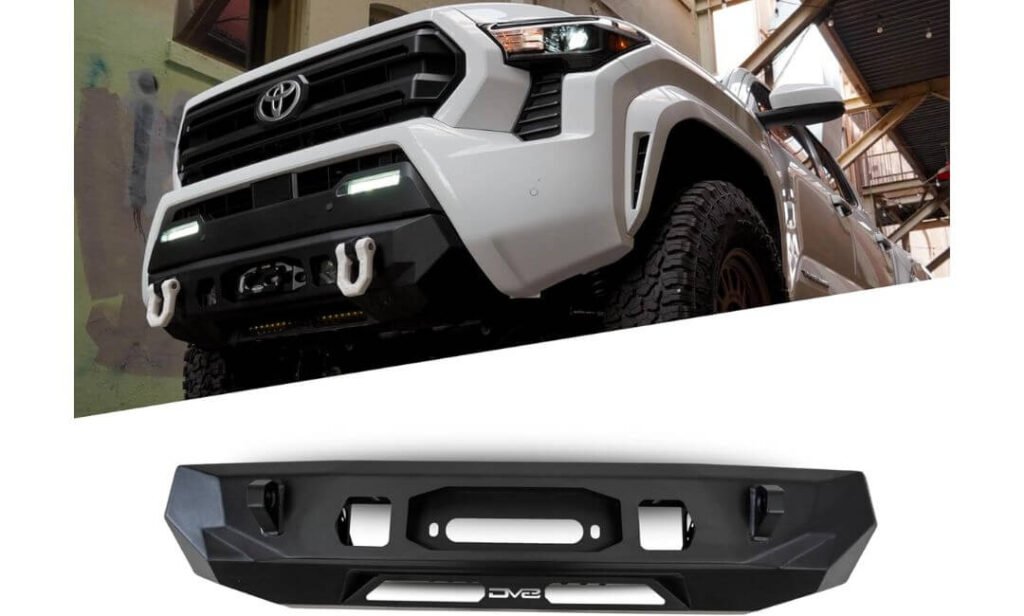
Quick Specs:
- Fits 4th Gen models (2024-2026)
- Integrated standard winch mounting platform
- Dual 1-inch recovery shackle mounts
- 20-inch LED light bar mounting provision
- Dual 3-inch auxiliary pod light mounts
- Retains factory sensors, cameras, fog lights, and adaptive cruise control
- Multi-gauge 3mm, 3.5mm, and 5mm steel construction
- Durable micro-texture black powder-coated finish
- Approximate weight: 93 lbs
- Minimal installation modifications required
Real talk, most aftermarket bumpers force owners to choose between recovery capability and factory technology. This one stands out because it doesn’t make that compromise. The integrated winch platform, heavy-duty recovery points, and OEM sensor retention create the kind of setup many owners end up chasing after multiple upgrades. Everything feels purpose-built rather than added as an afterthought.
What impressed us most is how much functionality is packed into a relatively clean center-mounted design. The dedicated 20-inch light bar position and dual pod light mounts give plenty of room for additional trail lighting without making the front end look overcrowded. Combined with the multi-gauge steel construction, it delivers the type of protection serious off-road drivers expect when venturing beyond maintained roads.
The recovery-focused layout also deserves attention. A standard winch mount paired with thick D-ring recovery points means the bumper is ready for real-world recovery situations rather than just looking the part. The powder-coated finish adds another layer of confidence for owners who regularly deal with mud, water crossings, road salt, or harsh weather conditions.
(For owners planning a complete front-end upgrade, this is one of the few options that balances recovery hardware, lighting flexibility, and factory feature retention without sacrificing overall usability.)
Why It Earned a Spot on Our List
- Integrated platform supports most standard recovery winches
- Retains factory cameras, parking sensors, fog lights, and adaptive cruise functions
- Dedicated mounts for both a 20-inch light bar and auxiliary pod lights
- Multi-thickness steel construction provides strength where it matters most
- Clean center-mounted design complements modern truck styling
One Thing Worth Knowing
- Recovery winch and lighting equipment are purchased separately, allowing owners to choose components that match their specific needs.
Real-World Compatibility Notes
This bumper was engineered specifically around the latest-generation platform and its factory technology package. That matters because modern trucks rely heavily on sensors, cameras, and driver-assistance systems that many aftermarket bumpers struggle to accommodate properly.
Installation is generally straightforward thanks to the vehicle-specific design, but owners planning to add a winch and auxiliary lighting should account for the additional weight and wiring requirements before beginning the project.
The Insider Pro-Tip
Many buyers focus entirely on steel thickness and forget to evaluate sensor retention. In reality, a bumper that preserves factory cameras, parking sensors, and adaptive cruise control often delivers a better ownership experience than a heavier bumper that disables those features.
If you’re planning to add a winch later rather than immediately, choosing a bumper with a properly integrated winch platform from the start usually saves money, labor, and future fitment headaches. That’s one reason this option continues to stand out among newer-generation recovery-focused builds.
#2. Hawkley Mid-Width Front Winch Bumper
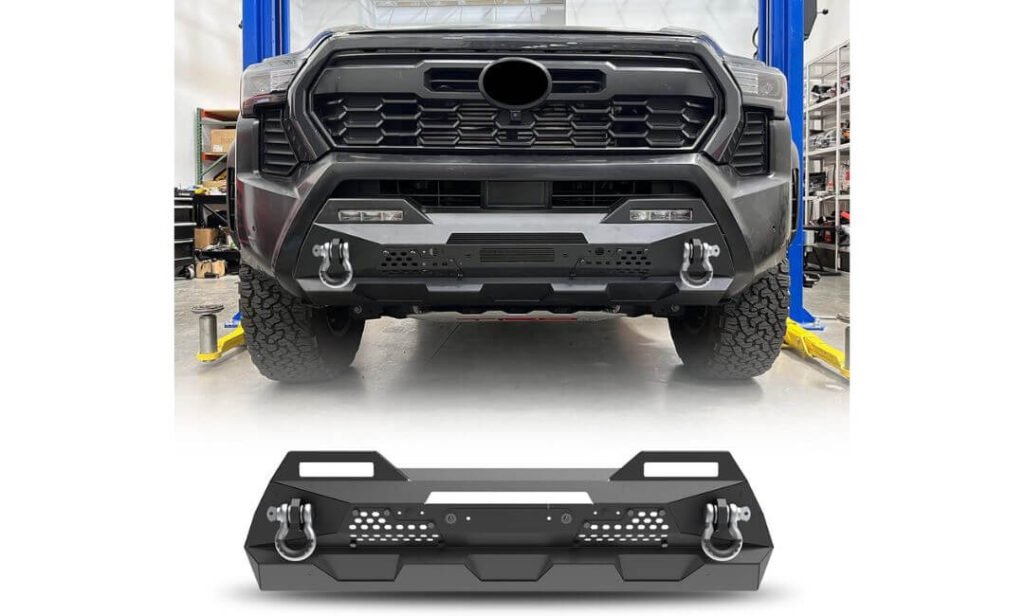
Quick Specs:
- Fits 4th Gen models (2024-2026)
- Winch-ready design with dedicated clutch access opening
- Includes two D-ring recovery points
- Compatible with factory parking sensors
- Supports OEM fog lights
- Fits 14-21 inch single-row LED light bars
- Heavy-duty Q235A carbon steel construction
- Textured black powder-coated finish
- Mid-width design for improved front-end coverage
- Approximate weight: 60.4 lbs
The biggest surprise here is how much practical functionality is packed into a bumper that doesn’t overwhelm the front of the truck. Many recovery-focused bumpers add weight and bulk quickly, but this mid-width design strikes a smart balance between protection, recovery capability, and everyday usability. For owners who want a capable setup without turning the front end into a massive steel wall, that balance matters.
The recovery-focused details show that real-world use was clearly considered during development. The integrated D-ring mounting points, dedicated winch clutch access opening, and light bar provision create a package that feels trail-ready from day one. Add in compatibility with factory parking sensors and fog lights, and it becomes easier to understand why this design appeals to owners who rely on their truck both on and off the pavement.
Another standout feature is the use of Q235A steel paired with a textured powder-coated finish. The construction feels substantial without becoming unnecessarily heavy. Combined with the mid-width profile, the bumper provides meaningful front-end protection while maintaining a clean appearance that follows the factory body lines surprisingly well.
(For owners who want recovery capability, factory feature retention, and a cleaner-looking front end, this setup checks many of the boxes that matter most in daily ownership.)
Why This One Stands Out
- Mid-width profile offers a strong balance of protection and appearance
- Dedicated winch clutch access improves usability during recovery situations
- Factory parking sensors remain functional
- Compatible with OEM fog light locations
- Supports auxiliary lighting without requiring additional brackets
One Thing Worth Planning For
- Installation requires minor trimming of factory bumper components to achieve the intended fit and finish.
Real-World Ownership Notes
One reason this bumper earns a place near the top of our recommendations is its focus on preserving features owners already use every day. Modern trucks depend heavily on sensors and lighting systems, and having those functions remain intact after installation can make a noticeable difference in long-term satisfaction.
The relatively moderate weight is another advantage. Owners planning to add a winch, recovery gear, and auxiliary lighting later will appreciate starting with a bumper that doesn’t add unnecessary mass before those accessories are installed.
The Insider Pro-Tip
A lot of buyers immediately chase the largest bumper available, only to realize later that they rarely need the extra bulk. In real-world driving, a well-designed mid-width bumper often provides the protection most owners actually need while keeping the truck easier to live with every day.
If maintaining factory sensors and fog lights is important to you, pay attention to those details before looking at styling alone. Once the installation is complete, the convenience of retaining factory functionality tends to matter far more than aggressive looks in product photos.
#3. WOLFSTORM Heavy-Duty Steel Front Winch Bumper
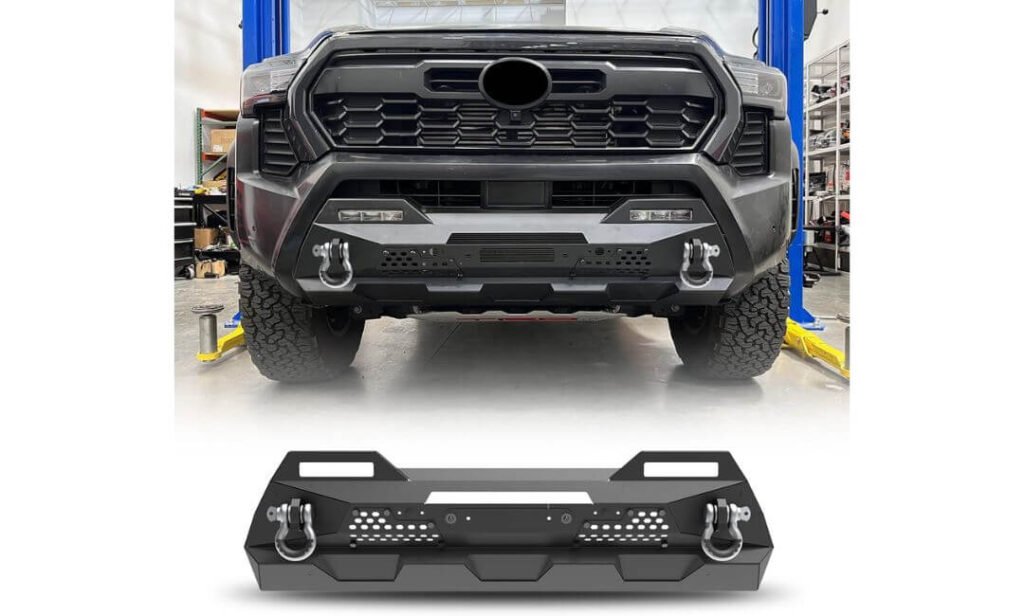
Quick Specs:
- Fits 4th Gen models (2024-2026)
- Winch-ready design with pre-drilled mounting provisions
- Integrated D-ring recovery points
- Compatible with factory parking sensors
- DIY paintable textured surface
- Heavy-duty high-strength steel construction
- Textured black powder-coated finish
- Direct bolt-on installation using factory mounting locations
- Built-in license plate mounting provisions
- Approximate weight: 60.4 lbs
What immediately makes this option interesting is that it focuses on the things most owners actually care about while avoiding unnecessary complexity. Not everyone is building a dedicated overland rig loaded with premium accessories. Sometimes the goal is simple: add stronger front-end protection, retain factory features, and create a solid foundation for future recovery equipment. That’s exactly where this bumper shines.
The heavy-duty steel construction gives it the strength expected from a proper winch-ready setup, while the integrated D-ring recovery points add practical functionality beyond appearance. Sensor compatibility is another welcome detail because modern trucks rely heavily on factory technology, and losing those features after an upgrade rarely feels like a worthwhile trade-off. The inclusion of license plate mounting provisions also eliminates the need for additional brackets or workarounds.
One feature that deserves more attention is the DIY paintable design. Most bumpers arrive in a finish that owners simply accept. This one gives builders the freedom to create a more personalized look if they choose, while still providing a durable textured powder-coated finish right out of the box. Combined with the no-drill, no-cut installation process, it offers a refreshingly straightforward upgrade path.
(For owners who want recovery-ready capability today and customization flexibility tomorrow, this setup delivers far more value than its price point might suggest.)
Why It Made Our Recommendations
- Winch-ready layout creates room for future recovery upgrades
- Factory parking sensor compatibility helps preserve everyday convenience
- Direct bolt-on installation avoids cutting and drilling
- Integrated recovery points add genuine off-road functionality
- Paintable design offers more customization options than most competitors
One Thing Worth Keeping in Mind
- Auxiliary lighting mounts are not as extensive as some premium recovery-focused bumpers higher on this list.
Practical Ownership Perspective
This bumper feels aimed at owners who value simplicity. The installation process is less intimidating than many heavy-duty alternatives, making it a realistic weekend upgrade for those who prefer handling projects themselves.
Another advantage is future flexibility. Even if a winch isn’t part of the current budget, the bumper creates a solid platform for recovery upgrades later. That allows owners to build their setup in stages rather than purchasing everything at once.
The Insider Pro-Tip
A lot of buyers underestimate how valuable a true bolt-on installation becomes once the project starts. Saving hours of cutting, trimming, and adjustment work often makes a bigger difference than an extra feature that rarely gets used.
If you’re planning to color-match parts of your build in the future, a paintable bumper like this can provide far more customization freedom than permanently finished alternatives. It’s one of those details that doesn’t seem important on day one but becomes surprisingly valuable as the truck evolves over time.
#4. YZONA Steel Front Winch Bumper With Integrated Skid Plate
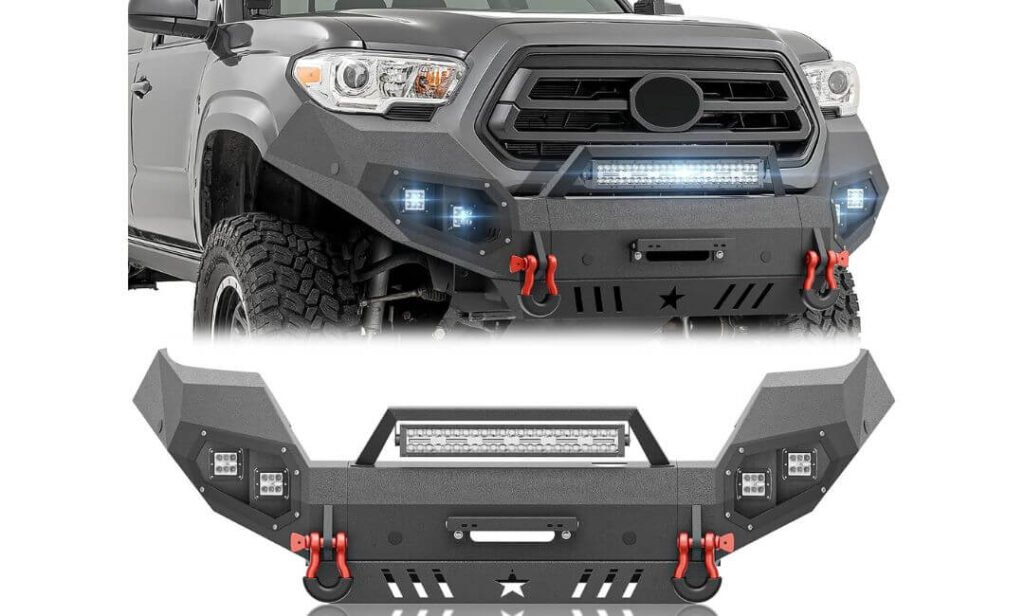
Quick Specs:
- Fits 3rd Gen models (2016-2023)
- Integrated 12,000-lb winch mounting platform
- Includes two 4.75-ton D-ring recovery shackles
- Built-in 120W LED light bar
- Includes four 18W LED spotlights
- Full undercarriage skid plate protection
- Heavy-duty carbon steel construction
- Two-stage textured black powder-coated finish
- Recovery-focused design with license plate provision
- Approximate weight: 42 lbs
There’s a reason many experienced trail drivers pay close attention to skid plate protection, and this bumper explains why. Front-end protection is important, but once the terrain becomes unpredictable, protecting critical components underneath the truck often matters just as much. That’s where this setup separates itself from many alternatives in the same price range.
The integrated 12,000-pound winch platform immediately catches attention, but the overall recovery package is what makes it truly compelling. The included recovery shackles, heavy-duty steel construction, and built-in skid plate create a setup that feels designed around real off-road use rather than showroom appearance. Add in the factory-style sensor provisions and the package becomes even more attractive for owners looking to modernize their truck without sacrificing capability.
Lighting is another area where this bumper delivers more than expected. The integrated 120W light bar combined with four additional LED spotlights provides a level of trail illumination that many owners end up adding separately after installation. Having those mounting points and lighting components already integrated creates a cleaner and more purposeful finished result.
(For owners who regularly explore rocky trails, uneven terrain, or remote backcountry routes, the added underbody protection may become just as valuable as the recovery equipment itself.)
Why It Earned Its Position
- Integrated skid plate adds protection many bumpers simply don’t offer
- Built-in 12,000-lb winch platform supports serious recovery setups
- Included LED lighting package adds immediate trail visibility
- Heavy-duty recovery shackles strengthen recovery confidence
- Rust-resistant two-stage powder-coated finish improves long-term durability
One Thing Worth Preparing For
- Lighting components are included, but the wiring harness must be sourced separately before installation.
Trail-Focused Compatibility Notes
This bumper was designed specifically around the long-running 3rd Generation platform, which remains one of the most modified midsize trucks on the market. Owners upgrading from a factory bumper will immediately notice the additional protection around both the front end and lower vehicle components.
The skid plate integration deserves special attention because many off-road obstacles that threaten a vehicle never make direct contact with the bumper itself. Protecting vital components underneath the truck can prevent expensive repairs long after the trail ride ends.
The Insider Pro-Tip
Many buyers compare bumpers by looking only at recovery points and winch mounts. Experienced off-road owners often evaluate skid protection just as carefully. A damaged recovery point is rare. Contact with rocks, ruts, and hidden obstacles underneath the vehicle is much more common.
If your truck regularly leaves maintained roads, a bumper that combines recovery capability with genuine underbody protection often delivers more real-world value than a bumper focused exclusively on appearance or winch mounting capacity.
#5. Hooke Road Stubby Front Winch Bumper With Tube Grille Guard
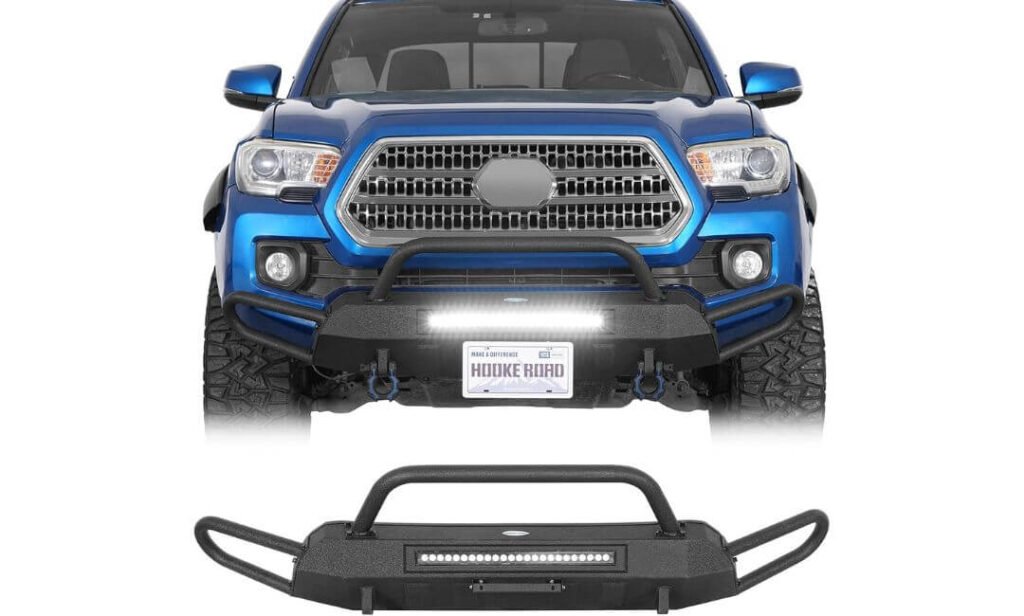
Quick Specs:
- Fits 3rd Gen models (2016-2023)
- Stubby off-road design for improved front clearance
- Integrated 4.75-ton recovery mounting points
- Built-in 72W LED spotlight bar
- Heavy-duty 11-gauge steel main structure
- U-shaped tubular side protection system
- Low-profile bull bar design
- Premium textured powder coat with internal E-coating
- Approximate weight: 57 lbs
- Vehicle-specific bolt-on installation
What makes this bumper different from everything else on this list is its focus on approach angle and trail clearance. While many bumpers prioritize maximum coverage, this design deliberately removes excess bulk from the outer edges. The result is a front-end setup that feels noticeably more confident when navigating tight trails, rocky ledges, deep ruts, and uneven terrain.
The combination of the low-profile bull bar and tubular side protection creates a look that feels purpose-built rather than oversized. More importantly, the design helps protect vulnerable front-end areas without adding unnecessary weight. The integrated recovery points and included 72W LED light bar further reinforce its trail-focused personality, giving owners useful functionality rather than cosmetic add-ons.
Construction quality is another area where this bumper earns respect. The 11-gauge steel body, reinforced mounting structure, textured powder coat, and internal E-coating create a package designed to handle years of exposure to mud, water, road salt, and harsh weather conditions. It’s the type of design that appeals to owners who actually use their truck rather than simply modifying it for appearance.
(For drivers who value clearance, maneuverability, and a more aggressive trail-ready stance, this is easily one of the most distinctive options available for the 3rd Generation platform.)
Why It Deserves Consideration
- Stubby layout improves approach angle on challenging terrain
- Tubular side guards add protection without excessive bulk
- Included LED light bar adds useful nighttime visibility
- Durable steel construction balances strength and weight
- Internal E-coating provides additional corrosion resistance beyond standard powder coating
One Thing Worth Checking Before Ordering
- Trucks equipped with certain factory safety-sensor or front-camera systems may require additional fitment verification.
Off-Road Focused Ownership Notes
Unlike full-width designs that prioritize maximum front coverage, this bumper is built around movement and clearance. That difference becomes obvious when tackling obstacles where every inch of approach angle matters.
The relatively moderate weight is another benefit. Owners who want stronger protection without significantly affecting front suspension performance will appreciate the balance achieved here. The bumper feels rugged without becoming unnecessarily heavy.
The Insider Pro-Tip
Many experienced off-road drivers eventually discover that the best bumper isn’t always the largest one. On technical trails, clearance often becomes more valuable than extra steel hanging beyond the front tires.
If your truck spends more time navigating obstacles than sitting in parking lots, a well-designed stubby bumper can completely change how confidently the vehicle approaches steep inclines, rock shelves, and narrow trail sections. That’s exactly why this style continues to have such a loyal following among dedicated trail enthusiasts.
Best Toyota Tacoma Winch Bumpers Compared: Recovery Strength Protection and Real-World Trail Performance
| Category |
Best Overall DV8 Centric |
Best Value Hawkley Mid-Width |
Best Budget WOLFSTORM |
Best Protection YZONA Steel |
Best Trail Clearance Hooke Road Stubby |
|---|---|---|---|---|---|
| Generation Fitment | 2024-2026 Models | 2024-2026 Models | 2024-2026 Models | 2016-2023 Models | 2016-2023 Models |
| Construction | 3mm, 3.5mm & 5mm Steel | Q235A Carbon Steel | Heavy-Duty Steel | High-Strength Carbon Steel | 11-Gauge Steel Body |
| Winch Capability | Integrated Standard Winch Mount | Winch Ready With Clutch Access | Pre-Drilled Winch Provision | 12,000-lb Winch Plate | Recovery Focused Design |
| Recovery Setup | Dual 1-Inch D-Ring Mounts | Dual D-Ring Mounts Included | Integrated D-Ring Mounts | 4.75-Ton Recovery Shackles | 4.75-Ton Recovery Points |
| Lighting Support | 20-Inch Light Bar + Dual Pod Mounts | 14-21 Inch LED Light Bar Support | Aftermarket Light Compatible | 120W Light Bar + 4 LED Pods Included | 72W LED Light Bar Included |
| Factory Sensor Support | Yes | Yes | Yes | Sensor Provision Included | Check Vehicle Configuration |
| Fog Light Compatibility | OEM Compatible | OEM Compatible | Factory Friendly Design | Not Primary Focus | No |
| Camera Retention | Yes | Factory Friendly Layout | Depends On Vehicle Setup | Not Highlighted | Not Designed For Camera Systems |
| Skid Plate Protection | — | — | — | Integrated Heavy-Duty Skid Plate | — |
| Installation Difficulty | Moderate | Moderate | Easy Bolt-On | Easy To Moderate | Moderate |
| Weight | 93 lbs | 60.4 lbs | 60.4 lbs | 42 lbs | 57 lbs |
| Best For | Premium Builds & Serious Recovery | Daily Drivers & Weekend Trails | Budget-Friendly Upgrades | Overlanding & Undercarriage Protection | Maximum Approach Angle |
| Standout Advantage | Best Factory Feature Retention | Balanced Design & Value | Simple Bolt-On Upgrade | Most Complete Recovery Package | Best Clearance On Technical Trails |
| Our Verdict | Premium Choice For Owners Who Want Everything In One Package | Smart All-Around Pick With Strong Everyday Usability | Excellent Entry Point Into Recovery-Ready Protection | Ideal For Drivers Wanting Recovery Gear And Skid Protection Together | Perfect For Trail-Focused Builds Prioritizing Clearance |
Quick Buying Guide: How to Choose the Best Toyota Tacoma Winch Bumper
A winch bumper is one of those upgrades that can either transform your Tacoma or create a long list of fitment headaches if you choose the wrong one. The truth is that most buyers spend too much time comparing appearance and not enough time looking at recovery capability, fitment, sensor compatibility, and long-term usability. Before investing in a front bumper, it helps to understand what actually matters once the truck leaves the pavement.
Start With Your Tacoma Generation First
The most important decision happens before you even compare products.
If you own a 2016-2023 model, you’re shopping for a 3rd Generation Tacoma platform. If you own a 2024-2026 model, you’re dealing with an entirely different front-end design, different mounting points, updated electronics, and revised sensor locations.
A bumper designed for a 3rd Gen truck will not properly fit a 4th Gen truck, even if the overall shape looks similar in photos.
This is why our recommendations were split between both generations. The DV8, Hawkley, and WOLFSTORM options focus on newer-generation owners, while the YZONA and Hooke Road bumpers are purpose-built for the long-running 3rd Generation platform.
Always confirm generation-specific compatibility before looking at features, pricing, or styling.
Prioritize Recovery Capability Over Appearance
Many bumpers look aggressive online. Far fewer are actually designed for vehicle recovery.
A proper winch bumper should include a dedicated winch mounting platform or a recovery-ready design capable of supporting future winch installation. Recovery points are equally important because they often become the strongest attachment locations during towing, extraction, or self-recovery situations.
Look for:
- Integrated winch mounting provisions
- Reinforced recovery points
- Heavy-duty D-ring mounts
- Accessible winch clutch operation
- Proper cable and fairlead clearance
Recovery equipment is only as strong as the mounting system supporting it. Strong recovery points should never be treated as an optional feature.
Choose the Right Material for Your Driving Style
Most serious Tacoma winch bumpers are built from steel, and there is a reason for that.
Steel provides excellent impact resistance, recovery strength, and long-term durability. It handles trail abuse, rock contact, and recovery loads better than most lightweight alternatives.
Benefits of steel bumpers include:
- Superior recovery strength
- Better impact resistance
- Greater durability on rough terrain
- More accessory mounting options
Aluminum bumpers offer weight savings and improved fuel efficiency, but they are generally less common in recovery-focused Tacoma builds.
For owners planning to run a winch, auxiliary lighting, recovery gear, and frequent off-road trips, steel remains the preferred choice.
Understand How Weight Affects Your Tacoma
Bumper weight becomes increasingly important as additional accessories are added.
A winch, recovery shackles, lighting systems, and skid plates can quickly add substantial weight to the front of the truck. Excessive front-end weight may affect ride quality, braking feel, steering response, and suspension performance.
This is why some owners prefer mid-width or stubby bumpers rather than full-width designs.
A well-designed bumper should provide protection without adding unnecessary mass.
Finding the balance between strength and weight often leads to a better ownership experience than simply choosing the heaviest option available.
Pay Attention to Approach Angle and Trail Clearance
Approach angle is one of the most overlooked factors when shopping for a winch bumper.
The farther a bumper extends beyond the front tires, the greater the chance of contacting obstacles before the tires reach them.
Drivers who frequently encounter:
- Rock shelves
- Washouts
- Steep climbs
- Deep ruts
- Technical trails
often benefit from compact or stubby bumper designs.
This is one reason trail-focused owners continue to favor designs similar to the Hooke Road setup. Improved clearance can significantly increase confidence on challenging terrain.
Don’t Ignore Sensor and Camera Compatibility
Modern Tacoma models contain far more technology than previous generations.
Parking sensors, front cameras, adaptive cruise control systems, and other driver-assistance features can all be affected by bumper design.
Before purchasing, verify compatibility with:
- Front parking sensors
- Factory cameras
- Adaptive cruise control
- OEM fog lights
- Factory safety systems
Retaining factory functionality often becomes more important after installation than buyers initially expect.
The best bumper upgrades improve capability without forcing unnecessary compromises.
Consider Future Upgrades Before Buying
A smart bumper purchase should support future modifications rather than limit them.
Think about what you may add later:
- Recovery winch
- Auxiliary lighting
- D-ring shackles
- Skid plates
- Recovery boards
- Communication equipment
Many owners eventually spend more replacing an entry-level bumper than they would have spent purchasing a recovery-ready design from the beginning.
Planning ahead often saves money and avoids unnecessary upgrades later.
Installation, Warranty, and Real-World Ownership
Installation requirements vary significantly between bumper designs.
Some models use factory mounting locations and bolt directly into place. Others may require trimming, relocation of factory components, or additional adjustments during installation.
Before ordering, verify:
- Installation complexity
- Included hardware
- Sensor compatibility
- Winch fitment requirements
- Lighting requirements
- Warranty coverage
A bumper may look nearly identical to another option online, yet provide a completely different ownership experience once installed.
The best Toyota Tacoma winch bumper isn’t necessarily the most expensive one. It’s the bumper that matches your generation, supports your recovery goals, preserves the features you use every day, and remains dependable long after the initial installation is complete.
Special Features That Matter When Choosing a Toyota Tacoma Winch Bumper
A lot of Tacoma owners focus on steel thickness, appearance, or powder coating when comparing bumpers. Those things matter, but they rarely determine whether you’ll be happy with your purchase six months later. The features that create the biggest difference in real-world ownership are usually the ones that don’t stand out in product photos.
The bumpers in this guide were selected because they address the areas that actually affect recovery performance, trail capability, installation flexibility, and long-term usability. Understanding these details can help you avoid expensive mistakes and choose a bumper that works for your specific build.
Recovery Points Are More Important Than Most Buyers Realize
Recovery points are often overlooked until the moment they’re needed.
When a vehicle becomes stuck in mud, sand, snow, or rocky terrain, recovery points become one of the most heavily stressed components on the entire truck. A poorly designed recovery setup can limit recovery options and create unnecessary risks during towing or extraction.
Generally, Tacoma bumpers use one of two approaches:
- Fully integrated recovery mounts built directly into the bumper structure
- Recovery mounting plates attached to the bumper assembly
Integrated recovery mounts are typically preferred because recovery loads transfer directly into the bumper’s reinforced structure. This design often provides greater confidence during demanding recovery situations.
Products like the DV8, Hawkley, WOLFSTORM, and YZONA all prioritize dedicated recovery mounting locations rather than treating recovery capability as an afterthought.
For most Tacoma owners, recovery points are not decorative accessories. They are essential safety equipment.
Winch Mount Design Matters Just As Much As Winch Capacity
Many buyers ask whether a bumper supports a particular winch size.
A better question is whether the bumper’s mounting design properly supports that winch under load.
The strongest winch in the world is only as effective as the mounting platform holding it in place.
When evaluating a winch bumper, pay attention to:
- Integrated winch plate strength
- Fairlead mounting location
- Winch clutch accessibility
- Cable routing clearance
- Space around the winch body
- Service access after installation
Most Tacoma owners typically install winches in the:
- 8,000-lb range
- 9,500-lb range
- 10,000-lb range
- 12,000-lb range
A properly designed winch bumper should comfortably support these common recovery setups while still allowing access to the clutch lever and recovery line.
This is one reason the dedicated winch provisions found on the DV8, Hawkley, and YZONA designs stand out within this category.
Bumper Shape Can Change Trail Performance
One of the biggest differences between bumpers is not material or thickness.
It’s shape.
The shape of a bumper directly affects how a Tacoma approaches obstacles and how easily it navigates technical terrain.
Full-width designs typically provide:
- Greater front-end coverage
- Increased protection
- Better shielding from trail damage
Mid-width designs often deliver:
- Balanced protection
- Improved clearance
- Reduced overall weight
Stubby bumpers are usually chosen for:
- Maximum approach angle
- Better tire visibility
- Improved rock-crawling performance
- Reduced front overhang
This is why the Hooke Road bumper appeals to drivers who regularly encounter steep climbs, deep washouts, and rocky terrain where every inch of clearance matters.
A bumper may look aggressive in a parking lot, but trail performance is often determined by geometry rather than appearance.
Airflow Can Affect Long-Term Performance
A feature that rarely gets enough attention is airflow.
Modern Tacoma engines rely on consistent airflow through the radiator, intercooler, transmission cooler, and other cooling components.
A poorly designed bumper can unintentionally restrict airflow and increase operating temperatures during:
- Slow-speed trail driving
- Towing
- Overlanding
- Summer off-road trips
- Mountain climbs
This becomes even more important after adding:
- A winch
- Auxiliary lighting
- Recovery equipment
- Front-end accessories
The best bumper designs maintain a balance between protection and airflow. They provide strength where needed while still allowing sufficient air movement through critical cooling systems.
This is one reason center-mounted and mid-width designs continue to grow in popularity among experienced builders.
Sensor Compatibility Is No Longer Optional
Older trucks gave owners more flexibility when modifying front bumpers.
Modern Tacoma models are different.
Many newer trucks rely on:
- Parking sensors
- Front cameras
- Adaptive cruise control systems
- Driver-assistance technology
- Factory fog light integration
Ignoring these systems during a bumper upgrade can result in warning lights, disabled features, or reduced functionality.
Several bumpers in this guide were selected specifically because they preserve factory technology rather than forcing owners to compromise.
Before purchasing any bumper, verify compatibility with the features installed on your specific trim level.
The closer a bumper works with factory systems, the more enjoyable daily ownership tends to be.
Winch Line Routing Often Separates Good Designs From Great Ones
A winch mount alone does not guarantee an effective recovery setup.
The recovery line must also travel through a clean, unobstructed path.
Poor winch line routing can create:
- Rope abrasion
- Cable wear
- Uneven pulling angles
- Increased stress on recovery components
Well-designed bumpers provide sufficient space for:
- Fairlead installation
- Synthetic rope operation
- Steel cable operation
- Hook storage
- Winch servicing
The result is smoother recovery performance and less wear on expensive recovery equipment.
Many buyers focus exclusively on winch capacity, but experienced off-road drivers often pay just as much attention to line routing, fairlead positioning, and recovery access.
Think Beyond Day One Ownership
The best Tacoma winch bumper isn’t always the one that looks most impressive immediately after installation.
The best bumper is usually the one that still performs exactly as expected years later, after countless trail miles, recovery situations, weather exposure, and future upgrades.
That’s why we prioritized bumpers that combine recovery strength, winch compatibility, sensor retention, airflow awareness, trail clearance, and long-term practicality rather than focusing solely on appearance. Those are the features that continue to matter long after the excitement of a new upgrade fades.
Installation Considerations and Tips for Toyota Tacoma Winch Bumpers
Buying the right winch bumper is only half of the equation. Installation quality plays a major role in how well the bumper performs, how clean the finished result looks, and how reliable the entire recovery system remains over time.
A properly installed bumper should feel like a factory-engineered component. There should be no unusual movement, uneven panel gaps, sensor issues, wiring problems, or recovery concerns. Whether you’re installing a premium recovery bumper or a budget-friendly option, taking the time to do the job correctly can make a significant difference in long-term ownership satisfaction.
Understanding the Basics Before Starting Installation
Most Toyota Tacoma winch bumper installations are straightforward, but that doesn’t mean they should be rushed.
The process generally involves:
- Removing factory bumper components
- Disconnecting sensors when applicable
- Relocating factory hardware
- Installing mounting brackets
- Positioning and aligning the bumper
- Reconnecting electronics
- Installing optional lighting or recovery equipment
For most owners, installation time typically falls between:
- 1 to 3 hours for simpler bolt-on designs
- 3 to 6 hours for more advanced recovery-focused bumpers
- Additional time when installing a winch, lighting system, or auxiliary accessories simultaneously
The actual installation experience often depends more on preparation than mechanical difficulty.
Tools That Commonly Make Installation Easier
Before beginning, it’s worth gathering everything needed to avoid unnecessary interruptions.
Commonly used tools include:
- Socket and ratchet set
- Torque wrench
- Trim removal tools
- Combination wrenches
- Screwdrivers
- Wire crimping tools if auxiliary lighting is being installed
- Electrical tape and protective loom for wiring management
- Floor jack or additional helper for lifting heavier bumpers
Many modern Tacoma bumpers weigh considerably more than factory components. Having a second person available during positioning and alignment often makes the process smoother and safer.
Not Every Bumper Installs the Same Way
One of the biggest mistakes buyers make is assuming every bumper follows the same installation process.
Some designs, including certain WOLFSTORM configurations, focus on straightforward bolt-on installation using factory mounting locations.
Others may require:
- Minor trimming
- Partial factory bumper modification
- Additional bracket installation
- Sensor relocation
- Winch preparation before final assembly
Mid-width and recovery-focused bumpers frequently involve additional setup steps compared to simpler replacement designs.
Reviewing installation instructions before purchasing can help eliminate surprises later.
When Professional Installation Makes Sense
Many Tacoma owners successfully install bumpers themselves, especially when dealing with direct bolt-on designs.
However, there are situations where professional installation can be a worthwhile investment.
Professional installation is often recommended when:
- A winch will be installed simultaneously
- Multiple lighting systems are being added
- Sensor systems require relocation
- Camera systems need recalibration
- Wiring modifications are necessary
- Significant trimming is involved
The goal isn’t simply mounting the bumper. The goal is ensuring every recovery, lighting, and safety component functions exactly as intended.
For owners unfamiliar with electrical systems or recovery equipment, professional installation can provide additional peace of mind.
Alignment Is One Of The Most Overlooked Parts Of The Job
A bumper can be structurally secure and still be installed incorrectly.
Alignment issues are surprisingly common, especially during first-time installations.
Areas that deserve extra attention include:
- Fender gap consistency
- Headlight clearance
- Hood clearance
- Frame mounting symmetry
- Winch fairlead positioning
- Recovery point accessibility
Taking extra time during the alignment stage often creates a much cleaner finished appearance.
The difference between an average installation and a professional-looking installation usually comes down to patience during final adjustments.
Wiring Requires More Planning Than Most Owners Expect
Lighting upgrades are one of the most common additions installed alongside a winch bumper.
However, wiring is also where many installation problems begin.
Common mistakes include:
- Routing wires near moving components
- Allowing wires to contact sharp metal edges
- Poor grounding locations
- Insufficient weather protection
- Improper fuse placement
A clean wiring installation should remain protected from water, mud, vibration, heat, and debris.
This becomes especially important on bumpers like the DV8 and YZONA that support multiple auxiliary lighting configurations.
Pay Close Attention to Sensors and Factory Technology
Modern Tacoma models include significantly more technology than earlier generations.
Factory systems may include:
- Parking sensors
- Front cameras
- Adaptive cruise control
- Driver-assistance features
- OEM fog lights
Even bumpers designed to retain these features require careful installation.
Sensor brackets should be secured correctly, wiring should remain protected, and all functions should be tested before considering the installation complete.
A simple oversight during installation can create warning messages that are often time-consuming to diagnose later.
Winch Installation Deserves Extra Attention
If a winch is being installed, it should never be treated as a secondary step.
Recovery equipment places substantial stress on the mounting structure during operation.
Before using a newly installed winch, verify:
- Mounting hardware torque
- Fairlead alignment
- Winch line routing
- Battery connections
- Electrical protection
- Recovery point accessibility
A properly mounted winch should operate smoothly without interference from the bumper, grille, lighting components, or recovery hardware.
Recovery performance begins long before the first pull.
Best Practices That Experienced Tacoma Owners Follow
Owners who are happiest with their bumper upgrades typically follow a few simple principles.
They perform a complete test fit before tightening hardware.
They verify sensor operation before final assembly.
They protect all wiring during installation rather than after problems appear.
They inspect recovery hardware before every major trip.
And most importantly, they think about future upgrades while the bumper is already off the truck.
Planning ahead for additional lighting, recovery gear, or winch upgrades often saves considerable time and effort later.
A quality Toyota Tacoma winch bumper is designed to serve the truck for years. A careful installation ensures it performs exactly the way it was intended when that moment arrives and you need to trust the equipment mounted to the front of your vehicle.
Maintenance and Longevity: Keeping Your Toyota Tacoma Winch Bumper Trail-Ready for Years
A quality winch bumper is designed to handle far more abuse than a factory bumper, but even the strongest steel construction benefits from routine care. The reality is that most premature bumper wear isn’t caused by difficult trails or recovery work. It’s caused by neglect, trapped moisture, road salt, mud buildup, and small issues that go unnoticed for months.
The good news is that maintaining a Toyota Tacoma winch bumper is relatively simple. A few minutes of inspection and cleaning throughout the year can dramatically extend the life of the bumper, recovery points, mounting hardware, and accessories attached to it.
Understanding Why Protective Coatings Matter
Every bumper in this guide uses some form of textured powder-coated finish because steel and moisture are never good long-term companions.
Powder coating acts as the first line of defense against:
- Rust formation
- Road salt exposure
- Mud retention
- Water intrusion
- Surface corrosion
- Paint deterioration
Premium finishes such as textured powder coating and E-coating systems are especially valuable for owners who regularly drive through rain, snow, mud, or coastal environments.
However, even the best coating is not indestructible.
Over time, rock strikes, trail debris, recovery gear, and accidental impacts can chip the protective surface. Once bare steel becomes exposed, corrosion can begin much faster than many owners realize.
That’s why periodic inspections are just as important as the coating itself.
Small Chips Should Never Be Ignored
One of the most common mistakes Tacoma owners make is waiting until rust becomes visible before addressing damage.
A small chip today can become a larger corrosion problem months later.
After every off-road trip, take a few minutes to inspect:
- Leading bumper edges
- Recovery point areas
- Lower skid plate sections
- Winch mounting locations
- D-ring mounting surfaces
- Welded joints
If exposed metal is found, cleaning the area and applying touch-up protection early is significantly easier than dealing with corrosion later.
Most long-lasting off-road builds stay in excellent condition because owners address minor damage before it develops into a larger issue.
Recovery Hardware Deserves Routine Attention
Recovery points are among the most heavily stressed components on a winch bumper.
Even if they appear fine externally, regular inspections are worthwhile.
Pay special attention to:
- Recovery shackle mounts
- D-ring attachment points
- Recovery tabs
- Mounting brackets
- Weld areas near recovery hardware
Look for:
- Excessive wear
- Surface cracks
- Hardware movement
- Corrosion buildup
- Deformation after recovery use
A recovery point may spend months doing nothing and then suddenly experience thousands of pounds of force during a single recovery operation.
That’s why inspection is always easier than repair.
Check Mounting Hardware More Often Than You Think
Off-road vibration can gradually loosen hardware over time.
This is especially true for trucks that regularly encounter:
- Washboard roads
- Rock trails
- Deep ruts
- High-speed dirt roads
- Overlanding routes
At regular intervals, inspect:
- Frame mounting bolts
- Bracket hardware
- Winch mounting hardware
- Light bar mounting bolts
- Auxiliary accessory brackets
A quick torque verification can prevent rattles, alignment issues, and unnecessary wear.
Many experienced off-road owners perform these checks before major trips rather than after problems appear.
Winch Mount Areas Need Extra Attention
Even if a winch is installed correctly, the surrounding mounting area should be inspected periodically.
The combination of:
- Recovery loads
- Vibration
- Mud
- Water
- Road debris
can create conditions that accelerate wear if ignored.
Check for:
- Hardware loosening
- Surface corrosion
- Fairlead movement
- Rope abrasion points
- Cable clearance issues
A winch system is only as reliable as the structure supporting it.
Routine inspections help ensure the entire recovery setup remains ready when needed.
Cleaning Matters More Than Most Owners Expect
Mud looks harmless after a trail ride.
Unfortunately, mud often traps moisture, road chemicals, and debris against steel surfaces.
Over time, that combination can accelerate corrosion, particularly in hidden areas.
After off-road use, focus on cleaning:
- Recovery mounts
- Skid plates
- Winch trays
- Lower bumper sections
- Mounting brackets
- Weld seams
Pay special attention to areas where mud tends to collect and remain trapped.
Allowing these areas to dry completely before storage is equally important.
Clean steel generally lasts much longer than neglected steel, regardless of coating quality.
Winter Driving Requires Additional Care
Owners who encounter snow, road salt, or harsh winter conditions should increase inspection frequency.
Salt is one of the most aggressive corrosion accelerators a bumper will face.
During winter months:
- Rinse the bumper more frequently
- Remove salt deposits promptly
- Inspect hidden mounting areas
- Check recovery hardware regularly
- Address coating damage immediately
A few extra minutes of care throughout winter can significantly improve long-term durability.
Build a Simple Inspection Routine
The most reliable off-road trucks are rarely maintained through complicated procedures.
Instead, owners follow simple routines consistently.
A practical inspection schedule often includes:
After every trail trip
- Remove mud and debris
- Inspect visible coating damage
- Check recovery points
Every few months
- Inspect mounting hardware
- Verify bumper alignment
- Examine winch mounting areas
Before major off-road trips
- Inspect recovery hardware
- Verify bolt tightness
- Test lighting systems
- Check winch operation
These checks take very little time but can prevent far larger problems later.
Long-Term Durability Comes Down to Consistency
Whether it’s a premium recovery bumper like the DV8, a balanced mid-width design like the Hawkley, a value-focused option like the WOLFSTORM, or a trail-focused setup from YZONA or Hooke Road, long-term durability ultimately depends on how well the bumper is maintained after installation.
The owners who get the most value from their bumper upgrades are rarely the ones who spend the most money. They’re the ones who inspect their equipment regularly, address small issues early, keep recovery hardware clean, and treat their recovery system as essential equipment rather than a cosmetic accessory.
That’s what keeps a Toyota Tacoma winch bumper looking good, performing properly, and remaining ready for the next adventure year after year.
FAQs About Toyota Tacoma Winch Bumper
Will a heavier Toyota Tacoma winch bumper always perform better off-road than a lighter design?
Not necessarily, and this is where many Tacoma owners spend more money than they need to.
A heavier bumper often provides additional protection and recovery strength, but weight alone doesn’t determine off-road performance. Once you add a winch, recovery gear, auxiliary lighting, and other accessories, the front suspension begins carrying significantly more load than Toyota originally intended. That extra weight can affect steering feel, braking response, suspension travel, and ride quality.
The better approach is finding the right balance between protection and functionality. For example, a well-designed mid-width or stubby bumper may outperform a heavier full-width bumper in technical terrain because it improves approach angle and reduces unnecessary front-end weight. In real-world trail situations, bumper geometry often matters just as much as steel thickness.
What is the biggest mistake Toyota Tacoma owners make when choosing a winch bumper?
Most buyers focus on appearance first and recovery capability second.
The reality is that recovery point design, winch mounting strength, sensor compatibility, and installation quality will impact ownership far more than styling once the bumper is actually installed. A bumper can look incredible in product photos but create frustration later if it interferes with sensors, limits winch access, or complicates future upgrades.
Experienced Tacoma owners usually evaluate:
- Recovery point construction
- Winch tray design
- Sensor retention
- Future accessory compatibility
- Trail clearance
before they even consider appearance. That’s often the difference between a bumper that stays on the truck for years and one that eventually gets replaced.
Is it smarter to buy a winch-ready bumper now even if I don’t plan to install a winch immediately?
For most owners, yes.
Many Tacoma builds evolve over time. What starts as a simple front bumper upgrade often turns into auxiliary lighting, recovery gear, overlanding equipment, and eventually a winch installation. Choosing a winch-ready bumper from the beginning can save significant money and labor later.
A future-ready bumper provides flexibility without forcing immediate upgrades. Even if a winch isn’t installed for another year or two, having the proper mounting platform already integrated into the bumper eliminates the need to replace equipment later. Planning ahead usually costs less than upgrading twice.
How important is airflow when installing a steel winch bumper on a Tacoma?
Airflow is one of the least discussed but most important factors in long-term ownership.
Modern Tacomas rely on consistent airflow through the radiator and cooling system, especially during towing, overlanding, slow-speed trail driving, and summer heat. Adding a winch, light bar, and recovery equipment can already reduce airflow around the front of the truck. A poorly designed bumper may restrict it even further.
This is why experienced builders often pay close attention to:
- Center opening size
- Winch placement
- Light bar positioning
- Cooling system clearance
- Radiator airflow paths
A bumper should protect the truck without creating unnecessary cooling challenges. The best designs balance strength and airflow rather than prioritizing one at the expense of the other.
How can I tell if a winch bumper is actually built for recovery and not just appearance?
A true recovery-focused bumper usually reveals itself in the details.
Look beyond powder coating, lighting mounts, and aggressive styling. The strongest indicators are found in the structural components that most buyers never see in marketing photos. Recovery capability comes from engineering, not appearance.
Signs of a recovery-focused design include:
- Reinforced winch mounting areas
- Properly integrated recovery points
- Thick mounting brackets
- Direct frame connection
- Accessible fairlead location
- Sufficient clearance for winch operation
One simple test is to imagine performing a difficult recovery in mud, sand, or on a rocky trail. If the bumper appears designed primarily for aesthetics, it probably is. If the design clearly prioritizes recovery loads, hardware access, and structural reinforcement, you’re likely looking at equipment intended for real-world use rather than showroom presentation.
Final Thoughts
After comparing dozens of options across both Tacoma generations, one thing became very clear: the best winch bumper isn’t automatically the most expensive one, the heaviest one, or even the one with the longest feature list. The right choice depends on how your truck is actually used once the pavement ends.
If maximum factory feature retention, premium recovery capability, and future upgrade flexibility are your priorities, the DV8 Centric Front Bumper stands out as the most complete package in this guide. Owners looking for a balanced mix of value, protection, and everyday usability will find plenty to like in the Hawkley Mid-Width Front Bumper, while the WOLFSTORM Front Bumper remains one of the strongest budget-friendly options for newer-generation builds.
For 3rd Generation owners, the decision often comes down to intended use. The YZONA Steel Front Bumper delivers one of the most complete recovery and protection packages thanks to its integrated skid plate, lighting setup, and heavy-duty winch platform. Meanwhile, the Hooke Road Stubby Front Bumper continues to appeal to drivers who value approach angle, trail clearance, and a more aggressive off-road stance.
The real truth is that a winch bumper becomes far more than a styling upgrade once recovery gear, trail miles, and difficult terrain enter the picture. The best bumpers are the ones that quietly do their job year after year, protect critical components when conditions get rough, and give you confidence when the nearest paved road is miles behind you.
Choose the option that matches your driving style, recovery goals, and future plans for the truck. A well-chosen Toyota Tacoma winch bumper is one of those upgrades you’ll appreciate long after the installation is finished and the first trail adventure begins.
Also Check:


