

5 Best Winches for Toyota 4Runner in 2026: 10K 12K Pull Power Waterproof Synthetic Rope Picks
If you’re shopping for the best winch for a Toyota 4Runner, the first thing to know is that bigger isn’t always better. A stock or lightly modified 4Runner typically weighs between 4,400 and 5,000 pounds, so a 10,000 lb winch already provides an excellent safety margin for self-recovery. If your 4Runner has a steel front bumper, full skid plates, roof rack, camping gear, larger 33–35 inch tires, or is built for overlanding, stepping up to a 12,000 lb winch offers extra pulling confidence without being excessive.
Another detail many buyers overlook is electrical load. Modern electric winches can draw well over 300 amps under heavy recovery, which is why they perform best with a healthy 12V battery, clean battery terminals, and a properly rated charging system. Whether you own an older fourth-generation model (2003–2009) or a fifth-generation 4Runner (2010–2024), choosing a waterproof synthetic rope winch from a proven brand usually makes a bigger difference than chasing the highest advertised pull rating. For this guide, we focused on winches with strong reliability, sealed construction, consistent recovery performance, and real-world value—because the last thing anyone wants is equipment that quits when the trail gets difficult.
Best Toyota 4Runner Winches: Top Recovery Picks with Synthetic Rope and IP68 Protection
#1. WARN VR EVO 10-S Electric Winch
Best Overall Toyota 4Runner Winch with Trusted Off Road Recovery Performance and Synthetic Rope
#2. WARN VR EVO 12-S Electric Winch
Best Premium Toyota 4Runner Winch for Maximum Pulling Power and Serious Overlanding
#3. Smittybilt X2O GEN2 10K Waterproof Winch
Best Value Synthetic Rope Winch for Toyota 4Runner with Fully Sealed Waterproof Design
#4. OPENROAD Panther Series 3S 13,500 lb Winch
Best High Capacity Recovery Winch for Toyota 4Runner Offering Outstanding Value and Pulling Strength
#5. X-BULL 10,000 lb Synthetic Rope Winch
Best Affordable Toyota 4Runner Winch for Reliable Trail Recovery and Weekend Adventures
Expert Tip
Most Toyota 4Runner owners spend days comparing 10,000 lb vs. 12,000 lb winches, but in real-world recovery, that usually isn’t what determines whether you get out of the obstacle. The bigger difference comes from buying a winch with a sealed motor, dependable load brake, quality synthetic rope, and consistent pulling performance. A reliable 10K winch from a proven manufacturer will often outperform a higher-rated budget model when the recovery gets slow, muddy, and demanding. If your 4Runner is mostly stock or lightly modified, a quality 10,000 lb winch is the sweet spot. If you’ve added steel armor, recovery gear, camping equipment, or oversized tires, moving to 12,000 lb gives you extra confidence without adding unnecessary complexity.
How We Chose the Best Winches for Toyota 4Runner
There are hundreds of electric winches on the market, and many advertise impressive pulling capacities on paper. We didn’t rank products by marketing claims alone. Instead, we focused on the things that actually matter when you’re relying on a winch miles away from pavement.
First, we looked at pulling capacity that makes sense for the Toyota 4Runner. Rather than filling this guide with oversized industrial winches, we prioritized the 10,000 lb to 13,500 lb range because it provides an appropriate recovery margin for stock, modified, and overlanding-focused 4Runners without recommending unnecessary weight.
Next, we compared brand reputation and long-term reliability. That’s why WARN appears more than once in this guide. It has earned a strong reputation among off-road enthusiasts for dependable recovery performance. Smittybilt remains a proven value option, while OPENROAD and X-BULL offer practical alternatives for buyers who want solid capability without paying premium prices.
We also gave extra importance to waterproof protection. Every recommendation here features a sealed design intended for wet, muddy, and dusty trail conditions. Water resistance isn’t just a specification on a product page—it directly affects long-term durability after repeated recoveries in harsh environments.
Another factor was synthetic rope quality. Every winch in this guide uses synthetic rope because it’s lighter, easier to handle, and generally safer than traditional steel cable if it becomes damaged under load. For many 4Runner owners, that’s a worthwhile upgrade before the first recovery even happens.
Finally, we considered the features that owners actually use: wireless control, braking performance, line speed, installation compatibility, and overall value for the price. We intentionally avoided recommending products simply because they advertised the highest pull rating. A dependable winch that performs consistently every time is far more valuable than one with impressive numbers but inconsistent real-world reliability.
This guide is built around one simple goal: recommending winches that we’d feel comfortable installing on a Toyota 4Runner before heading into remote trails, overlanding routes, or difficult recovery situations. That approach is why every product on this list earned its place.
#1. WARN VR EVO 10-S Electric Winch
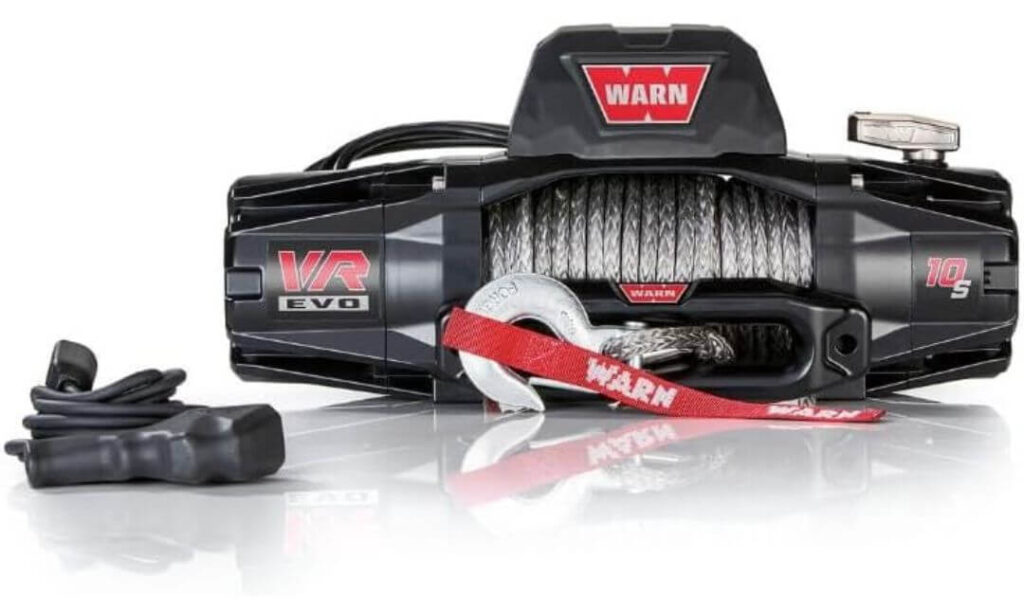
Quick Specs:
- 10,000 lb pulling capacity — Ideal for stock and moderately built Toyota 4Runner recovery setups
- 80 ft × 3/8-inch synthetic rope — Lightweight, safer to handle, and easier to spool than steel cable
- IP68 waterproof housing — Designed to keep working through mud, heavy rain, dust, and water crossings
- Series-wound motor with planetary gearing — Delivers dependable pulling power with efficient power delivery
- High-performance Albright contactor — Trusted electrical system for consistent engagement
- Compact footprint — Fits most aftermarket 4Runner winch bumpers and winch plates
- One-piece cast aluminum tie plate — Adds structural rigidity during heavy recovery loads
- 5-year mechanical & 3-year electrical warranty — Strong long-term manufacturer support
Some recovery gear looks impressive on paper but tells a different story once it’s covered in mud. This one has earned its reputation because it focuses on the things that actually matter when your Toyota 4Runner is stuck on a rocky climb, buried in sand, or pulling through deep ruts. The 10,000 lb pulling capacity is right where most 4Runner owners should be, offering enough recovery strength without adding unnecessary weight to the front of the vehicle.
What also stands out is the complete package rather than a single specification. The IP68 sealed construction, Albright contactor, series-wound motor, and 80-foot synthetic rope work together to create a winch that’s built for repeated off-road use instead of occasional weekend recoveries. The synthetic rope is easier to manage on uneven terrain, while the compact dimensions leave plenty of flexibility when paired with quality aftermarket bumper systems.
Installation is straightforward for properly equipped builds, but it’s important to understand that this winch is intended for a dedicated Toyota 4Runner winch mount or aftermarket recovery bumper rather than the factory bumper. Once installed correctly, it offers the kind of confidence that matters far more than chasing the highest advertised pulling number.
(If your goal is dependable recovery instead of simply buying the biggest winch available, this is one of the safest choices for a Toyota 4Runner.)
What Stood Out During Our Evaluation
- 10,000 lb capacity matches the needs of most Toyota 4Runner builds.
- Fully IP68 sealed for water crossings, mud, and dusty trails.
- Lightweight synthetic rope is easier and safer to use than steel cable.
- Proven Albright contactor improves electrical reliability during demanding recoveries.
- Excellent warranty support from a brand trusted throughout the off-road community.
Before You Buy
- Requires a Toyota 4Runner-compatible winch bumper or winch mounting plate and does not install directly behind the factory OEM bumper.
Toyota 4Runner Installation Notes
This model is an excellent fit for Toyota 4Runner owners planning a proper recovery setup with an aftermarket winch bumper or dedicated winch plate. Its compact size works well with many popular off-road bumper systems without creating unnecessary front-end bulk.
Before ordering, confirm that your chosen bumper or mounting system supports standard low-profile winches. While you’re installing the winch, it’s also worth checking the battery condition, electrical connections, and cable routing so the recovery system performs reliably when it’s needed most.
The Insider Pro-Tip
A lot of buyers compare winches by looking only at the pull rating, but experienced off-road drivers usually pay closer attention to the motor, waterproof sealing, contactor quality, and rope system. Those are the parts you’ll appreciate years later after repeated recoveries—not just the number printed on the box.
If your Toyota 4Runner spends time on remote trails, invest in a quality mounting system and keep the synthetic rope clean after muddy recoveries. A properly installed winch that’s maintained regularly will usually reward you with far more dependable performance than simply choosing a larger capacity model.
#2. WARN VR EVO 12-S Electric Winch
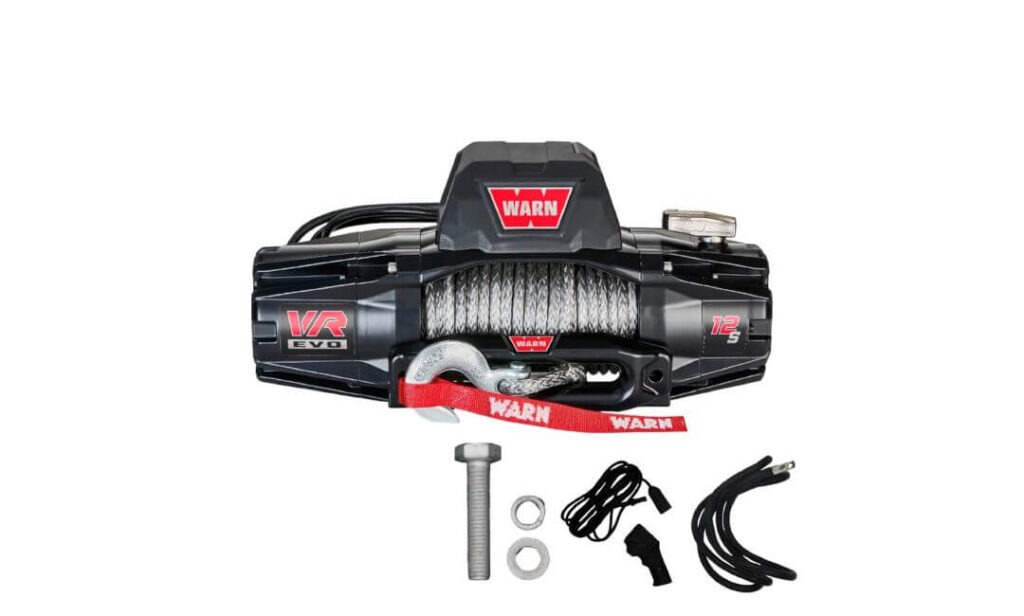
Quick Specs:
- 12,000 lb pulling capacity — Excellent for heavily equipped Toyota 4Runner overlanding and recovery builds
- 80 ft synthetic rope — Lightweight, safer under load, and easier to manage than steel cable
- IP68 waterproof construction — Built to withstand mud, deep water crossings, dust, and harsh weather
- Series-wound motor with planetary gear system — Strong pulling performance with efficient power delivery
- Premium Albright contactor — Dependable electrical engagement during demanding recoveries
- Compact low-profile housing — Fits most aftermarket Toyota 4Runner winch bumpers and mounting plates
- Factory pre-wired design — Simplifies installation with compatible recovery systems
- 5-year mechanical & 3-year electrical warranty — Long-term confidence backed by WARN
Not every Toyota 4Runner stays close to factory weight. Once you start adding steel bumpers, full skid plates, rooftop tents, recovery gear, larger tires, and camping equipment, the demands on a recovery system change. That’s exactly where this 12,000 lb setup starts to make practical sense. Instead of simply offering a bigger number, it provides extra pulling confidence for heavier builds that regularly venture beyond maintained trails.
The rest of the package feels equally well thought out. The IP68 waterproof housing helps protect the internal components from mud and repeated water crossings, while the synthetic rope keeps overall weight down and is much easier to handle during recoveries. Combined with WARN’s series-wound motor and Albright contactor, the entire system is designed to deliver smooth, dependable performance when recoveries become slow and demanding.
Like the smaller VR EVO model, this isn’t designed to bolt onto a factory Toyota 4Runner bumper. It performs best when paired with a quality aftermarket winch bumper or dedicated mounting plate, giving you a recovery setup that feels properly engineered rather than pieced together.
(If your 4Runner is built for long-distance overlanding or carries significant extra weight year-round, the additional pulling capacity is an upgrade you’ll appreciate when conditions become unpredictable.)
Why It Made This Shortlist
- 12,000 lb capacity suits heavily modified Toyota 4Runner builds.
- Proven IP68 waterproof protection for year-round off-road use.
- Lightweight synthetic rope improves handling during recoveries.
- Reliable Albright contactor and series-wound motor inspire confidence under load.
- Premium construction backed by one of the most respected names in off-road recovery.
One Thing to Know Before Ordering
- Requires an aftermarket Toyota 4Runner winch mount or recovery bumper since it is not compatible with the factory OEM bumper.
Toyota 4Runner Installation Notes
This winch works exceptionally well on Toyota 4Runners equipped with aftermarket steel bumpers, hidden winch mounts, or dedicated recovery systems. The compact housing makes installation straightforward when the correct mounting hardware is already in place.
Because this model can generate higher pulling loads, it’s worth making sure your battery, charging system, and heavy-gauge power cables are in good condition before installation. A properly matched electrical system helps the winch perform at its full potential when recovery conditions become demanding.
The Insider Pro-Tip
Many buyers assume a 12,000 lb winch is automatically the better choice, but that’s only true if your Toyota 4Runner actually carries the extra weight to justify it. For heavily equipped overland builds, the added pulling reserve is worthwhile. For lighter setups, the smaller VR EVO 10-S remains the more balanced option.
If your vehicle regularly carries armor, recovery gear, camping equipment, and oversized tires, choosing the higher-capacity model today can prevent wishing for more pulling power later—especially when you’re recovering on steep inclines or in deep mud where resistance increases dramatically.
#3. Smittybilt X2O GEN2 10K Waterproof Winch
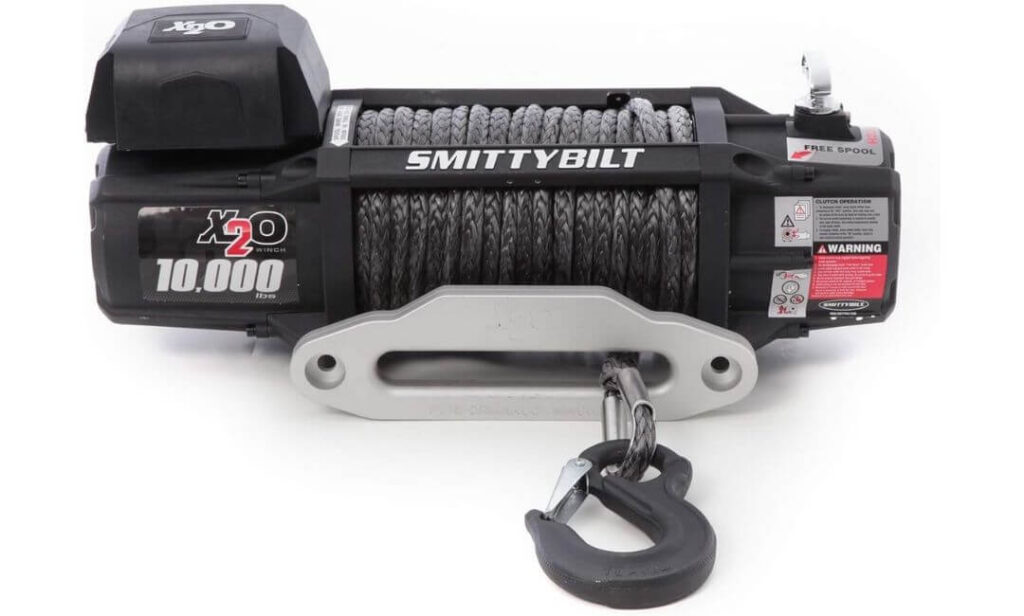
Quick Specs:
- 10,000 lb pulling capacity — Well-matched for stock and moderately upgraded Toyota 4Runner builds
- 6.6 HP series-wound motor — Delivers strong, consistent recovery performance under heavy load
- 98.5 ft × 3/8-inch synthetic rope — Longer rope length offers added flexibility on difficult recovery lines
- Fully sealed waterproof construction — Built for mud, rain, dust, and repeated water crossings
- 3-stage planetary gear system (218:1) — Smooth torque delivery with dependable control
- Integrated wireless remote plus wired controller — Flexible operation from inside or outside the vehicle
- Automatic load-holding brake & Hawse fairlead — Better rope management and controlled recoveries
- Standard universal mounting pattern — Compatible with most aftermarket Toyota 4Runner winch systems
There’s a reason this model continues to be recommended by experienced off-road owners who want premium capability without stepping into the highest price bracket. It doesn’t rely on flashy specifications alone—it combines a 6.6 HP series-wound motor, 3-stage planetary gearing, and an impressively long 98.5-foot synthetic rope into a recovery package that feels purpose-built for real trail use. For many Toyota 4Runner owners, that balance is exactly what makes it such an attractive option.
Another feature that deserves attention is its recovery versatility. The integrated wireless remote, automatic brake system, and fully sealed construction make the winch easy to operate in changing trail conditions, while the longer synthetic rope gives you more recovery options when anchor points aren’t close by. It’s the kind of detail that’s easy to overlook until you’re recovering on uneven terrain where every extra foot of rope becomes useful.
Like every universal recovery winch, proper installation matters. Pairing it with a Toyota 4Runner-specific hidden winch mount or aftermarket recovery bumper allows the system to perform exactly as intended while maintaining safe load distribution across the front of the vehicle.
(For buyers looking for premium recovery features without moving into flagship pricing, this remains one of the strongest value-focused choices available.)
What Impressed Us Most
- Powerful 6.6 HP series-wound motor handles demanding recoveries with confidence.
- Longer 98.5-foot synthetic rope offers greater recovery flexibility than many competitors.
- Integrated wireless and wired remote controls provide convenient operation in different situations.
- Fully sealed waterproof design stands up well to mud, water, and harsh trail environments.
- Strong balance of performance, durability, and overall value.
One Thing Worth Planning Ahead For
- You’ll need a Toyota 4Runner-compatible winch mount or aftermarket bumper, as this model isn’t designed to install on the factory bumper.
Toyota 4Runner Installation Notes
The standard 10-inch × 4.5-inch mounting pattern makes this winch compatible with many aftermarket Toyota 4Runner recovery bumpers and hidden winch mounts. That flexibility gives owners more options when building a complete recovery setup.
Because the 6.6 HP motor can draw significant current during demanding pulls, it’s a smart idea to pair the installation with a healthy battery, quality power cables, and properly tightened electrical connections. Spending a little extra attention during installation usually pays off with smoother, more dependable performance on the trail.
The Insider Pro-Tip
Many buyers compare recovery winches by horsepower alone, but experienced 4Runner owners know that rope length, motor quality, waterproof sealing, and gear design often have a much bigger impact once you’re actually recovering a vehicle. That’s exactly why this model continues to have such a loyal following.
If your trips include remote forest roads, rocky trails, or overlanding routes where recovery help may be hours away, the combination of a long synthetic rope, wireless control, and dependable sealed construction adds convenience that you’ll appreciate long after the installation is finished.
#4. OPENROAD Panther Series 3S 13,500 lb Winch
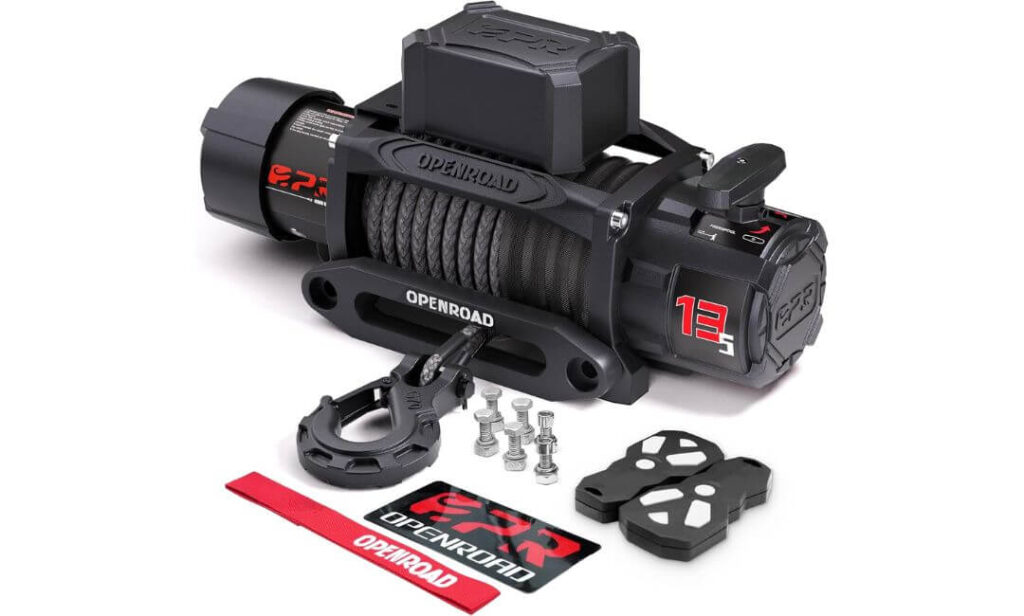
Quick Specs:
- 13,500 lb pulling capacity — Extra recovery power for heavily loaded Toyota 4Runner builds
- 3/8-inch × 85 ft synthetic rope — Lightweight, safer to handle, and long enough for demanding recoveries
- 6.6 HP series-wound motor — Strong torque delivery with dependable pulling performance
- 218:1 planetary gear system — Smooth power transfer under heavy load
- IP68 waterproof construction — Built to handle mud, dust, rain, and water crossings
- Dual wireless remotes plus wired controller — Greater flexibility during solo recoveries
- Corrosion-resistant Dacromet hardware — Added protection against rust and harsh environments
- Standard 10-inch × 4.5-inch mounting pattern — Fits most aftermarket Toyota 4Runner winch mounts
Sometimes the smartest upgrade isn’t the most expensive one—it’s the one that gives you more capability where it actually counts. That’s exactly where this 13,500 lb winch fits. It offers noticeably higher pulling capacity than many traditional 10K options while still delivering the modern features Toyota 4Runner owners expect, including synthetic rope, IP68 sealing, and multiple remote control options.
Its real strength is how complete the package feels. The 6.6 HP motor, 218:1 planetary gearing, and 85-foot synthetic rope work together to deliver smooth, controlled recoveries, while the inclusion of two wireless remotes makes solo recoveries much easier when positioning the vehicle or monitoring the recovery line. The corrosion-resistant hardware is another thoughtful addition for owners who regularly drive through mud, snow, or coastal environments.
Like every universal winch in this guide, proper installation is the key to getting the best performance. Once paired with a Toyota 4Runner-specific hidden winch mount or aftermarket bumper, it becomes a capable recovery system that delivers far more than its price might suggest.
(If maximum pulling power and overall value matter more to you than having the biggest brand name on the housing, this is one of the strongest alternatives currently available.)
What Earned It a Place in This Guide
- 13,500 lb capacity provides extra recovery confidence for heavily equipped 4Runners.
- Dual wireless remotes offer added convenience during solo recoveries.
- Fully IP68 waterproof for year-round trail use.
- Corrosion-resistant Dacromet hardware helps improve long-term durability.
- Outstanding combination of recovery performance and overall value.
One Thing to Keep in Mind
- A Toyota 4Runner-compatible winch bumper or mounting plate is required because this model isn’t designed for the factory OEM bumper.
Toyota 4Runner Installation Notes
Thanks to its standard 10-inch × 4.5-inch mounting footprint, this winch works with many aftermarket Toyota 4Runner recovery bumpers and hidden winch mounting systems. Just verify mounting clearance before installation, especially if your bumper includes integrated lighting or additional accessories.
Since this model is capable of producing substantial pulling force, pairing it with a well-maintained battery, quality electrical connections, and correctly routed power cables will help ensure smooth, reliable operation whenever recovery becomes necessary.
The Insider Pro-Tip
A higher pull rating doesn’t automatically mean a harder-to-use winch. What impressed us here is that the additional 13,500 lb capacity comes without sacrificing everyday usability. The synthetic rope remains easy to handle, and the dual wireless remotes make recoveries feel far less stressful when you’re working alone.
For Toyota 4Runner owners who regularly carry camping gear, recovery equipment, roof tents, or steel armor, having a little extra pulling reserve is rarely something you’ll regret. It’s one of those upgrades that often goes unnoticed—until the day you genuinely need every bit of it.
#5. X-BULL 10,000 lb Synthetic Rope Winch
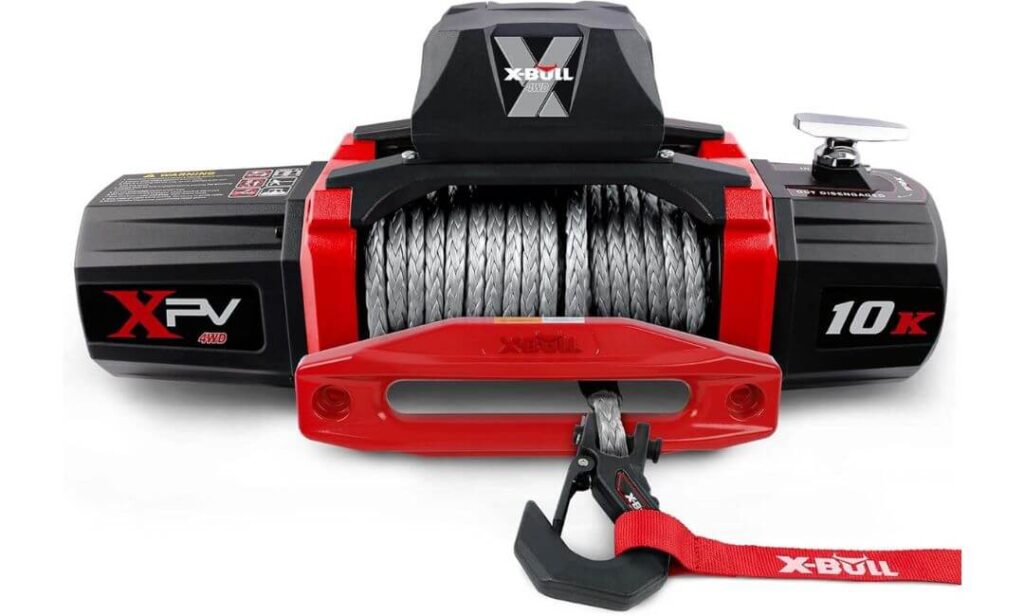
Quick Specs:
- 10,000 lb pulling capacity — Well-suited for stock and lightly modified Toyota 4Runner recovery setups
- 3/8-inch × 80 ft synthetic rope — Lightweight, safer than steel cable, and easy to handle
- 5.6 HP series-wound motor — Reliable pulling power for trail recoveries and everyday off-road use
- 3-stage planetary gear system (218:1) — Smooth, controlled line movement under load
- IP67 waterproof housing — Designed to resist mud, rain, dust, and water exposure
- Wireless and wired remote control — Operate from a safe distance with flexible control options
- Free-spooling clutch with Hawse fairlead — Faster rope deployment and improved rope protection
- Standard 10-inch × 4.5-inch mounting pattern — Compatible with most aftermarket Toyota 4Runner winch mounts
Not every Toyota 4Runner owner needs a premium-priced recovery system, especially if most trips involve weekend trails, forest roads, or occasional overlanding. That’s where this 10,000 lb winch makes a lot of sense. It delivers the core features people actually use—synthetic rope, wireless control, waterproof construction, and a proven planetary gear system—without pushing the budget into premium territory.
Its 5.6 HP series-wound motor provides dependable pulling performance for most real-world recovery situations, while the 218:1 gear ratio helps maintain smooth control during heavier pulls. The combination of wireless and wired remotes gives added flexibility when recovering the vehicle alone, and the free-spooling clutch makes setting up the recovery line quicker when every minute matters on the trail.
Like the other winches in this guide, this model performs best when paired with a Toyota 4Runner-specific hidden winch mount or aftermarket recovery bumper. Installed correctly, it offers an excellent balance of capability and affordability for drivers who want dependable recovery equipment without overspending.
(If you’re building a reliable recovery setup on a sensible budget, this covers the features that matter most without paying extra for capabilities many owners rarely use.)
Why We Included It
- 10,000 lb pulling capacity is a strong match for most Toyota 4Runner recovery needs.
- Wireless and wired remote control make solo recoveries easier.
- Lightweight synthetic rope improves safety and everyday handling.
- IP67 waterproof construction holds up well in challenging trail conditions.
- Excellent overall value for buyers building a dependable recovery kit on a budget.
One Thing to Consider
- It requires a Toyota 4Runner-compatible aftermarket winch mount or recovery bumper, as it doesn’t install behind the factory bumper.
Toyota 4Runner Installation Notes
The standard 10-inch × 4.5-inch mounting pattern allows this winch to fit many hidden winch mounts and aftermarket bumpers designed specifically for the Toyota 4Runner. Confirm mounting clearance before installation, especially if additional lighting or skid plates are already installed.
Although installation is straightforward, it’s worth checking that your battery, power cables, and electrical terminals are in good condition before connecting the winch. Reliable electrical supply has a significant impact on consistent recovery performance.
The Insider Pro-Tip
Budget-friendly doesn’t have to mean unreliable. For many Toyota 4Runner owners, recovery equipment gets used only a handful of times each year. In that situation, choosing a well-equipped 10,000 lb synthetic rope winch with dependable waterproof protection often makes more practical sense than paying substantially more for features that may never be fully utilized.
If you also carry a quality recovery strap, soft shackles, and a snatch block, you’ll often gain more real-world recovery capability than simply upgrading to a more expensive winch alone. A balanced recovery kit is usually what gets vehicles moving again—not just the logo on the winch.
Best Toyota 4Runner Winch Comparison Chart for Every Budget and Build
| Comparison | WARN VR EVO 10-S | WARN VR EVO 12-S | Smittybilt X2O GEN2 | OPENROAD Panther 3S | X-BULL 10K |
|---|---|---|---|---|---|
| Our Verdict | Best Overall | Premium Choice | Best Value | Highest Capacity | Best Budget |
| Pulling Capacity | 10,000 lb | 12,000 lb | 10,000 lb | 13,500 lb | 10,000 lb |
| Motor | Series Wound | Series Wound | 6.6 HP Series Wound | 6.6 HP Series Wound | 5.6 HP Series Wound |
| Synthetic Rope | 80 ft | 80 ft | 98.5 ft | 85 ft | 80 ft |
| Waterproof Rating | IP68 | IP68 | Fully Sealed Waterproof | IP68 | IP67 |
| Wireless Remote | Optional | Optional | Integrated | Dual Wireless | Included |
| Wired Remote | Included | Included | Included | Included | Included |
| Gear System | Planetary | Planetary | 3-Stage Planetary | 218:1 Planetary | 218:1 Planetary |
| Best For | Daily Off-Road & Trail Recovery | Heavy Overlanding Builds | Performance & Value Balance | Maximum Recovery Power | Budget-Friendly Recovery Kit |
| Installation | Aftermarket Winch Mount Required | Aftermarket Winch Mount Required | Aftermarket Winch Mount Required | Aftermarket Winch Mount Required | Aftermarket Winch Mount Required |
| Ideal 4Runner Setup | Stock to Mildly Modified | Steel Bumper + 33-35″ Tires | Weekend Trails & Overlanding | Fully Equipped Expedition Build | Light Trail & Weekend Adventures |
| Overall Value | ★★★★★ | ★★★★★ | ★★★★★ | ★★★★☆ | ★★★★☆ |
How to Choose the Right Winch for Your Toyota 4Runner Without Overspending
Buying the right winch for a Toyota 4Runner isn’t about choosing the biggest number on the box. It’s about matching the winch to how your vehicle is actually built and where you plan to drive it. A recovery system that works perfectly on a lightly modified weekend trail rig may not be the best choice for a fully loaded overland build carrying steel armor, larger tires, recovery gear, and camping equipment. The sections below cover the factors that matter most before investing in a winch.
Choosing the Right Pull Rating for Your Toyota 4Runner
The first specification most buyers notice is pulling capacity, but it’s also one of the most misunderstood.
A stock Toyota 4Runner generally weighs between 4,400 and 5,000 pounds, while heavily modified builds can exceed 5,500 pounds once steel bumpers, roof tents, skid plates, larger tires, recovery gear, and camping equipment are added.
For most owners, a 10,000 lb winch provides an excellent balance of recovery power, weight, and cost. It comfortably exceeds the commonly recommended recovery ratio while remaining easier on the front suspension and electrical system.
Moving to a 12,000 lb winch becomes worthwhile if your 4Runner spends most of its time carrying additional weight or tackling difficult terrain where deep mud, loose sand, steep rock climbs, or heavy recovery loads are more common.
A 13,500 lb model offers additional recovery reserve for expedition-style builds, but extra capacity should never replace proper recovery technique. In many situations, good recovery angles and quality recovery gear are more valuable than simply choosing the highest pull rating available.
Synthetic Rope or Steel Cable for a Toyota 4Runner?
Nearly every modern off-road enthusiast now prefers synthetic rope, and for good reason.
Synthetic rope is considerably lighter than steel cable, making it easier to handle during long recoveries. It doesn’t develop sharp wire strands over time, stores less kinetic energy if damaged under load, and floats in water, which can be surprisingly useful during river crossings and muddy recoveries.
Steel cable still has advantages in commercial environments where constant abrasion is expected, but for recreational off-roading and overlanding, synthetic rope has become the preferred choice for most Toyota 4Runner owners.
All of the winches recommended in this guide use synthetic rope because it offers the best combination of safety, usability, and overall recovery performance.
Why Waterproof Protection Matters More Than Most Buyers Realize
Off-road recovery equipment rarely operates in ideal conditions.
Mud, dust, heavy rain, snow, creek crossings, and pressure washing all expose the internal motor and electrical components to moisture. A well-sealed winch is far more likely to remain dependable years after installation.
An IP68-rated winch provides one of the highest levels of environmental protection commonly available on consumer recovery winches. It helps reduce the chances of moisture entering critical components during repeated exposure to harsh conditions.
While an IP rating doesn’t eliminate the need for routine maintenance, it significantly improves long-term reliability for vehicles that regularly leave the pavement.
Motor Design, Gear System, and Electrical Requirements
Most quality Toyota 4Runner winches use a series-wound electric motor paired with a planetary gear system, and that’s exactly what you’ll find throughout our recommendations.
Series-wound motors generate strong low-speed torque, making them ideal for controlled recoveries under heavy load. Planetary gears keep the winch compact while delivering smooth pulling power with excellent durability.
It’s equally important to remember that electric winches place substantial demand on your vehicle’s electrical system. Under heavy recovery loads, current draw can exceed several hundred amps.
Before installing any recovery winch, make sure your battery is healthy, battery terminals are clean, electrical cables are properly secured, and the charging system is operating correctly. A dependable electrical system is just as important as the winch itself.
Understanding Toyota 4Runner Winch Mounting Options
One of the biggest surprises for first-time buyers is learning that universal winches rarely install directly onto the factory Toyota 4Runner bumper.
Instead, they require either a hidden winch mount, an aftermarket steel bumper with an integrated winch plate, or another properly engineered recovery mounting system.
Hidden winch mounts preserve the factory appearance while providing recovery capability, making them popular with daily-driven vehicles. Full aftermarket bumpers offer improved protection, recovery points, and additional accessory mounting options but generally increase front-end weight.
Whichever approach you choose, always verify mounting compatibility before purchasing a winch.
Matching the Winch to Your Driving Style
Not every Toyota 4Runner owner uses their vehicle the same way.
If your vehicle spends most of its time on forest roads, mild trails, and weekend adventures, a dependable 10,000 lb synthetic rope winch is usually the most balanced solution.
If your 4Runner is equipped for extended overlanding with steel armor, larger tires, rooftop camping equipment, and additional fuel or water storage, stepping up to a 12,000 lb or 13,500 lb model provides additional recovery confidence without significantly changing day-to-day usability.
Choosing a winch based on how you actually drive is almost always a better decision than selecting the highest advertised specifications.
Looking After Your Recovery Equipment
Even the highest-quality recovery winch benefits from occasional maintenance.
After muddy or sandy recoveries, rinse the synthetic rope with clean water and allow it to dry before winding it back onto the drum. Inspect the hook, fairlead, electrical terminals, mounting bolts, and rope for signs of wear before heading out on another trip.
It’s also worth operating the winch briefly every few months, even if it hasn’t been used recently. Cycling the motor helps keep internal components functioning properly and allows you to identify potential electrical issues before they’re discovered on a remote trail.
A properly installed and regularly maintained recovery winch isn’t just another accessory on your Toyota 4Runner—it’s one of the few upgrades you’ll truly appreciate when a difficult recovery becomes unavoidable.
Installing a Toyota 4Runner Winch the Right Way for Long-Term Reliability
A quality winch is only as dependable as the way it’s installed. Even the most trusted recovery system can create problems if the mounting hardware is incorrect, electrical connections are poorly routed, or the bumper isn’t designed to support recovery loads. Before starting the installation, confirm that your Toyota 4Runner winch mount or aftermarket bumper is rated for your specific winch model, all hardware is present, and the battery is in good condition. Taking extra time during installation usually results in a quieter, stronger, and more reliable recovery system for years to come.
Preparing the Winch Mount and Front Bumper
Start by inspecting the entire mounting area before lifting the winch into place. Whether you’re installing a hidden winch mount or a full aftermarket recovery bumper, every mounting surface should be clean, flat, and free from rust, paint buildup, or debris that could prevent the winch from sitting evenly.
Before tightening any hardware permanently, loosely position the winch, fairlead, and control box to confirm everything lines up correctly. Check for clearance around the radiator, intercooler, grille shutters (if equipped), skid plates, recovery points, and front camera systems. Small alignment issues are much easier to correct before the hardware is fully torqued.
Always follow the torque specifications supplied by the bumper or winch manufacturer. Over-tightening mounting bolts can damage brackets, while under-tightening may allow movement during heavy recovery loads.
Wiring the Winch Safely on a Toyota 4Runner
The electrical system deserves just as much attention as the mounting hardware.
Run the supplied power cables away from sharp edges, moving suspension components, steering shafts, hot exhaust parts, and any area where vibration could wear through insulation over time. Whenever cables pass through metal openings, use protective grommets or abrasion-resistant loom to reduce the chance of long-term damage.
Before making any electrical connections, disconnect the negative battery terminal. Once the winch is fully mounted, connect the positive cable first, followed by the negative cable. After installation, inspect every connection to ensure the terminals are clean, secure, and free from unnecessary strain.
A healthy battery and charging system are essential because recovery winches can draw several hundred amps under heavy load. If your Toyota 4Runner already powers auxiliary lighting, refrigerators, air compressors, or other accessories, verify that the electrical system can comfortably support additional recovery demands.
Proper Mounting Sequence for a Toyota 4Runner Recovery Setup
Installing components in the correct order makes the process smoother and helps avoid unnecessary adjustments later.
A typical installation sequence follows this order:
- Verify bumper or hidden winch mount compatibility.
- Position the winch loosely on the mounting plate.
- Install the fairlead before fully tightening the winch.
- Mount the control box according to available clearance.
- Route all electrical cables before securing them permanently.
- Tighten mounting hardware to the recommended torque specification.
- Connect battery cables.
- Perform a complete operational test before reinstalling bumper trim or skid plates.
- Pre-tension the synthetic rope evenly across the drum before the first recovery.
Completing each step carefully helps prevent rope misalignment, cable interference, and unnecessary disassembly later.
Hidden Winch Mount Tips Every 4Runner Owner Should Know
Hidden winch mounts have become increasingly popular because they preserve the factory appearance while still providing full recovery capability.
Before purchasing one, confirm that the mount supports both your chosen winch dimensions and the fairlead style you’ll be using. Some hidden mounts offer limited clearance around larger control boxes or oversized motors, so checking measurements beforehand can prevent installation delays.
Because airflow around the front of the vehicle changes with hidden installations, it’s also worth confirming that nothing interferes with cooling components, front parking sensors, or camera systems if your Toyota 4Runner is equipped with them.
Hidden mounts generally require more patience during installation than exposed bumper systems, but many owners prefer the clean factory-style appearance they provide.
Electrical Protection, Relays, and Safe Power Routing
Most premium electric winches include a factory-designed contactor or solenoid system that’s matched to the motor’s electrical requirements. Unless specifically recommended by the manufacturer, avoid replacing these components with aftermarket alternatives.
The primary battery cables should always remain as short as practical while avoiding unnecessary bends or tension. Secure them with insulated clamps so vibration cannot gradually loosen electrical connections.
After the installation is complete, perform several unloaded spooling cycles before attempting a real recovery. This confirms that the motor, contactor, drum rotation, remote control, and rope spooling all function correctly before the system is placed under heavy load.
Installation Mistakes That Are Easy to Avoid
Many installation problems don’t appear immediately—they develop months later because of small shortcuts taken during the initial installation.
Some of the most common mistakes include mounting the winch to an unrated bracket, routing power cables near sharp edges, allowing synthetic rope to spool unevenly, failing to recheck bolt torque after the first few recovery sessions, or ignoring battery health before installing a high-current recovery system.
Another overlooked detail is synthetic rope tension. If the rope isn’t evenly pre-tensioned before its first serious recovery, it can bury itself into lower layers under load, making future recoveries more difficult and potentially shortening rope life.
A carefully installed Toyota 4Runner winch doesn’t just perform better—it also requires less maintenance, experiences fewer electrical problems, and inspires far more confidence when recovery becomes the only way forward.
Using a Toyota 4Runner Winch with Confidence in Real Off-Road Conditions
Owning a recovery winch doesn’t automatically make every recovery easier. The difference usually comes down to preparation, recovery technique, and understanding how the equipment behaves once the vehicle is under load. Whether you’re exploring forest service roads, crossing muddy trails, climbing rocky terrain, or overlanding hundreds of miles from pavement, a well-maintained winch becomes one of the most valuable tools on your Toyota 4Runner. The following practices are based on the situations most owners actually encounter—not ideal conditions in a parking lot.
A Safe Recovery Process That Works in the Real World
Every recovery should begin with a quick assessment instead of immediately pulling the cable.
Walk around the vehicle and determine why it’s stuck. Sometimes clearing mud from the tires, reducing tire pressure, or choosing a slightly different recovery angle can reduce the amount of force required. Once you’ve selected a solid recovery point, extend the synthetic rope smoothly, connect it using properly rated recovery gear, and make sure the hook latch is fully secured before applying tension.
As the winch begins pulling, maintain steady throttle only if necessary and avoid sudden acceleration that shocks the recovery system. The goal is controlled movement—not maximum speed. During the recovery, keep everyone well outside the recovery zone and stop immediately if you notice the rope stacking unevenly or the winch making unusual noises.
Once the vehicle is free, rewind the rope evenly across the drum while maintaining light tension. Proper spooling now prevents problems during the next recovery.
Getting the Most from a Synthetic Rope Winch
Synthetic rope has become the preferred choice for modern Toyota 4Runner recovery setups because it’s lighter, easier to manage, and safer than traditional steel cable. However, it also deserves a little more care.
Always pull the rope in as straight a line as possible whenever conditions allow. Sharp side pulls can cause uneven spooling and unnecessary wear along the outer layers of the rope. If the recovery angle changes significantly, pause and reposition the vehicle or recovery point rather than forcing the rope to drag across the fairlead.
Avoid dragging synthetic rope across sharp rocks, exposed metal edges, or broken tree stumps whenever possible. Even though modern synthetic fibers are incredibly strong, repeated abrasion gradually reduces rope life over time.
If the rope becomes soaked with mud or sand, clean it before long-term storage. Dirt trapped inside the fibers acts like fine sandpaper each time the rope is loaded.
What to Check After Every Overlanding Trip
Recovery equipment often works perfectly until it’s ignored for several months.
After returning from an overlanding trip, inspect the synthetic rope from end to end for cuts, flattened sections, excessive fuzzing, or signs of abrasion. Rotate the drum by hand and confirm the rope is layered evenly without being buried beneath lower wraps.
Next, examine the hook, fairlead, mounting bolts, electrical terminals, and power cables. Mud, vibration, and repeated trail impacts can gradually loosen hardware even if everything appeared secure before the trip.
It’s also worth operating the winch for a few seconds under light load several times each year. Brief exercise keeps electrical contacts active and allows you to identify potential issues before your next adventure rather than during an unexpected recovery.
Protecting the Rope Between Adventures
Proper storage has a surprisingly large impact on the lifespan of a synthetic rope.
If the rope was exposed to mud, salt water, or fine sand, rinse it thoroughly with clean fresh water and allow it to dry completely before winding it tightly onto the drum. Storing moisture inside tightly wrapped rope can encourage corrosion on metal components and reduce the lifespan of surrounding hardware.
When rewinding, maintain light tension so each layer sits neatly beside the previous one. Loose wraps can bury themselves into lower layers during the next heavy recovery, making the rope harder to deploy and increasing unnecessary wear.
If your Toyota 4Runner spends long periods parked outdoors, periodically inspect the rope, fairlead, and hook for signs of UV exposure, corrosion, or contamination. A few minutes of preventive maintenance can add years to the service life of the entire recovery system.
The best recovery winches aren’t simply the ones with the highest pulling capacity—they’re the ones that are installed correctly, maintained consistently, and ready to perform every time the trail demands them.
FAQs About Toyota 4Runner Winch
Is a 10,000 lb winch really enough for a Toyota 4Runner, or should I buy a 12,000 lb model instead?
For most Toyota 4Runner owners, a 10,000 lb winch is the better-balanced choice. A stock or lightly modified 4Runner simply doesn’t require excessive pulling capacity for normal self-recovery, and choosing the right size often means less weight on the front suspension and lower electrical demand.
A 12,000 lb winch becomes a smarter investment if your 4Runner regularly carries equipment such as steel bumpers, full skid plates, rooftop tents, larger 33–35 inch tires, recovery gear, and camping supplies. Before spending extra money, ask yourself one question: Is my vehicle actually heavier, or am I just buying the biggest number available? Matching the winch to the build usually delivers better long-term performance than simply choosing more capacity.
Can I install a recovery winch behind the factory Toyota 4Runner bumper?
In most cases, no. The factory bumper isn’t designed to support recovery loads generated by a heavy-duty electric winch.
A proper installation normally requires one of the following:
- A hidden Toyota 4Runner winch mount
- An aftermarket recovery bumper with an integrated winch plate
- A dedicated heavy-duty mounting system designed specifically for the 4Runner
The winch itself is only one part of the recovery system. The mounting hardware carries the recovery load, so investing in a properly engineered mounting solution is every bit as important as choosing the winch.
Does an IP68 winch still need maintenance after water crossings and muddy trails?
Absolutely—and this surprises many first-time buyers.
An IP68 rating protects the motor and electrical components from water and dust intrusion, but it doesn’t eliminate routine maintenance. Mud, sand, road salt, and moisture still collect around the fairlead, hook, mounting bolts, electrical terminals, and synthetic rope.
After difficult trail days, it’s good practice to:
- Rinse the synthetic rope with clean water.
- Inspect electrical terminals for corrosion.
- Check mounting bolts for proper torque.
- Allow the rope to dry before long-term storage.
- Re-spool the rope evenly under light tension.
These small habits usually have a bigger impact on long-term reliability than the waterproof rating alone.
Why do experienced Toyota 4Runner owners often recommend synthetic rope instead of steel cable?
The conversation usually starts with safety, but it doesn’t end there.
Synthetic rope is lighter, easier to carry across uneven terrain, doesn’t develop sharp broken strands like aging steel cable, and is much easier to manage during repeated recoveries. It also floats in water, making muddy recoveries and water crossings less frustrating.
That said, synthetic rope rewards owners who look after it. Avoid dragging it across sharp rocks whenever possible, clean it after muddy recoveries, and keep it evenly wound on the drum. A well-maintained synthetic rope can remain dependable for years without becoming difficult to handle.
If I only use my Toyota 4Runner for weekend trails, should I still invest in a premium winch?
It depends less on how often you drive off-road and more on where you drive.
If your trips stay close to populated trail systems where recovery assistance is always nearby, a quality budget-friendly winch may be perfectly adequate. But if your weekends involve remote forest roads, mountain trails, desert routes, or overlanding where help could be hours away, reliability quickly becomes more valuable than initial savings.
A recovery winch is one of the few accessories you’ll hopefully use very rarely. The important question isn’t “How often will I use it?”—it’s “When I finally need it, do I trust it to work the first time?” That mindset usually leads to a much better buying decision than comparing specifications alone.
Final Thoughts
Choosing the best winch for your Toyota 4Runner isn’t about buying the most expensive model or the one with the highest advertised pulling capacity. It’s about building a recovery system you can genuinely rely on when traction disappears, weather changes unexpectedly, or you’re miles away from the nearest paved road. A dependable winch becomes valuable long before you actually use it—it gives you the confidence to explore places you might otherwise avoid.
For most owners, the WARN VR EVO 10-S remains the strongest all-around choice because it balances reliability, pulling power, waterproof protection, and long-term durability exceptionally well. If your 4Runner carries steel armor, larger tires, rooftop camping gear, or spends most of its time overlanding, the WARN VR EVO 12-S offers extra recovery confidence without unnecessary compromises. Buyers focused on value will appreciate the Smittybilt X2O GEN2, while the OPENROAD Panther Series 3S and X-BULL 10K prove you don’t always need to spend premium money to build a capable recovery setup.
One final piece of advice: don’t judge a winch by its specification sheet alone. The mounting system, battery condition, electrical connections, recovery gear, and regular maintenance often have a greater impact on real-world performance than another 2,000 pounds of advertised pull rating. A properly installed 10,000 lb winch that you’re familiar with is almost always a better recovery partner than an oversized system that’s poorly installed or never maintained.
If you invest in quality equipment, install it correctly, and spend a little time learning safe recovery techniques before heading off-road, your Toyota 4Runner will be ready for the situations that matter most—not just the ones that look good in product photos. That’s the kind of upgrade you’ll appreciate every time the trail gets more challenging than expected.
Also Check:


