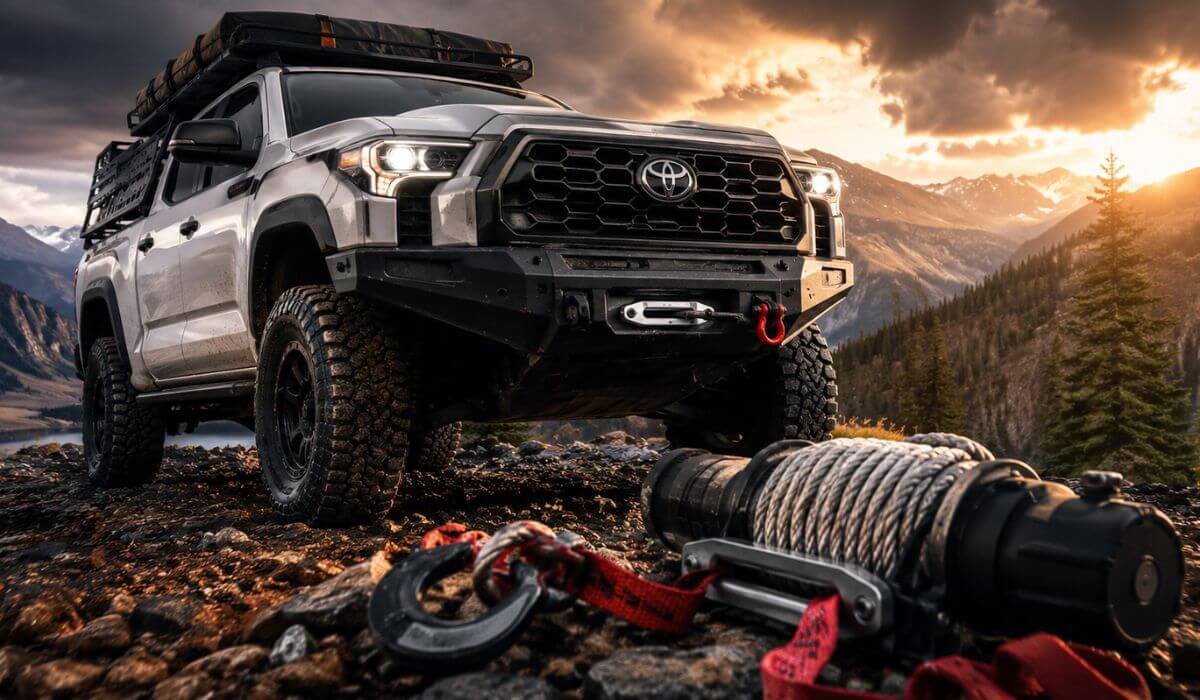
5 Best Winches for Toyota Tundra in 2026: Heavy-Duty Synthetic Rope with IP68 Protection
If you own a Toyota Tundra, choosing a winch isn’t just about buying the biggest pull rating. A full-size truck like the Tundra is heavy, and once you add a steel bumper, recovery gear, camping equipment, or larger off-road tyres, the load increases even more. That’s why most experienced owners stay in the 12,000 to 13,500 lb range—it provides the pulling power needed without unnecessarily overloading the electrical system.
This guide focuses on 2007–2021 (2nd Gen) and 2022–Present (3rd Gen) Toyota Tundra models. We looked beyond advertised specifications and compared build quality, sealing, motor performance, synthetic rope durability, wireless operation, replacement part availability, and long-term brand reputation. Since many of these winches are relatively new, we also considered each manufacturer’s recovery experience, engineering quality, and real-world value instead of relying only on a small number of early reviews.
Whether your Tundra is used for weekend trails, overlanding, hunting trips, job-site recovery, or daily driving with occasional off-road adventures, every recommendation below offers a practical balance of reliability, durability, and value. We intentionally avoided products that looked impressive on paper but lacked the features or confidence needed for a truck that may have to recover itself when there is no second chance.
Best Toyota Tundra Winches: Top Wireless Recovery Systems for Every Build
#1. Smittybilt X2O Gen3 12K Winch with Synthetic Rope
Best Overall Toyota Tundra Winch for 2007–Present (2nd & 3rd Gen) Models with Proven Off-Road Performance, Dependable Waterproof Protection, and Long-Term Recovery Confidence
#2. WARN Zeon 12-S Platinum 12V Winch
Best Premium Winch for Toyota Tundra TRD Pro Delivering Elite Build Quality, Advanced Wireless Control, and Trusted Recovery Performance for Serious Off-Road Adventures
#3. OPENROAD Panther Series 3S 13,500 lb Recovery Winch
Best Value Synthetic Rope Winch for Toyota Tundra Combining Higher Pulling Capacity, IP68 Waterproof Sealing, and Reliable Recovery Features at an Excellent Price
#4. XYCLE 13,500 lb Recovery Winch
Best Heavy-Duty Recovery Winch for Toyota Tundra with All-Metal Construction, IP68 Waterproof Design, and Strong Pulling Power for Overlanding and Tough Terrain
#5. SINOKING 13,500 lb Electric Winch
Best Budget 12V Electric Winch for Toyota Tundra Featuring Synthetic Rope, Dual Remote Control, and Dependable Recovery Capability for Everyday Off-Road Use
Expert Tip
If there’s one mistake we see Tundra owners make, it’s buying a winch based on the highest pull rating instead of the overall recovery system. A dependable winch with a quality motor, sealed electronics, a durable synthetic rope, and consistent braking performance will always outperform a cheaper unit that simply advertises bigger numbers. On a full-size truck like the Toyota Tundra, recovery confidence comes from reliability under load, not marketing claims. That’s exactly why every winch in this guide was chosen for the complete package rather than a single specification.
How We Chose the Best Winches for Toyota Tundra
A Toyota Tundra places different demands on a winch than a lighter Jeep or compact SUV. It has a heavier curb weight, larger tyres, higher front-end loads, and is often equipped with steel bumpers, bed racks, rooftop tents, recovery gear, or towing equipment. Because of that, we didn’t simply compare specifications—we looked at how each winch would realistically perform on a truck that people actually use.
The first thing we evaluated was real recovery capability. Every model in this guide falls within the 12,000 to 13,500 lb range because that’s the sweet spot for most 2007–2021 (2nd Gen) and 2022–Present (3rd Gen) Toyota Tundra builds. We deliberately avoided lower-capacity options that may work on paper but leave too little recovery margin once the truck is loaded for work or overlanding.
Next came build quality, because recovery equipment is expected to work after months of sitting behind a bumper in rain, mud, dust, snow, and extreme heat. We gave preference to models with IP68 waterproof protection, sealed contactors, durable finishes, quality synthetic rope, strong braking systems, and housings designed to withstand long-term exposure instead of just looking impressive in product photos.
We also compared the features that genuinely improve recovery, not features added only for marketing. Wireless remote reliability, wired backup controls, synthetic rope quality, fairlead design, line speed, motor performance under sustained load, and ease of installation all carried more weight than oversized specification sheets.
Brand confidence was another major factor. While some of these products are relatively new to the market, we didn’t rank them solely by review count. Instead, we considered the manufacturer’s engineering, component quality, warranty support, consistency across their recovery lineup, and whether the specifications made practical sense for a full-size truck. That’s why established names like Smittybilt and WARN appear alongside newer options that deliver strong value without making unrealistic performance claims.
Finally, we excluded products that looked attractive because of a low price but showed compromises in the areas that matter most during an actual recovery. When you’re stuck on a muddy trail, climbing loose rock, or pulling a fully loaded Tundra out of deep sand, dependability matters far more than saving a few dollars. Every recommendation below earned its place because we believe it offers the strongest balance of pulling power, durability, safety, long-term value, and real-world usability for Toyota Tundra owners—not simply because it had the biggest numbers on the box.
#1. Smittybilt X2O Gen3 12K Winch with Synthetic Rope
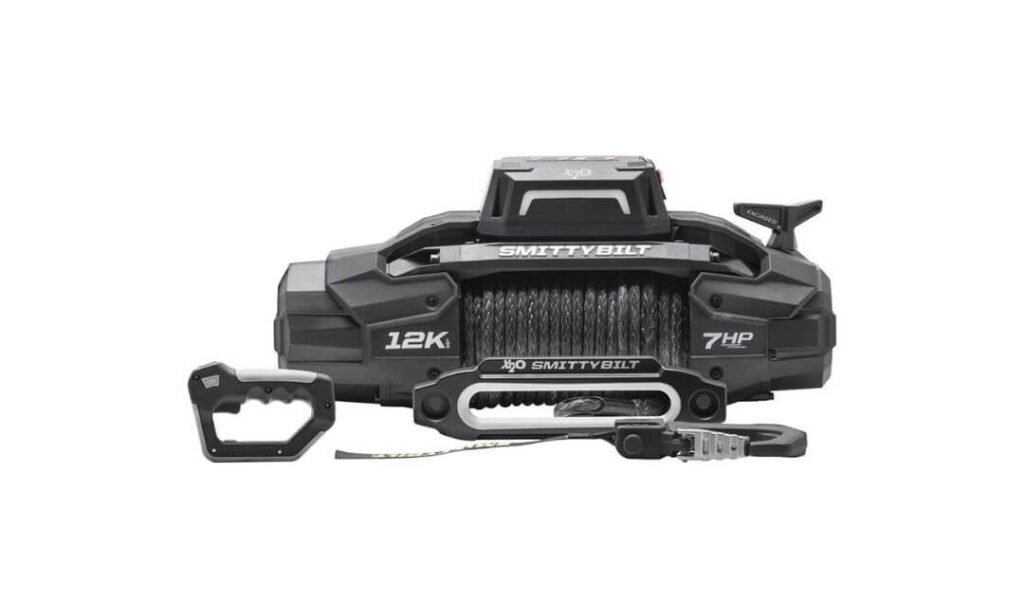
Quick Specs:
- 12,000 lb single-line pulling capacity — Ideal for stock and moderately modified Toyota Tundra models
- 7 HP series-wound motor — Delivers consistent pulling power during demanding recoveries
- 3-stage planetary gear train — Smooth load transfer with dependable torque
- 3/8-inch synthetic rope — Lightweight, safer than steel cable, and easier to handle on the trail
- IP68 waterproof construction — Designed to keep working through mud, water crossings, and harsh weather
- Dual wireless + wired remote — Flexible recovery control with a dependable wired backup
- 500 AMP sealed control box — Multiple mounting options for cleaner bumper installations
- Universal 10″ × 4.5″ mounting pattern — Compatible with Toyota Tundra winch bumpers using the correct mounting plate
- Lifetime mechanical warranty + 5-year electrical warranty
There’s a reason this model sits at the top of our list. Instead of chasing the biggest advertised numbers, it focuses on the features that actually matter once your Toyota Tundra is buried in mud, climbing loose rock, or loaded with camping gear. The 12,000 lb pulling capacity, 7 HP series-wound motor, and 3-stage planetary gearing deliver controlled, confident recovery without feeling like the winch is working at its limit.
Another detail that impressed us is how well everything is engineered to survive long-term use. The IP68 waterproof sealing, fully enclosed electronics, and 500 AMP sealed control box are exactly what you want on a truck that spends weekends in water crossings, snow, dust, or heavy rain. Add the 3/8-inch synthetic rope, and recoveries become lighter, safer, and much easier to manage than with traditional steel cable.
The recovery experience also feels more refined than many competitors in this price range. The dual wireless and wired remotes give you flexibility around the vehicle while still keeping a dependable backup if conditions become unpredictable. Combined with its fast, controlled line speed and proven reliability, it’s the kind of equipment that earns trust long before you actually need it.
(If you’re buying one winch for years of trail use, this is the one we’d confidently bolt onto our own Toyota Tundra.)
What Stood Out During Our Evaluation
- Excellent balance of pulling power, durability, and everyday usability
- IP68 waterproof protection inspires confidence in year-round off-road conditions
- Synthetic rope is easier to handle and safer during recoveries
- Wireless and wired controls provide flexibility without sacrificing reliability
- Strong warranty coverage adds long-term ownership confidence
One Thing Worth Knowing
- A Toyota Tundra-specific winch mount or aftermarket bumper is required for installation, as with virtually all universal recovery winches.
Toyota Tundra Installation & Compatibility
This model uses the industry-standard 10-inch × 4.5-inch mounting pattern, making it compatible with most quality Toyota Tundra winch bumpers and mounting systems. Whether you own a 2007–2021 (2nd Gen) or 2022–Present (3rd Gen) model, installation is straightforward once the correct mounting plate or winch-ready bumper is in place.
Before installation, it’s worth checking your bumper’s rated winch capacity, fairlead mounting position, and battery cable routing. A healthy battery and properly torqued power connections will help the 7 HP motor deliver its full recovery performance when it matters most.
The Insider Pro-Tip
Many people compare winches by pull rating alone. In reality, what separates a dependable recovery winch from an average one is how it behaves after months of mud, vibration, rain, and repeated heavy loads. That’s where quality sealing, motor consistency, and braking performance become far more important than a larger number printed on the box.
If your Toyota Tundra is used for overlanding, towing, hunting trips, or remote trails where recovery isn’t optional, investing in a winch with proven waterproof construction, reliable electronics, and a trusted drivetrain will usually pay for itself long before you notice the difference in price. That’s exactly why this model earned our Best Overall recommendation.
#2. WARN Zeon 12-S Platinum 12V Winch
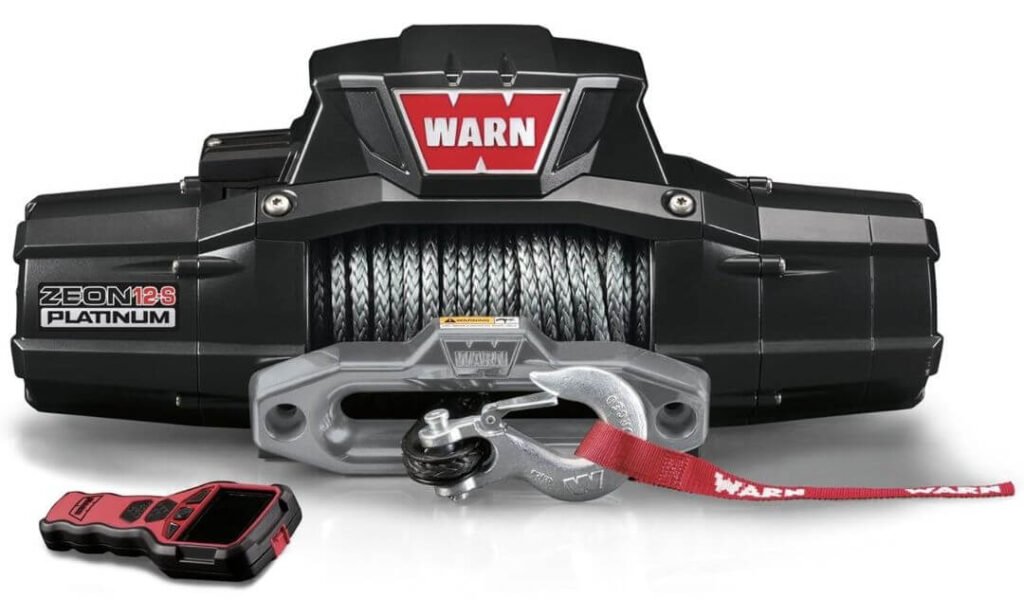
Quick Specs:
- 12,000 lb single-line pulling capacity — Perfectly matched for full-size Toyota Tundra recovery
- 80 ft Spydura synthetic rope — Lightweight, high-strength rope that reduces handling fatigue
- Advanced wireless remote — Operates winch functions while displaying battery status and motor temperature
- Series-wound motor with 162:1 planetary gearing — Delivers smooth, controlled pulling with impressive line speed
- Large-diameter winch drum — Helps reduce rope wear during repeated heavy recoveries
- Mechanical cone brake — Designed to hold heavy loads while protecting the synthetic rope
- Convertible control pack — Can remain on the winch or be relocated for cleaner installations
- Heavy-duty cast aluminum housing with corrosion-resistant hardware and advanced environmental sealing
- Limited lifetime mechanical warranty + 7-year electrical warranty
Some recovery gear is designed to look impressive in the garage. This one is engineered for the moments when your Toyota Tundra is miles away from pavement and failure simply isn’t an option. The 12,000 lb pulling capacity, proven series-wound motor, and 162:1 planetary gear system work together to deliver controlled, predictable pulling power without unnecessary strain, even when the truck is loaded with recovery gear, camping equipment, or towing accessories.
One of the biggest reasons professionals continue to trust this platform is its attention to engineering rather than marketing. The 80-foot Spydura synthetic rope, large-diameter drum, and mechanical cone brake work as a complete system to minimise rope wear while maintaining smooth operation under heavy loads. The durable cast-aluminum housing, corrosion-resistant hardware, and advanced sealing are built for years of exposure to mud, water crossings, road salt, and harsh weather.
The feature that genuinely separates it from most competitors is the advanced wireless remote. Instead of simply controlling the winch, it gives you useful information like motor temperature and battery condition, allowing you to make smarter recovery decisions without unnecessary guesswork. It’s the type of detail that matters once you’re relying on your equipment instead of simply testing it.
(Premium recovery equipment isn’t about pulling harder—it’s about working with complete confidence every single time.)
What Made It Stand Out in Our Evaluation
- Exceptional engineering quality trusted by experienced off-road enthusiasts
- Spydura synthetic rope offers outstanding strength with easier handling
- Advanced wireless controller provides valuable live system information
- Convertible control pack makes bumper installations cleaner and more flexible
- Outstanding long-term durability with premium materials throughout
One Thing Worth Knowing
- Its premium construction comes at a higher price, but you’re paying for long-term reliability rather than extra marketing features.
Toyota Tundra Installation & Compatibility
This model is an excellent fit for Toyota Tundra 2007–Present when paired with a quality winch-ready bumper or mounting system. For 2014–2021 models, WARN also offers a dedicated semi-hidden mounting solution that delivers an exceptionally clean factory-style appearance without requiring control pack relocation.
Before installation, verify bumper clearance, fairlead alignment, and battery condition. The convertible control pack gives installers additional flexibility, especially on trucks where space behind the grille or bumper is limited, resulting in a much cleaner overall installation.
The Insider Pro-Tip
The difference between a good winch and a premium winch usually doesn’t show up on the first recovery—it becomes obvious after years of exposure to rain, mud, vibration, dust, and repeated heavy pulls. That’s where superior sealing, premium internal components, and consistent braking performance quietly justify the investment.
If your Toyota Tundra regularly travels into places where recovery assistance isn’t a phone call away, buying a winch that prioritises engineering quality over specification sheets is rarely something owners regret. That’s exactly why this remains one of the most respected recovery systems available for full-size trucks.
#3. OPENROAD Panther Series 3S 13,500 lb Recovery Winch
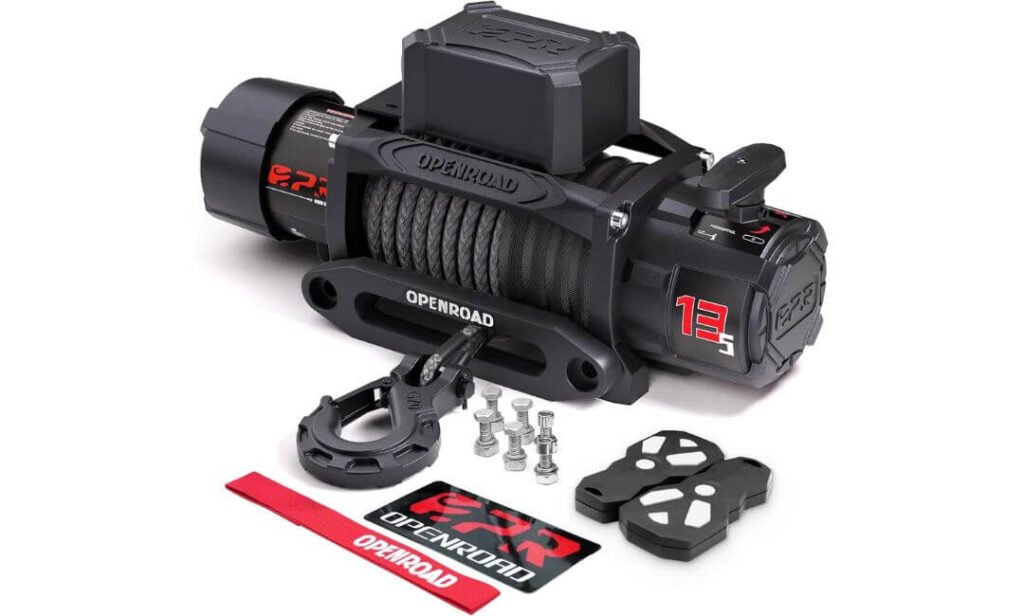
Quick Specs:
- 13,500 lb single-line pulling capacity — Excellent recovery margin for loaded Toyota Tundra builds
- 3/8-inch × 85 ft synthetic rope — Lightweight, safer than steel cable, and easy to manage during recoveries
- 6.6 HP motor with 218:1 planetary gearing — Strong low-speed torque with smooth engagement under load
- IP68 waterproof construction — Built for mud, deep water crossings, snow, and dusty trails
- Two wireless remotes + wired controller — Flexible recovery control with a dependable wired backup
- Dacromet-coated hardware — Improved resistance against rust and corrosion
- Universal 10″ × 4.5″ mounting pattern — Compatible with Toyota Tundra winch-ready bumpers using the correct bracket
- Factory pre-assembled design — Faster installation with most major components already assembled
- Fairlead, recovery hook, and mounting hardware included
- Lifetime technical support + 1-year limited warranty
Not every Toyota Tundra stays close to factory weight. Add a steel bumper, recovery gear, larger tyres, bed rack, rooftop tent, or towing equipment, and the truck becomes significantly heavier than most people expect. That’s exactly where the 13,500 lb pulling capacity of this model begins to make practical sense. Instead of operating close to its limit, it gives the recovery system more breathing room during difficult pulls.
The overall feature package is surprisingly complete for its price point. The 6.6 HP motor, 218:1 planetary gear system, and 85-foot synthetic rope work together to deliver smooth, controlled pulling while keeping recoveries predictable. The IP68 waterproof sealing and corrosion-resistant Dacromet-coated hardware add another level of confidence for owners who regularly drive through mud, rain, river crossings, or winter conditions.
Another detail we genuinely appreciate is that OPENROAD focuses on making ownership easier, not just selling specifications. With two wireless remotes, a wired controller, and most of the assembly already completed at the factory, installation is refreshingly straightforward. You spend less time building the system and more time knowing it’s ready when your Toyota Tundra actually needs it.
(This is one of those rare value-focused winches that feels thoughtfully engineered instead of simply feature-packed.)
Why It Earned a Place in Our Rankings
- Higher 13,500 lb recovery capacity for heavily equipped Toyota Tundra builds
- IP68 waterproof protection built for year-round off-road use
- Dual wireless remotes provide added convenience during recovery operations
- Long 85-foot synthetic rope offers greater flexibility in challenging terrain
- Excellent value considering the included features and overall build quality
One Thing Worth Knowing
- A Toyota Tundra-specific hidden winch mount or aftermarket bumper is required for proper installation, just like most universal recovery winches.
Toyota Tundra Installation & Compatibility
The standard 10-inch × 4.5-inch mounting pattern allows this winch to fit most quality Toyota Tundra winch bumpers and hidden mounting systems. It works well on both 2007–2021 (2nd Gen) and 2022–Present (3rd Gen) models when paired with a mount designed to support 13,500 lb-class recovery winches.
Because most of the unit arrives factory assembled, installation is generally straightforward. Simply confirm bumper clearance, power cable routing, and fairlead alignment before tightening everything into place. The included hardware, fairlead, and control components help reduce the number of extra parts you’ll need to source separately.
The Insider Pro-Tip
One of the easiest mistakes buyers make is assuming every 13,500 lb winch performs the same because the pull rating matches. In reality, recovery confidence comes from the entire system working together—motor tuning, gear reduction, waterproof sealing, rope quality, and electrical reliability all matter far more than a single number printed on the box.
For Toyota Tundra owners who regularly tow trailers, carry overlanding gear, or drive in remote areas where self-recovery is the only option, having a little extra recovery capacity without stepping into premium pricing can be a smart long-term decision. That’s exactly where this model delivers its strongest value.
#4. XYCLE 13,500 lb Recovery Winch
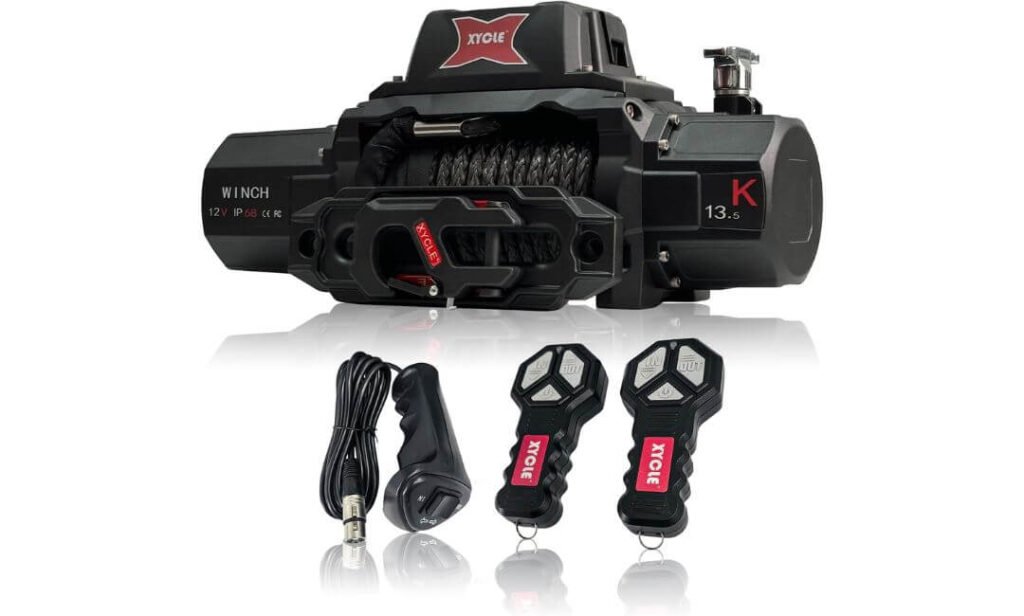
Quick Specs:
- 13,500 lb single-line pulling capacity — Excellent recovery headroom for heavily equipped Toyota Tundra builds
- 1/2-inch × 70 ft synthetic rope — Thicker rope designed for confident handling during demanding recoveries
- High-efficiency 12V motor with 218:1 planetary gearing — Smooth power delivery with dependable low-speed torque
- IP68 waterproof and dustproof construction — Built for mud, deep water, snow, and harsh trail conditions
- All-metal aluminum housing — Improved strength with better heat dissipation during extended pulling
- Dual wireless remotes (100 ft range) + wired controller — Flexible operation from a safe distance
- Universal 10″ × 4.49″ mounting footprint — Compatible with Toyota Tundra winch-ready bumpers using the correct mounting bracket
- Factory pre-assembled design — Faster installation with minimal setup required
- 2-year manufacturer warranty
Most winches in this category focus on adding more features. This one focuses on building a stronger recovery platform from the inside out. The combination of a 13,500 lb pulling capacity, high-efficiency motor, and 218:1 planetary gear system provides the kind of controlled pulling force that suits a full-size Toyota Tundra carrying extra weight from steel bumpers, recovery equipment, or overlanding accessories.
Another highlight is the 1/2-inch synthetic rope. It’s noticeably thicker than what you’ll find on many competing models, giving it a reassuring feel during heavy recoveries while remaining lighter and safer than traditional steel cable. Pair that with the all-metal aluminum housing, and you get a winch that’s better equipped to manage heat while standing up to years of rough outdoor use.
The overall recovery package feels thoughtfully assembled. IP68 waterproof protection, dual wireless remotes with a 100-foot operating range, and a reliable wired controller provide flexibility in unpredictable recovery situations. Nothing feels unnecessarily complicated—the features are practical, easy to use, and genuinely useful when conditions become challenging.
(For Tundra owners who regularly explore remote trails, this offers the extra recovery capacity many people wish they had before getting stuck.)
Why We Believe It Deserves a Spot on This List
- 13,500 lb recovery capacity offers extra confidence for heavily loaded trucks
- Thick 1/2-inch synthetic rope feels secure during demanding recoveries
- All-metal aluminum housing improves durability and cooling performance
- 100-foot wireless operating range provides greater recovery flexibility
- Strong value considering the hardware and overall feature package
One Thing Worth Knowing
- The wireless remotes require A23 12V batteries, which are not included in the box.
Toyota Tundra Installation & Compatibility
The standard 10-inch × 4.49-inch mounting pattern allows this model to fit most quality Toyota Tundra hidden winch mounts and aftermarket recovery bumpers. It works well with both 2007–2021 (2nd Gen) and 2022–Present (3rd Gen) trucks when paired with a mounting system designed for 13,500 lb-class winches.
Installation is straightforward because most of the assembly is already completed at the factory. Before the first recovery, make sure the synthetic rope is properly spooled under tension and wrapped around the drum according to the manufacturer’s recommendations. Taking a few extra minutes here helps the winch perform more consistently over the long term.
The Insider Pro-Tip
When comparing heavy-duty winches, don’t overlook the rope diameter and housing design. These are two details that rarely stand out on a product page but can make a noticeable difference once the winch starts working under sustained load. Better heat management and a well-supported synthetic rope often contribute more to long-term reliability than small differences in advertised pulling speed.
For Toyota Tundra owners who want additional recovery capacity without moving into ultra-premium pricing, this model strikes a practical balance between power, durability, and everyday usability—exactly the qualities you want when recovery becomes the priority instead of the plan.
#5. SINOKING 13,500 lb Electric Winch
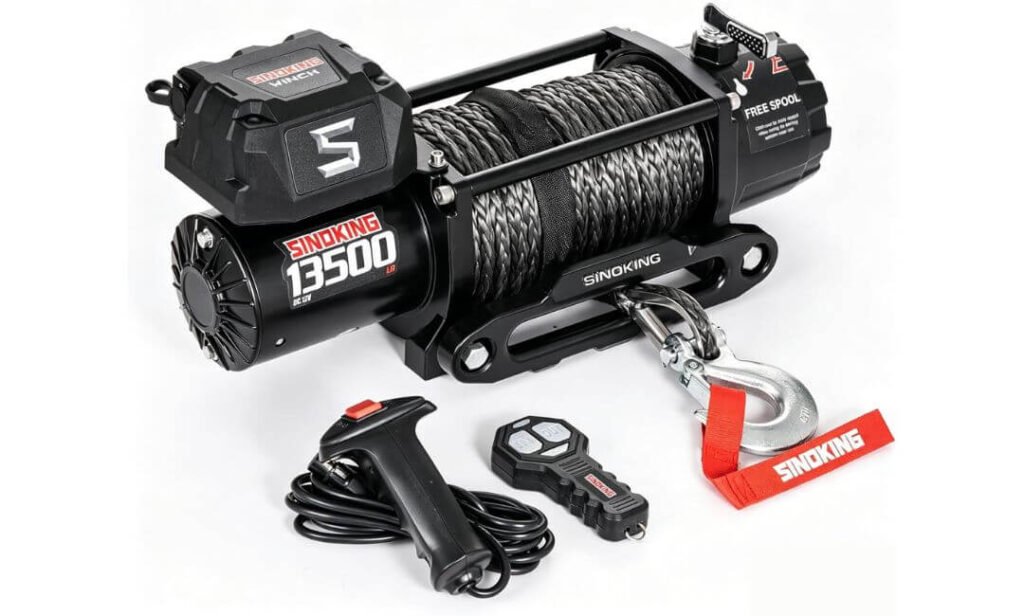
Quick Specs:
- 13,500 lb single-line pulling capacity — Strong recovery capability for stock and heavily equipped Toyota Tundra models
- 7/16-inch × 80 ft synthetic rope — Lightweight, safer than steel cable, and easy to handle during recoveries
- High-output 12V motor with upgraded gear system — Designed for dependable pulling with quicker line retrieval
- Waterproof construction with corrosion-resistant powder-coated finish — Built for year-round outdoor use
- Wireless remote (100 ft range) + wired controller — Flexible recovery control in different situations
- Aluminum hawse fairlead — Helps protect the synthetic rope while maintaining smooth operation
- Reliable braking system — Designed for stable load holding during recovery
- Universal mounting pattern — Fits Toyota Tundra winch-ready bumpers with the proper mounting bracket
- Compact design for easier installation on most aftermarket recovery bumpers
Not every Toyota Tundra owner needs the most expensive recovery system on the market. Sometimes the goal is straightforward—a dependable winch with enough pulling power, practical features, and reliable operation when the trail suddenly turns against you. That’s exactly where this model delivers the most value. Its 13,500 lb pulling capacity provides more than enough recovery strength for a full-size Tundra carrying extra gear, larger tyres, or towing equipment.
The hardware also checks the boxes that actually matter in day-to-day ownership. The 7/16-inch × 80-foot synthetic rope, upgraded gear system, and reliable braking mechanism work together to provide smooth, predictable recoveries without adding unnecessary complexity. The powder-coated waterproof housing is designed to stand up to mud, rain, dust, and changing weather while helping protect the internal components from corrosion over time.
What we appreciate most is that the overall package stays focused on practicality. The 100-foot wireless remote, dependable wired backup controller, and aluminum hawse fairlead provide the features most Toyota Tundra owners genuinely use instead of adding extras that rarely leave the spec sheet. It feels like a winch designed to work rather than simply impress.
(If dependable recovery is your priority and staying within budget matters, this package offers a surprisingly sensible balance.)
Why It Still Earned Our Recommendation
- 13,500 lb recovery capacity suits heavily loaded Toyota Tundra builds
- 80-foot synthetic rope provides excellent reach during difficult recoveries
- Fast line retrieval thanks to the upgraded gear system
- Wireless and wired controls offer dependable recovery flexibility
- Strong overall value for buyers looking for practical recovery performance
One Thing Worth Knowing
- A Toyota Tundra-specific hidden winch mount or winch-ready bumper is required before installation, as this is a universal-fit recovery winch.
Toyota Tundra Installation & Compatibility
This model uses a universal mounting pattern that works with most quality Toyota Tundra hidden winch mounts and aftermarket recovery bumpers designed for 13,500 lb-class winches. It fits both 2007–2021 (2nd Gen) and 2022–Present (3rd Gen) models once the appropriate mounting system is installed.
Before putting the winch into regular service, verify that the mounting bolts are correctly torqued, the power cables are securely connected, and the synthetic rope is evenly spooled under tension. Taking care of these small details helps the recovery system perform more consistently when it’s needed most.
The Insider Pro-Tip
When buying a value-focused winch, don’t judge it solely by the price tag. Focus on the features that continue working years later—synthetic rope quality, braking performance, corrosion protection, remote reliability, and smooth gear engagement. Those are the details that make the biggest difference once the recovery actually begins.
For Toyota Tundra owners who want dependable recovery capability without stretching the budget, this model offers exactly what most people are looking for: strong pulling power, practical features, straightforward installation, and the confidence to tackle unexpected situations without overcomplicating the setup.
Best Toyota Tundra Winch Comparison: Top 12V Recovery Picks Side by Side
| Comparison | Smittybilt X2O Gen3 | WARN Zeon 12-S Platinum | OPENROAD Panther 3S | XYCLE 13.5K | SINOKING 13.5K |
|---|---|---|---|---|---|
| Editor’s Verdict | Best Overall | Premium Choice | Best Value | Heavy-Duty Pick | Budget Choice |
| Rated Pulling Capacity | 12,000 lbs | 12,000 lbs | 13,500 lbs | 13,500 lbs | 13,500 lbs |
| Synthetic Rope | 3/8″ × Premium Rope | 80 ft Spydura Rope | 3/8″ × 85 ft | 1/2″ × 70 ft | 7/16″ × 80 ft |
| Water & Mud Protection | IP68 | Advanced Sealed Housing | IP68 | IP68 | Waterproof Housing |
| Motor & Drivetrain | 7 HP • 3-Stage Planetary | Series Wound • 162:1 Gear | 6.6 HP • 218:1 Gear | High Torque • 218:1 Gear | Heavy-Duty Motor |
| Remote Control | Wireless + Wired | Advanced Wireless | 2 Wireless + Wired | 2 Wireless + Wired | Wireless + Wired |
| Best For | Daily Off-Road & Overlanding | Premium Recovery Builds | Maximum Value | Heavy Accessories & Camping Builds | Budget-Friendly Recovery |
| Installation | Universal Mount Tundra Bracket Required |
Universal Mount Factory Style Options Available |
Universal Mount 10″ × 4.5″ |
Universal Mount 10″ × 4.49″ |
Universal Mount Tundra Bracket Required |
| Ideal Toyota Tundra Setup | Stock • Lifted • TRD Pro | Premium Overland • TRD Pro | Work Truck • Trail Rig | Heavy Overlanding Builds | Weekend Adventure Truck |
| Why We Picked It | Most Balanced Package | Highest Engineering Quality | Best Features per Dollar | Extra Recovery Margin | Strong Everyday Value |
| Overall Recommendation | ⭐⭐⭐⭐⭐ | ⭐⭐⭐⭐⭐ | ⭐⭐⭐⭐☆ | ⭐⭐⭐⭐☆ | ⭐⭐⭐⭐☆ |
Toyota Tundra Winch Buyer’s Guide: What Actually Matters Before You Spend Your Money
Buying a winch for a Toyota Tundra is very different from buying one for a lightweight Jeep or compact SUV. A Tundra is a full-size truck that often carries extra weight from steel bumpers, skid plates, bed racks, rooftop tents, recovery gear, larger tyres, or towing equipment. Because of that, choosing the right winch isn’t about finding the highest advertised number—it’s about building a recovery system you can genuinely trust when you’re far from help.
Below are the factors we believe deserve your attention before making a purchase.
Choose a Pull Rating That Matches a Full-Size Truck
One of the biggest misconceptions is that more pulling capacity always means a better winch. In reality, the goal is to have enough recovery margin without adding unnecessary weight or electrical load.
For most Toyota Tundra 2007–2021 (2nd Gen) and 2022–Present (3rd Gen) models, a 12,000 lb winch remains the sweet spot. It comfortably handles factory-weight trucks while leaving enough capacity for normal off-road recoveries.
If your truck has a steel bumper, larger off-road tyres, a rooftop tent, full camping gear, recovery equipment, or frequently pulls trailers, moving to a 13,500 lb winch provides additional safety margin during difficult recoveries. That’s exactly why every recommendation in this guide falls within this range.
Synthetic Rope or Steel Cable? We Prefer Synthetic
Years ago, steel cable was the obvious choice because it was inexpensive and widely available. Today, high-quality synthetic rope has become the preferred option for most Toyota Tundra owners.
It is noticeably lighter, easier to handle, and far safer if a recovery line ever fails under tension. Synthetic rope also doesn’t develop sharp broken strands that can injure your hands, and it floats on water, making recoveries in rivers, mud, or flooded trails much easier.
Every winch we selected uses synthetic rope because we believe it offers the best balance of safety, performance, and everyday usability for modern recovery situations.
Never Ignore Waterproof Protection
A winch spends its life exposed to conditions most vehicle components never experience. Mud, pressure washing, heavy rain, river crossings, road salt, and months of dust all take their toll.
That’s why we consistently prioritised models featuring IP68 waterproof protection or advanced sealed housings. Strong environmental sealing protects the motor, contactors, and electrical components long after the truck leaves the showroom.
A recovery winch only proves its value when it works after months of neglect—not simply when it’s brand new.
Pulling Power Means More Than Horsepower
Many buyers compare only motor output or maximum pull ratings. Those numbers tell only part of the story.
The overall recovery experience depends on how well the motor, planetary gear train, braking system, and rope drum work together. A properly engineered system delivers smoother engagement, more consistent pulling force, better heat control, and reduced wear during repeated recoveries.
That’s one of the main reasons premium models often feel more controlled under heavy loads despite having similar pulling capacities.
Wireless Controls Should Add Convenience, Not Replace Reliability
Wireless remotes have become a feature many Toyota Tundra owners genuinely appreciate. Being able to stand away from the recovery line provides better visibility and improves overall safety.
However, we never recommend relying solely on wireless operation.
Every winch in this guide also includes a wired controller, giving you a dependable backup if batteries fail, signal interference occurs, or weather conditions become challenging. Having both options simply makes more sense when recovery conditions become unpredictable.
Make Sure Your Winch Fits Your Bumper Correctly
Even the best winch cannot perform properly if it isn’t mounted securely.
Most quality Toyota Tundra winches use the industry-standard 10-inch × 4.5-inch mounting footprint, but you’ll still need a Toyota Tundra-specific hidden winch mount or an aftermarket recovery bumper designed to support both the weight and pulling forces of the winch.
Before ordering, always confirm:
- Your bumper supports the winch’s weight and rated capacity.
- The fairlead opening aligns correctly with the winch drum.
- There is enough clearance for the control box and wiring.
- The mounting hardware matches your chosen bumper system.
Spending a few extra minutes checking compatibility can prevent hours of unnecessary installation work later.
Don’t Underestimate the Electrical System
A recovery winch demands a significant amount of current during heavy pulls.
Before installation, inspect the battery, charging system, and power cables. A healthy battery, clean terminals, properly routed wiring, and secure ground connections will help the winch deliver consistent performance whenever maximum pulling power is required.
Many recovery problems blamed on the winch itself actually begin with poor electrical connections.
Buy the Winch You’ll Still Trust Years From Now
The most expensive winch isn’t automatically the best, and the cheapest option rarely stays inexpensive if reliability becomes an issue.
Look beyond specification sheets and focus on the details that continue to matter after years of ownership—waterproof sealing, drivetrain quality, braking performance, synthetic rope, corrosion resistance, warranty support, replacement parts, and long-term reliability.
A recovery winch is one of those upgrades you hope you rarely need. But when your Toyota Tundra is buried in deep mud, climbing loose rock, or recovering another vehicle miles from the nearest road, you’ll never regret choosing one that was built to work when everything else has gone wrong.
Toyota Tundra Winch Compatibility & Installation Guide
Installing a winch on a Toyota Tundra is much more than bolting it onto the front bumper. A recovery winch becomes part of the truck’s structural recovery system, which means every component—from the bumper and mounting hardware to the electrical connections—needs to work together. Taking the time to install everything correctly not only improves safety but also helps the winch deliver its full performance when you need it most.
The good news is that every winch recommended in this guide uses a universal mounting pattern and can be installed on both 2007–2021 (2nd Gen) and 2022–Present (3rd Gen) Toyota Tundra models when paired with a compatible mounting system.
Verify Your Toyota Tundra Winch Bumper Compatibility First
Before purchasing any recovery winch, confirm that your bumper is actually designed to support one.
Many factory bumpers are not engineered to handle the forces created during heavy recoveries. Instead, you’ll need either a hidden Toyota Tundra winch mount or an aftermarket winch-ready bumper that is specifically rated for recovery use.
Before installation, verify:
- The bumper supports 12,000–13,500 lb recovery winches.
- The mounting footprint matches the industry-standard 10-inch × 4.5-inch pattern.
- There is enough clearance for the motor, gearbox, and control box.
- The bumper allows proper airflow to the radiator and cooling system.
- Recovery points remain accessible after installation.
A quality bumper is just as important as the winch itself because both work together under heavy recovery loads.
Install the Mounting Plate and Fairlead Correctly
Once bumper compatibility is confirmed, attention should shift to the mounting hardware.
Always use the mounting plate or bumper supplied by a reputable manufacturer and tighten all hardware according to the recommended torque specifications. Recovery forces place enormous stress on mounting bolts, so using incorrect hardware or skipping torque checks is never worth the risk.
The hawse fairlead should sit perfectly in line with the winch drum so the synthetic rope feeds evenly during every pull. Poor alignment increases rope wear and can create unnecessary friction during recovery.
After mounting the winch, slowly spool the rope in while maintaining light tension. Properly layered rope performs more consistently and lasts significantly longer than rope that has been loosely wound onto the drum.
Build a Reliable Electrical System
Even the best recovery winch depends on a healthy electrical system.
Run the supplied battery cables carefully, avoiding sharp edges, moving suspension components, and high-temperature exhaust parts. Secure the cables using quality clamps so vibration cannot wear through the insulation over time.
During installation, check:
- Battery terminals are clean and tightened securely.
- Positive and ground cables are routed safely.
- Cable connections remain protected from moisture and dirt.
- The control box connectors are fully seated.
- Protective loom or conduit is used anywhere cables may rub against metal surfaces.
If your Toyota Tundra regularly supports additional accessories such as light bars, onboard air compressors, refrigerators, or camping equipment, it’s also worth inspecting the battery and charging system before relying on the winch for demanding recoveries.
Configure the Wireless Remote Before You Need It
Wireless control is one of the most useful features on modern recovery winches, but only if it’s prepared before the first recovery.
Install fresh batteries where required, pair the remote according to the manufacturer’s instructions, and confirm that both wireless and wired controllers operate correctly.
Practice using the remote while standing in different positions around the truck. This helps you understand the effective operating range, improves visibility during recoveries, and allows you to work from safer locations away from the recovery line.
Even if wireless control becomes your primary choice, always carry the wired controller inside the truck as a dependable backup.
Perform a Proper Function Test Before Heading Off-Road
Never wait until the first recovery to discover whether the installation was completed correctly.
After everything is connected, perform a complete operational check.
Start by running the rope in and out several times without a load to verify smooth operation. Listen for unusual noises, inspect the rope for even spooling, and confirm that the brake engages correctly after releasing the switch.
Next, perform a light recovery load test in a controlled environment. This allows the synthetic rope to seat evenly on the drum while confirming that the electrical system, mounting hardware, remote controls, and braking system all function as expected.
It’s also important to respect the winch’s duty cycle. Long, continuous pulls generate significant heat inside the motor and gearbox. Giving the winch short cooling periods between demanding recoveries helps extend motor life, protect internal components, and maintain consistent pulling performance over many years of use.
A properly installed winch should disappear into the background of your Toyota Tundra ownership—you shouldn’t have to think about it until the day you genuinely need it. That’s exactly why careful installation is every bit as important as choosing the right winch in the first place.
Real-World Toyota Tundra Recovery Scenarios Every Owner Should Be Ready For
A recovery winch is one of those upgrades you hope you never have to use. The reality, however, is that most recoveries don’t happen during extreme expeditions—they happen on ordinary weekend trips, muddy forest roads, snowy mountain trails, sandy beaches, construction sites, hunting camps, or while helping another driver who underestimated the terrain.
Knowing when and how to use your Toyota Tundra winch is just as important as buying the right one. A few smart decisions during a recovery can protect your truck, your equipment, and everyone standing nearby.
Recovering Through Mud, Sand, Rocks, and Steep Terrain
Different terrain creates different recovery challenges, and understanding those differences makes every recovery safer.
In deep mud, avoid applying full throttle while winching. Spinning the tyres usually buries the truck even deeper. Instead, apply steady winch tension while using gentle throttle only when necessary.
On soft sand, recovery is often about reducing resistance rather than increasing force. Lowering tyre pressure to an appropriate level and maintaining smooth, continuous winch tension usually works better than sudden pulls.
When crossing rocky terrain, keep the synthetic rope as straight as possible to reduce side loading on the fairlead. Sharp pulling angles increase stress on both the rope and the winch drum.
On steep inclines, allow the winch to perform most of the work while the driver carefully controls steering and light throttle input. Rushing a recovery on uneven ground often creates unnecessary risk.
Every terrain rewards patience far more than aggressive driving.
Vehicle-to-Vehicle and Anchor-Point Recoveries
Not every recovery involves another vehicle.
When another truck is available, use properly rated recovery points on both vehicles. Never attach a recovery line to trailer balls, suspension components, tow hooks that aren’t recovery rated, or any part that wasn’t designed to handle recovery loads.
If you’re recovering without another vehicle, choose a strong natural or purpose-built anchor point.
Suitable examples include:
- Large healthy trees using a tree saver strap
- Certified recovery anchors
- Heavy recovery posts
- Properly installed ground anchors in suitable terrain
The recovery line should remain as straight as possible between the Toyota Tundra and the anchor. Reducing side angles improves pulling efficiency while placing less stress on the winch, rope, fairlead, and mounting system.
Whenever possible, assign one person to communicate with the driver while everyone else remains safely outside the recovery zone.
Good Recovery Etiquette on Shared 4×4 Trails
Recovery situations often involve multiple vehicles, excited drivers, and limited space. That’s exactly when calm communication becomes most important.
Before beginning any recovery, explain the plan so everyone understands their role. Keep spectators well away from the recovery line and avoid unnecessary shouting or multiple people giving conflicting instructions.
Respect the trail as well.
Avoid creating new tracks simply to position the recovery vehicle. Recover the truck using the least amount of environmental disturbance possible, especially in protected off-road areas where trail damage can affect future access.
Once the recovery is complete, inspect both vehicles before driving away. A quick check of the winch rope, fairlead, mounting bolts, battery cables, and recovery points only takes a few minutes and can prevent problems later in the trip.
Professional recoveries are usually quiet, organised, and methodical—not rushed.
A Simple Safety Check Before Every Recovery
Even experienced off-road drivers benefit from following the same routine before every pull.
Take a moment to confirm:
- The winch rope is free from damage and spooled evenly.
- The hook, shackle, and recovery straps are correctly rated.
- The mounting bolts remain tight and secure.
- The battery connections are clean and firmly attached.
- The recovery line is pulling in the straightest path possible.
- The wireless or wired controller is functioning correctly.
- Everyone has moved outside the recovery zone before tension is applied.
- A recovery damper or heavy recovery blanket is placed over the rope whenever practical.
- The driver and spotter clearly understand the recovery plan before winching begins.
The safest recoveries rarely happen because someone owns the most expensive equipment. They happen because the driver takes a few extra minutes to prepare properly before touching the winch controller.
That’s the habit experienced Toyota Tundra owners develop over time—and it’s one that protects both people and equipment every time recovery becomes necessary.
Toyota Tundra Winch Maintenance, Safety, and Long-Term Care
A quality recovery winch is built to last for years, but only if it’s maintained with the same attention you give your Toyota Tundra. Unlike tyres or brakes, a winch can sit unused for months before suddenly being asked to pull several tons under extreme conditions. That makes preventive maintenance far more important than reactive repairs.
The good news is that keeping a winch in reliable condition doesn’t require complicated servicing. A few simple inspections performed throughout the year will do far more for long-term reliability than waiting until something goes wrong on the trail.
Create a Routine Inspection Schedule
Every recovery places stress on the motor, gearbox, synthetic rope, mounting hardware, and electrical system. Even if the winch hasn’t been used recently, vibration, road salt, moisture, and changing temperatures continue affecting its components.
We recommend performing a complete inspection:
- Before any major off-road trip or overlanding expedition.
- After every heavy recovery involving significant load.
- Following deep mud, water crossings, or winter driving.
- At least once every three to four months, even if the winch hasn’t been used.
During each inspection, check the mounting bolts, fairlead, synthetic rope, hook, battery cables, electrical connectors, remote controls, and control box. Tightening loose hardware early is far easier than repairing damaged equipment later.
Look After the Synthetic Rope Properly
Modern synthetic rope is incredibly strong, but it still deserves regular attention.
After every recovery, inspect the entire length of the rope for cuts, flattened sections, melted fibres, abrasion, or loose strands. Dirt and sand trapped inside the fibres slowly wear the rope from the inside, so rinsing it with clean water after muddy recoveries helps extend its service life.
Always rewind the rope under light tension so it lays evenly across the drum. Loose or uneven wraps can bury themselves under heavy loads during the next recovery, making the rope harder to pull out and increasing unnecessary stress.
Replace the rope if you notice significant fraying, deep abrasion, heat damage, or any section that no longer looks structurally sound. A synthetic rope should never become the weakest part of your recovery system.
Protect the Waterproof Sealing
Many modern recovery winches offer IP68 waterproof protection, but that rating doesn’t mean the winch can be ignored indefinitely.
After driving through deep mud, river crossings, snow, or road salt, rinse the exterior using clean water to remove dirt and corrosive residue. Avoid directing high-pressure water directly at seals, electrical connectors, or control box joints, as excessive pressure can eventually compromise protective seals.
Periodically inspect:
- Electrical connector boots
- Control box seals
- Fairlead mounting area
- Power cable insulation
- External fasteners for corrosion
Keeping the outside clean helps the sealed components continue doing their job for many years.
Don’t Forget the Battery and Charging System
A powerful winch is only as reliable as the electrical system feeding it.
Before long trips, inspect the battery terminals, ground connections, cable routing, and charging voltage. Loose terminals or corroded connections create resistance, reducing the power available to the winch during demanding recoveries.
If your Toyota Tundra is equipped with additional accessories such as auxiliary lighting, onboard air compressors, refrigerators, portable power systems, or camping equipment, make sure the charging system is keeping pace with the overall electrical demand.
Many recovery issues blamed on the winch itself are actually caused by poor battery maintenance or weak electrical connections.
Store and Exercise the Winch Even When It Isn’t Being Used
One of the easiest ways to increase winch lifespan is to use it occasionally.
Every month or two, power the rope out several feet before winding it back onto the drum under light tension. This keeps the motor, gearbox, brake, and electrical contacts moving while confirming everything still operates correctly.
If the Toyota Tundra is stored for extended periods, protect the winch from unnecessary exposure whenever possible. A quality winch cover, regular cleaning, and occasional inspections help preserve the finish while reducing long-term corrosion.
Finally, remember that recovery equipment works as a complete system. A well-maintained winch paired with healthy battery connections, a properly spooled synthetic rope, secure mounting hardware, and clean electrical components will almost always outperform a neglected premium model. Investing a few minutes in routine maintenance today can easily add years of dependable service when your Toyota Tundra needs it most.
FAQs About Toyota Tundra Winch
Is a 13,500 lb winch overkill for a Toyota Tundra, or is 12,000 lb the better choice?
For most Toyota Tundra owners, a 12,000 lb winch is the sweet spot because it comfortably covers the truck’s weight while keeping the recovery system balanced. That’s why premium models like the Smittybilt X2O Gen3 and WARN Zeon 12-S Platinum remain popular choices among experienced off-road drivers.
A 13,500 lb winch starts making more sense when the truck is no longer close to factory weight. If your Tundra has a steel bumper, skid plates, larger tyres, bed rack, rooftop tent, recovery gear, or regularly pulls trailers, the extra recovery margin can reduce strain during difficult recoveries. The goal isn’t to buy the biggest winch available—it’s to choose one that won’t be operating at its limit every time you need it.
Can I install a Toyota Tundra winch behind the factory bumper?
It depends on the model year and the mounting system you choose.
Many Toyota Tundra owners successfully install a winch behind the factory bumper using a hidden winch mount, while others prefer a dedicated aftermarket recovery bumper for improved airflow, easier servicing, and additional clearance. Before purchasing, verify:
- Your bumper or hidden mount supports the winch’s weight and rated capacity.
- The control box has sufficient clearance.
- The fairlead aligns correctly with the rope drum.
- Airflow to the radiator isn’t restricted.
- Recovery points remain fully accessible after installation.
Spending a little extra time checking compatibility almost always results in a cleaner installation and fewer surprises later.
Does synthetic rope really last long enough for a full-size Toyota Tundra?
Absolutely—provided it’s looked after properly.
Modern synthetic rope is designed to handle demanding recoveries, but longevity depends far more on maintenance than age alone. Regularly washing off mud and sand, respooling the rope under light tension, avoiding sharp edges, and inspecting it after every heavy recovery will usually have a much greater impact on service life than how often the winch is used.
Most premature rope failures happen because damaged sections go unnoticed, not because synthetic rope wears out quickly.
Should I rely on the wireless remote during every recovery?
Wireless remotes are incredibly useful because they allow you to move to a safer position while maintaining a clear view of the recovery. They also make solo recoveries much easier when you’re working around the vehicle.
That said, experienced recovery drivers almost always keep the wired controller within reach. Batteries, signal interference, accidental drops, or harsh weather can affect any wireless device. Having both control options available isn’t about expecting failure—it’s about making sure the recovery can continue without interruption if conditions suddenly change.
What’s the biggest mistake Toyota Tundra owners make after installing a new winch?
Surprisingly, it isn’t choosing the wrong model—it’s assuming the job is finished once the bolts are tightened.
A recovery winch should be tested before its first real recovery. Spool the rope under tension, confirm the brake holds properly, check the remote functions, inspect every electrical connection, and perform a controlled load test in a safe environment. Those simple steps often reveal small installation issues long before they become trail-side problems.
The most dependable recovery setups are rarely owned by people with the most expensive equipment. They’re owned by drivers who understand their gear, maintain it regularly, and know exactly how it behaves before they’re forced to rely on it.
Final Verdict
Choosing the best winch for a Toyota Tundra isn’t about buying the model with the highest advertised pulling capacity or the longest feature list. It’s about selecting recovery equipment that you can genuinely trust when the terrain gets difficult and turning back is no longer an option.
Throughout this guide, we focused on products that combine real recovery performance, dependable waterproof protection, proven drivetrains, quality synthetic rope, practical control systems, and long-term durability. Every recommendation earned its place because it offers something meaningful for Toyota Tundra owners, whether your priority is premium engineering, maximum value, heavy-duty overlanding, or dependable budget-friendly recovery.
If you’re looking for the most balanced package, the Smittybilt X2O Gen3 12K remains our top recommendation thanks to its outstanding combination of reliability, performance, warranty coverage, and everyday usability. Those wanting the highest level of engineering and refinement should consider the WARN Zeon 12-S Platinum, while buyers seeking excellent value without sacrificing essential recovery features will appreciate the OPENROAD Panther Series 3S, XYCLE 13.5K, and SINOKING 13.5K.
At the end of the day, the winch itself is only one part of a dependable recovery system. Pair it with a properly rated Toyota Tundra winch bumper, quality recovery gear, a healthy electrical system, and regular maintenance, and you’ll have a setup that’s ready when conditions become unpredictable. That’s far more valuable than chasing impressive numbers on a specification sheet.
A recovery winch is one of the few upgrades you hope you’ll rarely need—but when that moment finally comes, choosing the right one today can make all the difference tomorrow.
Also Check:


