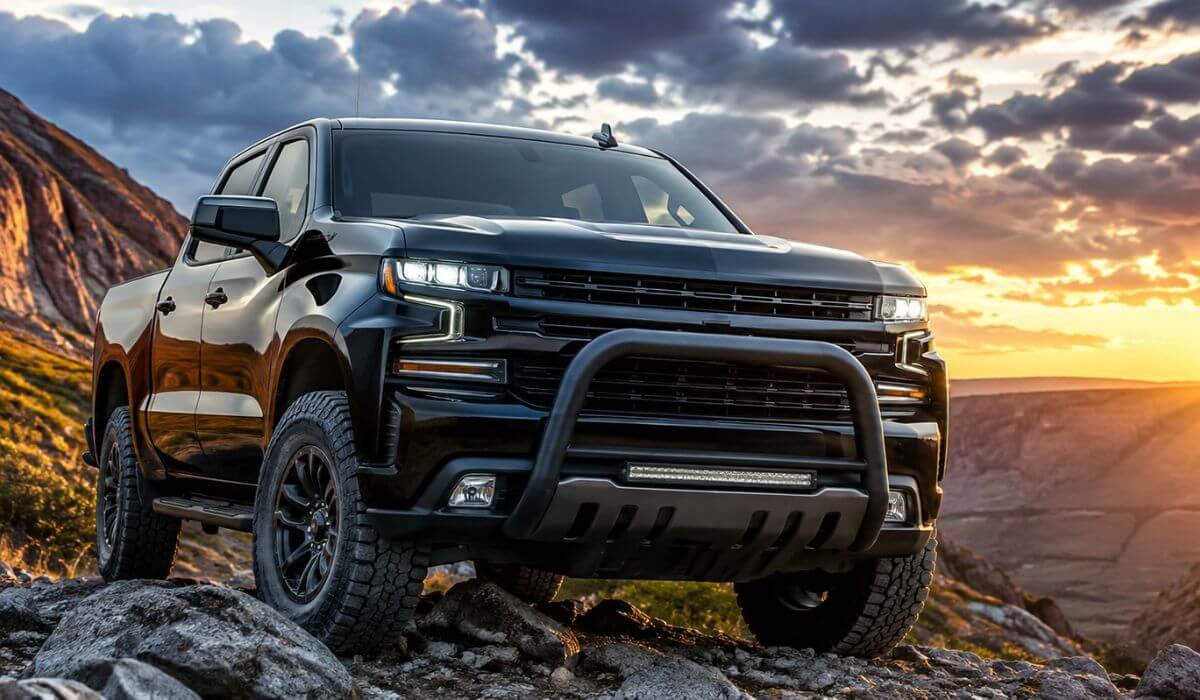
6 Best Bull Bar for Chevy Silverado 1500 in 2026: Skid Plates, Light Mounts & Tough Builds
The Chevy Silverado 1500 does not need a huge grille guard to get a tougher front end. For most owners, a well-fitted bull bar is the smarter middle ground: it adds a layer of front-end protection, keeps the truck’s factory shape visible and does not make the nose look unnecessarily heavy. But fitment is where these products separate themselves. The 2019–2026 Silverado 1500 spans different configurations, and the 2019 Silverado 1500 LD, 2022–2024 Super Cruise models and Silverado 1500 LTD deserve particular attention before ordering.
For this list, I put Westin 31-3955 E-Series Bull Bar first because it is the option I would look at before chasing a cheaper bar based purely on appearance. Westin has a much longer track record in truck accessories, and the E-Series design gives the Silverado a 3-inch tubular front bar without going all the way to a bulky full grille guard. The remaining picks bring different strengths—skid-plate coverage, light-mount functionality, broad fitment and lower-cost alternatives—so the goal here is not to call every bar “heavy-duty” just because it is black and tubular.
One honest point worth knowing: some of these newer Silverado bull bars do not yet have the years of owner feedback that established products have. So I have not treated a few early reviews as proof of long-term durability. Exact fitment, mounting design, clearance around factory equipment and the type of protection you actually need matter more than a glossy product photo.
Best Chevy Silverado 1500 Bull Bar: Top 2026 Picks With Rugged Tubing and Smart Fitment
#1. Westin 31-3955 E-Series Bull Bar
Best Bull Bar for Chevy Silverado 1500 2019-2026 With 3-Inch Tubular Construction, Reliable Mounting and a Clean Factory-Inspired Front-End Profile
#2. Black Horse BB037415-SP Stainless Steel Bull Bar
Best Silverado 1500 Bull Bar With Skid Plate for 2019-2026 Models Wanting Added Lower Front-End Coverage, Stainless Steel Construction and a More Protective Setup
#3. Tyger Auto TG-GD6C60508 Front Bumper Guard
Best Silverado 1500 Front Bumper Guard for 2019-2026 Models With Textured-Black Finish, Integrated Light Mount and a Tougher Everyday Front-End Design
#4. YHTAUTO 3-Inch Textured Black Bull Bar
Best 3-Inch Bull Bar for Chevy Silverado 1500 2019-2026 Models Wanting Straightforward Front Bumper Protection, Broad Fitment and a Rugged Tubular Profile
#5. TAC 3-Inch Textured Black Bull Bar
Best Silverado 1500 Brush Guard for 2019-2026 Models Seeking Affordable Front-End Protection, 3-Inch Tubular Construction and a Factory-Compatible Appearance
#6. PARTREE Heavy-Duty Tubular Bull Bar
Best Budget Bull Bar for Chevy Silverado 1500 2019-2026 Models Looking for Practical Front-End Protection, Rugged Styling and a Simple Bolt-On Upgrade
Expert Tip
A bull bar should protect the Silverado without creating a new problem. Before ordering, check the exact year and configuration—not just “Silverado 1500.” The 2019–2026 range includes important fitment differences, and a bar that looks identical online can still be wrong for an LD model or a truck with Super Cruise. I would also decide whether you actually need a skid plate or light mount before paying extra for features you will never use. For a daily-driven Silverado, correct fitment, solid mounting and sensible coverage matter far more than an aggressive-looking tube.
How We Choose These Bull Bars
We did not rank these six bull bars simply by appearance, star ratings or whichever product had the longest feature list. That approach is especially misleading here because several of these Silverado 1500 options are relatively new and do not yet have years of independent owner feedback behind them. Instead, we looked at what actually separates a useful front-end upgrade from a cheap piece of tubing.
Fitment comes first. The Silverado 1500 changed significantly around the 2019 model-year transition, and the listing details for these products are not identical. We paid particular attention to the stated 2019–2026 coverage, Silverado 1500 LD exclusions, LTD compatibility and Super Cruise limitations. If a product has a meaningful fitment restriction, we would rather tell you upfront than quietly push it down the list after you have already bought it.
Construction was the next filter. A 3-inch tubular bar gives the Silverado a noticeably stronger front-end presence, but diameter alone does not tell you whether one product is better than another. We considered the overall design, available protection, finish and whether the product brings something useful beyond the basic tube. That is why the Black Horse BB037415-SP gets serious consideration: its skid plate gives it a different protection advantage rather than simply adding another cosmetic feature.
We also looked at real-world usefulness. The Tyger Auto option stands out because its light-mount provision gives the owner an additional practical use, while the Westin E-Series takes a more straightforward approach. That difference matters. A daily driver does not necessarily need the same setup as a truck regularly used on rough roads.
Finally, we considered brand confidence and value, but did not let branding decide everything. The Westin 31-3955 E-Series leads this list because it offers the strongest overall balance for an owner who wants a recognised aftermarket name, a conventional 3-inch bull-bar design and a clean installation without jumping to a full grille guard. The newer options remain on the list because they can make sense for buyers who want specific features or a lower entry price.
The honest part is this: we are not claiming these newer bull bars have already proven themselves for a decade. They have not. Where long-term evidence is limited, we treat that as a limitation rather than inventing durability claims. This list is built around documented fitment, construction, useful features, protection level and sensible value. That gives you a much safer starting point than choosing the bar that simply looks toughest in a product photo.
#1. Westin 31-3955 E-Series Bull Bar
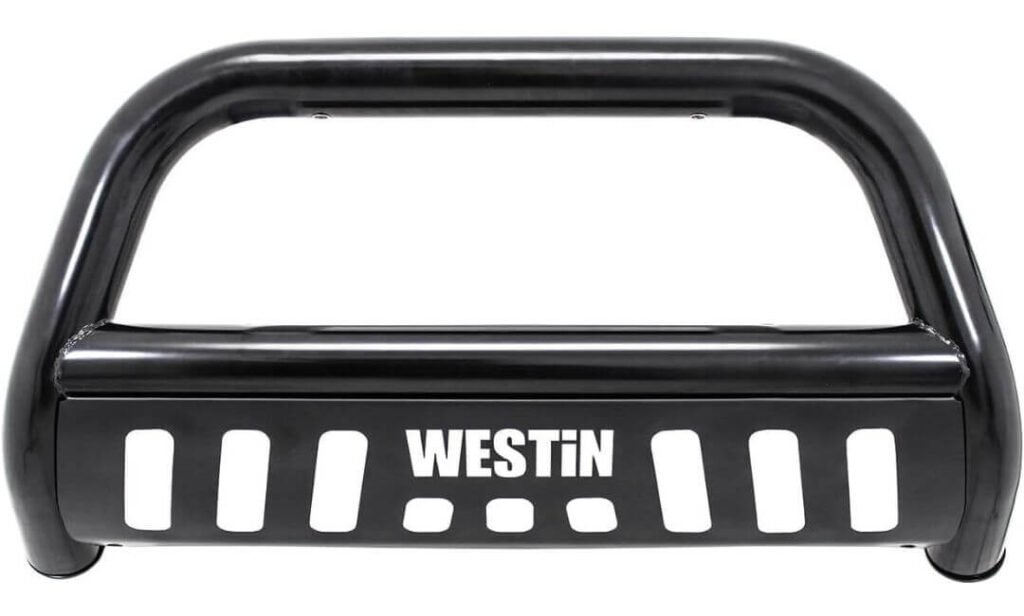
Quick Specs:
- Construction: 3-inch diameter stainless steel tubing with a fully welded cross tube
- Finish: Textured black with a matching black skid plate
- Protection: Tubular front-end coverage plus an included skid plate for added lower protection
- Lighting: Two upper mounting points for auxiliary lights; 20-inch LED mounting brackets are available separately
- Installation: Vehicle-specific mounting kit included with a direct bolt-on installation
- Physical size: 44 × 22 × 13 inches
- Weight: 30 pounds
- Warranty: 3 years for the black finish
- Fitment: 2019–2025 Chevy Silverado 1500 and 2022 Silverado 1500 LTD; 2019 Silverado 1500 LD is excluded
Some bull bars look impressive in a listing photo but feel like an accessory added just for appearance. This one takes a more complete approach. The 3-inch stainless steel tubing, welded cross tube and included skid plate give the front of the Silverado a properly finished setup rather than leaving the lower section exposed. The textured-black finish also works well with the truck because it looks purposeful without trying too hard to turn the front end into a full grille guard.
The two light-mount points are another genuinely useful touch. You can add auxiliary lighting without choosing a separate light bar mount, although the 20-inch LED brackets are sold separately. The supplied vehicle-specific mount kit is also important here because this is intended as a direct bolt-on rather than a fabrication project. In real ownership terms, that means the job is much more about getting the truck ready and removing the factory tow hooks than inventing a mounting solution yourself.
There is also a nice bit of honesty in the design: the pre-drilled openings on the bar are access points for working the fasteners, not extra mounting holes that magically make installation easier. That sounds minor, but it is exactly the sort of detail that saves frustration when you’re actually underneath the truck. Owners have also generally found the installation manageable, with the tow-hook removal being the part most likely to slow things down.
(The real attraction here is not just the tougher look—it is the combination of stainless tubing, skid-plate coverage, bolt-on mounting and useful light provisions in one package.)
What We Like
- 3-inch stainless tubing gives the bar genuine substance without making the Silverado look overbuilt.
- The included textured-black skid plate adds useful lower coverage instead of being purely decorative.
- Two light-mount points give you a practical upgrade path for auxiliary lighting.
- The vehicle-specific mounting kit keeps installation much closer to a normal bolt-on job.
- The overall design stays relatively clean, so it suits a daily-driven Silverado as well as a truck that sees occasional rougher roads.
What We Would Keep in Mind
The main thing is fitment discipline. The published coverage does not apply to every Silverado wearing a 1500 badge, so the exact model and configuration should be checked before ordering—particularly the 2019 LD and certain 2021 applications.
Silverado 1500 Fitment Notes
For the Silverado 1500, this is a particularly good example of why a broad year range in a product title should not be treated as automatic confirmation. The documented fitment covers 2019–2025 Silverado 1500 models, excluding the 2019 Silverado 1500 LD, with specific compatibility for the 2022 Silverado 1500 LTD.
There have also been reports of fitment problems on some 2021 trucks, so I would verify the application with the seller using the exact year and trim before placing the order. That small check is worth doing because a good bull bar is only a good purchase when the brackets actually match the truck underneath it.
The Insider Pro-Tip
If you’re buying this for a Silverado that you drive every day, don’t automatically add every accessory shown in the listing. The bar and skid plate already give you the core upgrade; the optional light brackets only make sense if you genuinely plan to run auxiliary lighting. That keeps the setup cleaner and avoids spending money on hardware that will sit unused.
One more thing I would check before installation is the truck’s front parking-assist equipment. Owner feedback around sensor clearance has not been completely uniform, so treat that as a vehicle-specific verification point, not something to assume from the product photograph. Get the exact fitment confirmed first, then install it properly—the result should look like it belongs on the Silverado rather than like an accessory bolted on afterwards.
#2. Black Horse BB037415-SP Stainless Steel Bull Bar
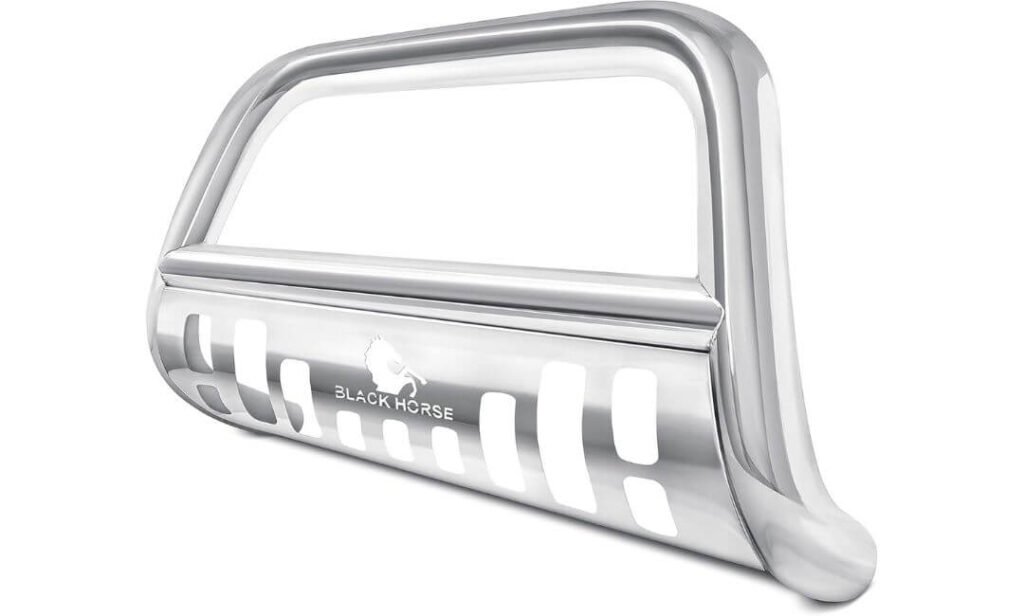
Quick Specs:
- Construction: One-piece, mandrel-bent stainless steel tubing with welded construction
- Finish: Polished stainless steel with a corrosion-resistant surface
- Protection: Removable integrated skid plate for added lower-front coverage
- Mounting: Solid frame-mounted, bolt-on installation with no drilling or welding required
- Lighting: Pre-drilled crossbar provisions for optional Black Horse PL3104FS and PL1223 lighting
- Included: Vehicle-specific brackets, mounting hardware and installation instructions
- Weight: Approximately 28.35 pounds
- Fitment: 2019–2026 Chevy Silverado 1500, including 2022 Silverado 1500 LTD and diesel models with DEF tanks
- Exclusions: 2019–2021 Silverado 1500 LD and 2022–2026 models equipped with Super Cruise
The first thing that separates this setup from a basic tubular bar is the removable skid plate. You are not simply adding a polished piece of tubing to the front of the Silverado; there is an additional layer underneath when you want more coverage, and you can remove it when that extra protection is not necessary. That makes the design more adaptable than it initially looks.
Then there is the construction. The mandrel-bent stainless steel tubing and one-piece welded design give it a more substantial feel than a bar built around multiple cosmetic sections. Because it mounts directly to the frame with vehicle-specific hardware, installation does not call for drilling or welding. That is a meaningful advantage for an owner who wants a serious-looking front-end upgrade without permanently modifying the truck.
The polished finish is also worth mentioning because it changes the character of the Silverado. Instead of the stealthy appearance of a textured-black bar, this one gives the front end a bright stainless-steel accent that stands out immediately. The auxiliary-light provisions add another layer of practicality, although the compatible lights are separate purchases. If you already have plans for auxiliary lighting, those mounting provisions make much more sense than they would on a purely decorative bull bar.
(The removable skid plate is the detail that makes this setup more versatile: run the extra coverage when you want it, remove it when you do not.)
What We Like
- The removable skid plate gives you more control over how much lower-front protection you want.
- Mandrel-bent stainless tubing delivers a premium finish without relying on chrome plating.
- The frame-mounted bolt-on design keeps installation straightforward and avoids drilling or welding.
- Built-in provisions for optional auxiliary lighting make the crossbar genuinely useful.
- The package includes the vehicle-specific brackets and hardware, so you are not left sourcing basic mounting pieces separately.
What We Would Keep in Mind
The polished stainless finish looks excellent, but owners with front parking or collision sensors should confirm clearance before ordering because sensor interference can vary with the truck’s equipment.
Silverado 1500 Fitment Notes
This is one of the broader-fitment options in the group, covering 2019–2026 Silverado 1500 models, including the 2022 Silverado 1500 LTD and diesel versions with DEF tanks. That wider application is useful, but it should not be read as universal Silverado compatibility.
The important exclusions are the 2019–2021 Silverado 1500 LD and 2022–2026 Silverado 1500 models equipped with Super Cruise. If the truck has either of those configurations, this is not the bar to gamble on. For compatible trucks, the supplied vehicle-specific brackets and no-drill mounting approach make the installation considerably more owner-friendly.
The Insider Pro-Tip
If your Silverado already has factory sensors, do not wait until the bull bar is sitting in your garage to think about clearance. Verify the sensor arrangement first. A bull bar can physically bolt into place and still create an unwanted sensor issue, so this is one of those five-minute checks that can save a lot of unnecessary frustration.
I also like the fact that the skid plate is removable. If you mainly drive pavement, you can keep the setup relatively clean; if your truck regularly sees loose gravel, rough access roads or debris, keeping the plate installed gives the front end a little more useful coverage. That is a much better reason to choose this bar than simply buying it because the polished stainless steel looks expensive.
#3. Tyger Auto TG-GD6C60508 Front Bumper Guard
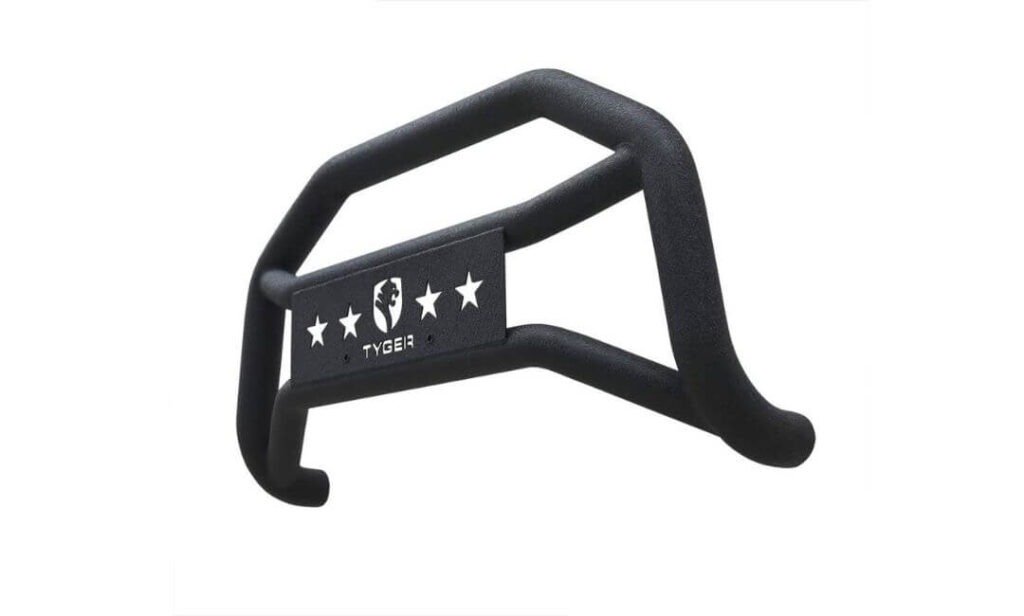
Quick Specs:
- Construction: Heavy-duty 2.5-inch carbon steel tubing with seamless welded construction
- Finish: Textured black E-coating designed to resist corrosion and everyday wear
- Lighting: Pre-welded light-mount channel for optional LED lighting
- Plate provision: Two pre-drilled holes for license-plate relocation when required
- Installation: Bolt-on design with mounting hardware and DIY instructions included
- Weight: Approximately 16.4 pounds
- Warranty: 3-year manufacturer warranty for US customers
- Fitment: 2019–2026 Silverado 1500 and 2022 Silverado 1500 LTD; compatible with diesel models with DEF tanks
- Exclusions: 2019–2021 Silverado 1500 LD; verify compatibility carefully on sensor-equipped and Super Cruise applications
A 16.4-pound bull bar can sound surprisingly light until you look at how this one is built. Instead of trying to compete with a large full-width grille guard, Tyger uses 2.5-inch carbon steel tubing and keeps the structure relatively compact. That makes more sense for a Silverado owner who wants some additional front-end presence and protection without hanging a huge amount of metal off the nose.
The most useful feature is arguably the pre-welded light-mount channel. It is already part of the guard rather than being an accessory you have to fabricate or add later. If auxiliary LED lighting is part of your plan, that is a genuinely convenient detail. The two pre-drilled plate-relocation holes are another small but thoughtful touch because a front-mounted bar can change where the factory plate sits.
The textured-black E-coating is also a sensible choice for a truck that actually gets driven. It is less about looking flashy and more about giving the carbon-steel tubing a finish suited to everyday exposure. Installation is described as bolt-on, but I would not call every Silverado installation “five minutes and done.” Tow hooks need attention, and diesel models can require temporarily moving the bumper to reach them. That is the kind of detail worth knowing before the package arrives.
(The appeal here is simple: solid steel construction, built-in lighting provision and a relatively light overall design without turning the Silverado into a full grille-guard build.)
What We Like
- The 2.5-inch carbon steel tubing gives it a purposeful structure while keeping the overall weight down.
- The pre-welded LED channel is a useful feature rather than a decorative add-on.
- Textured-black E-coating suits a working truck and gives the guard a less polished, more understated appearance.
- The included mounting hardware and DIY instructions make it approachable for an owner who is comfortable working on their truck.
- The 3-year warranty adds some reassurance, particularly with a product that has a more accessible price position.
What We Would Keep in Mind
The biggest thing to verify is front-sensor behaviour. Some sensor-equipped Silverado owners have reported interference or false alerts after installation, while others have had no issue, so this is one area where your exact truck matters more than a generic fitment statement.
Silverado 1500 Fitment Notes
The stated application covers the 2019–2026 Chevy Silverado 1500, including the 2022 Silverado 1500 LTD, and it also accommodates diesel models with DEF tanks. However, the 2019–2021 Silverado 1500 LD is excluded, so that distinction should be checked before ordering rather than assumed from the year range.
Installation also changes depending on the truck. Models with factory tow hooks require their removal, while certain configurations without tow hooks may need minor cutting. On diesel trucks, temporarily detaching the bumper can be necessary to reach the mounting area. Those are not deal-breakers, but they are exactly the sort of real-world details that make a product description more useful than simply saying “easy bolt-on installation.”
The Insider Pro-Tip
If your Silverado has front parking or collision sensors, I would put that check ahead of everything else. The guard itself can be a good fit mechanically, yet sensor behaviour can still vary between configurations. Do not assume that another owner’s trouble-free installation guarantees the same result on your truck.
For a Silverado that already has the right fitment, I see this as a particularly sensible choice for someone who wants a lighter bull-bar setup with built-in LED mounting rather than a heavier skid-plate-focused design. You are getting the features that are actually useful, without paying for a larger guard simply because it looks more aggressive in the listing photo.
#4. YHTAUTO 3-Inch Steel Bull Bar With Skid Plate
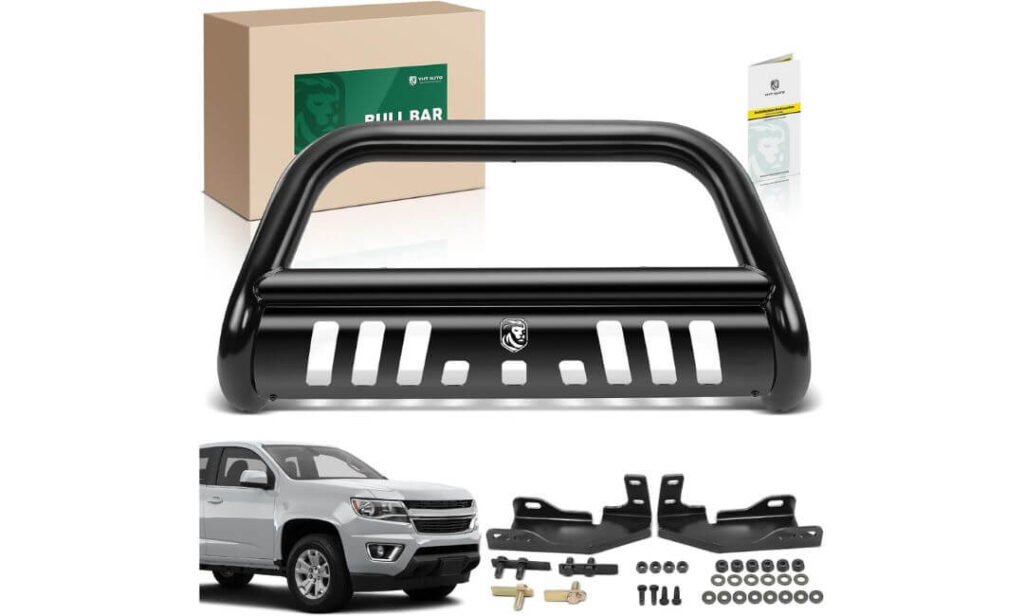
Quick Specs:
- Construction: 3-inch steel tubing with CNC bending and seamless welding
- Finish: Semi-gloss black powder coat with an additional E-coat layer for corrosion resistance
- Protection: Formed integrated skid plate included beneath the main bar
- Lighting: Pre-drilled mounting points on the skid plate for optional auxiliary lights
- Mounting: Vehicle-specific brackets and hardware supplied
- Installation: Bolt-on design, although some applications may require cutting or drilling
- Weight: Approximately 33.73 pounds
- Package: Bull bar, mounting brackets, hardware and installation instructions
- Fitment: 2019–2026 Chevy Silverado 1500 and 2022 Silverado 1500 LTD, including applicable diesel models with DEF tanks
- Exclusions: 2019 Silverado 1500 LD and 2022–2024 models equipped with Super Cruise
There is a reason this one feels more substantial than a basic tubular bull bar: the formed skid plate is part of the package. YHTAUTO has built this around a 3-inch steel tube and a lower protective section, so the result is closer to a compact front-protection setup than a bar added purely for appearance. At around 33.73 pounds, it is also one of the heavier choices here, which is worth knowing if you are comparing it with lighter guards.
The construction details are more useful than the aggressive styling in the product photos. The tubing is CNC-bent and seamlessly welded, while the semi-gloss black coating is backed by an E-coat layer for additional corrosion resistance. That combination makes sense on a truck that sees road grime, rain and occasional rough-road use. It is not pretending to be a full replacement bumper, though; this is still a bolt-on accessory intended to add another layer of front-end coverage.
The skid plate also has pre-drilled light mounting points, giving you the option to add auxiliary lighting later. That is a nice touch because you can leave the setup clean now and add lights when there is actually a reason for them. One ownership detail I would not overlook is the tow-hook situation: the factory tow hooks cannot be reinstalled once this bar is fitted. That may be perfectly acceptable for one Silverado owner and a deal-breaker for another, depending on how the truck is used.
(This is the pick for someone who wants more than a visual upgrade but does not want to step all the way up to a full-width grille guard.)
What We Like
- The integrated skid plate gives the setup more useful lower-front coverage than a simple tube.
- 3-inch steel tubing and seamless welded construction give it a properly substantial feel.
- The powder-coat plus E-coat finish is a practical combination for everyday truck use.
- Pre-drilled points make adding auxiliary LED lighting straightforward later.
- The package includes the brackets, mounting hardware and installation guide, so there is no need to piece together the basic installation hardware yourself.
What We Would Keep in Mind
The trade-off is installation flexibility. Depending on the Silverado configuration, cutting or drilling may be required, and the factory tow hooks cannot be put back once the bar is installed.
Silverado 1500 Fitment Notes
The listed fitment covers 2019–2026 Chevy Silverado 1500 models and the 2022 Silverado 1500 LTD, including applicable diesel trucks with DEF tanks. The 2019 Silverado 1500 LD is excluded, while 2022–2024 trucks equipped with Super Cruise are also outside the stated application.
There is another reason I would check the exact truck before ordering: front-sensor clearance can vary by configuration. The manufacturer itself flags possible sensor interference, so owners with parking or collision sensors should confirm the setup rather than assuming the year range alone guarantees everything will work exactly as intended.
The Insider Pro-Tip
The biggest question here is not whether the bar looks tough—it is whether you are comfortable giving up the factory tow hooks. If you rarely use them, that may not matter. If they are part of your recovery setup, stop and consider that trade-off before ordering. It is a small detail in the product description that becomes a very important ownership decision once the bar is installed.
For the right Silverado, though, the combination of 3-inch steel tubing, integrated skid plate and optional lighting provision makes this a sensible middle ground. You get noticeably more front-end coverage than a cosmetic tube while avoiding the size and visual weight of a full grille guard.
#5. TAC 3-Inch Textured Black Bull Bar With Skid Plate
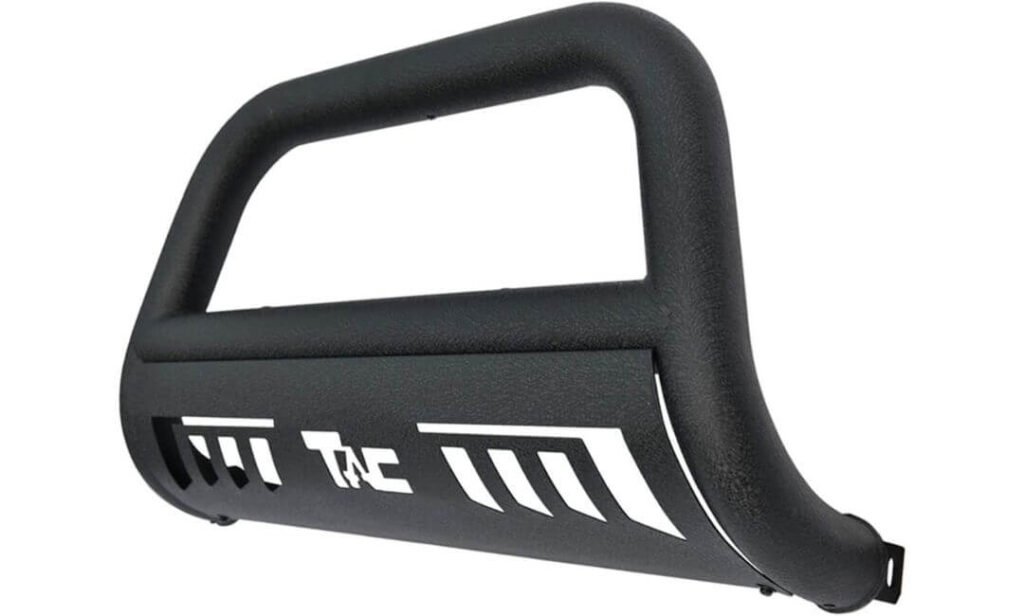
Quick Specs:
- Construction: 3-inch heavy-duty mild steel tubing with CNC-formed mounting brackets
- Finish: E-coated steel with a heavy-texture black powder-coated surface
- Protection: Included skid plate for additional lower-front coverage
- Lighting: Mounting provisions for an optional 20-inch LED light bar
- Installation: Direct bolt-on design; 2022+ applications may require cutting
- Weight: Approximately 31.5 pounds
- Hardware: Vehicle-specific brackets, mounting hardware and installation instructions included
- Fitment: 2019–2026 Chevy Silverado 1500, including 2022 Silverado 1500 LTD and diesel models with DEF tanks
- Exclusions: 2019 Silverado 1500 LD and 2022–2024 models equipped with Super Cruise
What I like about this setup is that TAC has not tried to make the product interesting with a long list of unnecessary extras. You get the important pieces: 3-inch mild steel tubing, a skid plate, corrosion-resistant finishing and vehicle-specific mounting hardware. At roughly 31.5 pounds, it also has enough physical presence to look properly integrated into the Silverado rather than like a lightweight cosmetic accessory.
The E-coating underneath the textured black powder coat is a sensible combination for a truck that lives outside and sees road salt, moisture or trail grime. The skid plate adds useful lower coverage, while the mounting points for an optional 20-inch LED light bar give you a reason to keep the centre section functional rather than purely visual.
There is, however, an installation reality worth knowing before you buy. The bar is designed as a bolt-on system, but 2022-and-newer applications can require cutting, and the factory tow hooks need to come off. That does not make the product a bad choice; it simply means “bolt-on” should not be interpreted as “no work required.” If you are comfortable underneath a truck, it is manageable. If not, professional installation is the safer route.
(The real value here is the complete protection package—tube, skid plate and light provisions—without stepping into the cost or bulk of a full grille guard.)
What We Like
- 3-inch mild steel tubing gives the front end a solid, purposeful presence.
- The E-coat and textured powder coat are better suited to everyday exposure than a finish chosen only for appearance.
- An included skid plate gives this more useful coverage than a bare bull bar.
- The optional 20-inch LED mounting provision is practical for owners planning auxiliary lighting.
- Vehicle-specific CNC-formed brackets and supplied hardware keep the design focused on the Silverado rather than using a generic mounting approach.
What We Would Keep in Mind
The installation is the one area to plan for carefully. 2022+ trucks may require cutting, and factory tow hooks need to be removed, so this is not the best choice for someone expecting a completely modification-free installation.
Silverado 1500 Fitment Notes
The stated application covers 2019–2026 Silverado 1500 models, including the 2022 Silverado 1500 LTD and diesel versions with DEF tanks. The important exclusions are the 2019 Silverado 1500 LD and 2022–2024 models equipped with Super Cruise.
Front-mounted sensors also deserve a quick check. The bar can potentially interfere with parking or collision sensors on certain configurations, so I would confirm the exact year, trim and sensor arrangement before ordering. That is much more useful than relying on a generic “fits Silverado 1500” statement.
The Insider Pro-Tip
If you’re choosing this mainly because you want front protection plus a skid plate, it makes sense. If you are buying it only for the aggressive look, there are simpler options that may involve less installation work. The real advantage here is getting several useful functions into one setup.
And before installation, take a few minutes to photograph your factory tow-hook and bumper area. It gives you a clear reference during the job and makes it much easier to confirm that everything is sitting where it should. With this type of accessory, a careful installation is what turns a good product into a genuinely worthwhile upgrade.
#6. PARTREE 3-Inch Carbon Steel Bull Bar With LED Light
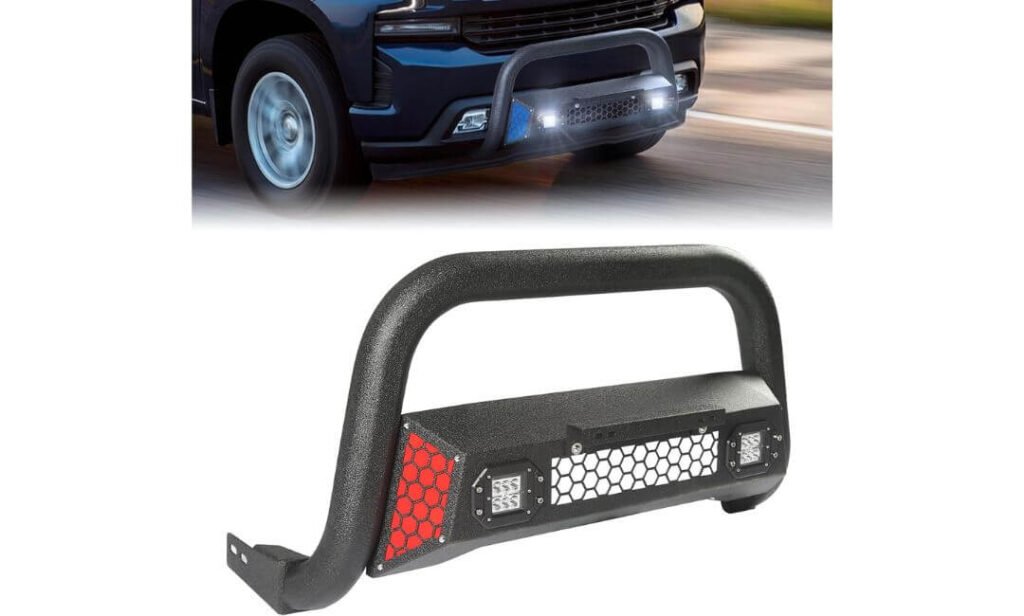
Quick Specs:
- Construction: 3-inch thickened carbon steel tubing
- Finish: Powder-coated black surface for added resistance against rust and corrosion
- Lighting: LED light included for auxiliary trail illumination
- Plate mounting: Dedicated license-plate bracket included
- Trim: Paintable trim panel that can be customised to suit the truck
- Installation: Bolt-on design with no drilling required
- Hardware: Mounting hardware and installation instructions included
- Fitment: Listed for 2019–2026 Chevy Silverado 1500
- Important exclusion: Not compatible with vehicles equipped with front radar/collision-sensing systems
This is the kind of bull bar that makes sense when the buyer wants more function than a bare tube without moving into a much more expensive front-end system. The 3-inch carbon-steel construction gives it the substantial look most Silverado owners are after, while the powder-coated finish keeps the design straightforward and suitably rugged for a truck that sees everyday use.
The included LED light is the feature that immediately separates it from several conventional bull bars in this group. You are not starting with an empty light-mount position and then buying another component before you can use it. The separate license-plate bracket is also useful because the factory mounting position can become awkward once the bar occupies that part of the front end.
Another unusual detail is the paintable trim panel. It is a small feature, but it gives someone who cares about the truck’s appearance an opportunity to customise the centre section instead of accepting a completely generic black finish. Installation is designed around existing mounting points with no drilling, although having a second pair of hands can make alignment considerably easier when positioning the bar and tightening the brackets.
(The strongest reason to consider this one is the feature-per-dollar approach—carbon-steel construction, an included LED light and a dedicated plate bracket in one package.)
What We Like
- The 3-inch carbon steel tube gives the Silverado the substantial bull-bar appearance without becoming a full-width guard.
- An LED light is included, which is a meaningful advantage if auxiliary illumination is actually part of your plan.
- The supplied license-plate bracket avoids leaving the plate awkwardly positioned after installation.
- The paintable trim panel offers more customisation than the usual fixed black centre section.
- No-drill bolt-on installation keeps the basic mounting process relatively straightforward.
What We Would Keep in Mind
The front-radar compatibility warning is the big one. If your Silverado relies on front radar or collision-sensing equipment, I would choose another option rather than trying to work around the system.
Silverado 1500 Fitment Notes
PARTREE lists this bull bar for 2019–2026 Chevy Silverado 1500 models, and the same basic product is also marketed for the GMC Sierra 1500. For this article, the Silverado application is what matters.
The more important qualification is the equipment on the truck rather than the model year. The listing specifically warns against vehicles equipped with front radar/collision systems, and there are also owner reports of sensor-related problems. Factory tow hooks may need to be removed because the bull bar uses the same mounting area. Check both points before ordering so the physical fit and the electronics are compatible with your particular Silverado.
The Insider Pro-Tip
I would not choose this bar simply because it includes an LED light. The sensor warning is more important than the extra feature. If your Silverado has front radar or collision-sensing hardware, move on to a compatible option rather than assuming the electronics can be ignored.
For a truck without that equipment, however, the package becomes much more interesting. You get a 3-inch carbon-steel bar, integrated lighting, plate relocation and no-drill mounting without turning the purchase into a long list of additional accessories. That is where this product earns its place as a value-focused final option.
Best Chevy Silverado 1500 Bull Bars for Protection and Style (2019–2026)
Chevy Silverado 1500 Bull Bar Buying Guide: What Actually Matters Before You Order
A bull bar is more than a styling piece, but it is also not a replacement for a factory bumper or a full grille guard. On the Silverado 1500, it sits across the front bumper area and adds tubular protection, with some designs extending that coverage downward through a skid plate. The real benefit is giving the front of the truck an additional layer of protection from minor impacts, road debris and off-road hazards, while also changing the truck’s appearance without covering the entire grille.
The important part is choosing the right type for how you actually use your Silverado. A daily-driven truck may benefit from a clean 3-inch bar, while a truck regularly travelling on gravel or rough access roads may make better use of an integrated skid plate. If auxiliary lighting is part of the plan, built-in light provisions can save you from adding another mounting system later.
Material and Finish: Steel vs Stainless Steel
The material affects both the character and long-term practicality of a bull bar.
Carbon or mild steel is common because it provides a strong, substantial structure at a reasonable cost. A properly finished steel bar can make excellent sense for a working Silverado, particularly when it uses E-coating and powder coating to help protect the underlying metal from moisture, road grime and corrosion.
Stainless steel moves the conversation more toward appearance and corrosion resistance. The Black Horse option in this list, for example, uses polished stainless steel and a mandrel-bent one-piece design. It gives the front end a brighter, more premium appearance than a textured-black bar.
The finish matters almost as much as the material. A textured black bull bar generally suits owners who want a subtle, factory-friendly appearance and does not draw as much attention to every scratch. Polished stainless has more visual impact, but it also makes the condition of the surface more noticeable.
Skid Plate Protection: When It Is Worth Having
A skid plate changes what the bull bar is doing for the truck. Without one, the main protection comes from the tubular bar itself. With one, the setup can provide additional coverage across the lower front section.
That does not mean every Silverado needs a skid plate. If the truck spends almost all its time on pavement, a standard bull bar may be enough. If you regularly encounter loose gravel, uneven access roads, trail debris or steep approaches, the extra lower coverage becomes easier to justify.
There is also a difference between a fixed and removable skid plate. The Black Horse BB037415-SP uses a removable design, which gives the owner more flexibility. The YHTAUTO and TAC options take a more integrated approach. Those differences are more meaningful than simply comparing which product looks more aggressive.
Light Mounts and the Part People Often Forget
A bull bar can make auxiliary lighting easier, but the mounting provision itself does not mean a light is included.
Some products use pre-drilled mounting holes, while others have a dedicated welded light channel. The Tyger Auto guard, for example, has a pre-welded light-mount channel, while Westin provides two upper mounting points with optional brackets available separately. PARTREE goes a step further by including an LED light with its package.
Before choosing based on lighting, check three things:
- Whether the light itself is included
- What size or mounting pattern the bar supports
- How you will route and connect the wiring
The electrical side is usually separate from the physical bull-bar installation. A clean lighting setup still needs proper wiring, switching and a suitable power source. Do not assume that a mounting hole automatically means the product includes everything required to run auxiliary lighting.
2019–2026 Silverado 1500 Bull Bar Compatibility
This is where I would spend more time than on the finish.
The phrase “fits 2019–2026 Silverado 1500” is not enough by itself. The Silverado 1500 has several important configuration differences within this period, and the products in this guide do not all share identical exclusions.
Pay particular attention to:
- 2019 Silverado 1500 LD applications
- 2022 Silverado 1500 LTD
- Diesel models with DEF tanks
- Trucks equipped with Super Cruise
- Front parking, collision or radar-based sensor equipment
- Factory tow hooks and their mounting locations
For example, several products here specifically exclude the 2019–2021 Silverado 1500 LD, while multiple listings also exclude certain 2022–2024 Super Cruise-equipped trucks. PARTREE has its own warning regarding front radar/collision-sensing equipment.
That is why I would never choose a bull bar from the year range alone. Match the product against the exact truck configuration before buying.
Black Bull Bar vs Polished Stainless Steel
The choice between black and polished stainless is mostly about how you want the Silverado to look and how much visual attention you want the accessory to attract.
A black bull bar for Silverado 1500 generally blends more naturally with black trim, dark wheels and factory plastic components. It also gives the truck a more understated, utility-focused appearance.
A polished stainless bar is more noticeable. It can work particularly well when the truck already has chrome or bright exterior trim, but it will not have the same low-key appearance as a textured-black setup.
There is no universally better finish. The better choice is the one that fits the truck you already own rather than the truck pictured in the product listing.
Installation Effort and What “Bolt-On” Really Means
“Bolt-on” sounds simple, but it does not always mean zero modification.
Across these products, installation can involve removing factory tow hooks, temporarily moving the bumper on certain diesel configurations, or making additional adjustments on newer model applications. Some products also state that cutting or drilling may be necessary on particular trucks.
Before starting, have the basic installation requirements ready:
- Vehicle-specific mounting brackets
- Correct supplied hardware
- Appropriate hand tools
- Adequate space underneath the front end
- A second person for alignment where needed
- Time to verify sensor and bracket clearance
If the product specifically requires cutting or you are not comfortable working around the bumper mounting system, professional installation is a sensible choice. A poorly aligned bull bar can look wrong even when the product itself is perfectly good.
Warranty Is Useful, But It Is Not the Whole Story
A warranty gives you another layer of confidence, but it should not replace checking fitment and construction.
The Tyger Auto option, for example, carries a 3-year manufacturer warranty for US customers, while Westin’s supplied information also distinguishes warranty coverage by finish. Those details are worth checking before purchase because warranty terms can differ between the product, finish and market.
I would put the priorities in this order:
Correct fitment → construction → mounting quality → useful features → warranty → appearance.
A beautiful bull bar with the wrong brackets is still the wrong purchase.
Silverado 1500 Bull Bar Terms Explained Without the Marketing Noise
A front bumper guard is a broad term for an accessory designed to add protection around the bumper area. A bull bar falls into this category, although not every bumper guard has the same shape or coverage.
Silverado 1500 Brush Guard
A brush guard generally suggests a more protective front-end structure designed to shield the bumper and surrounding areas from brush, debris and minor contact. In product listings, sellers sometimes use “brush guard” and “bull bar” interchangeably, so always look at the actual construction rather than the name.
Silverado 1500 Grille Guard
A grille guard normally provides substantially more coverage than a bull bar, extending upward and around more of the grille and front-end area. If you want maximum front-end coverage, a full grille guard may make more sense. If you want something smaller and cleaner, a bull bar is usually the more appropriate category.
Bull Bar With Skid Plate for Silverado 1500
This is a bull bar that combines the tubular front bar with an additional lower protective plate. It is worth considering if your Silverado sees rougher roads or debris where the lower front section deserves more coverage.
How to Verify Bull Bar Fitment Before Buying
Start with the exact model year, then confirm whether your truck is a standard Silverado 1500, Silverado 1500 LD or Silverado 1500 LTD. Do not treat those names as interchangeable.
Next, check the equipment that can affect installation:
- Confirm the model year and body configuration.
- Check whether the truck is an LD or LTD.
- Identify diesel/DEF equipment if applicable.
- Check for Super Cruise.
- Look for front parking, collision or radar sensors.
- Confirm whether factory tow hooks are installed.
- Read the product’s specific exclusion list.
- Compare the supplied mounting brackets with your truck’s application.
If the listing says to contact the manufacturer for fitment confirmation, that is not a step I would skip. Give them the exact year, trim and relevant factory equipment and keep their confirmation before ordering.
The safest rule for this category is simple: never buy the bull bar that fits the broadest year range; buy the one that is confirmed for your exact Silverado. That single check can save you from an otherwise unnecessary return, installation headache or sensor problem.
Silverado 1500 Front Bumper Protection and Styling: What Changes After Installation
A bull bar changes the Silverado 1500 in two ways at once: it adds another physical structure ahead of parts of the factory bumper, and it changes how the truck looks from the front. The protection benefit is real, but it has limits. A tubular bar is useful for certain minor impacts, road debris and off-road contact, yet it should never be treated as a substitute for the truck’s original crash structure or a full recovery bumper.
The biggest mistake is judging the upgrade only from a front photograph. The more useful question is what happens around the bumper, tow-hook area, lower front section, sensors and grille once the accessory is installed.
How a Bull Bar Changes Front-End Coverage and Approach Clearance
A bull bar sits forward of the factory bumper, creating a protective tube between the truck and whatever it encounters first. That can be useful when dealing with small debris, brush, parking-lot contact or occasional off-road obstacles, because the accessory can take some of the initial contact instead of leaving the painted bumper as the first point of contact.
However, a bull bar does not automatically improve the Silverado’s approach angle.
The bar itself can become the lowest or furthest-forward component, depending on its shape and the skid-plate design. On a truck that regularly climbs steep transitions, enters drainage dips or travels over uneven ground, that matters. A compact tubular design may preserve more usable clearance than a larger guard, while a bar with substantial lower protection can trade some clearance for additional coverage.
That is why I would judge protection by the truck’s actual use:
- Mostly pavement: a conventional tubular bar is usually enough.
- Gravel and rough access roads: additional lower coverage becomes more useful.
- Frequent trail driving: clearance, mounting strength and skid-plate position deserve much more attention.
- Serious recovery work: a bull bar should not be confused with a recovery-rated bumper or recovery point.
Grille Access, Sensor Clearance and Everyday Practicality
One advantage of a bull bar over a full grille guard is that it generally leaves a large portion of the grille visible and accessible. You are not building a cage around the entire front end.
That can make routine cleaning and access around the grille easier, while also keeping more of the Silverado’s original design visible. But the added structure can still occupy space around the bumper, tow hooks, licence plate area and lower grille, depending on the design.
Sensor clearance is a different issue.
A bar can physically fit the bumper correctly and still affect how a factory sensor system behaves. That is particularly important when the Silverado has parking sensors, collision-detection hardware or front radar equipment. The metal itself, its position and even vibration can potentially affect sensor operation depending on the vehicle’s configuration.
So if your truck has front-mounted electronic safety equipment, compatibility should be treated as a functional requirement, not a minor installation detail.
Front Protection: Useful Defense or Just a Tougher Look?
The honest answer is both, depending on what you expect from it.
A bull bar can provide a useful buffer around the front bumper and may reduce cosmetic damage from certain low-speed contacts. The tubular structure can also give some additional coverage when travelling on rough roads where branches, loose debris or minor obstacles are realistic concerns.
But it is important not to overstate what it can do.
A bull bar is not engineered to replace the Silverado’s factory crash-management system. It is also not a guarantee against serious collision damage. In a major impact, the truck’s original bumper, crumple structures, restraints and safety systems remain far more important than an aftermarket accessory.
That distinction is actually a sign of a good purchase decision. If you want additional everyday protection plus a stronger appearance, a bull bar makes sense. If you are expecting it to transform the Silverado into an armoured front end, you are asking the wrong product to do the job.
What the Extra Weight and Structure Mean for Driving
Most of the bars in this guide are relatively modest compared with a full steel bumper, but they still add weight ahead of the front axle.
For normal road driving, that difference is unlikely to be the reason someone notices a dramatic change in handling. What matters more is the overall accessory combination. Add a bull bar, skid plate, large auxiliary lights and other front-end equipment, and the total weight starts becoming more meaningful.
The aerodynamic effect is similarly modest for a compact tubular bar. It is not the same as installing a large flat-front bumper, but anything added to the front of a truck changes airflow to some degree.
The sensible approach is simple: do not choose a larger or heavier setup than your Silverado actually needs.
ADAS and Front Safety Equipment Need Extra Attention
Modern Silverado models can have driver-assistance technology that depends on sensors positioned around the front of the vehicle. A bull bar does not get a free pass simply because it is marketed as “vehicle specific.”
Before installation, identify whether your truck has:
- Front parking sensors
- Forward collision warning equipment
- Automatic emergency braking
- Front radar or other sensing hardware
- Super Cruise or related driver-assistance equipment
Then compare those features against the bull bar’s specific compatibility notes.
This is especially important because the products in this category do not all have the same sensor restrictions. Some listings specifically warn about sensor interference, while others exclude particular safety-equipped configurations altogether.
If a sensor starts producing false warnings after installation, do not simply disable the system and carry on. Verify the cause and correct the installation or compatibility issue. A cosmetic upgrade is never worth compromising a factory safety feature.
Styling Without Making the Silverado Look Overbuilt
The visual difference is one of the biggest reasons people buy these accessories in the first place.
A textured-black finish generally gives the Silverado a more integrated, utility-focused appearance. It works particularly well when the truck already has black wheels, black trim or darker exterior details.
A polished stainless finish takes the opposite approach. It becomes a visual feature, especially on trucks with chrome or bright exterior trim.
The shape matters just as much as the finish. A compact 3-inch tubular bar can make the truck look tougher while leaving the grille and headlights visually open. A larger guard can create a much more aggressive front end, but that is not necessarily better.
The best styling choice is the one that looks like it belongs on your particular Silverado, rather than one that simply looks impressive in an isolated product photograph.
What Happens to the Factory Tow Hooks and Plate Position?
This is an easy detail to miss before purchasing.
Several bull-bar designs use the same mounting area as the factory tow hooks, meaning those hooks may need to be removed. In some cases, they cannot be reinstalled once the bar is fitted.
That matters if you use the Silverado for recovery or regularly travel somewhere that having factory tow hooks available is important.
The licence plate can also become an issue. Depending on the bar’s width and centre design, the original plate position may need to be adjusted. Some designs provide dedicated relocation holes or brackets, while others may require a separate solution.
Neither issue is necessarily a reason to avoid a bull bar. They are simply part of understanding what changes when the accessory becomes part of the truck.
The Real Balance Between Protection and Appearance
A good Silverado front-end setup should solve a problem without creating three new ones.
If your priority is daily protection and understated styling, a compact tubular bar is a sensible direction. If you regularly drive rough roads, a skid plate can justify the additional structure. If auxiliary lighting is important, built-in mounting provisions make the installation cleaner.
But if the Silverado has sophisticated front sensors, Super Cruise or other driver-assistance equipment, compatibility should come before appearance.
That is ultimately the right way to look at a bull bar: not as something that makes the truck “invincible,” but as a carefully chosen accessory that can add useful front-end coverage, change the truck’s character and suit the way you actually drive it.
Silverado 1500 Bull Bar Installation Guide: What the Job Really Involves
A bull bar installation on the Silverado 1500 is usually straightforward in concept: remove the necessary factory hardware, position the vehicle-specific brackets, attach the bar, check clearances and tighten everything correctly. The reality is that the amount of work varies considerably by model year and equipment.
The products in this guide are not all installed in exactly the same way. Some are genuinely close to a conventional bolt-on job, while others can involve tow-hook removal, bumper access, cutting or drilling on particular applications. That is why I would read the supplied instructions for your exact product before putting a socket on the truck.
Tools You May Need Before Starting
The exact hardware varies, so the manufacturer’s instructions should always take priority. For a typical installation, it is sensible to have:
- A suitable socket and ratchet set
- Combination wrenches for reaching confined fasteners
- Torque wrench for final tightening
- Screwdrivers and trim-removal tools
- Pliers and an extension set for difficult access
- Jack and properly rated jack stands if additional clearance is required
- Work light for the underside of the bumper
- Protective gloves and eye protection
- Basic electrical tools if auxiliary lighting is being installed
If cutting or drilling is specifically required for your application, use the correct equipment and measure the mounting area carefully before making any permanent change.
Start With the Mounting Hardware, Not the Bull Bar
Before lifting the bar into position, lay out the vehicle-specific brackets, bolts, washers and spacers and compare them with the supplied instructions.
This sounds overly cautious, but it can save a surprising amount of time. Once the bar is partially supported under the truck, identifying the wrong bracket becomes much harder.
Check that:
- Both left and right mounting brackets are present.
- Hardware matches the supplied instructions.
- Spacers and washers are installed in their intended positions.
- Brackets are oriented correctly.
- No factory wiring or sensor equipment is trapped behind the mounting points.
- The tow-hook mounting area is clear where applicable.
Do not fully tighten one side while the other side is still loose. Keeping the assembly slightly adjustable during initial positioning makes alignment much easier.
Factory Tow Hooks and Bumper Access
This is one of the most common places where the installation becomes more involved.
Several Silverado bull bars use the factory tow-hook mounting area, so the hooks may need to come off before the accessory brackets can be installed. On some designs, those factory hooks cannot be reinstalled afterward.
Diesel trucks can require additional access around the bumper and DEF-tank area. Some applications may require temporarily moving the bumper to reach the tow-hook hardware.
That does not mean the installation is unsuitable for a home garage. It simply means you should know what you are getting into before starting.
Position the Bar Before Final Tightening
Once the brackets are attached, support the bull bar and loosely install the remaining hardware.
At this stage, check the important clearances rather than focusing on how tight the bolts are:
- The bar should sit evenly from side to side.
- It should not contact the bumper.
- The skid plate should have sensible clearance from surrounding components.
- Licence-plate visibility should be checked.
- Auxiliary-light mounting points should remain accessible.
- Parking or collision sensors should not be physically obstructed.
- Wiring and hoses should not be pinched or pulled against the brackets.
Stand several feet in front of the truck and look at the bar from a normal viewing height. A small alignment error is surprisingly obvious once you step away from the truck.
Only after the position is correct should the mounting hardware be tightened to the manufacturer’s specified torque.
Auxiliary Light Wiring: Do This Separately and Cleanly
If the bull bar has light-mount provisions, the mechanical installation and electrical installation should be treated as two separate jobs.
First mount the lights and confirm that they do not interfere with the grille, bonnet or other front-end components. Then plan the wiring route before connecting anything.
A clean auxiliary-light installation should include:
- Correctly rated wiring for the light’s current demand
- Appropriate fuse protection
- Secure routing away from moving or hot components
- Properly protected connections
- A suitable switch or control method
- Enough slack for normal movement without allowing the wire to hang loose
Do not simply run the cable along the front of the bull bar and rely on zip ties as the entire solution. Heat, vibration, water and road debris are what the wiring will actually have to survive.
Also remember that several products in this guide provide mounting provisions without including the lights themselves. Check the package contents before planning the electrical side.
Allow More Time Than the Product Listing Suggests
A simple installation can be relatively quick, particularly when the correct brackets line up immediately and the factory hardware comes away without a fight.
A sensible planning range is roughly:
- Straightforward installation: around 1–2 hours
- Tow-hook removal or difficult access: around 2–3 hours
- 2022+ applications requiring additional modification: potentially longer
- Diesel configurations requiring bumper access: allow additional time
These are planning estimates, not guarantees. A seized factory bolt can add more time than the entire bull-bar installation itself.
The safest approach is to start when you have enough time to finish the job properly, rather than beginning an hour before you need to drive the truck.
Silverado 1500 Bull Bar Installation Mistakes Worth Avoiding
Tightening Everything Too Early
If you fully tighten the first bracket before the opposite side is positioned, you can make alignment unnecessarily difficult.
Leave the assembly adjustable until the bar is sitting correctly.
Assuming “Bolt-On” Means No Modification
Some products require cutting or drilling on particular Silverado applications, especially newer configurations. Read the application-specific instructions before assuming the job is completely modification-free.
Forgetting Sensor Clearance
The bar may look perfectly positioned while sitting directly in the operating area of a front sensor.
Check the truck’s equipment before final tightening, and test the relevant systems after installation.
Reusing Hardware Without Checking It
If the manufacturer supplies new mounting hardware, use it. Do not automatically reuse factory bolts simply because they appear similar.
The supplied hardware is part of the mounting system the accessory was designed around.
Ignoring the Tow-Hook Trade-Off
If the bull bar uses the factory tow-hook mounting points, confirm whether the hooks can be retained or reinstalled.
That is especially important for anyone who actually uses the truck for recovery work.
Installing Lights Without Planning the Wiring
Mounting the light is the easy part. Routing the wiring so it survives years of vibration and weather is the part worth doing properly.
Check Everything Before the First Drive
Once installation is complete, do not immediately head onto the road.
Do a final inspection of:
- All mounting bolts
- Bracket alignment
- Clearance around the bumper
- Skid-plate position
- Licence-plate placement
- Sensor visibility and operation
- Light mounting security
- Electrical connections
- Wiring clearance
- Any removed factory components
Take the truck for a slow, short test drive, then park and inspect the mounting area again. If the manufacturer specifies a post-installation inspection or re-torque procedure, follow it.
This second look is not unnecessary. Newly installed hardware can settle slightly once the truck is driven.
When Professional Installation Makes More Sense
A home installation is reasonable if you are comfortable working underneath the truck, have the correct tools and the product uses straightforward vehicle-specific brackets.
Professional installation becomes the smarter choice when:
- The instructions require cutting or drilling and you are not experienced with it.
- The bumper needs to be temporarily removed.
- You have a diesel configuration with restricted access.
- The truck has complicated front sensor or radar equipment.
- You are installing auxiliary lighting and are unsure about automotive wiring.
- You cannot safely support or position the bull bar during installation.
- You are unsure about torque specifications or bracket orientation.
The goal is not to prove that you can install it yourself. The goal is to have a securely mounted bar that does not interfere with the truck’s safety systems.
One Final Installation Check That Is Easy to Miss
After everything is installed, turn the steering fully from lock to lock and inspect the front area again, even though the bull bar is mounted to the bumper rather than the wheels.
Then check the bar, skid plate and wiring from underneath.
You are looking for anything that could contact, rub, vibrate or loosen once the Silverado is moving. That final five-minute inspection is worth far more than rushing the last few bolts just to call the installation finished.
Silverado 1500 Bull Bar Maintenance and Care: Keep the Protection Looking Right
A bull bar is easy to forget once it is installed, which is exactly when small problems can start becoming expensive ones. Dirt collects around mounting points, road salt sits inside seams, moisture works into scratches and auxiliary-light hardware can loosen with vibration. The good news is that routine care is simple when you inspect the right areas instead of treating the bar like another piece of body trim.
For a Silverado that sees rain, winter roads, mud or gravel, I would give the bull bar a proper inspection whenever you wash the truck thoroughly, and a closer hardware check after any noticeable impact or serious off-road use.
Cleaning Without Damaging the Finish
Start with ordinary washing rather than aggressive chemicals.
For a textured-black or powder-coated finish, use:
- Clean water to remove loose grit first
- A mild automotive soap
- A soft microfiber cloth or wash mitt
- A separate brush for difficult areas around brackets and the skid plate
- Clean water for a thorough rinse
- A dry microfiber towel to prevent water sitting around hardware
The important part is removing abrasive dirt before rubbing the surface. Sand and road grit can act like fine sandpaper when dragged across a powder-coated finish.
Pay particular attention to the underside of the bar and the area where the tubing meets the mounting brackets. Those locations collect mud and salt more easily than the visible front surface.
For polished stainless steel, clean regularly and avoid harsh abrasive pads. Stainless is corrosion-resistant, but that does not mean it is immune to staining, surface contamination or neglected road salt.
Corrosion Prevention Starts With the Small Areas
Most owners look at the large tube and forget the hardware underneath it.
Inspect:
- Mounting bolts and washers
- Bracket edges
- Welded joints
- Skid-plate attachment points
- Areas where the finish has been scratched
- Light-mount hardware
- Any exposed metal around relocated licence-plate brackets
If you notice a chip or scratch that has exposed the underlying steel, do not leave it untreated simply because the rest of the bar still looks perfect. Clean and dry the affected area, then use an appropriate touch-up or corrosion-protection product compatible with the existing finish.
For trucks driven where road salt is common, rinsing the underside after winter driving is particularly worthwhile. Salt does not need to be visible to be doing its job.
Inspect the Welds and Tubing
You do not need to perform an engineering inspection every weekend. A visual check is enough for normal ownership.
Look for anything that is genuinely different from when the bar was installed:
- New cracks around welded areas
- Obvious deformation after an impact
- Separation or unusual movement
- Deep corrosion around seams
- Fresh metal showing through the finish
- Skid-plate movement or unusual gaps
A small surface mark is not automatically a structural problem. What matters is change, movement or damage that was not there previously.
If the bar has taken a significant impact, do not assume that tightening a loose bolt has solved the problem. Inspect the mounting brackets and the vehicle’s mounting area as well.
Check Mounting Hardware Before It Becomes a Problem
Vibration is part of normal truck use, especially on rough roads.
Every so often, visually inspect the mounting hardware for:
- Loose fasteners
- Damaged threads
- Missing washers
- Distorted brackets
- Rust around bolt heads
- Movement between the bar and mounting bracket
Do not randomly tighten bolts as a maintenance habit. If a fastener needs tightening, use the manufacturer’s specified torque rather than simply giving it another turn with a long wrench.
If you discover that a bolt repeatedly loosens, investigate why. It can indicate movement between components, damaged hardware or an installation issue rather than simply a bolt that “needed tightening.”
Give the Skid Plate Its Own Inspection
If your bull bar includes a skid plate, check it separately from the main tube.
The lower plate is the component most likely to encounter:
- Loose stones
- Mud
- Standing water
- Snow and ice
- Trail debris
- Steep ground transitions
A few scratches underneath are normal for a truck that actually sees rough roads. The concern is bending, cracking, loose hardware or contact with surrounding components.
A removable skid plate should also be cleaned around its mounting points. Dirt trapped between the plate and its brackets can hold moisture against the metal for longer than you might expect.
Auxiliary Lights Need More Than a Quick Wipe
If you have added lights, inspect the complete mounting system rather than just the lens.
Check:
- Light brackets
- Mounting bolts
- Wiring insulation
- Electrical connectors
- Fuse protection
- Switch operation
- Cable routing
- Areas where wiring passes close to metal edges
A light that has started vibrating is worth addressing immediately. Excessive movement can eventually affect both the mounting hardware and the wiring.
If a light fails, do not automatically replace the entire setup. First check the fuse, connector, wiring and mounting point. The problem can be as simple as a loose connection.
When a Bracket or Light Should Be Replaced
Replace damaged hardware rather than trying to straighten and reuse it when the component is part of the mounting structure.
This is especially important after an impact. A bent bracket may still allow the bull bar to sit in approximately the right position while no longer providing the same mounting integrity.
For auxiliary lights, replace components when you find:
- Cracked mounting brackets
- Stripped or damaged fasteners
- Exposed or cut wiring
- Water-damaged connectors
- A housing that no longer holds its adjustment
- Repeated movement after tightening
Use replacement hardware that is appropriate for the original mounting system, rather than improvising with whatever bolt happens to fit.
A Simple Maintenance Routine That Actually Works
You do not need a complicated schedule.
After a normal wash:
Clean → rinse → dry → visually inspect.
Every few months, or more often with heavy off-road use:
Check brackets → inspect welds → examine skid plate → check light mounts → inspect wiring.
After an impact:
Stop → inspect the bar and brackets → check the vehicle mounting area → verify sensors and lights → repair before continued heavy use if anything looks questionable.
That is enough for most owners.
The Detail I Would Never Ignore
If the Silverado has front parking, collision or radar-based equipment, include those systems in your maintenance checks.
A bull bar can remain physically secure while a sensor becomes misaligned, obstructed or affected by the accessory. If you begin getting unusual warnings after an impact, washing session or adjustment, investigate the cause instead of simply dismissing the warning.
A good maintenance routine is not about making the bull bar look showroom-new forever. It is about making sure the accessory remains secure, corrosion-resistant, properly aligned and compatible with the equipment on the truck. That is what keeps a front-end upgrade useful long after the first few weeks of ownership.
FAQs About Silverado 1500 Bull Bar
Does a bull bar affect the Silverado 1500’s factory safety sensors?
It can, and this is one of the few questions I would never answer with a blanket yes or no. The result depends on the exact Silverado configuration, the position of its sensors and the design of the bar. Some products in this guide specifically warn about front-sensor interference, while others exclude particular radar or driver-assistance configurations altogether.
If your Silverado has front parking, collision or radar-based equipment, check the specific application before buying. After installation, also verify that:
- No sensor is physically obstructed.
- There are no unexplained warning messages.
- Parking assistance behaves normally.
- Forward-collision features do not begin producing unusual alerts.
If a safety system behaves differently after installation, do not simply disable the feature and continue driving as though nothing changed. Find out whether the accessory, its position or the installation is responsible.
Is a 3-inch bull bar actually useful on a Chevy Silverado 1500, or is it mostly for looks?
A 3-inch bar can be genuinely useful, but it is easy for marketing to make it sound more capable than it really is. On a Chevy Silverado 1500, the practical benefit is mainly an additional physical layer in front of parts of the factory bumper, which can help with certain low-speed contacts, loose debris and light off-road encounters.
It is not a replacement for the factory crash structure, and it should not be treated as armour. If your truck spends most of its life on pavement, the value may be a combination of modest front-end protection and the appearance you want. If it regularly sees gravel roads or trails, a bar with additional lower coverage can make more sense.
That distinction is important because the “toughest-looking” bar is not automatically the most useful one.
Should I choose a Silverado 1500 bull bar with a skid plate or keep the front end lighter?
If the truck actually encounters rough ground, a bull bar with a skid plate for Silverado 1500 is easier to justify. The plate extends protection below the tubular section and can take contact from debris that would otherwise reach the lower front area.
For a primarily road-driven truck, however, you may not need that extra structure. A simpler bar can give you the appearance and basic front-end coverage without adding unnecessary hardware.
Think about where the truck goes rather than what looks impressive online:
- Daily pavement use: tubular protection may be enough.
- Gravel and rough access roads: skid-plate coverage becomes more attractive.
- Frequent trail use: clearance and mounting strength deserve priority.
- Recovery-focused use: look beyond a bull bar and consider properly rated recovery equipment.
The right answer is therefore not “skid plate is always better.” It is more protection where you can actually use it.
Why do some 2019–2026 Silverado 1500 bull bars have different fitment exclusions even though they are listed for the same truck?
Because “2019–2026 Silverado 1500” covers more than one physical and equipment configuration. The 2019 Silverado 1500 LD, 2022 Silverado 1500 LTD, diesel versions with DEF equipment and trucks with advanced driver-assistance hardware can require different consideration.
That is why two products with almost identical-looking brackets can have completely different application notes.
Before ordering, I would verify:
- Exact model year.
- Whether it is an LD or LTD.
- Engine and diesel/DEF configuration where relevant.
- Factory tow-hook arrangement.
- Front parking, collision or radar equipment.
- Super Cruise or other specified driver-assistance equipment.
- The manufacturer’s exact exclusion list.
This is also why I would not trust a marketplace title alone. The product page’s fitment details are more important than the headline year range.
Can I install a Silverado 1500 bull bar myself, or is professional installation worth paying for?
A mechanically confident owner can handle a straightforward application, particularly when the product uses vehicle-specific brackets and supplied hardware. But “bolt-on” should not be interpreted as “no effort and no modifications.”
Depending on the truck and the particular design, installation can involve factory tow-hook removal, restricted access around the bumper, or additional cutting or drilling. Diesel configurations can also require extra bumper access.
I would lean toward professional installation when:
- The instructions call for cutting or drilling.
- The bumper needs to be moved or removed.
- You are unfamiliar with torque specifications.
- The truck has complicated front safety sensors.
- You are adding auxiliary lighting and are not comfortable with automotive wiring.
- You cannot safely support and align the bar yourself.
For a simple application, doing it yourself can save money. For a complicated one, paying for a proper installation is cheaper than correcting a badly aligned bar, damaged wiring or a sensor problem later.
Final Verdict: Choose the Bull Bar That Fits Your Silverado, Not Just Your Budget
After looking closely at the construction, mounting approach, protection level, lighting provisions and the less-obvious fitment restrictions, the biggest takeaway is simple: there is no single bull bar that makes sense for every Silverado 1500 owner.
The Westin 31-3955 E-Series remains the strongest all-round choice in this lineup because it brings together a recognised aftermarket name, 3-inch stainless-steel tubing, a welded cross tube, skid-plate coverage and a relatively clean installation approach. It feels like the most complete answer for someone who wants a bull bar that works with the truck rather than overpowering its factory design.
The other choices have clearer personalities. The Black Horse makes more sense when lower protection and stainless construction are priorities. Tyger Auto is particularly interesting for auxiliary-light users, while YHTAUTO and TAC offer more protection-focused packages for buyers who are comfortable checking installation requirements carefully. PARTREE brings an attractive feature set for the money, but its front-radar warning makes vehicle equipment especially important.
And that is really where I would leave the decision. Do not buy from the photograph, the year range or the word “heavy-duty” alone. Check your exact Silverado configuration, understand what happens to the factory tow hooks, confirm sensor compatibility and decide whether you actually need a skid plate or auxiliary lighting.
A good bull bar should leave you thinking, “That fits exactly what I wanted from my truck.” It should not leave you wondering why you created a fitment, sensor or installation problem just to make the front end look tougher.
Also Check:


