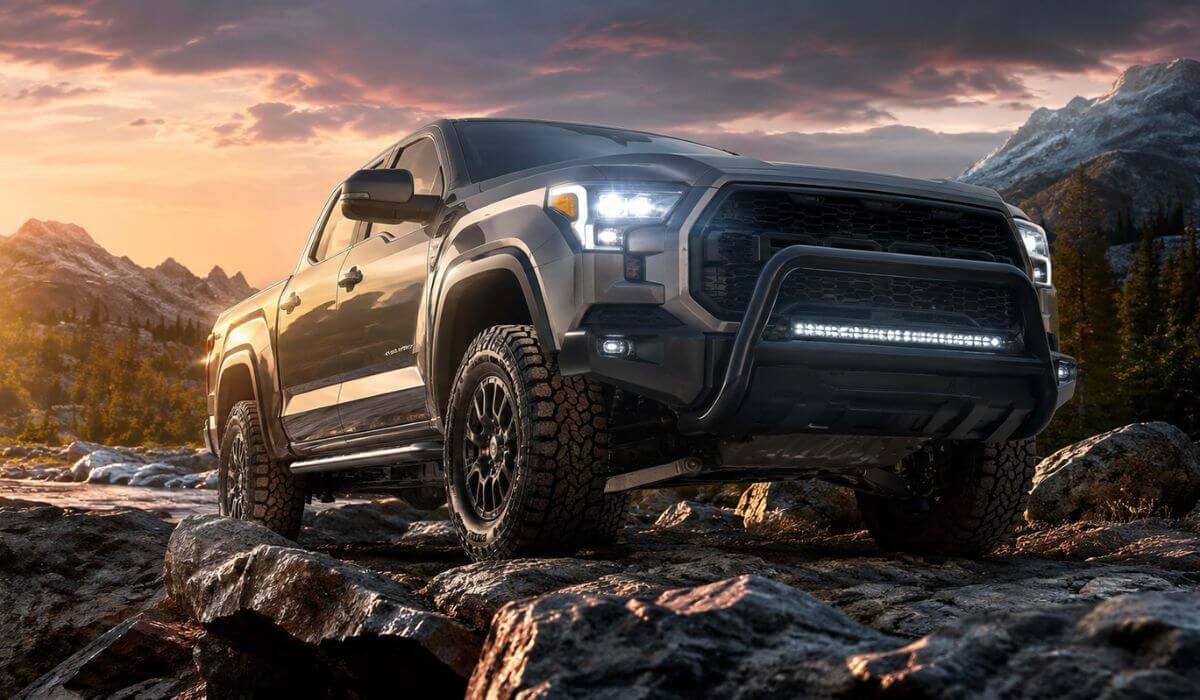
5 Best Bull Bars for Toyota Tundra in 2026: Radar-Smart Fits, Light Mounts & Matte Armor
A Toyota Tundra does not need a bull bar just to look tougher. The right one should fit the truck properly, leave the front-end hardware alone, and make sense for how the Tundra is actually used. That matters even more here because the Tundra changed generations: the 2022–2026 trucks have a completely different front-end layout from the 2007–2021 models, so a bar that looks right in a product photo can still be the wrong choice for a particular truck.
This list is deliberately built around real fitment rather than flashy marketing. The newer Tundra options include 3-inch tubular designs, matte-black finishes and light-mount setups, while some have important front-radar or sensor restrictions. The older options cover the 2007–2021 generation instead of pretending one accessory fits every Tundra ever made. That distinction is easy to overlook when shopping online, and it is exactly where an expensive mistake can start.
For the 2022–2026 Tundra, check your front sensors or radar equipment before ordering. For the 2007–2021 truck, match the exact model year and body configuration. I ranked these five with those fitment realities, construction, protection, finish and useful features in mind—not simply by which one looks biggest on a screen.
Best Toyota Tundra Bull Bars: Top 2026 Picks for Steel Protection & Fitment
#1. TAC 3″ Heavy-Duty Bull Bar
Best 3-Inch Bull Bar for 2022-2026 Toyota Tundra With Heavy-Duty Front Protection, Textured Black Finish and Off-Road Styling
#2. Black Horse Armour Matte Bull Bar
Best Black Bull Bar for 2022-2026 Toyota Tundra With Matte Finish, Light-Bar Mounting and No-Skid-Plate Design
#3. PARTREE Rugged Front Bull Bar
Best Bull Bar for 2022-2026 Toyota Tundra Without Front Radar Sensor With Clean Fitment and Rugged Front-End Protection
#4. Tyger Auto FURY TG-GD6T60038 Bull Bar
Best Front Bumper Guard for 2007-2021 Toyota Tundra With Integrated Light Mount, Textured Black Finish and Bull Bar Protection
#5. VANGUARD SS Classic Bull Bar
Best Bull Bar for 2007-2020 Toyota Tundra With Classic Front-End Protection and Durable Steel Construction
Expert Tip
The smartest way to buy a Tundra bull bar is to start with fitment, not appearance. The 2022–2026 Tundra is not simply an updated version of the older truck; its front-end hardware and sensor layout make compatibility much more important. A bar can look perfect in a listing photo and still be the wrong purchase for your truck.
For the newer Tundra, pay particular attention to front radar and sensor clearance before ordering. That is why the PARTREE option is clearly separated here rather than being presented as a universal fit. The Black Horse Armour also deserves attention if you want a cleaner setup without a skid plate, while the TAC 3-inch bar makes more sense for someone prioritising a substantial tubular front-end presence.
If you own a 2007–2021 Tundra, don’t automatically compare those bars with the newer-generation options. The Tyger Auto and VANGUARD choices belong to the older platform and are included specifically for that reason. Generation-specific fitment is more valuable than a flashy feature list.
How We Chose These Bull Bars
We did not rank these five simply by appearance, review count, or how aggressive the product photographs look. The selection starts with the question that actually matters after the package arrives: will this bull bar make sense on your Tundra?
1. We separated the two Tundra generations
The first filter was model-year compatibility. The TAC, Black Horse Armour and PARTREE options are aimed at the 2022–2026 Tundra, while the Tyger Auto and VANGUARD products cover the older 2007–2021 generation. Keeping those groups separate prevents one of the most common mistakes in truck-accessory shopping: assuming a product listed for “Tundra” automatically fits every year.
2. We looked at the actual construction
A bull bar is exposed to road debris, branches, parking bumps and off-road abuse, so the material and tube design matter. The TAC’s 3-inch tubular construction gives it a strong physical presence, while the Black Horse Armour uses cold-rolled steel with a matte-black finish. The older Tyger option adds a textured black finish and integrated light-mount functionality rather than offering protection as its only selling point.
3. We checked what each bar actually adds
Not every owner wants the same thing. Some want a straightforward front-end guard; others want to mount auxiliary lighting or build a more rugged truck.
That is why the list has different personalities. TAC is the straightforward heavy-duty-style choice. Black Horse Armour is aimed at owners wanting a matte-black look and light-bar capability without a skid plate. Tyger Auto brings an integrated light mount to the older Tundra platform. VANGUARD keeps things more traditional.
4. We treated sensor compatibility as a buying issue
This is where we deliberately avoided making a blanket “fits all” claim. The PARTREE bull bar specifically excludes Tundra models with a front radar sensor, which is important enough to influence its position on this list. A cheaper or better-looking bar is not a better choice if it creates a compatibility problem with equipment already installed on the truck.
5. We considered what you are actually paying for
A bull bar should earn its place on the truck. We considered fitment, protection, tube size, finish, lighting provisions, sensor limitations and generation coverage rather than rewarding a product simply because it has the most dramatic appearance.
That leaves you with five options that serve different Tundra owners instead of five versions of the same recommendation. Check your exact year first, identify whether your truck has front radar or related hardware, then choose the bar whose design actually matches how you use the truck. That small amount of checking can save you from buying a product that looks right online but belongs on a different Tundra.
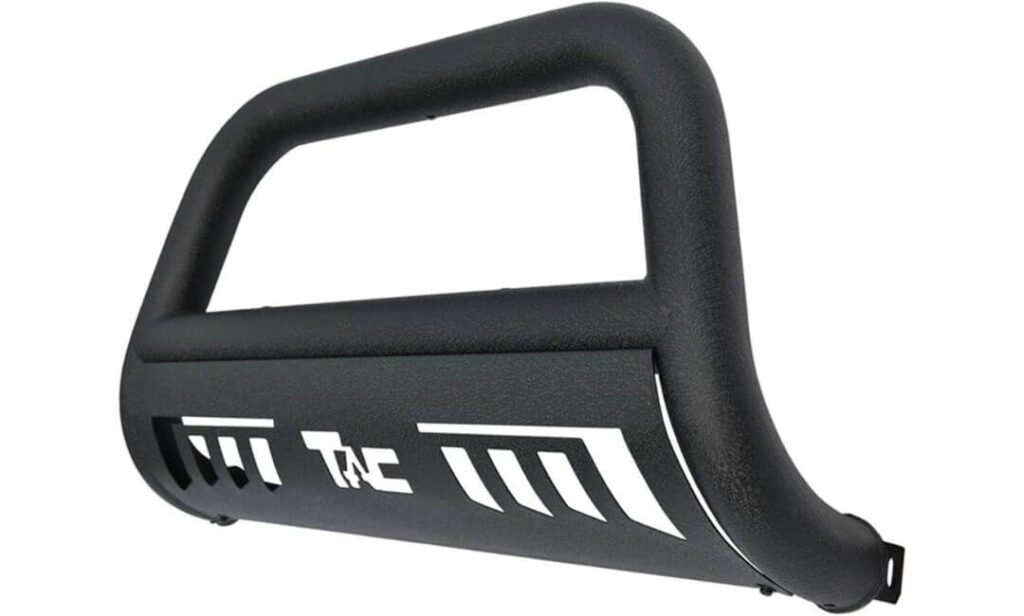
#1. TAC 3″ Heavy-Duty Bull Bar
Quick Specs:
- Fitment: 2022–2026 Toyota Tundra
- Tube Size: 3-inch
- Construction: Heavy-duty mild steel
- Finish: Heavy-texture black powder coat with E-coating
- Fit Type: Vehicle-specific direct bolt-on
- Protection: Front bumper and grille-area coverage
- Installation: Bolt-on hardware and instructions included; no drilling specified
- Warranty: 3 years
- Important Fitment Check: May interfere with some front-mounted sensors
There is a difference between a bull bar that simply makes a truck look tougher and one that feels like it actually belongs there. TAC gets that part right with a 3-inch steel tube, vehicle-specific brackets and a heavy-texture black finish that suits the newer Tundra without looking like an oversized aftermarket add-on. The E-coating underneath the powder coat is another useful detail because this is a piece that sits directly in the path of water, road grime and small debris.
The construction is also where this option earns its place. The bar and brackets use heavy-duty mild steel, while the textured black coating is designed to help resist scratches and rust. You are not buying a replacement bumper here; you are adding a dedicated layer of front-end protection while keeping the factory front-end appearance largely intact. That makes the design especially appealing for a Tundra owner who wants more presence without going all the way into a full bumper conversion.
Installation is refreshingly straightforward for this type of accessory. It is designed as a direct bolt-on setup, with the required mounting hardware and instructions supplied, so there is no drilling called out by the manufacturer. One detail deserves attention before ordering: TAC notes that the bar may interfere with front-mounted sensors on some trucks. That is not something to ignore, particularly on a newer Tundra, so confirming your exact front-end equipment with TAC is the sensible final check.
(A solid choice when you want genuine steel construction, a factory-conscious fit and a tougher front end without turning the truck into a completely different build.)
What We Like
- 3-inch tubing gives the front end the substantial look expected from a proper bull bar.
- The mild-steel construction and E-coated textured finish feel better suited to real truck use than a purely cosmetic accessory.
- Vehicle-specific brackets make the fitment approach much more reassuring than universal-style bars.
- Direct bolt-on installation keeps the installation process relatively uncomplicated.
- The three-year warranty adds useful confidence when choosing an aftermarket protection accessory.
What We Would Keep in Mind
- Front-sensor compatibility should be confirmed before ordering, because equipment placement can vary between Tundra configurations.
Toyota Tundra Fitment
This particular bar is designed for the 2022–2026 Toyota Tundra, so it belongs with the current-generation truck rather than being treated as a universal Tundra accessory. That generation-specific approach is one of its strongest points: the brackets and mounting arrangement are intended around the newer Tundra platform.
For a Tundra equipped with front-mounted sensing hardware, the important step is simply confirming clearance before purchase. The bar itself is vehicle-specific, but sensor equipment can make an otherwise correct fitment more complicated, which is why checking the exact truck configuration is worth doing before placing the order.
The Insider Pro-Tip
If your Tundra already has front sensors, do not judge clearance from a product photograph. Look at the actual hardware on your truck and confirm compatibility with TAC before ordering. That one check is far more useful than another hour of comparing glossy product pictures.
For everyone else, the combination I like here is the 3-inch steel tube + vehicle-specific mounting + E-coated textured finish. It gives the Tundra the stronger front-end character most owners are chasing while keeping the upgrade relatively focused. If your goal is a practical bull bar rather than a complete bumper rebuild, this is exactly the kind of setup worth putting near the top of the shortlist.
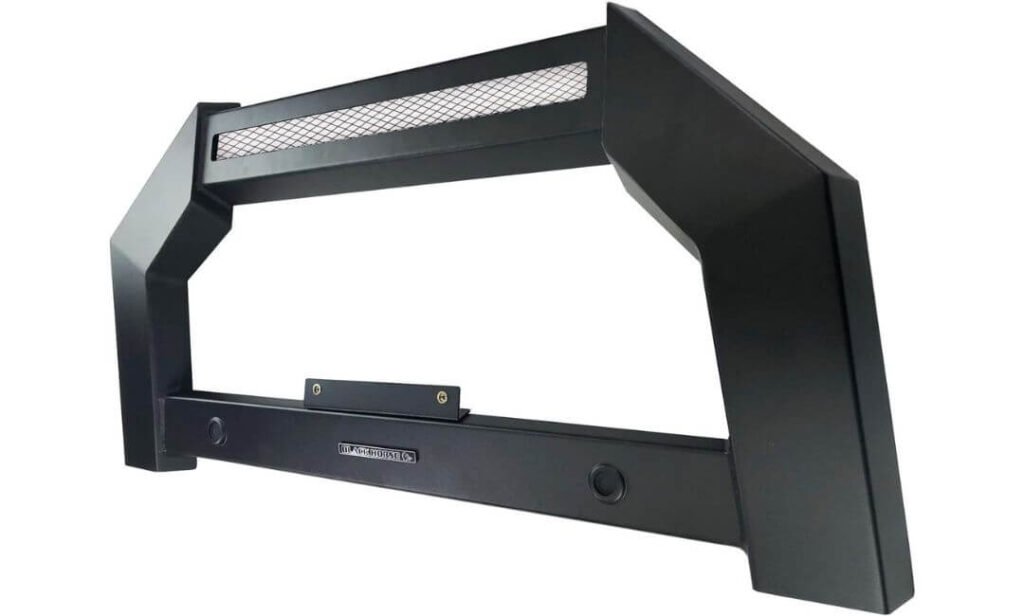
#2. Black Horse Armour Matte Bull Bar
Quick Specs:
- Fitment: 2022–2026 Toyota Tundra
- Construction: Cold-rolled mild steel
- Finish: Matte black powder coat
- Weight: 37 lb
- Mounting: Frame-mounted bolt-on design
- Drilling: No drilling required
- Lighting: Compatible with Black Horse 20-inch LED light bar; light sold separately
- Sensor Provision: Pre-drilled and capped holes designed for bumper-sensor relocation
- Warranty: 3 years
- Design: No-skid-plate bull bar
Some bull bars try to win you over with size. This one takes a more considered approach: cold-rolled mild steel, a restrained matte-black finish and a frame-mounted design that keeps the upgrade focused on the front end rather than turning it into a complete bumper transformation. At around 37 pounds, it also has the substantial feel you would expect from a steel accessory without becoming an unnecessarily complicated addition.
The useful detail is underneath the styling. The mounting system is bolt-on and requires no drilling, with OEM-spec Grade 5 hardware supplied for the installation. There are also pre-drilled, capped openings intended to accommodate and relocate bumper sensors. That makes the design more thoughtful than a basic tube bar, particularly for a modern Tundra where the factory front-end equipment deserves consideration before adding anything in front of it.
Then there is the lighting provision. The bar is configured to accept Black Horse’s 20-inch LED light bar, although the light itself is not included. That gives you an easy path to add auxiliary lighting later instead of buying a bar that leaves you figuring out where to mount lights afterward. The matte-black powder coat also works well with the Tundra’s naturally rugged appearance and is designed to help withstand rust and corrosion in normal use.
(The no-skid-plate layout is actually part of its appeal: cleaner than a full lower-protection setup, but still substantial enough to change the character of the truck.)
What We Like
- Cold-rolled mild steel gives it the solid construction expected from a proper truck accessory.
- No-drill frame mounting makes the installation approach refreshingly straightforward.
- The 20-inch LED light-bar provision adds genuine functionality rather than just visual aggression.
- 37-pound weight gives the bar a substantial feel without making the specification unnecessarily complicated.
- The matte-black finish suits the Tundra particularly well and keeps the appearance understated rather than flashy.
What We Would Check First
- If your Tundra uses front bumper sensors, confirm the exact relocation and clearance arrangement before buying. The supplied sensor openings are useful, but your truck’s equipment still needs to be matched correctly.
Toyota Tundra Fitment
This Armour setup is intended for the 2022–2026 Toyota Tundra, making it a current-generation-specific choice rather than a universal truck accessory. Its frame-mounted bolt-on construction is designed around that platform, and the supplied mounting hardware keeps the installation approach relatively clean.
The sensor provision is the part worth paying attention to. The bar has pre-drilled and capped openings for sensor relocation, but that does not mean every sensor-equipped Tundra will behave identically once the bar is installed. Checking your exact configuration before ordering is the smarter move than assuming the openings automatically solve every clearance issue.
The Insider Pro-Tip
If you want a Tundra bull bar that leaves room for future upgrades, this is one of the more sensible designs in the lineup. You can start with the steel bar and add a compatible 20-inch light later, rather than paying for lighting you may not even need.
The bigger point is the sensor setup. Do not let the phrase “sensor holes” become a reason to skip the fitment check. Measure what is actually on your truck, confirm the relocation arrangement, and then buy with confidence. Once that is cleared, the combination of cold-rolled steel, no-drill mounting, matte finish and light-bar compatibility makes this a genuinely well-rounded choice for a newer Tundra.
#3. PARTREE Rugged LED Bull Bar
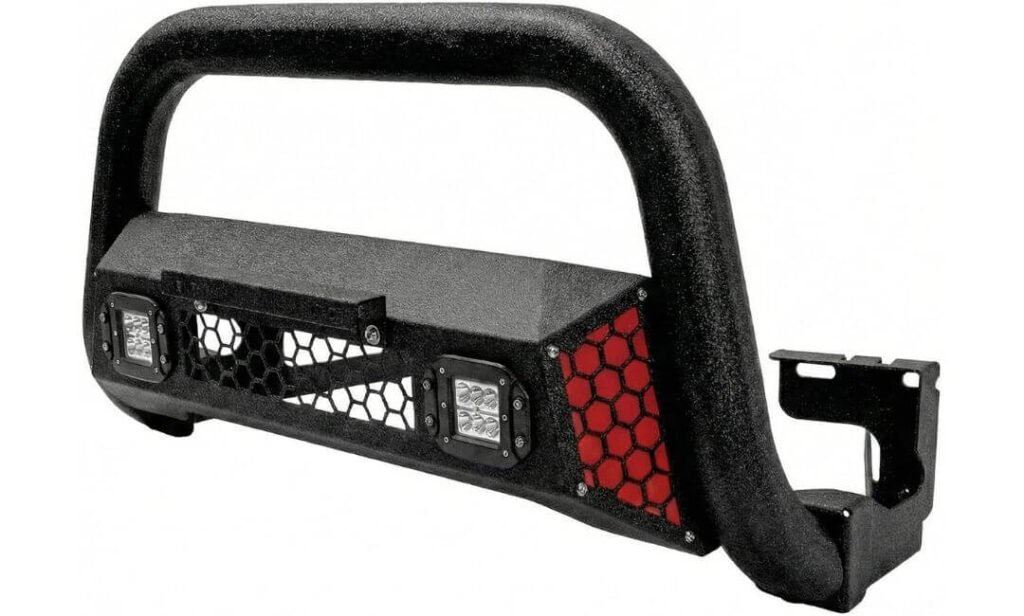
Quick Specs:
- Fitment: 2022–2026 Toyota Tundra
- Construction: Thickened carbon steel
- Tube Size: 3-inch
- Finish: Black powder coat for rust and corrosion resistance
- Lighting: Integrated LED light included
- Lighting Note: Separate switch harness required for wiring
- Support: Additional support beams included
- Utility: License plate bracket included
- Trim: Paintable trim panel
- Installation: Bolt-on, no drilling required
- Warranty: 2 years
- Critical Fitment: Not compatible with Tundra models equipped with front radar sensors
The first thing worth knowing about this bar is also the easiest thing to miss in a product listing: it is not for every 2022–2026 Tundra. If your truck has a front radar system, this is the point where you should stop and verify fitment rather than assuming the vehicle-specific label covers everything. For a Tundra without that radar hardware, however, the package becomes much more interesting because you are getting considerably more than a bare steel tube.
The 3-inch thickened carbon-steel tubing gives it the substantial construction you want from a front protection accessory, while the powder-coated surface is intended to help against rust and corrosion. What caught my attention more is the inclusion of additional support beams. They add another layer of structural bracing behind the main bar, which is a genuinely useful detail when comparing this against simpler bull bars that are mostly about appearance.
There is also a practical off-road angle here. An integrated LED light, license-plate bracket and paintable trim panel are included, so the package is ready for a more customised build straight away. The LED does require a separate switch harness for wiring, and the included light is better viewed as useful auxiliary illumination rather than a replacement for a serious dedicated trail-lighting setup. Installation remains bolt-on with no drilling, although access to a few mounting points can be tight.
(If your Tundra clears the radar requirement, this is the kind of feature-heavy package that makes sense for an owner who wants protection, lighting and a little room for personalisation in one upgrade.)
What We Like
- Support beams are included, giving the structure more substance than a simple single-tube design.
- The integrated LED means you are not starting from a completely bare bull bar.
- 3-inch carbon-steel tubing gives the front end a properly rugged character.
- The paintable trim panel is a clever touch for owners who want the accessory to blend with the truck.
- A license plate bracket is already part of the package, which is useful for an off-road-oriented setup.
What We Would Check First
- Front radar compatibility is non-negotiable. This bar is specifically not designed for Tundras equipped with a front radar system.
Toyota Tundra Fitment
The fitment is aimed at the 2022–2026 Toyota Tundra, with vehicle-specific mounting points and a bolt-on installation that does not require drilling. That makes it a much more straightforward proposition than adapting a universal bar to the truck.
But this is one of those products where the word “fit” needs context. Radar-equipped Tundras are excluded, so check your actual front-end hardware before ordering. If your truck does not have that system, the included support beams, LED, plate bracket and vehicle-specific mounting make the package considerably more complete.
The Insider Pro-Tip
This is the bull bar I would not buy on looks alone. First confirm the radar situation; after that, judge the package as a whole. You are getting the 3-inch carbon-steel bar, additional bracing, integrated lighting and useful mounting hardware rather than paying only for a visual upgrade.
And if you plan to take the Tundra onto darker trails, remember that the included 18W LED is more of a built-in convenience light than a serious night-driving setup. It is perfectly sensible to start with it and upgrade your lighting later if your use demands more reach. That makes this a particularly interesting choice for an owner who wants a rugged starting point without having to build the entire front end from scratch.
#4. Tyger Auto TG-GD6T60038 Front Bull Bar
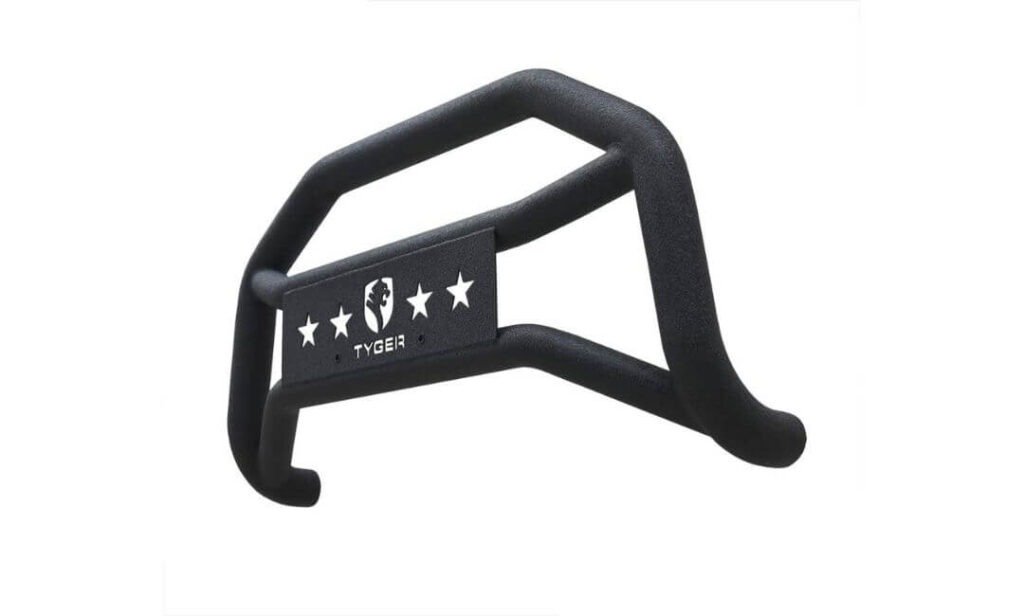
Quick Specs:
- Fitment: 2007–2021 Toyota Tundra
- Tube Size: 2.5-inch heavy-duty tubing
- Construction: Heavy-duty metal tubing with seamless welding
- Finish: E-coated textured black
- Lighting: Pre-welded light-mount channel; LED lights sold separately
- Plate Mounting: Two pre-drilled holes for license-plate relocation
- Installation: Bolt-on; hardware and DIY instructions included
- Weight: 24.2 lb
- Warranty: 3 years for U.S. customers
- Generation Note: Does not fit 2022+ Tundra
There is something refreshing about a product that knows exactly which truck it belongs on. This Tyger guard is made for the 2007–2021 Tundra, and that matters because the front structure of those trucks is completely different from the redesigned 2022+ generation. Rather than trying to make one accessory cover everything, this setup stays focused on the older platform with 2.5-inch tubing, vehicle-specific mounting and a textured black finish.
The useful part is how much functionality is built into a relatively simple design. The frame uses seamless-welded tubing with E-coating, while the pre-welded light-mount channel gives you a clean place to add an LED bar later. The lights are not included, which is actually worth knowing before ordering because you can choose the lighting that suits your own driving rather than paying for a package you may not use. There are also two pre-drilled holes for relocating the license plate when the original position becomes inconvenient.
Installation is designed around a bolt-on setup, with mounting hardware and a DIY manual included. The guard weighs about 24.2 pounds, so it is noticeably less imposing than some of the larger steel bars in this list while still giving the older Tundra a tougher front-end profile. One installation detail deserves attention: tow-hook removal or modification can vary by configuration, and front-sensor clearance should also be checked on equipped trucks.
(For a 2007–2021 owner wanting a compact bull-bar setup with room for auxiliary lighting, the proportions make considerably more sense than forcing a newer-generation product onto an older truck.)
What We Like
- 2.5-inch tubing keeps the design substantial without making it unnecessarily bulky.
- The pre-welded light channel is genuinely useful for owners planning auxiliary lighting.
- E-coating plus textured black finish gives the steel a practical layer of surface protection.
- 24.2-pound weight keeps the accessory relatively manageable compared with heavier bumper-style builds.
- The vehicle-specific fitment makes it a proper older-generation Tundra option rather than a generic universal bar.
What We Would Check First
- Check front-sensor clearance and tow-hook requirements for your exact Tundra year before installation, as the setup can vary between configurations.
Toyota Tundra Fitment
This guard is specifically for the 2007–2021 Toyota Tundra and should not be treated as an option for the redesigned 2022+ truck. That clear generation boundary is important when shopping online, where “Tundra compatible” can otherwise make two completely different platforms appear interchangeable.
For the trucks it was designed around, the bolt-on mounting, light channel and plate-relocation provisions make the setup particularly practical. Owners with factory tow hooks or front sensing equipment should simply verify their exact configuration first, because those components can influence the installation.
The Insider Pro-Tip
If your Tundra falls in the 2007–2021 range, don’t dismiss this one because its 2.5-inch tubing looks smaller than a 3-inch bar. The lighter profile is part of what makes it appealing: you get a defined front guard, a proper light-mount channel and a vehicle-specific installation without moving into a much larger bumper-style accessory.
The smarter upgrade path is to install the guard first and choose your LED lighting separately. That way, the front end stays clean until you actually need auxiliary lighting, and you can select a light that matches how you use the truck rather than compromising around a bundled light.
#5. VANGUARD SS Classic Stainless Bull Bar
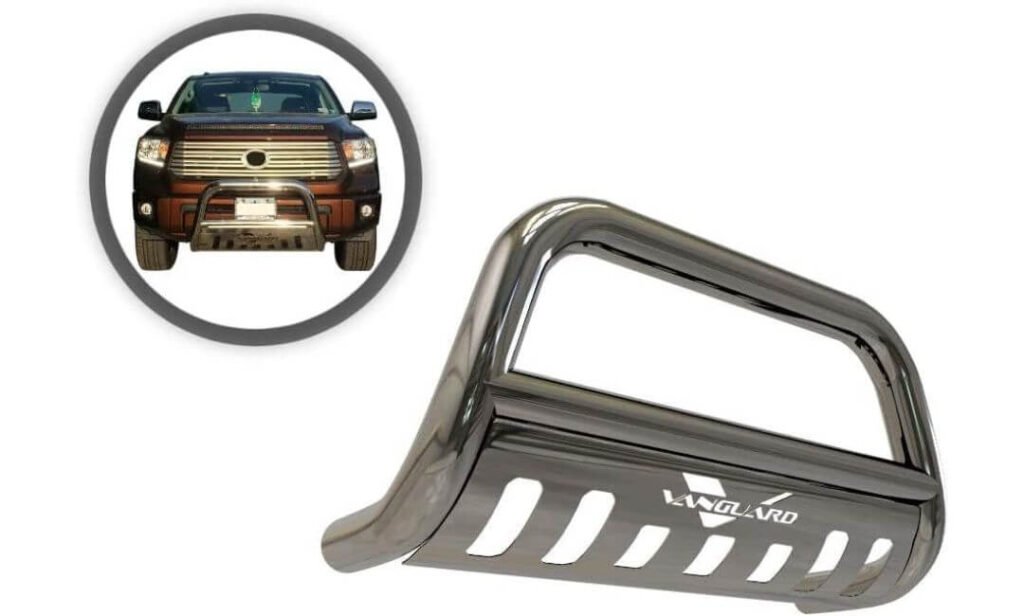
Quick Specs:
- Fitment: 2007–2020 Toyota Tundra
- Construction: 3-inch T304 stainless steel
- Finish: Mirror-polished chrome
- Weight: Approximately 25 lb
- Mounting: Vehicle-specific bolt-on design
- Hardware: Assembly and mounting hardware included
- Installation: No welding required
- Undercarriage: Trimming may be required
- TRD Fitment: Not compatible with TRD models
A polished stainless bull bar changes the conversation completely. Instead of trying to disappear into the truck’s front end, this one is meant to be seen. The 3-inch T304 stainless-steel tubing and mirror-polished finish give an older Tundra a noticeably cleaner, brighter appearance while still adding a physical layer between the grille area and everyday road hazards.
The material is the real reason to consider it. T304 stainless steel naturally brings better resistance to rust and corrosion than ordinary untreated steel, and the polished surface gives the bar a premium finish that suits owners who do not want another completely black accessory on the front of their truck. At roughly 25 pounds, it also stays relatively light for a 3-inch steel-tube design.
Fitment needs a little more attention here than with a straightforward bolt-on accessory. It is designed specifically for 2007–2020 Tundra models, but TRD variants are excluded, and the manufacturer notes that trimming the undercarriage cover may be required on most vehicles. The mounting hardware is supplied and no welding is required, but this is one installation where taking five minutes to check your exact truck is far better than discovering the difference halfway through the job.
(For the right older-generation Tundra, this is less about adding the biggest possible bar and more about combining stainless-steel durability with a genuinely distinctive front-end finish.)
What We Like
- 3-inch T304 stainless steel gives the bar a premium construction advantage.
- The mirror-polished finish is a refreshing alternative to the usual black powder-coated look.
- At around 25 pounds, it adds a substantial visual upgrade without becoming a massive front-end accessory.
- Vehicle-specific mounting keeps the installation more purposeful than a universal-style setup.
- No welding is required, with the necessary assembly and mounting hardware supplied.
What We Would Check First
- TRD models are excluded, and most vehicles may require some undercarriage-cover trimming, so confirm both before ordering.
Toyota Tundra Fitment
The Vanguard is designed for the 2007–2020 Toyota Tundra, with the important exception of TRD variants. It also fits the corresponding Sequoia application, but for this article the relevant point is its older-generation Tundra coverage.
The installation is still fundamentally bolt-on, but this is not necessarily a five-minute accessory. Undercarriage-cover trimming may be required, and the exact fit can depend on the truck’s configuration. That is worth knowing upfront, because it makes the product much easier to plan for rather than treating the trimming requirement as an unexpected installation problem.
The Insider Pro-Tip
If you own a non-TRD Tundra from this generation and want something that looks genuinely different from the sea of matte-black accessories, the polished T304 stainless construction is the reason to look closely at this one.
Before ordering, check two things: TRD compatibility and undercarriage clearance. Get those right and the rest is refreshingly simple—the supplied hardware handles the mounting, no welding is required, and the polished stainless finish does most of the visual work. For an older Tundra build where appearance matters just as much as front-end presence, that combination is hard to fake with a basic painted steel bar.
Best Toyota Tundra Bull Bars (2007–2026): Real-World Specs Compared
Toyota Tundra Bull Bar Buying Guide
A bull bar is one of those Tundra upgrades where fitment comes before everything else. The wrong bar can look perfect in a listing and still create problems with sensors, mounting points, underbody covers or other factory equipment. The safest approach is to identify your Tundra generation first, then compare the construction and features that actually match the way you use the truck.
Start With the Tundra Generation, Not the Product Photo
The biggest dividing line in this guide is the Tundra’s generation.
- 2007–2021 Toyota Tundra: This is the older platform. The Tyger Auto and VANGUARD options in this list are designed around this generation.
- 2022–2026 Toyota Tundra: The redesigned truck uses a different front-end layout, so the TAC, Black Horse Armour and PARTREE bars are the relevant choices here.
- 2007–2020 VANGUARD: Its fitment has an additional restriction because TRD models are excluded.
- 2022–2026 PARTREE: It specifically excludes trucks equipped with a front radar system.
This is why I would never choose a Tundra bull bar simply because the listing says “Toyota Tundra.” The model year and front-end configuration are far more useful than that broad compatibility statement.
Radar and Front-Sensor Compatibility Deserve Extra Attention
Modern Tundras can have factory sensing equipment positioned around the front of the vehicle. Adding steel tubing in that area changes what sits in front of those components, so a bull bar should never be treated as sensor-neutral by default.
The products in this guide make the difference particularly clear:
- TAC 3″ Bull Bar: The manufacturer warns that the bar may interfere with front-mounted sensors.
- Black Horse Armour: Includes pre-drilled and capped openings intended to accommodate bumper-sensor relocation, but exact compatibility should still be confirmed.
- PARTREE: Specifically does not fit Tundra models with a front radar system.
- Tyger Auto: Sensor interference may occur on equipped older Tundras, so configuration should be checked.
- VANGUARD: Its main fitment restriction is different, with TRD models excluded.
The practical rule is simple: identify what hardware is actually on your truck before ordering. Do not assume that a product’s “vehicle-specific” label automatically means every sensor-equipped configuration will work without adjustment.
Choose the Tube Size for the Kind of Protection You Want
Tube diameter changes both the visual character and physical presence of a bull bar.
The options here range from 2.5-inch tubing on the Tyger Auto to 3-inch tubing on TAC, PARTREE and VANGUARD. That difference is noticeable.
A 3-inch bar generally gives the Tundra a more substantial front-end appearance and makes the accessory feel more prominent. The 2.5-inch Tyger design is comparatively restrained, which can be preferable if you want a bumper guard without making the front of an older Tundra look overly built.
For this reason, bigger is not automatically better. Think about:
- How much front-end presence you actually want.
- Whether the truck is primarily a daily driver or regularly sees trails.
- How the bull bar will sit alongside the factory bumper and grille.
- Whether you are adding other front-end accessories later.
Decide Whether You Actually Need a Skid Plate
A bull bar and a skid plate are not the same thing, and there is no reason to buy both unless your driving conditions justify the extra coverage.
The Black Horse Armour in this guide is deliberately a no-skid-plate design. That gives the front end a cleaner appearance and avoids adding a lower protective panel when the owner does not need one.
A skid plate becomes more relevant when the truck regularly encounters:
- Rocky trails
- Deep ruts
- Uneven approaches
- Loose terrain with exposed obstacles
- Situations where the lower front area is more likely to contact the ground
For mostly paved-road driving, occasional gravel and light trail use, a bull bar without a skid plate can be a perfectly sensible setup. If the Tundra spends serious time crawling over obstacles, lower-front protection becomes much more important than appearance alone.
Think About Lighting Before You Buy the Bar
A bull bar can also become a useful lighting platform, but the mounting design matters.
There are three different approaches represented here:
| Lighting Setup | What It Means |
|---|---|
| Integrated LED | PARTREE includes an LED light in the bull-bar package |
| Dedicated light-bar provision | Black Horse Armour is configured for a 20-inch LED light bar, sold separately |
| Pre-welded light mount | Tyger Auto provides a built-in mounting channel for optional lighting |
| No dedicated lighting feature | TAC and VANGUARD focus more heavily on protection and appearance |
This distinction matters because buying a bar first and figuring out lighting afterward can leave you with awkward mounting options. If auxiliary lighting is part of the plan, choose the mounting arrangement at the same time as the bull bar.
Also remember that an included LED is not automatically the best lighting solution. The PARTREE’s integrated light adds convenience, but owners wanting serious trail illumination may eventually prefer a stronger dedicated light setup.
Matte Black, Textured Black or Polished Stainless?
Finish is more than a colour choice because the bar lives directly in the path of road spray, dirt and debris.
The black options in this guide use different approaches:
- TAC: E-coating with a heavy-texture black powder-coated finish.
- Black Horse Armour: Matte-black powder-coated finish over cold-rolled mild steel.
- PARTREE: Black powder-coated carbon-steel construction.
- Tyger Auto: E-coated textured black finish.
These finishes are designed to improve resistance to rust, corrosion and everyday surface wear, but none should be considered maintenance-free. Washing away road salt, mud and accumulated grime is still worthwhile.
Then there is the VANGUARD, which takes a completely different route with 3-inch T304 stainless steel and a mirror-polished finish. It makes much more sense for someone who specifically wants a bright, premium-looking front end rather than another black accessory.
Consider Weight, Clearance and the Way the Truck Drives
A bull bar adds weight ahead of the front axle, but the bigger practical consideration is often where the bar sits rather than the number on the scale.
The products here vary noticeably:
- TAC: Heavy-duty 3-inch steel construction.
- Black Horse Armour: Approximately 37 lb.
- PARTREE: 3-inch thickened carbon-steel construction with additional support beams.
- Tyger Auto: Approximately 24.2 lb.
- VANGUARD: Approximately 25 lb.
For normal road use, these differences are unlikely to transform the driving character of a Tundra. Off-road, however, the shape and position of the bar can influence approach clearance and how the front end meets an obstacle.
A well-positioned bull bar should complement the truck’s existing geometry rather than hang unnecessarily low. If approach angles are important to you, look at the actual lower profile of the bar and its mounting position, not just its tube diameter.
Installation Is Part of the Buying Decision
All five products are designed around bolt-on installation, but that does not mean every installation will be equally simple.
TAC, Black Horse Armour and PARTREE are designed as no-drill bolt-on setups for the newer Tundra. Tyger Auto also uses a bolt-on arrangement with supplied hardware and instructions.
The VANGUARD deserves a little more planning because undercarriage-cover trimming may be required on most vehicles. It also excludes TRD models.
Before buying, check whether your particular truck has:
- Factory tow hooks
- Front sensors or radar
- An underbody cover that may need trimming
- Existing front accessories
- A lighting setup you intend to retain or add
A professional installation is worth considering whenever sensor positioning, trimming or difficult mounting access is involved.
Match the Bull Bar to Your Real Use
There is no single “best” Tundra bull bar for every owner.
| If Your Priority Is… | Look Closely At… | Why |
|---|---|---|
| Balanced protection and appearance | TAC 3″ | Strong 3-inch steel construction and vehicle-specific mounting |
| Clean newer-Tundra build | Black Horse Armour | Matte finish, no skid plate and light-bar provision |
| More features in one package | PARTREE | Integrated LED, support beams, plate bracket and paintable trim |
| Older-generation practicality | Tyger Auto | 2007–2021 fitment, light channel and relatively light 24.2-lb design |
| Polished stainless appearance | VANGUARD | 3-inch T304 stainless construction and mirror finish |
The right choice ultimately comes down to your exact Tundra, its factory equipment and how the truck is used. That is a much more reliable way to choose than simply buying the bar with the largest tube or most aggressive photograph.
Radar Sensor & Compatibility Deep-Dive
On a newer Toyota Tundra, radar compatibility is not a small footnote. A bull bar physically occupies space in front of the truck, while factory radar and other sensing hardware depend on a clear, predictable field of view. That is why a bar can be correctly mounted and still create a problem with the vehicle’s sensing system. The important distinction is that mechanical fitment and sensor compatibility are two separate checks.
Why Model Year Matters
The 2007–2021 Tundra and 2022–2026 Tundra should not be treated the same way.
The older Tundra options in this article, such as the Tyger Auto TG-GD6T60038 and VANGUARD SS Classic, were designed around the previous-generation front-end structure. The newer TAC, Black Horse Armour and PARTREE products are designed around the 2022–2026 platform, where front-end sensing equipment can make accessory placement more sensitive.
That is why the product descriptions in this article do not simply say “fits Toyota Tundra.” The useful question is:
Does this specific bull bar fit this specific Tundra configuration without compromising the equipment already installed there?
Radar Is Different From a Simple Parking Sensor
It is easy to group every front sensor together, but they do not all perform the same job.
A vehicle can have different forms of front-end sensing, including:
- Radar hardware, used by certain driver-assistance systems to detect objects and monitor distance.
- Parking sensors, which assist with close-range obstacle detection.
- Cameras, which rely on an unobstructed view rather than the same sensing principle as radar.
- Other factory sensing equipment, depending on the truck’s equipment and model configuration.
A bull bar can affect these systems in different ways. A physical opening in the bar does not automatically mean radar will work correctly through it, and moving a sensor does not automatically guarantee that the factory system will behave exactly as it did before.
That is why the PARTREE deserves a very clear warning: its listed fitment excludes Tundras equipped with a front radar system.
Which Products Need the Closest Sensor Check?
For the five bars selected here, the sensor situation is not identical.
TAC 3″ Bull Bar: The manufacturer states that the bar may interfere with front-mounted sensors. Confirm your exact configuration before ordering.
Black Horse Armour: It includes pre-drilled and capped openings intended to accommodate and relocate bumper sensors. That is useful, but the actual sensor arrangement on the truck still needs to be verified.
PARTREE: This is the clearest restriction in the group. Front-radar-equipped Tundras are not supported.
Tyger Auto: Designed for 2007–2021 Tundras, but front-sensor interference can vary by equipped model and year.
VANGUARD: Its main compatibility issue is different: TRD models are excluded, and some installations require undercarriage-cover trimming.
This is exactly why a single generic “sensor compatible” label would be misleading.
How to Check Your Tundra Before Ordering
Before spending money on the bull bar, take a few minutes to identify what is actually mounted on the front of your truck.
Check:
- Your exact model year, not just “Tundra.”
- Whether your truck has front radar equipment.
- The location of any visible parking sensors.
- Whether a front-facing camera is positioned around the grille or bumper area.
- Whether you already have aftermarket lights, brackets or other accessories occupying the same space.
- The manufacturer’s specific fitment notes for your configuration.
If you are unsure what a particular sensor does, do not remove, relocate or cover it simply to make the bull bar fit. Confirm the correct procedure with the manufacturer or a qualified Toyota technician.
What About Bull Bars With Sensor Relocation Openings?
This is where product descriptions can sound more reassuring than they really are.
The Black Horse Armour’s pre-drilled and capped sensor openings are a thoughtful design feature because they anticipate the need to accommodate factory equipment. But an opening alone does not prove that every sensor-equipped Tundra will work perfectly after installation.
The sensor has to remain correctly positioned, and its field of view has to remain appropriate. If the manufacturer specifies a relocation procedure, follow that procedure rather than improvising with brackets or spacers.
The same principle applies to any bull bar that claims sensor accommodation: treat the provision as a design advantage, not as a blanket guarantee.
Warning Signs After Installation
If a bull bar has been installed and the truck suddenly behaves differently, pay attention to what the vehicle is telling you.
Possible warning signs include:
- New or persistent driver-assistance warnings.
- Parking sensors producing repeated alerts when there is no nearby obstacle.
- A system that becomes unusually sensitive after installation.
- A dashboard warning that remains after the vehicle is started.
- Driver-assistance features becoming unavailable.
- Alerts that appear only when the bull bar is installed or after a sensor has been moved.
Do not simply assume the warning will disappear after driving a few miles. If the vehicle identifies a sensing-system problem, the correct response is to inspect the installation and follow the manufacturer’s or vehicle manufacturer’s diagnostic procedure.
What To Do If Radar or Sensors Need Recalibration
Recalibration is not something I would treat as a casual DIY step.
If a sensor has been physically moved, its mounting angle has changed, or the vehicle reports a persistent sensing-system fault, the appropriate next step is to have the system inspected and calibrated according to the vehicle manufacturer’s procedure.
A sensible sequence is:
- Confirm the bull bar is mounted correctly.
- Check that the sensor or radar hardware has not been physically obstructed.
- Verify that brackets and mounting points are secure.
- Check the bull bar manufacturer’s installation requirements.
- If the warning remains, have the vehicle’s sensing system diagnosed by a qualified technician familiar with Toyota’s driver-assistance systems.
- Do not disable warnings simply to make the accessory work.
The goal is not merely to make the warning light disappear. The goal is to ensure the system is actually detecting objects as intended.
Can You Have Protection Without Creating a Sensor Problem?
Absolutely, but the answer is choosing the right bar for the right truck, rather than assuming every bull bar will behave identically.
For a newer Tundra, I would put sensor compatibility ahead of tube size, finish, price or aggressive styling. A 3-inch bar with an excellent appearance is still the wrong purchase if your particular truck’s radar equipment is incompatible with it.
That is also why this article separates the products instead of calling one universal bull bar the winner. TAC offers a strong current-generation design but calls for a sensor check. Black Horse Armour provides dedicated sensor openings. PARTREE gives a clear radar exclusion. Those are materially different buying situations, and a well-researched Tundra accessory decision should make that difference obvious before you order.
2022–2026 vs. 2007–2021: What Changes for Your Tundra?
The year range on a bull bar listing is not just a search filter. The 2022 redesign changed the Tundra’s front-end architecture enough that an older-generation bar should never be treated as a near-fit for the newer truck. Mounting points, bumper shape, factory equipment and the space available around the front of the vehicle all matter.
That is why the five products in this guide naturally split into two groups. TAC, Black Horse Armour and PARTREE are aimed at the 2022–2026 Tundra, while Tyger Auto is designed for 2007–2021, and VANGUARD covers 2007–2020 with TRD exclusions. Keeping those generations separate is not just tidy organisation; it is what prevents a very expensive fitment mistake.
The Front-End Architecture Is Fundamentally Different
The 2007–2021 Tundra belongs to the previous-generation platform, with its own bumper structure, mounting locations and front-end proportions. A bull bar designed around those mounting points is engineered to sit in a particular relationship to the bumper and chassis.
The 2022 redesign brought a different front-end layout, so the mounting strategy for a bull bar has to follow the newer truck rather than simply matching the name “Tundra.”
That difference affects:
- Mounting brackets and attachment points
- The distance between the bull bar and factory bumper
- The shape and position of the lower front area
- Available space around factory sensors
- Clearance around cameras and other front-end equipment
- The way the accessory integrates with the factory bumper
This is why a 2007–2021 product should not be considered for a 2022+ Tundra simply because both trucks share the Tundra name.
2007–2021 Tundra: What Buyers Should Know
For an older Tundra, the Tyger Auto TG-GD6T60038 is the more straightforward modern-style option in this list. It uses 2.5-inch tubing, vehicle-specific mounting, a pre-welded light channel and a textured black finish.
The VANGUARD SS Classic takes a different approach with 3-inch T304 stainless steel and a mirror-polished finish. It covers 2007–2020, but there is an important restriction: TRD models are excluded. Its installation may also require trimming the undercarriage cover.
So even within the older generation, “2007–2021” is not enough information by itself. You still need to verify the exact year and configuration.
2022–2026 Tundra: Why Sensor Placement Matters More
The newer Tundra deserves closer attention because front-end sensing equipment can influence bull bar compatibility.
The three newer-generation products in this guide illustrate three different approaches:
| Product | What Matters Most |
|---|---|
| TAC 3″ Bull Bar | Vehicle-specific mounting, 3-inch steel tubing, sensor interference warning |
| Black Horse Armour | No-drill frame mounting, sensor relocation openings, 20-inch light-bar provision |
| PARTREE | 3-inch carbon steel, support beams, integrated LED, but not for front-radar-equipped models |
That last point is particularly important. A product can physically attach to a 2022–2026 Tundra and still be unsuitable for a particular configuration because of its radar equipment.
Mounting Points Are Not a “Close Enough” Specification
When checking a bull bar, do not focus only on whether the product says bolt-on.
A proper fitment check should answer:
- Does the bracket attach to the intended factory mounting structure?
- Is the bar designed specifically for your Tundra generation?
- Does the bumper need to be modified?
- Does the installation require drilling?
- Are tow hooks affected?
- Does an underbody cover need trimming?
- Does the bar sit clear of factory equipment?
- Is any sensor relocation actually supported by the manufacturer?
For example, the TAC and Black Horse Armour designs are presented as no-drill bolt-on installations, while the VANGUARD may require undercarriage-cover trimming. Those are very different installation experiences even though all three are aftermarket bull bars.
Your OEM Sensor Locations Matter Before You Order
The smartest check is to inspect the actual front of your Tundra before ordering.
Look for:
- Front radar hardware
- Parking sensors
- Front-facing cameras
- Factory tow hooks
- Existing grille or bumper accessories
- Any wiring or brackets already occupying the mounting area
Do not assume that two Tundras from the same model year have identical equipment. Optional equipment and trim-specific hardware can change what is physically present around the bumper.
This is especially relevant with the PARTREE. Its listing clearly excludes front-radar-equipped Tundras, so that restriction should be treated as a purchase requirement, not something to figure out after delivery.
What to Verify in the Manufacturer Fitment Chart
Before clicking the buy button, I would compare the product listing against the manufacturer’s fitment information and check these details individually:
Model year: Make sure the exact year is included, not just the generation.
Body configuration: Check whether the bar has restrictions for a particular cab or bumper configuration.
Factory equipment: Look specifically for radar, parking sensors, cameras and tow hooks.
Installation requirements: Look for drilling, trimming, bracket changes or sensor relocation.
Excluded models: Do not overlook phrases such as “not compatible with TRD models.”
Included hardware: Confirm that mounting brackets, fasteners and installation instructions are part of the package.
This takes only a few minutes and can save you from returning a large, heavy accessory that was never suitable for your truck in the first place.
Warranty Is Part of Fitment, Too
Warranty language is easy to ignore when shopping for a bull bar, but it becomes more important if the installation requires modifications.
The products here carry different manufacturer warranties, including three-year coverage from TAC, Black Horse Armour and Tyger Auto, while PARTREE lists a two-year warranty. VANGUARD’s product information focuses more heavily on fitment and installation requirements.
The important point is not simply choosing the product with the longest warranty. Read what the warranty actually covers and whether modifications, incorrect installation or unsuitable vehicle configurations affect coverage.
If the installation involves trimming an undercarriage cover, relocating sensors or modifying factory components, keep the installation information and receipts. If there is any uncertainty, professional installation gives you a much cleaner paper trail than improvising the mounting yourself.
Why Mixing the Two Generations Can Go Wrong
The temptation is understandable: you find a Tundra bull bar at a good price, the product photograph looks close, and the listing mentions “Toyota Tundra.”
That is exactly where I would slow down.
A 2007–2021 bull bar is not a cheaper alternative to a 2022–2026 bar. It was built around different mounting and front-end dimensions. Likewise, a newer-generation bar should not be adapted to an older Tundra simply because the tube design looks universal.
You are not just buying steel tubing. You are buying the brackets, mounting geometry and clearances that make that tubing belong on a particular truck.
The Simple Rule Before You Buy
If you remember only one thing from this section, make it this:
Match the generation first, the exact model year second, factory equipment third, and styling last.
For 2007–2021 Tundras, concentrate on products genuinely engineered for that platform, while checking special restrictions such as the VANGUARD’s TRD exclusion.
For 2022–2026 Tundras, give sensor and radar compatibility much more attention. The TAC and Black Horse Armour options require configuration checks, while PARTREE has a direct exclusion for front-radar-equipped models.
That is the difference between buying a bull bar because it looks right and buying one because it actually belongs on your Tundra.
Installation Essentials for a Toyota Tundra Bull Bar
A bull bar can be advertised as “bolt-on,” but that does not mean the job should be rushed. On a Tundra, a clean installation is about more than getting every bolt tight. The bar needs to sit evenly, the brackets need to be properly seated, factory components need to remain clear, and any front sensing equipment needs to be treated with care. A few extra minutes during installation can make the difference between a professional-looking fit and a bar that sits slightly crooked or creates an avoidable sensor issue.
Tools Worth Having Before You Start
The exact tools depend on the bull bar and Tundra configuration, so the supplied installation instructions should always take priority. For the products covered in this article, a sensible basic setup includes:
- Metric socket set suitable for the supplied mounting hardware
- Ratchet and suitable extensions
- Torque wrench capable of covering the manufacturer’s specified tightening range
- Combination or open-end metric wrenches where access is tight
- Trim-removal tools if an underbody cover needs to be removed
- Flat work surface or suitable lifting equipment
- Work gloves and eye protection
- Flashlight or inspection light
- Tape measure for checking left-to-right positioning
- Thread-cleaning brush if existing mounting points contain dirt or road debris
For some installations, an extra pair of hands is more valuable than another tool. A steel bull bar is awkward to hold perfectly level while simultaneously starting bolts, so having someone support the bar during initial mounting can save a lot of frustration.
Do Not Guess the Torque Specification
There is no single universal torque number that applies to every Toyota Tundra bull bar.
That is important.
The correct torque depends on the specific mounting hardware, bracket design and manufacturer’s installation instructions. The TAC, Black Horse Armour, PARTREE, Tyger Auto and VANGUARD products do not necessarily use identical hardware, so copying a torque figure from another bull bar installation is not a safe shortcut.
Use the manufacturer’s supplied torque specification whenever one is provided. If the instructions do not clearly state a value, contact the manufacturer or installer rather than guessing.
A torque wrench should be used for the final tightening, particularly on the primary frame and bracket fasteners. “As tight as possible” is not a torque specification.
Step 1: Confirm the Truck Before Touching the Hardware
Before removing anything, compare the actual truck with the product’s fitment information.
Confirm:
- Exact Tundra model year
- Generation
- Front bumper configuration
- Factory tow hooks
- Front radar or other sensing equipment
- Existing aftermarket accessories
- Any underbody cover that could affect installation
This is especially important with the products in this guide. The Tyger Auto is for 2007–2021, the VANGUARD covers 2007–2020 and excludes TRD models, while TAC, Black Horse Armour and PARTREE are aimed at the newer 2022–2026 Tundra.
If the truck does not match the product’s stated configuration, stop there. Installation is not the time to discover a fitment problem.
Step 2: Lay Out Every Bracket and Fastener
Before putting anything on the truck, unpack the hardware and compare it with the instructions.
Separate:
- Main bull bar
- Mounting brackets
- Support brackets or beams
- Bolts
- Nuts
- Washers
- Spacers
- Sensor-related components
- Light-mount hardware
This sounds basic, but it prevents one of the most annoying installation problems: getting halfway through the job and discovering that a bracket or spacer was installed on the wrong side.
For the PARTREE, for example, the additional support beams are part of the structural setup. For Black Horse Armour, the sensor-related openings and mounting arrangement deserve attention before the bar is tightened down.
Step 3: Start Every Main Bolt by Hand
Do not fully tighten the first bolt as soon as it catches the thread.
Start the primary mounting bolts by hand, leaving enough movement for the bar and brackets to settle into position. Then install the remaining hardware before tightening anything completely.
This gives you room to correct:
- Uneven spacing
- Slight bracket movement
- Left-to-right height differences
- Misaligned mounting holes
- A bar that is sitting too close to one side of the bumper
Once everything is loosely assembled, step back and look at the truck from several angles.
Step 4: Align the Bull Bar Before Final Torque
This is where the installation starts looking professional.
Check the gap between the bull bar and bumper on both sides. Then check the bar from directly in front of the truck.
You want:
- Even left-to-right positioning
- A level appearance
- Consistent bumper clearance
- No unnecessary contact with factory bodywork
- Adequate clearance around sensors and other equipment
- No interference with tow hooks or other retained hardware
A tape measure is useful here. You do not need to chase microscopic differences, but if one side clearly sits several millimetres differently from the other, fix it before final tightening.
Step 5: Tighten Gradually, Then Torque Properly
Once the bar is sitting correctly, tighten the mounting hardware gradually rather than locking down one side completely first.
A practical sequence is:
- Confirm the bar is centred.
- Snug the primary mounting hardware.
- Check alignment again.
- Tighten the remaining mounting points progressively.
- Apply the manufacturer’s specified torque.
- Recheck the alignment after final tightening.
If the design includes additional support beams, make sure they are seated correctly before final torque.
Do not substitute impact-gun force for a torque wrench. An impact tool can be useful for running hardware down carefully, but final tightening should follow the manufacturer’s specification.
Step 6: Inspect Everything Before Driving
Before the truck leaves the driveway, inspect the installation from underneath and from the front.
Look for:
- Loose hardware
- Pinched wiring
- Brackets touching the bumper
- Unwanted contact with the underbody
- Uneven gaps
- Sharp exposed edges
- Loose sensor components
- Light wiring hanging near moving or hot components
If you installed an LED light, make sure the wiring is properly secured and protected from abrasion.
Sensor Checks Are Part of Installation
For a Tundra equipped with front sensing equipment, installation does not end when the final bolt is torqued.
Start the truck and check for any new warning messages, abnormal parking-sensor behaviour or driver-assistance alerts. Do not assume that an alert is harmless simply because the bull bar is physically secure.
This is particularly important with:
- TAC, which may interfere with front-mounted sensors.
- Black Horse Armour, which provides sensor-relocation openings.
- PARTREE, which specifically excludes front-radar-equipped Tundras.
If a sensing system behaves differently after installation, follow the manufacturer’s diagnostic procedure and seek qualified assistance where required.
Common Installation Mistakes to Avoid
Tightening Everything Before Alignment
This is probably the easiest mistake to make. Once every bolt is fully tight, there may be very little adjustment left.
Better approach: loosely assemble first, align second, torque last.
Using the Wrong Hardware
A bolt can look almost identical while having a different length, grade or thread.
Better approach: use only the supplied hardware unless the manufacturer specifically instructs otherwise.
Guessing Torque
Different bull bars use different brackets and fasteners.
Better approach: use the torque specification supplied with that exact product.
Ignoring Tow-Hook Requirements
Some older Tundra installations can require tow-hook removal or modification depending on configuration.
Better approach: check the installation instructions before beginning, particularly with the Tyger Auto setup.
Forgetting Underbody Clearance
The VANGUARD may require undercarriage-cover trimming on most vehicles.
Better approach: identify the required trimming before mounting the bar rather than cutting after the bar is already partially installed.
Treating Sensor Warnings as an Installation Detail
A warning from the vehicle’s sensing system should not be dismissed as “normal after adding a bull bar.”
Better approach: stop, inspect the installation and obtain the appropriate diagnostic or calibration assistance.
When Professional Installation Is the Better Choice
A competent DIY owner can handle a straightforward bolt-on bull bar, especially when the manufacturer provides complete hardware and instructions. But professional installation becomes the better decision when the job involves sensor relocation, difficult bracket access, underbody trimming, tow-hook changes or uncertainty about the vehicle’s factory equipment.
I would particularly recommend professional help if:
- You are unfamiliar with torque specifications.
- The mounting hardware is difficult to access safely.
- The truck has radar or advanced driver-assistance equipment.
- The installation requires trimming.
- The bar does not sit correctly after initial alignment.
- A warning appears after installation.
- You do not have a suitable way to support the bar safely.
A professional installer should not simply make the bar physically fit. The job should finish with the bar aligned, fasteners correctly torqued, wiring secured and factory sensing equipment operating as intended.
One Final Installation Check
After the first drive, inspect the mounting hardware again. A short drive can reveal a bracket settling into position or an alignment issue that was not obvious while the truck was stationary.
Then check the bar again after some normal use.
That small habit is worth more than rushing the installation. A bull bar is supposed to look like it belongs on the Tundra, and the best installations are the ones where you stop noticing the accessory because everything sits exactly where it should.
Maintenance & Longevity
A bull bar does not become maintenance-free just because it has a powder-coated or stainless-steel finish. It sits at the very front of the Tundra, where road salt, mud, gravel dust, standing water, insects and trail debris reach it before almost anything else. The good news is that keeping it in good condition is not complicated. Regular cleaning, catching coating damage early and checking the mounting hardware can make a noticeable difference over years of ownership.
Clean It Like a Working Truck Accessory
The best maintenance routine is surprisingly simple: do not let dirt stay trapped around the bar for months.
After muddy trails, winter driving or heavy rain, rinse the bull bar thoroughly, paying particular attention to:
- The underside of the tubing
- Bracket areas
- Welded joints
- Mounting hardware
- Spaces between the bar and bumper
- Light-mount channels
- Sensor openings, where applicable
Use clean water first to remove loose grit. Then use a mild automotive soap and a soft wash mitt or microfiber cloth. Avoid aggressive abrasive pads because they can damage the surface even when the coating initially looks tough.
For the textured black products in this article, such as the TAC, Black Horse Armour, PARTREE and Tyger Auto, a clean surface also makes it much easier to spot chips or scratches before corrosion has a chance to develop underneath the coating.
Matte and Textured Black Finishes Need the Right Attention
A matte or textured finish should not be treated like polished paint.
Do not try to make it glossy with aggressive polishing compounds. The goal is to preserve the original texture, not change it.
For routine care:
- Rinse away loose dirt.
- Wash with mild automotive soap.
- Use a soft brush for difficult areas around brackets and welds.
- Rinse thoroughly.
- Dry the surface rather than leaving standing water around mounting points.
- Inspect the coating once the bar is clean.
The TAC’s E-coating and heavy-texture black powder coat, Black Horse Armour’s matte-black powder coat, PARTREE’s black powder coat and Tyger Auto’s E-coated textured finish all provide useful protection against corrosion, but no coating is indestructible.
A rock hitting the tube hard enough can still expose the underlying metal.
What to Do When the Coating Gets Chipped
A small stone chip is not automatically a reason to replace the bull bar.
If you find a small area where the coating has been damaged:
- Clean the area thoroughly.
- Remove loose coating around the damaged spot.
- Allow the metal to dry completely.
- Check whether there is already surface corrosion.
- Treat corrosion appropriately before touching up the finish.
- Use a compatible touch-up coating intended for the exposed metal and finish.
The important part is catching the damage early. A tiny chip is easy to manage; corrosion spreading underneath a damaged coating is much harder to deal with later.
For textured black accessories, match the finish as closely as practical. A perfect visual match is not always possible with a small touch-up, but protecting exposed steel is more important than making a two-millimetre repair completely invisible.
Stainless Steel Still Deserves Maintenance
The VANGUARD SS Classic takes a different route with 3-inch T304 stainless steel and a mirror-polished finish.
Stainless steel is highly resistant to corrosion, but “stainless” does not mean “nothing can happen to it.” Road salt, grime, contaminants and improper cleaning can still affect the appearance over time.
For the polished VANGUARD:
- Wash it regularly with mild automotive soap.
- Dry it after washing.
- Avoid steel wool or harsh abrasive materials.
- Do not allow road salt or mud to remain on the surface for long periods.
- Use an appropriate stainless-steel cleaner if the finish begins losing its shine.
The advantage is that you are maintaining a polished stainless surface rather than trying to preserve a black powder-coated texture, so the care routine is slightly different.
Inspect the Mounting Hardware, Not Just the Tube
Most owners look at the front of the bull bar and forget what is happening behind it.
At regular service intervals, inspect:
- Main mounting bolts
- Brackets
- Support beams
- Welded joints
- Spacers
- Areas around mounting holes
- Any hardware exposed to water or road salt
Pay particular attention after off-road driving, rough roads or an impact. Repeated vibration can reveal problems that would never appear during normal city driving.
You are not looking for an excuse to retighten every bolt constantly. Instead, look for movement, damaged hardware, unusual gaps, corrosion or changes in alignment. If something has shifted, follow the product’s installation instructions and torque specifications rather than simply tightening everything as hard as possible.
Give Light Mounts Their Own Inspection
The light-mount areas deserve special attention because they combine metal hardware with electrical wiring.
This is especially relevant to the Black Horse Armour, which is designed to accept a 20-inch LED light bar, the Tyger Auto, which has a pre-welded light-mount channel, and the PARTREE, which includes an integrated LED.
Before and after serious off-road use, check:
- Light mounting bolts
- Light brackets
- Wiring connectors
- Wire insulation
- Ground connections
- Switch wiring
- Cable ties and clips
- Areas where wiring passes close to metal
- Signs of water entering connectors
A light can remain firmly mounted while its wiring is slowly being rubbed against a bracket. That is the kind of small problem that is much easier to fix in the driveway than on a dark trail.
Protect Wiring From Vibration and Abrasion
Off-road driving adds vibration that normal road driving simply does not reproduce.
Any auxiliary-light wiring should be routed so that it:
- Does not hang loosely.
- Cannot touch sharp metal edges.
- Stays away from hot components.
- Does not interfere with steering or suspension movement.
- Has enough slack for normal movement without becoming loose.
- Uses suitable protection where it passes near metal.
If you find worn insulation, repair it before the next serious trip. Do not rely on electrical tape wrapped around a badly damaged section as a permanent solution.
Check the Bull Bar After Trail Impacts
A bull bar can protect the truck, but that does not mean it should be ignored after contact with an obstacle.
After a significant impact, inspect the bar for:
- Bent tubing
- Cracked welds
- Distorted brackets
- Shifted mounting points
- Damaged powder coating
- Loose hardware
- Contact with the bumper
- Changes in sensor clearance
A bar that has moved even slightly can affect more than appearance. On a newer Tundra, clearance around factory sensing equipment deserves particular attention.
If the truck develops sensor warnings after an impact, treat that as a vehicle-system issue rather than simply repositioning the bull bar by eye.
A Simple Maintenance Rhythm That Actually Works
You do not need to inspect the bull bar every weekend.
A sensible routine is:
After heavy mud or winter driving:
Wash the bar and remove salt, mud and trapped debris.
Every few months:
Inspect the coating, mounting points, welds and brackets.
Before major off-road trips:
Check the mounting hardware, light mounts and wiring.
After a noticeable impact:
Inspect the entire installation, including sensor clearance.
Once a year:
Give the accessory a more detailed inspection and address small coating damage before it becomes corrosion.
That routine is enough to catch most problems while they are still small.
The Part Most Owners Forget
The most valuable maintenance habit is not a special product or expensive coating. It is looking underneath the bull bar occasionally.
That is where mud dries, water sits, wiring gets rubbed and surface corrosion can begin around brackets and fasteners. The front-facing tube may still look perfect while the hardware behind it is slowly deteriorating.
Keep the area clean, inspect it after hard use, repair coating damage early and treat the mounting hardware as part of the safety-critical installation rather than decoration.
A well-maintained bull bar should eventually become one of those truck accessories you rarely think about. It stays straight, the finish stays presentable, the lights work when you need them, and the mounting hardware remains exactly where it belongs.
FAQs About Toyota Tundra Bull Bar
Can a bull bar affect the Toyota Tundra’s front radar or driver-assistance systems?
Yes, and this is one of the most important checks for a 2022–2026 Toyota Tundra. A bull bar can physically fit the truck while still creating a problem for front-mounted sensing equipment. That is why “vehicle-specific fit” should never be interpreted as a blanket guarantee that every sensor-equipped Tundra will work normally after installation.
The products in this guide are a good example of why the details matter. TAC warns that its bar may interfere with front sensors, Black Horse Armour provides openings intended for sensor relocation, while PARTREE specifically excludes Tundras equipped with a front radar system. If your truck has radar or other front sensing hardware, verify the exact configuration before purchasing rather than relying on a product photograph.
Is a 3-inch bull bar actually better for a Toyota Tundra than a 2.5-inch design?
Not automatically. Tube diameter is only one part of the equation, and choosing the largest bar simply because it looks more aggressive is not necessarily the smartest upgrade.
In this guide, the 3-inch designs from TAC, PARTREE and VANGUARD offer a more substantial front-end presence, while the 2.5-inch Tyger Auto keeps the older Tundra’s setup comparatively compact. What matters more is how the bar is constructed, where it mounts and how much clearance it leaves around the bumper and factory equipment.
For a daily-driven Tundra, I would consider:
- Mounting geometry
- Steel construction
- Overall weight
- Sensor clearance
- Approach clearance
- Lighting requirements
- How much front-end bulk you actually want
A smaller, properly fitted bar is a better purchase than a larger one that compromises the truck’s equipment or clearance.
Why can two Toyota Tundra bull bars both claim “bolt-on” installation but require very different work?
Because bolt-on describes the primary mounting method, not the entire installation experience.
The TAC, Black Horse Armour and PARTREE designs are presented as no-drill bolt-on options, but their mounting arrangements and front-end considerations are different. The Tyger Auto can involve tow-hook considerations depending on the truck, while the VANGUARD may require undercarriage-cover trimming on most vehicles.
That is why I would read the installation section before buying, not after the box arrives. Look specifically for:
- Whether drilling is required.
- Whether factory tow hooks stay in place.
- Whether an underbody cover needs trimming.
- Whether sensors need accommodation or relocation.
- Whether two people are recommended for positioning the bar.
The phrase “easy installation” is useful, but the actual installation requirements are what matter.
If I want auxiliary lighting, should I buy a bull bar with an integrated light or add my own later?
There is no universal winner here; it depends on whether convenience or lighting performance is more important to you.
The PARTREE comes with an integrated LED, while Black Horse Armour is configured for a 20-inch LED light bar and Tyger Auto provides a pre-welded light-mount channel. TAC and VANGUARD are more straightforward bull-bar designs without the same built-in lighting emphasis.
For occasional night use, an integrated light can be convenient because the mounting is already part of the accessory. For serious trail driving, I would rather have the freedom to choose a separate, properly sized light based on beam pattern, output, wiring and where you actually drive.
One detail is easy to overlook: the PARTREE’s included LED requires a separate switch harness for wiring, and the supplied light should not automatically be treated as a replacement for a dedicated high-output trail-lighting setup.
What is the biggest mistake to avoid when choosing a bull bar for an older versus newer Toyota Tundra?
The biggest mistake is shopping by the word “Tundra” instead of shopping by the actual truck.
A 2007–2021 Tundra and a 2022–2026 Tundra are different generations with different front-end architecture. A product designed for the older truck is not a cheaper alternative to a newer-generation bar just because the tubing looks similar.
Before ordering, I would verify these five things:
- Exact model year
- Front bumper configuration
- Radar, parking sensors or cameras
- Tow-hook arrangement
- Manufacturer’s excluded models
The VANGUARD is a perfect example: it covers 2007–2020 Tundras but excludes TRD models. PARTREE provides the opposite kind of warning on the newer generation by excluding front-radar-equipped models. Those restrictions are not minor details; they can determine whether the product belongs on your truck at all.
The smartest bull-bar purchase is rarely the one with the longest feature list. It is the one where the fitment, front-end hardware, construction and intended use all agree before you spend the money.
Final Thoughts
A good Tundra bull bar should never feel like something you simply bolted onto the front of the truck because it looked tough in a product photo. It should make sense for the generation, the equipment already on the truck and the way you actually drive it. That is the standard I kept throughout this guide.
For a 2022–2026 Tundra, sensor and radar compatibility deserves the most attention. TAC is the balanced steel option, Black Horse Armour brings a more considered matte setup with sensor provisions and light-bar capability, while PARTREE packs in useful off-road features but has a clear front-radar restriction. For 2007–2021 trucks, Tyger Auto offers a practical light-ready design, while VANGUARD makes more sense for a non-TRD owner who wants polished T304 stainless steel rather than another black accessory.
There is also a bigger lesson here: the best bull bar is not necessarily the heaviest, biggest or most aggressive-looking one. A properly fitted 2.5-inch guard can be a smarter choice than an oversized bar that interferes with factory equipment, and a no-skid-plate design can be perfectly sensible if your Tundra spends most of its life on pavement rather than crawling over rocks.
Before ordering, check the exact year, front-end equipment, mounting requirements and any model-specific exclusions. If those four pieces line up, the rest becomes much easier. Buy for the truck you actually own, not the truck shown in the advertising photo. That is how you end up with a bull bar that looks right on day one and still feels like the right decision years later.
Also Check:


