
6 Best 3 Bank Battery Chargers in 2026: Onboard Charging, LiFePO4 Support & 30A Power
If you’re charging three separate 12V batteries in a boat, trolling-motor setup, RV, or other multi-battery system, the NOCO GENPRO10X3 is a good example of what a proper 3-bank charger should actually do. Its 30A rating is 10A per bank, with three independently controlled charging channels, so the headline number doesn’t tell the whole story. That distinction matters when comparing chargers for different battery setups.
The useful part is looking beyond the amp rating. Battery chemistry, charging modes, waterproof protection, temperature sensing, cable length, and installation space can make a bigger difference in daily use. For instance, the GENPRO10X3 supports lead-acid, AGM, and lithium charging modes, while the LiTime 3-bank charger is designed for LiFePO4, NCM, and lead-acid batteries.
This list focuses on the details that actually affect compatibility and ownership: independent 12V banks, output per bank, battery chemistry support, smart charging, maintenance features, protection, and installation practicality. Whether the charger is going into a boat, RV, or another three-battery system, the goal is simple: match the charger to the batteries you actually have rather than choosing one just because it has the biggest number on the label.
Best Three-Bank Battery Chargers: Top 2026 Picks for Power, Protection & Smart Charging
#1. NOCO GENPRO10X3 3-Bank Charger
Best 30A 3-Bank Battery Charger with 10A-Per-Bank Output, LiFePO4 Modes & IP68 Waterproof Protection
#2. ProMariner ProSport HD 44021 3-Bank Charger
Best 20A 3-Bank Marine Battery Charger with Distributed Charging, 12/24/36V Support & Waterproof Construction
#3. SOARFLY 3-Bank 30A Marine Charger
Best 30A 3-Bank Battery Charger with 10A-Per-Bank Charging, LiFePO4 Support & 9-Stage Charging
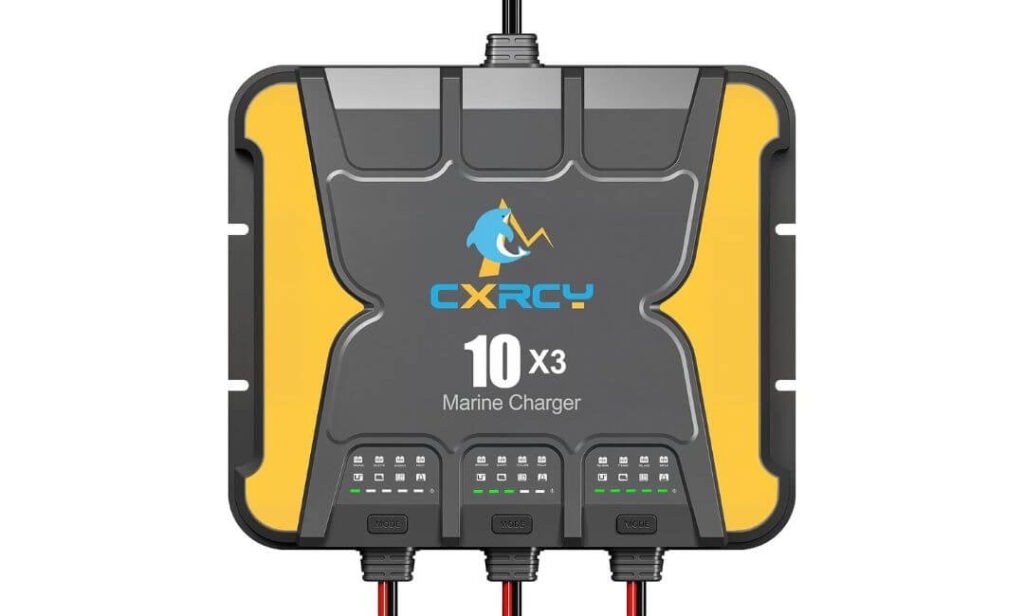
#4. CXRCY 3-Bank 30A Battery Charger
Best 3-Bank Battery Charger for 12V Systems with Smart Charging, Multi-Chemistry Support & IP68 Protection
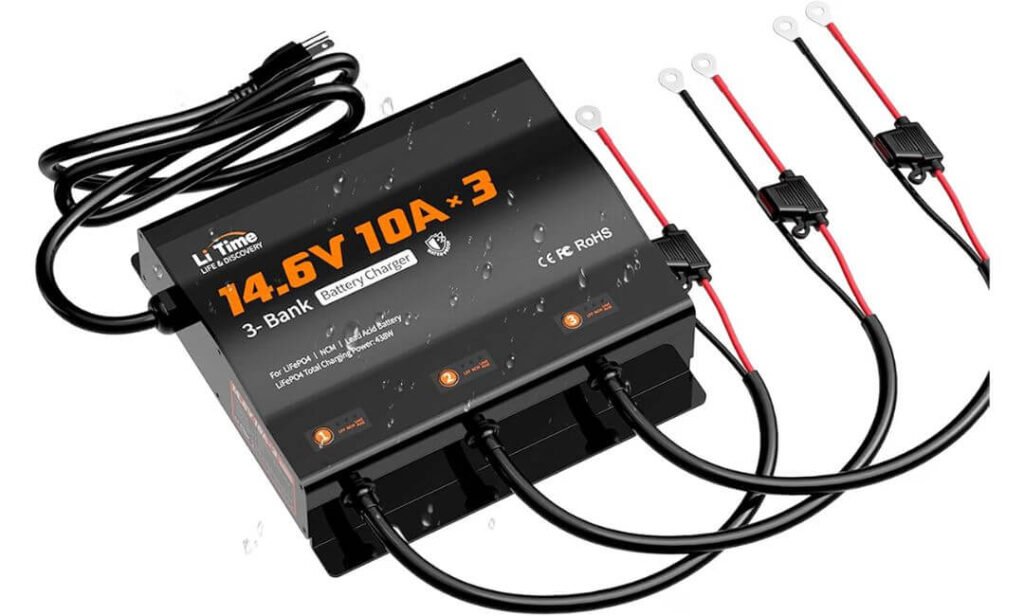
#5. LiTime 3-Bank 10A LiFePO4 Charger
Best 3-Bank LiFePO4 Battery Charger with 10A-Per-Bank Output, Lithium Activation & Multi-Chemistry Compatibility
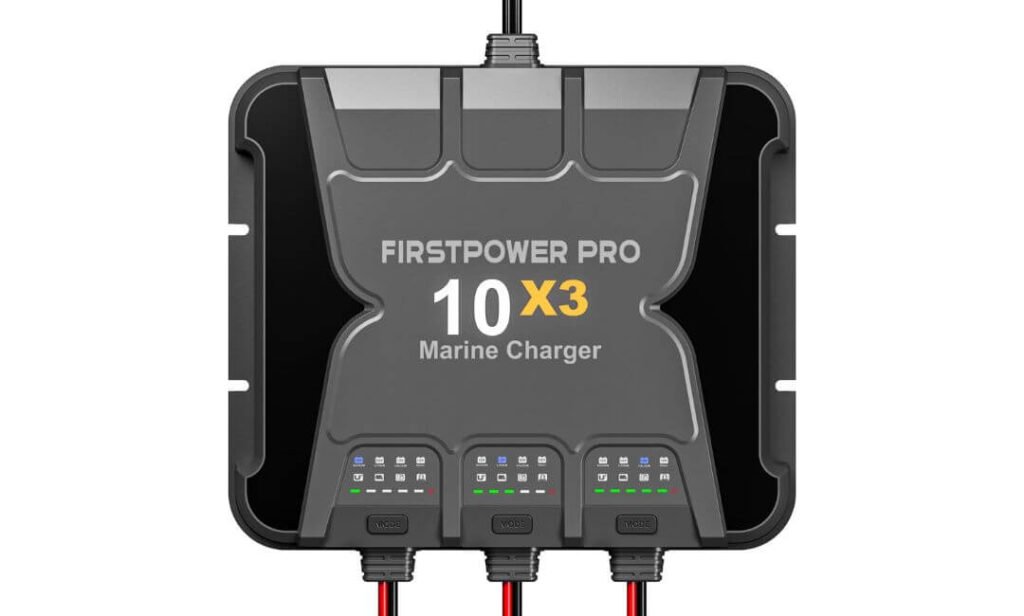
#6. FirstPower Pro 10X3 3-Bank Charger
Best 30A 3-Bank Marine Battery Charger with 10A Channels, Lithium Support, Thermal Sensing & IP68 Protection
Must Check: Best 4 Bank Battery Charger
Expert Tip
A 3-bank charger is not automatically better just because it says 30A on the label. Look at what that number actually means. On a 30A three-bank model, you’re generally getting 10A per bank, so the charger is designed to manage three batteries rather than pushing 30A into one battery. That’s a good fit for many boat and RV setups, but your battery capacity and chemistry still need to match the charger’s charging profile.
One more thing I’d check before buying: the space where your old charger is mounted. Newer chargers can be noticeably more compact, while some larger marine units need considerably more room for mounting and cable routing. If you’re replacing an older onboard charger, don’t assume the new unit will use the same holes or leave enough clearance just because the electrical specs look right.
How We Choose These 3-Bank Battery Chargers
We didn’t rank these chargers by amp rating alone. That’s an easy way to make a list, but it doesn’t tell you which charger actually makes sense for your battery setup.
First, we looked at the three-bank architecture itself. Every charger here is built around three charging channels, but the way each model handles those banks, charging stages, battery types, and maintenance differs. That matters because a charger should work with the batteries you actually have—not just technically have three outputs.
We then compared charging output and battery chemistry support. The 30A models deliver 10A per bank, while the ProMariner 44021 is a 20A unit. We didn’t treat the 20A rating as a weakness by itself because a lower total output can still be the right choice for a compatible 3-bank system. At the same time, models offering LiFePO4 support earned attention because lithium batteries have different charging requirements from conventional flooded, gel, or AGM batteries.
Next came protection and marine suitability. Waterproof construction is much more meaningful on a permanently installed boat charger than a feature you simply tick off a specification sheet. That’s why IP-rated construction, thermal protection, charging safeguards, and maintenance functions were considered alongside the headline amperage.
We also looked at what happens after the batteries are charged. A good onboard charger isn’t only there to fill a battery and stop. Models with maintenance charging, diagnostics, temperature compensation, repair or desulfation functions can be more useful when the boat or vehicle sits unused for extended periods. Those features can make a bigger difference in real ownership than another few amps on the specification sheet.
Finally, we considered installation practicality. This is where many otherwise good charger recommendations fall short. A charger can have excellent electrical specifications and still be a poor replacement if it is too large for the compartment, has awkward cable routing, or doesn’t suit the existing installation. That’s particularly important with older boats and setups where you’re replacing an existing charger rather than building everything from scratch.
So the six models below aren’t presented as six versions of the same charger. NOCO stands out as the strongest all-around modern option, ProMariner makes sense for a more established marine setup, SOARFLY and CXRCY emphasize broad chemistry and maintenance features, LiTime is the more lithium-focused choice, and FirstPower Pro offers another 30A marine alternative. That distinction is deliberate.
The goal is simple: match the charger to the batteries and installation you actually have, rather than recommending the model with the biggest number or the most impressive-looking feature list.
#1. NOCO GENPRO10X3 3-Bank Charger
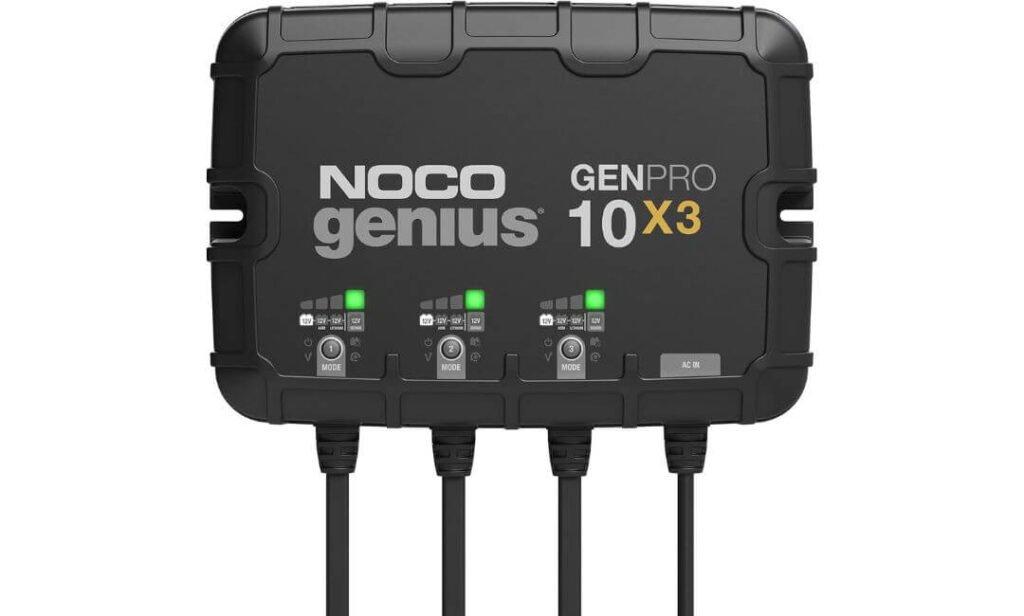
Quick Specs:
- Charging setup: Three independent 12V banks
- Actual output: 10A per bank, 30A total
- Battery support: Lead-acid, AGM & LiFePO4
- Charging modes: 12V, AGM, Lithium & Repair
- Marine protection: Fully sealed IP68 construction
- Temperature control: Built-in thermal sensing
- Installation: Any orientation with anti-vibration backing
- Connections: 72-inch DC leads with 3/8-inch eyelets
- Size & weight: 10.51 × 8.11 × 2.83 in; 13.43 lb
- Warranty: 3 years
The biggest reason this one earns the top spot is simple: it treats three batteries as three batteries. You aren’t forced to give the entire setup the same charging treatment. Each 12V bank can be selected independently for 12V, AGM, Lithium or Repair mode, which is particularly useful when a boat has a lithium trolling-motor battery alongside a conventional starting battery. The 30A rating also needs to be read correctly—it’s 10A per bank, not 30A going into one battery.
The charging intelligence is another reason this feels more complete than a basic multi-bank unit. Its thermal sensor adjusts charging for temperature, while Force Mode can initiate charging on batteries that have fallen extremely low. That’s useful for batteries that have spent too much time sitting rather than being used regularly. Repair Mode adds another option when you’re trying to bring an older lead-acid battery back into better condition.
Physically, this is built for the reality of an onboard installation. The IP68 sealed housing, anti-vibration backing and flexible mounting orientation make sense in a boat compartment where moisture, vibration and awkward mounting positions are part of the job. NOCO also says this generation is 27% smaller and 33% more powerful than the previous GEN3, which is a worthwhile detail if you’re replacing an older charger and don’t have much room to work with.
What We Like
- Independent charging modes make mixed battery setups much easier to manage.
- 10A-per-bank output is well suited to maintaining three separate 12V batteries.
- IP68 protection gives it serious onboard durability rather than basic splash resistance.
- Temperature sensing helps keep charging appropriate as conditions change.
- The more compact GENPRO design is especially useful when replacing an older, bulkier charger.
What We Don’t
- The 72-inch leads work well for many installations, but batteries located in widely separated compartments may need a little more planning for the cleanest cable routing.
Why We Put It First
This is the one I’d choose when I want a single charger to handle a complete three-battery setup without making the owner micromanage it. The important combination is not simply 30A output; it’s the independent banks, selectable chemistry modes, temperature compensation, recovery features and sealed construction working together.
It’s also a particularly sensible upgrade for someone coming from an older three-bank charger. The smaller housing can make a difference in a crowded compartment, while the ability to mount it in different orientations gives you more freedom to work around existing equipment. For a modern boat or a mixed-battery installation, that combination makes it the most versatile choice in this group.
The Insider Pro-Tip
Before mounting it, identify exactly which battery belongs to each bank and measure the cable path—not just the straight-line distance. The 72-inch leads provide useful flexibility, but a clean installation depends on where the batteries, charger and existing wiring actually sit.
If you’re replacing an older charger, don’t assume the old mounting position has to remain the new charger’s position. The GENPRO10X3’s more compact housing and flexible mounting orientation can give you an opportunity to position the charger more cleanly. A few minutes spent checking clearance, cable reach and ventilation around the installation can make the finished setup noticeably neater.
#2. ProMariner ProSport HD 44021 3-Bank Charger
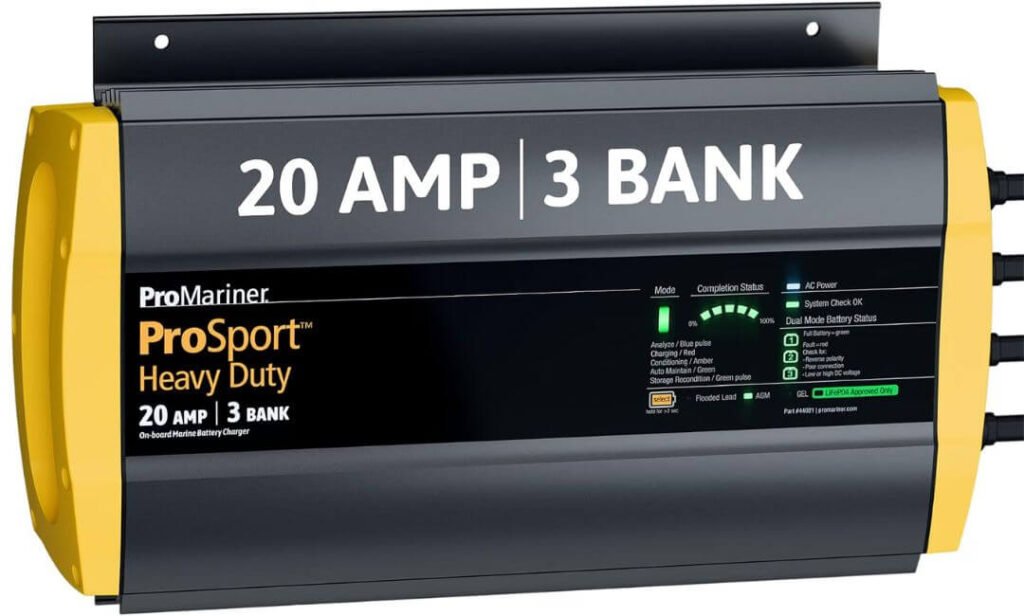
Quick Specs:
- Total charging output: 20A across three banks
- Battery system: Triple-bank marine charging
- Charging technology: ProMar Digital microprocessor control
- Power distribution: Distributed-On-Demand
- Charging: Multi-stage automatic charging
- Marine protection: IP67 waterproof construction
- Cooling: Tri-surface extruded heat sink
- Size & weight: 16.4 × 8.7 × 6.3 in; 7.2 lb
- System range: Designed for 12V, 24V and 36V marine battery systems
If your setup is built around traditional marine batteries, this is the kind of charger that makes more sense the longer you look at it. It isn’t trying to win the specification sheet with a 30A headline. Instead, its 20A output is managed intelligently through Distributed-On-Demand technology, allowing unused charging capacity to move toward the batteries that still need it. In a real three-battery setup, that can be more useful than simply dividing the available power evenly all the time.
The other thing worth paying attention to is the charging hardware itself. ProMar Digital microprocessor control manages the charging process, while multi-stage charging takes the batteries through the appropriate charging phases instead of treating a nearly full battery like a completely discharged one. The front LED display is also genuinely useful: its fuel-gauge-style indicator and individual battery status make it much easier to understand what is happening without constantly checking each battery separately.
Where this unit earns its marine credentials is underneath the feature list. The IP67 waterproof construction is designed for the wet environment of a boat, while the heavy-duty tri-surface heat sink uses the upper, lower and rear surfaces for cooling. That’s an important detail on a charger expected to deliver its rated output continuously. And if you’re replacing an older ProMariner ProSport 20 Plus, the 44021 is specifically positioned as its newer replacement, so it makes particular sense for an existing ProSport installation that needs an updated charger rather than a completely different charging philosophy.
What We Like
- Distributed-On-Demand makes better use of available charging power as individual batteries reach different charge levels.
- ProMar Digital control gives the charging process a more sophisticated approach than a basic plug-in maintainer.
- IP67 protection is appropriate for permanent marine use where spray and moisture are unavoidable.
- The tri-surface heat sink gives the charger a practical cooling advantage during sustained charging.
- The LED completion gauge lets you check charging progress without guessing what the charger is doing.
What We Don’t
- It is a 20A-class charger rather than a 30A model, so buyers specifically looking for the highest total output should choose accordingly.
Why It Earns the #2 Spot
The ProSport HD is here because good three-bank charging isn’t only about having the biggest amp number. Its strength is how it manages the power available to three batteries, particularly in a conventional marine setup where reliability, cooling and controlled multi-stage charging matter more than chasing maximum output.
It is also a particularly logical choice for someone who already has an older ProMariner system. The 44021 replaces the earlier 43021 ProSport 20 Plus, giving that buyer a familiar upgrade path rather than forcing a completely different installation approach. For a traditional lead-acid/AGM marine setup, that combination makes it one of the more sensible choices in this list.
The Insider Pro-Tip
If you’re running a cranking battery plus two trolling-motor batteries, don’t judge this charger by the 20A number alone. The Distributed-On-Demand system is designed to make better use of the available current as the batteries progress through charging, so the way it manages the three banks matters just as much as the total rating.
And if you’re replacing a 43021 ProSport 20 Plus, start by comparing the existing mounting space and wiring before buying anything else. The newer 44021 is intended as that model’s replacement, which can make the transition much simpler—but measuring the actual installation area first is still the smartest way to avoid surprises.
#3. SOARFLY 3-Bank 30A Marine Charger
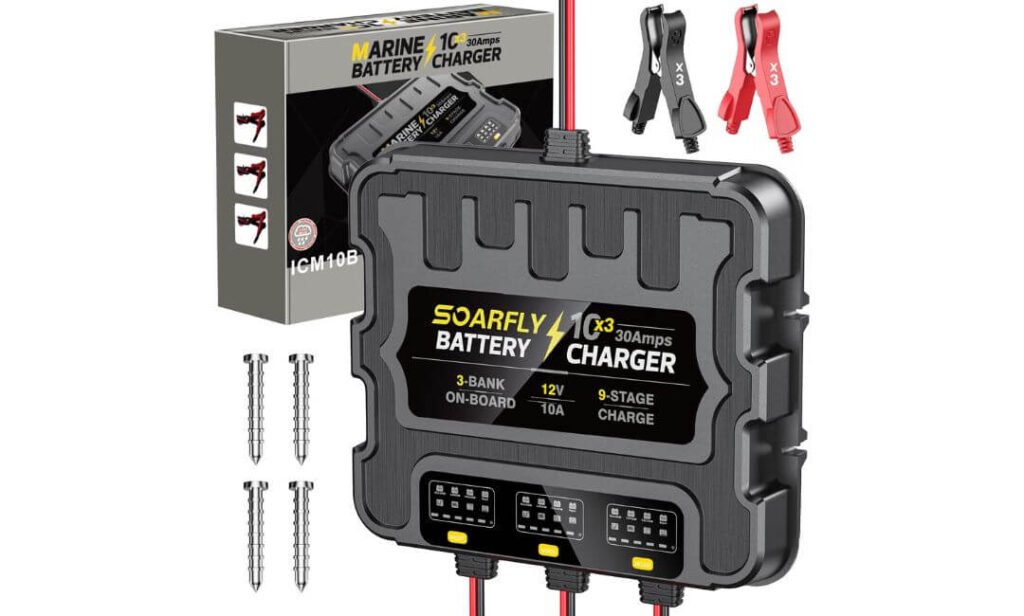
Quick Specs:
- Total output: 30A — 10A per bank
- Battery system: Three independent 12V banks
- Charging modes: SLA/AGM, Lithium & Calcium
- Maintenance: Smart charging, diagnostics & Repair mode
- Marine protection: IP68 sealed construction
- Temperature control: Integrated thermal sensor
- Charger size: Approx. 15.15″D × 12.79″W × 5.9″H
- Weight: 11.66 lb
- System limitation: 12V batteries only
Some chargers look impressive because of the 30A number; this one becomes more interesting when you look at where those amps actually go. The unit gives 10A to each of three independent 12V banks, so you can keep a starting battery, trolling-motor battery and auxiliary battery connected at the same time. More importantly, each bank can be assigned its own charging mode for SLA/AGM, Lithium or Calcium batteries, which gives this charger a useful amount of flexibility for a modern mixed-battery setup.
The practical advantage becomes clearer when batteries don’t all arrive at the charger in the same condition. Its smart charging and diagnostic system can identify problems such as overvoltage, overheating and reverse connection, while Repair mode provides an option for batteries that have become deeply discharged. The integrated thermal sensor also adjusts charging according to ambient temperature, which is a small feature that becomes much more valuable when the charger remains connected during hot summers or colder storage periods.
For an onboard installation, the IP68 sealed construction is the feature I’d pay closest attention to. This isn’t merely a charger designed to sit on a dry garage shelf; its enclosure is intended to cope with the moisture and exposure associated with marine use. Just make sure you look at the physical measurements before ordering. The listed housing is roughly 15.15 × 12.79 × 5.9 inches, so this is not the charger I’d casually assume will fit into the same opening as a smaller older unit. (Measure the actual compartment and cable path first; that takes less time than moving an already-mounted charger.)
What We Like
- 30A total output gives each bank a useful 10A charging channel.
- Three selectable charging modes make it suitable for more than one battery chemistry.
- IP68 construction is reassuring for permanent boat installations.
- Temperature sensing and diagnostics add useful protection during unattended charging.
- Repair mode gives neglected or deeply discharged batteries another chance before replacement.
What We Don’t
- It’s designed for 12V batteries only, so it’s not the right match for a 24V or 36V trolling-motor system.
Why It Makes Sense at #3
The reason this sits behind NOCO and ProMariner isn’t that it lacks features. In fact, on paper it offers a very convincing combination of 30A output, independent banks, lithium compatibility, repair capability, temperature control and IP68 protection. It earns its place because those features line up particularly well with buyers who want broad battery compatibility without moving into a more complicated charging setup.
There’s also a useful distinction from the ProMariner above: this is a 30A-class charger with 10A available to each bank, while the ProSport HD is a 20A unit that manages its available power dynamically. So if your priority is straightforward three-bank output and broader chemistry support, SOARFLY becomes a very logical alternative.
The Insider Pro-Tip
Before buying, check one thing that product listings don’t always make obvious enough: your system voltage. Three 12V batteries can be part of a 24V or 36V trolling-motor arrangement, but that doesn’t automatically make a 12V-only charger suitable for that series-connected system. This charger is intended for individual 12V battery banks, so match it to how your batteries are actually wired.
Also measure the mounting area in three dimensions, not just the footprint. With a housing around 15 inches long and nearly 13 inches wide, planning the charger position around existing battery cables can make the installation much cleaner. If the batteries are reasonably close and the cable routing works, the 72-inch-class lead length gives you useful flexibility without forcing the charger directly beside the batteries.
#4. CXRCY 3-Bank 30A Battery Charger
Quick Specs:
- Charging setup: Three independent 12V banks
- Actual output: 10A per bank, 30A total
- Battery support: SLA, AGM, LiFePO4, Calcium & deep-cycle
- Charging system: 9-stage smart charging
- Recovery functions: Repair & forced charging modes
- Protection: IP68 sealed waterproof design
- Operating range: -40°C to 60°C
- Size & weight: 11 × 9 × 2 in; 10 lb
- DC cable: 6.56 ft extended cable
Here’s where this charger gets genuinely interesting: it’s unusually compact for a three-bank 30A unit. At roughly 11 × 9 × 2 inches, it doesn’t demand the kind of installation space that some larger marine chargers do. If you’re working around a crowded battery compartment, that two-inch housing depth can be more useful than another feature added to a specification sheet.
Underneath that compact body, the charging setup is straightforward and useful. You get three independent 10A outputs, with support for 12V SLA/AGM, Lithium and Calcium batteries, plus deep-cycle applications. Its 9-stage charging system adjusts the charging process as the battery progresses, while automatic temperature compensation helps account for changing conditions. For someone leaving the charger connected during storage, those details are much more meaningful than simply knowing it says “30A” on the front.
The maintenance side is where CXRCY separates itself from a basic multi-bank charger. It includes advanced diagnostics, automatic repair and forced charging, with the latter intended for extremely depleted batteries in the 0–1V range. The IP68 enclosure and stated -40°C to 60°C operating range also give it plenty of environmental headroom. Just remember that recovery functions aren’t magic—they can help with certain neglected batteries, but a physically failed battery still needs replacement.
What We Like
- Compact 2-inch-deep housing is excellent when installation space is limited.
- Three independent 10A banks provide the full 30A total without combining the batteries.
- 9-stage charging plus temperature compensation makes it well suited to longer unattended charging.
- Repair and forced-charging modes give you useful options when a battery has been heavily discharged.
- IP68 protection makes it a serious candidate for permanent marine installation.
What We Don’t
- The feature set is broad, but buyers should still verify the exact battery chemistry and wiring configuration before relying on automatic mode selection.
Why It Earns a Place in This Lineup
CXRCY makes the most sense for someone who wants 30A three-bank charging without giving up installation space. The combination of 10A-per-bank output, lithium compatibility, 9-stage charging, diagnostics and repair functions gives it a surprisingly complete feature set for its relatively compact footprint.
I also like the fact that its usefulness isn’t limited to one particular battery scenario. A three-bank marine setup, RV batteries, deep-cycle equipment or a garage charging arrangement can all make sense here, provided the individual batteries are 12V and compatible with the selected charging mode. That’s a practical kind of versatility rather than simply adding more features for the sake of the listing.
The Insider Pro-Tip
The 2-inch depth is the detail I’d pay attention to if you’re replacing an older charger. Don’t just compare the new unit’s footprint with the old one—look at the space behind it as well. A compact body can give you much more freedom around battery cables and compartment covers.
And because this unit includes both battery clips and dual-pin connections, you have some flexibility between temporary and more permanent setups. For a permanent onboard installation, I’d plan the cable routing first and keep the charger positioned where the 6.56-foot DC reach works naturally. A neat cable run is easier to achieve when you choose the mounting position before fixing anything in place.
#5. LiTime 3-Bank 10A LiFePO4 Charger
Quick Specs:
- Charging setup: Three independent 12V banks
- Output: 10A per bank, 30A total
- Battery support: LiFePO4, NCM, AGM, GEL & lead-acid
- Lithium function: BMS activation for low-voltage batteries
- Output voltage: 14.6V charging output
- Protection: Over-voltage, over-temperature, short-circuit & reverse-polarity protection
- Water resistance: IP65 waterproof/dustproof housing
- Size & weight: 8.19 × 3.58 × 2.07 in; 10.72 lb
If your battery setup is moving toward lithium, this is the charger I’d pay attention to. Its real advantage isn’t simply that it has three banks; each channel supplies 10A independently, while the charger supports LiFePO4 alongside NCM, AGM, GEL and conventional lead-acid batteries. That makes it useful for a setup where you’re gradually moving away from older battery technology rather than replacing everything at once.
The particularly useful lithium feature is BMS activation. A lithium battery can shut itself down after reaching an extremely low voltage, leaving a normal charger unable to recognize it properly. This unit is designed to wake a BMS-protected battery back up, which can save you from assuming the battery has failed when it has simply entered protection. The individual LED indicators are equally straightforward: you can see whether each bank is charging, full or reporting a fault without turning the whole setup into a guessing game.
Its physical design is another strong point. At approximately 8.19 × 3.58 × 2.07 inches, the housing is notably compact, making it attractive for installations where a conventional marine charger would consume too much space. The IP65 enclosure provides protection against water and dust, while built-in safeguards cover reverse polarity, over-temperature, over-voltage, short circuits and low-voltage conditions. For an outdoor or onboard installation, that combination gives you useful protection without making the charger unnecessarily bulky.
What We Like
- 10A independent charging on all three banks gives the full 30A total without sacrificing separate battery management.
- LiFePO4 BMS activation is a genuinely useful feature for modern lithium setups.
- Supports five common battery chemistries, giving it more flexibility than its lithium-focused name suggests.
- Very compact housing makes it easier to work into a crowded installation.
- Multiple electrical protections provide useful reassurance for unattended charging.
What We Don’t
- IP65 protection is solid for outdoor use, but it isn’t the same level of sealed marine protection offered by the IP68 chargers higher on this list.
Why It Earns Its Place Here
LiTime takes a slightly different route from the chargers above. Rather than making marine sealing the headline feature, it puts more emphasis on lithium compatibility and battery recovery while still giving you three independent 10A channels. That makes it particularly appealing for owners who have already moved to LiFePO4 or are building a newer battery system around lithium.
The compact housing is another reason it deserves consideration. When you’re replacing an older charger in a tight compartment, physical size can be just as important as electrical output. With three 10A banks, broad chemistry support and lithium activation in a relatively small package, it offers a practical combination for modern multi-battery installations.
The Insider Pro-Tip
Don’t confuse the 14.6V charging output with your battery’s nominal voltage. This is a charger for 12V-class batteries, and 14.6V is the charging voltage used for the appropriate lithium charging profile—not a sign that you need a 14.6V battery.
If you’re replacing an older charger because you’ve upgraded to LiFePO4, this is where the product makes the most sense. Check the battery manufacturer’s charging requirements first, then assign each bank correctly. If the batteries are different chemistries, the important question isn’t simply whether the charger supports both—it is whether the charging mode you select for each individual bank matches the battery connected to it.
#6. FirstPower Pro 10X3 3-Bank Charger
Quick Specs:
- Charging setup: Three independent 12V banks
- Output: 10A per bank, 30A total
- Battery support: SLA/AGM, Lithium & Calcium
- Charging control: Independent mode selection for each bank
- Protection: IP68 fully sealed construction
- Temperature control: Integrated thermal sensor
- Status display: 5-level power indicator
- Size & weight: 10.9″W × 10.23″H × 1.77″D; 10.43 lb
- Warranty: 3 years
The useful thing about this charger is how little space it needs for what it does. The housing is only 1.77 inches deep, yet you still get three independent 10A charging channels, giving you 30A total output. That combination makes it particularly interesting when you’re working inside a crowded boat compartment and don’t want a large charger taking up valuable room around the batteries and existing wiring.
Each bank can be set independently for 12V SLA/AGM, Lithium or Calcium, so the charger isn’t locked into treating all three batteries exactly the same way. That’s a worthwhile feature for owners running a conventional starting battery alongside newer lithium equipment. The integrated thermal sensor also adjusts charging according to ambient temperature, while the diagnostic system watches for conditions such as over-voltage, overheating, reverse connection and battery problems.
The everyday details are surprisingly well thought out too. A five-level power display gives you a quick visual indication from 20% through 100%, while the included battery connectors, clips and spare fuses give you more flexibility when setting everything up. Add the IP68 fully sealed housing and 3-year warranty, and this becomes a practical alternative for someone who wants a compact three-bank charger without giving up marine-oriented protection.
What We Like
- 1.77-inch depth makes it especially attractive for tight installations.
- Independent 10A banks give you the full 30A across three batteries.
- Each bank can select AGM, Lithium or Calcium charging independently.
- IP68 sealing suits permanent onboard use.
- 5-level power display makes a quick status check simple.
What We Don’t
- The 12V-only design means it should be matched to three individual 12V battery banks, rather than a charger intended to service a 24V or 36V system directly.
Why It Deserves a Place on This List
FirstPower Pro is not trying to reinvent the three-bank charger. Its appeal is more practical: 30A total output, independent charging modes, strong waterproofing and a very shallow housing. For a buyer who has already measured a cramped installation area, that last point can be the deciding factor.
It’s also a sensible choice when you want broad battery compatibility without moving away from a straightforward control system. The combination of LiFePO4 support, automatic temperature adjustment, diagnostics and repair functionality gives it enough capability for a newer mixed-battery setup while keeping the physical design relatively simple.
The Insider Pro-Tip
The 1.77-inch depth is the specification I’d check first if you’re replacing a charger in an older boat. A shallow charger can give you considerably more freedom around battery cables and compartment covers, but don’t judge fit from depth alone—check the mounting width, height and connector clearance as well.
And before connecting the banks, take a moment to label which cable belongs to which battery. Because each channel can use its own charging mode, getting that first connection right is more important than simply plugging in three cables and letting the charger figure everything out.
Best 3 Bank Battery Charger Comparison: Top Picks, Specs & Features (2026)
| Charger | Output | Battery Support | Charging Intelligence | Protection | Installation Reality | Best Fit |
|---|---|---|---|---|---|---|
|
NOCO GENPRO10X3
Best Overall
|
30A total 10A × 3 banks |
Lead-acid AGM LiFePO4 |
Independent modes Thermal sensing Repair + Force Mode |
IP68 Fully sealed Anti-vibration backing |
10.51 × 8.11 × 2.83 in 72-in DC leads 27% smaller than previous GEN3 |
Mixed 12V battery setups where versatility and compact onboard installation matter |
|
ProMariner ProSport HD 44021
Best Traditional Marine Choice
|
20A total Dynamic distribution |
Flooded AGM Gel / deep-cycle |
ProMar Digital Distributed-On-Demand Multi-stage charging |
IP67 Tri-surface heat sink |
16.4 × 8.7 × 6.3 in 7.2 lb Designed as 43021 replacement |
Conventional marine battery systems that value controlled power distribution |
|
SOARFLY 3-Bank 30A
Best Mixed-Chemistry Value
|
30A total 10A × 3 banks |
SLA / AGM LiFePO4 Calcium |
3 selectable modes Thermal sensing Diagnostics + Repair |
IP68 Fully sealed |
Approx. 15.15 × 12.79 × 5.9 in 11.66 lb Measure compartment carefully |
Boat owners wanting 30A output and broad battery-chemistry flexibility |
|
CXRCY 3-Bank 30A
Best Compact 30A Option
|
30A total 10A × 3 banks |
SLA / AGM LiFePO4 Calcium / deep-cycle |
9-stage charging Auto temperature compensation Repair + Force Mode |
IP68 Fully sealed -40°C to 60°C range |
11 × 9 × 2 in 10 lb 6.56-ft DC cable |
Tight compartments where three-bank capability matters but space is limited |
|
LiTime 3-Bank 10A
Best for Lithium
|
30A total 10A × 3 banks |
LiFePO4 NCM AGM / GEL / lead-acid |
Independent channels Lithium BMS activation Individual LED status |
IP65 Multi-layer electrical protection |
8.19 × 3.58 × 2.07 in 10.72 lb 14.6V charging output |
Modern lithium-focused setups where BMS recovery and compact sizing matter |
|
FirstPower Pro 10X3
Best Shallow-Mount Choice
|
30A total 10A × 3 banks |
SLA / AGM Lithium Calcium |
Independent modes Thermal sensing Diagnostics + Repair |
IP68 Fully sealed |
10.9 × 10.23 × 1.77 in 10.43 lb 5-level power display |
Replacements where shallow depth and straightforward 30A three-bank charging are priorities |
What to Look for in a 3-Bank Battery Charger
A good three-bank charger should make a multi-battery setup simpler, not more complicated. The most important thing is understanding the charger’s actual output and how it is divided. A 30A three-bank charger normally means 10A per bank, while a 20A model may distribute its available current differently. Neither is automatically better; the right output depends on the batteries being charged, their capacity, and how quickly you need the system ready again.
Check the Output Per Bank, Not Just the Headline Rating
This is one of the easiest specifications to misunderstand. If a charger is advertised as 30A 3-bank, look for the per-bank figure before comparing it with another model. The 30A units in this lineup provide 10A to each bank, giving you three independent charging channels.
That arrangement is particularly useful for a boat with a starting battery and two trolling-motor batteries. You can leave all three connected and let the charger handle them separately instead of moving one charger from battery to battery. For larger-capacity batteries, however, remember that 10A is still 10A; a higher-capacity battery may simply require more time to reach full charge.
Match the Charger to Your Battery Chemistry
Battery chemistry should be checked before anything else because charging requirements are not interchangeable. The chargers in this list cover combinations of lead-acid, flooded, AGM, GEL, Calcium, LiFePO4 and other lithium batteries, but they do not all support the same chemistries.
This becomes especially important when replacing an older charger. A traditional charger that worked perfectly with AGM batteries should not automatically be assumed to be suitable for LiFePO4. If your three batteries are different types, look for a charger that provides independent charging-mode selection for each bank, such as the NOCO, SOARFLY, CXRCY and FirstPower Pro models in this lineup. That gives each battery the charging profile it actually needs.
Look for Real Charging Intelligence
Smart charging is more than a marketing phrase. Useful features include multi-stage charging, temperature compensation, battery diagnostics and automatic maintenance. These functions allow the charger to change how it works as the battery moves from deeply discharged toward full charge, rather than continuously applying the same charging approach.
Temperature compensation is particularly worthwhile for an onboard charger. Battery charging behavior changes with temperature, so having the charger adjust accordingly can help avoid overcharging in hotter conditions or undercharging when temperatures fall. Repair and recovery modes can also be useful for neglected batteries, although they should be viewed as recovery tools—not a guarantee that a physically damaged battery can be saved.
Don’t Confuse Onboard Charging With Simply Owning a Multi-Bank Charger
For permanent boat installations, the physical design matters almost as much as the electrical specification. An onboard 3-bank battery charger should be designed to remain installed, tolerate vibration and moisture, and provide sensible cable connections for the location of your batteries.
That’s why ratings such as IP67 or IP68, sealed construction, thermal protection and anti-vibration features deserve attention. IP68 models in this lineup offer a higher level of water protection than the IP65 LiTime unit, while the ProMariner takes a different approach with its heavy-duty cooling design and marine-focused construction.
Installation space is another detail people often discover too late. Compare the charger’s width, height, depth and cable length with the actual compartment—not just the space shown in a product photograph. The CXRCY and LiTime are relatively compact options, while some larger marine chargers require substantially more room around the mounting area.
Make Sure Your Voltage Setup Actually Matches
Three batteries do not automatically mean you have a three-bank 12V system.
For example, three 12V batteries can be used individually, or they can form part of a 24V or 36V series-connected system. A 12V-only three-bank charger should not be treated as a direct replacement for a charger designed specifically for a higher-voltage system.
Before buying, identify how your batteries are wired and whether each charger bank is intended to charge an individual 12V battery. This is especially important with trolling-motor installations, where the battery count and overall system voltage can easily be confused.
Consider What the Charger Will Do During Storage
One of the biggest advantages of a permanently installed multi-bank charger is being able to leave the batteries connected while the boat, RV or vehicle is sitting unused. A suitable charger can move into maintenance or float charging after the batteries reach the appropriate state of charge, helping keep them ready for the next trip.
For seasonal equipment, this can be more valuable than fast charging alone. A charger with automatic restart, maintenance charging, fault detection and appropriate protection is much more useful when you aren’t standing beside it watching every charging cycle.
Choose Based on the Job, Not the Label
For a marine or boat setup, prioritize waterproof construction, independent banks, appropriate battery chemistry support, cable reach and vibration resistance. A starting battery plus two trolling batteries is a very different requirement from three identical deep-cycle batteries.
For an RV or camper, think about how the house, auxiliary and starting batteries are configured before choosing a charger. Physical mounting space and unattended maintenance can become more important than maximum charging speed.
For a 12V automotive or garage setup, a three-bank charger can be useful when you regularly maintain several separate batteries. In that situation, portability, connection options and battery compatibility may matter more than marine-specific waterproofing.
And for LiFePO4 systems, don’t stop at the words “lithium compatible.” Check whether the charger provides the appropriate lithium charging mode and, where relevant, features such as BMS activation. That’s the difference between a charger that merely claims broad compatibility and one that actually fits a modern lithium setup.
The Simple Buying Rule
If you remember only one thing, make it this: count the batteries, identify their chemistry, confirm the system voltage, then look at output per bank and installation space. After those five checks, features such as IP protection, temperature sensing, diagnostics and maintenance charging become much easier to weigh.
That’s also why there isn’t one universally perfect three-bank charger. The best choice for a lithium-heavy trolling-motor setup may not be the best choice for an older AGM marine system, and the charger with the highest total amperage isn’t necessarily the best replacement for a cramped installation. The right model is the one whose charging profile, protection and physical design genuinely match your setup.
Buying Guide: How to Choose the Right 3-Bank Battery Charger
The right charger starts with the battery setup you already own, not with the charger that has the longest feature list. Before comparing prices or amperage, identify the battery chemistry, how the three banks are wired, where the charger will be installed, and whether you want simple charging or long-term maintenance. That small amount of checking can prevent buying a technically capable charger that simply isn’t the right match for your system.
Start With Battery Chemistry
First, check the label on each battery. A three-bank charger may support several chemistries, but that doesn’t mean every charging mode is appropriate for every battery.
| Battery type | What to check before buying | Why it matters |
|---|---|---|
| LiFePO4 | Dedicated lithium charging mode and, where needed, battery-management-system activation | Lithium batteries use a different charging profile from conventional lead-acid batteries |
| AGM | AGM-specific charging mode or confirmed AGM compatibility | AGM batteries benefit from the appropriate voltage and charging stages |
| GEL | Explicit GEL compatibility | Gel batteries have different charging requirements and should not simply be treated as any lead-acid battery |
| Flooded lead-acid | Conventional lead-acid support and suitable charging profile | These batteries can require different charging behavior from AGM and lithium |
| Calcium | Dedicated Calcium mode if specified | Calcium batteries may benefit from a charging profile designed for their characteristics |
| Deep-cycle | Confirm the underlying chemistry first | “Deep-cycle” describes the battery’s intended use, not necessarily its chemistry |
The most useful feature for a mixed setup is independent charging-mode selection. If one bank contains LiFePO4 and another contains AGM, a charger that lets you configure each bank separately is far more useful than one that merely says “lithium compatible” on the box.
Understand What 30A Actually Means
This deserves special attention because multi-bank charger listings can make the numbers confusing.
A 30A 3-bank charger in this category generally means 30A total, or 10A available to each bank. It does not mean that every battery receives 30A.
That’s perfectly reasonable for many three-battery installations. A 100Ah battery receiving 10A can be charged at a sensible rate, but a heavily depleted, much larger battery will naturally take longer. Charging time depends on the battery’s capacity, starting state of charge, charging efficiency and the current actually available to that bank.
Also don’t assume a 20A charger is automatically inferior. The ProMariner in this lineup uses Distributed-On-Demand technology, so its available current can be directed toward the batteries that still need it. The useful comparison is therefore how the charger manages its available power, not just which number looks larger.
Confirm How Your Three Batteries Are Wired
This is one of the most important checks before ordering.
Three 12V batteries can be:
- Three independent 12V batteries
- Two batteries forming a 24V trolling-motor system, with another battery used separately
- Three batteries forming a 36V series system
- A combination of starting, auxiliary and deep-cycle batteries with different roles
A three-bank charger designed to charge individual 12V batteries is not automatically a charger for a 24V or 36V battery bank.
If you’re replacing an existing onboard charger, take a photo of the current wiring and identify what each bank actually connects to before disconnecting anything. This is one of those five-minute checks that can save considerably more time later.
Measure the Installation Space Before Buying
Don’t measure only the old charger’s footprint. Check width, height, depth, cable path and clearance around the mounting area.
That’s particularly important because the models in this comparison vary considerably in physical size. The LiTime is relatively compact, the CXRCY has a shallow two-inch depth, and the FirstPower Pro is only about 1.77 inches deep. Larger marine units such as the ProMariner require a different amount of mounting room.
Also consider where the battery terminals actually sit. A charger may physically fit in the compartment but still be awkward to install if its cables have to cross other equipment or fall short of the battery connections.
Check Cable Length and Connection Style
Cable reach is easy to overlook when you’re focused on charging specifications.
Measure the real cable route, including the bends and distance around equipment. Straight-line distance from charger to battery isn’t the same as the length you’ll actually need.
The connection hardware matters too. Some setups are better suited to permanent ring-terminal connections, while battery clips can be more convenient when the charger needs to be disconnected periodically. Decide whether you’re building a permanent onboard installation or a more flexible charging arrangement before choosing where the charger will sit.
Look Beyond the IP Rating
For marine use, waterproofing is important, but the IP number shouldn’t be the only thing you evaluate.
The chargers here range from IP65 to IP68. In simple terms, the higher-rated sealed models provide greater protection against water and environmental exposure, but installation still matters. A waterproof charger doesn’t mean you should deliberately expose its connectors, cables or electrical connections to unnecessary water.
Also look for:
- Temperature sensing or compensation
- Reverse-polarity protection
- Over-temperature protection
- Over-voltage protection
- Short-circuit protection
- Fault or battery diagnostics
- Appropriate mounting and vibration resistance
For an onboard charger that may remain connected for weeks or months, these details are much more meaningful than a decorative display.
Decide Whether You Need Maintenance and Recovery Features
If the batteries are charged before every trip and disconnected afterward, basic smart charging may be enough.
If the boat, RV or vehicle spends weeks in storage, maintenance capability becomes much more valuable. Automatic maintenance charging can keep batteries ready without requiring you to repeatedly connect and disconnect a charger.
Recovery functions deserve a little more caution. Repair or forced-charging modes can be useful when a battery has become deeply discharged or neglected, but they cannot turn a physically failed battery into a healthy one. Treat these functions as useful recovery tools, not as a reason to postpone replacing a genuinely damaged battery.
Think About the Installation Environment
A charger mounted permanently inside a boat has a different job from one sitting on a garage shelf.
For marine installations, prioritize sealed construction, corrosion resistance, vibration tolerance, cable routing and appropriate environmental protection.
For an RV, think about whether the charger will sit near the house battery compartment and whether it will remain connected during storage.
For a garage or vehicle setup, connection convenience and portability can become more important than an IP68 enclosure.
The best charger is therefore not necessarily the most heavily protected model. It’s the one whose protection level makes sense for where and how you will actually use it.
Match the Charger to Your Use Case
| Use case | What matters most | What to verify |
|---|---|---|
| Marine / boat | Waterproofing, independent banks, battery chemistry, cable reach | IP rating, 12V bank configuration, mounting space |
| RV / camper | Long-term maintenance, multiple battery types, installation | Battery chemistry, storage charging, available compartment space |
| Car | Straightforward charging and maintenance | Whether you actually have three separate 12V batteries |
| Motorcycle / powersports | Lower-capacity batteries and connection convenience | Charging-current suitability and connection method |
| Trolling motor | Bank arrangement and total system voltage | Whether batteries are independent 12V banks or form a 24V/36V series system |
| Garage / backup equipment | Flexibility and easy access | Battery chemistry, cable reach and whether permanent mounting is necessary |
Pay Attention to the Difference Between “12V Battery” and “12V System”
This distinction causes a surprising amount of confusion.
A charger can be intended for three individual 12V batteries even though those batteries are being used together in a larger electrical system. Always look at the manufacturer’s intended bank configuration rather than assuming that three 12V batteries automatically equal a charger designed for a 36V system.
For this reason, buyers with trolling-motor systems should be particularly careful. Count the batteries and trace the wiring, then match that arrangement to the charger’s specifications.
Check Certifications and Manufacturer Support
Certifications can be useful, but don’t let a list of logos replace the fundamentals.
Look for clearly stated safety certifications, electrical protections, warranty coverage and manufacturer support. A three-year warranty, for example, gives you a different level of ownership confidence from an otherwise similar charger with minimal support.
It’s also worth keeping the original documentation after installation. Charging modes, fault indicators and recovery procedures are the sort of information you’ll appreciate having available months later when you don’t remember exactly what a particular indicator means.
The Final Pre-Purchase Checklist
Before clicking Buy, I’d verify these points in order:
- Three individual banks: Does the charger actually match your battery arrangement?
- Battery chemistry: Is every battery supported, and can different banks use the correct modes?
- Output per bank: Is 10A, or the available output of your chosen model, appropriate for your battery capacities?
- System voltage: Are you charging individual 12V batteries or part of a 24V/36V series setup?
- Physical fit: Have you measured width, height, depth and mounting clearance?
- Cable reach: Can every bank reach its battery without an awkward or unsafe cable route?
- Environment: Does the protection level suit a boat, RV, garage or vehicle installation?
- Maintenance needs: Will the charger remain connected during storage?
- Recovery features: Are repair or low-voltage functions actually useful for your batteries?
- Warranty and support: What happens if the charger develops a fault after installation?
If those ten answers line up, you’re no longer choosing a charger because a product listing says “30A,” “smart,” or “marine.” You’re choosing one because its electrical output, battery compatibility and physical design actually fit the system sitting in front of you. That is the comparison that matters.
Maintenance and Best Practices for a 3-Bank Battery Charger
A good multi-bank charger can take a lot of routine work out of battery ownership, but it doesn’t remove the need to check the batteries, connections and installation occasionally. In fact, most problems that appear to be charger failures are worth investigating at the battery or wiring first. A few simple checks throughout the year can keep the entire charging system working the way it should.
Check the Batteries and Connections Regularly
Start with the batteries themselves. Look for loose terminals, corrosion, damaged cables, swelling, leaking, or unusual heat around the battery and connection points. A charger can only work properly when the electrical path to each bank is sound.
For conventional lead-acid batteries, inspect the battery according to its manufacturer’s maintenance requirements. Lithium batteries require a different approach, so don’t apply flooded-battery maintenance procedures to LiFePO4 batteries.
The charger connections deserve the same attention. Make sure terminals are tight and that cables aren’t rubbing against sharp edges, engine components, moving parts, or hot surfaces.
Use Proper Cable Size and Fuse Protection
Cable sizing should be based on the actual current, cable length and installation requirements, not simply on what fits physically.
A 10A charging bank may look modest, but a long cable run can introduce voltage drop. Longer runs may require appropriately sized conductors to maintain charging performance. Follow the charger’s installation instructions and the cable requirements specified by the manufacturer rather than guessing from wire appearance.
Fuse protection is equally important. Use the recommended fuse type and rating for each charging circuit where specified by the charger manufacturer. The fuse is there to protect the wiring and installation if a fault occurs; increasing the fuse rating just to prevent nuisance trips can remove that protection.
Keep fuses and connections accessible enough that you can inspect or replace them without dismantling half the battery compartment.
Keep the Installation Dry, Secure and Unrestricted
Even with a highly water-resistant enclosure, good installation practice still matters.
Mount the charger securely and give it the clearance recommended by the manufacturer. Keep cables organized rather than allowing them to hang loosely around batteries or moving equipment. Avoid placing connections where water can collect, and keep electrical terminals away from unnecessary exposure to battery electrolyte.
Vibration is another long-term issue, particularly on boats and off-road vehicles. A connection that looks fine when stationary can gradually loosen if the charger and wiring are allowed to move constantly. Secure the cables and use the supplied mounting hardware or an installation method approved by the manufacturer.
Don’t Ignore Temperature
Temperature affects charging, which is why thermal sensing and compensation are useful features on many modern chargers.
That does not mean you should install the charger wherever there happens to be an empty spot. Avoid locations exposed to excessive engine heat, direct heat sources or restricted airflow unless the manufacturer specifically allows it.
During charging, occasionally check for anything that feels unusually hot. A warm charger can be normal under load; an abnormal temperature combined with a fault indicator, smell, damaged insulation or battery heating deserves investigation.
Prepare the System for Seasonal Storage
Long periods of inactivity are when a multi-bank charger’s maintenance function becomes particularly valuable.
Before storing a boat, RV or other equipment:
- Fully charge the batteries according to their chemistry and manufacturer requirements.
- Inspect and clean the terminals and connection points.
- Check that every bank is connected to the intended battery.
- Make sure the charger has appropriate ventilation and secure mounting.
- Confirm that the storage environment is suitable for the batteries.
- If the charger is designed for continuous maintenance, follow the manufacturer’s instructions for leaving it connected.
For lithium batteries, follow the battery manufacturer’s specific storage state-of-charge recommendations rather than copying the procedure used for lead-acid batteries.
At the end of storage, don’t simply assume everything is ready because the charger shows full. Check the battery condition and the equipment’s electrical system before heading out.
Be Careful With Inverters and Other Loads
A charger and an inverter perform very different jobs.
An inverter draws energy from a battery, while the charger puts energy back into it. If an inverter, refrigerator, electronics system or other continuous load remains connected while the batteries are being maintained, the charger may spend much of its time replacing that energy rather than simply keeping the batteries at rest.
That’s not necessarily a problem, but it changes how you should think about the setup. If the charger appears to run continuously, check whether an external load is consuming power before assuming something is wrong with the charger.
For larger inverter installations, follow the inverter and battery manufacturer’s wiring, grounding, fuse and disconnect requirements. Don’t use the charger’s rating as a substitute for properly sizing the entire electrical system.
Troubleshooting: Start With the Simple Things
When one bank isn’t charging, don’t immediately assume the charger has failed. Work through the system logically.
| What you notice | What to check first |
|---|---|
| One bank shows no charging | Battery connection, fuse, cable condition and battery voltage |
| All banks appear inactive | AC power, outlet, main connection and charger indicators |
| Charging seems unusually slow | Battery capacity, starting state of charge, cable length and active loads |
| Battery becomes unusually hot | Battery condition, charging mode and wiring; stop if the temperature is abnormal |
| Fault indicator appears | Reverse connection, battery condition, temperature and voltage |
| Charger repeatedly restarts | AC supply, battery voltage, connections and external electrical loads |
| Battery remains low after charging | Battery health, parasitic loads, cable voltage drop and correct charging mode |
| Repair mode doesn’t restore the battery | The battery may be too degraded or physically damaged to recover |
If One Bank Behaves Differently
Independent banks make troubleshooting easier because you can compare one battery against the others.
If two banks are behaving normally but one isn’t, concentrate your investigation on that battery, its fuse, connections, cable and selected charging mode. There’s little reason to start dismantling the entire charger when the evidence points toward one charging circuit.
If all three banks are behaving unusually at the same time, then look further upstream at the AC supply, charger installation and overall system conditions.
Know When a Battery Is the Real Problem
A smart charger can identify certain abnormal conditions and some models include repair or forced-charging functions. That doesn’t mean every battery showing a fault can be saved.
A battery with internal damage, severe degradation, physical swelling, leakage or other signs of failure should not be treated as a charger-repair project. Stop using it and follow the battery manufacturer’s safety guidance.
This is especially important with lithium batteries. If a LiFePO4 battery repeatedly enters protection, won’t accept an appropriate charge, becomes damaged or behaves abnormally, investigate the battery and its battery-management system rather than repeatedly forcing a charging cycle.
A Simple Maintenance Routine
For most owners, you don’t need an elaborate maintenance schedule. A practical routine is enough:
Before use: check battery condition, terminals, cables and charger indicators.
Every few months: inspect mounting, cable routing, fuses and connections, particularly after heavy vibration or long trips.
Before storage: charge and prepare each battery according to its chemistry, check every bank and confirm the maintenance setup.
After storage: inspect the system again before putting a load on it, especially if the equipment has been sitting through extreme temperatures.
The goal isn’t to spend your weekends servicing the charger. It’s to catch small wiring, connection or battery problems before they become a dead-battery problem when you actually need the equipment.
FAQs About 3-Bank Battery Chargers
Can I use a 3-bank battery charger in a car or truck with three 12V batteries?
Yes, provided the vehicle actually has three separate 12V batteries or battery banks and the charger’s specifications support that arrangement. A three-bank charger does not become an automotive charger simply because it has three outputs; the important part is how those batteries are connected and what chemistry they use.
For a car, truck, or auxiliary-power setup, I’d verify these points before connecting anything:
- Each bank is intended for the battery’s voltage and chemistry.
- The batteries are actually being treated as separate 12V banks.
- The charger is mounted and wired according to its installation requirements.
- Any vehicle electronics or continuous loads are accounted for during charging.
For example, if a Toyota Tundra has one starting battery and separate auxiliary batteries, a multi-bank charger can make sense. But if you’re looking at three batteries that form a 24V or 36V series system, don’t assume a 12V three-bank charger is the correct solution.
Would a 3-bank charger work for a Toyota Tundra, Subaru Crosstrek, or another vehicle with only one battery?
Not in the way many product listings might make you think. Three banks are useful because you have three charging circuits to manage; they don’t make a single-battery vehicle charge faster simply because two additional outputs are sitting unused.
If your Tundra, Crosstrek, or another vehicle has one conventional 12V starting battery, a dedicated single-bank charger is normally the more sensible tool. A three-bank unit becomes worthwhile when you’re maintaining separate auxiliary batteries, a trailer or another independent battery system.
There’s another practical consideration with modern vehicles: don’t treat every electrical accessory as an excuse to connect another charging bank. If an auxiliary battery is connected to the vehicle through a proper battery-management or charging system, follow that system’s wiring requirements rather than improvising a connection directly to the vehicle battery.
Is a 30A 3-bank battery charger actually charging each battery at 30A?
No. This is probably the most important number to decode when comparing three-bank chargers.
On the 30A models in this article, the rating is 30A total, divided into three 10A banks. That means each individual bank can provide up to 10A under the appropriate charging conditions. It does not mean one battery receives 30A.
That distinction matters when estimating charging time. A 100Ah battery receiving 10A is operating in a very different situation from a large-capacity battery receiving the same current. In practice, charging time also changes with:
- Battery capacity
- Starting state of charge
- Battery chemistry
- Charging efficiency
- Temperature
- Electrical loads operating at the same time
The ProMariner is a good example of why the headline amperage isn’t everything. Its 20A total rating uses Distributed-On-Demand technology, allowing available charging current to be redirected toward batteries that still need it. So comparing a 30A unit and a 20A unit purely by the numbers can give you the wrong impression of how they behave.
Can I charge AGM, lead-acid, and LiFePO4 batteries at the same time with one 3-bank charger?
Sometimes, yes—but only when the charger specifically provides the appropriate independent charging modes for those batteries. This is where a three-bank charger’s independent controls become genuinely useful.
A charger that supports multiple chemistries should still be configured correctly for each connected battery. Don’t assume that “lithium compatible” means you can connect any lithium battery and let the charger figure everything out.
For a mixed setup, I would check:
- The exact chemistry of each battery.
- Whether each bank has an appropriate charging mode.
- Whether the manufacturer permits different battery types on separate banks.
- Whether the lithium battery requires a battery-management-system activation or recovery function.
- Whether your battery manufacturer’s charging voltage and current requirements match the charger.
This is also why replacing an older marine charger deserves more thought than simply matching the number of banks. An older charger may have been perfectly appropriate for flooded or AGM batteries but become unsuitable after a LiFePO4 upgrade.
Can I leave a 3-bank battery charger connected 24/7 during boat or RV storage?
A suitable smart charger can generally be left connected for long-term maintenance when the manufacturer specifically supports continuous maintenance charging and the installation is done correctly. That’s one of the main reasons people buy onboard multi-bank chargers in the first place.
The important word is suitable. The charger should be operating in its intended maintenance mode, the batteries should be healthy, and the installation should have proper wiring, fusing, ventilation and environmental protection. A charger being advertised as “24/7” does not eliminate those requirements.
For seasonal storage, I’d do a quick check before leaving everything connected:
- Confirm every bank is connected correctly.
- Check terminals, cables and fuses.
- Make sure there are no damaged or unusually warm connections.
- Account for any inverter, refrigerator, alarm or other continuous load.
- Follow the battery manufacturer’s storage instructions, particularly for LiFePO4 batteries.
And here’s the part that’s easy to overlook: if the charger appears to be running constantly, that doesn’t automatically mean it’s failing. An inverter, refrigeration system, electronics or another parasitic load may simply be using energy while the charger replaces it. In that situation, investigate the load before blaming the charger.
Final Takeaway
A three-bank charger is one of those purchases where the right specification matters more than the biggest specification. After comparing these six models, the real differences come down to how independently they manage each battery, which chemistries they can safely support, how well they’re protected against the environment, and whether the physical design actually suits the installation.
For most buyers, the NOCO GENPRO10X3 is the strongest all-around choice because it brings together independent 10A banks, lithium support, temperature sensing, repair capability and IP68 construction in a more compact design. The ProMariner makes a lot of sense for a traditional marine battery setup, while SOARFLY and CXRCY offer strong 30A alternatives with broad chemistry support. LiTime is particularly compelling for lithium-focused installations, and FirstPower Pro deserves attention when shallow mounting depth is a priority.
The bigger lesson is simple: don’t buy a three-bank charger until you understand the three batteries it’s going to charge. Confirm the chemistry, check whether they’re individual 12V banks or part of a higher-voltage series system, measure the installation space, and make sure the cable routing works. Once those basics line up, choosing between these chargers becomes much easier.
A charger that fits your batteries, your wiring and the way you actually use your boat, RV, vehicle or equipment is worth far more than a charger that merely looks impressive on a product page. That’s the standard I would use before putting any of these into a real multi-battery setup.
Also Check: