5 Best 3/4-Inch Cordless Impact Wrenches in 2026: 2,000 Ft-Lbs Breakaway & Heavy-Duty Torque
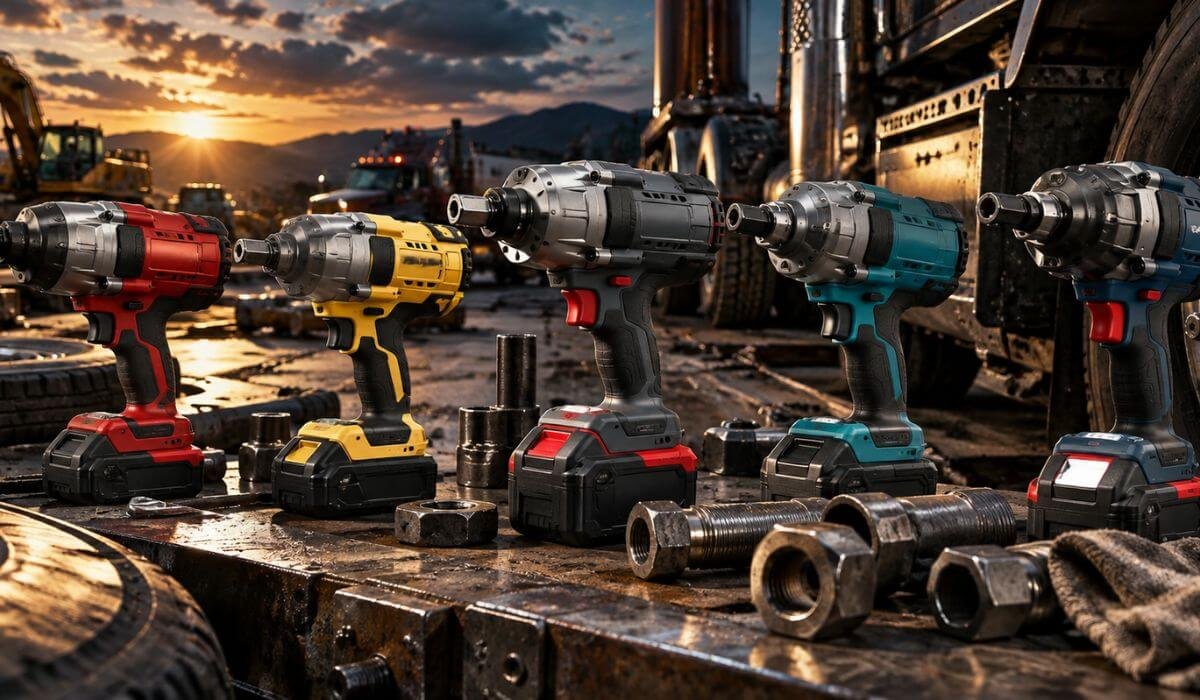
A 3/4-inch cordless impact wrench is not something to choose by chasing the biggest torque number. In real truck, trailer and heavy-equipment work, usable breakaway power, fastening control, 3/4-inch drive strength, tool balance and battery performance matter just as much. That is why the Ingersoll Rand W8171 takes the #1 spot, bringing up to 2,000 ft-lbs of breakaway torque, 1,300 ft-lbs of forward torque, a brushless motor, four-position power control and an 8.77-inch body into a compact heavy-duty package.
The important part is what those numbers mean when the wrench is actually in your hands. High breakaway torque helps with stubborn hardware, but it does not mean every fastener should be attacked at maximum power. Control matters just as much as force, especially around suspension, wheels, trailer hardware and expensive equipment where over-tightening or uncontrolled run-down can create another problem.
The other four options take different approaches to the same job, with differences in torque output, speed ranges, control modes, physical size and battery ecosystems. That is the real comparison worth making. A 3/4-inch cordless impact should give enough authority to handle the hardware in front of it while remaining practical enough to use repeatedly—and for critical fasteners, the final torque should still follow the manufacturer’s specified procedure rather than relying on the impact’s headline torque figure.
Best 3/4 Cordless Impact Wrench: Top 2026 Picks for High-Torque Jobs
#1. Ingersoll Rand W8171 3/4″ Cordless Impact Wrench
Heavy-Duty 3/4-Inch Cordless Impact Wrench with 2,000 Ft-Lbs Breakaway Torque, 1,300 Ft-Lbs Forward Torque and Brushless Motor
#2. DEWALT DCF964B 20V MAX XR 3/4″ Cordless Impact Wrench
High-Torque 3/4-Inch Cordless Impact Wrench with 1,900 Ft-Lbs Breakaway Torque, 1,420 Ft-Lbs Fastening Torque and Precision Wrench Mode
#3. Milwaukee 2864-20 M18 FUEL ONE-KEY 3/4″ Cordless Impact Wrench
3/4-Inch High-Torque Cordless Impact Wrench with 1,500 Ft-Lbs Nut-Busting Torque, 1,200 Ft-Lbs Fastening Torque and Customizable Modes
#4. Makita XWT07Z 18V LXT Brushless 3/4″ Cordless Impact Wrench
3/4-Inch Brushless Cordless Impact Wrench with 1,250 Ft-Lbs Nut-Busting Torque, 3-Speed Control and 18V LXT Battery Power
#5. Bosch GDS18V-770CB14 PROFACTOR 18V Connected 3/4″ Cordless Impact Wrench Kit
3/4-Inch High-Torque Cordless Impact Wrench Kit with 1,250 Ft-Lbs Breakaway Torque, 8Ah CORE18V Battery, 3-Speed Control and Auto Bolt Release
Expert Tip
With a 3/4-inch cordless impact wrench, more torque is not automatically better for every job. A 2,000-ft-lb breakaway rating is useful when dealing with seriously stubborn fasteners, but battery availability, tool length, control over fastening, and the type of work matter just as much. Before buying, check whether you already own batteries for 20V MAX, M18, 18V LXT, IQV20, or Bosch 18V tools. A bare tool can look cheaper until the battery and charger are added. Also remember that an impact wrench is for removing and running fasteners down; final torque should be set with a calibrated torque wrench when the vehicle or equipment manufacturer specifies a torque value.
How We Choose These 3/4-Inch Cordless Impact Wrenches
This list was built around a simple question: which of these tools gives a buyer something genuinely useful for heavy-duty 3/4-inch work? The answer cannot come from the advertised torque figure alone.
First, we looked at the actual drive size and torque figures. Every wrench here uses a 3/4-inch drive, but their power delivery is different. The Ingersoll Rand W8171 reaches 2,000 ft-lbs of breakaway torque, making its headline figure substantially different from the Bosch and Makita models. The DEWALT DCF964B reaches 1,900 ft-lbs of breakaway torque, while Milwaukee’s 2864-20 is rated at 1,500 ft-lbs of nut-busting torque. Those numbers matter when a wrench is being asked to remove heavily tightened or seized hardware, but they are not treated as interchangeable measurements.
We also considered how that power is controlled. DEWALT’s Precision Wrench mode, Milwaukee’s ONE-KEY system, Makita’s selectable speed settings, Bosch’s connected PROFACTOR platform, and Ingersoll Rand’s selectable power settings give these tools different approaches to controlling output. That is important because professional work often involves more than simply producing maximum torque.
Battery compatibility was another major filter. The W8171 belongs to Ingersoll Rand’s IQV20 platform, DEWALT uses 20V MAX, Milwaukee uses M18, Makita uses 18V LXT, and the Bosch kit uses an 18V CORE18V battery. This can completely change the practical value of a tool. Someone already invested in one battery ecosystem may save considerably by buying a compatible bare tool, while a first-time buyer may value Bosch’s package with an 8Ah battery and charger more highly.
Physical design was considered as well. A high-output impact wrench still has to fit where the work actually happens. Milwaukee’s 8.59-inch length and Ingersoll Rand’s 8.77-inch body are meaningful when working around wheels, suspension components, trailers, or equipment where clearance becomes an issue. Weight, anvil style, brushless motor technology, operating speed, and impact rate were considered alongside torque rather than treated as afterthoughts.
Finally, the selection was kept deliberately tight. These five were not chosen simply because they are recognizable brands or because their product pages contain impressive numbers. Each one brings a distinct reason to be considered: extreme breakaway capability from Ingersoll Rand, very high output and controlled fastening from DEWALT, connected tool management from Milwaukee, established 18V LXT compatibility from Makita, and a complete high-capacity battery package from Bosch.
That distinction is important. Some newer 3/4-inch impact wrenches may have fewer long-term reviews simply because they have not been on the market as long. Rather than pretending that limited review history proves long-term durability, this comparison puts greater weight on manufacturer-published specifications, battery platform, control features, physical design, and the actual job each tool is suited to perform. That keeps the recommendations grounded in what can be verified today, instead of filling gaps with assumptions.
The result is a list where the position of each wrench has a reason behind it. If maximum loosening power is the priority, the W8171’s 2,000-ft-lb rating tells one story. If controlled output, an existing battery collection, compact dimensions, or a complete kit matters more, the other four tell very different stories. That is the difference between comparing five impact wrenches and simply putting five popular products on a page.
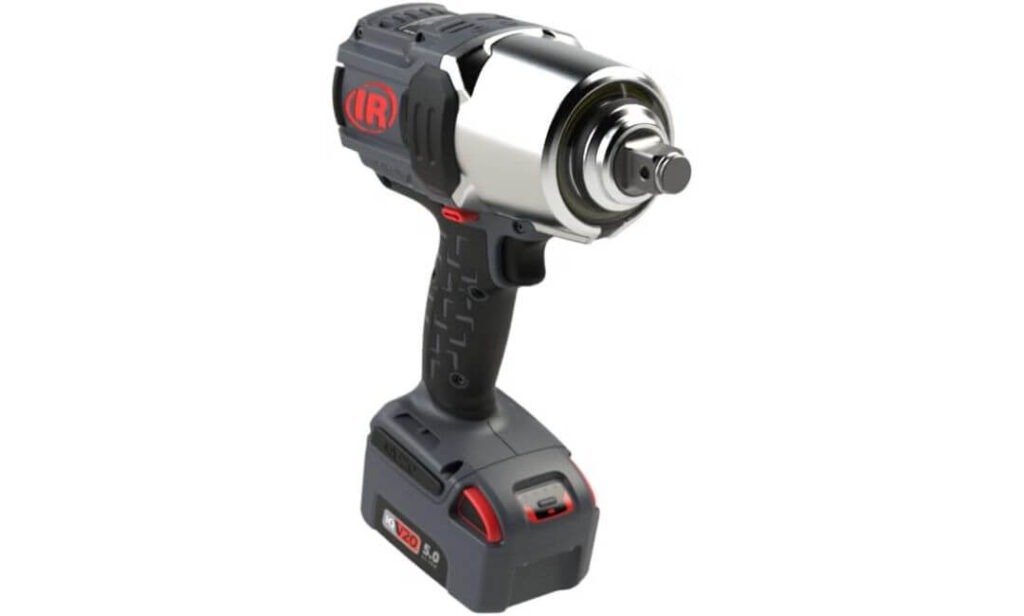
#1. Ingersoll Rand W8171 3/4″ Cordless Impact Wrench
Quick Specs:
- Drive: 3/4-inch square drive
- Breakaway torque: 2,000 ft-lbs
- Forward torque: 1,300 ft-lbs
- Free speed: Up to 1,350 RPM
- Impact rate: Up to 1,900 IPM
- Motor: Brushless
- Battery platform: Ingersoll Rand IQV20
- Tool length: 8.77 inches
- Tool weight: 7.4 lbs before battery
- Power control: 4-position regulator
- Lighting: 360° LED ring
- Battery: Not included; bare tool
The first thing that separates this wrench from an ordinary cordless impact is how much authority it has when a fastener simply refuses to move. The published 2,000 ft-lbs of breakaway torque puts it firmly into heavy-duty territory, while the 3/4-inch square drive gives it the socket size this class of work demands. For truck wheels, equipment, large suspension hardware, trailers, and industrial repairs, that combination makes much more sense than trying to force a smaller tool beyond what it was designed to handle.
There is also some thought behind the way that power is delivered. The 4-position power regulator gives you more than an on/off approach: positions 1–3 use timed shutoff, while position 4 provides continuous output for removal work. Add the variable-speed trigger and 1,350 RPM maximum free speed, and you have considerably more control than the headline torque number suggests. That matters when the job changes from breaking loose stubborn hardware to running fasteners down quickly.
The physical design is another reason this model makes sense. At 8.77 inches long and 7.4 lbs before the battery, it is not a featherweight tool, but those dimensions are quite reasonable for a 3/4-inch high-torque machine. The metal casing, rubberized bumpers, ergonomic pistol grip and 360° LED ring are practical touches for demanding work. The surrounding light helps keep the socket area visible when you’re working around wheels, frames or equipment where shadows can make positioning harder.
What We Like About It
- 2,000 ft-lbs breakaway torque gives it serious headroom when large or stubborn fasteners need to come free.
- The 4-position regulator with timed shutoff gives the operator useful control instead of relying on maximum output for every task.
- The 8.77-inch body is a sensible size for a 3/4-inch high-torque wrench and helps when working around tighter mechanical areas.
- 360° LED lighting is genuinely useful around wheels, chassis components and poorly lit equipment.
- The IQV20 platform is especially convenient for anyone already using compatible Ingersoll Rand cordless tools.
What We Would Keep in Mind
The easiest way to get the most from this wrench is to match it with the right IQV20 battery setup. This particular package is supplied as a bare tool, so a compatible battery and charger need to be available separately. For someone already invested in the IQV20 system, that is actually straightforward; for a first-time buyer, simply include those items when working out the complete setup cost.
Why It Stands Out for Heavy-Duty 3/4-Inch Work
The real attraction here is the balance between raw removal capability and usable control. A 2,000-ft-lb breakaway rating gets attention, but the 4-position power system is what makes the tool useful beyond a single maximum-power job. You can work at a lower setting when appropriate and still have continuous output available when a stubborn fastener needs everything the wrench can give.
Its 3/4-inch drive, brushless motor, 1,350 RPM free speed, 1,900 impacts per minute, compact 8.77-inch body and 360° lighting create a package aimed at serious automotive, fleet, agricultural and industrial work. It is not trying to be the smallest impact wrench in the toolbox; its purpose is having substantial power available when smaller cordless tools are no longer the right match.
The Insider Pro-Tip
If this is going into a professional truck or equipment toolbox, the battery you pair with it deserves some attention. Because the W8171 belongs to the IQV20 platform, existing Ingersoll Rand users can keep their cordless setup simple. If you are entering the platform for the first time, compare the complete tool, battery and charger package rather than judging the bare-tool price by itself.
And one detail worth remembering: 2,000 ft-lbs is a breakaway figure, not a recommended tightening target. Use the impact for appropriate fastening and removal work, then follow the vehicle or equipment manufacturer’s specified torque procedure for critical fasteners. That is the sensible way to take advantage of this much power without asking the tool to do a torque wrench’s job.
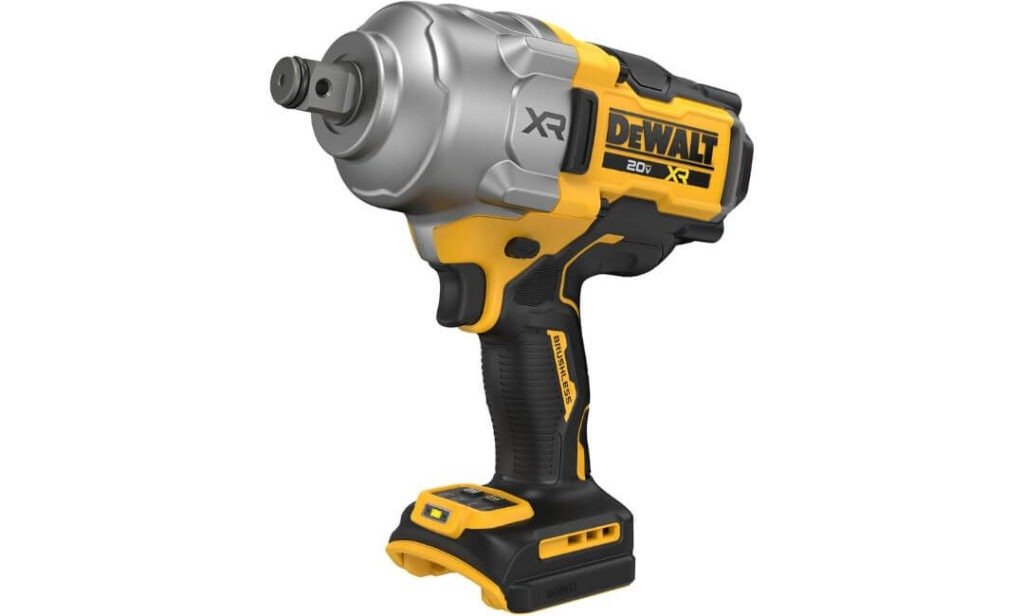
#2. DEWALT 20V MAX XR 3/4″ Cordless Impact Wrench DCF964B
Quick Specs:
- Drive: 3/4-inch square drive with hog ring anvil
- Fastening torque: Up to 1,420 ft-lbs
- Breakaway torque: Up to 1,900 ft-lbs
- Motor: Brushless
- Battery platform: DEWALT 20V MAX
- Speed control: 3-speed settings
- Control: Precision Wrench Mode
- Switch: 4-mode push-button control
- Housing: Oil-resistant glass-filled nylon
- Tool weight: 9.04 lbs
- Battery: Not included; bare tool
- Work light: Adjustable LED
Some jobs are won before the socket even touches the fastener — simply because the tool has enough reserve power to deal with what is waiting underneath. This DEWALT brings 1,900 ft-lbs of maximum breakaway torque and 1,420 ft-lbs of fastening torque, putting it firmly in the heavy-duty end of the 3/4-inch cordless category. For truck, fleet, equipment and demanding automotive work, that difference can mean spending less time fighting a fastener and more time finishing the job.
What makes the DCF964B more interesting than a simple high-torque tool is the amount of control built around that output. The three speed settings and Precision Wrench Mode are there for the situations where maximum force is not what you want. Instead of treating every fastener like a seized bolt, the tool gives you a way to manage speed and output more deliberately, helping reduce overtightening and fastener run-off.
Then there is the part that matters once the wrench leaves the clean workbench. The brushless motor and oil-resistant glass-filled nylon housing make this a particularly sensible choice for environments where grease, oil and solvents are simply part of the day. The 3/4-inch hog ring anvil keeps socket changes straightforward, while the adjustable LED and 4-mode switch add useful control when the work moves into darker or more awkward areas.
What We Like About It
- 1,900 ft-lbs breakaway torque gives this wrench serious capability when large fasteners are badly stuck.
- 1,420 ft-lbs fastening torque provides substantial output for demanding installation work.
- Precision Wrench Mode is a genuinely useful feature when maximum output is unnecessary.
- The oil-resistant housing makes more sense for real shop and equipment environments than a tool designed only for clean conditions.
- 20V MAX compatibility is a major practical advantage for users who already own DEWALT cordless equipment.
What We Would Keep in Mind
The best way to approach this tool is to think about the complete 20V MAX setup, not just the wrench itself. This package is a bare tool, so the battery and charger are separate. If you already have suitable DEWALT 20V MAX batteries, that makes the decision considerably simpler; if you are building the platform from scratch, include the battery and charger in the overall purchase calculation.
Why It Makes Sense for Heavy-Duty 3/4-Inch Applications
The DCF964B occupies an interesting middle ground between brute force and everyday usability. Its 1,900 ft-lbs breakaway rating gives it the muscle expected from a serious 3/4-inch impact, but the three-speed setup and Precision Wrench Mode mean it does not have to operate at full aggression every time. That combination is especially useful for technicians who deal with different sizes and types of fasteners throughout the same day.
Its brushless drive, hog ring anvil, oil-resistant housing, adjustable work light and DEWALT 20V MAX compatibility also make the tool easier to justify as part of a working cordless system rather than as a one-job purchase. It is a substantial 9.04-lb tool, but that goes hand in hand with the level of output this class of wrench is built to deliver.
The Insider Pro-Tip
If you already own DEWALT 20V MAX tools, battery compatibility is one of this wrench’s quiet advantages. There is no reason to build another battery ecosystem simply for the impact if your existing setup can support the work. For heavy-duty use, however, it is sensible to go into the job with a properly charged, suitable-capacity battery rather than expecting a small pack to provide the same practical runtime during repeated high-load work.
And do not let the 1,900 ft-lb breakaway number become a tightening target. That figure describes the tool’s maximum loosening capability under specified conditions. For wheels, suspension components and other safety-critical hardware, use the impact to perform the appropriate fastening stage and finish with the manufacturer’s specified torque procedure.
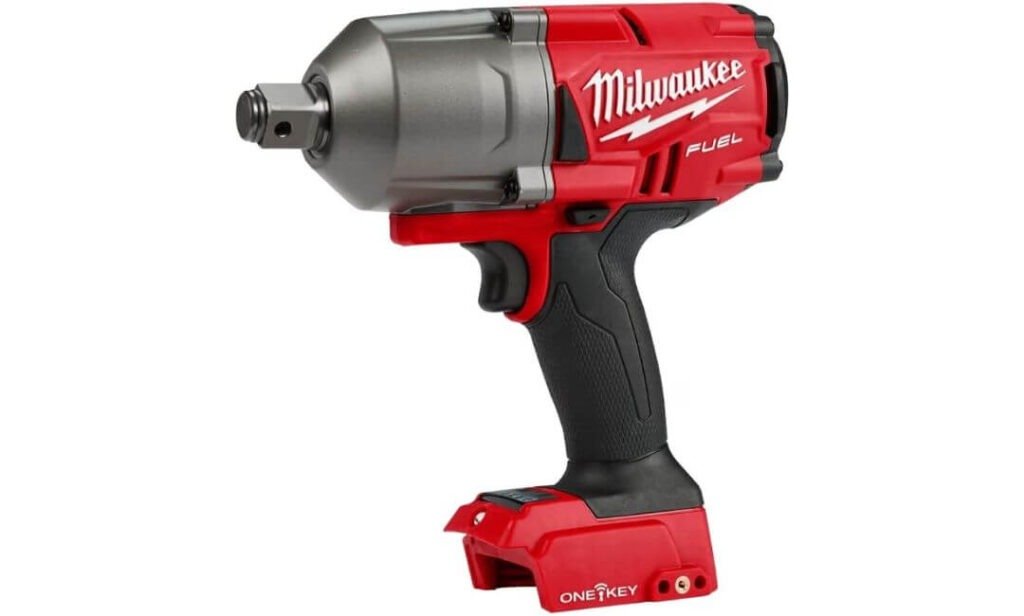
#3. Milwaukee 2864-20 M18 FUEL ONE-KEY 3/4″ High-Torque Impact Wrench
Quick Specs:
- Drive: 3/4-inch square drive
- Nut-busting torque: Up to 1,500 ft-lbs
- Fastening torque: Up to 1,200 ft-lbs
- Motor: POWERSTATE brushless
- Battery platform: Milwaukee M18
- Tool length: 8.59 inches
- Tool weight: 6.9 lbs without battery
- Control: 4 customizable modes
- Technology: ONE-KEY
- Anvil: Friction ring
- Battery: Not included; bare tool
There is a particular advantage to a 3/4-inch impact that does not show up in the biggest number printed on the box: how much tool you have to move around the fastener. This model keeps its body to just 8.59 inches while still producing up to 1,500 ft-lbs of nut-busting torque. That combination makes it particularly interesting for truck, equipment and industrial work where a large impact can have plenty of power but simply cannot get comfortable around the hardware.
The output is substantial without making the tool unnecessarily complicated to operate. Its 1,200 ft-lbs of fastening torque gives it plenty of authority for demanding assembly work, while the POWERSTATE brushless motor is designed to deliver Milwaukee’s high-output performance efficiently. The 3/4-inch friction-ring anvil also gives you the socket retention expected from a professional heavy-duty impact.
Then comes the feature that changes how this wrench can be used from job to job: ONE-KEY. Instead of relying only on the trigger and a basic mechanical selector, users can customize operating modes through the connected system and manage the tool digitally. That is especially useful when the same wrench moves between different fastening jobs and consistent settings matter more than simply having maximum output available.
What We Like About It
- 1,500 ft-lbs nut-busting torque gives it serious capability for stubborn heavy-duty hardware.
- The 8.59-inch length is a genuinely useful advantage when clearance becomes the limiting factor.
- 6.9-lb bare-tool weight keeps the package relatively manageable for a 3/4-inch high-torque wrench.
- ONE-KEY customization adds a level of control and tool management that a conventional impact cannot provide.
- M18 compatibility makes it particularly convenient for users already invested in Milwaukee’s cordless platform.
What We Would Keep in Mind
The smartest way to buy this model is to look at it as part of the M18 system. The 2864-20 is sold as a bare tool, so the battery and charger are separate. If you already have M18 batteries in the toolbox, that makes the setup considerably more straightforward; if you are new to the platform, simply factor the required battery and charger into the complete purchase rather than comparing bare-tool prices alone.
Why It Fits the Heavy-Duty 3/4-Inch Category So Well
The appeal is not just the 1,500-ft-lb figure. It is the way Milwaukee packages that output into a body measuring 8.59 inches and weighing 6.9 lbs before the battery. For someone working around trucks, trailers, agricultural machinery or industrial equipment, that can be more useful than chasing an even larger wrench that becomes difficult to position in confined areas.
The other half of the equation is control. ONE-KEY, multiple operating modes, a POWERSTATE brushless motor and the M18 battery platform give this tool a broader role than simply removing large nuts. It can be configured around the work, carried between jobs without an air hose, and integrated into an existing Milwaukee setup.
The Insider Pro-Tip
If your toolbox already contains M18 batteries, this is where the 2864-20 becomes particularly easy to justify. You are buying into an established battery ecosystem rather than starting another one, and the bare-tool format avoids paying for another charger you may not need. For repeated heavy-duty work, keep a suitable high-capacity M18 pack charged and ready so the wrench can deliver its intended performance when the job is waiting.
There is also a useful distinction to remember with ONE-KEY: customization is valuable because it lets the operator adapt the tool to the job; it does not turn an impact wrench into a calibrated torque wrench. For critical wheel, suspension or structural fasteners, use the manufacturer’s specified torque procedure rather than treating the impact’s maximum fastening figure as the final tightening value.
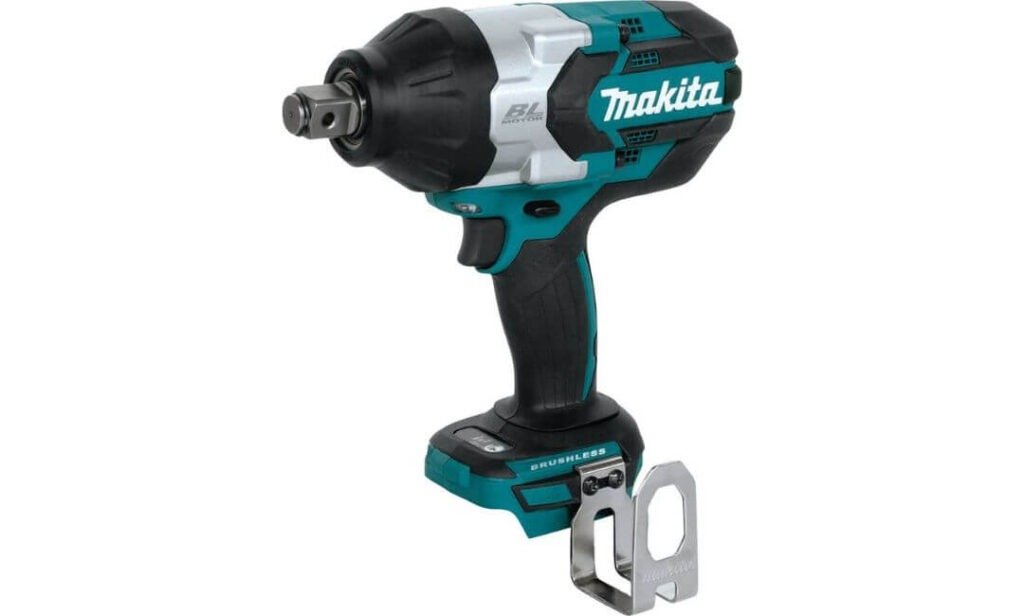
#4. Makita XWT07Z 18V LXT Brushless 3/4″ Impact Wrench
Quick Specs:
- Drive: 3/4-inch square drive
- Fastening torque: 780 ft-lbs
- Nut-busting torque: Up to 1,250 ft-lbs
- Motor: BL Brushless
- Battery platform: Makita 18V LXT Lithium-Ion
- Speed settings: 3 selectable ranges
- Maximum speed: Up to 1,800 RPM
- Maximum impact rate: Up to 2,200 IPM
- Anvil: 3/4-inch friction ring with thru-hole
- Tool length: About 9 inches
- Tool weight: About 7 lbs without battery
- Battery: Not included; bare tool
The useful thing about this Makita is that it does not treat a 3/4-inch impact as a one-setting tool. Its three-speed power selector lets you choose between 0–900, 0–1,000 and 0–1,800 RPM ranges, with corresponding impact rates reaching up to 2,200 IPM. In practical terms, that gives you a sensible progression from controlled fastening to full-strength removal instead of making maximum output the answer to every job.
At the top end, the tool produces 780 ft-lbs of fastening torque and up to 1,250 ft-lbs of nut-busting torque. That is enough output to put this firmly into serious equipment and heavy-vehicle territory. The 3/4-inch drive also means you are working with the larger impact sockets appropriate for substantial fasteners, rather than trying to stretch a smaller drive beyond its natural role.
The BL Brushless motor is another important part of the package. Makita electronically controls the motor to optimize battery energy use, while eliminating carbon brushes helps the motor run cooler and reduces a traditional wear point. For someone spending long periods on a jobsite, that efficiency matters because the tool is being asked to deliver useful output repeatedly rather than just produce one impressive burst.
What We Like About It
- 1,250 ft-lbs nut-busting torque gives it plenty of authority for stubborn heavy-duty fasteners.
- Three speed ranges make it easier to match the tool’s behavior to the fastening task.
- 18V LXT compatibility is a major practical benefit for existing Makita users.
- The 3/4-inch friction-ring and thru-hole anvil gives you flexible socket-retention options for demanding work.
- The BL Brushless motor is designed around efficient battery use and cooler operation.
What We Would Keep in Mind
This is a bare-tool setup, so the battery and charger are purchased separately. That can actually work in your favor if you already have Makita 18V LXT batteries in the toolbox because there is no need to duplicate the charging system. If you are new to LXT, simply choose the battery alongside the wrench so the complete setup matches the type of work you expect to do.
Why It Earns a Place in This 3/4-Inch Lineup
Makita takes a slightly different approach here: instead of chasing the largest possible headline number, it combines 1,250 ft-lbs of nut-busting torque with three distinct operating ranges. That makes the XWT07Z particularly appealing when one tool needs to move between installation work and difficult removal jobs throughout the day.
The 9-inch body and roughly 7-lb bare-tool weight also keep the package in a reasonable range for this drive class. Add the LXT battery ecosystem, brushless motor, friction-ring/thru-hole anvil and up-to-2,200-IPM impact rate, and the result is a tool that makes sense for truck service, construction, heavy equipment and industrial maintenance without trying to be something it is not.
The Insider Pro-Tip
If your workshop already runs on Makita 18V LXT, this bare-tool format is worth looking at differently from a complete kit. Your existing batteries can keep the setup simple, and the three-speed selector gives you a useful way to reserve the highest setting for jobs that genuinely need it. For repeated heavy-duty work, use a healthy, fully charged battery suited to the workload rather than judging runtime from the tool alone.
One small habit makes a big difference with a wrench this powerful: use the lower speed range when you are deliberately running fasteners down and save maximum output for removal or heavy fastening where appropriate. And for safety-critical hardware, treat the impact’s torque rating as an output capability—not as a substitute for the vehicle or equipment manufacturer’s final torque specification.
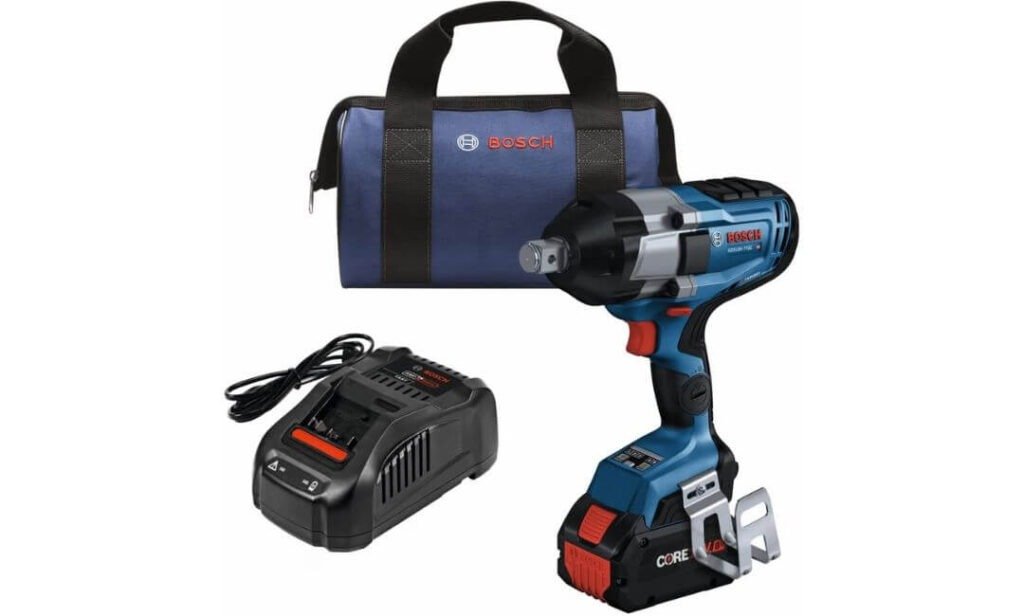
#5. Bosch GDS18V-770CB14 PROFACTOR 18V 3/4″ Impact Wrench Kit
Quick Specs:
- Drive: 3/4-inch square drive
- Fastening torque: Up to 770 ft-lbs
- Breakaway torque: Up to 1,250 ft-lbs
- Motor: BITURBO brushless
- Battery platform: Bosch 18V
- Included battery: 1 × CORE18V 8Ah High Power
- Speed settings: 3 selectable ranges
- Maximum speed: Up to 1,750 RPM
- Anvil: Friction ring with thru-hole
- Control: Preset and customizable modes
- Auto Bolt Release: Yes
- Connectivity: Bosch Toolbox app compatible
- Package: Kit with battery and charger
A bare impact wrench and a ready-to-work kit are two very different purchases, and that is where this Bosch becomes particularly interesting. The tool produces 770 ft-lbs of fastening torque and up to 1,250 ft-lbs of breakaway torque, but the bigger practical story is that Bosch includes a CORE18V 8Ah High Power battery with the package. You are not left looking at the wrench on the bench and then wondering what battery and charger need to be added before the first job.
The power delivery is also more considered than the numbers initially suggest. The three speed ranges of 0–800, 0–1,300 and 0–1,750 RPM let you approach different fastening jobs with a more appropriate level of output. That becomes particularly useful when large fasteners need to be driven with control rather than simply attacked at maximum speed. The advanced preset and custom modes add another layer for users who repeatedly perform similar work.
Then there is Auto Bolt Release, which is one of those features that makes more sense after you have actually worked overhead or around awkward machinery. When the tool senses that the fastener has come free and there is no load, it stops rotation, helping prevent a loose nut or bolt from being spun off and dropped unexpectedly. Combined with the friction-ring and thru-hole anvil, variable-speed trigger and BITURBO brushless system, this feels like a tool designed around the small problems that appear during real work—not just a torque figure for a specification sheet.
What We Like About It
- 1,250 ft-lbs breakaway torque gives the tool substantial capability for stubborn large fasteners.
- The included 8Ah CORE18V battery makes this a more complete starting package than a typical bare tool.
- Three speed ranges provide useful control when maximum output is not appropriate.
- Auto Bolt Release is a thoughtful feature for overhead and awkward fastening situations.
- BITURBO brushless technology is designed to take advantage of the higher output available from Bosch’s high-performance battery platform.
What We Would Keep in Mind
The biggest thing to appreciate is that this is a kit-oriented purchase rather than just a bare impact. The included CORE18V 8Ah battery adds real value if you are starting or expanding a Bosch 18V setup, while existing Bosch users may already have the batteries they need. In other words, the value depends partly on where you are with the Bosch ecosystem—and that is worth considering before choosing between a complete kit and a tool-only option.
Why This Bosch Kit Makes Sense for Demanding Work
There is a lot going on behind the 1,250-ft-lb headline. The combination of 770 ft-lbs fastening torque, three speed ranges, connected customization, Auto Bolt Release and BITURBO brushless technology gives the tool a more controlled personality than a basic high-output impact. It is particularly suited to users who want one cordless tool that can move between substantial fastening jobs without treating every fastener as a maximum-power exercise.
The included 8Ah CORE18V battery is arguably the detail that makes this package stand apart in this lineup. Rather than buying a powerful bare tool and sorting out the power source afterward, the kit arrives with a high-capacity battery designed for Bosch’s PROFACTOR system. For someone entering the Bosch platform, that can make the overall purchase much easier to understand.
The Insider Pro-Tip
Before choosing the Bosch, look beyond the wrench itself and ask which battery ecosystem you want sitting in your toolbox for the next few years. If Bosch 18V is already part of your setup, the included CORE18V battery is an immediate advantage. If it is a new platform for you, the kit gives you a much cleaner starting point because the high-capacity battery is already included.
One feature worth paying attention to during actual use is Auto Bolt Release. It is easy to overlook when comparing torque numbers, but stopping rotation after a fastener breaks free can be genuinely convenient when working overhead or where dropped hardware is difficult to retrieve. For critical fasteners, however, the same rule applies here as with every high-torque impact: use the wrench for the appropriate fastening stage and rely on the manufacturer’s specified torque procedure for final critical tightening.
Best 3/4 Cordless Impact Wrench (2026) Compared for Torque and Control
| Impact Wrench | 3/4-Inch Drive | Breakaway / Nut-Busting | Fastening Torque | Motor | Control | Battery Platform | Body Length | Tool Weight | Package Type |
|---|---|---|---|---|---|---|---|---|---|
|
Ingersoll Rand W8171
Maximum Removal Power |
Yes | 2,000 ft-lbs | 1,300 ft-lbs | Brushless | 4-position regulator Timed shutoff on positions 1–3 |
IQV20 | 8.77 in | 7.4 lbs* | |
|
DEWALT DCF964B
High Output + Precision |
Yes | 1,900 ft-lbs | 1,420 ft-lbs | Brushless | 3 speeds Precision Wrench Mode |
20V MAX | — | 9.04 lbs* | |
|
Milwaukee 2864-20
ONE-KEY Control |
Yes | 1,500 ft-lbs | 1,200 ft-lbs | POWERSTATE Brushless |
4 customizable modes ONE-KEY connectivity |
M18 | 8.59 in | 6.9 lbs* | |
|
Makita XWT07Z
3-Speed LXT Power |
Yes | 1,250 ft-lbs | 780 ft-lbs | BL Brushless | 3-speed selector Up to 2,200 IPM |
18V LXT | Approx. 9 in | Approx. 7 lbs* | |
|
Bosch GDS18V-770CB14
Complete 8Ah Kit |
Yes | 1,250 ft-lbs | 770 ft-lbs | BITURBO Brushless |
3 speeds Preset + custom modes |
Bosch 18V | — | Package: 11.99 lbs | 8Ah Battery Included |
3/4-Inch Cordless Impact Wrench Buying Guide for Real-World Heavy-Duty Work
Choosing a 3/4-inch cordless impact wrench is mostly about matching the tool to the fasteners and working conditions, not finding the biggest torque number on a product page. These are large-drive tools intended for applications where a conventional 1/2-inch impact may not have enough socket capacity or removal authority. The five tools above also show why specifications need context: their published breakaway or nut-busting figures range from 1,250 to 2,000 ft-lbs, but their control systems, battery platforms, dimensions, and intended workloads are quite different.
What to Look for in a 3/4-Inch Cordless Impact Wrench
Start with the work itself. A wrench used occasionally on pickup-truck suspension hardware does not need to be evaluated in exactly the same way as one that spends every day removing heavy-equipment fasteners.
The important specifications are:
- Breakaway or nut-busting torque: This indicates the tool’s ability to remove stubborn fasteners under the manufacturer’s test conditions. It is one of the most useful numbers when comparing heavy-duty impacts.
- Fastening torque: This tells you more about the tool’s available output while driving a fastener. It should not be confused with a calibrated final tightening torque.
- RPM: Higher speed can reduce the time spent spinning a loose fastener out, while controlled lower speeds are useful when starting or running hardware down.
- IPM: Impacts per minute describe the hammering rate. A high IPM figure can help maintain impact action during difficult removal work, but it should never be viewed independently of torque.
- Drive and anvil design: A genuine 3/4-inch square drive is built around larger impact sockets and fasteners. Friction rings and thru-hole retention systems can also make socket changes and secure retention easier.
- Control system: Multiple speed settings, power modes, timed shutoff, precision modes, or connected controls can be more valuable than another few hundred advertised ft-lbs.
- Battery platform: This becomes particularly important with cordless tools because battery cost, availability, capacity, and your existing tool collection all affect the real purchase.
- Size and weight: A powerful impact that is difficult to position around the fastener can be less useful than a slightly less powerful model that fits the work properly.
Torque Numbers Need More Context Than the Headline Suggests
The biggest mistake when comparing high-torque impacts is treating breakaway torque and fastening torque as the same measurement. They are not.
A tool can advertise 2,000 ft-lbs of breakaway torque while having a substantially lower fastening figure. That does not mean the tool is inconsistent; it reflects two different jobs. Breaking a seized fastener loose requires a short burst of very high impact force, while driving a fastener is a different operating condition.
For this category, think about the numbers in three layers:
| Specification | What it tells you | Why it matters |
|---|---|---|
| Breakaway / nut-busting torque | Removal capability | Important for seized, corroded and heavily tightened hardware |
| Fastening torque | Available driving output | Useful when installing substantial fasteners |
| RPM + IPM | Speed of operation | Helps determine how quickly the tool works once the fastener starts moving |
For example, the 2,000-ft-lb breakaway rating of the Ingersoll Rand gives it exceptional removal headroom, while the DEWALT combines 1,900 ft-lbs of breakaway torque with 1,420 ft-lbs of fastening torque. Milwaukee takes a different approach with 1,500 ft-lbs of nut-busting torque and a compact body, while Bosch and Makita both reach 1,250 ft-lbs on their published removal figures. Those differences are meaningful, but they should be read alongside each tool’s control and physical design.
genui{“learning_viz”:{“type_id”:”TORQUE”,”locale_override”:”en-US”}}
Why a 3/4-Inch Drive Is Different From a Smaller Impact
The drive size is not just a measurement of the square end of the tool. It determines the socket family you can use and the class of fasteners the tool is intended to handle.
A 1/2-inch impact remains more convenient for many everyday automotive jobs because sockets are smaller and the tools are generally easier to carry. Moving to 3/4-inch makes sense when the fasteners become larger, the workload becomes more demanding, or the job regularly involves trucks, agricultural equipment, trailers, industrial machinery, or heavy equipment.
The important point is not to buy a 3/4-inch impact simply because it has a larger torque number. If most of your work consists of ordinary passenger-car fasteners, the extra size may not provide much practical benefit. If large sockets and stubborn hardware are part of the normal workload, the larger drive starts to make much more sense.
Brushless Motors Are Particularly Useful in This Class
A brushless motor is more than a marketing phrase on a high-output impact wrench.
Without traditional carbon brushes, the motor can operate without that particular source of mechanical wear. Electronic control also allows manufacturers to manage power delivery and battery use more effectively. That is valuable in a 3/4-inch impact because these tools can draw substantial power during repeated high-load work.
The models in this comparison use different brushless systems, including:
- Ingersoll Rand’s brushless motor,
- DEWALT’s brushless motor,
- Milwaukee’s POWERSTATE brushless motor,
- Makita’s BL Brushless motor,
- Bosch’s BITURBO brushless system.
The practical advantage is not that every brushless wrench will automatically last longer than every brushed wrench. Tool construction, workload, heat management, battery condition, and how the tool is used still matter. Brushless technology simply provides a strong foundation for high-output cordless equipment.
Battery Voltage, Runtime and Charger Compatibility
Battery choice deserves more attention than it usually receives in impact-wrench comparisons.
These five tools are spread across several ecosystems:
| Platform | Tool in this guide | What to consider |
|---|---|---|
| IQV20 | Ingersoll Rand W8171 | Requires compatible Ingersoll Rand battery |
| 20V MAX | DEWALT DCF964B | Useful for existing DEWALT users |
| M18 | Milwaukee 2864-20 | Integrates with Milwaukee M18 batteries |
| 18V LXT | Makita XWT07Z | Fits Makita’s established LXT system |
| Bosch 18V | GDS18V-770CB14 | Kit includes an 8Ah CORE18V battery |
Amp-hours affect capacity and runtime, not the advertised voltage of the tool. A larger-capacity pack can be useful during repeated high-load work, but it also adds weight. That creates a genuine trade-off: more available battery capacity can mean fewer battery changes, while a smaller pack may make the wrench easier to handle.
Hot-swapping is also worth thinking about for professional users. Keeping a second charged battery available can matter more than chasing a theoretical maximum runtime figure, particularly when the tool is being used continuously throughout a shift.
Weight, Balance and Ergonomics Matter More Than They Look
A 3/4-inch impact is a substantial tool. Once a battery is attached, the actual weight in your hand is higher than the bare-tool specification shown on many product pages.
That is why balance matters alongside weight.
A tool that keeps the battery and motor positioned sensibly can feel easier to control than another wrench with a similar total weight. Length matters too. Milwaukee’s 2864-20, for example, measures about 8.59 inches, while the Ingersoll Rand W8171 is about 8.77 inches long. Those small differences can become noticeable around suspension components, wheel wells, frames, and machinery.
For extended use, pay attention to:
- grip shape,
- trigger reach,
- battery position,
- tool length,
- total weight with the battery installed,
- access around the fastener,
- vibration and general handling.
A few extra ounces are not necessarily a problem if the tool is well balanced. Conversely, a very powerful wrench becomes frustrating if its size constantly fights the job.
Construction Quality Is About More Than a Metal Housing
A heavy-duty impact will inevitably encounter oil, grease, dust, drops, vibration and repeated heat cycles.
Look for practical protection rather than assuming that one construction material tells the whole story. Rubberized bumpers can help protect the tool and surrounding surfaces. Oil-resistant housings are useful in mechanical environments. Proper electronic protection can help manage overload, overheating, and battery-related conditions.
The DEWALT’s oil-resistant glass-filled nylon housing is particularly relevant for workshop and equipment environments. Bosch adds protective design features and connected operating modes, while the Ingersoll Rand combines a metal casing with rubberized bumpers. Makita and Milwaukee similarly emphasize professional-duty construction.
None of these features makes a tool indestructible. A professional impact still benefits from sensible handling, clean sockets, correct accessories, and reasonable duty cycles.
High-Torque 3/4-Inch Impact Wrench: What Heavy-Duty Buyers Should Know
When a manufacturer quotes 2,000 ft-lbs of breakaway torque, that figure should immediately tell you the tool is designed for serious removal work. It should not tell you to apply 2,000 ft-lbs when tightening a wheel nut.
This distinction is especially important on trucks, trailers and heavy equipment. Manufacturer torque specifications exist for a reason, and an impact wrench’s advertised output is not the same thing as a calibrated torque value.
For demanding work, also consider the duty cycle. Occasional high-load removal is very different from repeatedly attacking large fasteners throughout an entire workday. Heat, battery capacity, socket quality and operator technique all become more important as the workload increases.
Torque Modes and Automatic Controls Can Save More Than Time
High-output cordless impacts are becoming much more sophisticated.
Instead of simply offering a trigger and one maximum setting, modern tools can provide:
- multiple speed ranges,
- selectable power levels,
- timed shutoff,
- precision fastening modes,
- custom presets,
- automatic bolt-release functions,
- app-based configuration.
These features have a practical purpose. Maximum torque is often exactly what you do not want during the first stage of fastening.
DEWALT’s Precision Wrench Mode, Milwaukee’s ONE-KEY controls, Makita’s three-speed selector, Bosch’s preset/custom modes and Auto Bolt Release, and Ingersoll Rand’s four-position regulator all approach this problem differently.
For someone doing repetitive professional work, these controls can make the tool easier to use consistently.
3/4-Inch Cordless Impact Wrench for Automotive and Truck Work
For automotive work, the key question is whether the vehicle actually has fasteners large enough to justify the 3/4-inch platform.
These tools can make sense for:
- heavy-duty suspension work,
- truck wheel and hub service,
- axle-related repairs,
- large chassis fasteners,
- trailers,
- fleet maintenance,
- commercial vehicle service.
For ordinary passenger-car maintenance, a 1/2-inch impact may be more convenient in many situations. The 3/4-inch format becomes more compelling as fastener size and required removal force increase.
For trucks, especially fleet and commercial vehicles, the larger drive can be much easier to justify because the fasteners, sockets and workloads are physically larger.
When Premium Performance Is Worth the Extra Spend
There is no useful universal price point where a 3/4-inch impact suddenly becomes “professional.” The better question is what the tool is replacing and how often it will work.
For occasional use, a buyer may place more value on a complete battery kit or an existing battery platform. For daily heavy-duty service, factors such as control, battery availability, ergonomics, thermal management, warranty support and proven manufacturer support become much more important.
That is also why the five tools in this guide are not interchangeable despite all sharing a 3/4-inch drive. One emphasizes maximum breakaway output, another combines very high output with Precision Wrench Mode, another brings connected ONE-KEY control in a compact body, another emphasizes LXT compatibility and three-speed operation, while the Bosch package includes a high-capacity battery.
The right value is the combination that matches the workload, not necessarily the lowest purchase price or the largest number printed in the specifications.
Simple Care That Helps a High-Torque Impact Last
A little maintenance goes a long way with cordless impacts because the tool is routinely exposed to vibration and high mechanical loads.
- Keep the anvil and socket connection clean so the socket seats properly.
- Use impact-rated sockets and accessories designed for the forces involved.
- Keep battery contacts clean and dry.
- Do not continue hammering a fastener indefinitely after it clearly is not moving; reassess the socket, fastener and application.
- Allow the tool to cool during repeated high-load work when necessary.
- Store batteries according to the battery manufacturer’s recommendations.
- Inspect the anvil, friction ring or thru-hole retention hardware periodically.
- Keep the housing and ventilation areas free from accumulated debris.
- Never use the impact’s maximum torque figure as a substitute for the specified final torque on safety-critical fasteners.
The most useful habit is simple: let the impact do the work it was designed to do, but do not make it compensate for the wrong socket, damaged hardware, inadequate battery, or incorrect tightening procedure. A 3/4-inch cordless impact is a powerful piece of equipment; using that power selectively is what makes it genuinely useful over the long term.
How to Maximize Performance From a 3/4-Inch Cordless Impact Wrench
A high-torque impact wrench is at its best when the tool, battery, socket and fastener are all working together. Maximum advertised torque is useful, but real-world performance can drop quickly if the battery is tired, the socket does not fit correctly, the anvil is dirty, or the operator keeps hammering a fastener that needs a different approach. The following practices help preserve both performance and tool life.
Get the Most From Breakaway Torque
When a large fastener is stuck, the temptation is to immediately hold the trigger wide open and let the impact hammer away. Sometimes that works; sometimes it simply creates heat and drains the battery without moving the fastener.
A better approach is to give the tool the conditions it needs to transfer its available impact force efficiently:
- Use the correct impact-rated socket. A properly fitting socket keeps the force centered on the fastener and reduces unnecessary movement.
- Seat the socket completely on the fastener before applying power. A partially engaged socket can damage both the fastener and the socket.
- Keep the wrench aligned with the fastener. Side-loading the tool wastes energy and places unnecessary stress on the anvil and socket.
- Start with controlled trigger pressure when access allows, then increase output when the fastener genuinely requires it.
- For heavily corroded hardware, penetrating lubricant and appropriate mechanical preparation can be more effective than simply holding the trigger longer.
- If the fastener still refuses to move after sensible attempts, stop and reassess the application rather than assuming another minute of hammering will solve it.
Remember that breakaway torque is a removal capability, not a guaranteed amount of torque every fastener will receive. Fastener condition, joint design, corrosion, battery condition, socket quality and contact all influence the actual result.
Give the Battery the Attention the Tool Deserves
A 3/4-inch high-torque impact can place considerably more demand on a battery than a small cordless drill or light-duty impact. That makes battery condition a genuine part of performance.
For demanding work:
- Start with a fully charged battery appropriate for the manufacturer’s tool platform.
- Use a battery with enough capacity for the workload instead of relying on a small pack for repeated heavy removal.
- Keep a second charged battery available when the wrench is being used throughout a working day.
- Allow an overheated battery to cool rather than repeatedly forcing it through high-load work.
- Keep battery contacts clean and dry.
- Store batteries according to the battery manufacturer’s recommendations.
- Use only batteries approved for that particular tool platform.
There is also a balance between capacity and handling. A larger battery can provide more available energy, but it also adds weight to the tool. For overhead work or repeated positioning, that additional weight can become noticeable. The best battery is therefore not always the physically largest one available; it is the one that provides the required runtime without making the tool unnecessarily difficult to control.
Maintenance Checklist for the Anvil and Impact Mechanism
The impact mechanism does the hard work, but the small contact points around it deserve attention too. A little inspection can catch problems before they become expensive repairs.
Before regular heavy use:
- Check the 3/4-inch anvil for obvious damage, excessive wear or unusual movement.
- Inspect the friction ring or thru-hole retention system and make sure it is functioning correctly.
- Look over sockets for cracks, deformation or excessive wear.
- Clean dirt and accumulated grease from the socket connection area.
- Check that the trigger and mode selector operate normally.
- Inspect the housing and rubber protection for damage.
- Keep ventilation and cooling areas free from accumulated debris.
- Make sure the battery locks firmly into the tool.
During use:
Pay attention to anything that feels different from normal. Unusual vibration, a sudden change in impact behavior, excessive heat, slipping socket retention or abnormal noise is a reason to stop and inspect the tool.
Do not treat the impact mechanism as something that needs constant user intervention. Modern cordless impacts are designed as enclosed systems, so follow the manufacturer’s maintenance and lubrication instructions rather than adding lubricant or dismantling the mechanism simply because the tool has been used heavily.
Use the Right Socket and Retention System
With a 3/4-inch wrench, the socket connection is carrying serious loads. Always use impact-rated sockets that are correctly sized for the fastener.
Friction-ring and thru-hole systems have different advantages. A friction ring provides quick socket changes while helping retain the socket during normal use. A thru-hole can be particularly useful when a pin-and-ring retention setup is preferred for demanding or overhead applications.
Avoid using ordinary chrome sockets with a high-torque impact. They are not designed for the same repeated impact loading, and using the wrong accessory undermines the entire purpose of buying a heavy-duty wrench.
Do Not Confuse Maximum Power With Correct Final Torque
This is probably the most important habit in the entire guide.
A wrench capable of 1,250, 1,500, 1,900 or 2,000 ft-lbs of breakaway torque is not telling you to tighten a fastener to that value. Breakaway figures describe removal performance under specified test conditions.
For wheels, suspension components, axle hardware and other safety-critical fasteners:
- Use the impact at an appropriate setting to run the fastener down.
- Stop before treating impact output as a final torque measurement.
- Follow the vehicle or equipment manufacturer’s specified tightening procedure.
- Use a suitable calibrated torque wrench when the application calls for a specified final torque.
That approach lets the impact wrench save time without asking it to perform a job it was never intended to replace a calibrated torque tool for.
Safety Practices for Heavy-Duty Impact Work
Heavy-duty cordless impacts deserve the same respect as pneumatic equipment because the mechanical forces involved are substantial.
Wear appropriate eye protection and work gloves, keep loose clothing away from the rotating area, and make sure the vehicle or equipment is properly supported before working around wheels or suspension components.
Also keep these points in mind:
- Never rely on a jack alone when working underneath a vehicle.
- Use the correct lifting and support equipment for the application.
- Keep hands clear of the socket and fastener while the tool is operating.
- Make sure the socket is fully seated before applying high power.
- Do not modify the battery, charger or tool.
- Remove the battery before performing maintenance or inspecting the tool.
- Keep bystanders away from the immediate work area when large fasteners are being removed.
- Be particularly careful with damaged, rounded, cracked or severely corroded fasteners.
- If a fastener, socket or anvil begins behaving abnormally, stop rather than increasing impact force indefinitely.
The best performance does not come from holding the trigger harder for longer. It comes from using the correct battery, socket, speed setting and technique for the fastener in front of you. That is how a 3/4-inch cordless impact delivers the power it was built for while remaining a dependable tool rather than something that is constantly being pushed beyond sensible use.
Maintenance and Long-Term Care for a 3/4-Inch Cordless Impact Wrench
A high-torque impact does not need complicated maintenance, but it does need consistent basic care. These tools regularly deal with vibration, dust, grease, high-load impacts and heavy sockets, so small problems are easier to prevent than repair. A few minutes of inspection can also tell you when the tool, battery or socket should be taken out of service.
Keep the Anvil and Socket Connection Clean
The 3/4-inch anvil is one of the most heavily used parts of the tool. Dirt, metal debris and hardened grease around the retention area can make socket changes harder and may prevent proper engagement.
After demanding work:
- Wipe the anvil and surrounding area clean.
- Check the friction ring, retaining pin or thru-hole system for unusual wear.
- Make sure the socket seats completely.
- Replace worn retention components when they no longer hold the socket securely.
- Never continue using a socket that is cracked, stretched or visibly damaged.
A clean connection also makes the wrench feel more controlled because the socket can transfer impact force properly instead of moving unnecessarily around the anvil.
Look After the Impact Mechanism Without Over-Maintaining It
The internal hammer and impact mechanism are built to handle repeated impacts, but that does not mean they should be opened unnecessarily.
Keep the housing clean and inspect it regularly for cracks, loose components, severe impact damage or anything that looks different from normal. Do not dismantle an enclosed impact mechanism simply to inspect it unless the manufacturer’s service instructions specifically call for it.
If you notice unusual noise, excessive vibration, inconsistent impact action or a noticeable change in performance, stop and investigate the issue rather than compensating by applying more trigger time.
Battery Care Is Part of Tool Maintenance
The battery is effectively part of the impact wrench’s working system. Poor battery care can affect runtime and can make heavy-duty work feel inconsistent.
A sensible routine is:
- Keep battery contacts clean and dry.
- Inspect the battery casing for cracks or physical damage.
- Do not use a battery that has been visibly damaged.
- Avoid storing batteries in excessive heat or extreme cold.
- Charge and store packs according to the manufacturer’s instructions.
- Allow a hot battery to cool naturally before charging when required by its charging system.
- Keep a second charged pack available for extended jobs rather than repeatedly exhausting one battery.
For heavy applications, battery capacity should also be considered alongside ergonomics. A very large battery can extend working time but adds weight to the tool, so the practical choice depends on how frequently the wrench is being used and whether the work is overhead, roadside or stationary.
Inspect Impact Sockets and Accessories Too
A powerful cordless wrench cannot compensate for a poor socket.
Use impact-rated 3/4-inch sockets that properly match the fastener. Before demanding work, look for cracks, deformation, rounded internal surfaces and unusual wear.
Do not use damaged accessories simply because they still fit over the fastener. With high-impact equipment, a small amount of socket damage can become a much bigger problem once substantial force is applied.
Extension bars, adapters and universal joints should receive the same attention. Every additional connection can influence how effectively force reaches the fastener.
Keep the Tool Cool During Repeated High-Load Work
Heavy-duty removal can generate considerable heat in both the tool and battery. Occasional bursts are very different from repeatedly attacking large seized fasteners for long periods.
If the tool becomes unusually hot:
stop, allow it to cool, inspect the setup, and then continue only when appropriate.
Do not cover ventilation areas with rags or other material while the tool is operating. Keep cooling openings reasonably clear of accumulated dust and debris so the tool can manage heat as intended.
Know When a Tool Needs Attention
You do not need to wait for complete failure before servicing a high-torque impact.
Pay attention to changes such as:
- noticeably reduced output,
- unusual mechanical noise,
- excessive vibration,
- inconsistent hammering,
- loose socket retention,
- damaged housing,
- trigger or selector problems,
- abnormal battery behavior,
- repeated overheating during workloads it previously handled normally.
These changes do not automatically mean the tool has reached the end of its life. They are simply signs that continuing to push the tool harder is not the right troubleshooting method.
Storage Between Jobs
When the impact is not being used, keep it somewhere clean, dry and protected from unnecessary impacts. Remove the battery when appropriate for storage and follow the battery manufacturer’s storage recommendations.
Do not leave the tool buried underneath heavy equipment or loose metal sockets in a truck toolbox. The housing may be tough, but unnecessary impacts and contamination are still avoidable.
A good storage routine is simple: wipe the tool down, check the anvil, remove debris, inspect the battery, and put everything somewhere it will be ready for the next job.
The Small Habits That Protect a Big Investment
The most effective maintenance routine is not complicated. Clean the connection, inspect the accessories, look after the battery, manage heat and pay attention to changes in behavior.
And perhaps most importantly, do not use a high-torque impact as a substitute for proper mechanical diagnosis. If a fastener will not move, sometimes the problem is corrosion, damaged threads, incorrect socket fit or a mechanical condition that requires another method. More impact time is not always more progress.
Used properly, a 3/4-inch cordless impact can handle demanding work for years without being treated like a disposable tool. The goal is not to baby it; it is to give the tool the right conditions to do the difficult work it was designed to handle.
FAQs About 3/4-Inch Cordless Impact Wrenches
Is a 3/4-inch cordless impact wrench enough for heavy-duty truck work, or is pneumatic still necessary?
For many mobile truck and fleet jobs, a modern 3/4-inch cordless impact can provide more than enough removal capability without needing an air compressor, hose or generator. The tools in this guide range from 1,250 to 2,000 ft-lbs of published breakaway or nut-busting torque, which puts them firmly into a class intended for substantially larger fasteners than typical passenger-car work.
The important distinction is the workload. A cordless tool is particularly attractive for roadside repairs, service trucks and jobs where compressed air simply is not available. For continuous shop production involving large fasteners all day, pneumatic equipment can still have practical advantages because there is no battery capacity to manage.
For cordless operation, the setup matters just as much as the wrench:
- Keep a properly charged high-capacity battery available.
- Carry a second pack when the work is continuous.
- Use only correctly sized impact-rated sockets.
- Allow the tool and battery to cool when repeated high-load work generates substantial heat.
The real question is therefore not “cordless or pneumatic?” It is whether the cordless system can sustain your actual workload without interrupting the job.
Can the DEWALT DCF964B and Ingersoll Rand W8171 actually replace a 1-inch impact wrench?
Not automatically, and this is where torque marketing can become misleading. The Ingersoll Rand W8171 is rated for up to 2,000 ft-lbs of breakaway torque, while the DEWALT DCF964B reaches up to 1,900 ft-lbs of breakaway torque. Those are extremely strong figures for cordless 3/4-inch tools, but they do not mean either wrench should be treated as a universal replacement for every 1-inch application.
Actual removal performance depends on factors such as:
- fastener size and condition,
- corrosion,
- joint design,
- socket fit,
- battery condition,
- temperature,
- available clearance,
- how long the fastener has been subjected to impact.
There is also a practical socket issue. A 1-inch-drive application may require a completely different accessory range and mechanical setup. Drive size is part of the tool’s working envelope, not merely a torque rating.
So, if your normal work is within the 3/4-inch socket class, these high-output cordless tools can be remarkably capable. If the job specifically calls for 1-inch-drive equipment, the correct approach is to use equipment and accessories designed for that application rather than assuming a larger torque number makes the drive size irrelevant.
Does a 3/4-inch impact wrench really need a large battery, or is a compact battery better?
There is no single battery size that is ideal for every user. A high-capacity battery can provide more available energy for repeated heavy-load work, but it also adds weight to an already substantial tool.
For occasional bolt removal, a smaller compatible pack may make the wrench easier to handle. For fleet, agricultural or construction work where the trigger is being used repeatedly, a higher-capacity pack can reduce interruptions and make more sense operationally.
A useful way to think about it is:
lighter battery = easier handling; larger battery = more working capacity.
The sweet spot depends on how the wrench is being used. Overhead work, roadside service and repeated repositioning favor a manageable setup. Stationary heavy-equipment work can make the additional capacity of a larger battery much easier to justify.
And there is one detail buyers often overlook: the battery platform can matter for years, not just for this purchase. If your toolbox already contains compatible batteries and chargers, staying within that ecosystem can be considerably more practical than choosing a wrench solely because its specification sheet looks impressive.
Why can a 3/4-inch cordless impact with lower torque sometimes be the more practical choice?
Because maximum torque is only one part of the job.
A wrench with a lower published removal figure can still be the better fit when it offers a useful combination of compact dimensions, lower weight, multiple speed ranges, battery availability and better control for the work being performed.
That difference is visible throughout this comparison. Milwaukee combines 1,500 ft-lbs of nut-busting torque with an approximately 8.59-inch body, while Makita provides three operating ranges and Bosch adds preset/custom modes plus Auto Bolt Release. Those features do not make the tools more powerful on paper, but they can make them more useful in the situations where positioning, controlled fastening or repeated operation matter.
This is especially relevant when the wrench is used for more than breaking seized bolts. A professional may need to:
- Run a fastener down without immediately applying maximum impact.
- Work around limited clearance.
- Change output for different fastener sizes.
- Repeat similar operations throughout the day.
- Carry the tool between multiple locations.
The most powerful wrench is not necessarily the wrench you will enjoy using for every job. The better match is the one whose power, size, control and battery system fit the work you actually perform.
How should a 3/4-inch cordless impact wrench be used when the final torque must be exact?
Treat the impact wrench as a high-speed fastening and removal tool, not as your final torque measurement instrument unless the specific system is explicitly designed, calibrated and approved for that purpose.
This matters enormously with wheel nuts, suspension hardware, axle components and other safety-critical fasteners. An impact’s advertised fastening figure tells you what output the tool can produce under specified conditions; it does not establish that a particular fastener has reached the manufacturer’s required torque.
A sensible workflow is:
- Use the impact to remove the fastener efficiently.
- During installation, use an appropriate lower power or controlled mode when available.
- Run the fastener down without assuming the impact has achieved the required final value.
- Finish critical fasteners using the specified torque procedure and a suitable calibrated torque wrench.
- Follow the vehicle, trailer or equipment manufacturer’s service instructions.
This is also why features such as Precision Wrench Mode, timed power control, multiple speed settings and customizable modes are valuable. They can help make the fastening process more controlled, but they do not eliminate the need to follow the manufacturer’s final-torque procedure where an exact specification is required.
The honest takeaway is simple: buy a 3/4-inch impact for the speed and mechanical force it can provide, not because you expect the torque number printed on the box to replace proper torque measurement.
Final Take on the Best 3/4-Inch Cordless Impact Wrench
A good 3/4-inch cordless impact wrench is not really about having the biggest number on the specification sheet. It is about having enough usable force, the right level of control, sensible dimensions, and a battery system you can actually live with. That becomes clear when these five tools are viewed side by side. Their published output is impressive, but the differences in how that power is delivered are what separate one buying decision from another.
For outright removal authority, the 2,000-ft-lb breakaway figure of the Ingersoll Rand W8171 is difficult to overlook. DEWALT brings 1,900 ft-lbs of breakaway torque together with Precision Wrench Mode, while Milwaukee takes a more compact route with 1,500 ft-lbs of nut-busting torque and ONE-KEY control. Makita gives users three useful speed ranges within the 18V LXT platform, and Bosch makes a strong case for buyers who want a more complete setup with its 8Ah CORE18V battery included.
The more important point is that none of these tools needs to win every category to make sense. A fleet technician, heavy-equipment mechanic, contractor and occasional truck owner can have completely different reasons for choosing a 3/4-inch impact. Battery compatibility alone can change the economics of the purchase, while body length and weight can matter more than another few hundred ft-lbs when the fastener sits somewhere awkward.
There is also a practical line that should never get lost beneath all the torque figures: breakaway torque is not final tightening torque. These tools are excellent for getting large hardware moving quickly and handling substantial fastening work, but safety-critical fasteners still need to be tightened according to the manufacturer’s specified procedure.
That is ultimately what this comparison is designed to make easier. Instead of choosing a wrench because it has the loudest specification, you can look at where the power comes from, how it is controlled, what battery it needs, how manageable it is, and what kind of work it is genuinely suited to.
If your work regularly involves large truck hardware, heavy equipment, trailers, agricultural machinery or stubborn industrial fasteners, a quality 3/4-inch cordless impact can be a serious time-saver. The right one is the tool that fits your workload, your hands and your existing cordless ecosystem—and once those three things line up, the torque number finally starts to mean something.
Also Check:


