6 Best Battery Powered Impact Wrench in 2026: 1,500 Ft-Lbs Torque, 1/2-Inch Drive & Fast Charging
Choosing the best battery powered impact wrench is not about chasing the biggest torque number on the box. For real automotive work, torque, control, weight, battery capacity and drive size all matter. A 1/2-inch drive remains the practical sweet spot for lug nuts, suspension work, truck repairs and stubborn fasteners, giving you serious capability without making the tool unnecessarily bulky.
For this lineup, the Ingersoll Rand W7152-K12 1/2″ Cordless Impact Wrench Kit takes the top spot because it combines 1,000 ft-lbs of fastening torque, up to 1,500 ft-lbs of nut-busting torque, four power modes and a 20V battery system. That combination is useful beyond paper specifications, particularly when working on stubborn automotive hardware where a weaker impact wrench can simply run out of authority.
The other models take different approaches to power, portability and battery compatibility. One important truth is that maximum torque does not guarantee that every seized fastener will come loose—rust, thread condition, socket fit, battery charge and operating mode all play a role. This comparison focuses on those real-world differences, including battery platforms and kit contents, so the advertised numbers are put into proper context rather than treated as the whole story.
Best Battery Powered 1/2-Inch Impact Wrench: Top 2026 Picks for Automotive Jobs
#1. Ingersoll Rand W7152-K12 1/2″ Cordless Impact Wrench Kit
Best High-Torque Battery Powered Impact Wrench for Automotive Work with 1,500 Ft-Lbs Nut-Busting Torque, 20V Battery and 4 Power Modes
#2. DEWALT DCF900P1 20V MAX 1/2″ High-Torque Impact Wrench Kit
Best Battery Powered Impact Wrench for Lug Nuts with 1,400 Ft-Lbs Breakaway Torque, 4-Mode Control and 20V MAX XR 5.0Ah Battery
#3. Milwaukee M18 FUEL 1/2″ High-Torque Impact Wrench
Best Battery Powered Impact Wrench for Mechanics with 1,500 Ft-Lbs Nut-Busting Torque, POWERSTATE Brushless Motor and 4-Mode Control
#4. FLEX FX1451-1F 24V Brushless 1/2″ Impact Wrench Kit
Best Battery Powered 1/2-Inch Impact Wrench for Automotive Repairs with 750 Ft-Lbs Nut-Busting Torque, 3.5Ah Stacked Battery and 160W Fast Charger
#5. Makita XWT08Z 18V LXT Brushless 1/2″ Impact Wrench
Best Battery Powered 1/2-Inch Impact Wrench for Heavy-Duty Automotive Work with 1,180 Ft-Lbs Nut-Busting Torque, 3-Speed Control and Brushless Motor
#6. CRAFTSMAN V20 CMCF900B 1/2″ Cordless Impact Wrench
Best Battery Powered Impact Gun for Everyday Automotive Repairs with 350 Ft-Lbs Torque, 1/2-Inch Hog Ring Anvil and V20 Battery Compatibility
Expert Tip
One detail worth knowing before buying: maximum torque is not the same thing as everyday usefulness. A 1,500 Ft-Lbs claim sounds impressive, but a home garage owner changing wheels may get more value from controlled power, a comfortable body, the right battery size, and a complete kit. For repeated suspension or truck work, the extra output of the Ingersoll Rand, DEWALT, and Milwaukee makes more practical sense. For lighter automotive jobs, the FLEX or CRAFTSMAN can be easier to justify. And whichever model you choose, use a calibrated torque wrench for final wheel-lug tightening rather than relying on the impact wrench to set the final torque.
How We Choose These Cordless Impact Wrenches
This list was not built by taking six products with the biggest numbers and calling them the best. The goal was to separate genuine working differences between these tools so the recommendation remains useful after the purchase.
1/2-inch drive comes first.
For automotive use, that size gives this group the right balance of strength and socket availability. It makes these tools relevant to common jobs such as lug nuts, suspension hardware, brake work, truck repairs, and stubborn fasteners without moving into unnecessarily large industrial equipment.
We looked at usable power, not just advertised torque
Torque figures are useful, but they can be presented in different ways. Some manufacturers emphasize fastening torque, others breakaway or nut-busting torque, and operating modes can change the result. That is why the list considers the overall power package rather than putting a wrench at the top simply because one specification looks larger.
The Ingersoll Rand W7152 stands out for serious fastener removal, while the DEWALT DCF900P1 and Milwaukee M18 FUEL bring similarly serious high-torque capability for demanding automotive work. The FLEX sits in a different mid-torque class, which is not automatically a disadvantage—it can be the more sensible level of power for someone who does not regularly fight heavily seized hardware.
Battery platform compatibility matters more than people expect
A cordless impact wrench is only as useful as its battery system. We checked the platform behind each tool rather than treating “cordless” as one universal category.
The lineup covers V20, IQV20, 24V, 18V LXT, 20V MAX, and M18 systems. This matters particularly for someone who already owns batteries from the same brand. Buying a bare Makita or Milwaukee tool can make perfect sense if compatible batteries are already in the garage; buying one without considering the battery cost can change the real value considerably.
Kit contents were also part of the selection
There is a meaningful difference between receiving the wrench alone and getting a battery, charger, and carrying solution with it. The DEWALT and FLEX kits, for example, are much easier to evaluate as complete working packages, while models such as the Makita XWT08Z and CRAFTSMAN CMCF900B need closer attention to what is included.
That is why price alone was not used as a deciding factor. A lower tool price does not necessarily mean a lower ownership cost.
Brushless motors received more weight for demanding work
Most of the serious options here use brushless motor technology, which is particularly relevant when an impact wrench is being used frequently. It is one of the reasons professional-oriented models such as the Ingersoll Rand, Milwaukee, DEWALT, FLEX, and Makita remain relevant for heavier automotive workloads.
The CRAFTSMAN was kept in the lineup for a different reason: its lower output makes it a more approachable option for routine garage work, rather than pretending it competes directly with the highest-output tools.
Newer models still need real-world scrutiny
Several of these tools are relatively modern products, so there is not always a massive amount of long-term owner feedback compared with older cordless platforms. That is exactly why the selection does not rely on review-count hype. Manufacturer specifications, battery architecture, drive size, control features, kit contents, and intended workload provide a more honest basis for comparison when a product has not yet accumulated years of user history.
The result is intentionally mixed: high-torque professional tools for difficult fasteners, a strong mid-torque option, and a lower-output choice for ordinary garage jobs. That gives the article a useful range instead of forcing every reader toward the most powerful—and usually most expensive—wrench.
#1. Ingersoll Rand W7152-K12 1/2″ Cordless Impact Wrench Kit
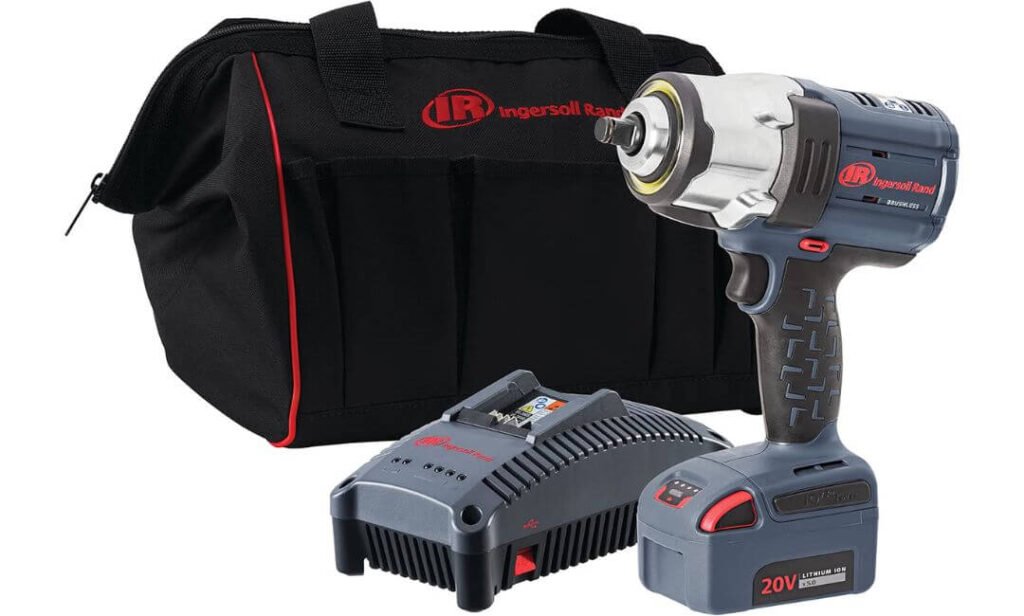
Quick Specs:
- Drive: 1/2-inch square drive with socket retaining ring
- Maximum Forward Torque: 1,000 ft-lb
- Nut-Busting Torque: 1,500 ft-lb
- Motor: Brushless 20V motor
- Impact Rate: 2,450 BPM
- Battery: IQV20 BL2022 20V lithium-ion 5.0Ah
- Kit Includes: Battery, charger, tool and bag
- Tool Length: 8.1 inches
- Weight: 7.6 lb with battery
- Control: Four IQV Power Control modes
- Lighting: 360° shadowless LED ring with four dimmable settings
The first thing that makes this wrench different is not the 1,500 ft-lb number by itself. It is the way that power is packaged. The W7152 combines a brushless motor with an all-metal drivetrain and a tuned impact mechanism, giving it 1,000 ft-lb of maximum forward torque while retaining the ability to deliver 1,500 ft-lb of nut-busting torque when a stubborn fastener refuses to cooperate. That is the sort of difference that becomes meaningful when a normal cordless wrench simply keeps hammering without moving the fastener.
Then there is the control system, which is arguably more useful than another few hundred foot-pounds on a specification sheet. Its four IQV Power Control modes let you move from Full Power and Half Power to Wrench Tight and Hand Tight. In practical terms, the same tool can handle a stubborn suspension fastener and then be backed down for more controlled fastening instead of treating every bolt like it needs maximum force. That makes the W7152 far more versatile for mixed garage work than its high-torque reputation might suggest.
The physical design also deserves attention. At 8.1 inches tip-to-tail, it is compact for something producing this level of output, and the 360° shadowless LED ring helps when the fastener is buried behind suspension components or inside a darker engine bay. The 7.6-pound figure includes the BL2022 battery, so this is not a featherweight tool—but that weight comes with a serious metal drivetrain, reinforced construction and the output expected from a professional-grade impact wrench.
(The real appeal here is simple: serious removal power without giving up control when the job suddenly becomes more delicate.)
What we like
- 1,500 ft-lb nut-busting torque gives this tool genuine heavy-duty removal capability rather than just a marketing-friendly peak number.
- The four-mode IQV control system makes it easier to use the same wrench across very different fastening jobs.
- The all-metal drivetrain and steel-reinforced frame give the tool the kind of construction that makes sense for repeated workshop use.
- The 360° LED ring is a genuinely useful feature when visibility around the fastener is poor.
- The W7152-K12 package includes the BL2022 battery and charger, so you are starting with a complete working setup rather than a bare tool.
What makes it worth considering
This is a substantial professional-grade tool, and that is part of its appeal. At 7.6 lb with the battery, it has the solid feel expected from a high-output wrench rather than being designed around the lightest possible package. For someone working regularly on trucks, suspension components, seized hardware or heavier equipment, that robust build and available power can make the extra substance feel reassuring in the hand.
Why this battery powered impact wrench makes sense for serious automotive work
The W7152 earns its place near the top because it does not depend on one impressive specification. You get 1/2-inch drive compatibility, 1,000 ft-lb maximum forward torque, 1,500 ft-lb nut-busting torque, 2,450 BPM, brushless power, four control modes and a complete 20V battery kit in one package. That combination makes it particularly well suited to jobs where a compact consumer impact wrench can reach its limits.
There is also a practical advantage to the IQV20 battery platform. The included BL2022 is a 20V 5.0Ah battery, and the tool is designed around the IQV20 battery family, so the purchase can become part of a broader cordless setup rather than a one-tool investment. For someone building a serious workshop, that ecosystem compatibility can matter almost as much as the wrench itself.
The Insider Pro-Tip
Do not let the 1,500 ft-lb breakaway figure tempt you into using maximum power for every fastener. The real advantage of this tool is that you can choose the mode. Start with the lower setting when the fastener is accessible and cooperative, then move upward only when the job genuinely calls for it. That approach gives you much better control and makes the available torque useful when you actually need it.
One more thing that matters with a tool this powerful: use impact-rated sockets, and after removing or installing wheel hardware, finish the final tightening with a properly calibrated torque wrench to the vehicle manufacturer’s specification. The impact wrench is the removal and fastening tool; it should not replace the final torque procedure.
#2. DEWALT DCF900P1 20V MAX 1/2″ High-Torque Impact Wrench Kit
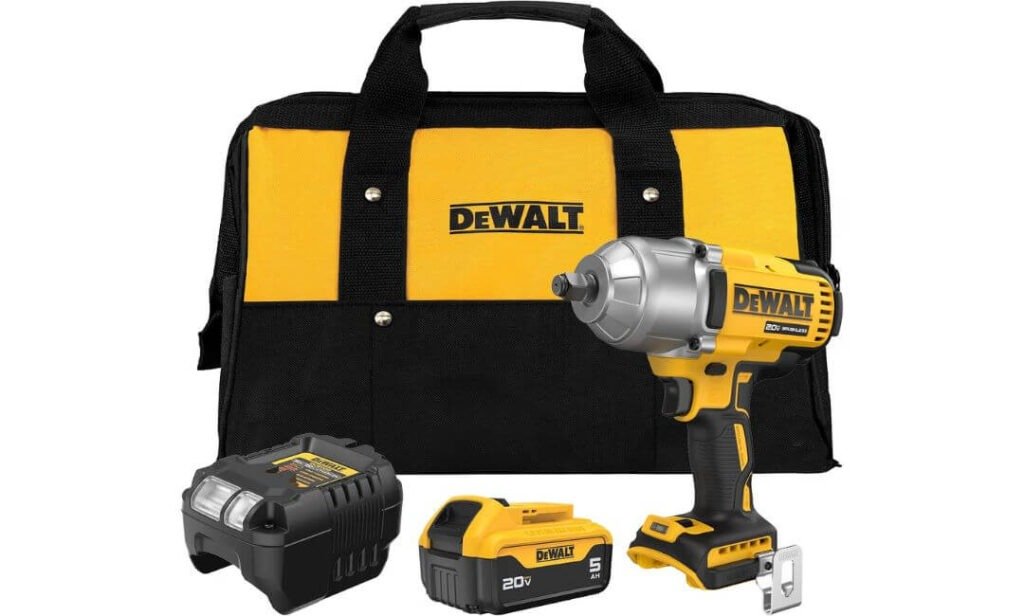
Quick Specs:
- Drive: 1/2-inch hog ring anvil
- Maximum Fastening Torque: 1,030 ft-lb
- Maximum Breakaway Torque: 1,400 ft-lb
- Motor: Brushless
- Battery: 20V MAX XR 5.0Ah lithium-ion
- Control: 4-mode speed settings with variable-speed trigger
- Precision Control: Precision Wrench™ control
- Lighting: On-tool LED work light
- Kit Includes: Impact wrench, 5.0Ah battery, charger and kit bag
- Tool Length: 8.43 inches
- Warranty: 3-year limited warranty
Some impact wrenches are built around a huge torque figure and leave you to figure out how to control it. The DCF900P1 takes a more useful approach: 1,030 ft-lb of fastening torque and 1,400 ft-lb of breakaway torque are backed by four selectable modes and a variable-speed trigger. That matters when the same tool is moving between wheel lugs, suspension hardware and genuinely stubborn fasteners. You get the muscle when you need it without having to run maximum output for every job.
The Precision Wrench™ control is another feature worth paying attention to. It is designed to help manage overtightening in forward operation and fastener run-off in reverse, which is exactly the sort of control that becomes valuable when working around expensive hardware or repeatedly servicing the same vehicle. The 1/2-inch hog ring anvil also makes sense for automotive use because sockets can be changed quickly while remaining securely retained during heavy work.
What really rounds out the package is that this is not just a bare high-torque tool. The kit comes with a 20V MAX XR 5.0Ah battery, charger and carrying bag, so there is no need to build the basic setup piece by piece. The 8.43-inch body keeps the wrench reasonably compact for its output, while the built-in LED helps when the fastener disappears into a dark wheel well or underneath a vehicle. Battery Guard adds a shock-absorbing connection between the battery and tool, helping reduce vibration-related wear during use.
(For someone who wants high breakaway power with genuine control, that combination is far more useful than a torque number alone.)
What we like
- 1,400 ft-lb breakaway torque gives it serious capability for seized lug nuts, suspension bolts and other stubborn automotive hardware.
- Precision Wrench™ control adds a useful layer of control instead of making every fastening job a full-power exercise.
- The 20V MAX XR 5.0Ah battery comes in the kit, making this a ready-to-work package rather than a bare-tool purchase.
- Four modes plus a variable-speed trigger make the wrench easier to adapt to different fastening jobs.
- The 1/2-inch hog ring anvil and LED work light are practical touches that suit real workshop use rather than simply adding features to a specification sheet.
What makes it easy to live with
The DCF900P1 is a serious high-output impact wrench, so it naturally feels substantial in the hand. That is not something to apologise for—the mass is part of what you are buying when the tool is designed to tackle very stubborn hardware. For wheel changes, truck maintenance and suspension work, that substantial feel can actually be reassuring, particularly when the wrench is being used at the level of power it was designed to provide.
Why this battery powered impact wrench fits demanding automotive jobs
The DCF900P1 has a particularly sensible combination of 1/2-inch drive, 1,030 ft-lb fastening torque, 1,400 ft-lb breakaway torque, brushless power and four-mode control. It is powerful enough for demanding automotive work while still giving the user ways to tame that output when the job calls for more care. That balance is why it belongs in a serious shortlist rather than being judged solely by its maximum torque figure.
The complete 20V MAX package is another reason it makes practical sense. The included 5.0Ah battery and charger mean the wrench can go straight into service, while owners already invested in the DEWALT 20V MAX ecosystem have an even simpler path to adding it to their existing tools. The 3-year limited warranty also gives the purchase some useful manufacturer backing.
The Insider Pro-Tip
With a wrench this powerful, the smartest habit is to let the tool do less when less is enough. Start with a lower mode and use the variable-speed trigger when approaching a fastener that does not need maximum force. Save the higher settings for the hardware that genuinely fights back. You will get much more useful control out of the DCF900P1 that way.
For wheel work, keep the impact wrench focused on removal and initial fastening, then use a properly calibrated torque wrench for the final lug-nut torque specified by the vehicle manufacturer. That small extra step turns a very powerful cordless tool into a much more controlled part of a professional automotive workflow.
#3. Milwaukee M18 FUEL 1/2″ High-Torque Impact Wrench
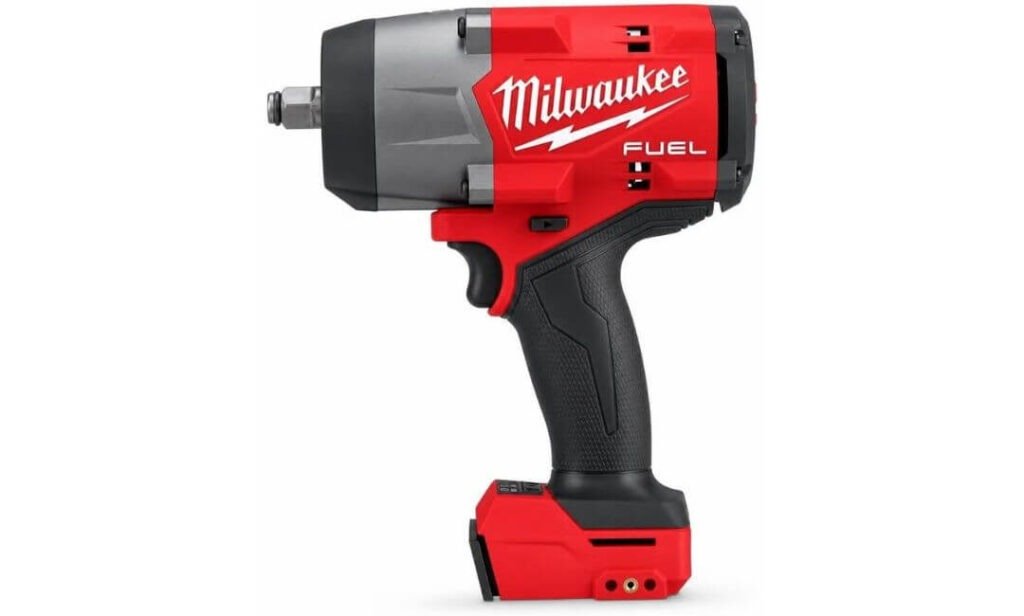
Quick Specs:
- Drive: 1/2-inch friction ring anvil
- Maximum Fastening Torque: 1,000 ft-lb
- Nut-Busting Torque: Up to 1,500 ft-lb with compatible REDLITHIUM FORGE battery
- Motor: POWERSTATE Brushless
- Speed: 0–3,000 RPM
- Impact Rate: 0–1,500 IPM
- Control: 4-mode drive control
- Protection: REDLINK PLUS intelligence
- Battery: Compatible with Milwaukee M18 batteries
- Weight: 5.94 lb
- Length: 7.6 inches
- Anvil: Friction ring for quick socket changes
Here is where the Milwaukee becomes interesting: serious torque in a remarkably compact body. At just 7.6 inches long and 5.94 lb, this is the kind of wrench that makes sense when access matters as much as outright power. A large impact wrench can have all the torque in the world, but it is not much help when the tool physically cannot get into the space around the fastener. This one is designed to solve that problem without stepping down into lightweight-duty territory.
The POWERSTATE brushless motor works with Milwaukee’s REDLINK PLUS electronic system to manage performance and protect against overload, overheating and over-discharge. With a compatible M18 REDLITHIUM FORGE battery, the tool can reach up to 1,000 ft-lb of fastening torque and 1,500 ft-lb of nut-busting torque. That makes it particularly interesting for jobs where a stubborn suspension bolt or heavily tightened lug nut needs considerably more authority than a typical compact cordless wrench can provide.
The other detail worth noticing is how much control is built around that output. Four drive modes, 0–3,000 RPM and up to 1,500 IPM let the user adjust the behaviour rather than simply pulling the trigger and hoping for the right result. The all-metal drivetrain and friction-ring anvil are also well suited to repeated socket changes in a busy garage. And because this is an M18-compatible tool, someone who already has Milwaukee batteries and chargers can add it without building an entirely new battery system.
(The clever part is the combination of high-torque capability, compact access and M18 flexibility—not simply another big number on the box.)
What we like
- Up to 1,500 ft-lb nut-busting torque with the appropriate REDLITHIUM FORGE battery gives it genuine heavy-fastener capability.
- The 7.6-inch length is a major advantage around crowded suspension and engine-bay areas.
- At 5.94 lb, it offers a comparatively manageable package for its output.
- Four drive modes and variable operating range make the power easier to tailor to different jobs.
- The M18 battery ecosystem is a major practical advantage for existing Milwaukee users.
What makes it easy to choose
The biggest attraction here is that you are not forced to choose between compactness and serious output. The short body helps when working around wheel wells, suspension assemblies and other restricted areas, while the brushless powertrain gives the tool enough authority for demanding automotive work.
It is also worth understanding the battery relationship before buying. This is a bare-tool setup, so the battery and charger need to be purchased separately unless they are already part of your M18 collection. For an existing M18 owner, that is hardly an issue; for a new buyer, the total setup cost should simply be considered when comparing it with complete kits.
Why this battery powered impact wrench belongs in a professional automotive lineup
This Milwaukee earns its position because the package is unusually well balanced: 1/2-inch drive, up to 1,000 ft-lb fastening torque, up to 1,500 ft-lb nut-busting torque, POWERSTATE brushless power, four drive modes and a 7.6-inch compact body. That combination makes it useful for everything from regular wheel service to much more stubborn automotive hardware.
The M18 platform adds another layer of practicality. One compatible battery system can power a wide range of Milwaukee tools, so this impact wrench makes particular sense for a garage or workshop already invested in M18. The friction-ring anvil is another small but worthwhile touch—it keeps socket changes quick when the job involves moving between sizes repeatedly.
The Insider Pro-Tip
If tight access is part of your normal work, pay attention to the 7.6-inch body before getting distracted by torque figures. That compact dimension can save more time than having an even more powerful wrench that struggles to physically reach the fastener. Pair it with the right M18 battery for the workload, and you get a tool that feels much more versatile than its high-torque category suggests.
For maximum output, use a compatible REDLITHIUM FORGE battery, but do not assume maximum power is necessary for every fastener. Use the lower drive modes when the job allows it, and reserve the full output for hardware that actually needs it. For wheel installation, always finish with a calibrated torque wrench to the vehicle manufacturer’s specified torque.
#4. FLEX FX1451-1F 24V Brushless 1/2″ Mid-Torque Impact Wrench Kit
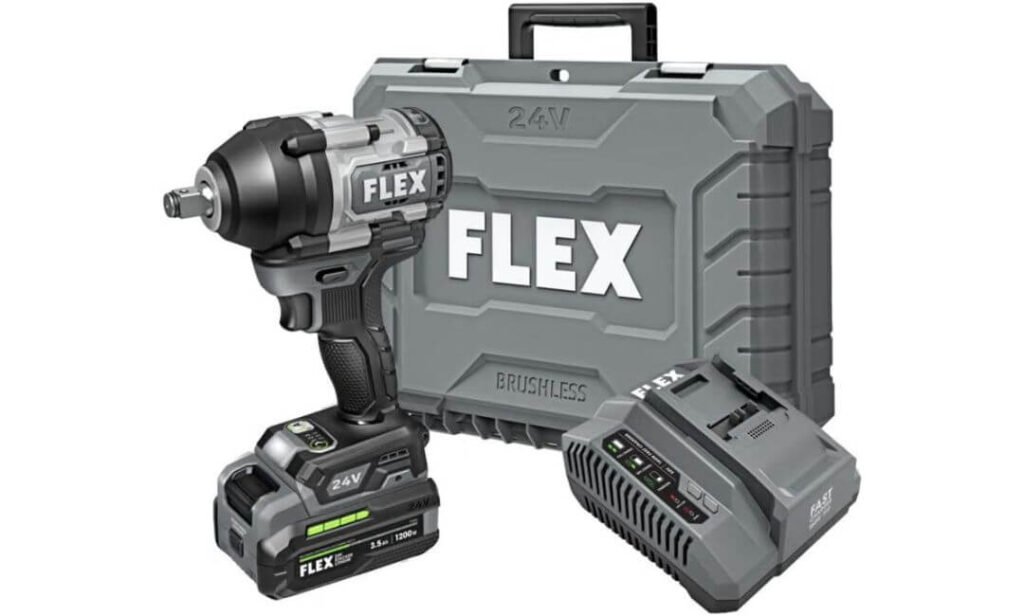
Quick Specs:
- Drive: 1/2-inch square drive
- Maximum Fastening Torque: 600 ft-lb
- Nut-Busting Torque: 750 ft-lb
- Motor: Sensor-free brushless
- Battery: 24V 3.5Ah Stacked Lithium
- Charger: 160W Fast Charger
- Control: 3 speed modes with variable-speed trigger
- Auto Control: Bolt Auto Stop and Bolt Removal modes
- Weight: 4.23 lb
- Length: 7 inches
- Vibration Control: Integrated vibration suppression
- Platform: Compatible with FLEX 24V batteries, chargers and tools
The FLEX takes a different route from the giant high-torque wrenches above it. Instead of trying to make the biggest possible impact wrench, it puts 750 ft-lb of nut-busting torque into a 4.23-pound body that is only 7 inches long. That combination is genuinely useful in automotive work. When you are working around suspension components, wheels or crowded engine-bay hardware, a tool that is easier to position can save more frustration than another few hundred foot-pounds ever will.
The 600 ft-lb fastening torque gives it enough authority for a wide range of regular automotive jobs, while the three speed modes and variable-speed trigger let you bring that power down when the fastener does not need everything available. More importantly, the Bolt Auto Stop mode is designed to stop the tool when it reaches its control threshold, helping reduce the chance of overtightening, breaking or stripping a fastener. Bolt Removal mode works from the other direction, stopping the tool after the fastener has loosened instead of allowing it to keep spinning unnecessarily.
Then there is the battery setup, which is a major part of why this particular kit is interesting. The included 24V 3.5Ah Stacked Lithium battery and 160W Fast Charger mean the tool arrives ready for work, rather than leaving the battery purchase for later. FLEX also uses THERMA-TECH+ heat management with its Stacked Lithium platform, while the tool’s vibration suppression helps separate some of the impact shock from the user’s hands. For someone doing repeated wheel, maintenance or general mechanical work, those details are much more meaningful than they look on a product page.
(This is the kind of mid-torque battery impact wrench that makes sense when power, access and handling all matter at the same time.)
What we like
- 4.23-pound weight and 7-inch length make it particularly appealing for tight automotive spaces.
- 750 ft-lb nut-busting torque is substantial for a mid-torque wrench.
- Bolt Auto Stop and Bolt Removal modes add useful control for everyday fastening and removal.
- The 3.5Ah Stacked Lithium battery and 160W charger are included, so the kit is ready to use.
- Vibration suppression is a welcome feature when the wrench is being used repeatedly rather than for one occasional repair.
What makes it easy to live with
The biggest advantage here is simply how manageable the tool feels compared with larger high-torque models. At 4.23 lb, it is considerably easier to carry around a vehicle and position against awkward fasteners. That makes it a particularly sensible choice for someone who does a lot of routine automotive work but does not want to carry a heavier professional high-torque wrench for every job.
The 24V platform is also worth considering as part of the purchase. Because the kit includes the 3.5Ah Stacked Lithium battery and 160W Fast Charger, there is no immediate need to add the basic charging setup separately. If you already use FLEX 24V tools, the same battery ecosystem becomes an added practical benefit.
Why this battery powered 1/2-inch impact wrench makes sense for everyday automotive work
The FX1451-1F fills an important space in this lineup. It offers 600 ft-lb fastening torque, 750 ft-lb nut-busting torque, a 7-inch body and only 4.23 lb of weight, so it sits between lightweight convenience and genuinely serious impact performance. That makes it well suited to wheel service, suspension work, maintenance and stubborn fasteners where a compact tool is more useful than an oversized one.
Its real advantage is the way the features work together. Three speed settings, two automatic control modes, a brushless motor, vibration suppression and a complete 24V battery-and-charger kit give the tool a very practical personality. It is not trying to replace every heavy-duty impact wrench; it is designed to make a large number of everyday jobs quicker and easier.
The Insider Pro-Tip
The Bolt Auto Stop mode is one of those features that is easy to overlook until you have used it around wheels. It can help make repetitive fastening less aggressive, but it should not be treated as a substitute for the vehicle manufacturer’s specified torque procedure. Use the impact wrench for the speed and convenience, then verify critical fasteners with the correct torque wrench.
Also, do not judge this FLEX solely against the 1,400–1,500 ft-lb breakaway figures of the larger tools. Its real strength is the power-to-weight and size combination. If most of your work is performed around passenger cars, crossovers, light trucks and normal garage repairs, carrying a compact 4.23-pound wrench can be a much nicer experience than reaching for a substantially heavier high-torque model every time.
#5. Makita XWT08Z 18V LXT Brushless 1/2″ High-Torque Impact Wrench
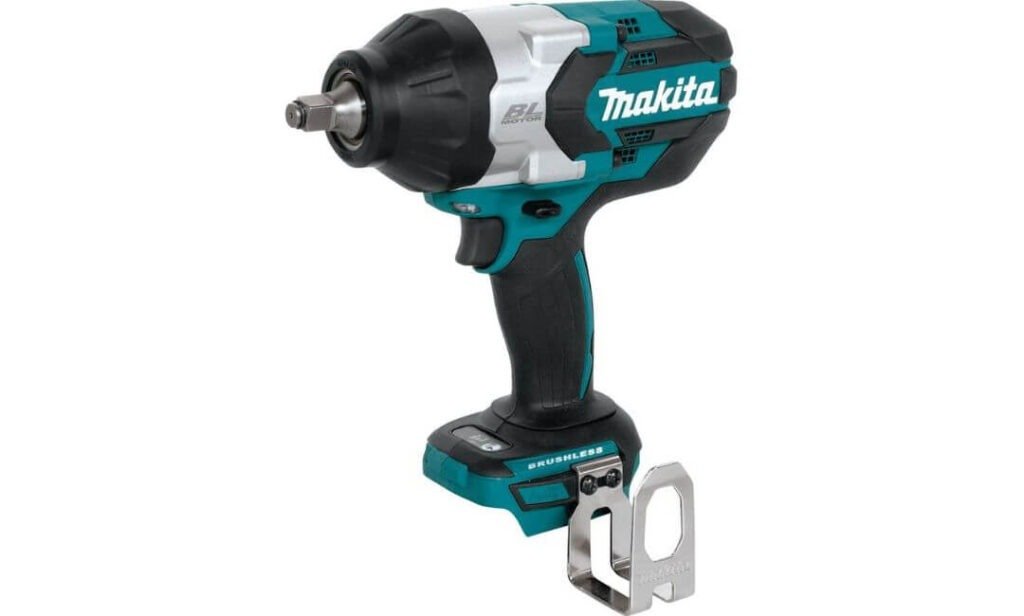
Quick Specs:
- Drive: 1/2-inch square drive with friction ring
- Maximum Fastening Torque: 740 ft-lb
- Nut-Busting Torque: 1,180 ft-lb
- Motor: Makita BL Brushless
- Speed Settings: 3
- Maximum Speed: 0–1,800 RPM
- Maximum Impact Rate: 0–2,200 IPM
- Battery: Makita 18V LXT lithium-ion, sold separately
- Battery Range: Compatible with 18V LXT platform
- Weight: 7 lb with battery
- Length: Approximately 10 inches
- Warranty: 3-year limited warranty
The interesting thing about the XWT08Z is how deliberately it sits between everyday cordless convenience and genuinely heavy-duty work. Its 740 ft-lb fastening torque and 1,180 ft-lb nut-busting torque give it enough authority for stubborn automotive hardware, while the three-speed selector lets you decide how aggressively that power reaches the fastener. It is not simply a tool designed to hammer at maximum output every time you pull the trigger.
That three-speed control is particularly useful in a garage. The first setting runs up to 900 RPM and 1,800 IPM, the second reaches 1,000 RPM and 2,000 IPM, while the highest setting goes to 1,800 RPM and 2,200 IPM. In practical terms, that gives you a slower setting when control matters and a much more aggressive setting when a corroded or stubborn fastener needs serious persuasion. The 1/2-inch friction-ring anvil also keeps socket changes straightforward when moving between different sizes.
Makita’s BL Brushless motor is another important part of the package. The electronic motor control is designed to use battery energy efficiently while eliminating carbon brushes, helping the motor run cooler and extending its working life. Because this is an 18V LXT tool-only model, there is no battery or charger in the box—but that becomes an advantage for anyone who already owns compatible LXT batteries and wants to add a high-torque wrench without buying another charging system.
(Its real strength is the combination of controlled three-speed power and a mature 18V battery platform.)
What we like
- 1,180 ft-lb nut-busting torque gives it plenty of authority for stubborn automotive and equipment fasteners.
- The three-speed selector provides useful control instead of forcing every job into maximum output.
- The 1/2-inch friction ring makes changing impact sockets quick and uncomplicated.
- The BL Brushless motor is designed for efficient operation and longer motor life.
- 18V LXT compatibility makes it especially practical for users who already own Makita cordless tools and batteries.
What makes it easy to live with
This is a tool for buyers who value power and battery-platform flexibility over getting a complete kit in one box. The XWT08Z is supplied as a bare tool, so a compatible 18V LXT battery and charger are required. If those are already sitting in your toolbox, that is a straightforward way to add serious impact capability without duplicating equipment.
The 7-pound weight with battery also reflects what this wrench is built to do. It has a substantial high-torque design rather than chasing the lightest possible body. For someone regularly dealing with wheel hardware, suspension components, machinery or seized bolts, that solid construction can feel much more appropriate than a lightweight impact that is constantly being pushed to its limits.
Why this battery impact wrench makes sense for heavy-duty automotive work
The XWT08Z brings a useful combination of 740 ft-lb fastening torque, 1,180 ft-lb nut-busting torque, three speed settings, a brushless motor and 1/2-inch friction-ring drive. That makes it a strong fit for automotive repairs where stubborn fasteners are part of the normal workload rather than an occasional surprise.
Its biggest practical advantage may be the 18V LXT ecosystem. For existing Makita owners, the same battery platform can move between compatible tools, while the wrench itself delivers the high-torque output expected from a dedicated automotive impact. That makes the tool-only format much easier to justify when the battery system is already established.
The Insider Pro-Tip
The three-speed selector is worth using instead of leaving the wrench permanently on its highest setting. For ordinary wheel or maintenance work, begin with the lower setting and let the tool build power progressively. When a fastener genuinely refuses to move, step up. That gives you a much more controlled experience and makes better use of the XWT08Z’s torque.
And because this is a tool-only purchase, check your existing LXT battery before ordering rather than assuming every 18V battery setup is identical. A suitable high-capacity LXT pack can make much more sense for repeated heavy work, while the final tightening of wheel nuts should still be completed with a calibrated torque wrench according to the vehicle manufacturer’s specification.
#6. CRAFTSMAN V20 CMCF900B 1/2″ Cordless Impact Wrench
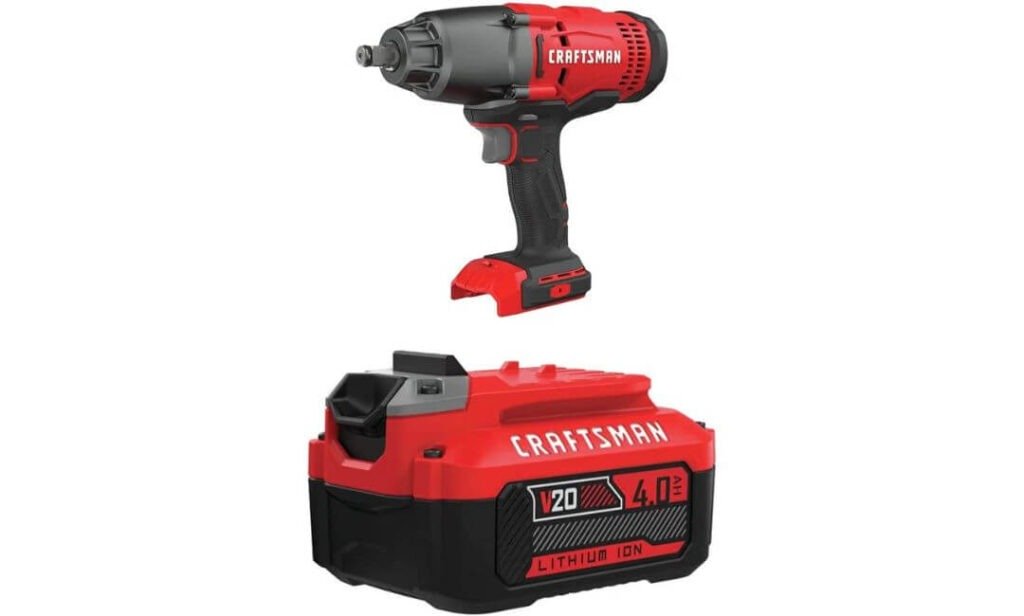
Quick Specs:
- Drive: 1/2-inch hog ring anvil
- Torque: Up to 350 ft-lb
- Motor: Cordless electric motor
- Battery: CRAFTSMAN V20 20V MAX 4.0Ah lithium-ion
- Socket Retention: Hog ring anvil
- Battery Platform: CRAFTSMAN V20
- Charger: Sold separately
- Use: General automotive maintenance and everyday fastening
Not every garage job needs a 1,000-plus ft-lb monster. The CMCF900B takes the simpler route, offering up to 350 ft-lb of torque in a 1/2-inch format that is aimed more at everyday maintenance than extreme fastener removal. For wheel changes, routine repairs and general fastening, that distinction matters. You are not paying for heavy-duty output that you may rarely use.
The 1/2-inch hog ring anvil is exactly the sort of practical feature that makes an impact wrench pleasant to use. Sockets can be changed without a separate retaining mechanism, which is handy when moving between common automotive sizes. The V20 20V MAX 4.0Ah lithium-ion battery also gives the tool a useful cordless setup for normal garage work and avoids being tied to an air compressor or extension cord.
There is another reason this model belongs in the lineup: simplicity. The CRAFTSMAN V20 platform gives existing V20 owners a straightforward way to add an impact wrench to their collection. It is a very different proposition from the professional high-torque models above it, and that is perfectly fine. If the workload is mostly routine vehicle maintenance rather than seized industrial hardware, a lighter-duty tool can be the more sensible match.
(Its appeal is not about winning the torque race; it is about having straightforward 1/2-inch cordless capability for the jobs that actually come up in a home garage.)
What we like
- 350 ft-lb of torque is useful for routine automotive fastening and wheel-service tasks.
- The 1/2-inch hog ring anvil keeps socket changes quick and simple.
- The 4.0Ah V20 battery provides a practical cordless setup for everyday work.
- V20 platform compatibility is convenient for owners who already use CRAFTSMAN cordless tools.
- The straightforward design makes it an approachable option for DIY and home-garage maintenance.
What makes it easy to live with
This is the kind of impact wrench that makes sense when your priority is basic cordless convenience rather than maximum removal force. Its 350 ft-lb output is appropriate for ordinary maintenance, while the 4.0Ah battery gives you useful runtime without turning the tool into an unnecessarily large package.
The one thing to plan for is the charging setup. The battery is part of the configuration provided here, but the charger is sold separately, so buyers who are new to the V20 platform should account for that before ordering. Existing V20 owners already equipped with a compatible charger have a much simpler setup.
Why this battery powered impact wrench makes sense for everyday garage work
The CMCF900B earns its place because it serves a different user from the high-torque models. Its 350 ft-lb output, 1/2-inch hog ring anvil and 4.0Ah V20 battery make it suited to common jobs such as wheel changes, maintenance and general fastening. That is useful capability without pretending that every automotive repair requires extreme torque.
It also gives CRAFTSMAN V20 owners an easy way to stay within an existing battery ecosystem. For someone starting with occasional DIY work, maintaining a daily driver or handling routine garage jobs, the combination can be more relevant than simply choosing the most powerful impact wrench available.
The Insider Pro-Tip
Think about the fasteners you actually work on, not the biggest number printed on another wrench. If your normal jobs involve wheel changes and routine maintenance, 350 ft-lb can be a perfectly sensible level of cordless assistance. If you regularly deal with heavily seized suspension hardware or commercial equipment, that is when moving toward one of the higher-torque tools in this lineup becomes more relevant.
For wheel installation, use the impact wrench to run the lug nuts down carefully rather than relying on it for final torque. Finish with a calibrated torque wrench set to the vehicle manufacturer’s specification. That simple habit gives you the convenience of cordless power while keeping the final fastening controlled.
Best Battery Powered Impact Wrench (2026) Side-by-Side Comparison
| Impact Wrench | Drive | Fastening Torque | Breakaway / Nut-Busting | Motor & Control | Battery Setup | Kit Status | Best Use |
|---|---|---|---|---|---|---|---|
| Ingersoll Rand W7152-K12 IQV20 high-torque platform | 1/2-inch | 1,000 ft-lb | 1,500 ft-lb |
Brushless 4 IQV Power modes |
20V IQV20 5.0Ah BL2022 |
Complete Kit | Heavy automotive, trucks & stubborn hardware |
| DEWALT DCF900P1 20V MAX high-torque platform | 1/2-inch Hog Ring |
1,030 ft-lb | 1,400 ft-lb |
Brushless 4 modes + Precision Wrench™ |
20V MAX XR 5.0Ah |
Complete Kit | Automotive, suspension & heavy fastening |
| Milwaukee M18 FUEL High-torque M18 platform | 1/2-inch Friction Ring |
1,000 ft-lb | Up to 1,500 ft-lb* |
POWERSTATE Brushless 4-mode control |
M18 FORGE recommended for max output |
Tool Only | Professional automotive work & tight access |
| FLEX FX1451-1F 24V Stacked Lithium mid-torque | 1/2-inch | 600 ft-lb | 750 ft-lb |
Brushless 3 speeds + 2 auto modes |
24V Stacked Lithium 3.5Ah |
Complete Kit | Daily automotive work & compact access |
| Makita XWT08Z 18V LXT high-torque platform | 1/2-inch Friction Ring |
740 ft-lb | 1,180 ft-lb |
BL Brushless 3-speed selector |
18V LXT Battery sold separately |
Tool Only | Heavy automotive & equipment maintenance |
| CRAFTSMAN V20 CMCF900B V20 everyday-duty platform | 1/2-inch Hog Ring |
350 ft-lb | Not specified |
Everyday Duty Straightforward operation |
V20 20V MAX 4.0Ah |
Charger Separate | Home garage, wheel changes & routine maintenance |
| *Milwaukee’s maximum nut-busting output depends on the compatible battery configuration. Torque figures are manufacturer-rated values and can vary by operating mode, battery and test conditions. For wheel installation, final torque should be checked with a calibrated torque wrench according to the vehicle manufacturer’s specification. | |||||||
Buying Guide: How to Choose the Right Battery Powered Impact Wrench
A good impact wrench should be chosen around the fasteners you actually work on, how often you use the tool, and the battery system already in your garage. Maximum torque is useful, but it is only one part of the decision. A lighter mid-torque wrench can be the smarter everyday tool, while a high-torque model becomes valuable when rust, corrosion, heavy trucks, suspension hardware, or seized fasteners are regular parts of the job.
Torque: Look Beyond the Biggest Number
Torque is the first specification most buyers notice, but it is also one of the easiest to misunderstand. Manufacturers may quote fastening torque, maximum torque, breakaway torque, or nut-busting torque, and these figures are not interchangeable.
For ordinary lug nuts and general automotive maintenance, you do not necessarily need a 1,500 ft-lb tool. A model around 350–750 ft-lb can be perfectly practical when the vehicle is regularly maintained and the fasteners are not heavily seized. Once the work moves toward trucks, suspension components, older machinery, rusted hardware, or repeated professional use, having 1,000 ft-lb or more of available fastening power gives considerably more headroom.
The important point is not to buy torque simply because it sounds impressive. Buy enough output that the wrench is comfortably capable of the work instead of operating at its limit.
Why 1/2-Inch Drive Is the Sweet Spot for Automotive Work
For this type of article, 1/2-inch drive is the most useful size because it sits right in the middle of common automotive requirements. There is a huge range of compatible impact sockets, extensions and adapters, and the size is appropriate for everything from wheel lugs to many suspension and chassis fasteners.
A 1/2-inch battery impact wrench is especially useful if the tool will cover several jobs rather than one specific task. It gives you enough socket size and strength for passenger cars, SUVs, pickups and many heavier automotive applications without moving to the larger drive sizes normally associated with more specialized equipment.
One thing should remain non-negotiable: use impact-rated sockets and accessories with an impact wrench. Regular chrome hand-tool sockets are not intended for the repeated hammering action of an impact mechanism.
Brushless vs. Brushed: The Difference You Actually Feel
A brushless cordless impact wrench is generally the better choice when the tool will see frequent use. Brushless motors eliminate the physical carbon brushes used in conventional brushed motors, reducing a source of friction and wear while allowing electronic control of the motor.
That does not mean a brushed wrench cannot handle normal garage work. The difference becomes more meaningful when the tool is used frequently, under heavier loads, or for longer working sessions. The high-output models in this lineup use brushless motor systems for precisely that reason.
For a buyer planning occasional wheel changes, motor type may not justify a large price difference by itself. For a mechanic, fleet user, or serious DIY owner who expects the wrench to work hard for years, brushless construction is a feature worth prioritizing.
Battery Voltage Is Not a Simple Power Ranking
Seeing 18V, 20V MAX or 24V on the box does not mean you can rank these tools by voltage alone. Battery voltage is part of a larger system that includes motor design, electronics, battery cells, impact mechanism and thermal management.
The more useful question is: which battery platform fits your working setup?
- Makita 18V LXT: useful if you already have compatible LXT batteries and chargers.
- DEWALT 20V MAX: particularly convenient for an existing 20V MAX collection.
- Milwaukee M18: works across the M18 battery ecosystem, with the appropriate battery configuration important for maximum output.
- FLEX 24V: uses the 24V Stacked Lithium platform and includes a 3.5Ah battery in this kit.
- Ingersoll Rand IQV20: built around the IQV20 system and supplied with a 5.0Ah battery in the selected kit.
- CRAFTSMAN V20: fits the V20 platform and uses a 4.0Ah battery in the configuration considered here.
This is also why a cordless impact wrench with battery and charger can sometimes be a better purchase for a new buyer. A tool-only price may look attractive until the cost of adding the correct battery and charger is included.
Battery Chemistry, Capacity and Runtime Matter More Than the Label
Modern lithium-ion batteries are standard across this group, but capacity still matters. A 4.0Ah or 5.0Ah battery generally gives more usable energy than a smaller pack, although actual runtime depends heavily on the load, fastener size and how aggressively the tool is used.
Higher capacity can also change the balance and weight of the wrench. That is not automatically bad. A larger pack may make sense for repeated heavy work, while a smaller pack can make the tool easier to handle during short jobs.
The FLEX kit is an interesting example because its 24V Stacked Lithium 3.5Ah battery is paired with a 160W fast charger and thermal-management technology. On the other hand, the DEWALT and Ingersoll Rand kits provide 5.0Ah-class batteries, giving buyers a more complete setup from the start.
Fast Charging Can Save More Time Than You Expect
Charging speed becomes important when the impact wrench is part of a working garage rather than an occasional tool.
A fast charger is particularly useful when the wrench is being used repeatedly throughout the day. The FLEX package includes a 160W Fast Charger, while other platforms have their own charging ecosystems and compatible rapid-charging options.
Do not judge a charger solely by its advertised charging speed, though. Battery capacity, charger compatibility, thermal management and your actual workload all influence how quickly you can get back to work.
Weight and Balance: The Specification That Gets Ignored Until Your Wrist Notices
A high-torque impact wrench can be extremely capable and still become tiring if it is awkward to hold for long periods.
That is why the difference between these tools is worth noticing:
| Type of work | What to prioritize |
|---|---|
| Occasional lug-nut work | Compact size and manageable weight |
| Frequent tire changes | Balance, battery capacity and socket access |
| Suspension repairs | High torque with good control |
| Truck and heavy equipment work | High breakaway output and durable drivetrain |
| Extended professional use | Ergonomics, vibration control and battery runtime |
| Tight engine-bay access | Short overall tool length and compact head |
The FLEX at 4.23 lb and Milwaukee at 5.94 lb illustrate why size and weight can be valuable alongside torque. Larger high-torque models provide more output, but the additional mass can become noticeable during prolonged or overhead work.
Ergonomics, Vibration and Lighting Are Not Just Extras
When an impact wrench is used for five minutes, almost any decent grip can feel comfortable. After an hour of repeated work, the difference becomes much easier to appreciate.
Look for a balanced handle, sensible trigger placement, vibration management and a useful work light. The Ingersoll Rand’s 360-degree LED arrangement is particularly helpful around enclosed work areas, while FLEX includes vibration suppression to reduce some of the shock reaching the user.
A friction-ring or hog-ring anvil is another small feature with a big practical effect. It allows quick socket changes without turning every size change into a separate chore.
Control Is Just as Important as Raw Power
A powerful impact wrench should not only be capable of breaking loose a stubborn fastener; it should also be controllable when the job is less demanding.
That is where multiple speed or drive modes become valuable. DEWALT uses four modes with Precision Wrench control, Ingersoll Rand offers four IQV Power Control modes, Milwaukee provides four drive modes, while Makita uses a three-speed selector. FLEX goes a step further with Bolt Auto Stop and Bolt Removal modes alongside its speed settings.
These systems are useful because automotive work is rarely one-speed work. The same vehicle can have a stubborn suspension bolt on one side and a delicate fastening job a few inches away.
Quick Glossary for Impact Wrench Buyers
1/2 inch battery impact wrench:
A cordless impact wrench using a 1/2-inch square drive, a common size for automotive sockets and heavier fastening work.
High torque battery impact wrench:
A battery-powered model designed to produce substantially higher fastening and breakaway output for difficult automotive, truck or equipment fasteners.
Brushless cordless impact wrench:
A cordless impact wrench using a brushless motor, generally preferred for frequent use because the motor design reduces brush-related wear and can operate efficiently under electronic control.
What Matters Most for Lug Nuts
For lug nuts, 1/2-inch drive, controllable power, socket retention, battery runtime and comfortable handling matter more than simply buying the highest-torque model.
A very high-output wrench can remove stubborn lugs extremely quickly, but that does not mean it should be used at maximum power to install them. For wheel installation, use the impact wrench for speed and convenience, then complete final tightening with a calibrated torque wrench according to the vehicle manufacturer’s specification.
What Matters Most for Automotive Repairs
For broader automotive work, look for a combination of high breakaway capability, multiple power settings, brushless construction, good access and a suitable battery platform.
This is where the higher-output models become more compelling. Suspension, axle, chassis and seized fasteners can demand substantially more from a tool than ordinary wheel changes. A mid-torque model can still be excellent for routine repairs, particularly when its lower weight and compact dimensions make access easier.
What Matters Most for Heavy-Duty Use
Heavy-duty work changes the priorities. Here, breakaway torque, drivetrain durability, battery capacity, thermal management and sustained performance become increasingly important.
A 1,500 ft-lb nut-busting rating can be valuable when hardware is heavily corroded or extremely tight, but the surrounding design matters just as much. A robust drivetrain, reinforced housing, brushless motor and appropriate battery can determine whether the tool remains useful when the work gets genuinely demanding.
Buying Guide Takeaway
There is no single torque figure that makes an impact wrench right for everyone. For lug nuts and routine garage work, manageable weight, 1/2-inch drive and controllable output are often enough. For regular automotive repairs, brushless power, stronger breakaway performance and multiple modes become more valuable. For heavy-duty work, prioritize serious torque, durable construction and a battery system capable of supporting the workload.
The best purchase is ultimately the one whose power, physical size, control system and battery platform match your actual garage, rather than the one with the most impressive number on its specification sheet.
Use-Cases by Scenario: Choosing the Right Impact Wrench for the Job
The useful way to compare these six tools is to stop thinking of them as six versions of the same product. They are built around different workloads. A high-torque wrench that makes sense for a truck suspension job may be unnecessary for occasional wheel changes, while a compact mid-torque model can be much easier to handle when the work involves dozens of ordinary fasteners.
Automotive Maintenance and Lug Nuts
For regular automotive work, the most important combination is 1/2-inch drive, dependable breakaway power, controllable output, and reasonable access around the vehicle.
The Ingersoll Rand W7152-K12 and DEWALT DCF900P1 are particularly suited to demanding automotive work because their output gives them substantial headroom when lug nuts, axle hardware or suspension bolts are stubborn. The Milwaukee also brings serious removal capability while keeping its body relatively compact, which can be useful around tighter areas.
For everyday passenger-car and light-truck maintenance, the FLEX FX1451-1F deserves attention for a different reason. Its 4.23-pound body, 7-inch length, 600 ft-lb fastening torque and 750 ft-lb nut-busting torque create a very manageable package. Its Bolt Auto Stop and Bolt Removal modes are also useful when repetitive fastening is part of the job.
The Makita XWT08Z sits comfortably in the heavier automotive category, with 740 ft-lb fastening torque, 1,180 ft-lb nut-busting torque and three speed settings. The CRAFTSMAN V20 is better suited to routine maintenance where extreme breakaway power is not the main requirement.
For wheel work, there is one rule worth keeping separate from the product comparison: an impact wrench is excellent for removing lug nuts and quickly running them down, but final wheel-lug tightening should be verified with a calibrated torque wrench using the vehicle manufacturer’s specification.
Heavy-Duty Construction and Tractor Work
Once the work moves from passenger vehicles to tractors, agricultural equipment, construction machinery, heavy trailers or industrial hardware, the demands change considerably.
Fasteners can be larger, tighter, corroded, or simply exposed to years of dirt and weather. In that environment, having substantial breakaway capability is useful because the wrench has more reserve when a fastener does not respond immediately.
The Ingersoll Rand W7152-K12 is especially appropriate for this type of workload because its 1,500 ft-lb nut-busting rating is paired with an all-metal drivetrain, steel-reinforced frame and impact-resistant housing. The DEWALT’s 1,400 ft-lb breakaway rating also puts it firmly into the high-output category.
The Makita XWT08Z is another practical choice for equipment maintenance, particularly for users already operating within the 18V LXT platform. Its three-speed control gives the operator more flexibility when moving between different fastener sizes and applications.
The Milwaukee is also worth considering where high torque and restricted access appear together. Its relatively compact 7.6-inch body can be useful when the fastener is powerful but the surrounding workspace is not generous.
For serious equipment work, however, torque should never be considered in isolation. Battery capacity, heat management, drivetrain construction, tool balance and access all affect how useful an impact wrench becomes over a full working day.
Home Garage and DIY Projects
A home garage is where buying the biggest wrench available can easily become unnecessary.
If the main jobs are seasonal tire changes, brake work, suspension maintenance, basic repairs and general fastening, the FLEX can make a lot of sense because it combines substantial output with a relatively low 4.23-pound weight. The complete kit also includes its 3.5Ah Stacked Lithium battery and 160W charger.
The CRAFTSMAN takes an even simpler approach. Its 350 ft-lb torque and V20 battery platform are more appropriate for routine jobs than for heavily seized hardware. That makes it a reasonable match for someone who wants cordless assistance without building a workshop around professional-grade high-torque equipment.
The DEWALT becomes particularly interesting for a DIY owner who already has 20V MAX batteries and chargers. Its complete DCF900P1 kit also removes the need to assemble the basic battery setup separately.
For a new buyer, always calculate the complete ownership cost, not just the tool price. A bare Makita or Milwaukee can be excellent value if the required battery system is already in the garage, but the equation changes when batteries and a charger have to be purchased from scratch.
Fleet and Maintenance Shop Environment
Fleet work is different again because the tool is no longer being used occasionally. It may be handling vehicle after vehicle, wheel after wheel, and fastener after fastener throughout the working day.
Here, durability, battery availability, control and operator fatigue become just as important as peak torque. A wrench that removes a stubborn fastener quickly is useful, but a tool that is comfortable enough to keep using throughout a shift can be even more valuable.
The Ingersoll Rand W7152-K12 fits this environment particularly well because of its high-output impact mechanism, four power-control modes, reinforced construction and included 5.0Ah IQV20 battery. The ability to move between Full Power, Half Power, Wrench Tight and Hand Tight gives the operator useful flexibility across different maintenance tasks.
The DEWALT DCF900P1 brings a similarly serious approach, with four modes, Precision Wrench control, a brushless motor and a complete 5.0Ah battery kit. For shops already standardized on DEWALT 20V MAX tools, that common battery platform can simplify day-to-day tool management.
Milwaukee makes the most sense when an existing M18 workshop ecosystem is already in place. Its compact body, four-mode control and high-torque capability give professional users a useful combination of access and output, while the appropriate M18 battery can be selected according to the workload.
For a mixed maintenance environment, the FLEX can also be valuable because its lighter body reduces the burden of carrying a large high-torque wrench for every routine task. Its automatic fastening and removal modes add another layer of convenience when work becomes repetitive.
Which Type Fits Your Work?
| Work scenario | What matters most | Models that fit the scenario |
|---|---|---|
| Lug nuts and routine wheel work | 1/2-inch drive, control, access, manageable weight | FLEX, DEWALT, Milwaukee |
| Passenger-car repairs | Balanced torque, compact design, battery runtime | FLEX, Milwaukee, Makita |
| Truck and suspension work | Strong breakaway power, durable construction | Ingersoll Rand, DEWALT, Milwaukee, Makita |
| Tractors and equipment | High torque, drivetrain strength, battery capacity | Ingersoll Rand, DEWALT, Makita |
| Home DIY | Simplicity, weight, practical torque | FLEX, CRAFTSMAN |
| Fleet maintenance | Durability, control, battery ecosystem, repeat-use comfort | Ingersoll Rand, DEWALT, Milwaukee |
| Existing battery ecosystem | Platform compatibility | Match the wrench to your existing brand system |
The key is that “best” changes with the job. A homeowner changing wheels twice a year has very different requirements from a fleet technician removing heavily tightened hardware every day. That is why this lineup deliberately includes high-torque professional tools, a compact mid-torque option, and a straightforward everyday model rather than pretending one wrench is ideal for every garage.
Battery and Charger Details: What You Actually Get With Each Cordless Impact Wrench
Battery details can quietly change the value of an impact wrench. Two tools may look similarly priced, yet one arrives with a battery and charger while the other leaves you needing to buy both separately. Just as importantly, 18V, 20V MAX and 24V are different battery platforms, so there is no universal exchange between brands.
Battery Platforms and Compatibility
Each wrench in this lineup belongs to its manufacturer’s own cordless ecosystem. The battery cannot simply be swapped between brands because the physical connection, electronics and battery-management system are different.
| Impact wrench | Battery platform | Battery included | Charger included | What it means for the buyer |
|---|---|---|---|---|
| Ingersoll Rand W7152-K12 | IQV20 20V | 5.0Ah BL2022 | Yes | Complete setup, plus access to the IQV20 family |
| DEWALT DCF900P1 | 20V MAX | 5.0Ah XR | Yes | Ready to use and convenient for existing 20V MAX owners |
| Milwaukee M18 FUEL | M18 | No | No | Best considered if you already own M18 batteries |
| FLEX FX1451-1F | 24V Stacked Lithium | 3.5Ah | 160W Fast Charger | Complete kit with FLEX 24V compatibility |
| Makita XWT08Z | 18V LXT | No | No | Tool-only format, ideal for existing LXT users |
| CRAFTSMAN V20 CMCF900B | V20 20V MAX | 4.0Ah | No | Battery is supplied, but a compatible charger is needed |
The practical rule is simple: battery compatibility follows the platform, not the voltage number. A 20V MAX DEWALT battery is not interchangeable with a 20V IQV20 Ingersoll Rand battery simply because both are described as 20V. The same applies to Makita 18V LXT, Milwaukee M18 and FLEX 24V.
For buyers who already own several cordless tools, staying within the same platform can be a major advantage. You may already have charged batteries available, which makes a tool-only impact wrench considerably more attractive than it would be to someone starting from zero.
Battery Capacity and Real-World Runtime
Amp-hour capacity gives you an idea of how much energy a battery stores, but it should not be treated as an exact runtime promise. A wrench removing large, stubborn suspension bolts consumes energy differently from one handling ordinary lug nuts.
The 5.0Ah packs supplied with the Ingersoll Rand and DEWALT kits provide a useful capacity for demanding work. The FLEX uses a 3.5Ah Stacked Lithium battery, but pairs it with its 24V architecture and thermal-management technology. The CRAFTSMAN’s 4.0Ah V20 battery is more appropriate for its everyday-duty positioning.
Battery size also affects the physical feel of the wrench. A larger battery can provide longer working sessions, but it adds weight. For extended overhead work or repeated movement around a vehicle, that extra weight can become noticeable.
For heavy-duty work, it is generally better to have enough battery capacity to complete the job without repeatedly stopping to recharge, rather than choosing a very small pack simply to reduce weight.
Rapid Charging vs. Standard Charging
Charging technology matters most when the impact wrench is being used repeatedly throughout the day.
The FLEX kit stands out here because it includes a 160W Fast Charger, designed specifically around its 24V Stacked Lithium system. That makes the package particularly convenient for users who need to get a depleted battery back into service quickly.
Other platforms also offer their own higher-speed charging solutions, but the important point is to use a charger designed for the exact battery platform. Mixing chargers across brands is not a shortcut worth taking.
For occasional home use, standard charging may be completely adequate. If the wrench is part of a busy workshop, fleet operation or maintenance routine, faster charging can reduce downtime and make having a second battery far more useful.
Cordless Impact Wrench With Battery and Charger vs. Tool Only
This is one of the easiest places to make a misleading price comparison.
A cordless impact wrench with battery and charger is usually the simpler choice for someone who does not already own that brand’s cordless tools. You receive the tool, the power source and the charging equipment needed to get started.
The Ingersoll Rand W7152-K12, DEWALT DCF900P1 and FLEX FX1451-1F are particularly straightforward in this respect because the selected configurations include the required battery and charger.
Tool-only products such as the Milwaukee M18 FUEL and Makita XWT08Z can make excellent sense when the buyer already has compatible batteries and a charger. In that situation, paying again for another battery may be unnecessary.
The CRAFTSMAN sits somewhere between those approaches: the 4.0Ah V20 battery is included, but the charger needs to be purchased separately.
What to Check Before Ordering
Before clicking the buy button, check these points rather than relying only on the product title:
- Confirm the exact battery platform, especially when the voltage description looks similar to another brand.
- Check whether the listing is tool only or a complete kit.
- Verify the battery capacity, particularly if the wrench will be used for long sessions.
- Check whether a charger is included or needs to be purchased separately.
- If you already own cordless tools, determine whether the new wrench works with your existing batteries and chargers.
- For heavy work, consider whether you need an additional battery so charging does not interrupt the job.
- Check the manufacturer’s battery recommendations when maximum torque depends on a particular battery configuration.
The biggest money-saving move is often surprisingly simple: look inside your existing toolbox first. If you already have a compatible battery ecosystem, a tool-only impact wrench can be the most sensible purchase. If you do not, compare the complete package price rather than comparing bare-tool prices.
One Battery System Can Change the Whole Purchase
For someone building a cordless workshop, the battery platform can become more important over time than the individual impact wrench. Once you own several compatible batteries and chargers, adding another tool from that ecosystem becomes much easier.
That is why these six products should not be judged purely by their advertised torque or standalone tool price. Battery availability, charging speed, included equipment and platform compatibility determine how convenient the wrench will actually be after the box is opened.
For occasional DIY use, a complete kit keeps things simple. For an established professional workshop, tool-only purchases can be perfectly sensible when they fit an existing battery system. The right choice is the one that avoids paying twice for equipment you already own while still giving the impact wrench enough battery capacity for the work you expect it to handle.
Real-World Tips and Tricks for Getting More From a Battery Powered Impact Wrench
A powerful impact wrench can make a difficult repair feel almost effortless, but the best results come from using the available power deliberately. More torque is not automatically better. The right socket, battery, drive setting, technique and final torque procedure all matter, particularly when working around wheels, suspension components and older hardware.
How to Maximize Torque Safely
If a fastener is genuinely stubborn, start by making sure the tool has everything it needs to deliver its available power.
- Use a fully charged, compatible battery. A weak or nearly depleted pack can reduce performance when the wrench is working hard.
- Use impact-rated sockets that fit the fastener correctly. A loose socket wastes impact energy and can damage the fastener.
- Keep the wrench square to the fastener. Pulling sideways puts unnecessary stress on the anvil and socket.
- Give the impact mechanism time to work. Instead of immediately forcing maximum power, allow several controlled bursts and watch whether the fastener begins to move.
- If corrosion is severe, use an appropriate penetrating lubricant and allow it time to work before attacking the fastener again.
- Select the appropriate speed or power mode when available. Lower settings are useful for controlled fastening, while higher settings should be reserved for hardware that actually requires them.
- If an extremely stubborn fastener still refuses to move, stop rather than continuously hammering the tool. Heat, corrosion, damaged threads or a seized joint may require a different mechanical approach.
One practical point is often overlooked: battery capacity is not the same as torque rating. A larger battery can provide more usable runtime, and certain high-output battery configurations can unlock the manufacturer’s maximum performance, but simply fitting the physically largest battery does not automatically make every impact wrench more powerful.
Lug Nut Removal: Work Quickly Without Damaging Hardware
Lug nuts are one of the most common reasons people buy a 1/2-inch cordless impact wrench, but wheel work deserves a little more care than simply putting the socket on and pulling the trigger.
Before removal, make sure the vehicle is securely parked, supported correctly and unable to roll. If the wheel is still on the ground, loosen stubborn lug nuts before lifting the vehicle whenever appropriate for the vehicle and service procedure.
Use the correct impact socket size, seat it completely on the lug nut, and keep the wrench aligned with the stud. If the nut does not move after several controlled bursts, do not keep hammering indefinitely. Rust, cross-threading or an over-tightened fastener may be the actual problem.
Once the lug nut starts moving, release the trigger rather than allowing the tool to spin unnecessarily. That reduces needless wear and keeps the work controlled.
For installation, the impact wrench is best treated as a speed tool, not a final torque instrument. Run the lug nuts down gently, avoid using maximum power to tighten them, lower the vehicle according to the manufacturer’s procedure, and finish with a calibrated torque wrench set to the specified wheel-lug torque.
Stubborn or Rusted Fasteners Need a Different Approach
A high-torque impact wrench is excellent at breaking loose difficult hardware, but it cannot overcome every mechanical problem through brute force.
If a bolt has been exposed to years of moisture and corrosion, first inspect the fastener and surrounding components. Penetrating lubricant, appropriate mechanical preparation and patience can make a bigger difference than simply switching the impact wrench to its highest setting.
When working on older cars, trucks, tractors or equipment, expect some fasteners to behave differently from clean hardware. If the head begins rounding, stop and reassess. Continuing to hammer a socket onto a damaged fastener can turn a manageable repair into a much larger job.
The same principle applies to heavily seized suspension hardware. High breakaway torque is useful, but controlled application of force gives you a better chance of removing the fastener without damaging surrounding components.
When to Choose a 1/2-Inch Drive
For most automotive users, 1/2-inch drive is the practical middle ground.
It works with a huge selection of automotive impact sockets and is appropriately sized for common jobs such as:
- Wheel lug nuts
- Suspension fasteners
- Brake and chassis hardware
- Axle-related fasteners
- Trailer maintenance
- Pickup truck repairs
- General mechanical work
A 3/8-inch drive is generally more appropriate when the priority is smaller fasteners and tighter access, particularly for lighter mechanical work. It is not normally the first choice when the primary task is heavy lug nuts or stubborn suspension hardware.
A 3/4-inch drive moves into a substantially heavier category and becomes more relevant for larger industrial, commercial vehicle and equipment fasteners. For the average automotive garage, that extra size and weight are usually unnecessary.
That is why the 1/2-inch format used throughout this lineup makes sense: it provides enough socket size and mechanical strength for a broad range of automotive work without turning the tool into specialized heavy-equipment machinery.
Use the Right Socket and Extension
The impact wrench itself is only one part of the force path. Socket quality matters.
Always use sockets specifically designed for impact tools. Avoid ordinary chrome-plated hand sockets because their construction is not intended for repeated impact loading.
Extensions also deserve attention. A long extension can change how the impact reaches the fastener and can introduce additional flex. When an extension is necessary, use an impact-rated extension and keep it as short as practical for the job.
For wheel work, a proper impact socket that fits the lug nut completely is far more important than simply choosing the highest-rated impact wrench.
Know When Maximum Power Is Actually Too Much
This is one of the most useful habits to develop with a high-torque cordless wrench.
If a fastener comes loose immediately on maximum power, that does not prove maximum power was necessary. Excessive impact can damage fasteners, threads, sockets or surrounding components, particularly when the operator is working on smaller hardware.
Use the lowest useful power setting, increase the output when necessary, and pay attention to how the fastener responds. Modern multi-mode impact wrenches make this much easier than older single-output designs.
For installation, be even more conservative. The impact wrench can bring the fastener into position quickly, but the final torque should come from the correct hand-controlled procedure.
Battery and Tool Temperature Matter During Heavy Work
Repeatedly attacking large fasteners can generate considerable heat in the motor, impact mechanism and battery.
If the tool or battery becomes excessively hot, give it time to cool rather than immediately continuing at full output. Thermal protection built into modern cordless systems helps protect the electronics, but sensible use is still important.
For long repair sessions, having a second compatible battery can be more useful than repeatedly pushing one battery from full charge toward empty. It also lets one pack cool or recharge while the other remains in service.
A Simple Rule for Safe, Effective Impact-Wrench Use
Think of the impact wrench as a tool for removing stubborn hardware and making fastening faster, not as a replacement for every other tool in the garage.
Use the correct drive size, fit the socket properly, keep the tool aligned, select an appropriate power setting, and increase force gradually when necessary. For wheels and other torque-critical fasteners, finish the job with the manufacturer’s specified torque procedure.
That approach gets the real benefit of cordless impact power—speed, access and serious removal capability—without turning every fastener into a maximum-force operation.
FAQs About Battery Powered Impact Wrenches
Is a high-torque battery impact wrench actually necessary for removing lug nuts on a Ford F-150?
Not necessarily. A well-maintained Ford F-150 with correctly torqued wheel nuts can usually be handled by a capable 1/2-inch cordless impact wrench without needing the absolute highest torque rating. The bigger advantage of a high-torque model appears when the vehicle has seen years of corrosion, the lug nuts were previously overtightened, or the wrench is also being used for suspension and chassis hardware.
There is an important distinction here: breakaway torque is about getting a fastener moving, not about how tightly you should install it. A 1,400 or 1,500 ft-lb rating gives you considerable reserve for difficult removal, but it does not mean that amount of force should be applied during wheel installation. For that, use the impact wrench to seat the lug nuts carefully and finish with a calibrated torque wrench to the F-150’s specified torque.
Would a 1/2-inch cordless impact wrench be enough for suspension work on a Toyota Tacoma, or should I go straight to high torque?
A 1/2-inch tool is the right drive size for a Toyota Tacoma suspension job, but the required torque depends heavily on the condition and size of the individual fastener. Clean, regularly serviced hardware is very different from a bolt that has spent years exposed to road salt, moisture and corrosion.
For heavier suspension work, having substantial breakaway capacity gives you more breathing room. A useful way to judge the requirement is to consider:
- How old the vehicle is and how exposed the hardware has been.
- Whether the suspension has previously been serviced.
- Whether the wrench will also be used on axle, chassis or truck hardware.
- How frequently you expect to perform this type of repair.
For occasional suspension work, a strong mid-torque model can be perfectly practical. If seized hardware is a regular part of your workload, the additional reserve of a high-torque model becomes much easier to justify.
Does a 1,500 ft-lb impact wrench really remove bolts that a lower-torque cordless wrench cannot?
It can, but the advertised number should not be interpreted as a guarantee that every 1,500 ft-lb wrench will remove every seized bolt. Actual results depend on corrosion, thread condition, fastener size, socket fit, battery condition, impact mechanism and how the manufacturer measures the torque figure.
This is why the lineup separates fastening torque from breakaway or nut-busting torque. A wrench can have a very impressive peak figure while behaving differently under an actual load.
When a stubborn fastener refuses to move, the sensible sequence is:
- Make sure the battery has adequate charge.
- Use a correctly sized impact-rated socket.
- Keep the wrench square to the fastener.
- Apply controlled bursts rather than endlessly holding the trigger.
- Use appropriate penetrating lubricant when corrosion is involved.
- Stop if the fastener starts damaging, rounding or deforming.
More torque is useful reserve, not magic. Mechanical condition still determines whether the fastener comes out.
Is a cordless impact wrench with battery and charger better value than buying a tool-only model?
Only if you actually need the battery and charger. This is one of those purchases where the advertised tool price can make the comparison look better than it really is.
A complete kit is usually the cleaner route for someone starting a new cordless platform because the impact wrench, compatible battery and charger are ready to work together. In this lineup, the Ingersoll Rand, DEWALT and FLEX configurations provide that convenience.
A tool-only purchase can be the smarter financial move when the garage already contains compatible batteries and chargers. The Milwaukee M18 and Makita 18V LXT options are particularly relevant here.
Before comparing prices, calculate:
- Tool cost
- Compatible battery cost
- Charger cost
- Additional battery cost if long sessions are expected
That gives you the real purchase price, rather than the number shown beside the bare tool.
Can a battery powered impact wrench replace a torque wrench for wheel installation?
No. An impact wrench and a torque wrench perform different jobs, even when the impact wrench has sophisticated speed and fastening controls.
The cordless impact wrench is excellent for rapid lug-nut removal and controlled initial fastening. Its job is to make the mechanical work faster. The final wheel-lug torque should be checked using a calibrated torque wrench according to the vehicle manufacturer’s specification.
This matters because an impact wrench’s actual delivered torque can vary with battery condition, operating mode, socket configuration, fastener condition and how long the tool is applied. Even a highly controllable model should not be treated as a precision torque-setting instrument unless the manufacturer specifically provides a verified torque-control system for that exact application.
The professional workflow is therefore simple: impact for speed, torque wrench for the final specified torque. That distinction is easy to overlook, but it is one of the most important details in the entire buying decision.
Final Thoughts
A battery powered impact wrench earns its place in a garage when it solves a real problem, not because its torque number looks impressive on a product page. After looking at these six models together, the differences become much clearer: some are built around maximum removal power, some around compact handling, and others around the convenience of an established battery ecosystem.
For difficult truck, suspension and equipment work, the higher-output options provide the extra reserve that can make a stubborn fastener far less frustrating. For everyday automotive maintenance, a lighter tool with sensible power and good control can actually be the more enjoyable wrench to reach for. That is why the FLEX’s compact 4.23-pound design, the Milwaukee’s short high-torque body, and the straightforward CRAFTSMAN platform all have a legitimate place alongside the larger high-output models.
The battery decision deserves the same attention as the wrench itself. A tool-only model can be excellent value when compatible batteries are already in the toolbox, while a complete battery-and-charger kit can make far more sense when starting from scratch. There is no benefit in buying into a battery platform that does not fit the other cordless tools you expect to use.
One final reality check: maximum breakaway torque is not a recommendation for maximum fastening force. Use the impact wrench for what it does best—removing stubborn hardware and speeding up repetitive work—then use the correct torque procedure for critical fasteners. With the right socket, appropriate power setting and compatible battery, any of these six can become a genuinely useful part of an automotive toolkit; the right one is simply the model whose strengths match the work waiting in your garage.
Also Check:


