

6 Best Seat Covers for BMW X1 in 2026: Nappa Leather, Anti-Slip Fit & Full-Cabin Protection
If you drive a BMW X1, choosing the right seat cover is less about making the cabin look “sporty” and more about getting the fit, coverage and material right for the X1 you actually own. The X1 has gone through several generations, so a cover advertised for a wide range such as 2013–2026 should not automatically be treated as a perfect fit for every seat design. The newer 2023–2026 X1 has a different cabin and seat layout from earlier models, while 2013–2022 X1s also need their exact fitment checked before you buy.
That is why I have focused this list on covers that specifically mention BMW X1 compatibility, rather than filling it with generic universal covers that simply happen to list the X1. The options below include full five-seat coverage, faux Nappa leather, waterproof surfaces, anti-slip construction and wear-resistant materials, but they are not all designed the same way. Before ordering, match your exact model year, seat configuration and rear-seat layout with the seller’s fitment details. That small check is often what separates a cover that genuinely sits well from one that looks fine in the listing photos but never quite fits the X1 properly.
Best BMW X1 Seat Covers (2013–2026): Top 2026 Picks for All-Weather Protection & Comfortable Fit
#1. Uoheiikl Car Seat Covers for BMW X1
BMW X1 Nappa Leather Seat Covers (2013–2026) With Full-Set Coverage, Waterproof Protection & Anti-Slip Fit
#2. ACDY Car Seat Covers Fit for BMW X1
BMW X1 Custom Fit Seat Covers (2000–2026) With Premium Nappa-Style Leather, Waterproof Surface & Wear-Resistant Protection
#3. Bitablue Leather Deluxe Full Set Seat Covers for BMW X1
BMW X1 Leather Seat Covers (2013–2026) With Deluxe Full-Set Coverage, Black-Red Interior Styling & Anti-Slip Protection
#4. Astira Leather Seat Covers for BMW X1
BMW X1 Waterproof Seat Covers (2013–2025) With Luxury Faux Leather, Anti-Slip Backing & Full Front and Rear Coverage
#5. Coverado Full Set Seat Covers
Universal Full Set Seat Covers (2013–2026) With Waterproof Leather-Style Protection, Full Front and Rear Coverage & Adjustable Rear Fit
#6. FLORICH Full Set Seat Covers
Universal Full-Set Seat Protection (2013–2026) With Waterproof Front and Rear Coverage, Leather-Style Finish & Brown-Black Interior Design
Expert Tip
With BMW X1 seat covers, fit should come before appearance. A cover can look excellent in a product photo and still feel wrong if the seat shape, headrest openings or rear-seat configuration do not match your X1.
For the newer 2023–2026 X1, I would pay particularly close attention to the seller’s model-year fitment information before ordering. For older 2013–2022 X1 models, the same rule applies because the cabin changed between generations. I also would not choose a cover simply because it says “leather” or “waterproof.” Look at the complete package: material, anti-slip construction, coverage, wear resistance and whether the listing is actually intended for the X1.
One more thing worth knowing: most of the products in this list are newer marketplace listings, so I would not pretend they have years of proven owner feedback. Instead, the selection is based on what the manufacturers actually specify, how closely the product is positioned for the X1, and whether the features make practical sense for protecting a BMW interior. That is a much safer way to shop than trusting a long list of marketing words.
How We Choose These BMW X1 Seat Covers
We did not rank these covers simply by price, colour or the number of features in the product title. The important question was much simpler: does this cover make sense for someone who actually owns a BMW X1?
1. We started with X1-specific fitment
The first filter was BMW X1 compatibility. Several products specifically list X1 model years, including coverage extending into 2026, while the Coverado and FLORICH options are positioned as universal covers for multiple vehicle types.
That distinction matters. A universal seat cover can work perfectly well for some owners, but it should not automatically be presented as equivalent to a cover specifically marketed around the X1. We therefore kept the BMW-specific products ahead of the universal-fit alternatives.
2. Model-year coverage matters more than a broad number
The X1 has changed considerably over its production life. A listing claiming an extremely broad year range deserves more scrutiny, not less.
For example, ACDY lists compatibility from 2000–2026, even though that range extends beyond the actual BMW X1’s production history. We have not treated that unusually broad claim as proof of universal compatibility. Instead, we recommend checking the exact model year and seat configuration with the seller before placing an order.
That is also why products with clearly stated 2013–2026 or similar X1-specific coverage receive more practical consideration.
3. We looked beyond the word “leather”
“Leather” alone tells you very little about whether a seat cover will be useful in everyday driving.
The selected products bring different combinations of Nappa-style leather, leather finishes, waterproof protection, anti-slip construction and wear resistance. Those features have different purposes. Waterproofing is useful for spills and moisture, while an anti-slip surface can help keep the cover from shifting during normal use. Wear resistance matters more if the X1 is used frequently or carries passengers regularly.
We therefore considered the actual combination of features, rather than treating every leather-labelled product as equal.
4. Full-set coverage was important
We gave preference to products offering front-and-rear or complete five-seat coverage because buying only front-seat protection leaves a large part of the original upholstery exposed.
This is particularly relevant for an SUV such as the X1, where the rear seats are used regularly by passengers and can see the same dirt, food spills and everyday wear as the front seats.
5. We separated dedicated-fit products from universal covers
This is one of the biggest differences between the products in this list.
The Uoheiikl, ACDY, Bitablue and Astira listings are presented specifically around BMW X1 fitment. Coverado and FLORICH, on the other hand, are broader universal-style products.
Neither approach is automatically right for every owner. A universal cover may appeal to someone who wants flexibility across different vehicles, while an X1-specific product is the more relevant starting point for someone who wants the cover designed around the stated vehicle application.
We have kept that difference visible instead of hiding it behind a generic “best for BMW X1” label.
6. We considered the cabin look, but did not let styling decide everything
The Black-Red Bitablue set, for example, has a much more noticeable sporty appearance than the comparatively understated Astira option. That can matter to an owner who wants to change the visual character of the cabin.
But styling came after fitment, coverage and protection in our selection process. A good-looking cover is not particularly useful if it constantly moves, leaves important upholstery exposed or does not match the vehicle’s seat configuration.
7. We kept the newer listings under a higher level of scrutiny
This is probably the most important part of our approach.
Some of these seat covers do not yet have the kind of long-term owner feedback that would justify saying they have been proven over several years. We therefore have not invented durability tests, installation experiences or customer results simply to make the recommendations sound stronger.
Instead, we have separated what the listings actually specify from what a buyer should independently verify.
That means checking the exact X1 year, seat layout, rear-seat split, headrest arrangement and other fitment details before buying. If a seller cannot clearly confirm those points, an impressive product description should not be treated as proof of a perfect fit.
8. The final list is built around different real-world needs
The six choices are not six copies of the same product.
Uoheiikl focuses on X1-specific coverage with Nappa-style leather, waterproofing and anti-slip protection. ACDY adds a sportier look with Nappa-style material and wear resistance. Bitablue is aimed at owners who want a stronger Black-Red interior treatment. Astira takes a more understated luxury approach while retaining waterproof and anti-slip features.
The final two are deliberately different. Coverado and FLORICH provide broader universal-style alternatives with front-and-rear coverage, which can make sense for buyers who value flexibility more than dedicated X1 positioning.
That is the reason these six made the list: not because every product is perfect for every BMW X1, but because each one offers a clearly different combination of fitment, protection, material or styling that a real buyer can evaluate.
The safest purchase is ultimately the one whose model-year compatibility and seat configuration match your X1 exactly. Everything else—Nappa finish, colour, waterproofing, anti-slip construction and styling—comes after that.
#1. Uoheiikl Car Seat Covers for BMW X1
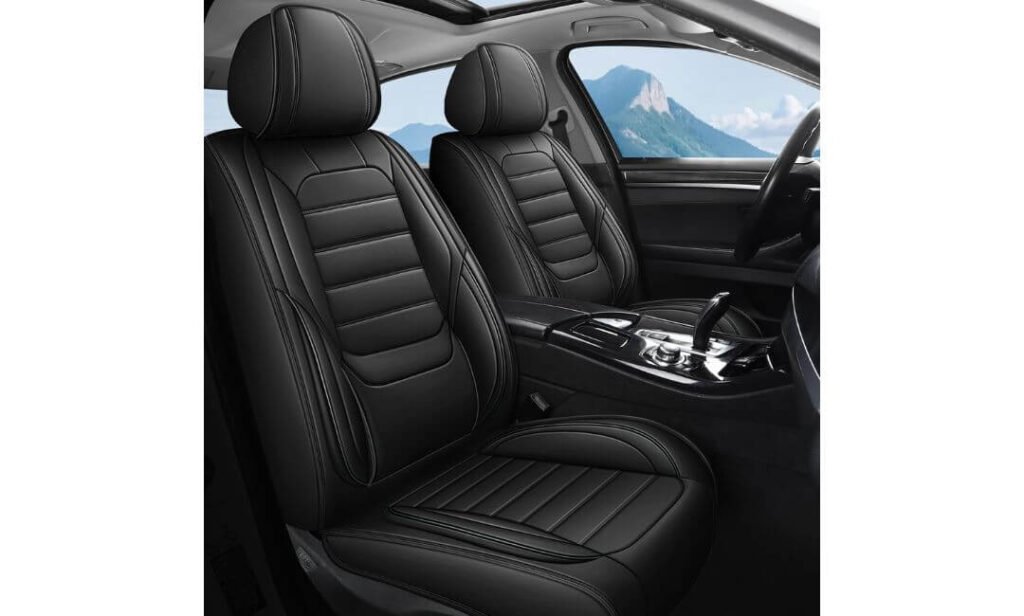
Quick Specs:
- Vehicle Fit: BMW X1 models listed from 2013–2026
- Set: 2 front + 3 rear seat covers
- Material: Faux Nappa-leather style outer material with high-resilience sponge and cotton backing
- Protection: Waterproof, scratch-resistant and wear-resistant
- Coverage: Full-wrap protection for front and rear seats
- Comfort: Built-in lumbar-support design with a soft, breathable surface
- Safety: Seller states compatibility with side airbags, seatbelts and child seats
- Installation: Flexible straps, clips and hooks; rear-seat disassembly is not required according to the listing
- Included: Headrest, steering-wheel and armrest covers are also listed
- Warranty: 12-month manufacturer warranty
- Colour: Black, Brown, Gray, Green and Red
What immediately separates this set from a basic universal cover is the way it is positioned around the BMW X1 itself. The listing covers a long run of X1 model years, and the full set includes two front and three rear covers, so you are not solving the driver-seat problem while leaving the rest of the cabin exposed. For an X1 that is used every day, that matters more than a flashy material name.
The material combination is also worth looking at closely. The outer surface is described as faux Nappa leather, backed by high-resilience sponge and supportive cotton. That gives the cover a more substantial feel than a thin fabric protector, while the waterproof surface makes the everyday jobs—coffee, dust, food marks or muddy clothes—much easier to deal with. The built-in lumbar-support design is an interesting extra for drivers who spend a lot of time behind the wheel, although I would treat it as added cushioning rather than a replacement for BMW’s original seat ergonomics.
There is another practical detail I like here: the installation is designed around straps, clips and hooks, with no rear-seat disassembly required according to the seller. The package also lists separate headrest, steering-wheel and armrest covers, which makes this feel more like a complete interior-protection package than simply six pieces of upholstery material. The seller also claims airbag and seatbelt compatibility; because that is a safety-critical claim, I would still verify the exact installation instructions for your X1 before fitting them.
(The appeal here is simple: a more protected X1 cabin without giving up the luxury-style appearance that makes the original interior worth protecting.)
What We Like About It
- The full-set approach — front and rear protection makes much more sense for an X1 than covering only the seats you use most.
- Lumbar-support construction — a genuinely useful touch if you regularly spend longer periods driving.
- Waterproof and wipe-clean surface — practical for coffee, spills, pets and normal family use.
- Anti-slip design with flexible fastening — helps address the annoying bunching and movement you can get with loose universal covers.
- Extra interior pieces — the listed headrest, armrest and steering-wheel covers make the package feel considerably more complete.
What We Would Check First
The very broad 2013–2026 fitment claim deserves a quick confirmation with the seller before ordering. The X1 has gone through different generations and interior designs, so matching your exact year and seat configuration is still the sensible final check.
BMW X1 Fitment — The Detail That Matters
The strongest part of this listing is its stated X1-specific positioning, rather than simply saying it fits “most SUVs.” The seller lists individual X1 years from 2013 through 2026, which covers both earlier X1s and the newer generation. That makes it much more relevant to this article than a generic cover that happens to be advertised for SUVs.
At the same time, I would not treat the year range alone as proof of a perfect custom fit. BMW changed the X1’s cabin over time, and a cover that fits one generation may sit differently on another. Before buying, compare your model year, front-seat shape, headrests and rear-seat split with the seller’s current fitment information. That takes a minute and is worth doing.
The Insider Pro-Tip
If your priority is protecting the original X1 upholstery without making the cabin look like it has been covered in a cheap aftermarket material, this is the type of set I would investigate first. The Nappa-style finish, full-wrap coverage and added interior pieces give it a more finished appearance than a basic seat protector, while the waterproof surface handles the practical side of daily ownership.
One detail I would not skip is the installation. Do not simply pull the covers tight wherever they will fit. Follow the supplied fastening points and make sure the seatbelt hardware and any relevant airbag areas remain completely unobstructed. With seat covers, a genuinely good installation is part of the product—not an afterthought.
#2. ACDY Car Seat Covers for BMW X1
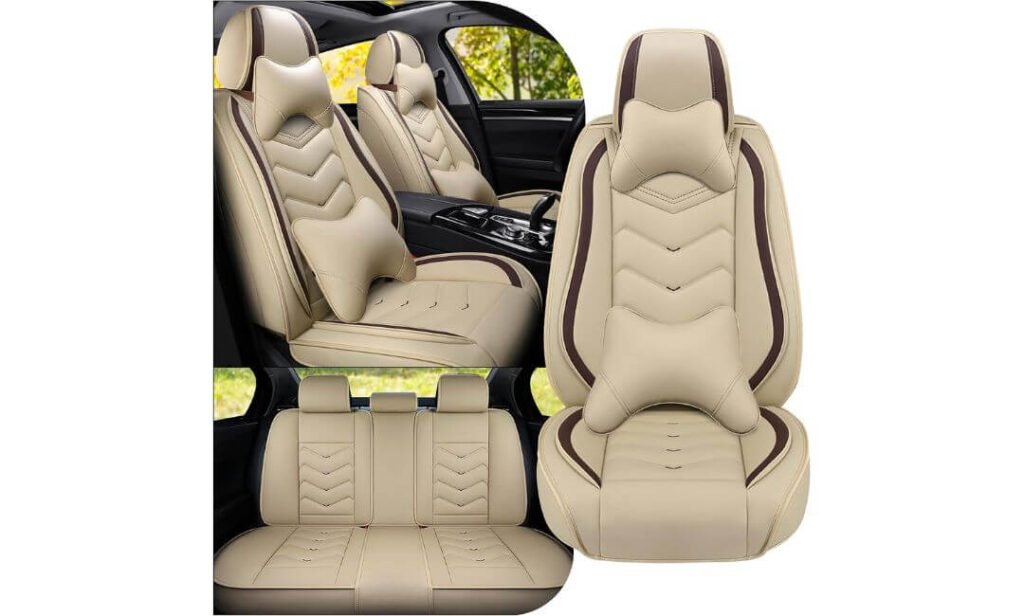
Quick Specs:
- Vehicle Fit: Seller lists BMW X1 coverage from 2000–2026; verify your exact model year before ordering
- Configuration: Front-only or 5-seat full set
- Material: Faux Nappa-leather style material with padded construction
- Protection: Waterproof and wear-resistant
- Design: Embroidered styling with a more sporty/luxury appearance
- Comfort: Additional cushioning; matching pillows included with the listed full luxury configuration
- Safety: Seller states compatibility with seat airbags and seatbelt buckles
- Seat Functions: Seller states compatibility with heated/cooled seat functions
- Installation: Tool-free installation with supplied instructions
- Colour Options: Beige, Black, Coffee Brown, Black-Blue, Black-Red, Black-White and Pure Black
- Set Choice: 2-seat front set or complete 5-seat configuration
This is not really the choice for someone who wants a plain, almost invisible seat protector. The Beige finish, embroidered detailing and pillow set give it a much more deliberate interior makeover. If you are trying to protect the original X1 upholstery while also giving the cabin a different visual character, that is where this set makes sense.
The material is described as premium faux Nappa leather, with waterproof and wear-resistant properties. That combination is useful for an everyday X1 because the cover can take the messier part of ownership—spills, dust, marks and general seat wear—while the original upholstery stays underneath. The padded construction is another useful touch, although I would think of it as added cushioning rather than assuming it will transform the comfort of the factory BMW seats.
The interesting part is the choice between front-only and full five-seat coverage. If you mainly want to protect the driver’s seat, the smaller configuration keeps the purchase simpler. For a family-used X1, the full set is the more logical setup because the rear bench gets exposed to the same everyday dirt and accidental spills. The supplied matching pillows also make this one feel more like an interior styling package than a conventional protective cover.
(If your idea of a seat cover is “protect the original seats, but make the cabin look intentionally finished,” this is the direction this set takes.)
What We Like About It
- The styling has a purpose — Beige with embroidered detailing gives the X1 a noticeably different cabin character without relying on a loud racing-style design.
- Full-set option — You can protect the rear seats instead of treating the front pair as the entire job.
- Waterproof outer surface — Useful protection against the spills and stains that actually happen in a daily-driven SUV.
- Extra cushioning and pillows — A nice addition for owners who care about a softer, more lounge-like feel on longer journeys.
- Seven colour choices — More flexibility than the usual black-only aftermarket cover, especially if you are trying to complement an existing BMW interior.
What We Would Check First
The seller’s 2000–2026 fitment claim is unusually broad, so I would not use that statement alone to decide compatibility. The BMW X1 did not exist throughout that entire period, and the X1 has changed generations and seat designs over time. Check the exact year and seat configuration with the seller before ordering.
BMW X1 Compatibility — What Buyers Should Know
The listing presents this as a vehicle-specific X1 cover rather than a generic SUV cover, and it identifies the E84, F48 and U11 generations in its compatibility information. That is useful because it gives the buyer a much clearer starting point than a universal “fits most cars” listing.
However, there is an important difference between a seller stating broad compatibility and independently confirming a perfect fit. Before purchase, compare your X1’s model year, seat shape, headrests, rear-seat configuration and any powered/heated-seat features with the current listing. The seller also claims airbag compatibility and preservation of heated/cooled-seat functions; those are safety and vehicle-function claims worth verifying against the actual installation instructions.
The Insider Pro-Tip
The Beige full-set version is the configuration I would look at if the goal is more than basic protection. It gives you the waterproof and wear-resistant layer you want from a practical cover, but the embroidery and matching pillows make the result feel more intentional inside the X1. Just remember that faux Nappa leather is still faux leather, so judge it for its appearance, cleanability and protection rather than expecting it to behave exactly like BMW’s original upholstery.
And don’t rush the installation simply because the seller says 10–15 minutes. That may be realistic for someone familiar with these covers, but the first installation can take longer when you are carefully routing straps and checking clearances. Most importantly, follow the supplied fitment instructions around seat-mounted airbags and seatbelt hardware rather than forcing the material into a position that merely looks tight. A neat installation is worth more than saving a few minutes.
#3. Bitablue Leather Deluxe Full Set Seat Covers for BMW X1
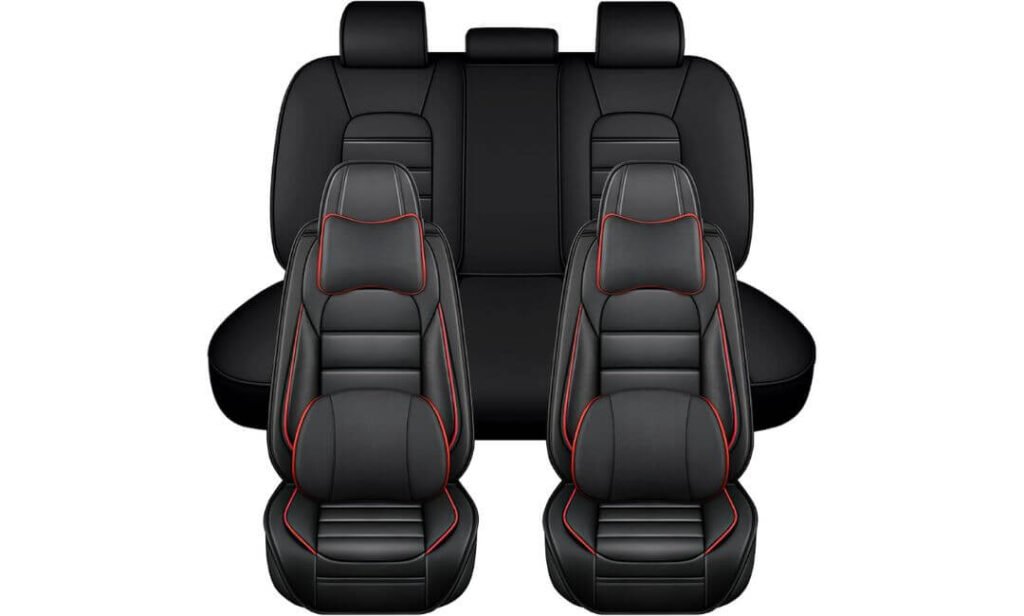
Quick Specs:
- Vehicle Fit: BMW X1 models listed for 2013–2026
- Set: Full front and rear coverage; Deluxe version includes memory-foam pillows
- Material: Faux Nappa-leather style material
- Protection: Waterproof and wear-resistant
- Front Headrests: Full wrap-around coverage
- Rear Seats: Adjustable Velcro design for width adjustment
- Stability: Non-slip silicone dots underneath
- Safety: Dedicated airbag openings and access to seatbelt buckles claimed by the seller
- Comfort: Memory-foam pillows available with the Deluxe configuration
- Installation: Seller estimates around 15–20 minutes
- Colour Options: Black-Red, Black-Coffee, Black-Green, Black-Orange, Blue-White, Classic Black and Gray-White
- Support: Seller offers fitment assistance if you send a picture of your seat
The first thing that makes this set different is that it tries to solve fitment and appearance at the same time. The Black-Red combination is clearly aimed at an X1 owner who wants more than plain seat protection, while the full-wrap headrest design keeps the finished look more complete. It does not have that obvious “universal cover dropped over a seat” appearance that some aftermarket sets can have.
The material is listed as Nappa leather, but the important clarification is that this is a faux-leather construction. That is not necessarily a drawback for this type of product. What matters for an everyday seat cover is the combination of water resistance, wear resistance and easy cleaning. If a coffee cup tips over or passengers bring dirt onto the seats, being able to wipe the surface clean is considerably more useful than simply having a premium-sounding material name.
The rear-seat design is one of the more practical details here. Instead of treating the rear cover as a fixed piece, the Velcro adjustment allows its width to be changed, which can be useful when dealing with the different proportions of the X1’s rear bench. The non-slip silicone dots underneath are another small but worthwhile touch because a cover that constantly moves under you becomes irritating very quickly.
(Black-Red is the obvious choice if you want the interior to feel deliberately upgraded rather than simply protected.)
What We Like About It
- Full-wrap headrest coverage gives the finished installation a cleaner, more integrated appearance.
- Adjustable rear Velcro is a genuinely useful feature rather than just another marketing specification.
- Non-slip silicone dots should help reduce unwanted movement once the covers are installed correctly.
- Deluxe memory-foam pillows add a comfort option that the standard configuration does not provide.
- Fitment support from the seller is useful here because you can send a seat picture if you are uncertain about compatibility.
What We Would Check First
I would verify the exact X1 year and seat configuration before ordering rather than relying only on the broad 2013–2026 statement. The seller describes these as tailored X1 covers, but different X1 generations can have different seat shapes and layouts.
BMW X1 Fitment Notes That Matter
The listing specifically positions the set around the BMW X1 from 2013–2026, which is considerably more useful than a generic “fits most SUVs” description. The adjustable rear section and dedicated front-seat design also show that the product is intended to accommodate the vehicle rather than simply provide a loose universal layer.
The seller also states that there are dedicated airbag openings and that the covers do not obstruct seatbelt buckles or normal seat adjustment. Because seat-mounted airbags are safety-critical, treat those as manufacturer claims to verify during installation, not as something to modify or improvise yourself. The cover should sit exactly as instructed, with the relevant deployment area unobstructed.
The Insider Pro-Tip
If you are choosing this one, I would seriously consider the Deluxe full set rather than buying the front covers simply because they are easier to install. The rear-seat coverage and matching memory-foam pillows are what make the package feel complete. The Black-Red finish is also one of those combinations that can either look very good or too busy depending on the rest of your cabin, so it is worth comparing it with your X1’s existing trim before ordering.
And there is one small detail I would not overlook: send the seller a photo of your actual seat if you have any doubt. That option is specifically offered in the listing, and it is a much better use of five minutes than guessing from a generic year range. With aftermarket seat covers, confirming fit before purchase is often the difference between a clean, properly tensioned installation and a cover that looks aftermarket from the first glance.
#4. Astira Leather Seat Covers for BMW X1
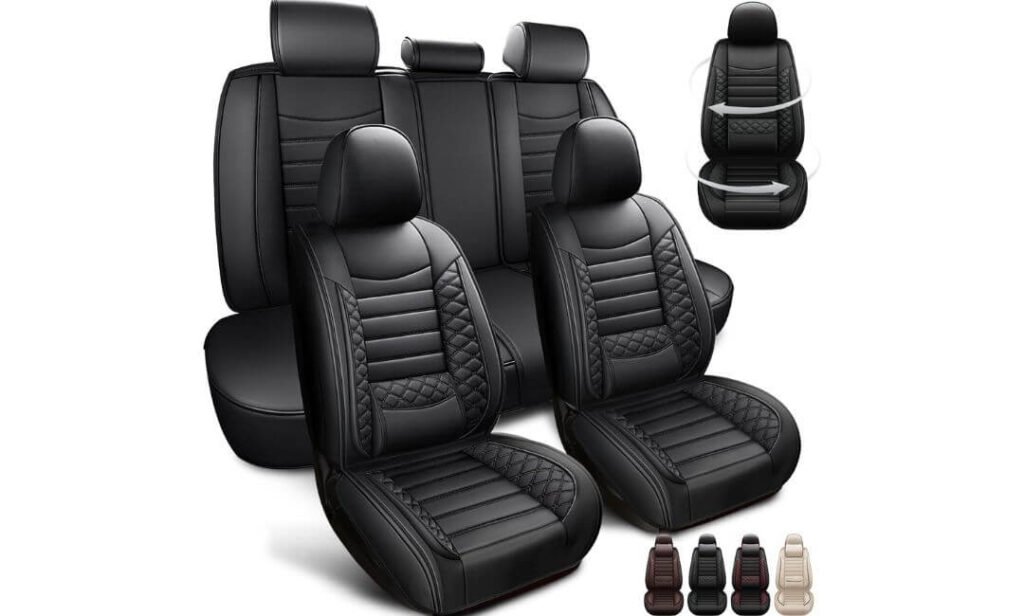
Quick Specs:
- Vehicle Fit: BMW X1 models listed for 2013–2025
- Set: 2 front + 3 rear covers in the full 5-seat configuration
- Material: Faux Nappa-leather style outer layer with multi-layer padding
- Construction: Sponge, nonwoven fabric, PP cotton and suede-cloth backing
- Protection: Waterproof, stain-resistant and wear-resistant
- Front Coverage: 360° wrap-around design
- Comfort: Built-in lumbar-support design with padded construction
- Safety: Seller states compatibility with seat airbags and seatbelt access
- Installation: Approximately 20–30 minutes according to the listing
- Maintenance: Wipe-clean surface using a damp cloth
- Colour Options: Black, Beige, Brown and Black-Red
- Configurations: Front-only, front with pillows, full 5-seat and full set with pillows
This is the kind of seat cover that makes more sense once you look past the word “leather.” The real attraction is the combination of a 360-degree front-seat enclosure, layered padding and a waterproof surface. Instead of leaving the sides of the front seat visibly exposed, the wrap-around design is intended to give the finished installation a much more complete appearance.
The construction is also more substantial than a basic single-layer cover. The listing specifies faux Nappa leather, sponge padding, nonwoven fabric, PP cotton and suede cloth, so there is some thought behind both the feel and the structure. Add the built-in lumbar-support design and it becomes a more comfort-oriented option for an X1 that sees regular commuting or longer drives.
Protection is where the set earns its place in this list. The waterproof surface is useful for spills and stains, while the claimed anti-slip backing is intended to reduce movement once installed properly. The full configuration includes two front and three rear covers, so you are protecting the cabin rather than just the two seats that get the most use.
(It is a particularly sensible direction if you want the X1’s original upholstery protected without making the interior look covered up in a loose universal protector.)
What We Like About It
- 360° front-seat enclosure gives the front seats a cleaner, more finished appearance.
- Multi-layer construction adds more substance than a thin protective cover.
- Built-in lumbar support makes the design more interesting for frequent drivers.
- Full 5-seat configuration protects both rows instead of leaving the rear bench exposed.
- Simple wipe-clean surface makes everyday maintenance genuinely easy.
What We Would Check First
The listing specifies 2013–2025 X1 fitment, so owners of a 2026 X1 should confirm compatibility directly with the seller rather than assuming the previous model-year listing automatically carries over.
BMW X1 Fitment Notes That Matter
The listing is specifically built around the BMW X1, with individual model years from 2013 through 2025 and a design intended to follow the vehicle’s seat contours. That is a meaningful advantage over generic covers, particularly because the front seats receive a 360° enclosure rather than simply having a loose cover placed over the cushion.
There is also a practical installation advantage: the seller says the full set can be installed in roughly 20–30 minutes without removing the rear seat. The product listing further claims airbag compatibility and retention of normal seat functions. Because those are safety-related claims, I would follow the supplied installation method carefully and verify the exact configuration for your X1 rather than modifying the cover yourself.
The Insider Pro-Tip
If your X1 is a daily driver and your main concern is keeping the original upholstery clean while still retaining a premium-looking cabin, this is one of the more balanced designs here. The black finish is easy to live with, the layered construction gives it more presence, and the full-wrap front design avoids the unfinished look you sometimes get from cheaper covers.
One thing I would do before ordering is check whether your exact X1 has heated seats, power adjustments, memory controls or other seat-mounted functions and then compare those areas with the installation instructions. The listing says those functions remain accessible, but a good seat cover should work around the car’s existing hardware—not force the hardware to work around the cover. That small check is what turns a decent aftermarket purchase into a sensible one.
#5. Coverado Full Set Seat Covers
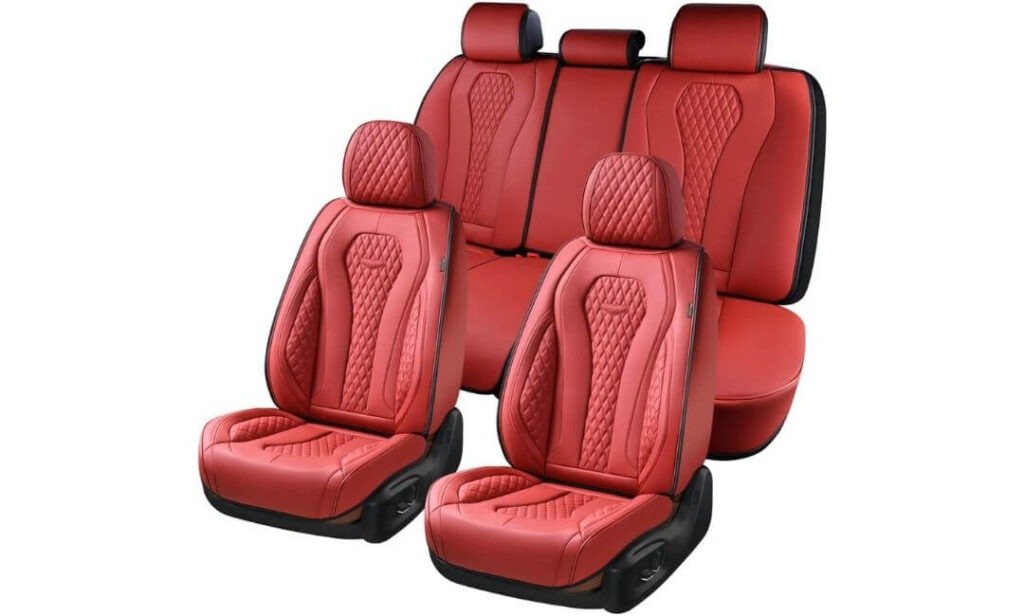
Quick Specs:
- Vehicle Fit: Universal design for most cars, including SUVs
- Set: 2 front + 3 rear seat covers
- Material: Nappa-style leather and durable leatherette
- Comfort: High-resilience foam padding with a breathable surface
- Protection: Water-resistant/waterproof seat-cover design
- Rear Seats: 3-piece Velcro system with adjustable centre section
- Installation: Front covers use hooks/chucks; rear section uses Velcro
- Function Access: Seller states compatibility with airbags, seatbelts and other original seat functions
- Design: Red leather-style finish with a sporty interior appearance
- Coverage: Full front and rear seat protection
Coverado earns its place here for a different reason: it is the universal-fit option in this list. That distinction matters. If you do not want to spend your search time looking through several BMW-specific listings, a full set like this gives you a broader solution covering both front and rear seats while still bringing a more premium appearance to the cabin.
The material combination is more interesting than a basic universal fabric cover. It uses Nappa-style leather and leatherette, with high-resilience foam underneath and a breathable surface. That gives the seats some additional cushioning while also creating a surface that is easier to wipe clean after normal daily messes. The red finish is obviously more noticeable than the black BMW-specific options above, so this is aimed at an owner who wants protection and a visible interior change.
The rear-seat arrangement is probably the most useful feature here. The three-piece Velcro design allows the centre section to be adjusted for different seat widths, while the front covers use hooks and fastening points to hold them in position. That flexibility is exactly what you want from a universal product, although it also means you should not expect the same generation-specific contouring as a dedicated BMW X1 cover.
(This is the choice for someone who values broad compatibility and a complete cabin makeover more than a strictly X1-tailored fit.)
What We Like About It
- Complete 5-seat coverage gives you a genuine full-cabin solution.
- Nappa-style leather and foam padding offer a more substantial feel than basic cloth protectors.
- Adjustable rear centre section makes the universal design more adaptable.
- Breathable construction is a useful touch if you spend long hours in the driver’s seat.
- Red finish gives the X1 interior a much more noticeable sporty character.
What We Would Check First
The important trade-off is simple: this is marketed as universal fit, not specifically as a BMW X1-tailored cover. Before buying, check the front-seat dimensions, rear-seat configuration and clearance around the X1’s seat-mounted features. Universal fit does not automatically mean perfect fit.
BMW X1 Fitment Notes
Unlike the first four products, Coverado does not rely on a BMW X1-specific model-year range. The seller instead says its digitally scanned design fits more than 99% of vehicles. That makes it flexible, but I would still put the BMW-specific products ahead of it if your main priority is a close factory-style fit.
The front and rear coverage is nevertheless useful for an X1, especially if you want to protect the entire interior rather than just the driver’s seat. The seller also states that the covers are designed to retain access to airbags, seatbelts and other vehicle functions. Those are manufacturer claims, so check the installation instructions carefully and make sure nothing is obstructed once fitted.
The Insider Pro-Tip
I would choose this one only if you genuinely like the red interior treatment and are comfortable with a universal-style fit. If your X1 has a particularly shaped seat, powered controls or other seat-specific hardware, a BMW-specific cover is the safer starting point for fitment.
Where this set does make sense is full-cabin protection without an overly complicated installation. The three-piece rear system gives you more flexibility than many one-piece universal covers, and the foam-backed leatherette construction gives the cabin a more finished appearance. Just remember: with a universal cover, spend a little extra time positioning and securing it. A correctly fitted universal cover can look surprisingly good; a rushed one will always look aftermarket.
#6. FLORICH Full Set Seat Covers
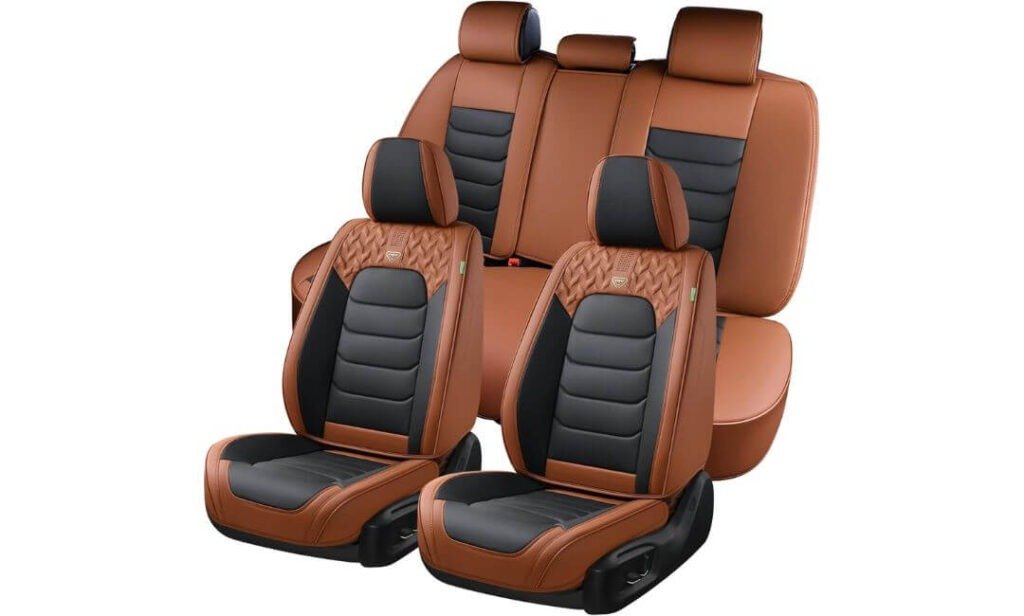
Quick Specs:
- Vehicle Fit: Universal fit for most cars, SUVs and trucks; BMW X1 is included in the seller’s compatibility list
- Set: Front and rear seat coverage
- Material: Faux-leather style multi-layer construction with rebound sponge padding
- Protection: Waterproof and stain-resistant
- Comfort: Padded, breathable surface with contoured construction
- Design: Brown-and-Black two-tone finish
- Safety: Seller states compatibility with airbags, seatbelts and normal seat adjustment
- Installation: Front installation is generally simpler; rear installation may require more time
- Maintenance: Removable design with wipe-clean surface
- Extra: Front-side storage pockets
- Colour Choice: Multiple solid and two-tone combinations
FLORICH is deliberately different from the BMW-specific covers above. It is a universal-fit product, so I would not buy it expecting the same tailored appearance as a cover designed around the X1’s exact seats. Its appeal is elsewhere: you get a complete front-and-rear setup, a padded leather-like surface and plenty of colour choices without moving into a highly vehicle-specific product.
The brown-and-black finish is particularly easy to imagine in an X1 because it adds contrast without going as aggressive as the red options earlier in the list. The multi-layer construction and rebound sponge also give the covers a more substantial feel, while the waterproof surface makes everyday spills and dirt much easier to manage.
There is one important piece of real-world information here that is worth knowing before you buy: universal fit is a trade-off. Front seats tend to be easier to accommodate, while rear-seat fit can depend heavily on the exact shape and configuration of the X1. The product’s adjustable attachment system gives you some flexibility, but it cannot turn a universal cover into a factory-patterned X1 cover.
(If colour choice and broad vehicle compatibility matter more to you than having the most precise X1-specific fit, this is the reason to consider it.)
What We Like About It
- Brown-and-Black finish gives the cabin a warmer, more distinctive appearance.
- Padded faux-leather construction provides a softer feel than thin universal protectors.
- Waterproof surface makes everyday spills much easier to deal with.
- Storage pockets add a genuinely useful bit of functionality to the front covers.
- Large colour selection gives you more freedom to match or change the interior.
What We Would Check First
The biggest consideration is fitment. This is a universal cover rather than a BMW X1-specific design, so I would check the front-seat dimensions, rear-seat shape, headrests and fastening points before ordering. The X1’s rear seats are where a universal set is most likely to require extra adjustment.
BMW X1 Fitment Notes
The seller includes the BMW X1 among its compatible vehicles, but that should be read as a broad compatibility claim rather than a promise of a custom fit. That distinction is important because the other products in this article are more specifically positioned around the X1.
For an X1 owner, the front seats are likely to be the easier part of the installation, while the rear section deserves more patience. The listing provides installation instructions and describes the covers as compatible with airbags and seatbelts. As always with aftermarket covers, make sure the final installation leaves seatbelt hardware and any seat-mounted airbag areas unobstructed.
The Insider Pro-Tip
I would choose FLORICH because you specifically like the look, padding or colour options, not because the listing claims universal compatibility with almost every vehicle. That is the honest difference between this and the BMW-specific choices higher on the list.
If you already know your X1’s rear-seat dimensions and are comfortable spending a little extra time getting a universal cover positioned correctly, it can be a practical way to protect the cabin. But if your priority is the closest possible fit with the least guesswork, I would stay with the X1-specific options earlier in the list. Universal covers can work very well—the trick is knowing that “universal” means adaptable, not custom-made.
Best Seat Covers for BMW X1 (2013–2026): Compare Materials, Fitment & Full-Set Protection
| Seat Cover | X1 Fitment | Material & Feel | Protection | Comfort | Fit & Installation | Best For |
|---|---|---|---|---|---|---|
| Uoheiikl BMW X1-specific listing |
2013–2026 listed
Dedicated X1 positioning |
Nappa-style faux leather
Sponge + cotton backing |
Waterproof
Wear & scratch resistance Full-wrap coverage |
Built-in lumbar-support design
Breathable padded construction |
Straps, clips & hooks
No rear-seat disassembly claimed |
Complete X1 protection
Owners wanting a luxury-style full set |
| ACDY Sport-luxury styling |
Seller lists 2000–2026
Exact year should be verified |
Nappa-style faux leather
Padded construction Embroidered finish |
Waterproof
Wear-resistant Full-set option |
Added cushioning
Matching pillows with listed Deluxe configuration |
Tool-free installation claimed
Seller estimates 10–15 minutes |
Interior makeover
Buyers wanting more colour and styling choices |
| Bitablue Deluxe full-set design |
2013–2026 listed
X1-specific positioning |
Nappa-style faux leather
Deluxe padded construction |
Waterproof
Wear-resistant Full-wrap front headrests |
Memory-foam pillows
Deluxe configuration |
Adjustable rear Velcro
Non-slip silicone dots Seller estimates 15–20 minutes |
Sporty premium look
Buyers drawn to the Black-Red interior |
| Astira Luxury full-set option |
2013–2025 listed
X1-specific positioning |
Nappa-style faux leather
Sponge, PP cotton & suede-cloth layers |
Waterproof
Stain & wear resistance 360° front coverage |
Built-in lumbar-support design
Multi-layer cushioning |
Anti-slip backing
No rear-seat removal claimed 20–30 minute estimate |
Understated luxury
Daily drivers wanting protection without a loud design |
| Coverado Universal-fit alternative |
Universal
Designed for most vehicles |
Nappa-style leather + leatherette
High-resilience foam padding |
Waterproof design
Full front & rear coverage |
Breathable surface
Foam cushioning |
Hooks/chucks up front
3-piece Velcro rear section Adjustable centre |
Flexible universal option
Buyers wanting a sportier red interior |
| FLORICH Universal-fit alternative |
Universal
BMW X1 included in seller’s compatibility list |
Faux leather
Multi-layer composite construction Rebound sponge |
Waterproof
Stain-resistant Full-set protection |
Padded & breathable
Contoured design |
Front installation is generally simpler
Rear fit may require more adjustment |
Colour & value
Buyers who prefer a Brown-Black cabin treatment |
BMW X1 Seat Covers Buying Guide: How to Choose the Right Fit, Material and Protection
Buying seat covers for a BMW X1 is not quite the same as buying a universal cover for an ordinary SUV. The X1 has different generations, seat layouts, interior functions, and trim combinations, so a cover that looks good in a product photo can still be a poor choice if it interferes with the seat shape, rear-seat access, controls, or the original interior.
The biggest mistake is to shop only by material or appearance. A Nappa-style finish may look premium, but it does not automatically mean the cover will fit your X1 properly. Likewise, a listing that says it fits a very wide range of BMW X1 model years deserves a closer look before you assume it is genuinely custom-fit.
For this guide, the important question is not simply which cover looks the most expensive? It is which type of cover makes sense for your X1, your interior, and the way you actually use the vehicle?
Start With Exact BMW X1 Fitment Before Looking at Materials
Fitment should come before leather, colour, stitching, or even waterproofing.
The BMW X1 has gone through several generations, and the seat design changed along the way. That matters because a cover designed around one seat shape may not sit correctly on another generation even if the seller uses “BMW X1” in the compatibility list.
You will commonly encounter listings covering ranges such as:
- 2013–2022 X1 models, which cover much of the E84/F48-era market depending on the exact model year.
- 2023 and newer X1 models, which use the newer U11-generation interior and seat design.
- Some aftermarket listings claim compatibility across 2013–2026, but a broad year range should be treated as a seller compatibility claim rather than proof of a precise factory-style fit.
- Some products are explicitly universal fit, meaning the X1 is included in a broader vehicle compatibility list rather than being the sole vehicle the cover was designed around.
This distinction is important when comparing the six covers in this article.
| Fitment type | What it generally means | What to expect |
|---|---|---|
| BMW X1-specific | Designed or marketed specifically around X1 seats | Usually the better starting point for a cleaner fit |
| Custom-fit | Seller claims the pattern follows a particular X1 seat shape or generation | Potentially closer to OEM appearance, but exact year still needs checking |
| Universal fit | Designed for a wider range of vehicles | Easier to adapt, but more compromise around wrinkles, edges and rear seats |
| Broad year-range fit | One listing claims compatibility across many X1 years | Convenient, but verify your exact year and seat configuration carefully |
Real talk: I would not treat “fits BMW X1 2013–2026” as automatically meaning perfectly tailored to every X1 from 2013 through 2026. Those are very different generations of vehicle. If the listing gives you a way to select your model year, generation, seat configuration, or send the seller a photo of the seats, use it.
That extra five minutes can save you from receiving a cover that technically fits the seat but does not look or function the way you expected.
BMW X1 Seat Covers vs Universal vs Custom Fit
These three categories are often mixed together in marketplace listings, but they are not interchangeable.
BMW X1-specific seat covers
These are the easiest products to consider when you want a more integrated appearance. The seller specifically identifies the X1 rather than simply saying the cover fits “most cars and SUVs.”
The products in this article that are marketed specifically around the X1 include the Uoheiikl, ACDY, Bitablue and Astira options.
That does not mean every one of them will fit every X1 identically. Their advertised model-year ranges are different, and some have broader claims than others.
The advantage is that you have a more specific starting point for checking compatibility.
Custom-fit BMW X1 seat covers
A genuinely custom-patterned cover should follow the contours of the seat more closely than a universal design. Look for details such as:
- Separate openings around the headrest.
- Proper shaping around the seat shoulders.
- Correct rear-seat division.
- Openings or access for seatbelt buckles.
- Space around seat controls.
- Side areas designed around the seat structure.
- Anti-slip sections that actually sit against the seat rather than simply relying on straps.
- Correct treatment around side-airbag areas.
However, be careful with the phrase “custom fit.” Marketplace sellers sometimes use it as a marketing term even when the product is still an adaptable cover.
A seller claiming “3D custom fit” or “3D scanned” does not, by itself, prove that the cover was engineered specifically for your particular X1 generation.
Universal BMW X1 seat covers
Universal covers have a legitimate place in the market.
They can make sense if you want broad vehicle compatibility, easy replacement, a particular colour combination, or a lower-commitment solution. The Coverado and FLORICH options in this article fall more into this category.
The compromise is usually around precision.
You may see:
- More visible excess material.
- Small wrinkles around corners.
- A less exact rear-seat fit.
- More adjustment during installation.
- Greater variation between front and rear fit.
- More dependence on straps, hooks, buckles or Velcro.
That does not automatically make a universal cover bad. It simply means you should buy it with the correct expectations.
Choose the Material Based on How You Use Your X1
The word “leather” appears on almost every premium-looking seat-cover listing, but you need to check what that actually means.
For the products covered here, the dominant material is faux Nappa leather or leather-style material, rather than genuine BMW leather upholstery.
That distinction matters.
Nappa-Style and Faux Leather
Faux Nappa leather is popular because it can give the X1 interior a smoother, more luxurious appearance without the cost associated with genuine leather upholstery.
The better versions typically combine the outer synthetic leather with layers such as:
- Sponge or foam padding.
- Cotton or nonwoven backing.
- Breathable fabric sections.
- Anti-slip material.
- Reinforced stitching.
The benefit is not just appearance. A good synthetic cover can also make everyday cleaning easier when dealing with dust, food, drink spills, pet hair, or muddy clothing.
But do not confuse Nappa-style with genuine Nappa leather. If a listing describes the material as faux Nappa leather, synthetic leather, PU leather, or leatherette, that is what you should understand you are buying.
Genuine Leather
Genuine leather is a completely different category.
It can offer a natural texture and premium feel, but it is also more expensive and is not necessary simply because you want protection for your X1’s original seats.
For a seat-cover article like this, faux leather can actually be more practical for many owners because the goal is often protecting the factory upholstery, not replacing its character entirely.
If a listing does not clearly identify the material as genuine leather, do not assume the word “leather” means real hide.
Waterproof and Leather-Style Materials
Water resistance is one of the more useful features for an everyday X1.
A waterproof or water-resistant synthetic surface can help with:
- Coffee and drink spills.
- Wet clothing.
- Mud and dirt.
- Pet mess.
- Food stains.
- General family use.
The important point is that waterproofing protects the cover, not necessarily the entire seat underneath under every circumstance.
Water can still reach the original upholstery through seams, openings, gaps around the seat, or areas that are not completely covered. Therefore, a “waterproof” label should not be interpreted as making the entire seat assembly completely liquid-proof.
Waterproof Textiles
Not every owner wants a leather-style interior.
Waterproof textile or fabric covers can be more appealing if you live in a hot climate, prefer a softer fabric feel, or dislike the slippery sensation that some synthetic leather surfaces can produce.
Fabric can also be more forgiving in terms of breathability, although the actual performance depends heavily on the construction and quality of the material.
For an X1 used mostly for commuting, leather-style covers may be easier to wipe clean. For frequent outdoor use, pets, children, or wet clothing, the protection characteristics become more important than simply choosing the most luxurious-looking surface.
Full-Cabin Protection vs Front-Seat-Only Coverage
This is another area where the cheaper option is not always the better value.
A front-seat-only cover protects the areas that usually receive the most direct use from the driver and front passenger. It can also be easier to install and less expensive.
But if you are buying seat covers because you want to protect the original X1 interior, leaving the rear seats exposed defeats part of that purpose.
A BMW X1 seat cover full set generally gives you:
- Two front-seat covers.
- Three rear-seat sections or a configuration designed around the rear bench.
- Headrest coverage, depending on the package.
- Better overall protection from passengers, pets and cargo.
- A more consistent appearance throughout the cabin.
The Uoheiikl, Bitablue and Astira options, for example, are offered with full five-seat coverage, while some configurations across the listings allow front-only purchasing.
When Front-Seat Covers Make More Sense
Front-only coverage can be reasonable if:
- You rarely carry rear passengers.
- You mainly want to protect the driver’s seat.
- You already have rear-seat protection.
- You want a simpler installation.
- You want to spend less.
- You are specifically protecting a high-wear driver’s seat.
There is no reason to buy a complete set simply because the product page calls it a “full set.”
When a Full Set Is Worth It
A full set becomes more sensible if your X1 regularly carries:
- Children.
- Pets.
- Passengers in the rear.
- Outdoor equipment.
- Work clothing.
- Food or drinks.
- Wet or muddy clothing.
It also creates a much more uniform appearance. Mixing a heavily protected front seat with completely uncovered rear upholstery can look unfinished.
Features That Actually Matter on BMW X1 Seat Covers
Not every feature listed on a marketplace page deserves equal attention.
Some features have a direct impact on everyday usability, while others are mostly marketing language.
Anti-Slip Construction
A seat cover should stay where you put it.
This is particularly important on the driver’s seat because constant movement can cause the cover to shift, bunch up, or develop wrinkles.
Useful anti-slip features can include:
- Silicone dots.
- Textured backing.
- Anti-slip fabric.
- Properly positioned straps.
- Hooks and clips.
- Velcro sections on rear-seat covers.
The Bitablue listing, for example, advertises non-slip silicone dots and adjustable rear Velcro. That is more meaningful than simply saying “anti-slip” without explaining how the cover stays in position.
Breathability
Synthetic leather can become warmer than fabric, particularly when the vehicle is parked in direct sunlight.
Breathable backing or perforated sections can help, but don’t assume that every product advertised as “breathable” will feel cool.
Your climate matters too.
For a vehicle used in a hot environment, I would pay more attention to the actual construction of the cover than the word “breathable” printed in the listing.
Side-Airbag Compatibility
This is one feature where you should be especially careful.
If the X1 has seat-mounted side airbags, a seat cover must not simply wrap tightly over the entire seat without consideration for how the airbag deploys.
Several products in this article claim airbag compatibility or dedicated airbag openings. That is useful information, but it remains a seller claim unless independently verified.
Do not cut, sew, modify, or otherwise alter an airbag area yourself just to make a cover fit.
If the listing does not clearly explain how the side-airbag area is handled, I would treat that as a reason to investigate further before purchasing.
Seatbelt and Seat Function Access
The cover should not interfere with normal use of:
- Seatbelts.
- Seatbelt buckles.
- Seat adjustment controls.
- Electric seat movement.
- Seat memory controls.
- Heating or ventilation controls.
- Headrest adjustment.
- Rear-seat folding mechanisms.
Some sellers specifically claim compatibility with heated or cooled seats and electric seat functions. Again, these are claims that should be checked against your exact X1 configuration rather than assumed.
Easy-Clean Surfaces
This is one area where faux leather has a practical advantage.
A smooth synthetic surface can usually be wiped down much faster than fabric after a drink spill or muddy clothing.
For daily use, I would rather have a cover that can be cleaned easily than one that simply looks expensive in photographs.
Installation Difficulty Is More Important Than Sellers Make It Sound
Many listings advertise installation times such as 10–20 minutes or 20–30 minutes.
Take those numbers cautiously.
Installation time can change considerably depending on:
- Your exact X1 generation.
- Front-seat design.
- Rear-seat configuration.
- Whether the rear bench has to be separated.
- How many straps and hooks are included.
- How tightly you want the cover fitted.
- Whether you are installing it alone.
- Whether you want to route straps underneath the seats neatly.
A front-seat cover can genuinely be relatively straightforward. A complete rear-seat installation is often where the work increases.
The FLORICH option is a good example of why installation claims should not be taken too literally: universal-fit rear sections can require considerably more adjustment than the front seats.
DIY Installation vs Professional Installation
Most aftermarket seat covers are designed to be installed at home.
DIY installation makes sense when the product uses:
- Straightforward straps.
- Hooks.
- Buckles.
- Velcro.
- Headrest openings.
- Clearly separated front and rear pieces.
Professional installation may make more sense if:
- The rear seats are difficult to access.
- You are concerned about routing straps correctly.
- The cover has complicated sections.
- You want the cleanest possible OEM-like appearance.
- You are unsure about areas surrounding seat-mounted airbags.
The important thing is not simply getting the cover onto the seat. It should be installed without obstructing the seat’s normal functions or creating unnecessary interference.
Maintenance: A Good Cover Should Make Life Easier
One of the main reasons to install seat covers is to reduce the amount of cleaning required on the original upholstery.
For faux leather covers, routine maintenance is generally straightforward:
- Remove loose dust and debris with a vacuum or soft brush.
- Wipe spills as soon as possible.
- Use a damp microfiber cloth for normal cleaning.
- Follow the manufacturer’s instructions for any cleaning solution.
- Avoid aggressive chemicals that can damage synthetic leather or stitching.
- Check straps and attachment points periodically.
- Make sure the cover has not shifted around the seat or airbag area.
Do not assume that because a cover is waterproof it can be scrubbed with any household cleaner.
The surface coating and stitching can still deteriorate if exposed to harsh chemicals repeatedly.
Make Sure the Cover Works With Your X1 Interior
A seat cover should look like it belongs in the vehicle.
That does not mean you need to choose black-on-black.
The six options covered in this article include combinations such as:
- Classic black.
- Brown and black.
- Black and red.
- Beige.
- Gray.
- Black and coffee.
- Black and green.
- Black and orange.
- Blue and white.
The right choice depends heavily on the existing interior.
If your X1 has a black dashboard and black door panels, a subtle black or black-and-brown cover can look relatively integrated. A bright red or contrasting two-tone design makes a much stronger visual statement.
Neither approach is automatically better. The important thing is whether you want the cover to blend into the factory interior or intentionally change its appearance.
Stitching and OEM-Like Appearance
This is where cheaper universal covers often reveal themselves.
Look closely at:
- Stitch alignment.
- Seat-edge coverage.
- Headrest transitions.
- Rear-seat seams.
- Excess material.
- Gaps around controls.
- How the cover sits around the seat shoulders.
A premium-looking material cannot compensate for a poorly fitted pattern.
If the cover follows the contours of the seat and remains tight without excessive wrinkles, it will generally look more integrated.
If it relies heavily on loose straps and has excess material around several areas, the result will look more aftermarket.
What to Check Before Ordering Your BMW X1 Seat Covers
Before clicking the buy button, check these details against your vehicle rather than relying only on the main product title.
| Check before buying | Why it matters |
|---|---|
| Exact X1 model year | Different generations have different seat designs |
| Generation | E84, F48 and U11 seats are not automatically interchangeable |
| Front-seat shape | Determines how closely the cover can follow the seat |
| Rear-seat configuration | Important for full-set covers |
| Headrest design | Affects openings and overall fit |
| Side airbags | Cover construction must account for them |
| Heated or ventilated seats | Make sure the seller specifically addresses compatibility |
| Electric seat controls | Check that controls remain accessible |
| Seatbelt access | Buckles should not be obstructed |
| Full set or front only | Determines how much of the interior is actually protected |
| Material | Faux leather, textile, or another construction |
| Installation method | Straps, hooks, buckles and Velcro affect fit |
| Return policy | Particularly important for broad fitment claims |
Real Talk: The Biggest Trap Is the Model-Year Range
This deserves its own point because it is easy to overlook.
If a marketplace listing says BMW X1 2013–2026, it is tempting to assume that the same cover was precisely developed for every X1 in that period.
I would not make that assumption.
The products reviewed here include several broad compatibility claims, and some even extend across model years that deserve extra scrutiny. For example, the ACDY listing uses an unusually broad “2000–2026” compatibility statement even though the BMW X1 was not in production in 2000.
That does not automatically tell you how the actual product will fit. It does tell you that the compatibility field should not be treated as unquestionable evidence of custom fitment.
If the seller provides a vehicle-specific selection, generation information, dimensions, installation photos, or a way to confirm fitment before ordering, those details are much more useful.
How I Would Narrow the Choice
Rather than choosing purely by appearance, use this simple decision process:
If your priority is X1-specific coverage:
Start with the listings that specifically target BMW X1 fitment and then verify your exact model year and seat configuration.
If you want a premium leather-style appearance:
Look toward the faux Nappa and leather-style options, but confirm whether the material is synthetic rather than assuming it is genuine leather.
If maximum cabin protection is the goal:
A full five-seat set makes more sense than covering only the front seats.
If you want the easiest maintenance:
A smooth, wipe-clean waterproof or water-resistant surface is generally more practical than a difficult-to-clean textile.
If you care most about OEM-like appearance:
Fitment should take priority over colour, padding, or decorative stitching.
If you are considering a universal cover:
Accept that installation and rear-seat fit may require more adjustment.
If your X1 has heated, ventilated or electrically adjustable seats:
Verify those functions specifically rather than relying on a generic “compatible with all functions” statement.
The Bottom Line Before You Buy
A good BMW X1 seat cover should do more than protect the upholstery. It should stay in place, preserve access to the important seat functions, accommodate the vehicle’s safety equipment, and look reasonably integrated with the original cabin.
For most owners, the smartest starting point is to identify the exact X1 generation and seat configuration first. From there, decide whether you actually need a full five-seat set, whether faux Nappa leather suits your climate and cleaning needs, and whether you are comfortable with a universal design or want something marketed specifically for the X1.
And one final point: do not let a “custom fit,” “waterproof,” or “airbag compatible” badge make the decision for you. Those terms are useful only when the underlying construction and exact vehicle fitment support them. For aftermarket seat covers, the small details around fit, attachment, coverage and everyday usability are what ultimately determine whether the product feels like a worthwhile upgrade or simply another loose layer sitting over your BMW’s seats.
BMW X1 Seat Cover Installation Tips: A Proper Fit Without Compromising Seat Functions
Installing seat covers on a BMW X1 is not simply a matter of pulling the material over the seats and tightening a few straps. The difference between a clean installation and a loose, uncomfortable one usually comes down to how carefully the cover is aligned, how the attachment points are routed, and whether the original seat functions remain completely unobstructed.
This is especially important with full-set covers. Front seats are generally easier to work with, while the rear bench can take considerably more time because of the seat shape, buckles, split sections, Velcro panels, and access around the seat base.
The installation instructions supplied with your specific cover should always take priority because designs differ. The following process is a practical general method for the BMW X1 covers discussed in this article.
Before You Start, Confirm the Cover Matches Your X1
Do not begin installation until you have checked the product against your actual vehicle.
This matters because the products covered here have different fitment claims. Some are marketed specifically for the BMW X1, while Coverado and FLORICH use broader universal-fit designs.
Before opening the packaging, confirm:
- Your exact BMW X1 model year.
- The generation of your X1.
- Whether the cover is intended for your front-seat design.
- Whether the rear-seat configuration matches the cover.
- Whether you have standard, heated, ventilated, or electrically adjustable seats.
- Where the headrest openings are positioned.
- How the manufacturer expects the straps, hooks, buckles, or Velcro sections to be installed.
- How the cover is designed around the side-airbag area.
If the listing covers an unusually broad range of model years, do not assume that every year uses the same pattern.
Real talk: a cover can technically be advertised for the BMW X1 and still require more adjustment than you expected. Spend a few minutes checking the fitment before installation rather than discovering the problem after everything is already fitted.
What You May Need for Installation
Most aftermarket X1 seat covers are designed for home installation, so you normally do not need a workshop full of tools.
Depending on the design, it can help to have:
- A clean microfiber cloth.
- A vacuum cleaner.
- A plastic trim tool, if the manufacturer’s instructions specifically require one.
- A flashlight for seeing beneath the seats.
- A small towel or blanket to protect the upholstery while working.
- The supplied hooks, clips, straps, buckles, or Velcro pieces.
- The installation instructions or QR-code video supplied with the product.
Avoid using sharp knives, screwdrivers, scissors, or metal tools to force the cover into place.
You should never cut the cover simply because a section does not seem to fit. If you believe an opening is missing around a seat control, airbag area, or seatbelt component, stop and confirm the manufacturer’s installation method first.
Step 1: Clean and Inspect the Seats First
Before installing anything, remove dust, crumbs, pet hair, and other debris from the original seats.
A clean surface gives you a better idea of how the cover is actually sitting against the upholstery.
While cleaning, inspect the seats for:
- Existing tears or damaged upholstery.
- Seatbelt buckles.
- Seat adjustment controls.
- Electrical connectors or visible wiring beneath the seat.
- Seat rails.
- Side areas where a seat-mounted airbag may be located.
- Rear-seat release mechanisms.
This is also the best time to compare the shape of the cover with the shape of the seat.
If the front-seat cover appears dramatically different from the X1 seat before you even begin, stop and verify fitment rather than trying to stretch it into position.
Step 2: Remove the Headrests Only If the Instructions Require It
Many seat covers use dedicated headrest openings, while others require the headrest to be removed temporarily.
If removal is necessary, follow the BMW instructions for your particular X1 rather than forcing the headrest upward.
Keep the headrests somewhere clean while you install the covers.
Do not install a cover in a way that prevents the headrest from returning to its normal position or limits its adjustment range.
Once the cover is installed, the headrest should sit naturally and remain fully adjustable.
Step 3: Position the Front Cover Before Tightening Anything
Place the front cover over the seat and do not immediately tighten the straps.
First align the major sections:
- Seat cushion.
- Seat back.
- Headrest opening.
- Outer seat edges.
- Inner seat edge.
- Lower front section.
- Side sections.
This is where many rushed installations go wrong.
If you tighten one corner before the rest of the cover is correctly positioned, you can pull the material out of alignment and create unnecessary wrinkles.
Start with the cover loose, centre it properly, then gradually work your way around the seat.
Step 4: Smooth the Material Into the Seat Contours
Once the main section is positioned, use your hands to smooth the material toward the edges.
Do not simply pull as hard as possible.
A good installation is about even tension, not maximum tension.
Look for:
- Large wrinkles across the seat cushion.
- Material bunching around the seatback.
- Excess material around the shoulders.
- Gaps near the sides.
- Uneven stitching.
- Material covering controls or adjustment handles.
- Sections pulling away from the seat.
Leather-style covers often look much better once the material has been properly aligned and tensioned.
This is also where a supposedly “custom-fit” cover should begin to show its advantage. If a product still has significant loose material after careful positioning, it may be a broader-fit design rather than a truly tailored pattern.
Step 5: Route Straps and Hooks Carefully
Many of the covers in this article use combinations of straps, hooks, buckles, clips, or Velcro.
Route these according to the manufacturer’s instructions.
Do not place straps where they can:
- Interfere with seat rails.
- Get caught in moving mechanisms.
- Restrict seat adjustment.
- Pull against electrical wiring.
- Obstruct seatbelt hardware.
- Create pressure around an airbag area.
This is particularly important beneath electrically adjustable seats because the seat can move forward, backward, upward, or downward after installation.
After securing the cover, move the seat through its normal adjustment range and check that nothing catches.
Step 6: Pay Extra Attention to the Side-Airbag Area
This is the most important installation point.
If your BMW X1 has seat-mounted side airbags, the cover must not be installed in a way that blocks, tightly encloses, or otherwise interferes with the deployment area.
Several aftermarket products in this category advertise airbag-compatible construction or dedicated airbag openings. That is a useful feature to look for, but you should still follow the manufacturer’s specific instructions.
Do not:
- Cut your own airbag opening without manufacturer guidance.
- Sew a new seam into the airbag area.
- Tape the cover tightly over the airbag location.
- Add additional straps around the airbag section.
- Permanently modify the seat cover to make it fit.
If the cover does not clearly accommodate the side-airbag area, I would not improvise an installation.
Real talk: this is one area where making an aftermarket cover look tighter is not worth the risk. A slightly less-than-perfect cosmetic fit is preferable to modifying an important safety-related area yourself.
Step 7: Check the Seat Controls Before Moving On
Once the front cover is secured, test every control that you normally use.
Depending on your X1 configuration, check:
- Forward and backward adjustment.
- Seat-height adjustment.
- Seatback adjustment.
- Lumbar adjustment, if equipped.
- Memory controls, if equipped.
- Heating controls.
- Ventilation or cooling functions, if equipped.
- Headrest adjustment.
- Seatbelt access.
The cover should not make any control difficult to reach or operate.
If an electric seat starts moving differently, feels restricted, or catches the cover, stop and reposition the material before continuing.
Step 8: Install the Rear Covers With Extra Patience
The rear seats can be the most time-consuming part of a full BMW X1 seat-cover installation.
Rear covers often use separate pieces for the seatback and seat cushion, along with Velcro, straps, or adjustable sections.
Start by identifying which section corresponds to:
- Left rear seat.
- Centre section.
- Right rear seat.
- Seatback.
- Seat cushion.
- Headrests.
Lay the pieces out before installing them.
This prevents the common mistake of attaching one section only to discover later that the next piece needs to overlap it.
Rear-Seat Installation Can Vary Significantly
This is one reason I would not put too much weight on marketplace claims such as “10-minute installation.”
A simple front-seat cover can be quick.
A complete rear-seat installation can take considerably longer, particularly if you want the material to sit neatly around:
- Rear-seat belts.
- Buckle receivers.
- Split-folding sections.
- Centre armrests.
- Headrests.
- Seat-release mechanisms.
- Uneven seat contours.
Universal covers can require even more adjustment because the rear bench may not match the dimensions the manufacturer used as its general fitment reference.
Step 9: Keep Rear Seatbelts and Buckles Completely Accessible
After fitting the rear cover, check every seating position.
You should be able to:
- Reach the seatbelt buckles easily.
- Insert and remove the belt without pulling against the cover.
- Move the belt naturally.
- Fold the rear seats using the normal mechanism.
- Access any centre-seat belt components.
- Use the rear headrests normally.
Never hide a seatbelt buckle underneath the cover simply because doing so creates a cleaner appearance.
The cover should work around the vehicle’s existing safety equipment, not replace or obstruct it.
Step 10: Check Rear-Seat Folding and Access
Before calling the installation finished, operate the rear seats exactly as you normally would.
If your X1 has split-folding rear seats, fold each section independently.
Watch for:
- Velcro separating.
- Straps pulling loose.
- Material bunching.
- Covers blocking release handles.
- Excess material getting caught between moving sections.
- The cover preventing the seatback from locking properly.
A full-set cover is only useful if you can still use the rear seats normally.
Step 11: Perform a Complete Safety and Function Check
Do not consider the job finished simply because the covers look straight.
Perform a final inspection around the entire cabin.
Front-seat checklist
- Seatbelts operate normally.
- Seat controls remain accessible.
- Electric adjustment works normally, if equipped.
- Headrests move correctly.
- The cover does not bunch excessively.
- The side-airbag area is treated according to the manufacturer’s design.
- Nothing is caught underneath the seat.
- The seat can move through its normal adjustment range.
Rear-seat checklist
- All seatbelts are accessible.
- Buckles are not buried underneath material.
- Headrests move normally.
- Rear seats fold correctly.
- Release mechanisms remain accessible.
- No straps interfere with moving parts.
- The cover remains secure when the seat is moved or folded.
If anything feels different after installation, fix the installation before driving.
Common Installation Problems and How to Deal With Them
| Problem | Likely reason | What to do |
|---|---|---|
| Front cover has large wrinkles | Cover is not centred or straps were tightened too early | Loosen it, reposition the main section, then tighten gradually |
| Cover moves while entering the car | Insufficient attachment or anti-slip contact | Recheck straps, hooks and anti-slip sections |
| Headrest opening does not line up | Cover is not correctly positioned or fitment may be wrong | Reposition before forcing the material |
| Rear cover looks loose | Universal or broad-fit design | Adjust Velcro and attachment points, but do not overstretch |
| Seat control is covered | Cover is positioned incorrectly | Reposition and restore full access |
| Seatbelt buckle is difficult to reach | Cover is sitting over the buckle area | Refit that section before use |
| Seat movement catches the cover | Strap or excess material is interfering underneath | Re-route or reposition the cover |
| Airbag area is completely covered | Incorrect design or installation | Stop and verify compatibility before driving |
| Rear seat will not fold normally | Cover is blocking the release or hinge area | Reposition the cover and check attachment points |
| Stitching looks twisted | Cover was pulled unevenly | Loosen and realign rather than pulling harder |
Do Not Chase a Perfect Look by Over-Tightening
This is a surprisingly common mistake.
People often see a wrinkle and keep pulling the straps tighter.
That can make the situation worse.
Over-tightening can:
- Pull stitching out of alignment.
- Put unnecessary pressure on attachment points.
- Distort the seat cover.
- Make seat adjustment more difficult.
- Pull material toward areas where it should remain clear.
The goal is secure and properly aligned, not artificially stretched.
Give the Cover a Final Appearance Check
Once everything is secure, sit in both front seats and inspect the interior from normal driving positions.
Look at:
- The seat cushion.
- Seatback.
- Headrest.
- Outer seat bolsters.
- Centre console side.
- Rear-seat transition.
- Stitching.
- Colour consistency.
Open the doors and inspect the seats from outside as well.
A cover can look perfect while standing directly in front of it but reveal loose edges or wrinkles when viewed from the side.
This final inspection is particularly worthwhile if you chose a two-tone or decorative design because uneven alignment is much more noticeable with contrasting stitching and colour panels.
When You Should Stop and Recheck the Fitment
Do not keep forcing the installation if:
- The headrest opening is nowhere near the correct position.
- The cover completely obscures a side-airbag area.
- A seatbelt buckle cannot be accessed normally.
- The cover prevents the seat from moving.
- The rear seat cannot fold correctly.
- You need to cut large sections to make the product fit.
- Straps must pass through an area containing wiring or moving mechanisms.
- The cover appears designed for a completely different seat shape.
These are not normal “installation challenges.” They can indicate that the product is not appropriate for your particular X1.
My Practical Installation Advice
If you are installing a full set yourself, I would install the front seats first and leave the rear section until you are comfortable with how the material behaves.
The front seats give you a good indication of whether the product’s construction, attachment system, and material quality are what you expected.
For a universal-fit product, spend more time on alignment rather than trying to make it look like a custom cover. A universal cover may never have the same tight, tailored appearance as an X1-specific design, and forcing it into that shape can create unnecessary tension.
For an X1-specific cover, take advantage of the more precise pattern by carefully matching every seam and opening before tightening the attachments.
Most importantly, never sacrifice access to seatbelts, seat controls, rear-seat mechanisms, or the side-airbag area simply to achieve a cleaner-looking installation. A seat cover is there to protect the interior while allowing the original vehicle to function normally. That should remain the priority from the first strap to the final adjustment.
BMW X1 Seat Cover Care and Maintenance: Keep the Material Clean Without Damaging It
A good BMW X1 seat cover should make your interior easier to live with, not create another complicated maintenance routine. Most of the covers discussed in this article use faux Nappa leather, leather-style synthetic material, or waterproof fabric, and each type needs slightly different care.
The most important rule is simple: clean the cover according to the material it is actually made from, not according to the word “leather” in the product title. Faux Nappa leather is not the same thing as genuine leather, and a waterproof coating does not mean the surface is immune to stains, chemicals, heat, or abrasion.
Regular light cleaning is usually much better than waiting until dirt, body oils, food residue, and stains have built up.
Build a Simple Cleaning Routine Around Your X1 Usage
How often you clean the covers should depend on how the vehicle is used.
For a daily-driven X1, a practical routine is:
- Weekly: Remove loose dust, crumbs, hair, and debris with a soft vacuum or brush.
- Every few weeks: Wipe down the seat surfaces with a slightly damp microfiber cloth.
- After spills: Clean the affected area as soon as reasonably possible.
- Monthly: Inspect stitching, seams, straps, anti-slip sections, and areas around the seat edges.
- Every few months: Give the covers a more thorough cleaning, particularly the driver’s seat and rear seating areas.
- After heavy outdoor use: Clean mud, dust, moisture, or other contamination before it becomes embedded in the material.
You do not need to deep-clean a seat cover every weekend.
In fact, over-cleaning can sometimes be just as unnecessary as neglecting it, especially if you repeatedly expose synthetic leather to aggressive chemicals.
How to Clean Faux Nappa Leather BMW X1 Seat Covers
The majority of the leather-style covers in this article are described as faux Nappa leather or synthetic leather, rather than genuine Nappa leather.
That changes how you should approach maintenance.
For normal cleaning:
- Remove loose dirt with a soft vacuum or microfiber cloth.
- Use a clean microfiber cloth lightly dampened with water.
- Wipe the surface gently rather than scrubbing aggressively.
- Pay particular attention to seams, stitching, and areas where your hands or clothing make frequent contact.
- Use a mild cleaner only if the manufacturer’s care instructions allow it.
- Wipe away any remaining cleaning product with a separate damp cloth.
- Allow the surface to dry naturally.
Avoid soaking the cover.
Water resistance is useful, but repeatedly saturating the seams and edges is not the same thing as cleaning a waterproof outdoor jacket.
Do Not Treat Faux Leather Like Genuine Leather
This is an important distinction.
A genuine leather conditioner is not automatically suitable for synthetic leather. Some products designed for natural leather can leave an unwanted residue or change the appearance of synthetic surfaces.
If your seat cover is advertised as faux Nappa leather, PU leather, leatherette, synthetic leather, or another artificial leather material, check the manufacturer’s care instructions before applying a leather conditioner.
The safest approach is to use a cleaning product specifically identified as suitable for that material.
Real talk: if the seller only tells you that the cover is “Nappa leather” without clearly explaining whether it is genuine or synthetic, do not assume it is genuine leather. Most aftermarket seat-cover listings in this category are designed to give you the appearance and practicality of leather without actually replacing the vehicle’s upholstery with genuine leather.
Cleaning Waterproof Leather-Style Covers
Waterproof or water-resistant covers are particularly convenient for everyday X1 use.
They can handle many common problems more easily than fabric:
- Coffee spills.
- Water.
- Soft drinks.
- Food residue.
- Mud.
- Pet hair.
- Wet clothing.
- General road grime.
But waterproof does not mean stain-proof.
A liquid sitting on the surface for a few seconds is very different from a coloured drink, oily food, or muddy water being left on the material for hours.
For spills, blot first rather than aggressively rubbing the area.
Use a clean cloth to absorb as much of the liquid as possible, then wipe the remaining residue gently.
This reduces the chance of spreading the stain over a larger section.
How to Remove Common Stains From BMW X1 Leather Seat Covers
Different stains require slightly different approaches.
| Stain or contamination | First step | What to avoid |
|---|---|---|
| Coffee or tea | Blot immediately, then wipe with a damp microfiber cloth | Aggressive scrubbing |
| Soft drinks | Remove the liquid quickly and wipe away the sticky residue | Leaving sugar residue on the surface |
| Food grease | Remove solid material first, then use a suitable mild cleaner | Strong degreasers without checking compatibility |
| Mud | Let heavy mud loosen or dry slightly, then remove gently | Grinding wet mud into the surface |
| Ink | Treat carefully with a manufacturer-approved cleaner | Random solvents or alcohol-based products |
| Makeup | Wipe gently with a mild compatible cleaner | Abrasive pads |
| Pet hair | Vacuum or use a soft brush | Sharp tools |
| Sunscreen or body oils | Clean with a damp microfiber cloth and suitable mild cleaner | Repeated harsh chemical cleaning |
The table is a starting point, not permission to experiment with chemicals.
If the manufacturer supplies specific cleaning instructions, follow those instructions first.
Deal With Stains Quickly
Time matters more than many owners realise.
A fresh spill is usually easier to remove than an old stain because it has had less time to settle around the surface texture and stitching.
For example, if coffee spills on a synthetic leather cover, wipe it while it is still fresh.
If you leave it until the next day, the liquid may dry around the seams, edges, or textured areas and require considerably more cleaning.
The same principle applies to muddy shoes, greasy food, and pet-related mess.
Use the Right Cloth
A soft microfiber cloth is usually the safest starting point for smooth synthetic seat-cover surfaces.
Keep separate cloths for:
- General dusting.
- Cleaning.
- Final drying.
Avoid rough towels, stiff brushes, scouring pads, or anything that can scratch the surface.
This becomes particularly important with decorative stitching and contrasting panels because aggressive cleaning can make the stitching look worn before the main material does.
Avoid Household Chemicals That Are Not Designed for the Material
This is one of the easiest ways to shorten the life of an aftermarket seat cover.
Avoid experimenting with:
- Bleach.
- Strong solvents.
- Acetone.
- Abrasive cleaners.
- Heavy-duty degreasers.
- Undiluted household disinfectants.
- Strong alcohol-based products unless the manufacturer specifically approves them.
A product that removes a stain quickly is not necessarily a good product for long-term seat-cover maintenance.
The surface coating, colour, stitching, backing and adhesive components can all react differently to chemicals.
How to Care for Waterproof Fabric Seat Covers
Fabric and waterproof textile covers need a slightly different approach.
Start by removing loose dirt with a vacuum.
For ordinary marks:
- Vacuum the surface.
- Use a clean cloth with a small amount of mild cleaning solution.
- Work gently across the affected area.
- Avoid soaking the fabric.
- Remove cleaning residue with a clean damp cloth.
- Allow the cover to dry completely before regular use.
If the cover has a waterproof coating, aggressive scrubbing can gradually reduce the effectiveness of that surface treatment.
The goal is to clean the material without unnecessarily stripping away the finish that provides its protective properties.
Do Not Assume Waterproof Fabric Can Be Machine Washed
Some removable fabric seat covers may be washable, but that depends entirely on their construction.
A cover can contain:
- Foam padding.
- Coated fabric.
- Elastic.
- Velcro.
- Metal or plastic hooks.
- Stitching.
- Adhesive-backed sections.
Putting the entire product into a washing machine without manufacturer approval could damage those components or change the shape of the cover.
If the product instructions do not explicitly allow machine washing, hand cleaning is the safer approach.
Cleaning the High-Wear Areas First
Not every part of the X1 seat receives the same amount of abuse.
The driver’s seat usually deserves the most attention.
Focus on:
- Outer driver’s bolster.
- Seat cushion.
- Lower seatback.
- Steering-side edge.
- Headrest.
- Areas where your clothing touches the seat.
- Rear-seat areas used frequently by passengers.
- Sections exposed to children’s shoes or pets.
The outer driver’s bolster can experience repeated friction every time you enter and exit the vehicle.
That means even a durable material can eventually show wear if it is constantly rubbed against rough clothing, keys, belts, or other objects.
Protect the Covers From Heat and Direct Sunlight
UV exposure is another factor people often overlook.
If the X1 spends long periods parked outdoors, the interior can become extremely hot, particularly through the glass areas.
Over time, repeated exposure can contribute to:
- Fading.
- Surface drying.
- Colour changes.
- Stitching deterioration.
- Material becoming less attractive.
Parking in shade or using appropriate interior sun protection can reduce unnecessary exposure.
You do not need to cover the entire cabin every day, but if the vehicle regularly sits outside for long periods, reducing direct sunlight can help preserve the appearance of both the seat covers and the original interior.
Should You Use a Protective Spray?
This depends entirely on the material.
There is no universal “seat cover protection spray” that I would recommend applying blindly to every product in this article.
Before using any spray, confirm:
- The cover is compatible with the product.
- The manufacturer permits protective treatments.
- The spray is designed for synthetic leather if the cover is faux leather.
- The product will not leave a slippery residue.
- It will not affect the colour or finish.
- It will not interfere with the cover’s existing waterproof coating.
For waterproof synthetic covers, an additional waterproofing spray may be unnecessary if the material already has a factory-applied water-resistant finish.
Applying another coating does not automatically make the cover more waterproof.
When a Leather Conditioner Makes Sense
For genuine leather, conditioning can be part of a sensible maintenance routine because natural leather can benefit from appropriate conditioning.
For the faux Nappa and synthetic leather covers discussed in this article, the situation is different.
Do not automatically follow a genuine-leather conditioning schedule.
If the manufacturer does not recommend conditioning, regular gentle cleaning may be all that is required.
This is another reason I prefer to identify the actual material before buying a care product.
A Practical Conditioning Schedule
If you own genuine leather rather than synthetic leather, a reasonable starting point is to inspect the material every few months and condition it when it begins to look dry or when the manufacturer recommends treatment.
For synthetic leather:
- Prioritise regular cleaning.
- Use a compatible protectant only when recommended.
- Do not condition simply because the product title says “Nappa leather.”
- Stop using a product if it leaves a greasy or unusually slippery finish.
The correct schedule depends more on material and vehicle usage than on an arbitrary monthly calendar.
Do Not Make the Driver’s Seat Slippery
This deserves special attention.
Some glossy interior products leave a slick surface that looks impressive immediately after application.
That is not necessarily what you want on a driver’s seat.
A seat should provide a stable seating position during normal driving.
Avoid applying oily, greasy, or highly glossy products to the seating surface unless the manufacturer specifically recommends them.
For the same reason, be cautious with heavy protectant sprays that leave a residue.
A clean, natural-looking finish is usually more useful than an excessively glossy one.
Take Care of the Stitching and Seams
The material is not the only thing that needs maintenance.
Stitching and seams often experience significant stress, particularly on:
- Seat bolsters.
- Entry and exit areas.
- Rear-seat joining sections.
- Headrest openings.
- Velcro attachment points.
- Strap attachment areas.
During cleaning, do not repeatedly scrub directly across the stitching.
Instead, wipe gently and inspect the seams occasionally.
If you notice loose thread, torn stitching, or a strap beginning to detach, deal with it early. Continuing to use the cover while the attachment point is failing can allow a small problem to become a larger repair.
Keep Pet Hair and Dirt From Building Up
If you use your BMW X1 with pets, maintenance becomes even more important.
Pet hair can become trapped around:
- Seat seams.
- Velcro.
- Rear-seat edges.
- Perforations.
- Textured surfaces.
Vacuum regularly rather than waiting for a thick layer to accumulate.
A soft upholstery brush can help loosen stubborn hair, but avoid aggressive scraping against synthetic leather.
For pets, a washable protective layer over the main seat cover can also make routine cleaning easier.
Check the Covers When You Clean Them
Maintenance is also a good opportunity to inspect fitment.
Every few weeks, check whether:
- Straps have loosened.
- Hooks have moved.
- Velcro is still holding.
- The cover has shifted.
- Seatbelt openings remain clear.
- Headrest sections remain aligned.
- The cover is rubbing against an unusual part of the seat.
- The material has developed excessive wrinkles.
This is especially worthwhile with universal-fit covers.
A cover that looked properly positioned when first installed can gradually move as passengers enter and exit the vehicle.
Be More Careful With Universal-Fit Covers
The Coverado and FLORICH options, for example, are broader-fit designs rather than the same type of dedicated X1-specific approach.
That means maintenance should include occasional fit checks.
If the cover shifts, do not simply pull it back into place and continue driving.
Check the attachment system and make sure nothing has become trapped around a seat control or moving mechanism.
A universal cover that is maintained properly can still provide useful protection, but it may require more attention than a closely tailored design.
What About the Original BMW X1 Seats Underneath?
The cover should not become a permanent excuse to ignore the original upholstery.
Every so often, inspect underneath the cover.
This allows you to check for:
- Dust accumulation.
- Moisture.
- Trapped debris.
- Unusual rubbing.
- Colour transfer.
- Signs of condensation.
- Wear caused by movement of the cover.
This is particularly important if the cover is waterproof.
A water-resistant outer surface can keep a spill away from the original seat, but if moisture somehow gets underneath, the enclosed area may dry more slowly.
Removing the covers occasionally and allowing everything to dry properly is a sensible precaution, especially after a significant spill or prolonged exposure to moisture.
A Simple Long-Term Maintenance Routine
For most BMW X1 owners, you do not need an elaborate detailing schedule.
A practical routine looks like this:
Every week:
Vacuum loose dust, hair and debris.
Every two to four weeks:
Wipe down the main seating surfaces with a suitable microfiber cloth and compatible cleaner if required.
Immediately after spills:
Blot, clean and dry the affected area rather than leaving the contamination overnight.
Every few months:
Inspect stitching, straps, seams, rear-seat sections and areas around the seat controls.
Seasonally:
Remove the covers if practical, inspect the original upholstery underneath, and check for trapped moisture or debris.
After heavy use:
Give the driver’s seat, rear bench and high-contact areas additional attention.
The Biggest Maintenance Mistakes to Avoid
A few habits can shorten the life of even a well-made seat cover:
- Using harsh chemicals because a stain looks difficult.
- Scrubbing synthetic leather aggressively.
- Applying genuine-leather conditioner to faux leather without checking compatibility.
- Using greasy products that leave the seating surface slippery.
- Leaving liquid spills unattended.
- Soaking the cover unnecessarily.
- Machine washing a cover without manufacturer approval.
- Ignoring loose stitching.
- Allowing dirt to build up around Velcro and seams.
- Forgetting to inspect underneath waterproof covers.
- Assuming “waterproof” means the cover cannot be damaged by chemicals or prolonged moisture.
- Treating universal-fit covers as though they never need repositioning.
Real Talk: Maintenance Should Preserve the Cover, Not Change It
The best maintenance routine is usually the least complicated one.
For the faux Nappa and leather-style covers featured in this article, regular gentle cleaning, quick spill removal, sensible UV protection, and periodic inspection will generally be more useful than constantly applying sprays and conditioners.
For waterproof fabric, concentrate on keeping dirt from becoming embedded and preserving the original protective finish.
And for genuine leather, if you ever choose that material separately, follow a proper leather-care routine rather than assuming synthetic-leather maintenance applies.
The biggest mistake is buying an expensive-looking seat cover and then using an aggressive cleaner or unsuitable conditioner because you want it to look “new.” A good cover should age through normal use without requiring excessive chemical treatment.
Ultimately, cleanliness, correct material-specific care, and regular inspection will do more for long-term appearance than any single protective spray. That approach also gives you a chance to catch loose straps, damaged stitching, or shifting covers before they become bigger problems.
FAQs About BMW X1 Seat Covers
Can BMW X1 seat covers really be called custom fit when one listing claims compatibility across several generations?
Not necessarily. This is one of those areas where aftermarket listings can make the buying decision sound much simpler than it actually is. A BMW X1 E84, F48 and U11 do not have identical seats, so a cover advertised across a very broad model-year range should not automatically be treated as a genuinely pattern-specific cover for every X1.
A useful distinction is between X1-specific marketing and actual tailored fitment. A product can be sold specifically for the X1 while still using a flexible pattern that accommodates several seat designs. Universal products take that compromise even further.
Before ordering, check:
- Your exact X1 model year and generation.
- Front-seat shape and headrest arrangement.
- Rear-seat split and configuration.
- Seatbelt and buckle positions.
- Whether the seller provides generation-specific installation information.
- Whether the manufacturer allows you to confirm fitment using photographs or vehicle details.
Real talk: I would trust a clear generation-specific fitment explanation more than a huge “2013–2026” compatibility number printed in a product title. A broad range is convenient for search results, but it is not proof that the cover fits every seat with the same precision.
Will BMW X1 Nappa leather seat covers make the interior look OEM, or will they still look like aftermarket covers?
They can look surprisingly integrated, but the fit matters more than the word Nappa.
Most aftermarket products in this category use faux Nappa leather or another synthetic leather material. The surface can look premium, but if the pattern is loose around the seat shoulders, the rear bench, or the lower cushion, the material itself will not create an OEM appearance.
For a more factory-like result, pay attention to:
- Tight but natural seat contours.
- Straight stitching around the main panels.
- Properly positioned headrest openings.
- Minimal excess material around the bolsters.
- Clean rear-seat transitions.
- Correct access around seatbelt buckles and controls.
- A colour that works with the existing BMW interior.
There is also a trade-off worth understanding. OEM-looking does not mean invisible. An aftermarket cover adds another layer over the original upholstery, so even a well-fitted product will have its own stitching, seams and attachment points.
If your goal is simply to protect expensive original upholstery while making the cabin easier to clean, that is a very different objective from trying to make an aftermarket cover look indistinguishable from factory leather.
Are waterproof BMW X1 seat covers actually waterproof enough for children, pets and daily spills?
They can provide useful protection, but “waterproof” should not be interpreted as making the entire BMW X1 seat completely liquid-proof.
The outer surface of a synthetic leather cover can resist water and make spills much easier to wipe away. The vulnerable areas are usually the seams, openings, edges and sections where the cover has to accommodate the original seat design.
For everyday use, waterproof or water-resistant material is particularly useful against:
- Coffee and soft drinks.
- Wet clothing.
- Mud.
- Pet-related mess.
- Food spills.
- Dust and general grime.
But there is an important distinction between preventing a quick spill from reaching the original upholstery and protecting the seat from prolonged moisture.
If something spills, wipe it up rather than leaving it for several hours. After a significant spill, it is also sensible to check underneath the cover when practical, especially if the cover has been tightly enclosed around the seat.
The twist is that a waterproof cover can actually hide a moisture problem. If liquid gets underneath it, the covered area may dry more slowly than an exposed seat. That is why occasional inspection underneath the cover is part of good long-term maintenance.
Should I choose a full BMW X1 seat cover set or only protect the front seats?
A full set makes more sense when the purpose is whole-cabin protection, but front-only covers are not automatically the wrong choice.
If you mainly drive alone or with one passenger, the driver’s seat and front passenger seat experience most of the wear. In that situation, front-only coverage can be a practical way to protect the areas that actually get used.
A full BMW X1 seat cover set becomes more valuable when you regularly carry:
- Children.
- Rear passengers.
- Pets.
- Outdoor equipment.
- Work clothing.
- Food and drinks.
- Wet or muddy items.
There is also a visual reason to choose the complete set. A carefully fitted front pair combined with completely uncovered rear upholstery can make the interior look unfinished, particularly when the cover uses contrasting stitching or a two-tone design.
The more important consideration, however, is the rear-seat fit. Universal rear covers can require considerably more adjustment than the front seats because of split sections, seatbelt access, Velcro panels and folding mechanisms.
So if you are choosing between front-only and full coverage, do not just compare the price difference. Ask whether you actually need rear protection and whether the particular full set is properly designed around your X1’s rear-seat configuration.
What should I check after installing BMW X1 seat covers that most product listings do not tell you to check?
Do a proper post-installation function check, not just a visual inspection.
A cover can look excellent while still interfering with something underneath or beside the seat. After installation, move through the functions you normally use and check that the cover does not change their operation.
At minimum, check:
- Front-seat forward and backward movement.
- Seat-height and seatback adjustment.
- Lumbar adjustment, if equipped.
- Memory functions, if equipped.
- Heated or ventilated seat operation, where applicable.
- Headrest movement.
- Front and rear seatbelt access.
- Rear-seat folding and release mechanisms.
- Attachment straps, hooks, buckles and Velcro.
- Clearance around the seat rails and moving components.
- The manufacturer’s intended treatment of the side-airbag area.
If the cover catches when the seat moves, covers a control, makes a buckle difficult to reach, or has been modified around the airbag area simply to make it fit, that is not a cosmetic issue to ignore.
One more thing is worth doing after a few days of driving: inspect the cover again.
The material can settle, straps can loosen, and a universal-fit rear section can move slightly as passengers get in and out. A quick second inspection can reveal problems that were not obvious immediately after installation.
That is the real test of a seat cover: not whether it looked perfect when you first put it on, but whether it continues to protect the X1 while allowing the original seats, controls, belts and safety-related features to function normally.
Final Verdict: Choosing BMW X1 Seat Covers That Actually Make Sense
A BMW X1 deserves a little more thought than simply picking the seat cover with the most expensive-looking leather pattern. After looking at fitment, material, coverage, installation, everyday protection and long-term maintenance, the biggest lesson is that there is no single specification that makes a seat cover the right choice.
The first thing I would settle is fitment. A cover that genuinely works with your X1’s generation, seat shape, rear-seat layout and controls is more valuable than a product that simply advertises a premium material. This becomes especially important with listings claiming compatibility across a very wide range of X1 model years. Treat those ranges as something to verify, not something to blindly trust.
Material comes next. The faux Nappa and leather-style covers featured here can give the cabin a more premium appearance while making spills and everyday dirt easier to deal with. But they are still aftermarket materials, not a replacement for genuine BMW upholstery. If your priority is practicality, waterproofing and easy cleaning can matter more than whether the surface looks luxurious in product photography.
There is also a genuine trade-off between X1-specific and universal-fit covers. The more broadly compatible products can offer flexibility and attractive styling, but you should expect more adjustment, particularly around the rear seats. A universal cover does not become a custom cover simply because BMW X1 appears in its compatibility list.
Before buying, I would narrow the decision down to these points:
- Verify the exact X1 generation and model year first.
- Decide whether you actually need front-only or full five-seat protection.
- Treat “Nappa leather” carefully and confirm whether it means faux or genuine leather.
- Check how the cover handles side-airbag areas, seatbelts and seat controls.
- Look beyond the front seats and examine how the rear section is constructed.
- Consider your climate and daily use before choosing leather-style or fabric material.
- Do not underestimate installation; a good-looking cover can become frustrating if the rear section is difficult to secure.
- Keep the manufacturer’s cleaning and material-care instructions after purchase.
- Recheck the fit after installation and again after several days of normal driving.
Most importantly, do not buy based on the photograph alone. The best-looking seat cover on a marketplace page can be the wrong choice if the stitching, rear-seat layout, straps or openings do not correspond properly with your X1.
The six products covered in this guide give you different approaches rather than six versions of the same thing. Some focus more heavily on X1-specific compatibility, some lean toward a luxury leather-style appearance, and the universal options make more sense for buyers who are willing to accept some fitment compromise in exchange for broader compatibility.
That is ultimately how I would approach this purchase: protect the original BMW interior without creating a new problem in the process. If the cover stays secure, looks naturally integrated, remains easy to clean, and leaves the original seat functions and safety-related areas properly accommodated, it is doing its job. Everything else, including decorative stitching, colour combinations and the word “premium” on the product page, comes after that.
Also Check:


